The Story Behind
A Gated Brentwood Estate Where Scale Meets Absolute Seclusion
There is a particular quality of stillness that defines 822 North Kenter Avenue — a sense that the property exists outside the rhythms of the city, governed instead by its own unhurried logic. Concealed behind gates and a dedicated guardhouse, the estate unfolds across 2.5 private acres in Crestwood Hills, and from the moment the hedge-lined drive comes into view, it is clear that every decision made here was one of intention.
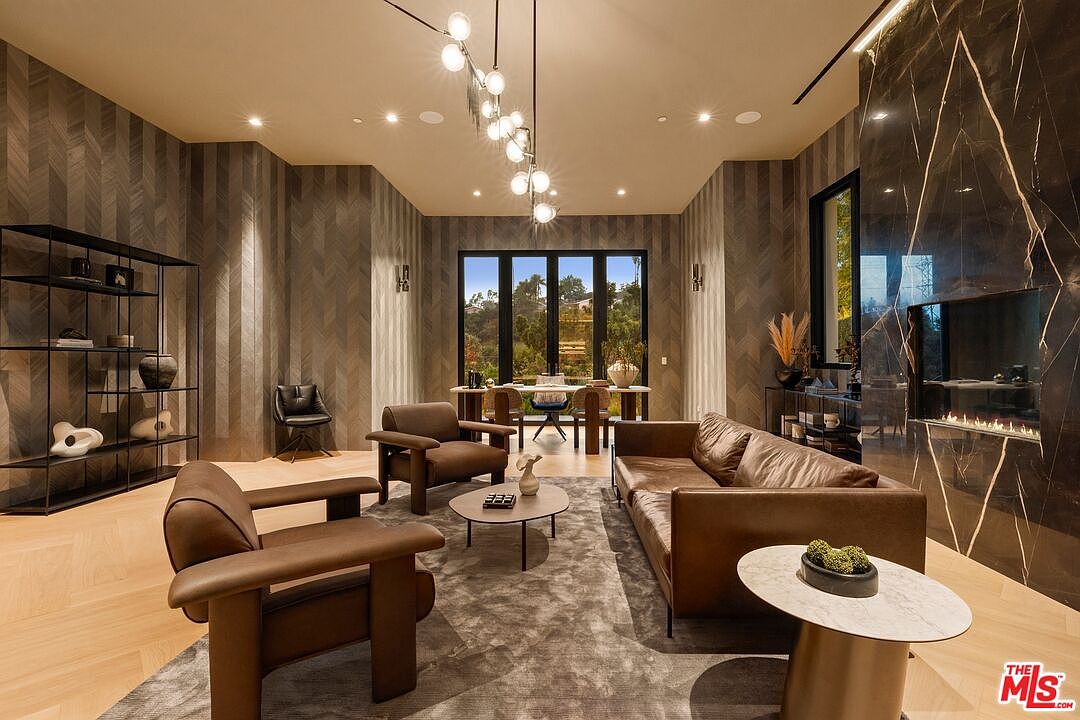
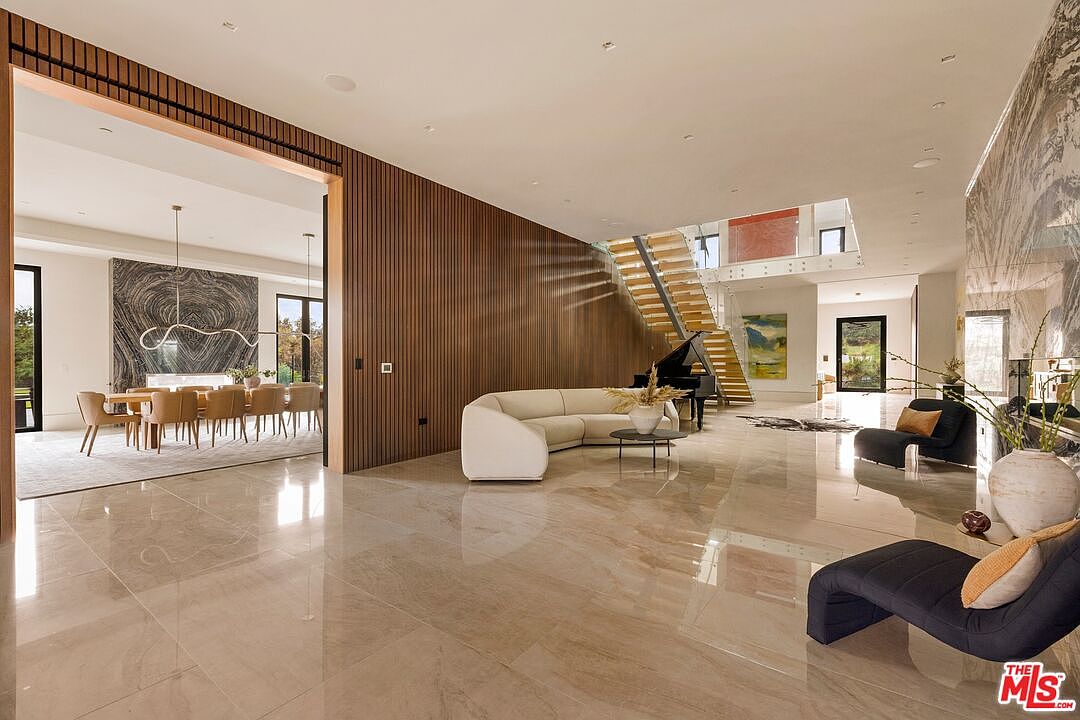
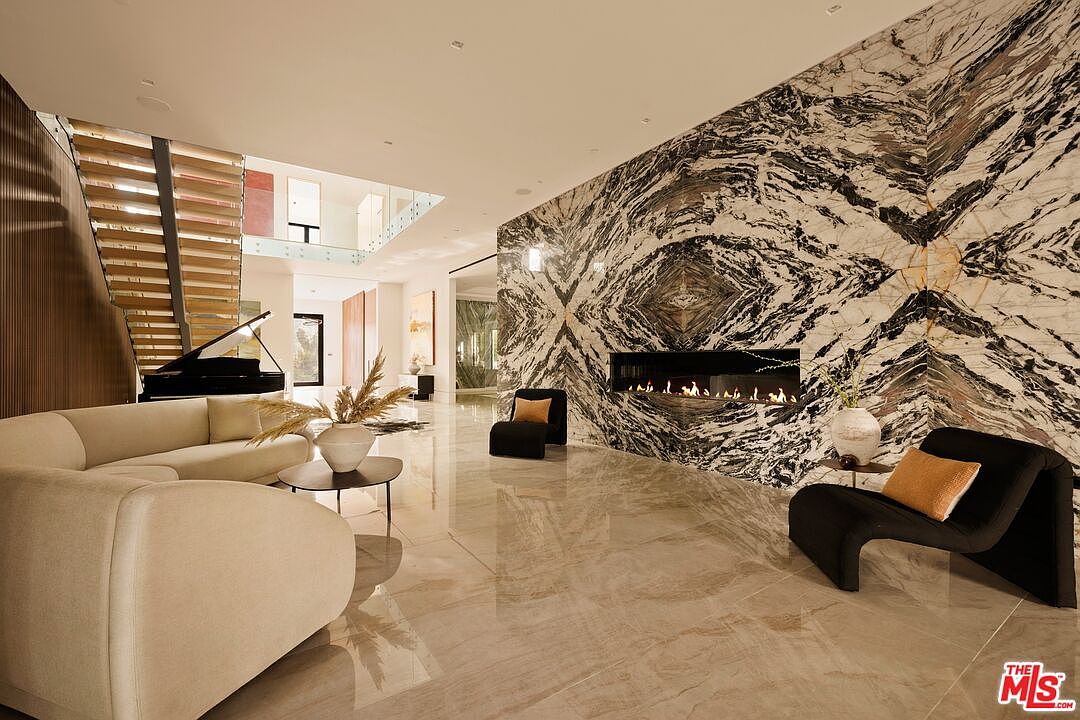
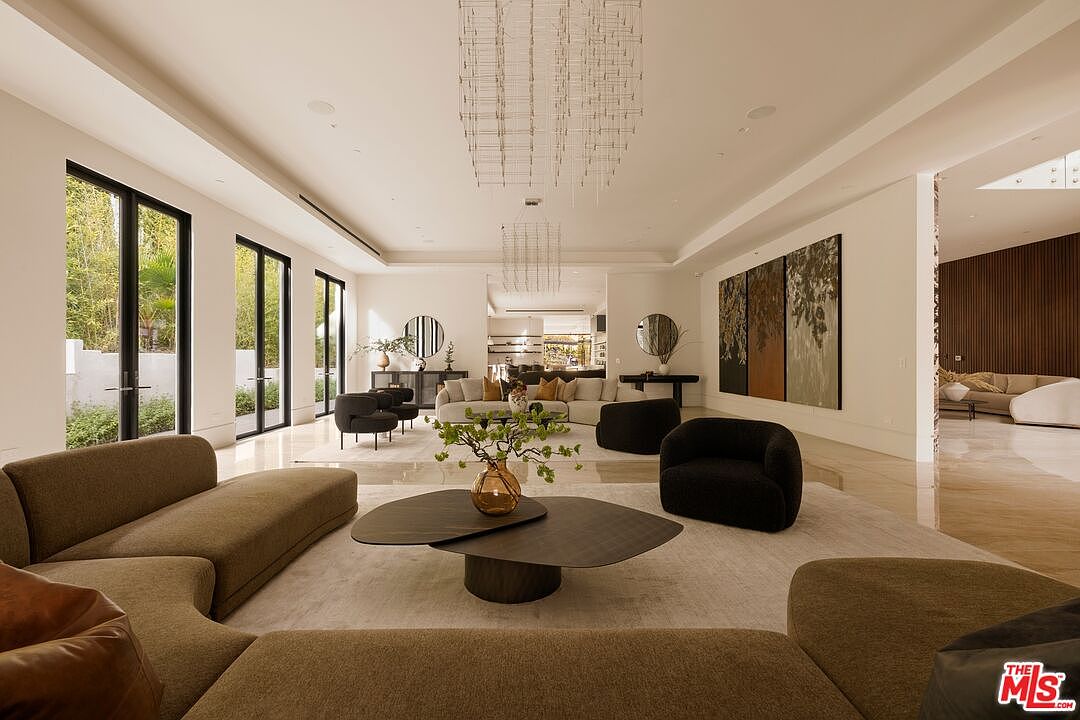
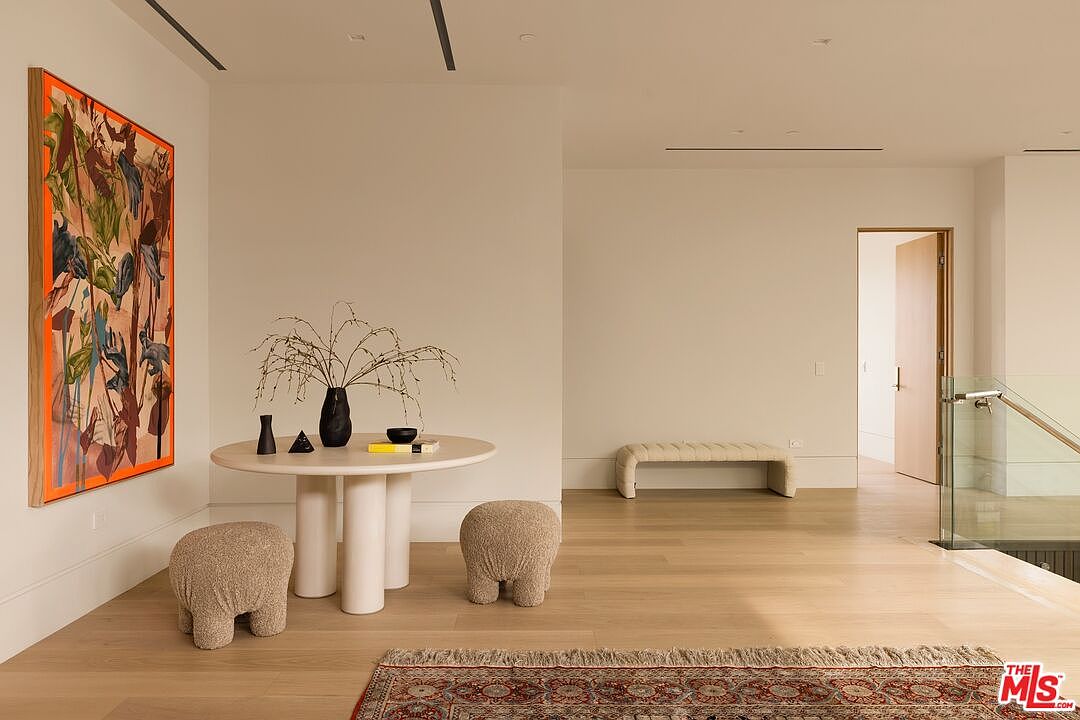
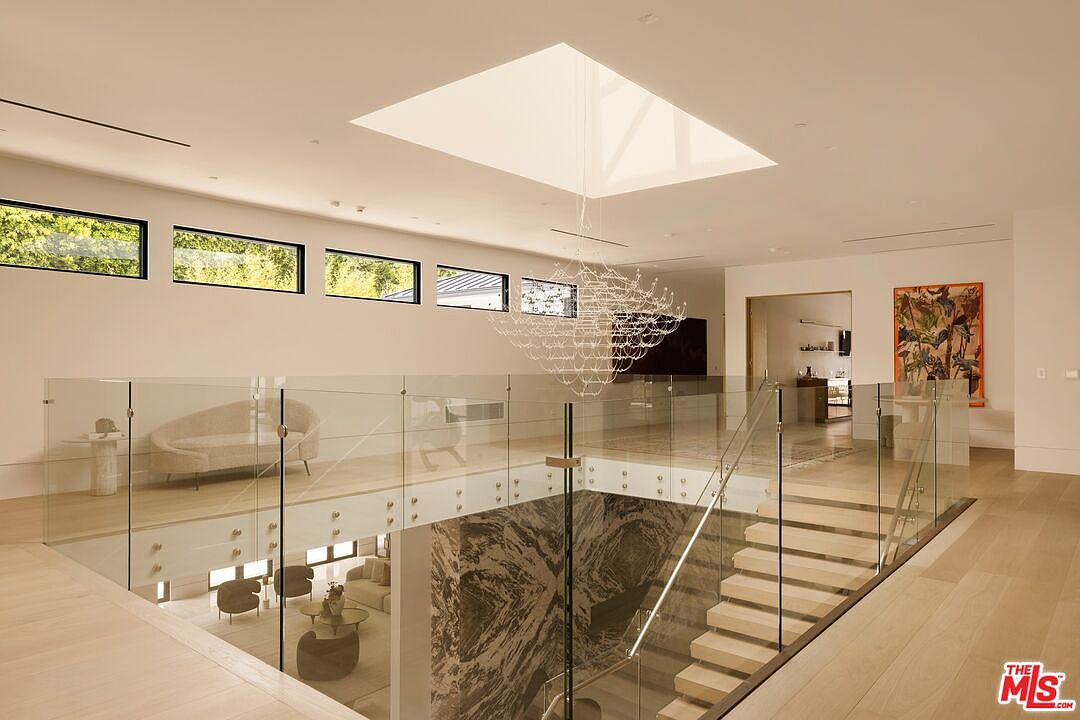
The architecture announces itself with restraint and then reveals its ambition gradually. A long approach gives way to a double-height arrival foyer where a floating staircase — its glass railings catching the light, its light wood treads hovering with architectural precision — serves as both welcome and statement. Stone-clad surfaces, warm wood paneling, and walls of glass establish a material dialogue that carries throughout the residence, creating interiors that feel simultaneously bold and serene. Light is treated as a design element in its own right, moving through gallery-like volumes and illuminating sculptural fireplaces that anchor multiple living spaces across the ground floor.
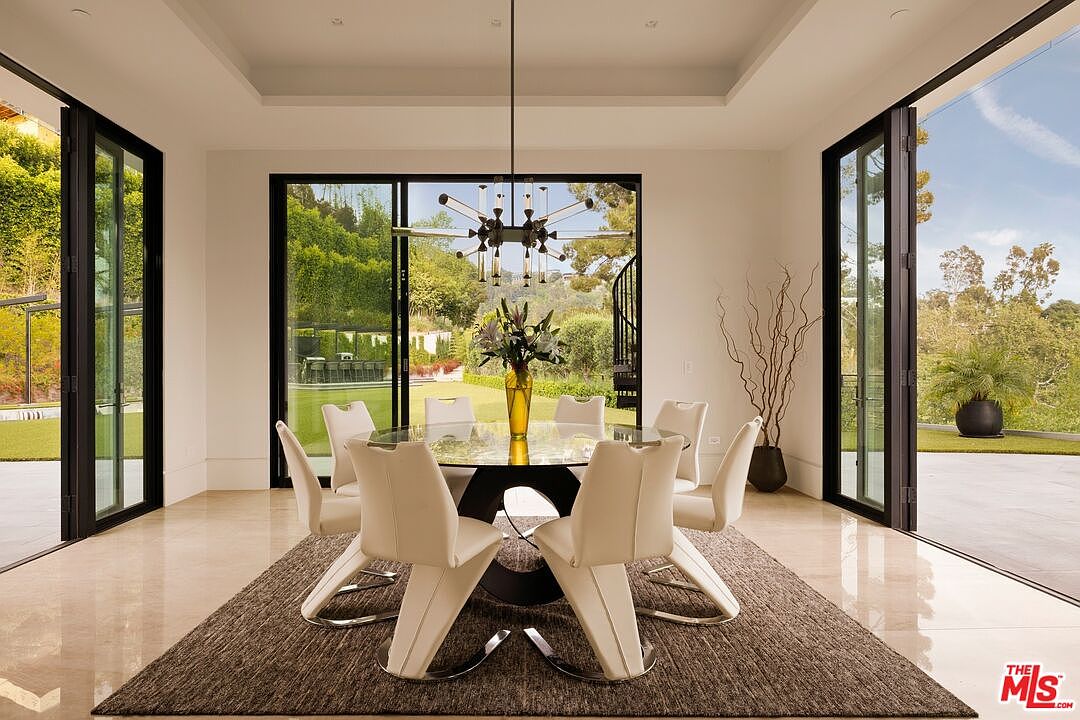
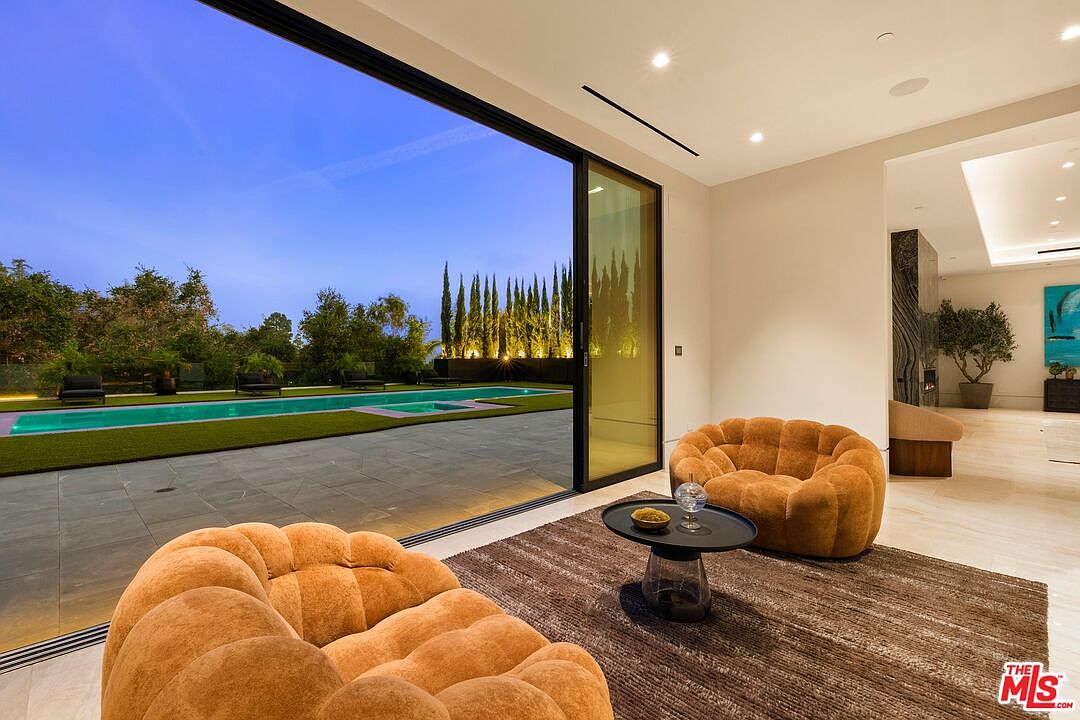
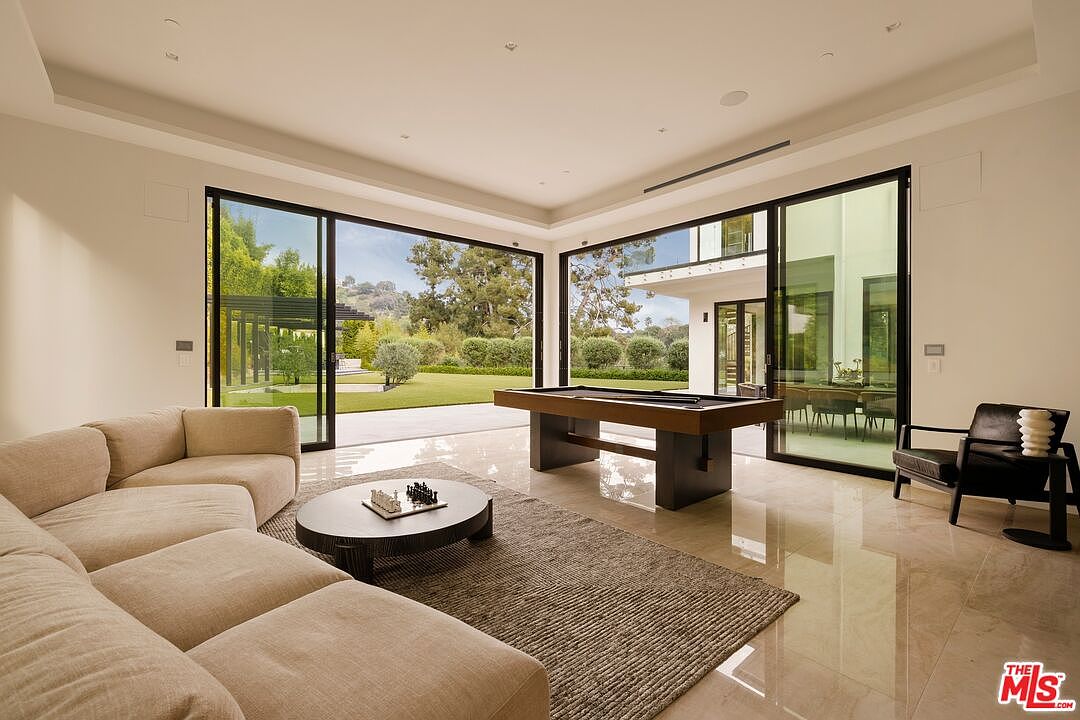
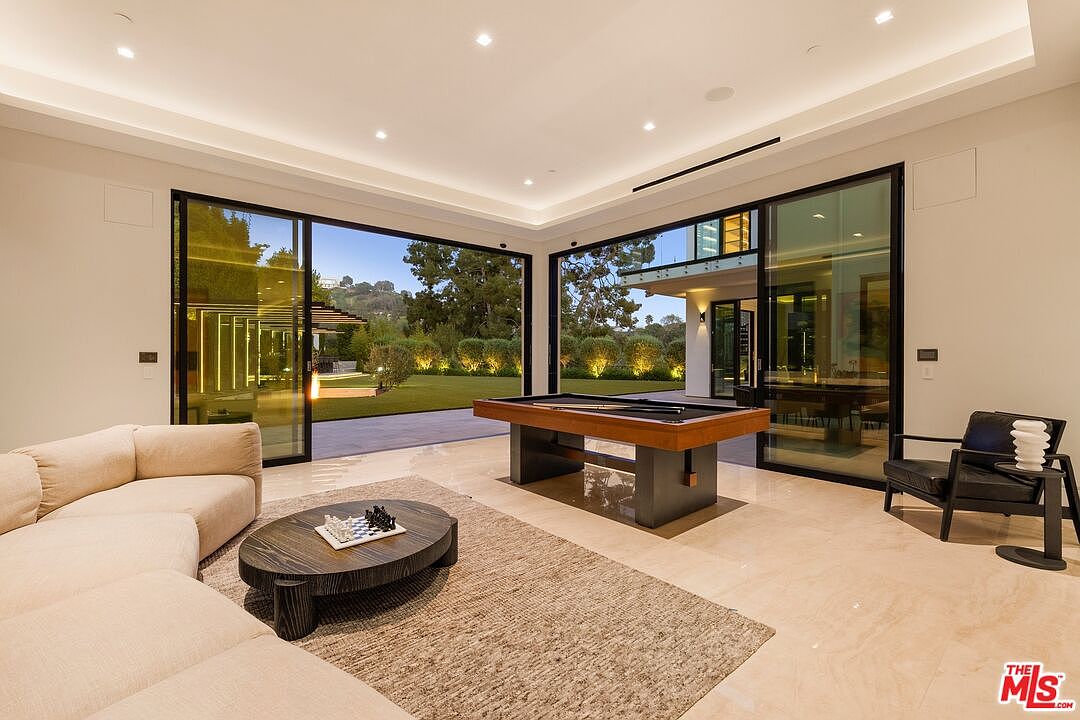
The floor plan is organized around a philosophy of effortless transition — between formality and intimacy, between interior and exterior, between grand entertaining and private retreat. Formal living rooms give way to informal lounges; a statement dining room with its striking stone chimney breast and sculptural lighting opens toward the grounds through walls of glass. The kitchen is a study in considered contrast: dark matte cabinetry set against bold, dramatically veined stone surfaces, a substantial island that commands the center of the room, and Miele appliances integrated with quiet precision. A dedicated bar area, finished in vertical wood slats with curated open shelving, extends the kitchen's hospitality into something more deliberate.
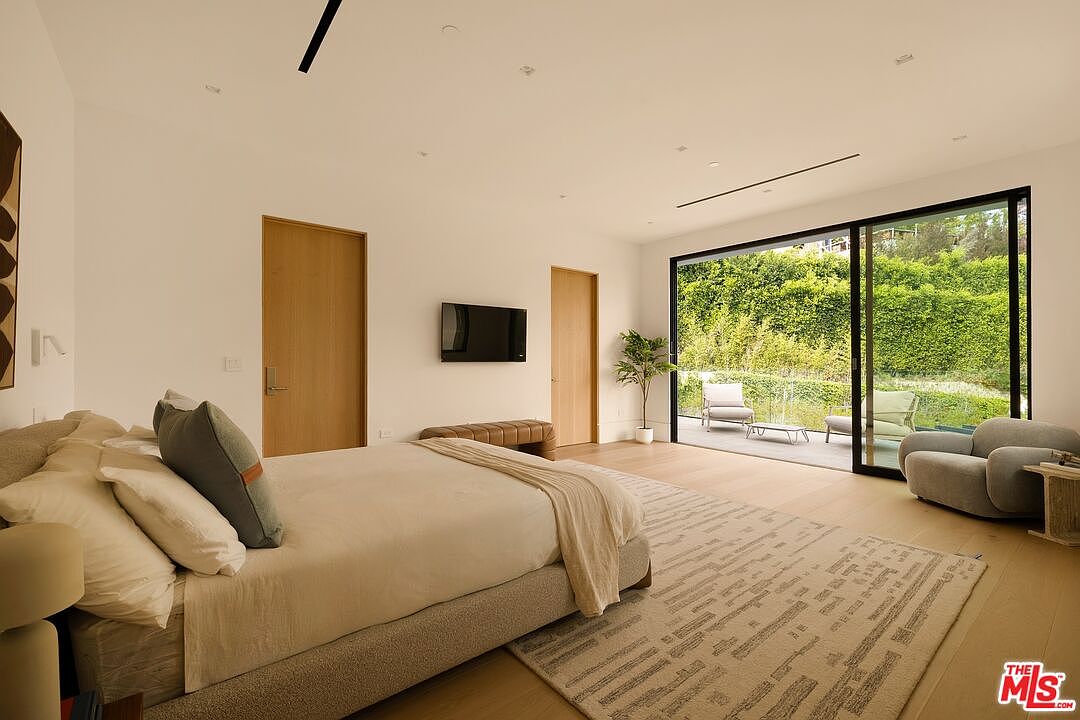
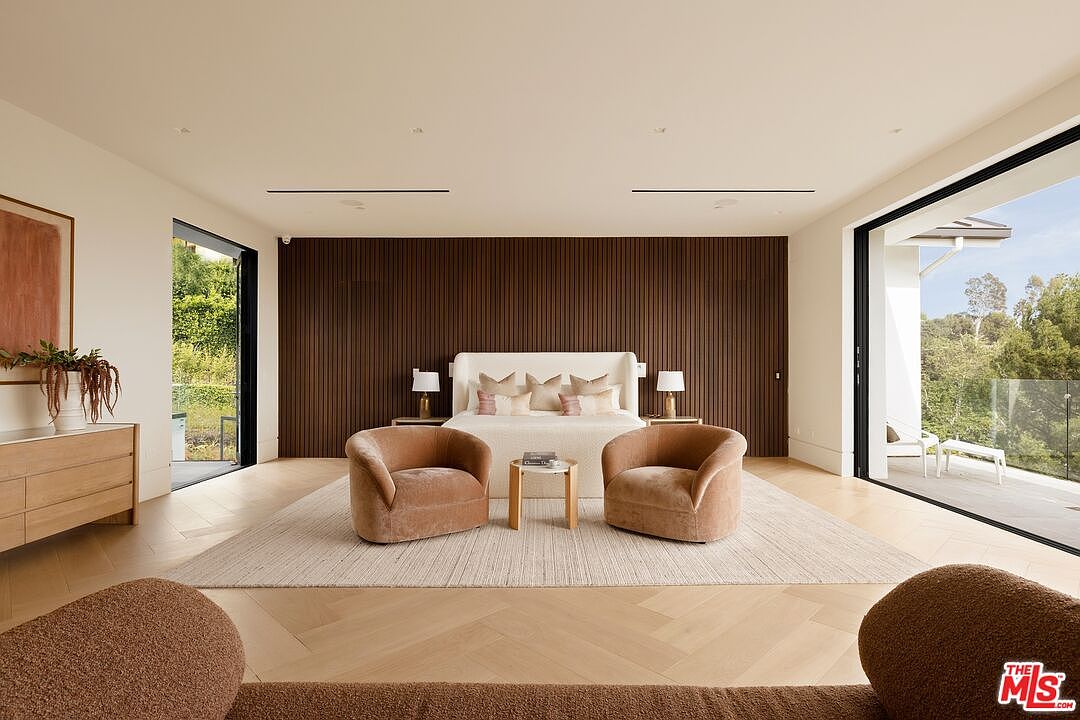
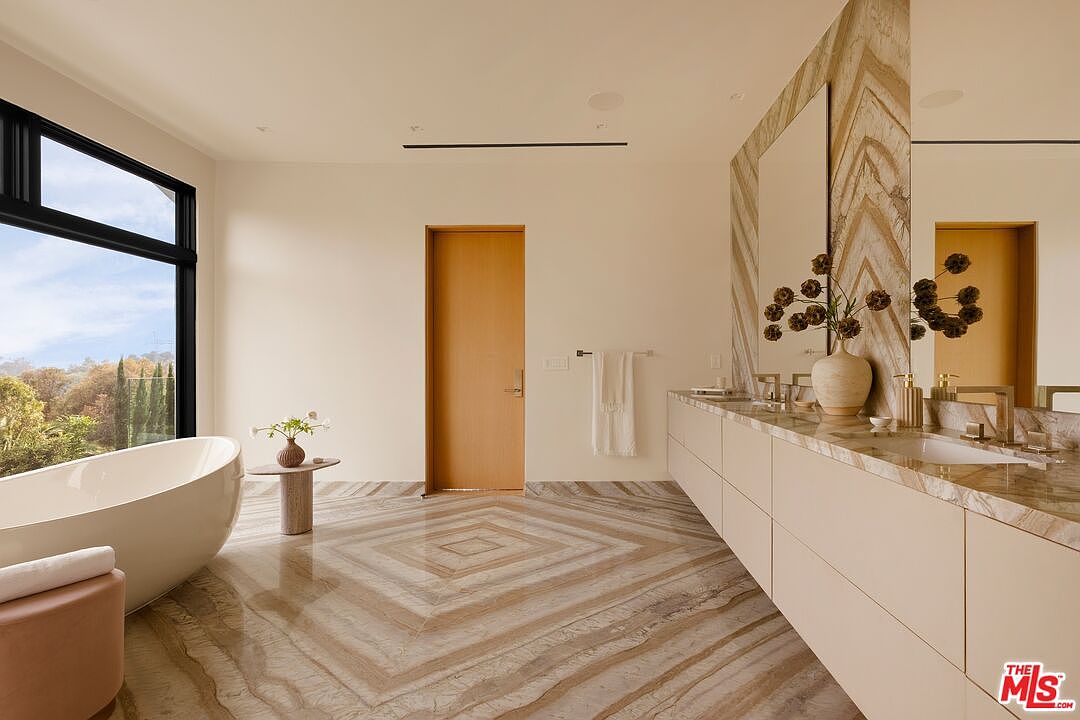
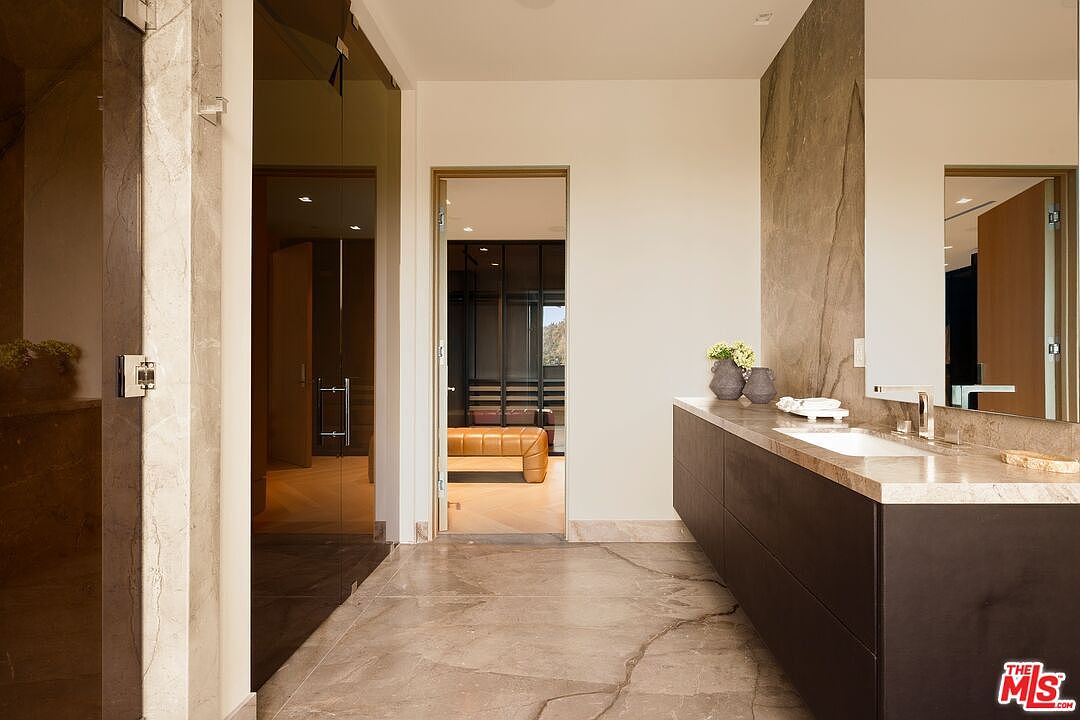
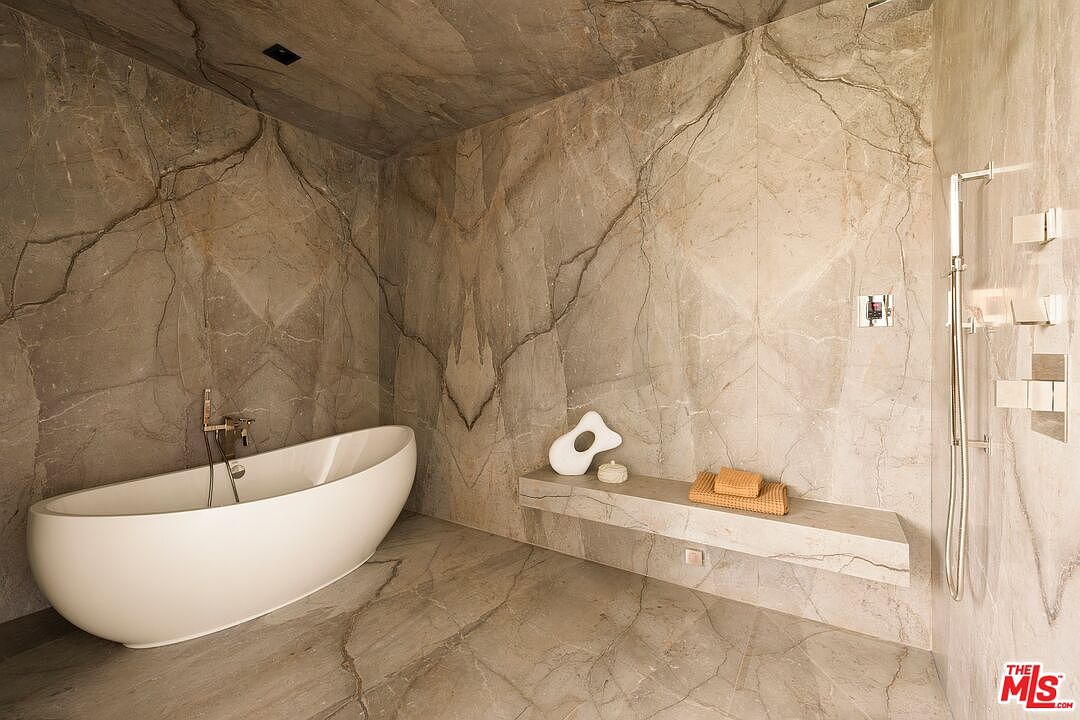
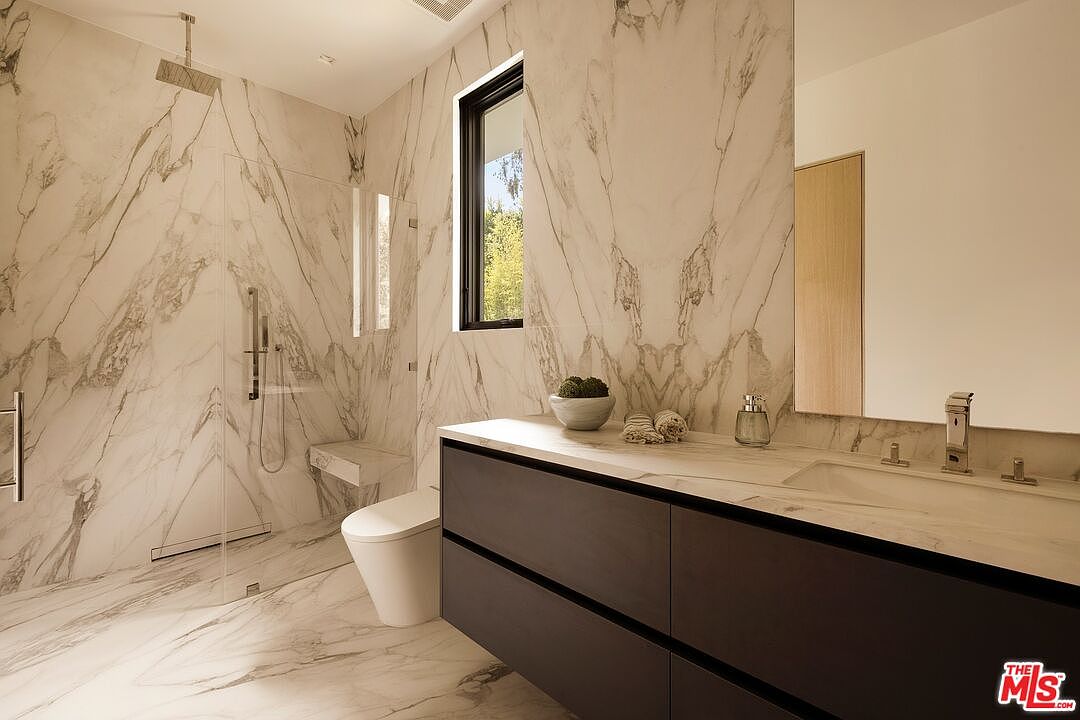
Nine en-suite bedrooms are distributed throughout the residence with thoughtful separation of purpose. The primary suite occupies its own wing of significant scale, encompassing dual stone-clad baths — one featuring a freestanding soaking tub positioned before a window wall framing the treetop landscape — along with expansive walk-in closets fitted with glass-front cabinetry and integrated lighting. A private lounge environment completes the suite, ensuring that retreat, when desired, is total.
Beyond the sleeping quarters, the estate offers a dedicated home gym with floor-to-ceiling glass and hillside views, a wellness and massage room designed with spa-like serenity, and a cinema-quality media room that rounds out an interior program rarely achieved at this level of finish.
The grounds are equally resolved. A rectangular pool with integrated spa is framed by manicured lawn, layered landscaping, and illuminated cypress trees that create a resort atmosphere without sacrificing discretion. A sport court sits within its own landscaped enclosure, while a fully appointed two-bedroom guest house at the lower edge of the property offers self-contained accommodation of genuine quality. Parking for fifteen or more vehicles, including a multiple-car garage, ensures that the estate's practical demands are met with the same generosity as its architectural ones.
Crestwood Hills occupies a particular place in the geography and imagination of Los Angeles — a hillside neighborhood tucked within the broader fabric of Brentwood, bordered by Mandeville Canyon to the west and the Santa Monica Mountains to the north, where the city's intensity softens into something quieter and more considered. It is a neighborhood defined by its elevation, its mature tree canopy, and the sense of remove it offers while remaining deeply connected to one of Los Angeles's most desirable residential corridors.
Brentwood itself has long been regarded as one of the city's premier residential addresses — a neighborhood that balances a village-like ease with proximity to the cultural and commercial infrastructure of West Los Angeles. San Vicente Boulevard serves as something of a civic spine, lined with mature coral trees that bloom in vivid orange each spring and designated as a Los Angeles Historic-Cultural Monument. The boulevard's broad median has historically been a gathering place for joggers, cyclists, and dog walkers, lending the neighborhood a sense of active, unhurried community that is difficult to manufacture and impossible to replicate.
Brentwood's commercial village, centered along San Vicente and nearby streets, offers an edited selection of restaurants, cafes, and boutiques that reflect the neighborhood's affluent and design-conscious character. Established institutions sit alongside newer arrivals, creating a streetscape that feels both rooted and current. The Brentwood Country Mart, a longtime neighborhood anchor, has served as an informal gathering place for residents for decades, its open-air layout and curated tenants making it a destination that transcends simple retail.
For those drawn to the outdoors, the location is exceptional. The Santa Monica Mountains National Recreation Area begins effectively at the neighborhood's northern edge, offering miles of hiking and equestrian trails — including access to Topanga State Park and the broader trail network that connects Brentwood to the Pacific. Sullivan Canyon, accessible from Crestwood Hills, is among the most scenic hiking corridors in the city, a shaded riparian trail that feels improbably remote given its proximity to the urban grid.
Educationally, Brentwood is served by some of Los Angeles's most respected independent schools, including Brentwood School, which operates campuses on both Sunset Boulevard and Barrington Avenue and draws students from across the Westside. The neighborhood's position between the 405 and Pacific Coast Highway also places it within easy reach of Santa Monica, Malibu, and Beverly Hills, making it one of the few addresses in Los Angeles that genuinely serves as a hub rather than a destination.
Culturally, the Getty Center — perched on a ridgeline above Brentwood and visible from much of the neighborhood — anchors the area's relationship with art and architecture. Designed by Richard Meier and opened in 1997, the museum houses one of the world's significant art collections and offers grounds and gardens that are destinations in their own right, drawing visitors from across the region while remaining a quiet point of pride for those who live in its shadow.
Within this context, Crestwood Hills offers something rarer still: hillside seclusion within walking distance of everything. It is a balance that Los Angeles rarely achieves, and that 822 North Kenter Avenue embodies completely.
Featured Highlights
Curated Content • Presented by Santiago Arana