The Story Behind
A Full-Floor Penthouse Where Architecture Becomes Legacy
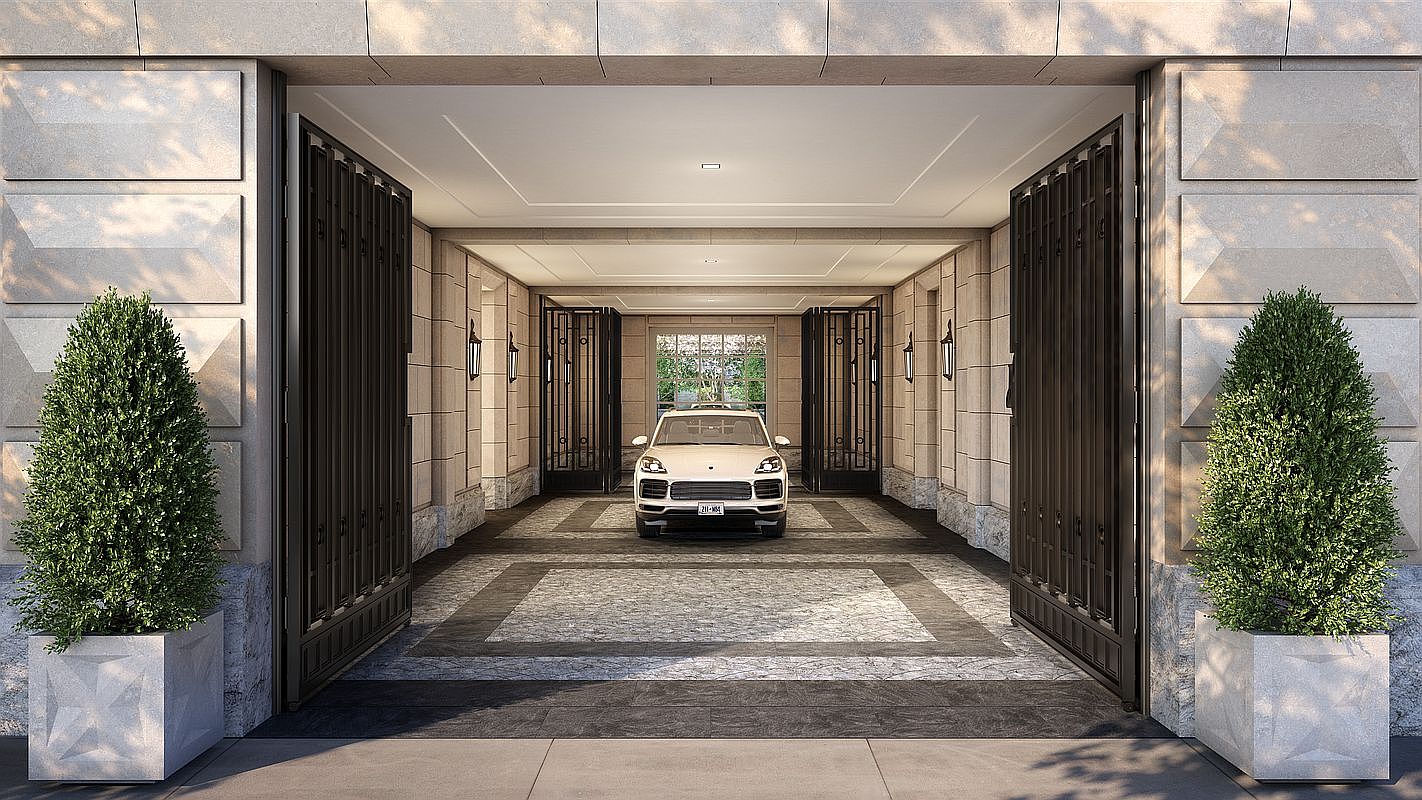
There are buildings that simply fill a gap in a skyline, and then there are buildings that redefine it. The Henry, rising at 211 West 84th Street, belongs emphatically to the latter category. Conceived by Naftali Group and brought to life by Robert A.M. Stern Architects — the firm whose classical sensibility has shaped some of New York's most enduring residential addresses — the building announces itself with a facade of Indiana limestone and hand-set brick, its tiered setbacks and arched detailing evoking the great prewar apartment houses of the Upper West Side while remaining unmistakably of this moment.
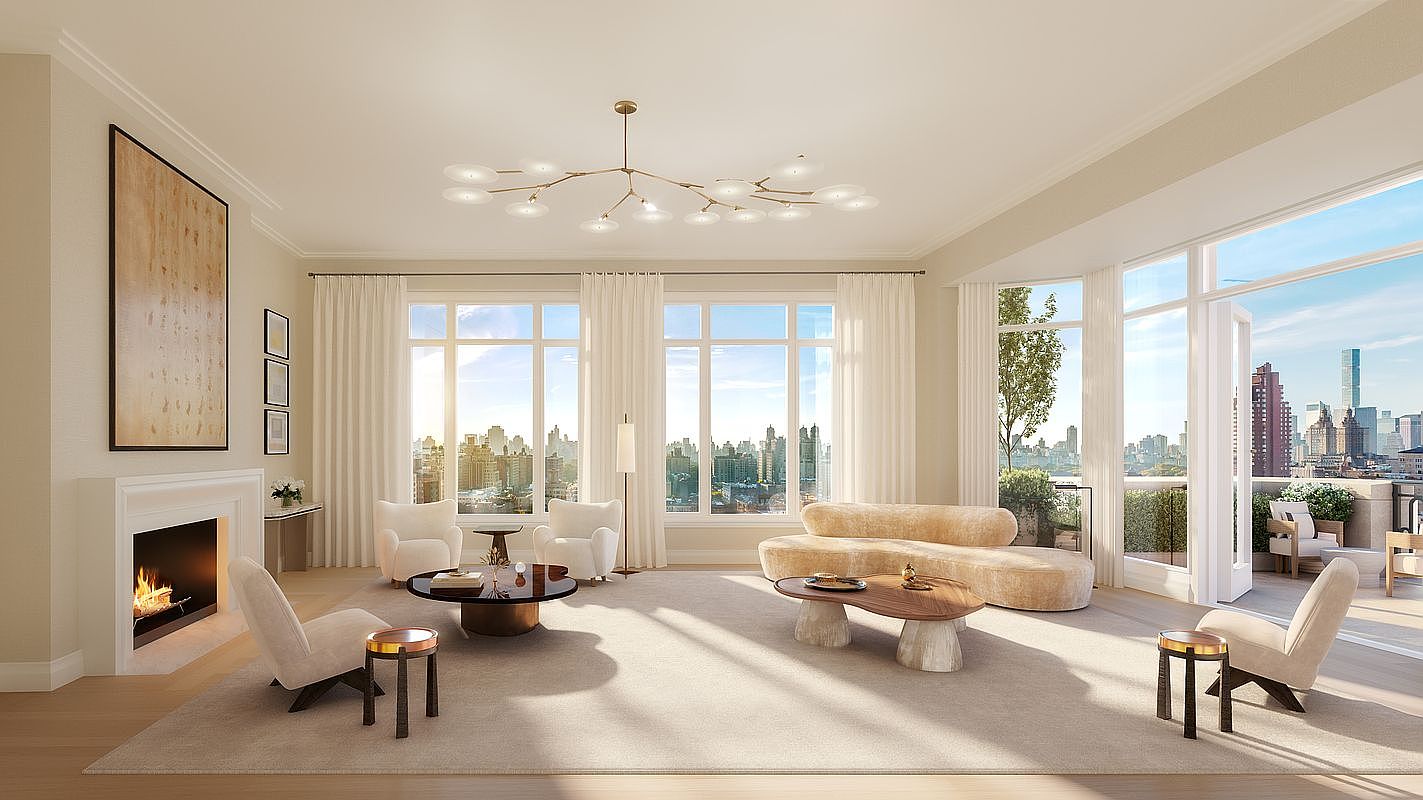
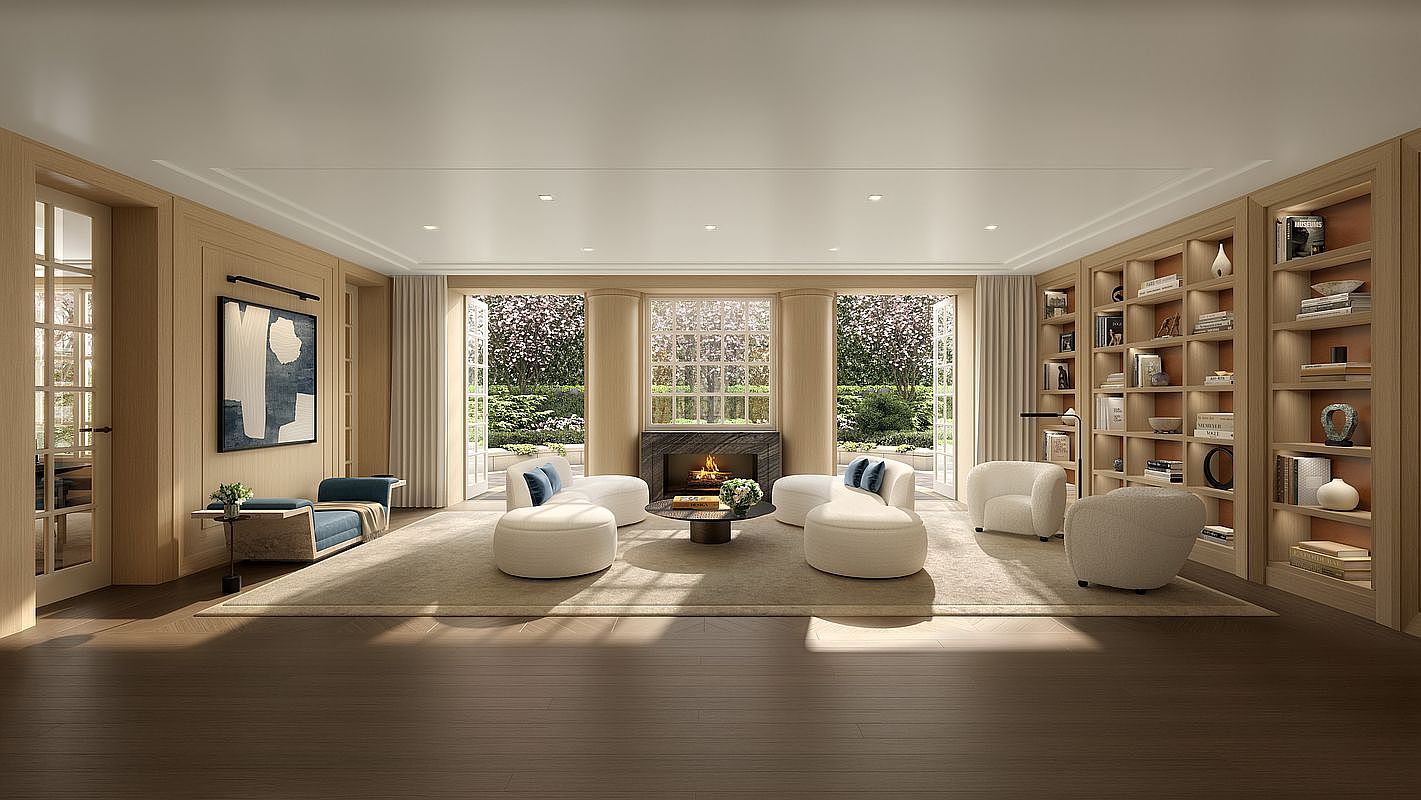
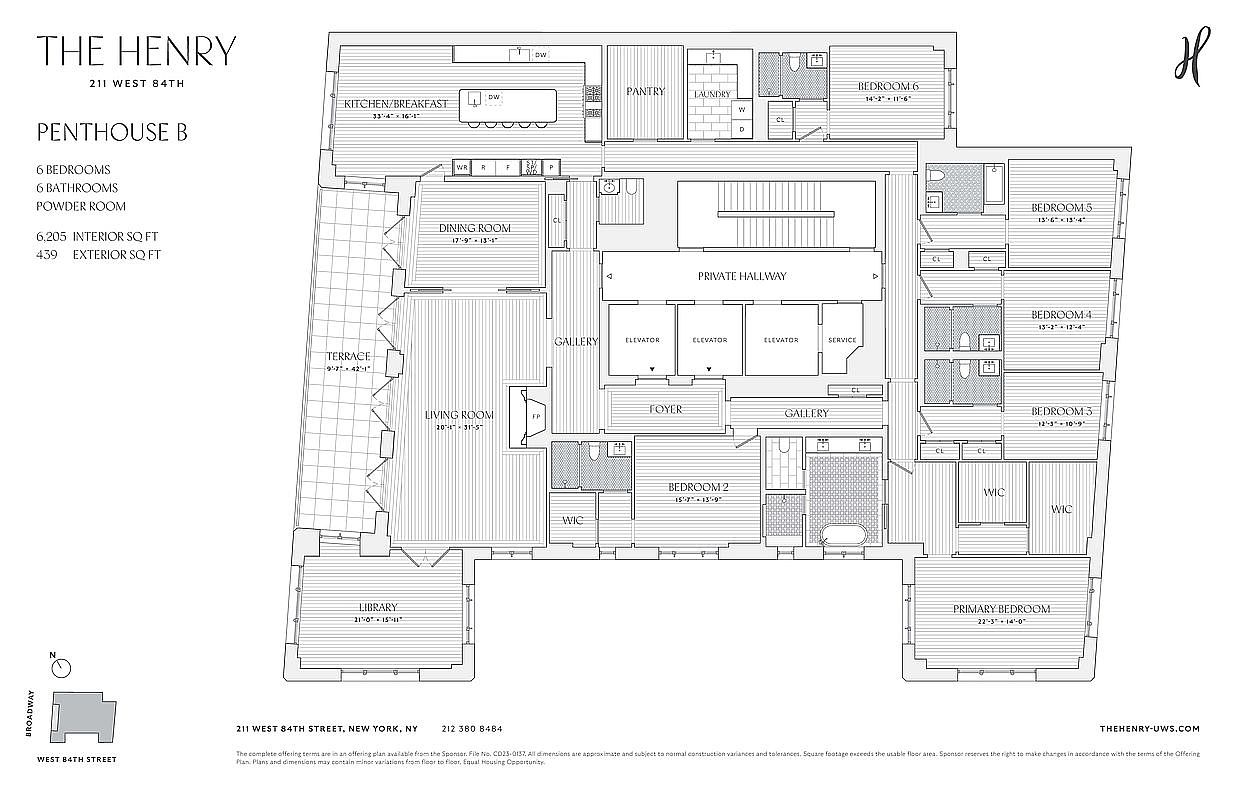
Penthouse B occupies the building's uppermost full floor, and from the instant the elevator opens into a private vestibule, the intention is clear: this is a home designed with the seriousness and generosity of a private townhouse, translated into the sky. A broad gallery receives guests before revealing the residence's signature enfilade — west-facing living room, paneled library to the south, formal dining room to the north — three rooms that flow into one another and open collectively onto a sweeping private terrace. The choreography of space is deliberate and unhurried, the kind of layout that accommodates a dinner party for twenty as naturally as a quiet Sunday morning.
The chef's kitchen is anchored by a painted white cabinetry program softened by warm wood islands and accents, with honed Calacatta marble surfaces extending across counters and backsplashes. Miele and Sub-Zero appliances are integrated with characteristic precision, and a west-facing picture window transforms the eat-in area into something genuinely pleasurable — a room where daylight arrives early and lingers. An oversized adjacent pantry and a fully vented laundry room with sink attend to the practical realities of daily life without compromise.
The primary suite commands the southeast corner, where two dressing-room-scale closets and a five-fixture bath define a private world apart. Honed white Dolomiti marble surfaces, radiant heated floors, Waterworks fixtures, a rain shower, and a freestanding soaking tub positioned before a south-facing window compose a bathroom that reads less as utility and more as sanctuary. Five additional bedrooms, each with ensuite bath, are proportioned generously enough to serve equally as private suites, studies, or dedicated entertaining rooms.
Throughout, the material selections speak a coherent language of quality without ostentation: white oak floors, solid-core doors, polished nickel hardware, and windows of the highest specification. The interiors are deliberately neutral in their architecture — a sophisticated backdrop that accommodates any design direction without resistance.
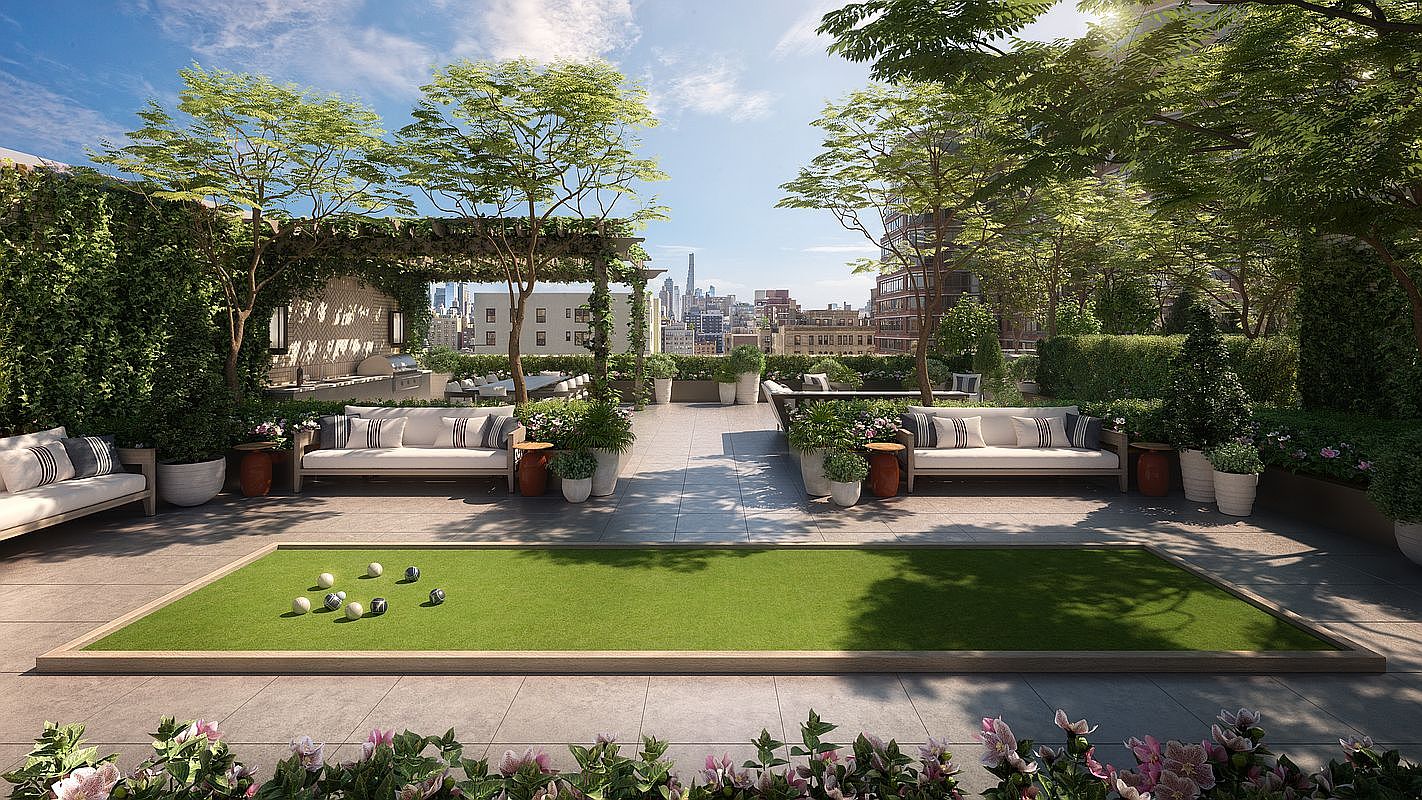
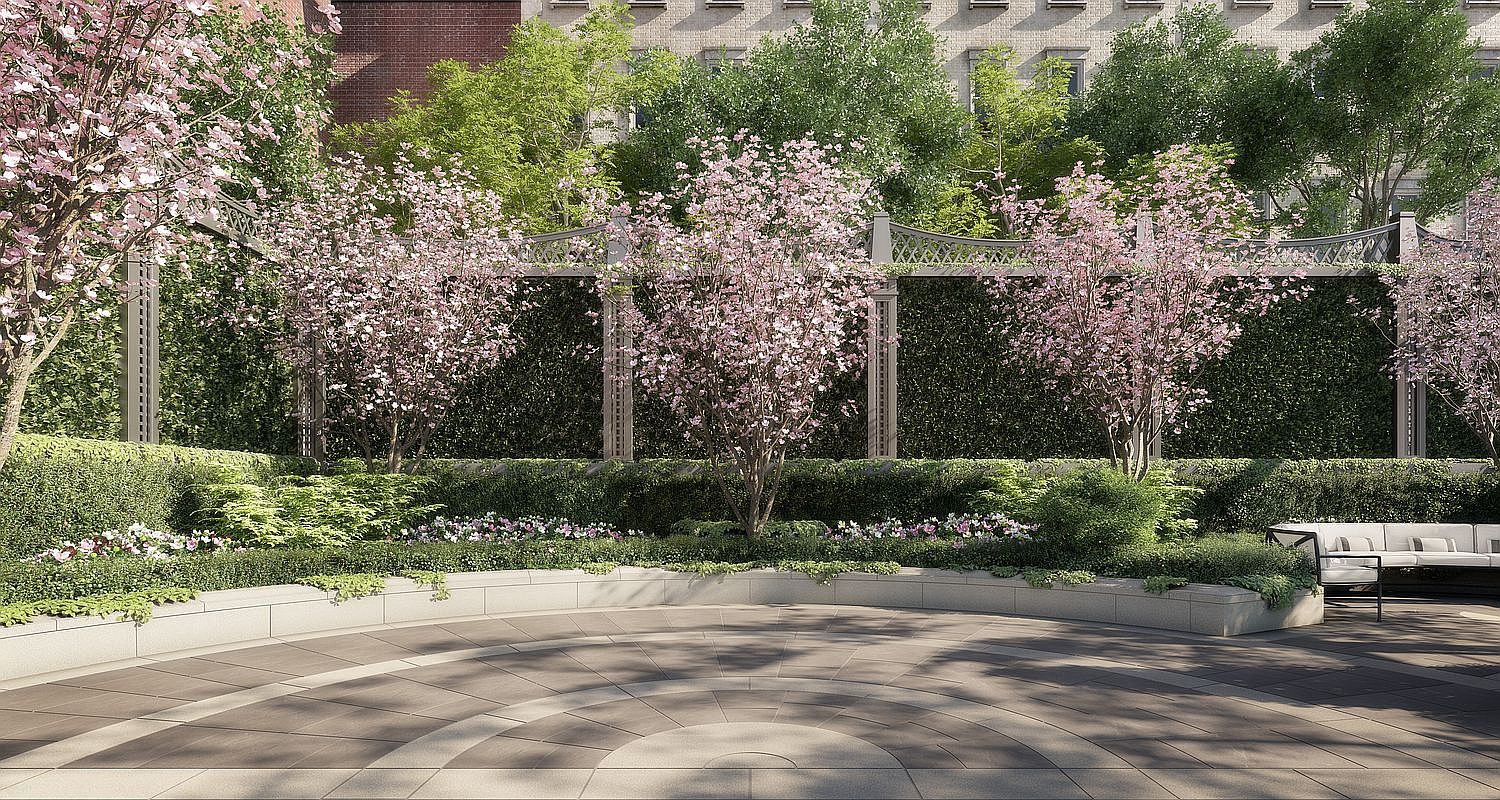
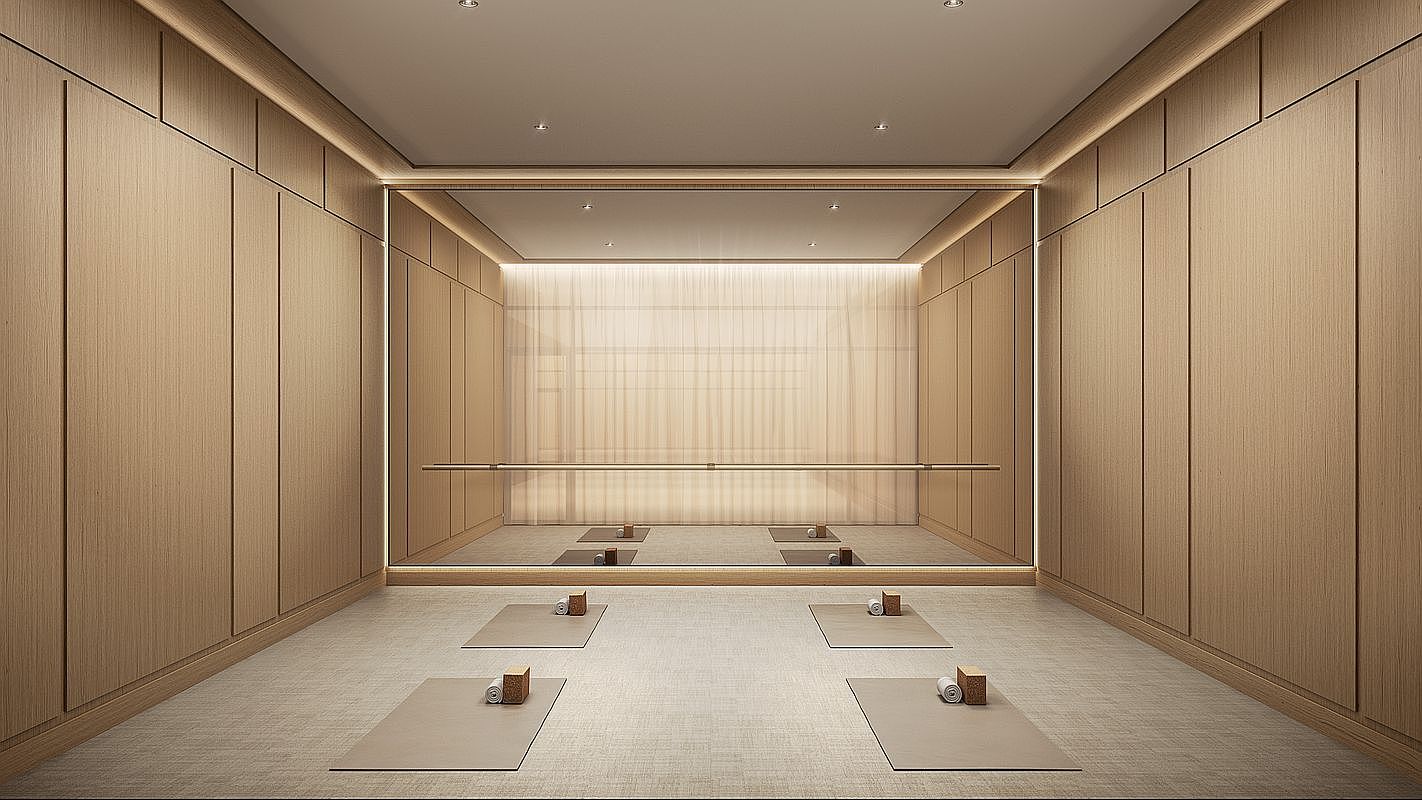
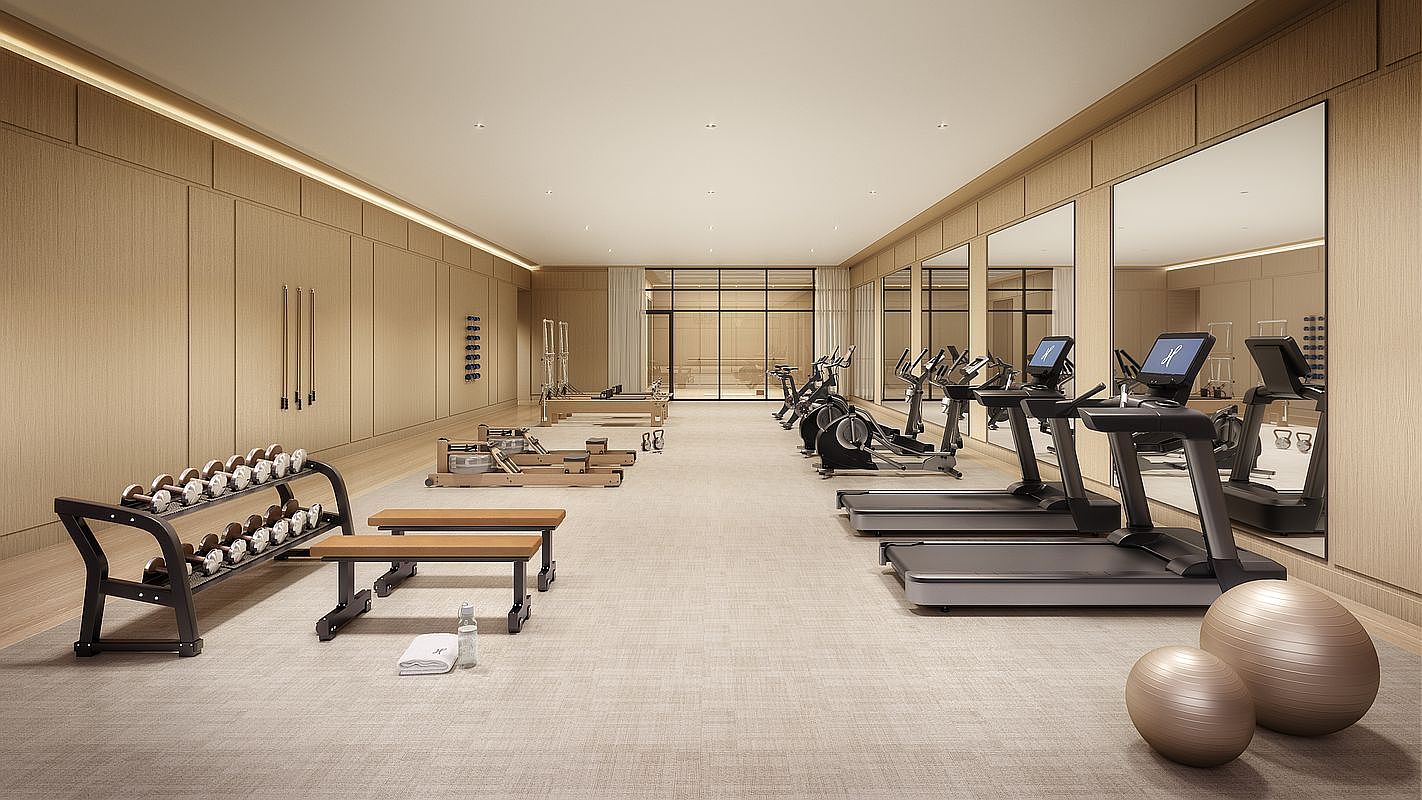
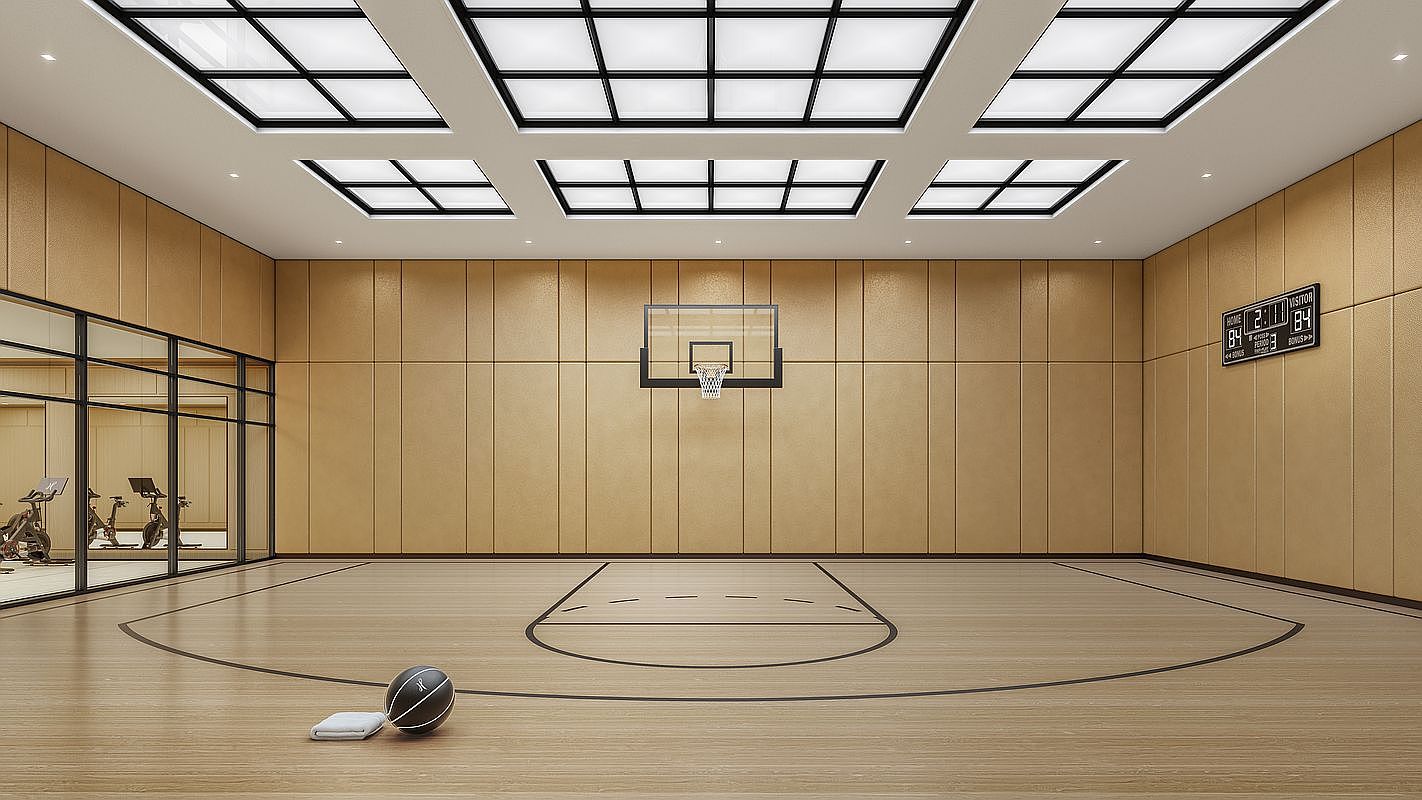
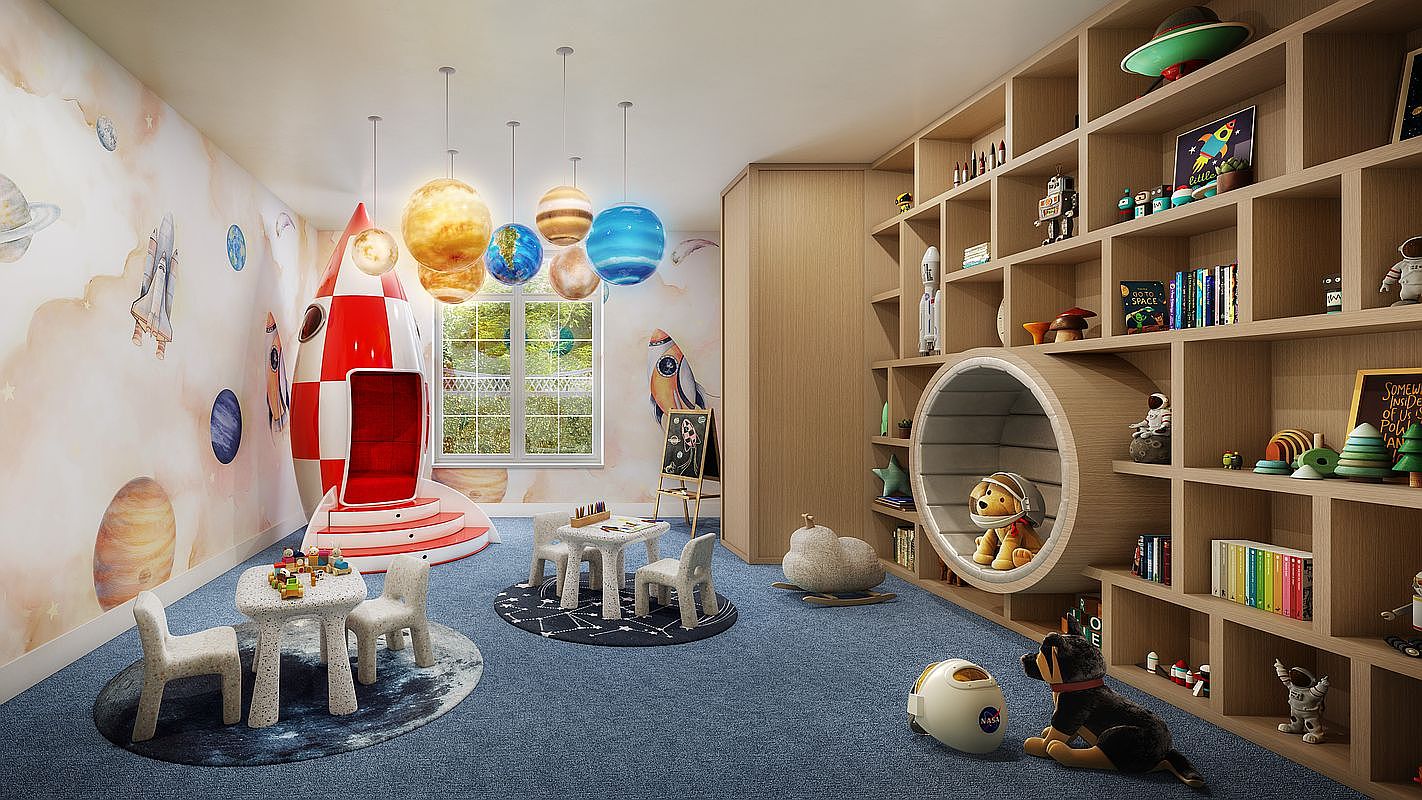
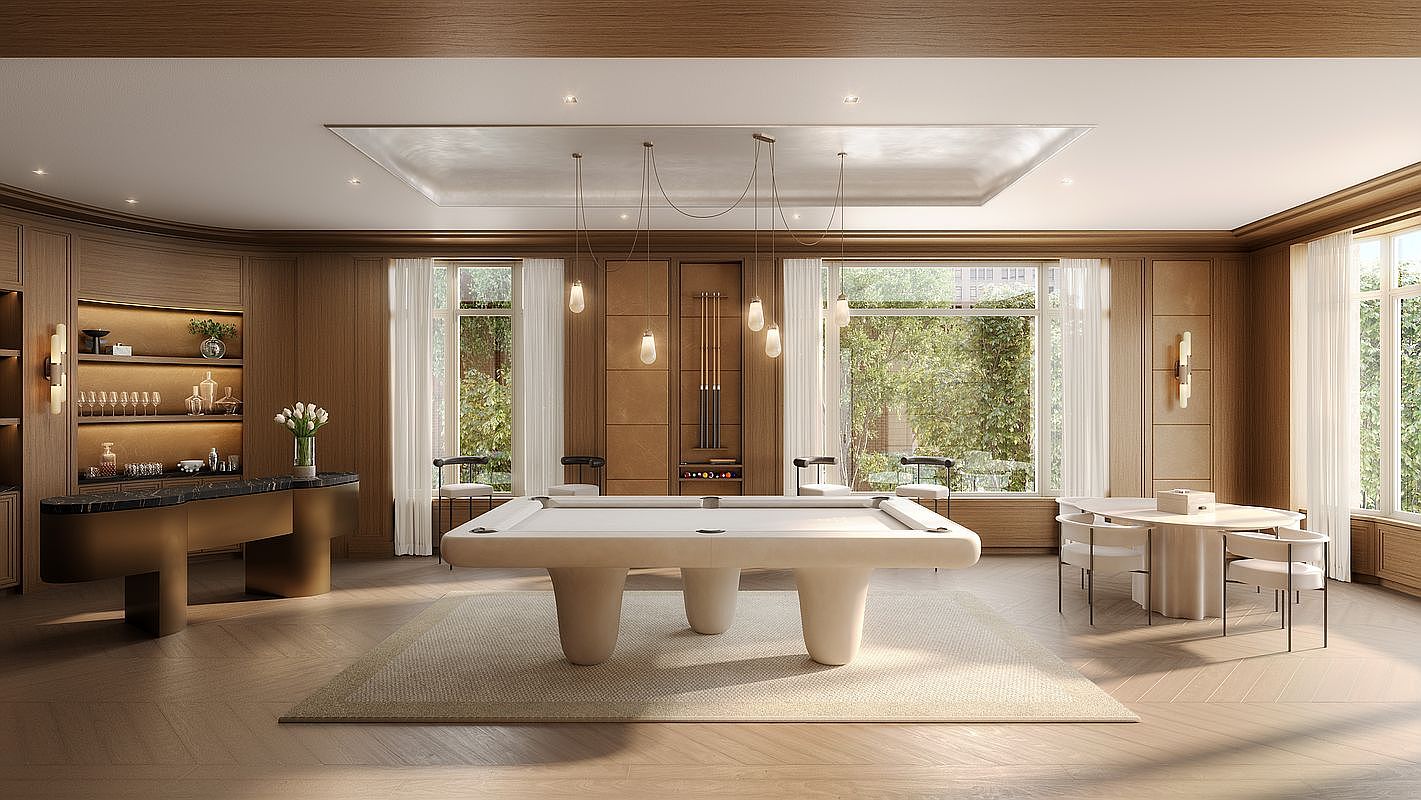
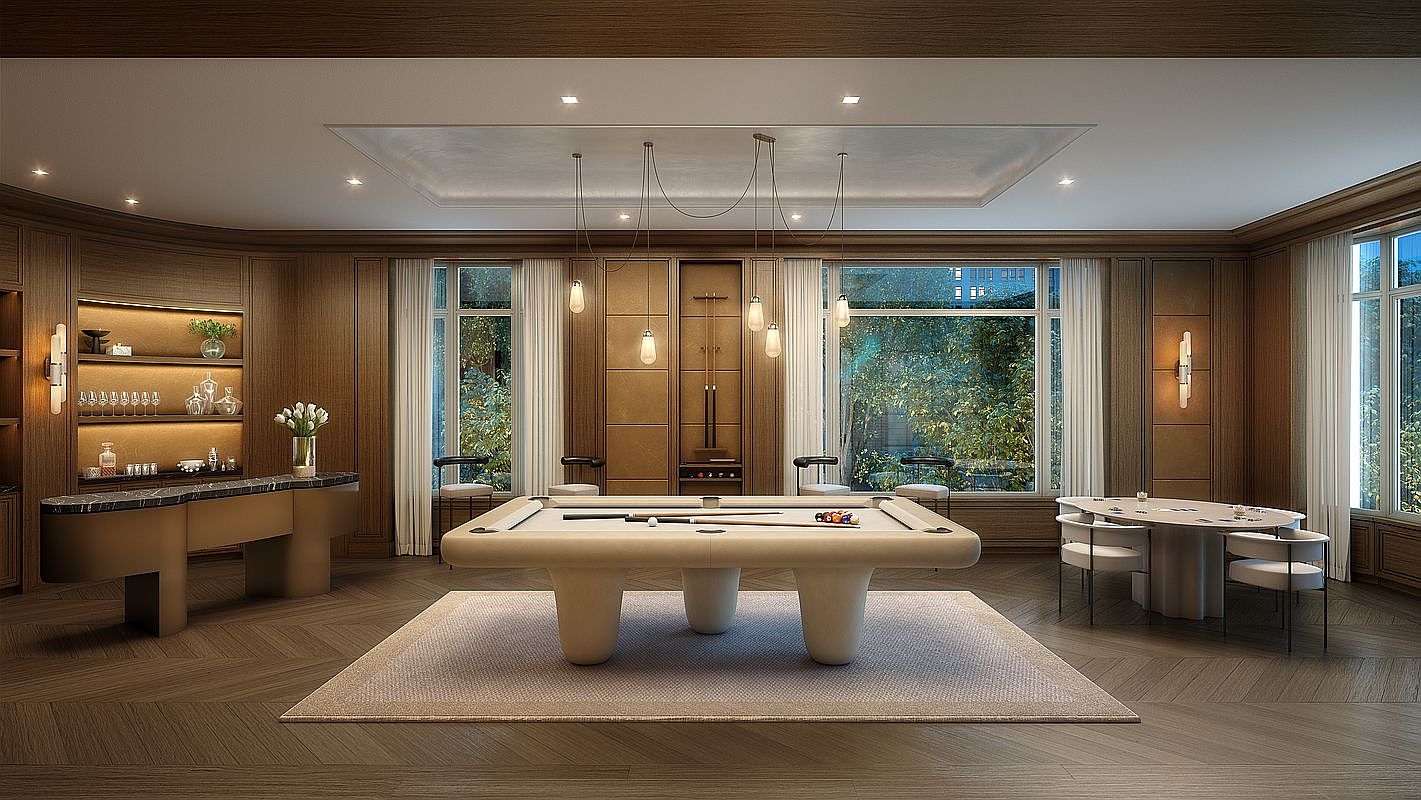
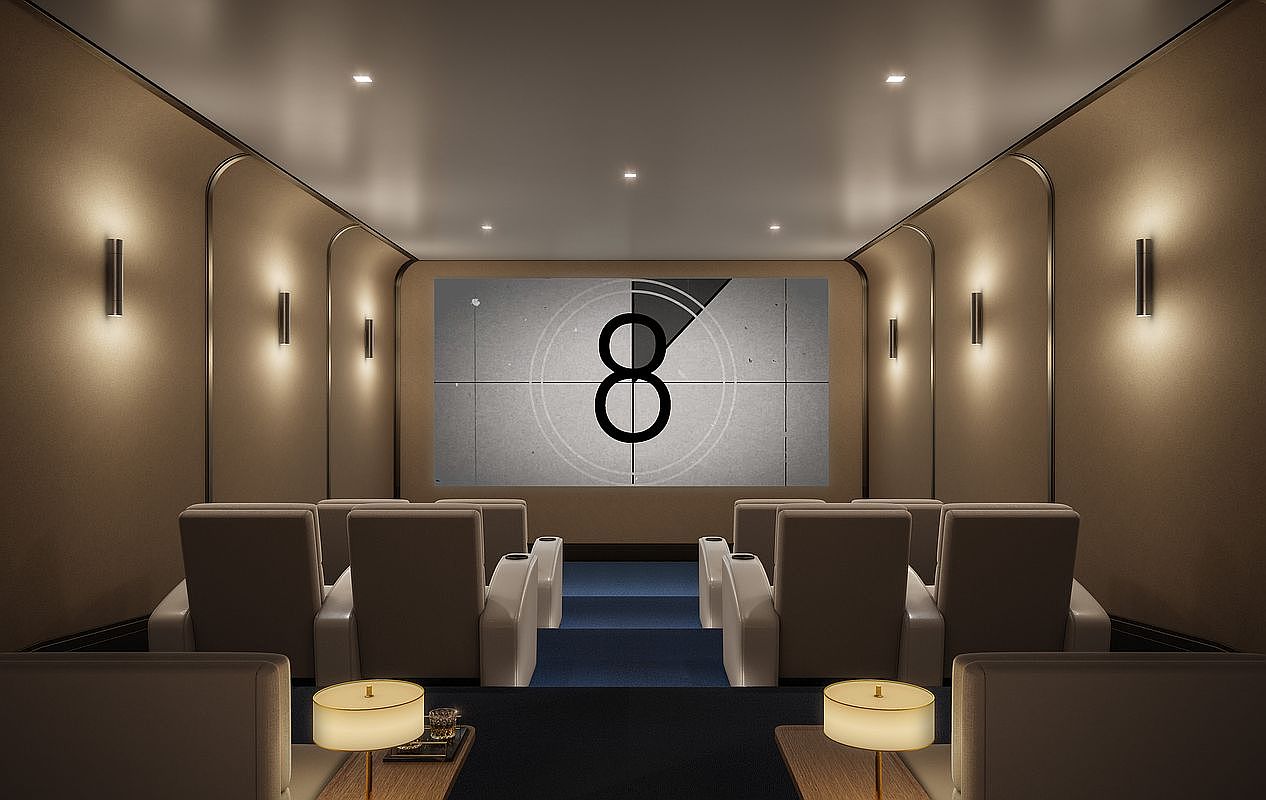
Below the residence, The Henry's amenity program is exceptional by any standard. Manhattan's first indoor residential pickleball court, a private two-lane bowling alley, half-court basketball, a cinema, a children's playroom, and a spa with steam room and sauna form a recreational suite that rivals the finest private clubs. A third-floor entertaining floor — with a club room, bespoke pool table, bar, fireplace salon, and catered dining room — provides a private extension of the penthouse itself. A rooftop terrace with outdoor kitchen, firepit, and bocce court, alongside a quiet formal garden below, complete an outdoor offering of genuine distinction. Automated parking and 24-hour doorman and concierge service round out a building that has genuinely thought of everything.
West 84th Street sits at the heart of one of Manhattan's most beloved and intellectually alive neighborhoods — a place where the city's cultural, academic, and residential impulses have converged for well over a century. The Upper West Side, bounded by Central Park to the east and Riverside Park to the west, has long attracted writers, musicians, academics, and families drawn to its particular combination of urban energy and residential calm. To live on West 84th Street is to inhabit that tradition directly.
Central Park's western edge lies within a short walk, offering immediate access to one of the world's great urban landscapes — the Reservoir running path, the Great Lawn, the Delacorte Theater, and the quieter wooded paths of the Ramble all within easy reach. Riverside Park, stretching along the Hudson River to the west, provides a second, more intimate green corridor: the Eleanor Roosevelt monument, the 79th Street Boat Basin, and miles of waterfront promenade accessible in minutes.
The cultural infrastructure surrounding The Henry is genuinely extraordinary. The American Museum of Natural History, one of the largest natural history museums in the world, anchors the neighborhood at 79th Street and Central Park West, its Rose Center for Earth and Space a landmark of both scientific and architectural significance. Lincoln Center for the Performing Arts — home to the Metropolitan Opera, the New York Philharmonic, and the New York City Ballet — is a short distance south, providing world-class performance within the rhythm of everyday life rather than as an occasional destination.
The neighborhood's retail and dining landscape reflects its character: independent bookshops and specialty food purveyors coexist with established restaurants and neighborhood institutions that have endured for decades. Broadway and Amsterdam Avenue offer daily conveniences, while Columbus Avenue provides a more curated collection of boutiques, cafes, and restaurants. Zabar's, the legendary gourmet market on Broadway, remains one of the neighborhood's most beloved institutions and a genuine reflection of the Upper West Side's particular sensibility — unpretentious excellence.
Families are well served by proximity to some of Manhattan's most respected independent and public schools, and the neighborhood's street life — broad sidewalks, mature street trees, architecturally significant prewar buildings — creates a pedestrian experience that feels genuinely livable in a way that few Manhattan neighborhoods can claim.
The subway infrastructure at 86th Street provides direct access to midtown and downtown Manhattan, while the crosstown bus and the proximity of the 1, 2, and 3 lines at 72nd and 96th Streets ensure that the rest of the city remains effortlessly accessible. Yet one of the Upper West Side's enduring qualities is how self-contained it feels — a neighborhood where many residents find that days pass without any need to venture beyond its precincts, not from isolation, but from genuine sufficiency.
The Henry arrives at a moment when the Upper West Side is experiencing a quiet renaissance of new development and renewed interest from buyers who value authenticity of place alongside quality of construction. On West 84th Street, both are available in full measure.
Featured Highlights
Curated Content • Presented by Alexa Lambert