The Story Behind
Gorehaus: A Mountain Contemporary Masterpiece Commanding the Gore Range
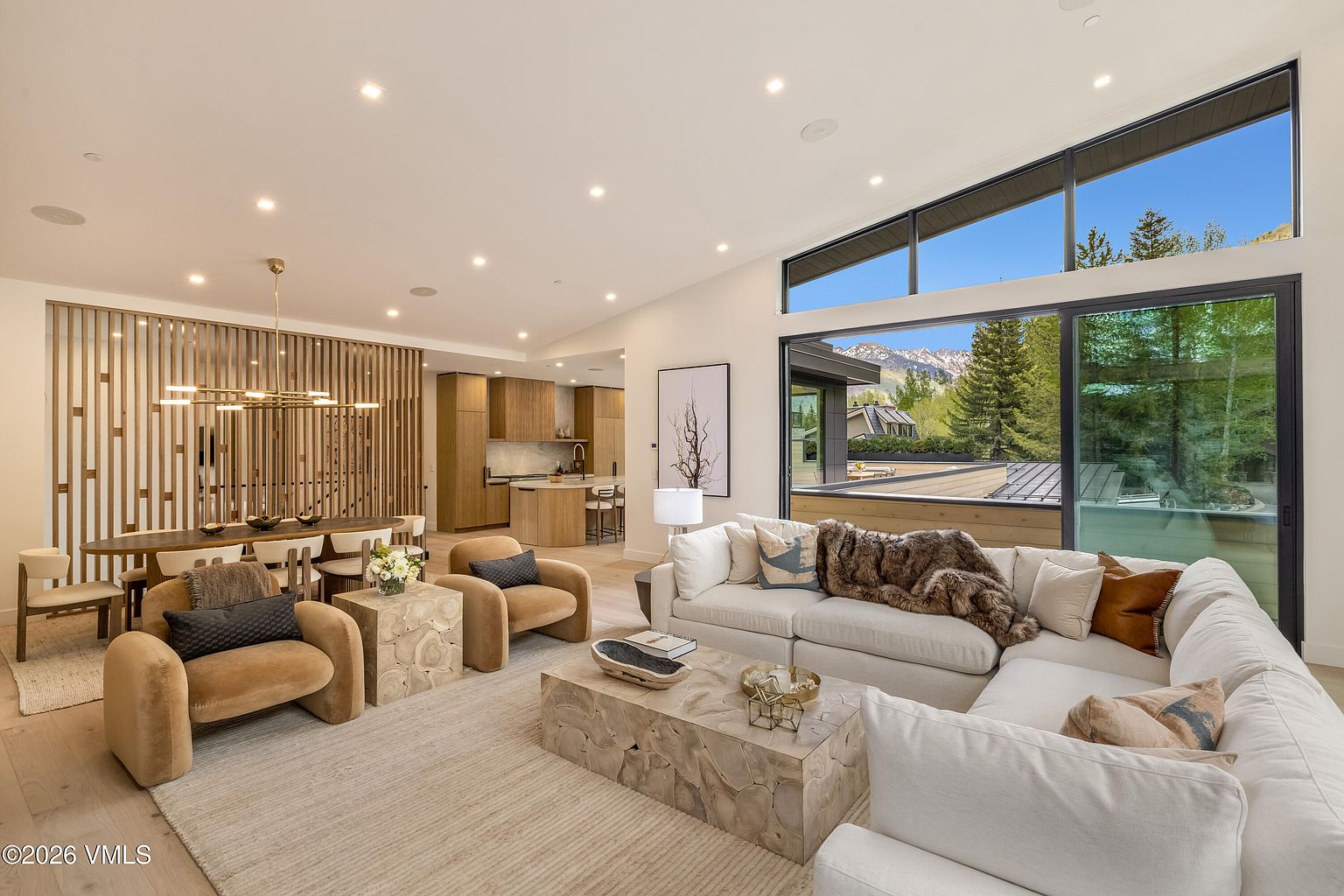
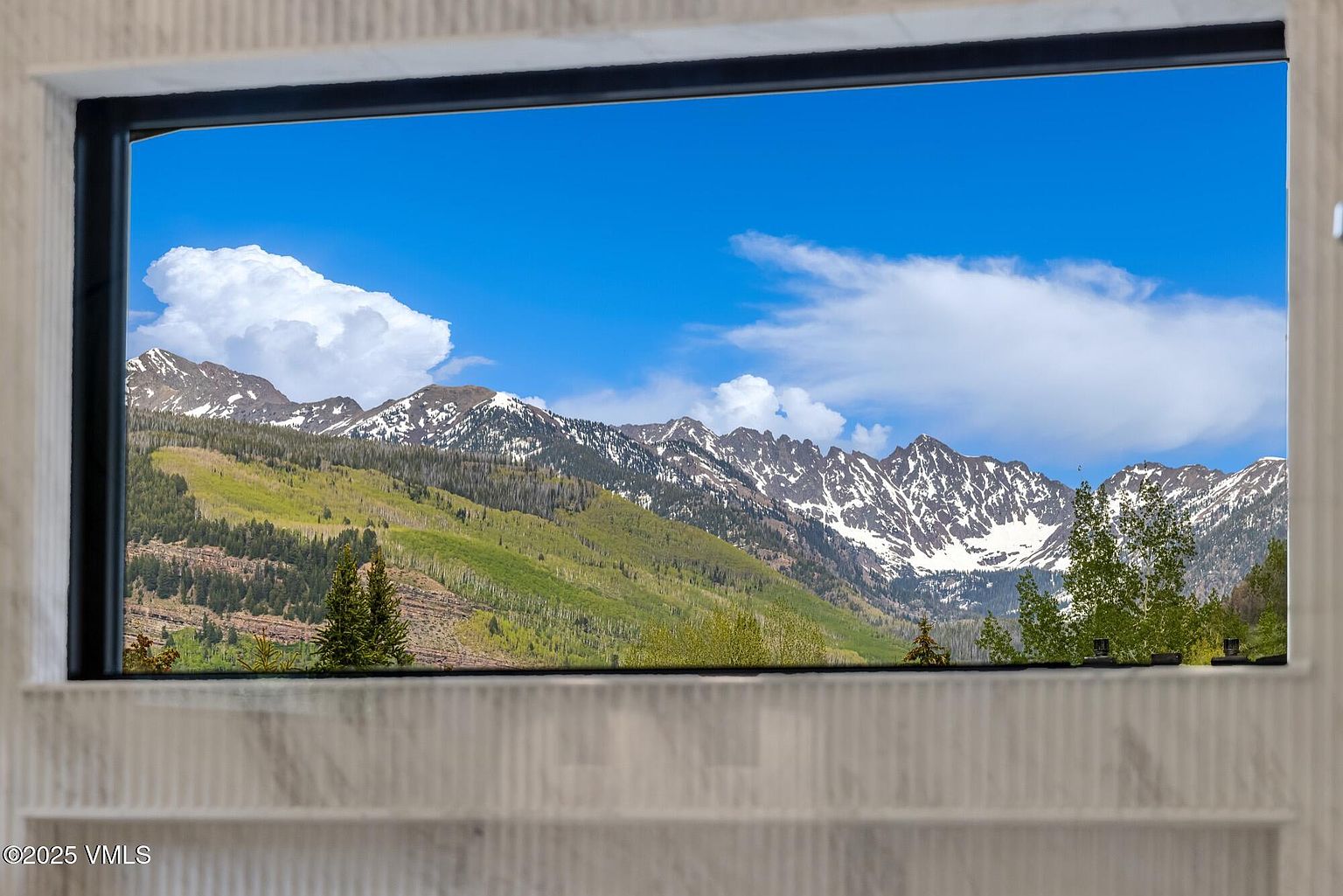
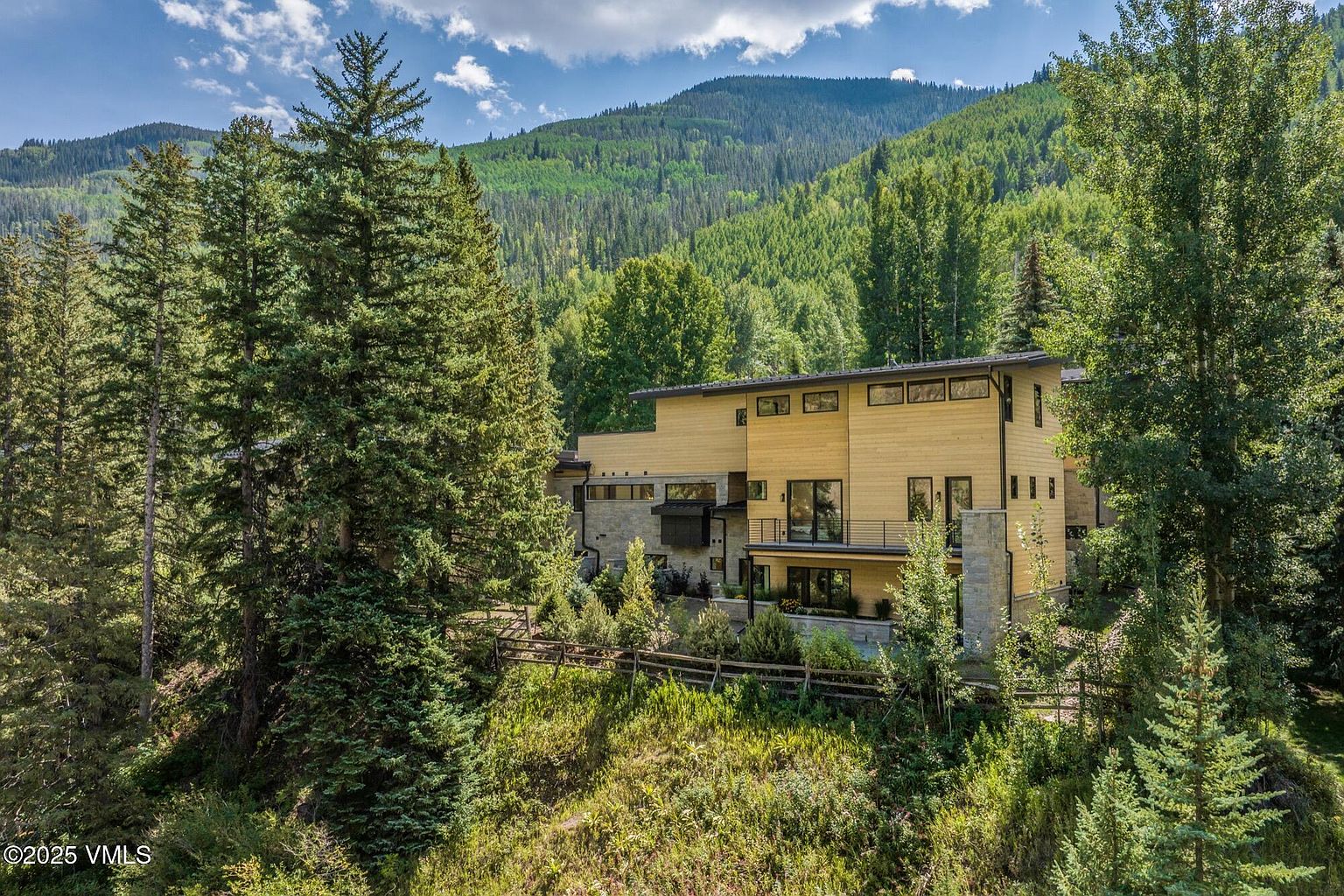
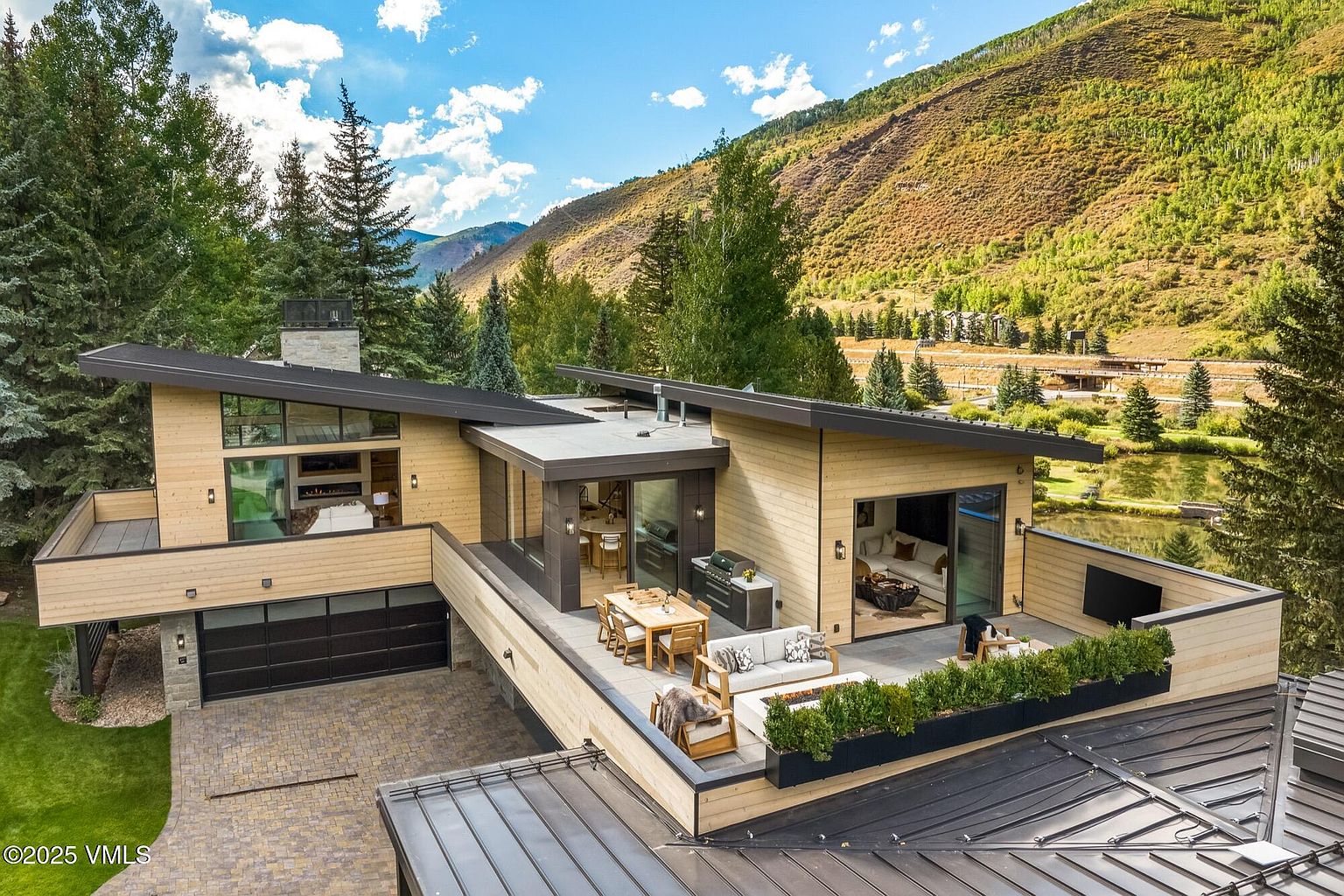
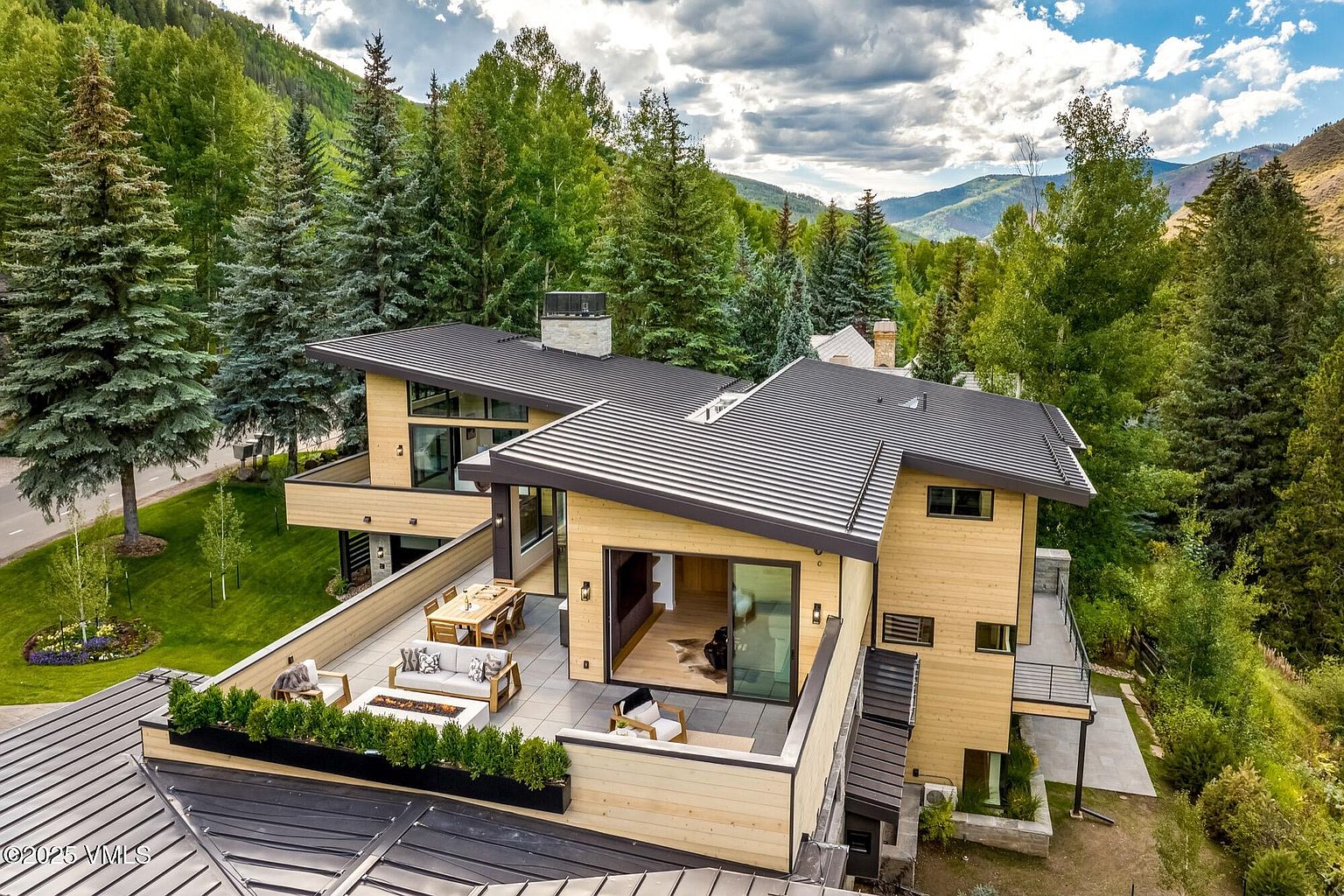
Gorehaus arrives fully realized — staged, complete, and ready to inhabit — a rarity in a market where vision so often precedes execution. Designed by architect Kyle Webb, the home earns its name honestly: the Gore Range is not merely a backdrop here but a constant, almost immersive presence, framed through floor-to-ceiling glass at nearly every turn. The exterior vocabulary is precise and deliberate — cedar siding, honed stone, blackened steel, and glass — materials chosen not for trend but for their honest conversation with the alpine terrain surrounding them.
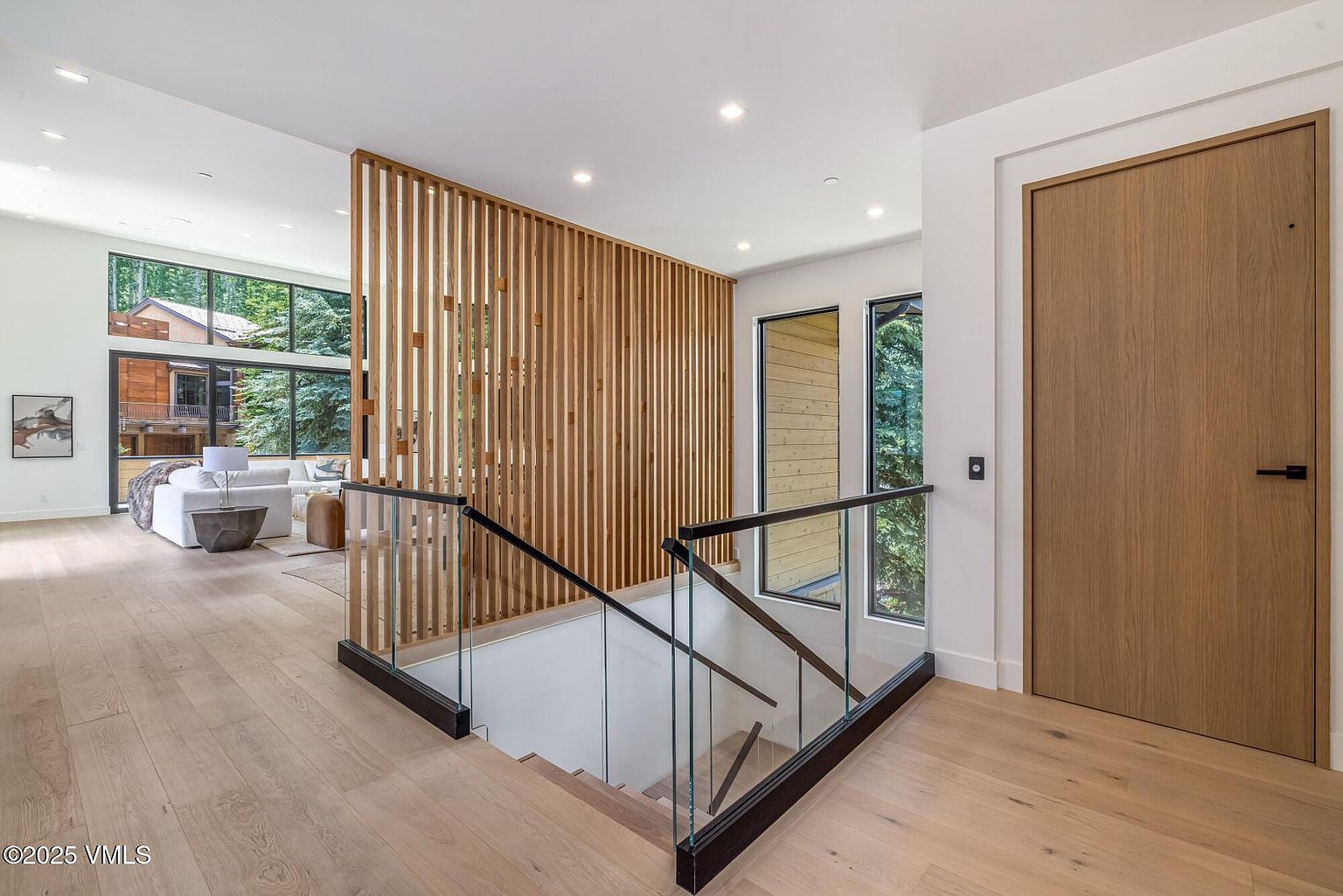
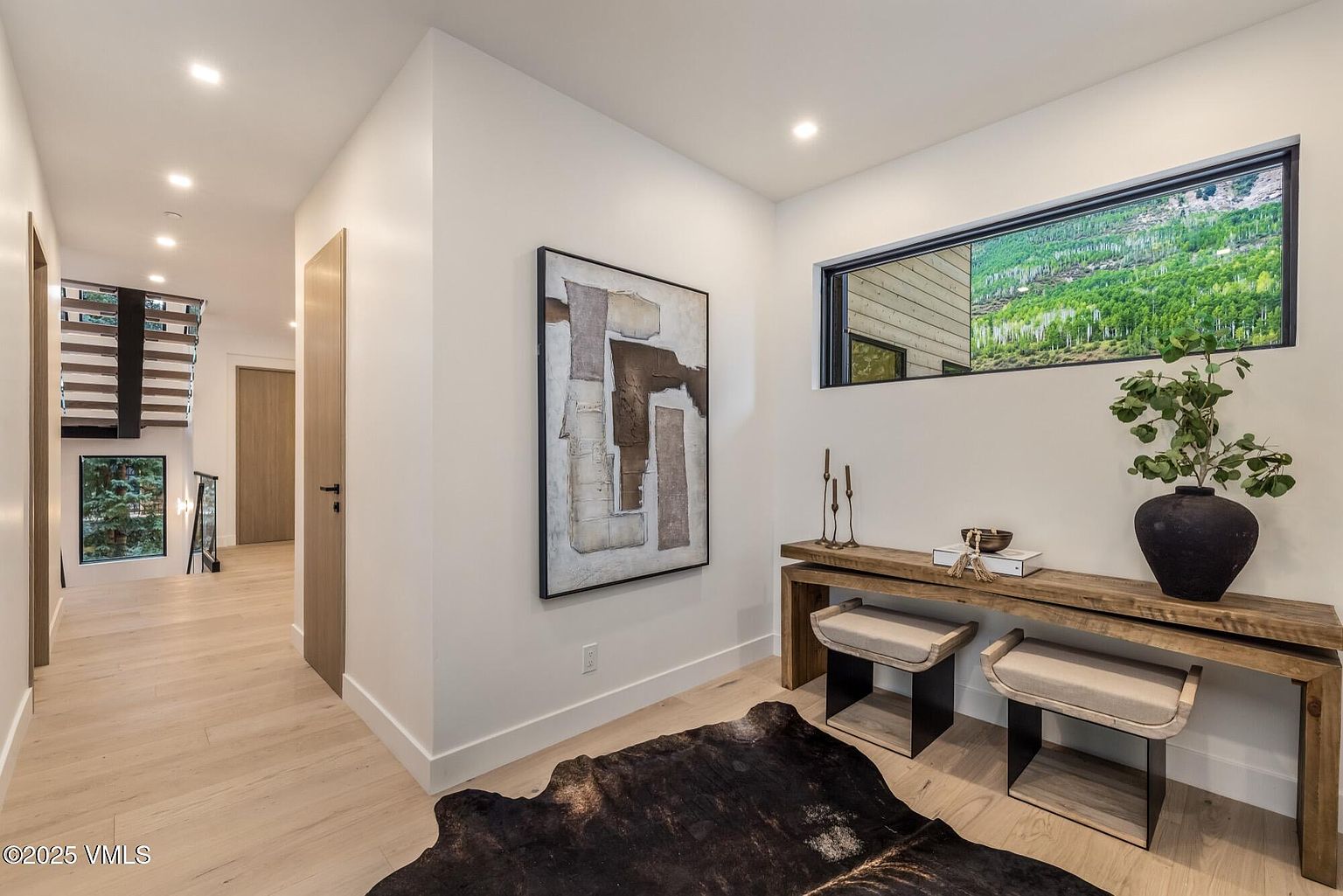
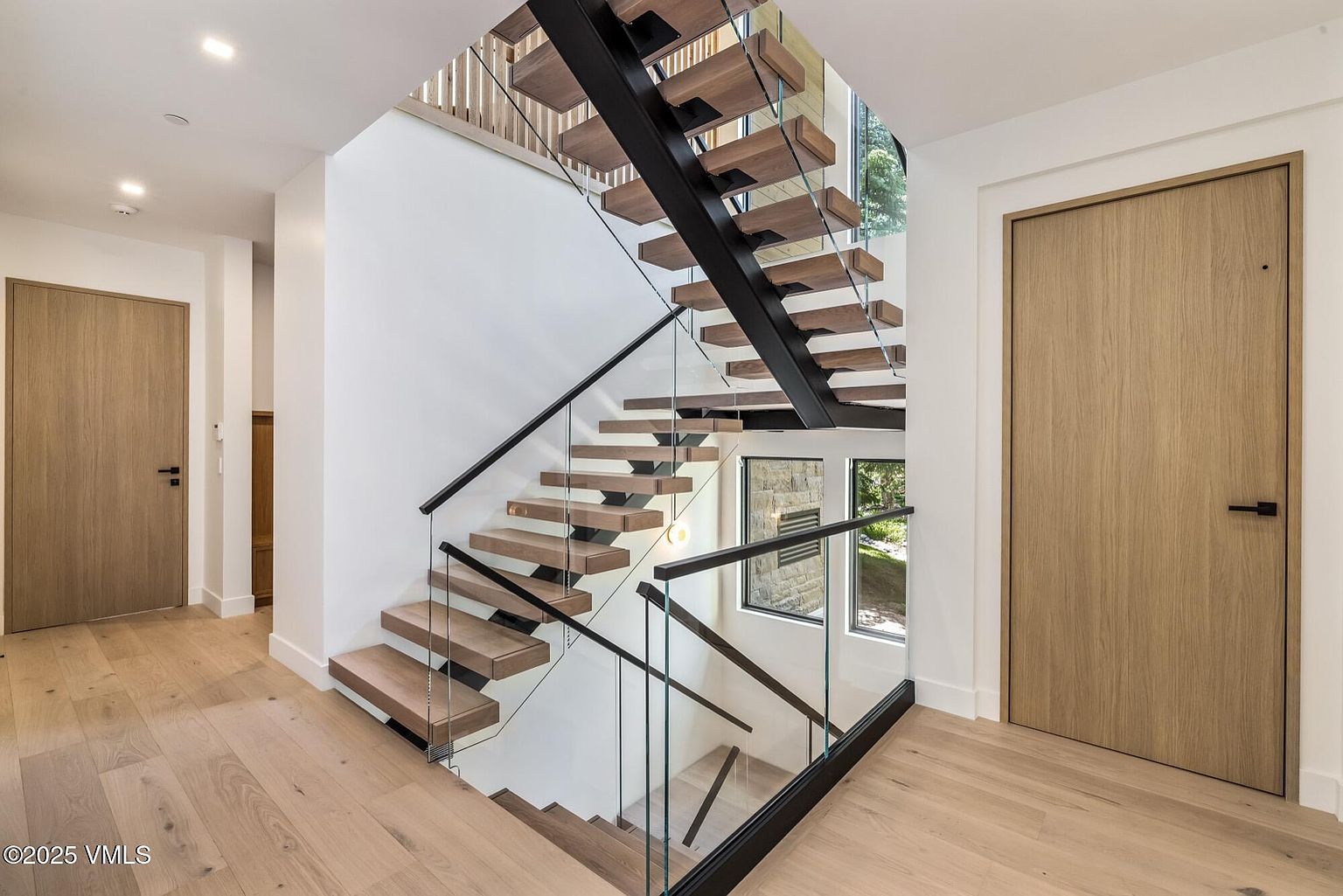
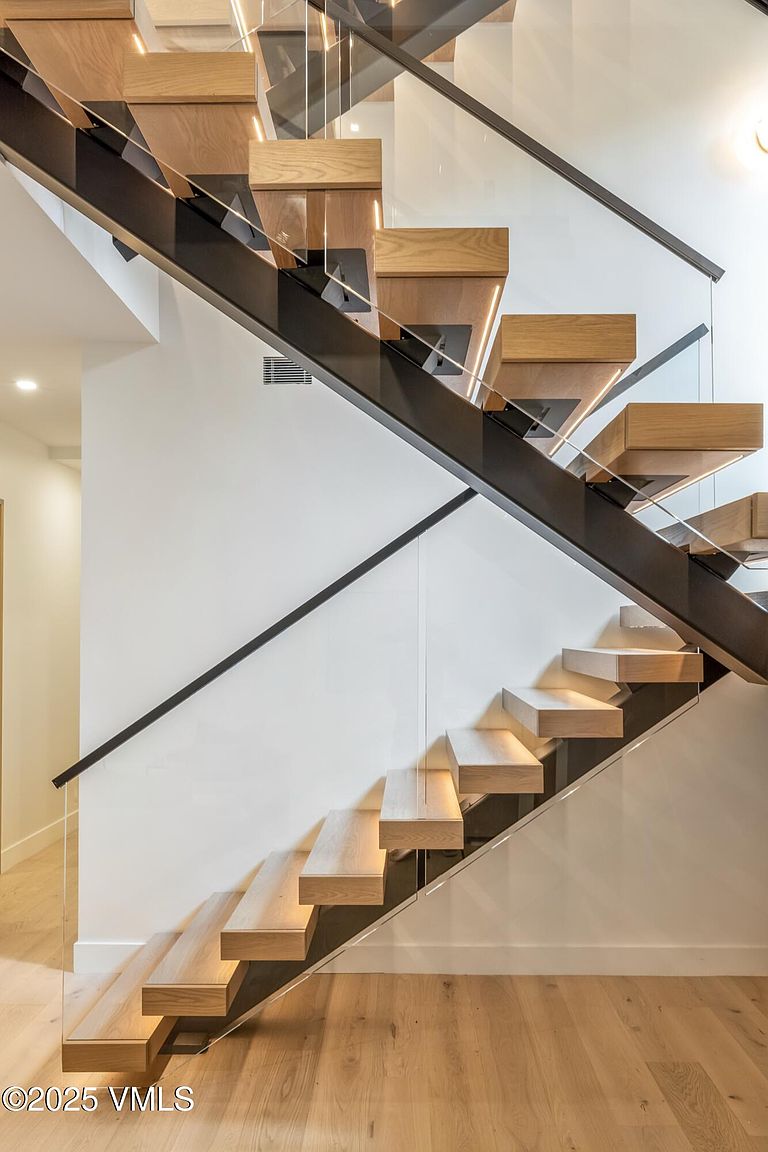
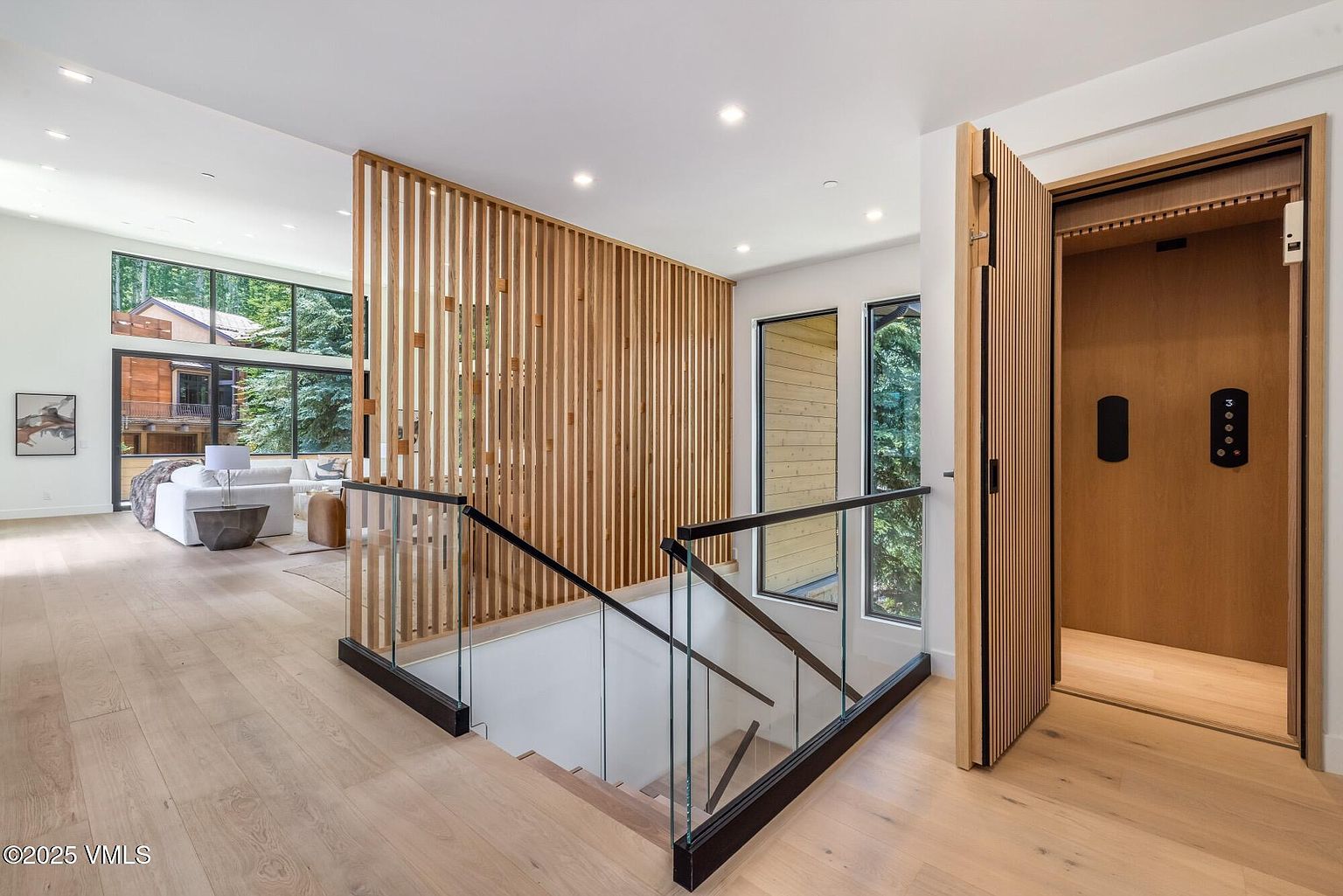
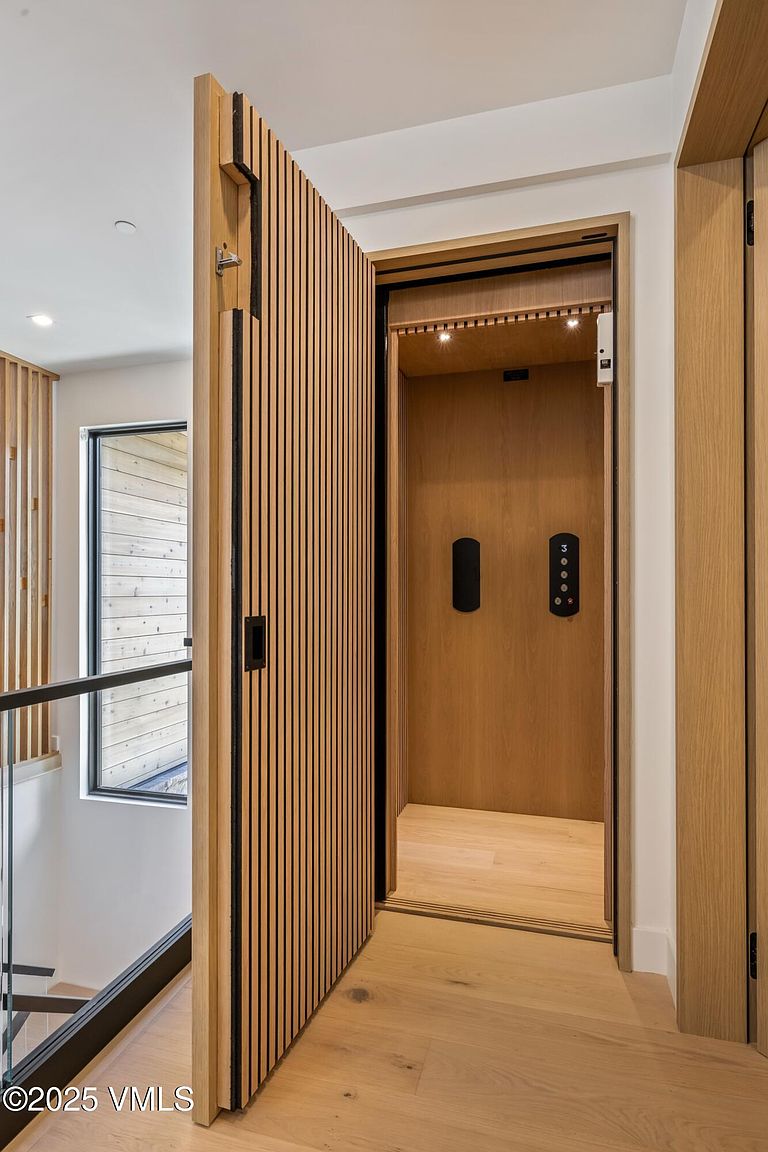
Entry into Gorehaus is an architectural moment in itself. A floating staircase with light wood treads, a sleek black metal frame, and continuous glass railings draws the eye upward through soaring ceilings, immediately establishing the home's commitment to openness and light. A private elevator, discreetly paneled in warm slatted wood, connects the garage and entry level to each floor — a thoughtful gesture toward accessibility without compromising aesthetic integrity.
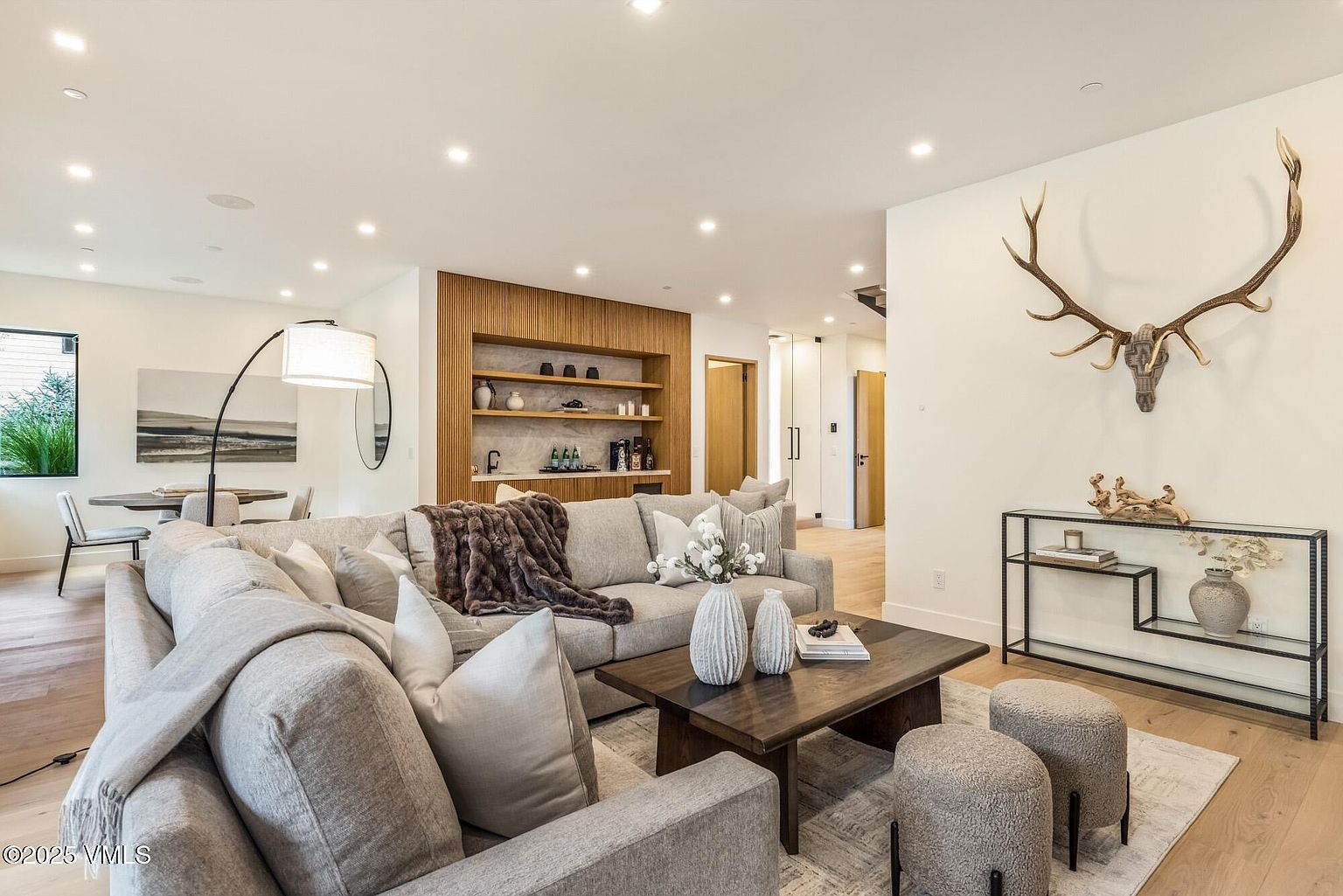
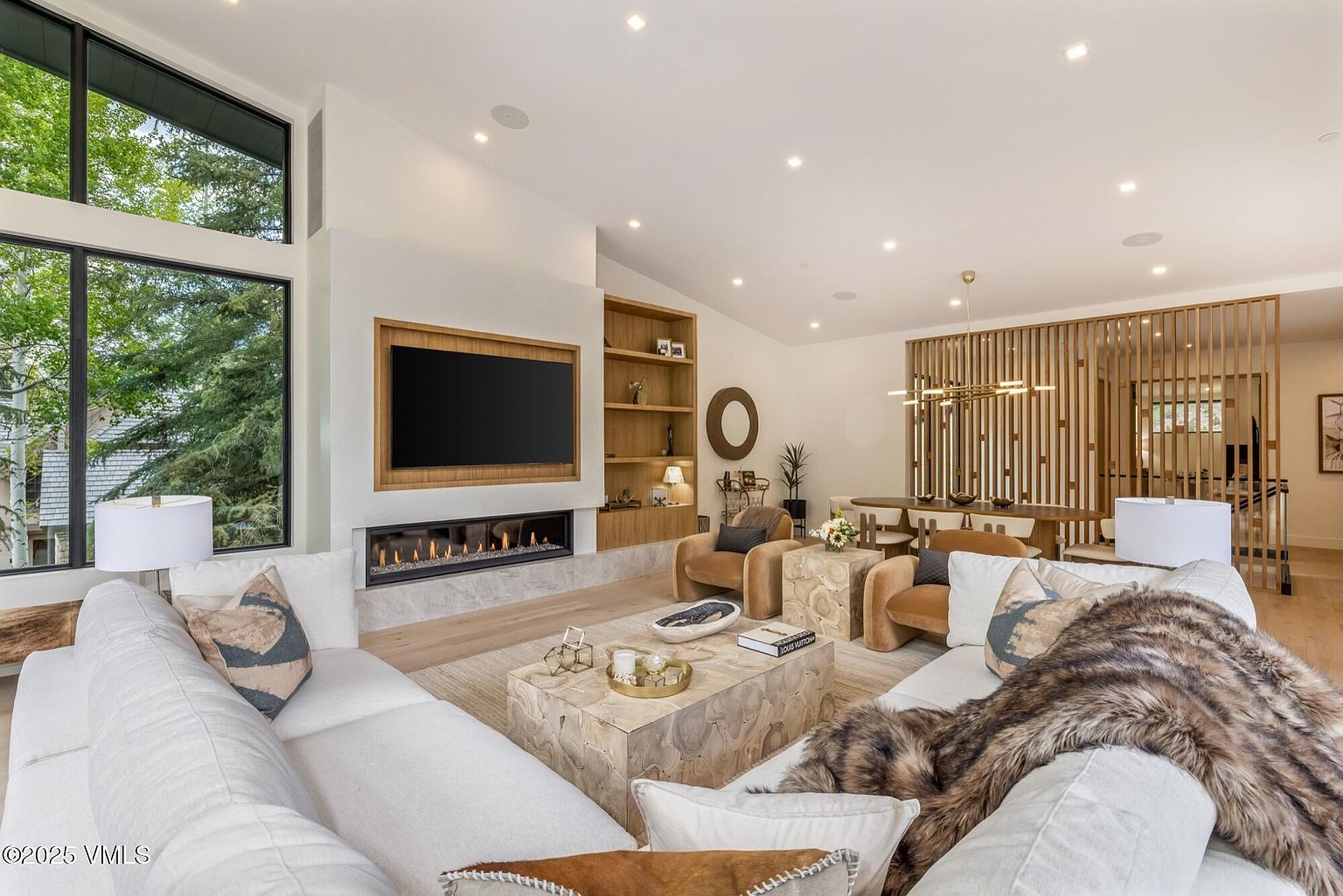
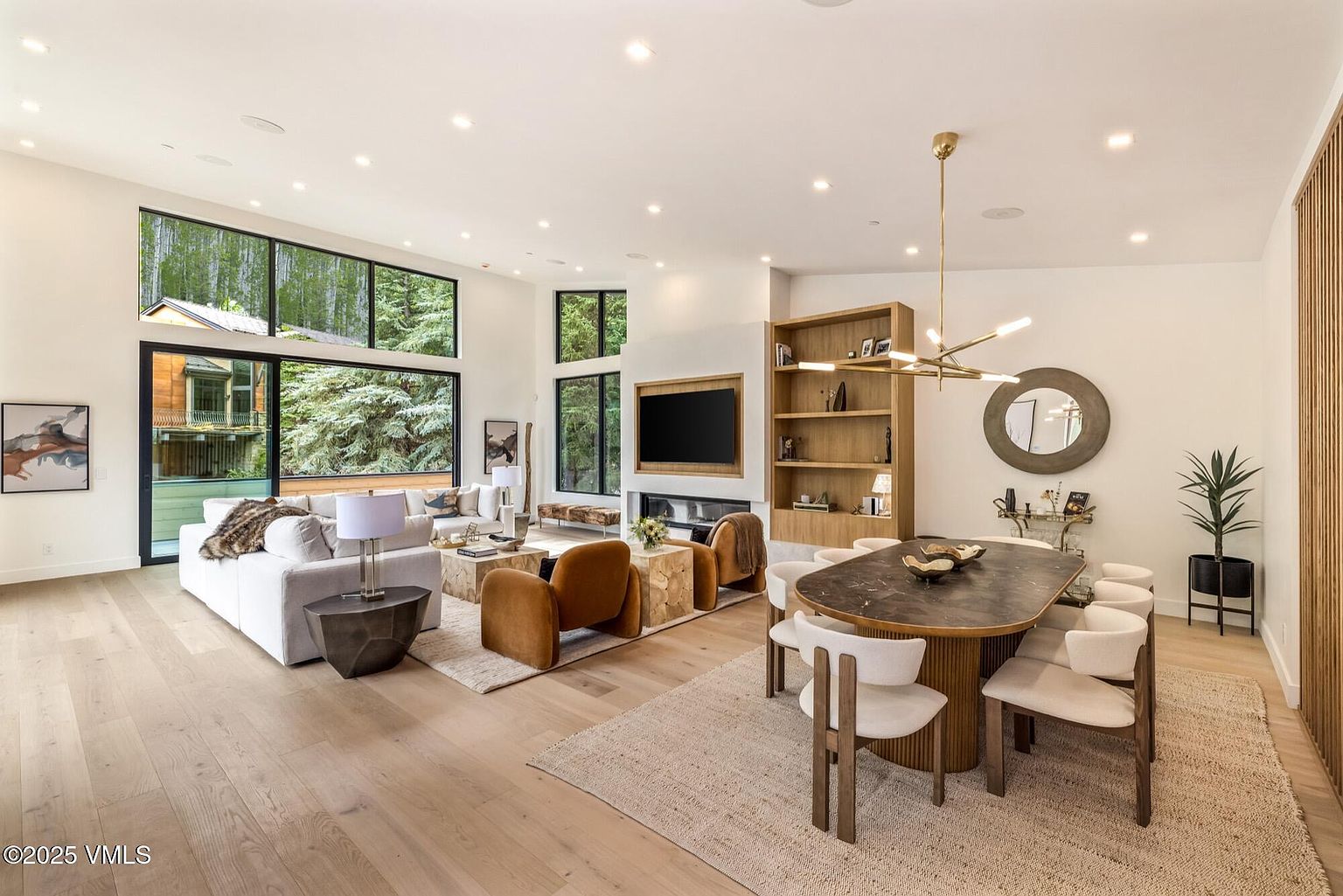
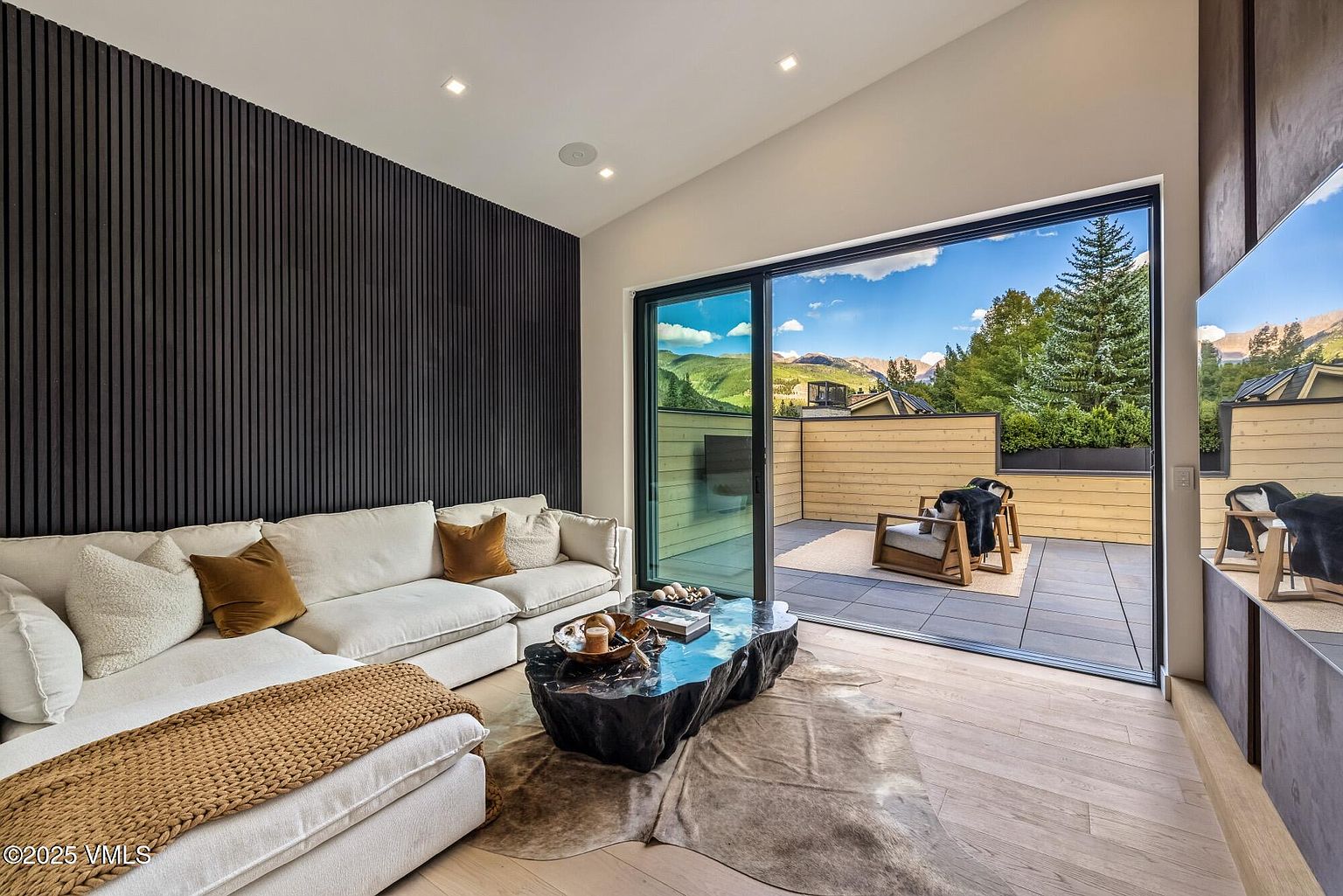
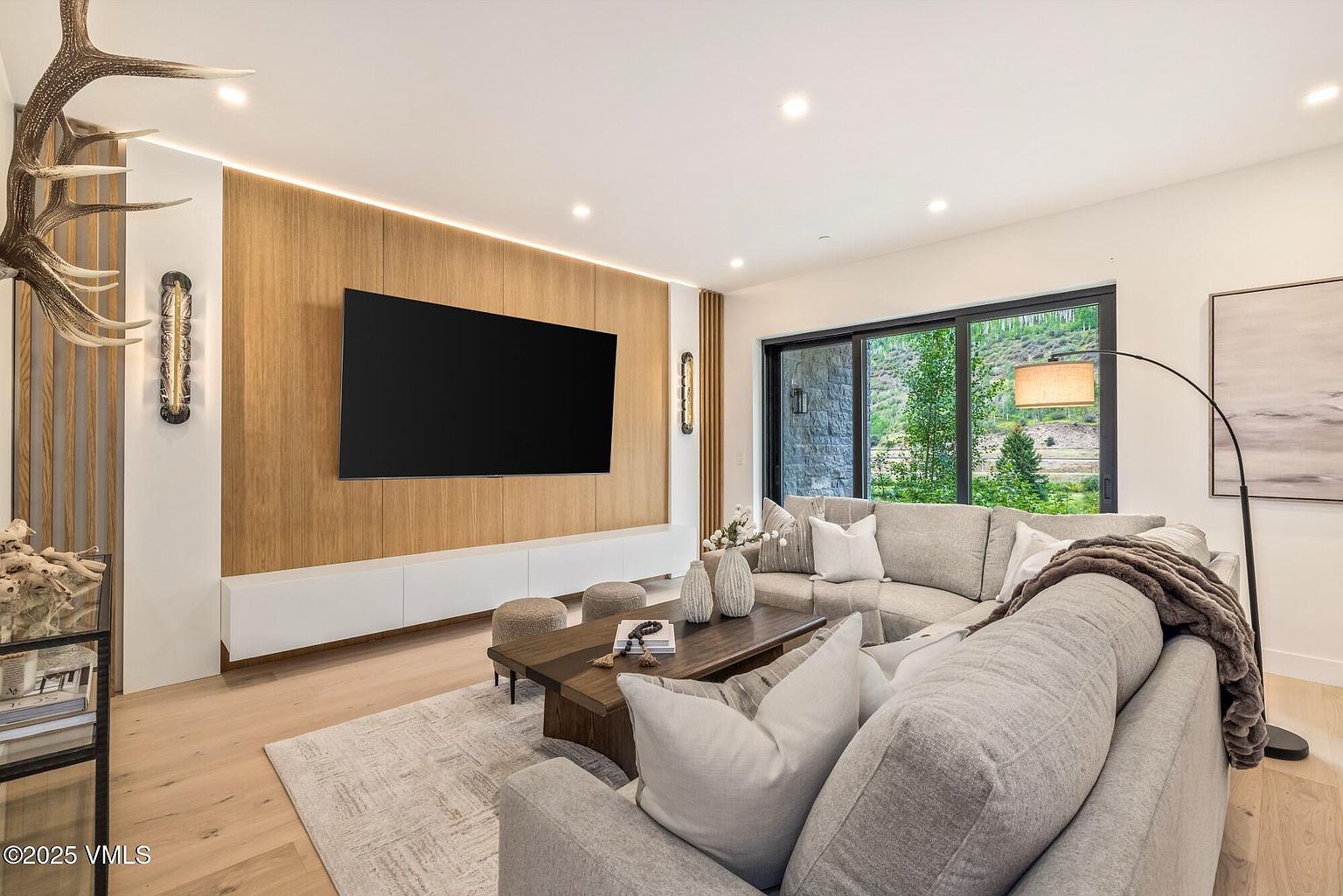
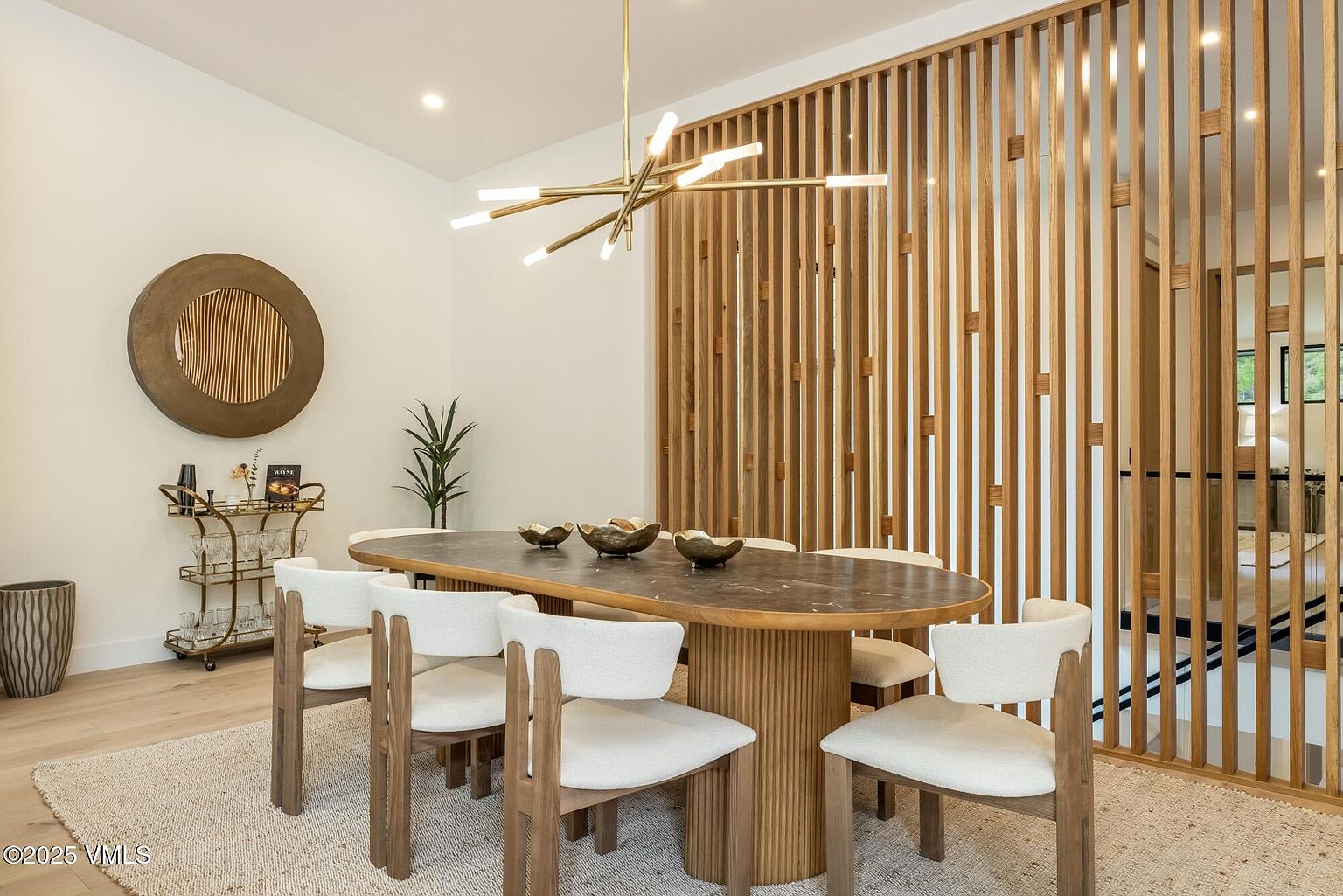
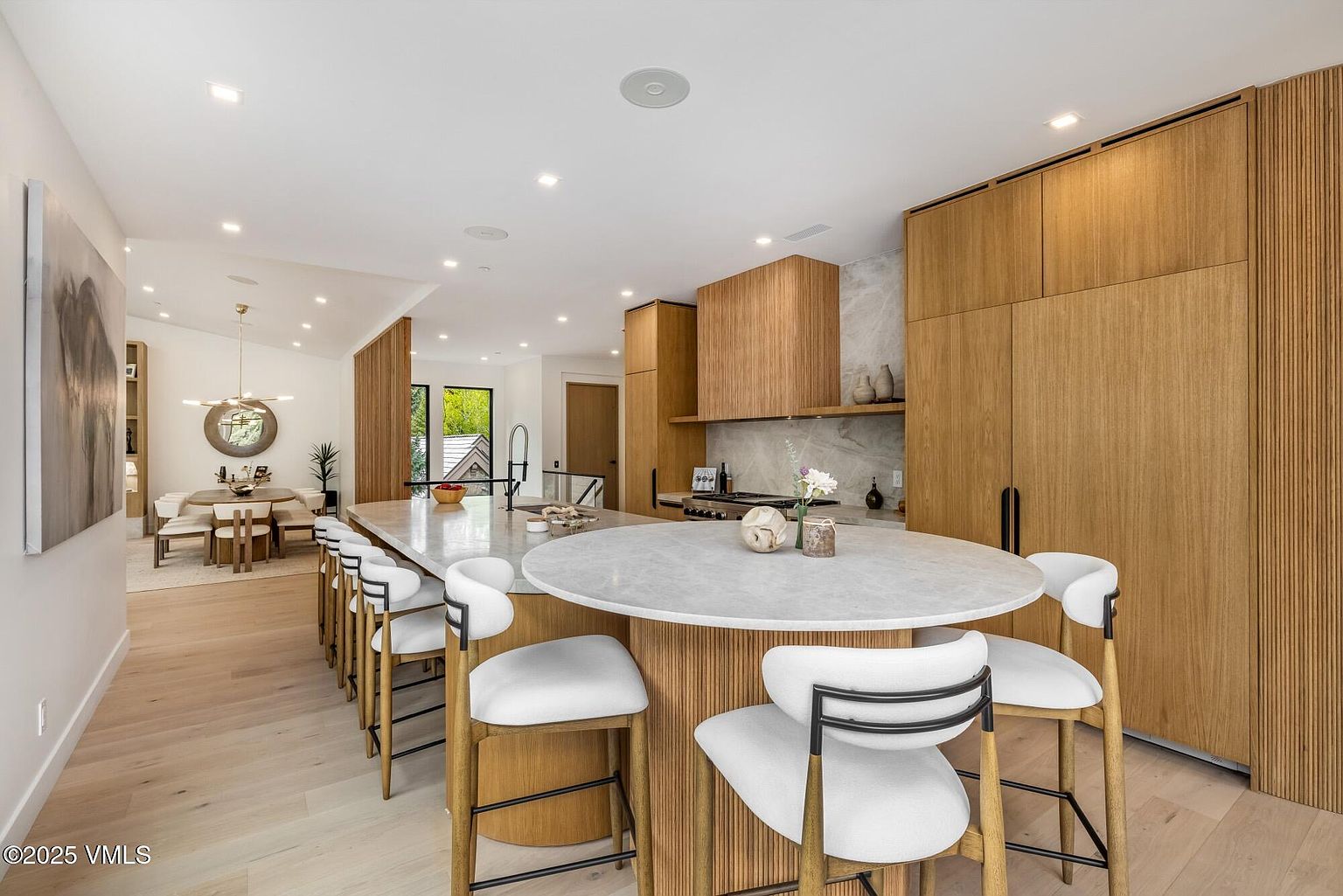
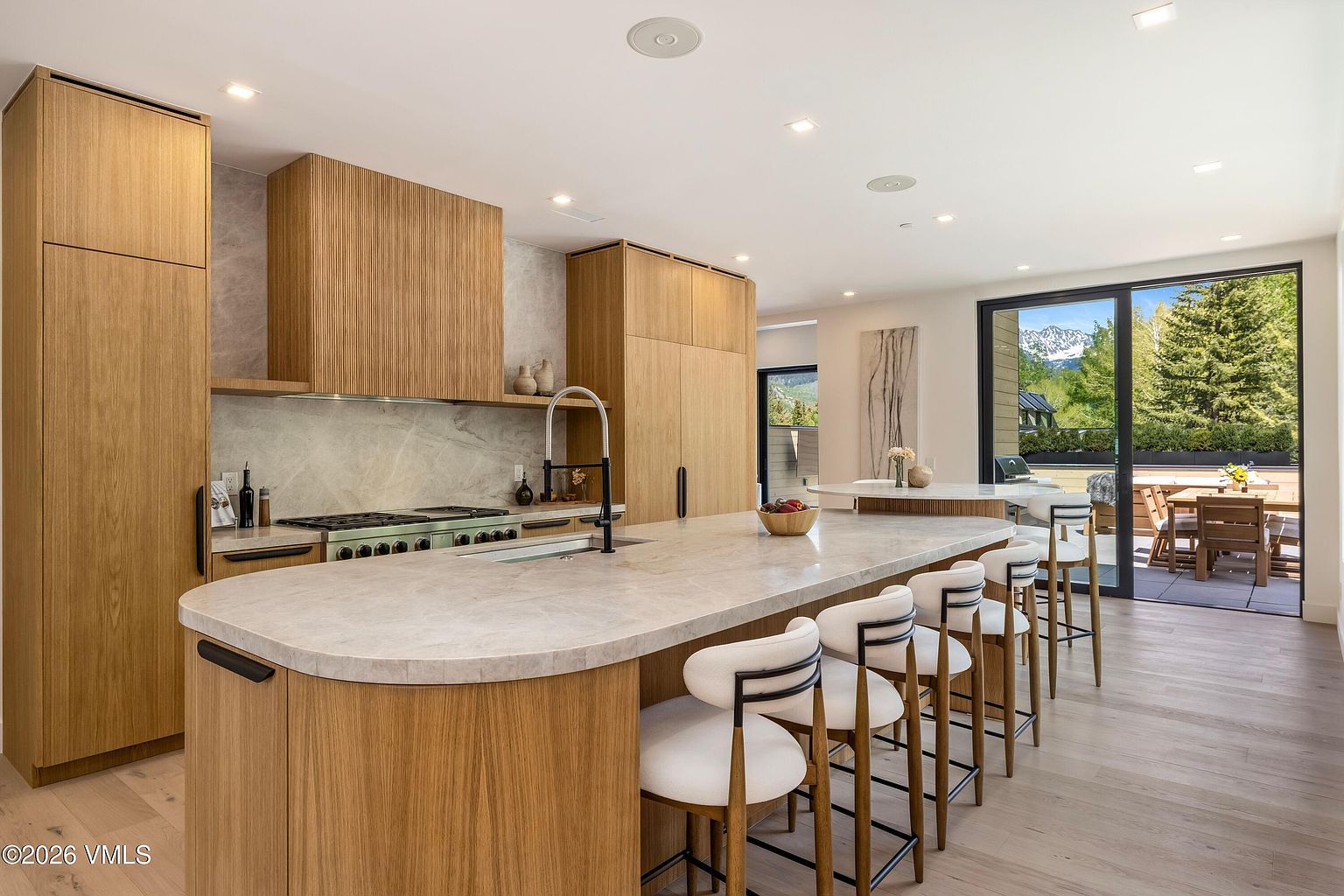
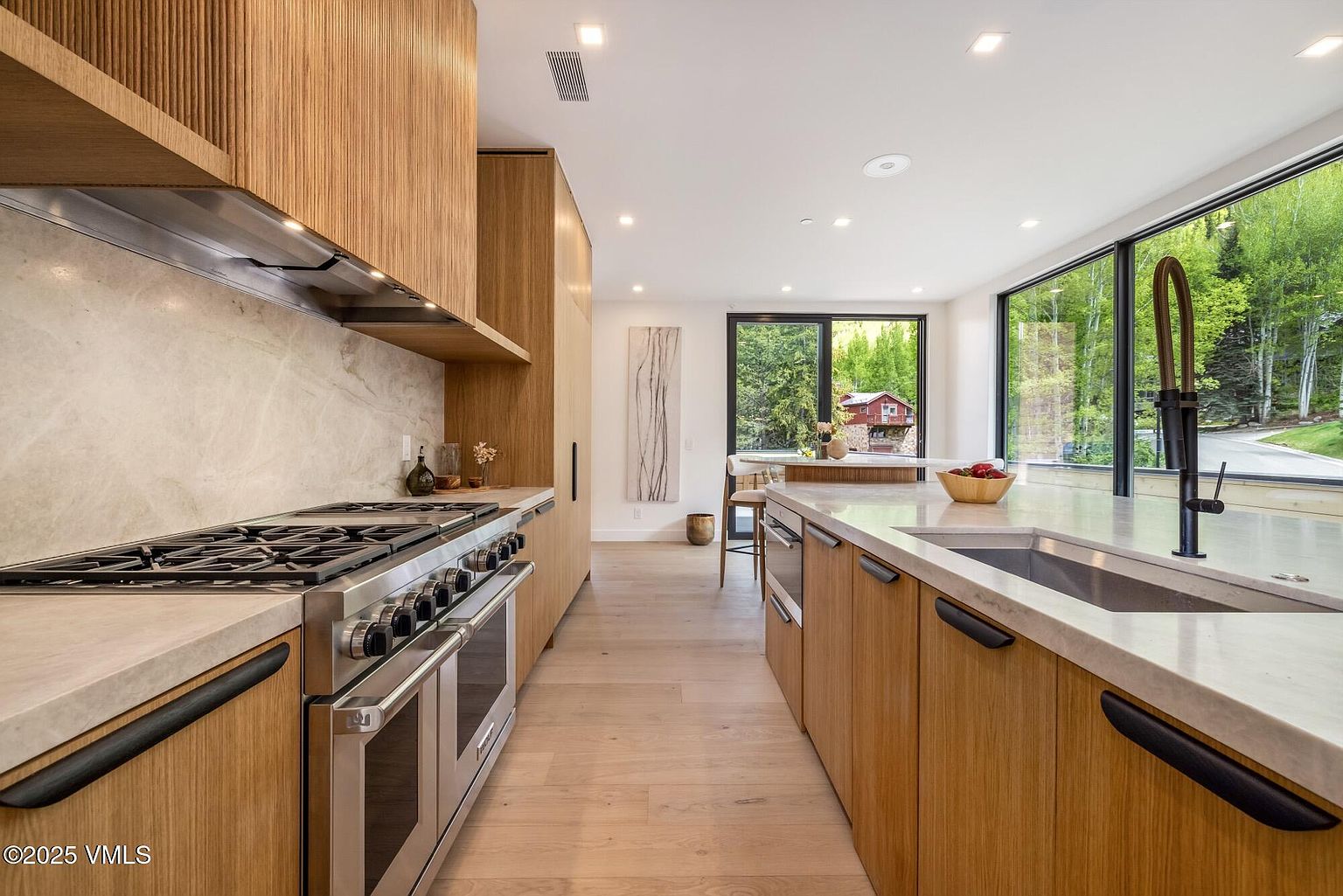
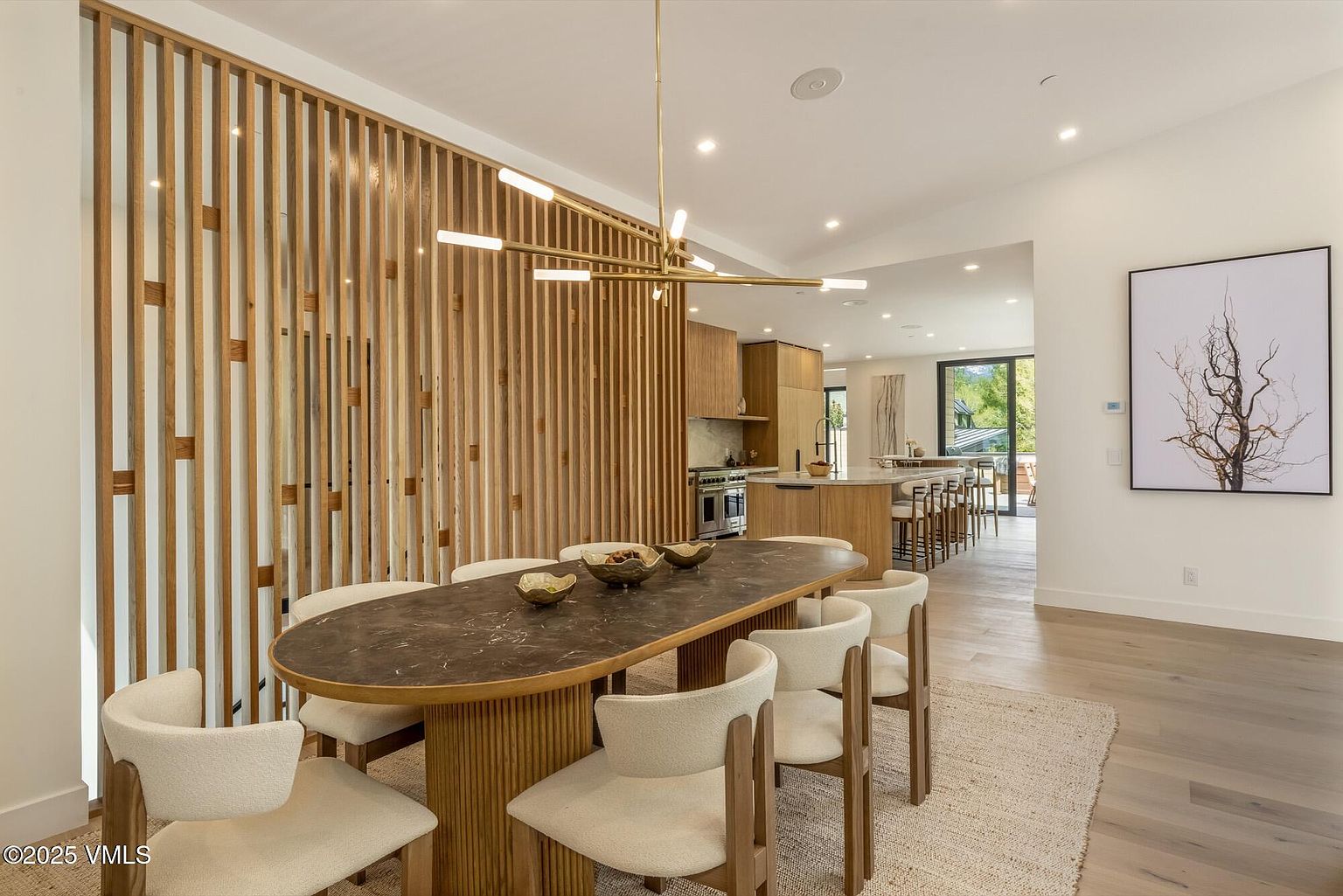
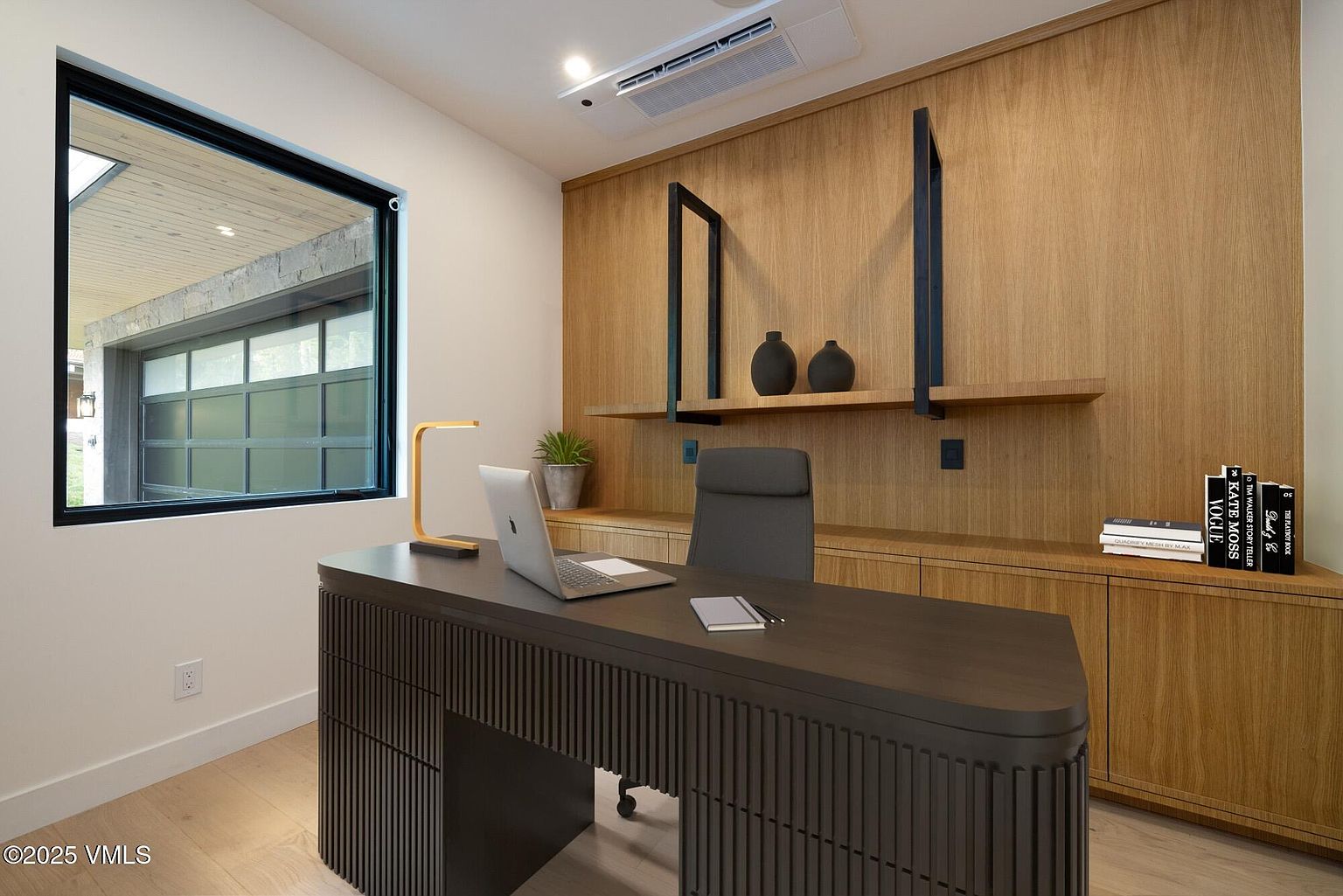
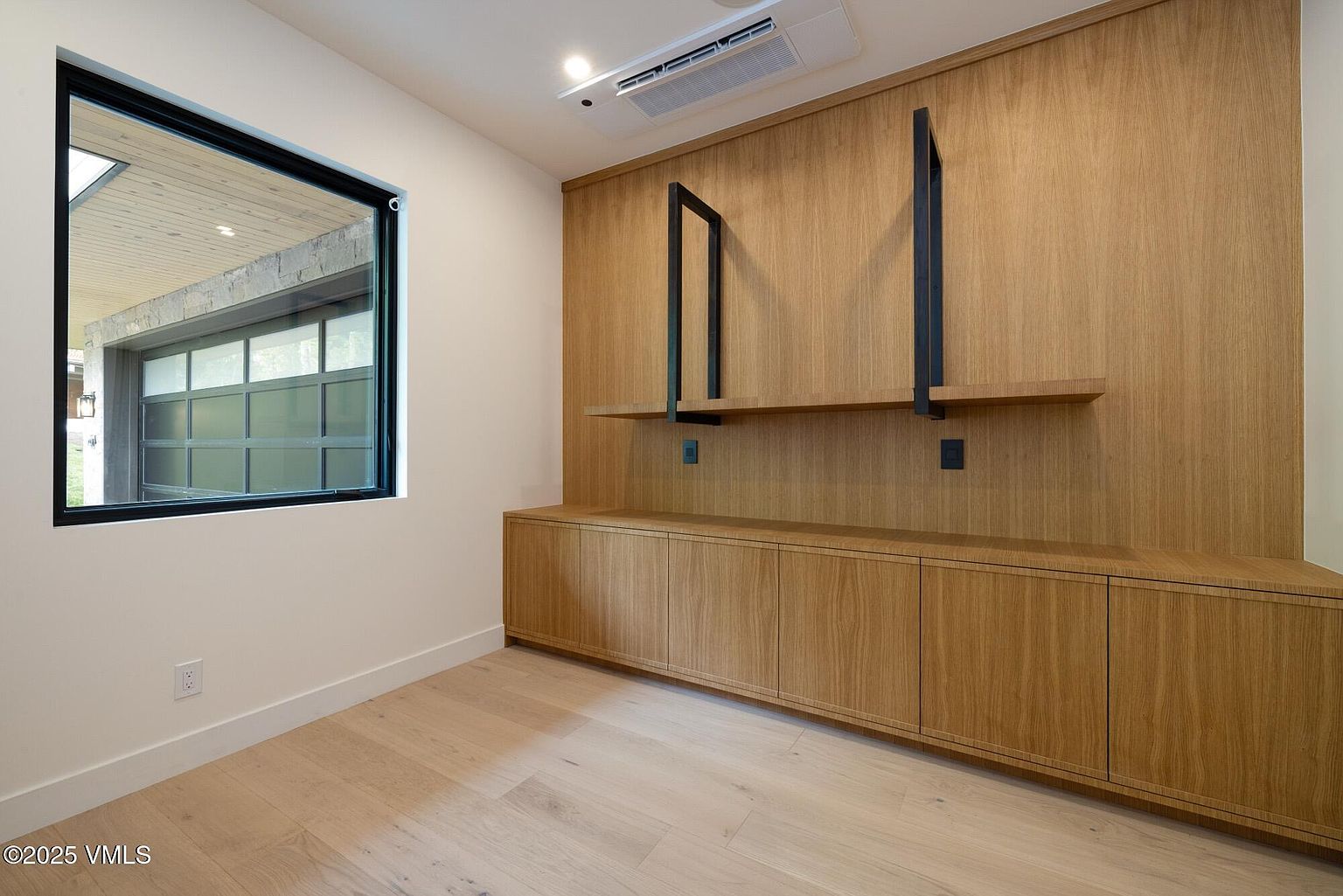
The main living level is organized around a stone-clad fireplace and built-in shelving that anchor the great room, while large-format windows dissolve the boundary between interior warmth and mountain wilderness. The kitchen is the social heart of the home: a curved fluted-wood island with a light stone countertop commands the space, complemented by custom cabinetry, professional-grade appliances, and a stone backsplash. The adjacent dining area, illuminated by a sculptural chandelier, opens naturally to the living room through a slatted wood partition — a detail that provides definition without enclosure. The den, finished with a wood accent wall and a suede-lined, lighted television surround, offers a quieter register within the same open plan.
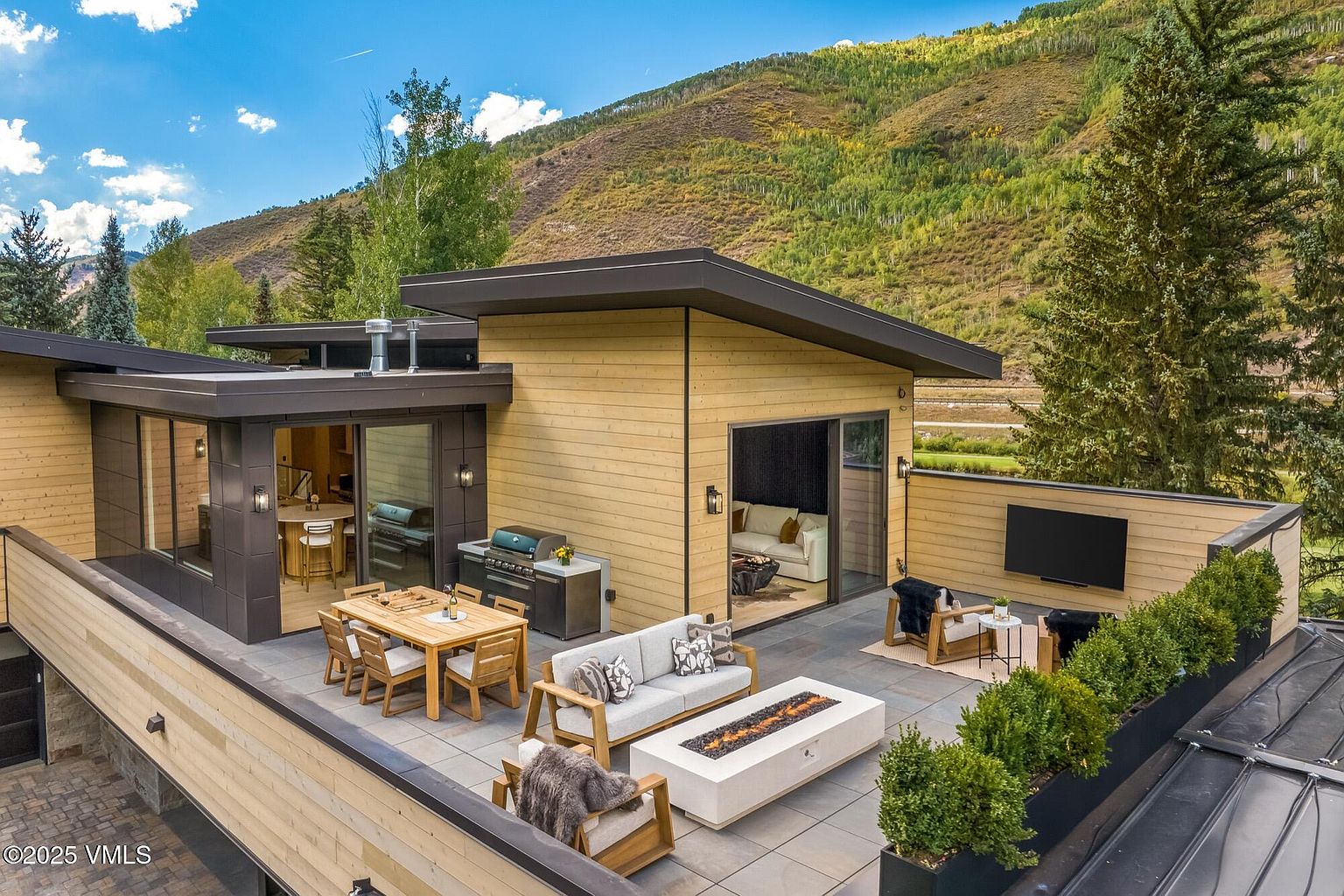
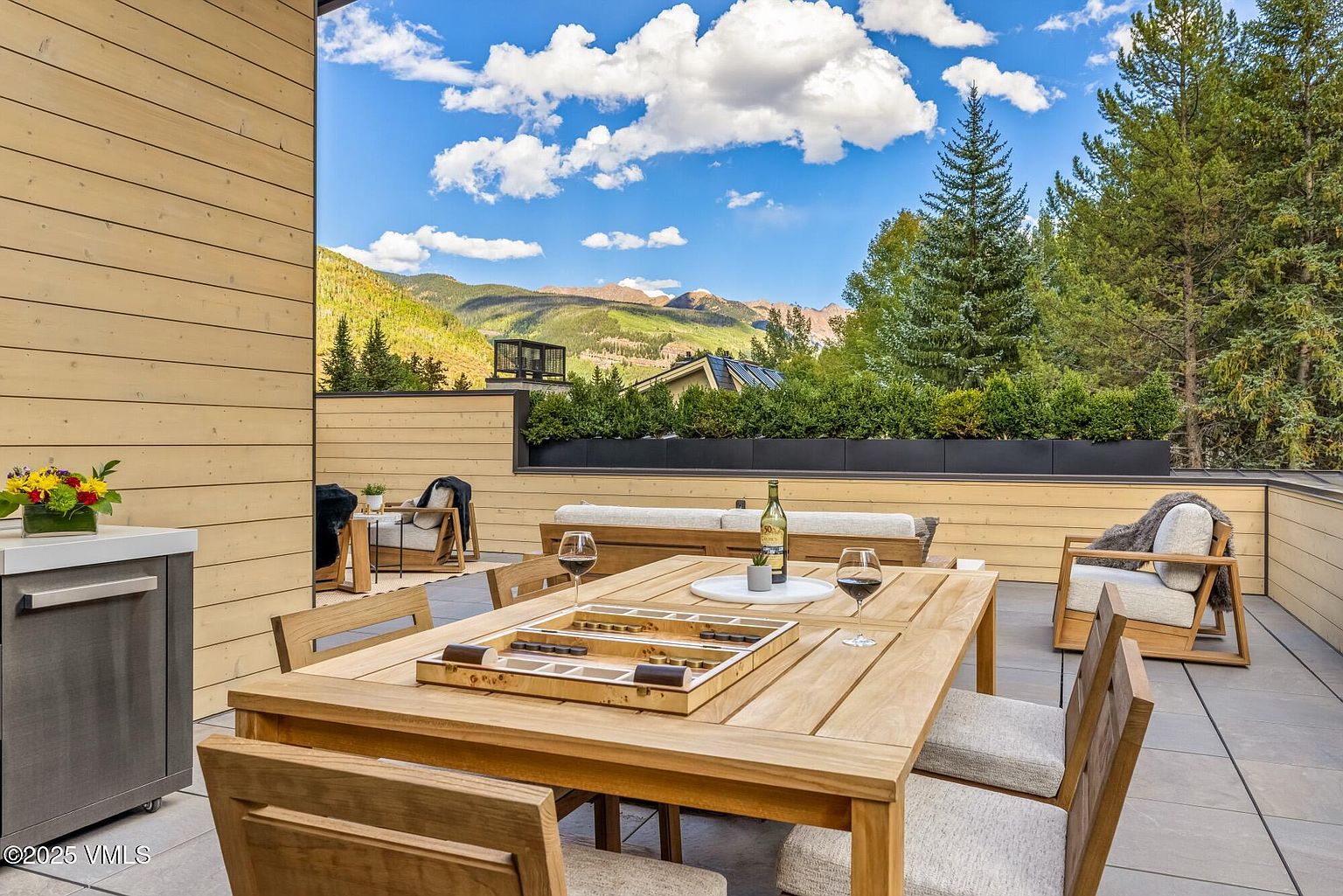
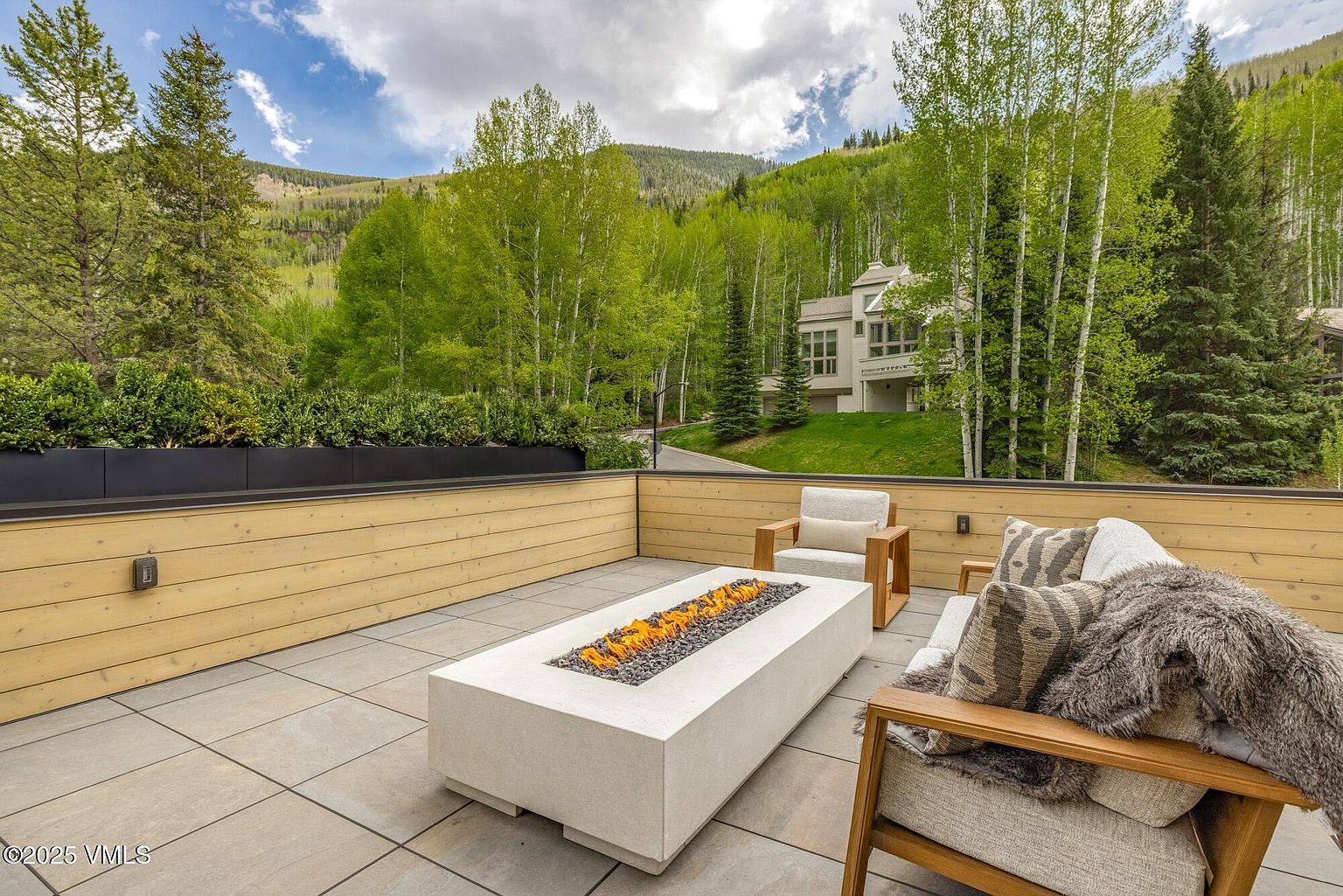
Multi-panel glass doors extend the main level outward to a heated terrace that functions as a true outdoor room: a grill station, fire pit, dining zone, lounge seating, and a wall-mounted television wired for sound, all framed by panoramic mountain views and finished in large-format stone tile.
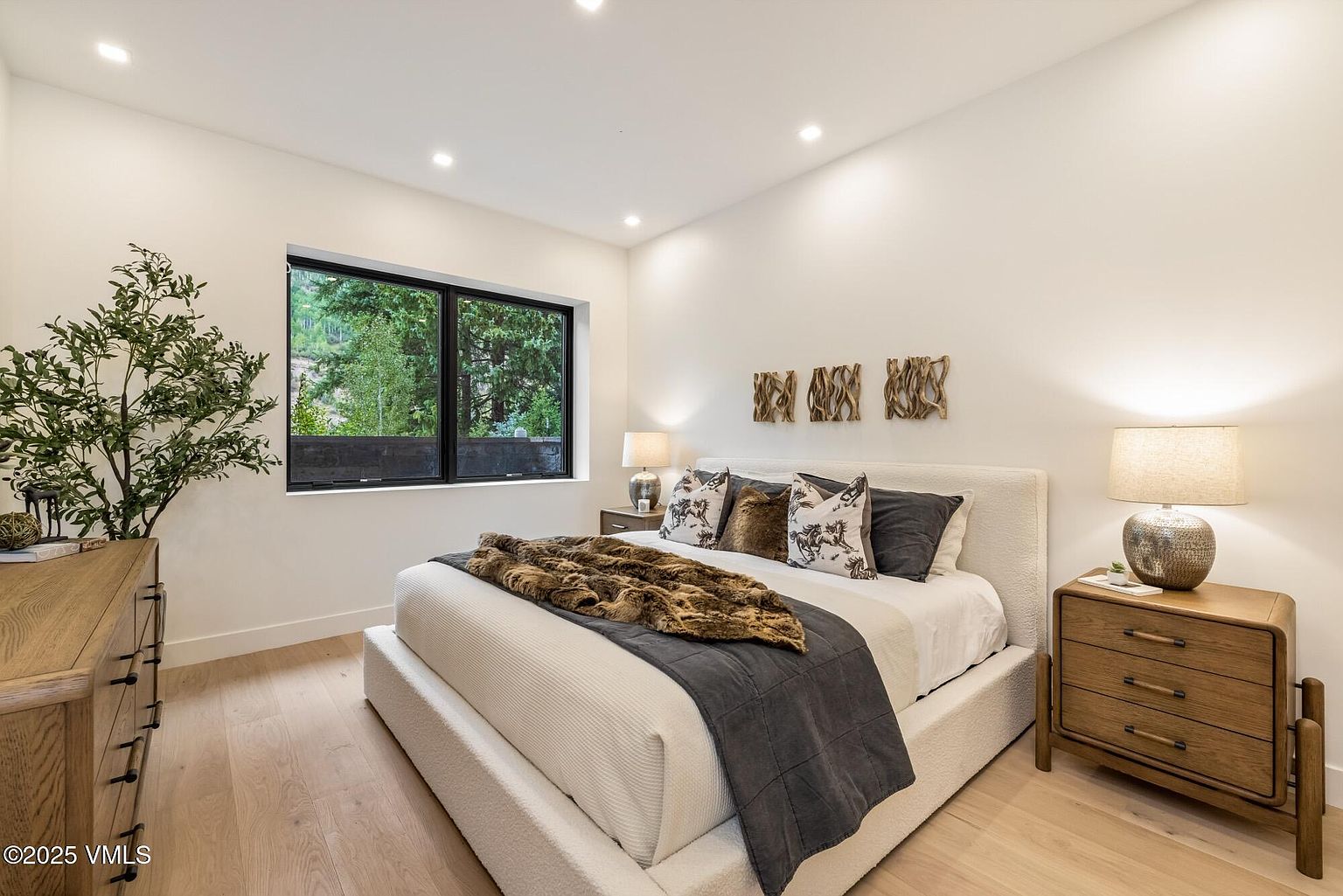
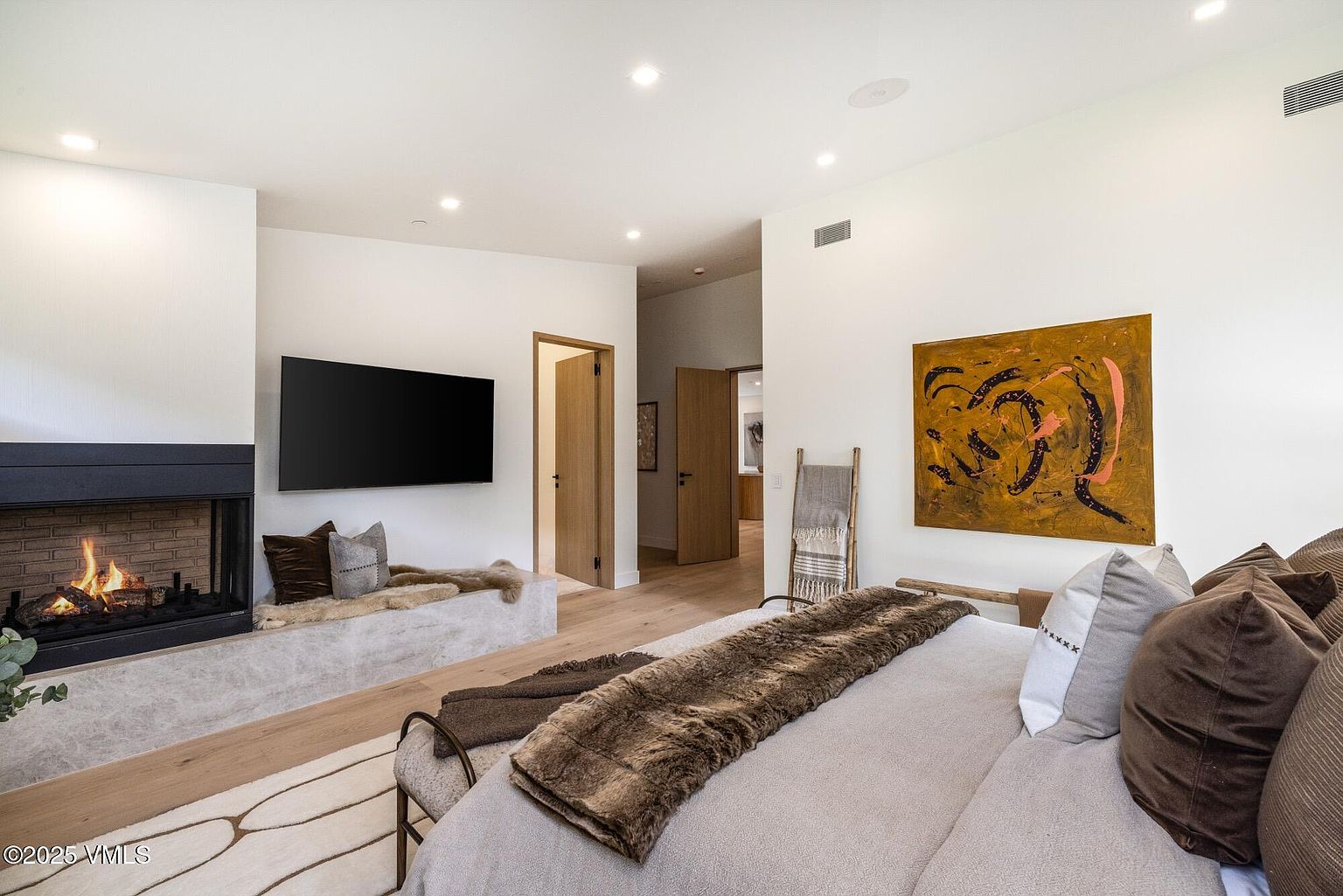
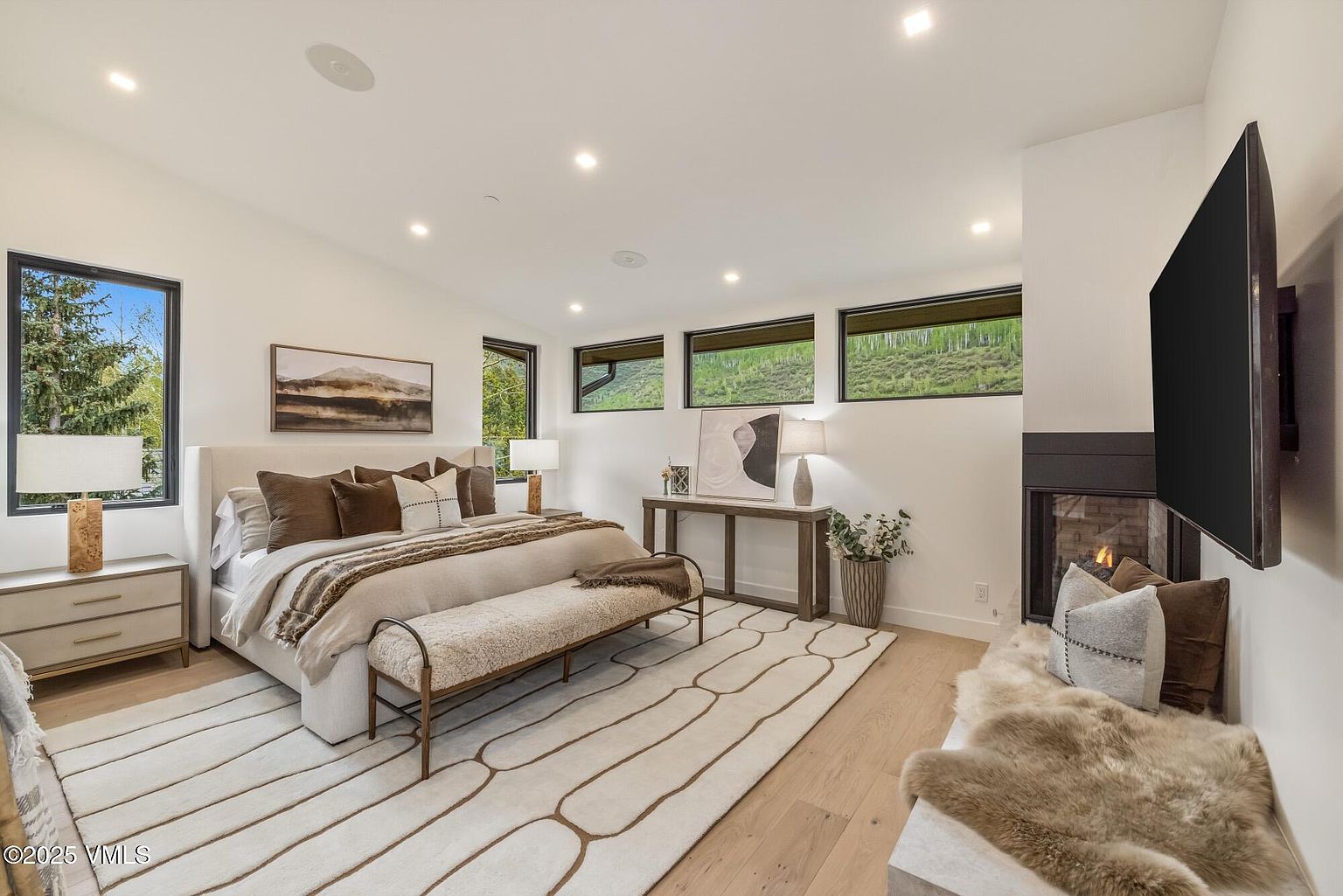
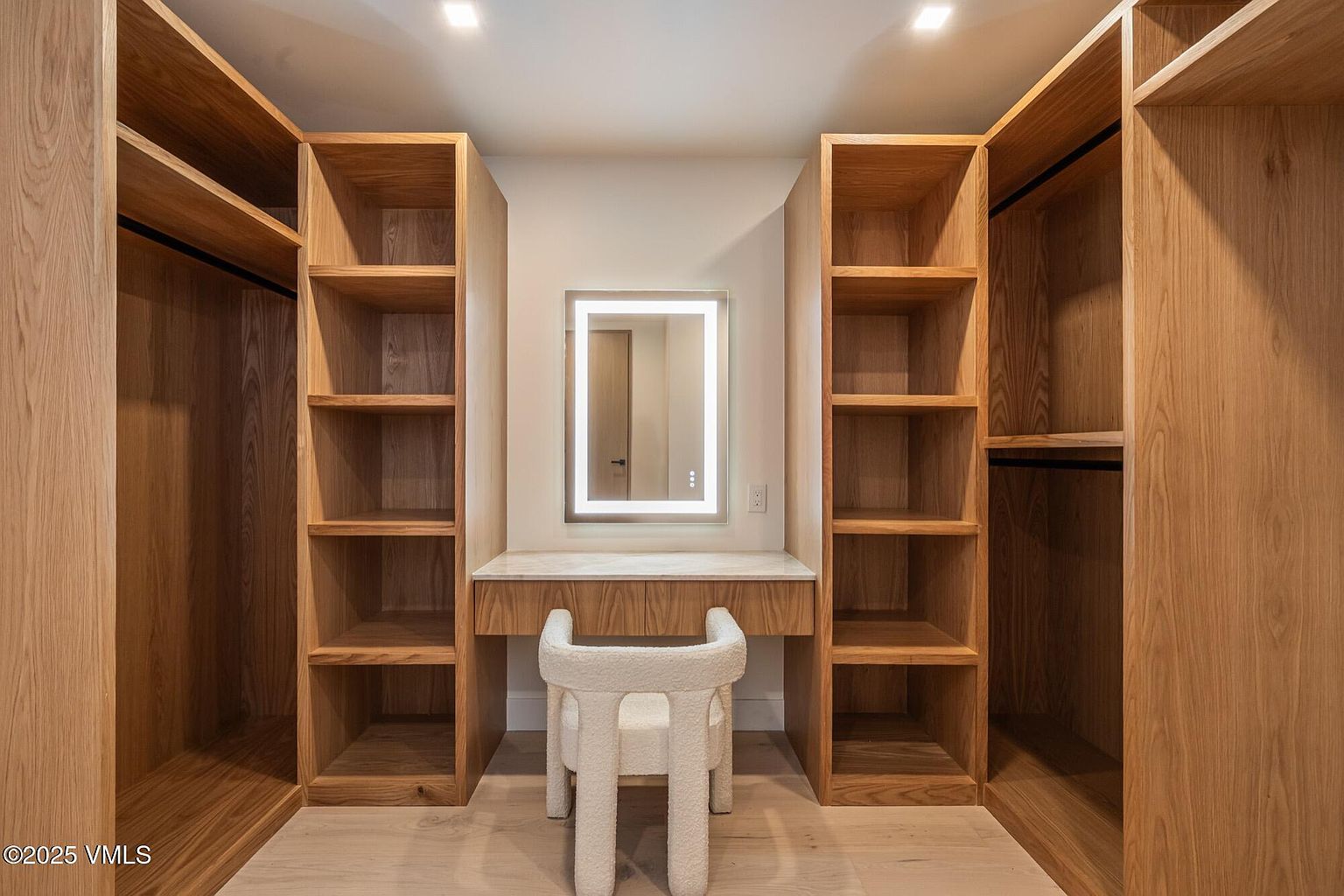
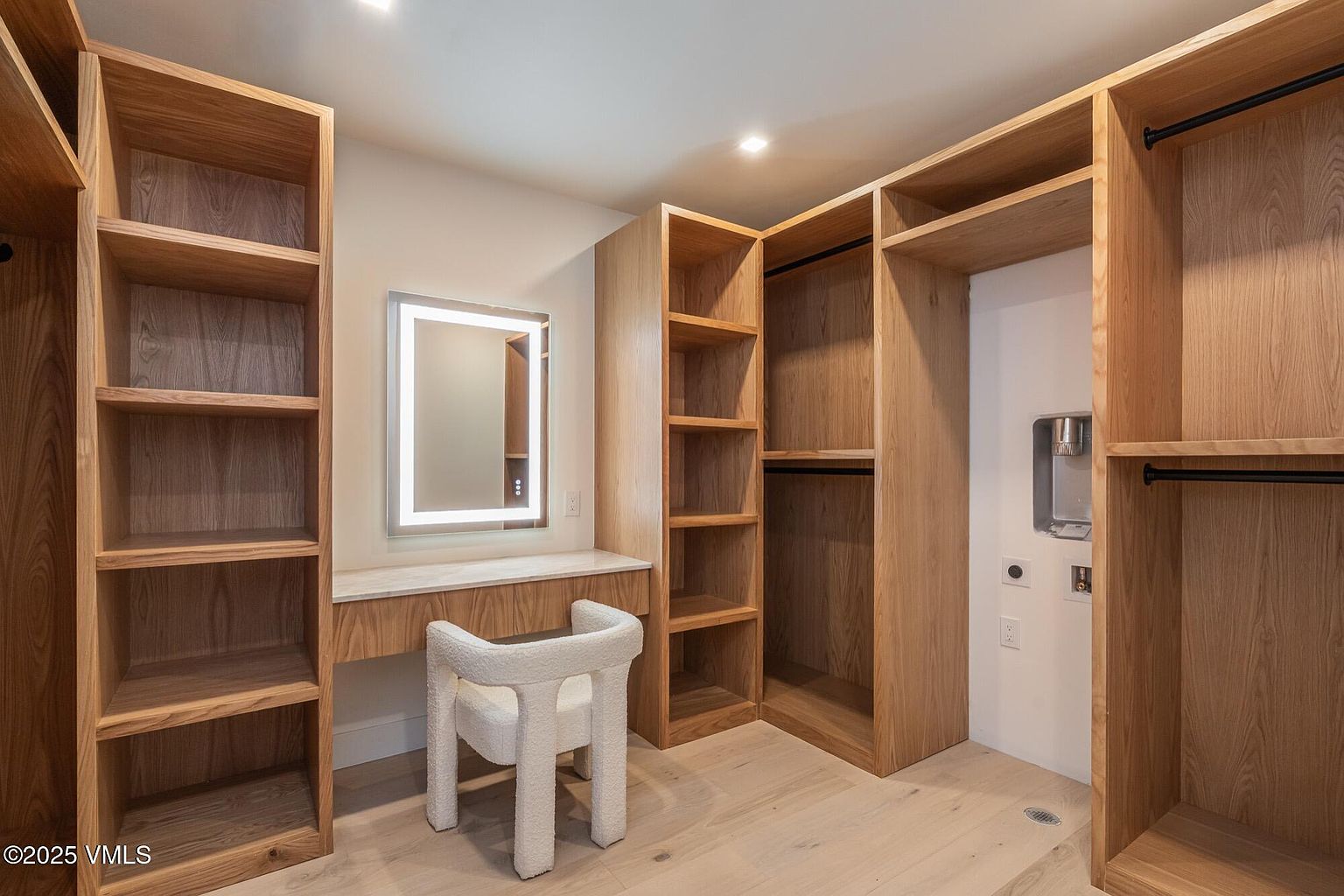
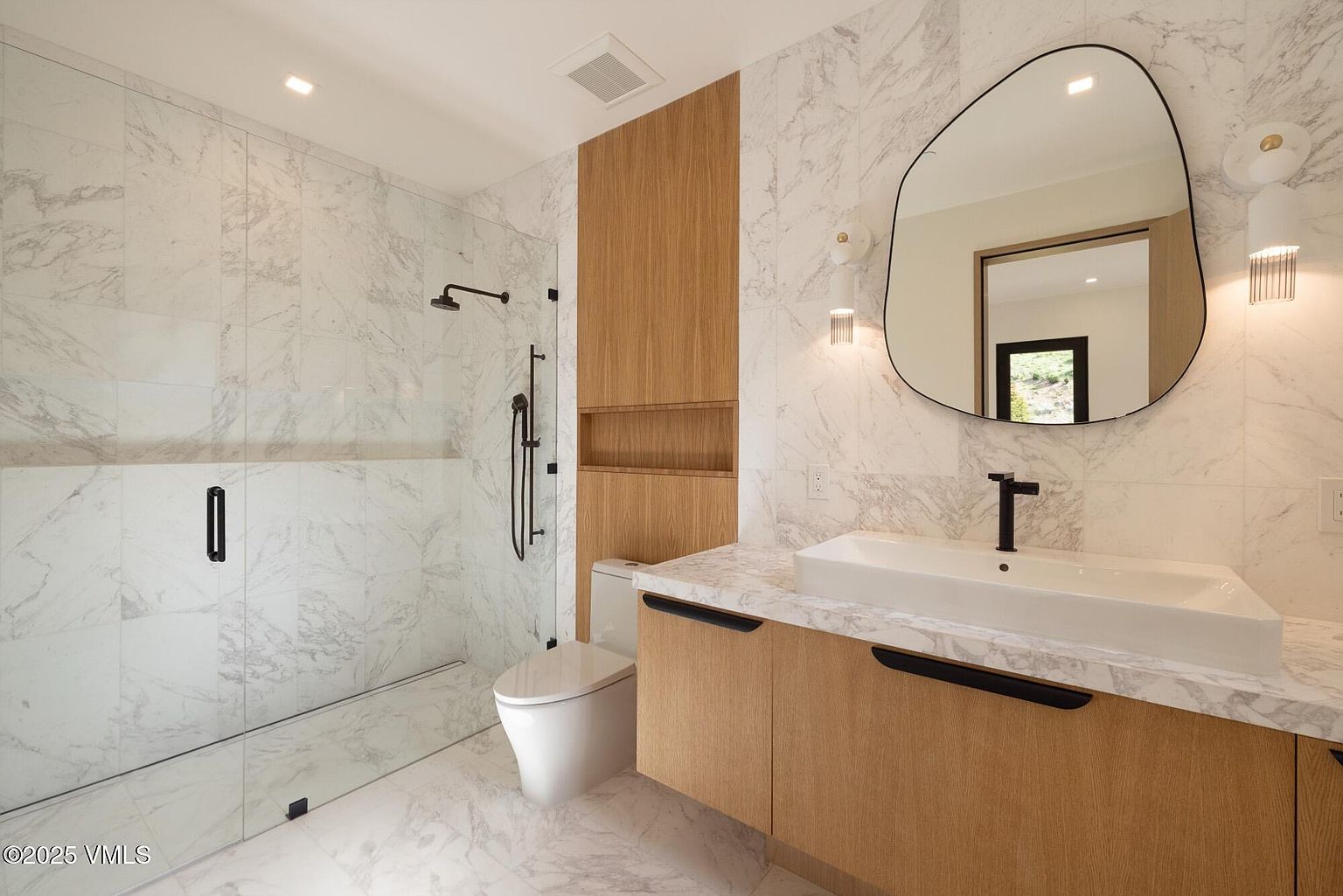
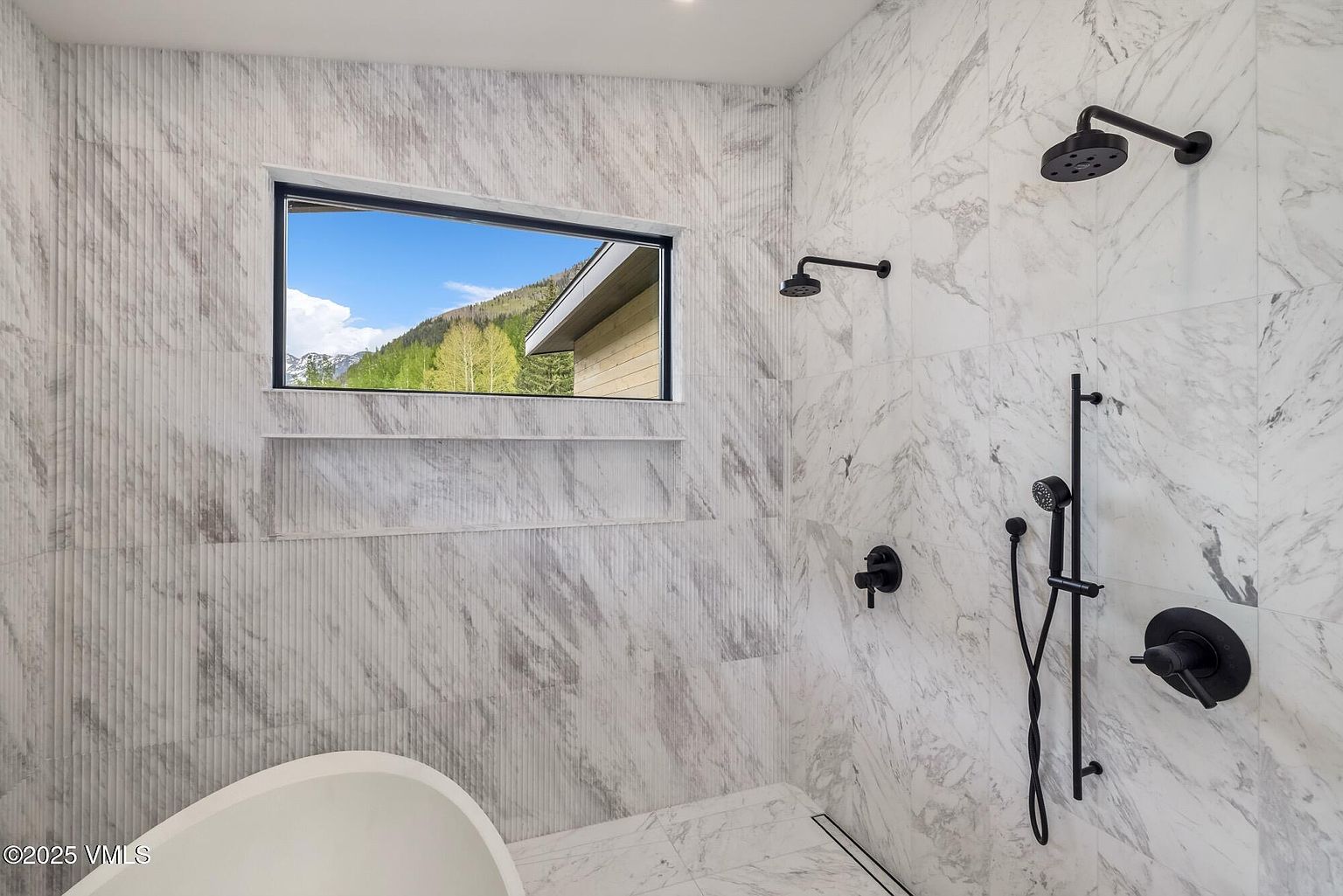
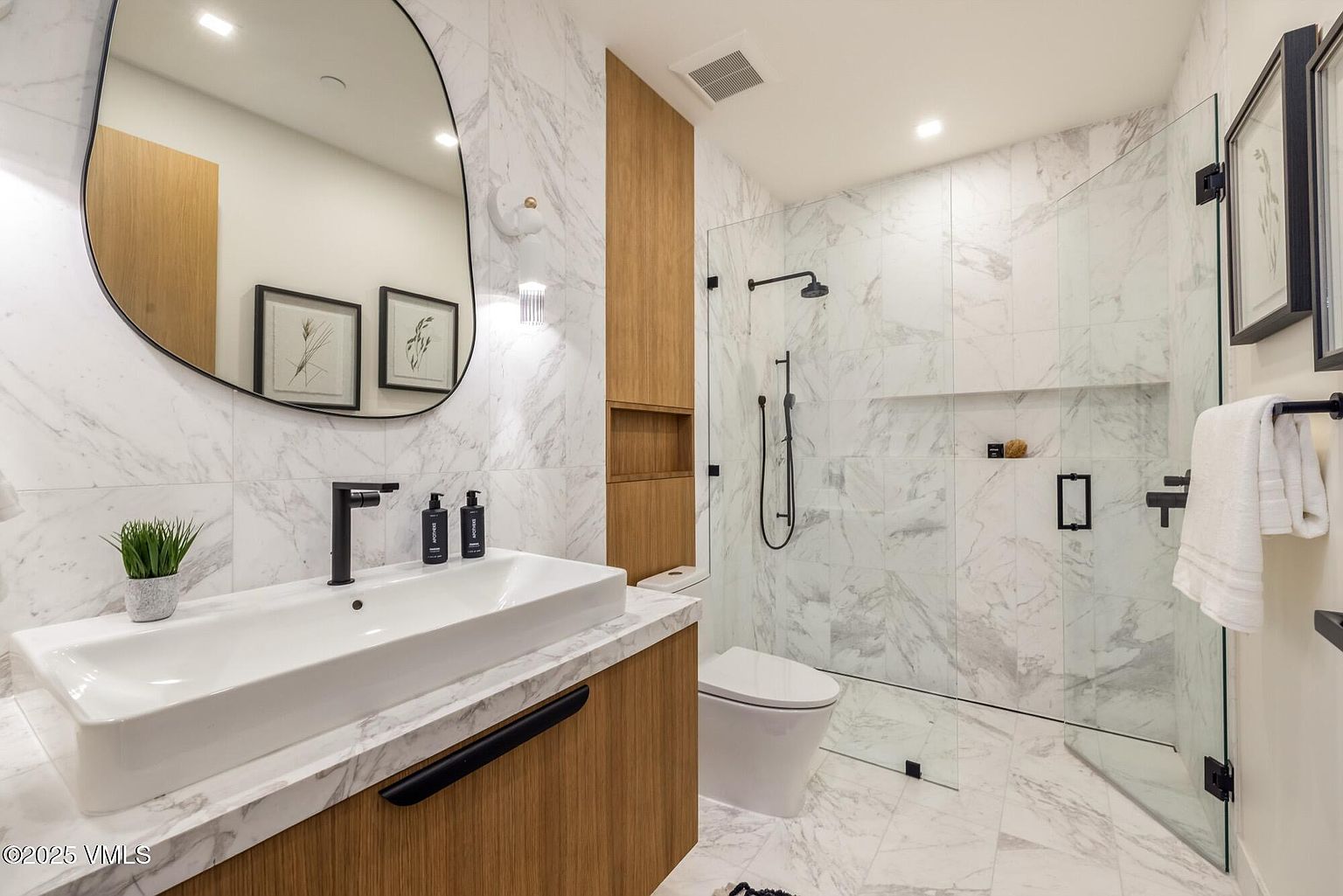
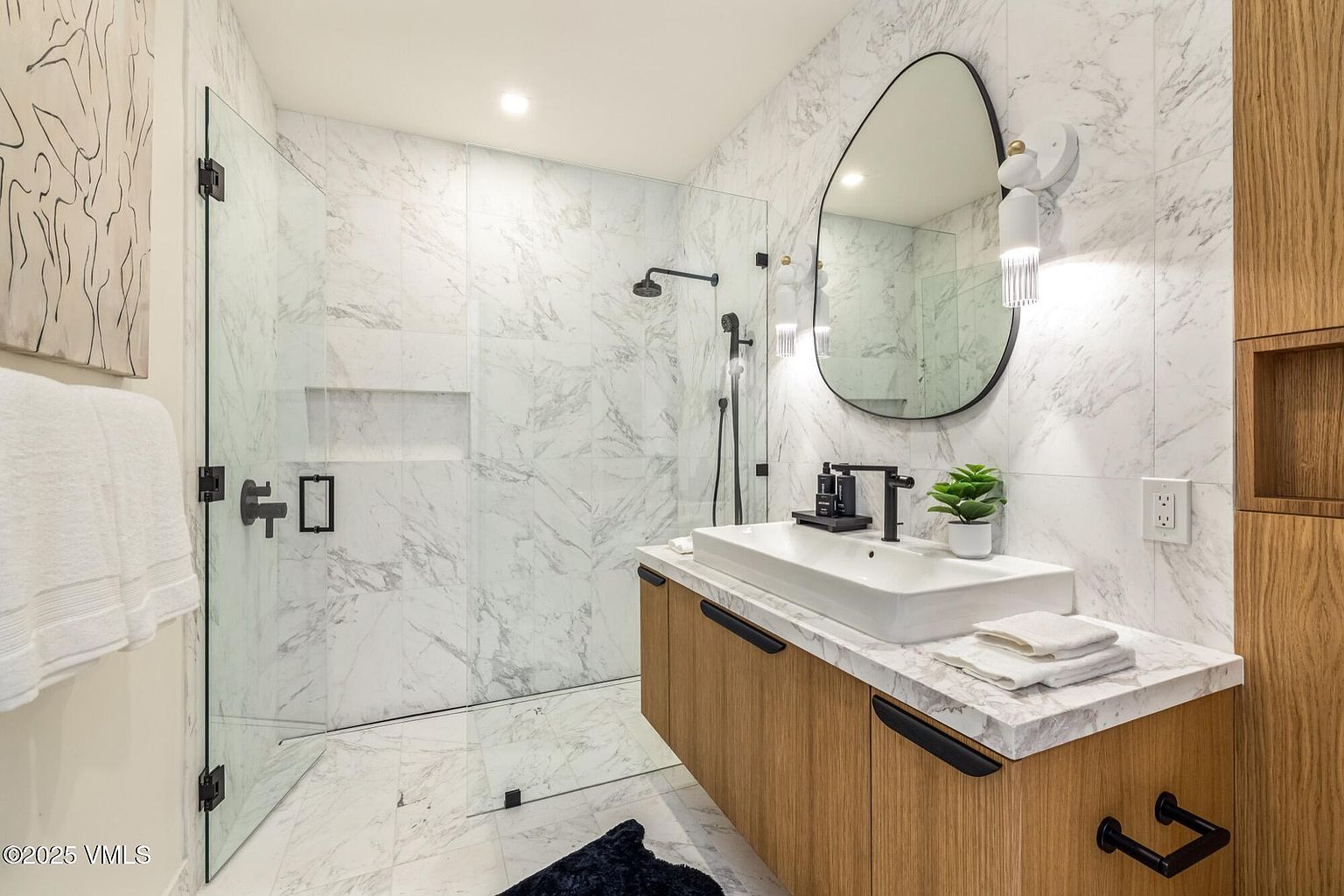
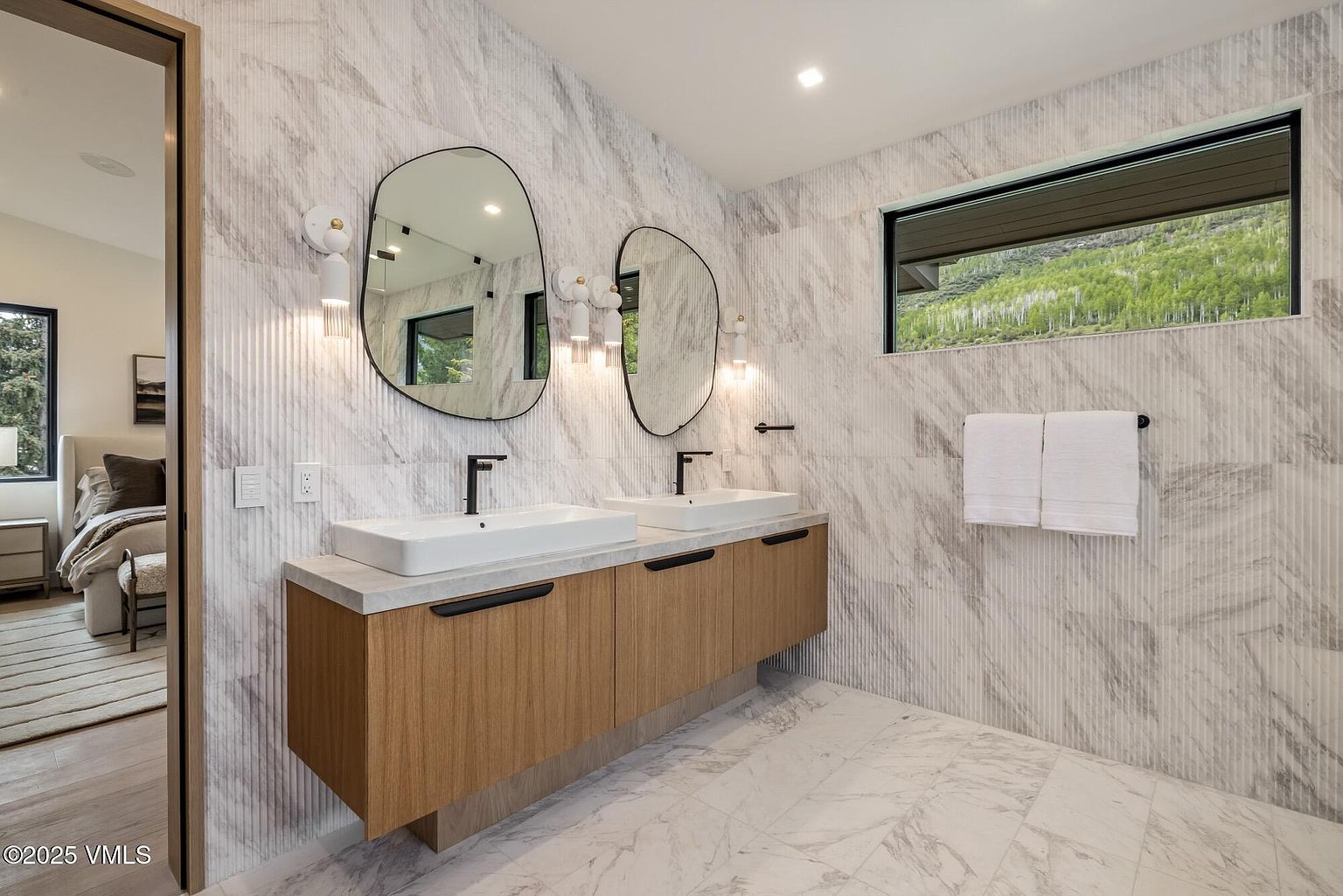
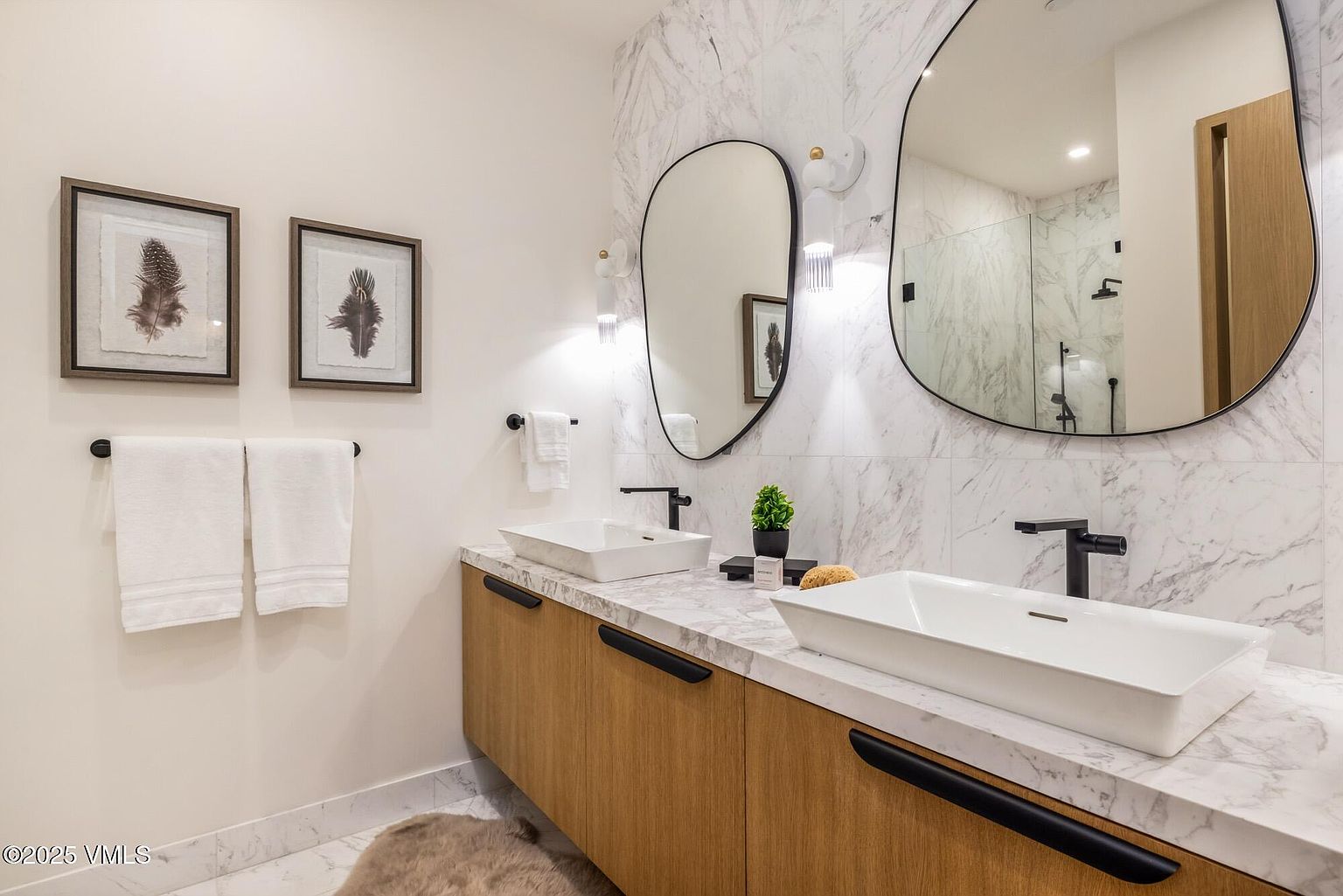
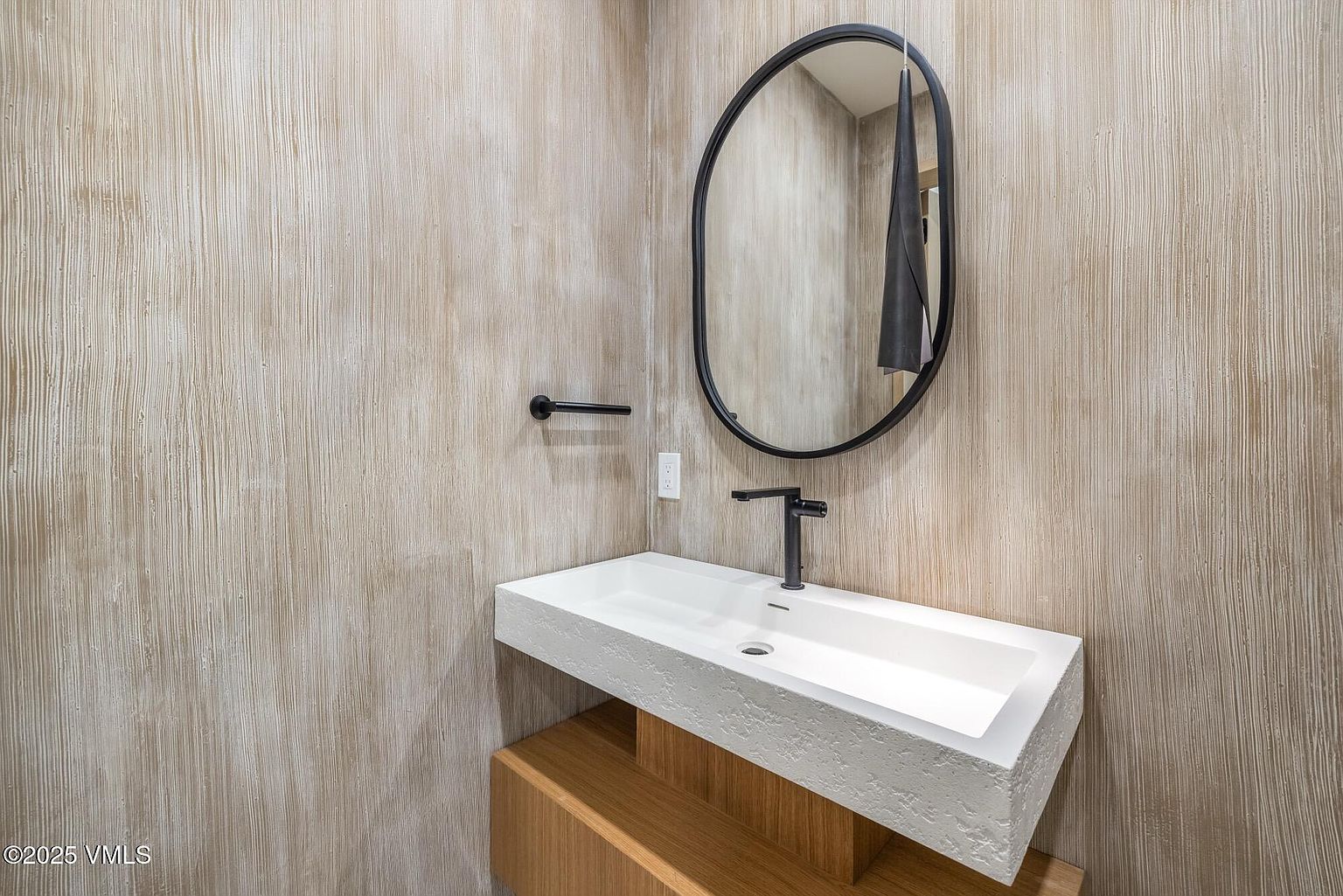
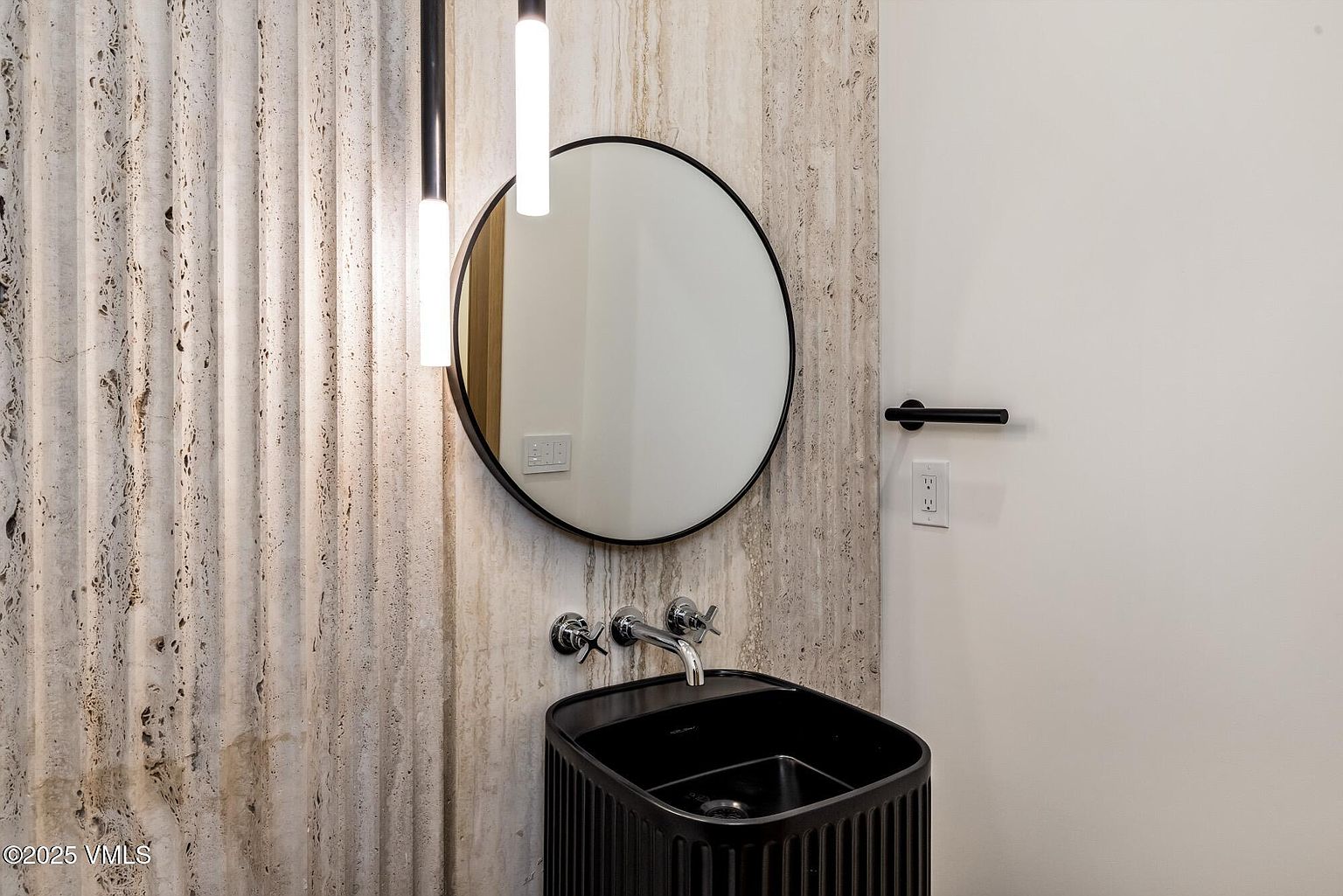
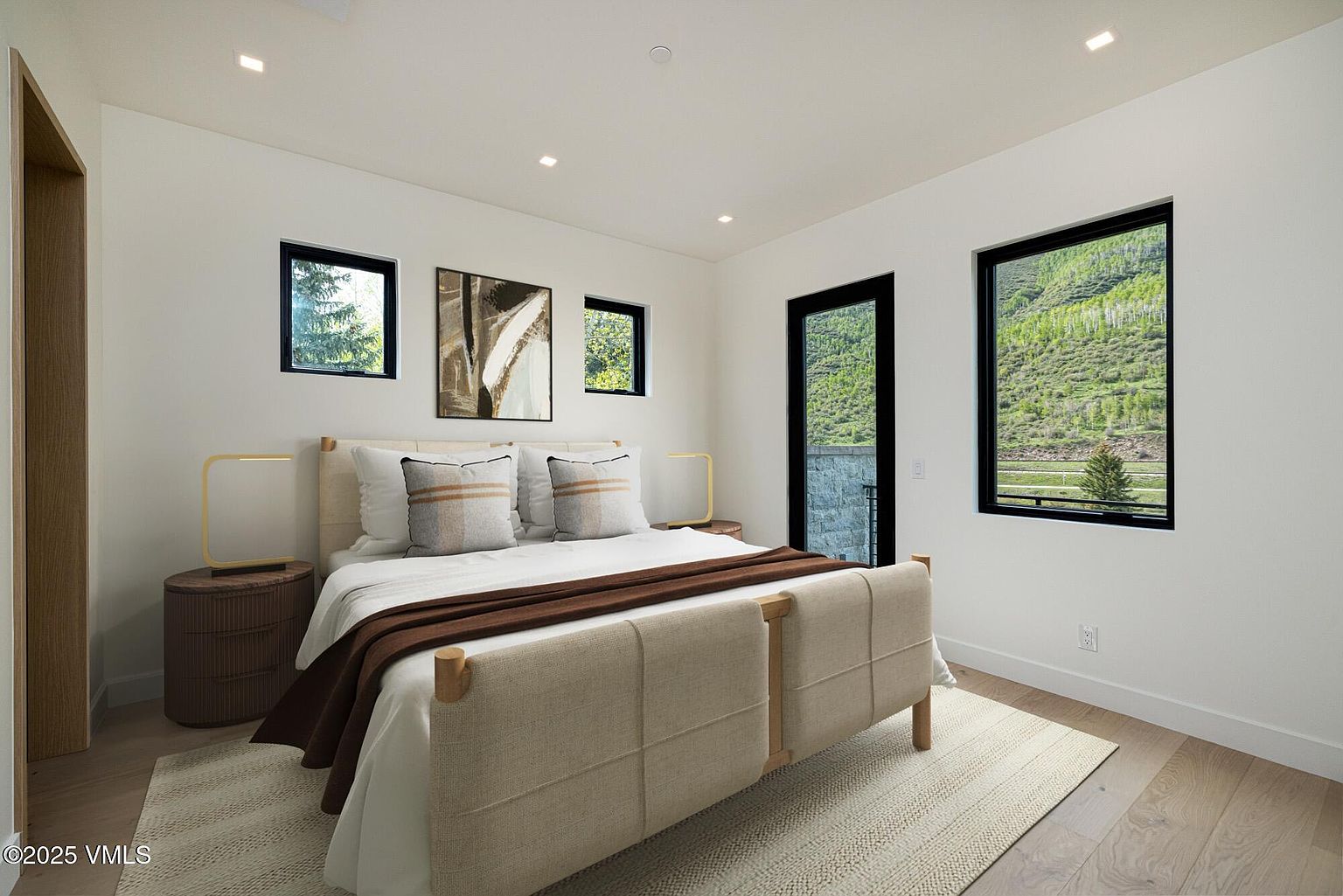
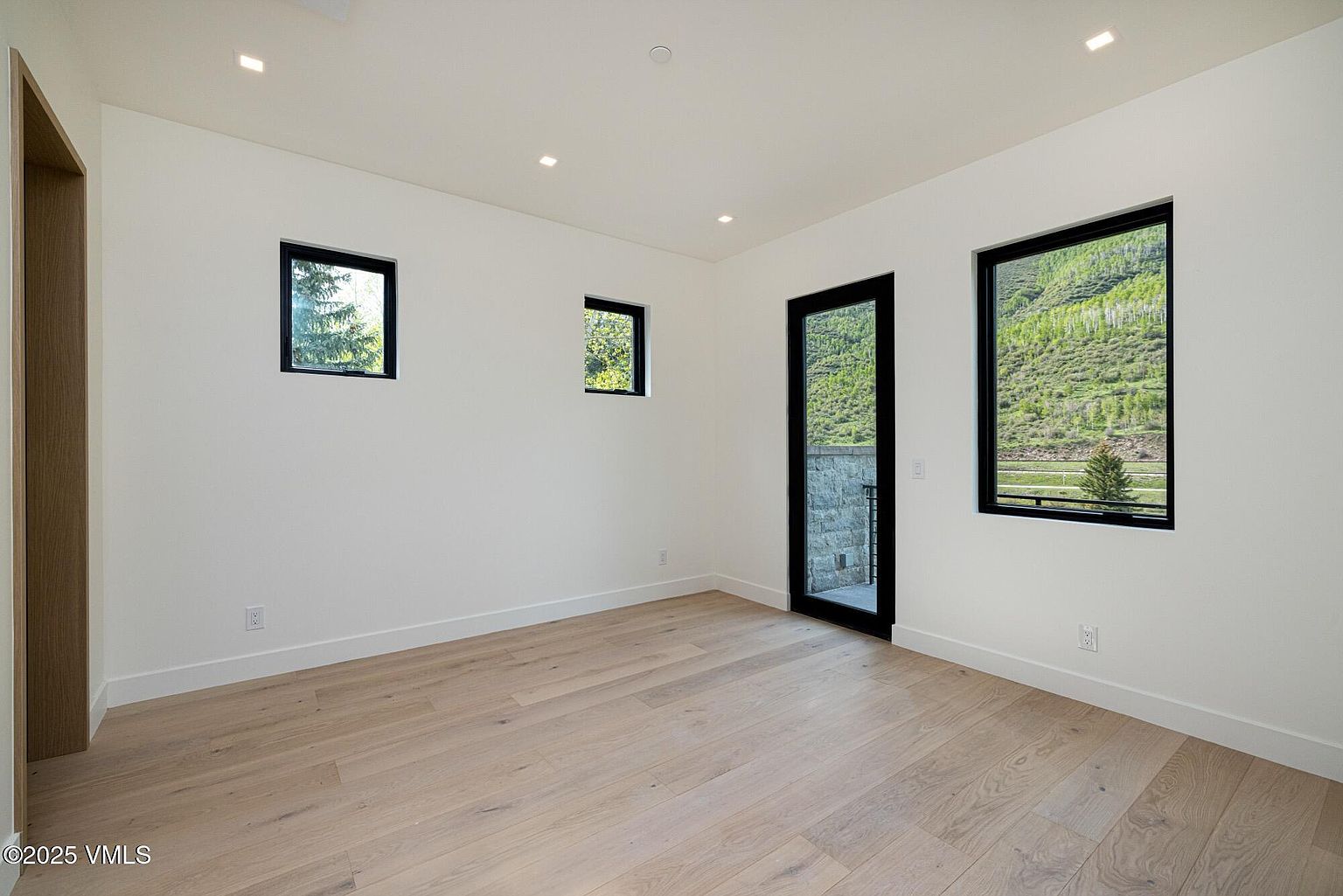
The primary suite occupies its own serene world — floor-to-ceiling glass doors opening to the Gore Range, a stone fireplace, dual custom closets each appointed with a vanity and backlit mirror, and a spa bath featuring a freestanding soaking tub positioned to capture the same peaks visible from the bed. Every additional bedroom carries its own ensuite bath, and powder rooms serve both levels with equal design attention — one featuring a cylindrical pedestal sink and tiered pendant lighting, another with a dramatically fluted stone wall and circular mirror.
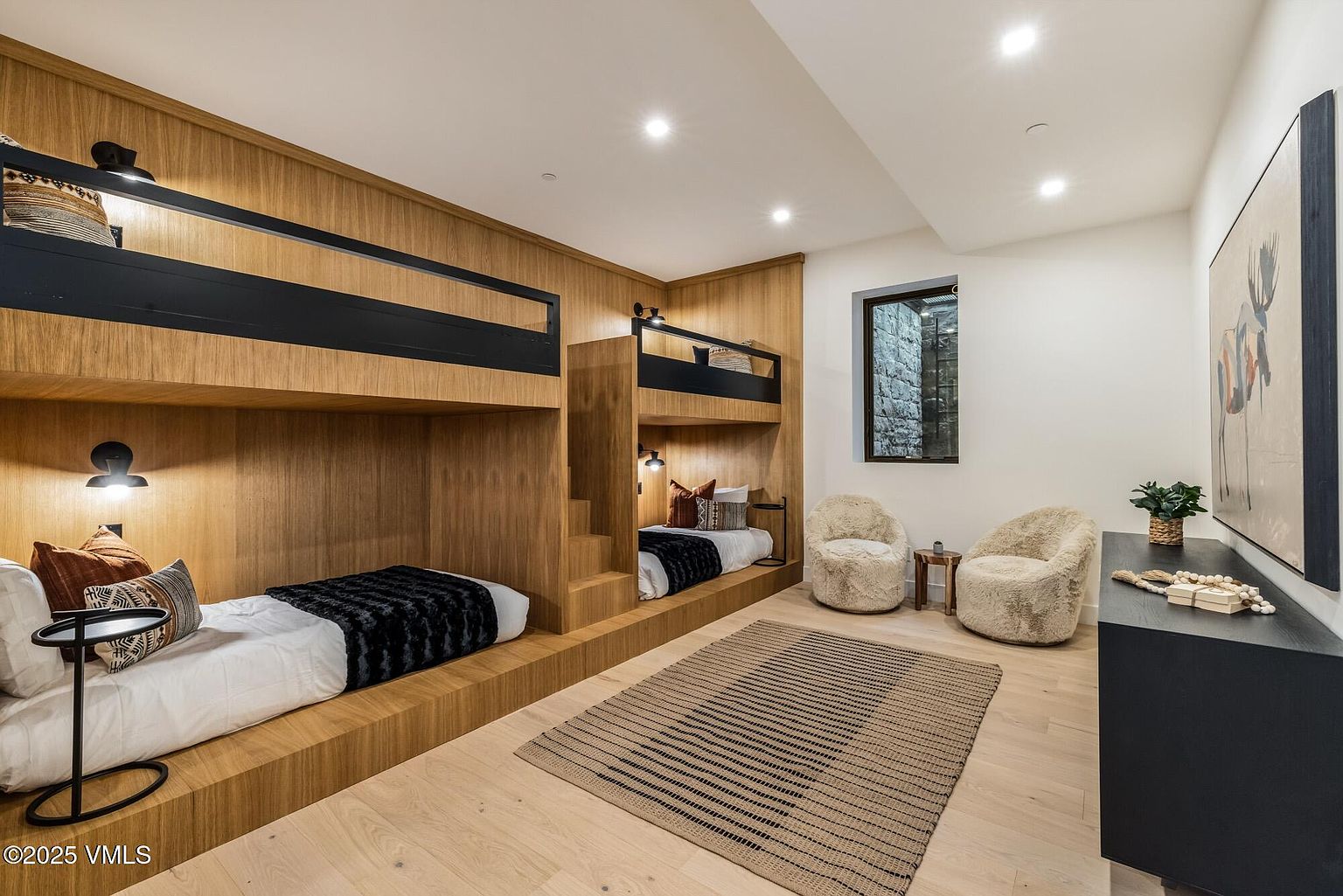
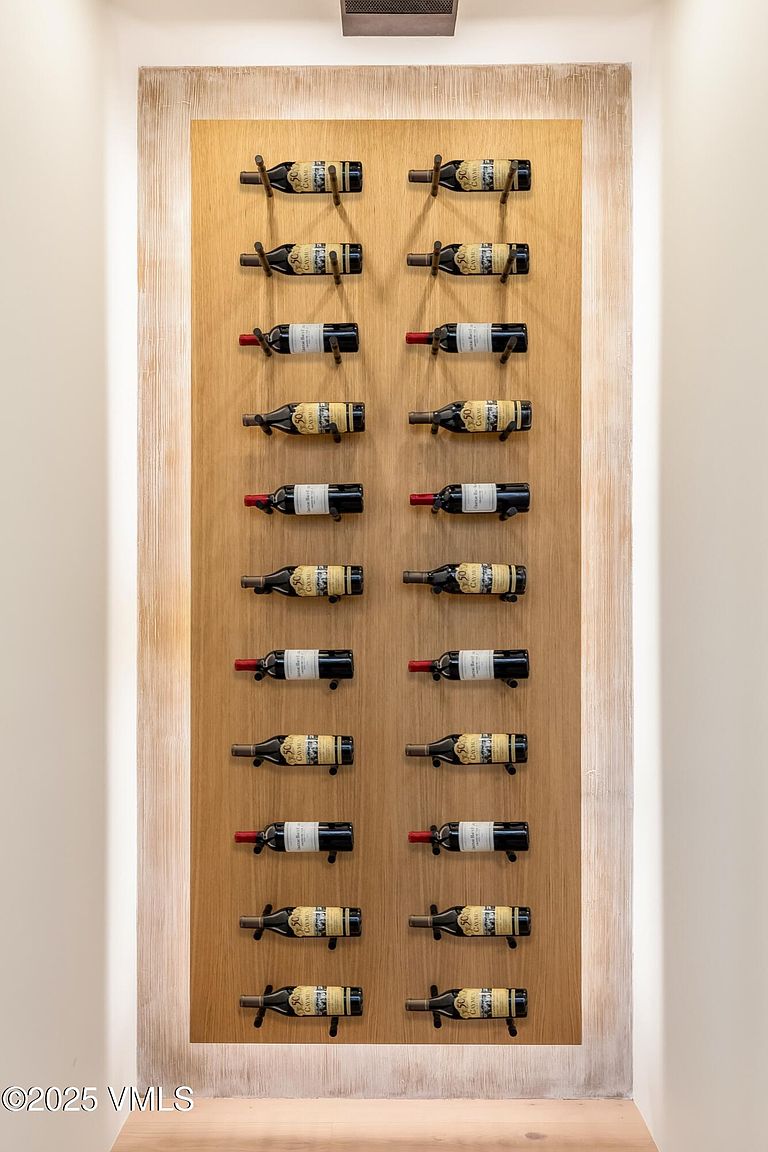
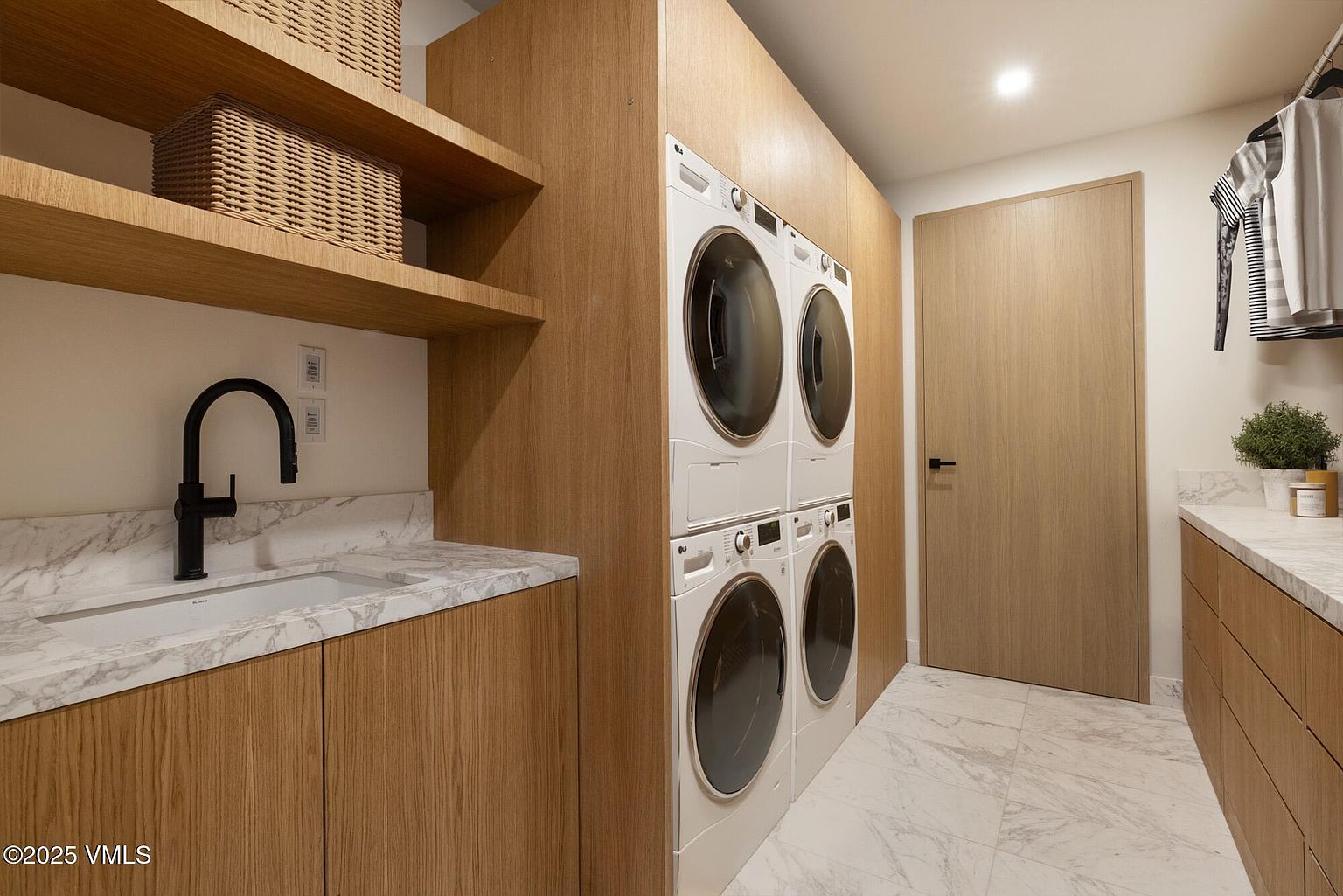
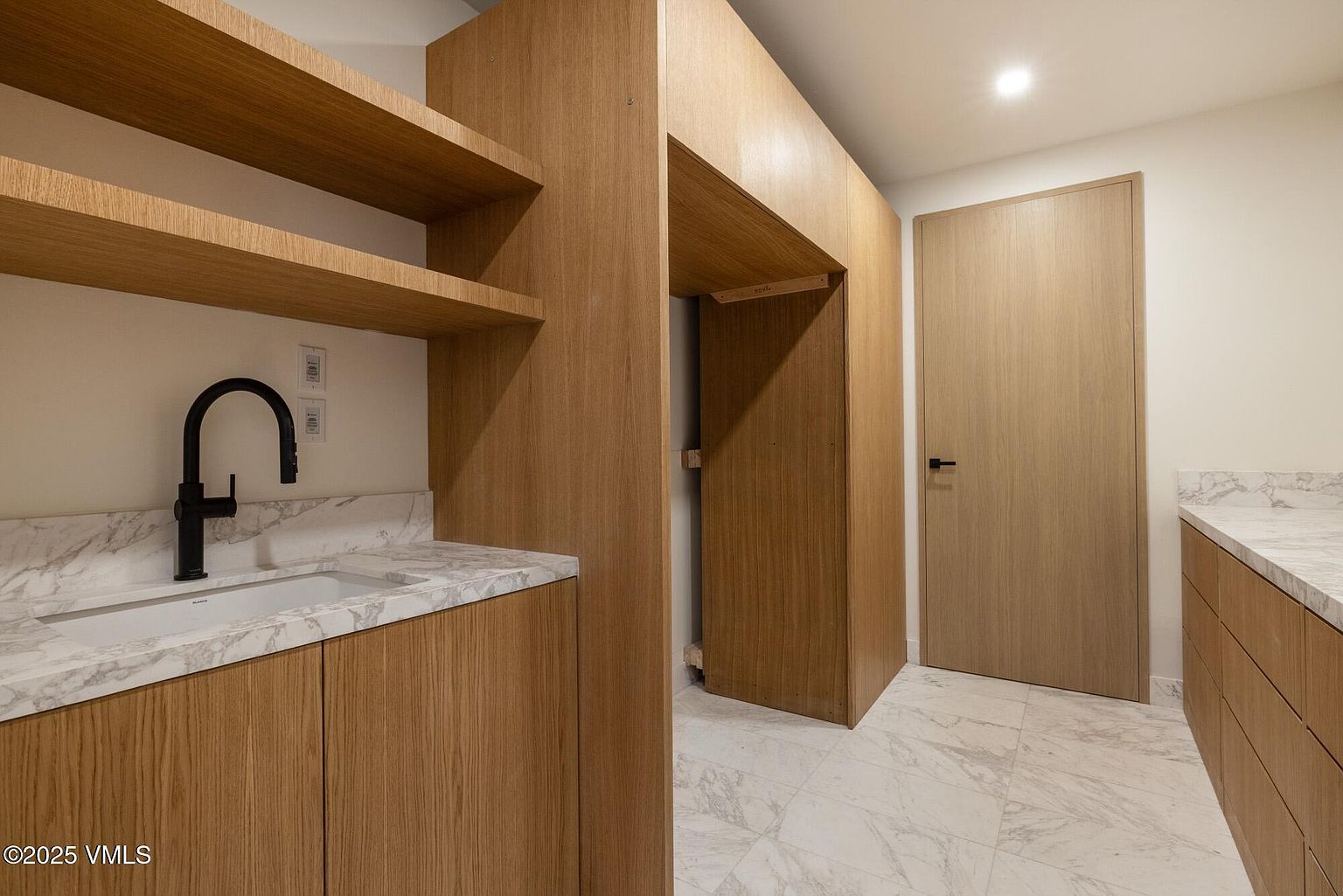
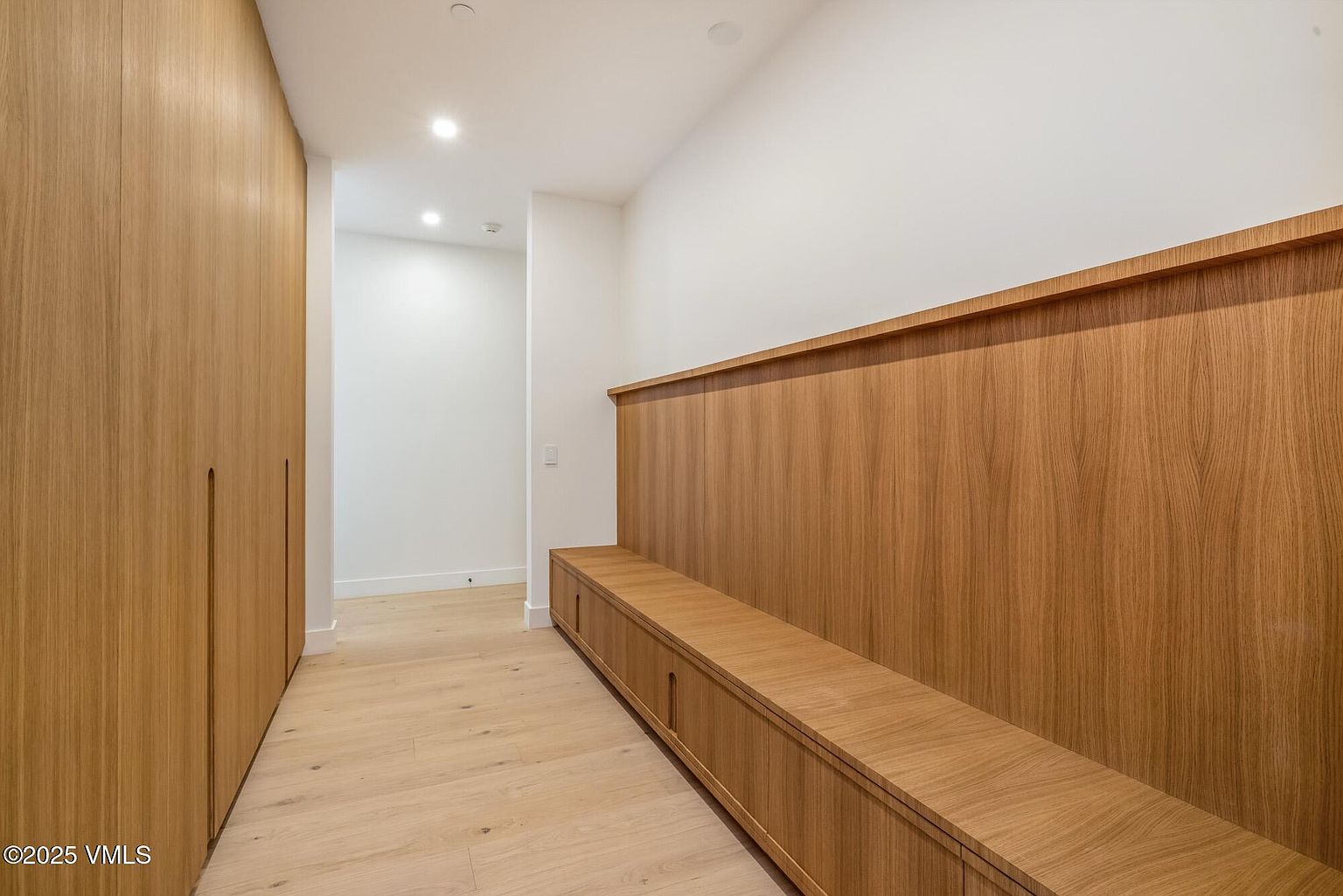
The lower level rewards further exploration. A recreation room anchored by a fluted-wood wet bar, a temperature-controlled wine room with glass-panel display, a lounge, and a game area create a self-contained entertaining suite. An adult-scale bunk room with queen lower bunks adds genuine flexibility for large groups, while a laundry room, mudroom with integrated bench seating and cabinetry, and a patio with hot tub hookup complete the level. A heated driveway and two-car garage ensure that the transition from mountain to home is never anything less than seamless.
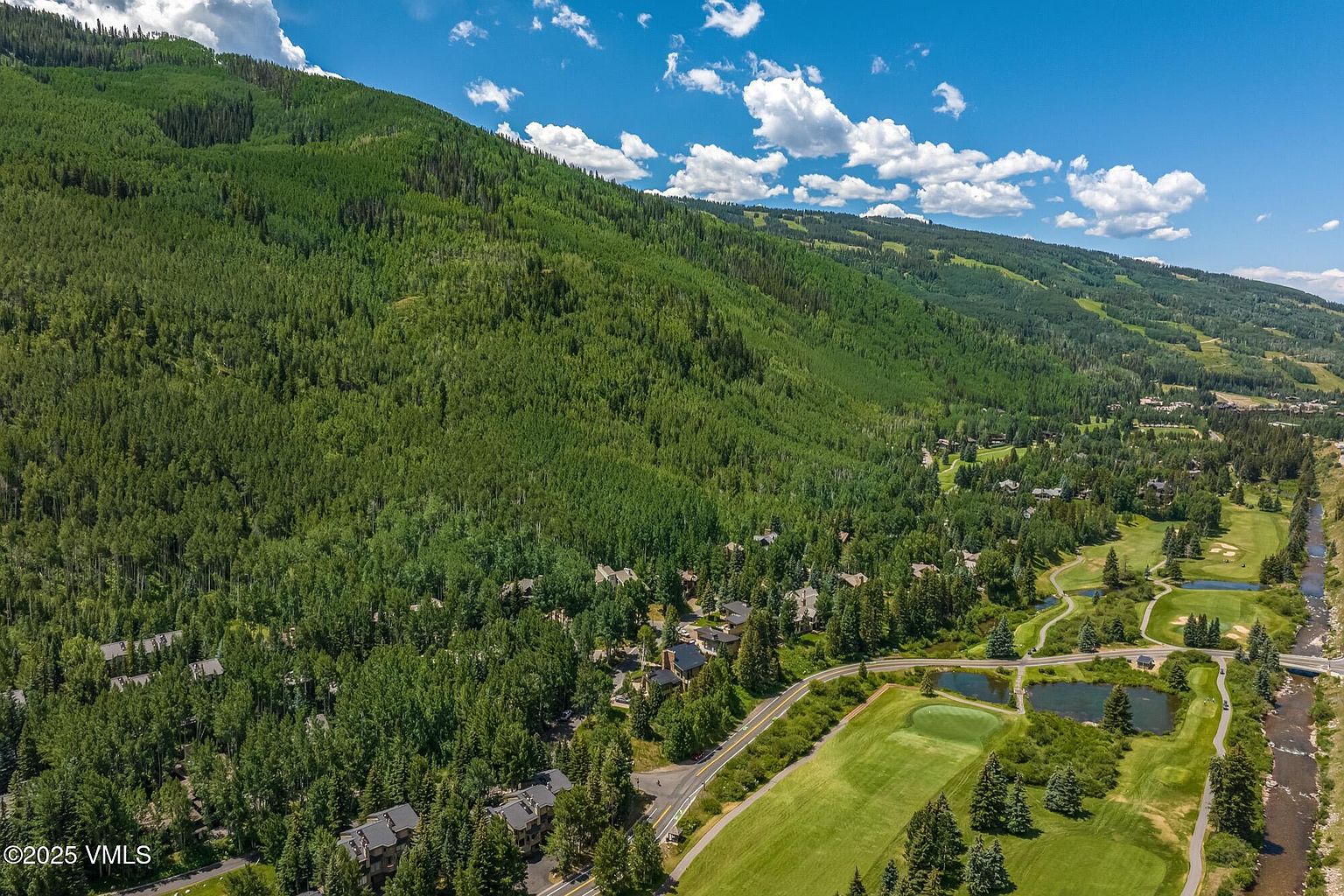
Vail's Golf Course neighborhood occupies a particularly privileged position within one of North America's most celebrated mountain resort communities. Situated along Vail Valley Drive on the eastern edge of Vail Village, the neighborhood is named for the Vail Golf Club, an 18-hole championship course that winds through the valley floor alongside Gore Creek — one of Colorado's designated Gold Medal fisheries, renowned for its blue-ribbon trout waters. In summer, the fairways give way to the Vail Nordic Center, which maintains groomed cross-country and snowshoe trails that trace the same terrain in winter. Gorehaus sits directly across from this facility, placing two distinct seasonal recreational ecosystems at the front door.
Vail itself was established in 1962 when Pete Seibert and Earl Eaton opened Vail Mountain, recognizing in the Back Bowls a scale and terrain diversity unmatched in American skiing. Today, Vail Mountain encompasses more than 5,300 skiable acres across 195 trails, including the legendary Back Bowls and Blue Sky Basin — a combined expanse that ranks among the largest ski resorts in the United States. The free Vail in-town shuttle stops approximately 300 feet from Gorehaus, providing car-free access to Vail Village and Lionshead Village throughout the winter season.
Vail Village itself is a pedestrian-oriented European-alpine environment of considerable charm — cobblestone walkways, boutique retail, acclaimed restaurants, and après-ski culture that draws a discerning international clientele. The village has long attracted a sophisticated residential community, and the surrounding neighborhoods reflect that standard. The Golf Course neighborhood in particular offers a quieter, more residential character than the immediate village core while remaining within minutes of it — a balance that appeals to those who value both proximity and tranquility.
Beyond skiing and golf, the Vail Valley offers a year-round cultural and recreational calendar of notable depth. The Bravo! Vail Music Festival brings world-class orchestras and chamber ensembles each June. The Gerald R. Ford Amphitheater — named for the late president who made Vail his longtime vacation home — hosts outdoor concerts and performances against a mountain backdrop throughout the summer. The Vail Symposium and the Vail Jazz Festival further animate the community's cultural life. The Betty Ford Alpine Gardens, located in Ford Park adjacent to the village, comprise the highest botanic gardens in North America at approximately 8,200 feet elevation and are free and open to the public.
Outdoor recreation extends well beyond the ski season. Hiking and mountain biking trails accessible directly from the valley range from gentle creek-side paths to demanding alpine routes reaching the Gore Range's upper elevations — the same peaks that define the view from Gorehaus. Whitewater kayaking on the Eagle River, fly fishing on Gore Creek, and road cycling along the paved recreational path that runs the length of the valley are among the warm-weather pursuits that make Vail a genuinely four-season destination rather than merely a winter resort. For ownership at this address, every season arrives with its own compelling invitation.
Featured Highlights
Curated Content • Presented by Malia Nobrega