The Story Behind
Panoramic Bay Views Define This Exceptional Coastal Retreat
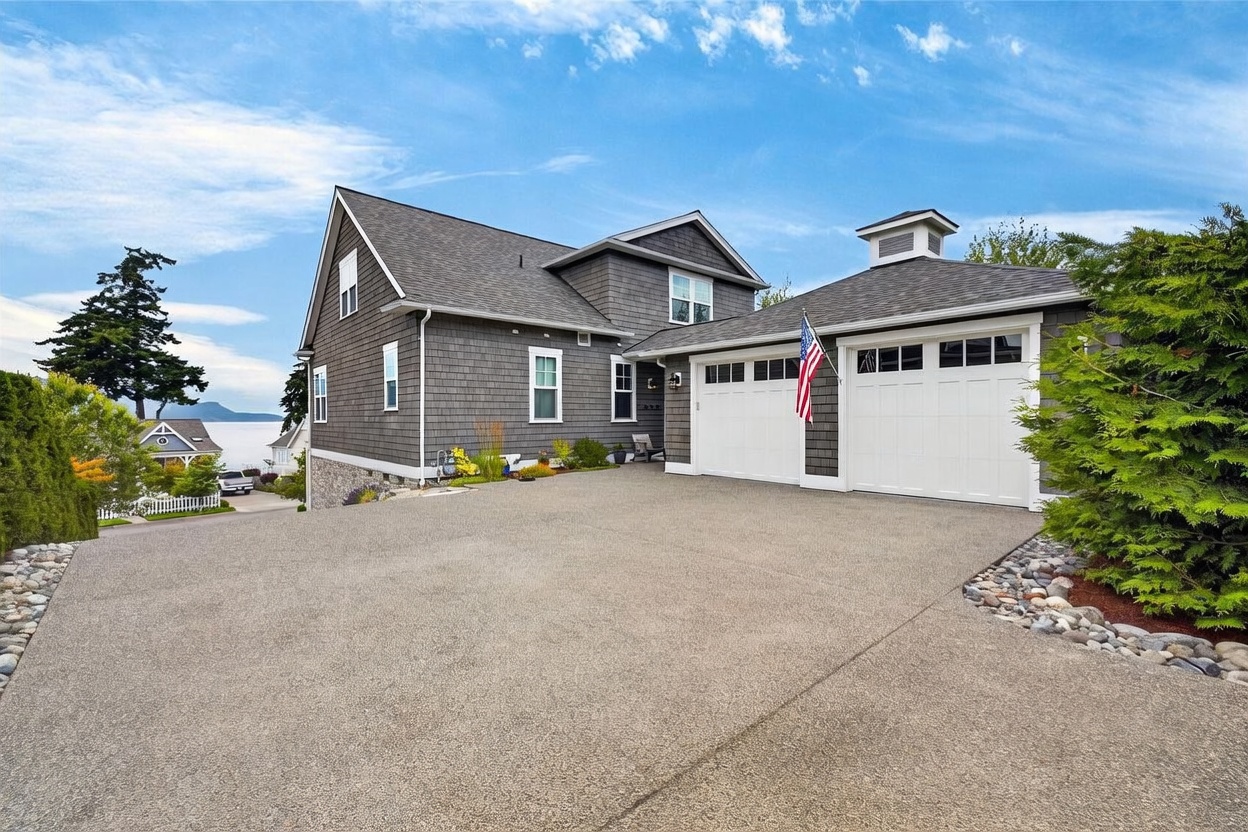
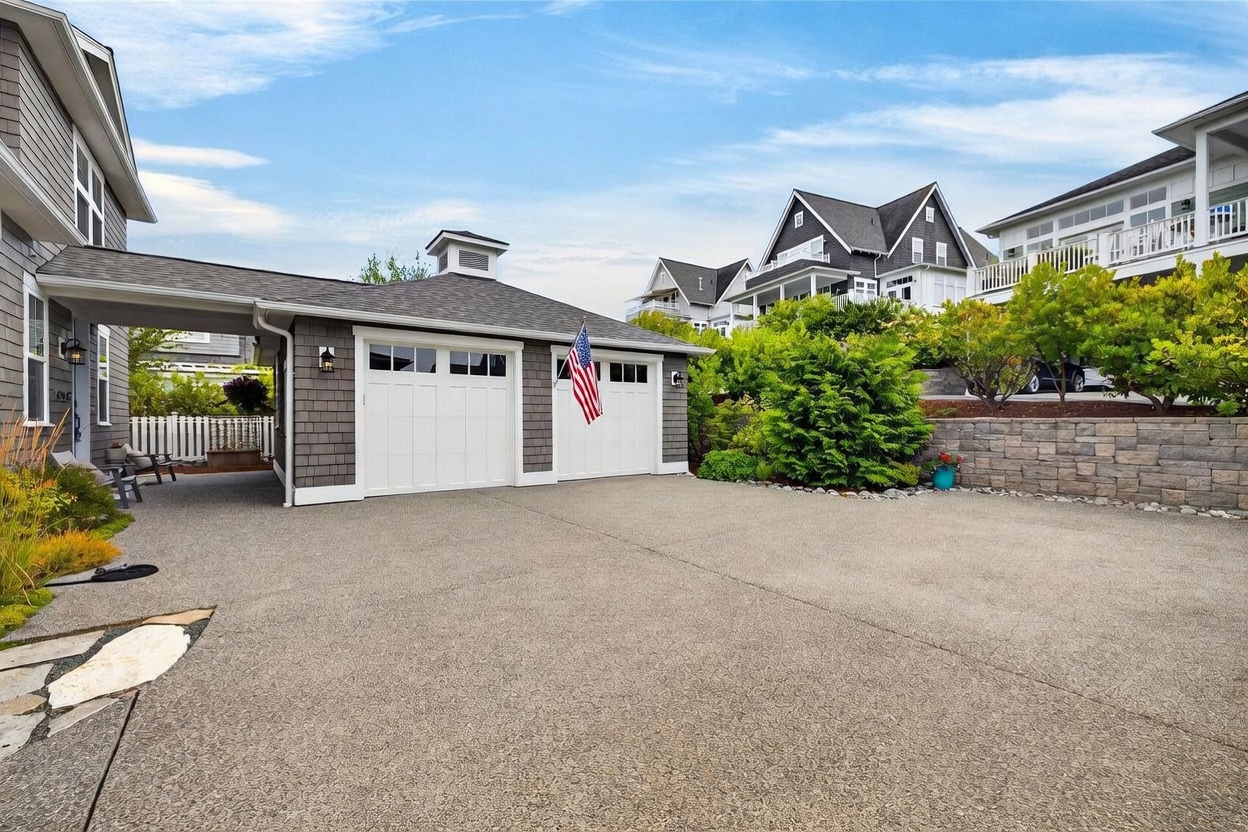
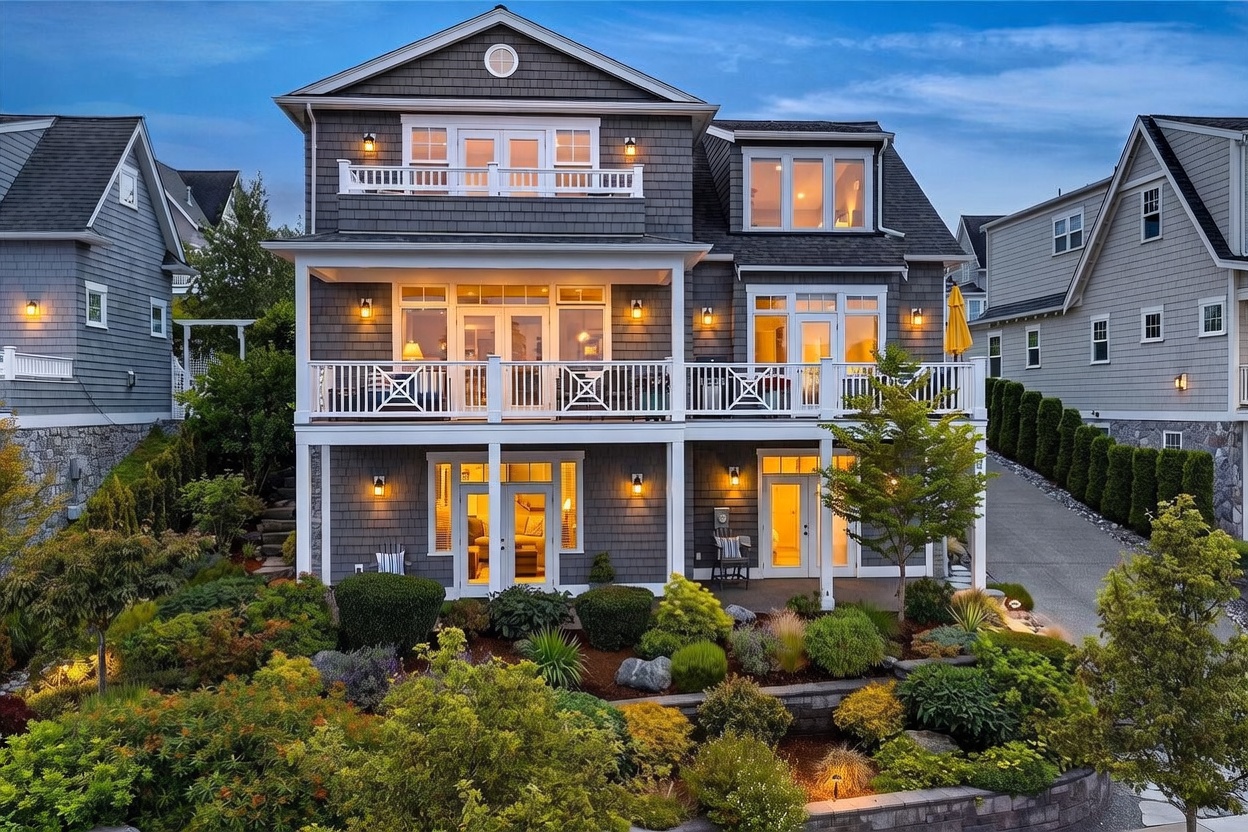
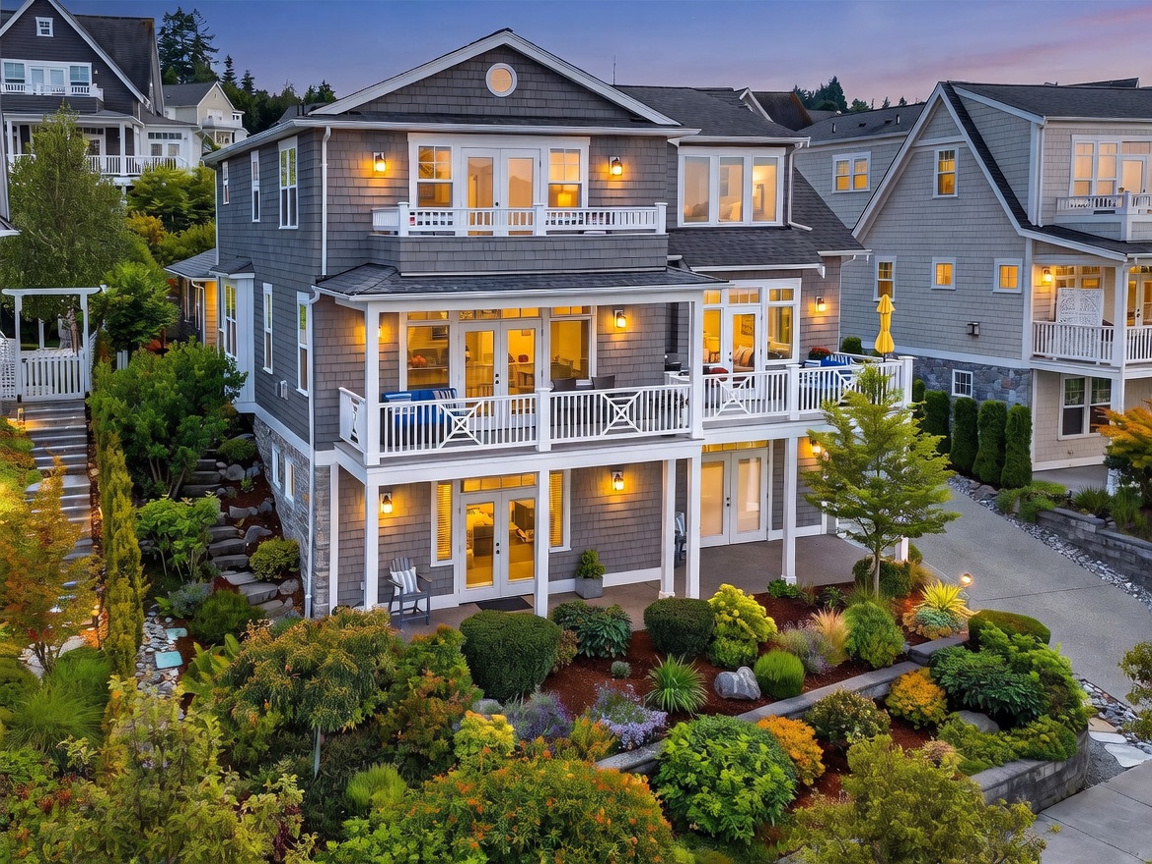
There are homes that shelter, and there are homes that elevate. 4415 Cutter Drive belongs firmly to the latter category — a three-story coastal residence where architecture and landscape enter into quiet conversation at every turn. Clad in classic gray shingle siding and anchored by a two-car garage with a covered breezeway, the home presents a composed, unhurried face to the street. It is only as you move through the residence — ascending through its levels, passing from room to room — that the full ambition of the design reveals itself.
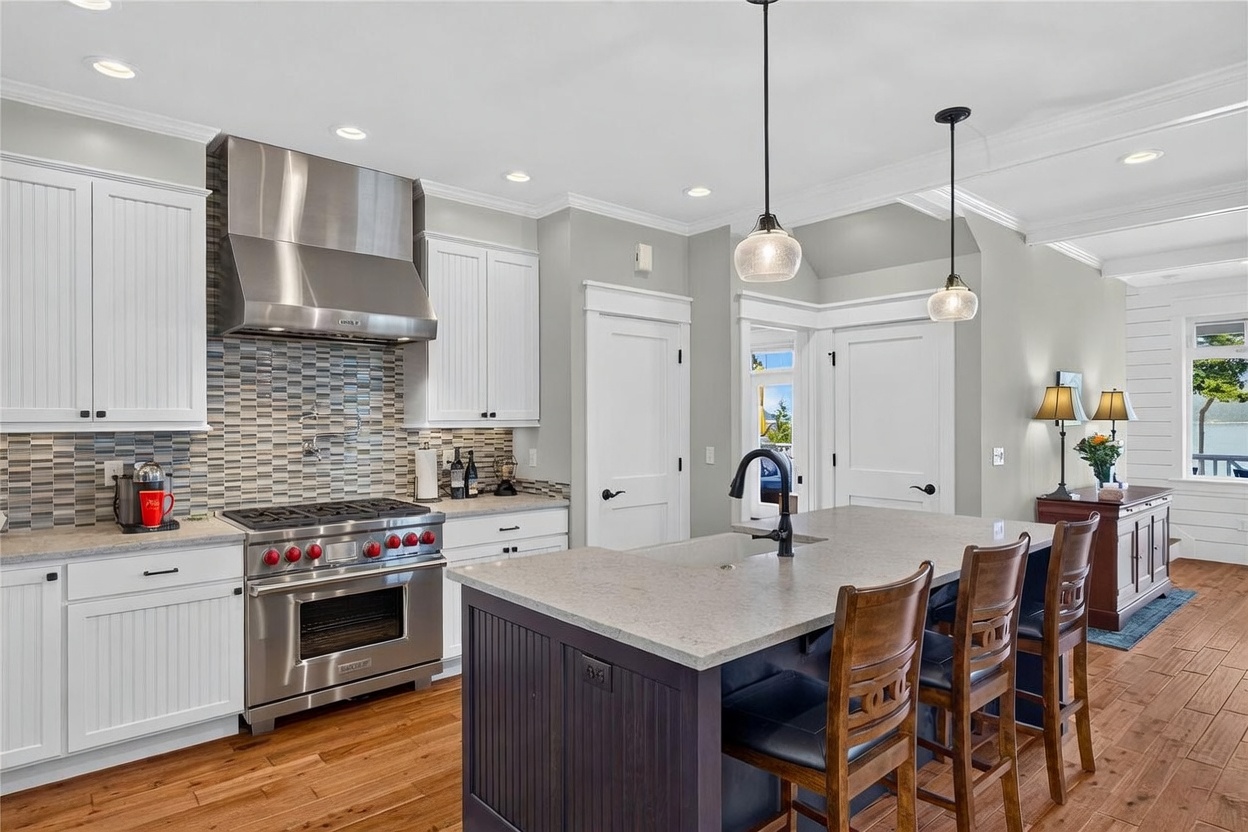
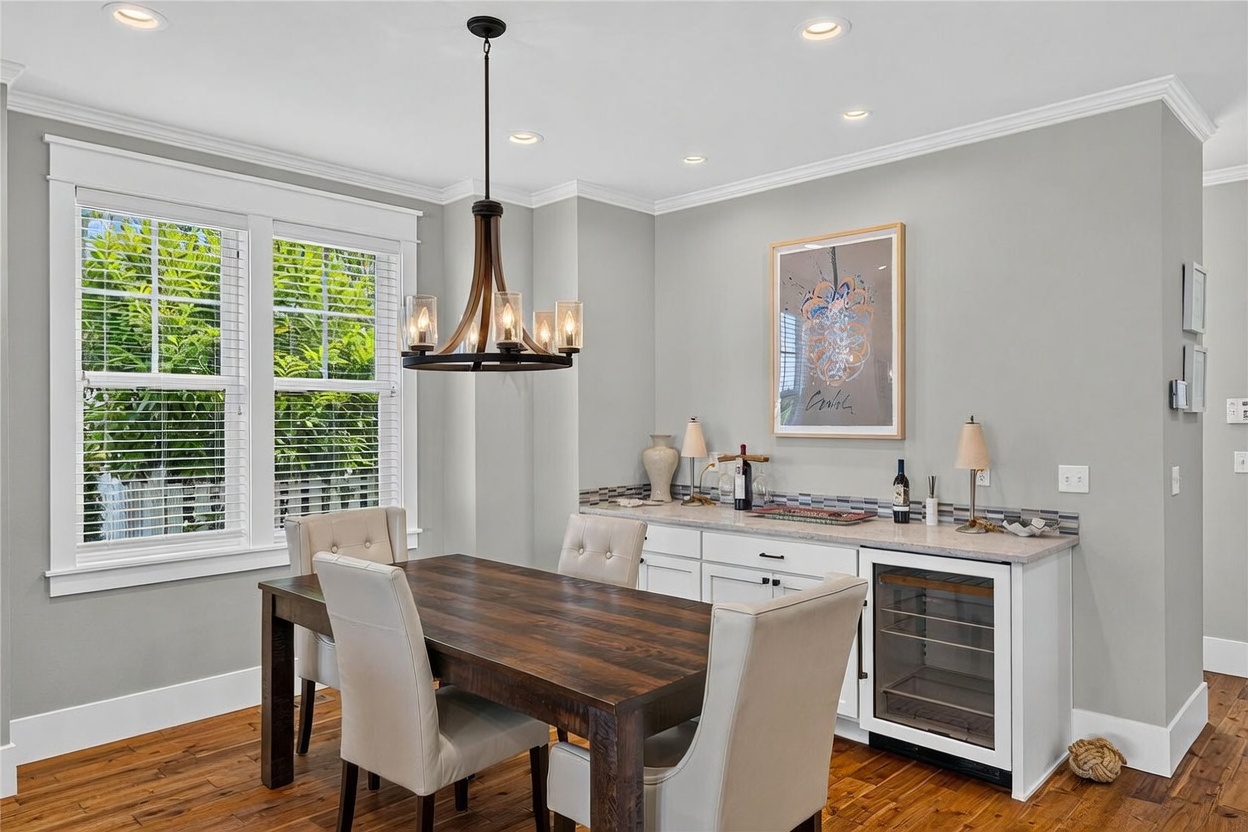
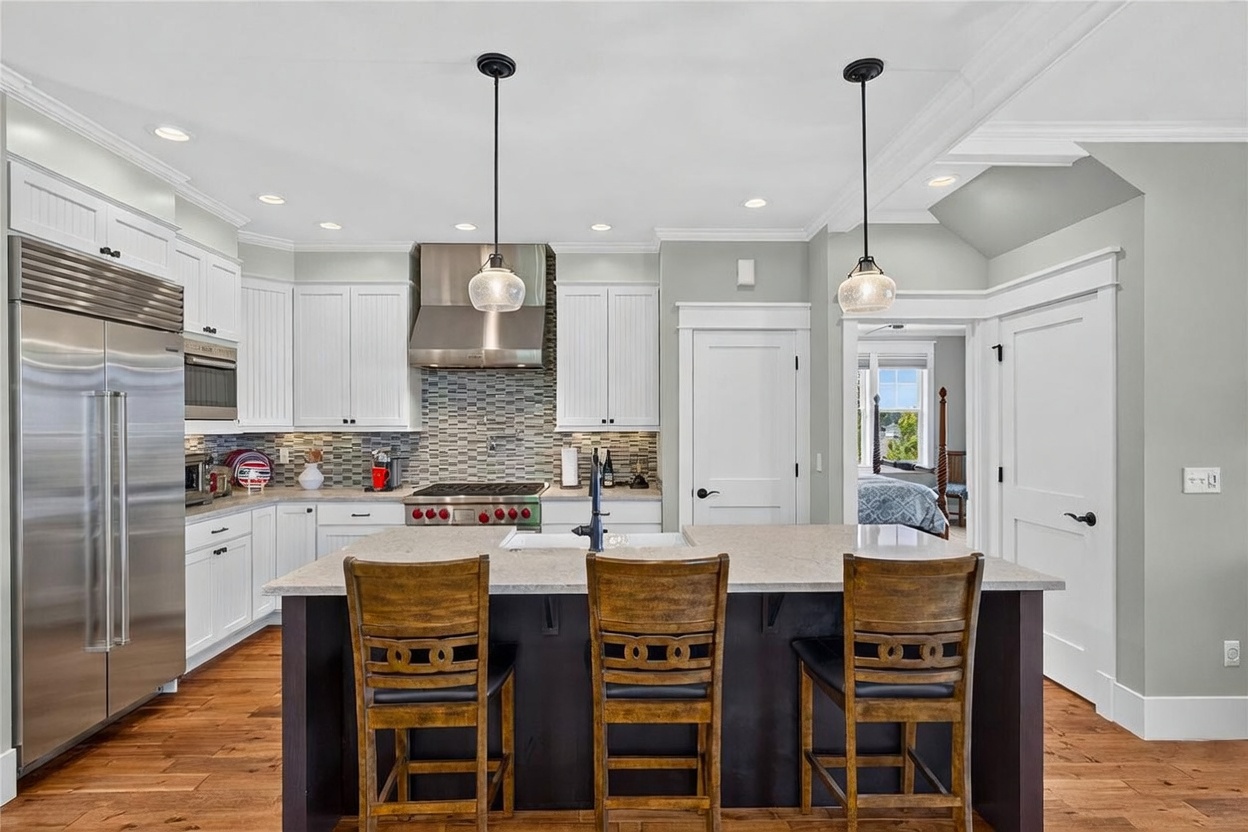
The main living floor is organized around an open-concept plan that prizes both connection and light. A gourmet kitchen anchors the social heart of the home, pairing white cabinetry with a contrasting dark-toned island, professional-grade stainless steel appliances, a mosaic tile backsplash, and warm wood flooring that carries the eye toward the water beyond. Pendant lights above the island and bar seating invite casual gatherings, while the seamless transition into the dining area — appointed with its own built-in wet bar and wine refrigerator — speaks to a home designed for gracious entertaining at every scale.
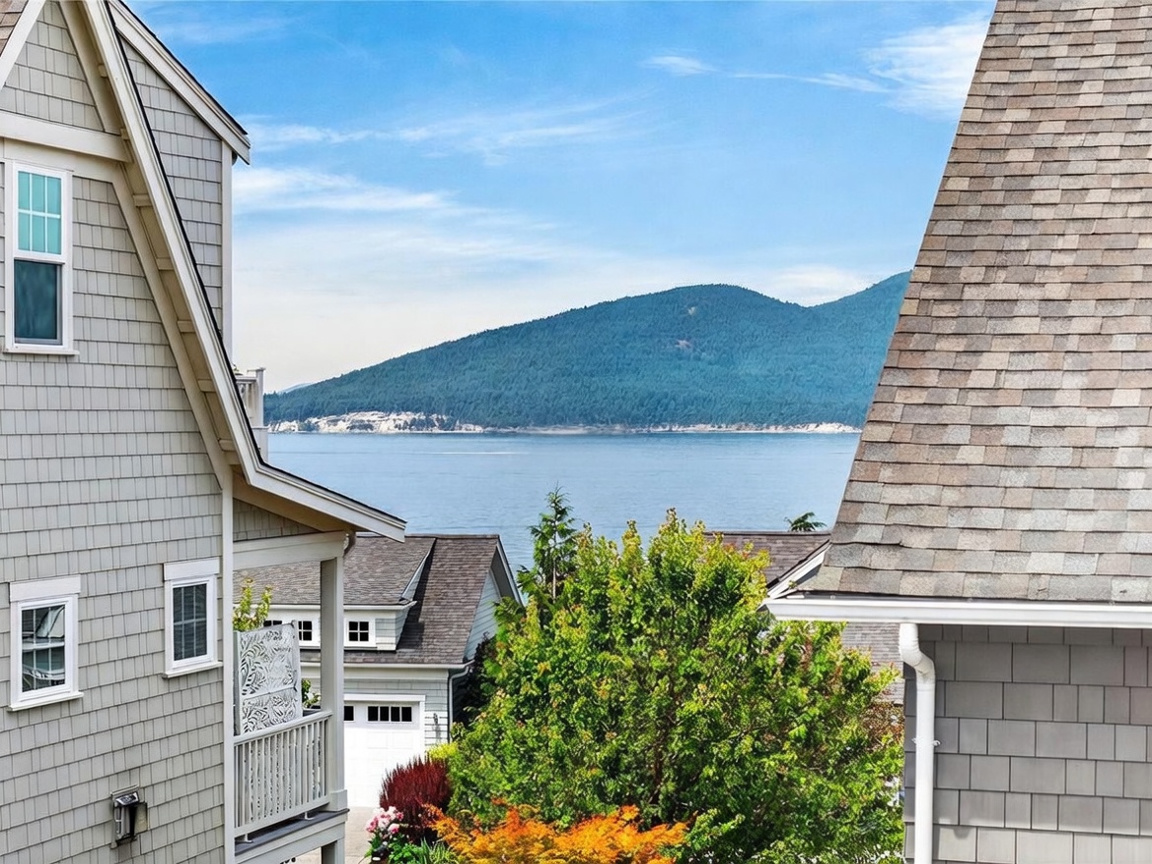
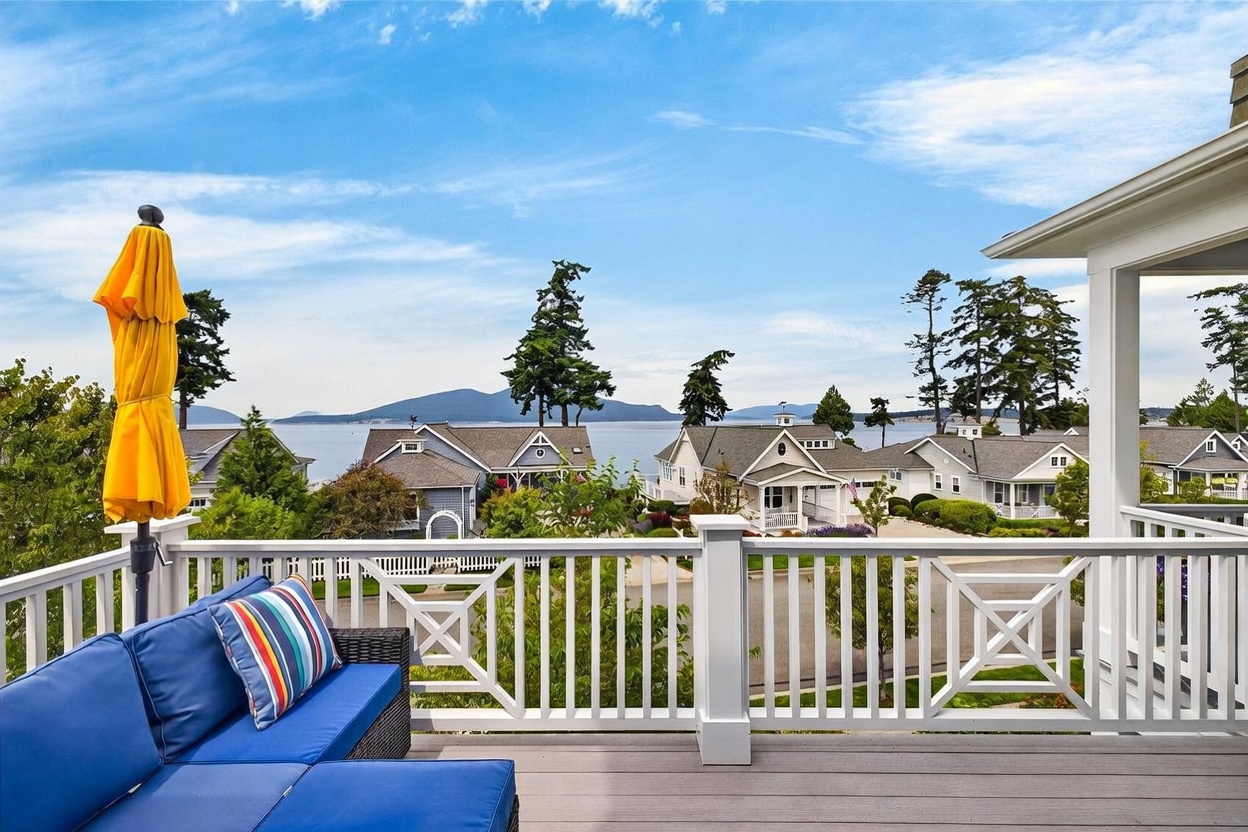
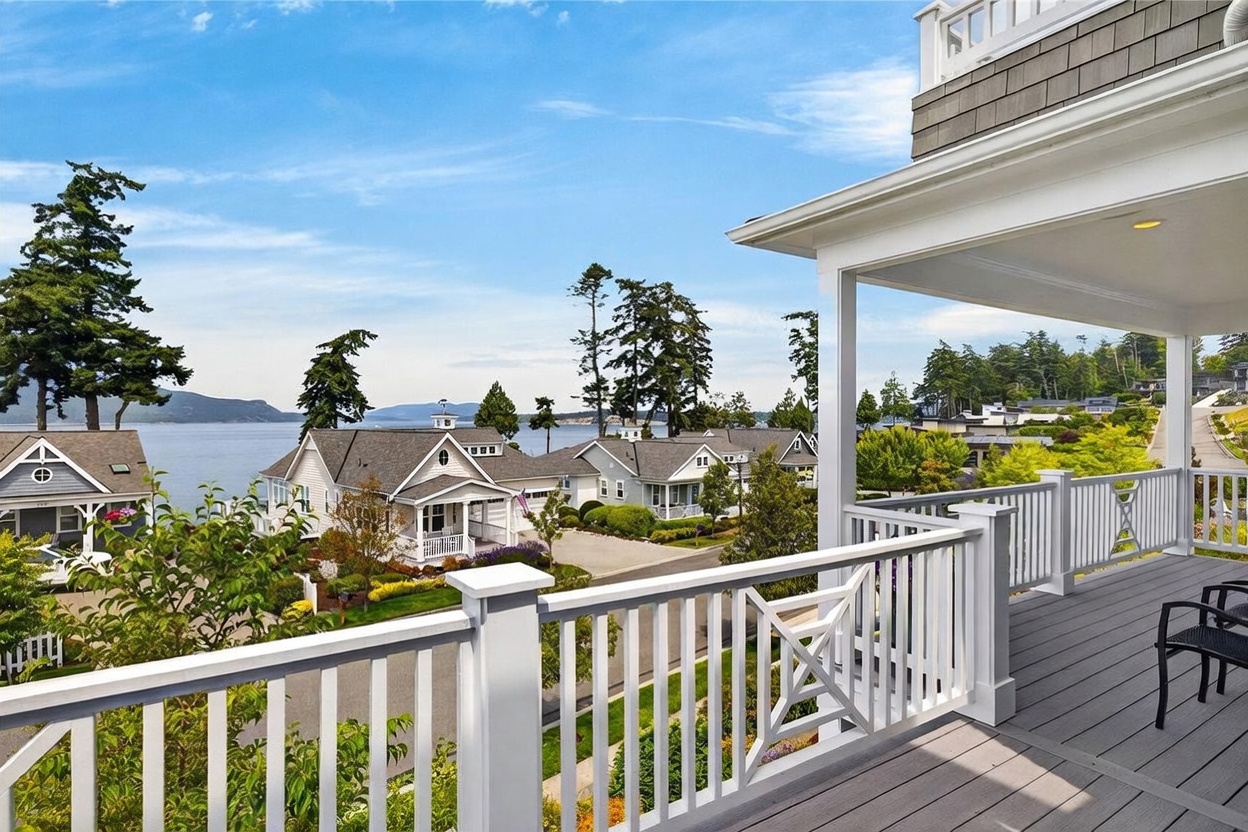
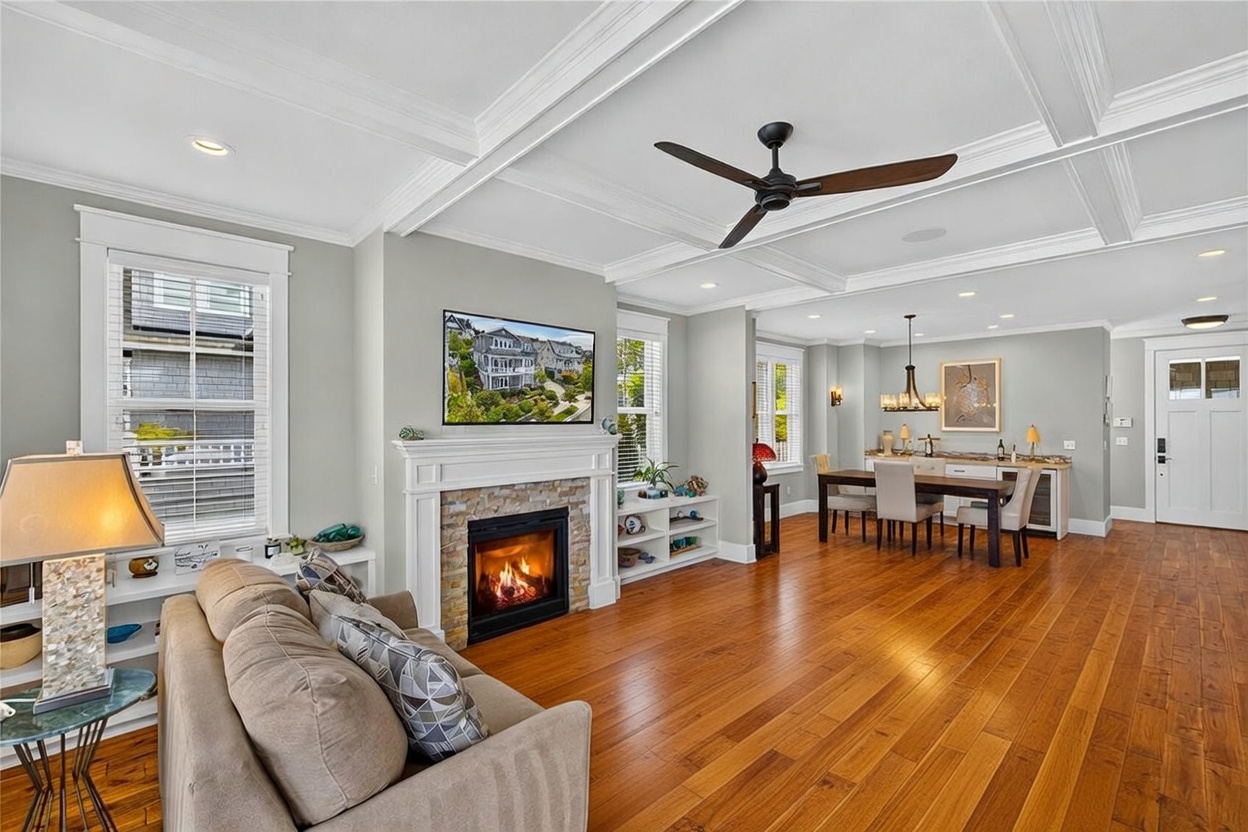
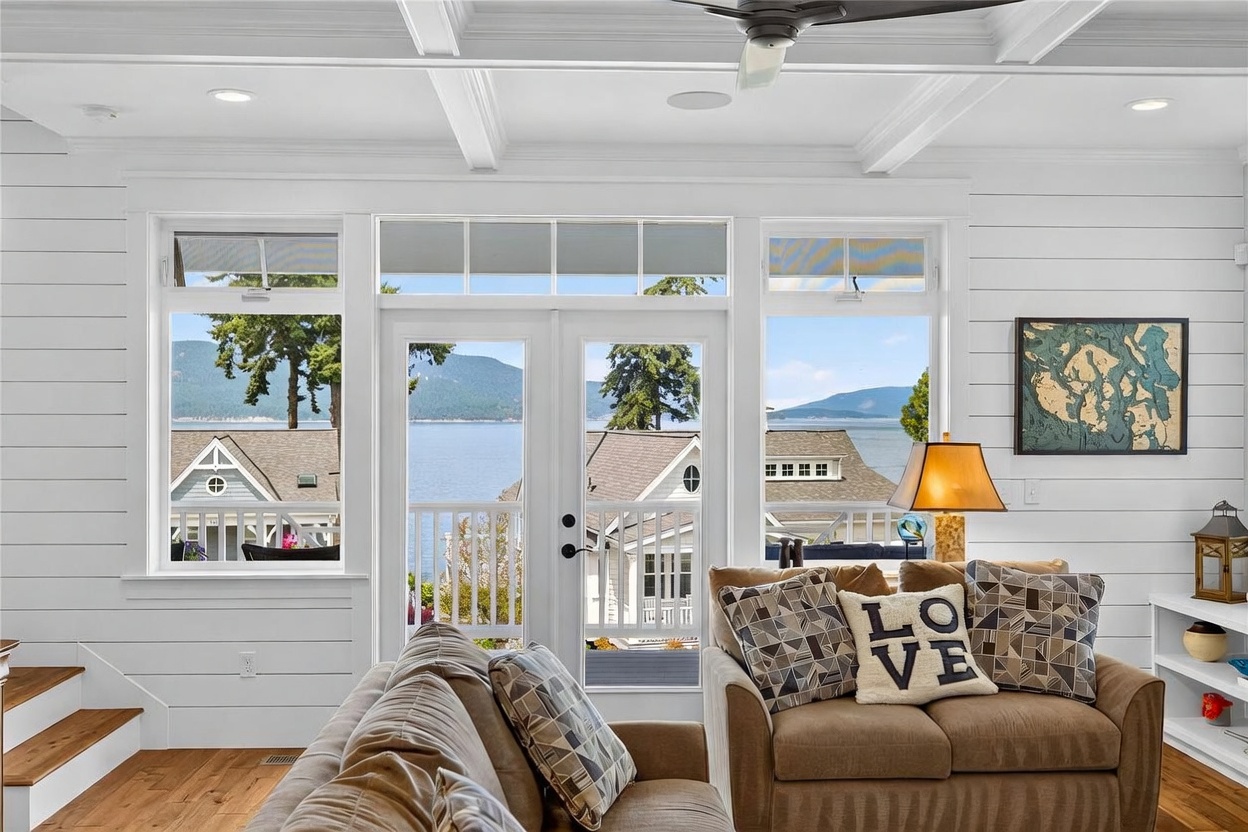
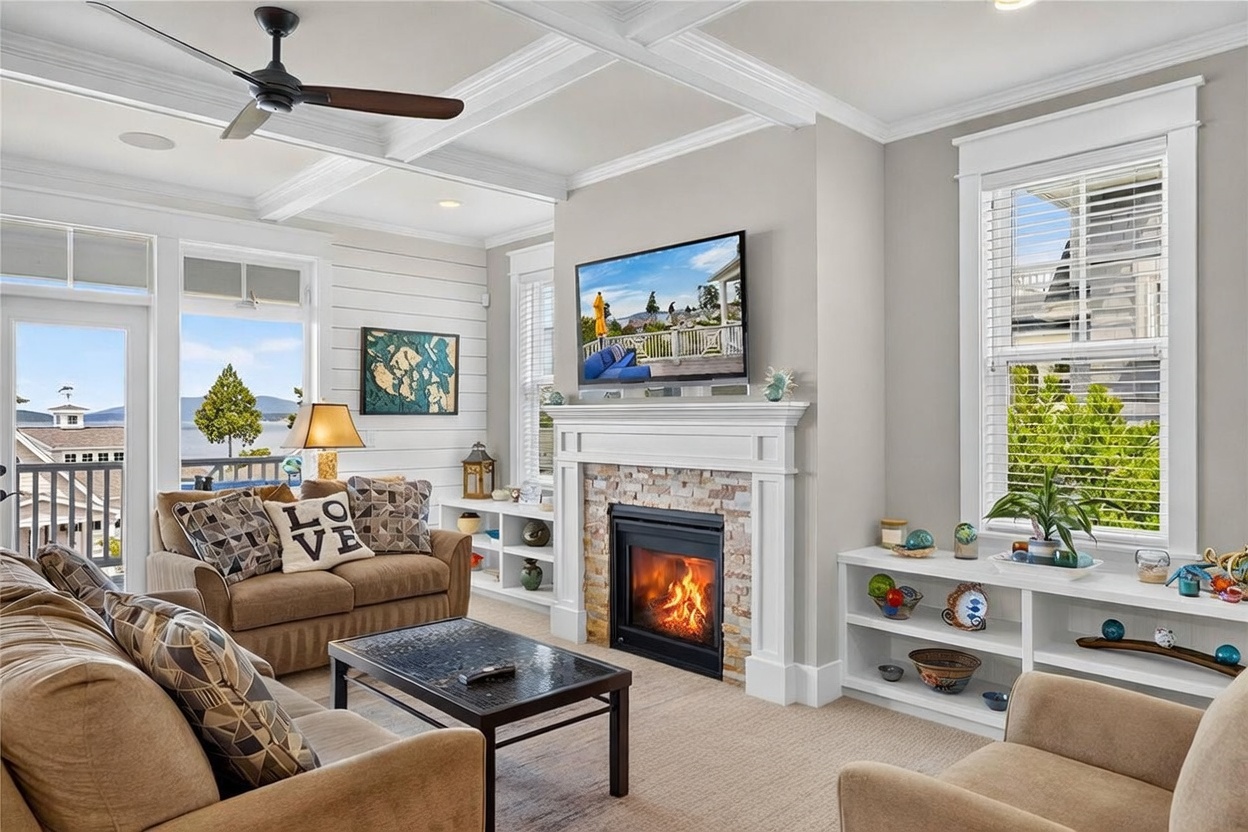
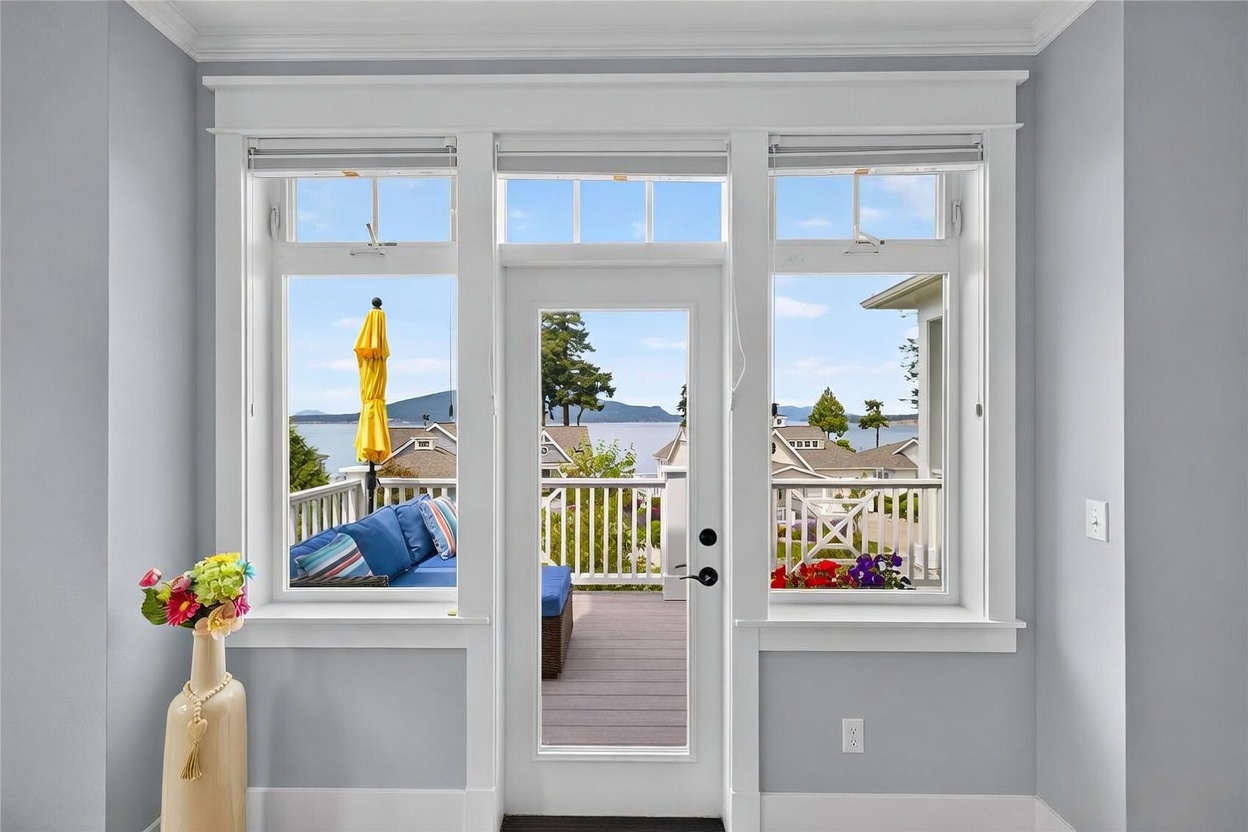
The living room is the residence's emotional center. White shiplap walls and a coffered ceiling establish a coastal aesthetic that feels both relaxed and refined, while a stone-clad fireplace with a classic white mantel grounds the space with warmth. French doors and expansive windows frame unobstructed views of the water and distant mountains, and a covered view porch extends the living area outward — an ideal vantage point from which to receive the day's last light.
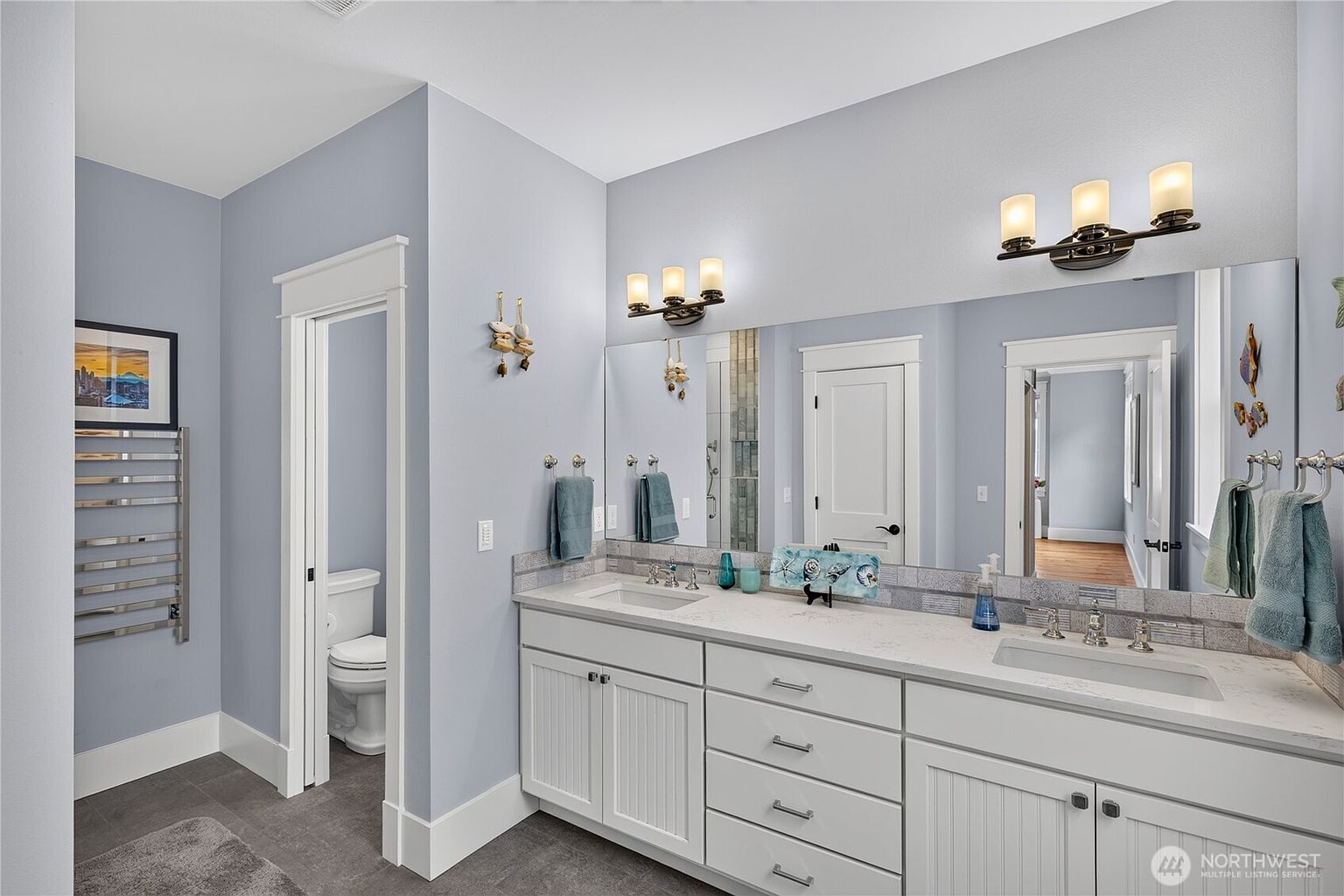
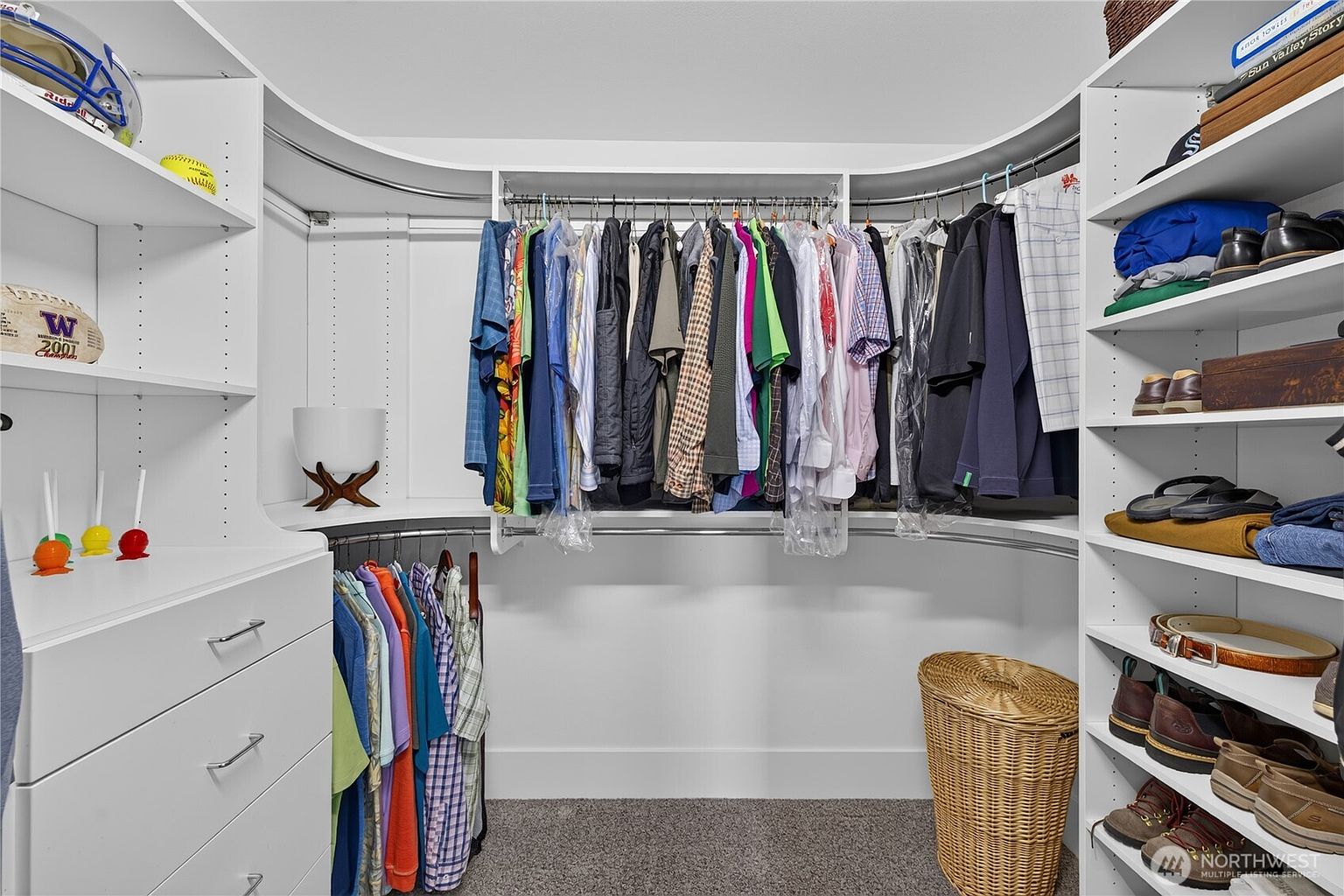
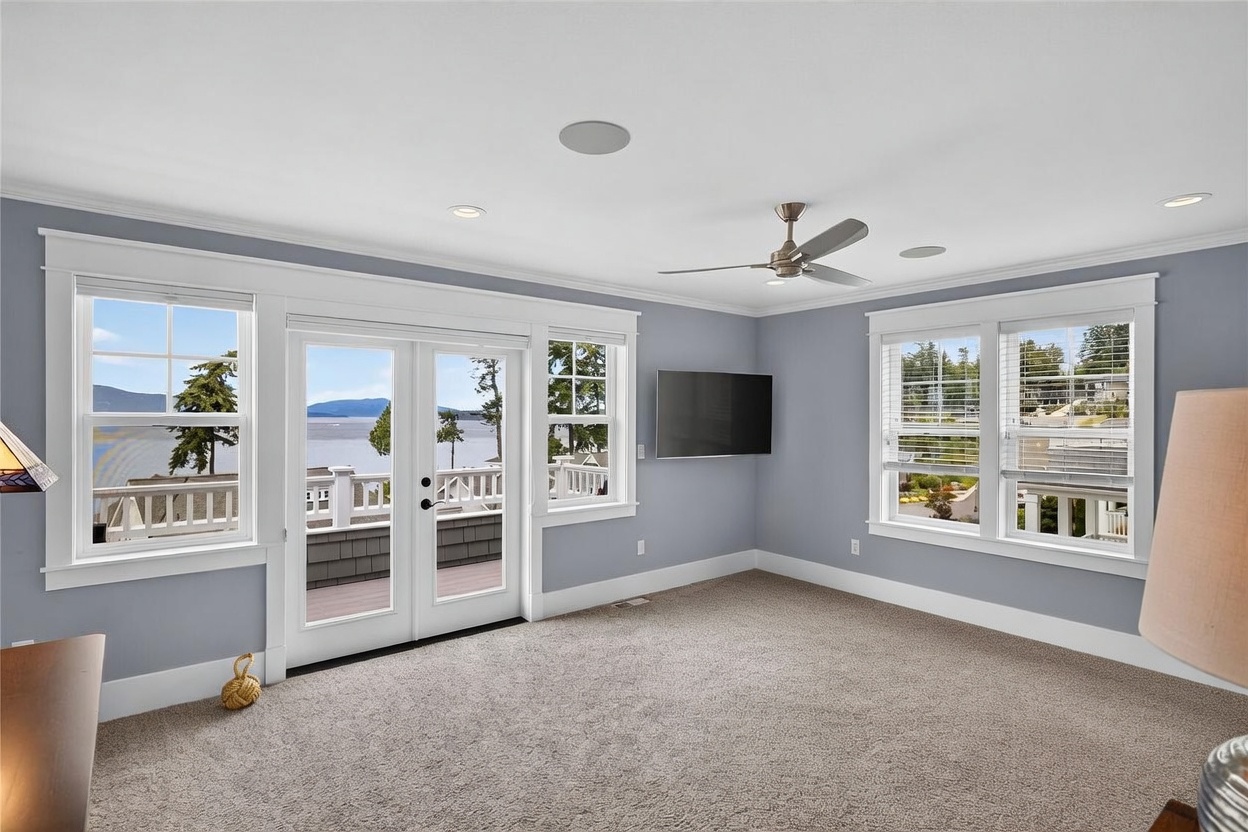
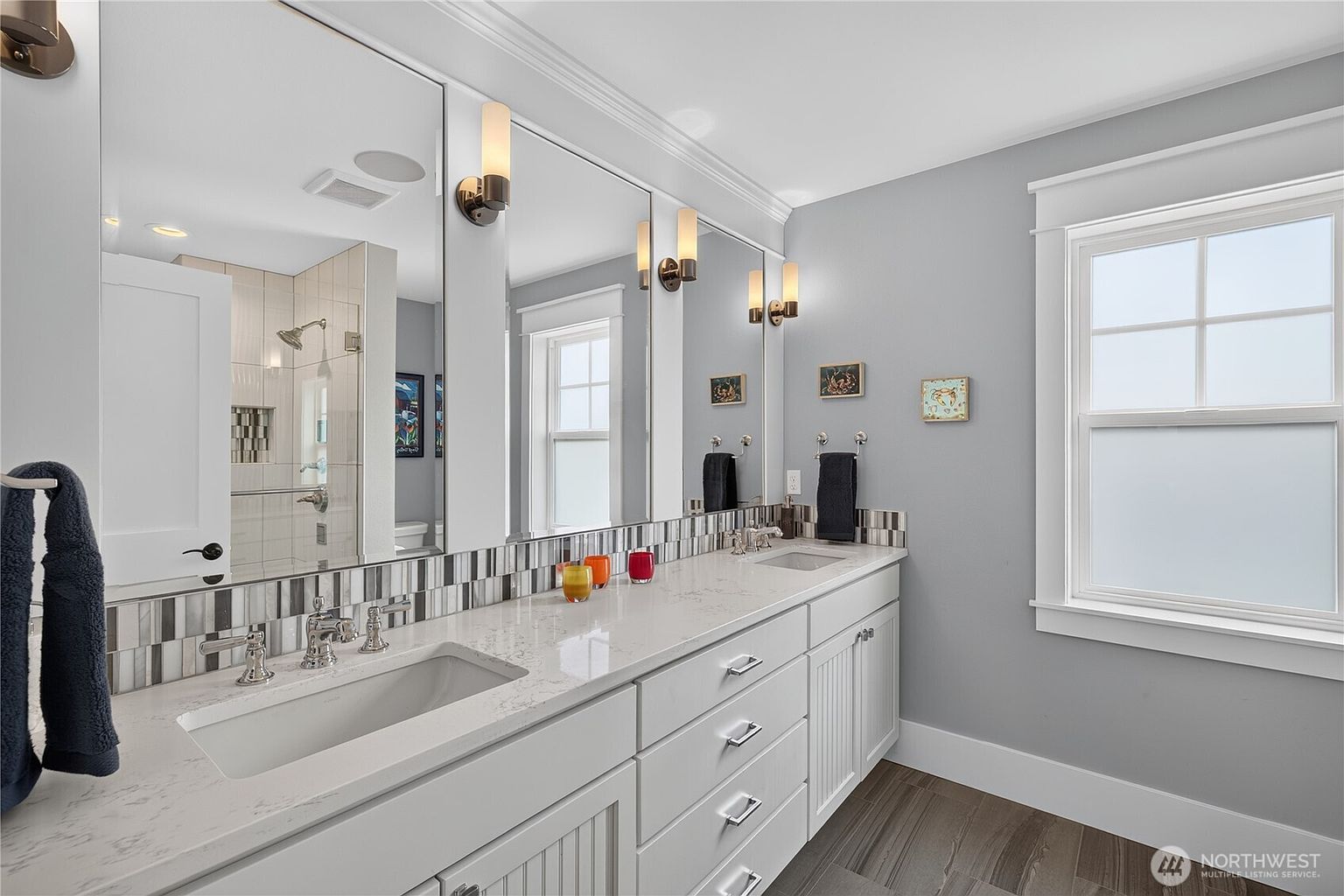
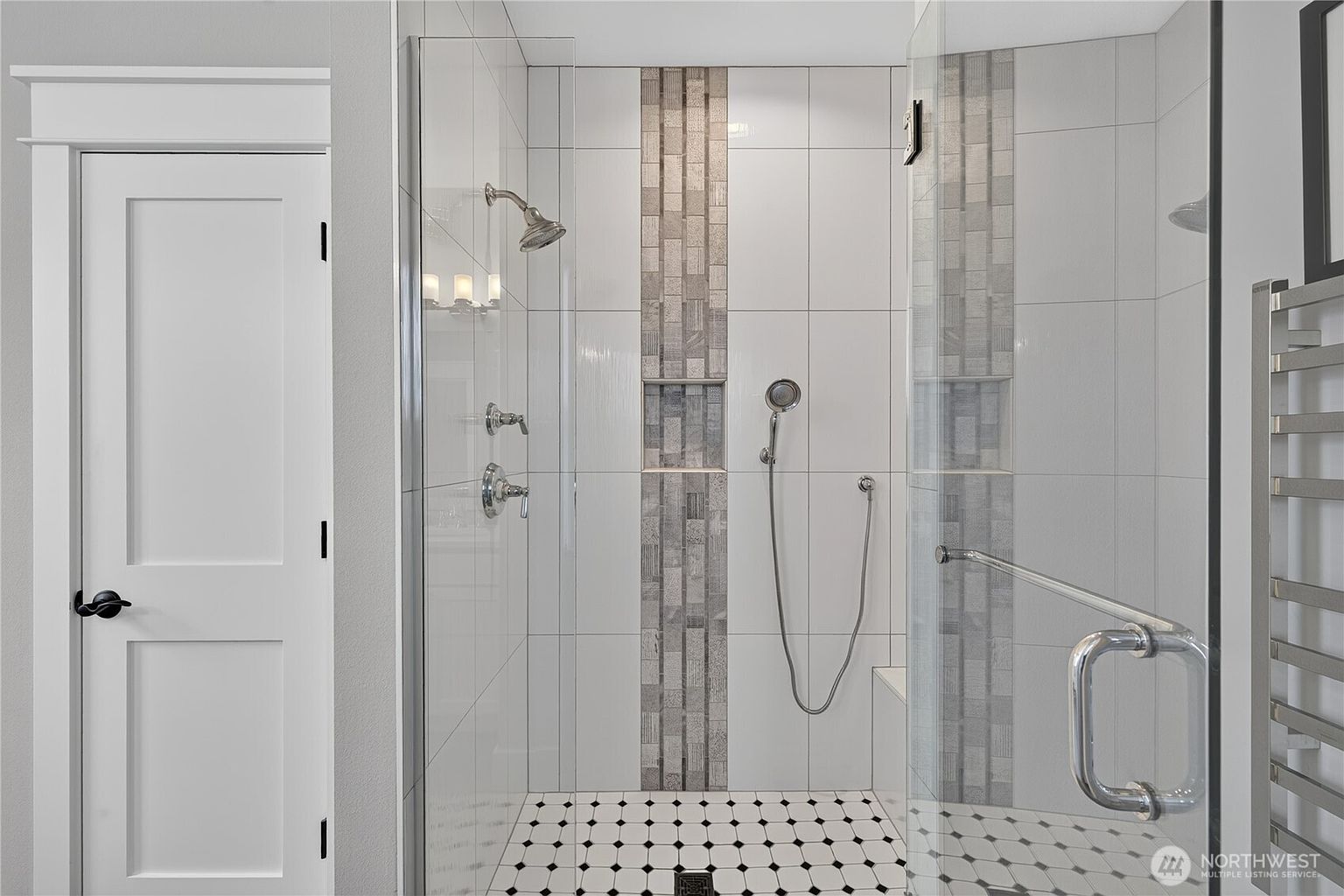
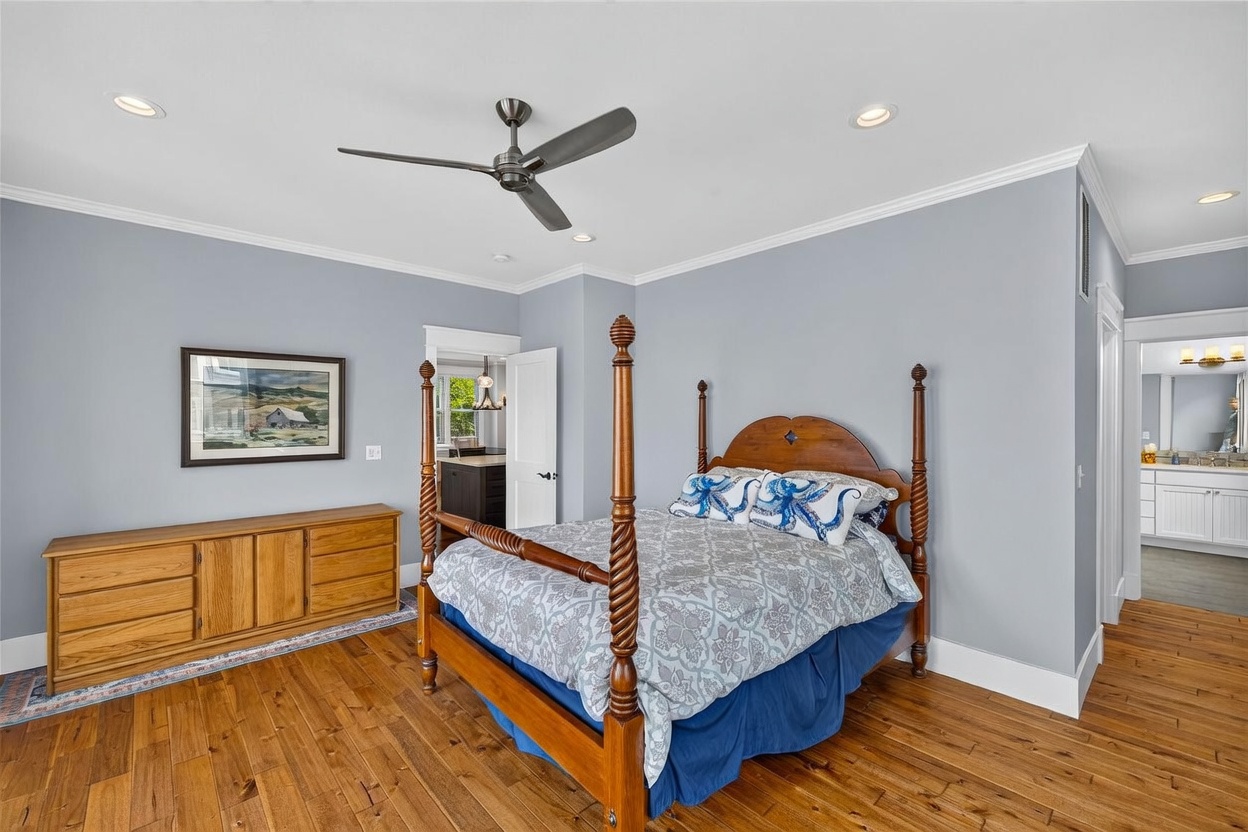
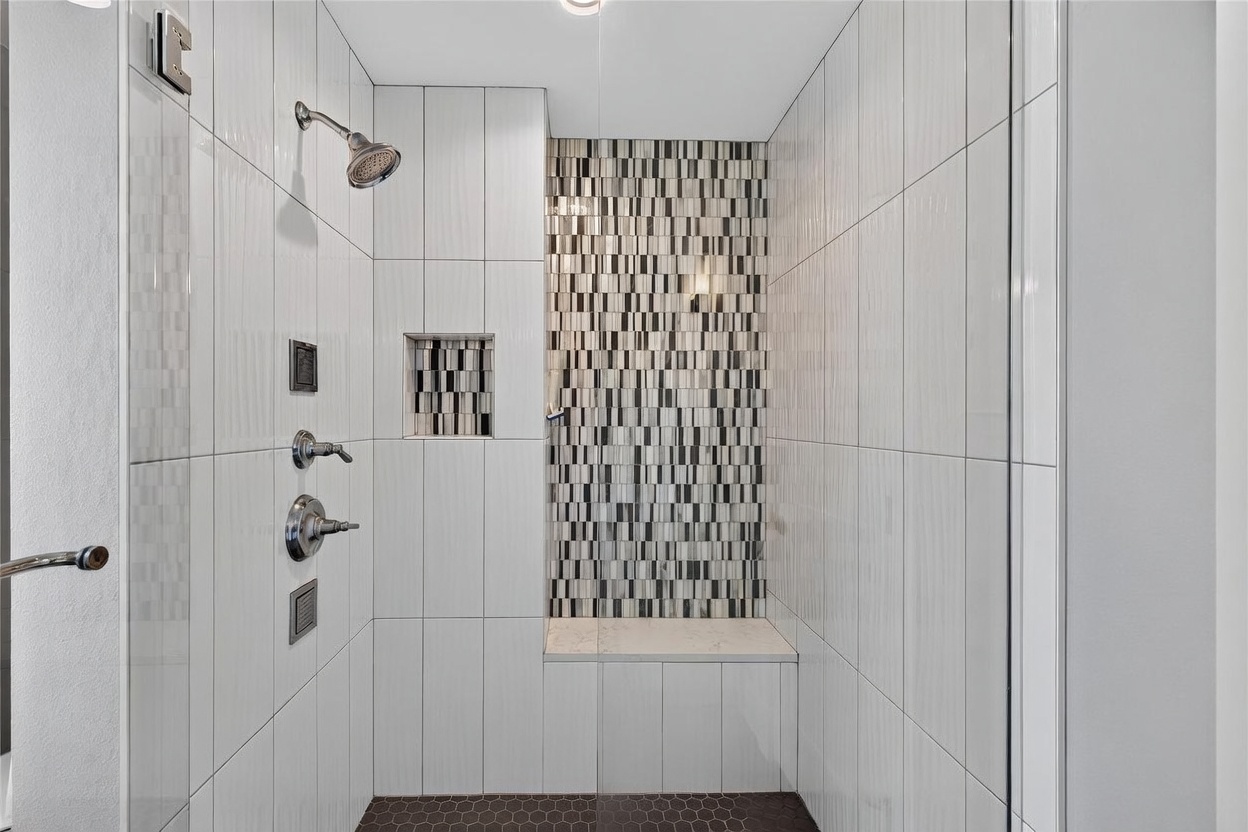
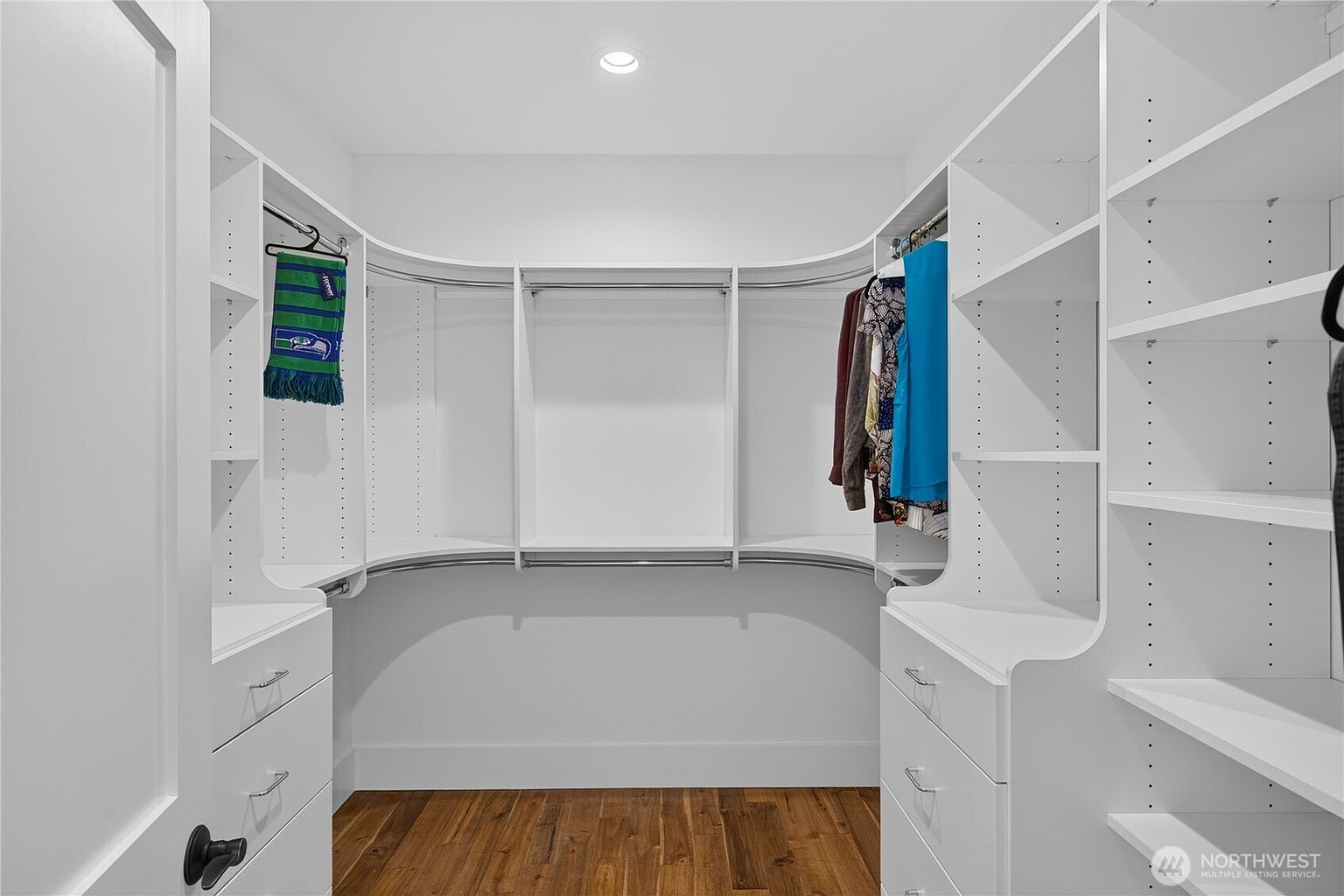
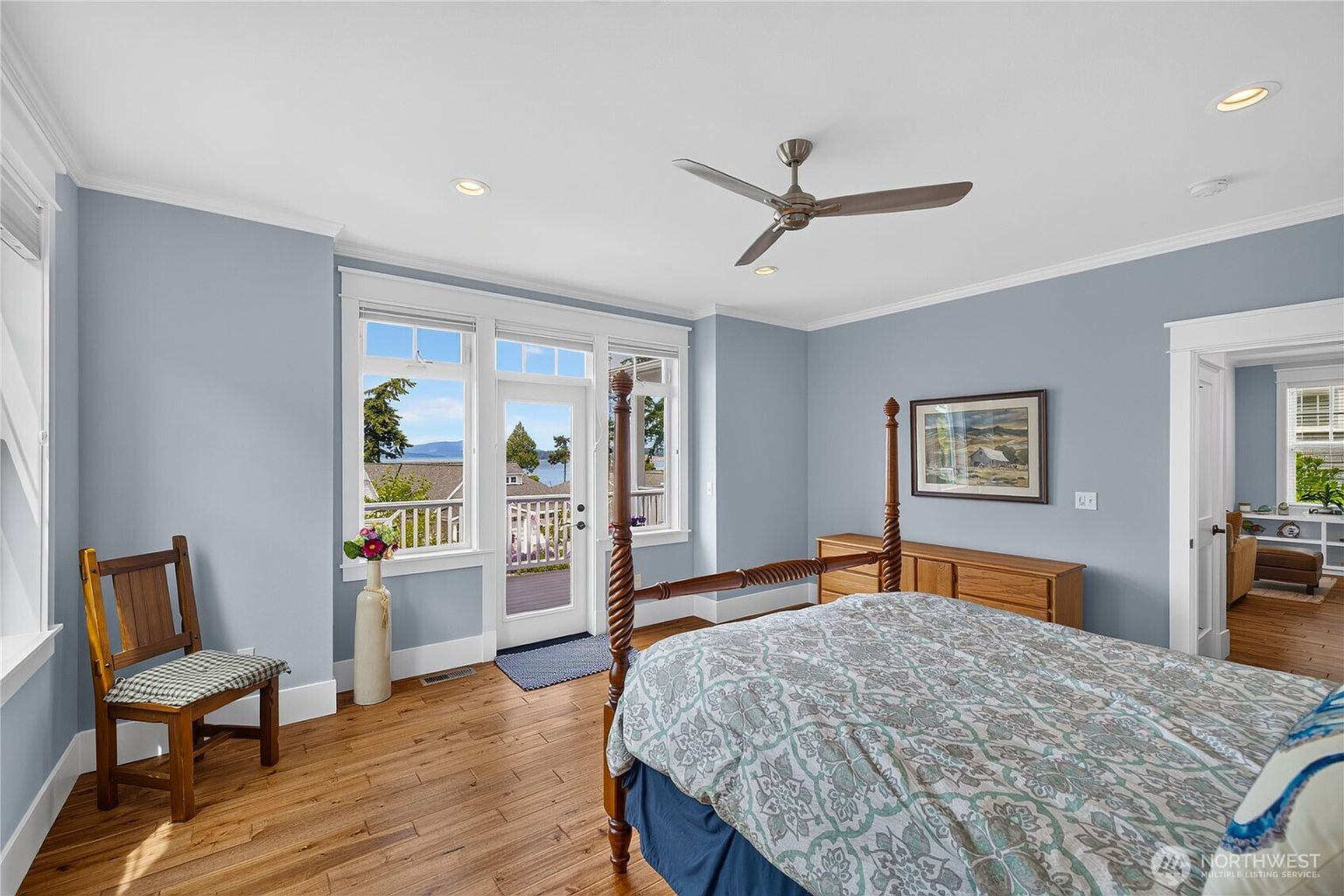
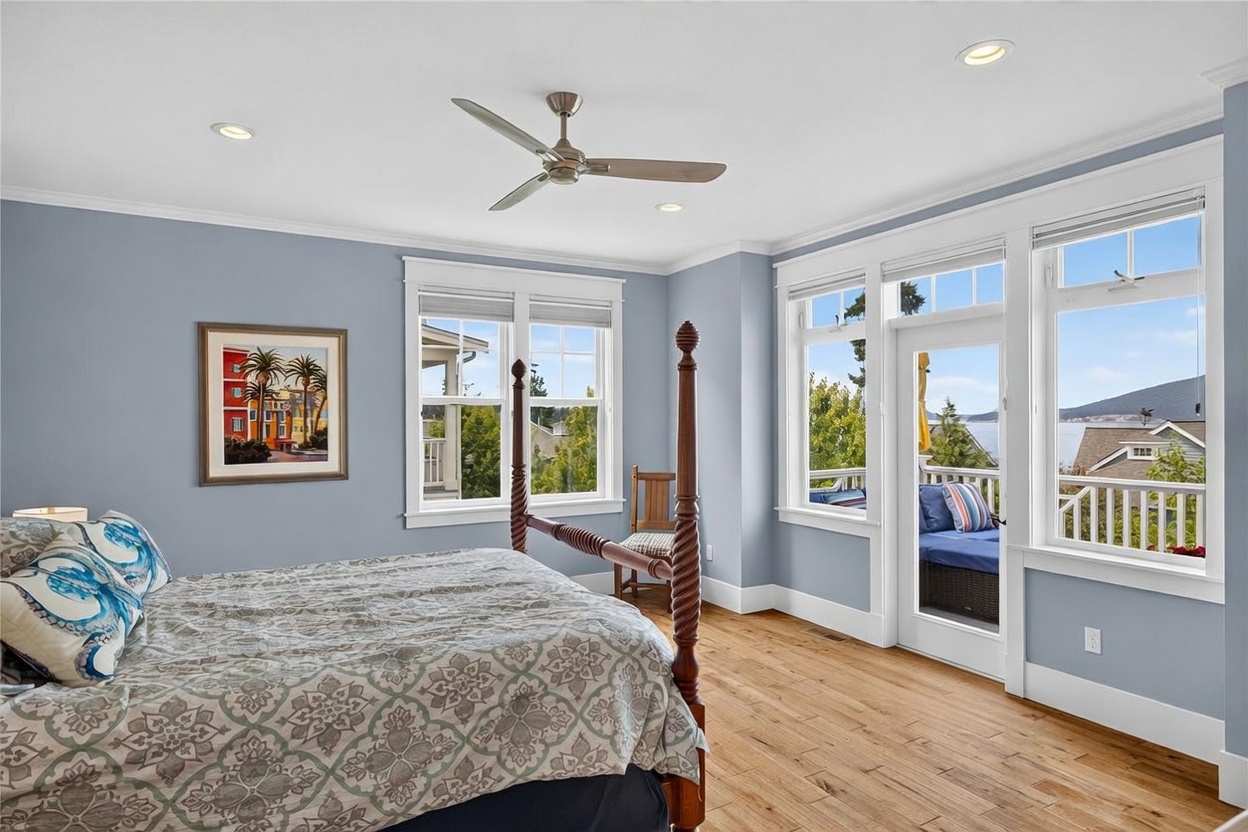
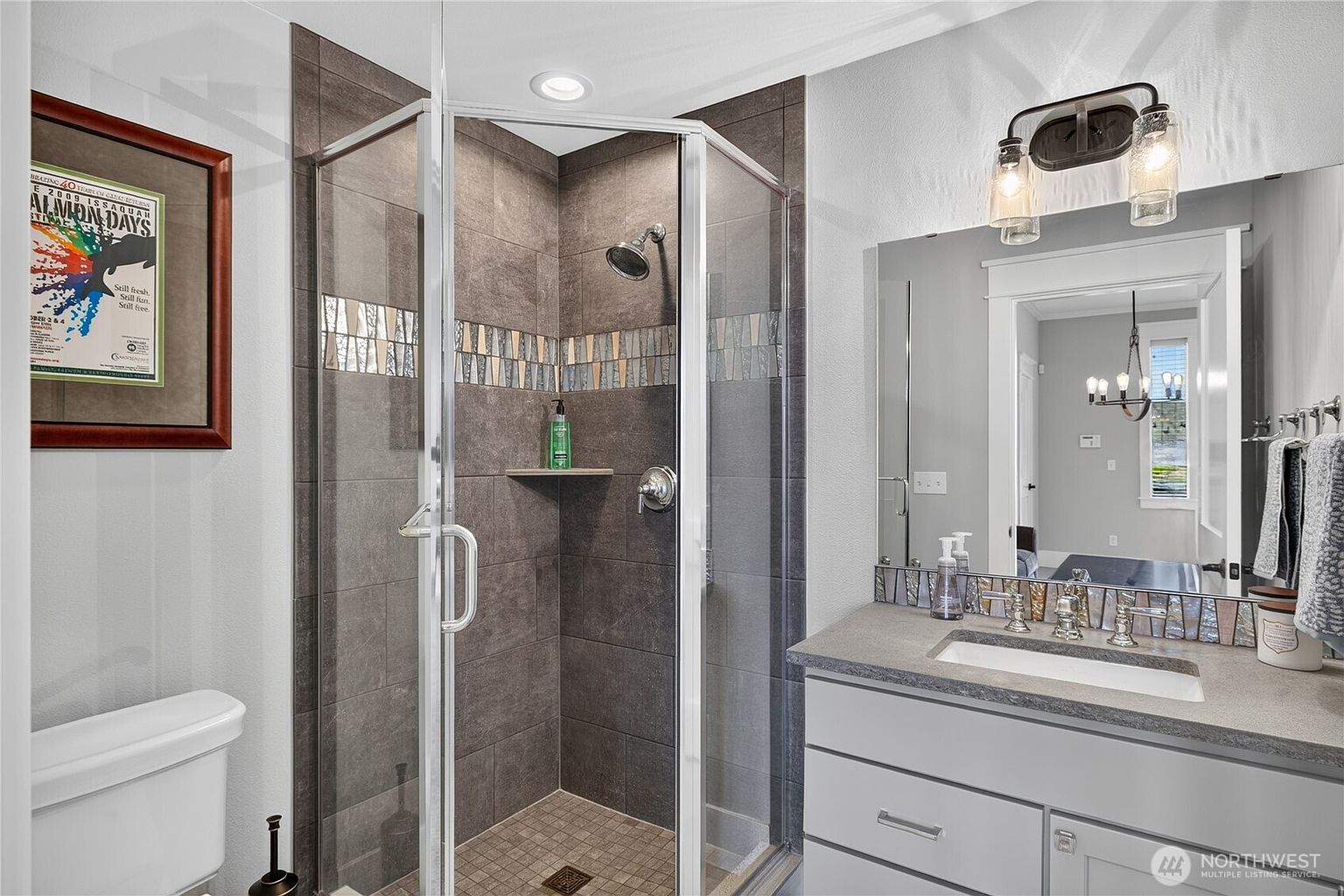
The main-level primary suite is a study in considered luxury. Light blue walls, warm wood flooring, and a classic four-poster bed set a serene tone, while a glass door opens directly onto a private deck above the bay. The ensuite bath offers a long dual-sink vanity with white cabinetry, stone countertops, a mosaic tile backsplash, and a walk-in shower with both a rainfall showerhead and handheld sprayer. A custom walk-in closet with curved shelving, integrated drawers, and dedicated hanging areas completes the suite.
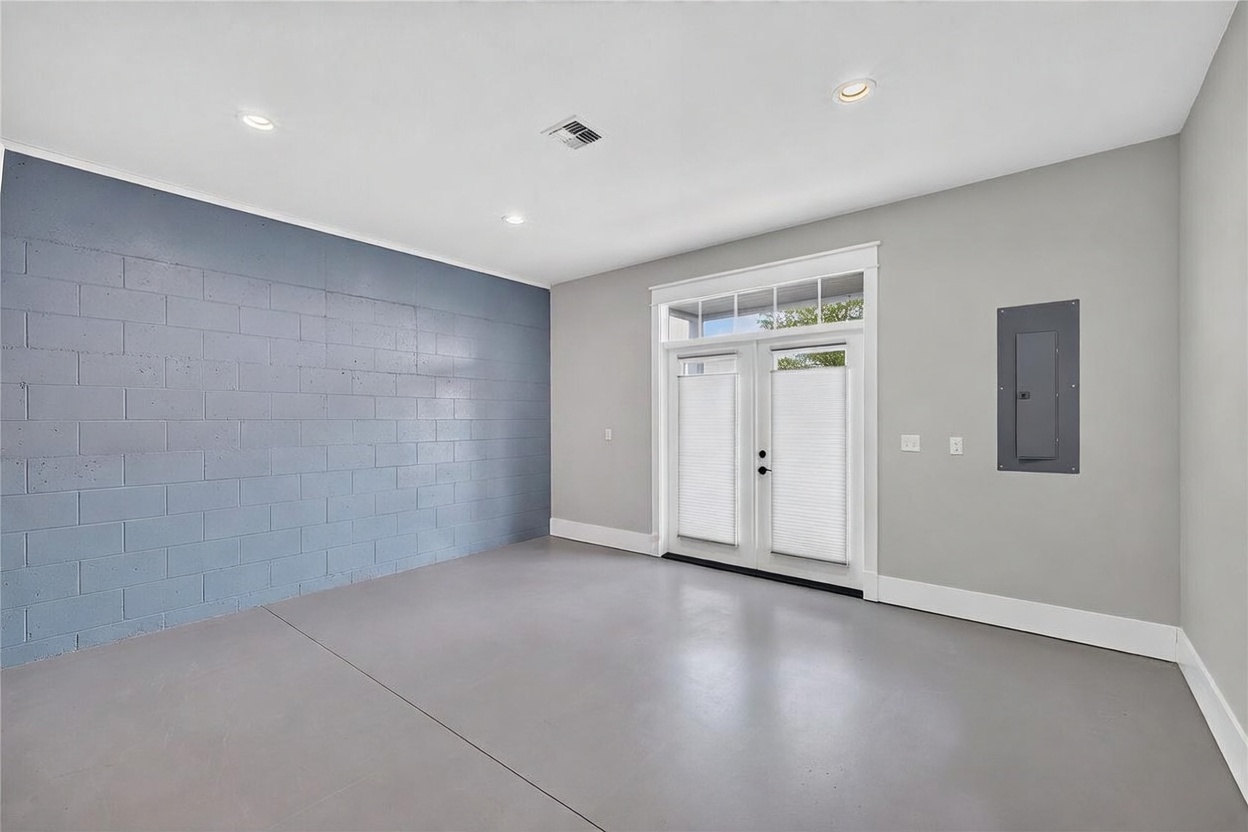
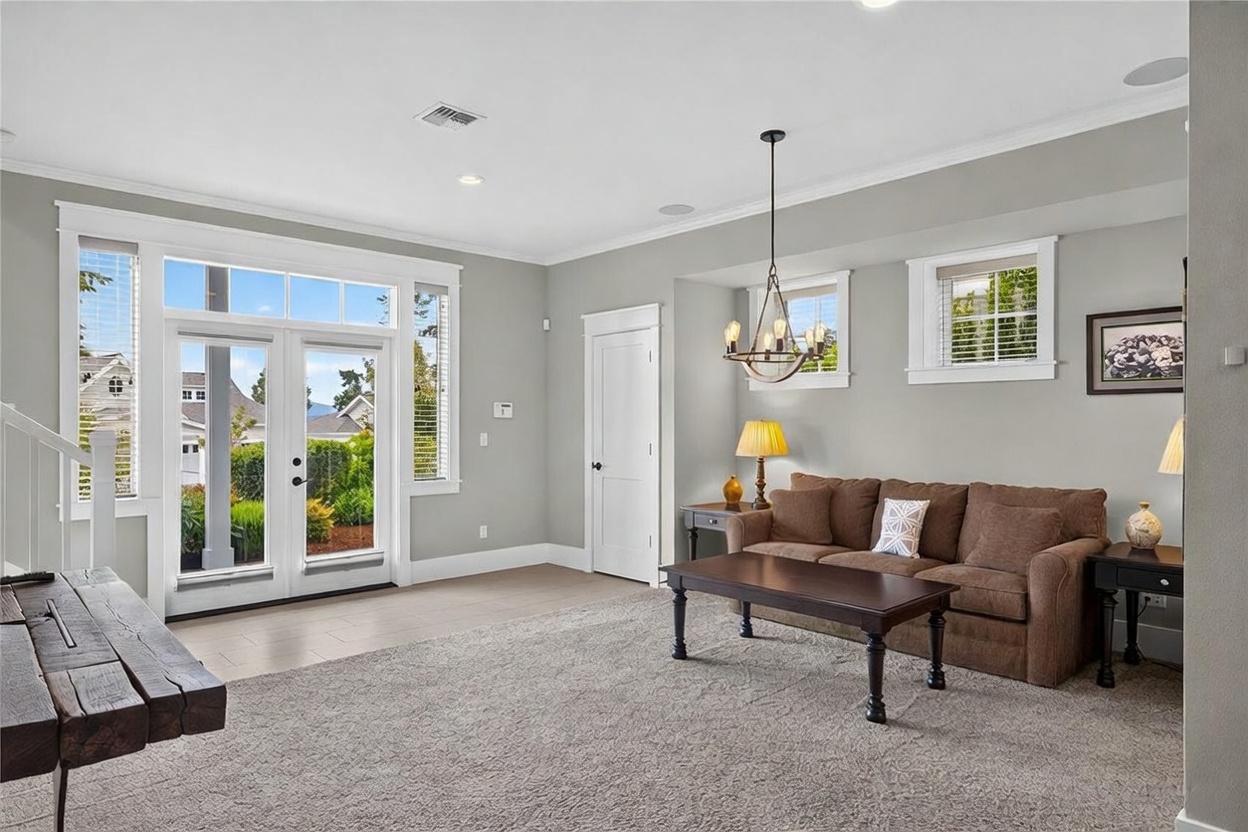
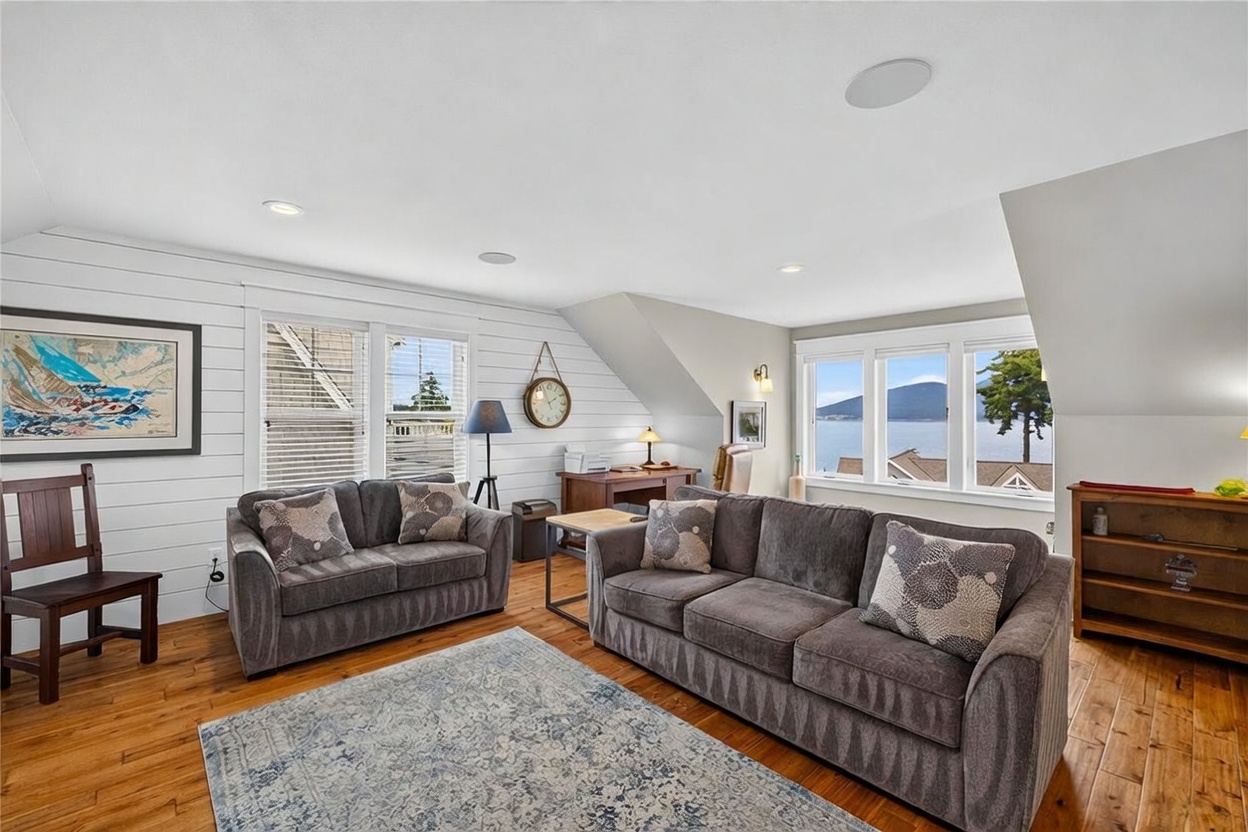
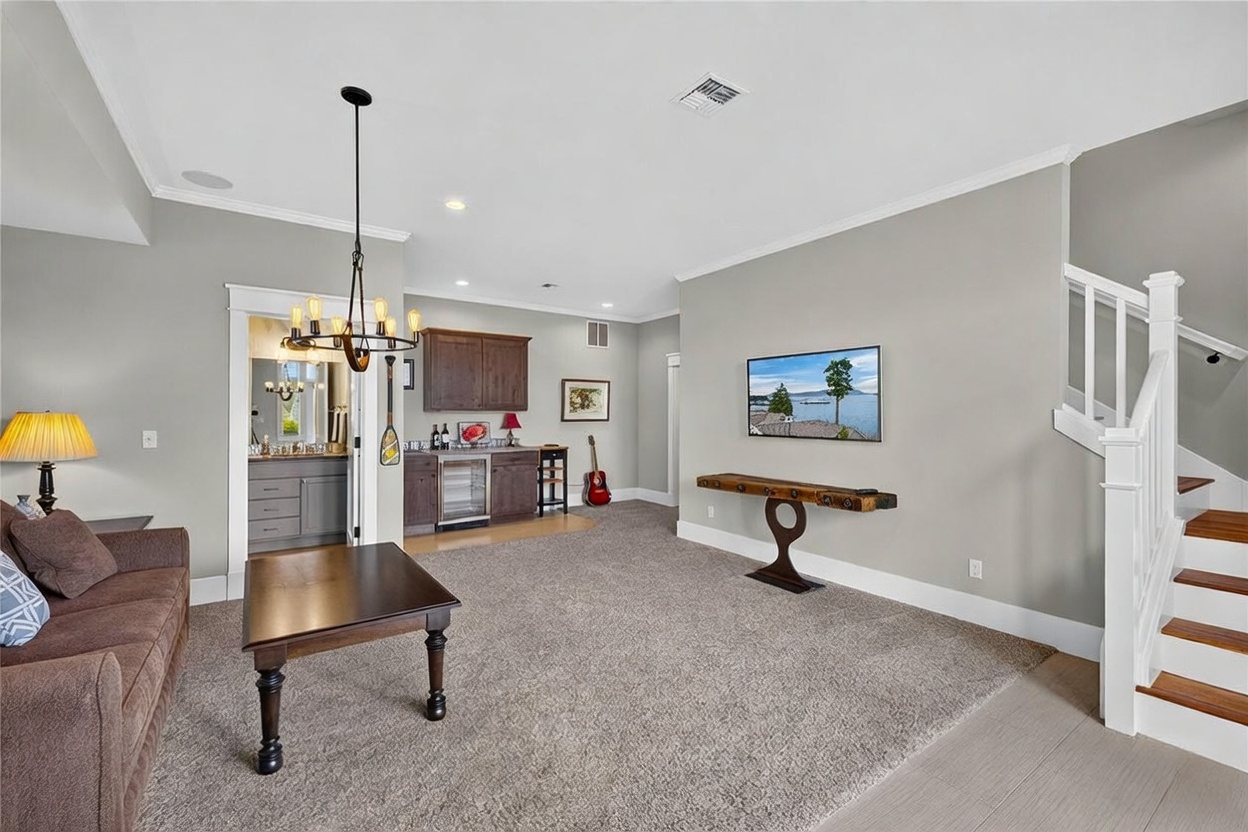
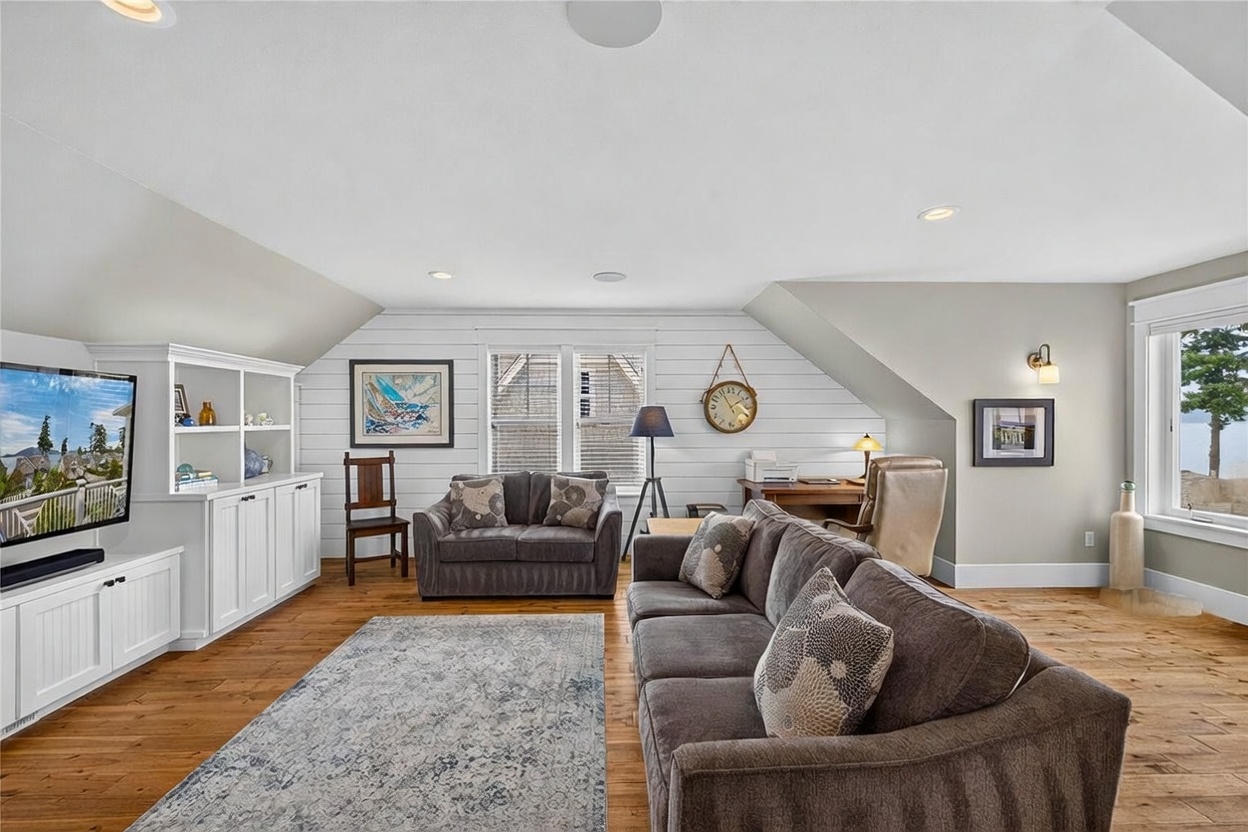
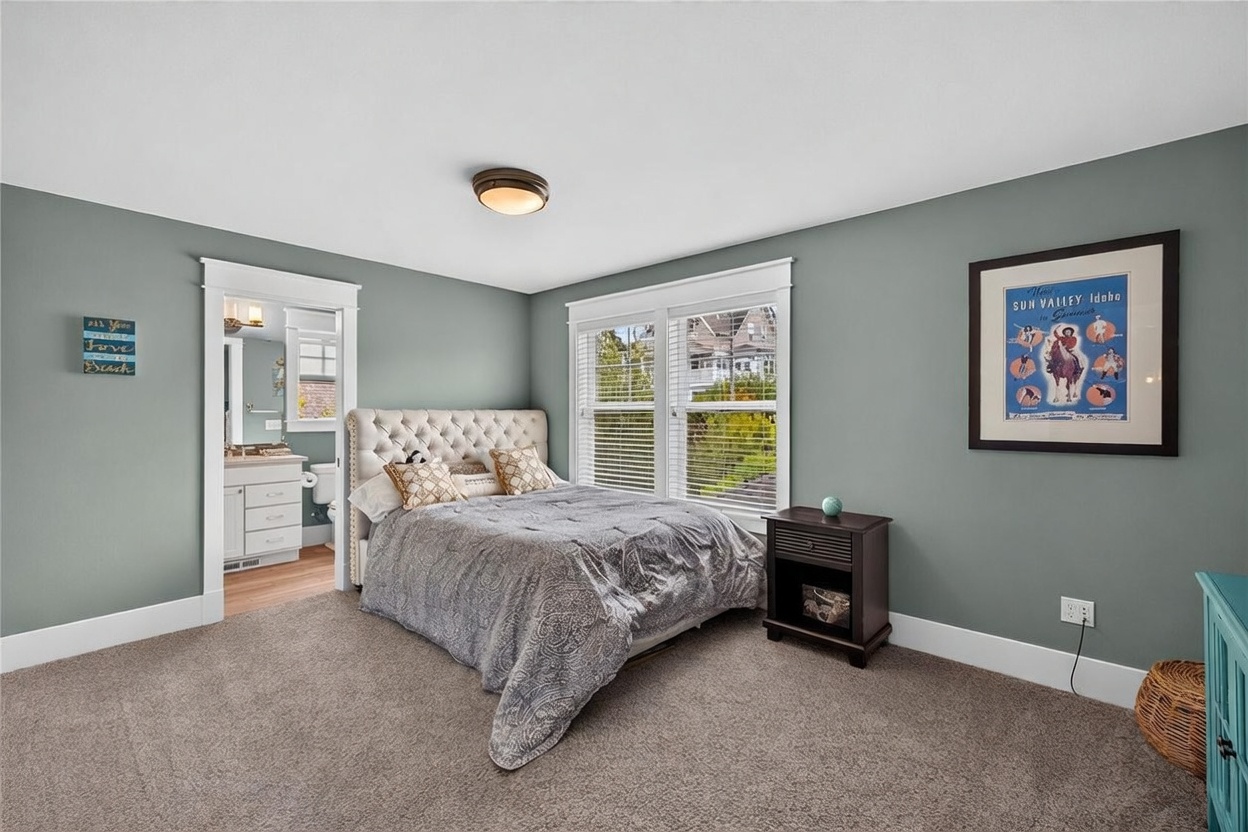
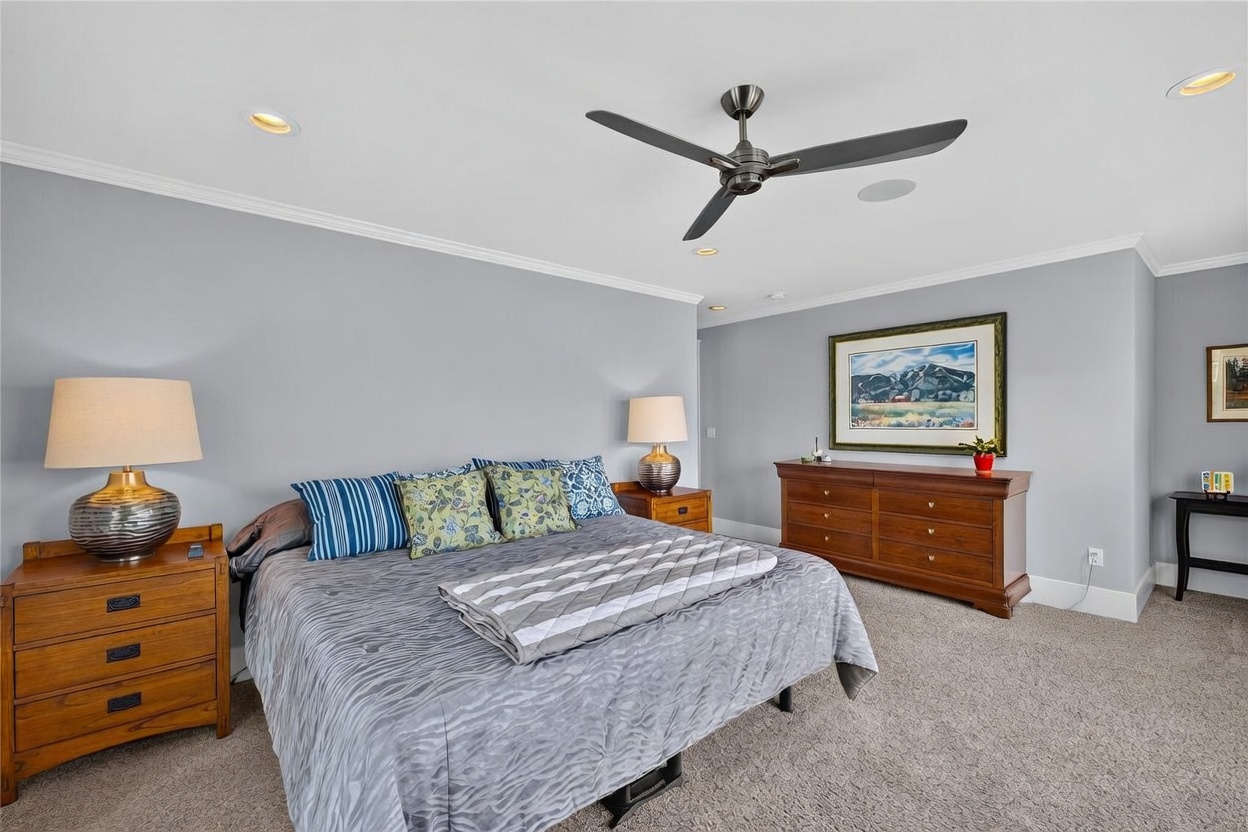
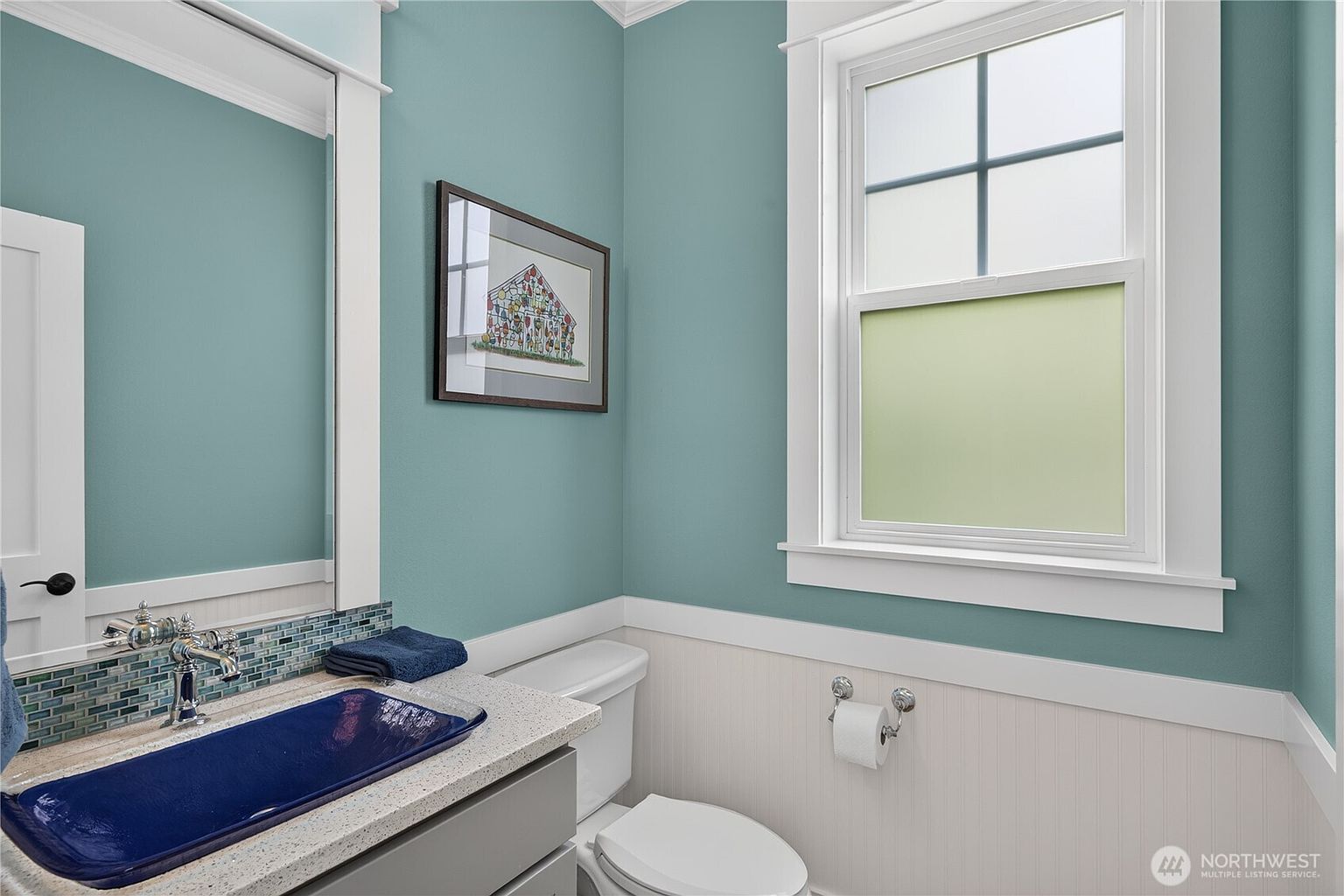
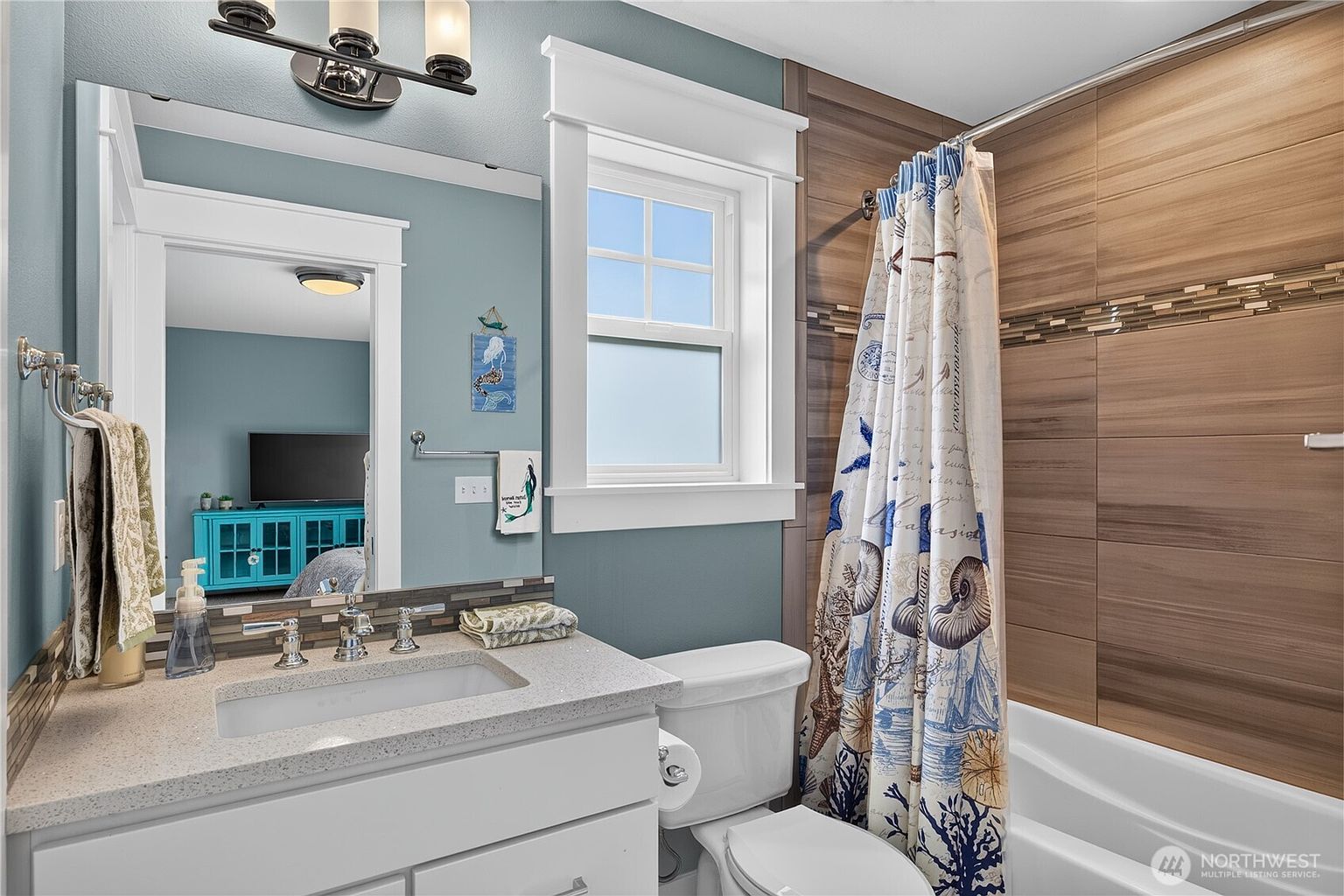
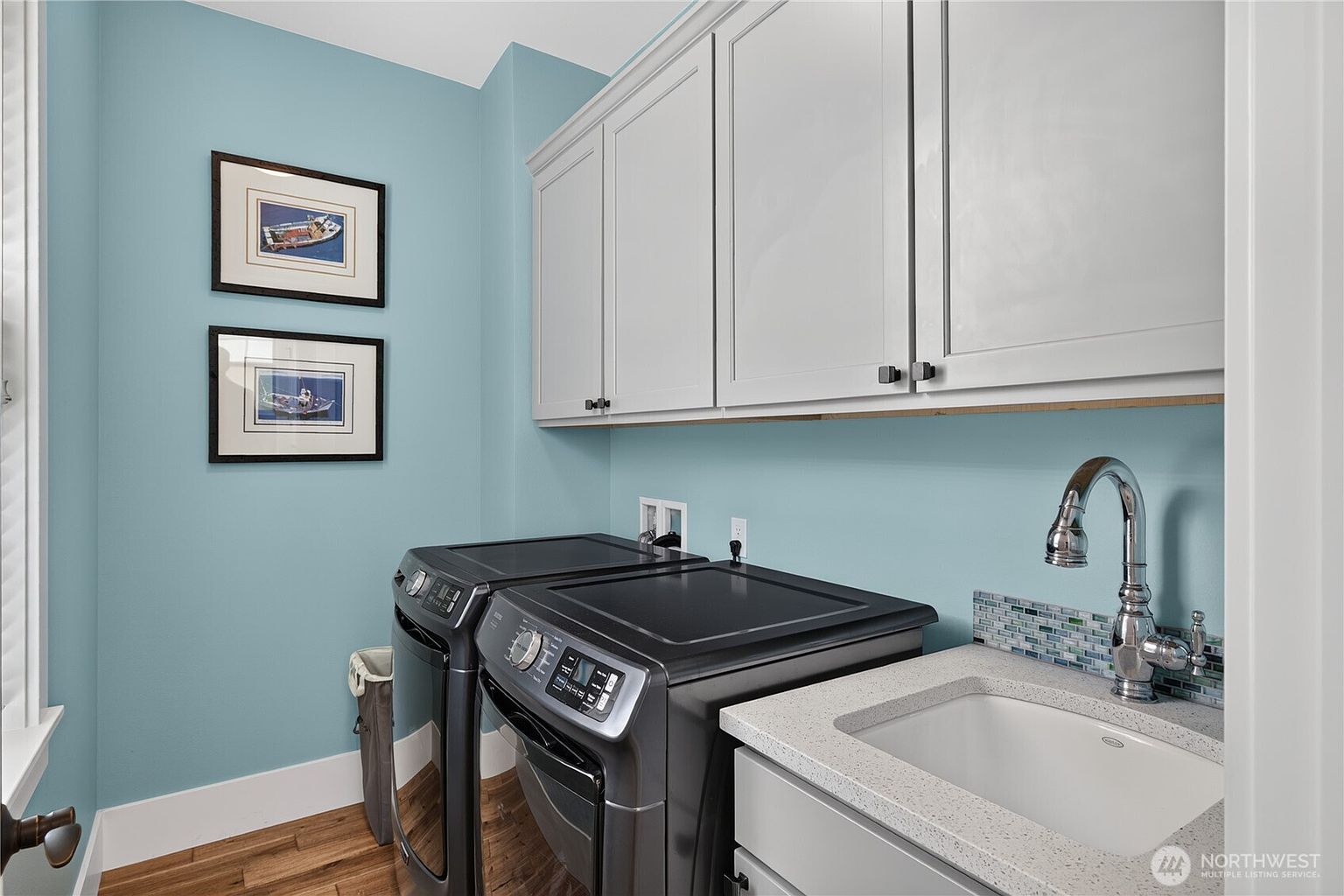
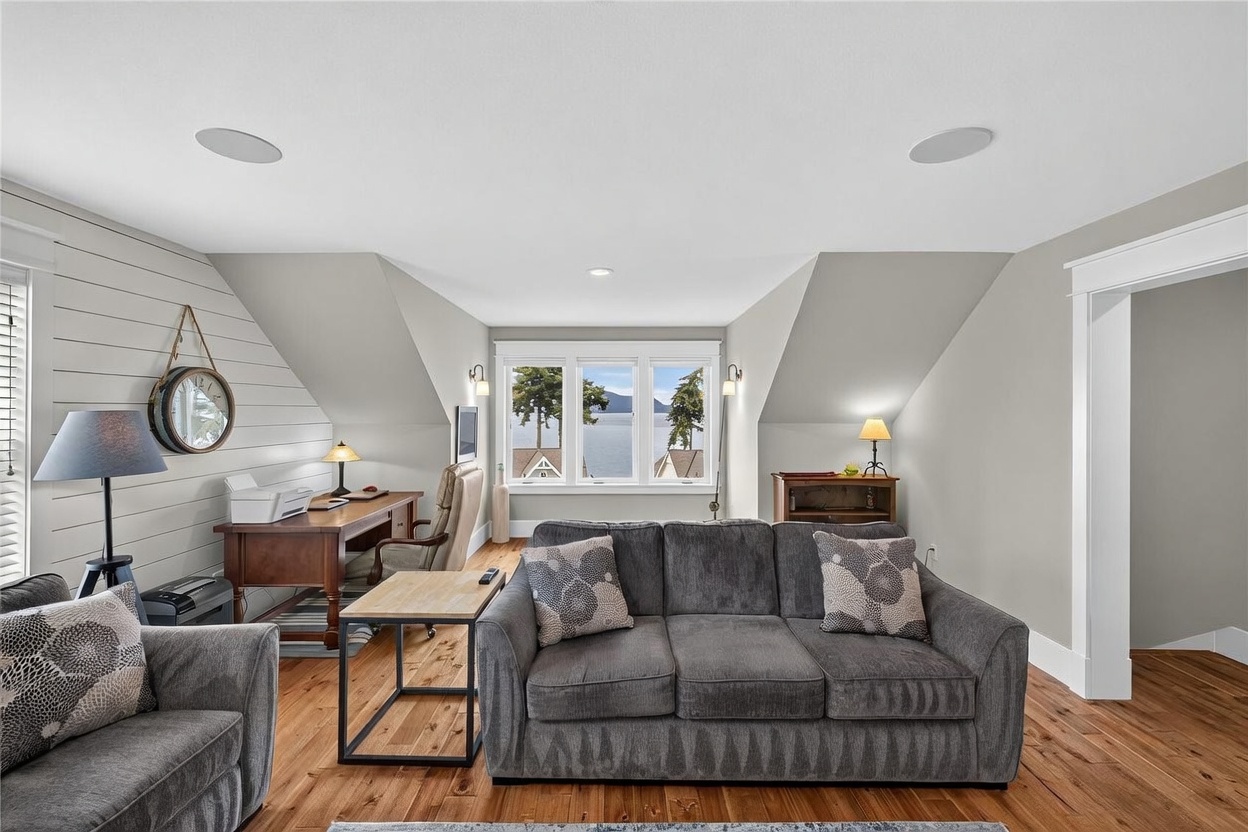
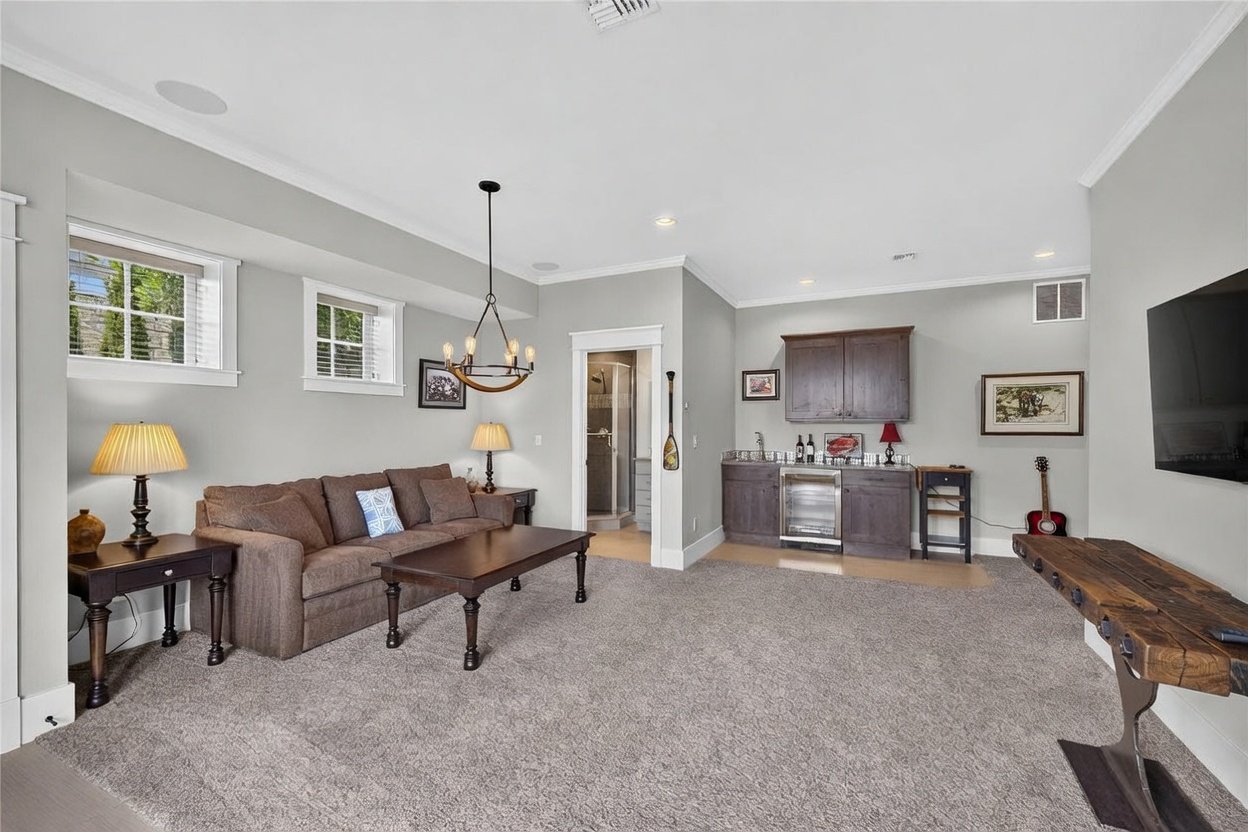
Upstairs, two additional bedroom suites continue the home's commitment to private, well-appointed retreats. One suite features its own private balcony with direct water views, while a family room and a dedicated home office nook with its own water outlook add functional depth to the upper level. The lower floor expands the home's versatility considerably: a second family room with a wet bar and beverage refrigerator opens to a covered lower porch, while a flex room with interior access to the finished garage area offers possibilities ranging from a home gym to a workshop or wine cellar. A full bath and den ensure that guests on this level enjoy complete independence. Throughout, nautical-themed accents, a thoughtful laundry room with stone countertops and custom cabinetry, and carefully maintained finishes speak to a home that has been lived in with both pride and intention.
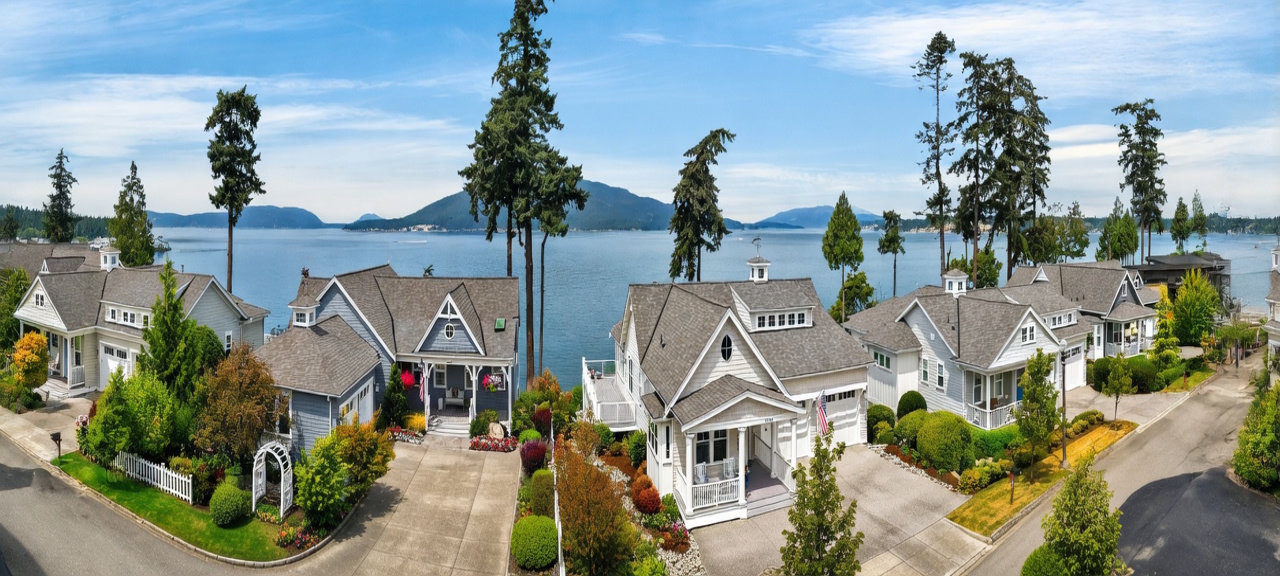
Anacortes occupies a singular position in the Pacific Northwest imagination — a working waterfront city that has never lost its authenticity, perched on the northwestern edge of Fidalgo Island where the Salish Sea opens toward the San Juan Islands and the jagged silhouette of the North Cascades defines the eastern horizon. It is a place where fishing vessels and kayaks share the same harbors, where farmers markets and art galleries occupy the same historic downtown blocks, and where the word 'island living' carries genuine geographic meaning.
The city traces its origins to the late nineteenth century, when it emerged as a salmon canning and lumber hub of considerable regional ambition. That entrepreneurial energy left behind a downtown core along Commercial Avenue that retains much of its historic character — brick storefronts, independent restaurants and coffee shops, galleries, and a civic pride that is palpable on any given Saturday morning. The Anacortes Farmers Market, held seasonally in the heart of downtown, draws both residents and visitors and reflects a community deeply invested in local agriculture and artisanal craft.
For those drawn to the water — and in Anacortes, nearly everyone is — the options are extraordinary. The city is home to one of the most active boating communities in the Pacific Northwest, anchored by multiple marinas including Cap Sante Marina, which sits within easy reach of downtown and offers access to some of the finest cruising grounds in North America. The surrounding waters of Puget Sound and the San Juan Islands are renowned for wildlife viewing, with orca sightings, harbor seals, and bald eagles regular companions to those who venture out by boat, kayak, or paddleboard.
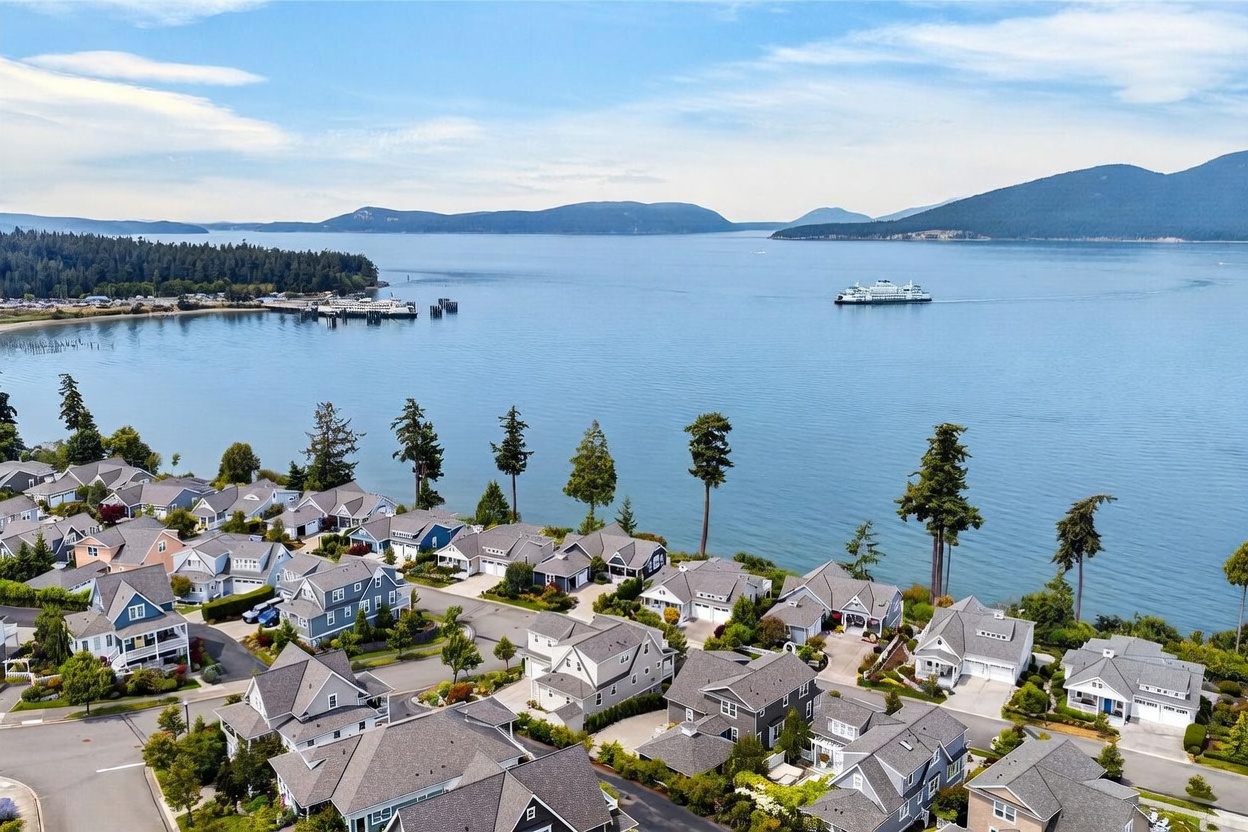
The Washington State Ferry system connects Anacortes to the San Juan Islands — Lopez, Orcas, San Juan, and Shaw — as well as to Sidney, British Columbia, making international travel as simple as a scenic ferry crossing. From the elevated balcony of 4415 Cutter Drive, these same ferries can be watched crossing the bay against a backdrop of forested mountains, a daily reminder of the remarkable connectivity this location affords.
On land, Anacortes offers an extensive network of parks and trails that wind through the Tommy Thompson Trail along the waterfront, and into the more than 2,800 acres of the Anacortes Community Forest Lands — one of the largest municipally owned forest preserves in Washington State. Cyclists, hikers, and trail runners find in these lands a resource that most cities many times Anacortes's size cannot match.
The neighborhoods adjacent to Saratoga's shoreline carry the quiet confidence of a community that understands its own rare fortune. Homes here are oriented toward the water as a matter of first principle, and the lifestyle that follows — morning walks along the bluff, evenings on the deck as the ferry lights move across the darkening bay, weekends spent on the water or exploring the islands — is one that residents protect and cherish. To live here is to understand, in the most direct possible terms, why people come to the Pacific Northwest and never leave.
Featured Highlights
Curated Content • Presented by Kelli Lang