The Story Behind
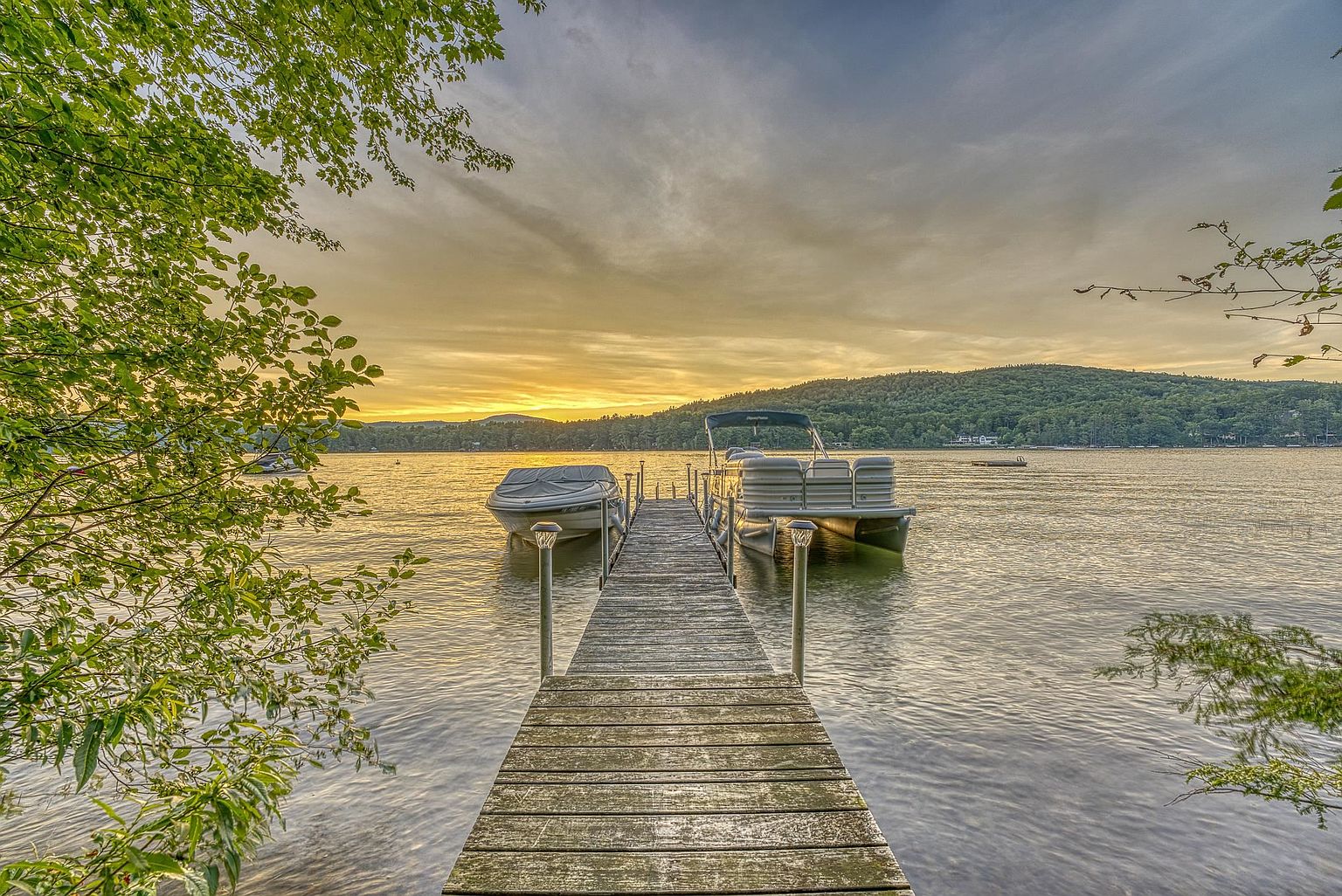
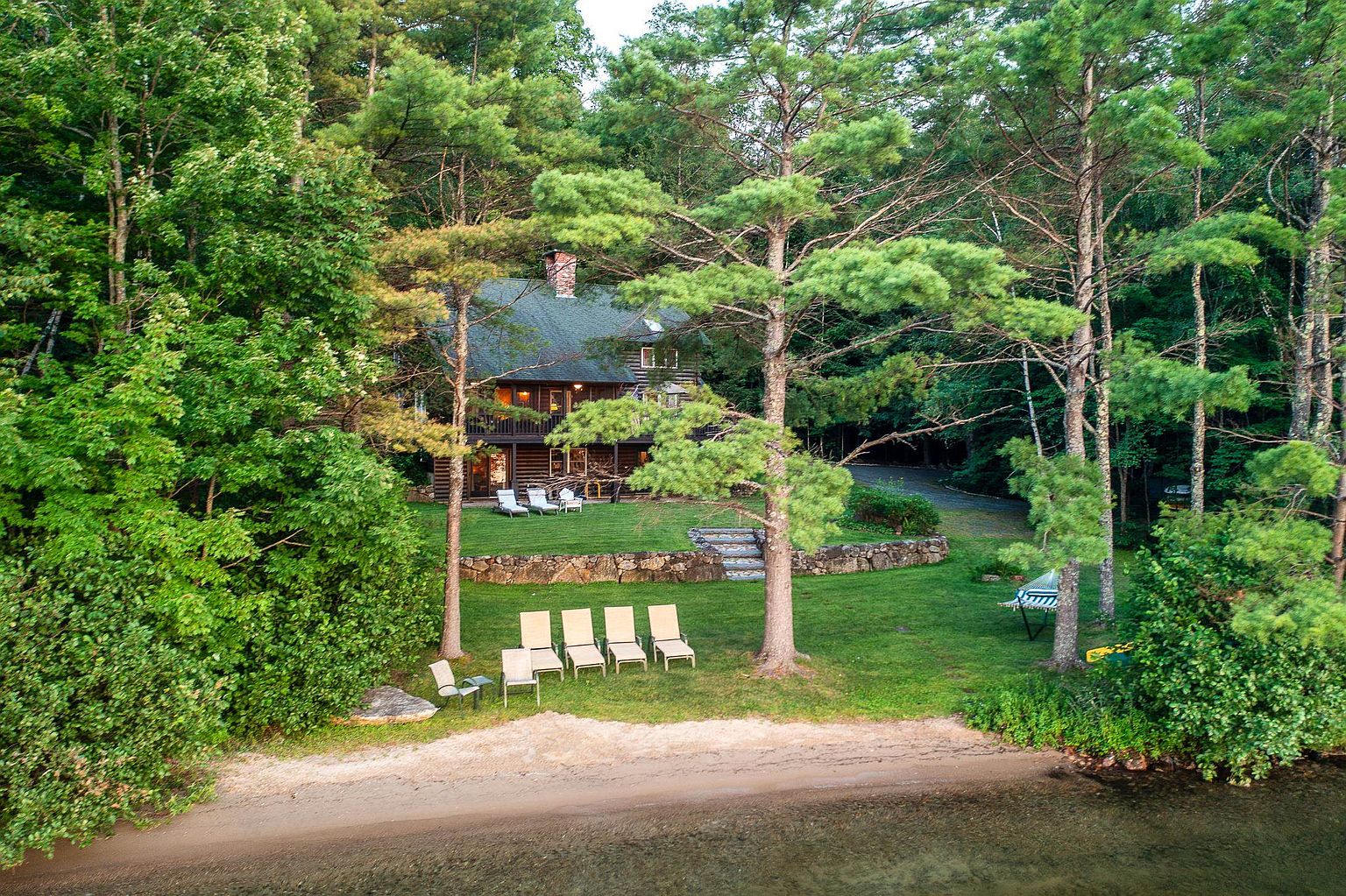
Legendary Squam Lake Sunsets, Two Hundred Feet of Private Shoreline
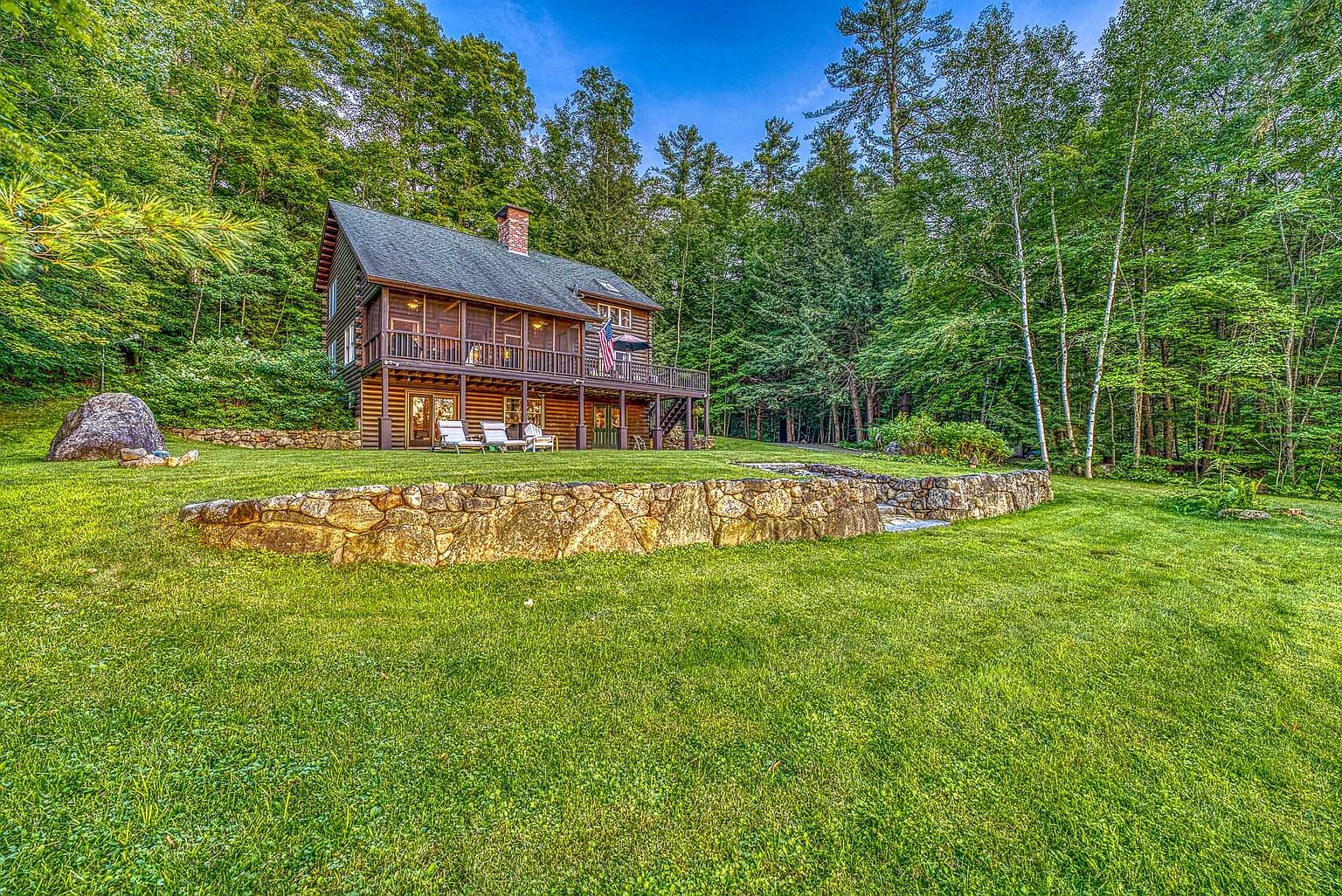
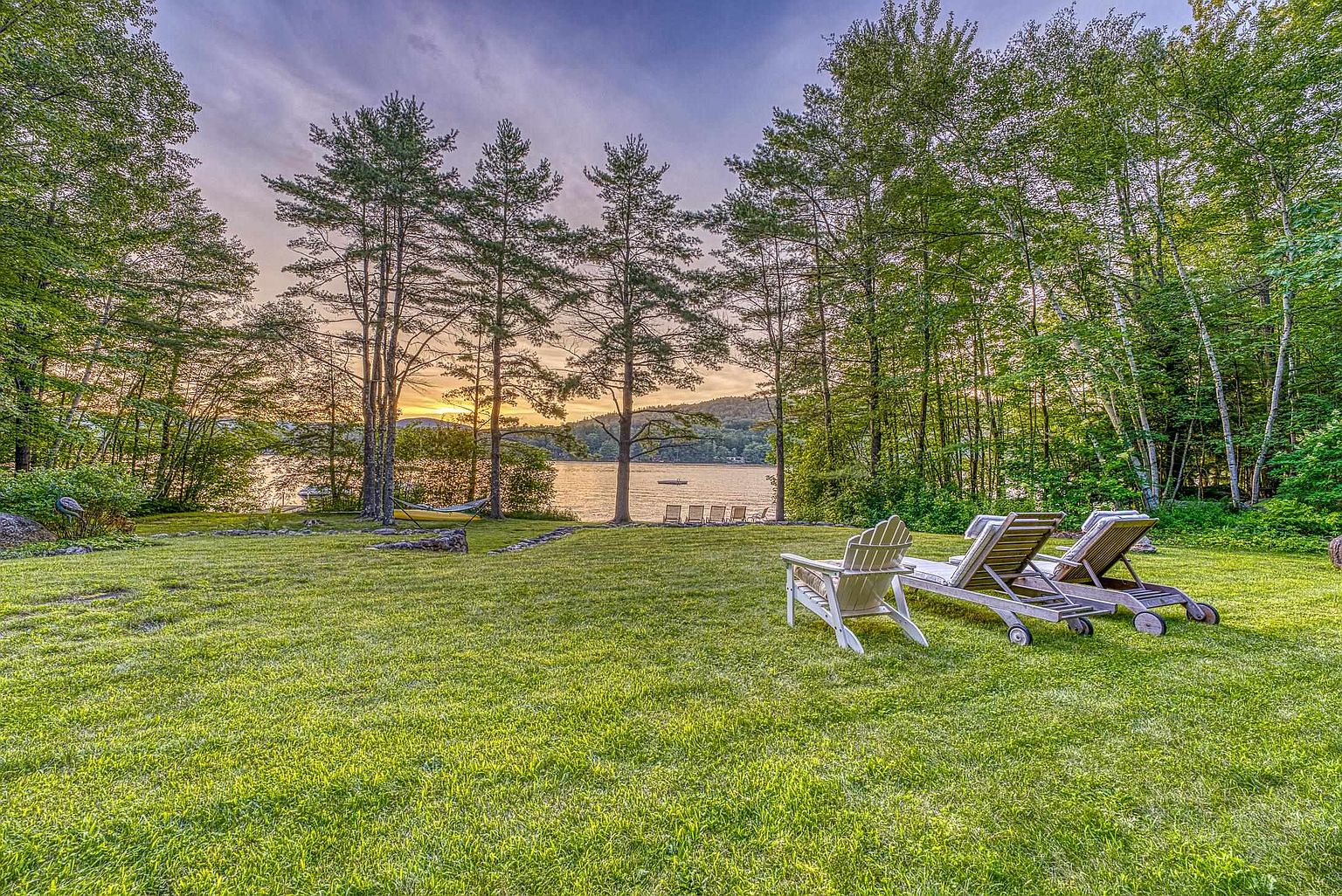
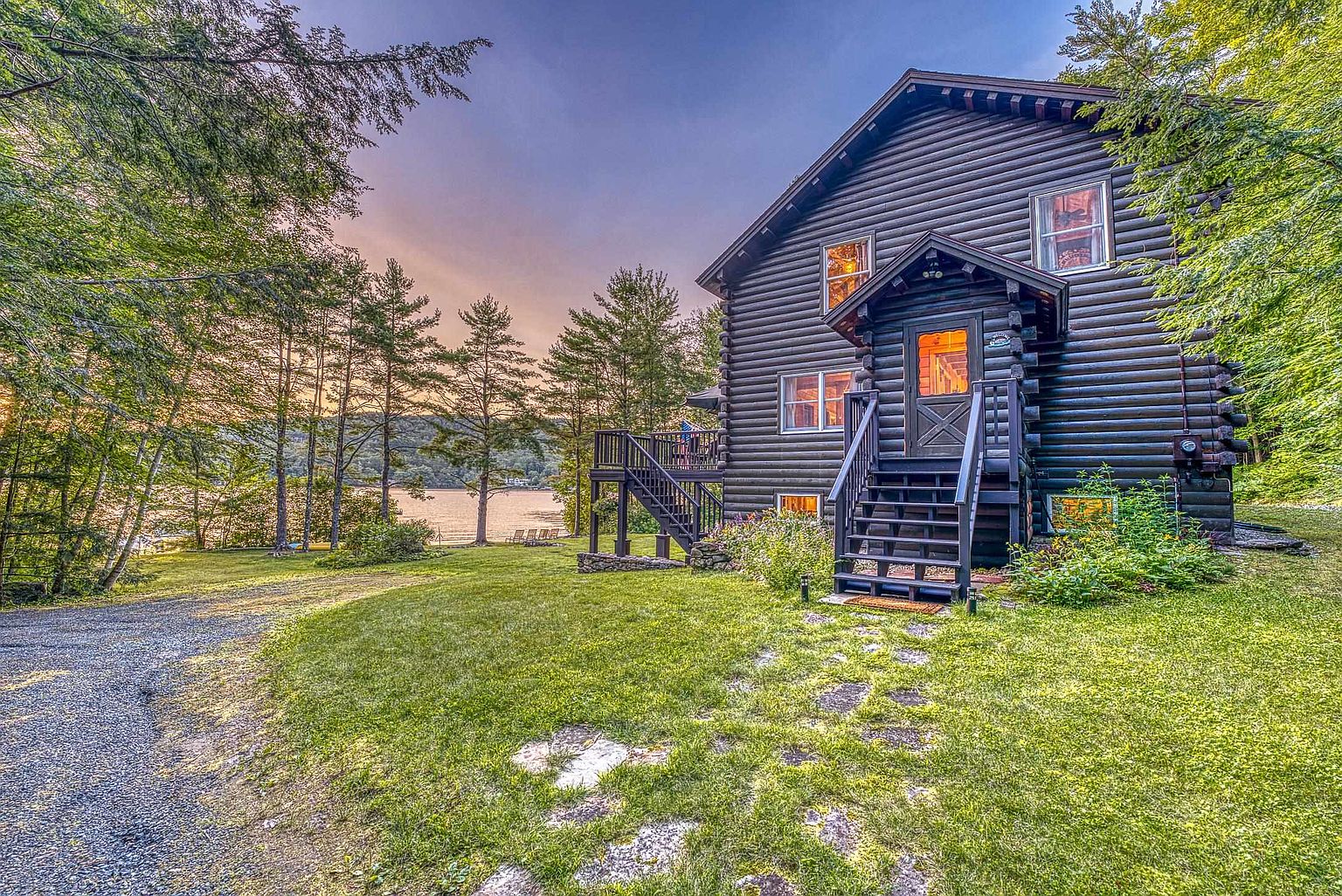
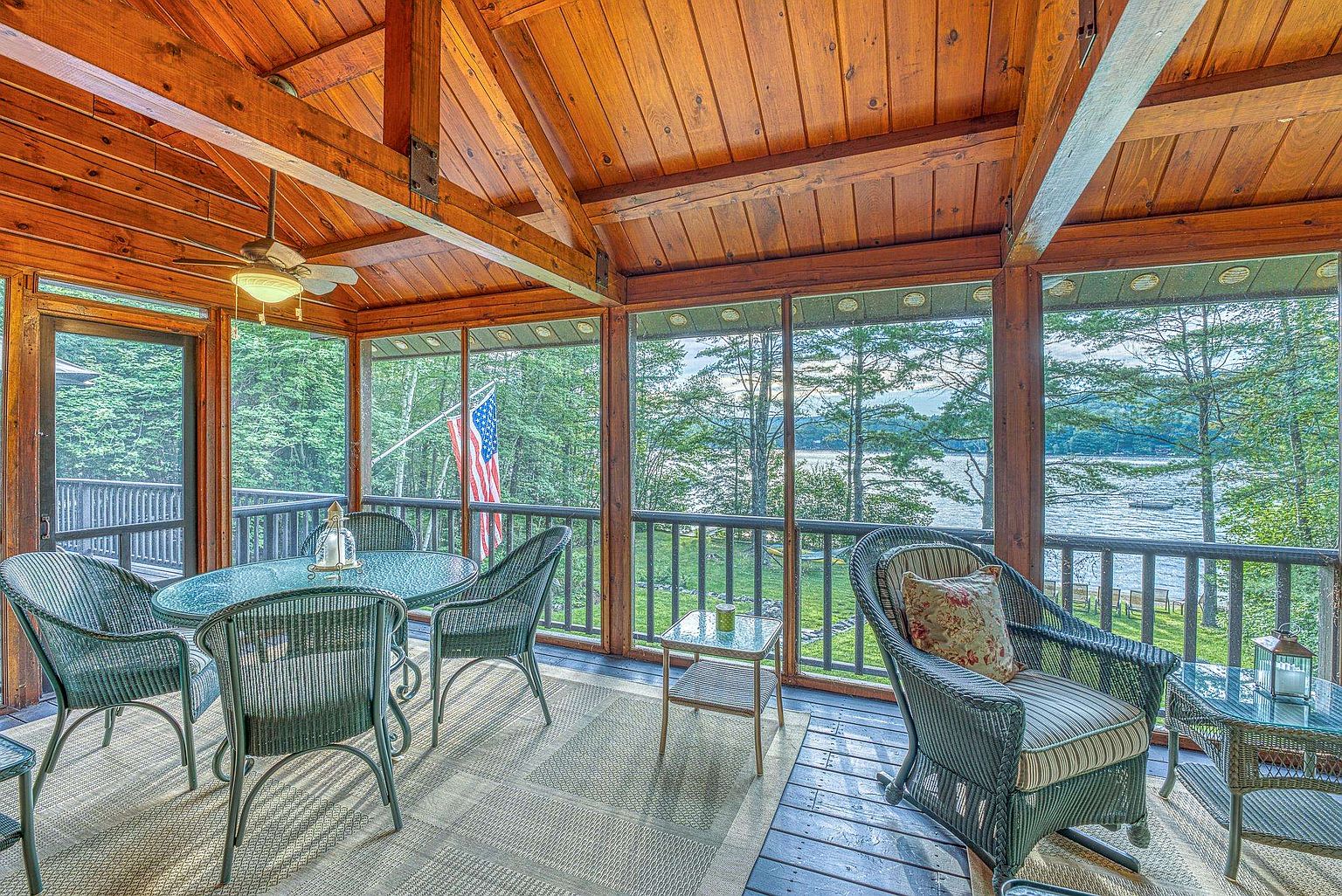
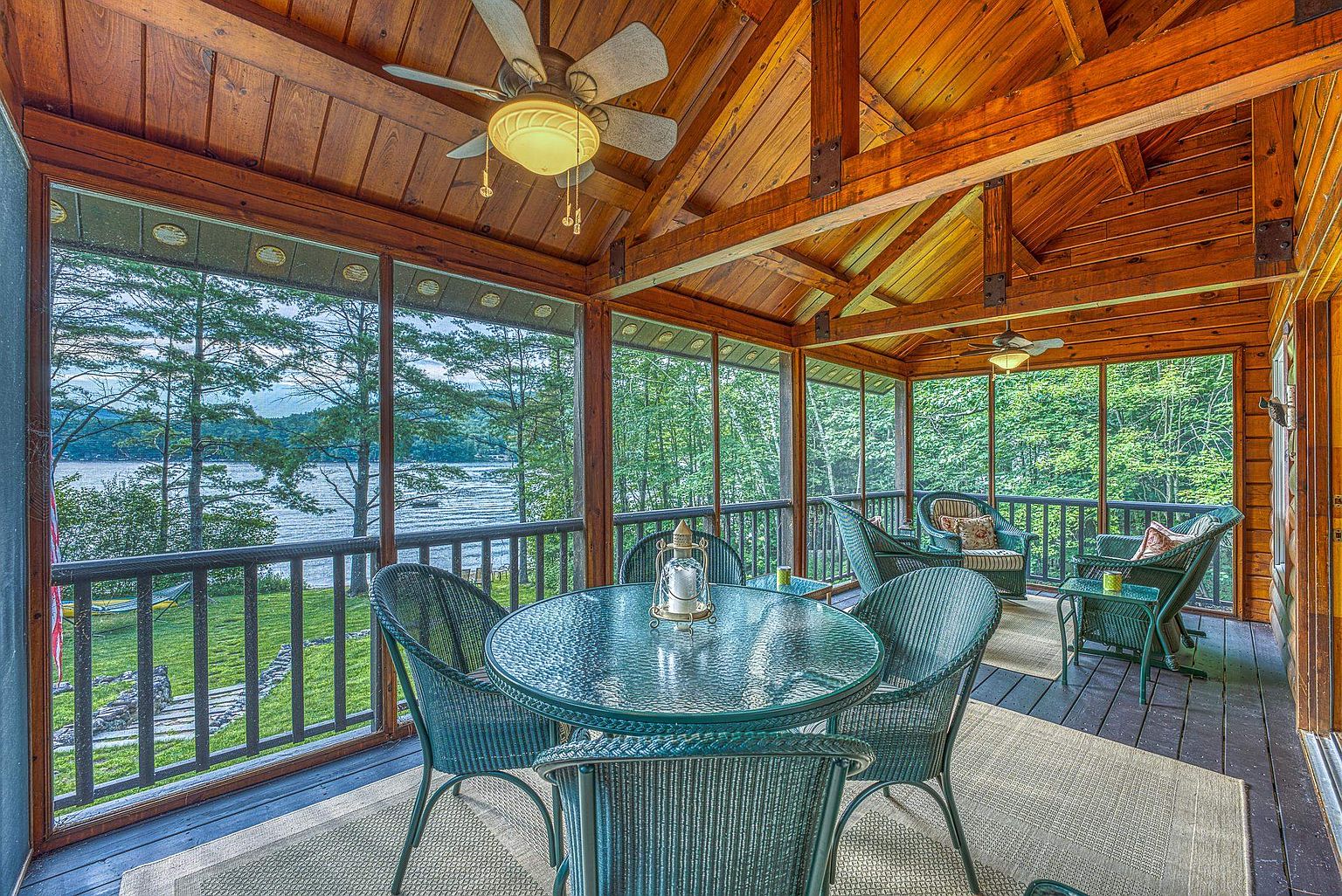
There is a particular quality of light that arrives on Squam Lake in the final hour before dark — a slow, amber warmth that settles across the water and turns the distant peaks of the White Mountains into silhouettes. At 11 Squamasee Road, the home has been oriented, almost deliberately, to receive it. The western-facing screened porch, framed by exposed timber and fitted with full-length screen panels, acts as a natural theater for this nightly performance, offering unobstructed panoramic views from first light through golden hour without a single obstruction between the railing and the far shore.
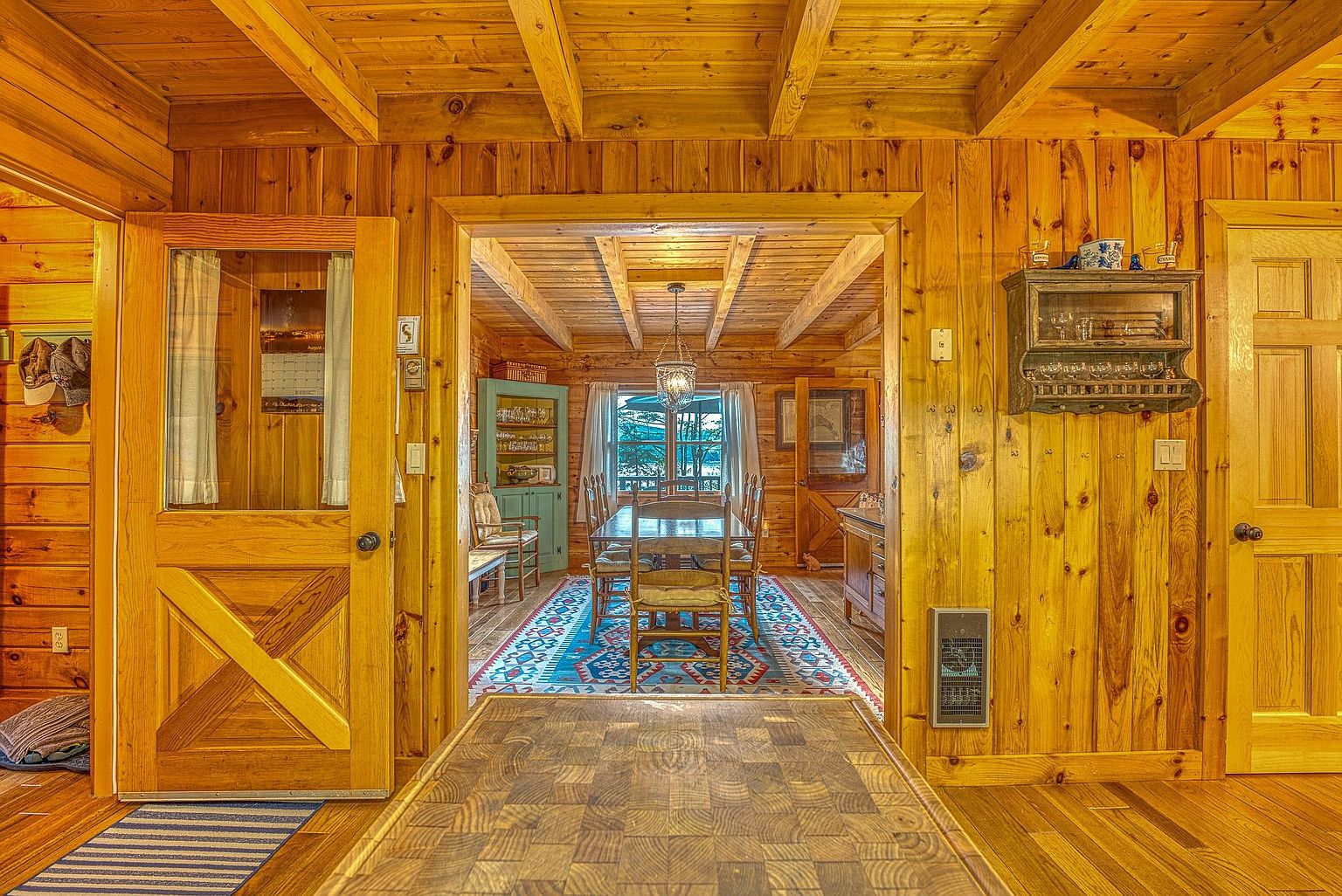
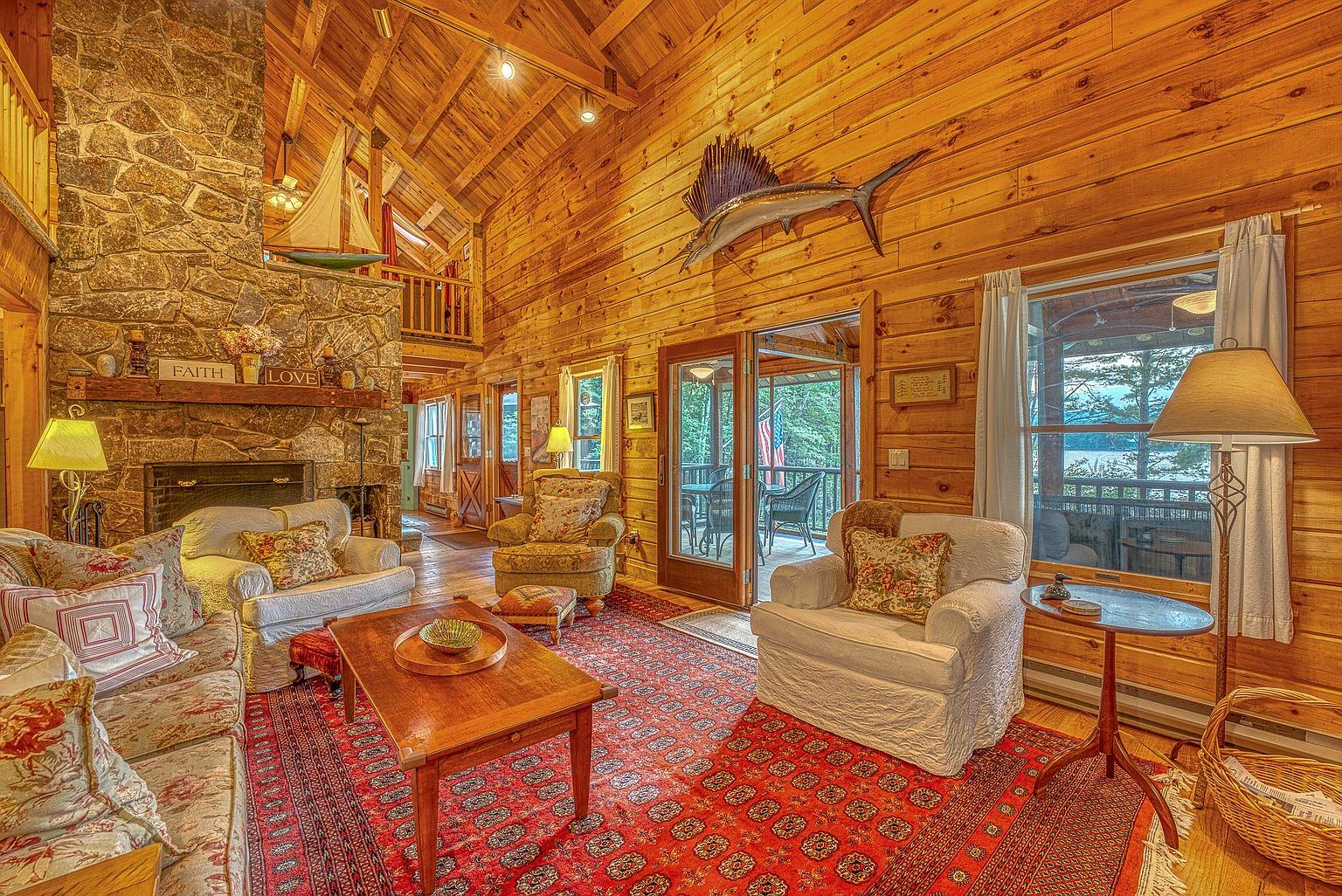
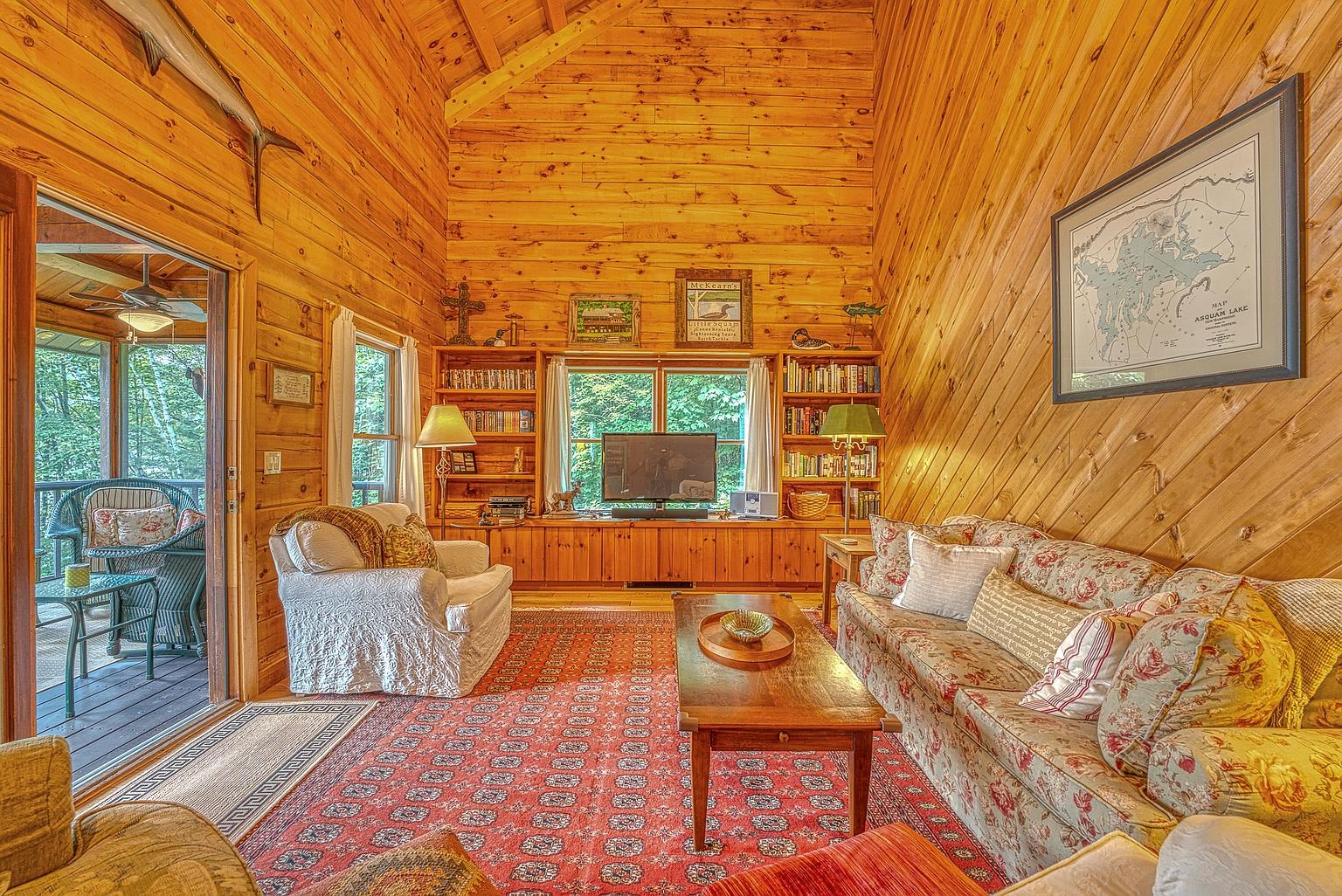
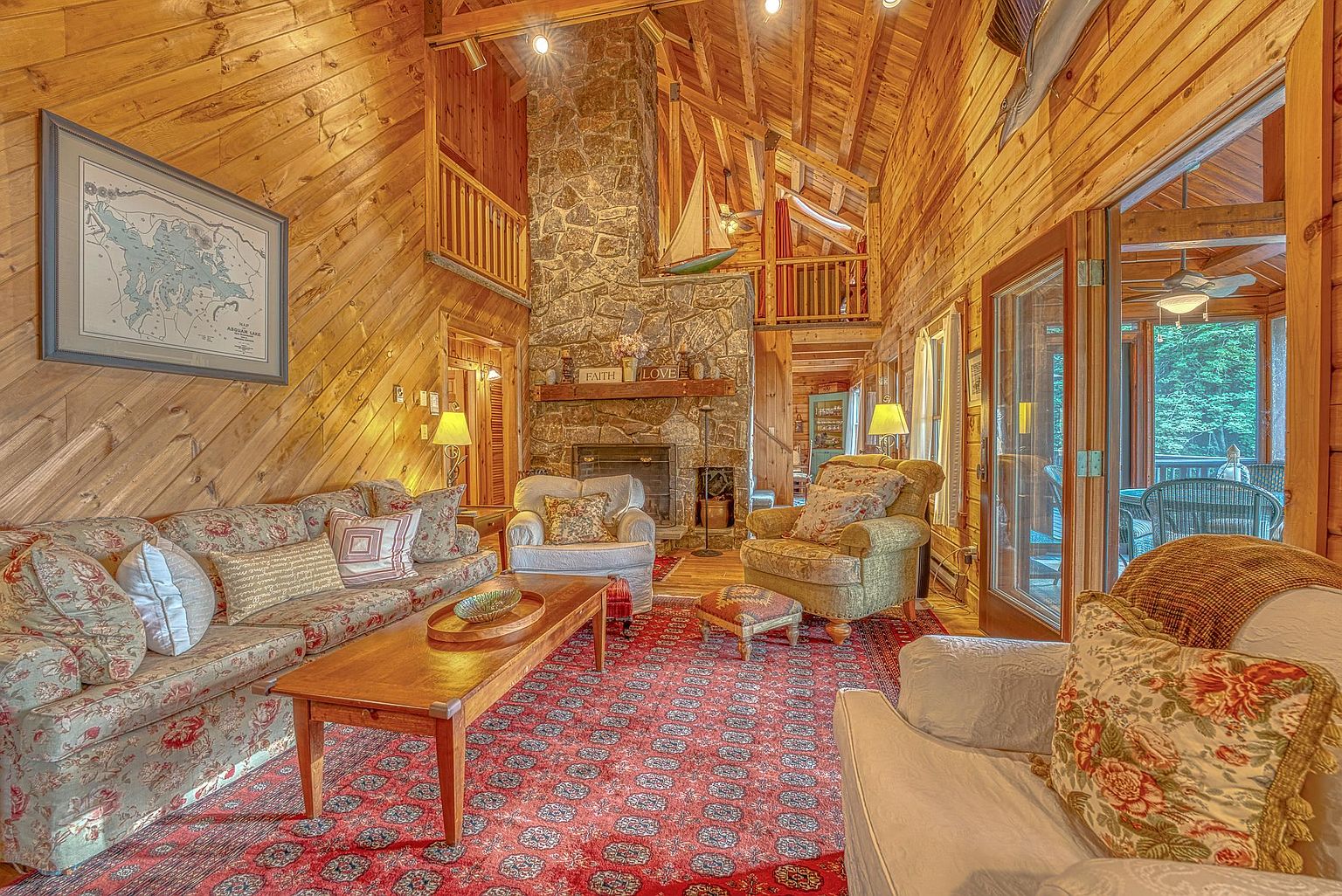
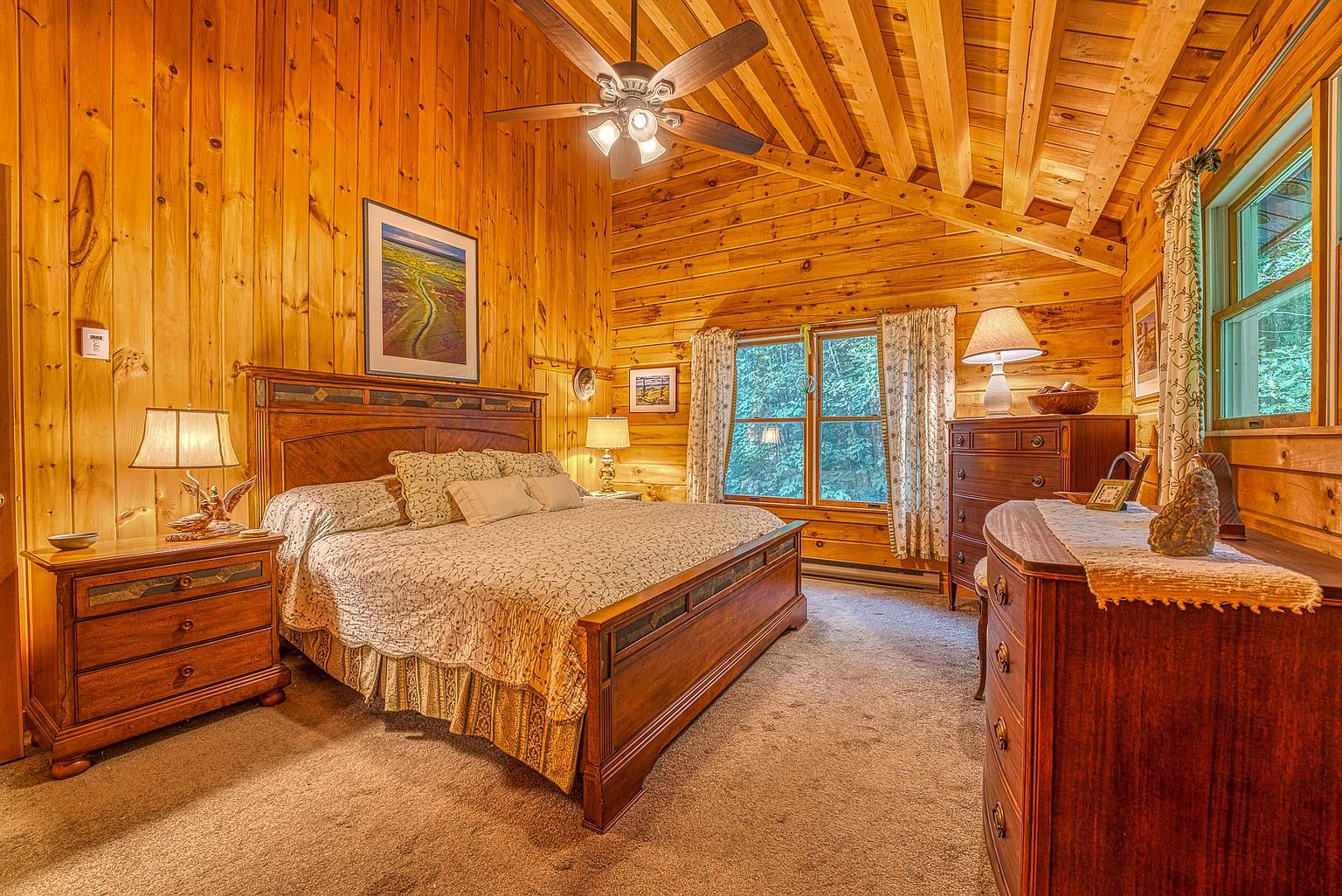
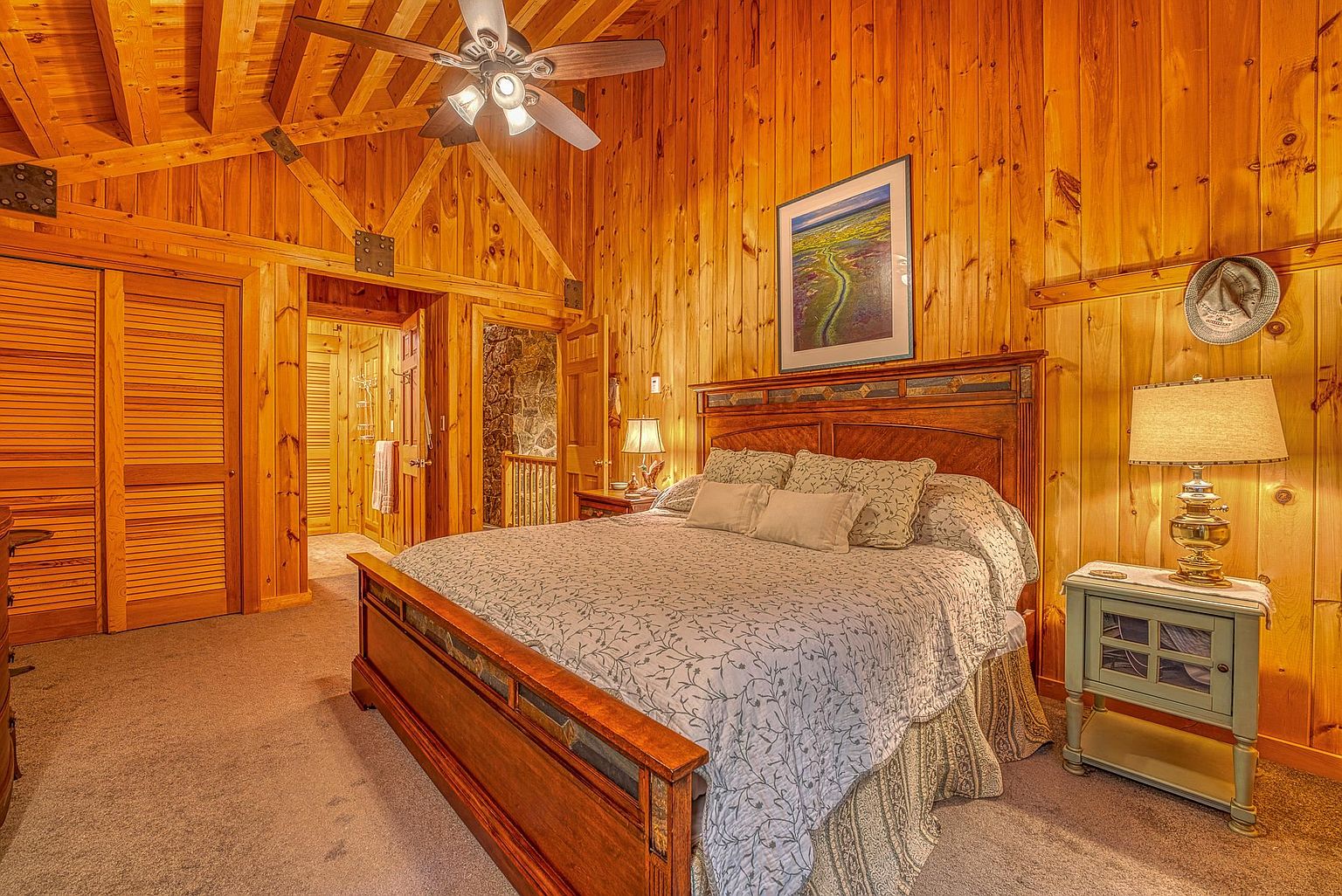
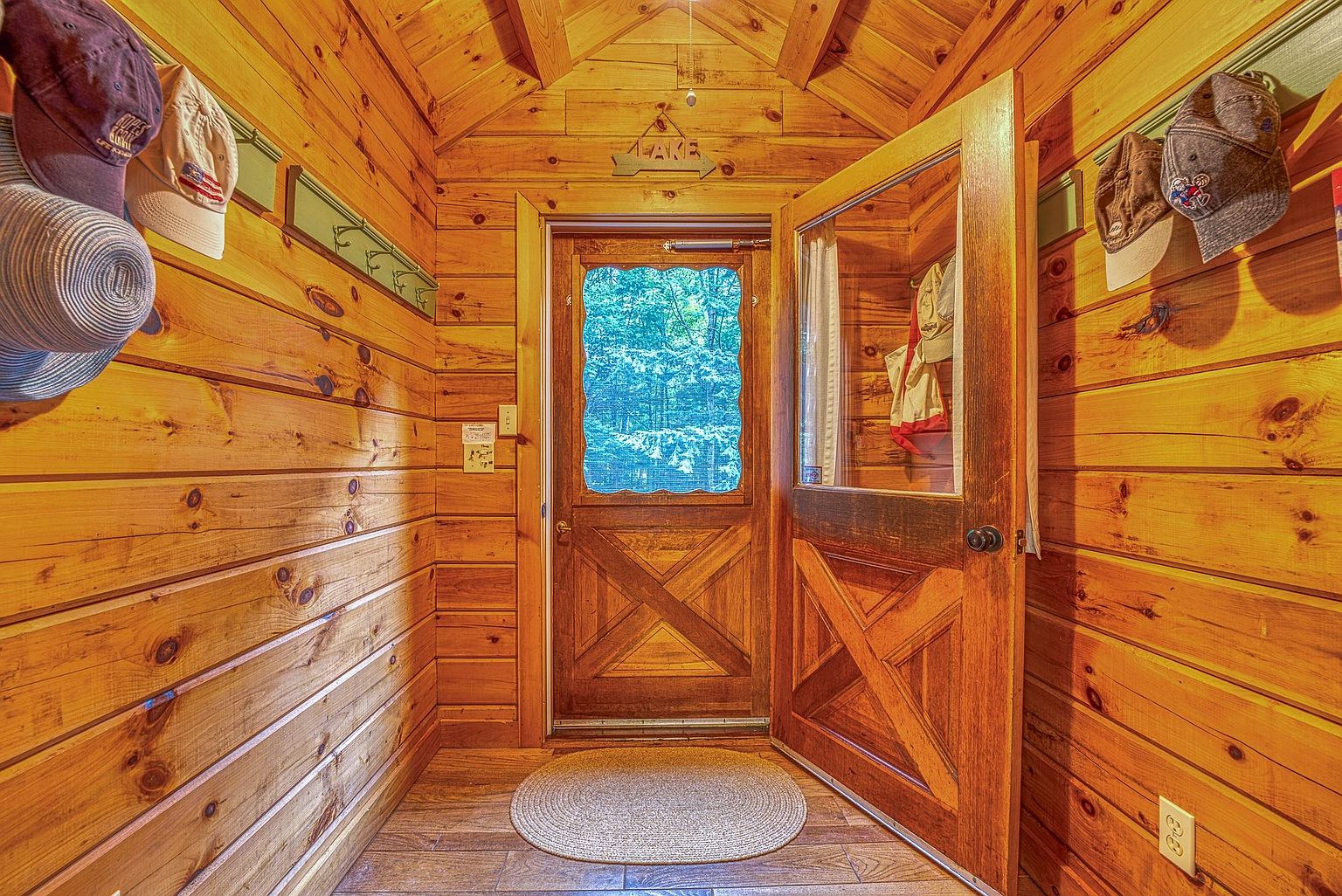
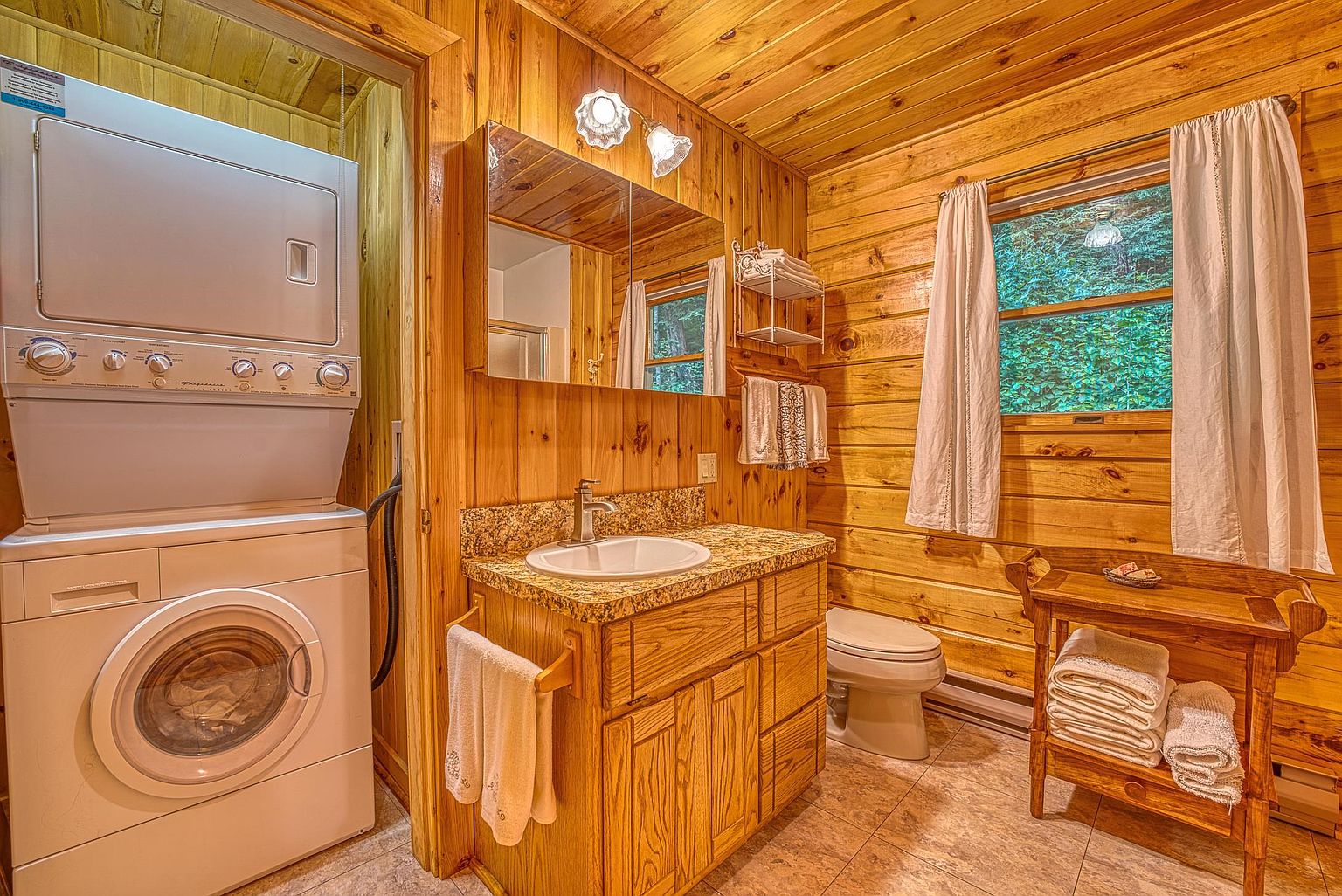
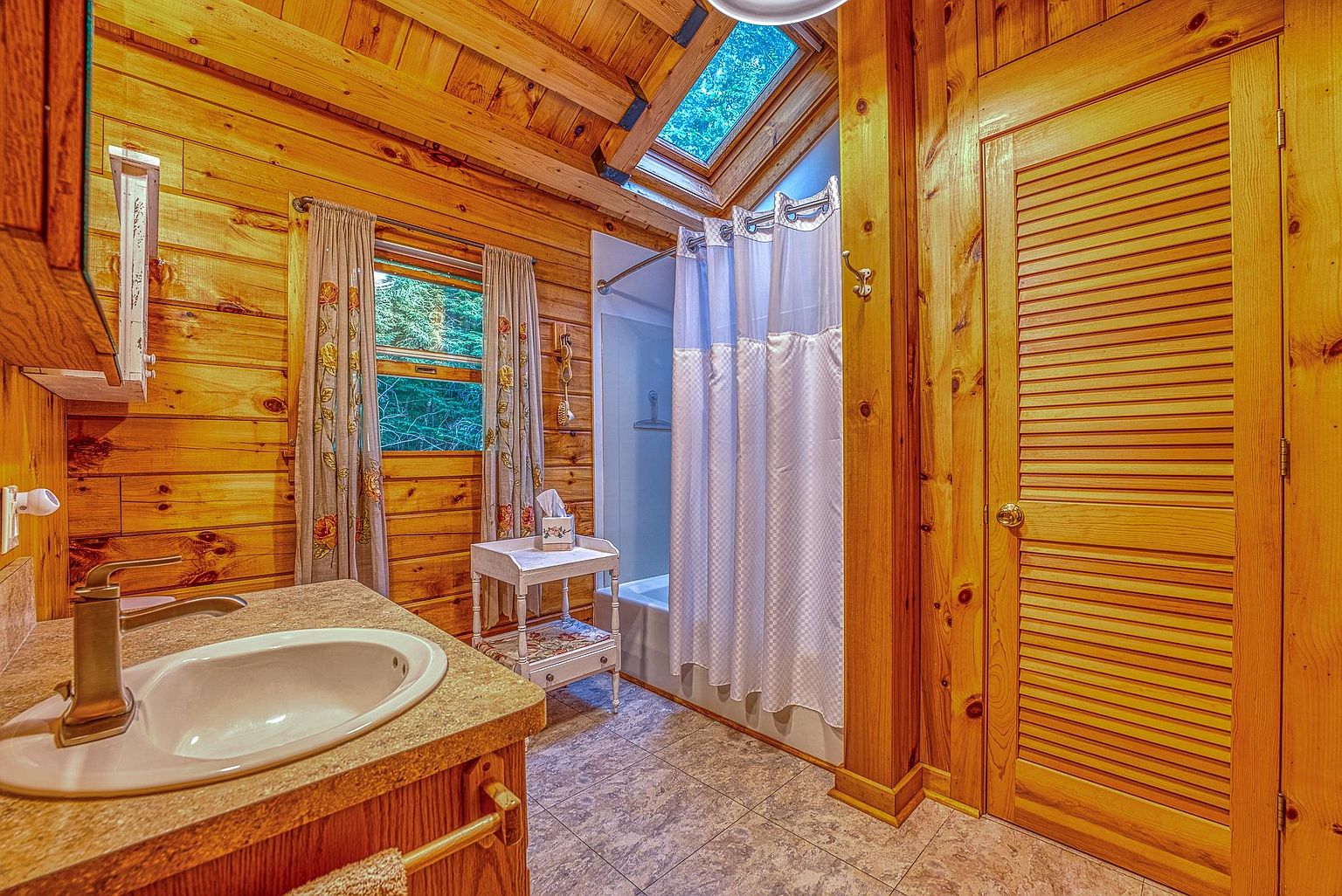
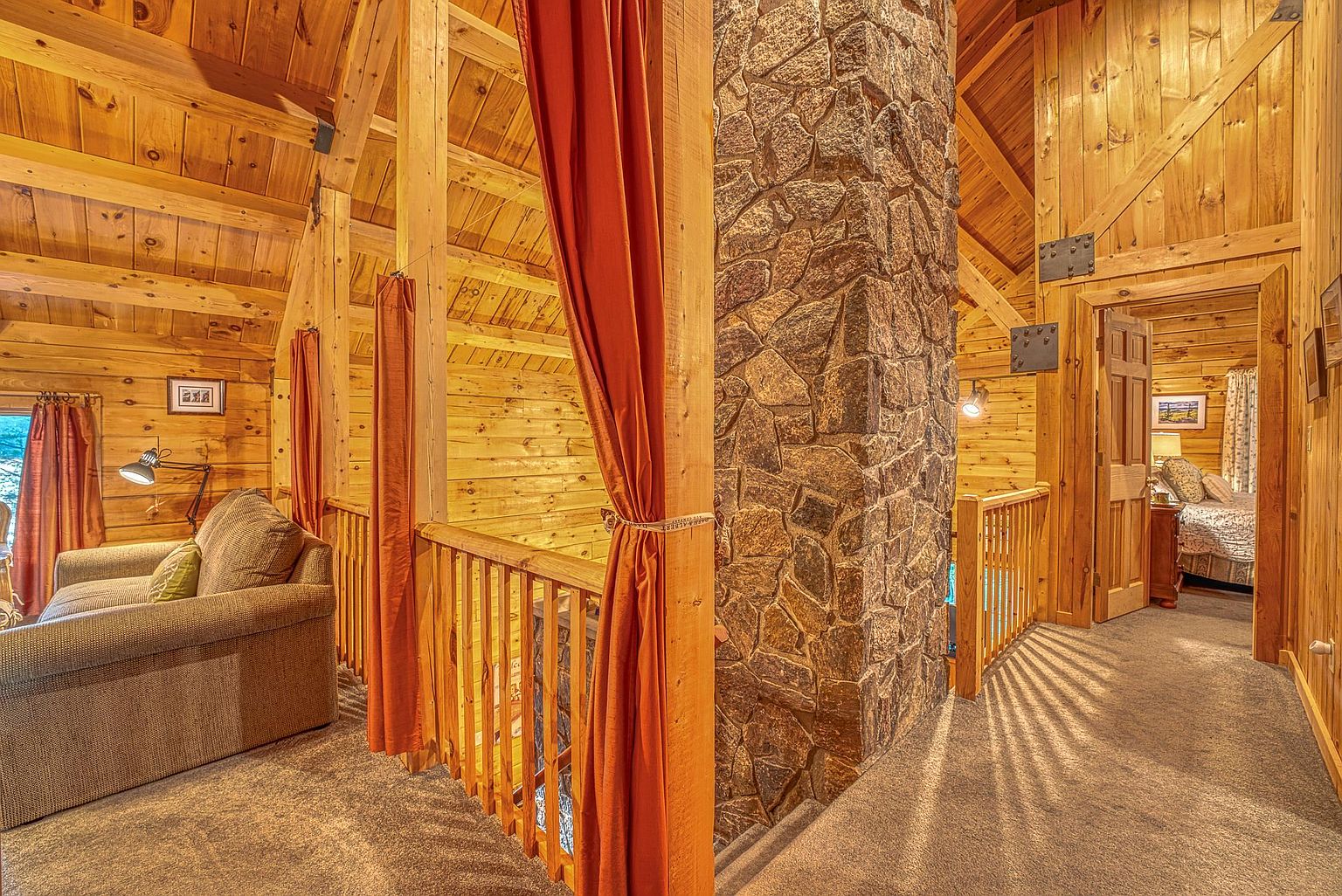
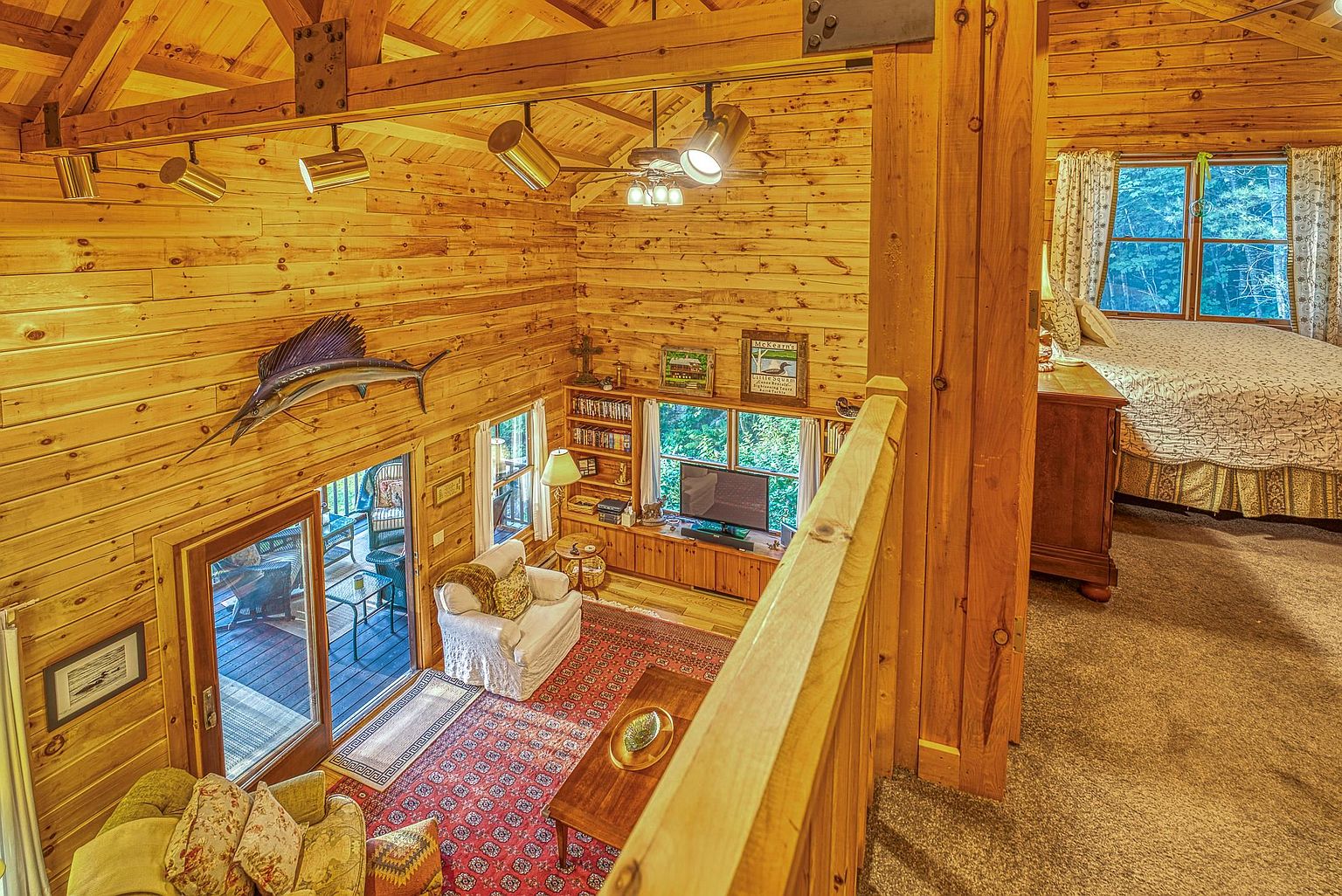
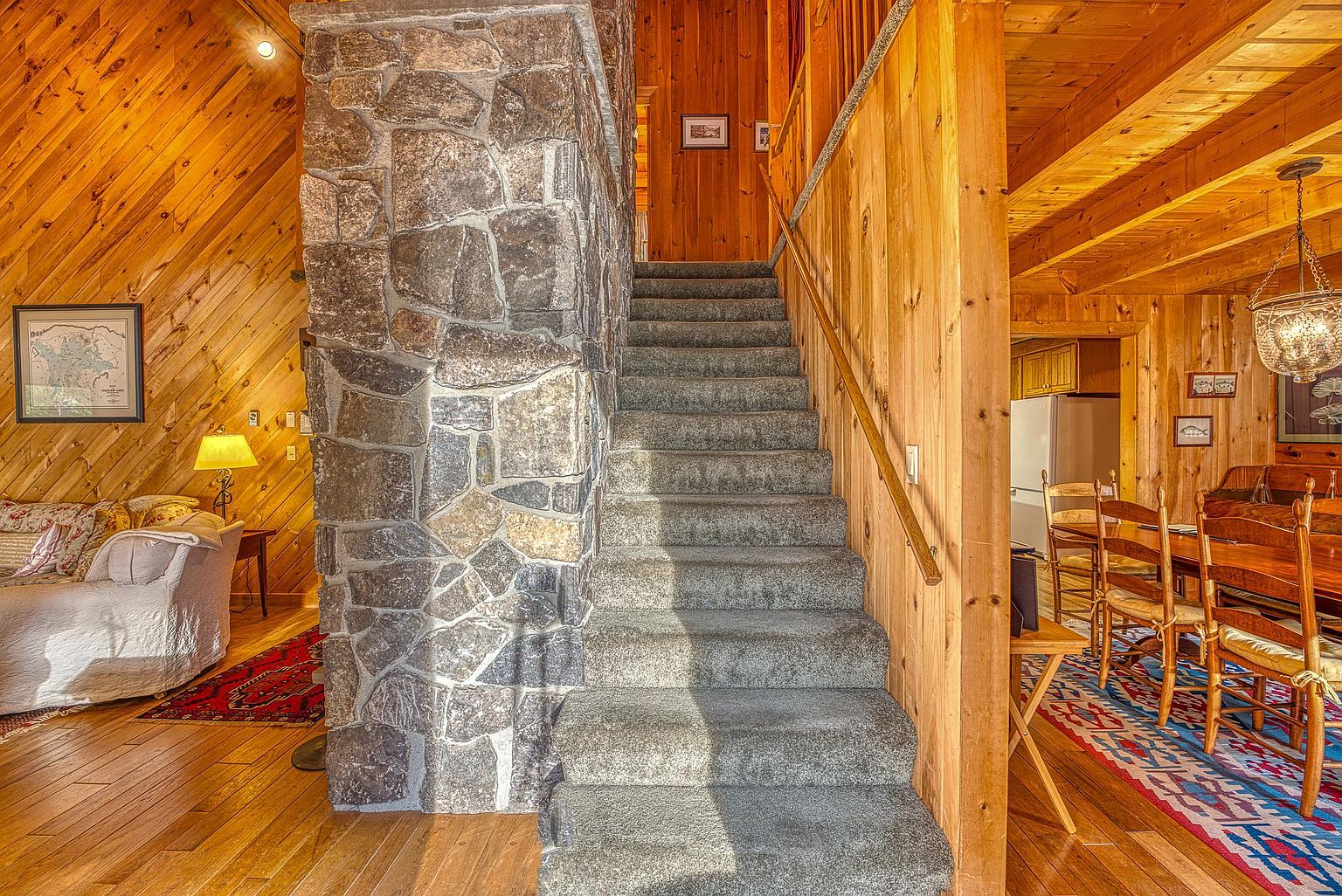
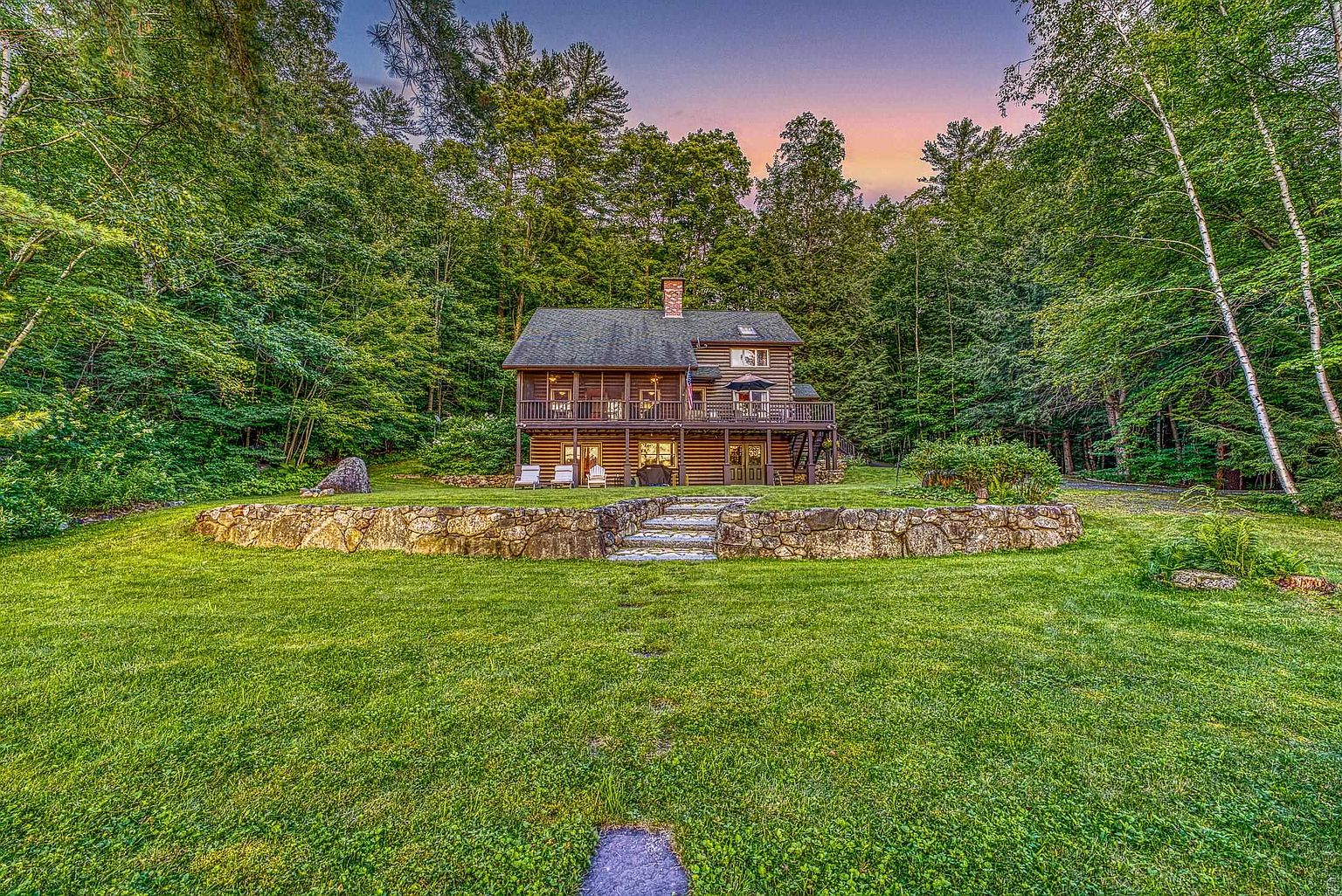
The architecture speaks in the honest vernacular of the New Hampshire lake home — horizontal log-style timber construction, dark-stained and solid, built with the kind of structural integrity that communicates permanence rather than novelty. Inside, warm pine paneling wraps every room in a continuous grain that quiets the pace of daily life and anchors the interior in the tradition of the region's finest camp-style retreats. The vaulted ceilings, exposed beam work, and stone-clad chimney breast in the main living area create a spatial hierarchy that is both grand and genuinely intimate.
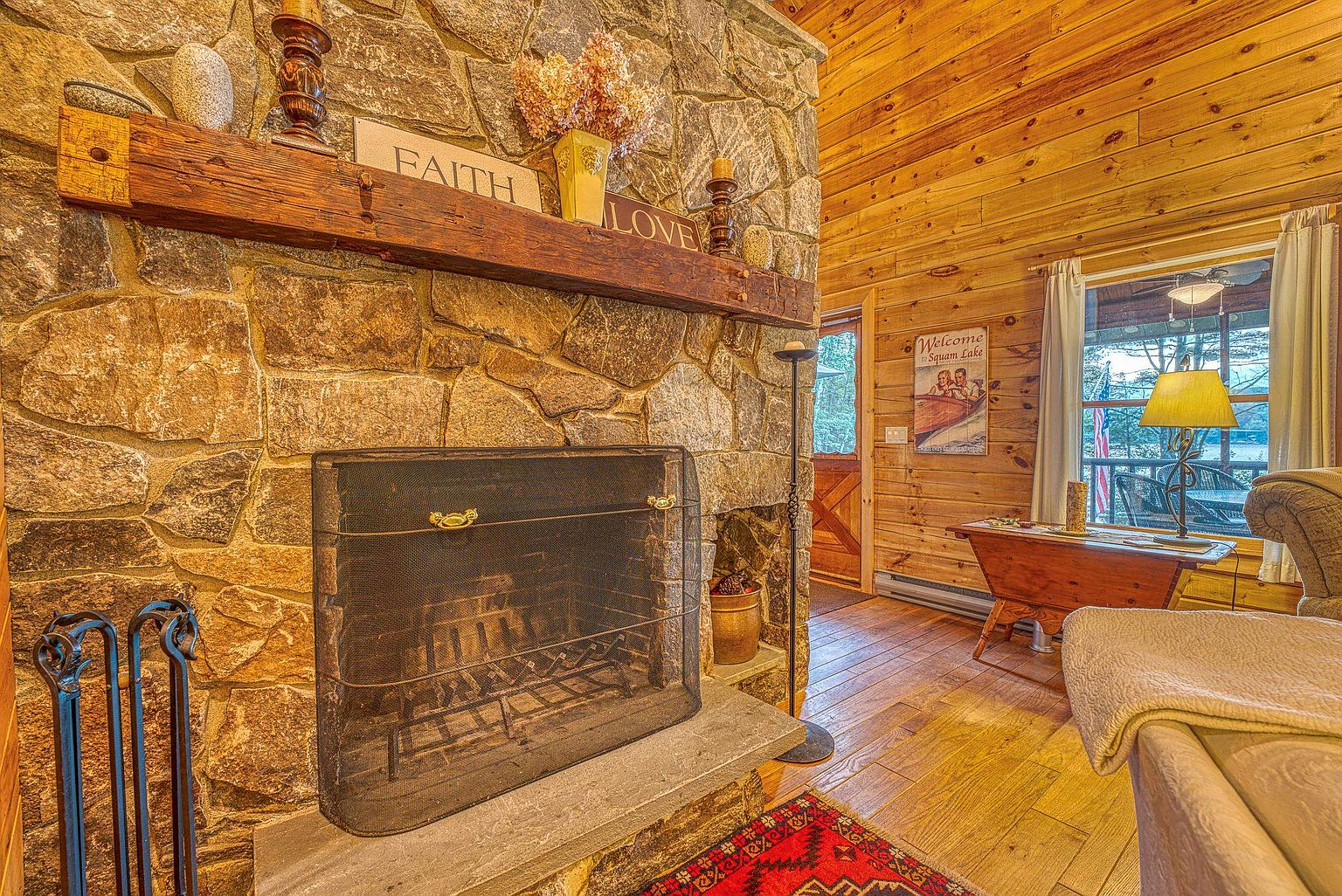
The large fieldstone fireplace is the home's moral center — a hand-laid structure of considerable scale that draws the eye immediately upon entry and defines the rhythm of the living room around it. Whether the evening calls for conversation or quiet solitude with a well-worn book, this fireplace sets the tone without effort.
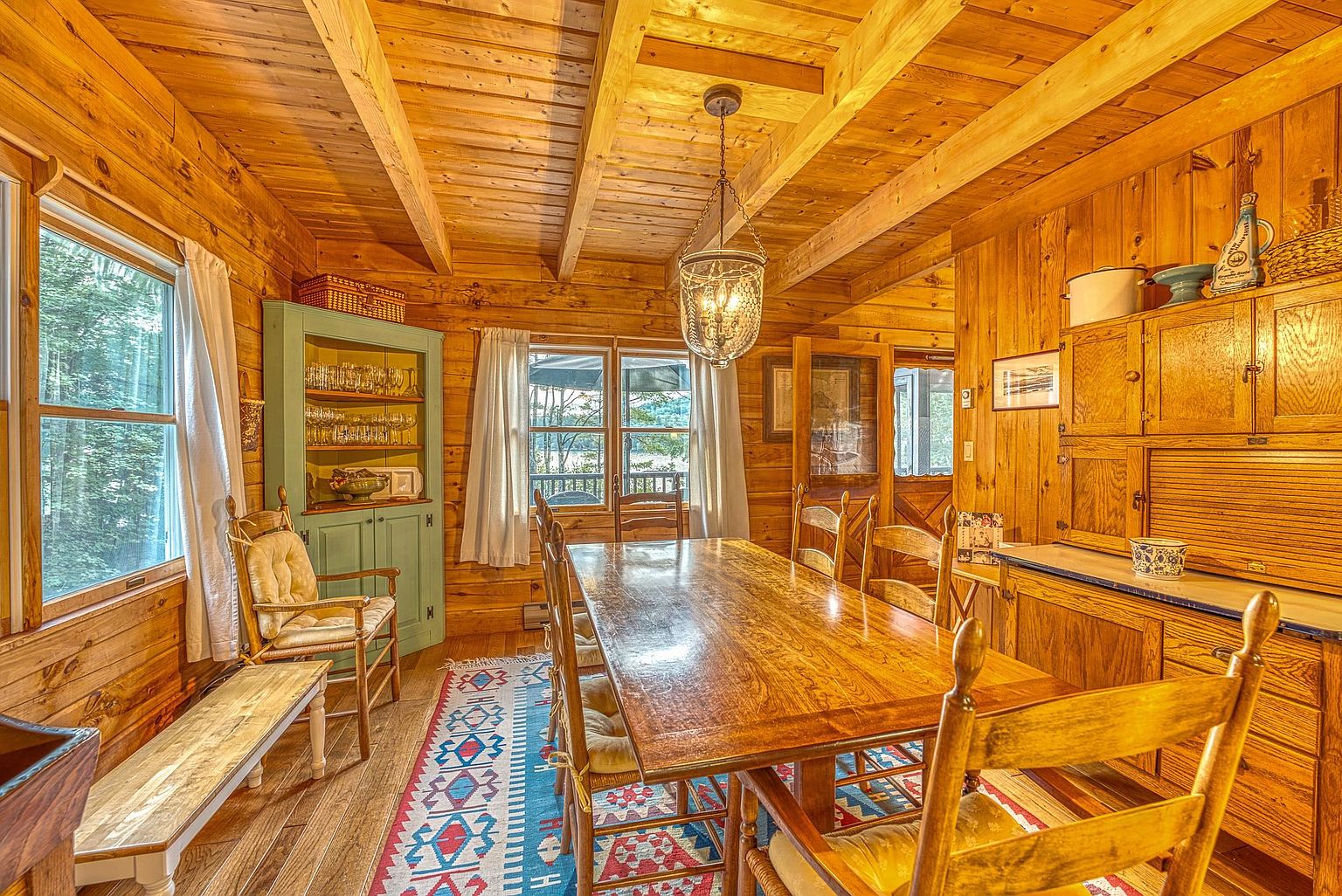
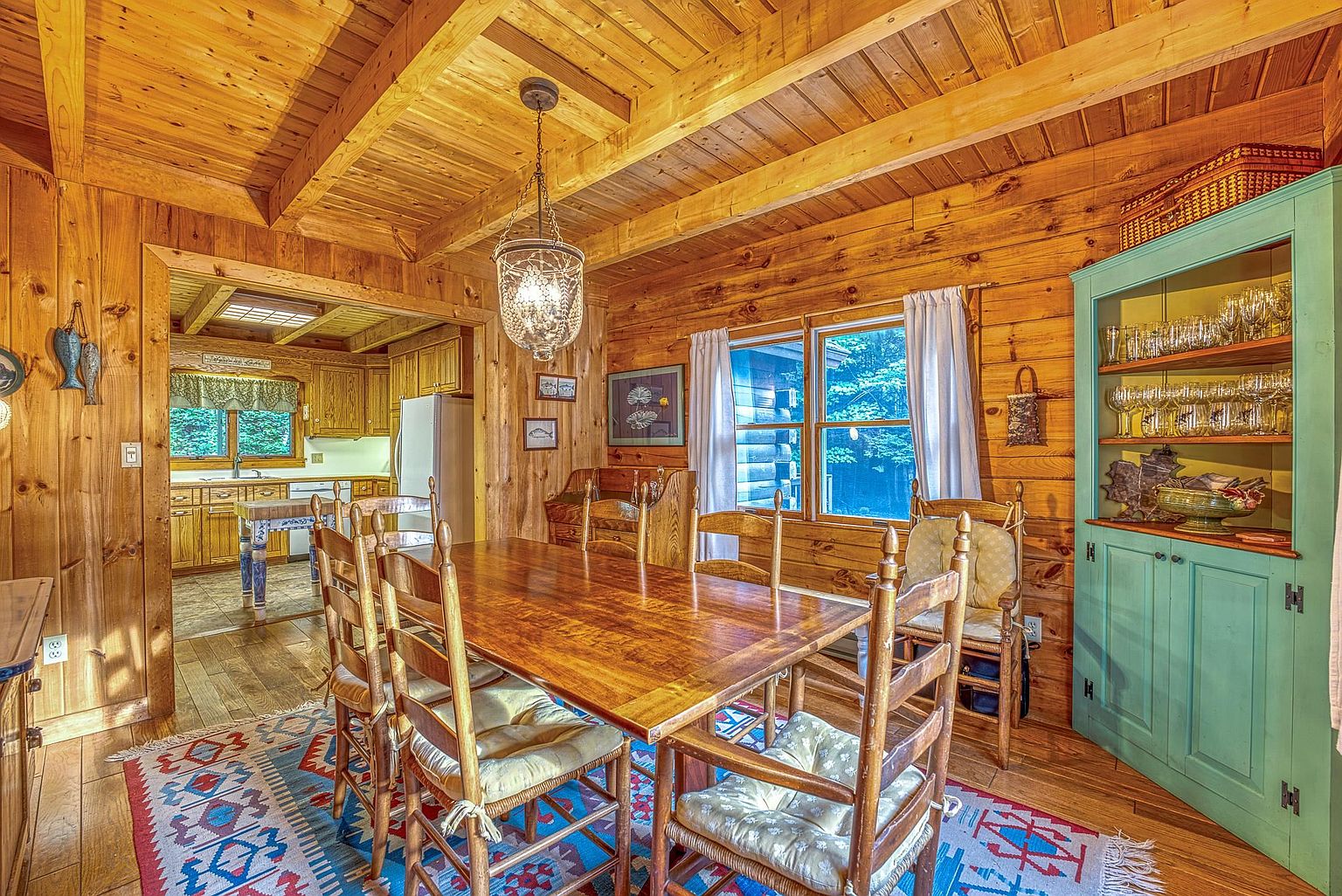
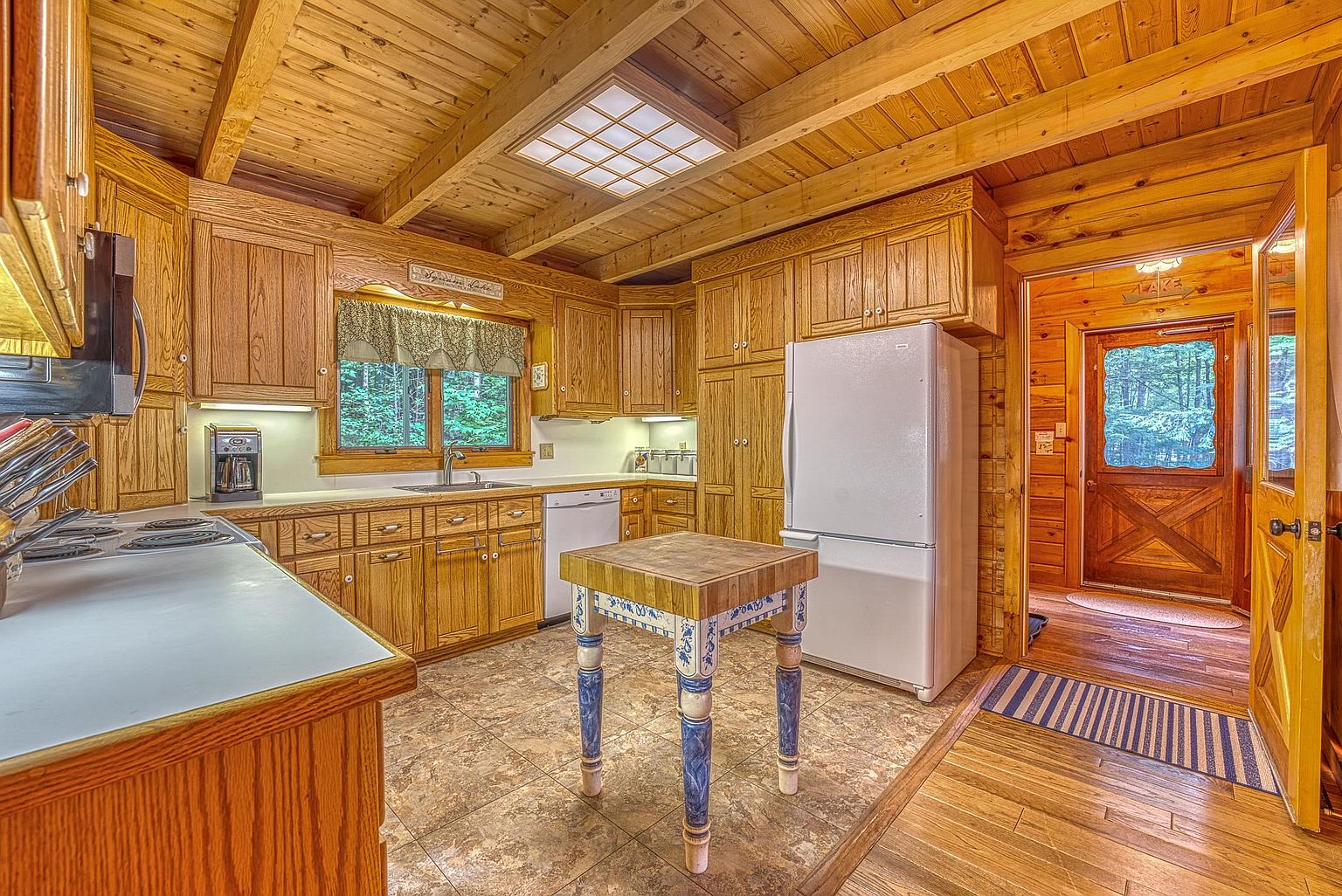
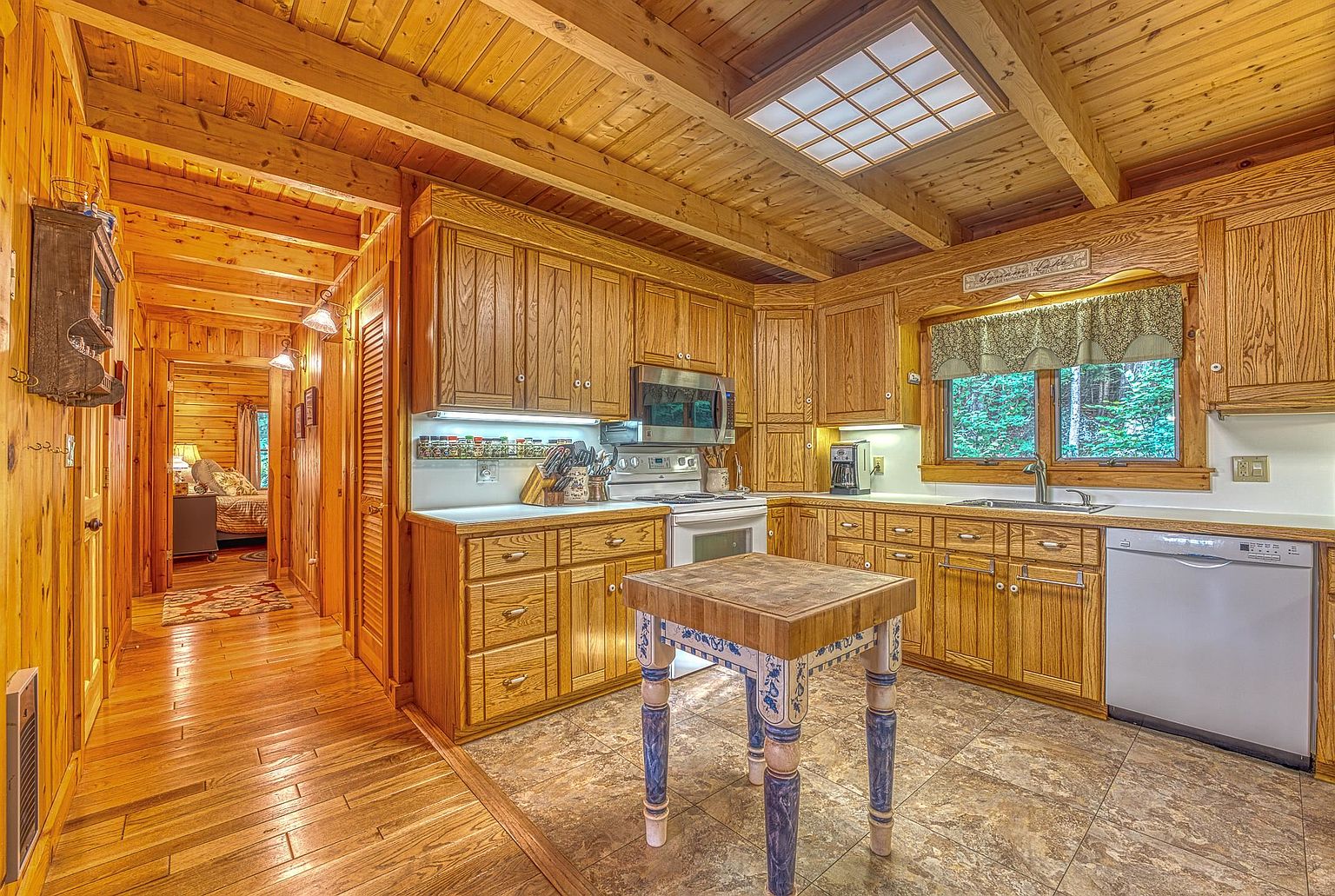
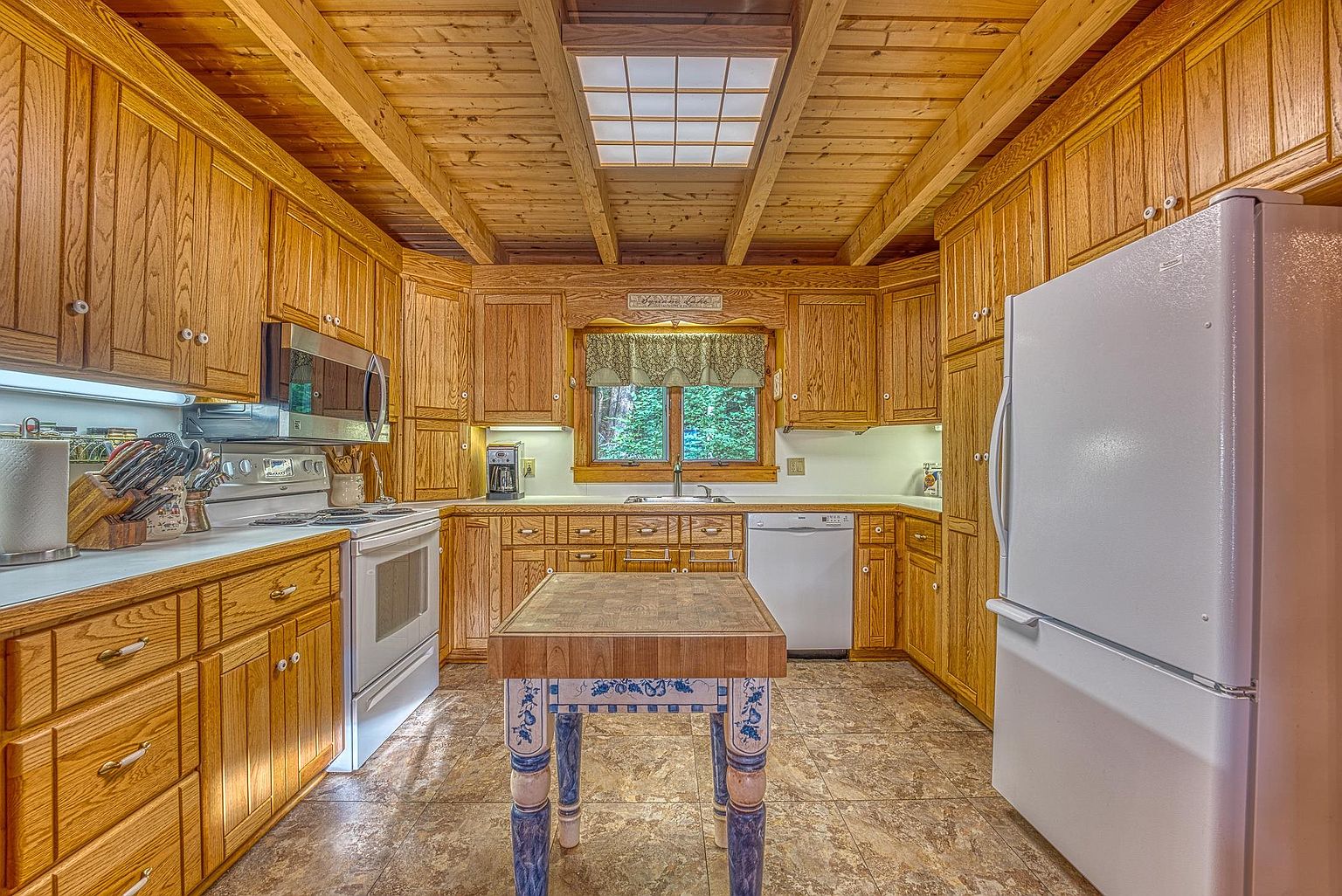
The kitchen has been thoughtfully composed around a central butcher-block island with painted decorative legs, complemented by warm wood cabinetry, a recessed skylight, and white appliances that keep the aesthetic clean without sacrificing warmth. Adjacent dining spaces, with their own pendant lighting and views into the surrounding canopy, accommodate everything from casual family dinners to larger gatherings with equal grace.
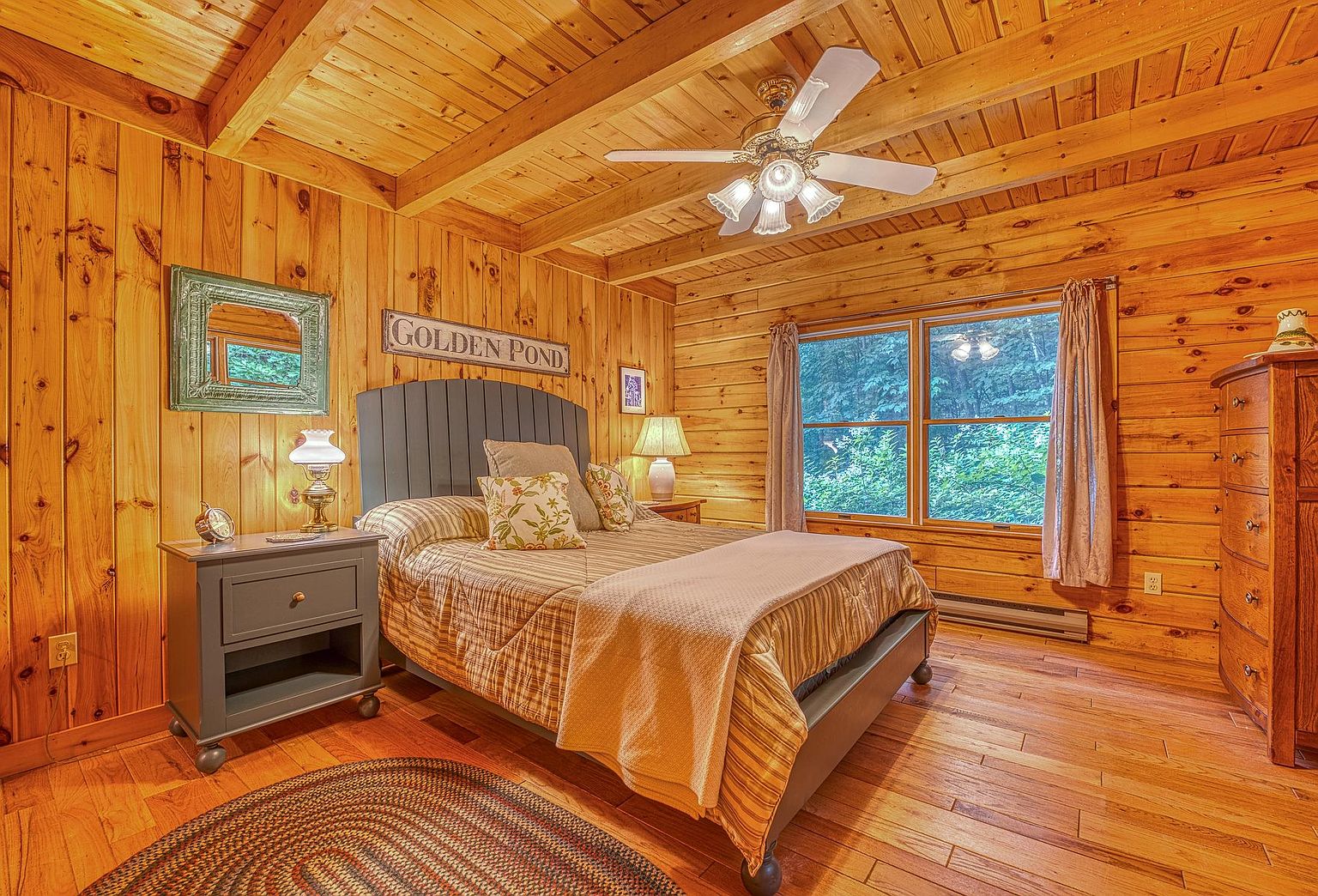
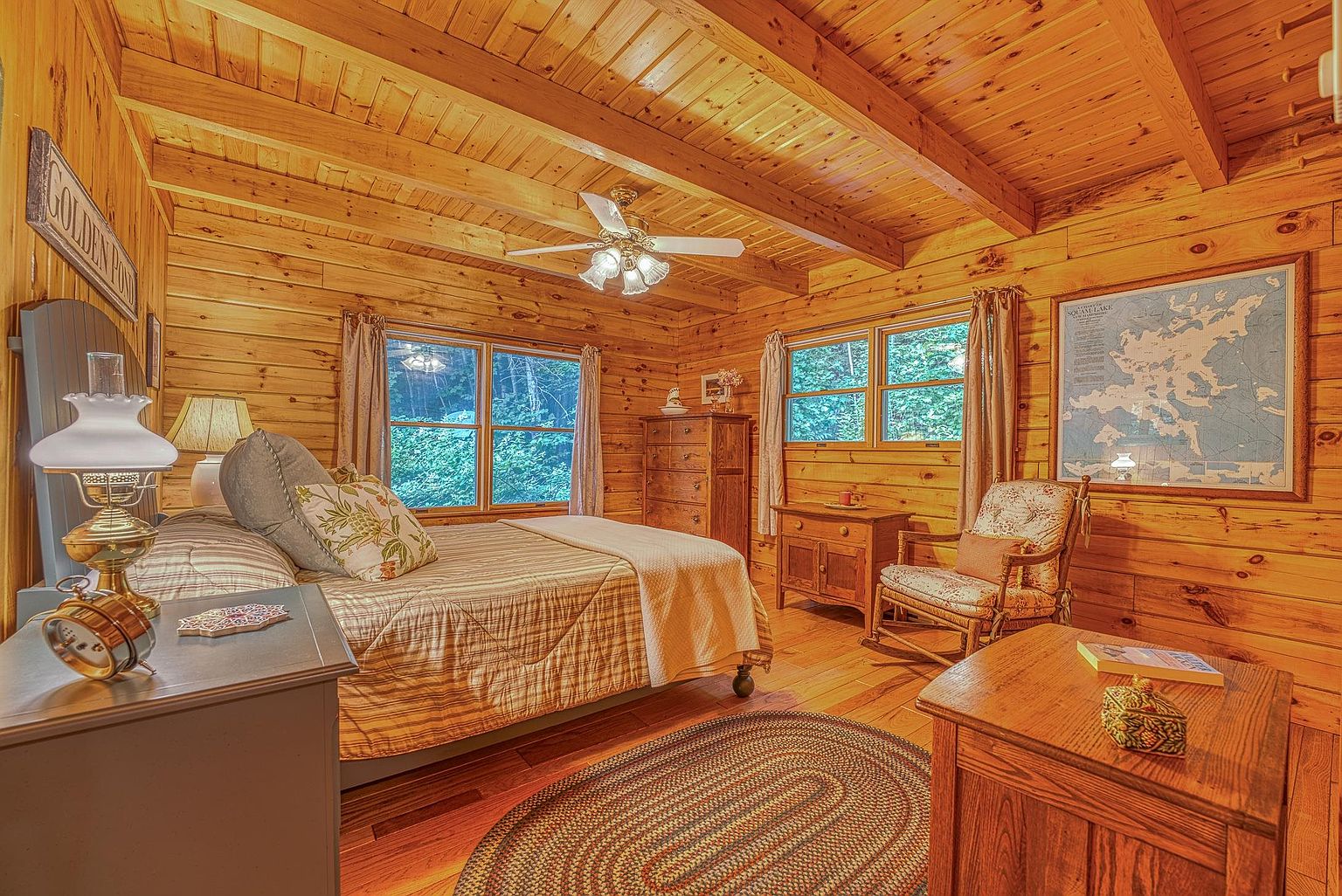
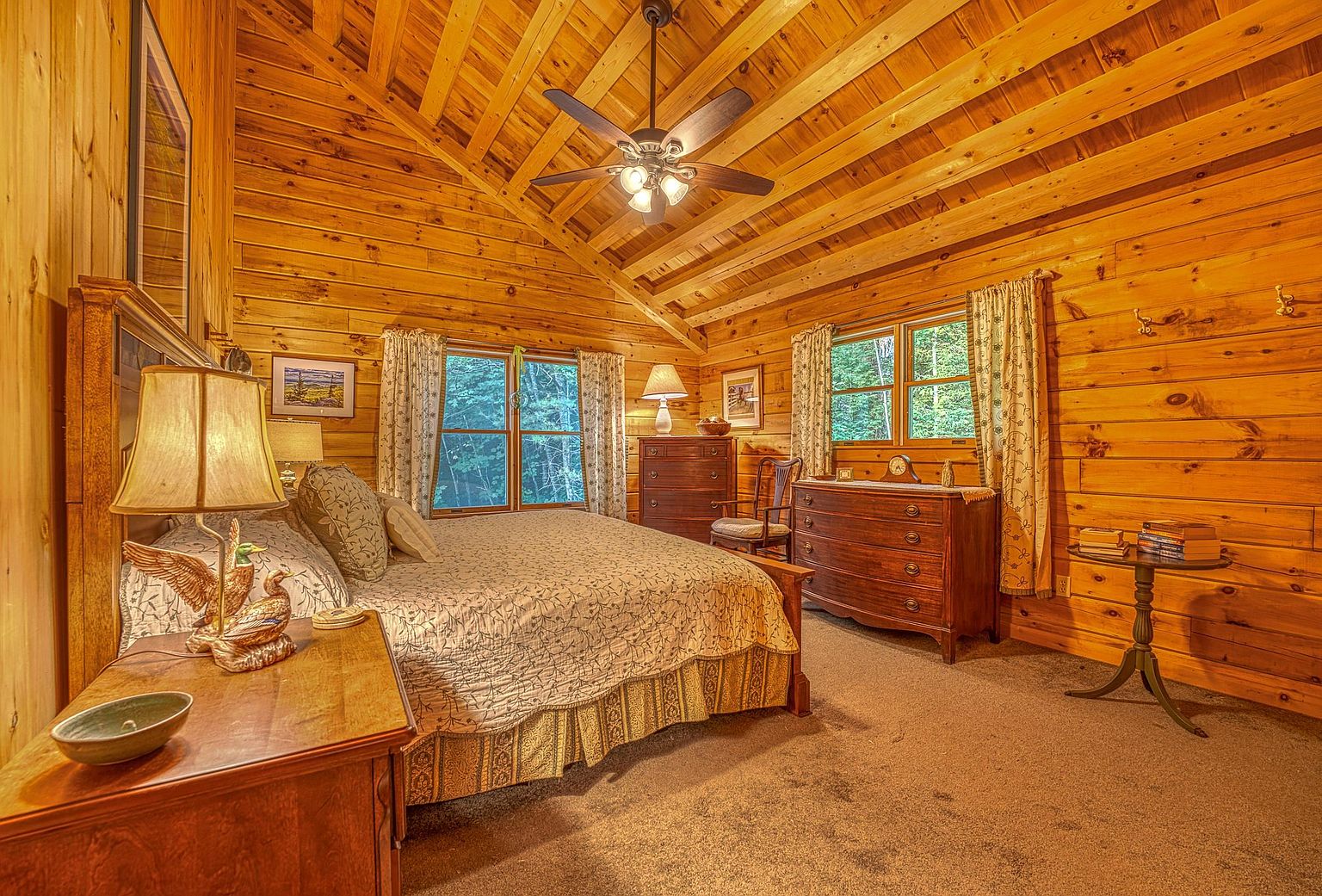
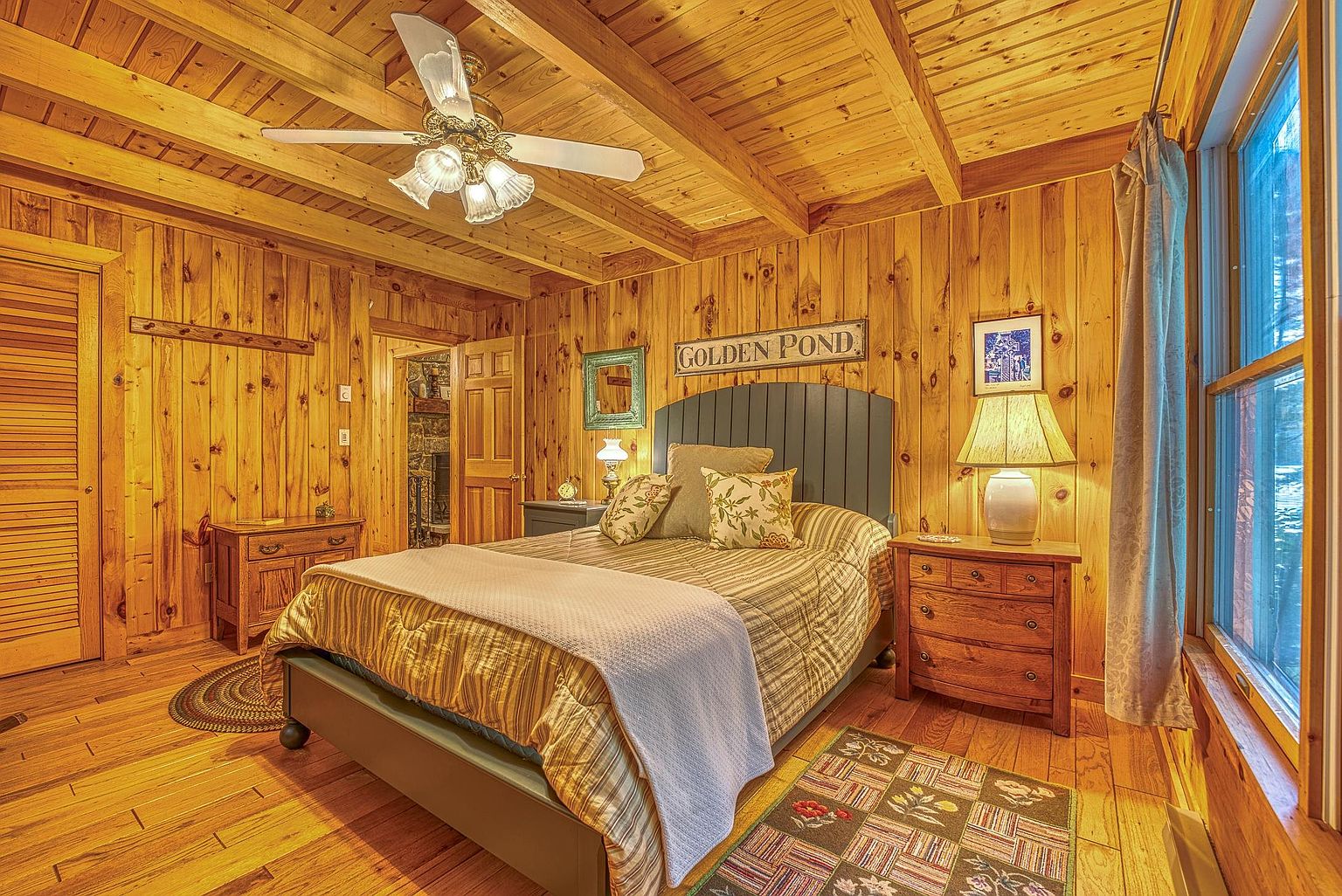
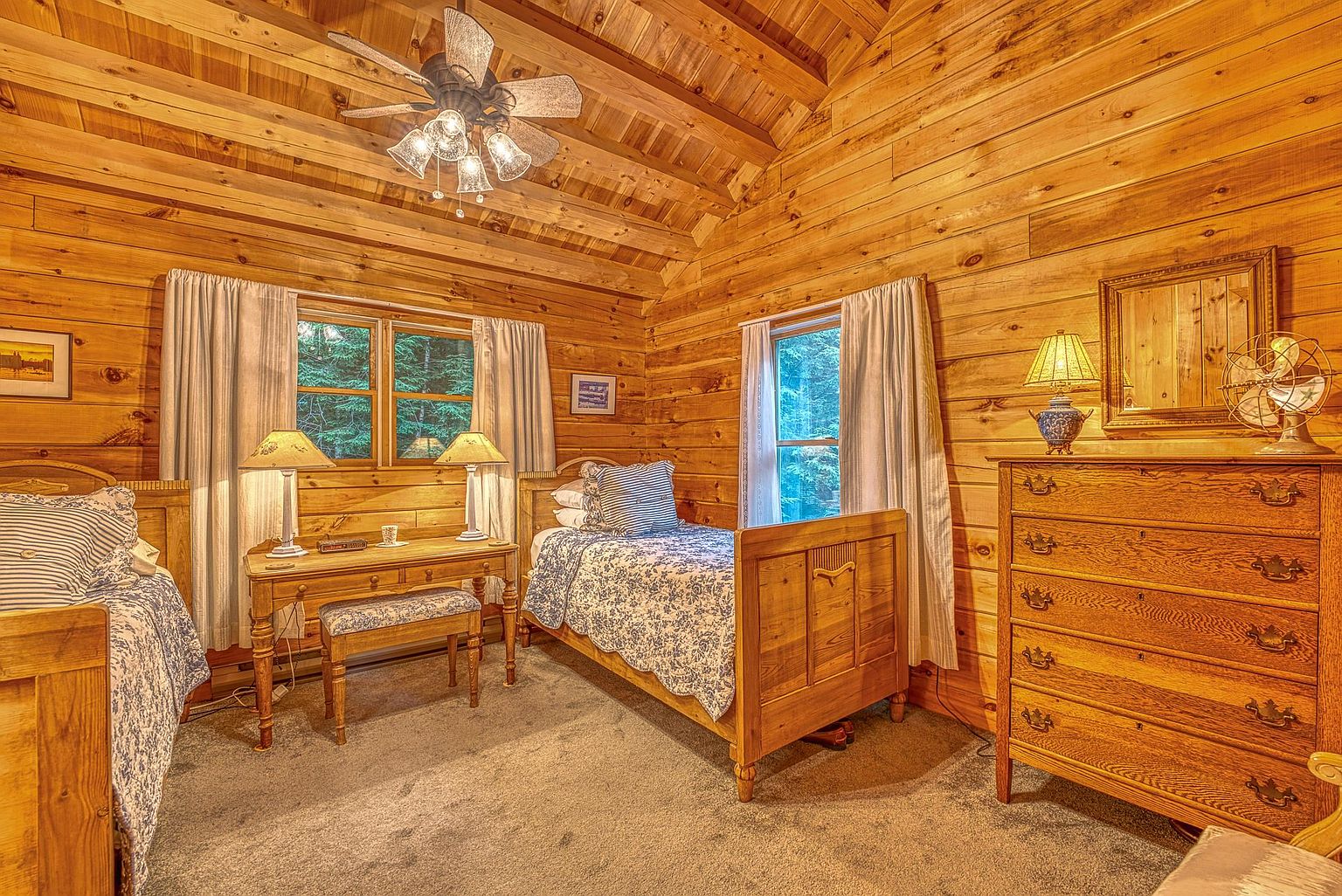
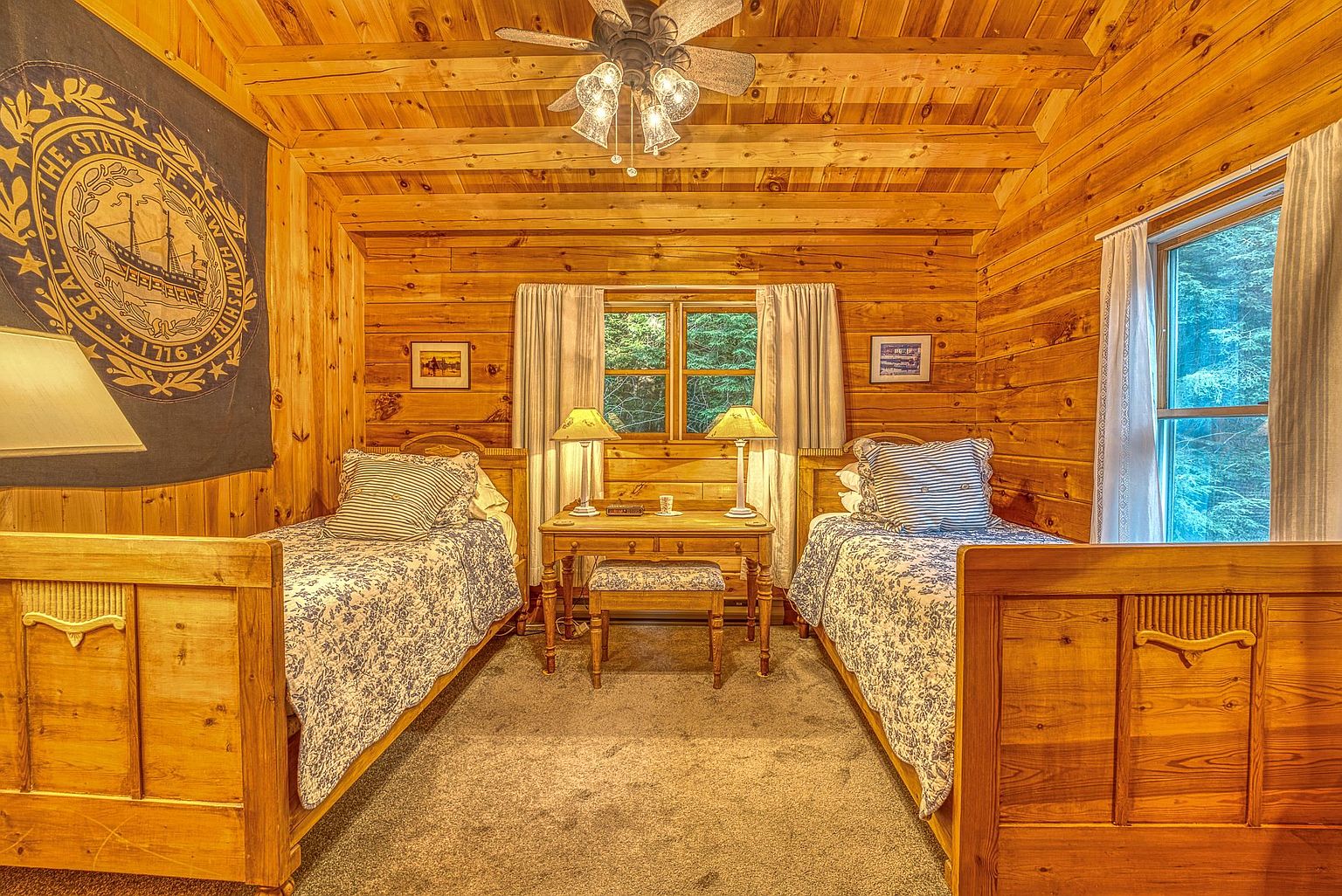
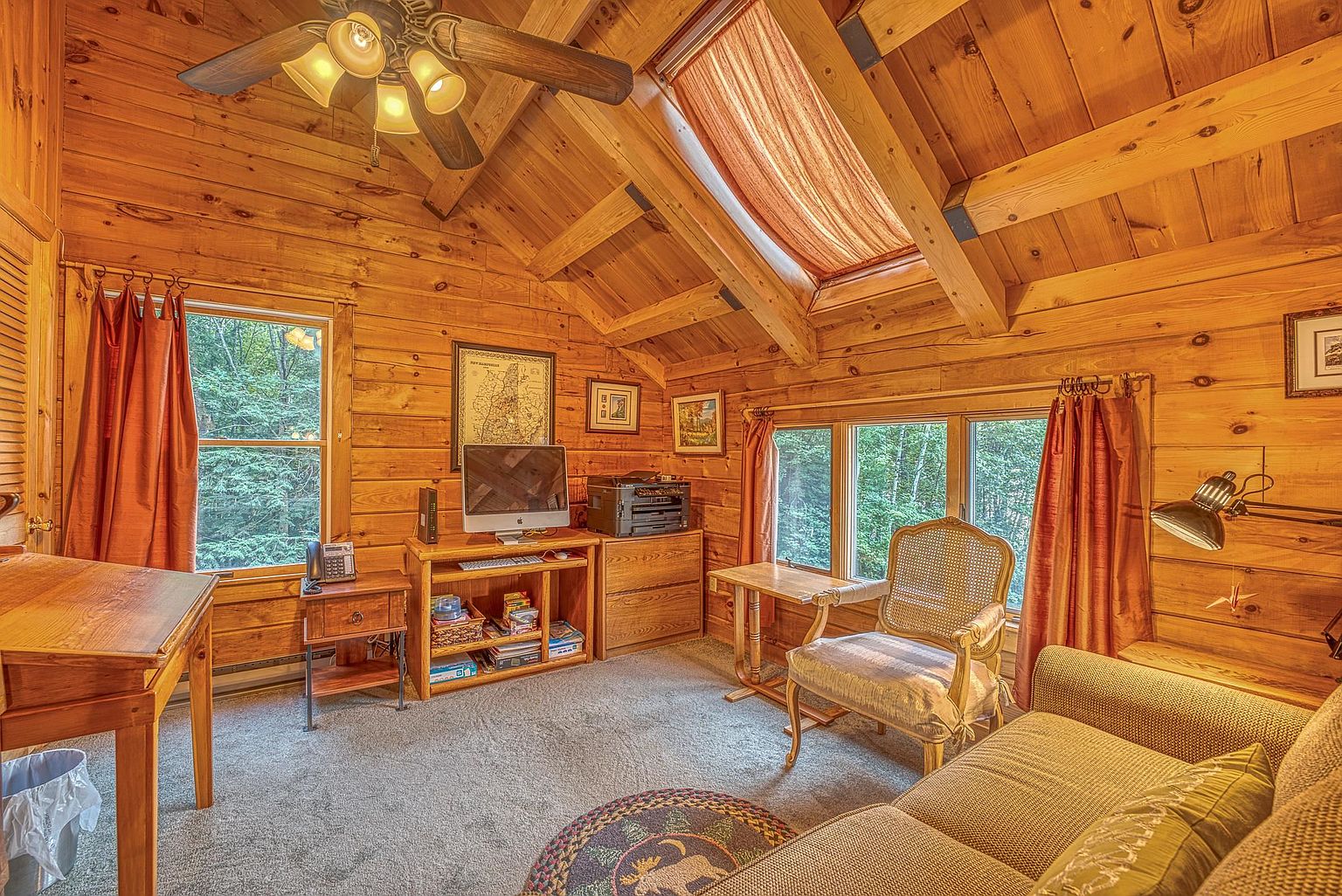
Each bedroom has been given its own distinct character — some with vaulted ceilings and floral curtains that soften the morning light, others with braided rugs and rocking chairs that invite a slower kind of afternoon. A decorative Golden Pond sign in one room acknowledges, with quiet affection, the cultural mythology that Squam Lake has earned over decades.
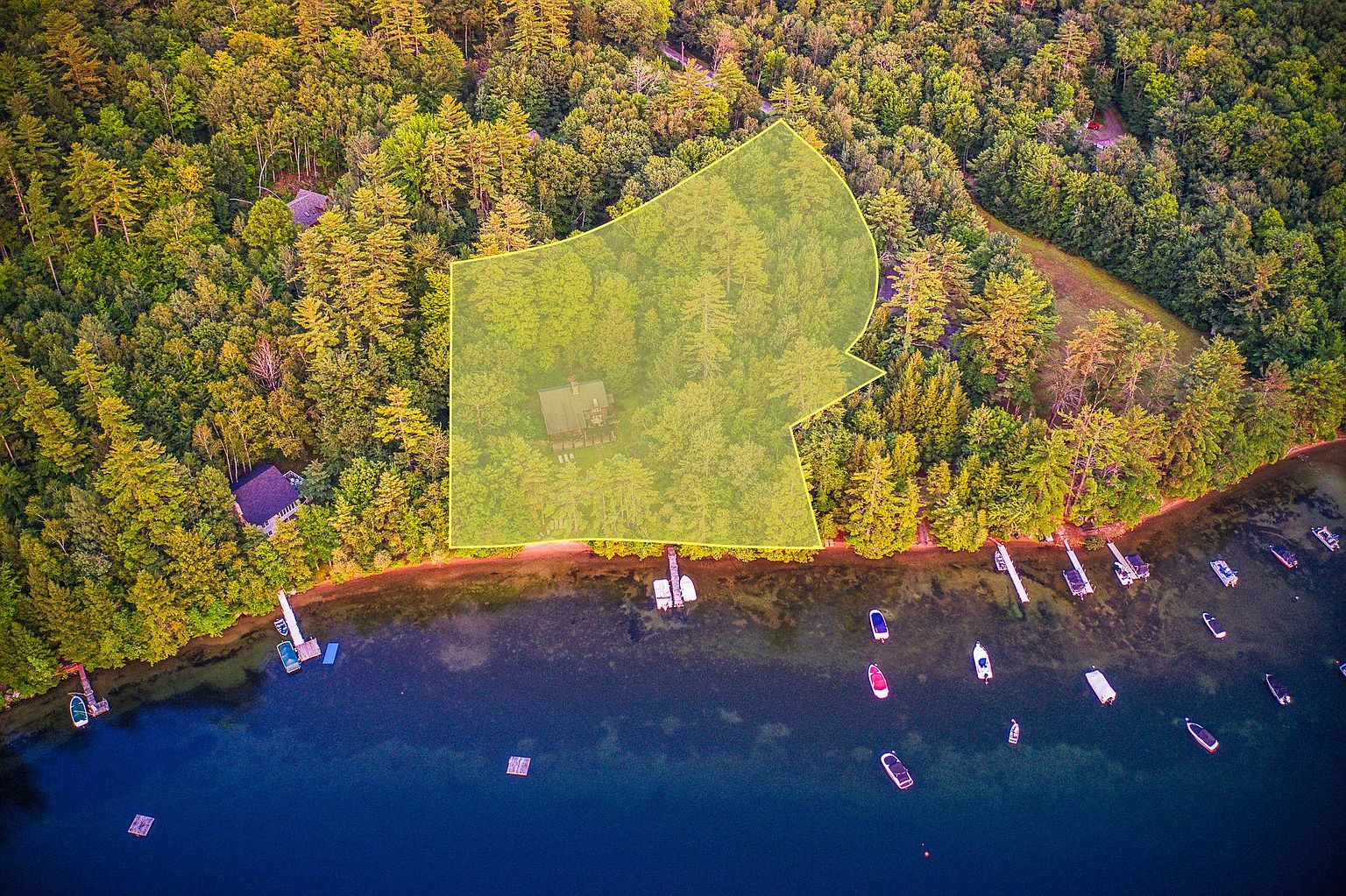
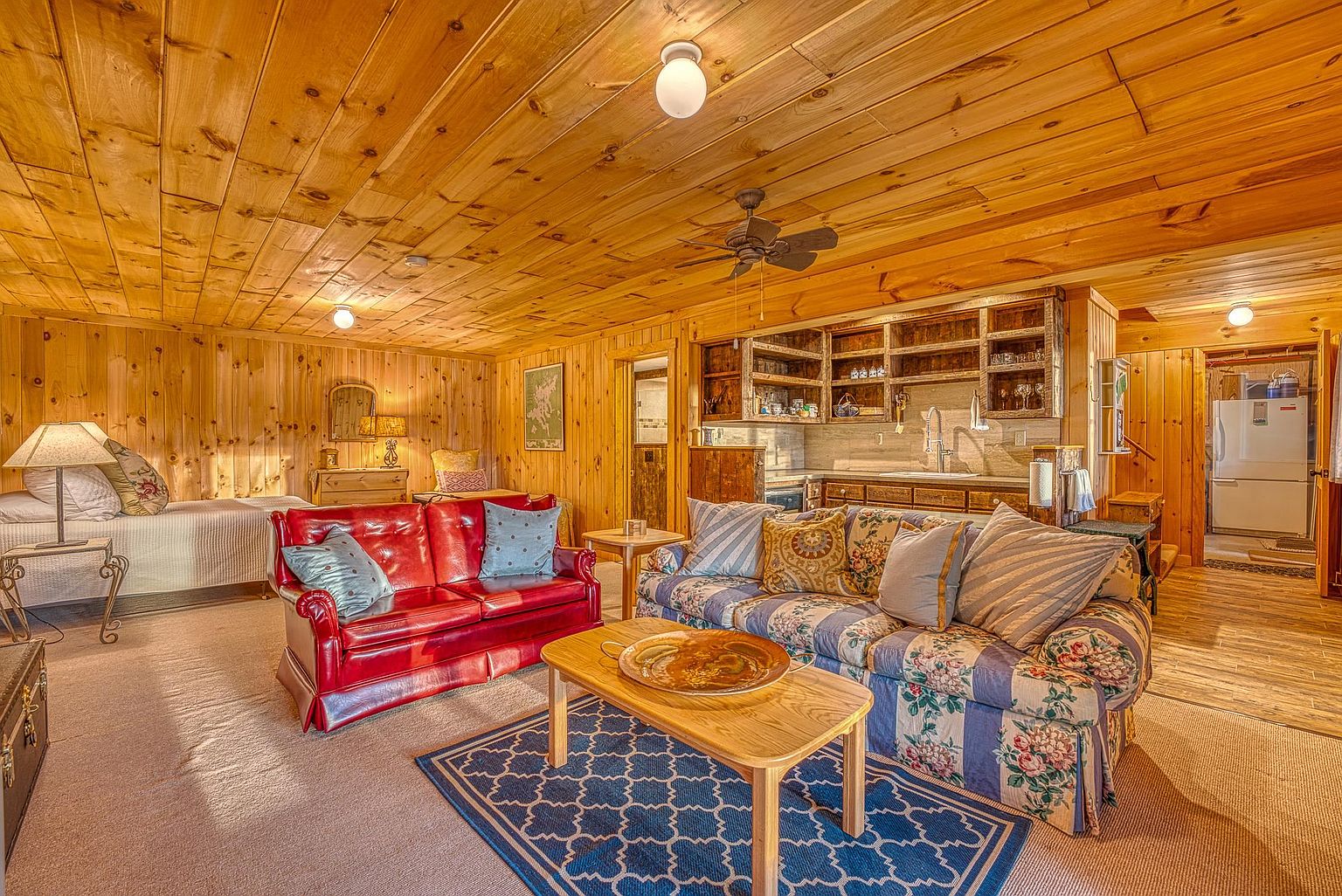
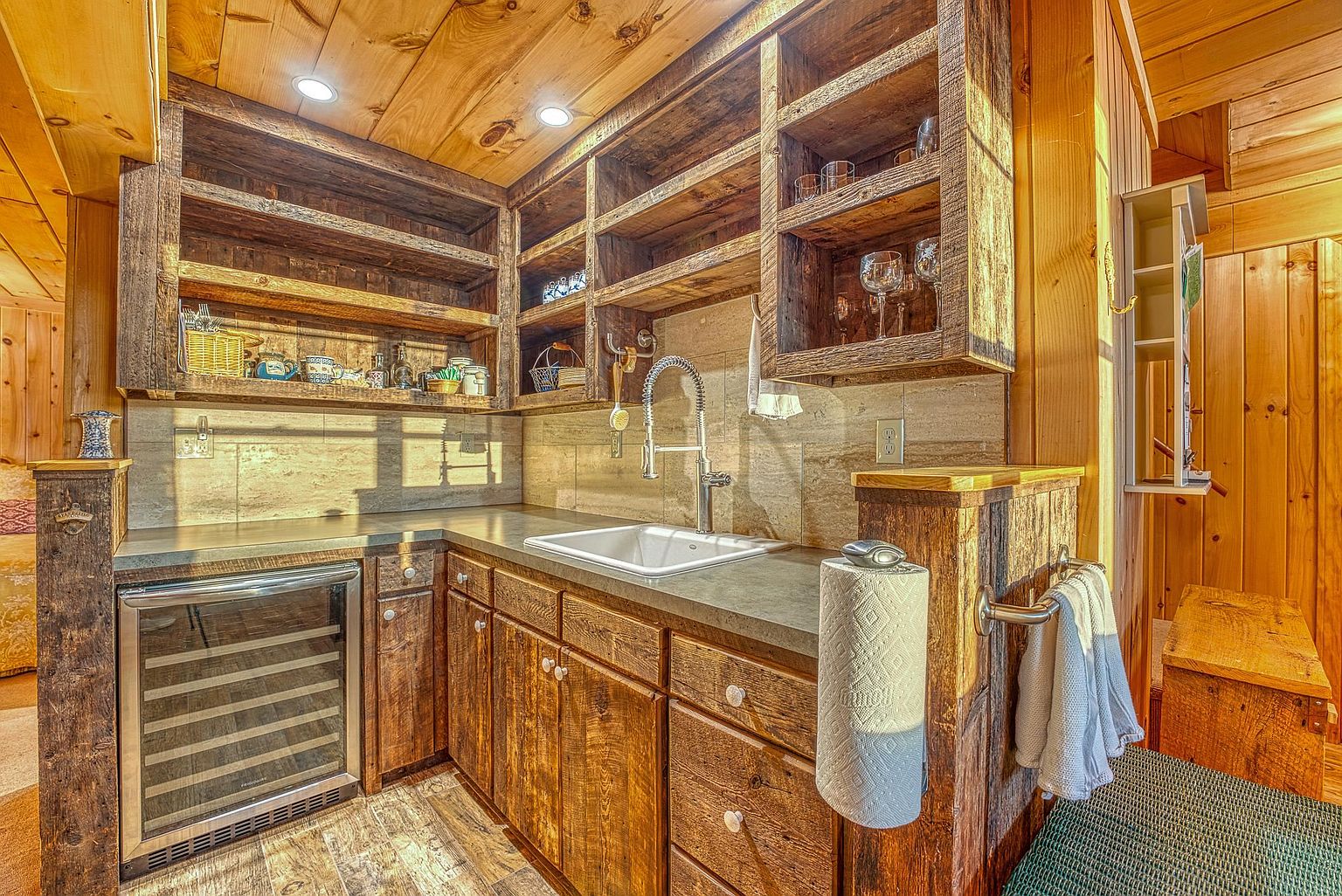
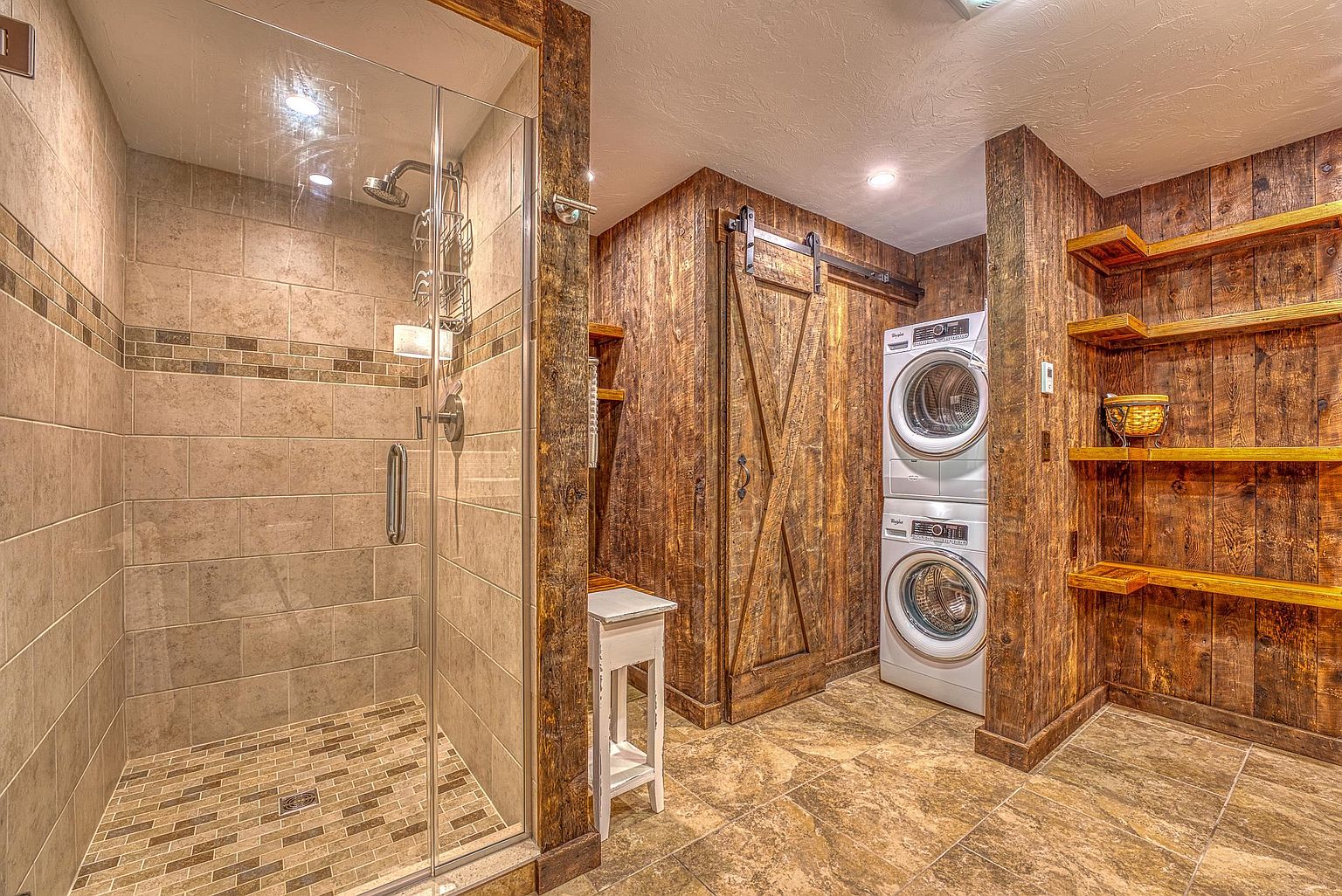
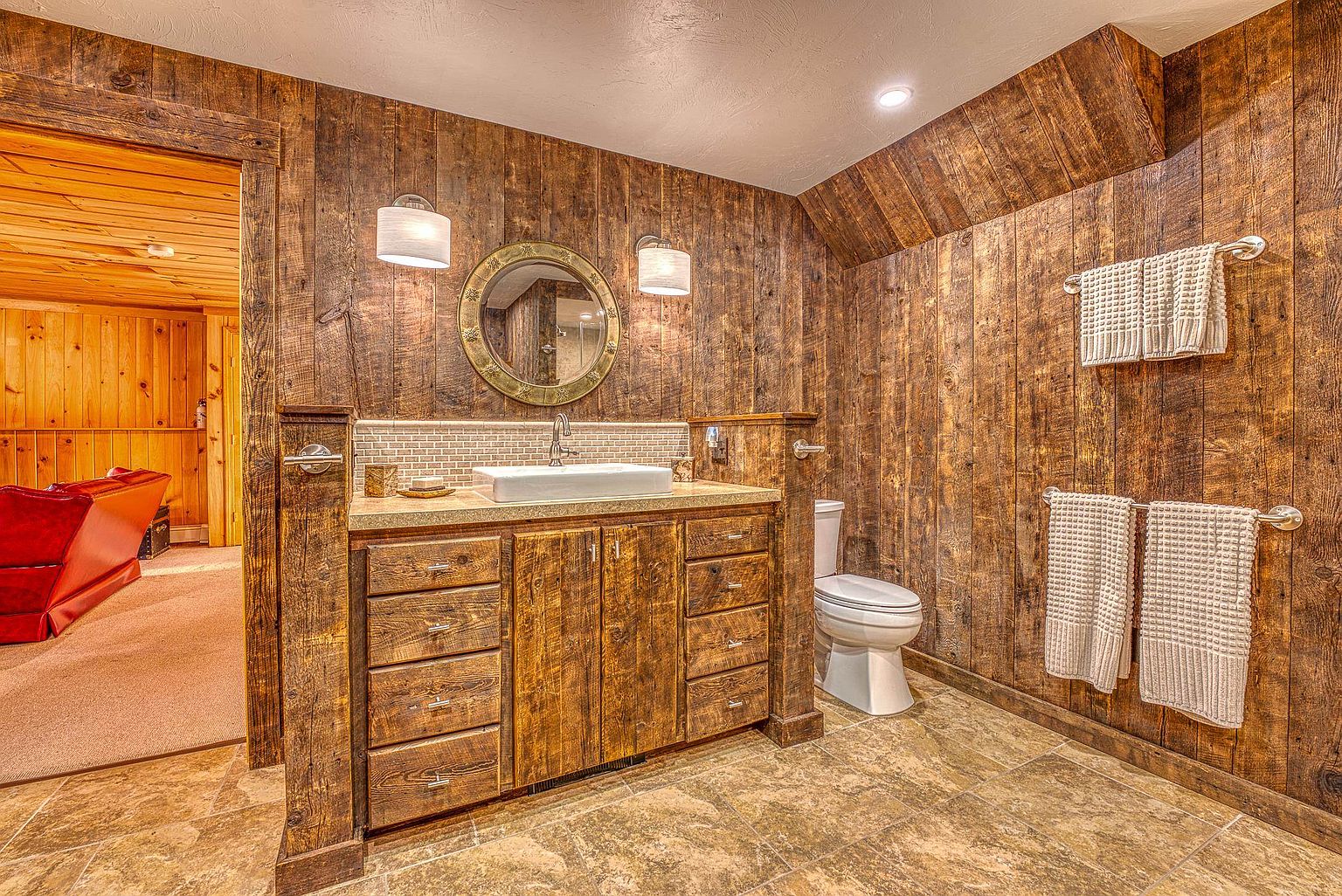
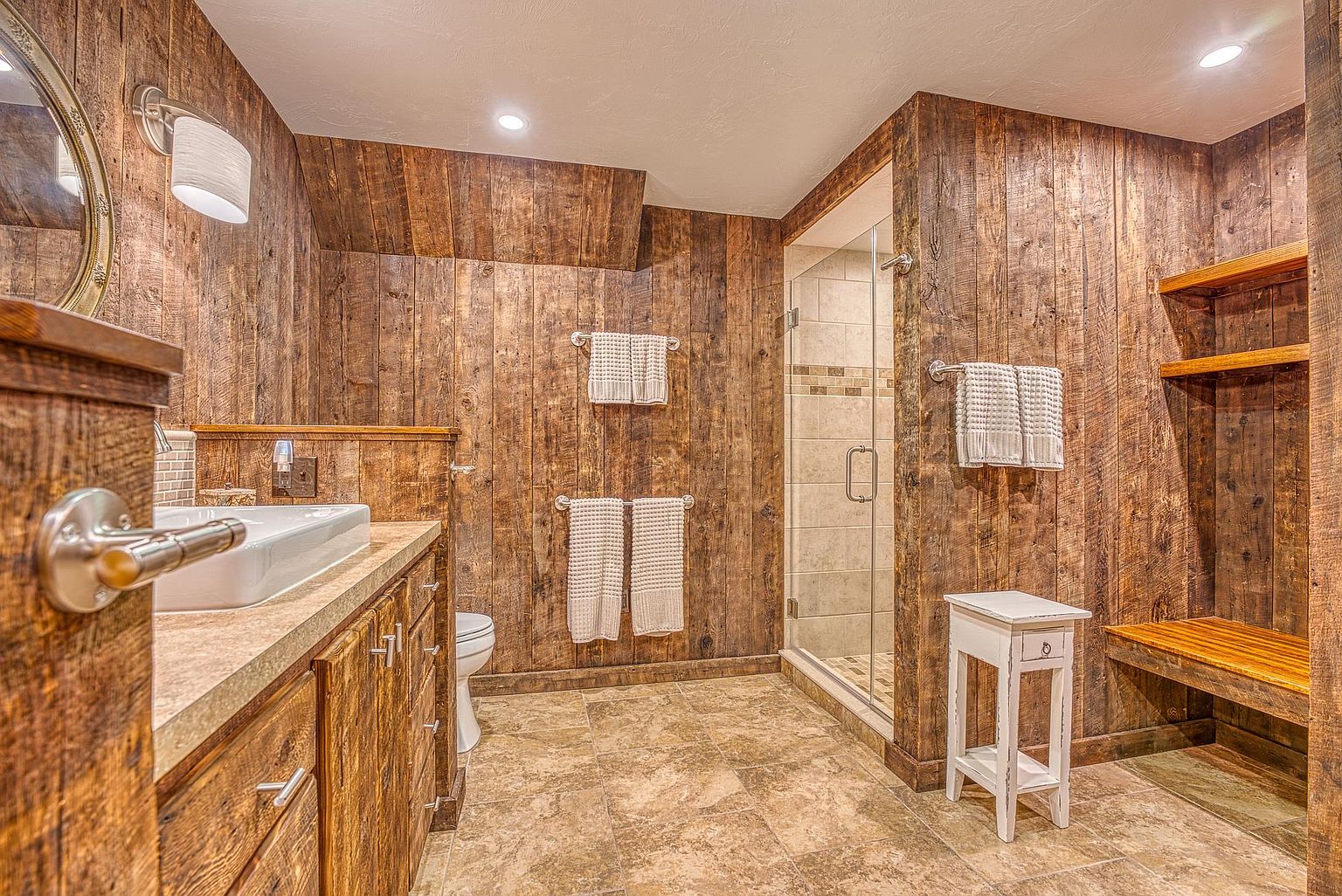
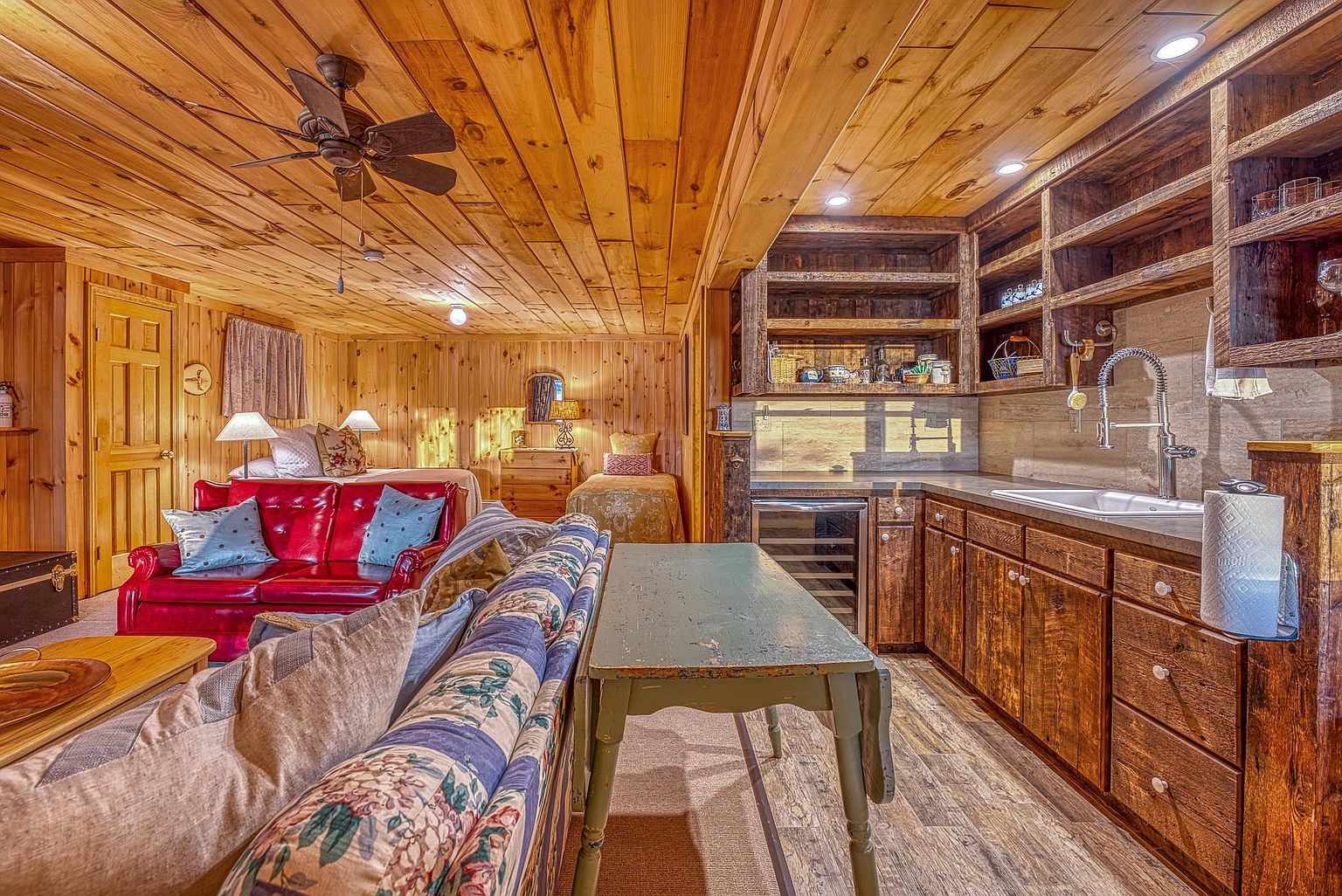
The finished walk-out lower level expands the home's hospitality without interrupting its intimacy. A custom barn board wet bar anchors a flexible gathering space, while a three-quarter bath and additional sleeping areas make the level fully self-sufficient for overflow guests. Practical upgrades — including mini-split climate systems, updated WiFi and cable infrastructure, and a whole-home water purification system — ensure that the experience of the home is as refined as its setting. Outside, two hundred feet of shoreline leads to a private dock, a sweeping green lawn invites lawn games and lounging alike, and an additional lot provides the privacy that lakefront living so rarely guarantees.
Squam Lake occupies a singular position in the landscape and imagination of New England. Covering approximately 6,791 acres across three towns — Holderness, Sandwich, and Center Harbor — it is the second-largest lake in New Hampshire and consistently ranked among the cleanest and most ecologically pristine bodies of water in the northeastern United States. Unlike the more commercially developed Lake Winnipesaukee to its south, Squam has remained deliberately and protectively understated, its shores largely free of the dense development that defines other regional resort lakes. This restraint is not accidental. It is the product of generations of stewardship, private conservation, and a community ethos that prizes the natural environment above commercial density.
The lake achieved a different kind of fame in 1981 when it served as the primary filming location for On Golden Pond, the Academy Award-winning film starring Henry Fonda and Katharine Hepburn. The production drew on Squam's particular combination of dramatic mountain backdrops, glassy water, and mature forest shoreline to create images of New England lake life that remain culturally resonant more than four decades later. For many who come to Squam, that film functions as a kind of emotional compass — a reference point for the quality of life the lake represents.
Holderness, the town in which 11 Squamasee Road sits, serves as both the geographic and civic heart of the Squam Lakes region. The town maintains a character that is genuinely rural without being remote — a careful balance that draws families seeking authentic New England atmosphere alongside those who simply want distance from the noise of more trafficked destinations. The Squam Lakes Natural Science Center, located in Holderness, is one of the region's most respected institutions, offering live animal exhibits, ecological education programs, and lake cruises that have made it a destination for visitors and a point of local pride for residents.
The surrounding region provides a full complement of four-season recreation. On the water, Squam supports sailing, kayaking, fishing — particularly for lake trout and smallmouth bass — and pontoon cruising across its many coves and islands. The lake's clarity and relatively modest powerboat traffic create conditions that reward unhurried exploration. On land, the White Mountain National Forest lies within easy reach to the north, offering access to hiking trails of every difficulty level, including routes to Sandwich Notch and the Squam Range ridgeline, which provides some of the most rewarding summit views in the state.
The town of Plymouth, approximately eight miles to the north, provides practical amenities including grocery stores, restaurants, medical facilities, and Plymouth State University, which contributes a modest cultural and athletic calendar to the broader community. The Lakes Region more broadly supports a network of farm stands, antique shops, independent restaurants, and seasonal events that give year-round residence a genuine quality of life rather than the hollow feeling of an off-season resort town. For those arriving from Boston, the drive along Interstate 93 through Franconia Notch is itself a journey worth making — approximately two hours that crosses from the urban into the genuinely elemental.
Featured Highlights
Curated Content • Presented by Jerrod Mitchell