The Story Behind
Beachwood: A Waterfront Legacy Estate on Puget Sound
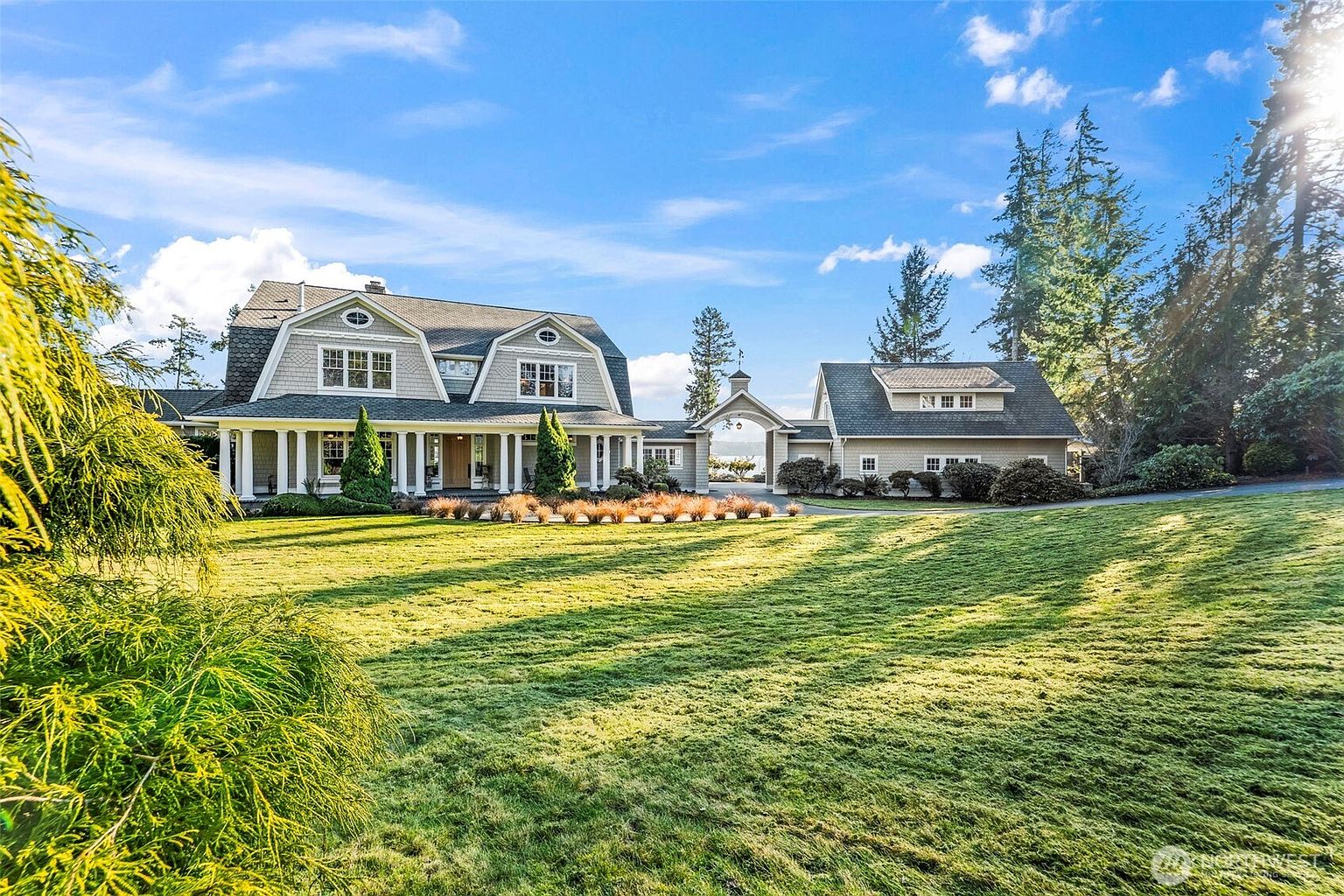
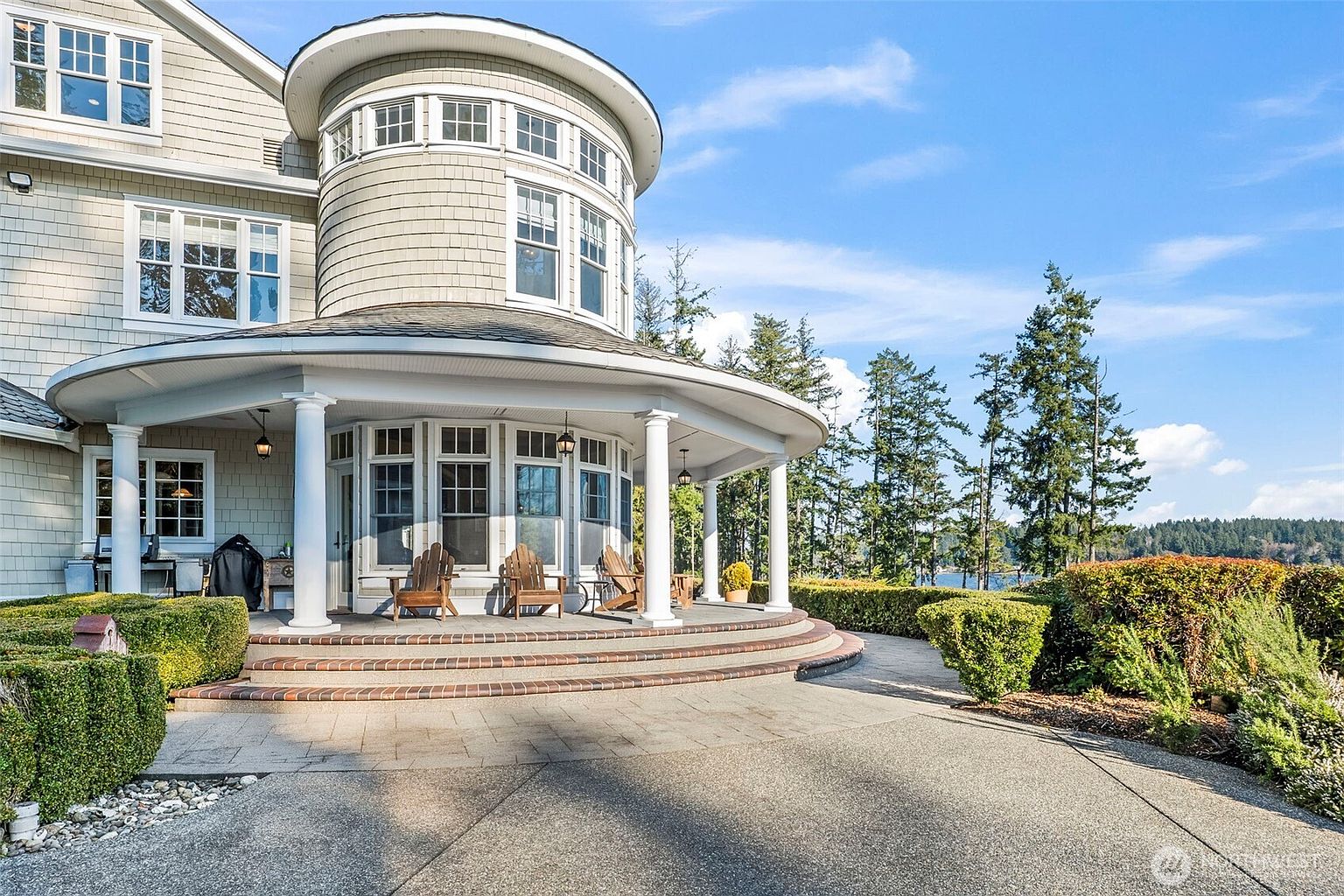
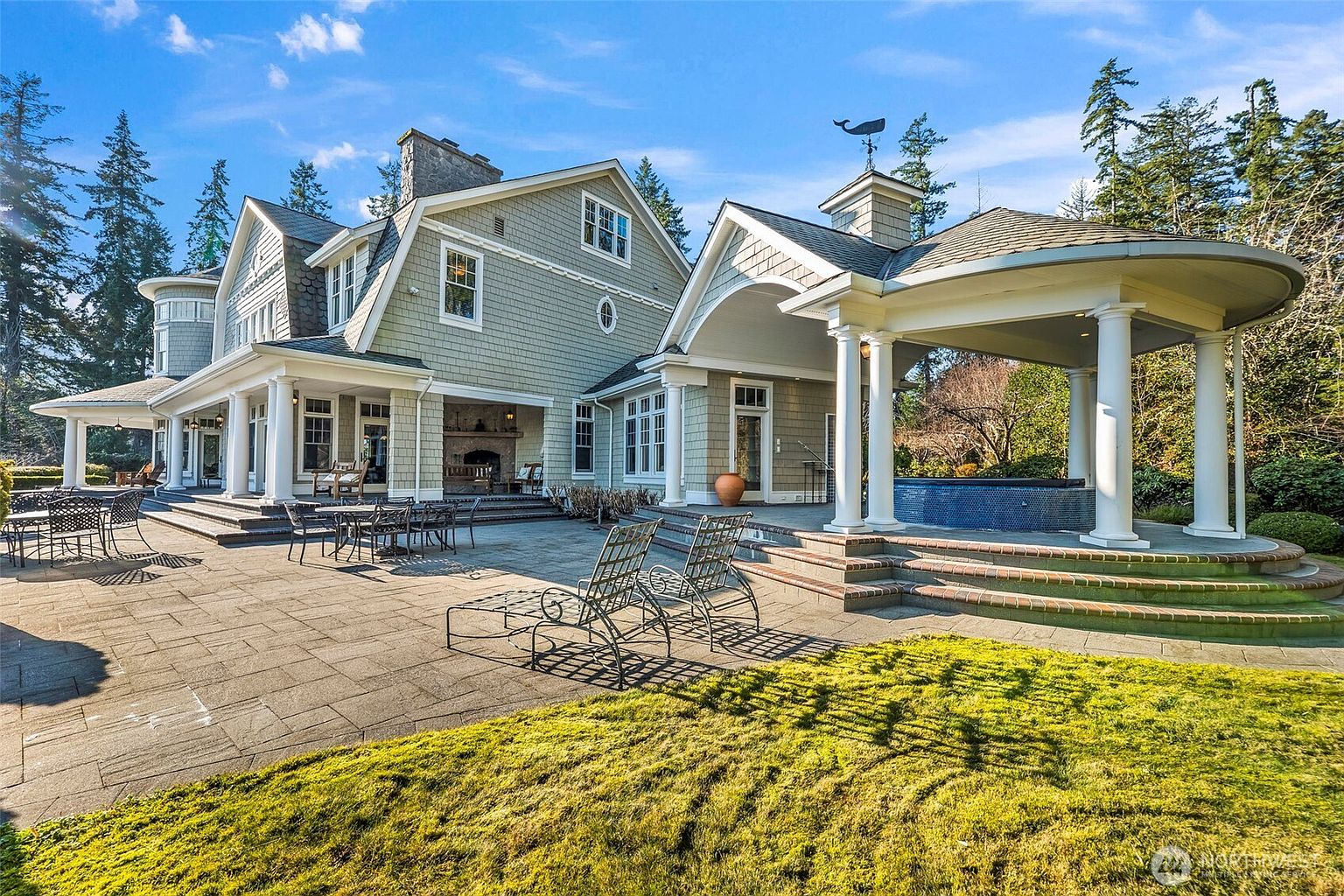
From the moment iron gates part beneath a canopy of mature evergreens and the curved driveway reveals the full sweep of Beachwood's façade, it is clear this is a property conceived with uncommon intention. The multi-gabled silhouette, clad in classic gray shingles and anchored by a wraparound porch of white columns, draws directly from the great East Coast shingle-style traditions of the late nineteenth century — estates built not for display but for living, for gathering, and for the quiet accumulation of memory across generations.
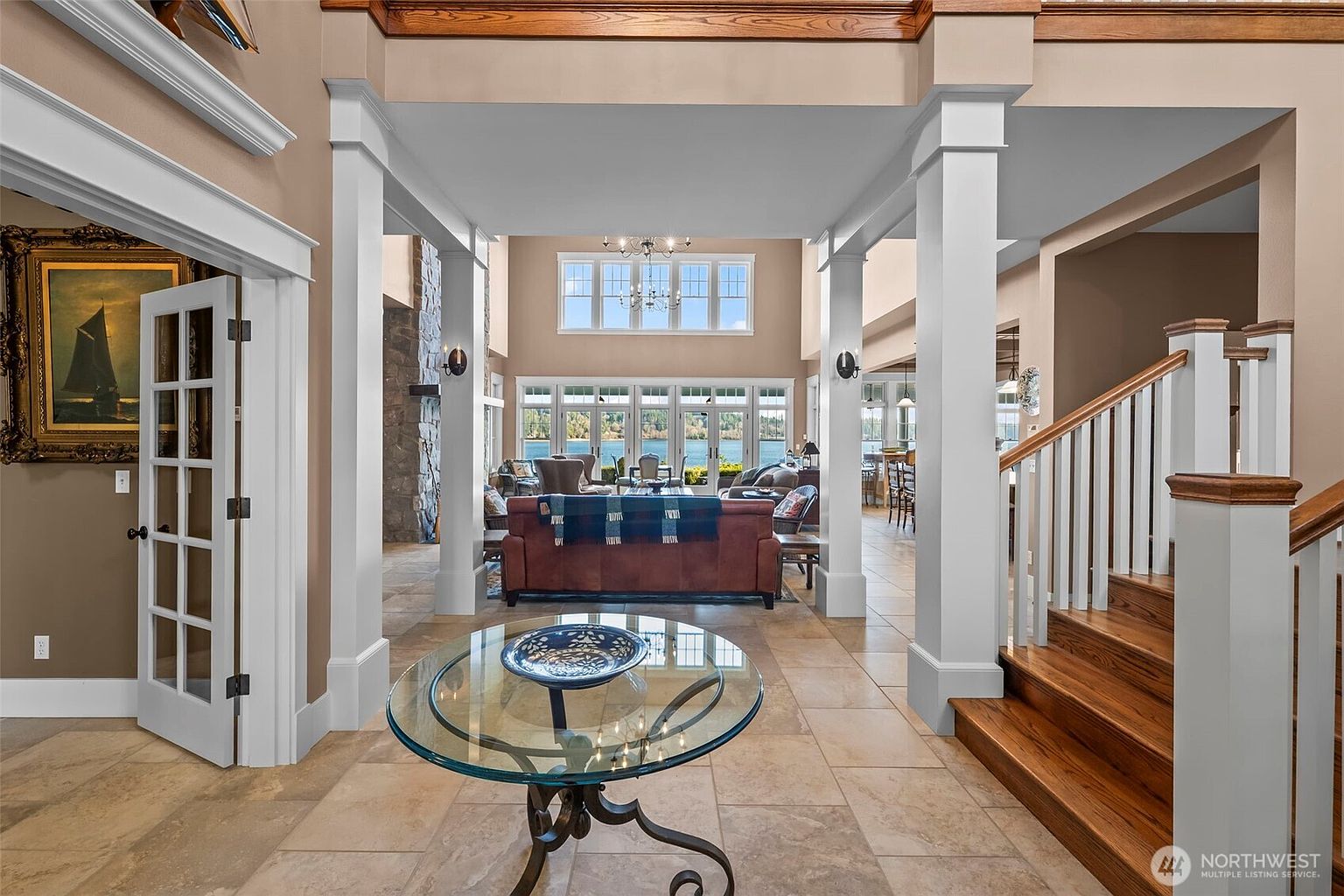
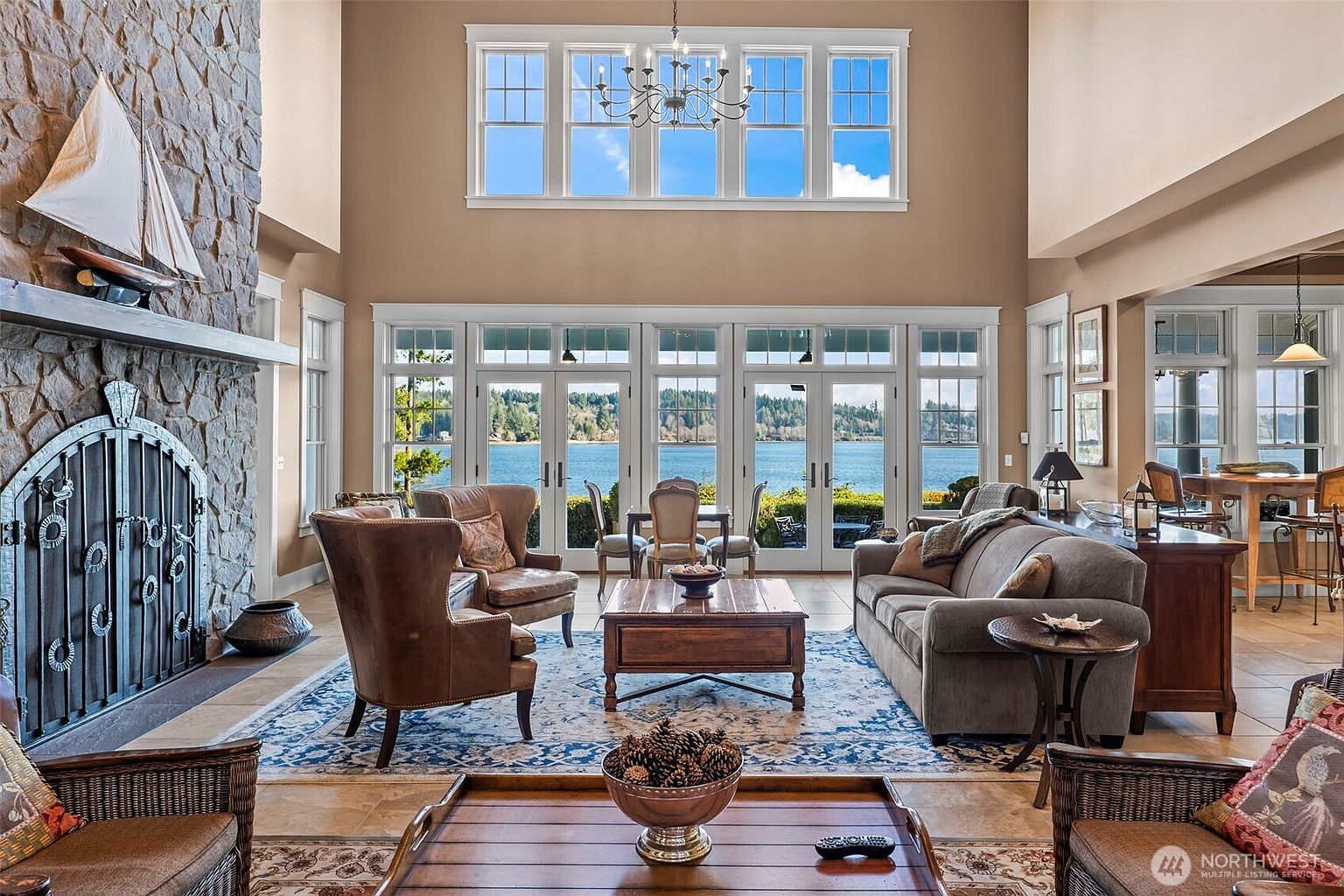
Inside, the scale is immediately generous without ever feeling impersonal. Soaring twenty-foot vaulted ceilings crown the great room, where a full-height stone chimney breast anchors the space and a continuous wall of multi-paned windows dissolves the boundary between interior and the shimmering expanse of Puget Sound beyond. Light moves through the room across the day with the quality of something curated — morning silver, afternoon gold, the deep amber of a Pacific Northwest dusk. Leather armchairs and plush sofas are arranged with the ease of a room that has been lived in well, centered on a patterned area rug that grounds the vast, airy volume.
The kitchen is a study in warmth and functionality in equal measure. Warm-toned cabinetry rises beneath a coffered ceiling with recessed and pendant lighting, while a large central island with stone counters and a professional-grade stainless range speaks to serious culinary ambition. The adjacent circular dining room — wrapped entirely in tall windows above the water — transforms every meal into something quietly ceremonial.
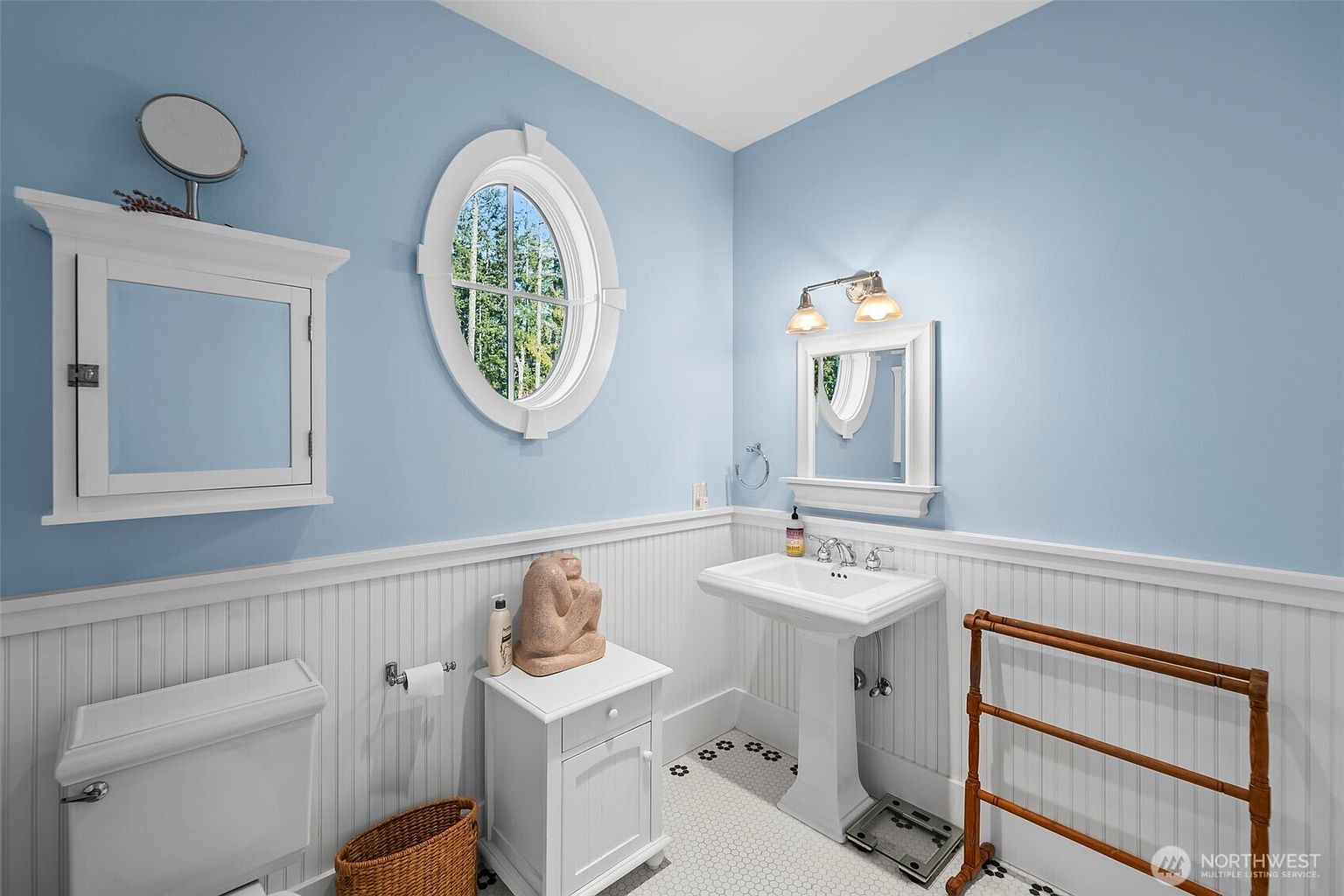
The primary suite offers hardwood floors, generous natural light, and a direct sightline through to a spa bathroom of singular distinction: a freestanding soaking tub positioned before a curved wall of windows, framing panoramic water views in a composition that feels more like a painting than architecture. The hexagonal tile floor with its decorative border and a hanging pendant fixture complete a room of considered, unhurried elegance.
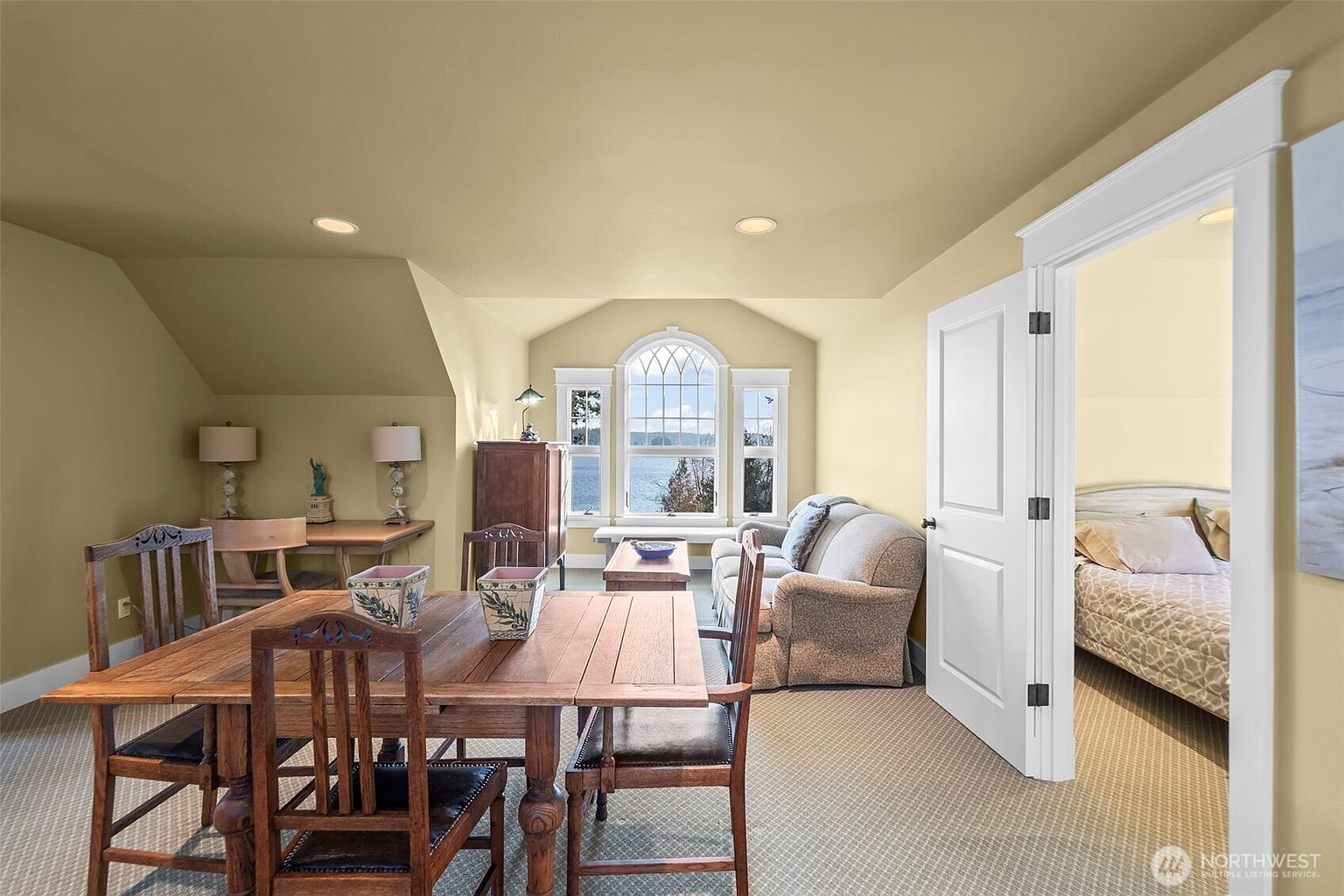
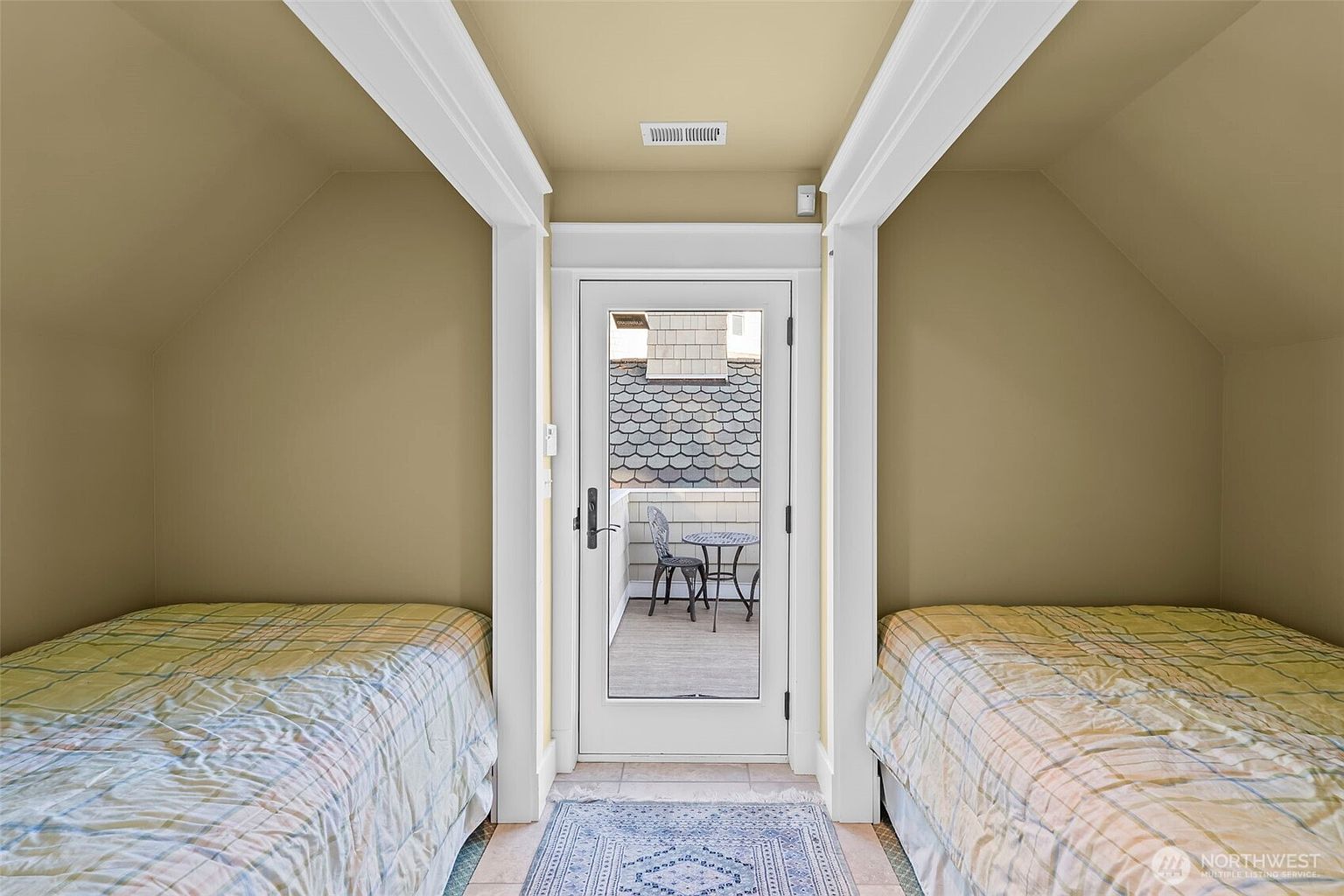
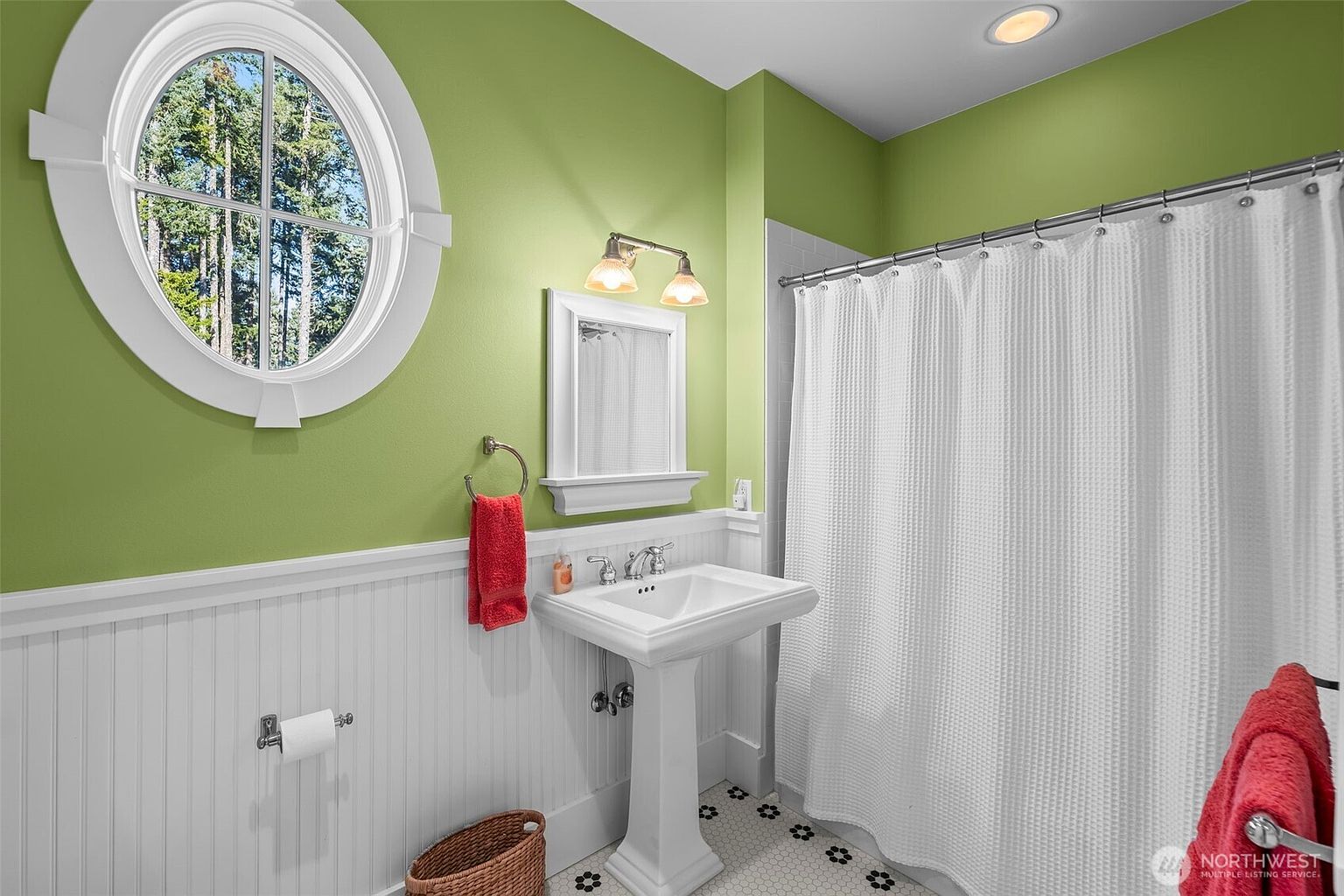
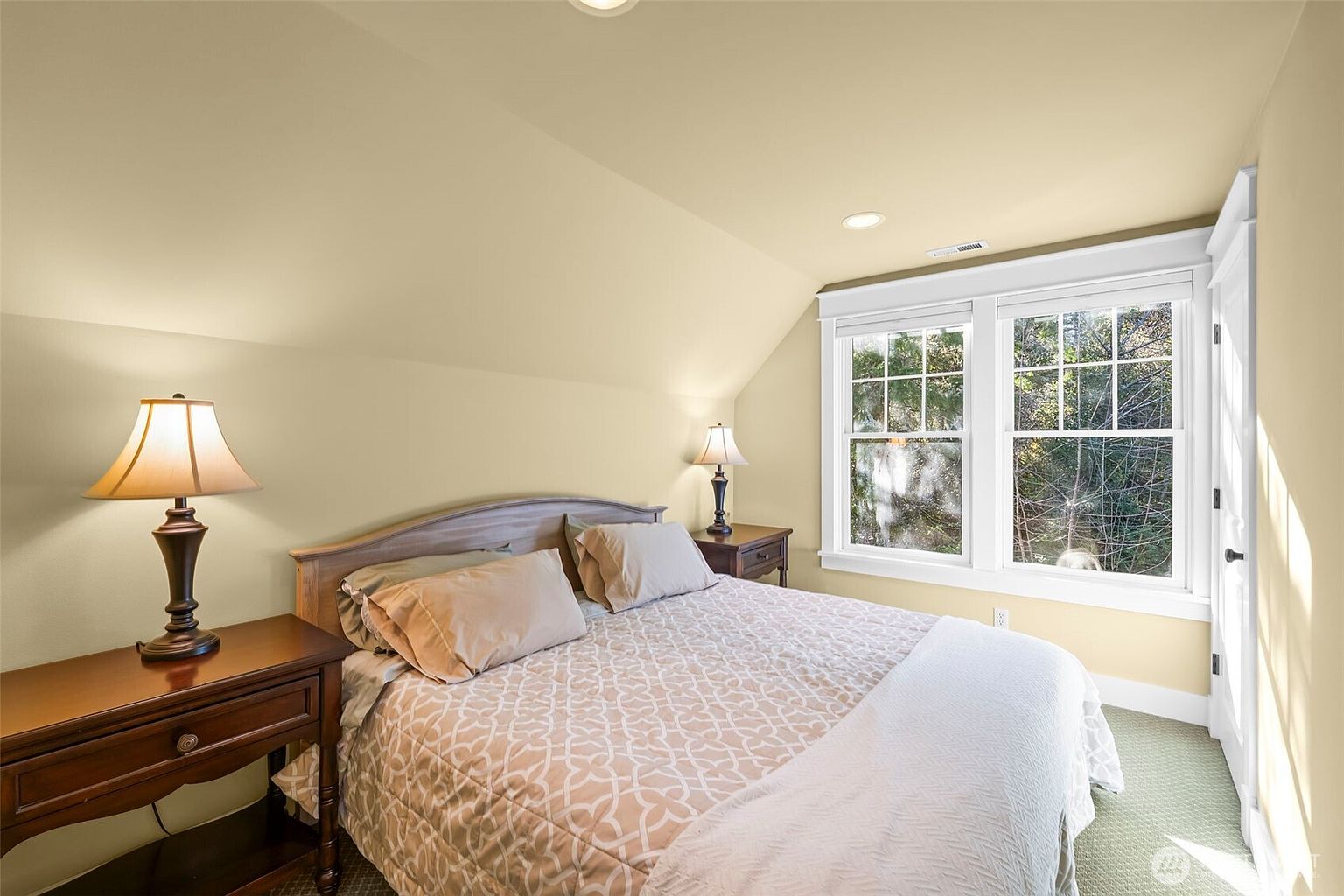
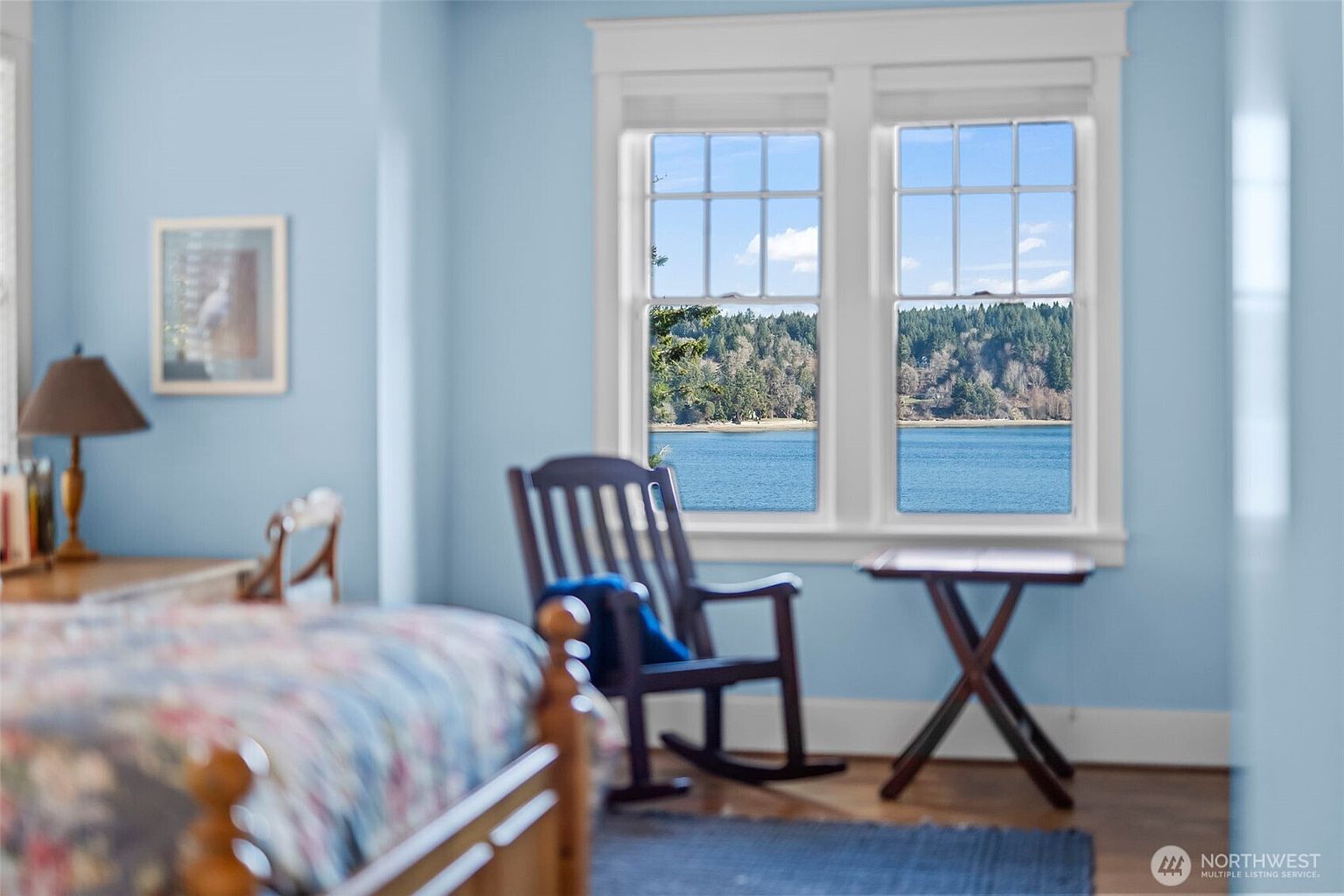
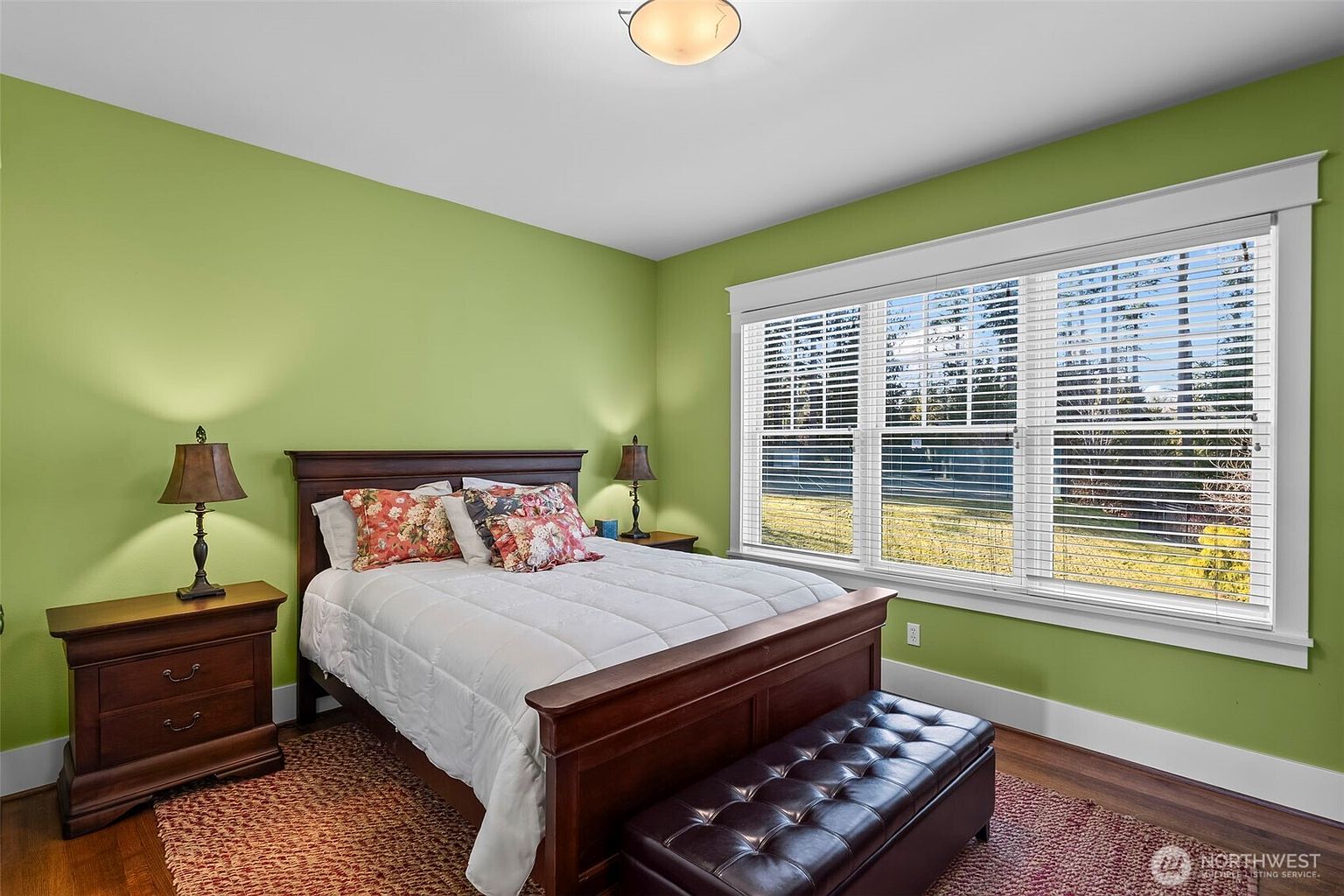
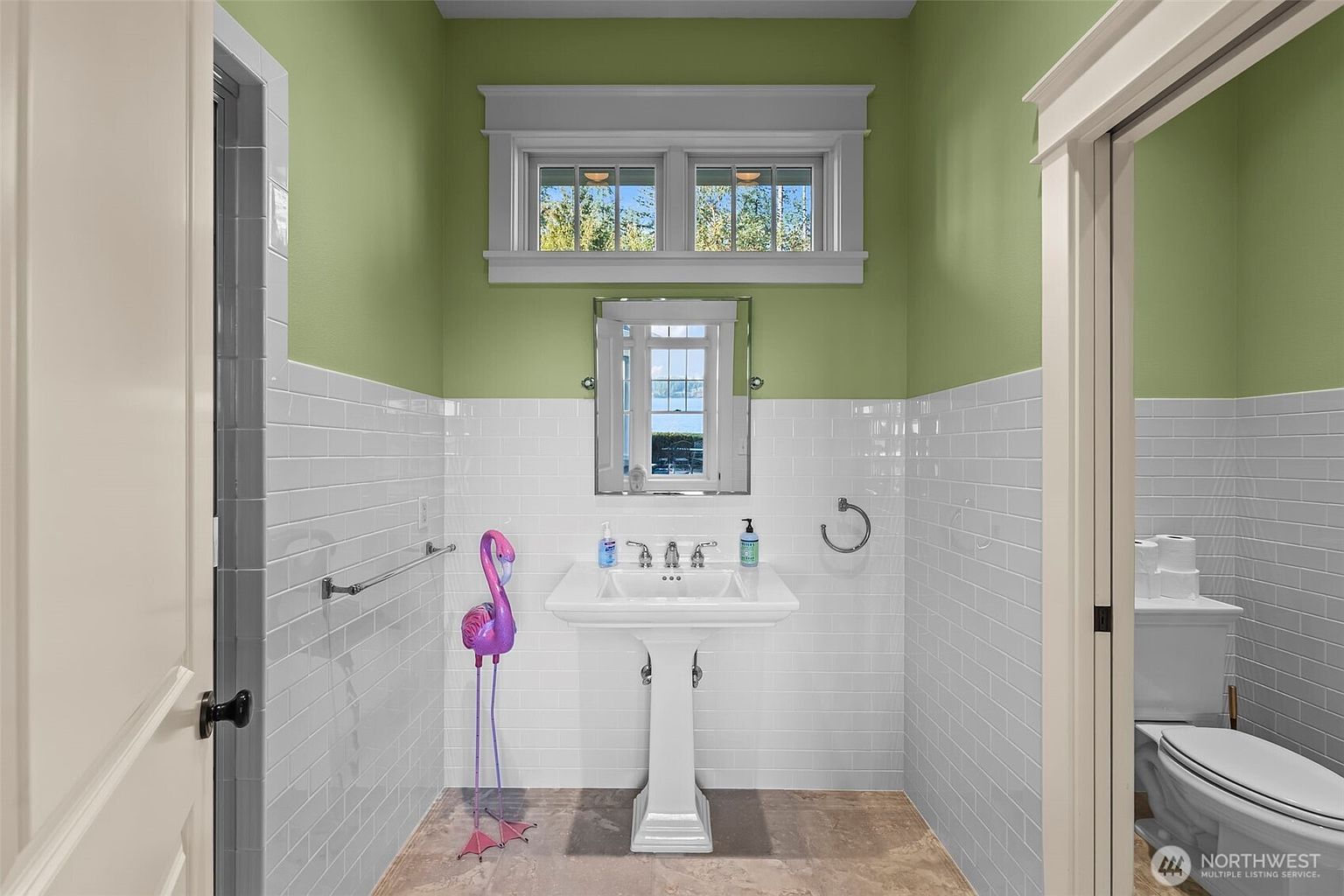
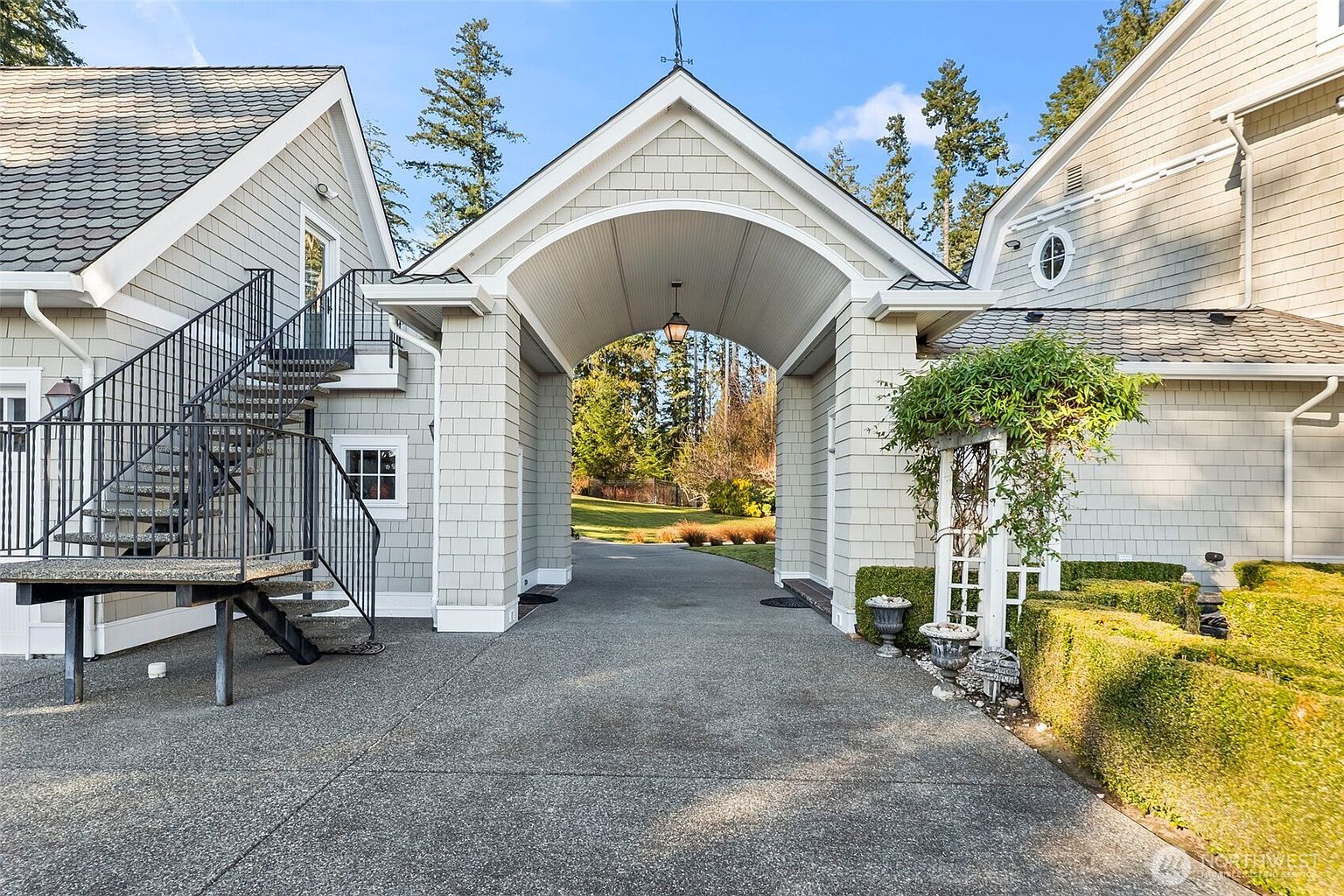
Three ensuite bedrooms in the main residence offer guests and family their own private territories, each finished with care — sloped ceilings, lake-view windows, hardwood floors, and bathrooms of individual character. A detached three-car garage connects to the main house via a covered breezeway and incorporates a fully appointed guest apartment with one bedroom, one bath, and sleeping alcoves — ideal for extended family, visiting friends, or live-in staff.
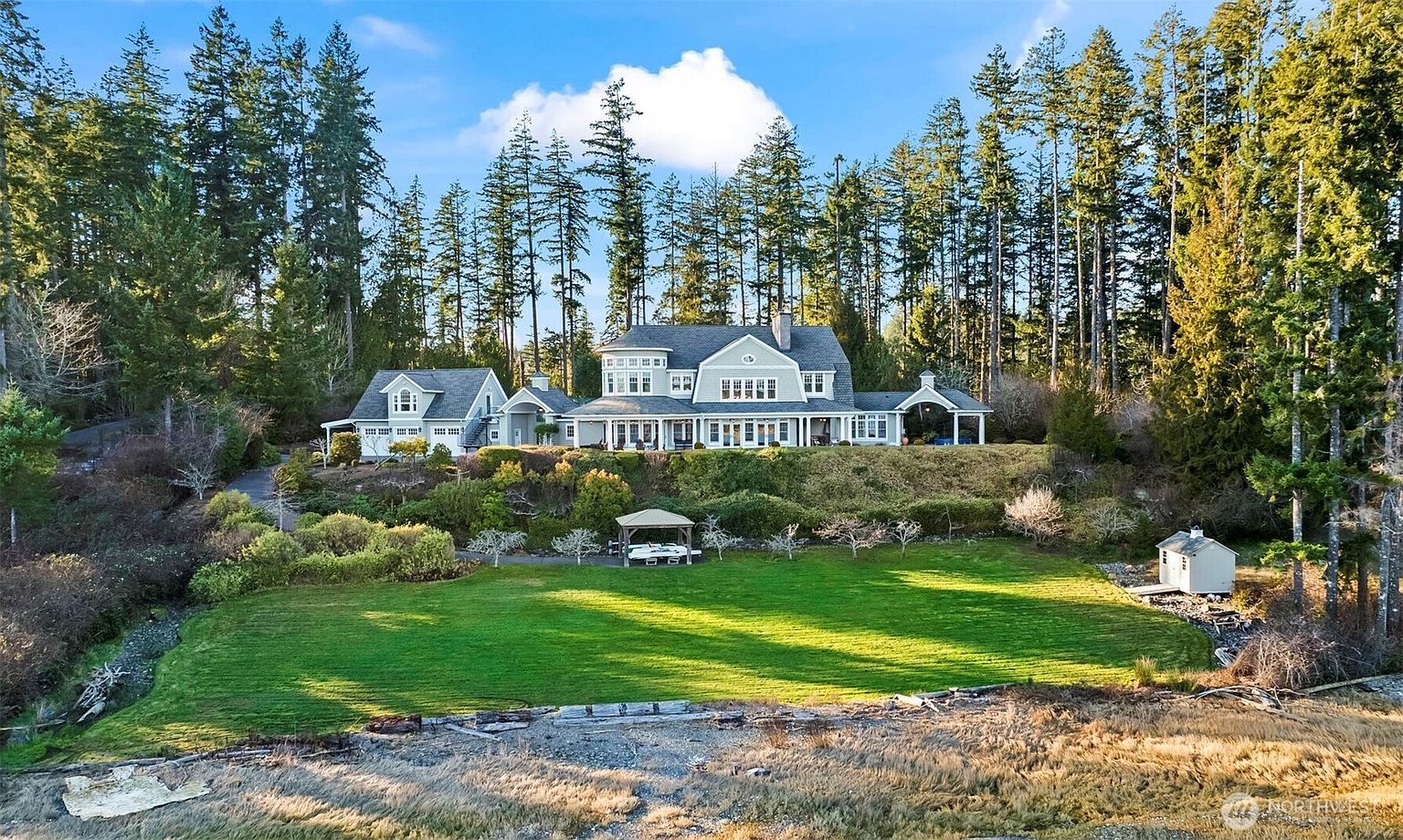
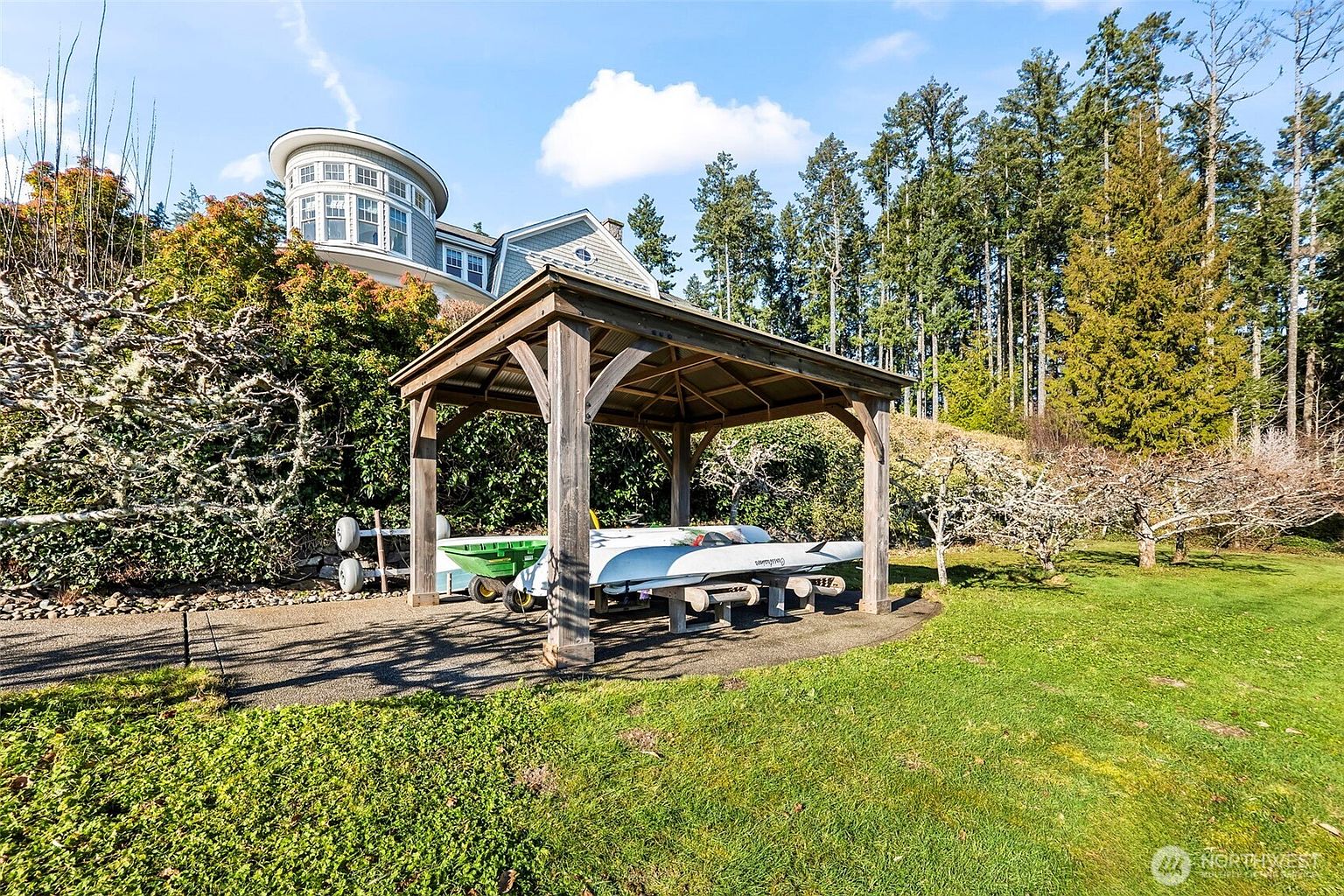
Outdoors, the estate unfolds across five acres with the logic of a private resort. A stone patio with a stone-clad outdoor fireplace provides the setting for evening gatherings beneath open sky. A private tennis court sits within a manicured clearing. A gazebo, fruit trees, sculpted gardens, and quiet woodland trails complete the grounds, while 350 feet of no-bank sandy beach — rich with native oysters and clams — delivers the estate's most irreplaceable asset: direct, unhurried access to the water.
Allyn, Washington occupies a singular position along the southern reaches of Hood Canal and Case Inlet on the Kitsap and Mason County shoreline — a place where the Pacific Northwest's most elemental qualities converge: old-growth evergreen forests descending to cold, clear saltwater; snow-capped mountain ranges visible across open bays; and a pace of life that has remained, by the deliberate preference of its residents, unhurried and close to the land.
The community of Allyn sits on the North Bay of Case Inlet, a sheltered arm of southern Puget Sound that has drawn mariners, fishermen, and waterfront families for well over a century. The town's small downtown, centered along Waterfront Park, retains the character of a working waterfront village — boat launches, a public dock, local dining, and the kind of hardware-store-and-coffee-shop rhythms that define communities where people actually live rather than simply pass through. The North Bay Waterfront Park offers public beach access, picnic areas, and a boat launch that serves the active recreational boating community that defines life along this stretch of the Sound.
For those drawn to the water, Case Inlet and the broader South Sound offer some of the most rewarding recreational boating, kayaking, and paddleboarding in the region, with sheltered channels, abundant marine wildlife, and easy access to the broader Puget Sound network of islands and inlets. The shellfish harvesting for which these tidelands are celebrated — Hood Canal and South Sound are among Washington State's most productive shellfish regions — is not simply a lifestyle amenity at a property like Beachwood; it is a direct expression of the place itself.
The surrounding Mason County landscape is one of working forests, small farms, and the quietly beautiful rural character of the Olympic Peninsula's eastern foothills. Mount Rainier, visible across the water from Beachwood's porches and primary suite, is the dominant landmark of the entire South Sound horizon — a 14,411-foot volcanic peak whose presence lends a quality of grandeur to even the most ordinary afternoon. Olympic National Park lies to the west, and the broader recreational geography of western Washington — skiing, hiking, river fishing, and forest exploration — is readily accessible from this location.
Practical connectivity is more immediate than the estate's sense of seclusion might suggest. The Belfair corridor, approximately fifteen minutes north, provides everyday retail, dining, and services. The Tacoma Narrows Bridge connects the Kitsap and Mason County shorelines to the greater Tacoma and Puget Sound metropolitan region, while the Washington State Ferry system — accessible from nearby terminals — links this corner of the Sound to Seattle and the broader regional network. Several marinas along the South Sound, including those at Belfair and Allyn itself, serve the area's active boating community.
Beachwood's location places it at the intersection of genuine remoteness and genuine accessibility — a combination that is, in the Pacific Northwest, genuinely rare. It is the kind of place where the outside world recedes naturally, without effort, and where the rhythms of tide, weather, and season become the true measure of the day.
Featured Highlights
Curated Content • Presented by Nancy Forsythe