The Story Behind
145 Feet of Laurelhurst Shoreline, Reimagined by Olson Kundig
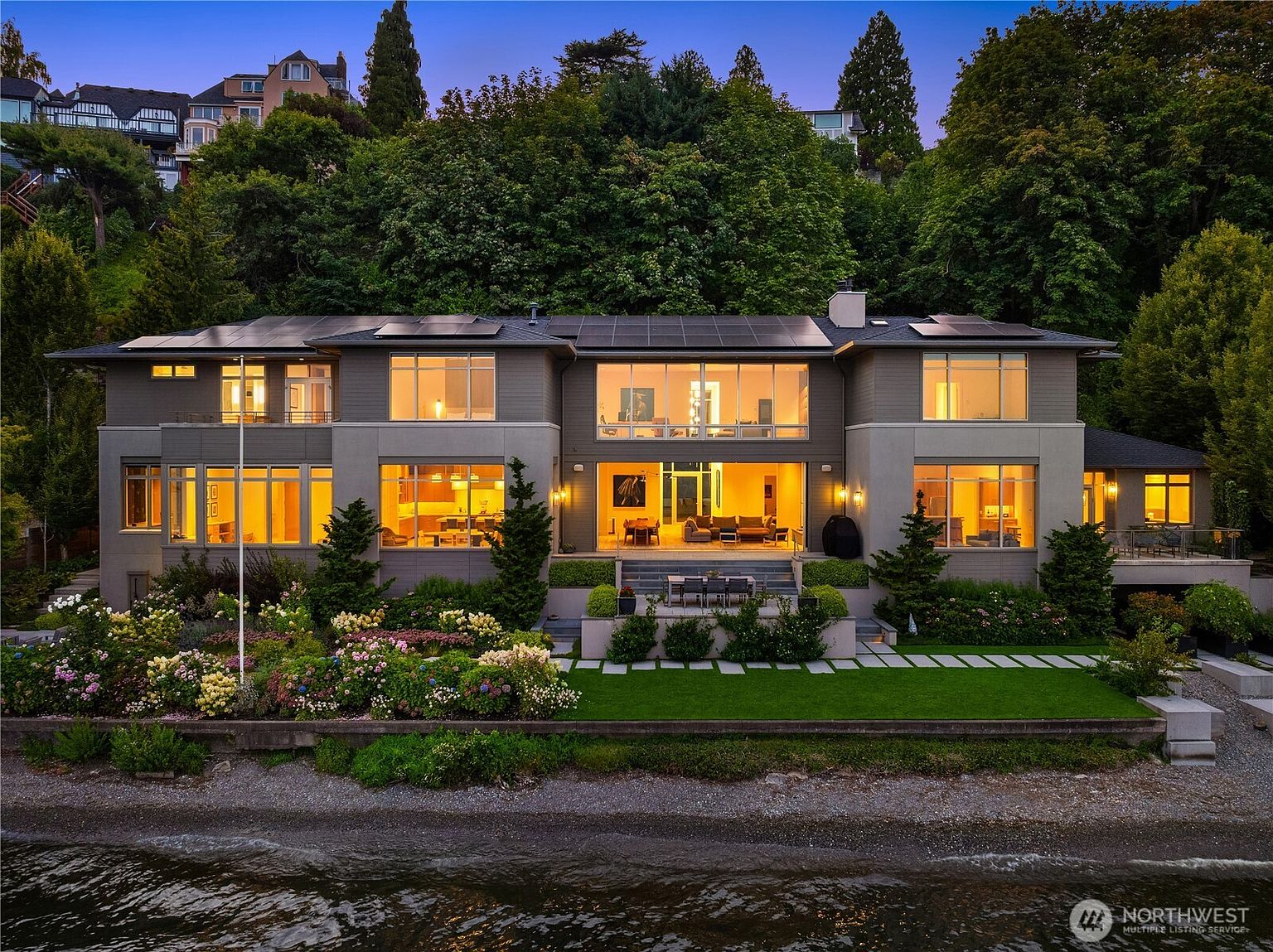
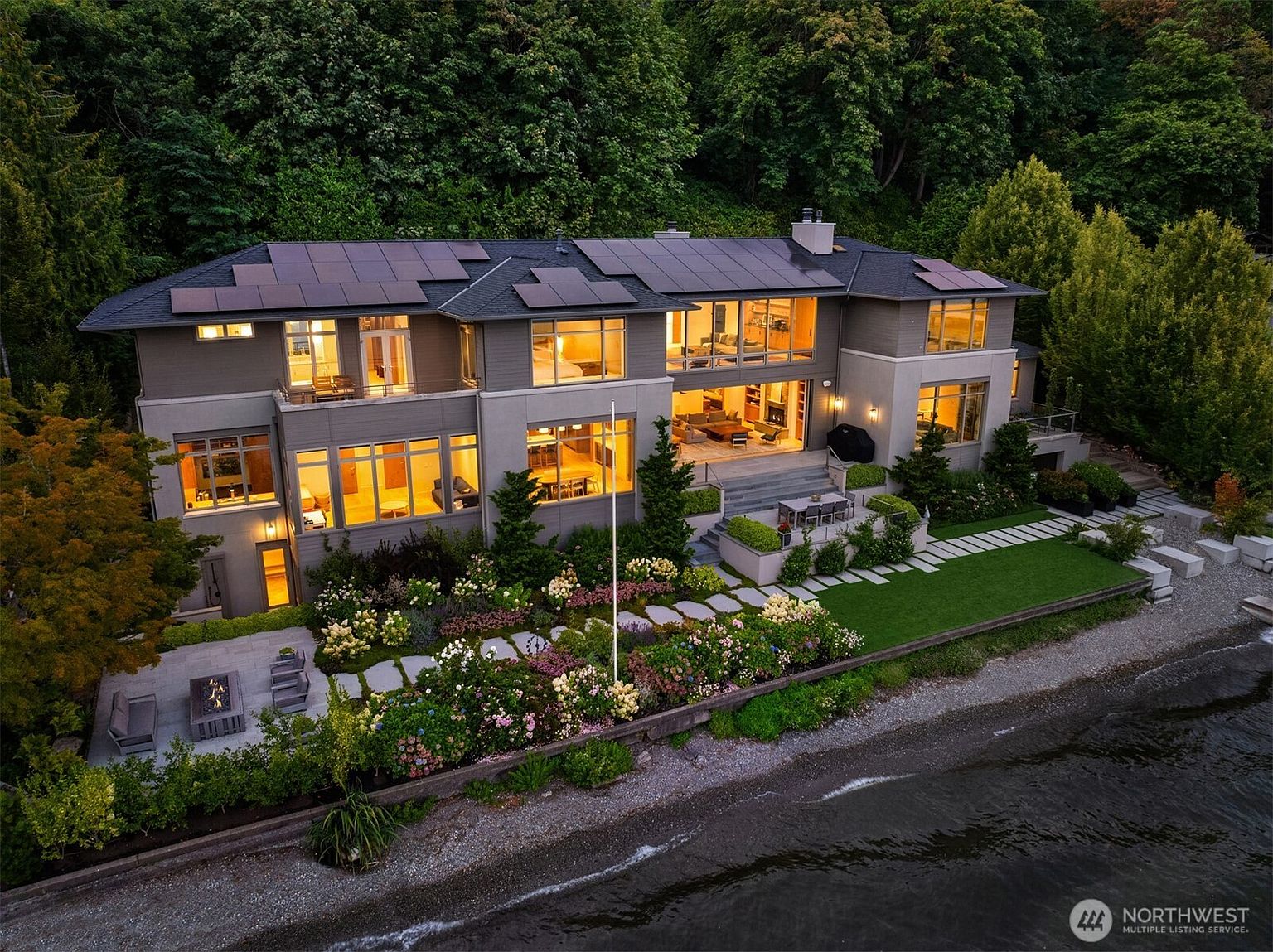
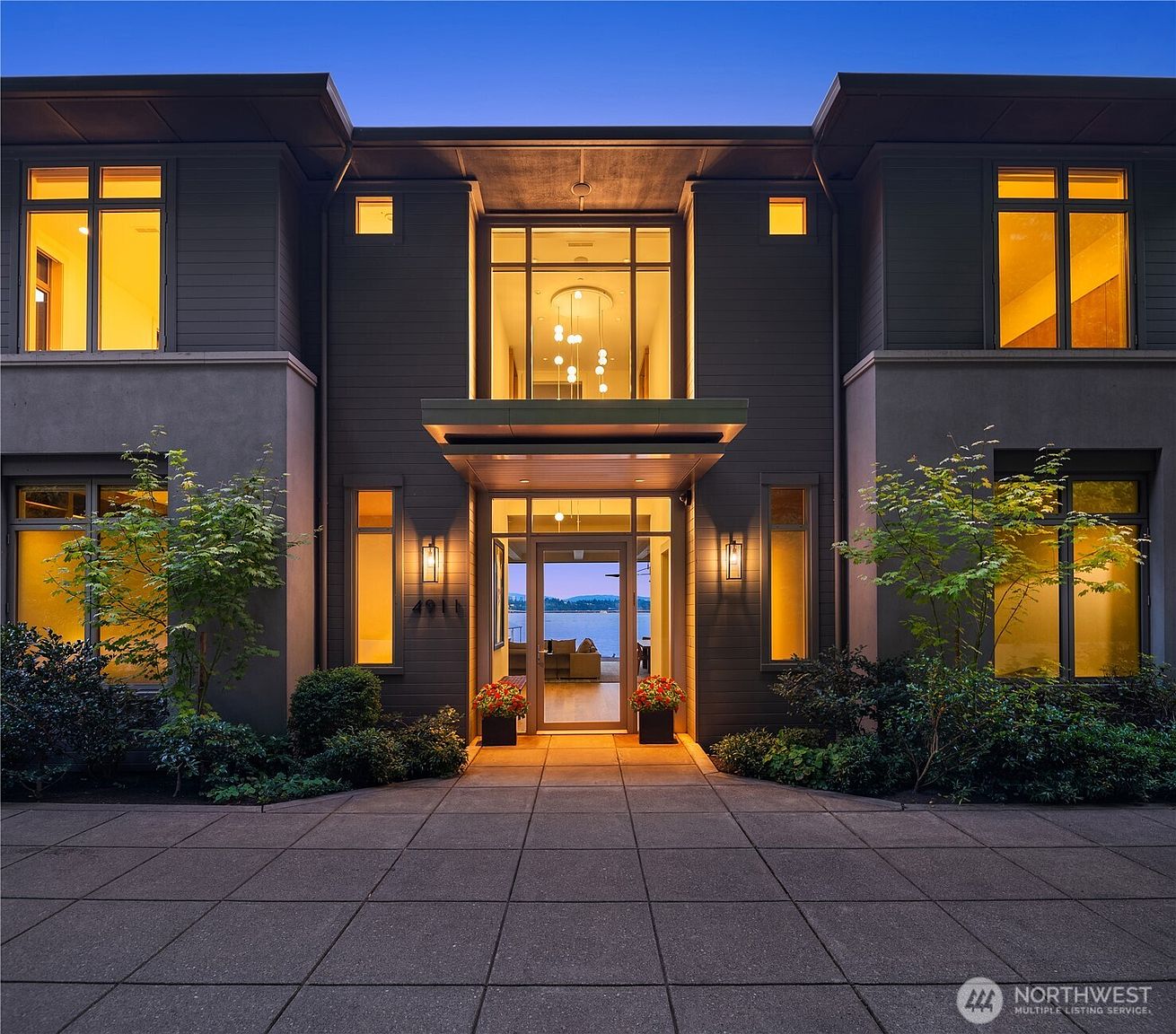
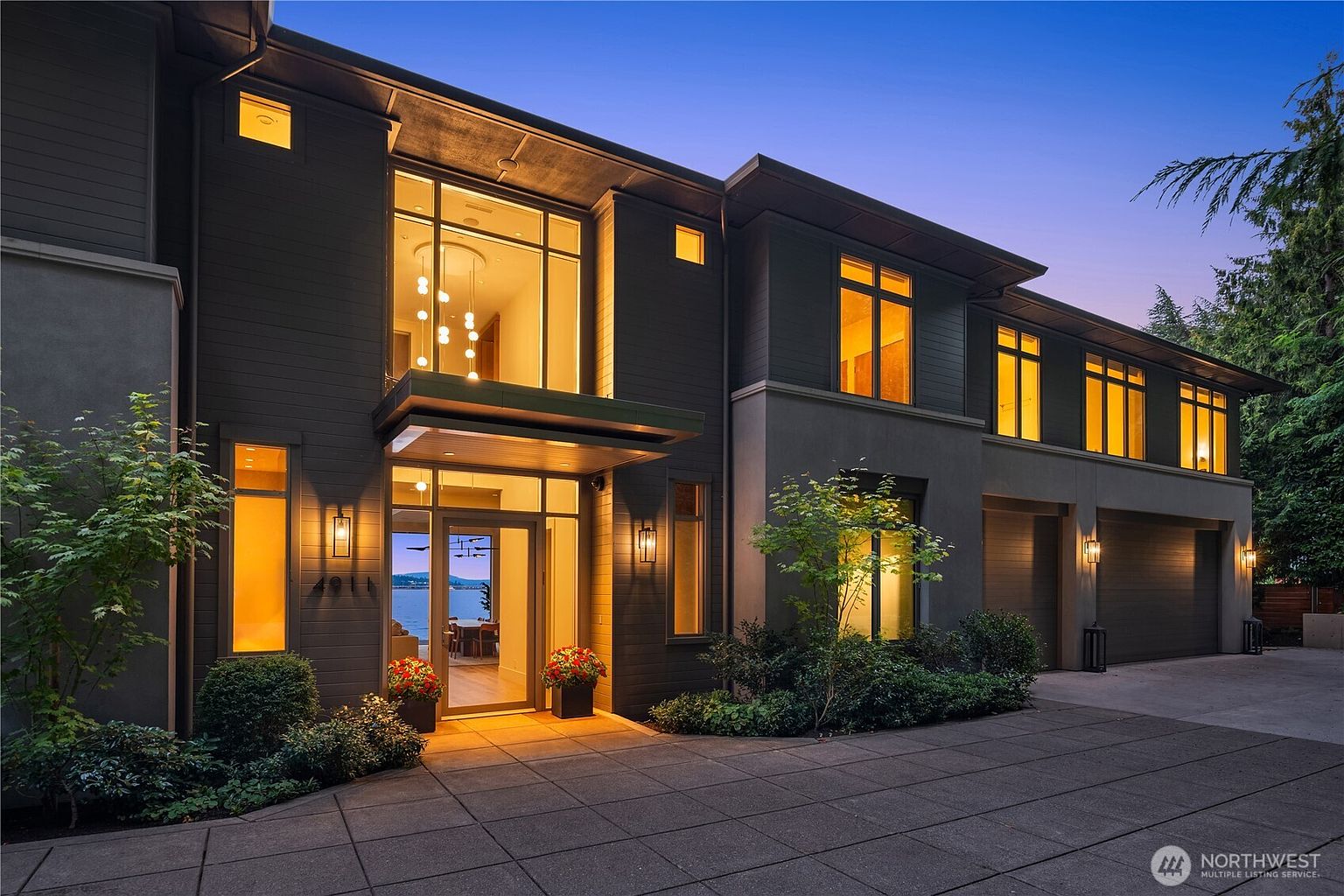
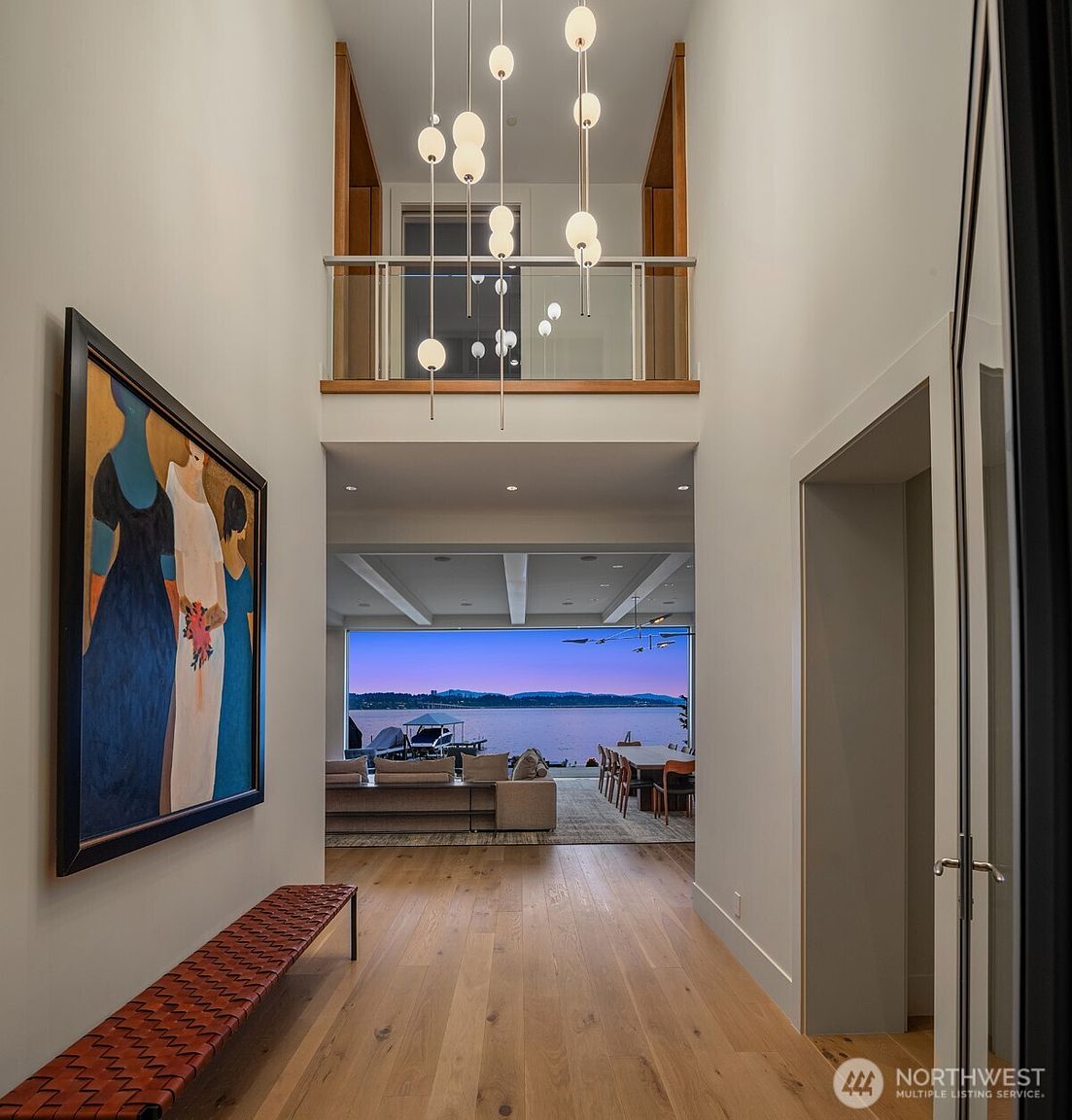
There is a moment, stepping through the double-height glass entry of 4911 NE Laurelcrest Lane, when the architecture announces itself without apology. The dark, multi-textured facade — anchored by a cantilevered overhang and punctuated by a soaring glass panel — gives way to a dramatic foyer where a cascading chandelier draws the eye through the full depth of the home and delivers it, without interruption, to Lake Washington. That axis — entry to water — is not accidental. It is the governing idea of a residence designed by Olson Kundig, one of the Pacific Northwest's most respected architectural practices, and executed with precision by builder Schultz Miller.
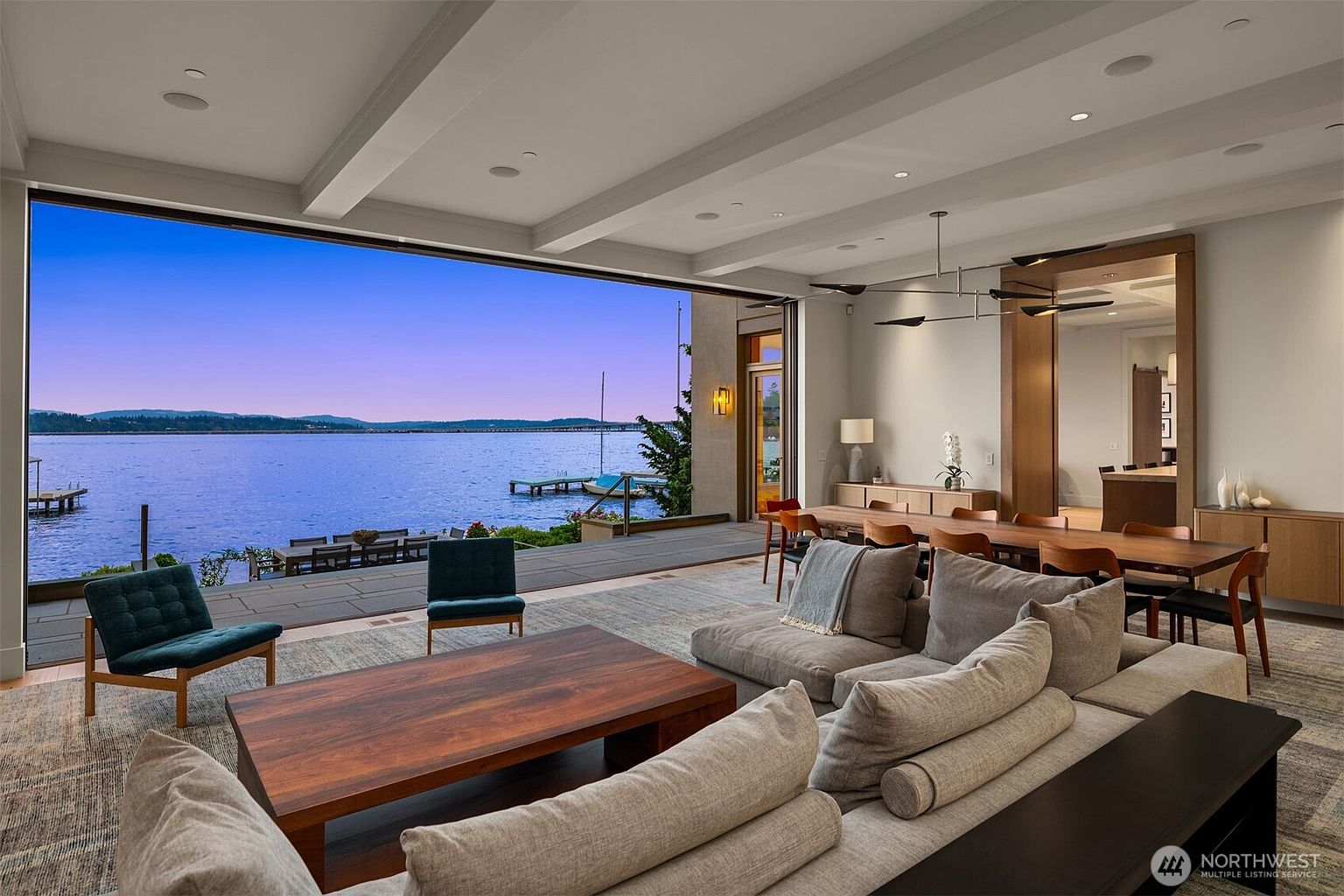
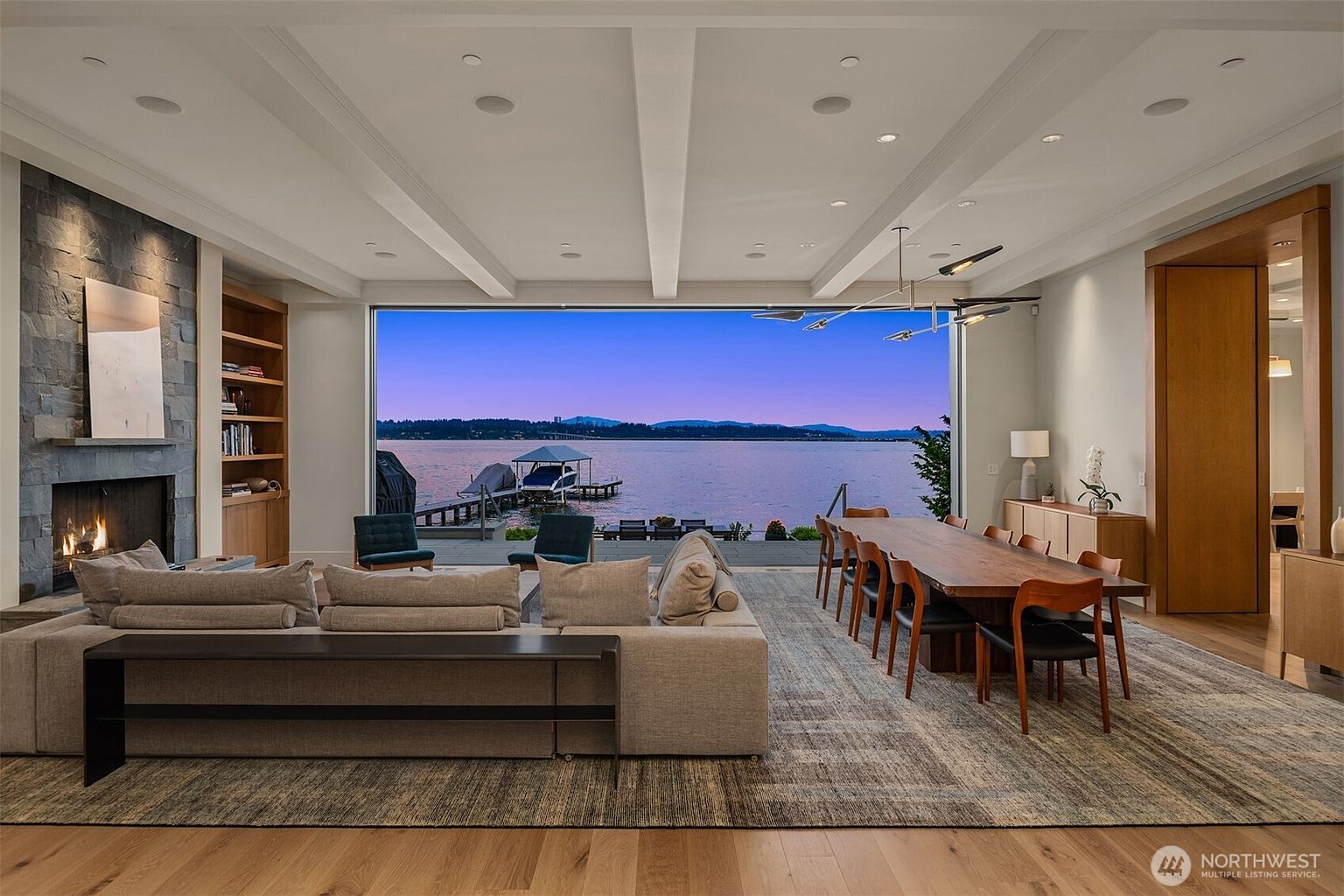
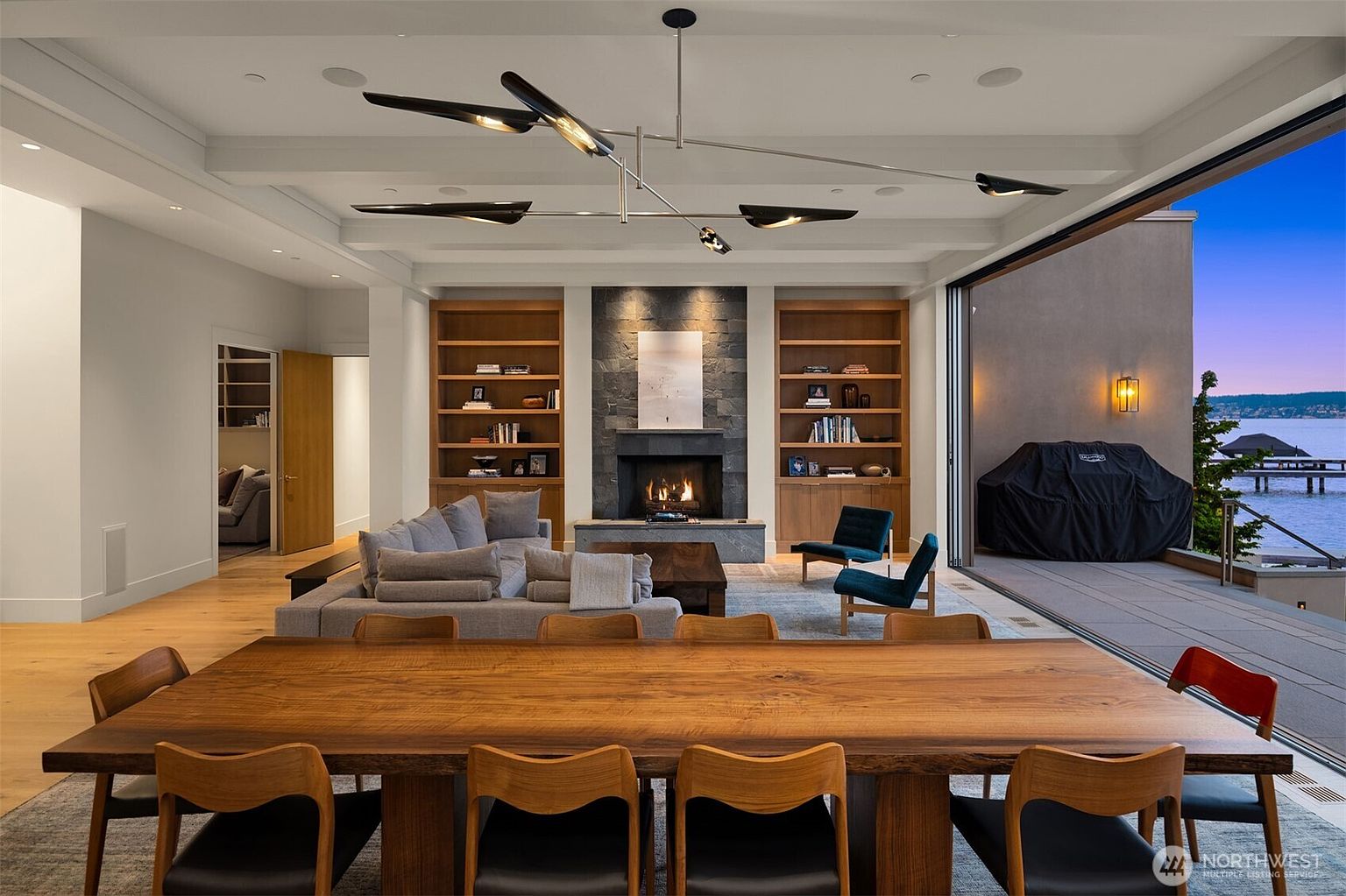
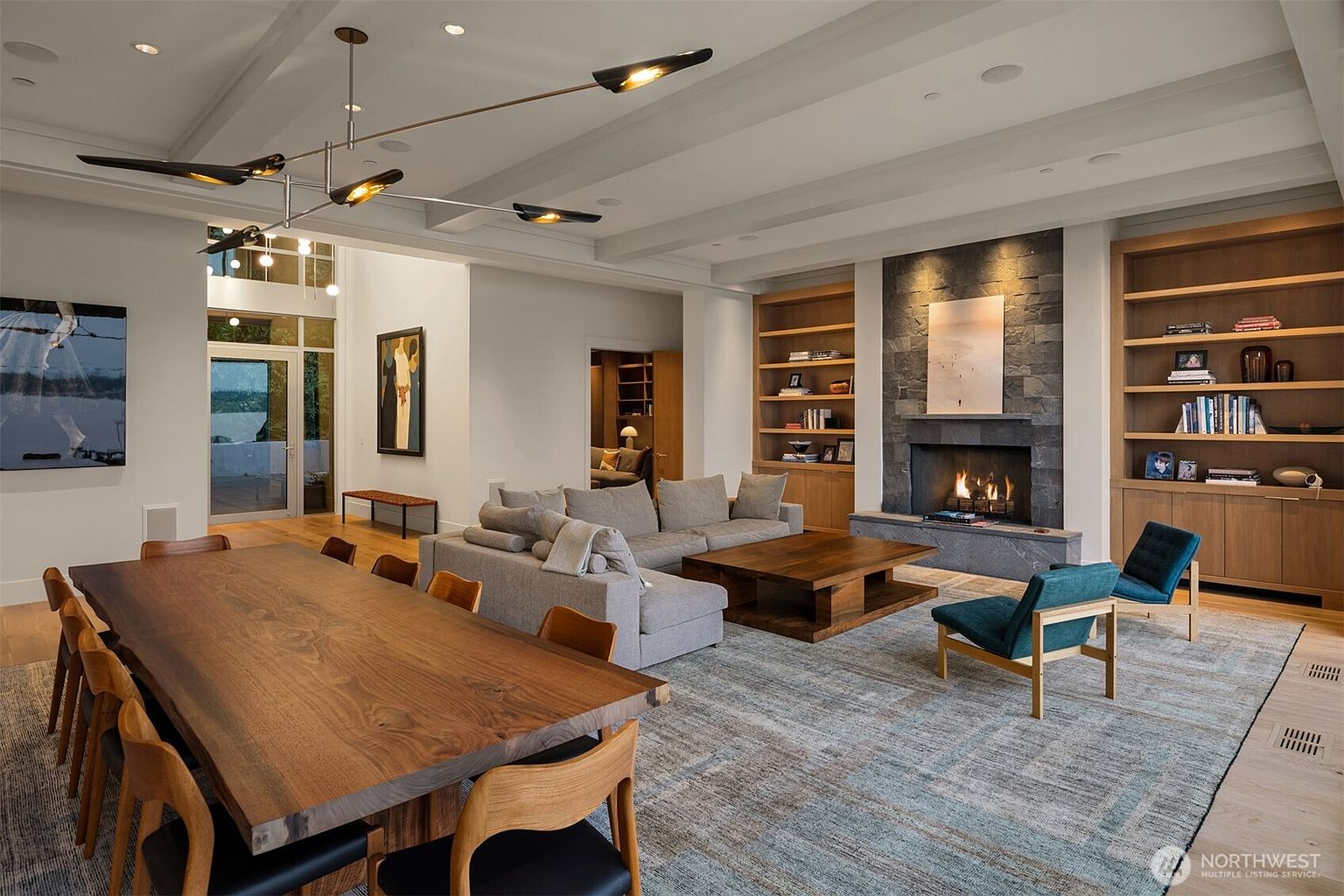
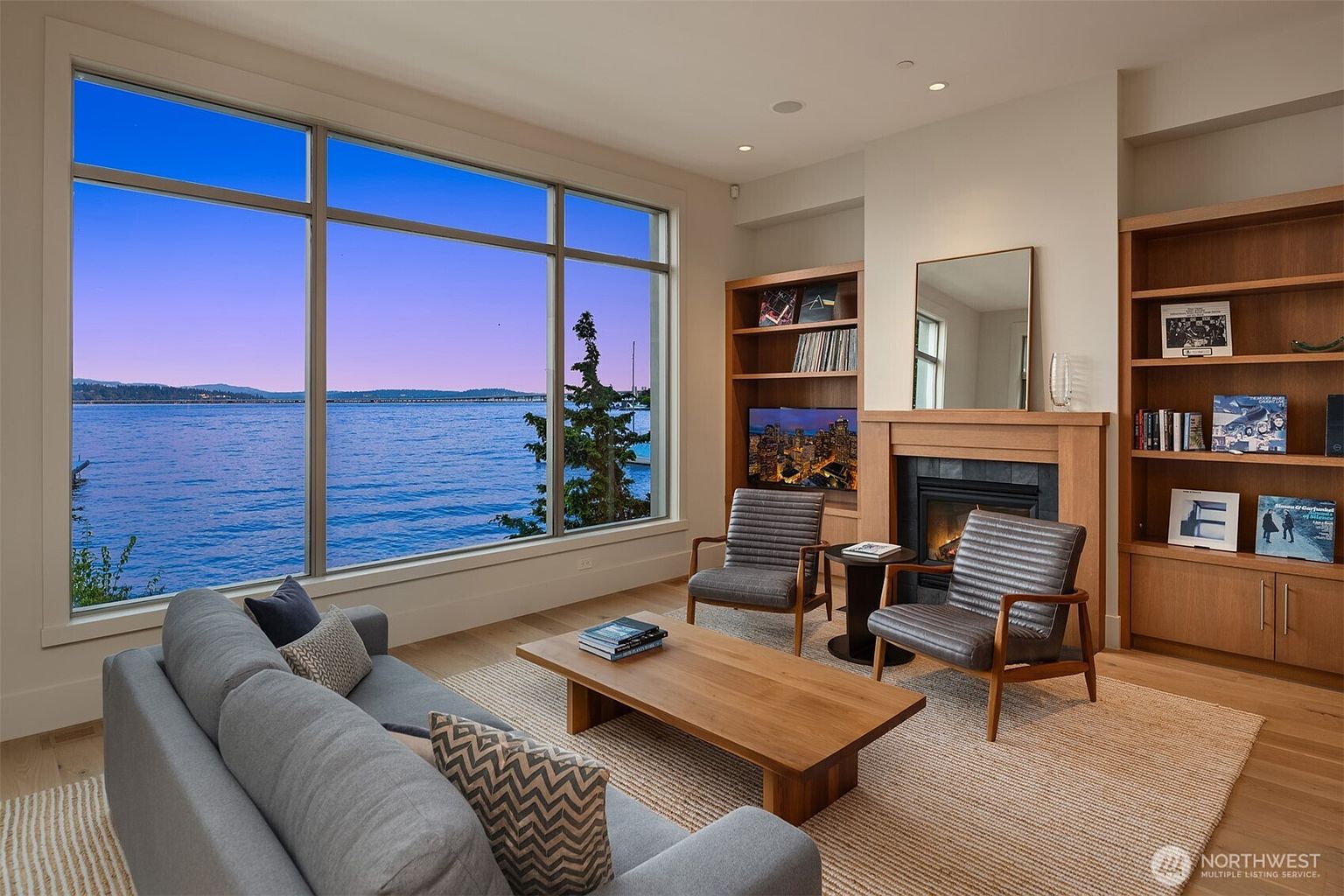
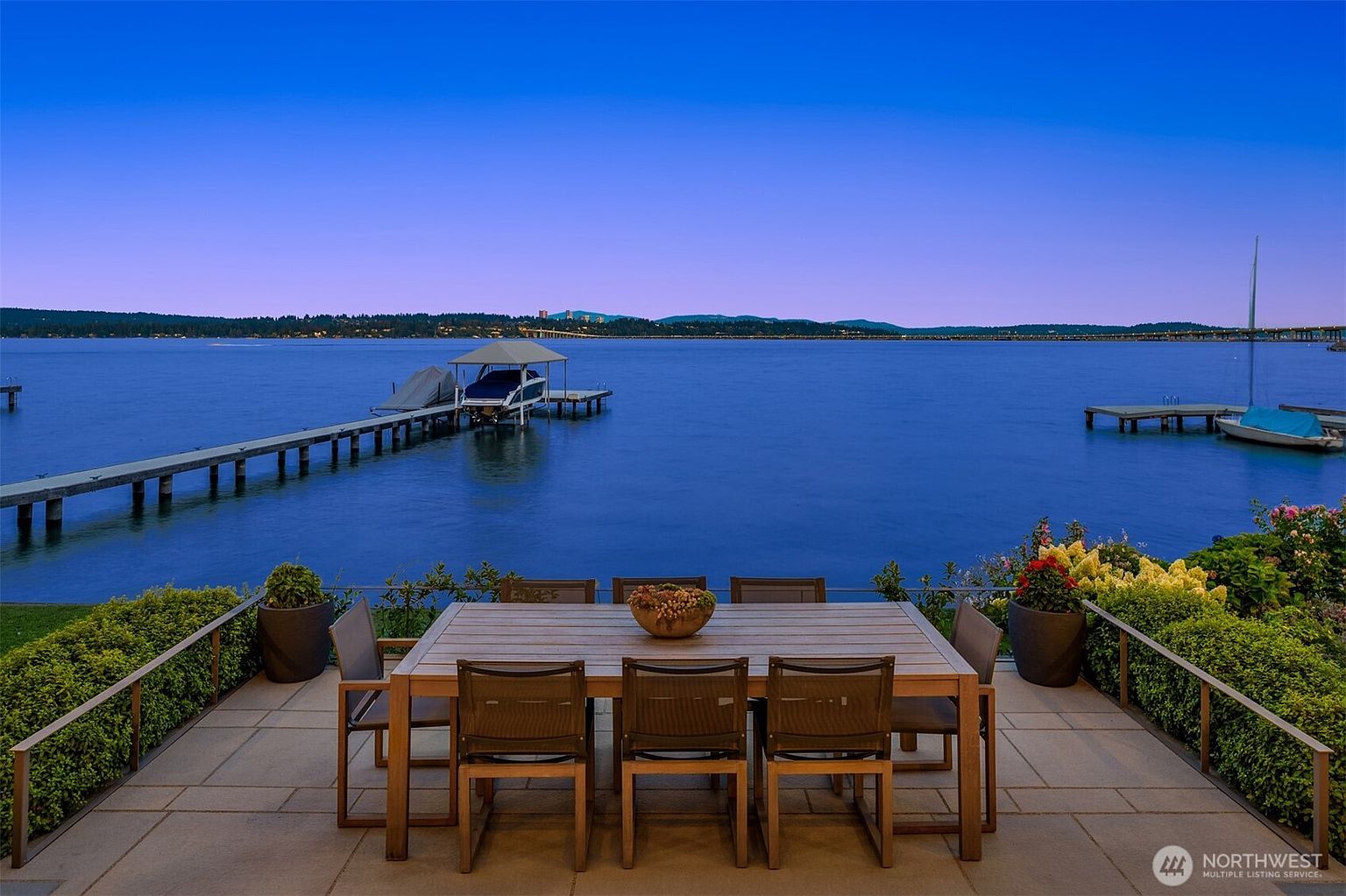
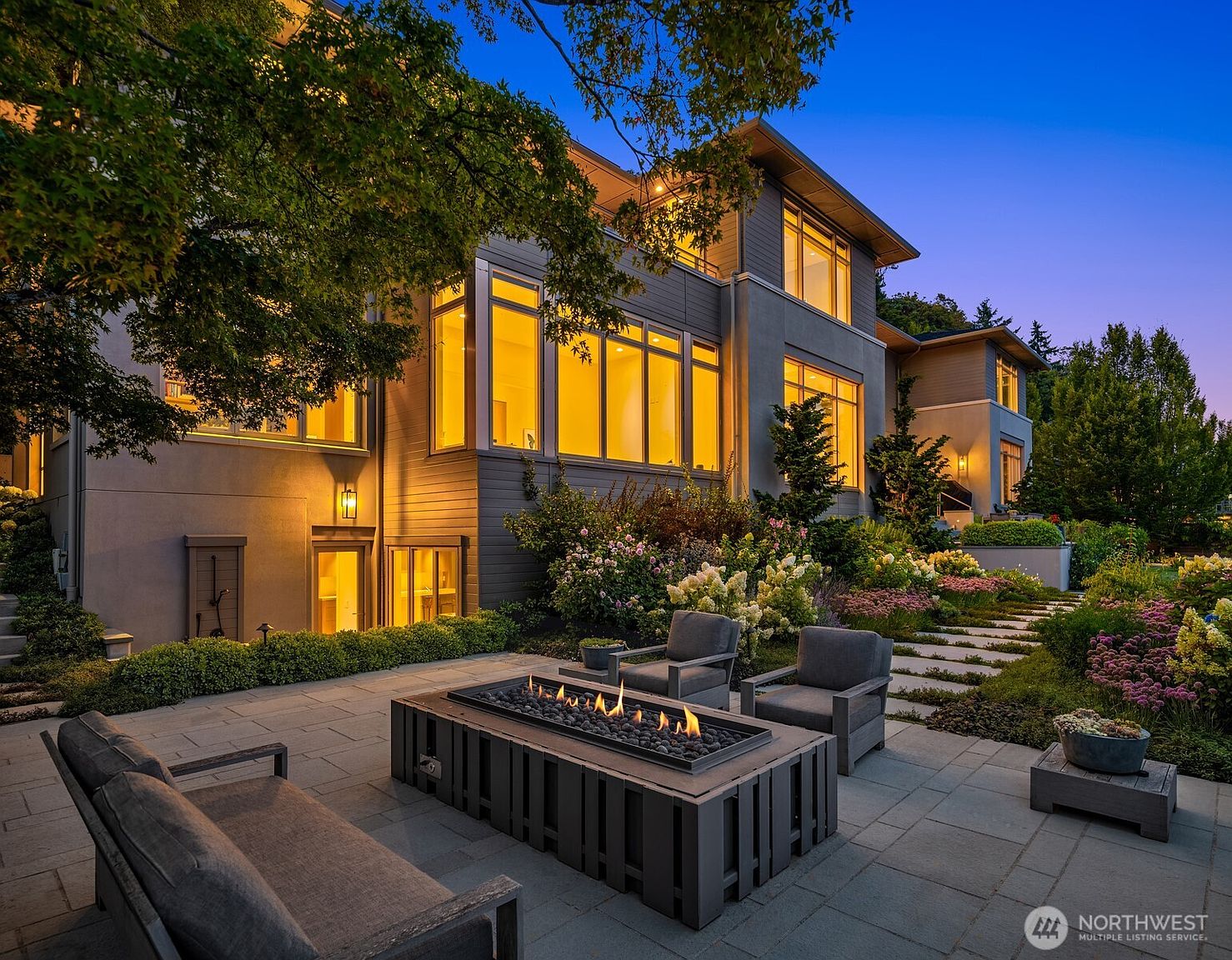
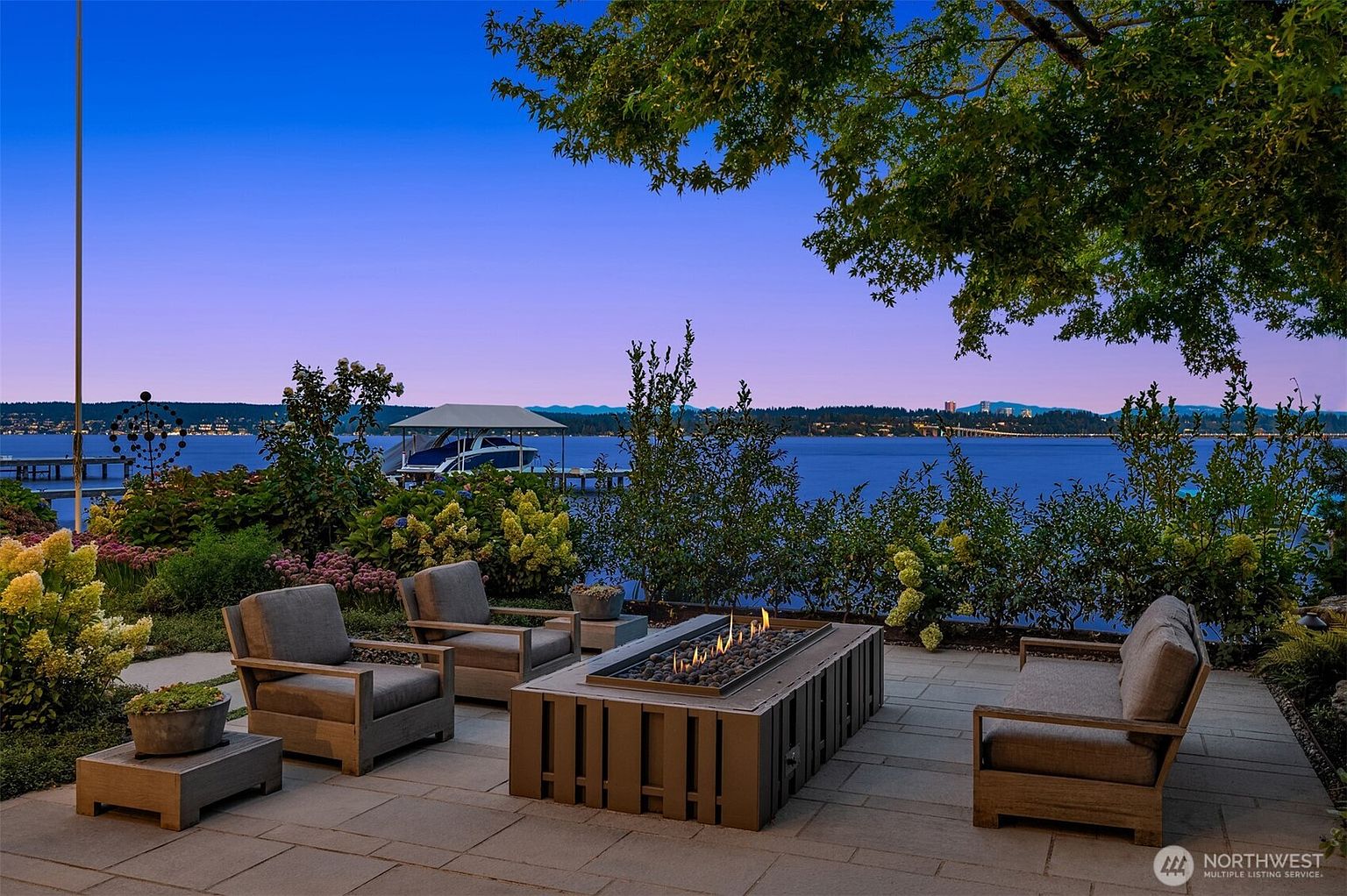
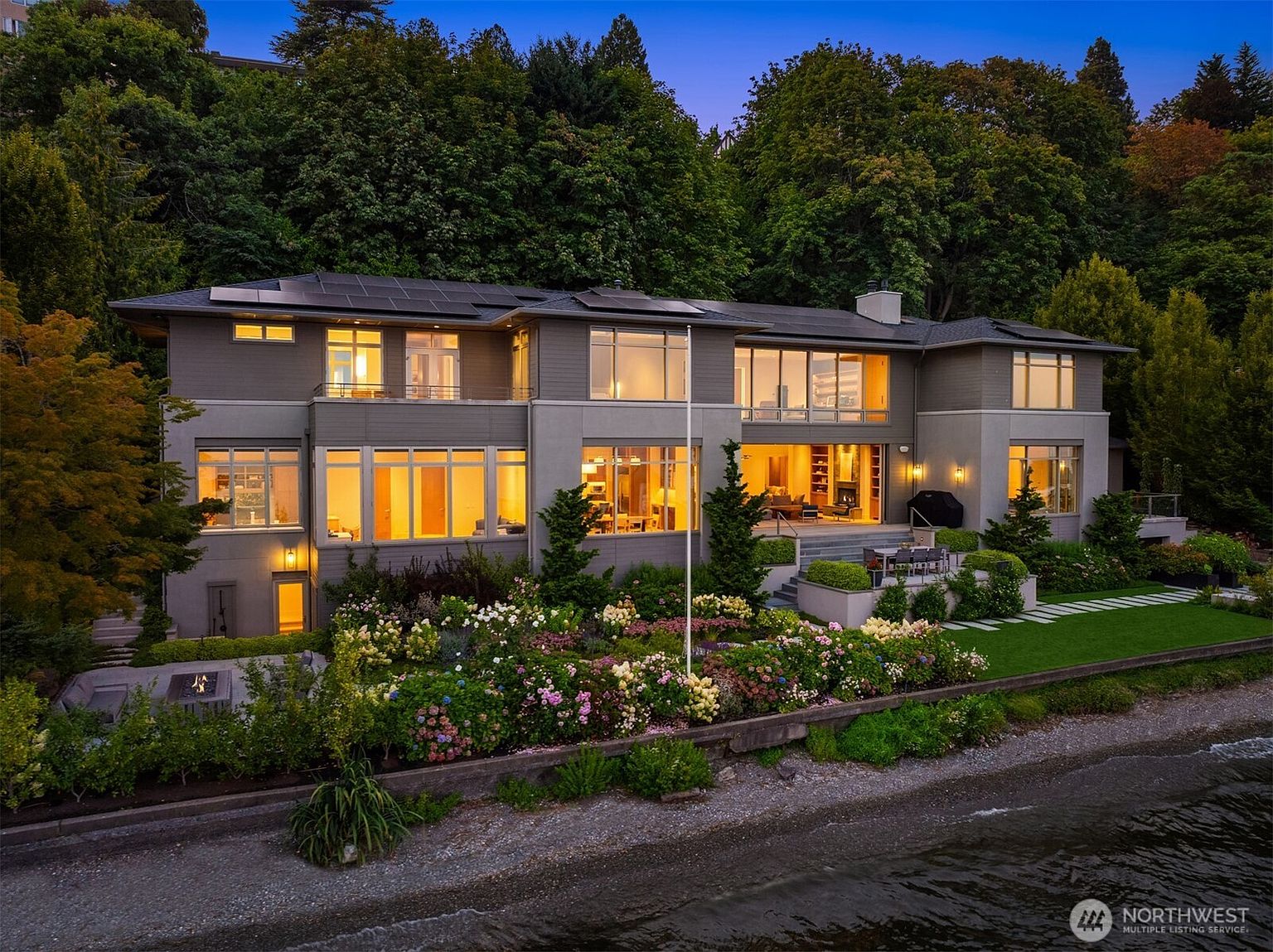
The great room is the estate's signature statement, and it earns that designation. A floor-to-ceiling glass wall retracts fully, collapsing the threshold between the plush sectional, the stone fireplace, and the live-edge dining table within, and the open water beyond. When the glass disappears, the room becomes something else entirely — part interior, part landscape, the distinction rendered meaningless. Warm hardwood floors extend toward the stone patio, curated by the landscape architecture firm Land Morphology, where a fire pit anchors an outdoor living area that reads as a natural extension of the spaces inside.
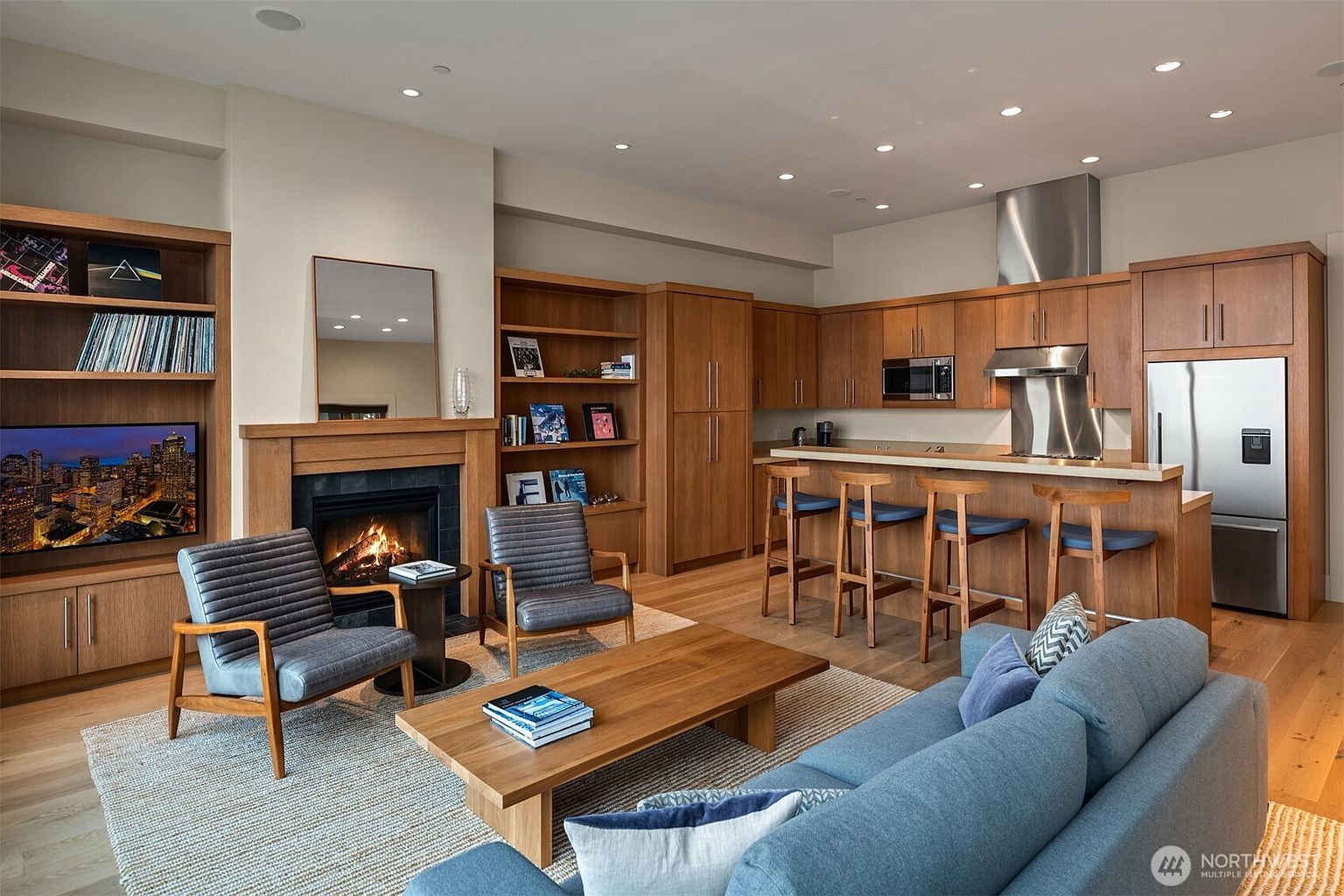
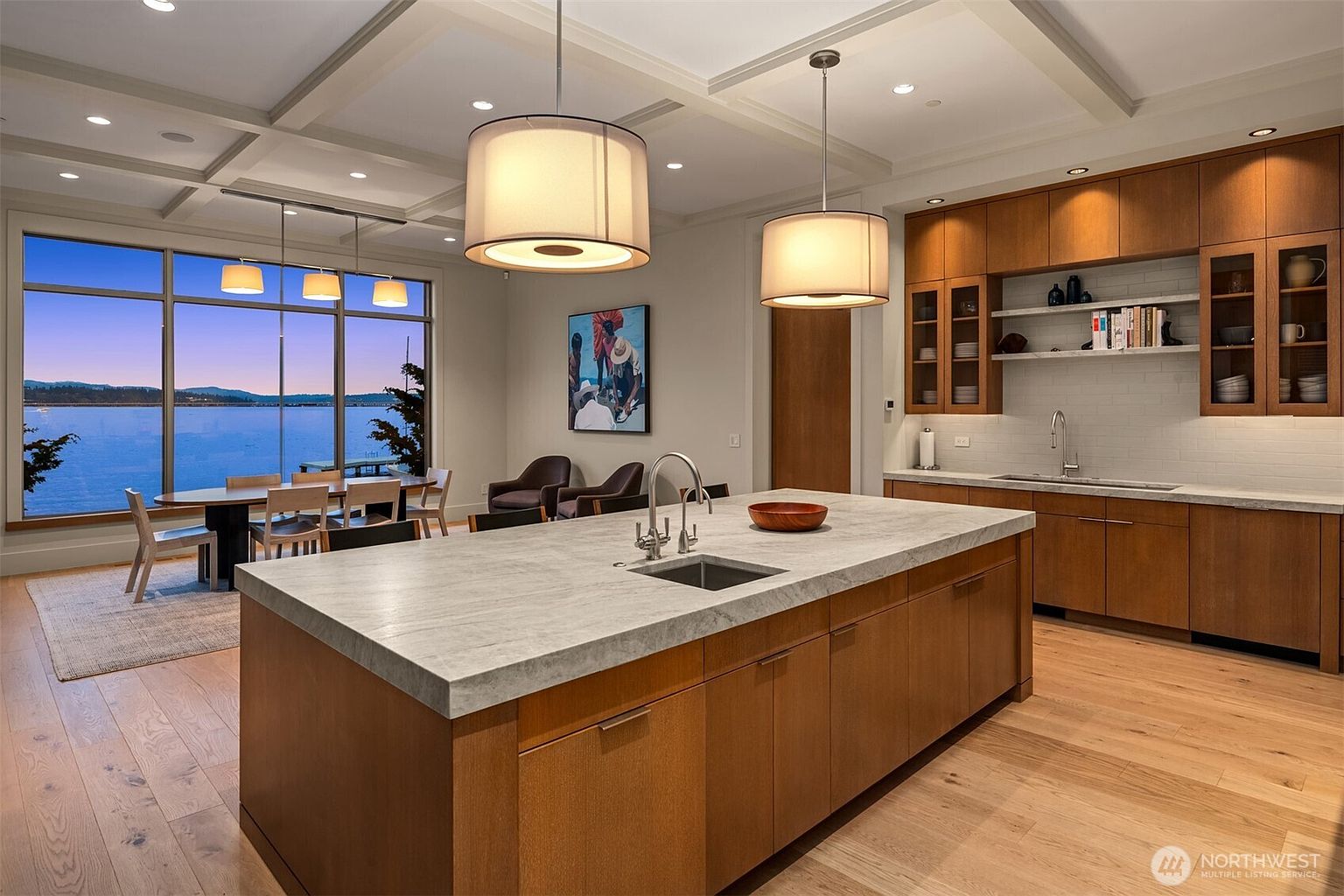
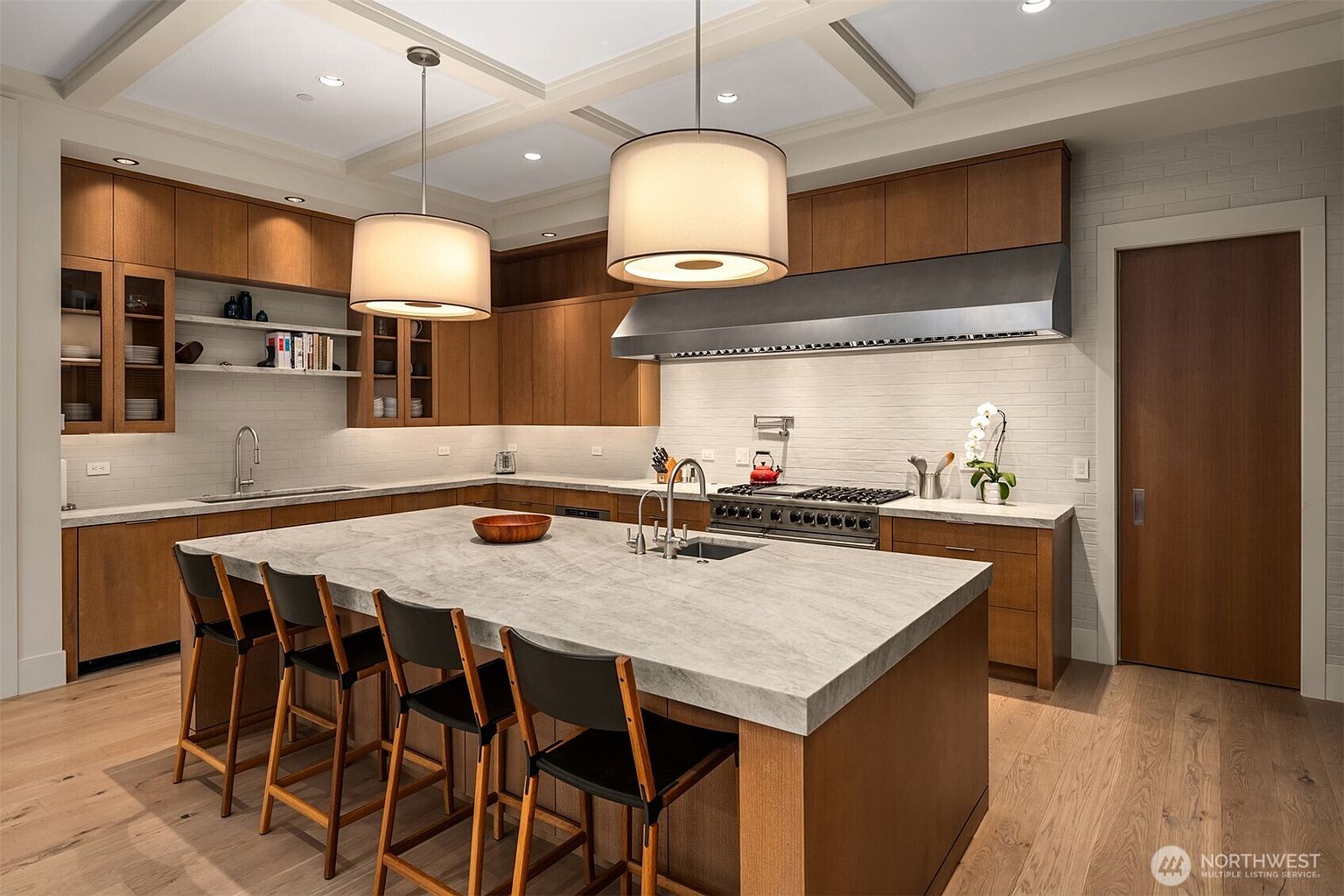
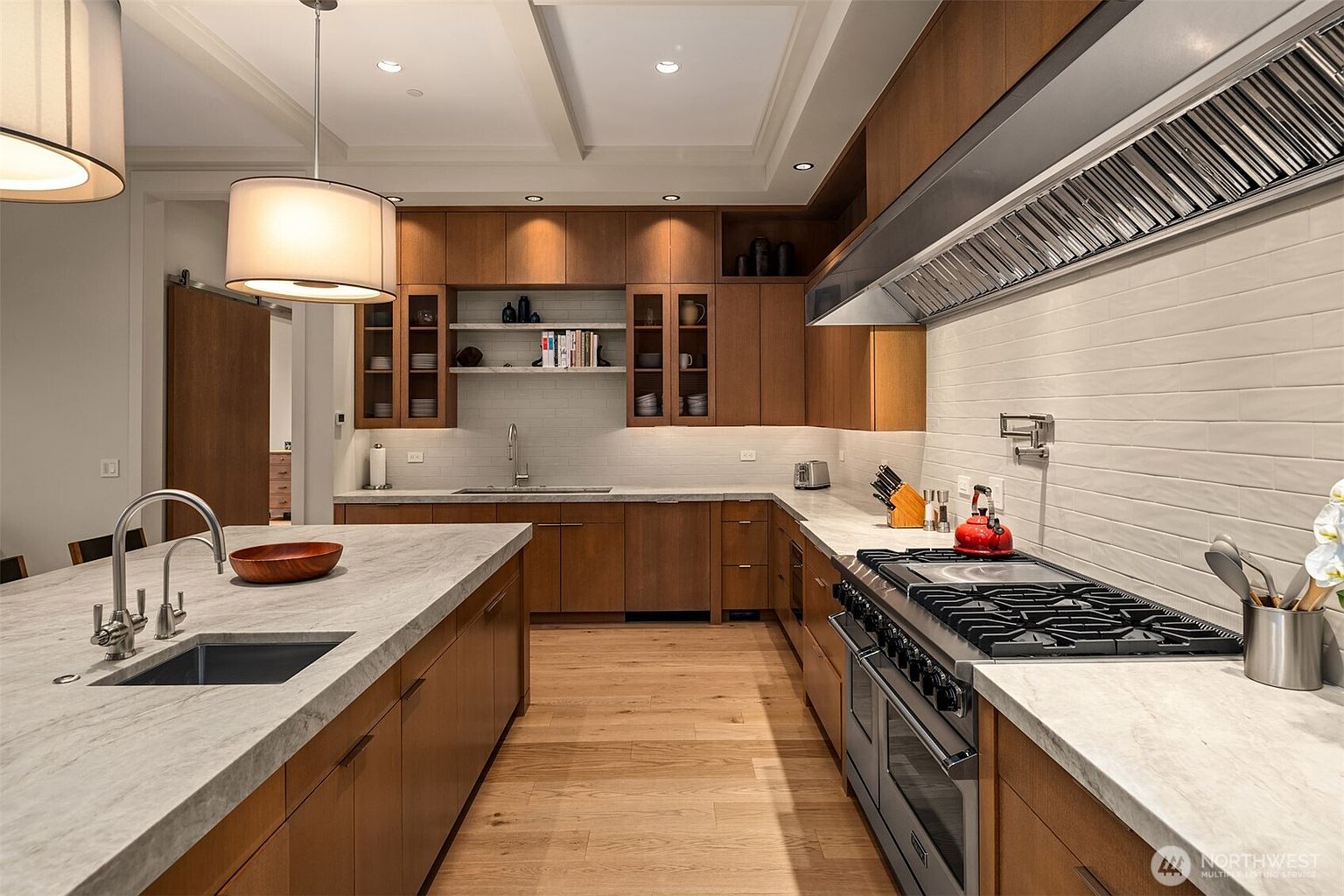
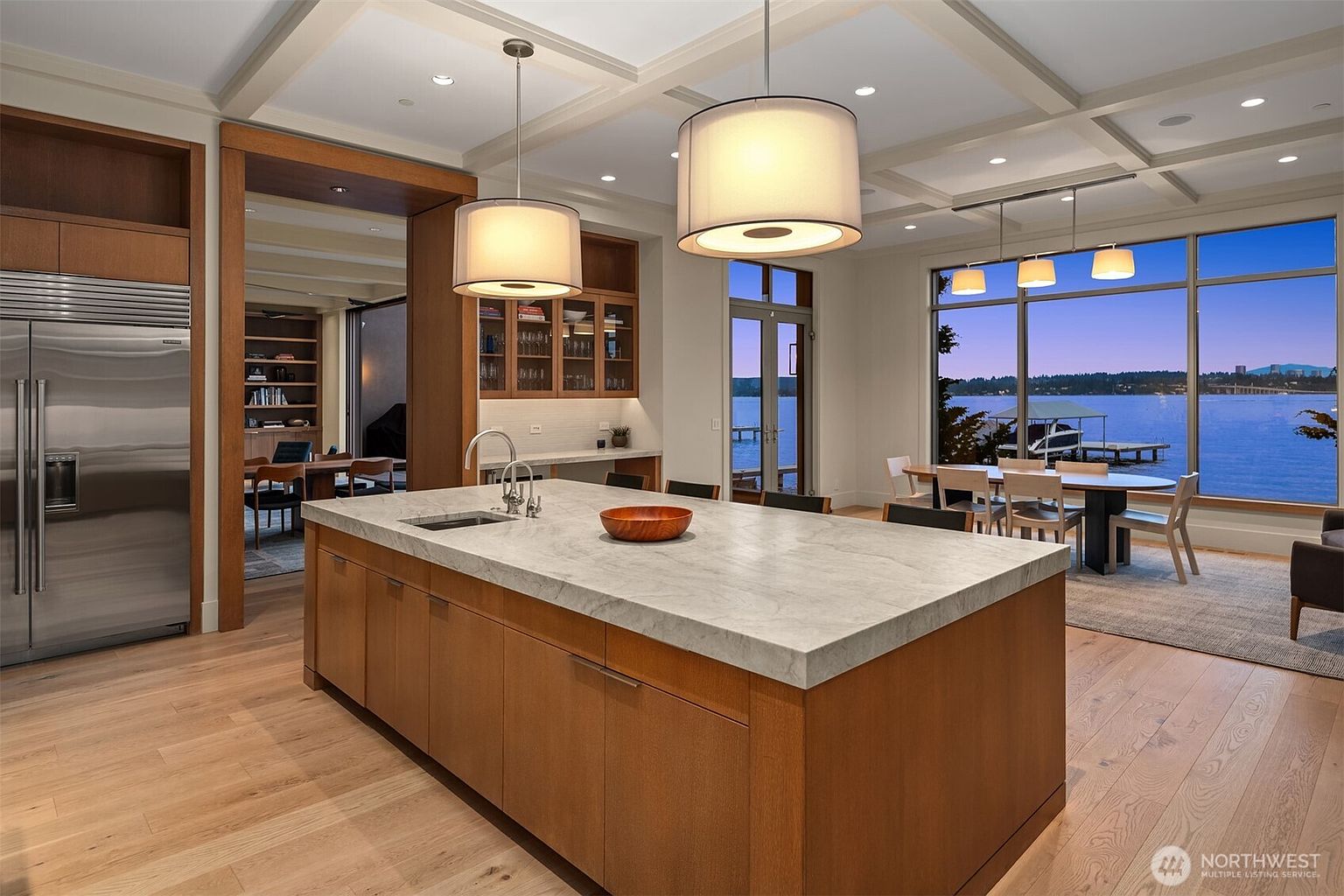
The Olson Kundig-designed kitchen centers on a waterfall-edge stone island flanked by warm wood cabinetry and a professional-grade stainless range. Pendant lighting defines the space with quiet authority, and every sightline through the open-concept layout returns to the same waterfront panorama — the lake a permanent, living presence at every meal.
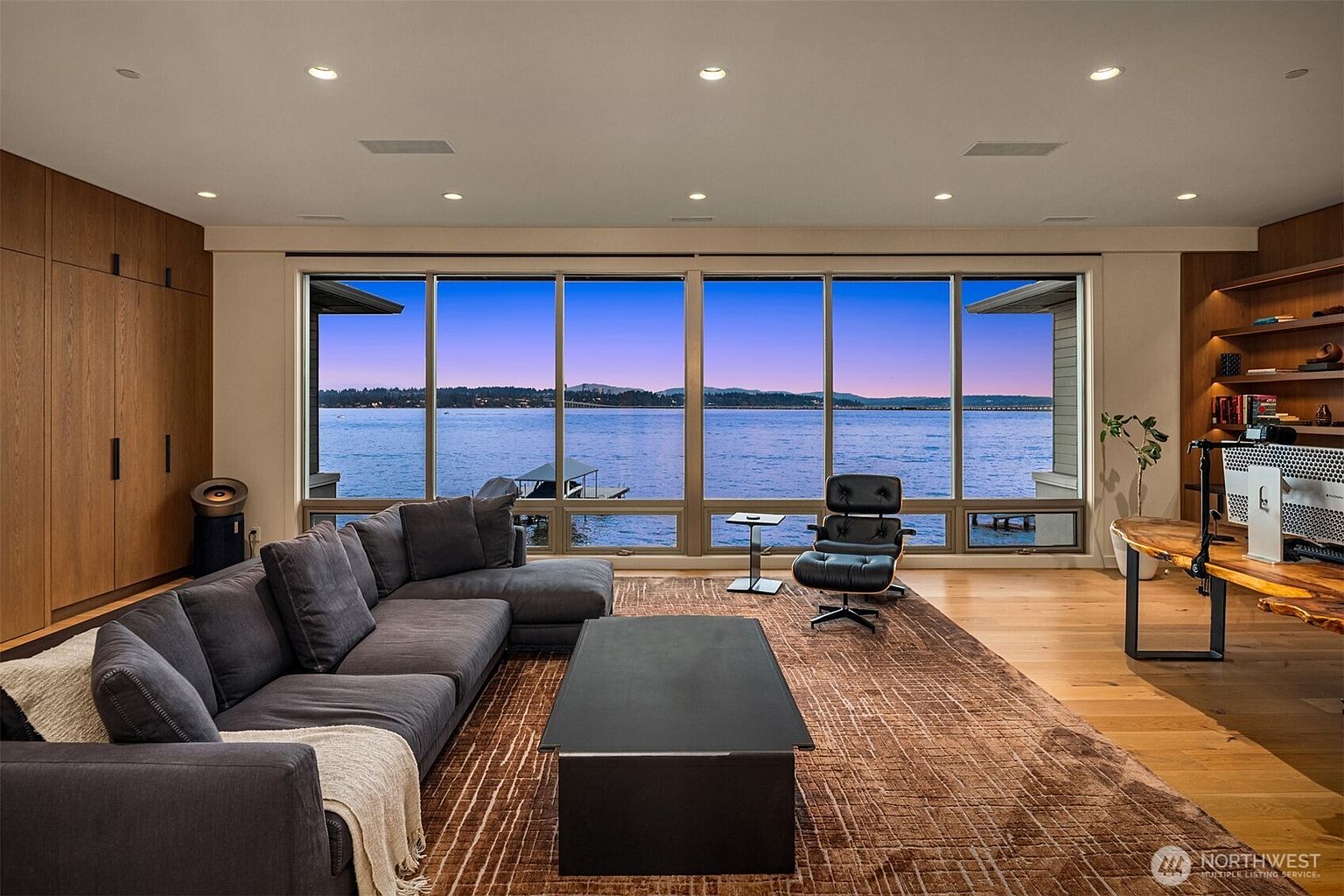
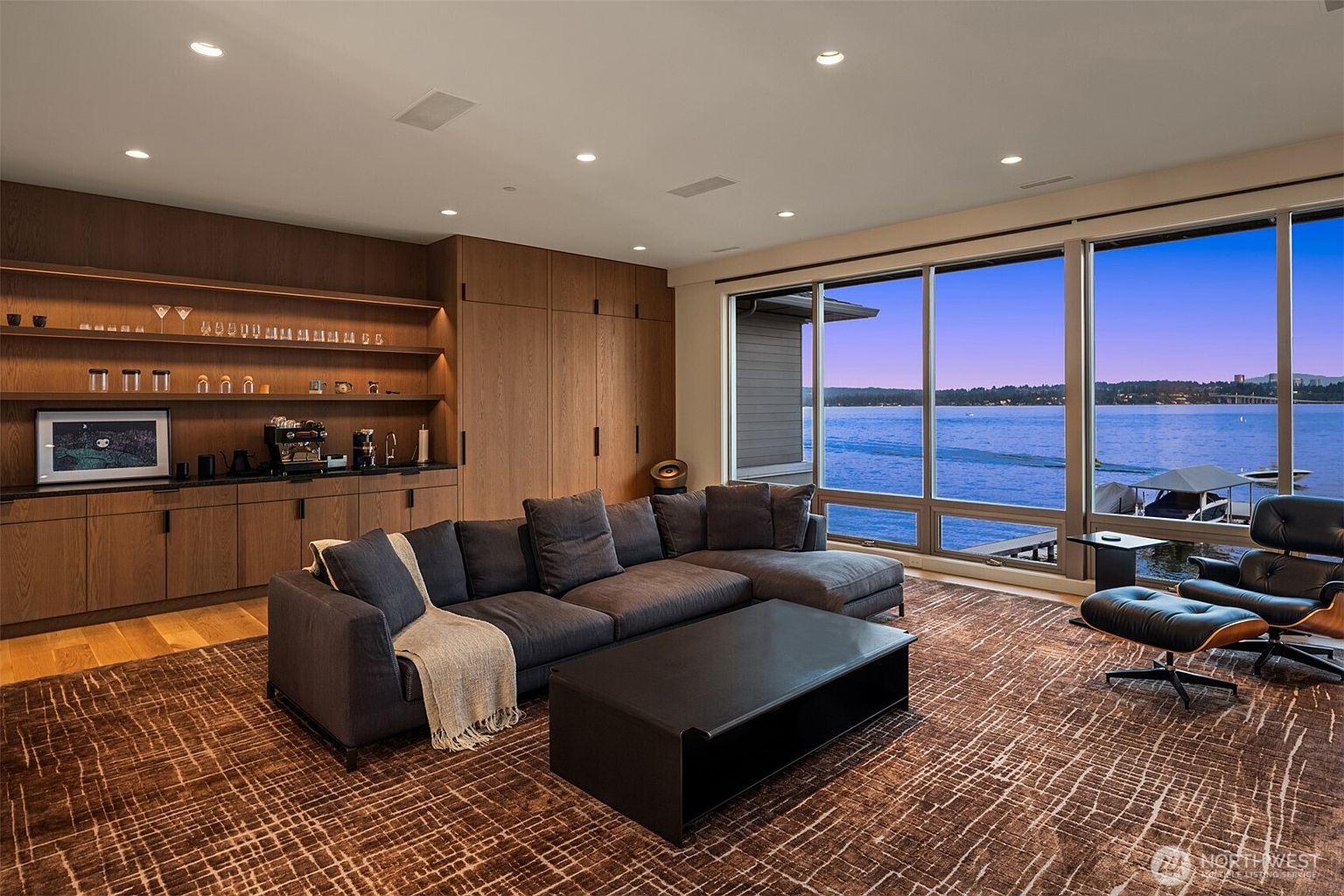
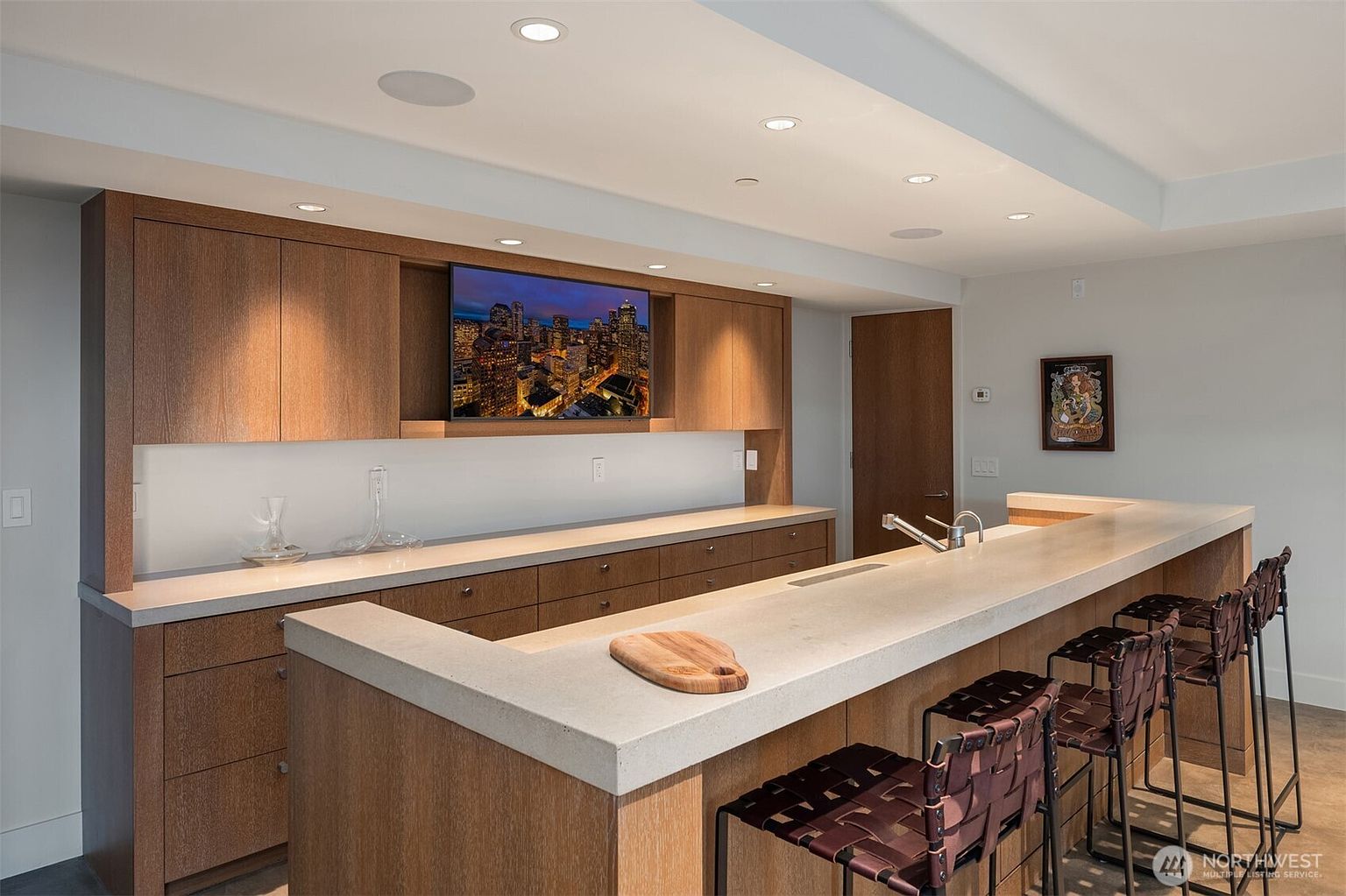
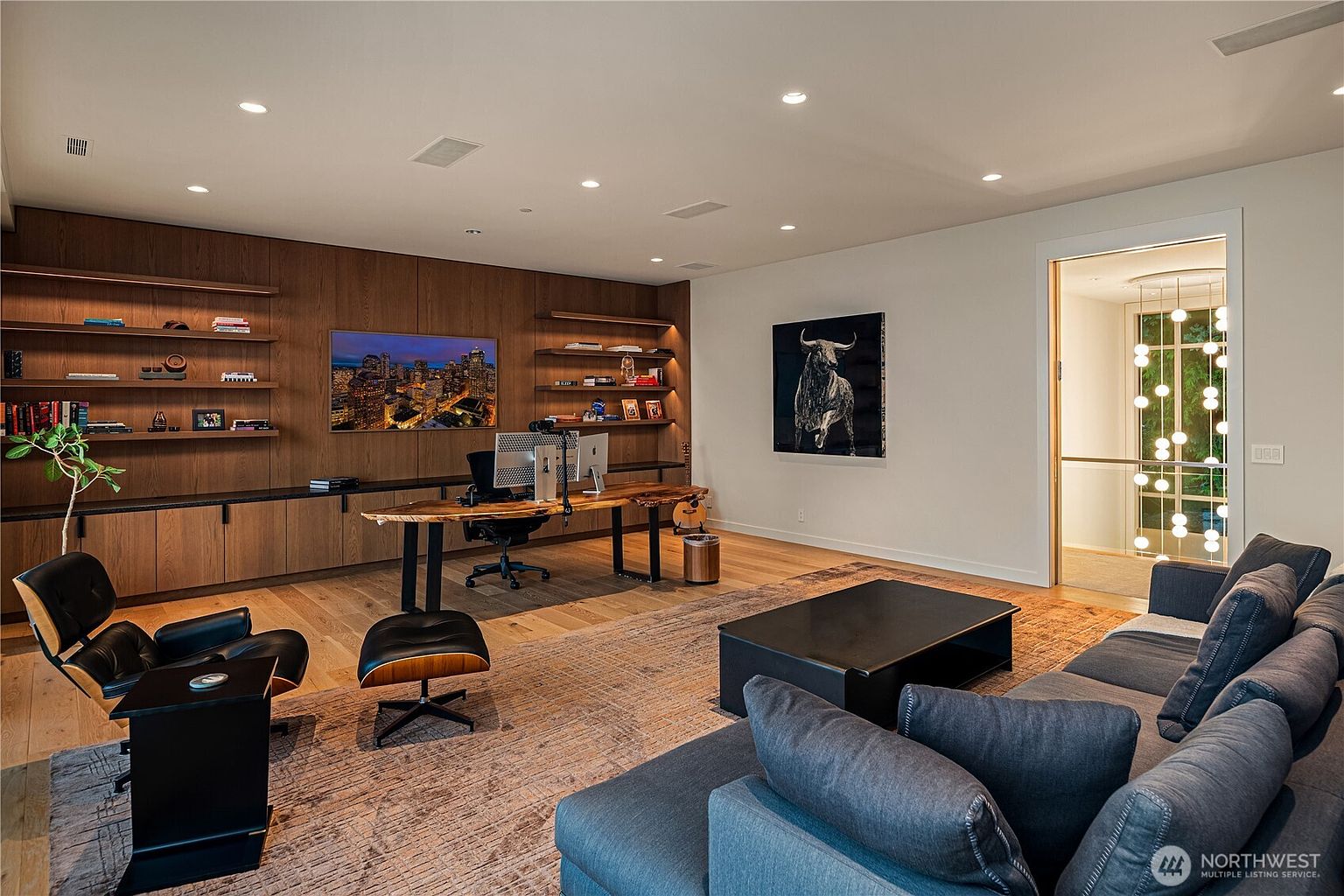
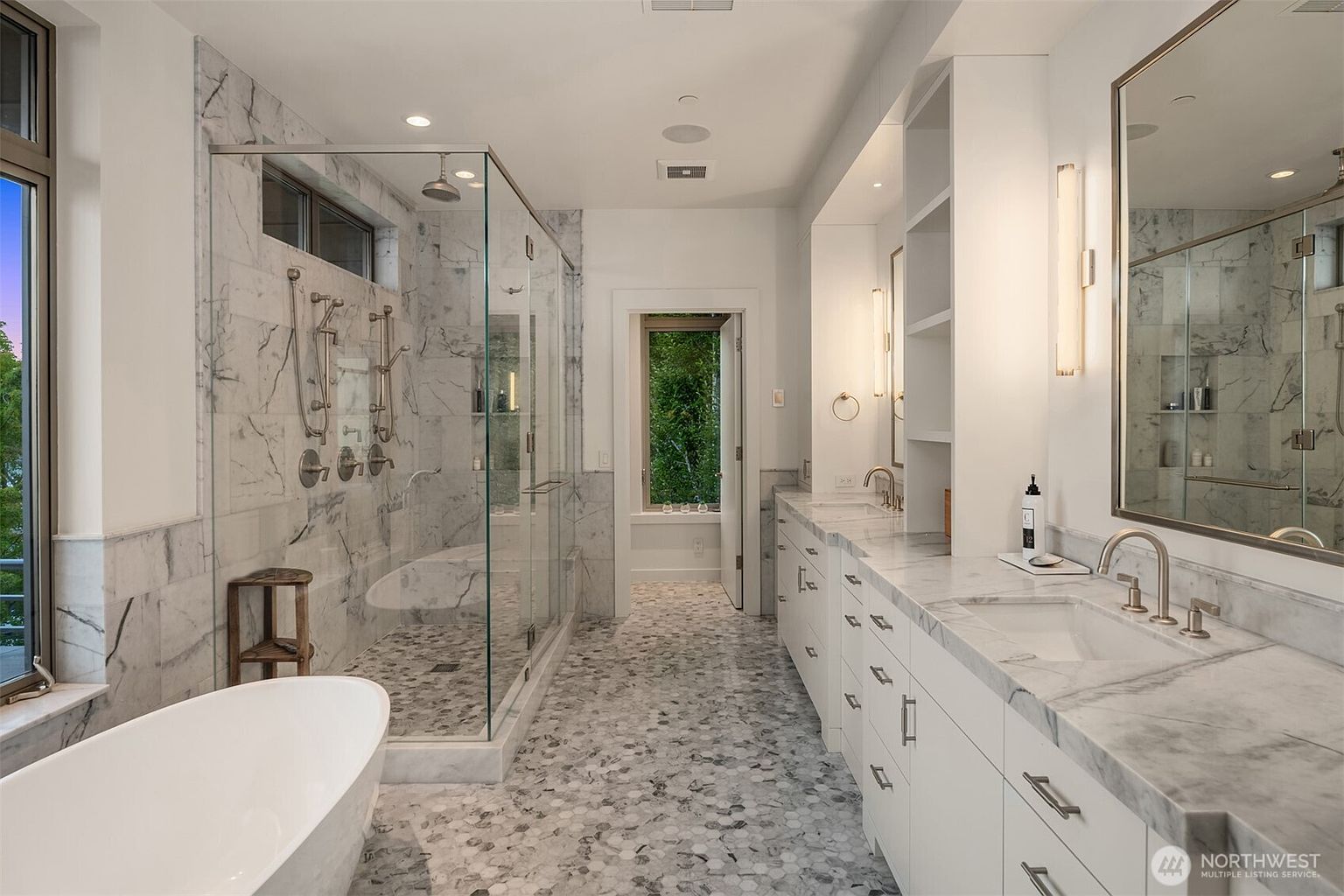
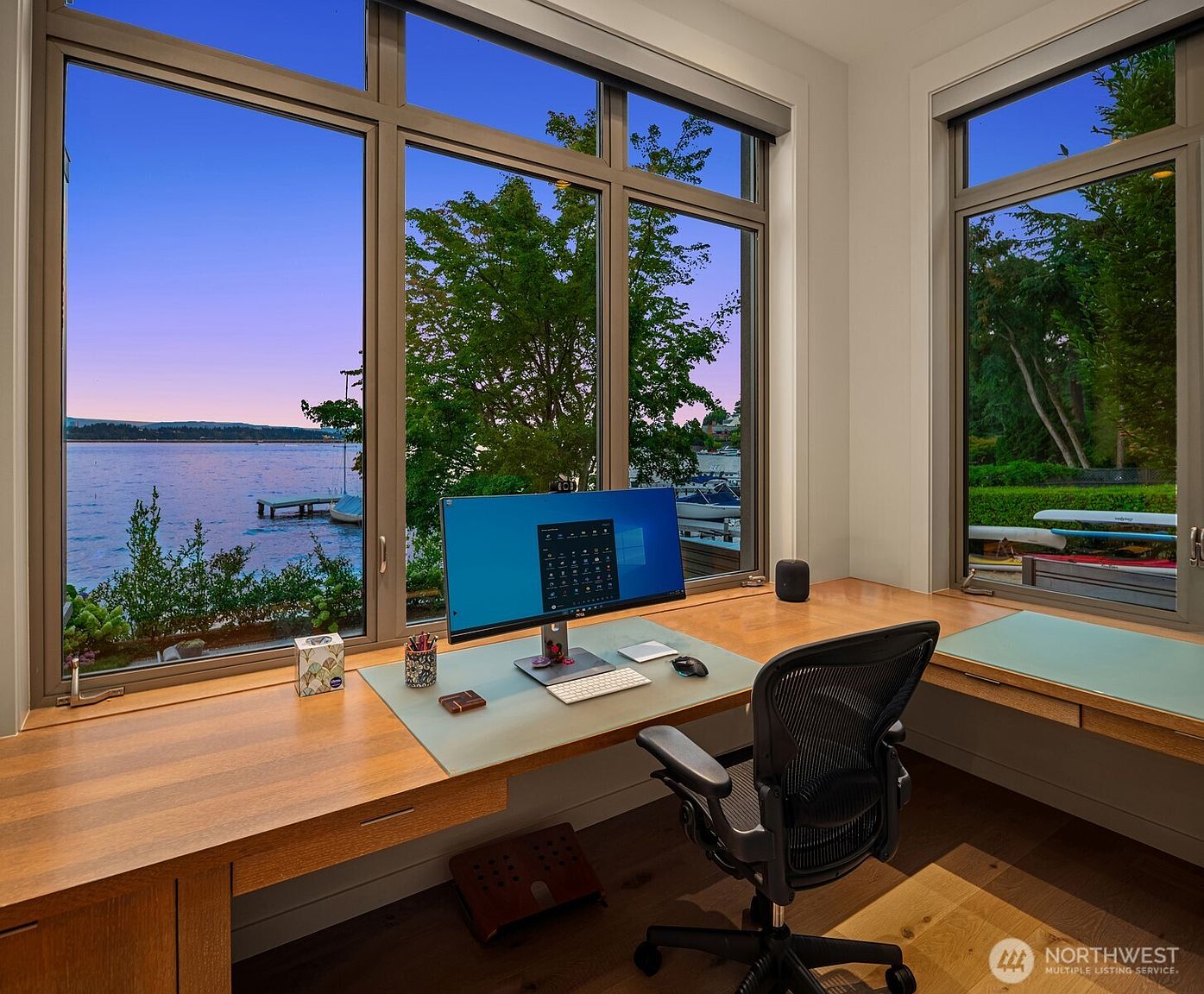
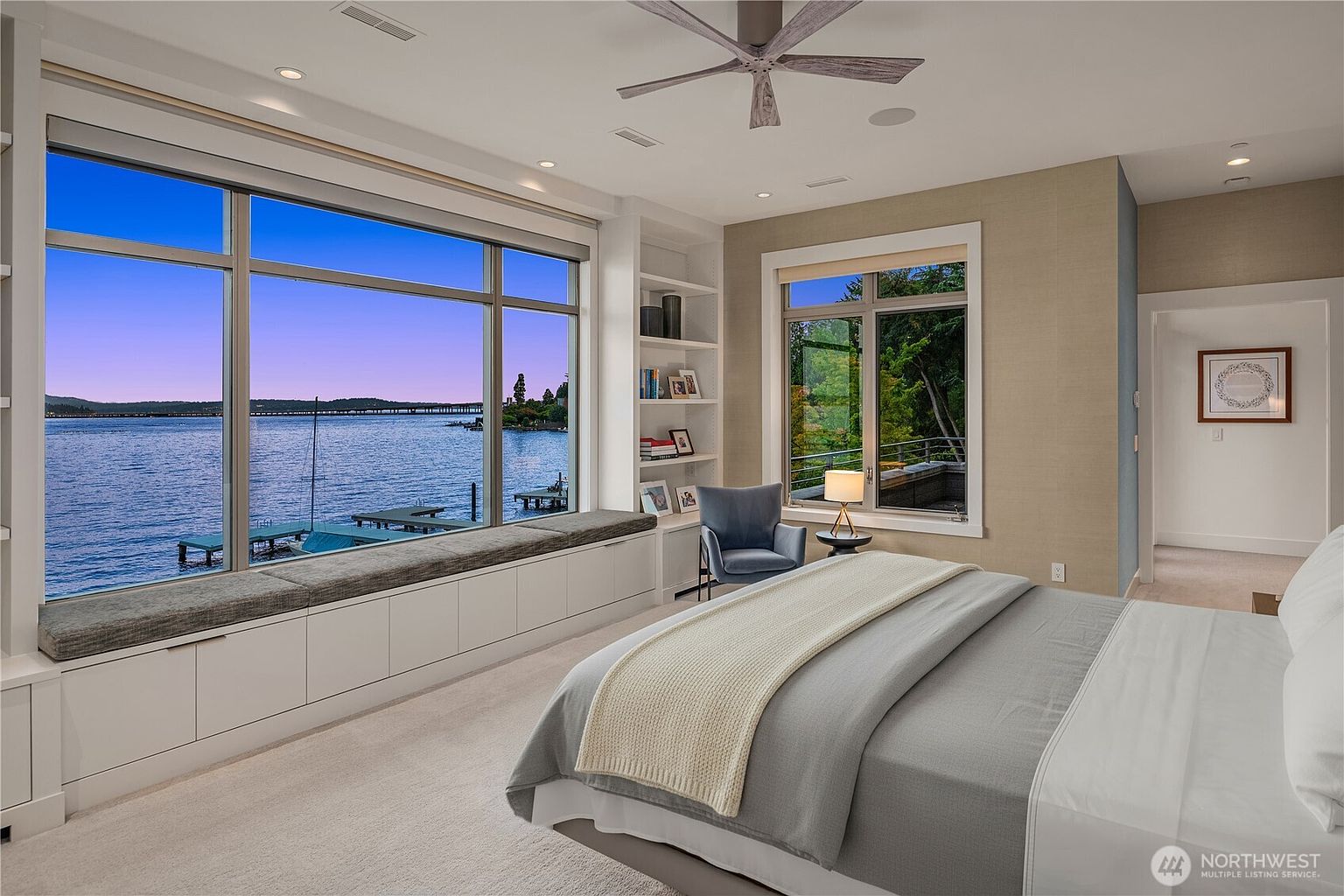
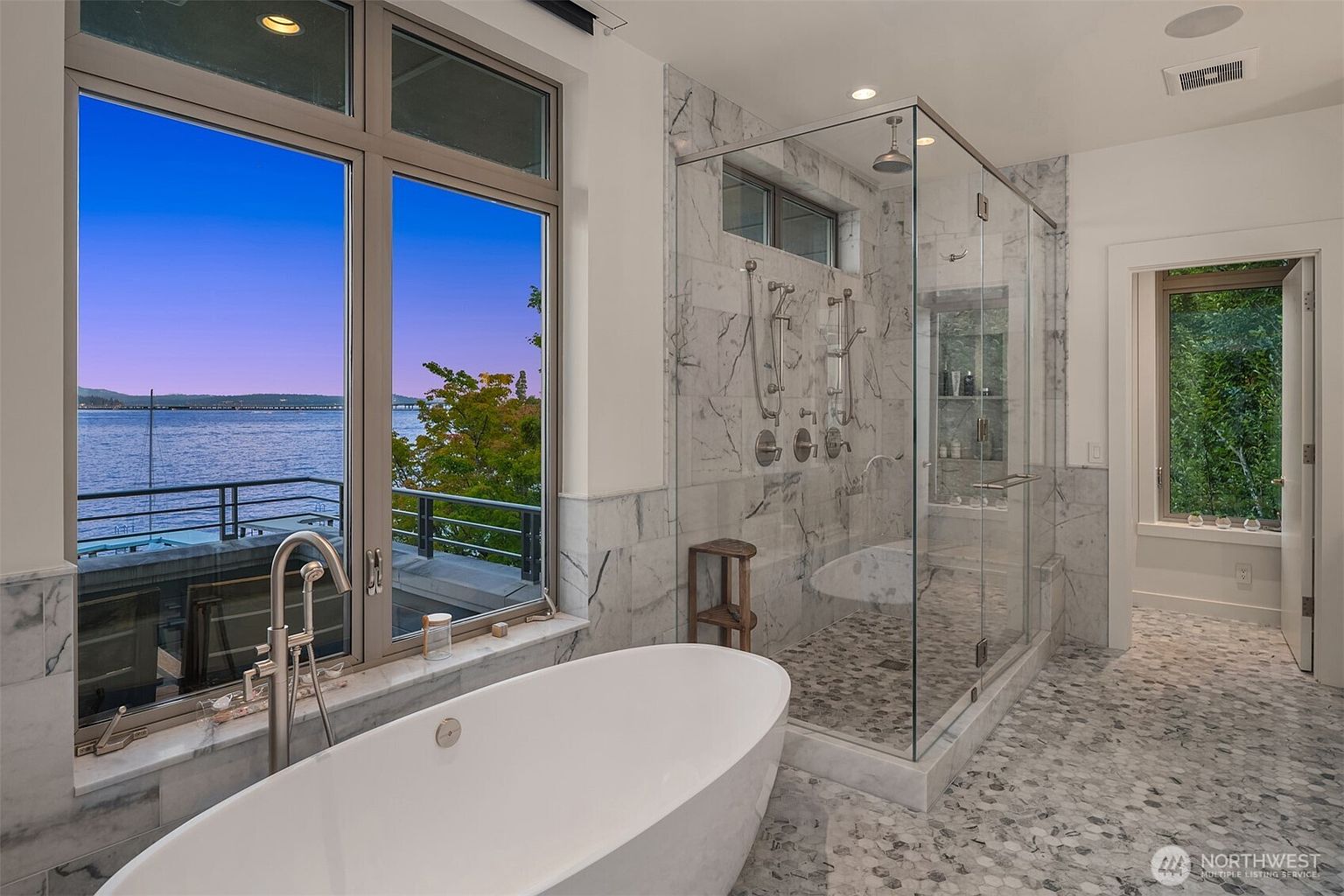
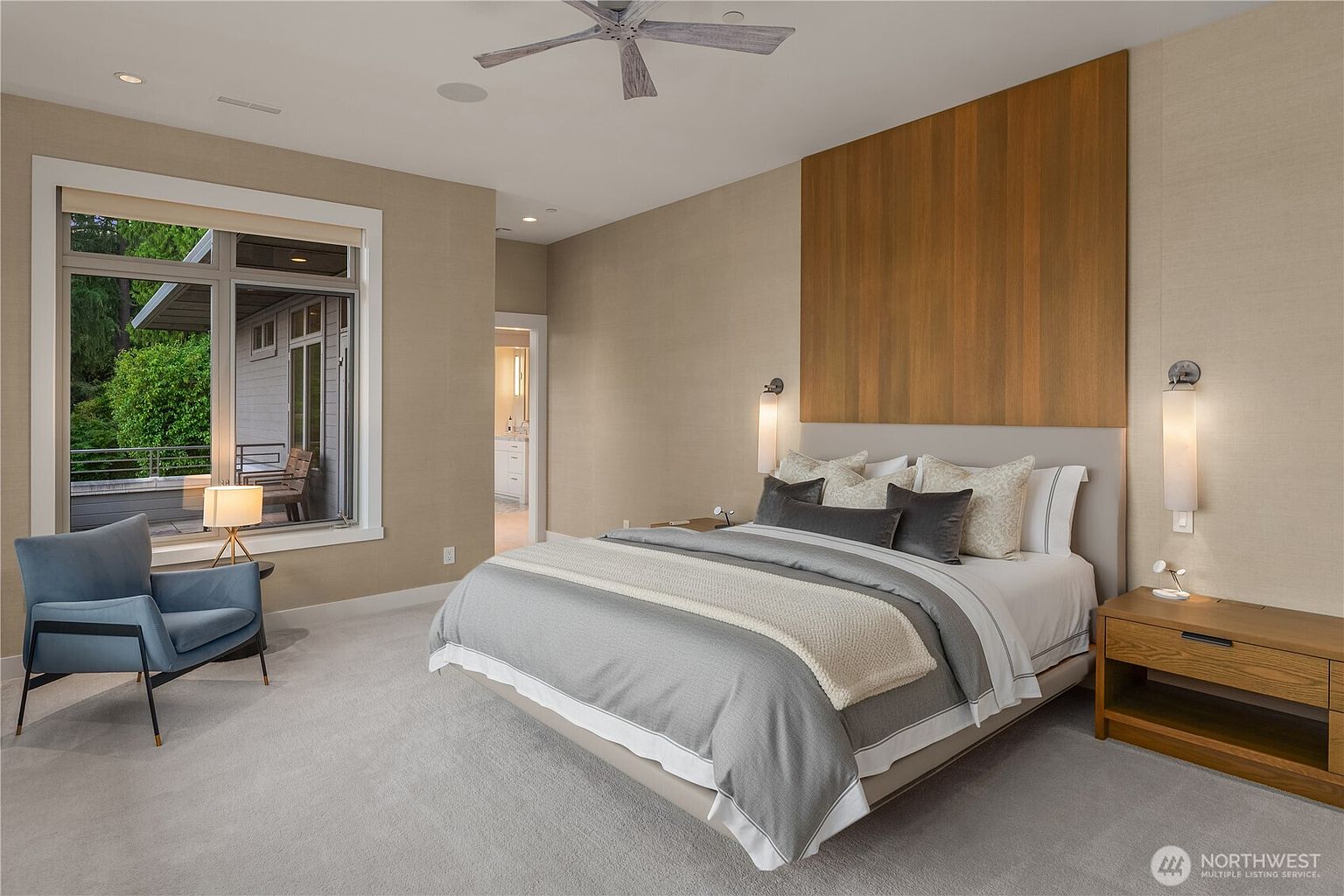
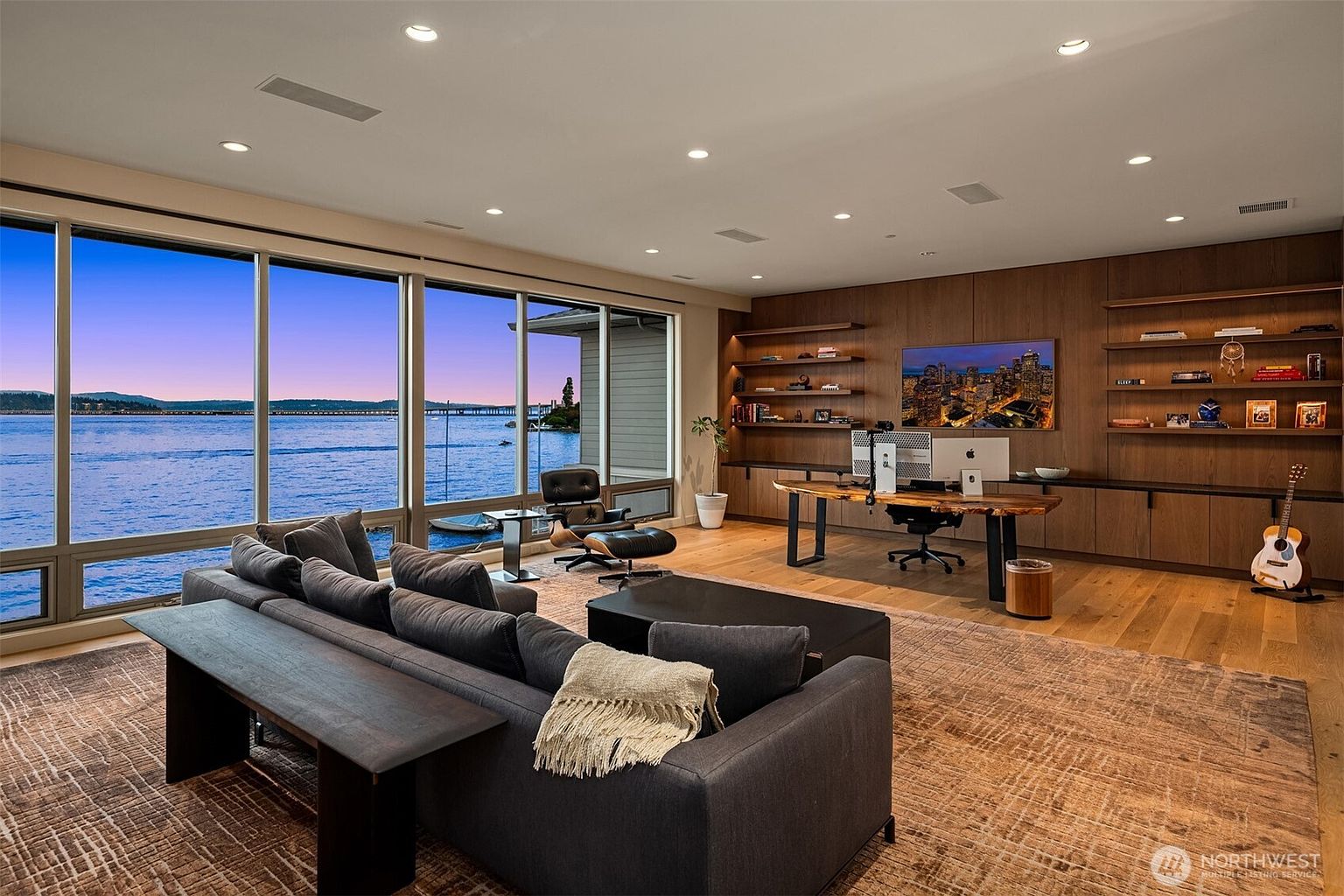
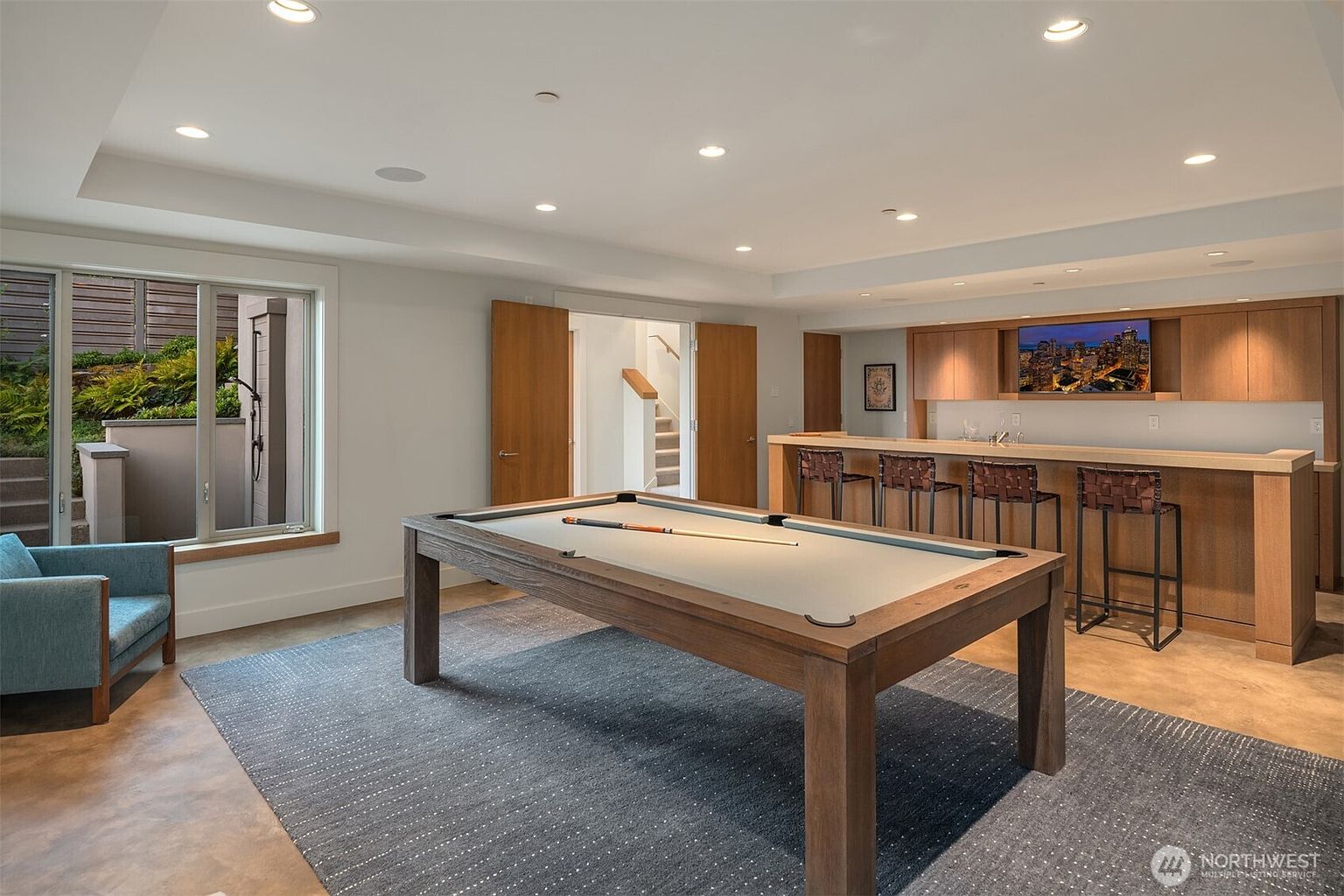
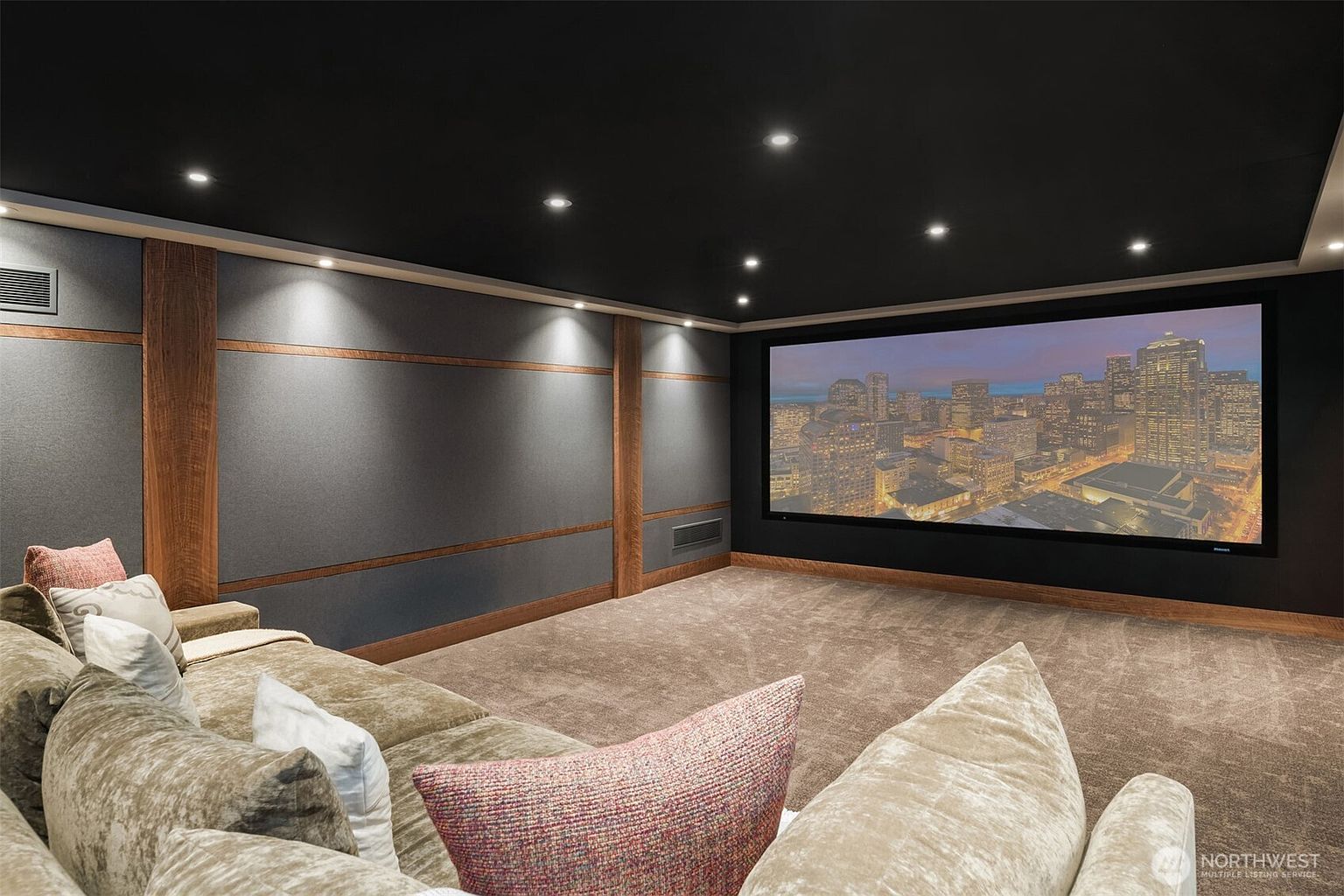
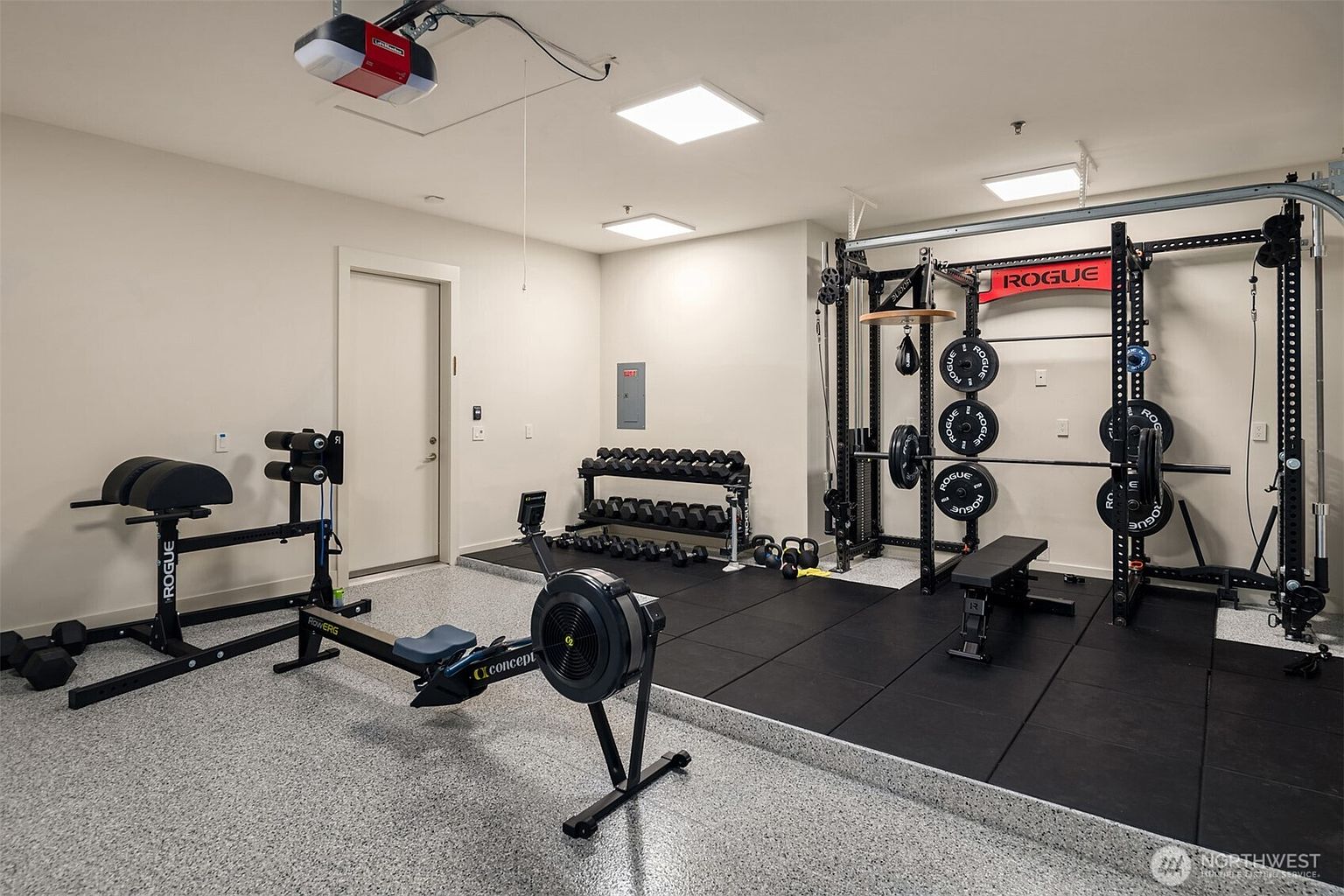
The primary suite continues that conversation with floor-to-ceiling glass, a built-in window seat positioned precisely to frame the water, and an en-suite finished in marble tile, a freestanding soaking tub, and a glass-enclosed shower appointed with multiple showerheads. A dedicated home office features a live-edge desk and floor-to-ceiling wood shelving. A second office captures the same waterfront views with a custom wrap-around desk built to the scale of the windows it faces. The professional-grade theater — acoustically paneled, fully appointed — anchors the entertainment program alongside a recreation room with wet bar and pool table, and a fully equipped gym.
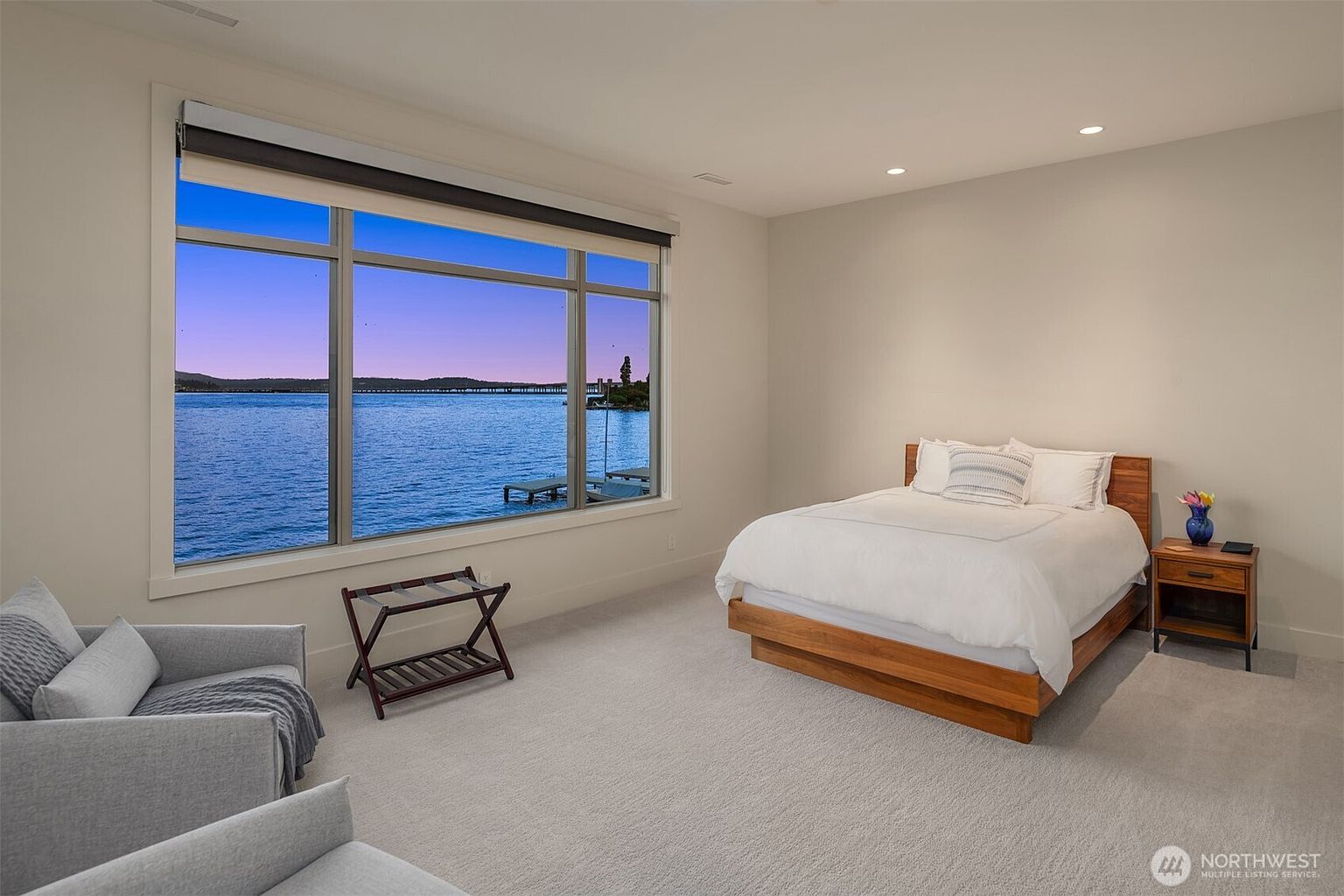
The private guest residence, integrated seamlessly into the overall design, provides refined accommodation for guests, extended family, or household staff without compromising the primary home's sense of seclusion.
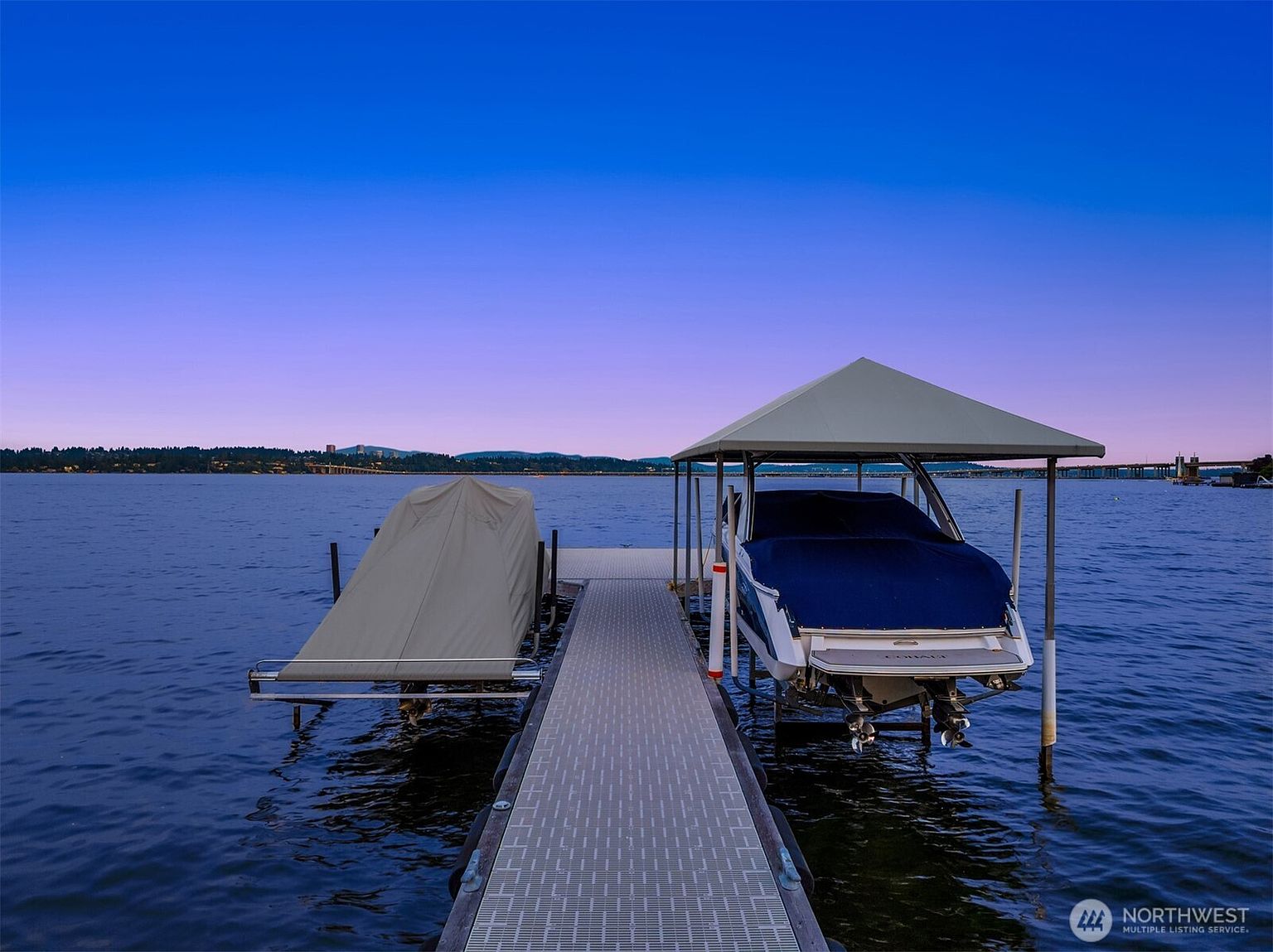
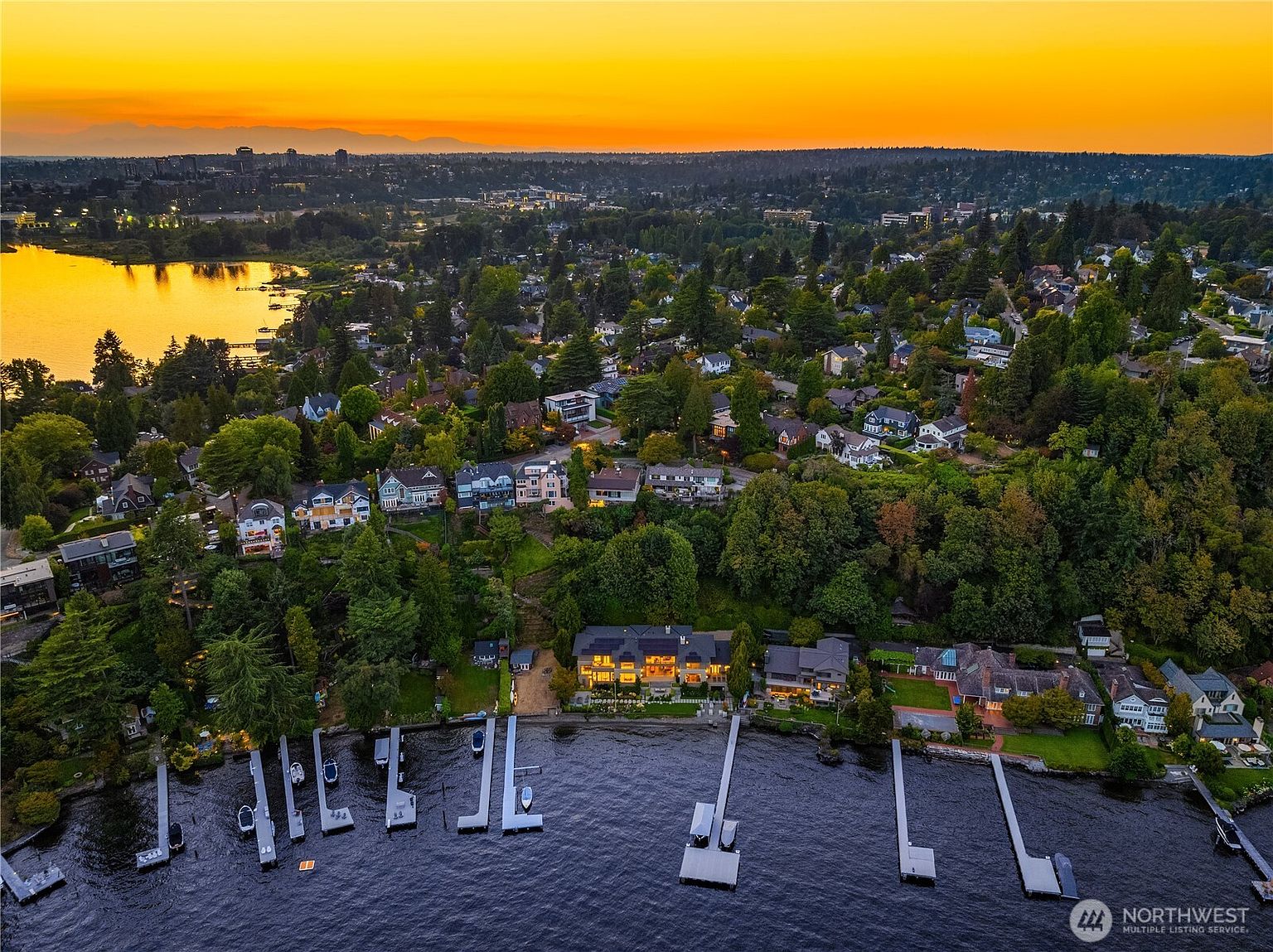
At the water's edge, a rebuilt dock with two boat slips and a 12,000-pound lift anchors 145 feet of private shoreline — the figure that defines the property's irreplaceable position. A five-car garage, gated entry, and the terminal privacy of a lane shared with no through traffic complete an estate that has been conceived, at every scale, with the same seriousness of intention.
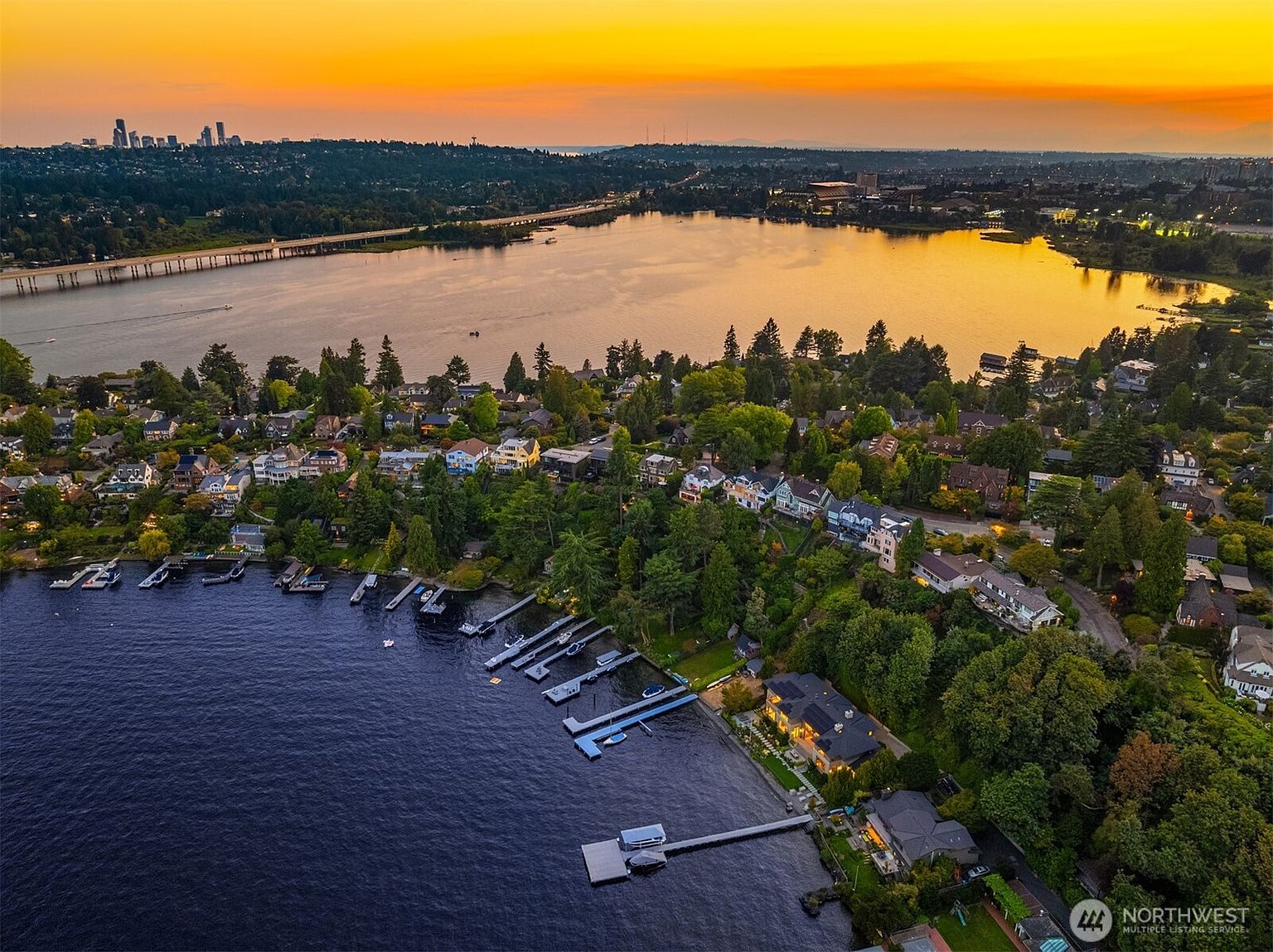
Laurelhurst occupies a narrow peninsula extending into Lake Washington on Seattle's northeastern edge, and its geography has always determined its character. Developed in the early twentieth century as one of Seattle's first planned residential communities, the neighborhood was laid out with curving streets, generous lot sizes, and a deliberate orientation toward the water — design decisions that have protected its residential integrity for more than a century. Today, Laurelhurst consistently ranks among Seattle's most sought-after addresses, a function not of marketing but of physical scarcity: the combination of lakefront access, mature tree canopy, proximity to the city's core, and the near-total absence of commercial intrusion is simply not reproducible anywhere else in Seattle.
The neighborhood is anchored by Laurelhurst Park, a beloved Seattle Parks and Recreation property offering open lawns, a heated outdoor swimming pool, tennis courts, and a small pond — a gathering point that lends the community a genuine sense of village cohesion rare in a city of Seattle's scale. The private Laurelhurst Community Club, situated on the lake, has provided residents with beach access, swim docks, and moorage for generations, reinforcing the waterfront identity that defines life here.
Beyond the neighborhood's own amenities, the location places residents in close proximity to some of Seattle's most significant institutions. The University of Washington main campus — one of the country's leading research universities and a consistent presence in global academic rankings — sits immediately adjacent to Laurelhurst, bringing with it the cultural programming, medical facilities, and intellectual energy of a major university without the commercial density typically associated with campus-adjacent neighborhoods. University Village, one of the Pacific Northwest's premier open-air retail and dining destinations, is minutes away, offering a curated selection of restaurants, specialty retail, and everyday conveniences.
Access to Seattle's broader urban fabric is straightforward. The SR-520 floating bridge provides direct connection to the Eastside communities of Bellevue, Kirkland, and Redmond — home to major technology campuses — while downtown Seattle's cultural institutions, restaurants, and professional infrastructure remain well within reach. Seattle-Tacoma International Airport is accessible in approximately thirty minutes under normal traffic conditions.
On the water, Lake Washington itself is a resource of considerable recreational depth. The lake spans roughly twenty-two miles in length and supports year-round boating, rowing, paddling, and swimming. The Seattle Yacht Club, one of the region's most established sailing and boating organizations, is located nearby. The lake's western shore connects via the Montlake Cut to Portage Bay and Lake Union, opening a continuous freshwater network that extends through the heart of the city — a navigable geography unique to Seattle among major American cities.
Mount Rainier, visible on clear days from the primary rooms and shoreline of this estate, provides the kind of backdrop that no design budget can replicate. At 14,411 feet, it is the highest peak in the Cascade Range and one of the most recognizable landmarks in the American West. Its presence on the southern horizon above open water is, for those who live here, simply part of daily life — and among the most quietly extraordinary facts of this address.
Featured Highlights
Curated Content • Presented by Terry Allen