The Story Behind
Absolute Privacy. Grand Scale. A True Los Angeles Compound.
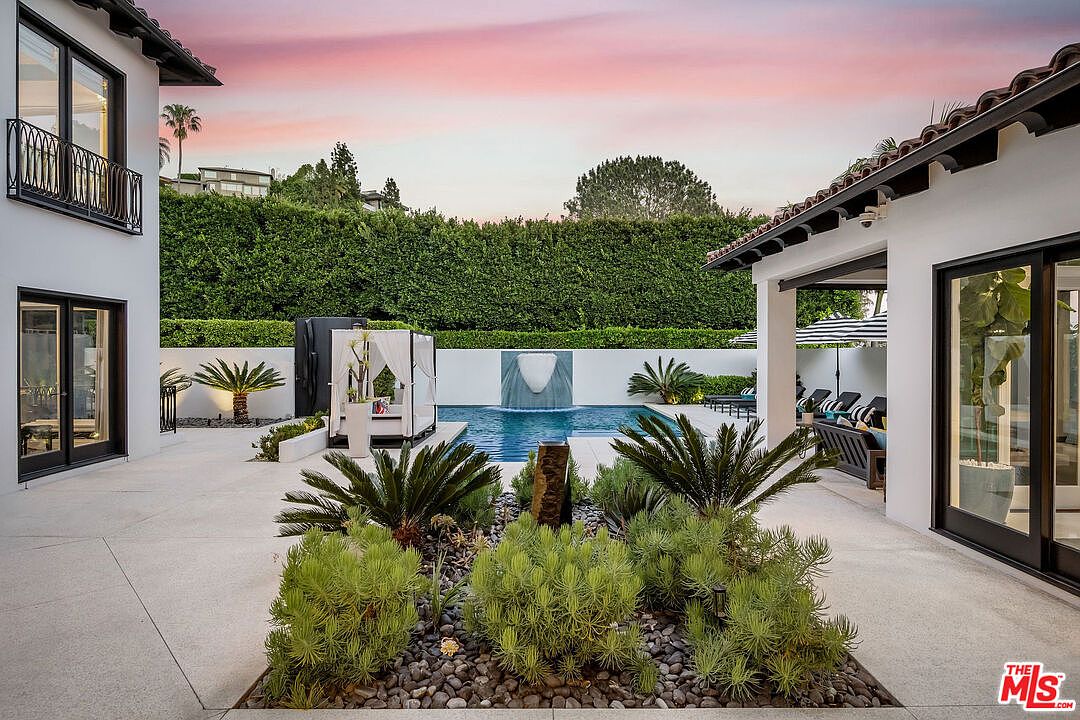
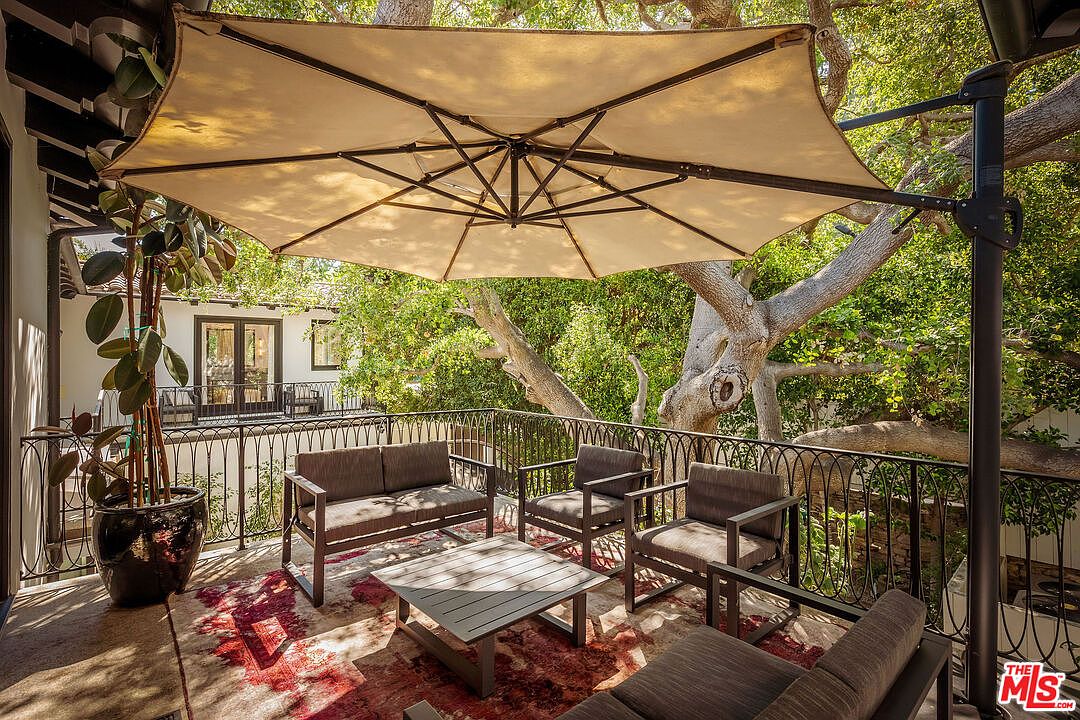
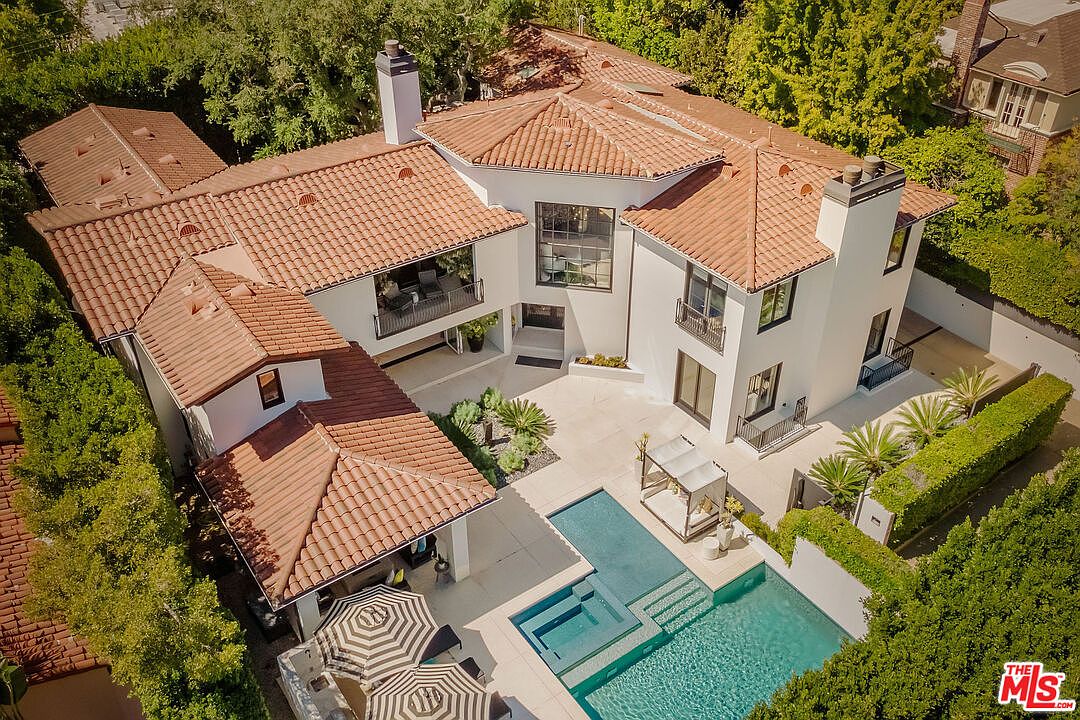
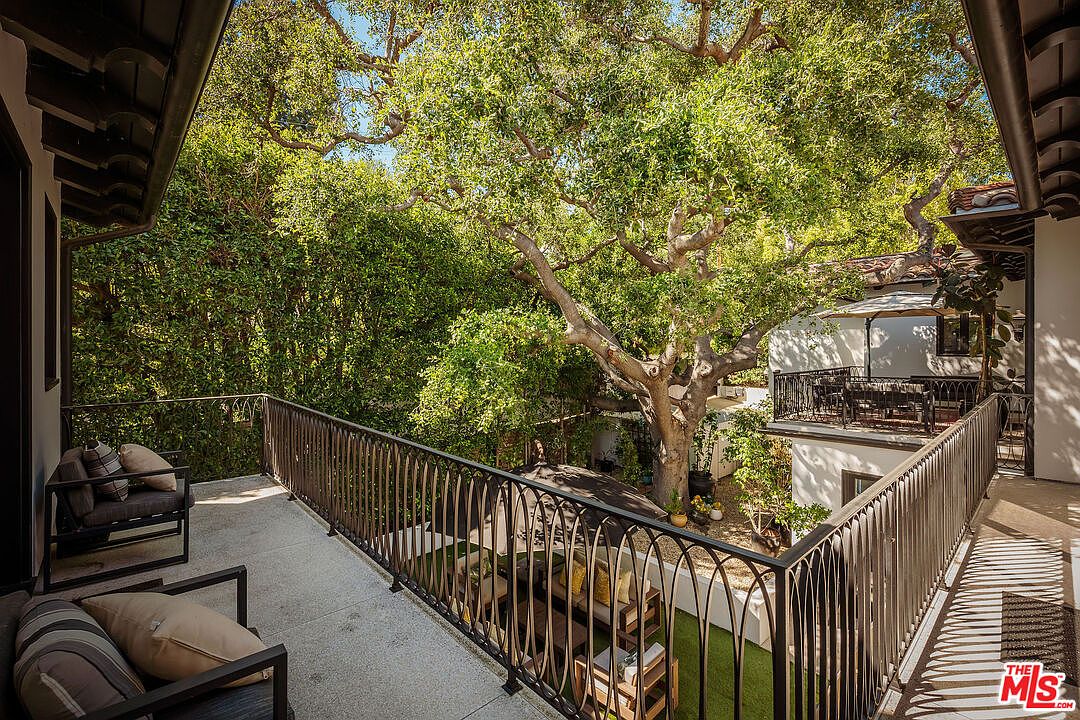
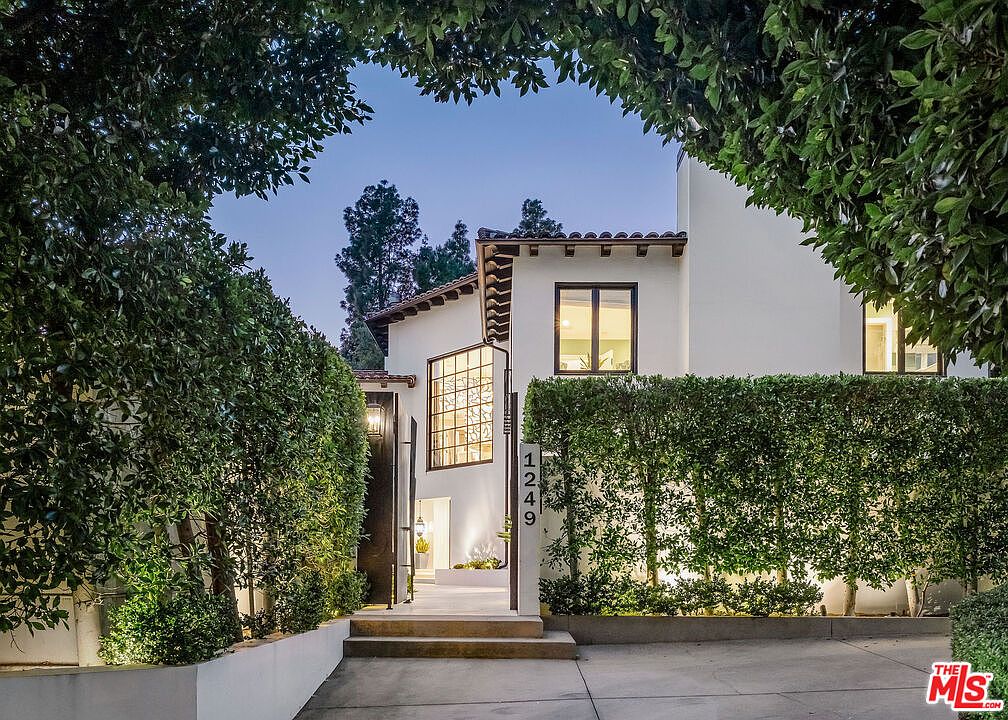
There is a particular quality of stillness that descends the moment the gates close behind you at 1249 North Doheny Drive — a stillness that feels earned, almost architectural in itself. The mature hedges and high perimeter walls do not merely suggest privacy; they engineer it, creating a condition of genuine remove from one of Los Angeles' most active residential corridors. What unfolds within is a contemporary villa of exceptional proportion, designed with the conviction that grand scale and intimate seclusion are not opposing ambitions but complementary ones.
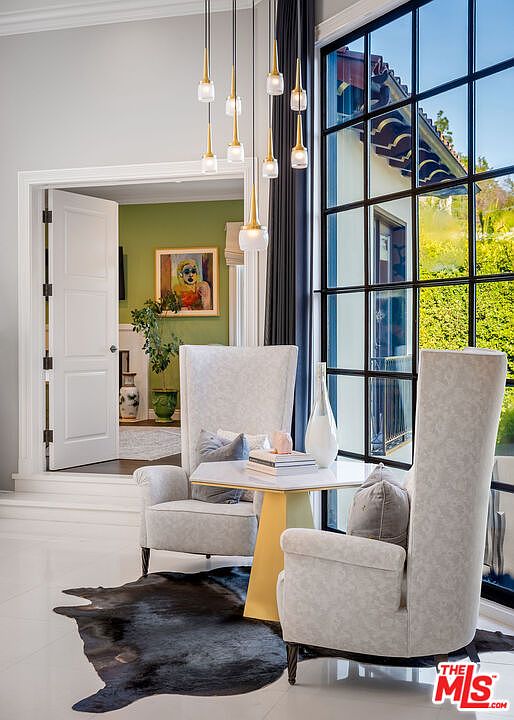
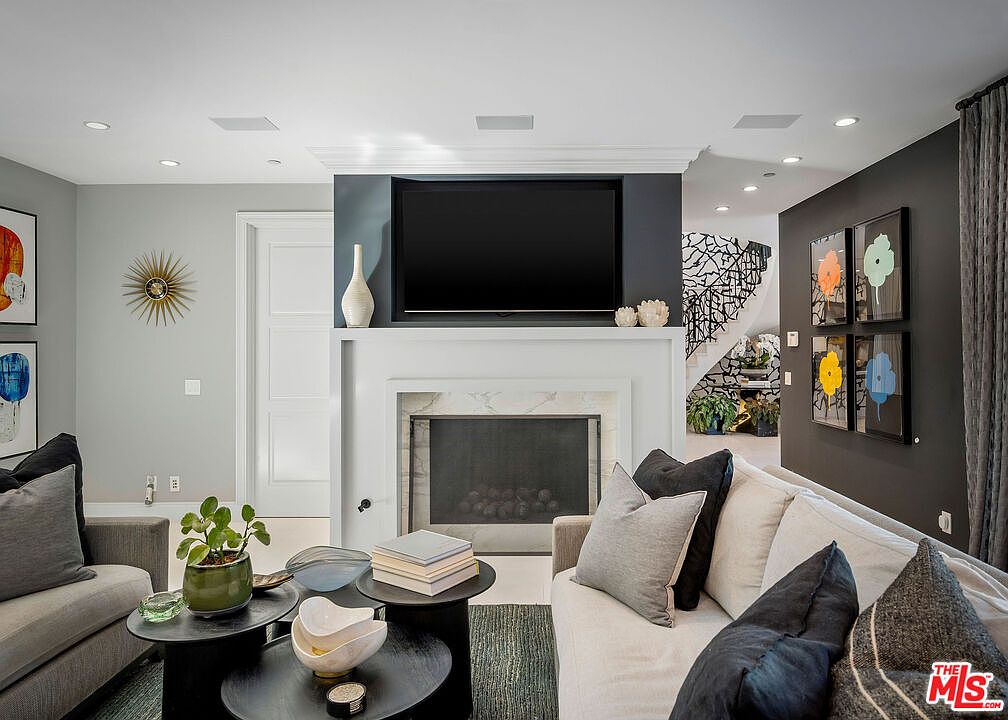
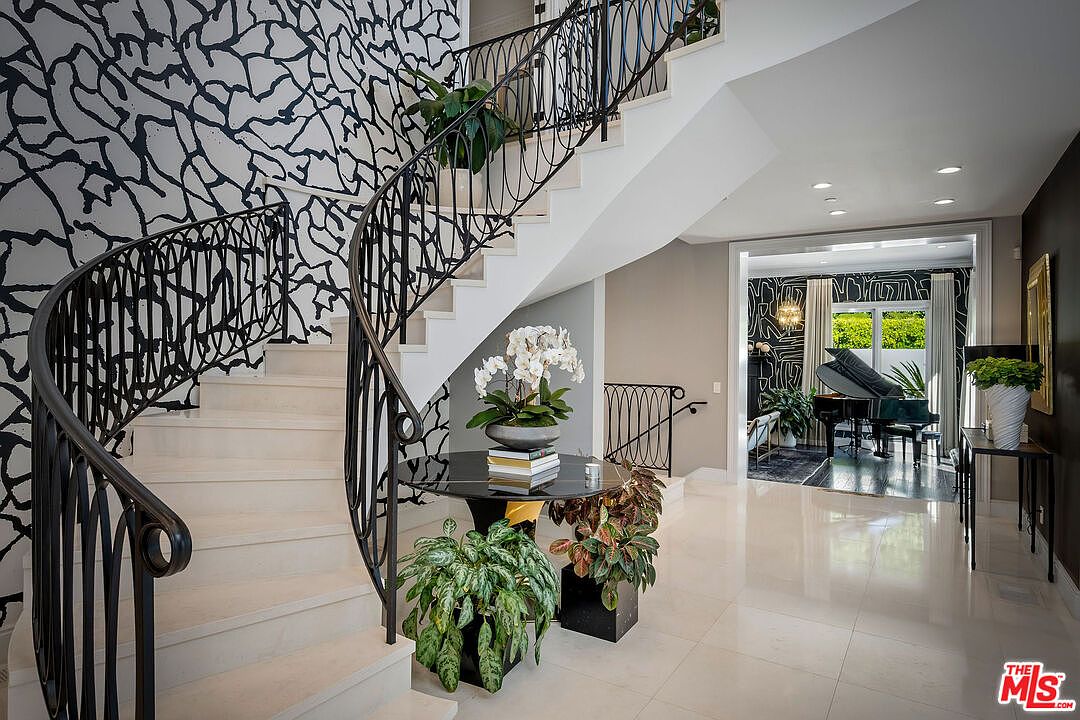
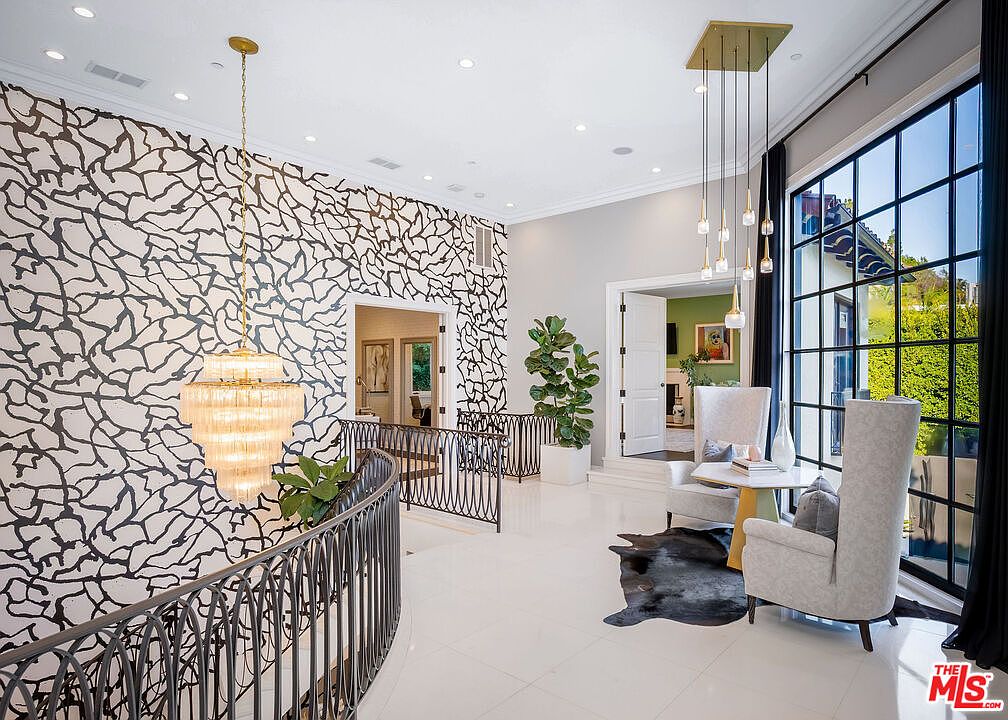
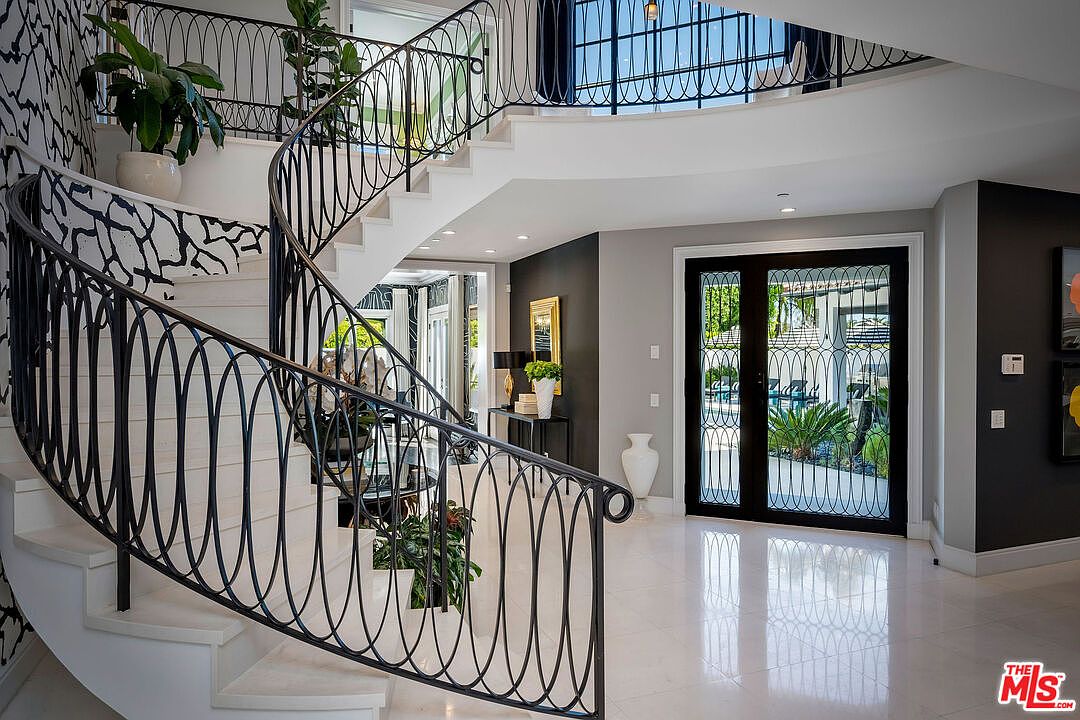
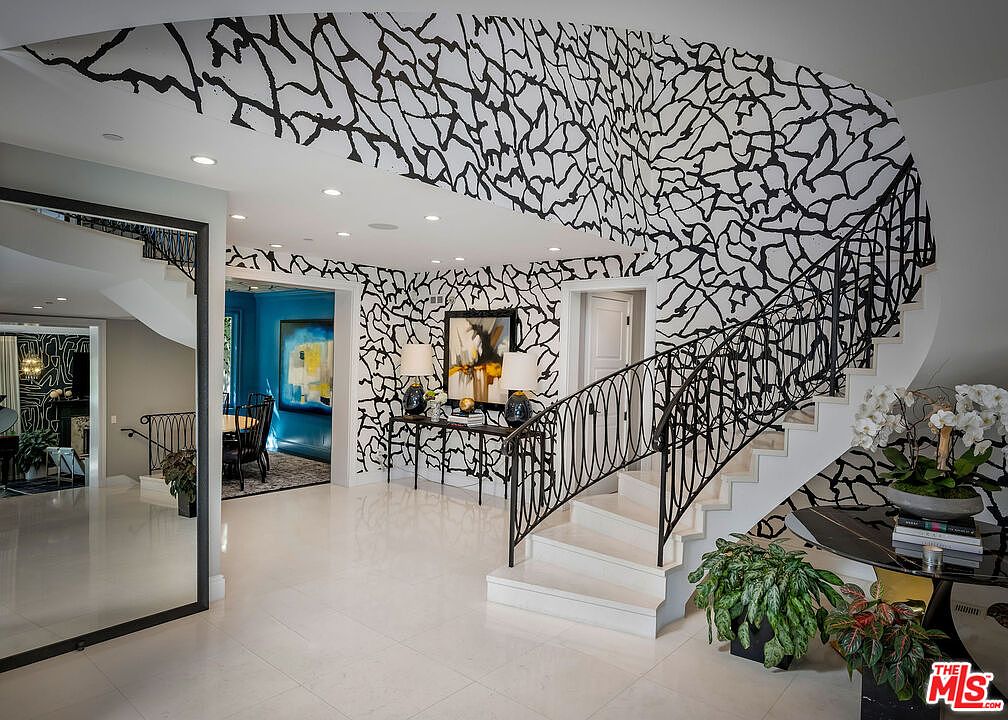
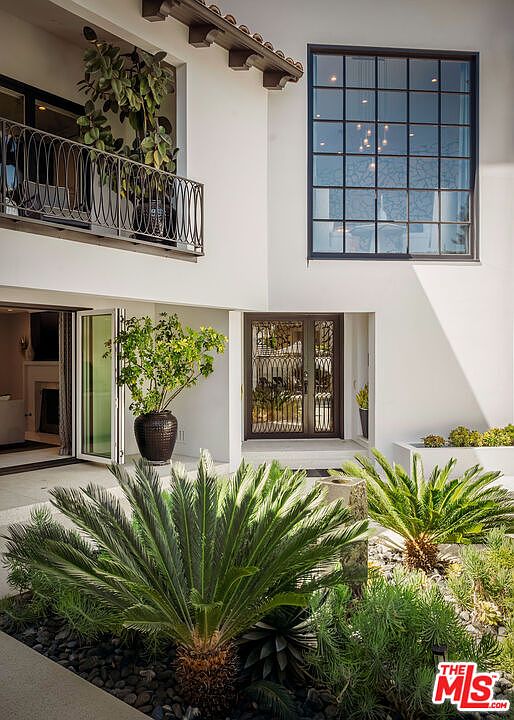
The arrival sequence is deliberate and considered. A gated circular driveway establishes the home's sense of ceremony before the front door is even reached. Inside, a dramatic two-story entry hall announces its intentions immediately — a sweeping staircase with intricate black metal railings rises against bold, graphic wall treatments, the polished stone flooring below reflecting the brightness of a generously lit interior. It is a first impression that rewards the eye and prepares a visitor for what follows.
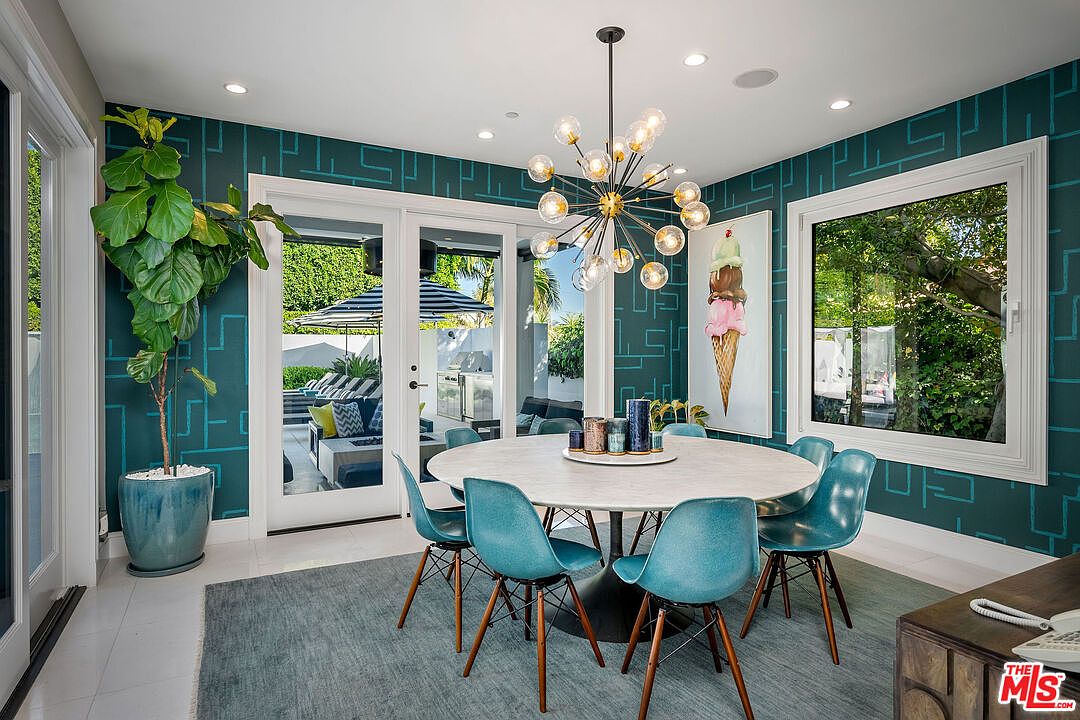
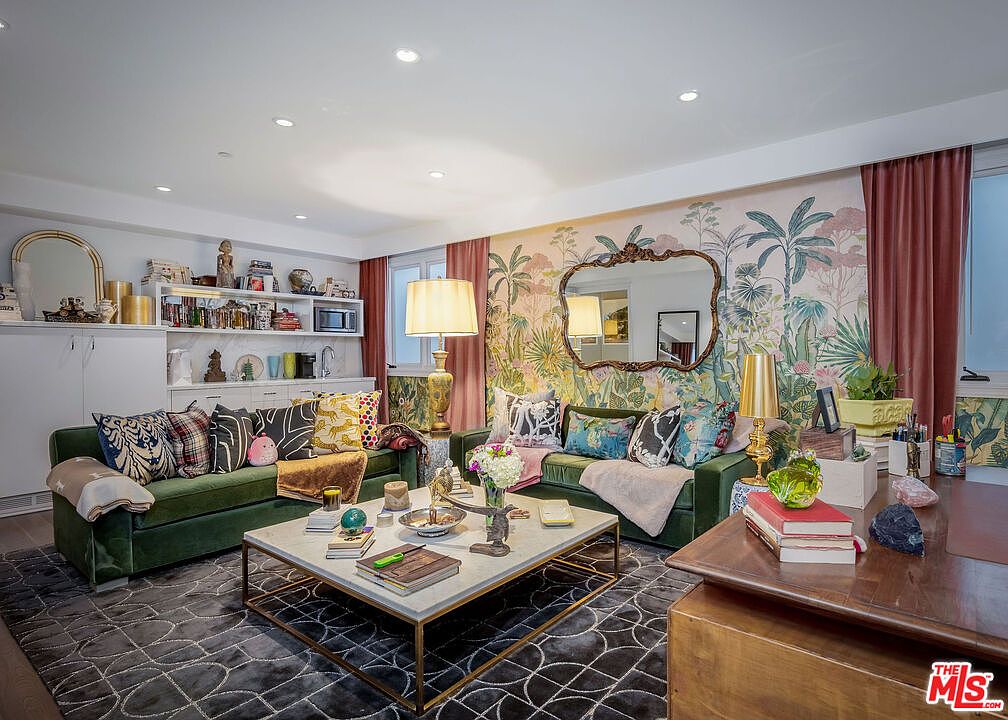
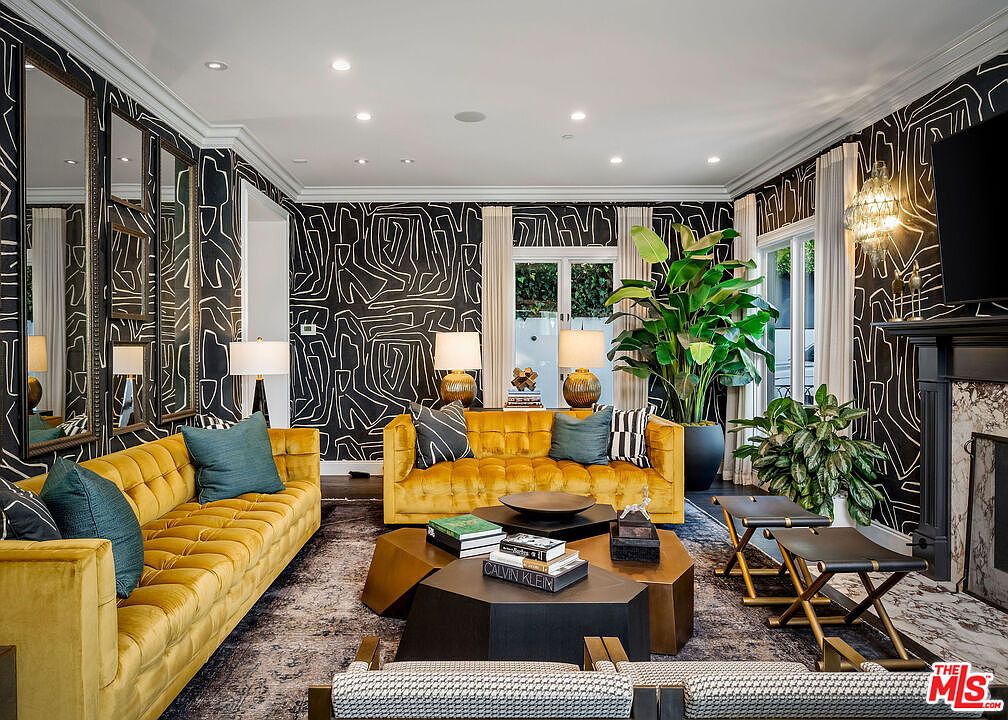
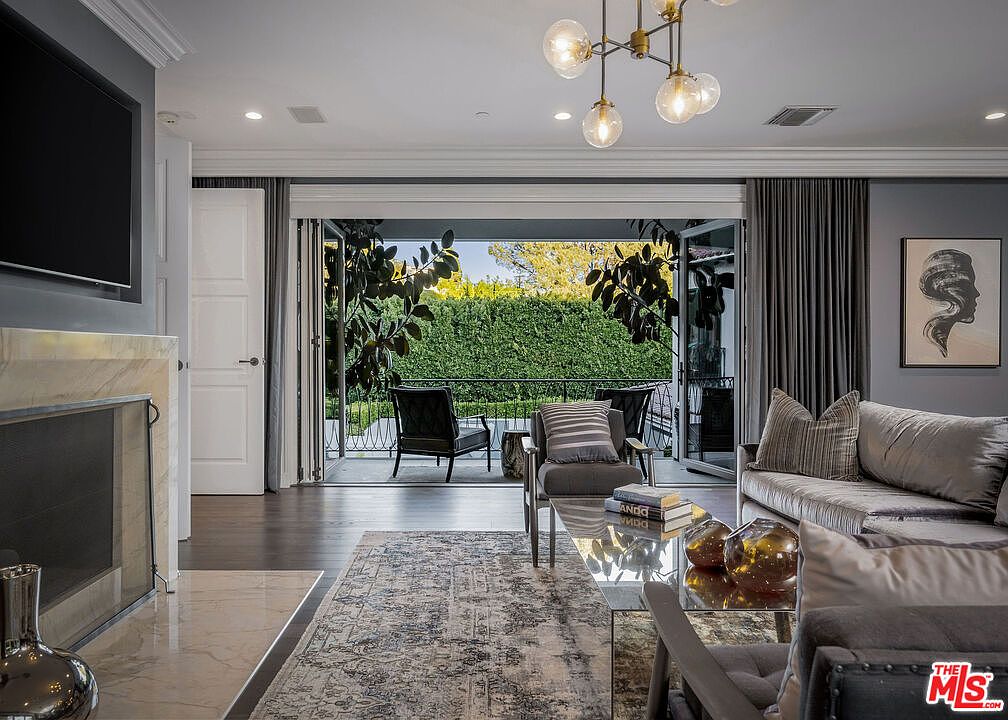
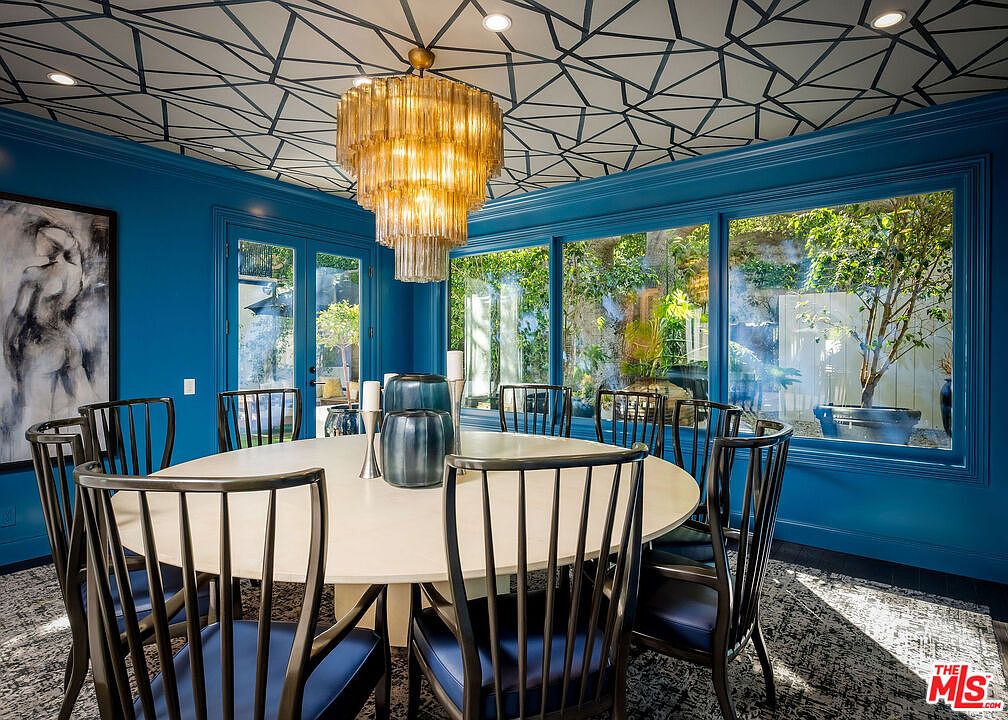
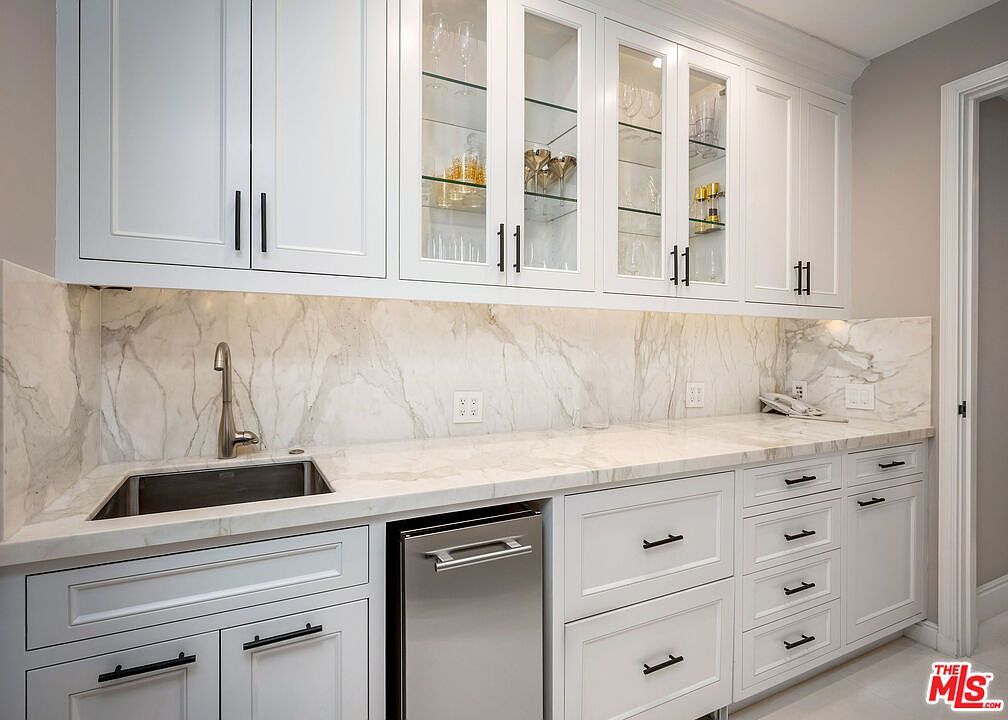
The formal living and dining spaces extend beyond with the kind of proportions that accommodate grand entertaining without sacrificing the warmth of a well-composed room. Graphic wallpapers, curated art, and a sophisticated material palette — stone countertops with dramatic veining, dark hardwood floors, custom millwork — speak to an interior sensibility that is both bold and refined. A grand piano sits near retractable glass walls that dissolve entirely to connect the living areas to the outdoors, a seamless threshold that transforms the ground floor into something closer to a pavilion than a traditional house.
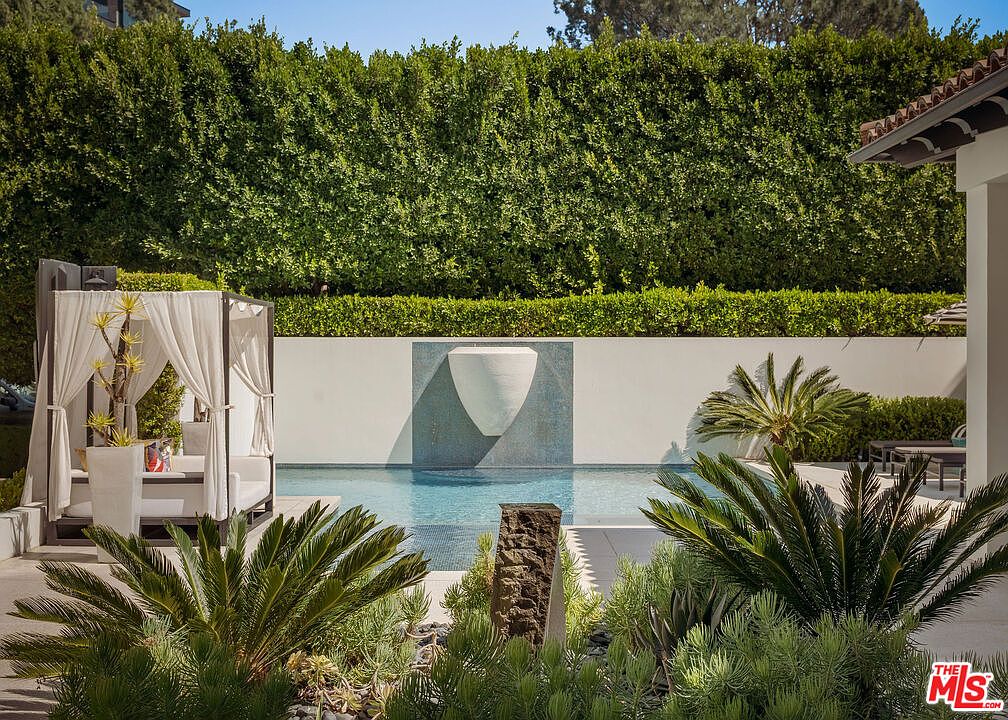
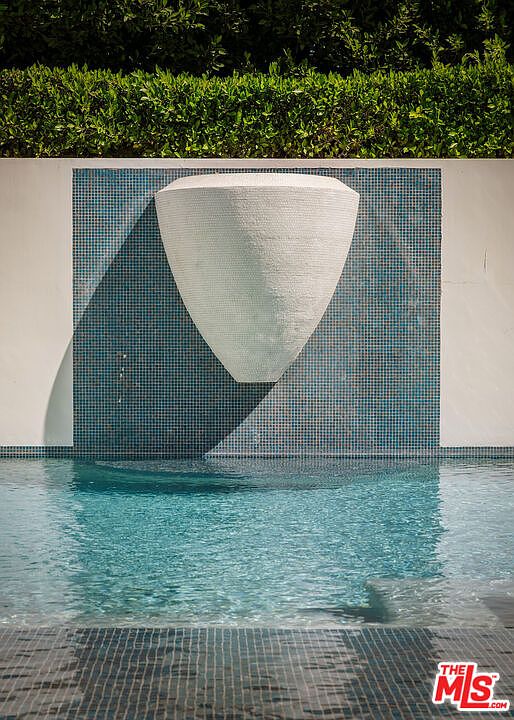
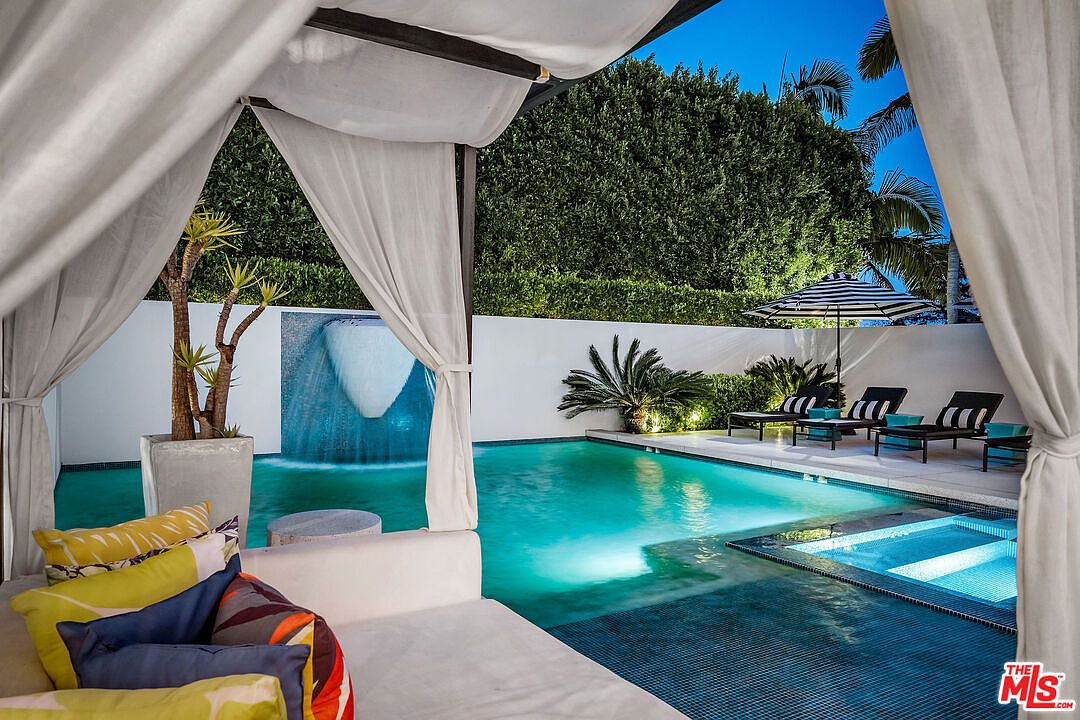
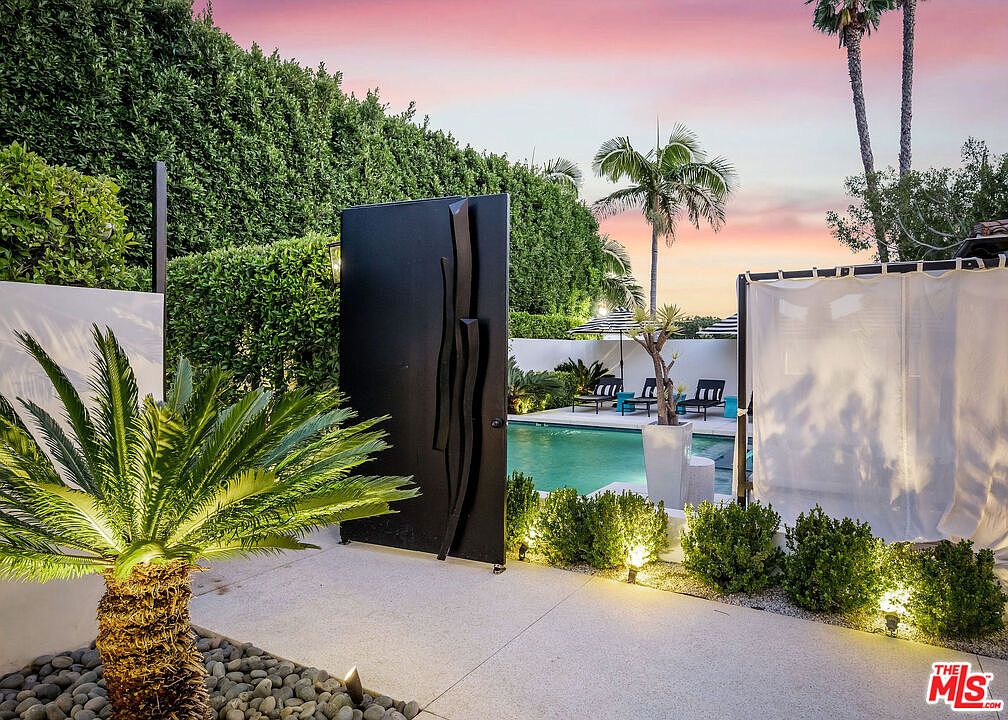
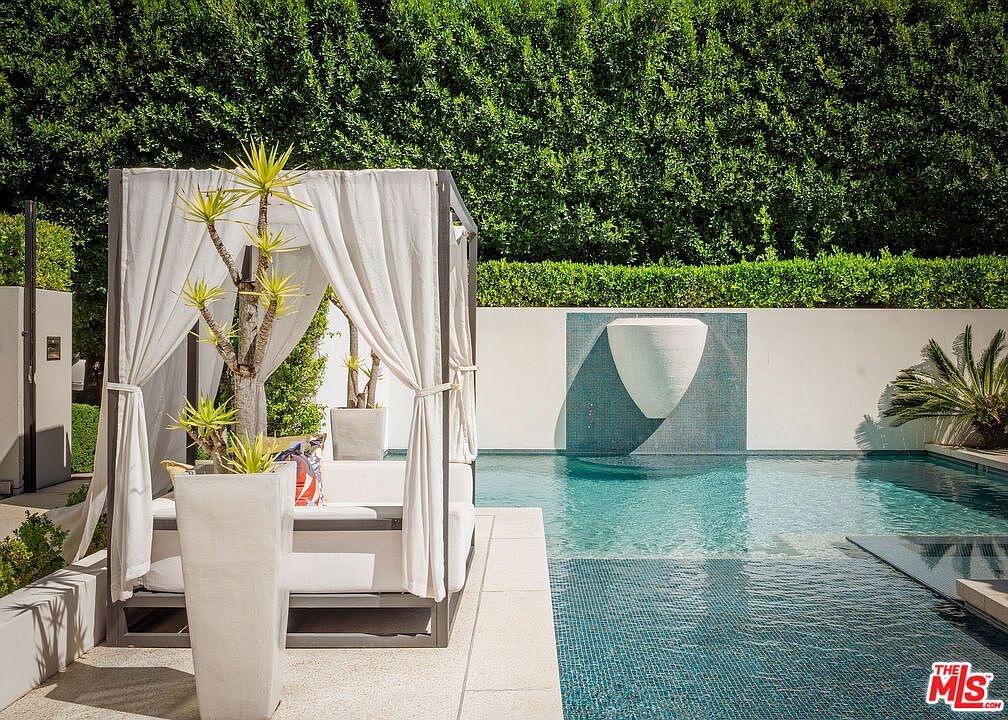
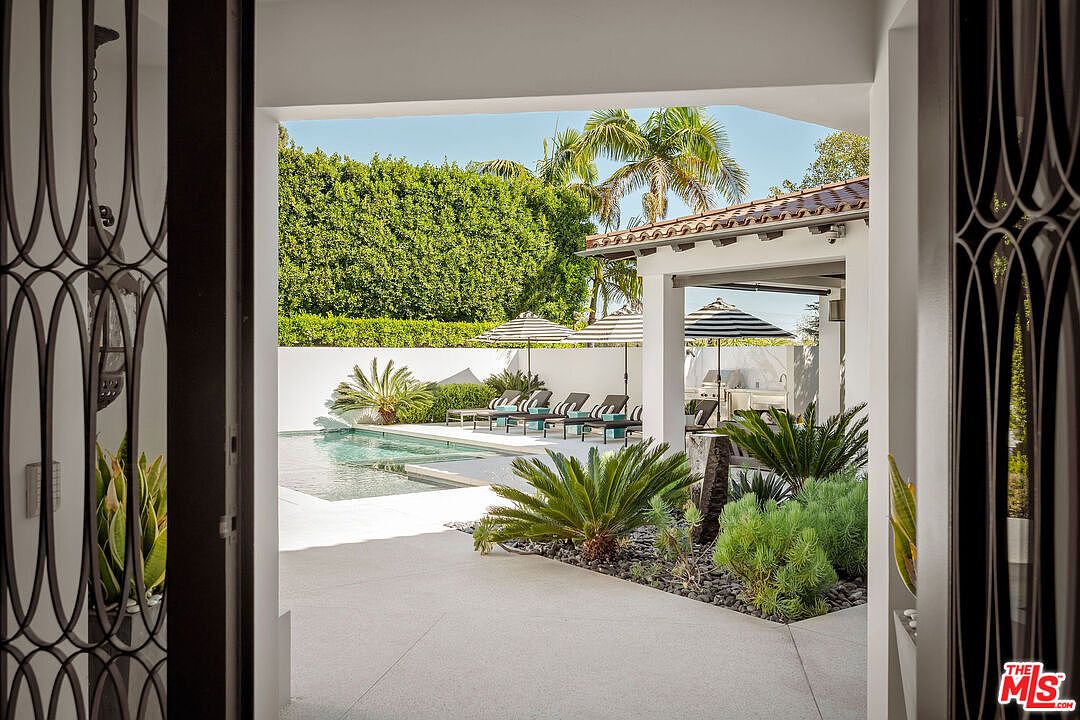
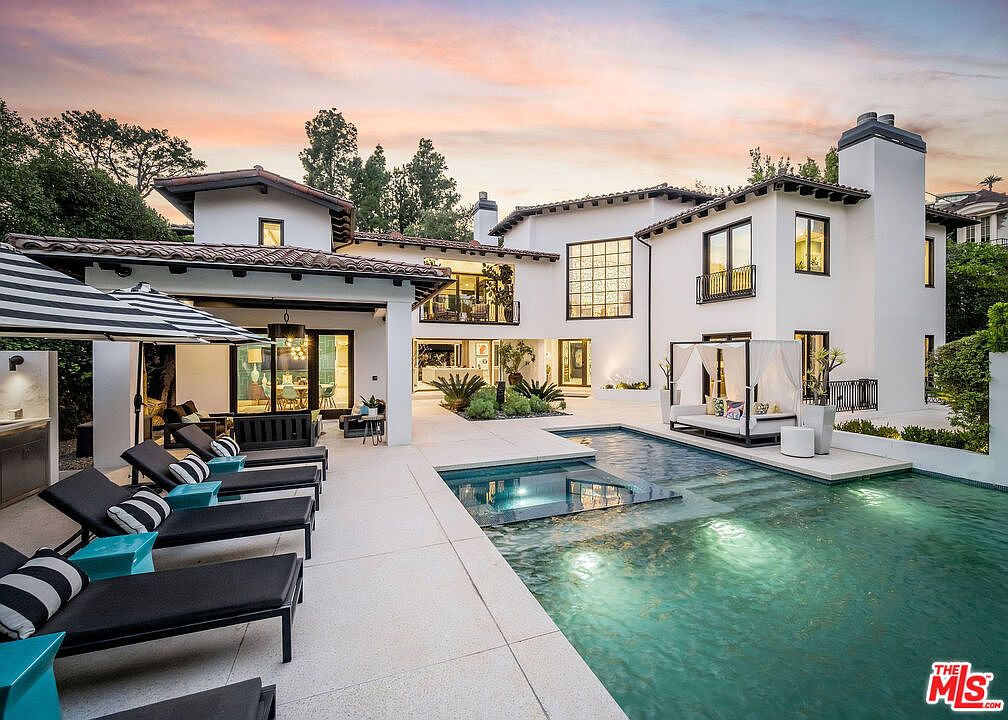
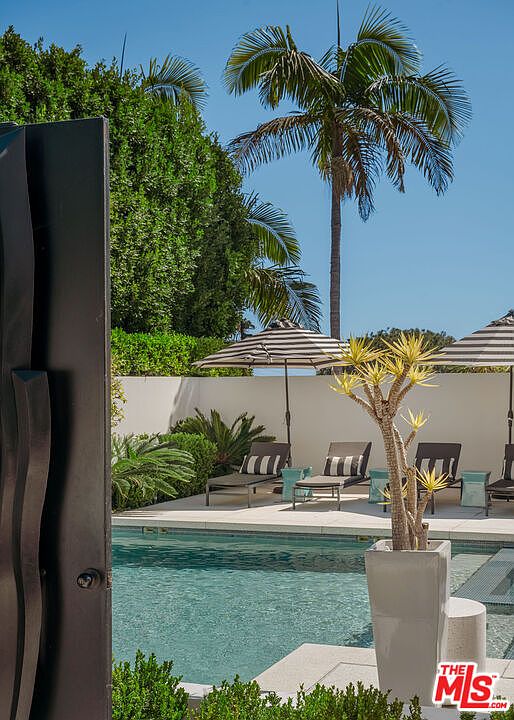
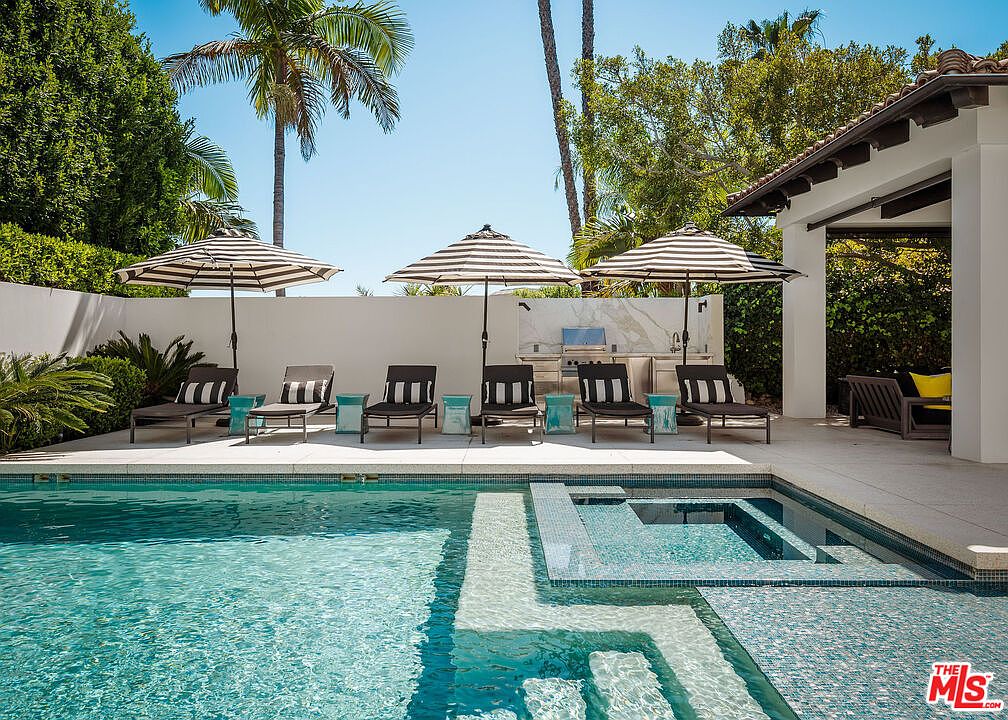
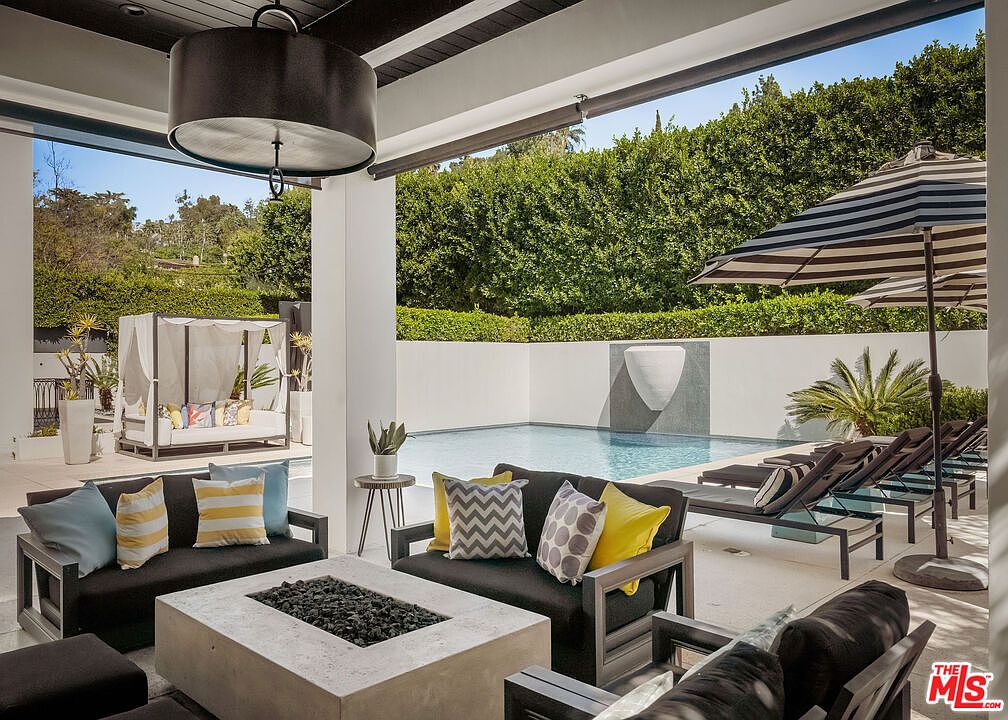
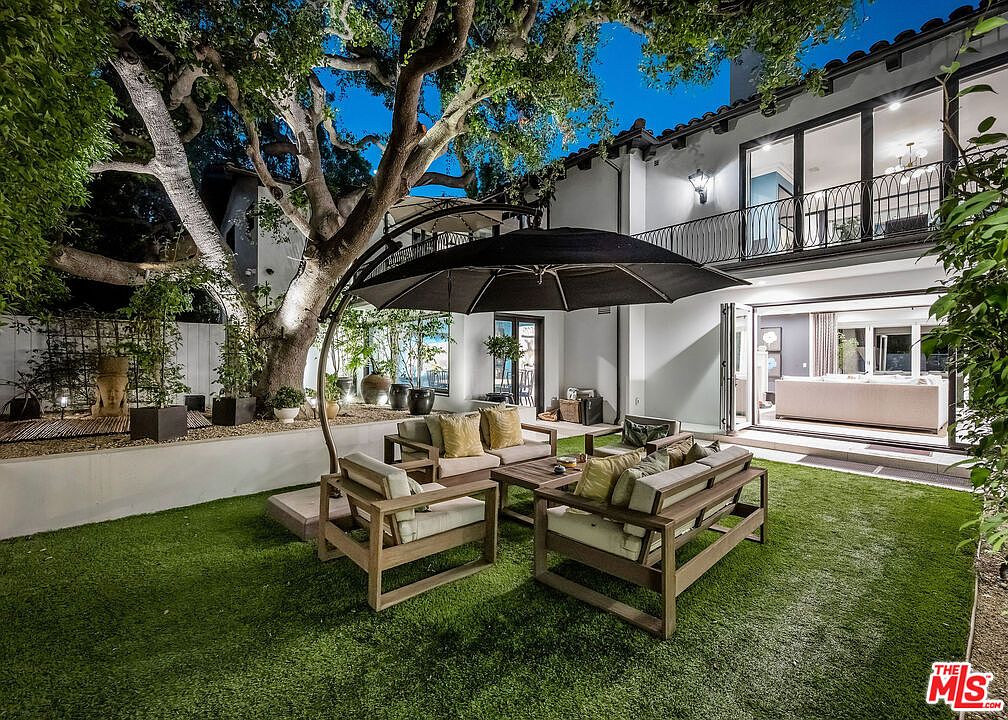
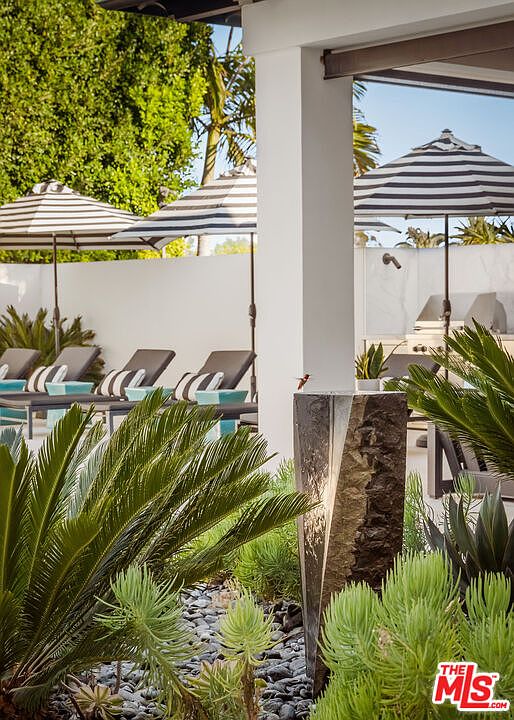
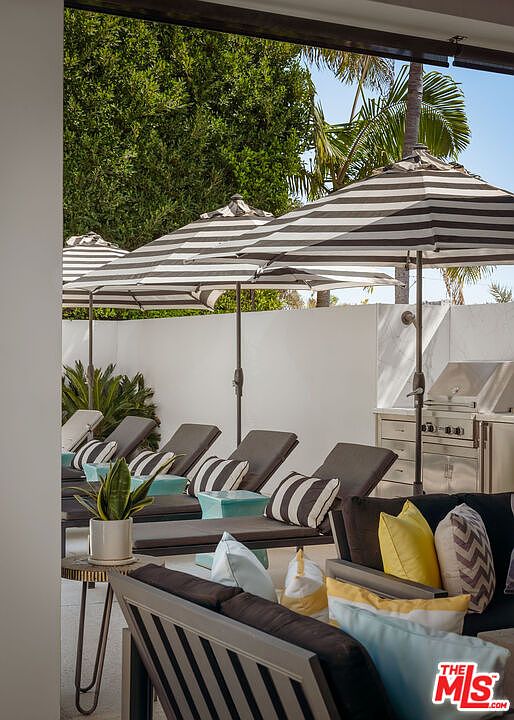
Beyond those glass walls, the exterior unfolds as a fully realized resort environment. A rectangular pool anchored by a sculptural white vessel water feature is framed by tall, manicured hedges on all sides — completely shielded from any neighboring sight line. A modern cabana with white drapery, a covered fire pit lounge, multiple lounge chairs beneath striped umbrellas, and a sculpture garden compose an outdoor living landscape of genuine resort quality. The entire rear grounds read as a private destination.
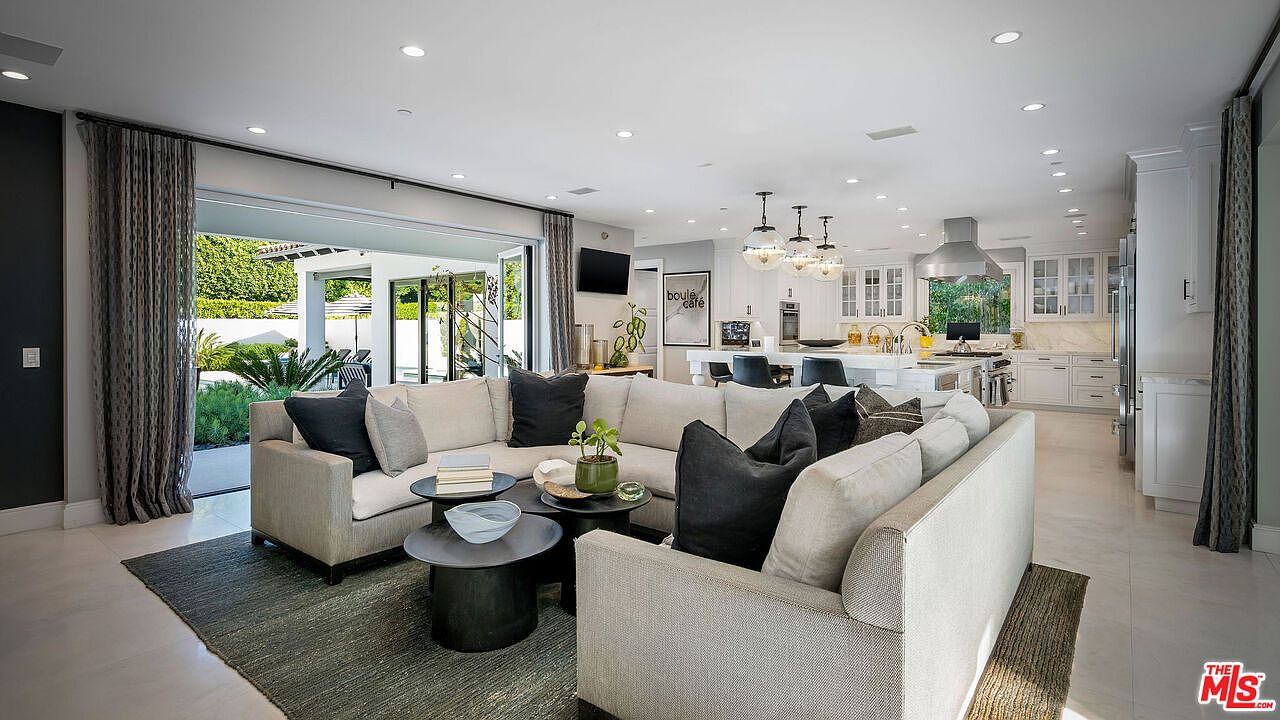
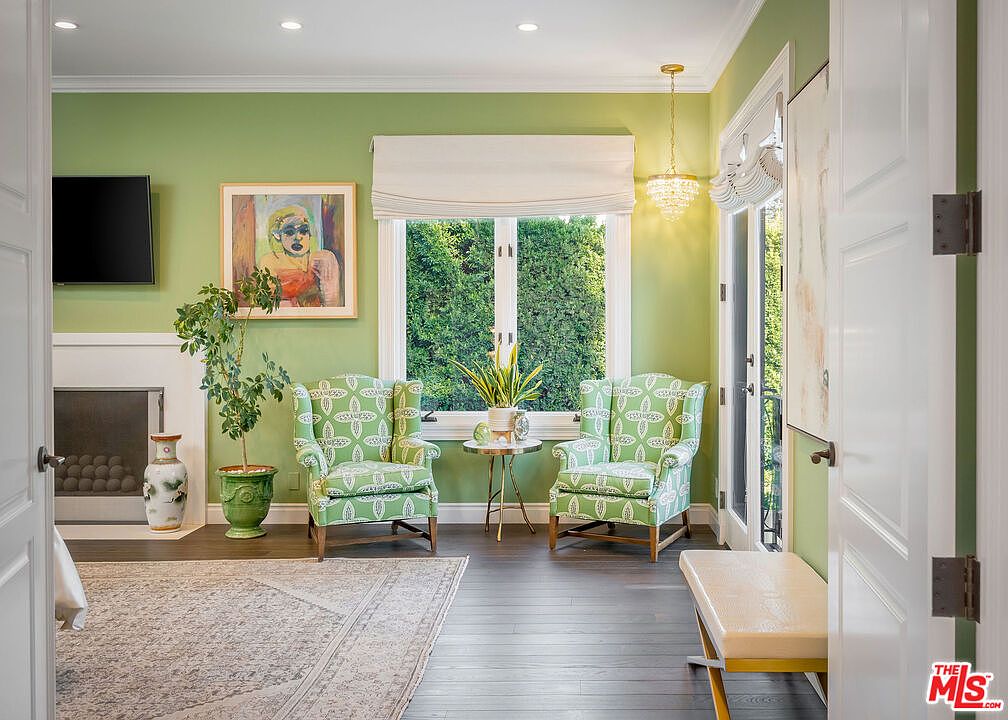
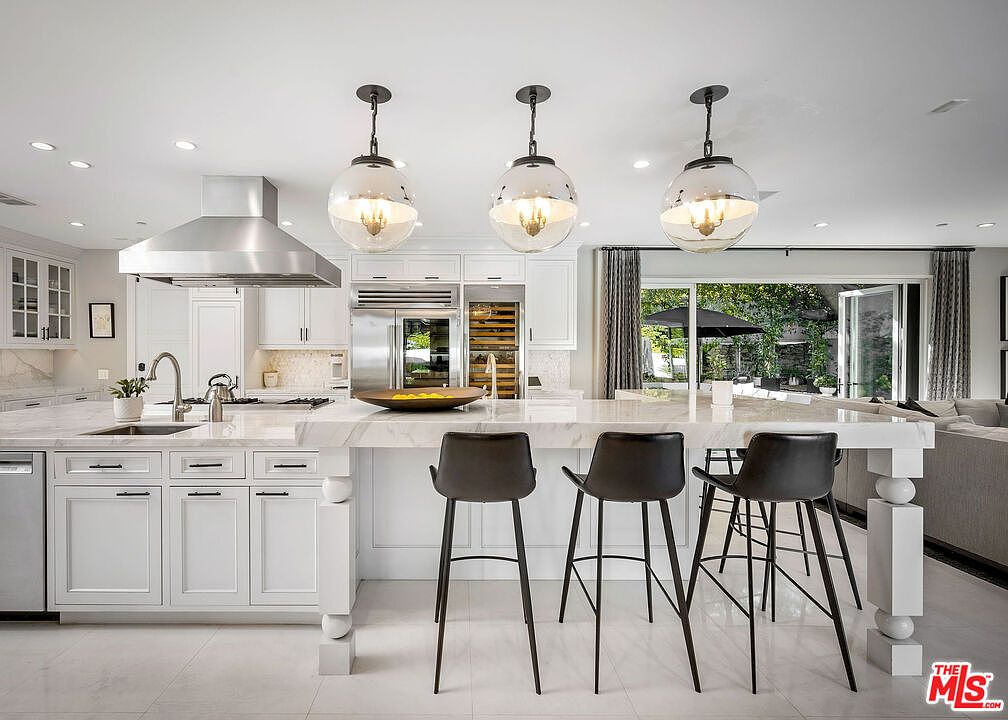
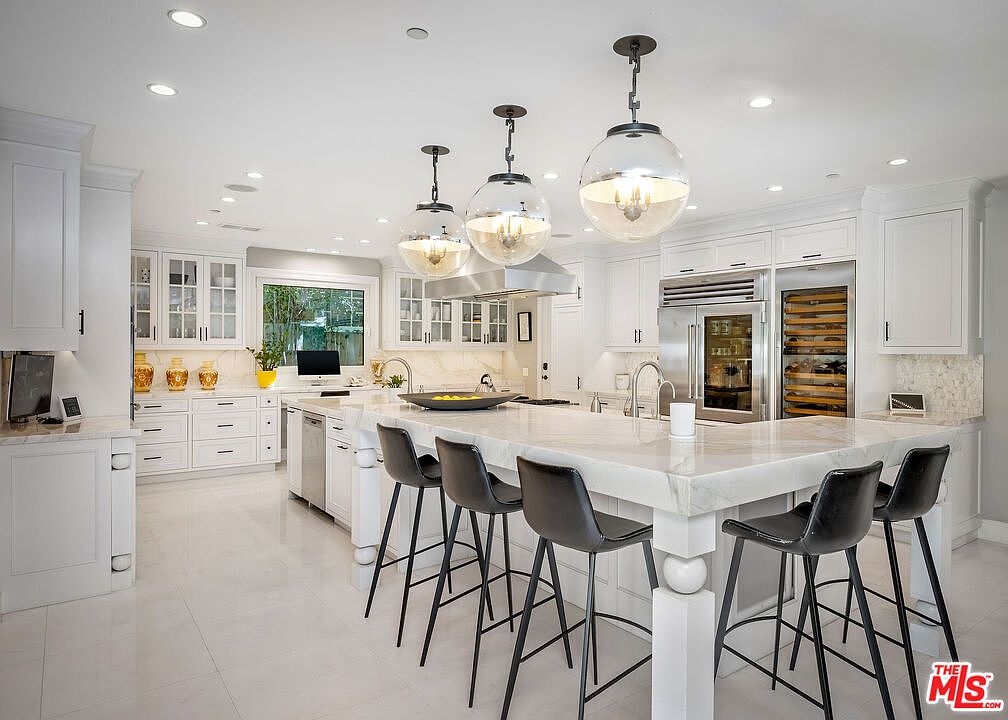
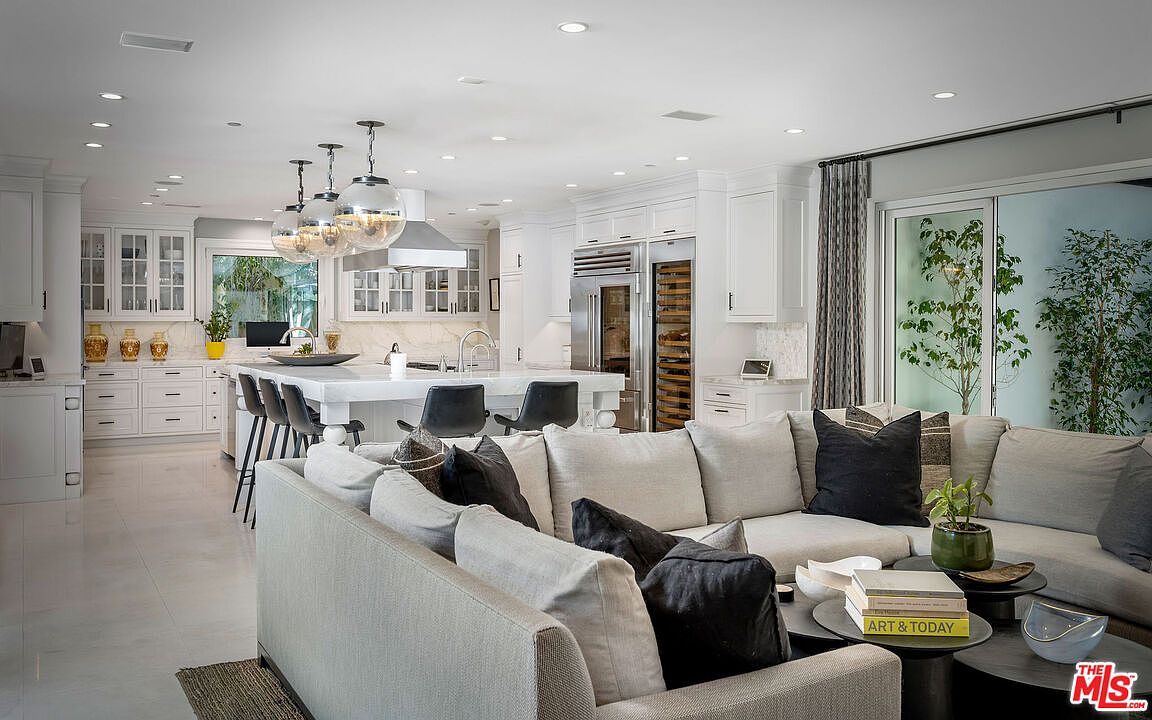
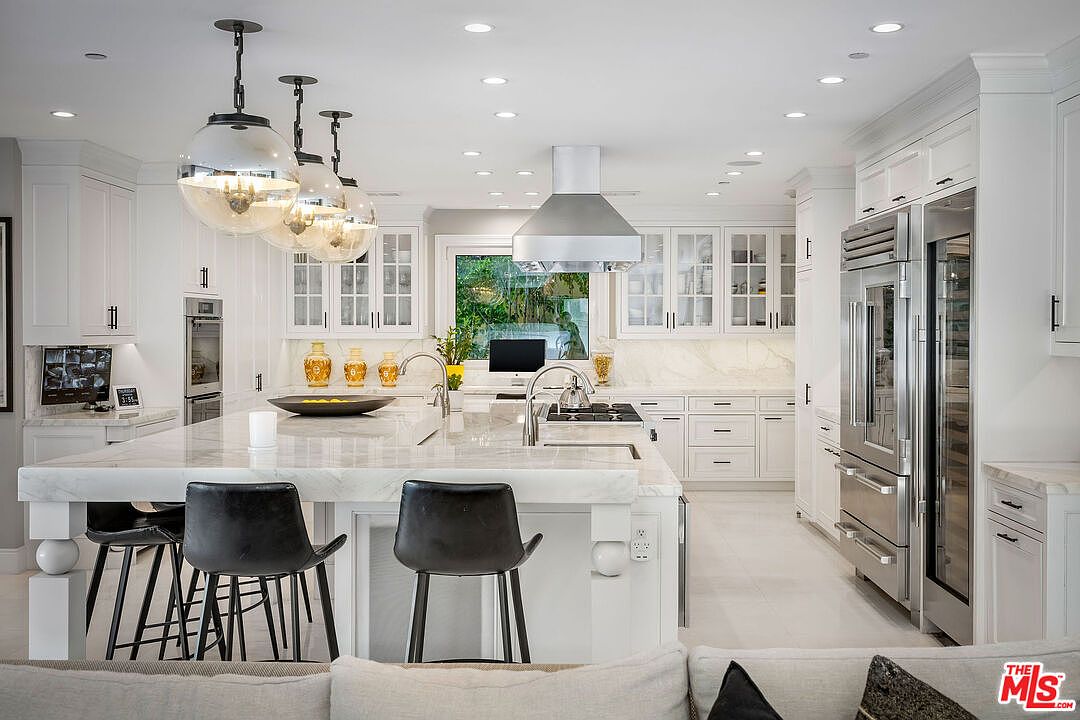
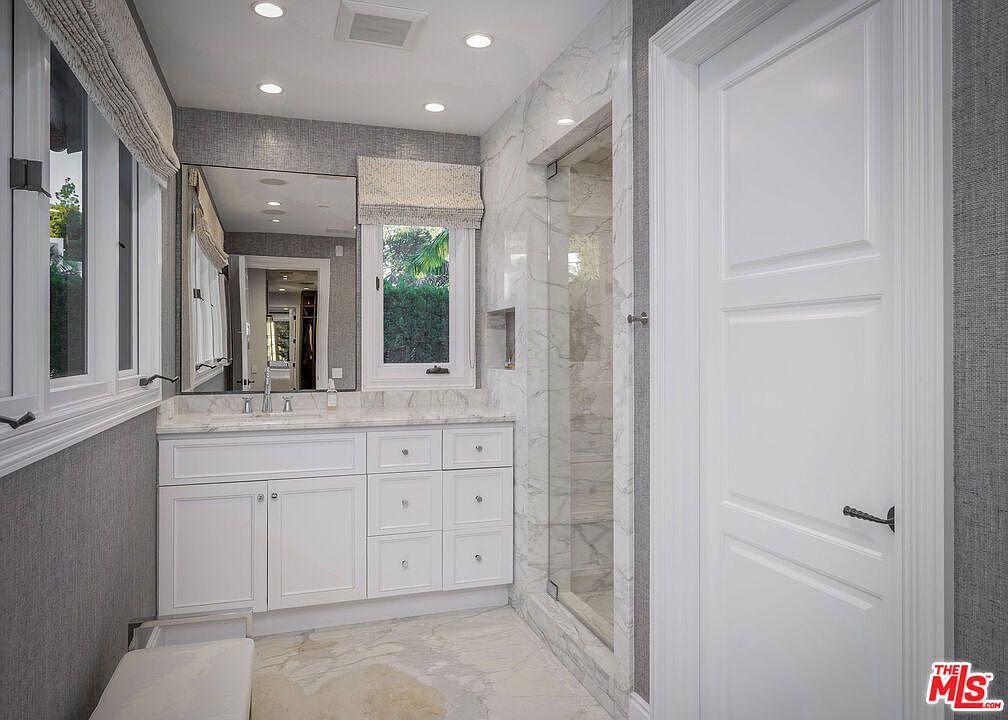
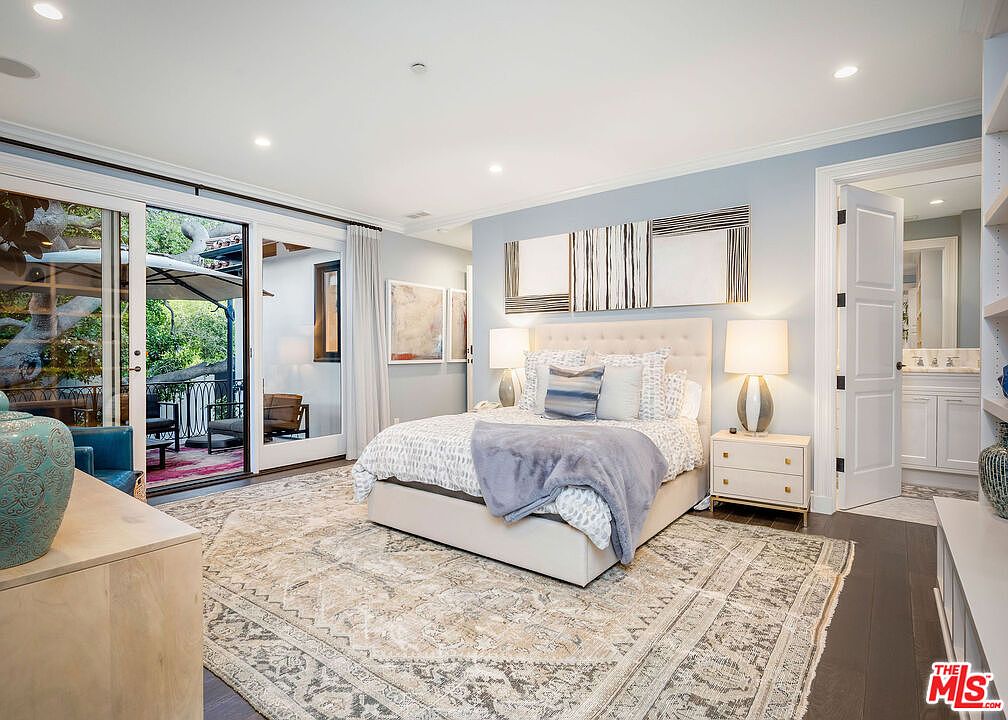
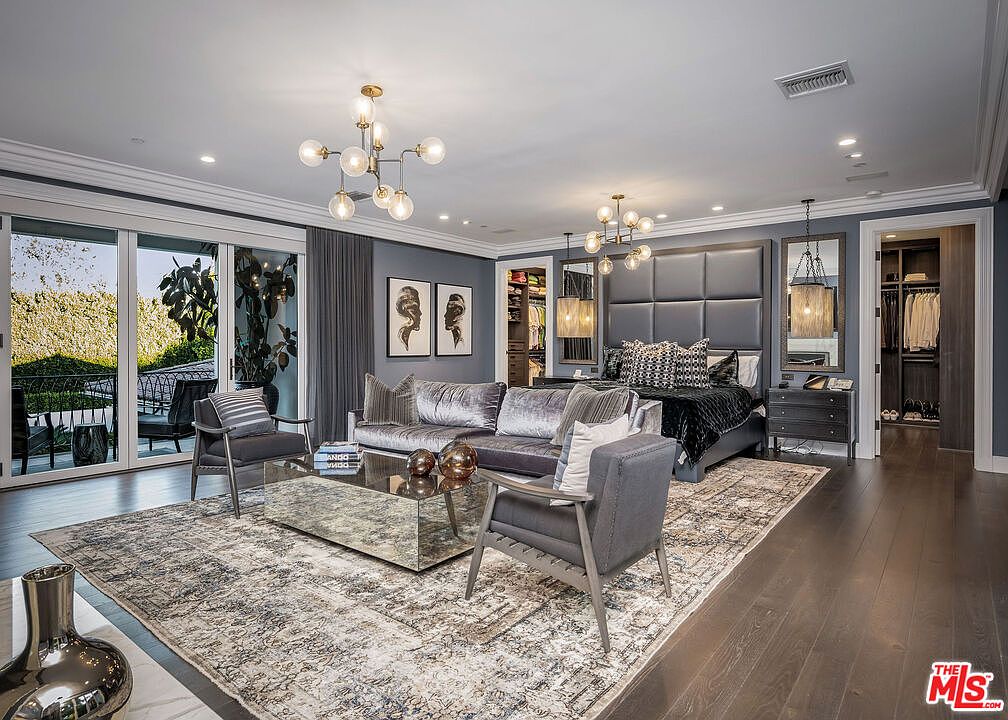
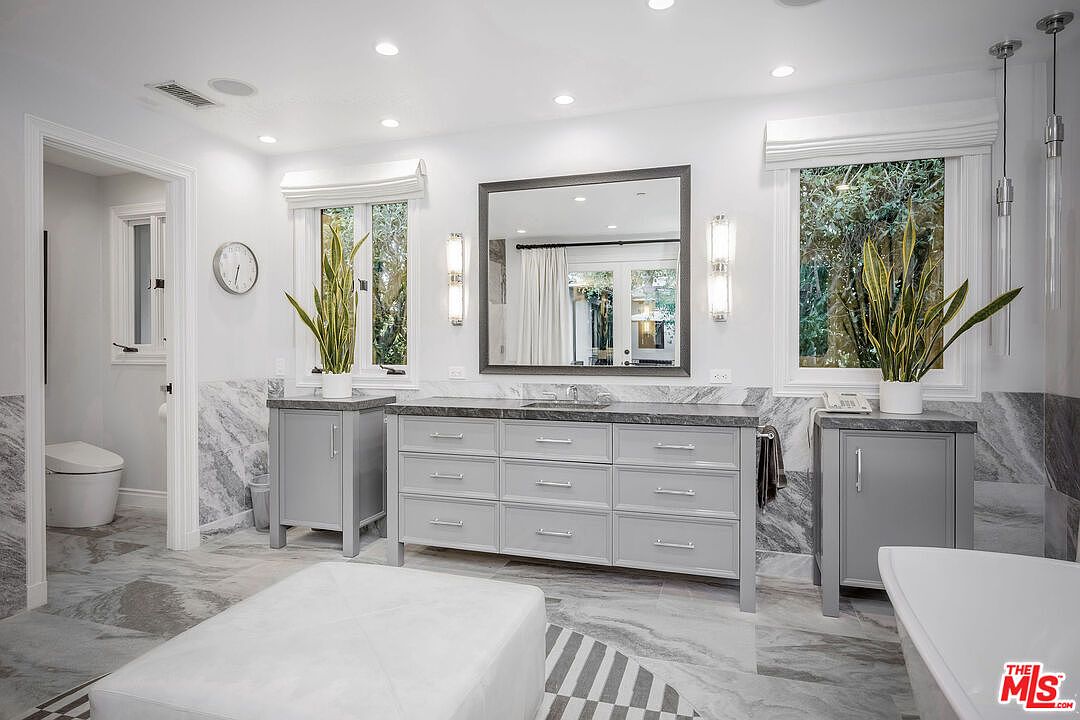
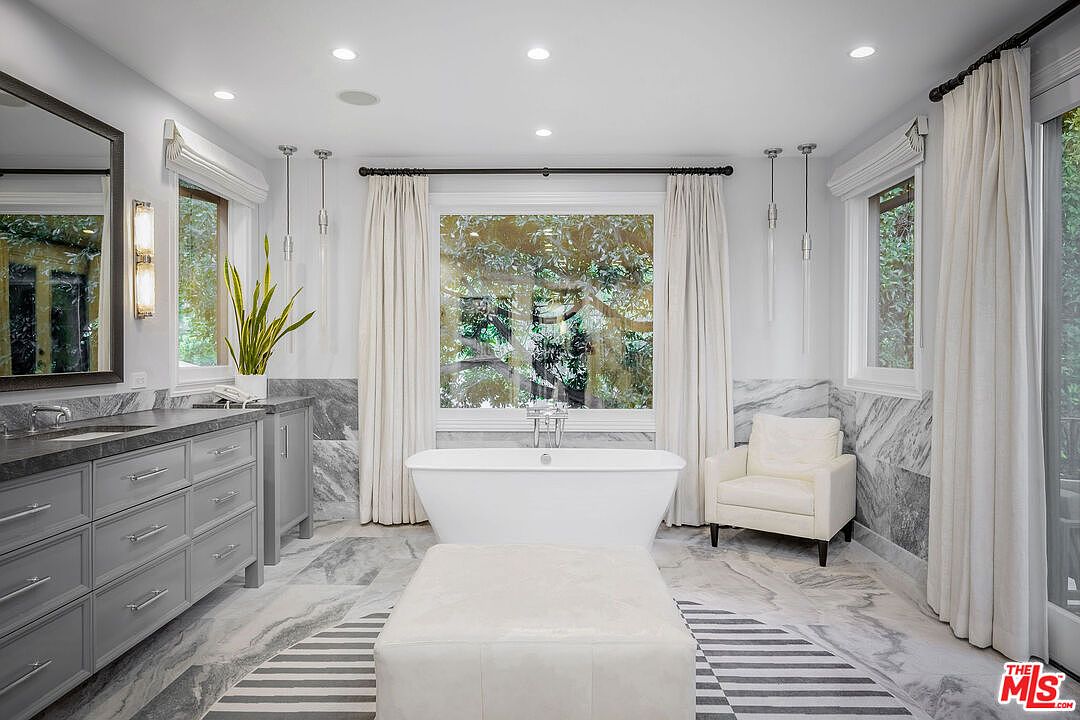
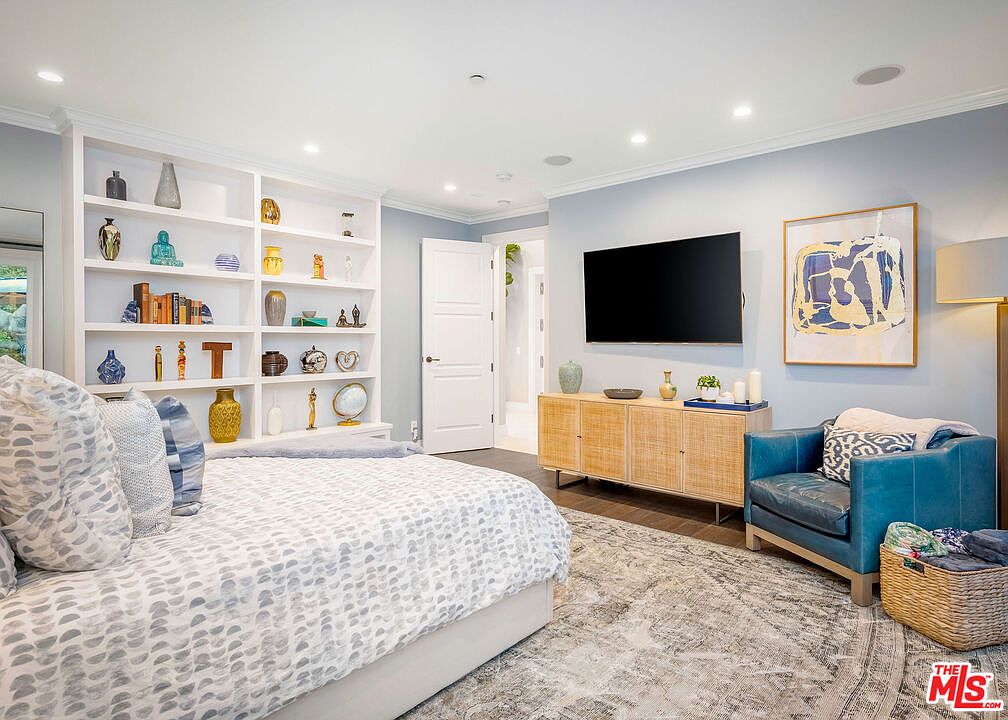
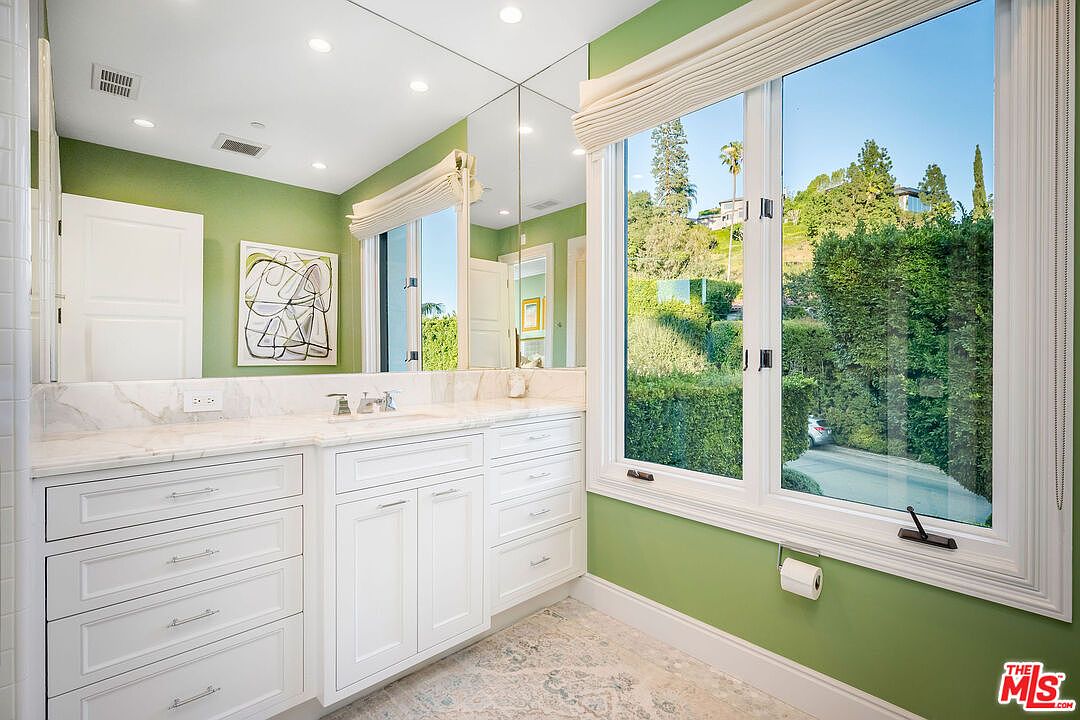
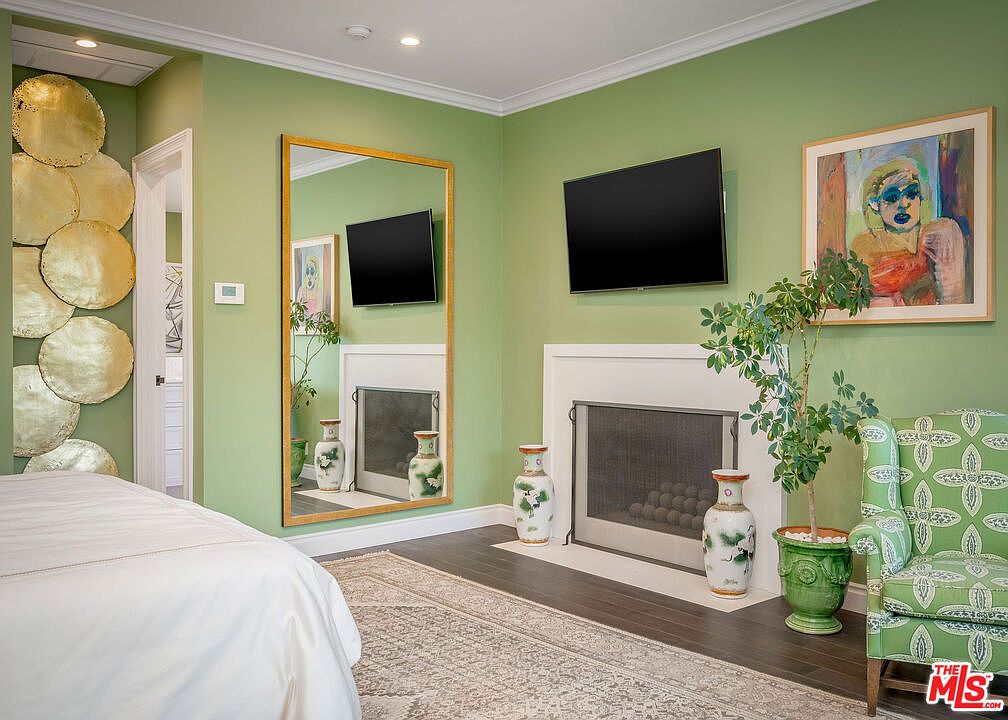
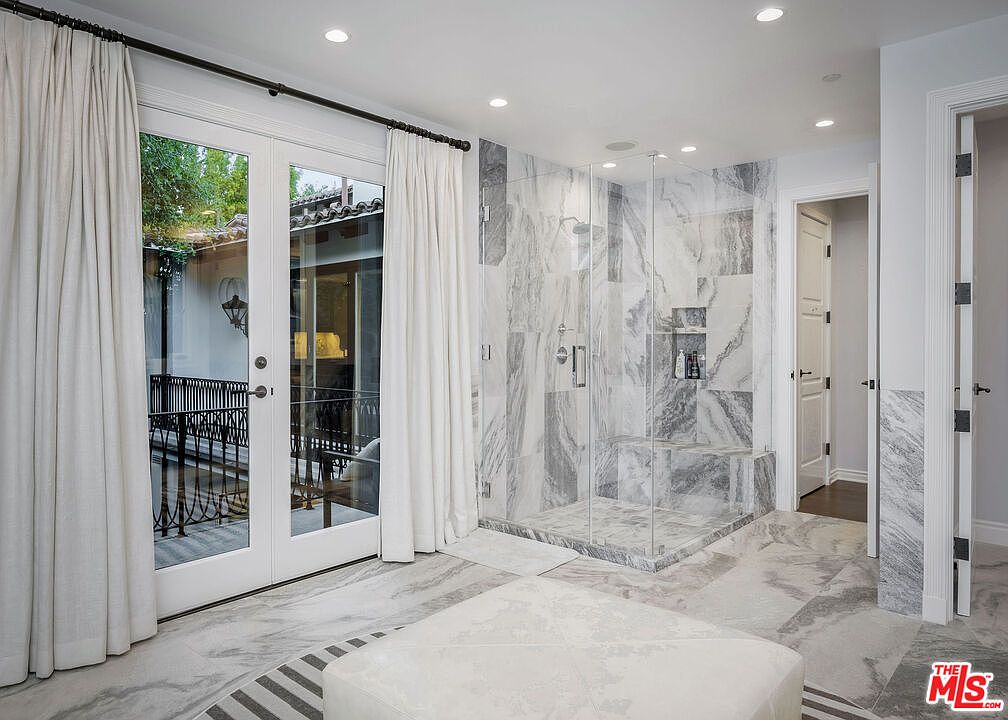
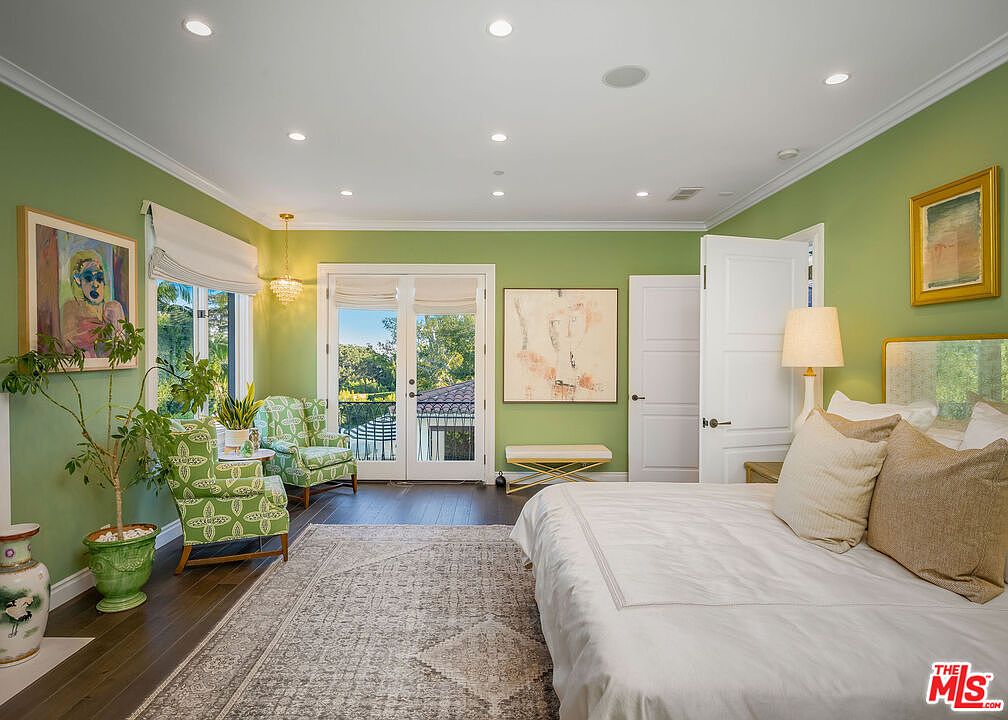
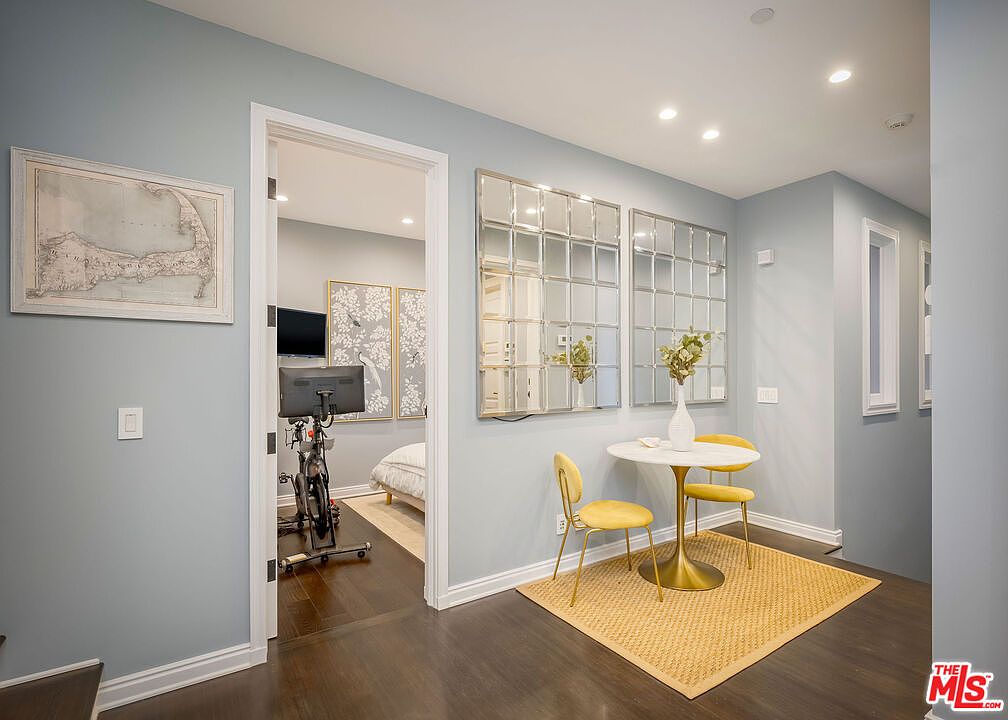
Back inside, the state-of-the-art kitchen — white cabinetry, stone island, high-end stainless appliances, and a built-in wine refrigerator — flows directly into a family room, creating a second, more intimate center of the home for daily life. A dedicated screening lounge provides a separate register of entertainment entirely. Upstairs, the primary suite is the residence's most private sanctuary: a large, thoughtfully appointed bedroom with direct balcony access, dual marble bathrooms finished in light-toned veined stone, and custom walk-in closets of considerable scale. Additional en-suite bedrooms and dedicated staff quarters give the residence genuine operational flexibility — for multigenerational households, full-time staff, or extended-stay guests.
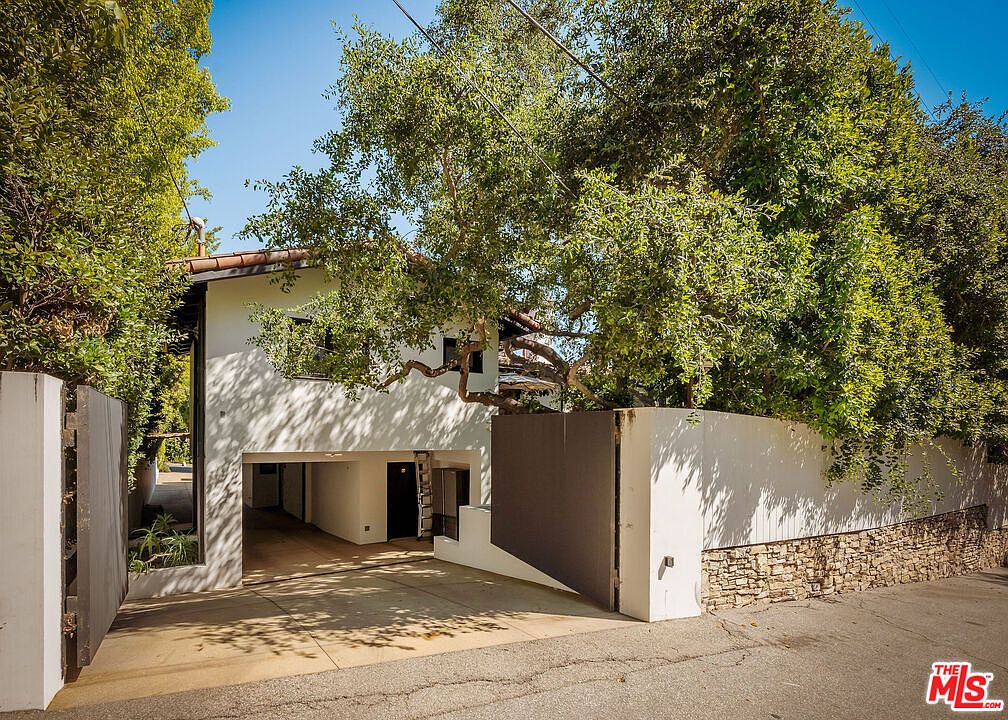
The compound's most functionally rare attribute may be its street-to-street access. A double-gated garage with direct interior entry serves primary arrivals, while a discreet rear mews provides a second gated entry point — allowing service, staff, and private movement to operate entirely independently of the main approach. In Los Angeles, at this address, that level of functional discretion is not a detail. It is a defining characteristic.
North Doheny Drive occupies a particular place in the geography of Los Angeles — a residential address that sits at the seam between two of the city's most culturally significant and persistently desirable neighborhoods. To the south lies the residential quiet of Beverly Hills; to the north, the storied hills and canyons of West Hollywood and the Hollywood Hills. The street itself runs north from Burton Way through the 90069 zip code, a postal designation that has long been understood locally as shorthand for a very specific kind of Los Angeles living: private, elevated, and deeply connected to the city's most enduring centers of culture and commerce.
The broader neighborhood — sometimes referred to as the Bird Streets corridor or the lower hills above Sunset — has attracted discerning residents for decades precisely because of what it offers in combination: proximity without exposure, access without sacrifice of privacy. Sunset Boulevard runs nearby, providing a connective thread to the Sunset Strip, with its concentration of acclaimed restaurants, boutique hotels, and cultural institutions that have defined Los Angeles nightlife and creative culture for the better part of a century. The Chateau Marmont, a landmark of Hollywood history, is moments away. The restaurants and retail of West Hollywood's Santa Monica Boulevard and Melrose Avenue are similarly close.
For those oriented toward wellness, the area is exceptionally well-served. Equinox locations, boutique fitness studios, and the hiking trails of Runyon Canyon — one of Los Angeles' most frequented urban natural spaces — are all within easy reach. The canyon's trails offer both a physical escape and a kind of social ritual that is distinctly of this part of the city.
Beverly Hills proper, reachable in minutes via Doheny Drive, brings with it Rodeo Drive and the broader shopping corridor of Beverly Drive and Canon Drive, as well as the culinary landscape of the Golden Triangle. The Beverly Hills Hotel on Sunset Boulevard, a historic landmark of California hospitality, sits nearby. Cedars-Sinai Medical Center, one of the leading medical institutions in the country, is also within close proximity — a practical consideration for residents who value access to world-class healthcare.
The 90069 zip code is also notable for its concentration of architecturally significant residential properties. The hills and canyons north of Sunset have long attracted architects, designers, and their clients — producing a residential landscape of considerable variety and ambition. Properties on and near North Doheny Drive benefit from this culture of architectural investment, a neighborhood character that reinforces rather than diminishes the value of standout residences.
What the address ultimately offers — and what makes it persistently sought-after — is a version of Los Angeles living that resolves an apparent contradiction: to be genuinely central to the city's most important corridors while remaining completely removed from them. The restaurants, the culture, the commerce, and the connectivity are all within minutes. The silence, the privacy, and the sense of remove are available the moment the gates close. For a property of this scale and ambition, there is no more appropriate setting.
Featured Highlights
Curated Content • Presented by Justin Leigh