The Story Behind
Where the Pacific Horizon Meets Italian Renaissance Mastery
There are homes that command attention, and then there are estates that command reverence. Villa Cape Point belongs to the latter category — a property so deliberately conceived, so painstakingly executed, that it occupies its own classification entirely.
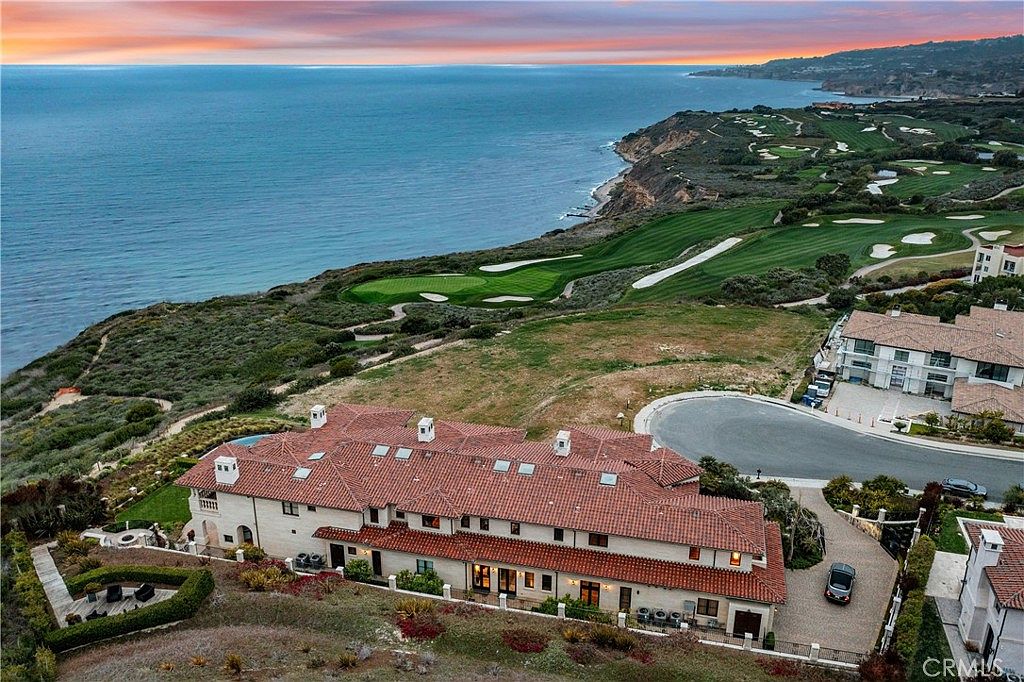
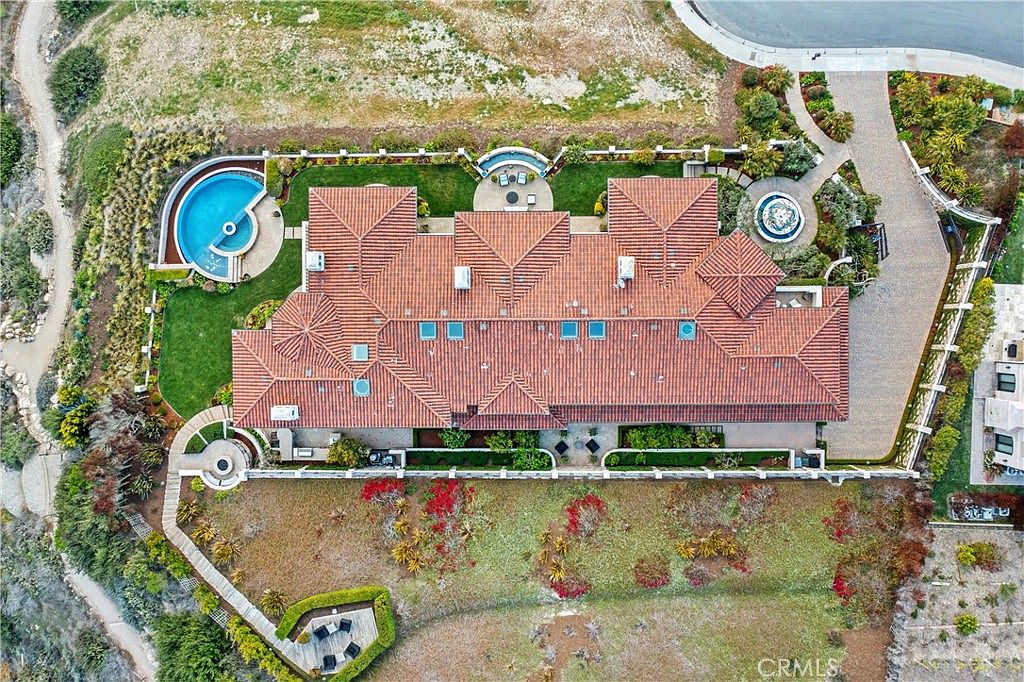
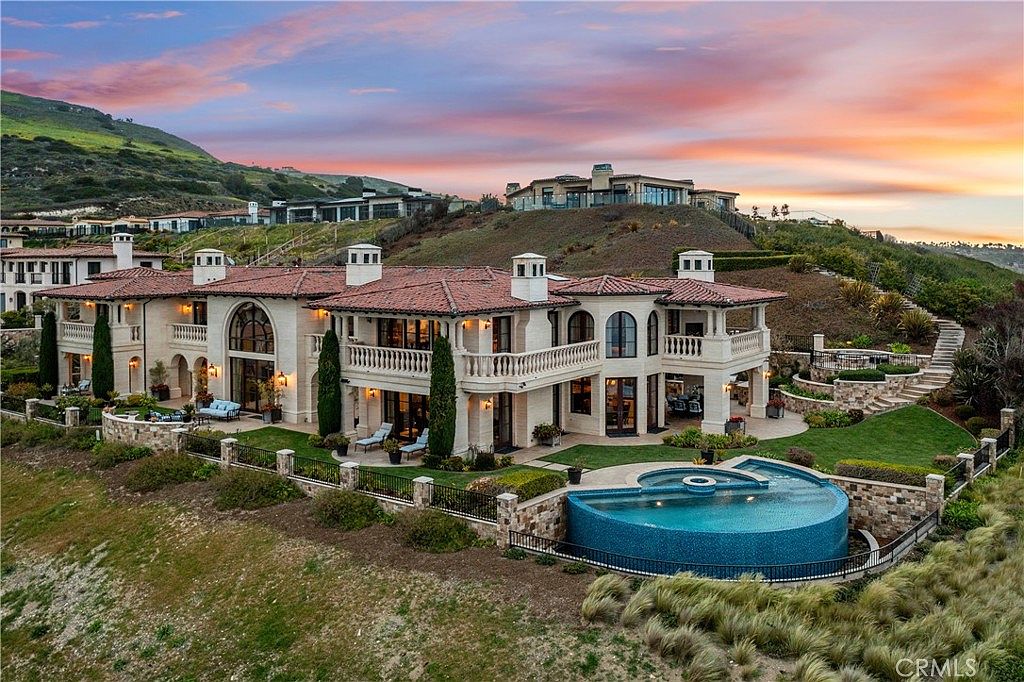
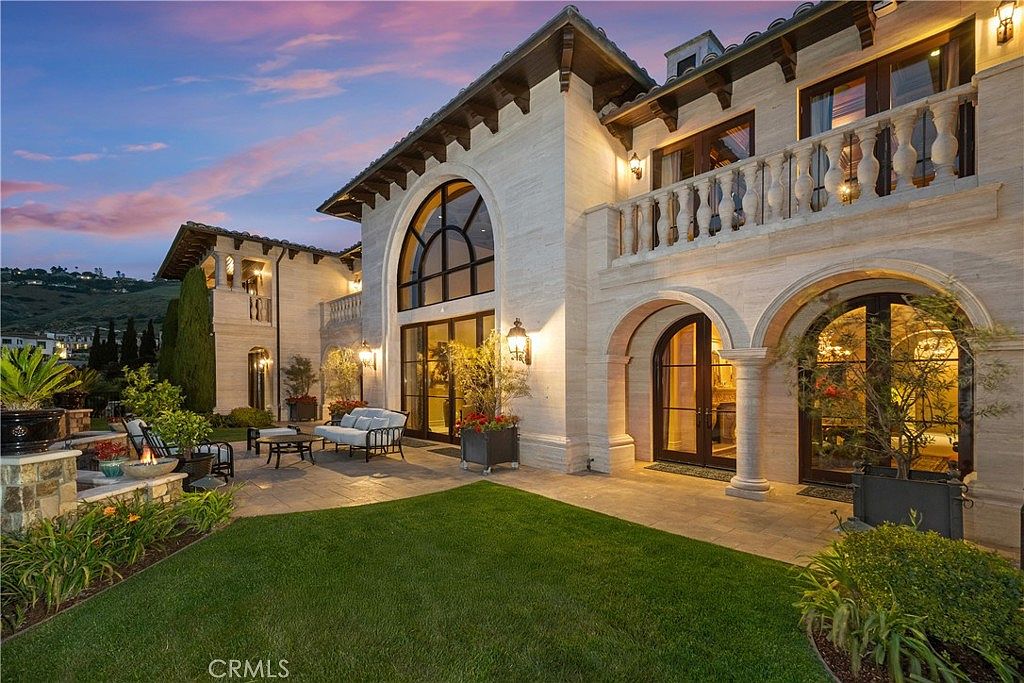
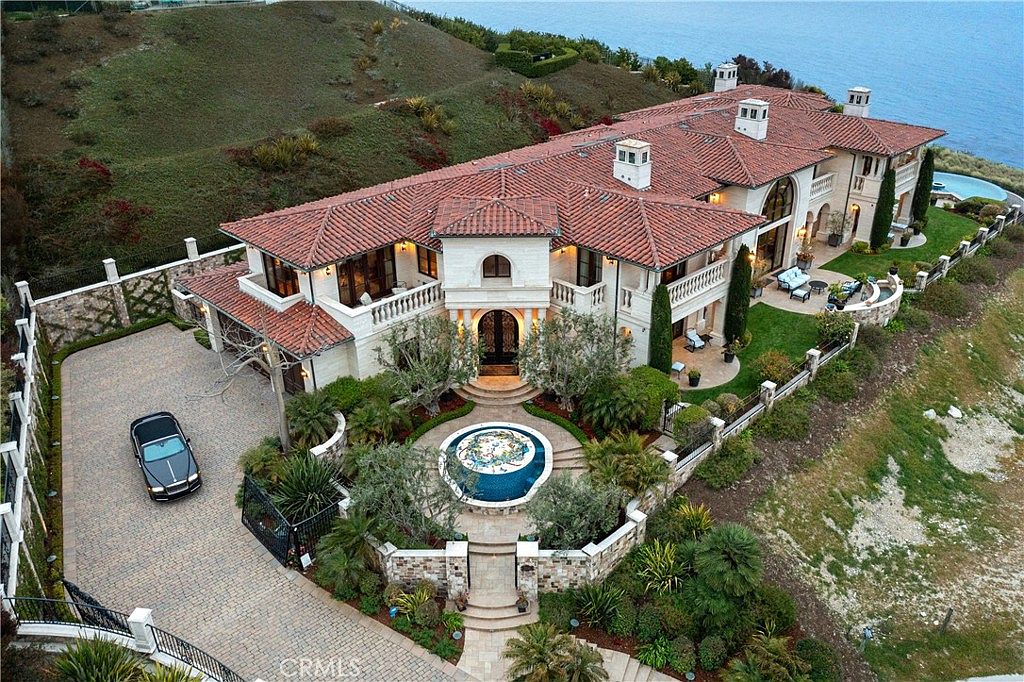
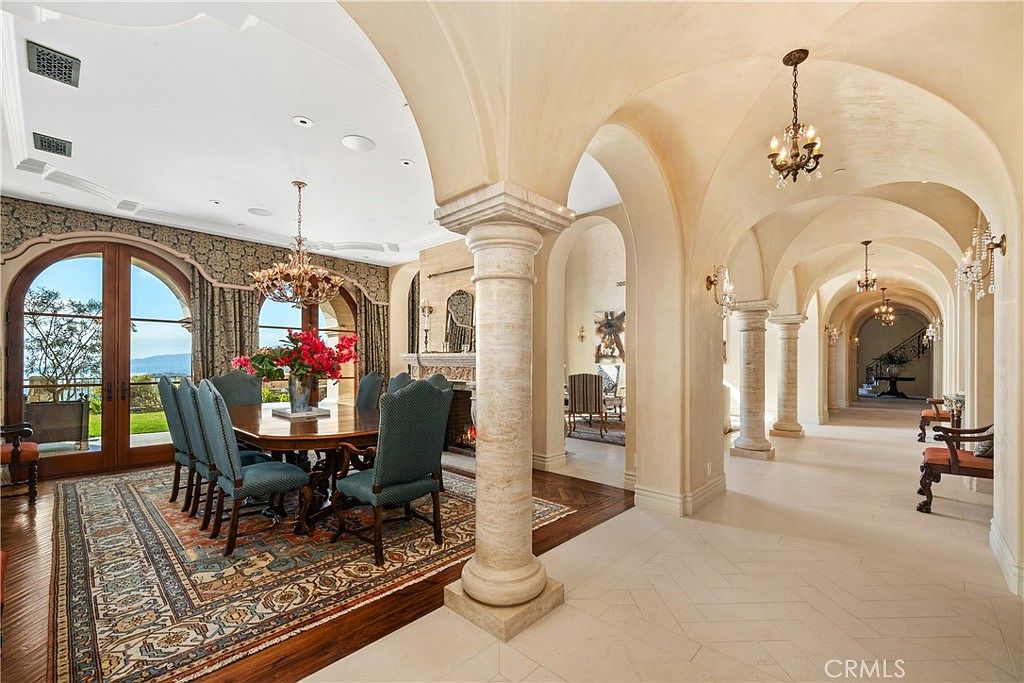
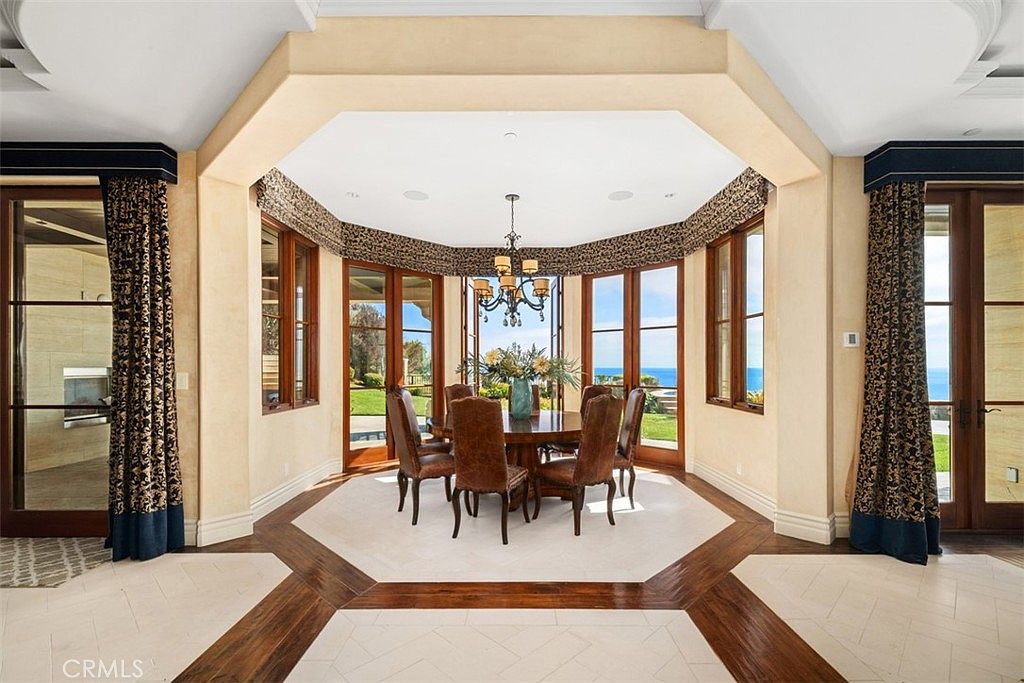
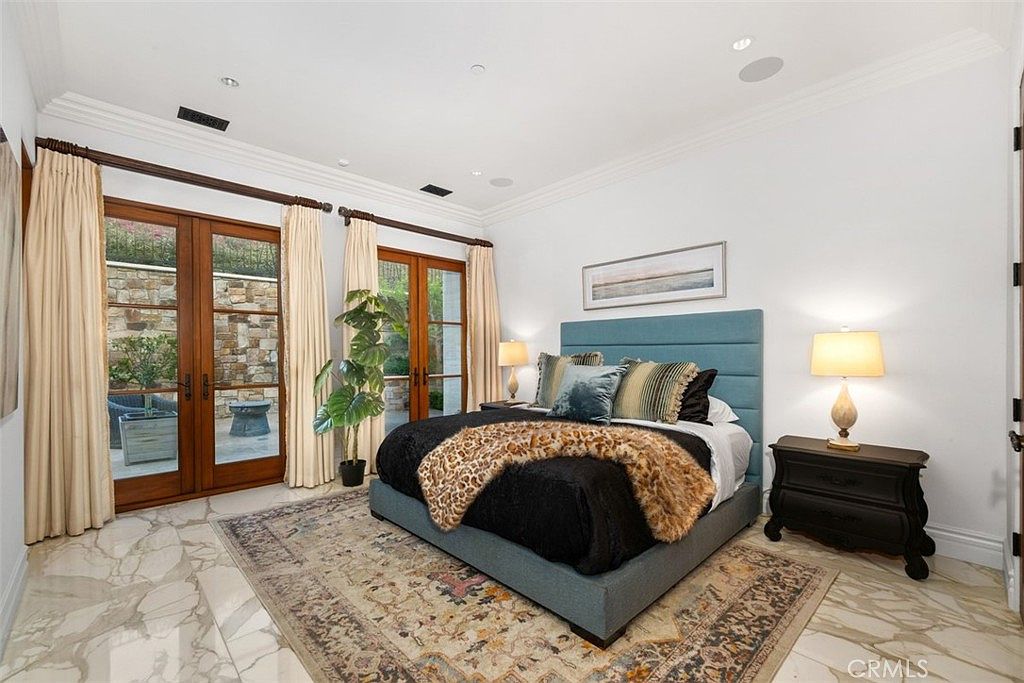
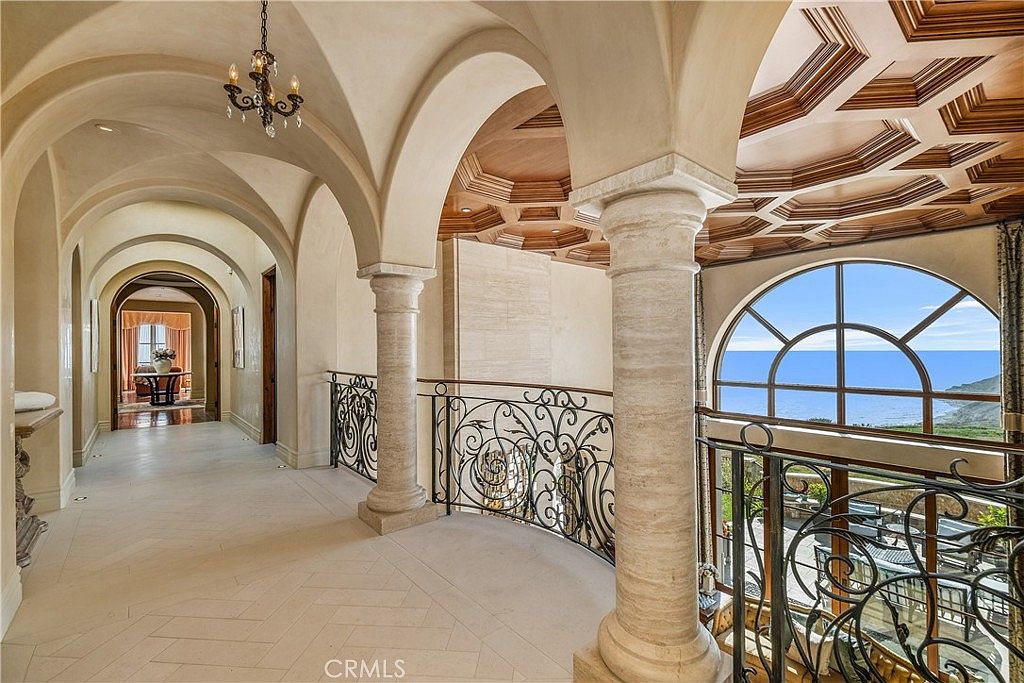
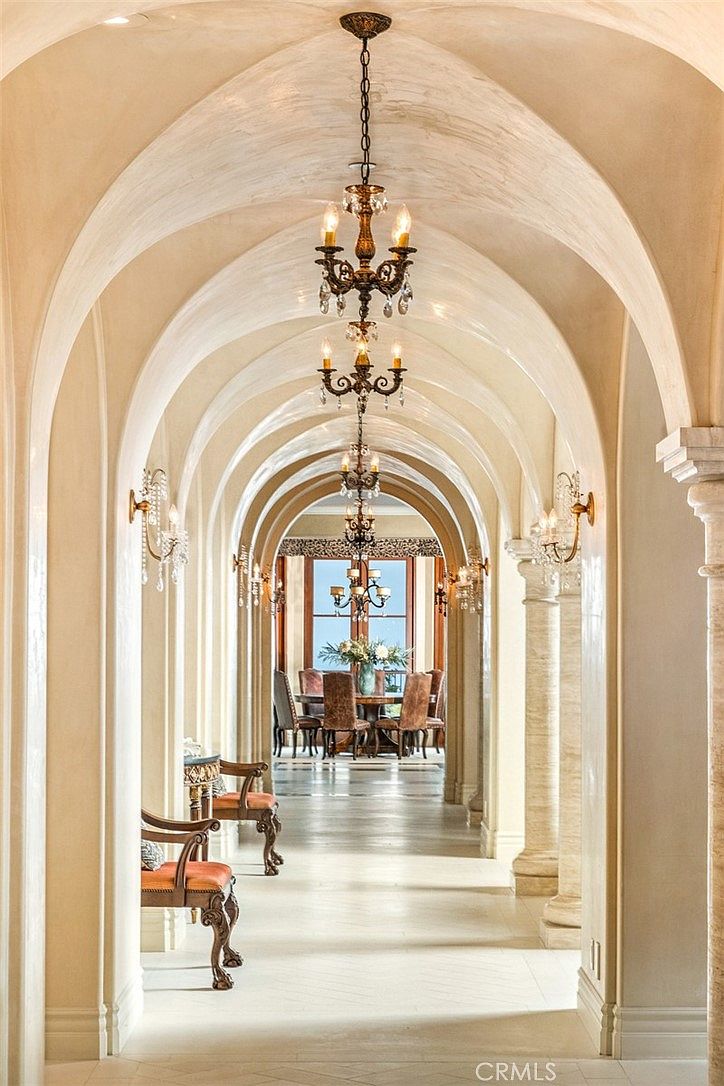
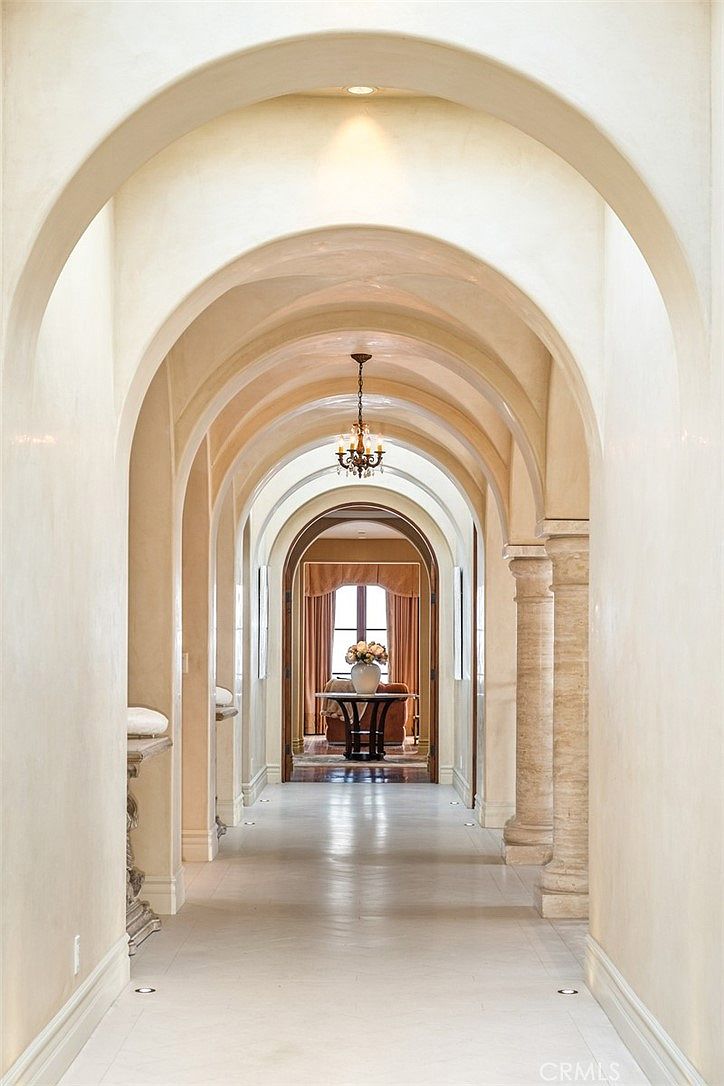
Conceived by a celebrated developer and brought to life through the design vision of acclaimed architect Louie Tomaro, the estate was built not to trend, but to endure. Its Italian Renaissance inspiration is evident in every material choice and every proportional decision: handcrafted Italian travertine cladding the exterior walls, limestone floors that anchor the principal living spaces, wood-encased pocket doors that rise floor-to-ceiling to dissolve the threshold between interior and ocean horizon. The architecture does not compete with its setting — it completes it.
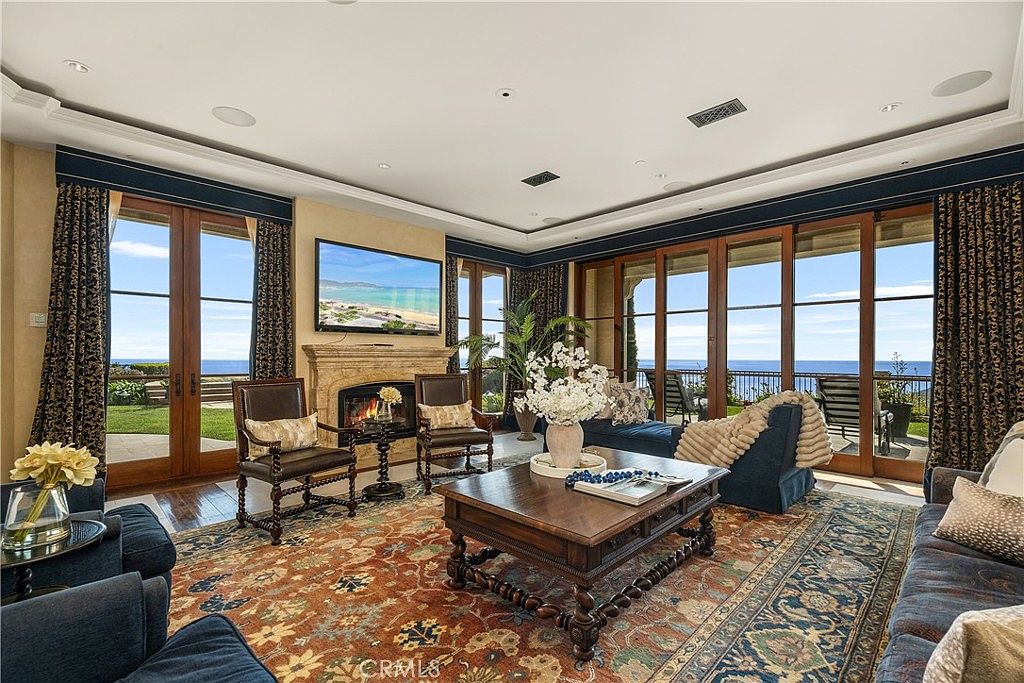
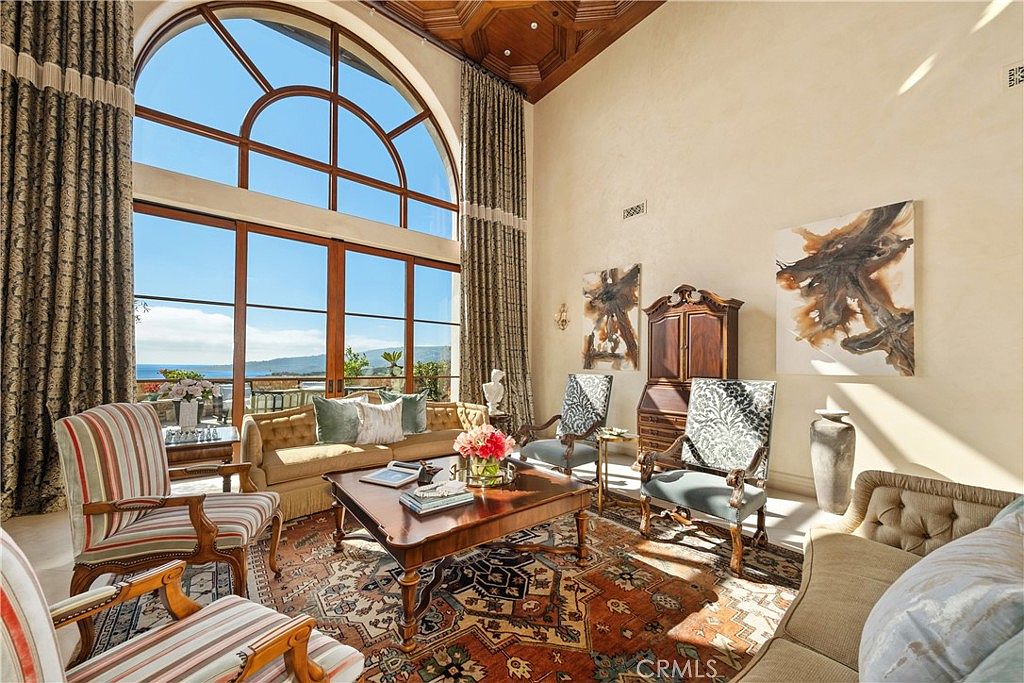
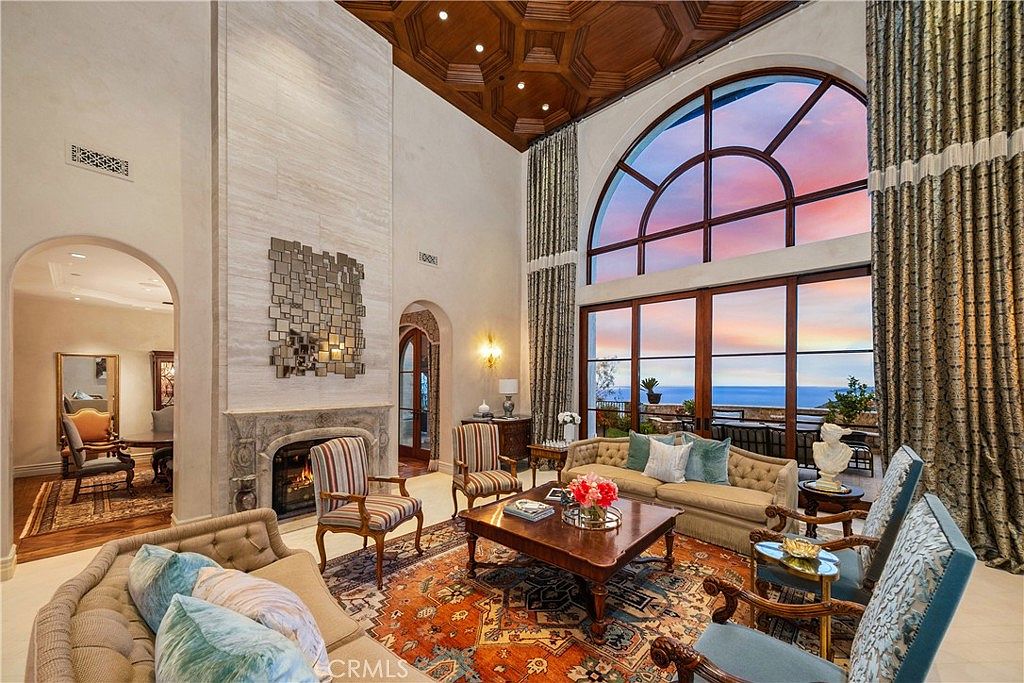
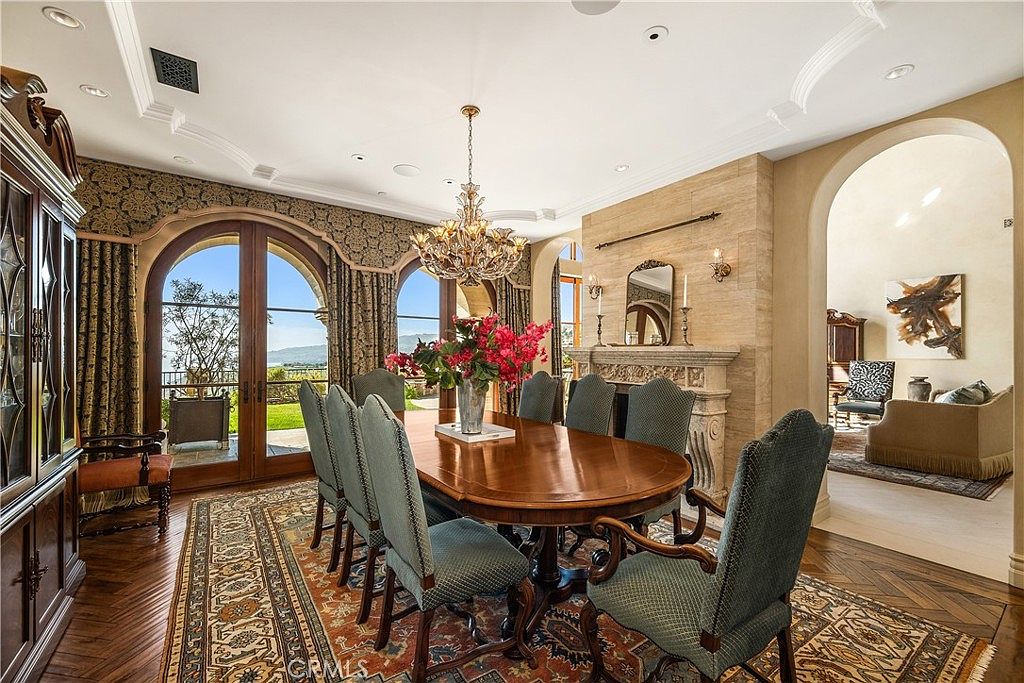
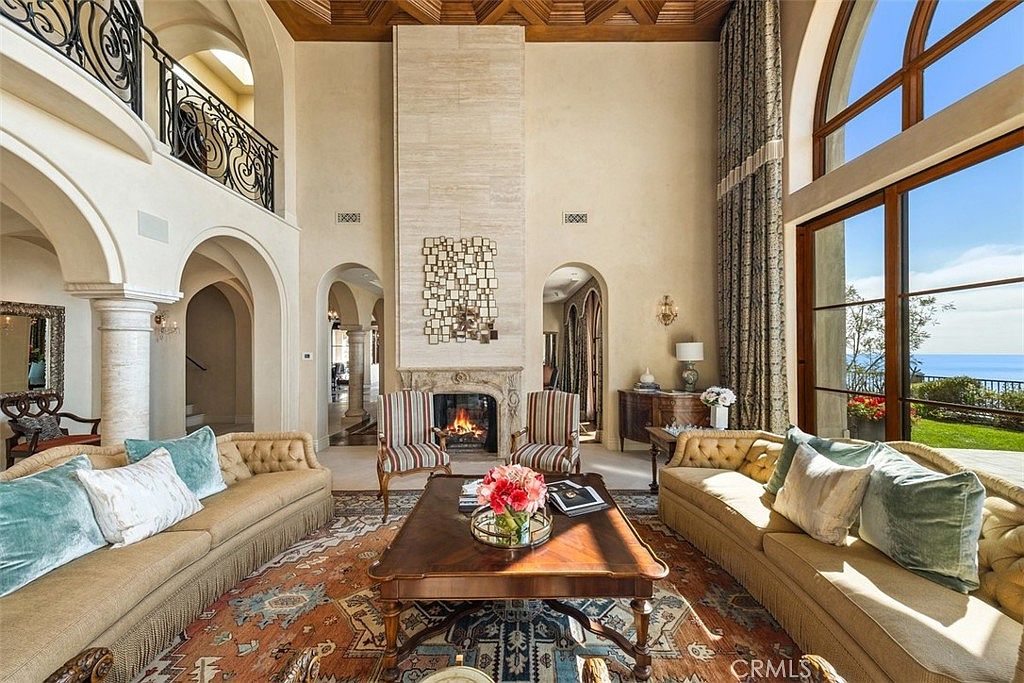
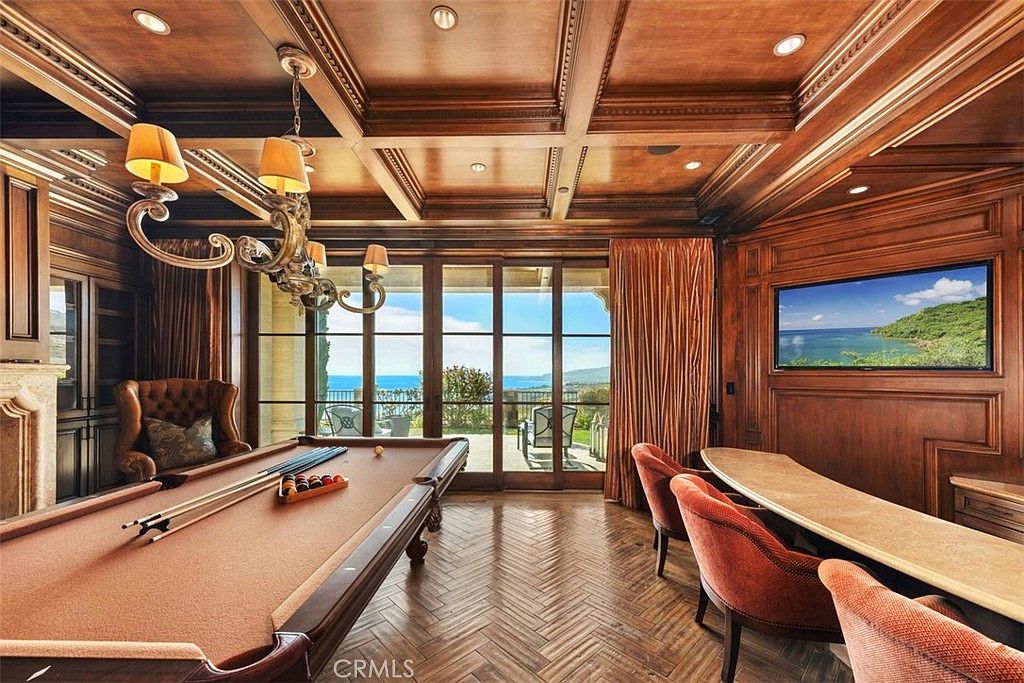
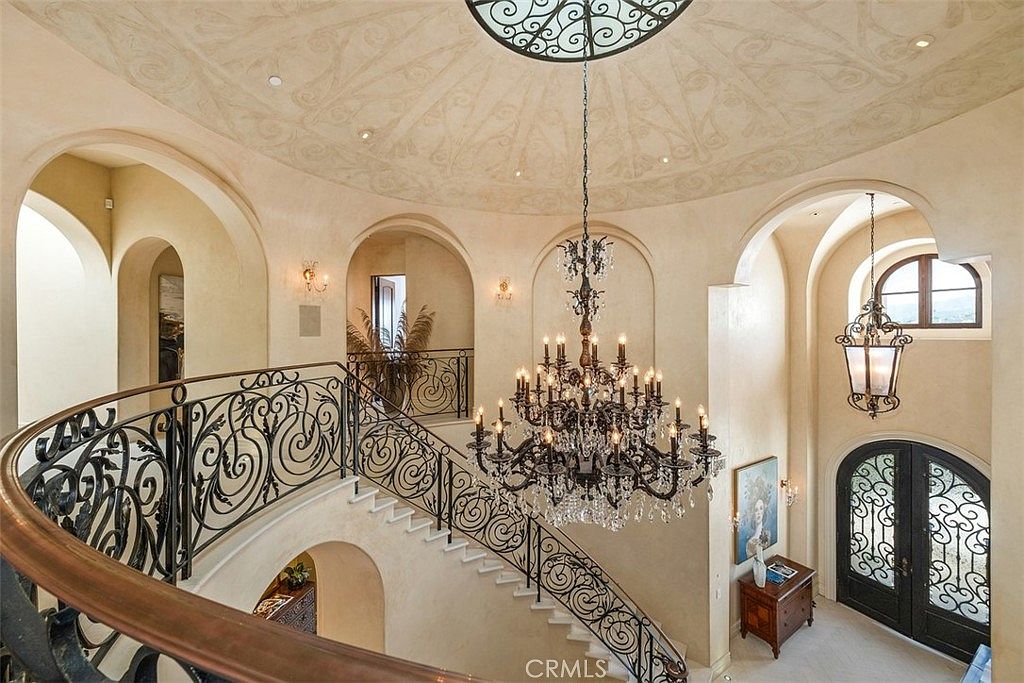
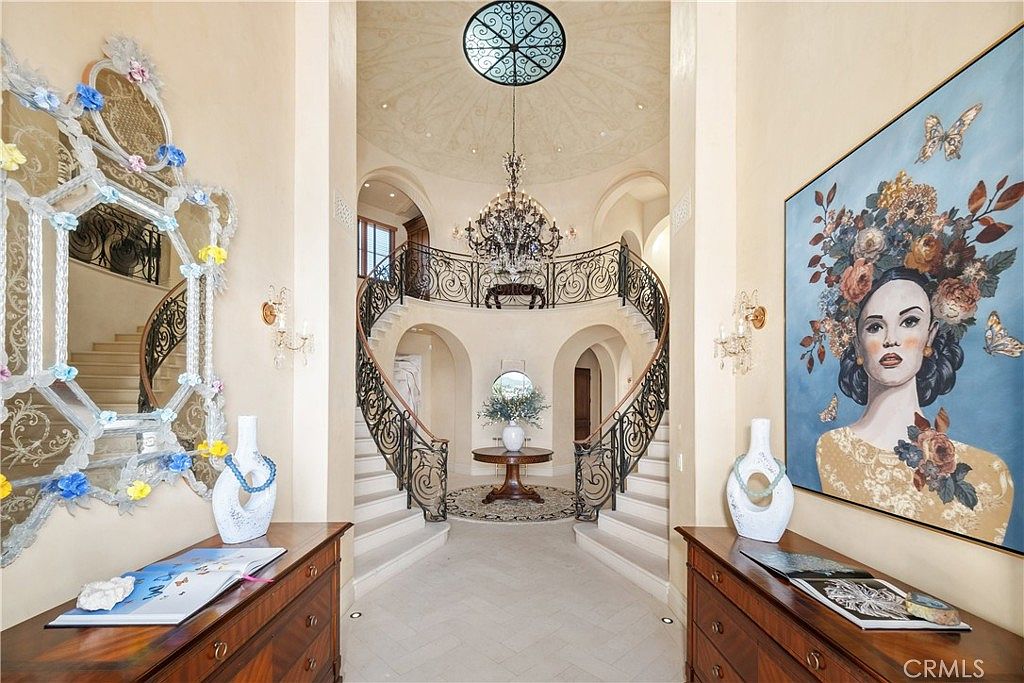
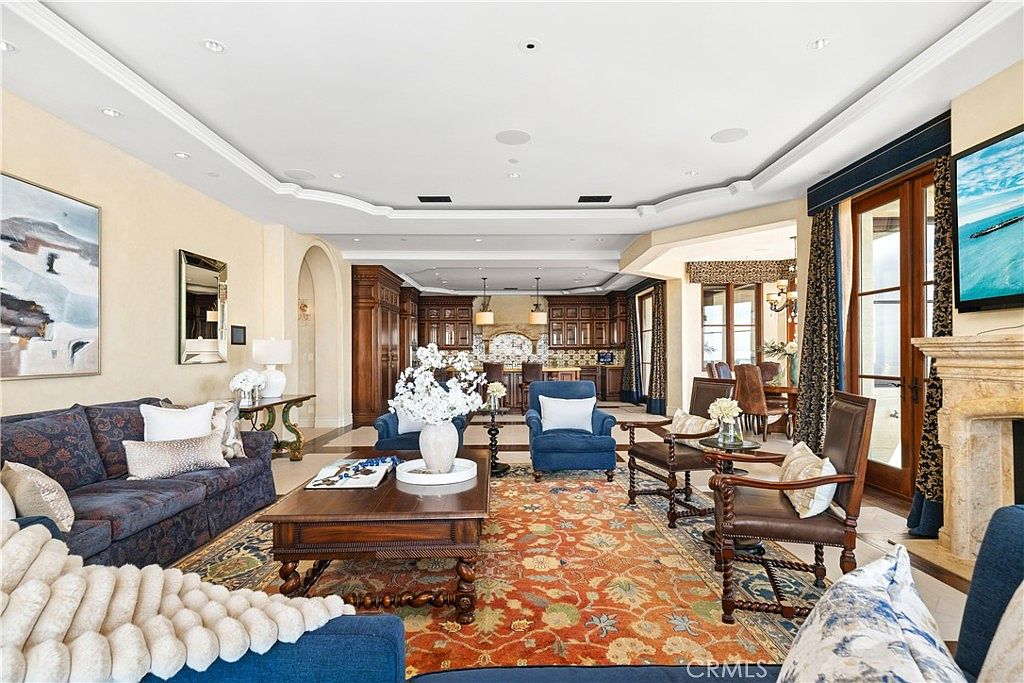
Inside, the scale is immediate and unhurried. Double-height living rooms crowned with coffered wood ceilings and framed by grand arched windows create a sense of ceremony that never tips into formality. Schonbek chandeliers anchor the principal rooms, their crystal catching the light that pours in from nearly every direction across the estate's approximately 300 feet of view frontage. Dual sweeping staircases curve upward from the grand foyer beneath a domed ceiling and a multi-tiered crystal chandelier — one of the estate's most arresting first impressions. A private elevator connects all levels with equal refinement.
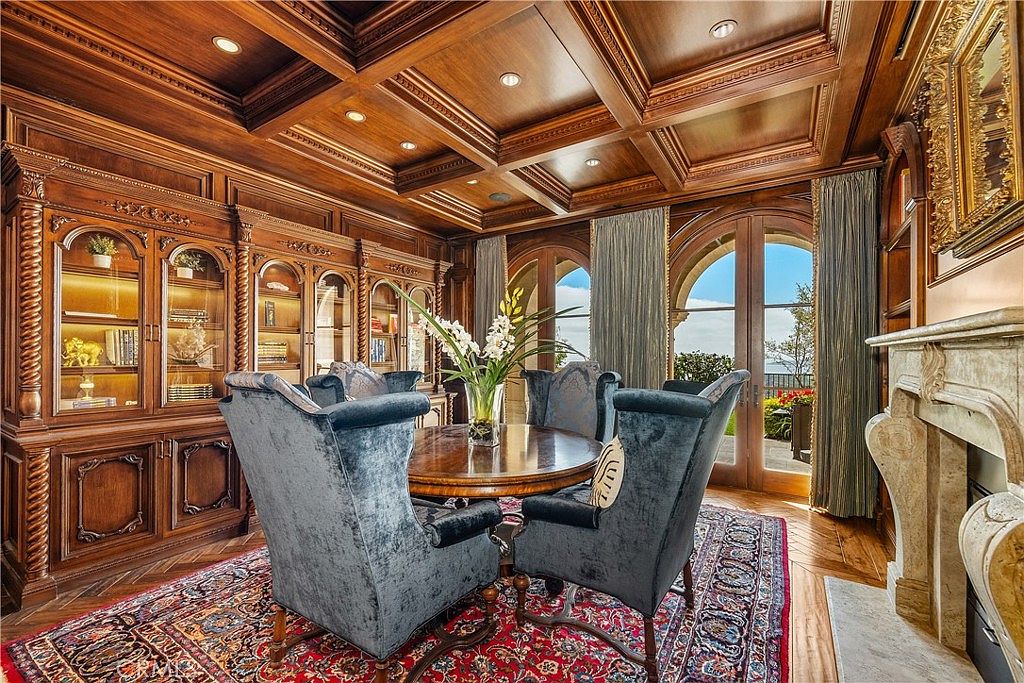
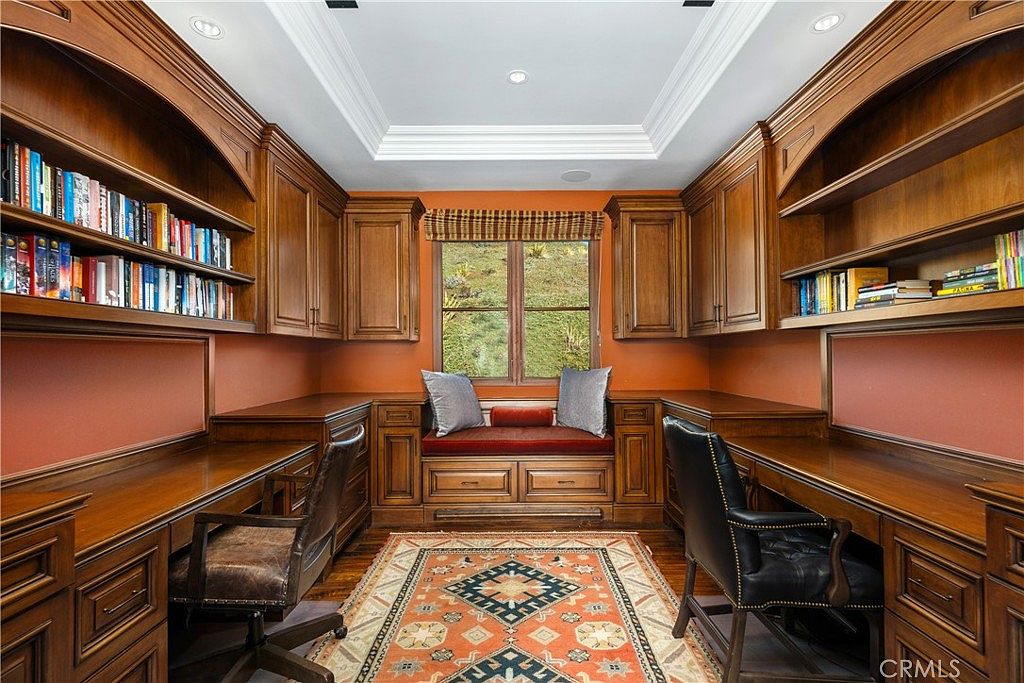
The home's programmatic range is as serious as its architectural pedigree. A dedicated home theater, a library, a world-class wine cellar and tasting room, an executive office with coffered paneling and fireplace, and a children's workspace each occupy their own considered space. The butler's pantry and bar are positioned to serve the home's full entertaining spectrum, from intimate evenings to large-scale gatherings. A Creston smart-home system manages the estate's technical infrastructure seamlessly and invisibly.
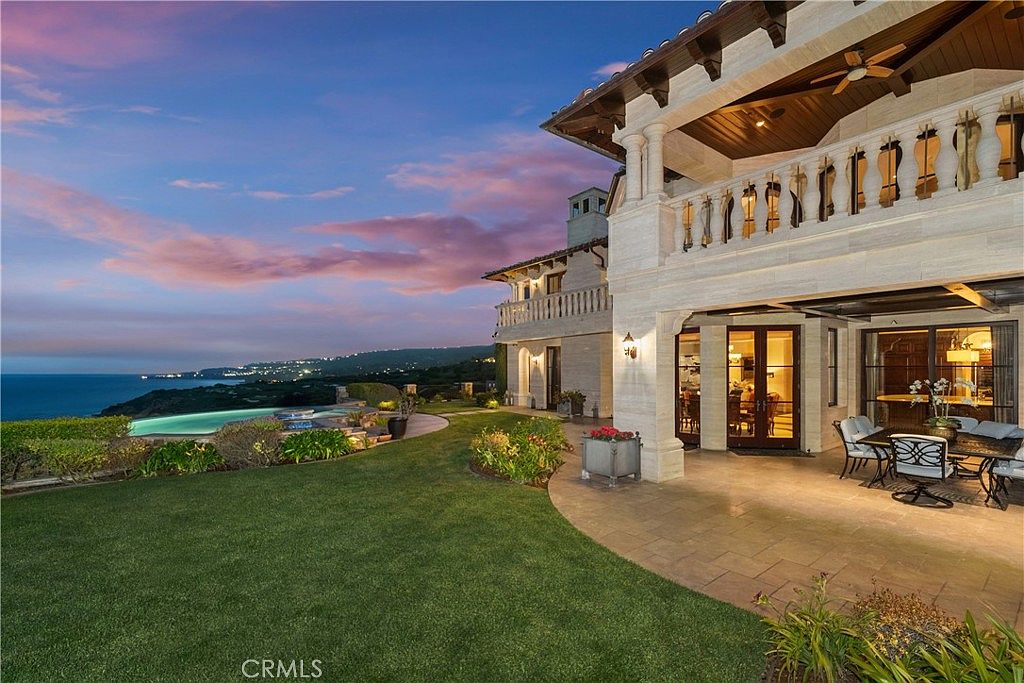
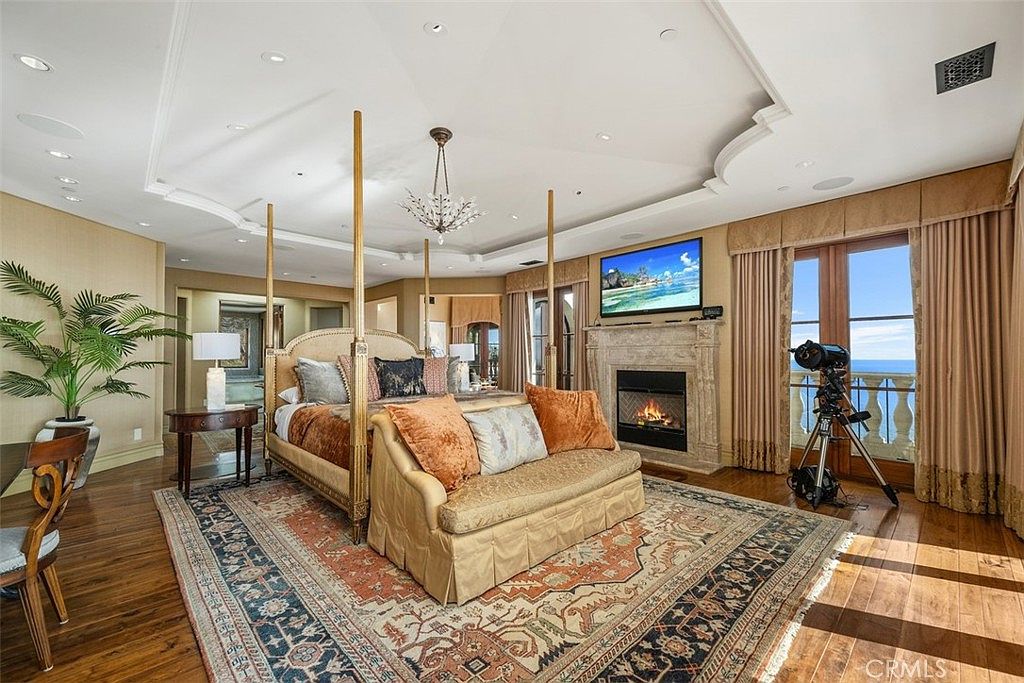
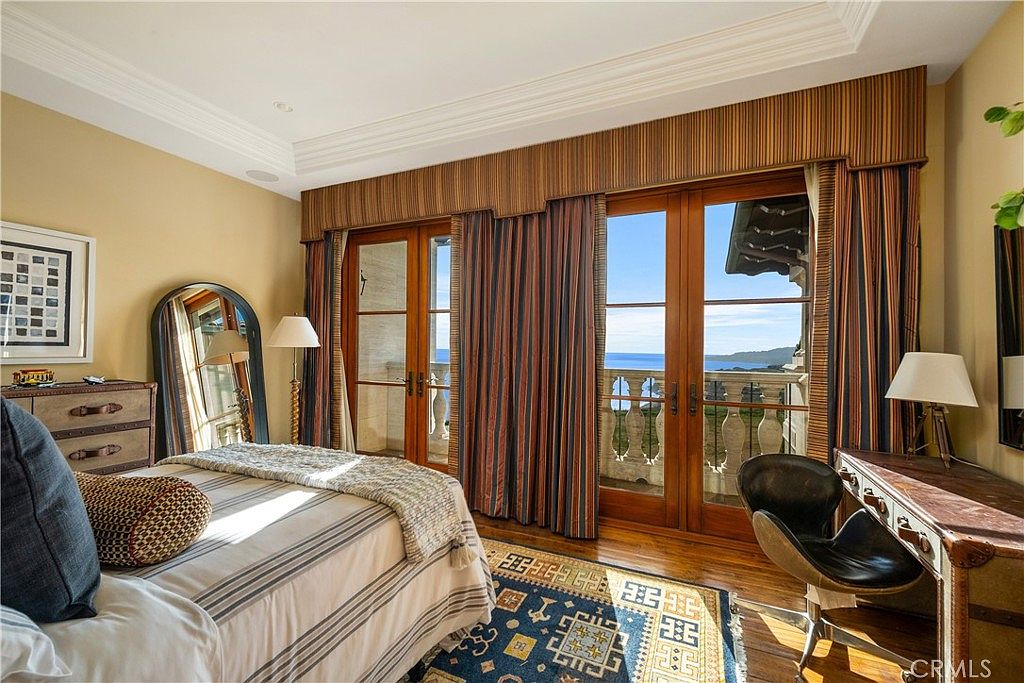
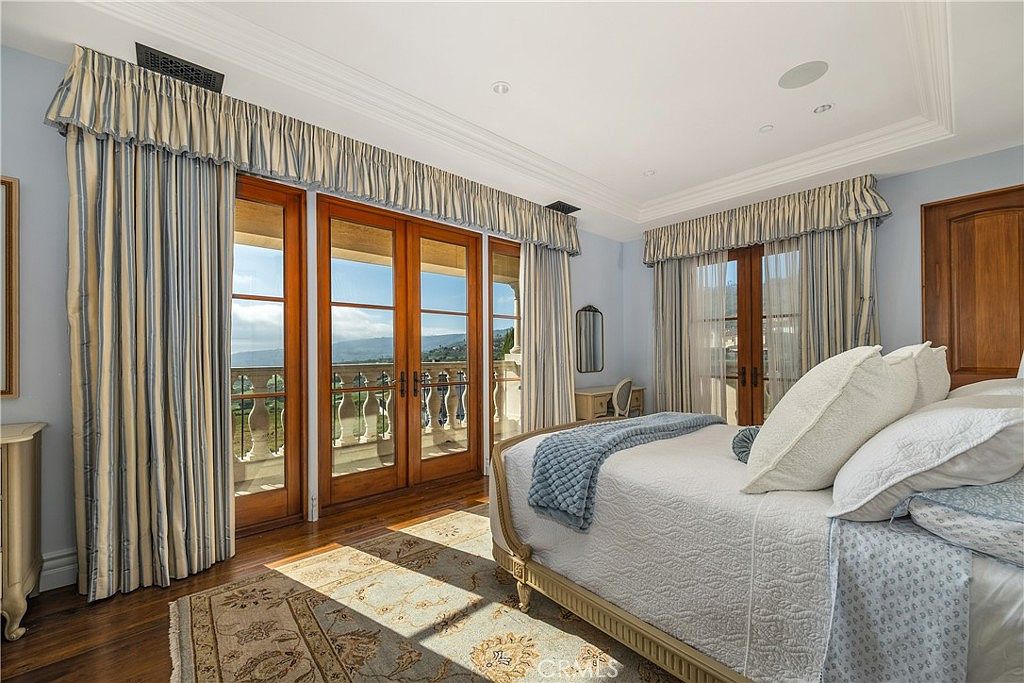
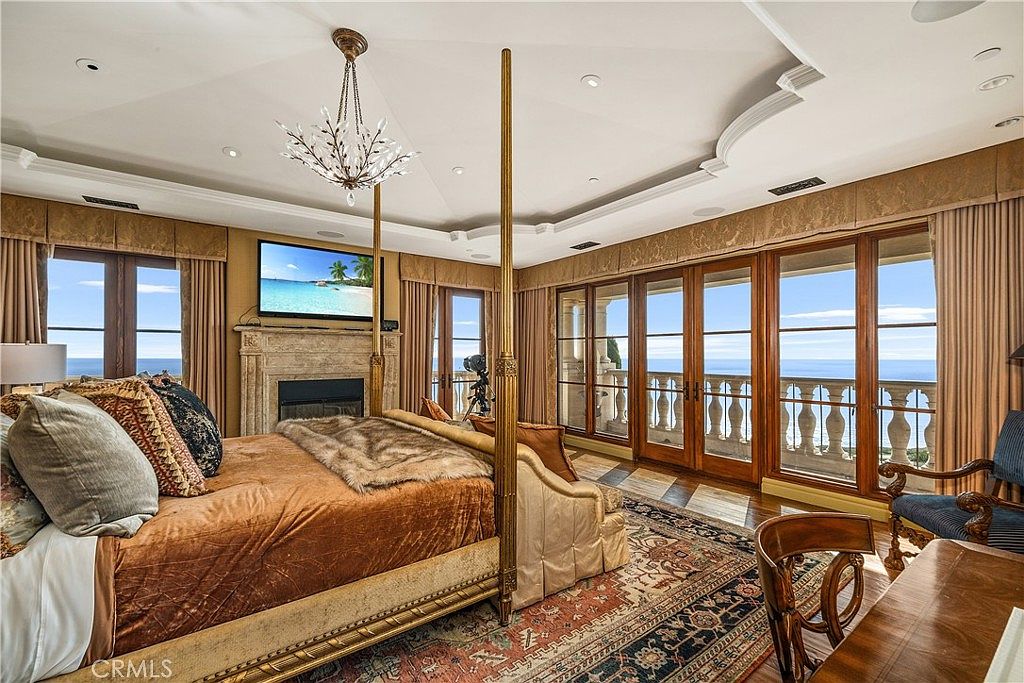
The primary suite occupies its own private world within the home. A fireplace lounge, dual walk-in closets with custom dark wood cabinetry and glass-fronted display cases, a private gym with sauna, and an onyx-clad bath finished with the same handcrafted precision found throughout the estate comprise a retreat of genuine consequence. Covered and open-air terraces extend directly from the suite over the coastline, offering unobstructed views at every hour.
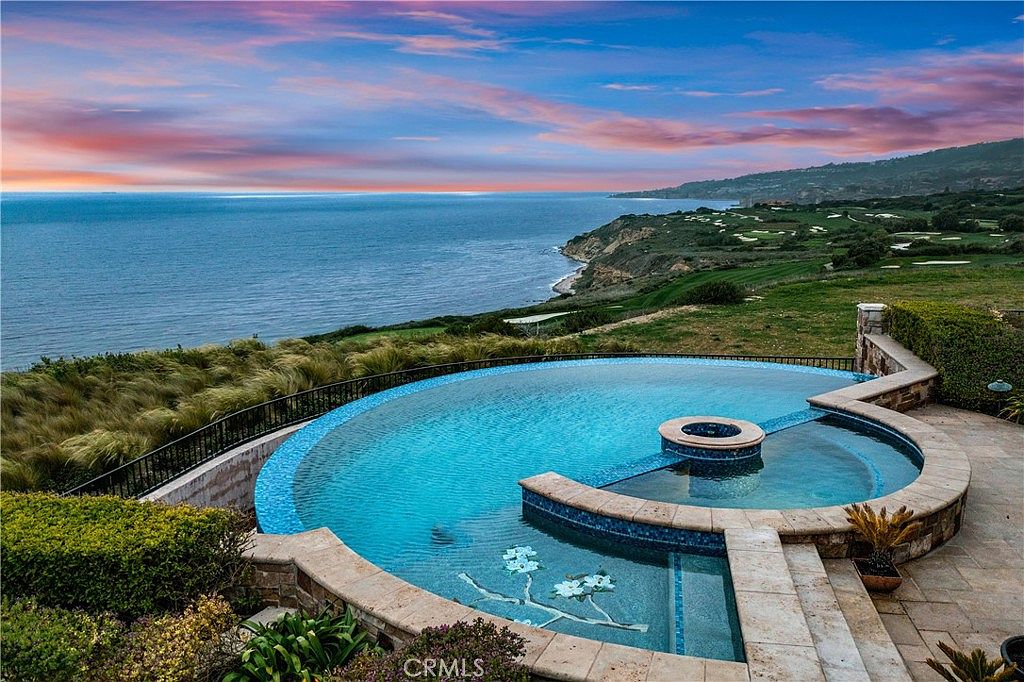
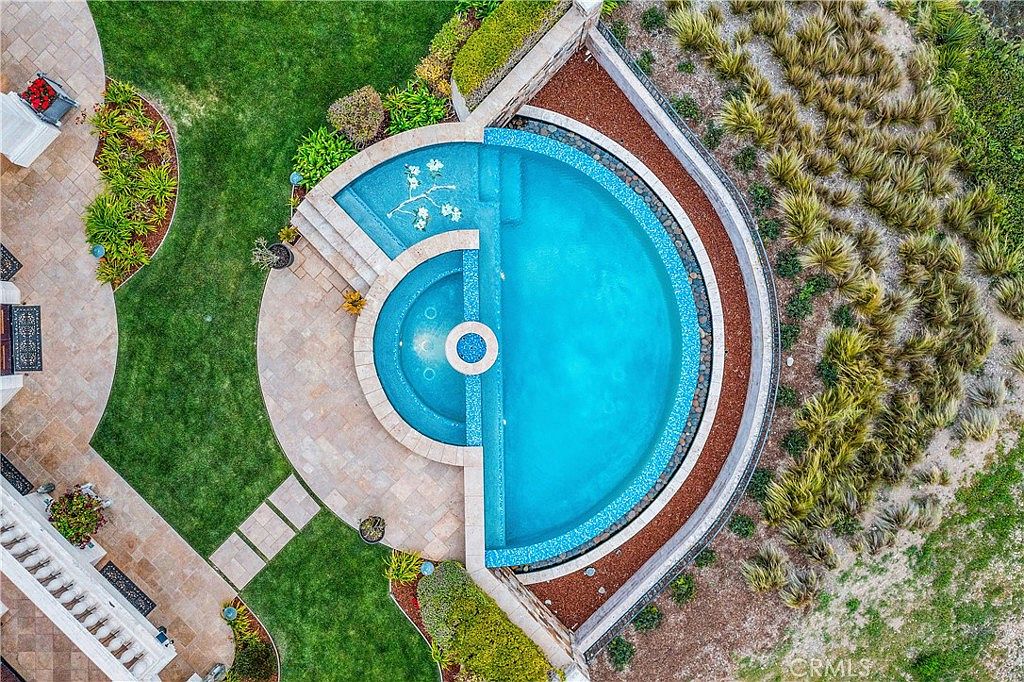
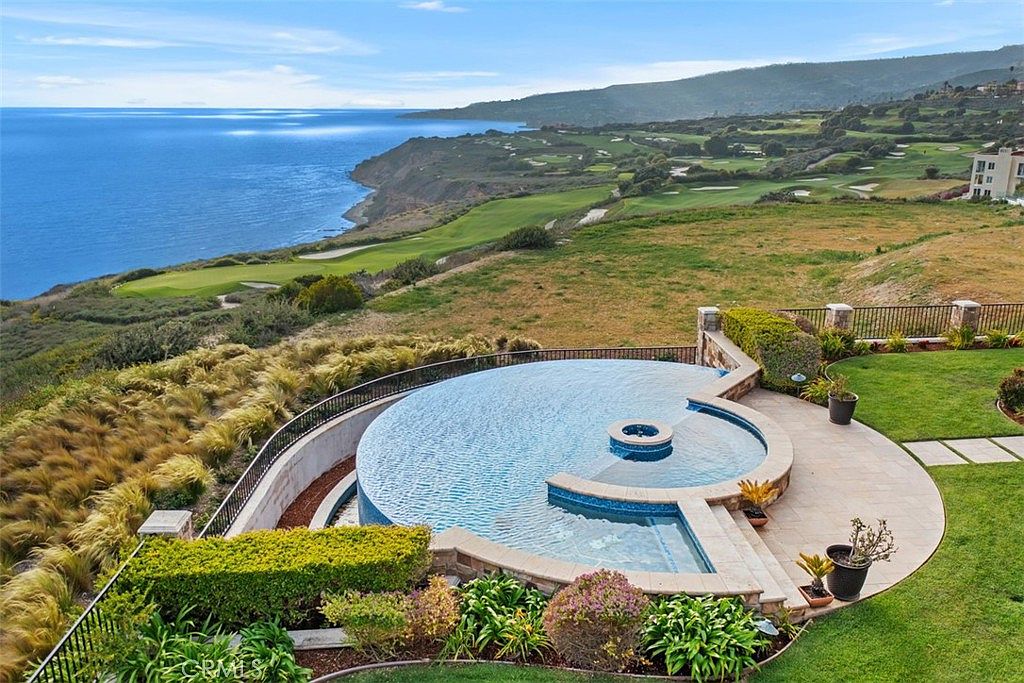
Outdoors, the resort-caliber grounds are anchored by an architecturally designed infinity-edge pool and spa that appear to pour directly into the Pacific. Covered loggias, an outdoor kitchen, a stone-clad fireplace lounge, and lounge decks extending off nearly every room create a seamless indoor-outdoor continuity that is the hallmark of serious coastal architecture. Hand-painted tile fountains punctuate the grounds, and real stone hardscape — including the Italian travertine that wraps the entire exterior — gives the property a permanence and substance rarely achieved at this scale.
Villa Cape Point has been visited and admired by some of the country's most discerning developers. It is, by any measure, a legacy estate — a masterwork of vision, execution, and irreplaceable place.
Rancho Palos Verdes occupies a dramatic peninsula that juts into the Pacific Ocean at the southwestern edge of Los Angeles County — a geography so distinct from the surrounding urban fabric that it has long functioned as its own world. The Palos Verdes Peninsula rises sharply from the coastline to elevations exceeding 1,400 feet, creating a microclimate that is cooler, cleaner, and more consistently temperate than much of Southern California. The air here carries the ocean, the light arrives at angles that photographers and painters have long sought out, and the horizon — on a clear day — stretches to Catalina Island and beyond.
The peninsula's residential history reflects its physical distinctiveness. Development was carefully controlled from an early stage, and the communities that established themselves here — Rolling Hills, Palos Verdes Estates, Rolling Hills Estates, and Rancho Palos Verdes — each maintained low-density zoning, equestrian trails, and a commitment to preserving the natural landscape that sets the area apart from virtually every other coastal community in Los Angeles. The result is a peninsula that has remained, by design and by geography, one of the most exclusive and least replicated stretches of Southern California coastline.
The specific enclave in which Villa Cape Point resides is defined by 24-hour guard-patrol, offering a level of privacy and security that is increasingly rare at this proximity to a major metropolitan area. The estate sits between Beverly Hills and Newport Coast in terms of its coastal position — a geographic reality that underscores both its accessibility and its singular character. Los Angeles International Airport is reachable in under 30 minutes under normal conditions, and the broader amenities of the Los Angeles basin — fine dining, cultural institutions, international business infrastructure — are within comfortable reach without imposing on the peninsula's quiet remove.
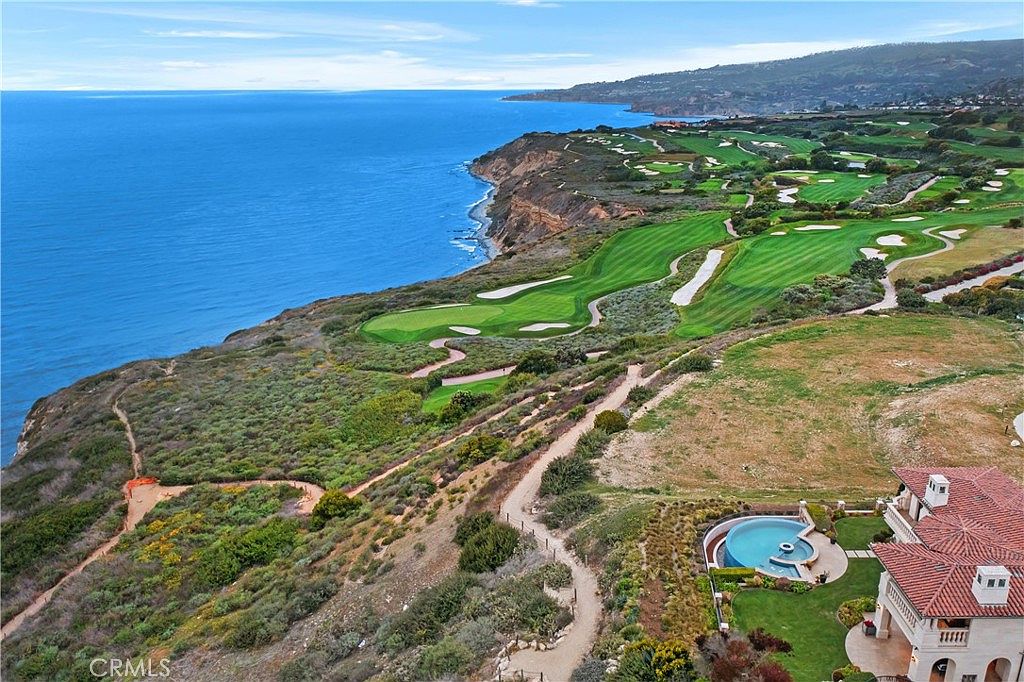
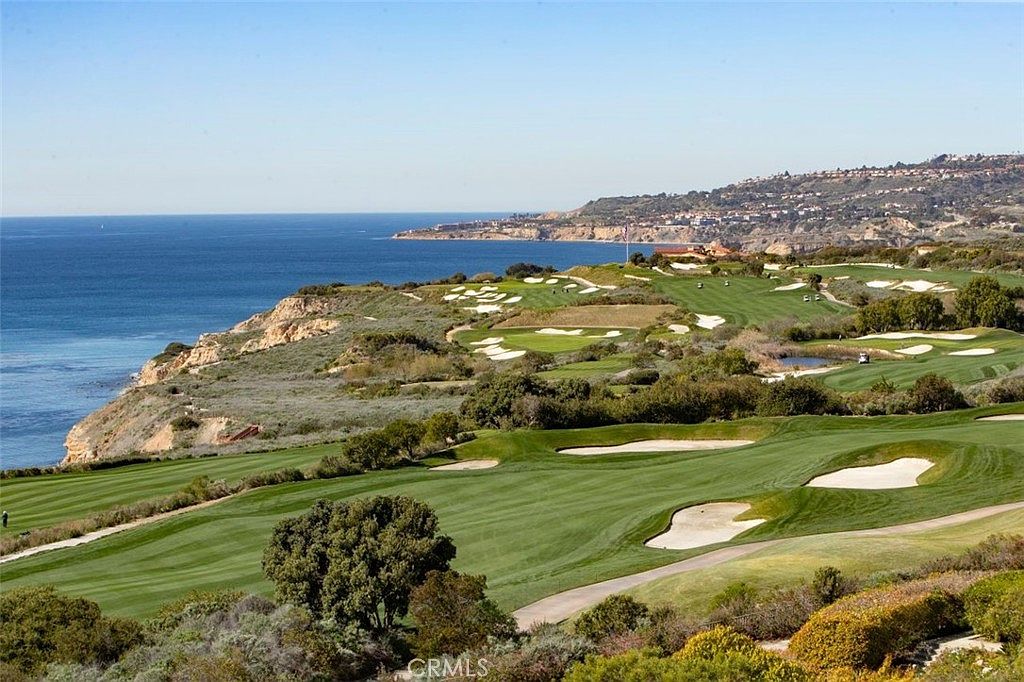
Trump National Golf Course at Rancho Palos Verdes, visible directly from the estate's principal rooms and terraces, is one of the most celebrated ocean-view golf courses on the West Coast, its fairways carved into the cliffside landscape in a manner that rivals the great links courses of Ireland and Scotland. The course has hosted major professional events and represents the caliber of amenity that defines the immediate surroundings.
Terranea Resort, situated moments from the property along the coastline, is widely regarded as one of the premier coastal resort destinations in Southern California. Its restaurants, spa facilities, and coastal programming — including guided kayaking, tide pool tours, and cliff-side dining — provide a layer of resort amenity that residents of the peninsula access with ease.
The broader natural landscape offers its own considerable draw. The Palos Verdes coastline encompasses miles of protected blufftop trails maintained by the Palos Verdes Peninsula Land Conservancy, providing direct access to dramatic cliff walks, tidepools, secluded coves, and the kind of unmediated coastal landscape that has largely vanished from the Southern California shoreline. Whale migration routes pass close to the peninsula, and the area's natural reserves support diverse flora and fauna that further distinguish the setting.
This is a location that rewards the long view — in every sense of the word.
Featured Highlights
Curated Content • Presented by Leo Goldschwartz