The Story Behind
Gated Clyde Hill Estate with Protected Lake Washington Views
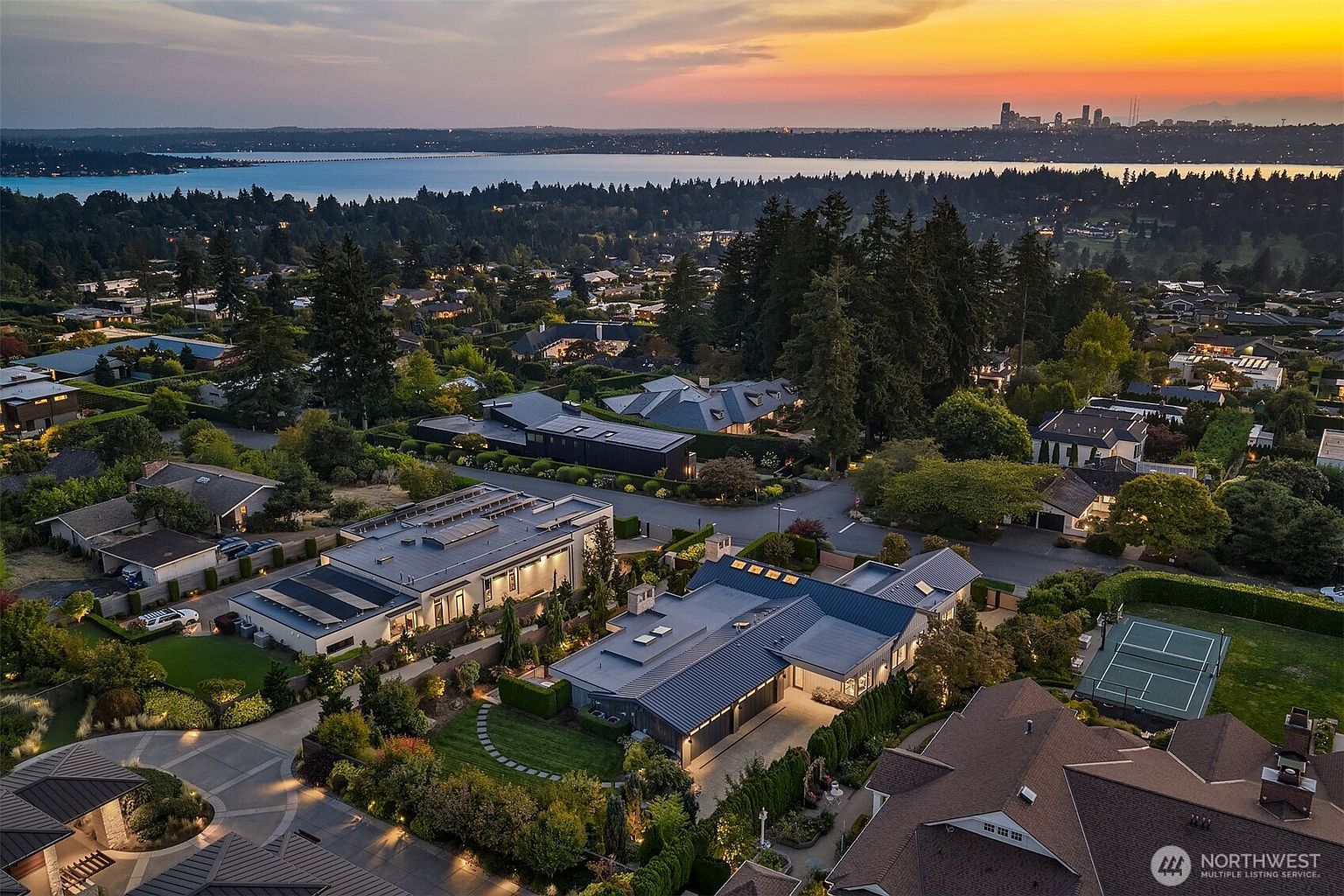
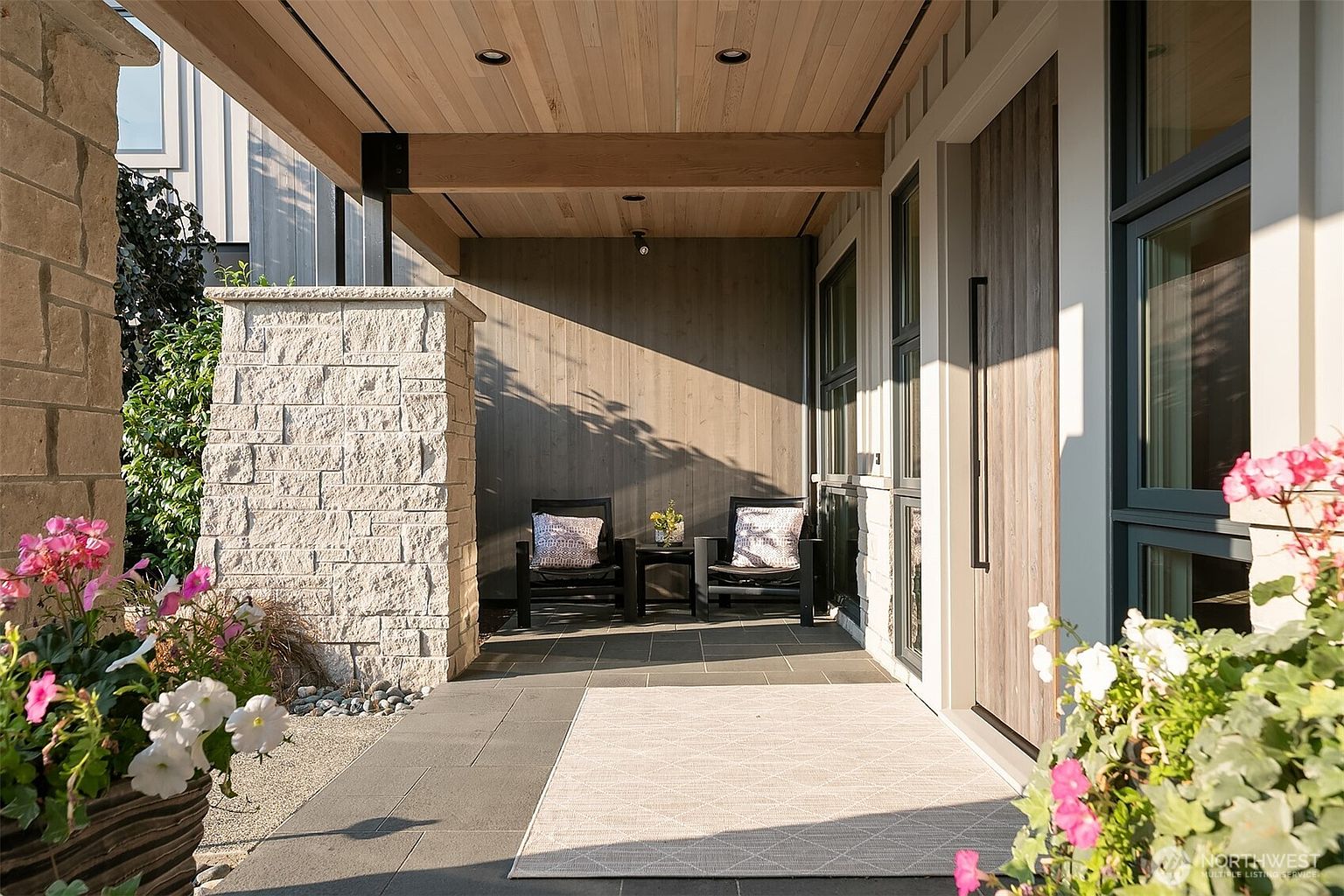
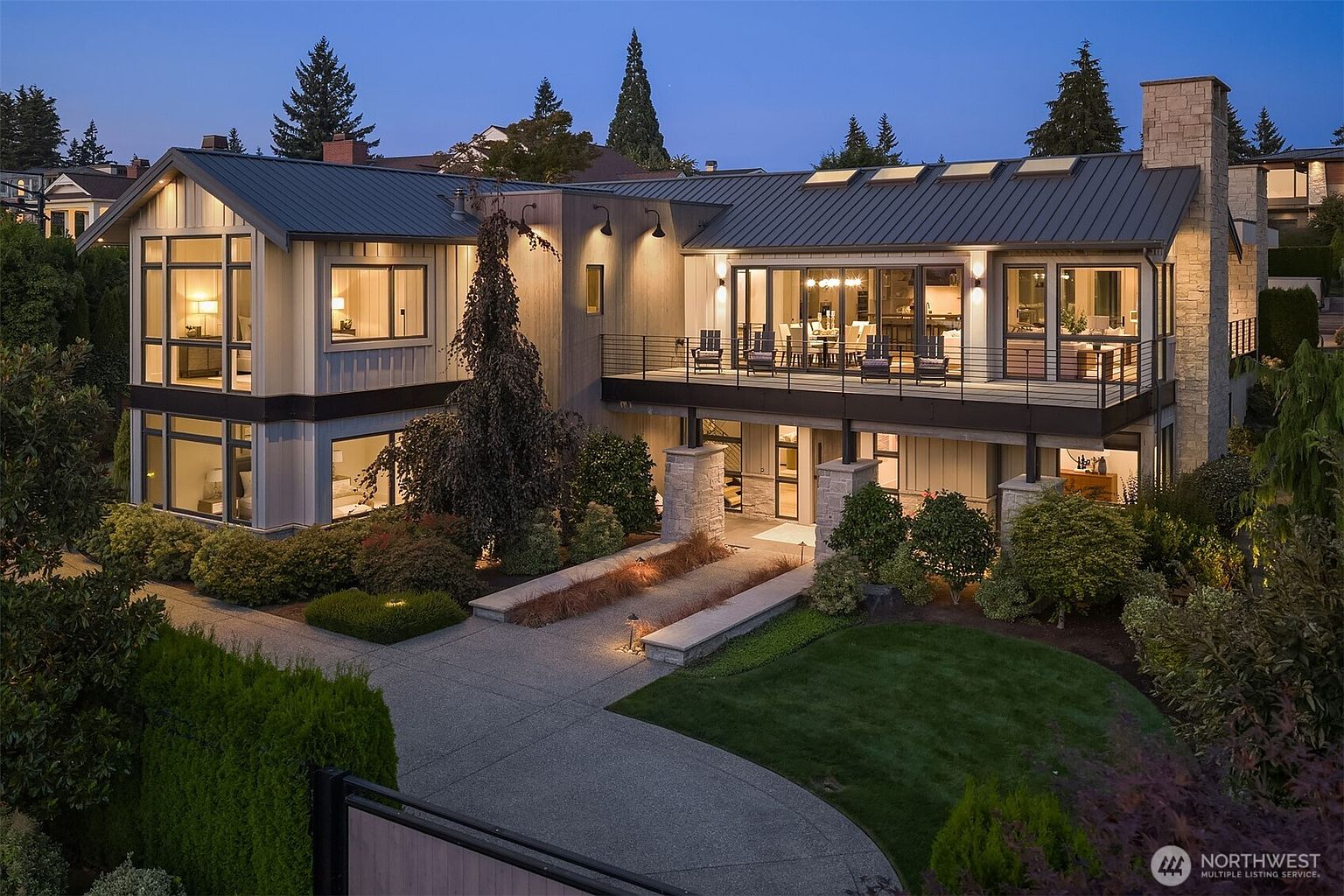
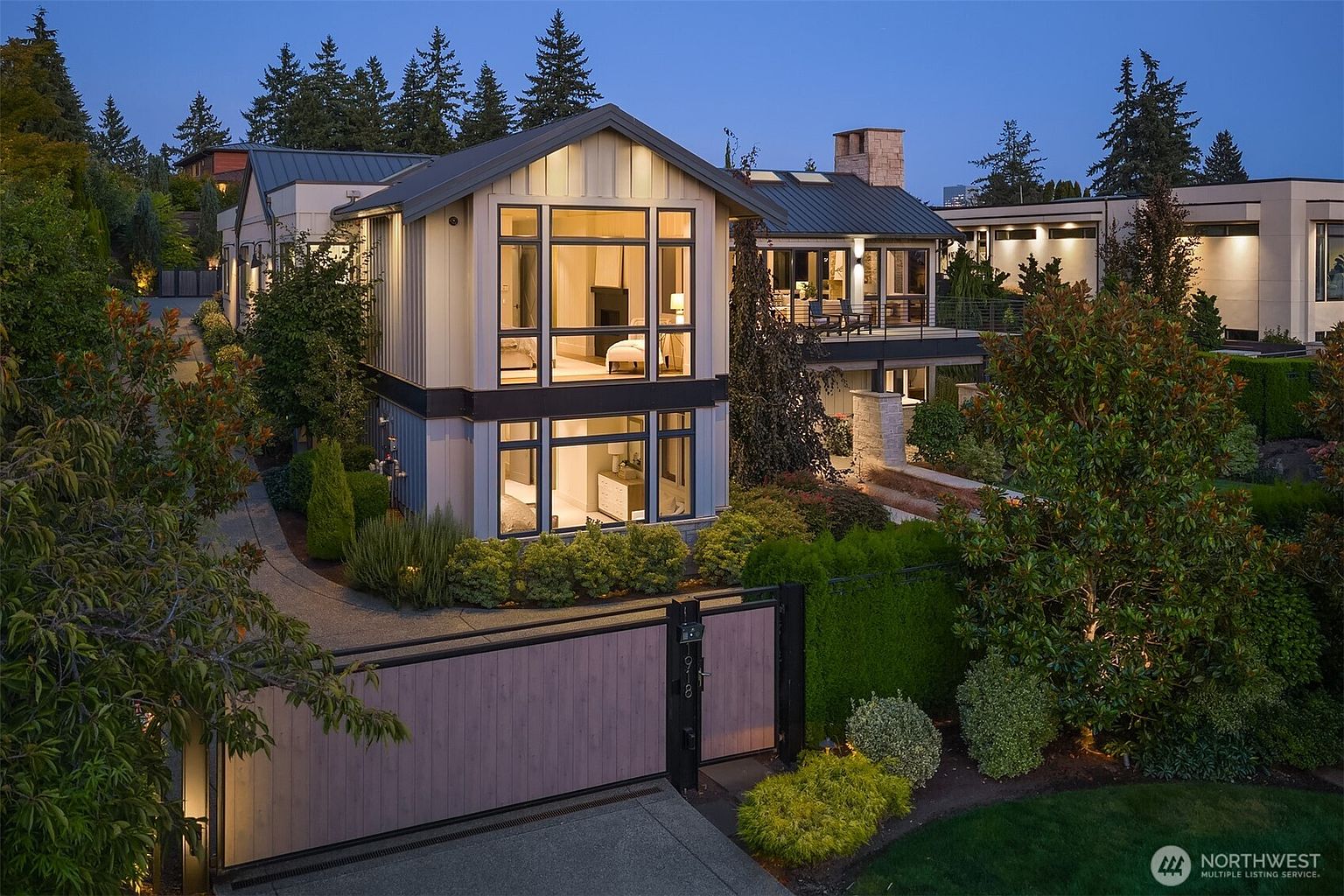
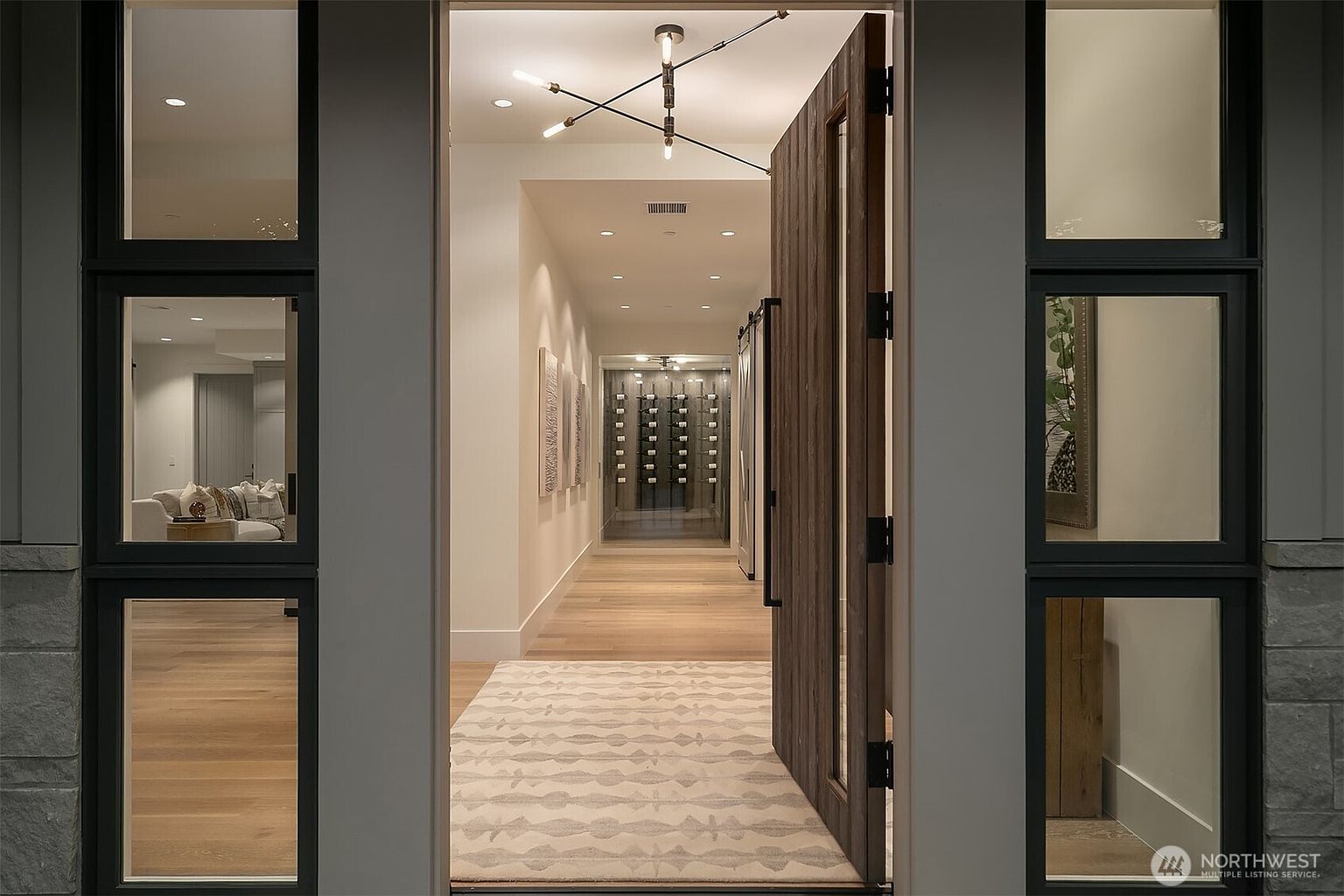
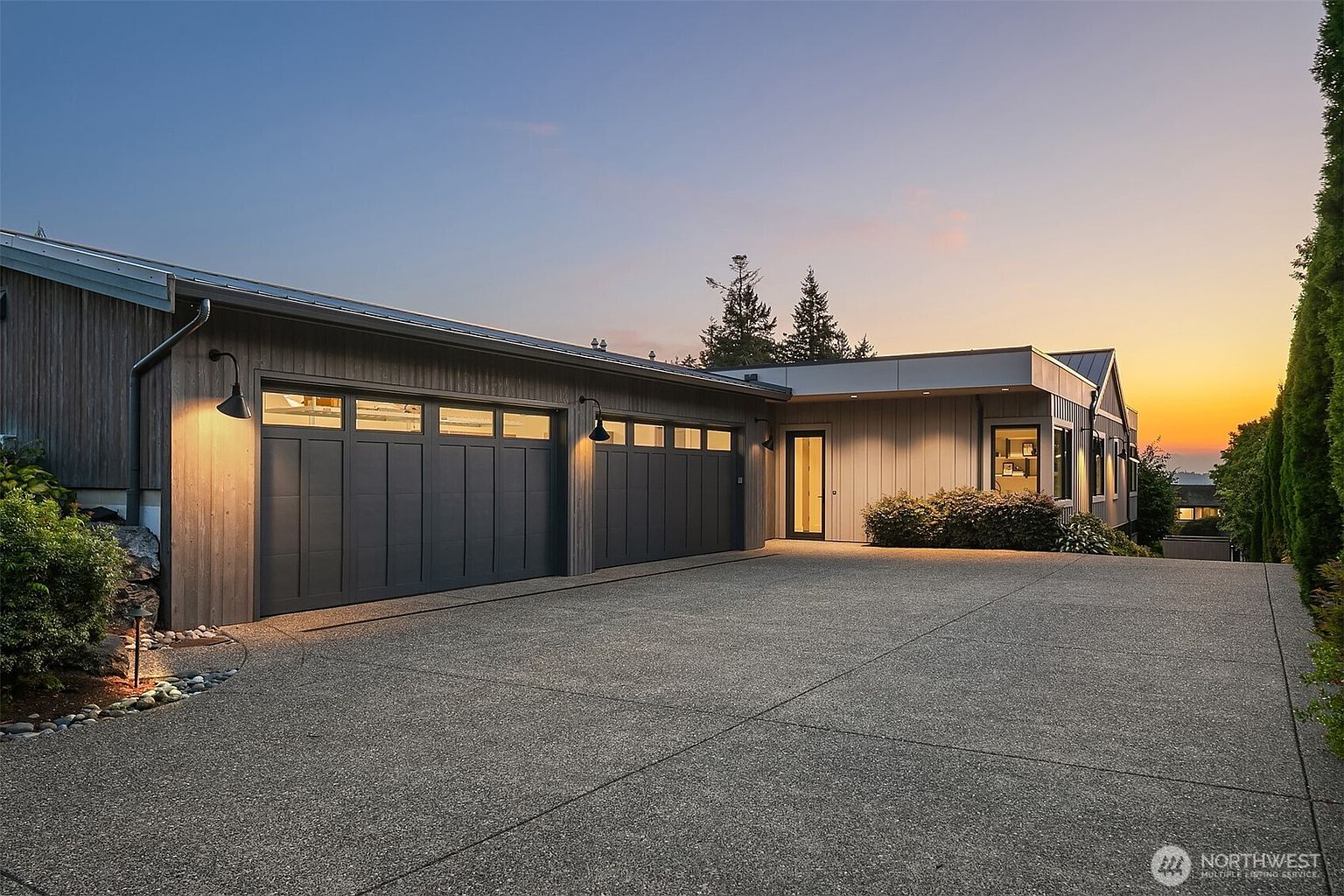
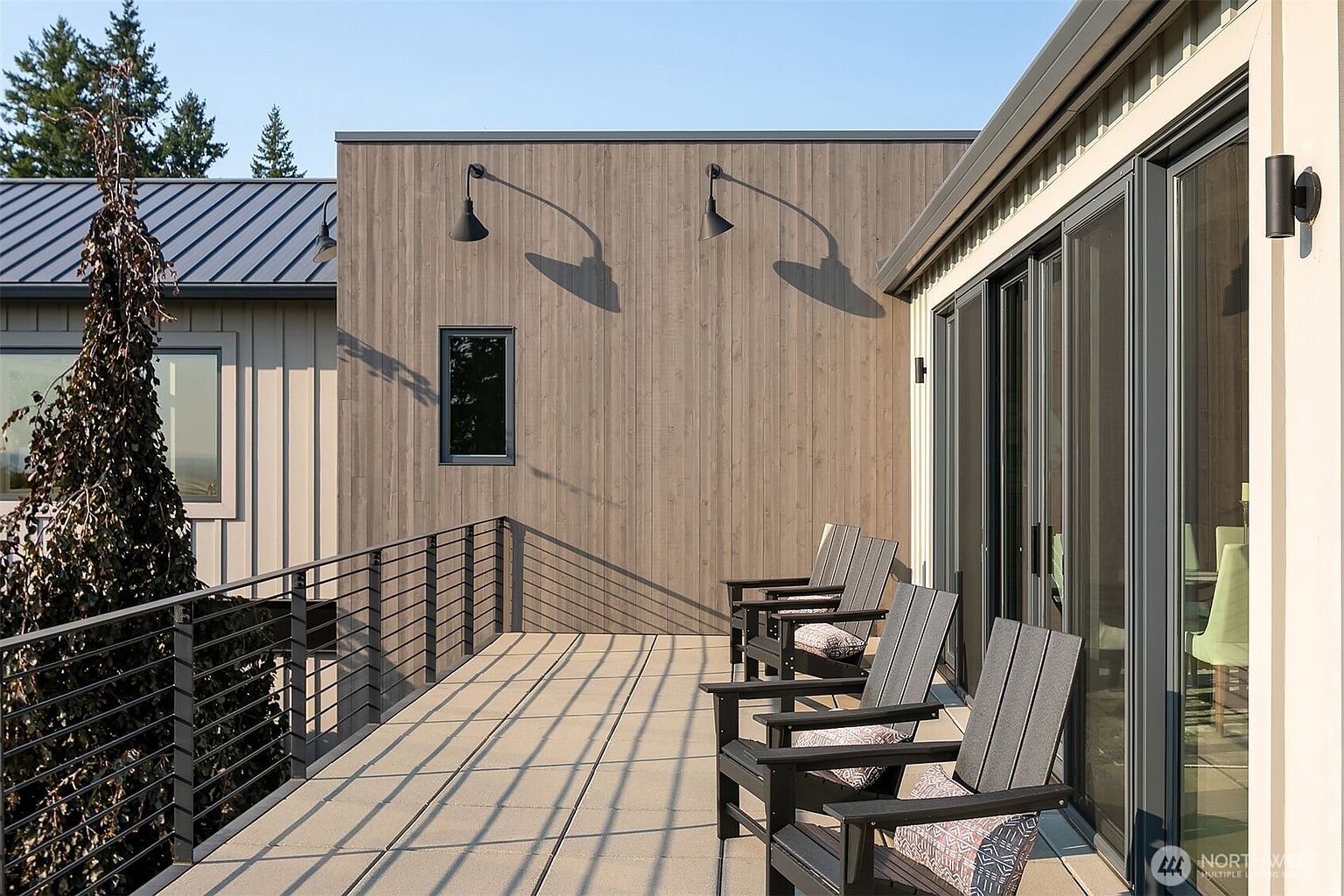
There is a particular discipline required to design a home that feels both monumental and intimate — and Adam Leland Homes has executed that balance with uncommon precision at 1918 94th Avenue NE. From the moment the circular driveway unfolds and the gated facade comes into view, the architectural language is unmistakable: vertical wood siding, textured stone accents, and a dark metal roof converge into a composition that is quietly commanding. The pivot-style front door — itself a sculptural gesture — draws you across the threshold and into a world where every material choice has been deliberate.
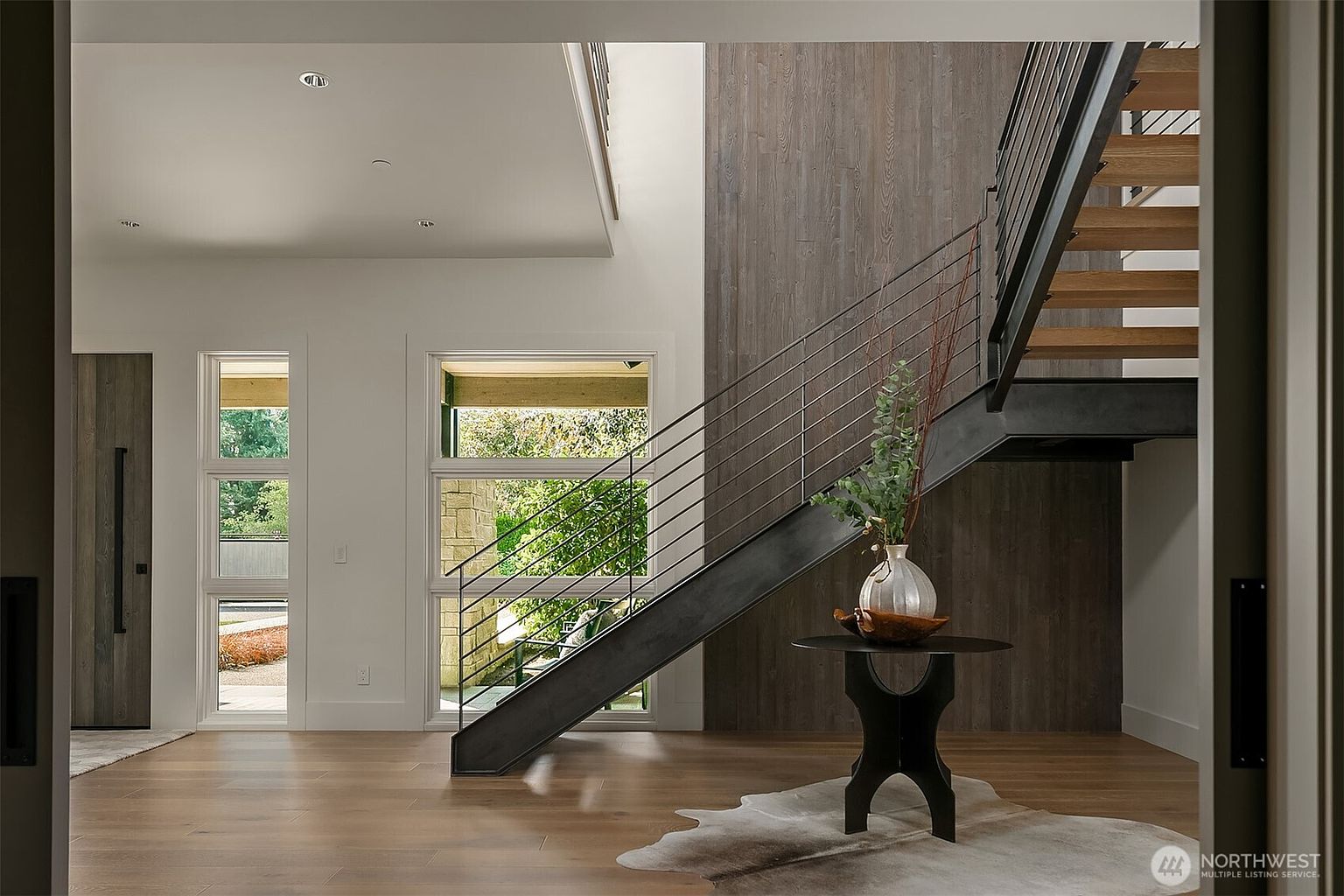
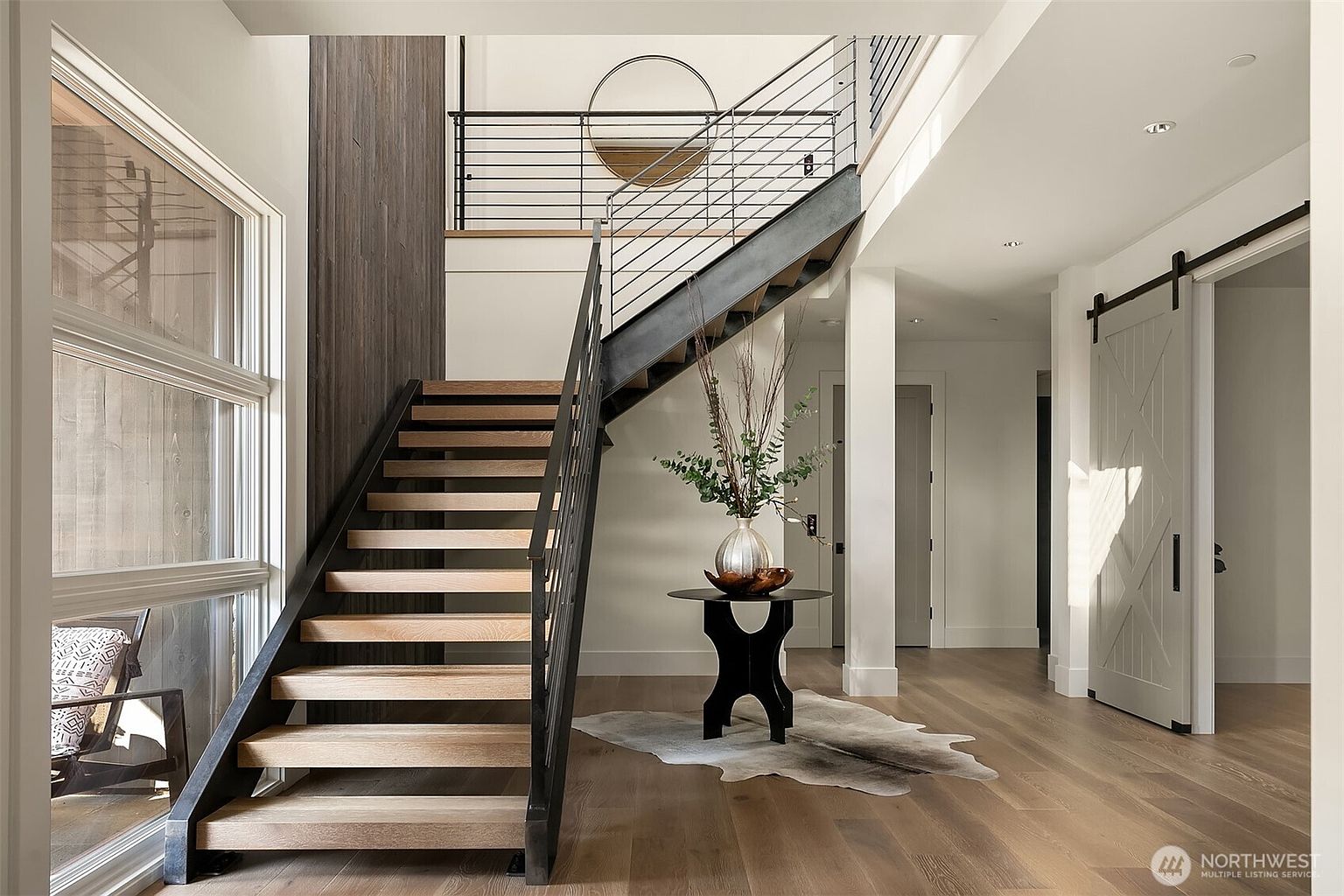
The entry corridor sets the tone immediately. Light hardwood floors extend beneath a geometric chandelier, and a floating staircase with steel framing and warm wood treads rises against a dark wood-paneled accent wall with the kind of effortless drama that only careful engineering can produce. A glass-enclosed wine display anchors the far end of the corridor, signaling what lies ahead.
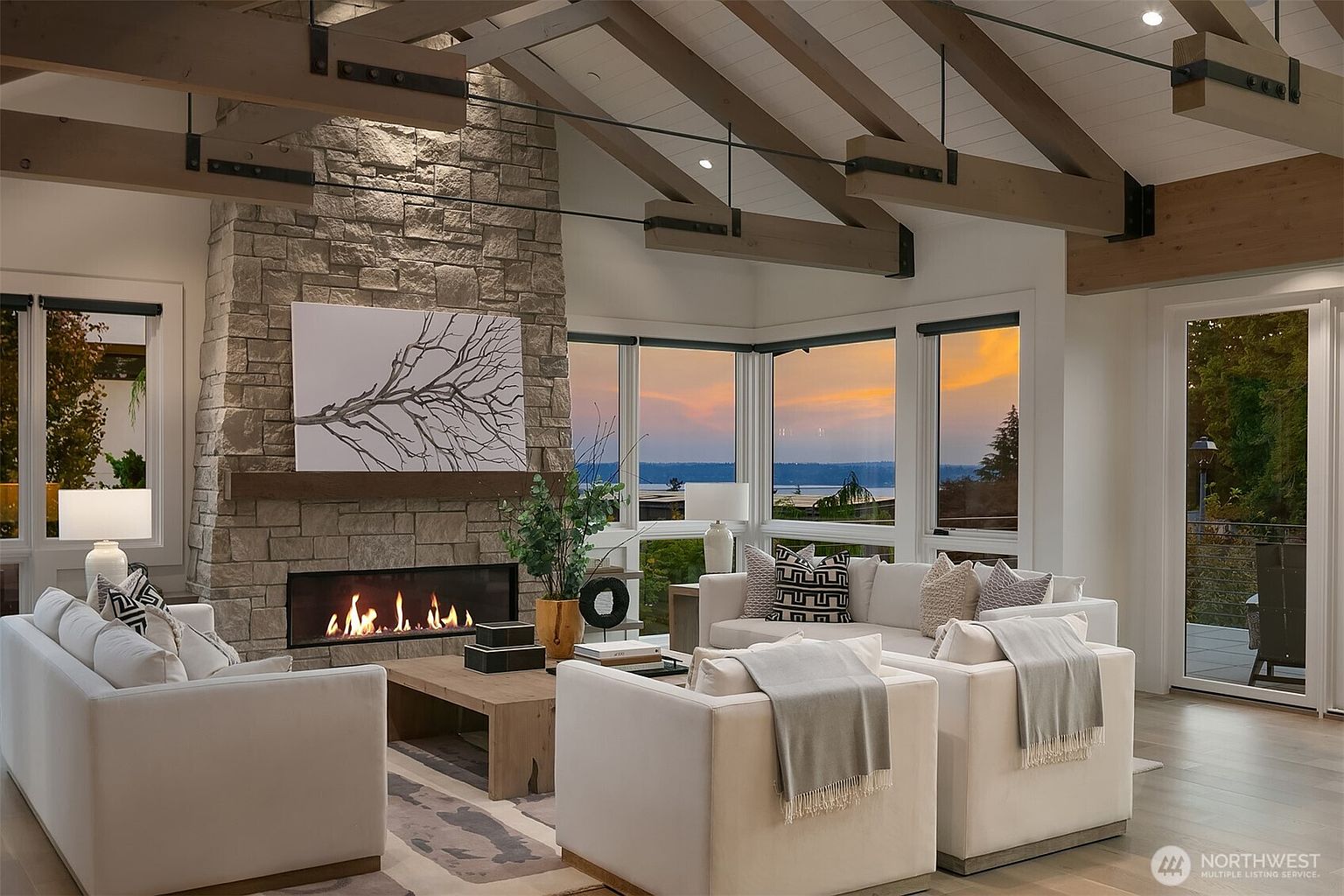
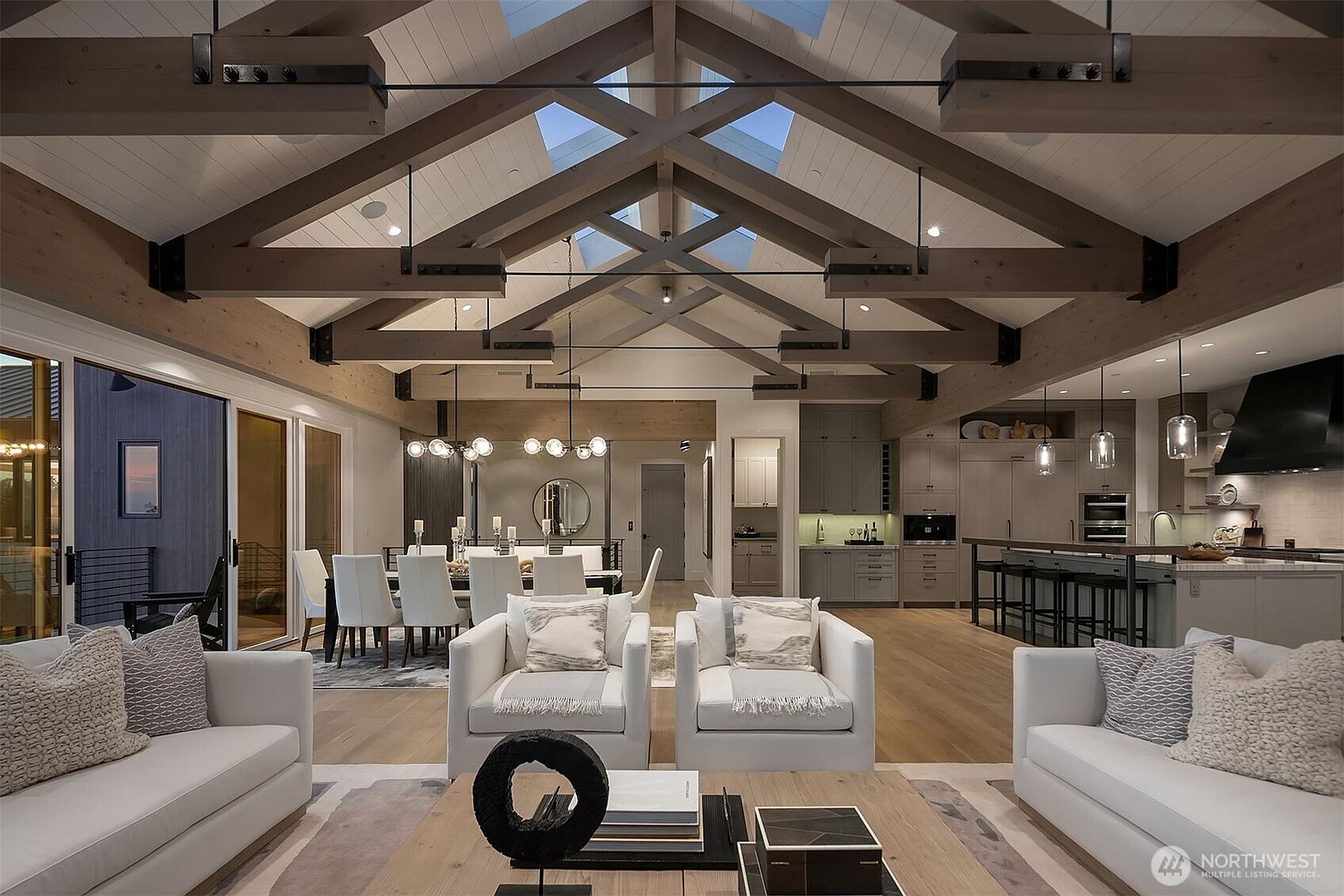
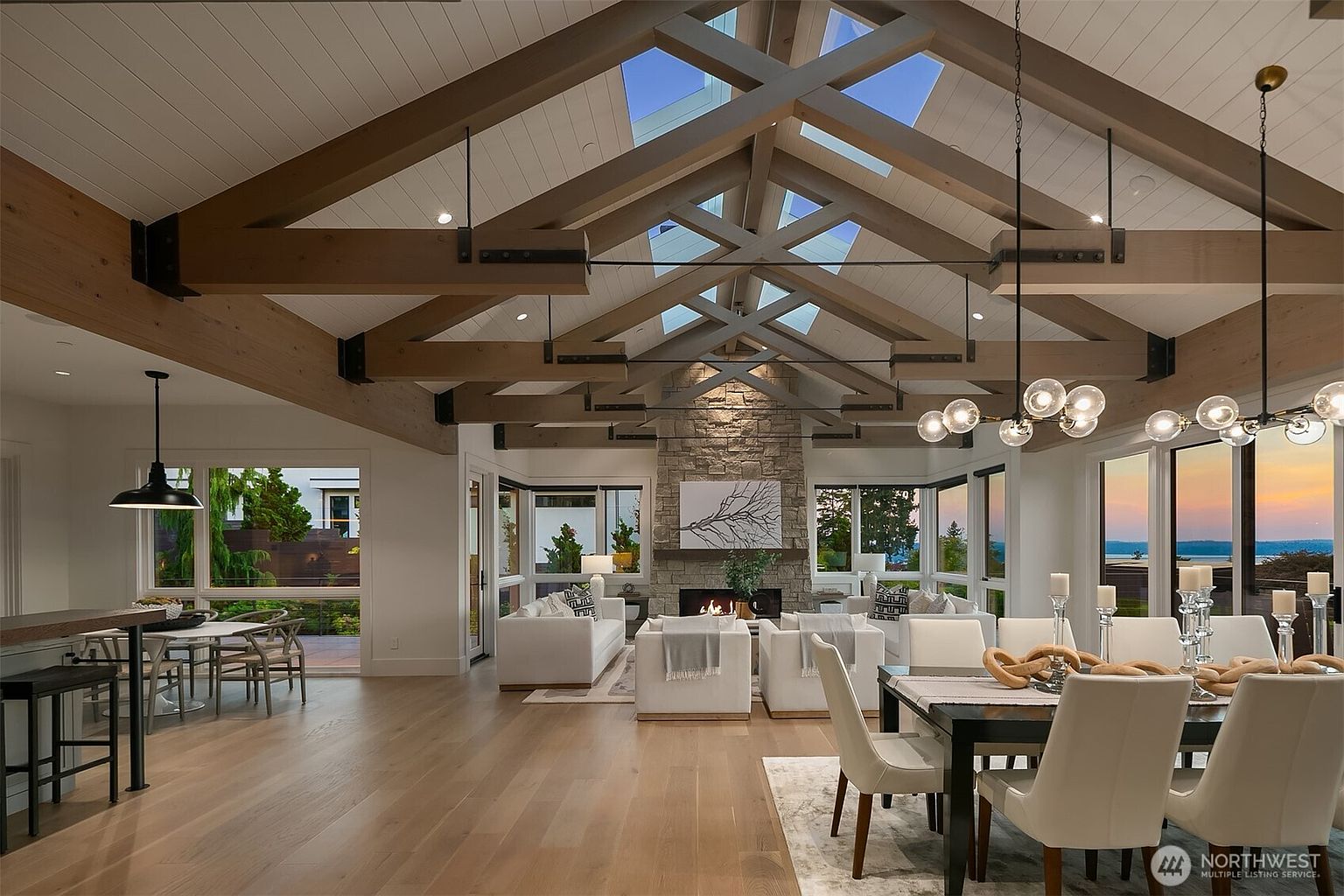
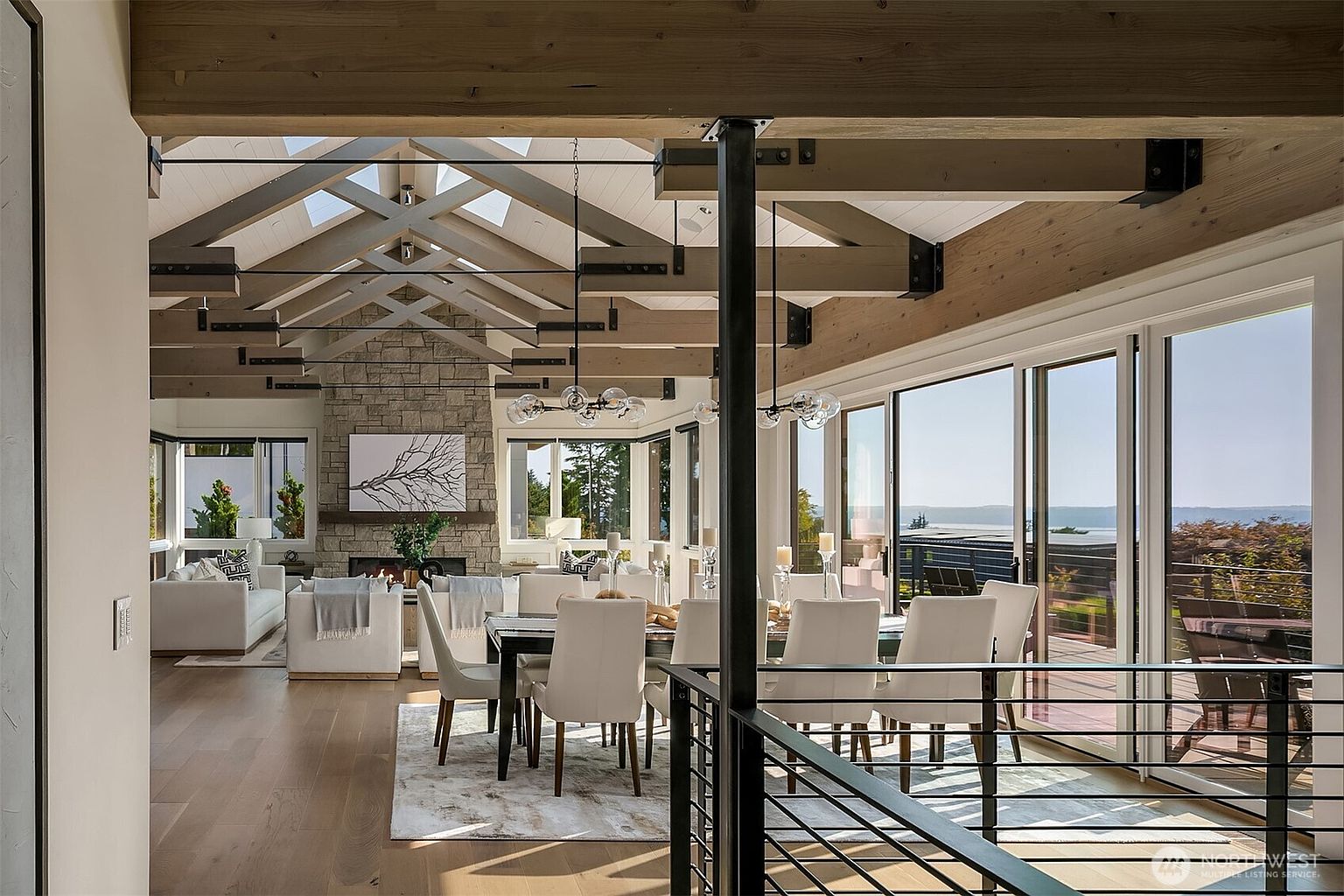
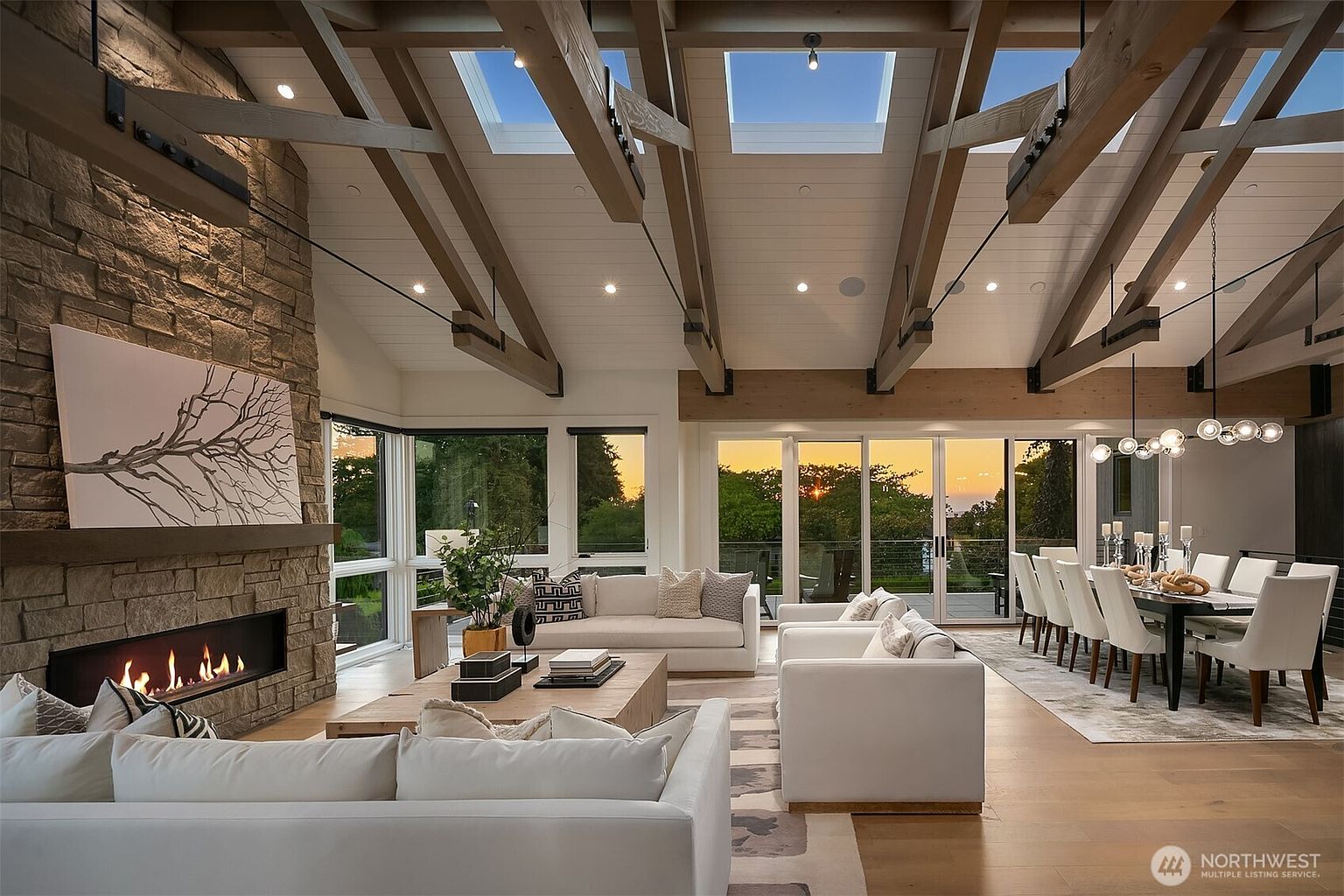
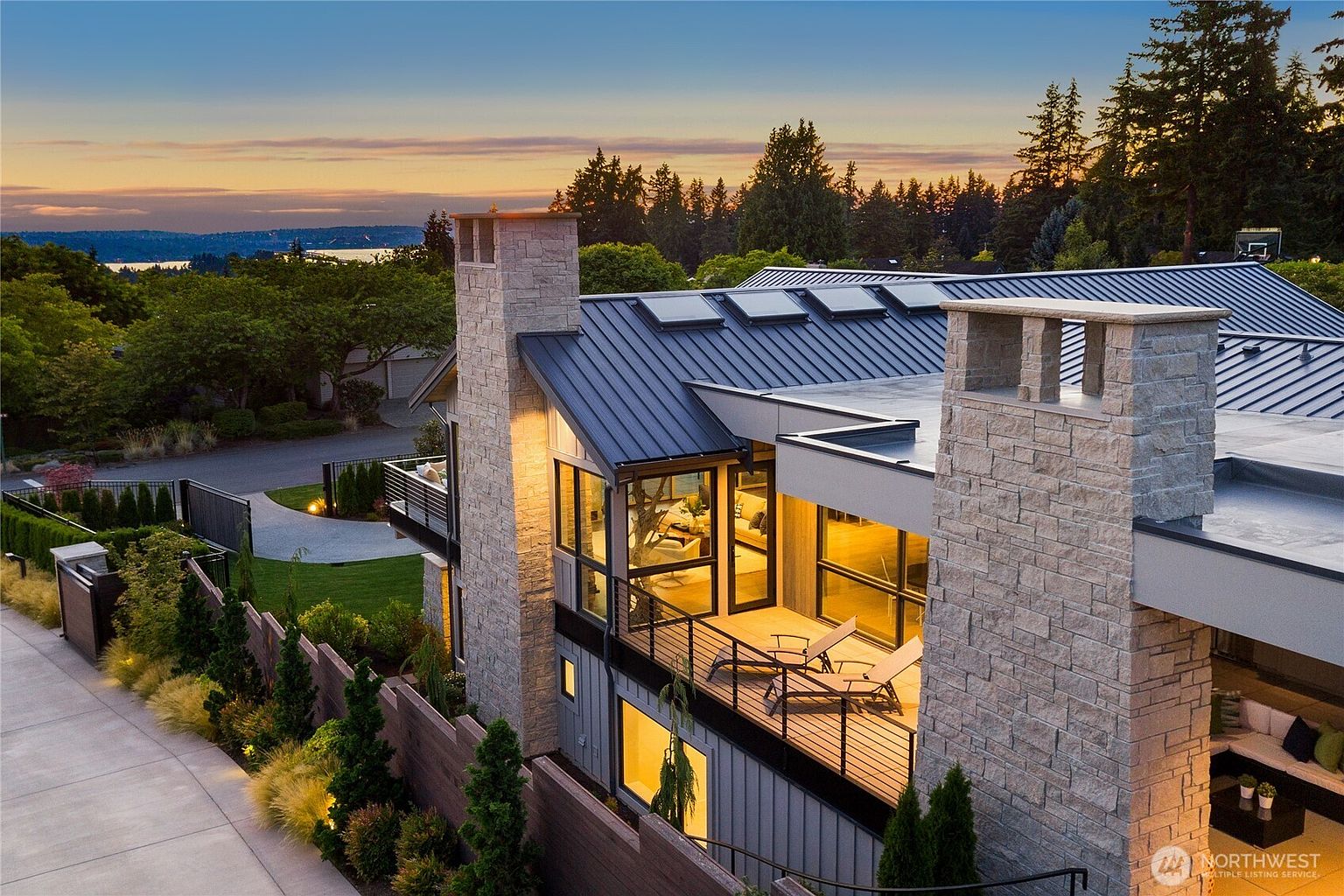
The great room is the estate's emotional center. Beneath a vaulted ceiling threaded with exposed timber trusses and integrated skylights, a floor-to-ceiling stone fireplace anchors one wall while panoramic glass sliding doors dissolve the boundary between interior and the protected southwest views of Lake Washington beyond. The effect at golden hour is genuinely arresting — water and sky rendered in shifting light, framed as though the architecture itself were curating the experience.
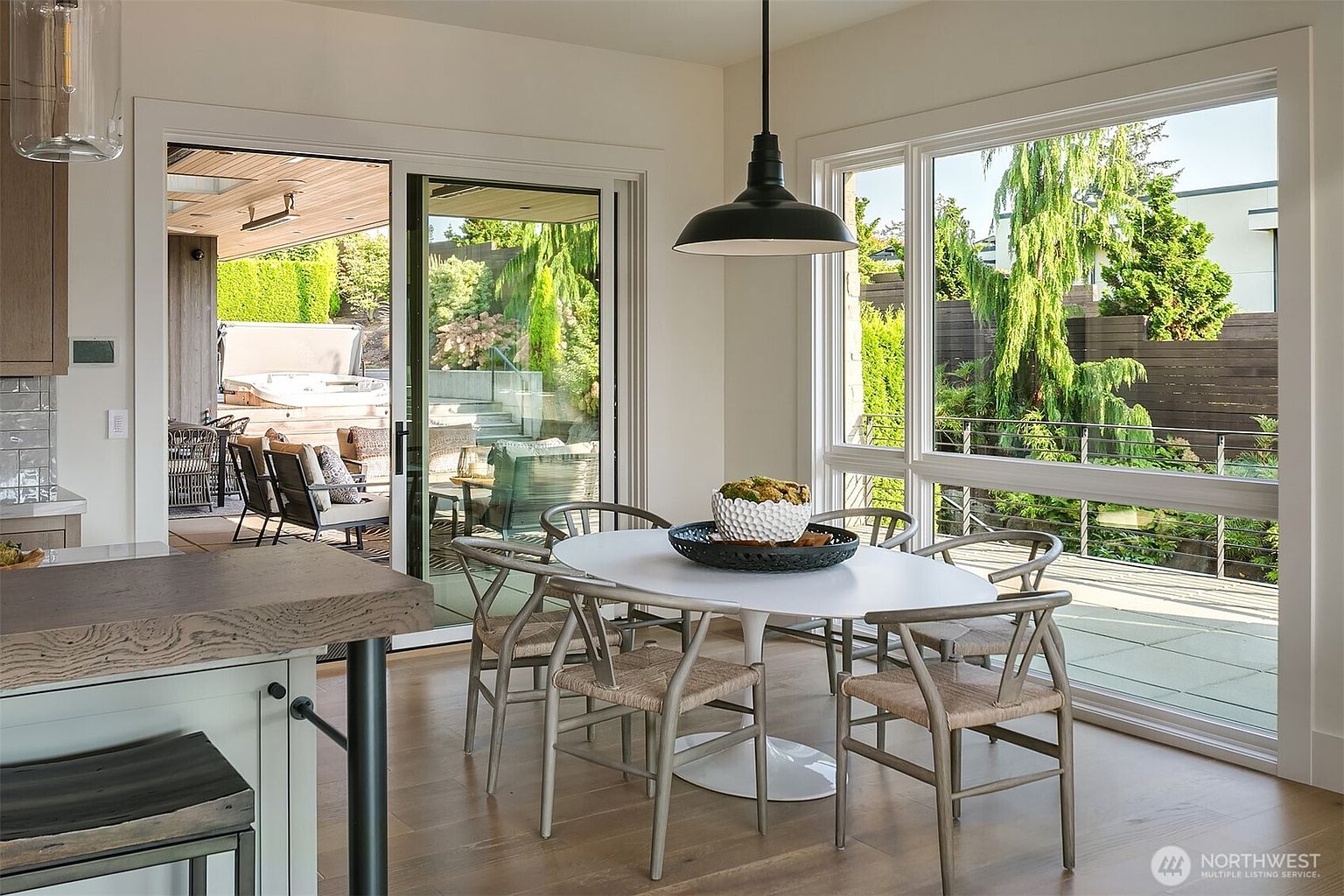
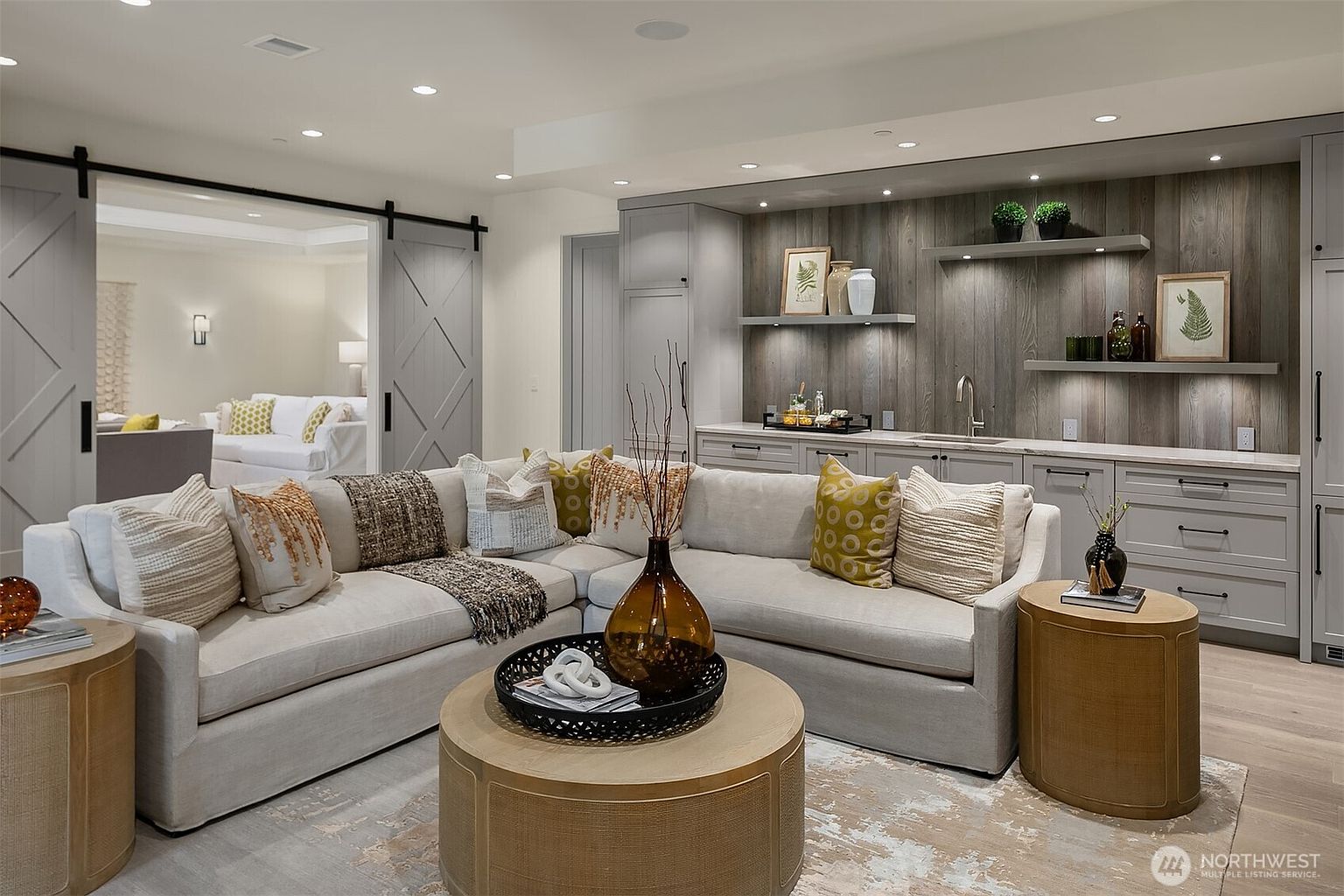
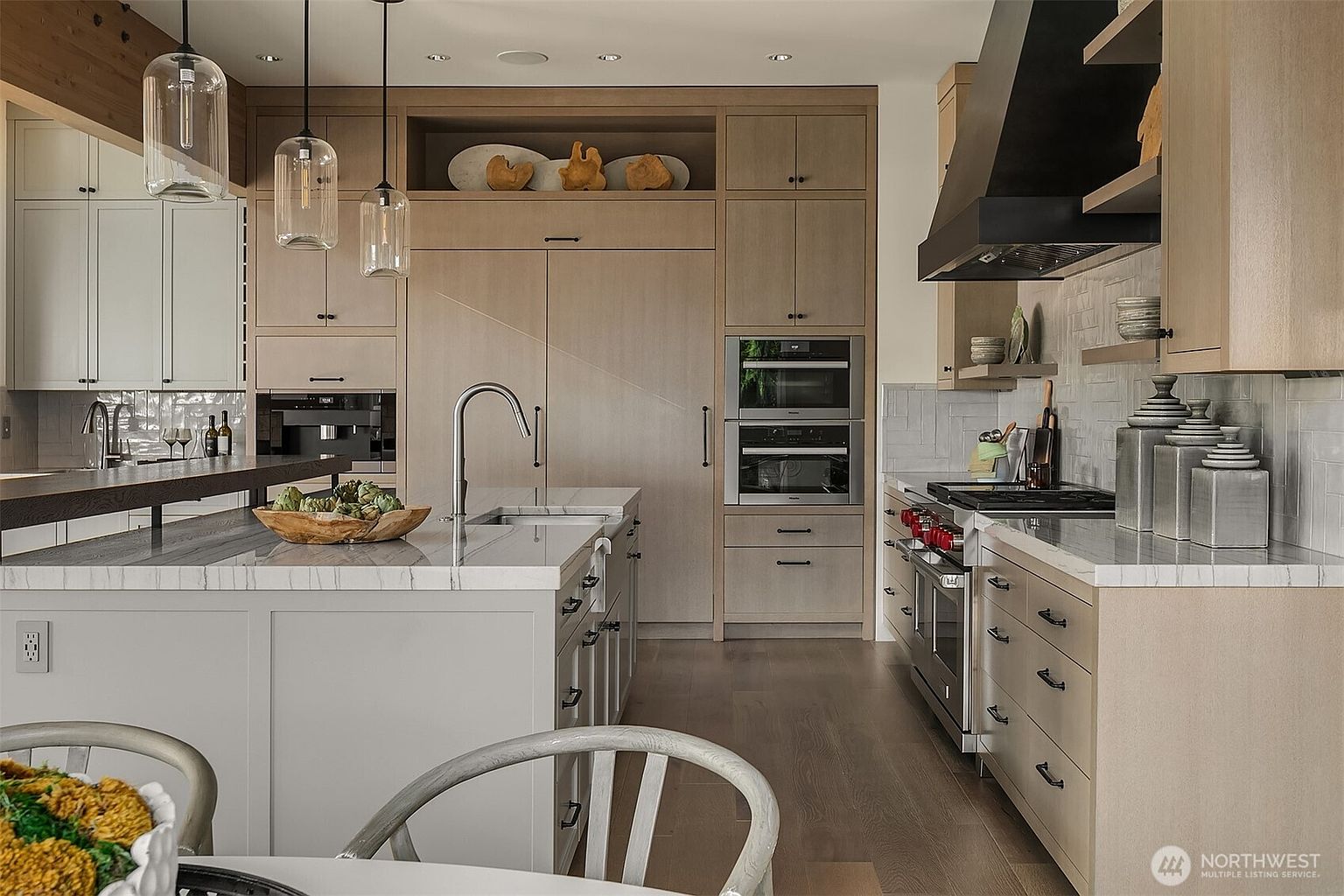
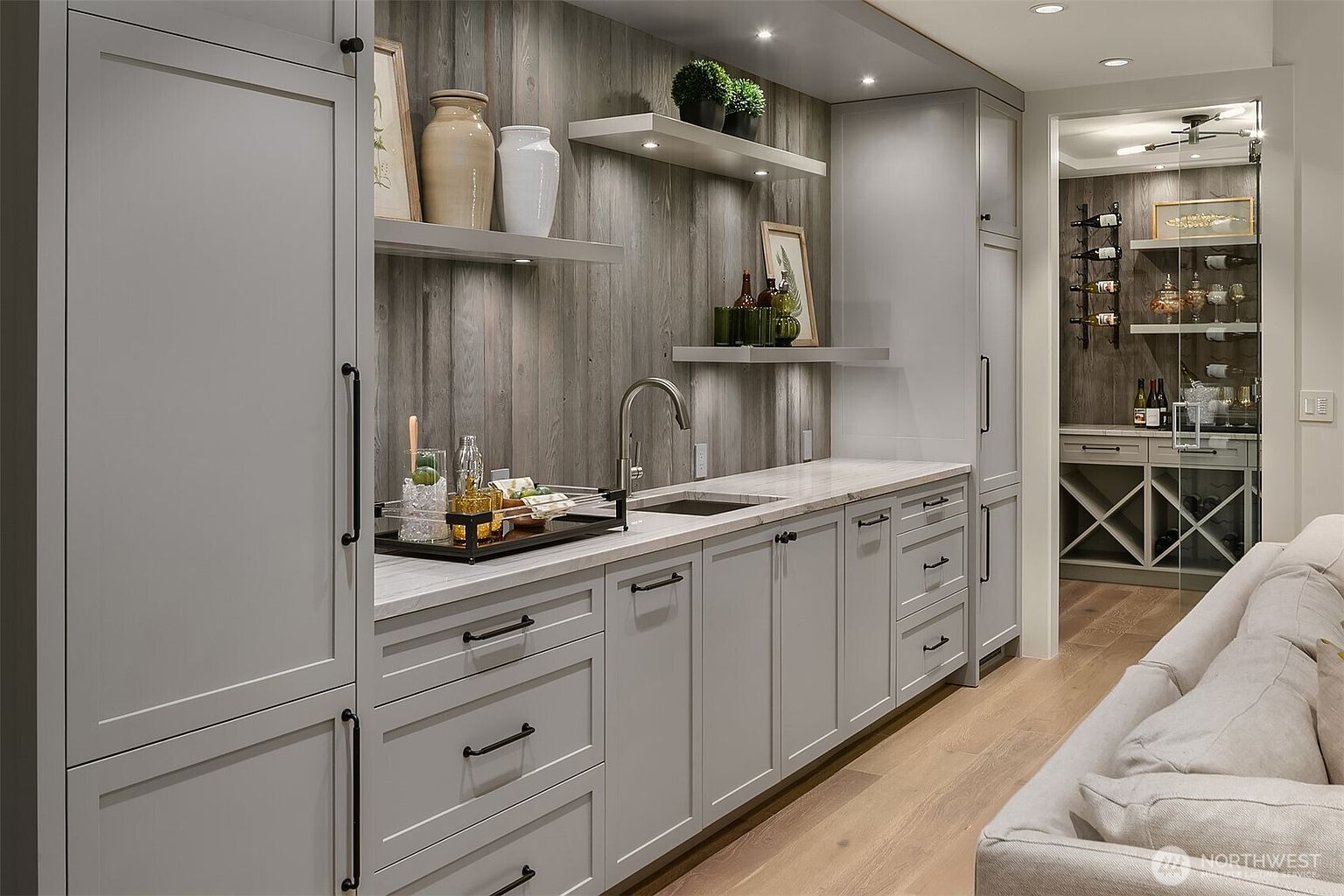
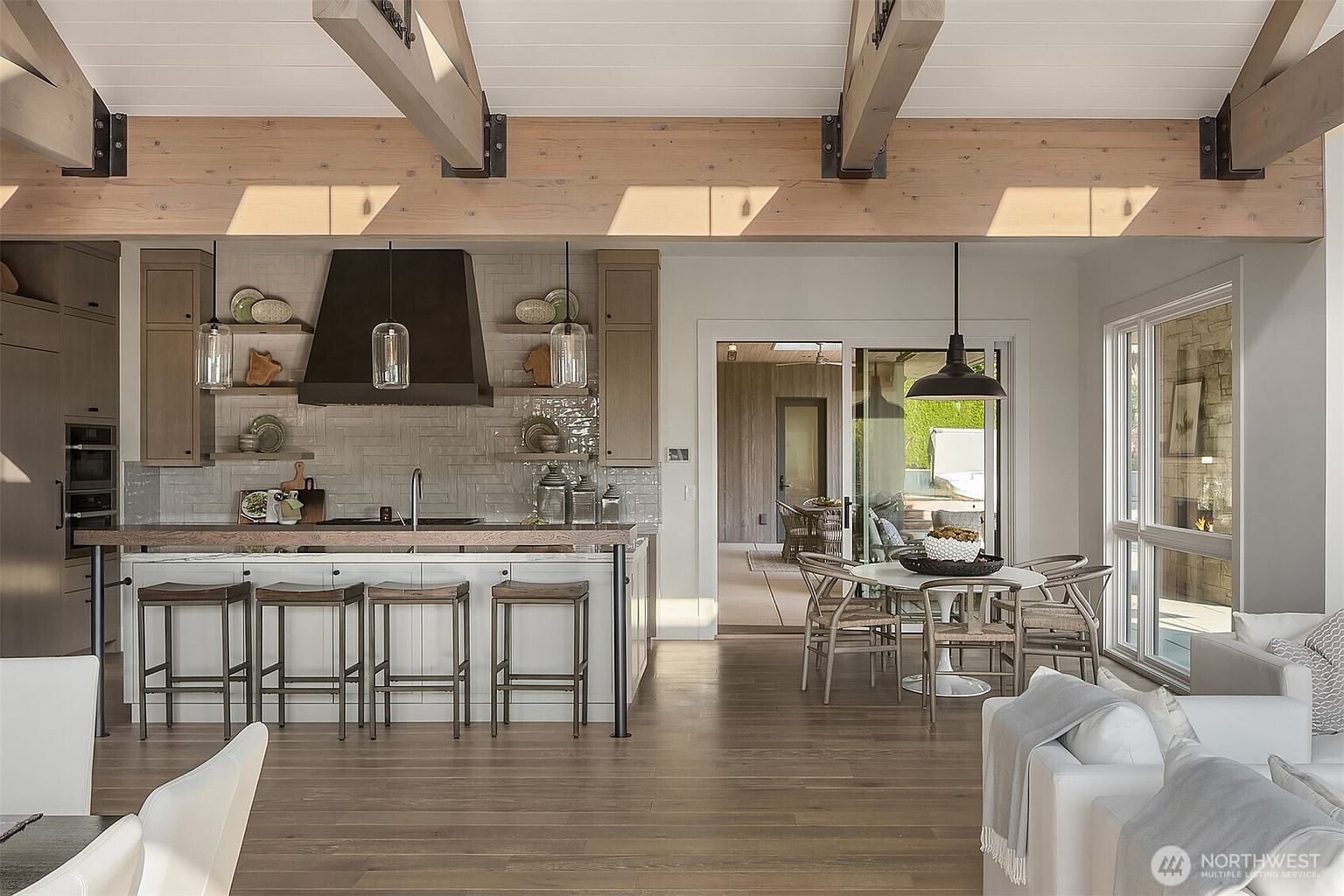
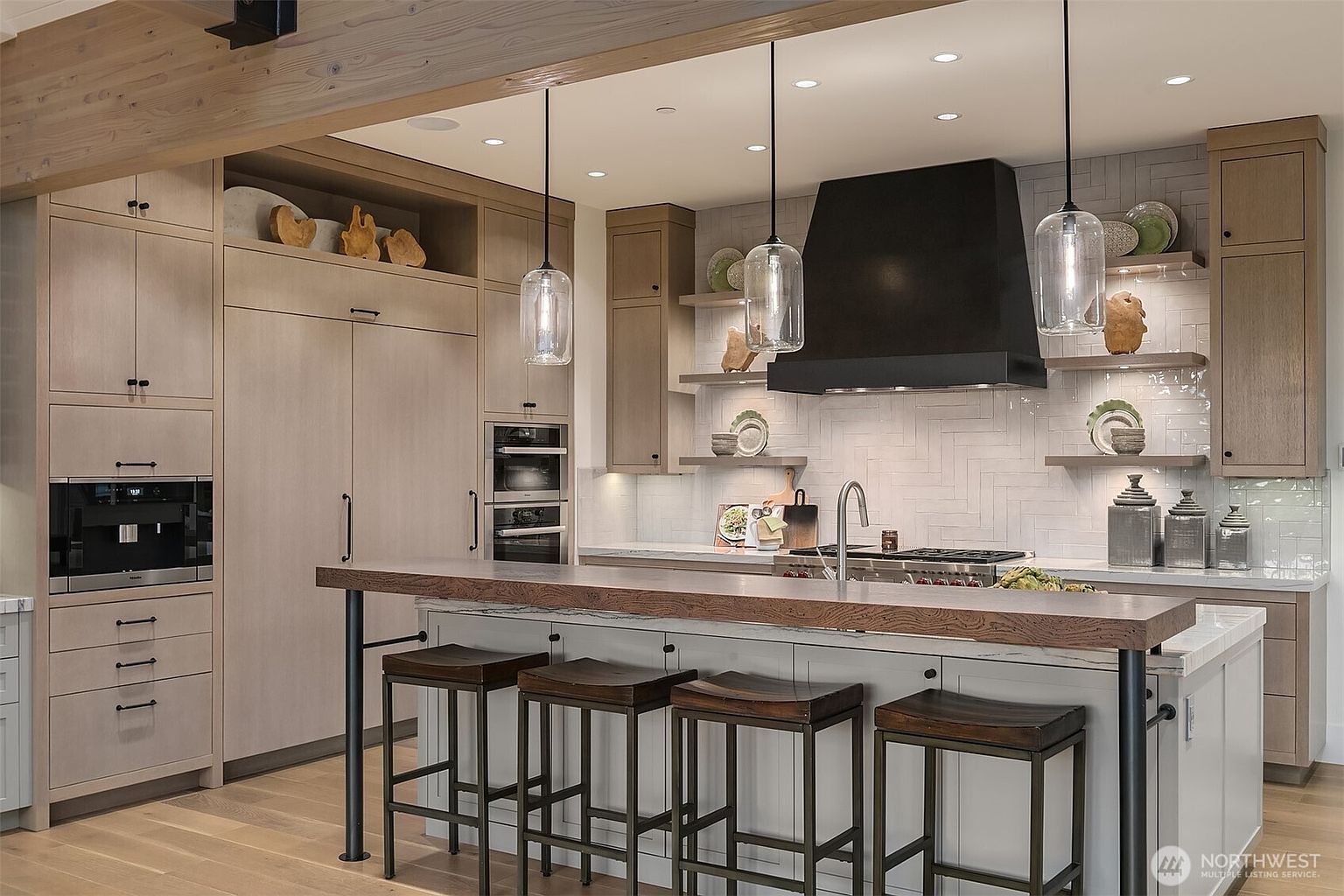
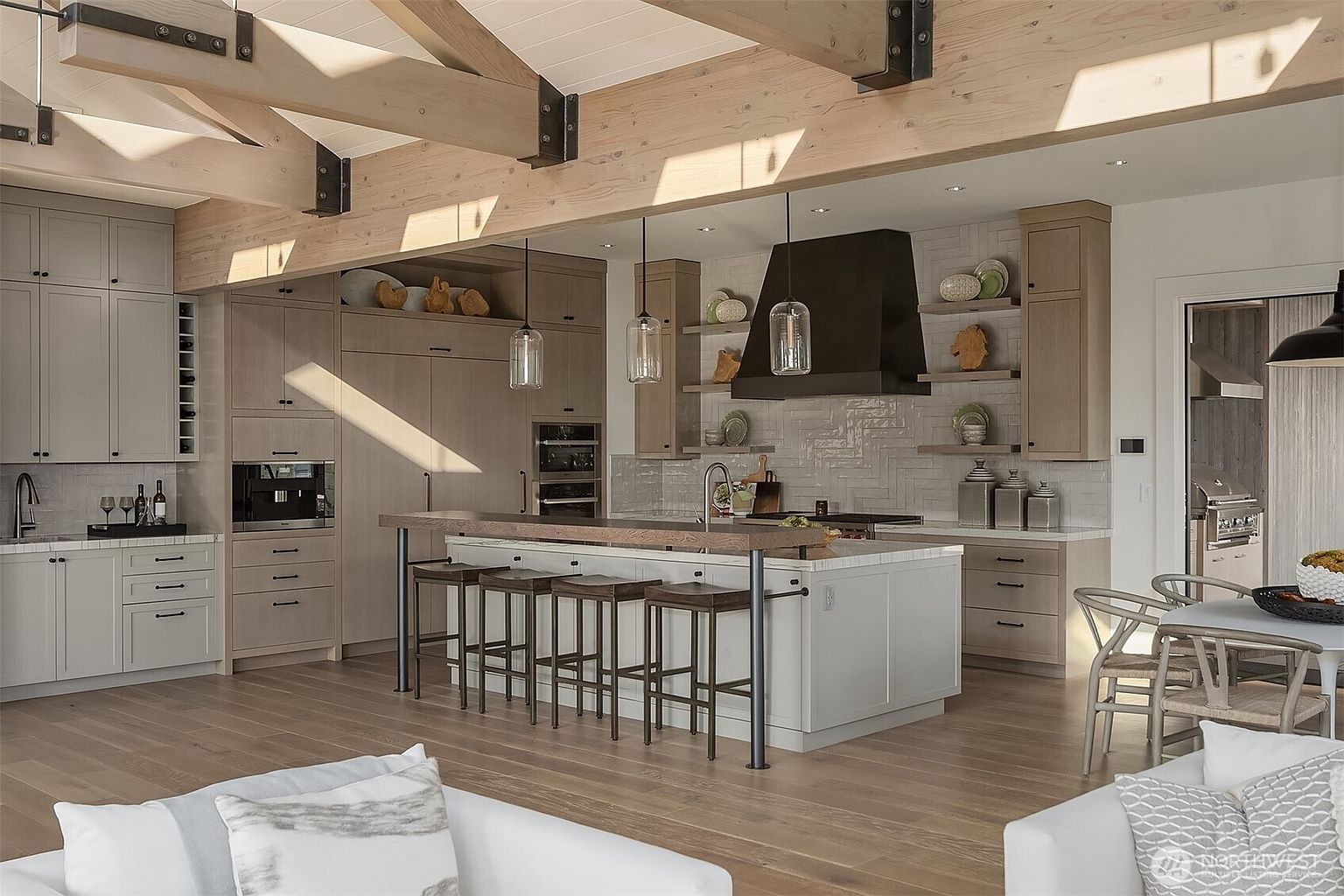
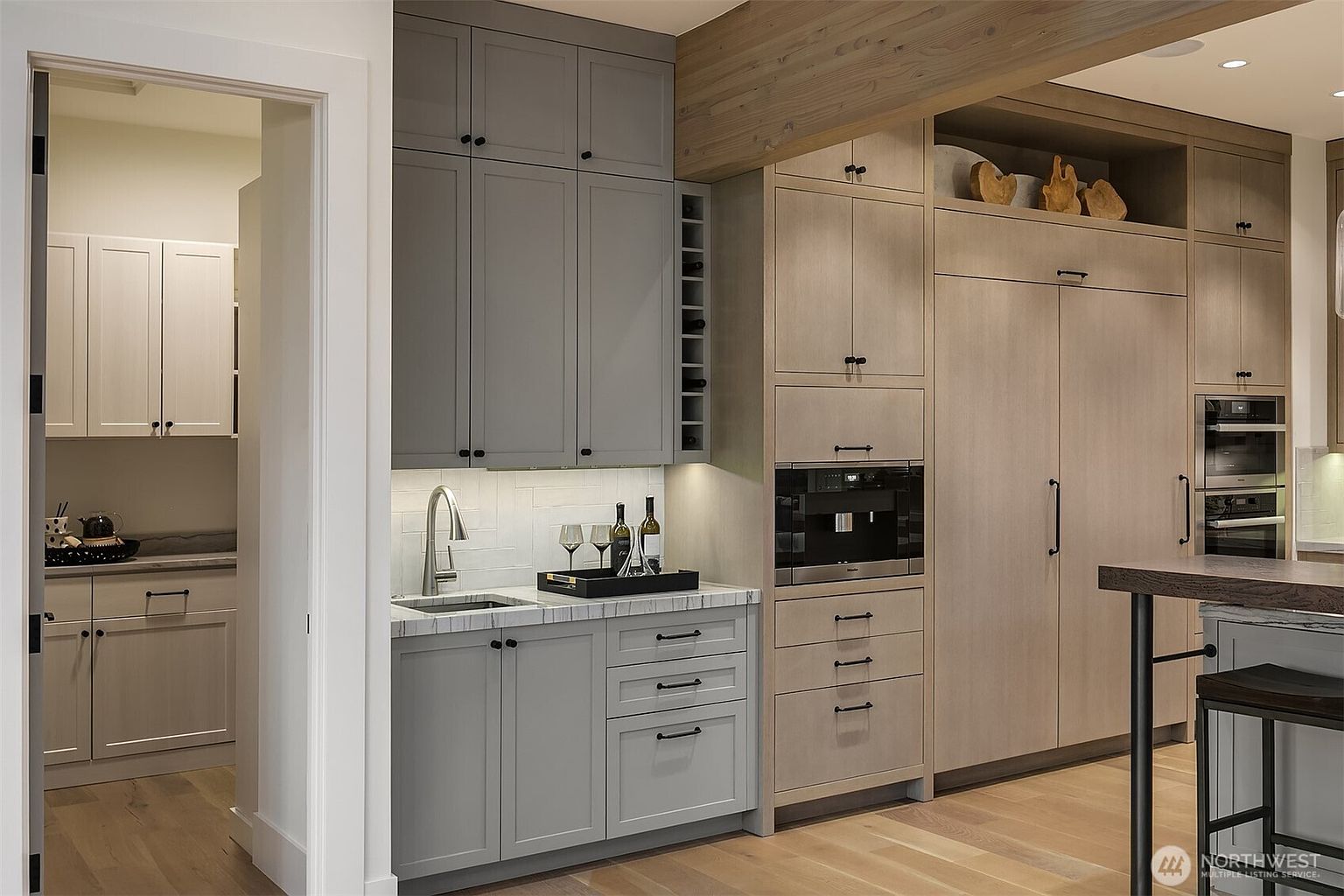
The kitchen is a serious culinary environment in the truest sense: light wood cabinetry, a marble-topped island with generous bar seating, a professional-grade range beneath a custom hood, double wall ovens, and a built-in coffee machine compose a workspace that performs at the level of its aesthetics. Flowing seamlessly from the kitchen, a dedicated wet bar with grey cabinetry and marble countertops leads to a glass-enclosed wine cellar — an entertaining infrastructure that anticipates every occasion.
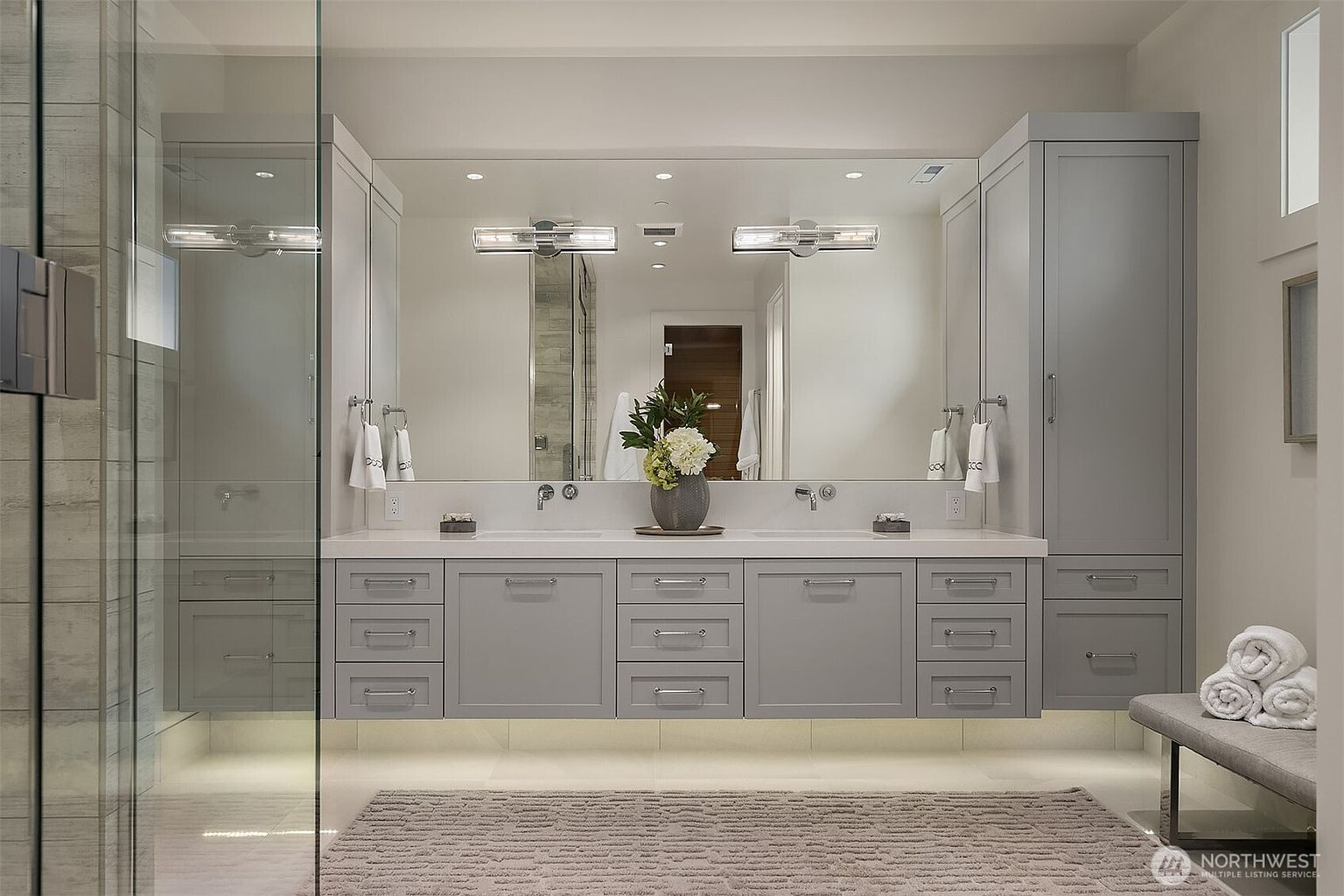
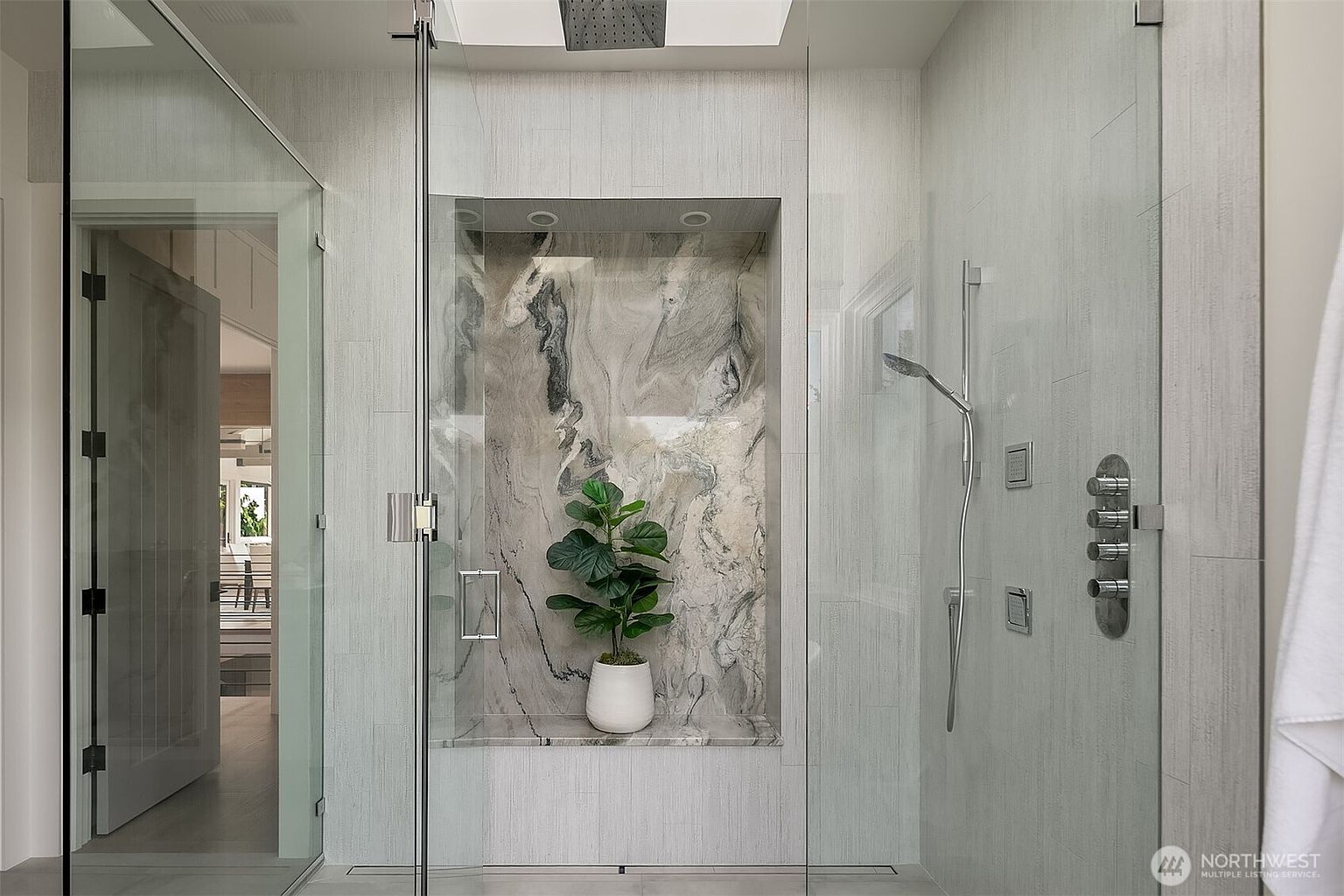
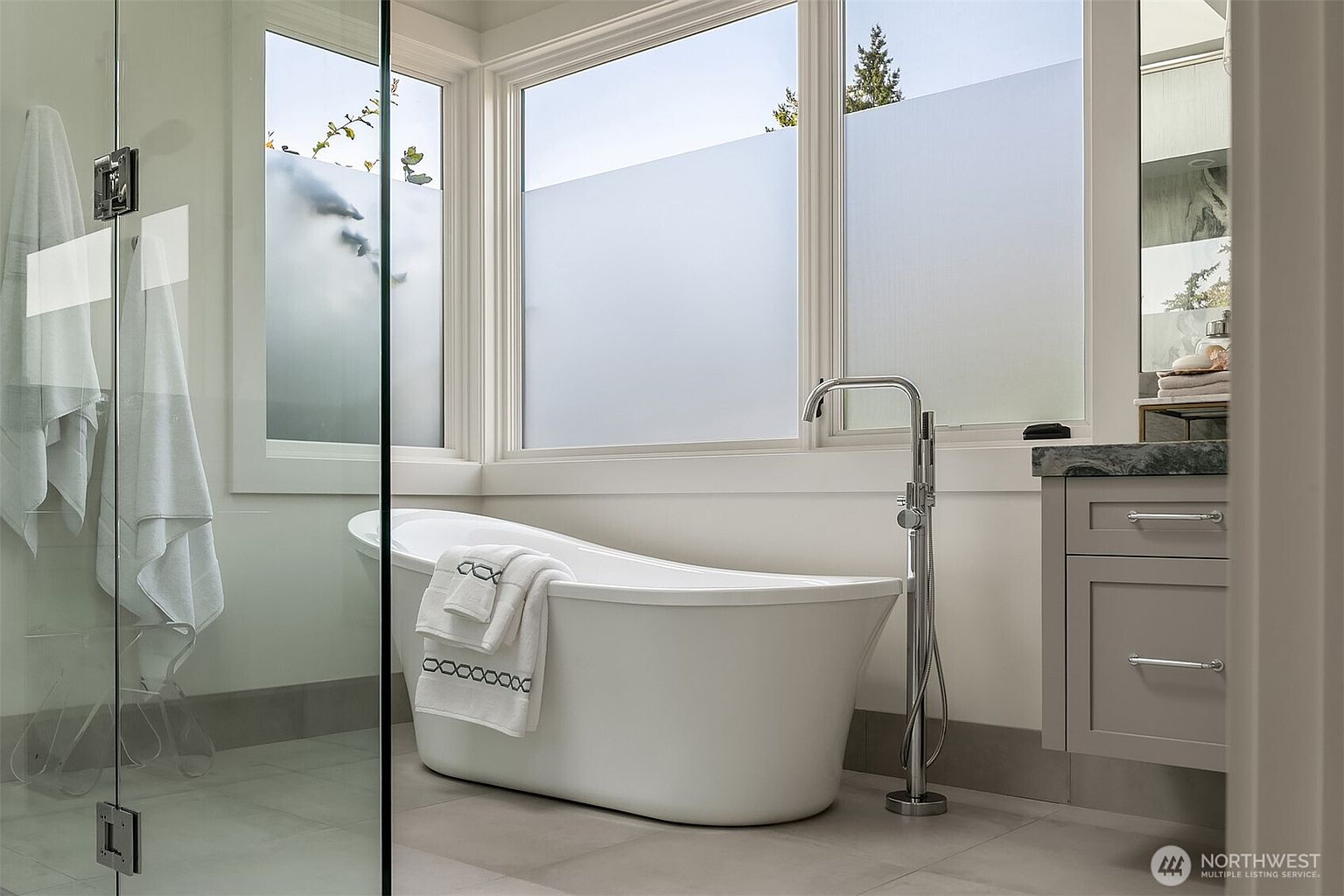
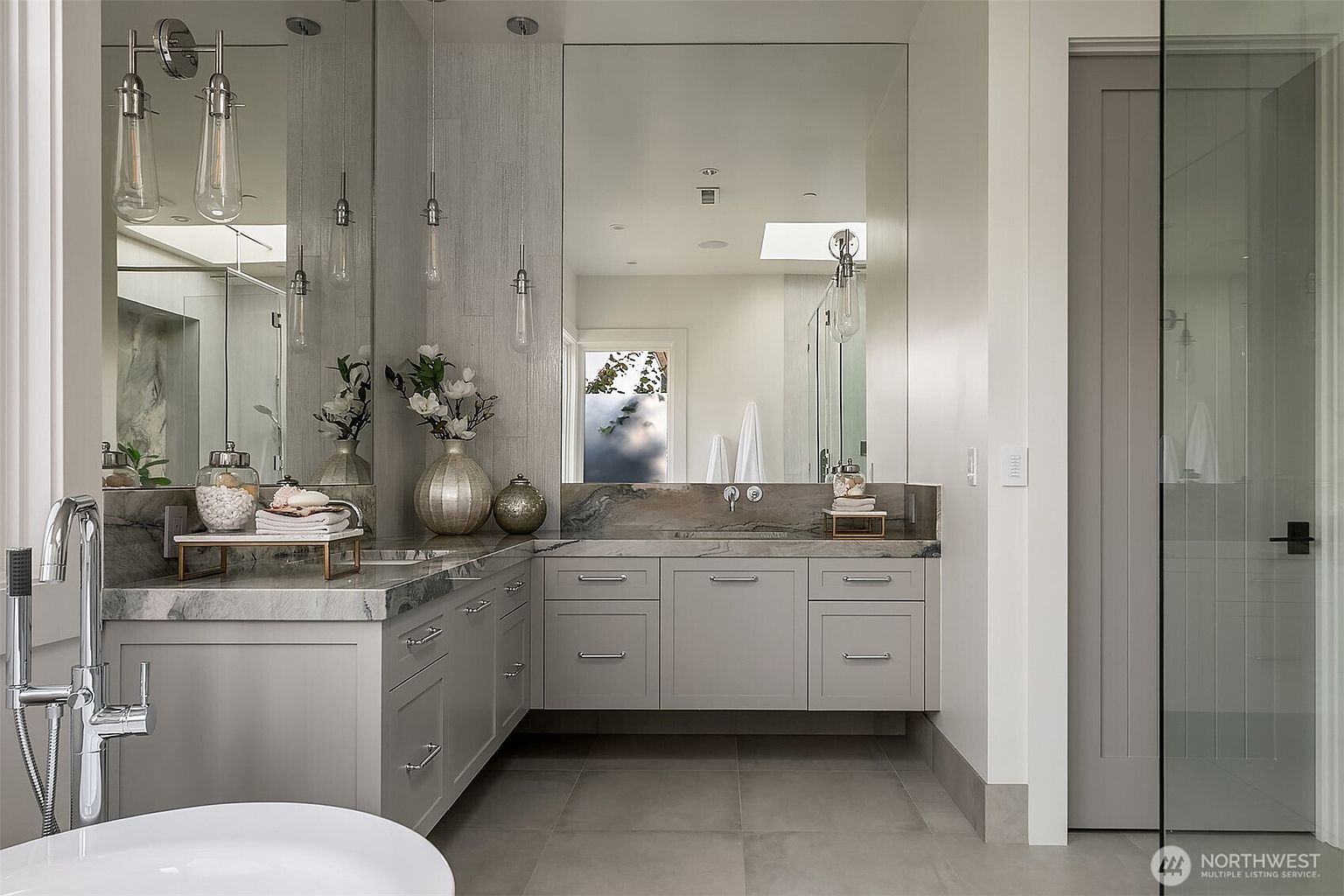
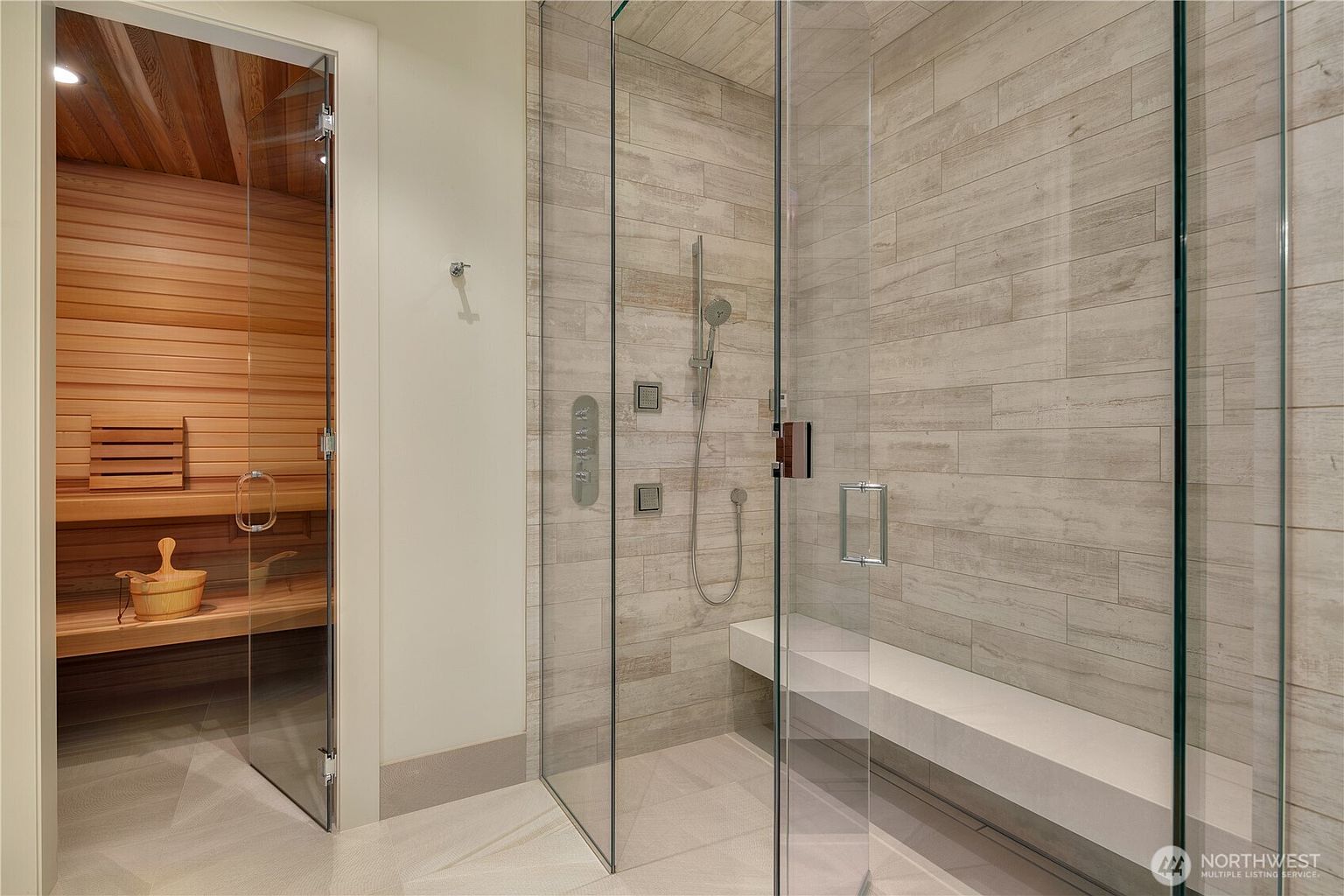
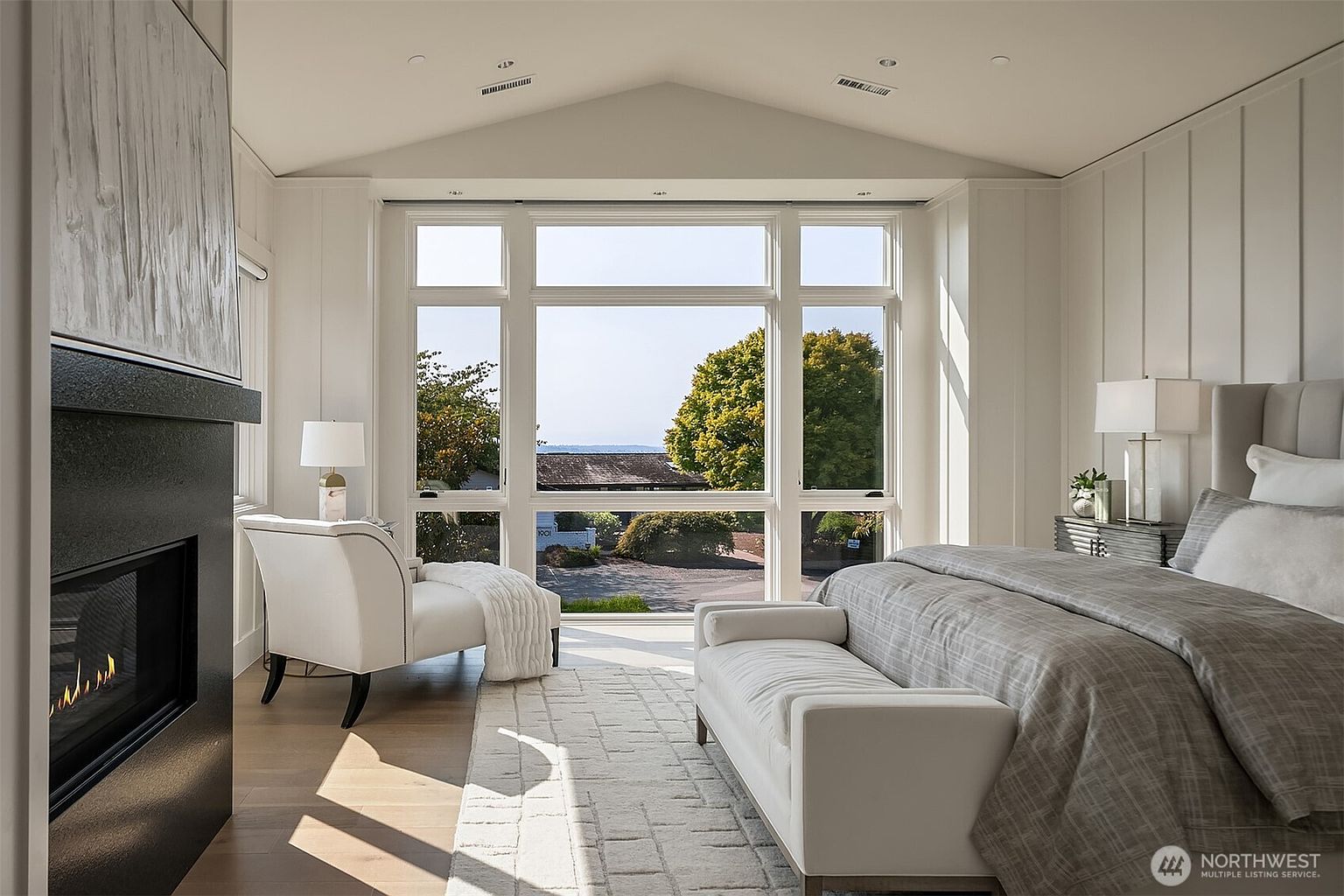
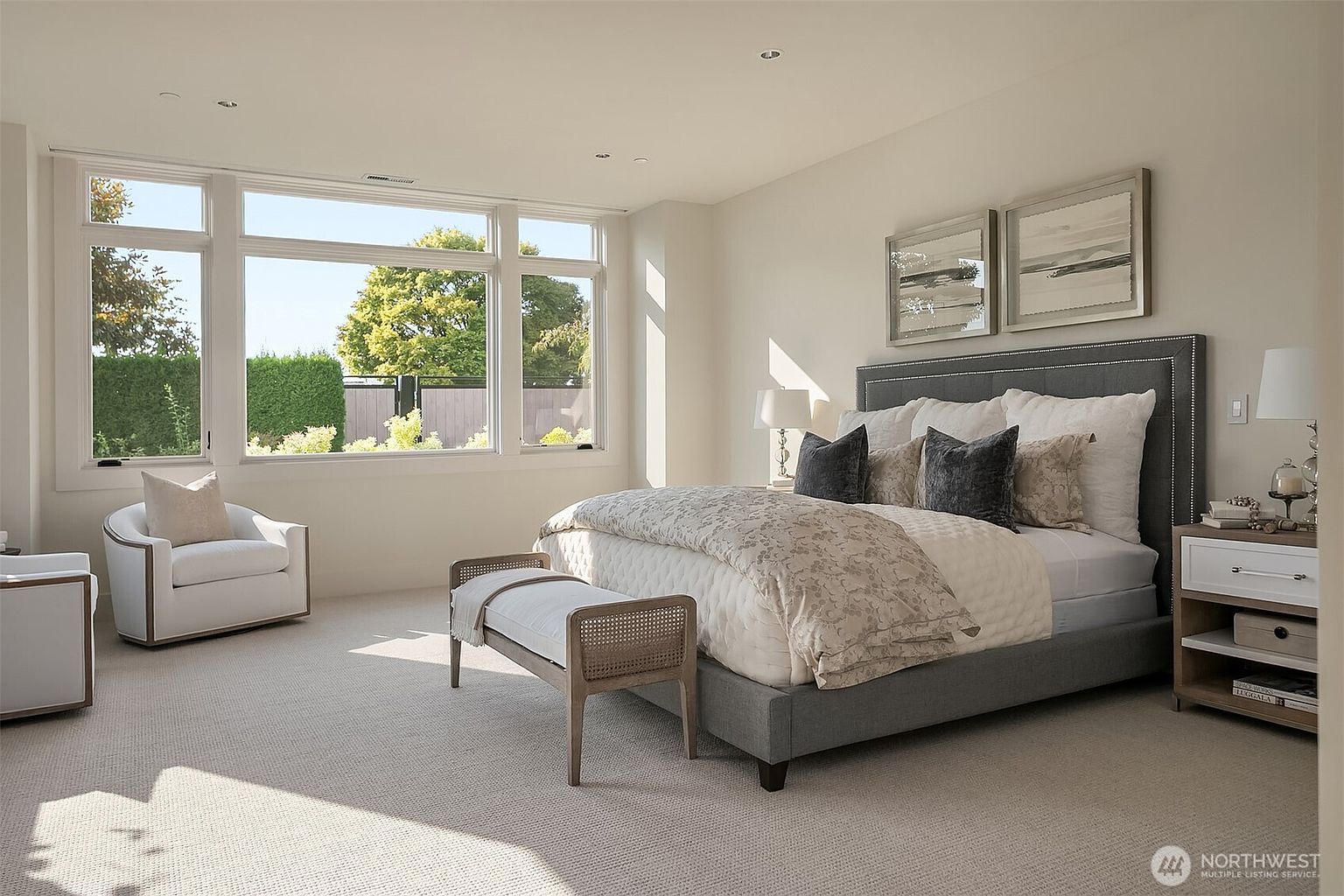
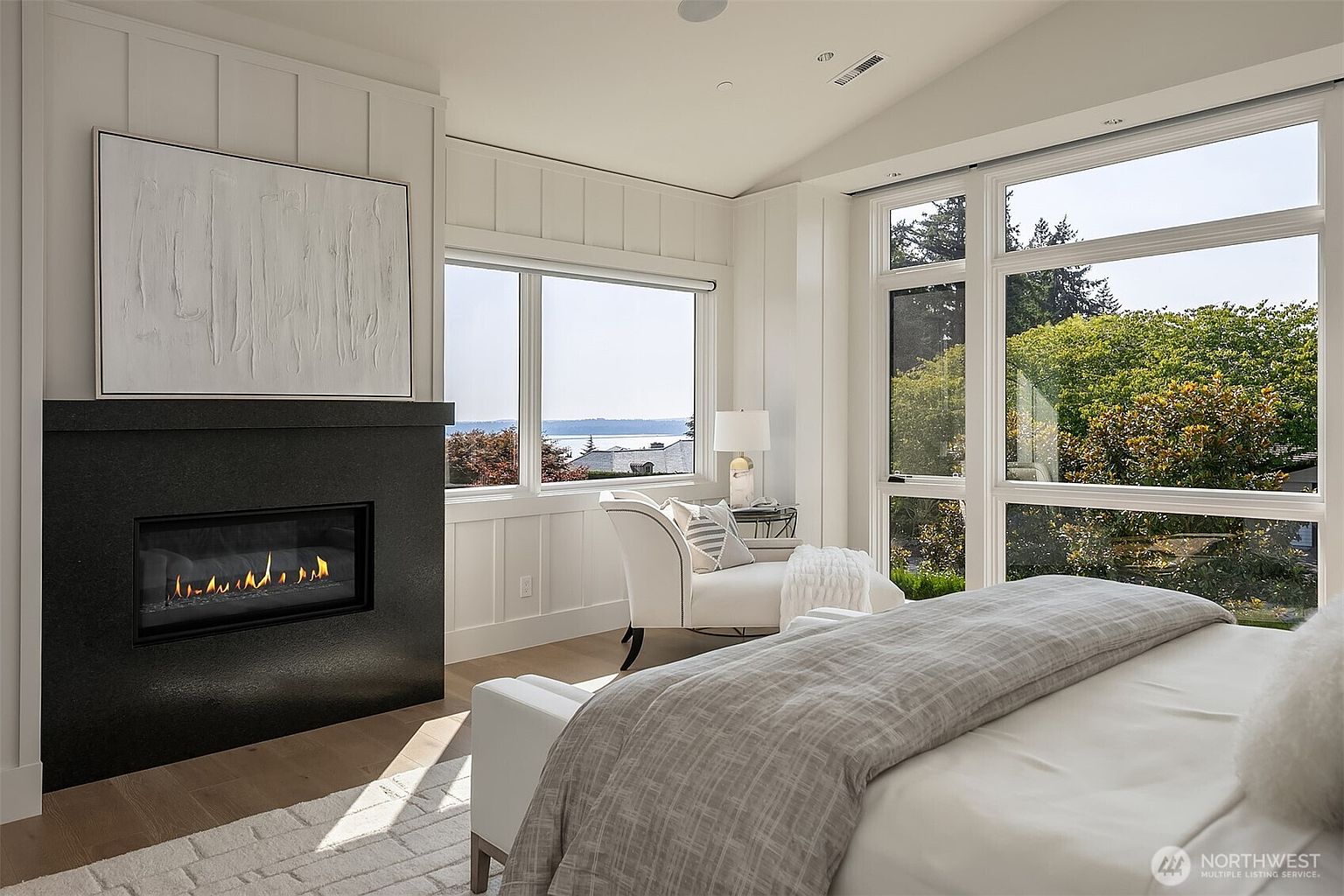
The primary suite operates at a register all its own. A fireplace anchors the room while a window wall frames the lake view with an intimacy that larger public spaces cannot replicate. The spa bath delivers a freestanding soaking tub, a glass-enclosed shower with rainfall fixtures, a floating double vanity, and a cedar sauna — a sequence of spaces that transforms the daily ritual into something genuinely restorative. A second primary suite extends the same philosophy of hospitality to guests.
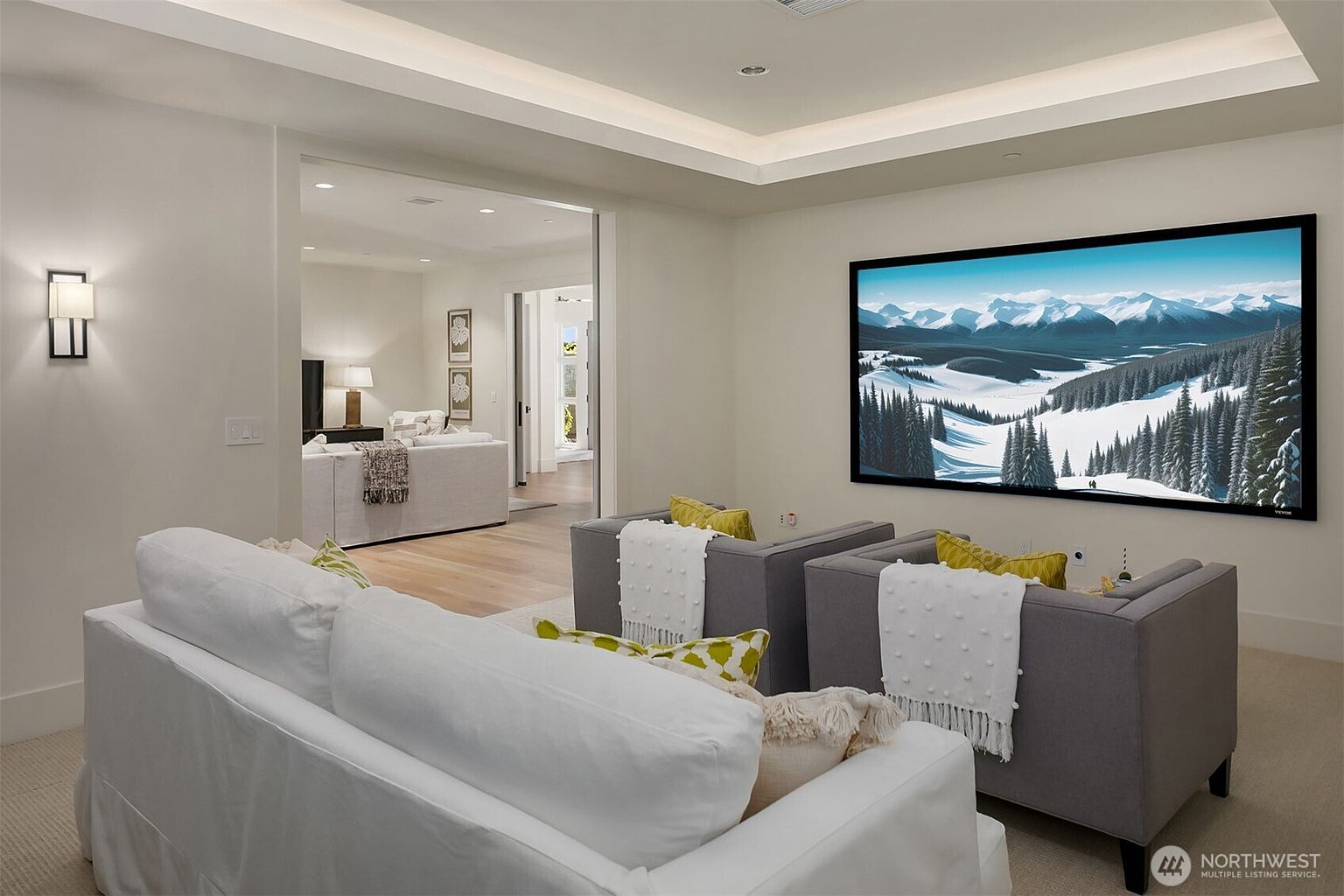
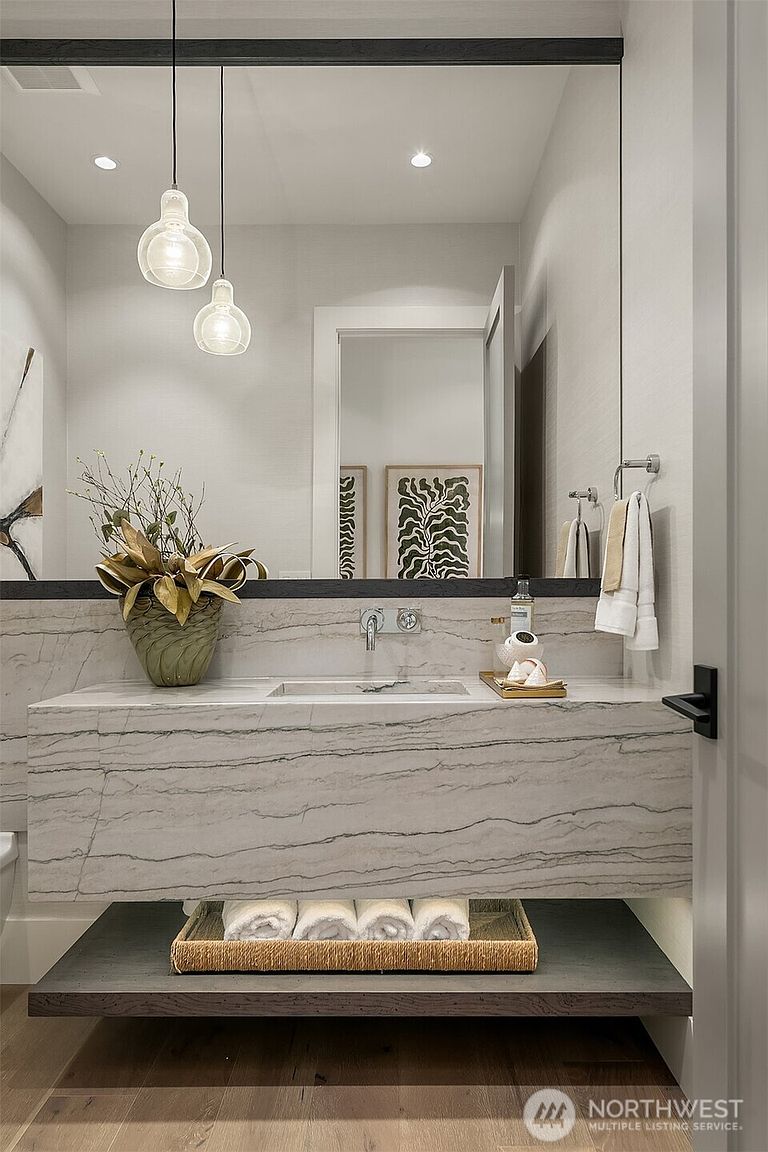
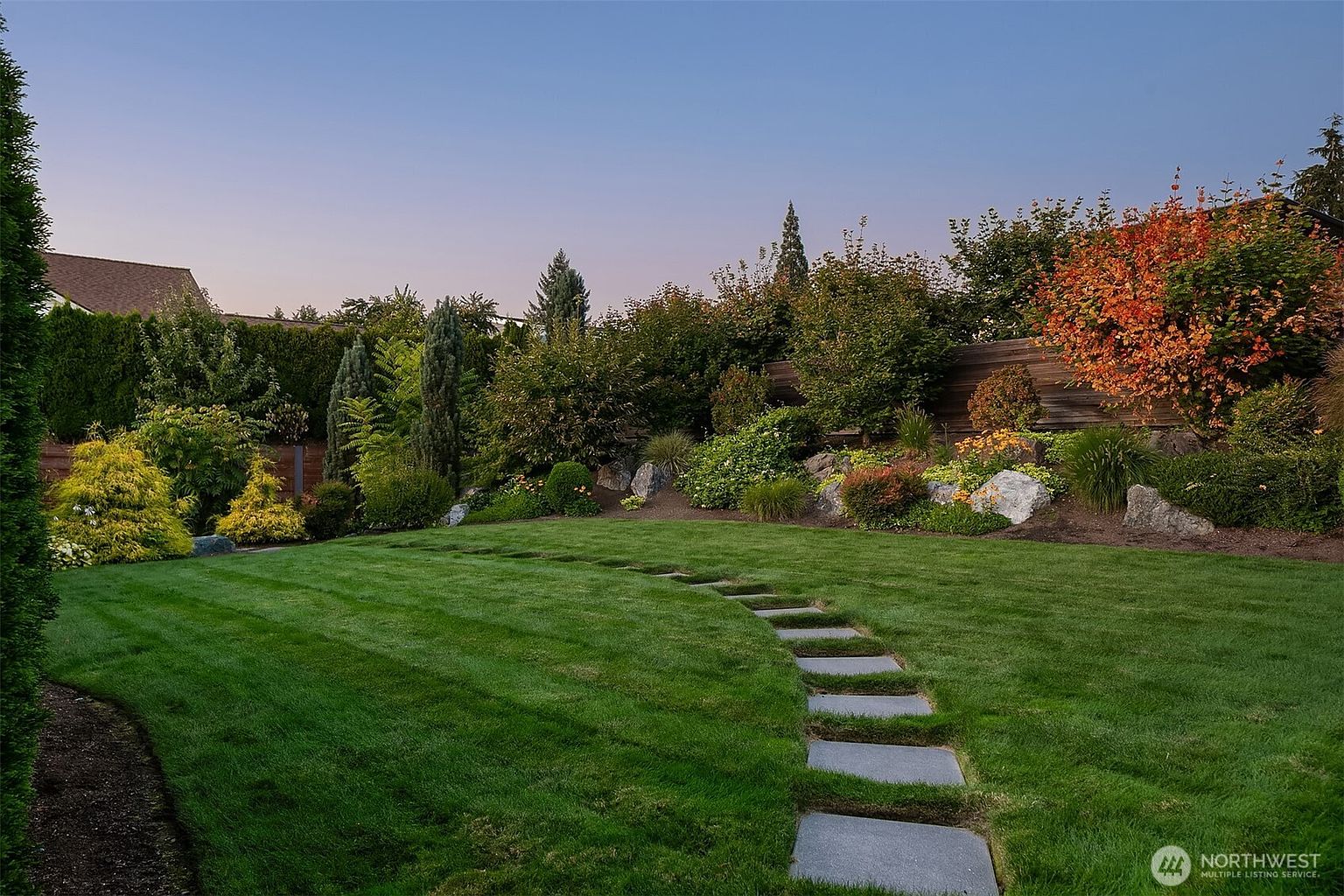
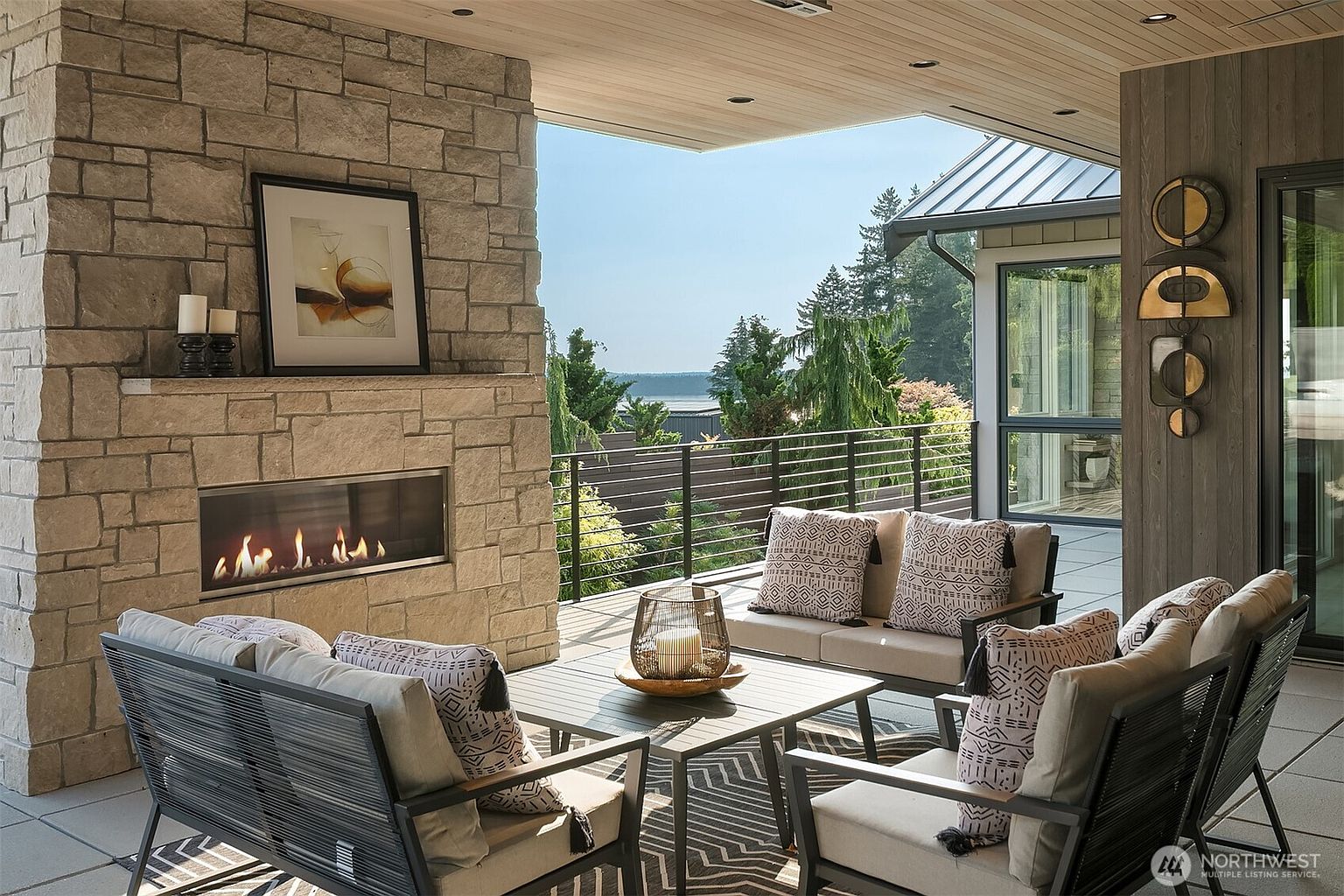
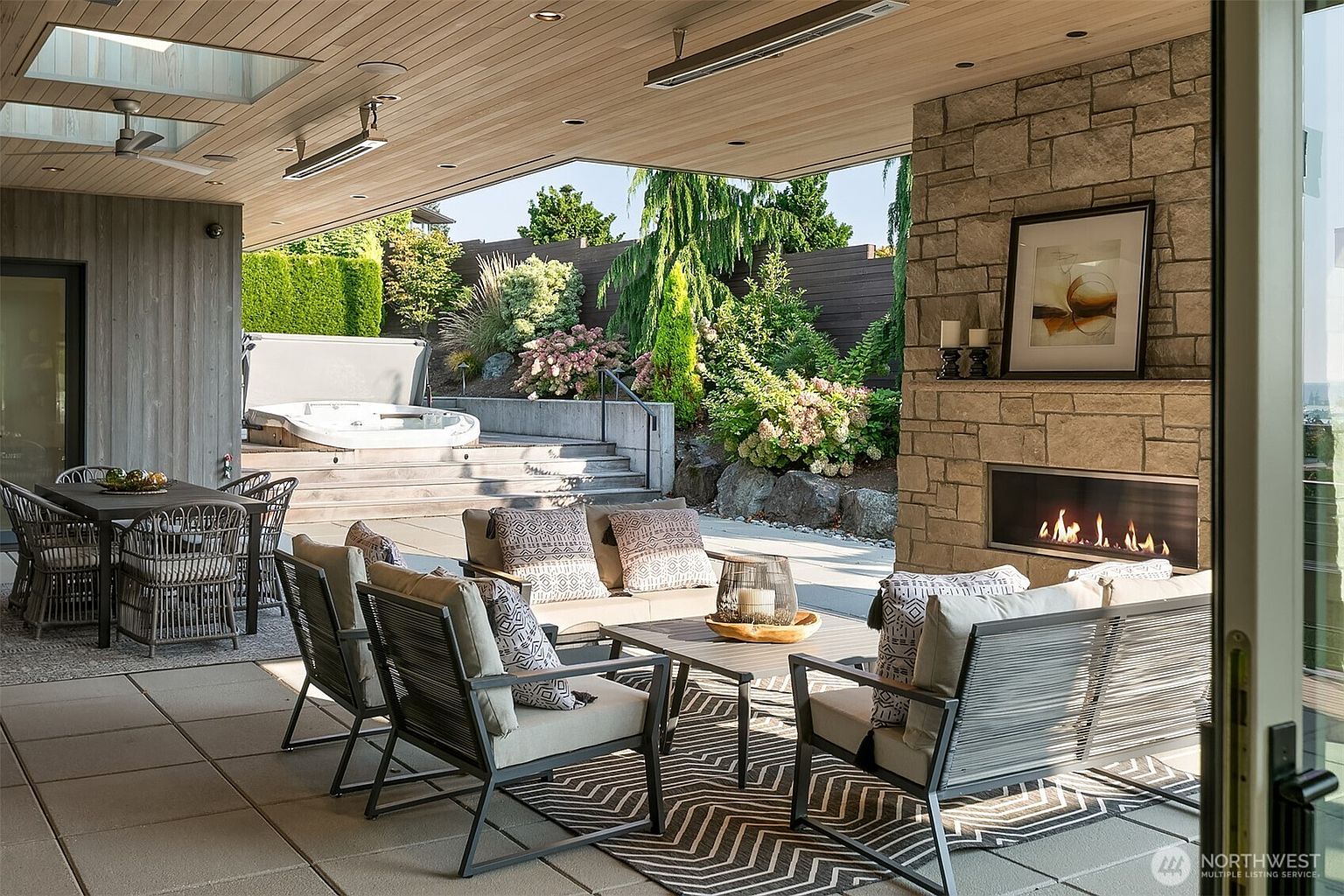
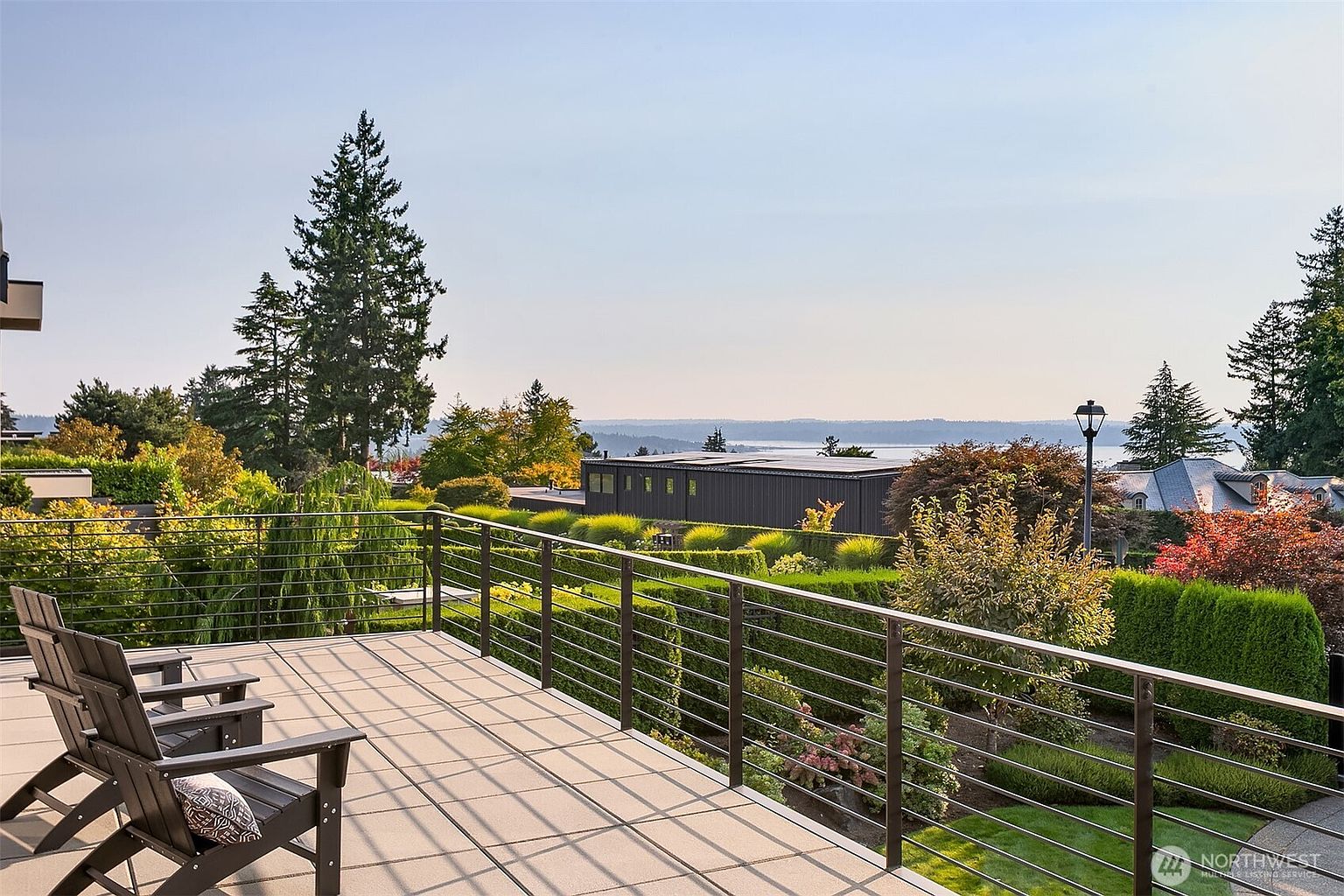
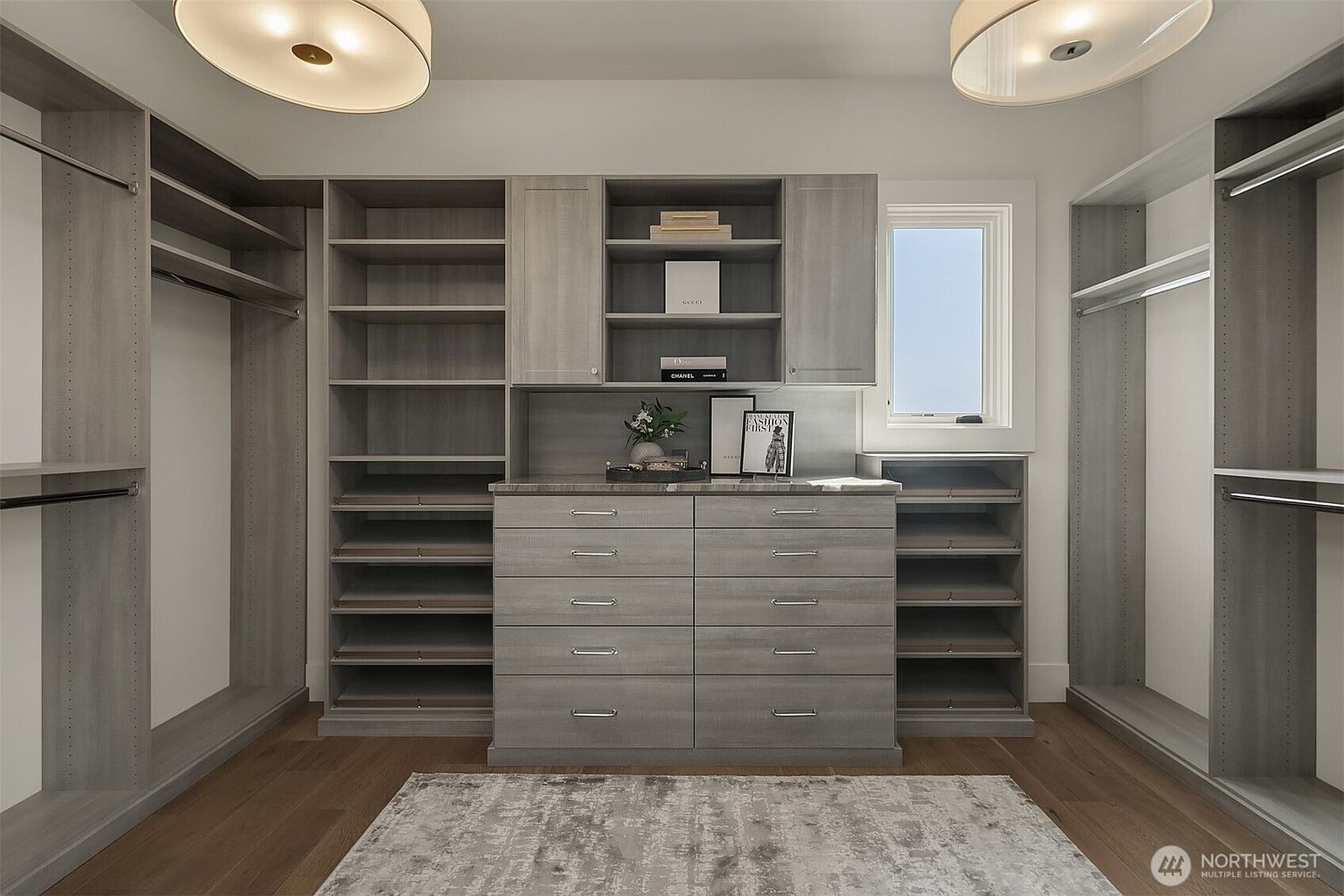
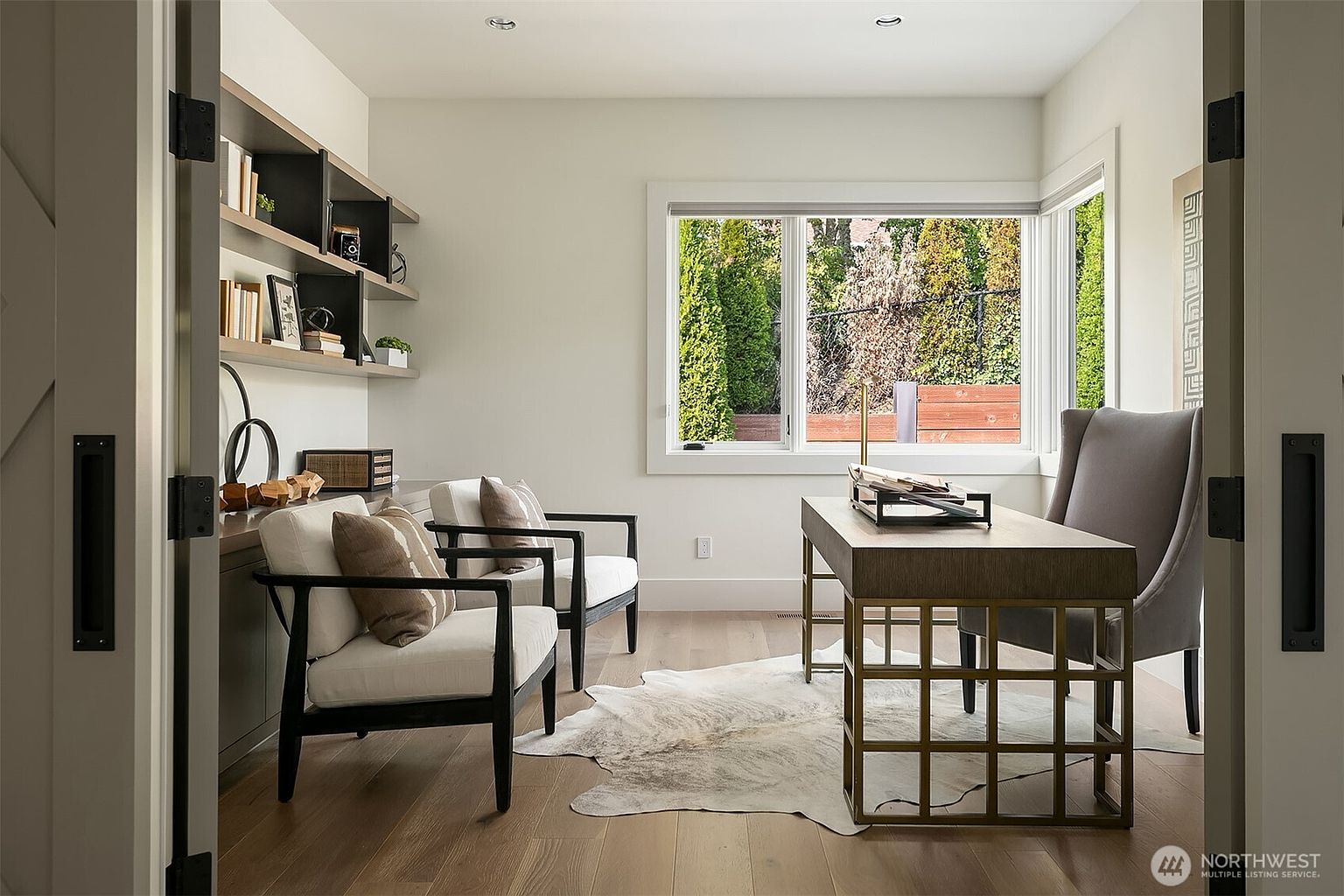
Throughout the residence, the layering of amenities reflects a commitment to completeness rather than mere accumulation: a private theater with plush seating, a home office with built-in shelving, a dedicated rec room, flex space, three powder rooms, and a residential elevator ensure that no practical need goes unmet. Outside, a covered terrace with a linear stone fireplace and an infinity-edge spa overlooks manicured grounds and the lake beyond, extending the estate's entertaining range into the open air. Three fireplaces, 360-degree security cameras, and whole-home automation complete a property that has been conceived without compromise.
Clyde Hill is a small, incorporated city of approximately 3,000 residents situated on the eastern shore of Lake Washington, occupying an elevated plateau that has made it one of the most sought-after addresses on the Eastside of greater Seattle. Incorporated in 1953, the city has maintained a distinctly residential character — there are no commercial districts within its borders, no retail corridors, no density pressures reshaping its streetscapes. What Clyde Hill offers instead is something increasingly rare in the Pacific Northwest: genuine topographic advantage, architectural privacy, and a governance structure oriented entirely around the preservation of residential quality of life.
The elevation that defines Clyde Hill is not incidental — it is the city's defining asset. Homes near the hill's peak enjoy protected sightlines across Lake Washington toward Seattle's skyline and, on clear days, toward the Olympic Mountains beyond. Because of the city's strict zoning and low-density land use patterns, those views carry a meaningful degree of permanence that comparable hillside positions in less carefully governed communities cannot offer.
The surrounding area places residents within immediate reach of the full breadth of Eastside amenities. Downtown Bellevue — with its Michelin-recognized dining, luxury retail along Bellevue Square and The Shops at The Bravern, and a growing arts and cultural scene anchored by the Bellevue Arts Museum — is minutes away. Kirkland's waterfront, with its independent restaurants, galleries, and direct access to Lake Washington's shoreline parks, provides a more intimate alternative just to the north. Redmond, home to the headquarters of Microsoft and a thriving cycling and outdoor recreation culture along the Sammamish River Trail, is similarly accessible.
For families, the property sits within the Bellevue School District, consistently ranked among the highest-performing public school systems in Washington State and recognized nationally for academic outcomes, advanced coursework offerings, and extracurricular depth. The district's reputation is a meaningful component of the neighborhood's enduring appeal among discerning buyers.
Outdoor recreation is woven into the fabric of daily life here. Luther Burbank Park on Mercer Island and Bellevue's Meydenbauer Bay Park both offer direct Lake Washington access. The Mountains to Sound Greenway — a 1.5-million-acre landscape corridor stretching from Seattle to Central Washington — begins effectively at the Eastside's eastern edge, placing world-class hiking, skiing at Summit at Snoqualmie, and wilderness access within a straightforward drive.
Seattle-Tacoma International Airport is approximately 30 minutes south, and the SR-520 floating bridge — one of the longest floating bridges in the world — connects the Eastside to Seattle's Capitol Hill, South Lake Union, and downtown core in a commute that, outside of peak hours, remains genuinely manageable.
What Clyde Hill ultimately offers is a form of residential sovereignty — a hilltop community that has chosen, through decades of deliberate governance, to remain exactly what it is: quiet, elevated, and defined by the quality of the homes and the views that distinguish it. At the peak of that community, this estate represents the address at its most realized.
Featured Highlights
Curated Content • Presented by Shawn Filer