The Story Behind
An Art Deco Masterpiece at the Crown of Astor Street
There are homes that are well-appointed, and then there are homes that have been composed — where every material selection, every architectural gesture, every finish speaks to a sustained and deliberate vision. 1524 N. Astor Street belongs emphatically to the latter category.
The residence begins at the street with a quiet confidence. A grand entry door set within a classic stone-trimmed archway, flanked by cylindrical lanterns and approached by curved stone steps, signals the quality within without announcing it. The 2025 exterior renovation, which included all new stucco on the walls enclosing the home's expansive private terrace, reflects the same meticulous standard of care that defines the interiors.
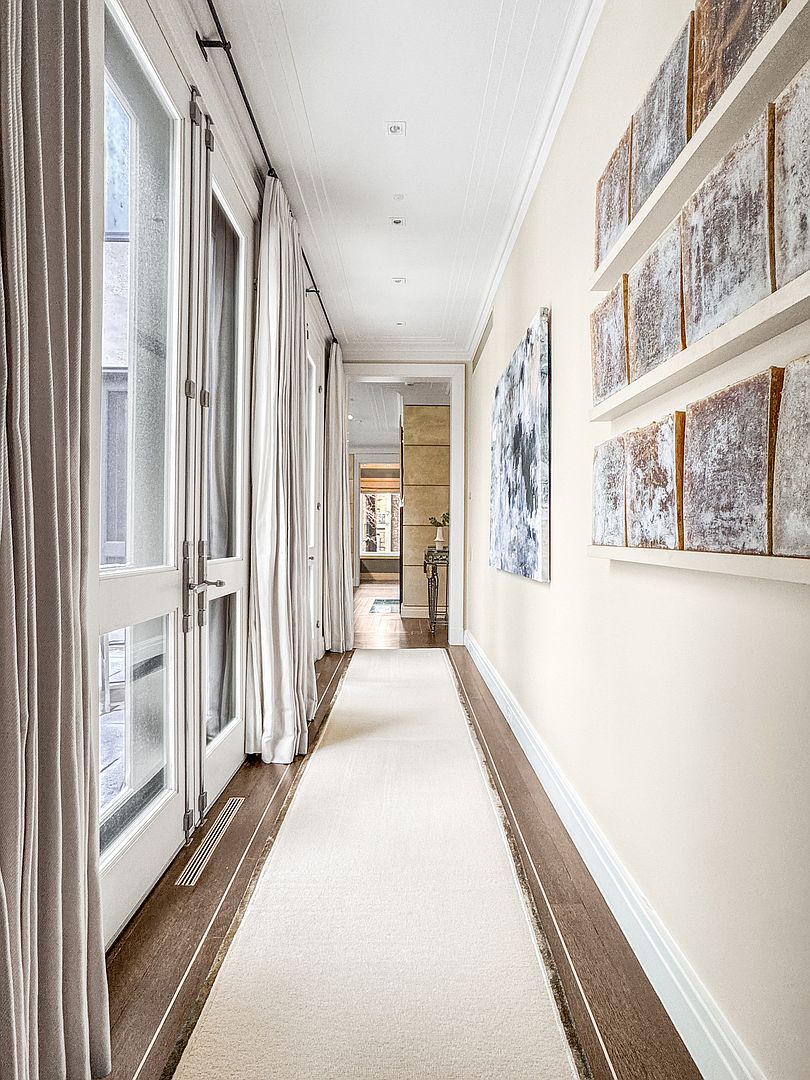
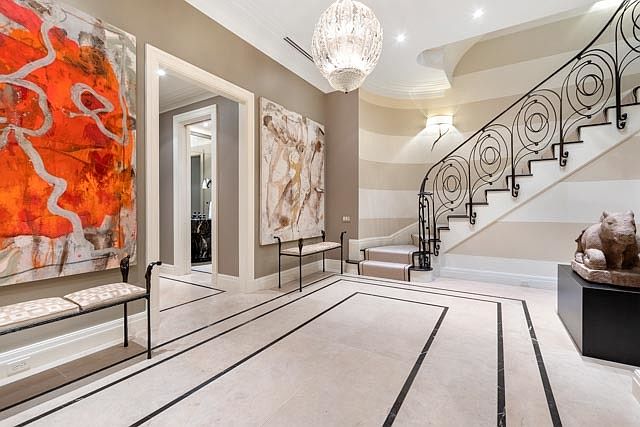
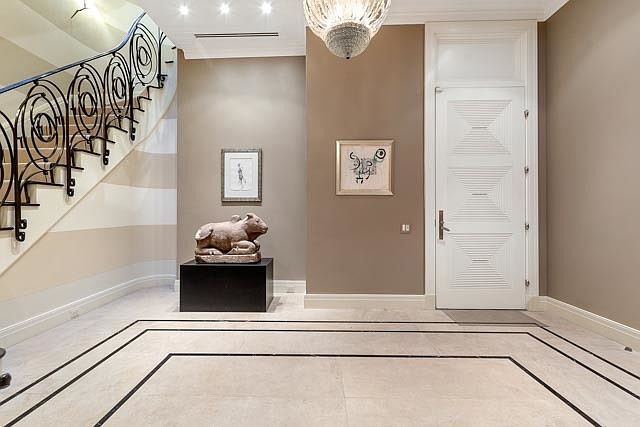
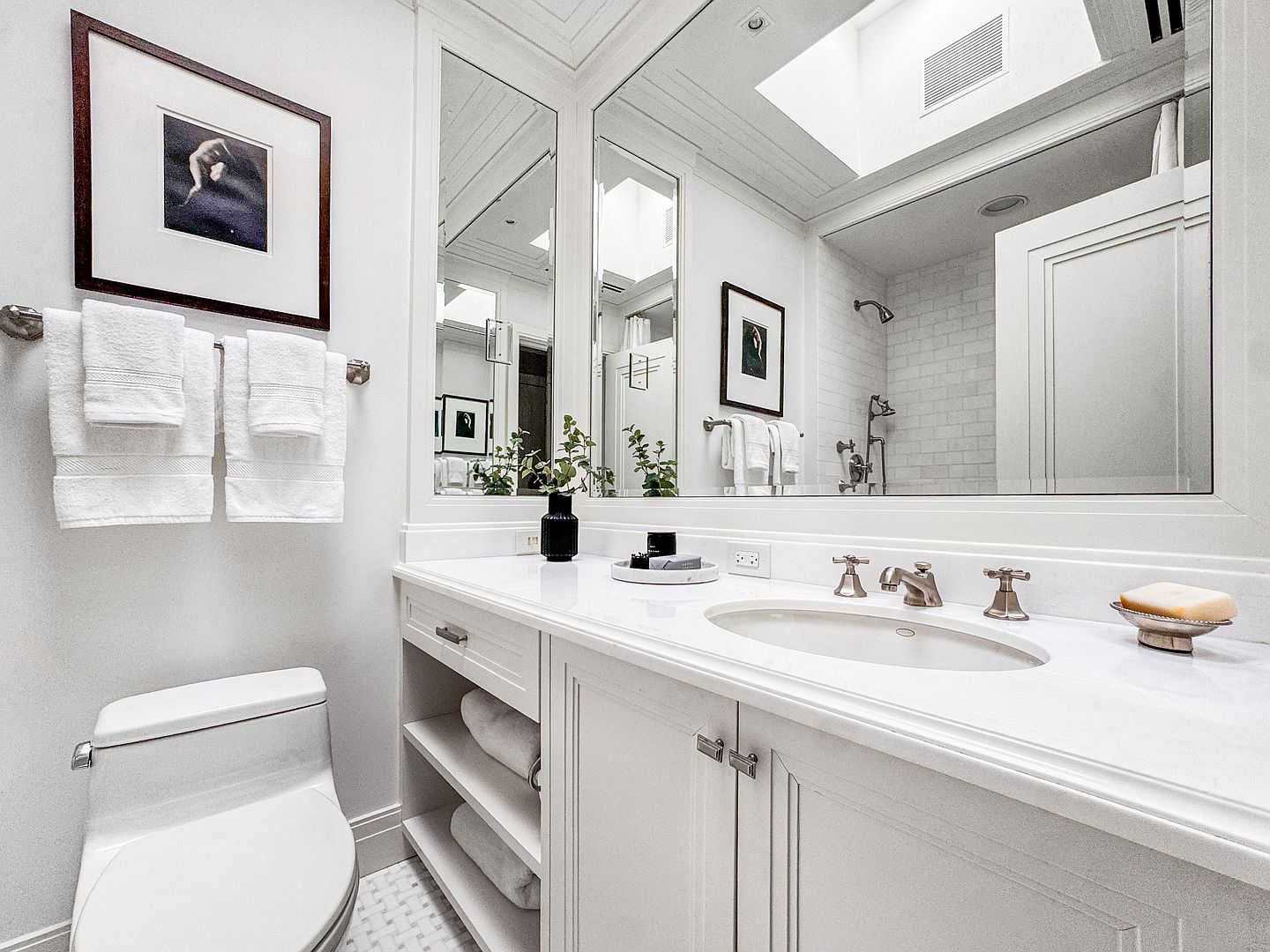
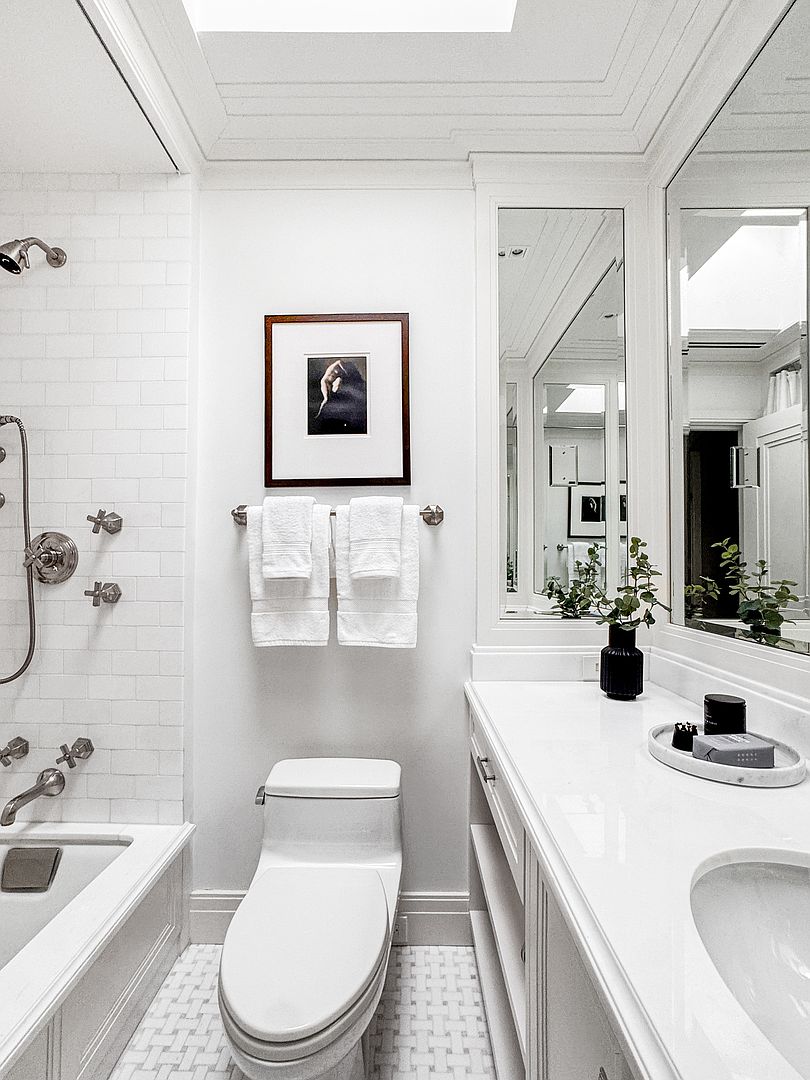
Step inside and the foyer establishes the register immediately. Rift-sawn white oak floors with custom inlay run underfoot. Hand-cast plaster moldings define the ceiling plane. A walk-in coat closet and climate-controlled wine storage offer practical luxury before the home has truly begun. The guest bath presents a hand-carved marble sink — a piece of functional sculpture that would merit attention in a gallery context.
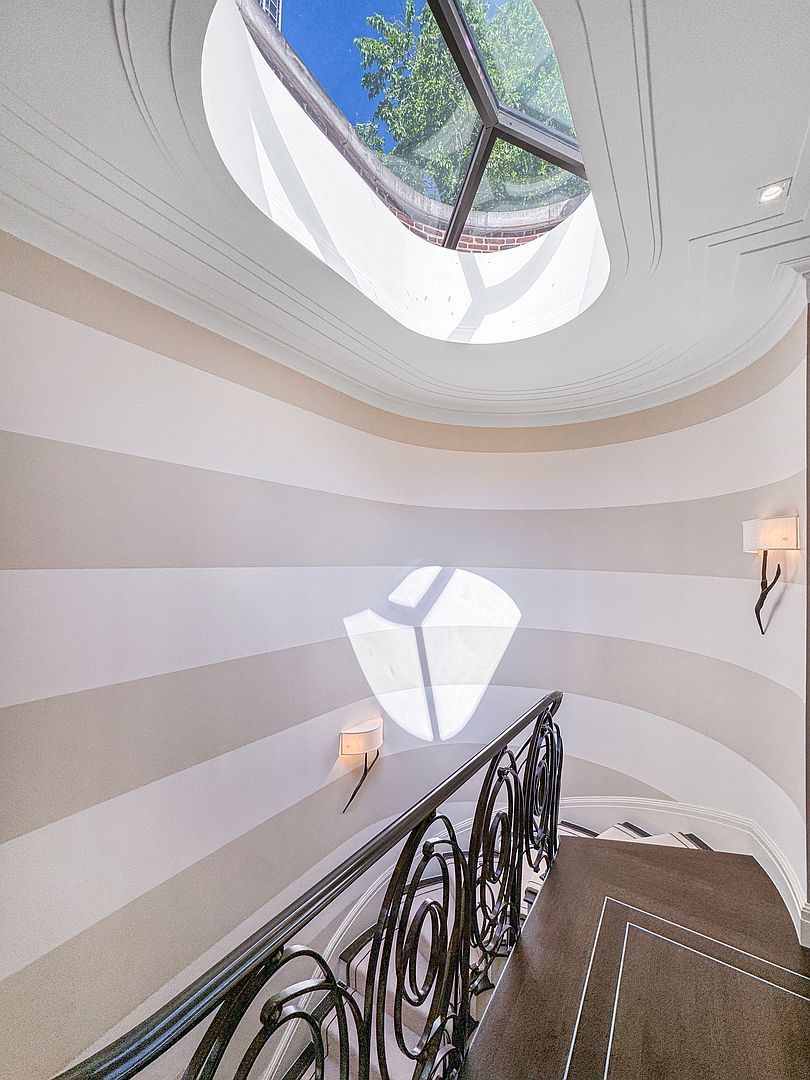
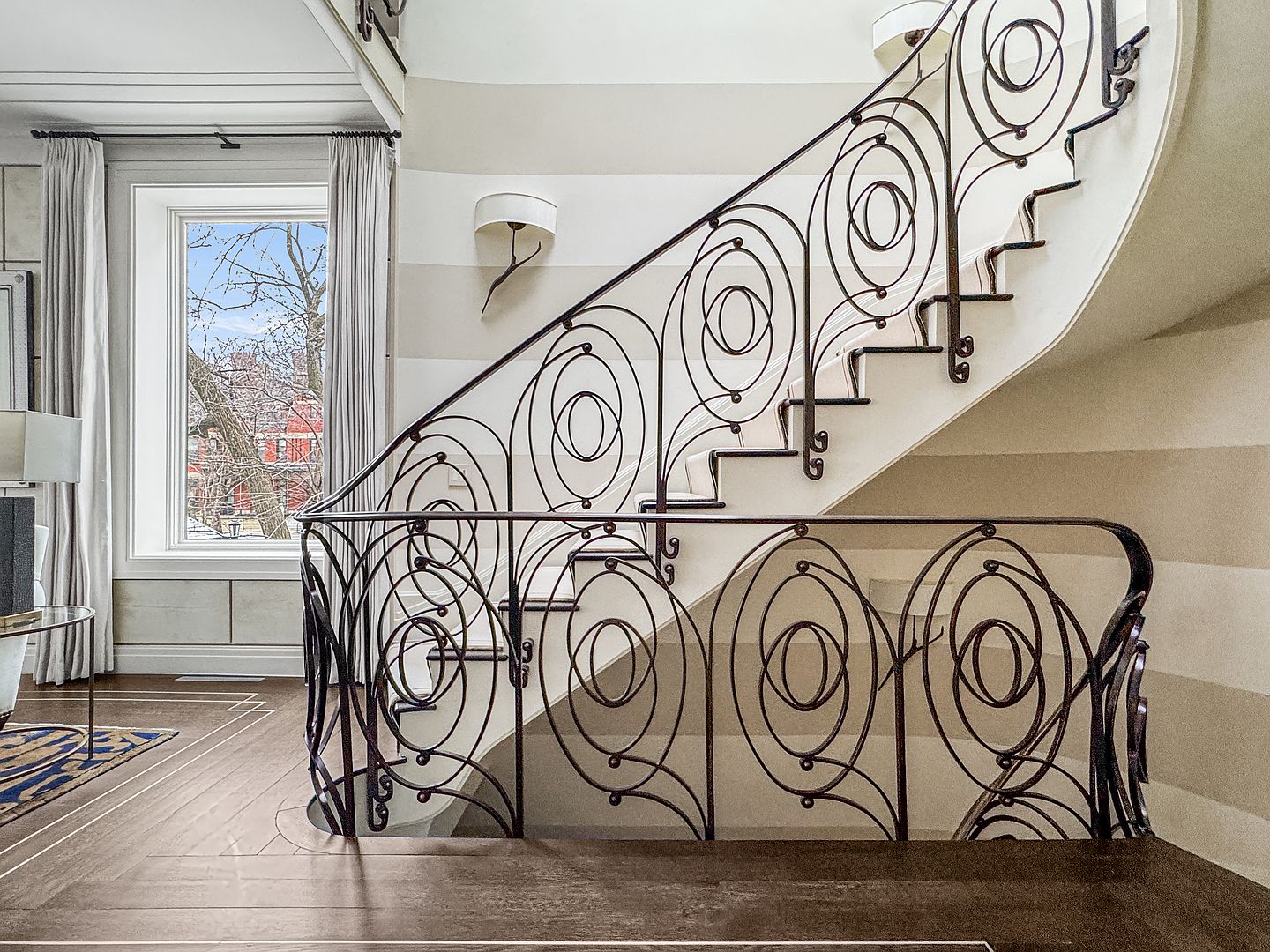
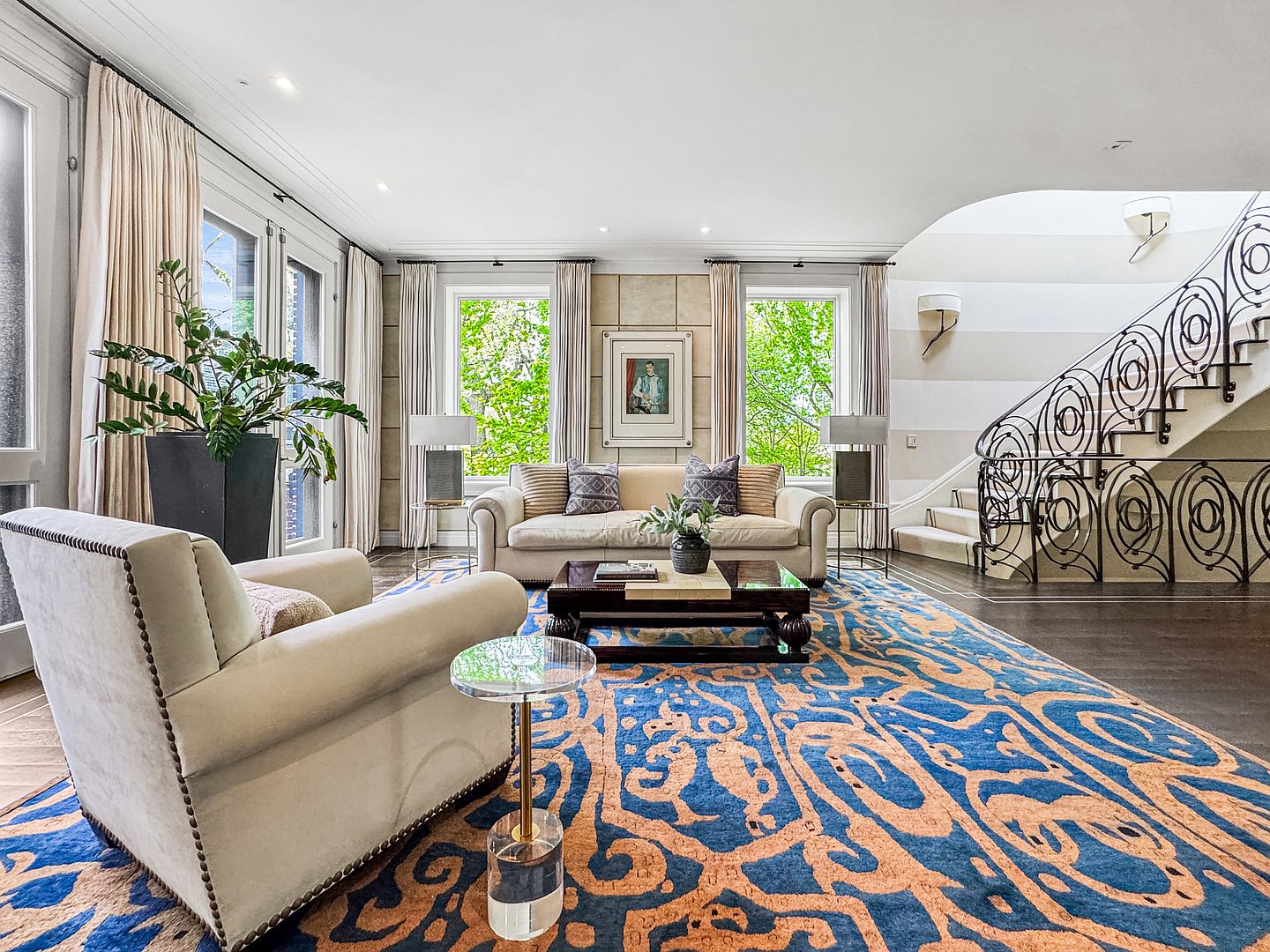
The curved staircase, with its artisan-fabricated bronze and steel balusters, is the home's defining architectural gesture: a sweeping form that draws the eye upward while anchoring the entry sequence in something that feels genuinely irreplaceable. An oval skylight crowns the stair hall, flooding the space with natural light that shifts with the hour and the season.
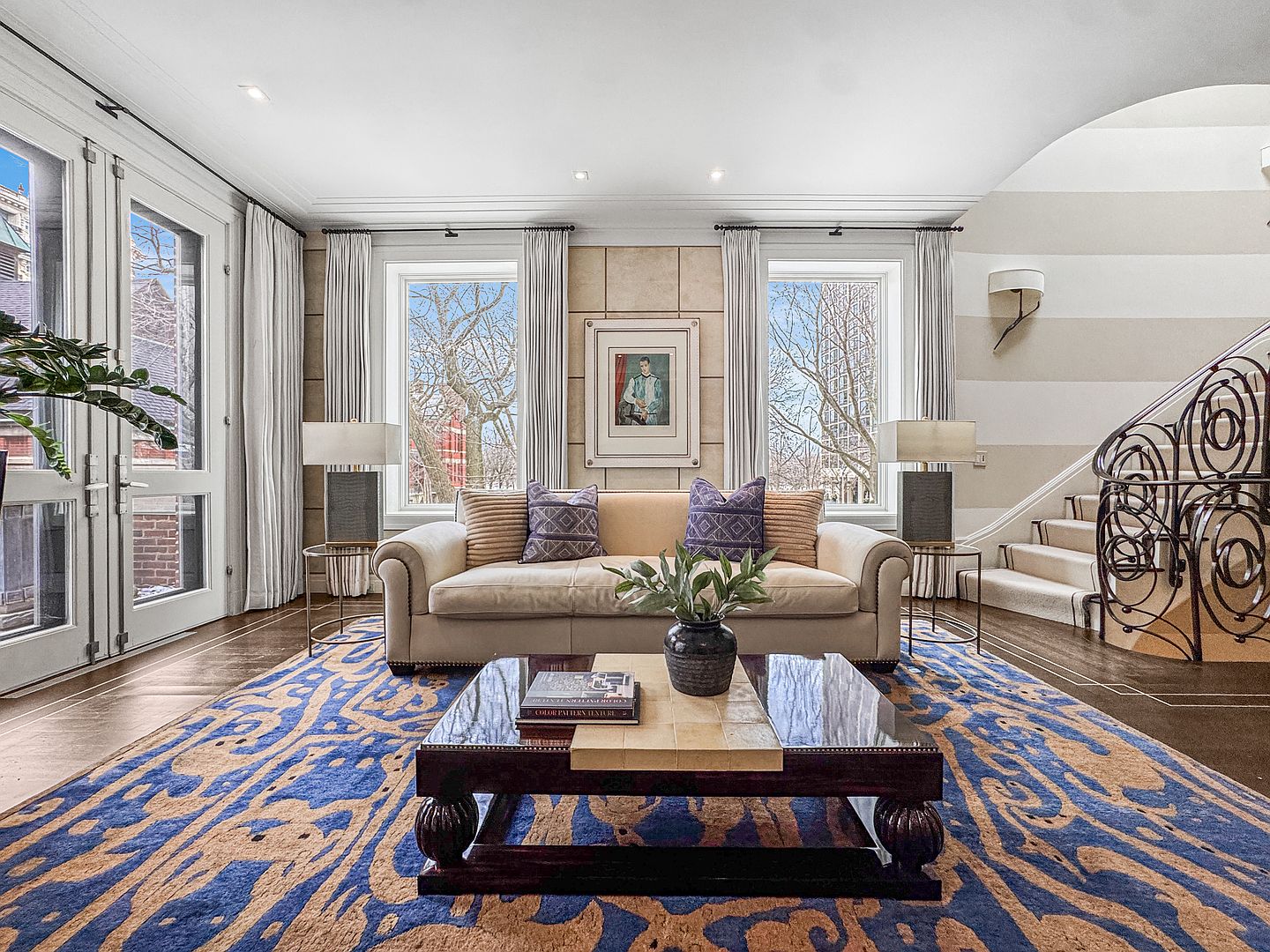
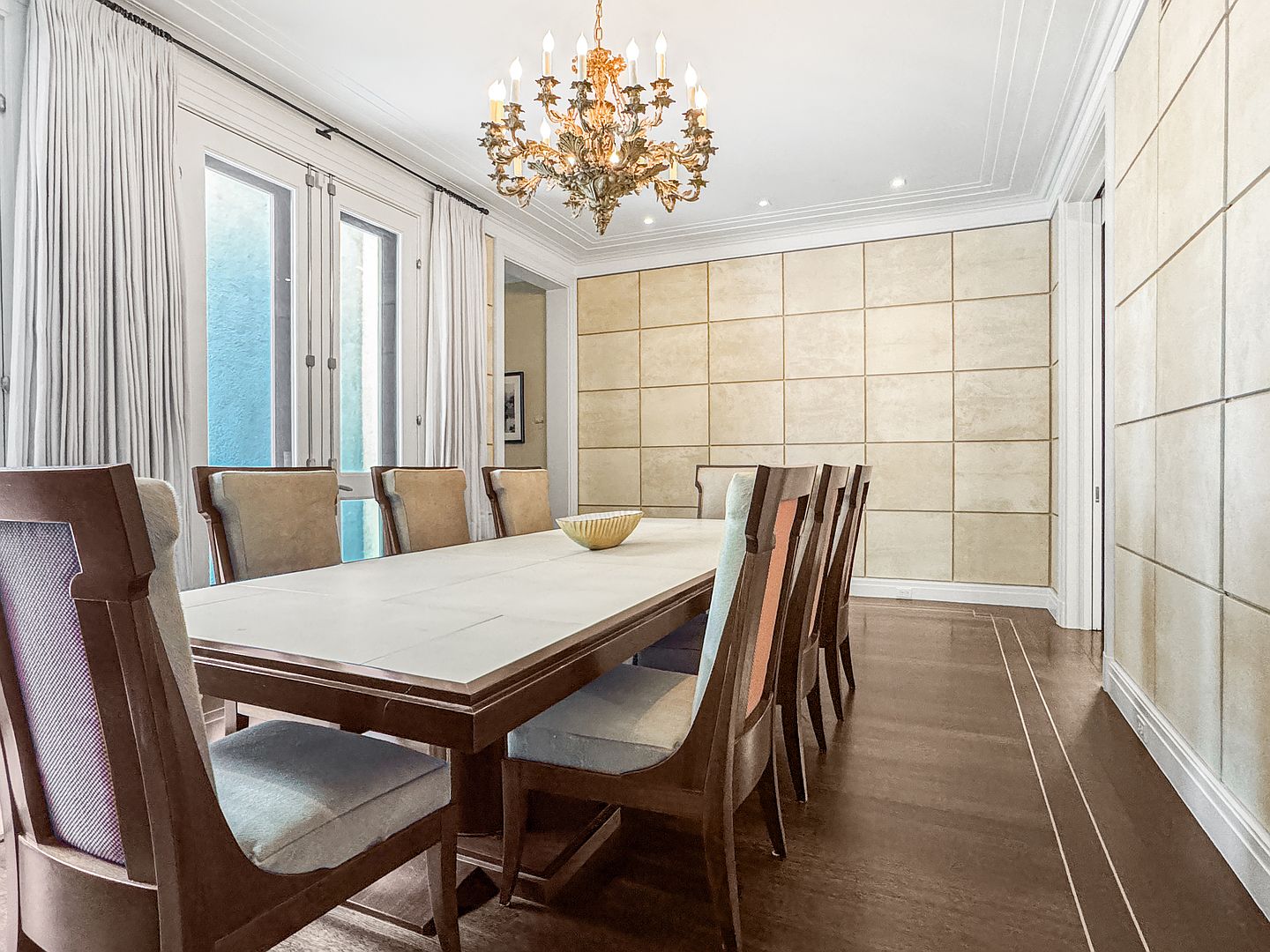
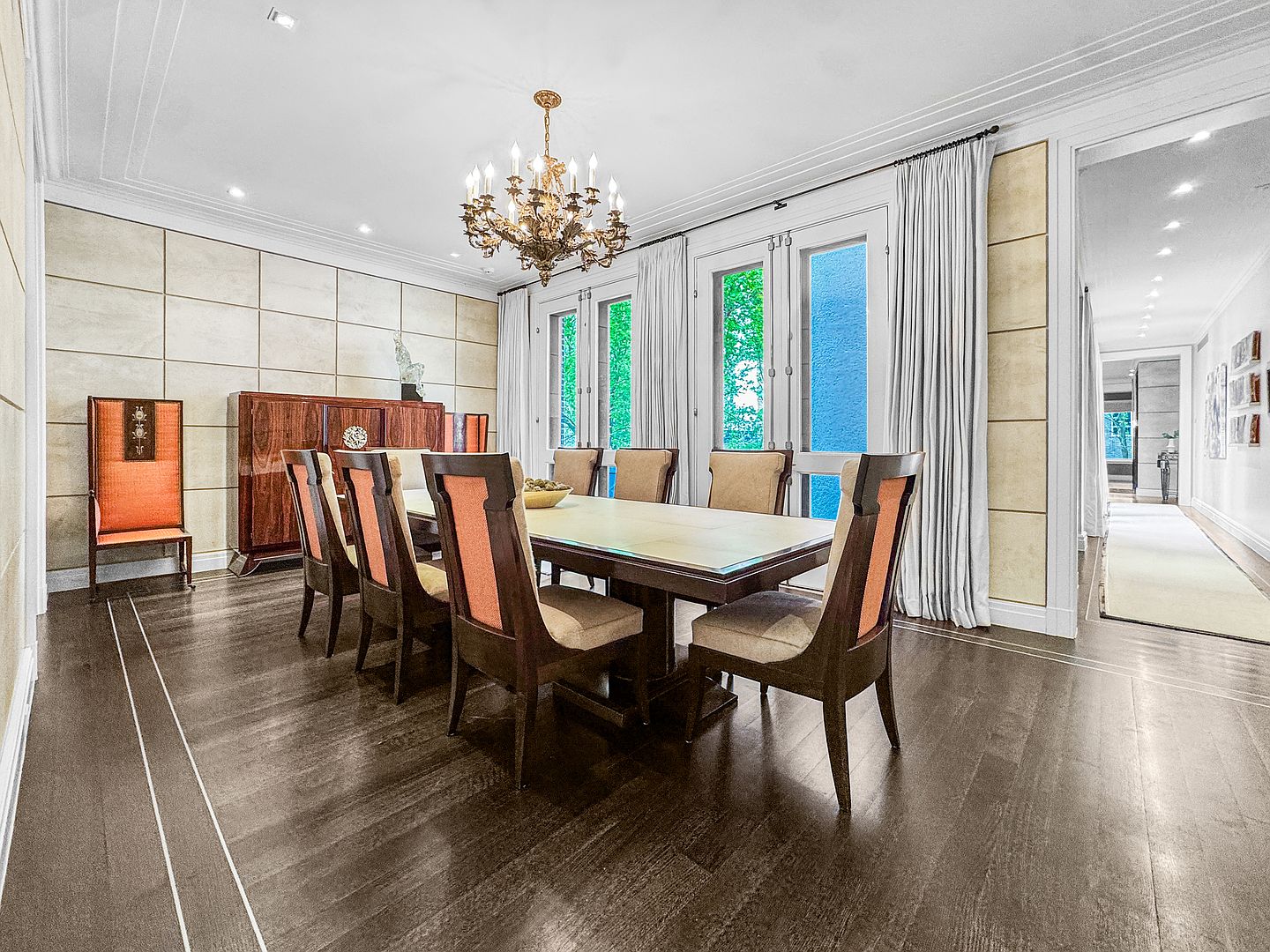
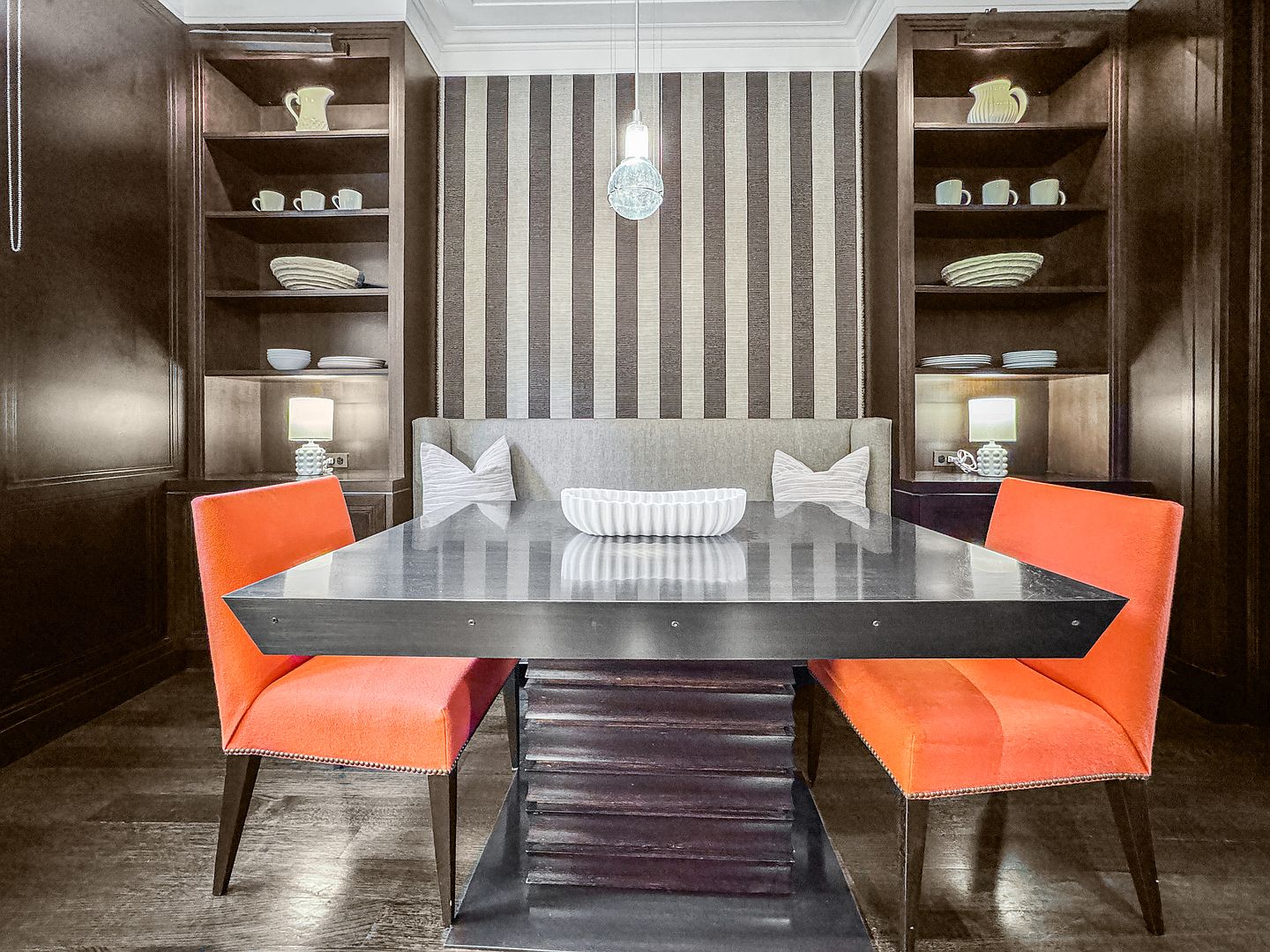
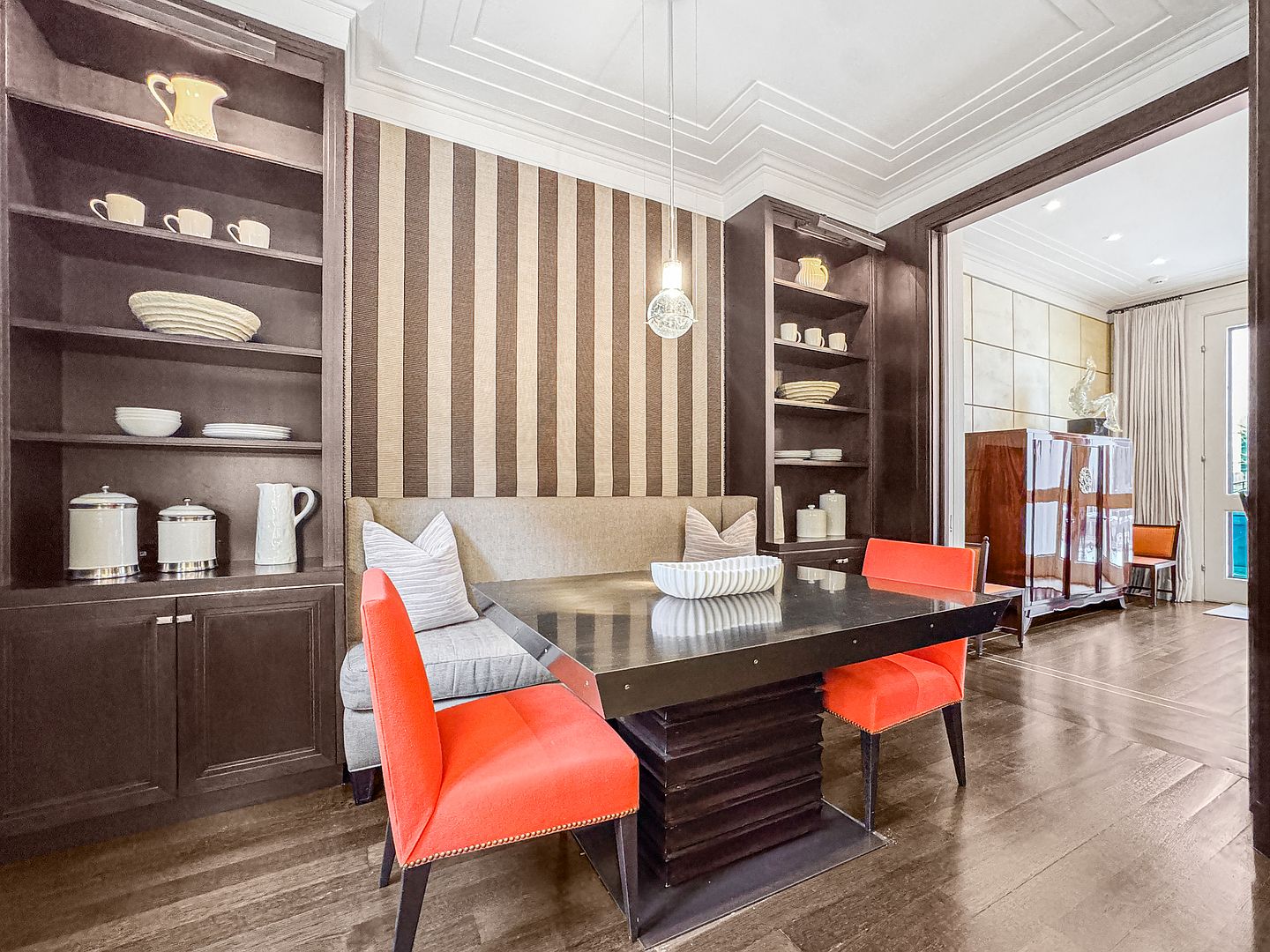
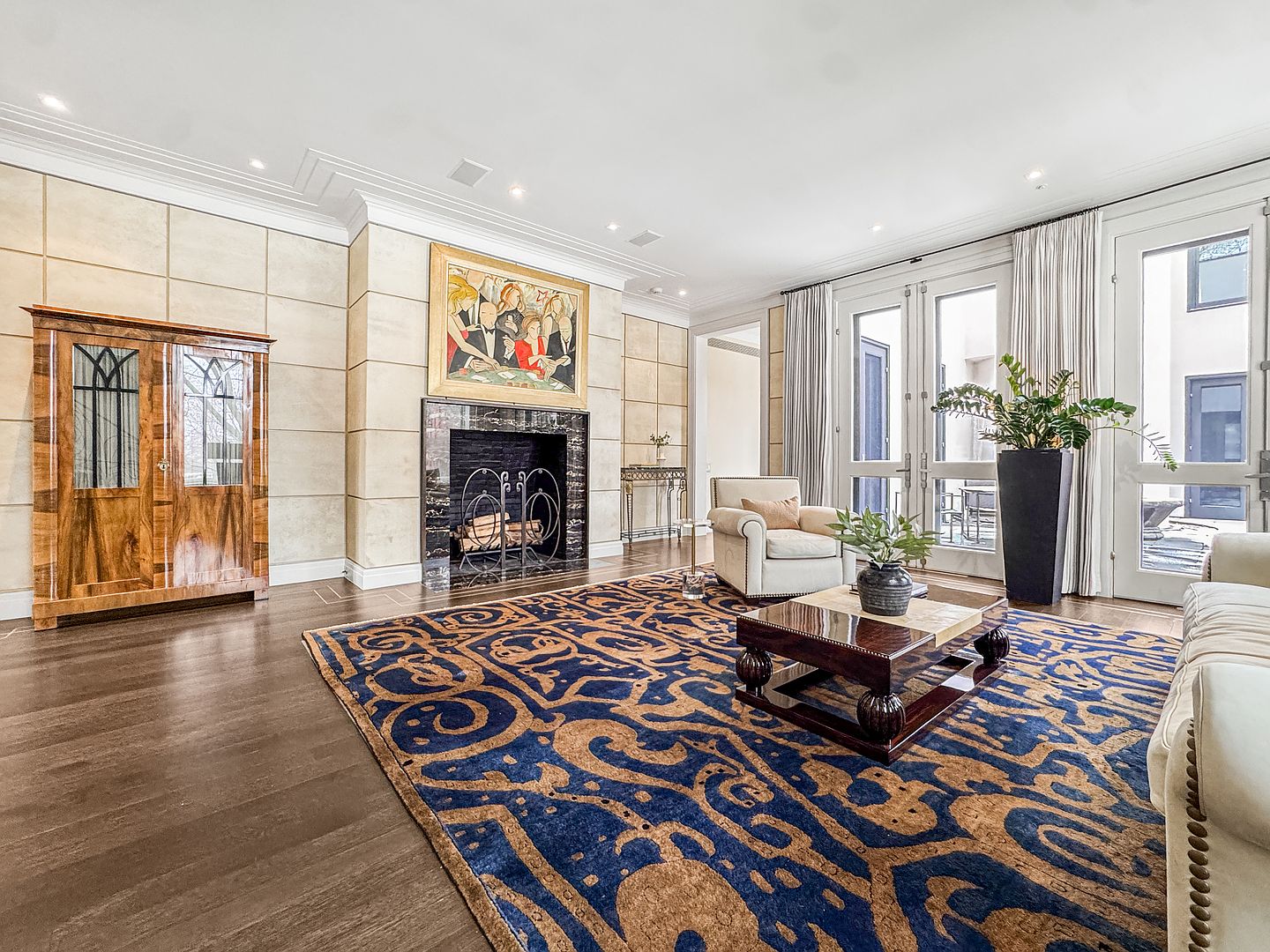
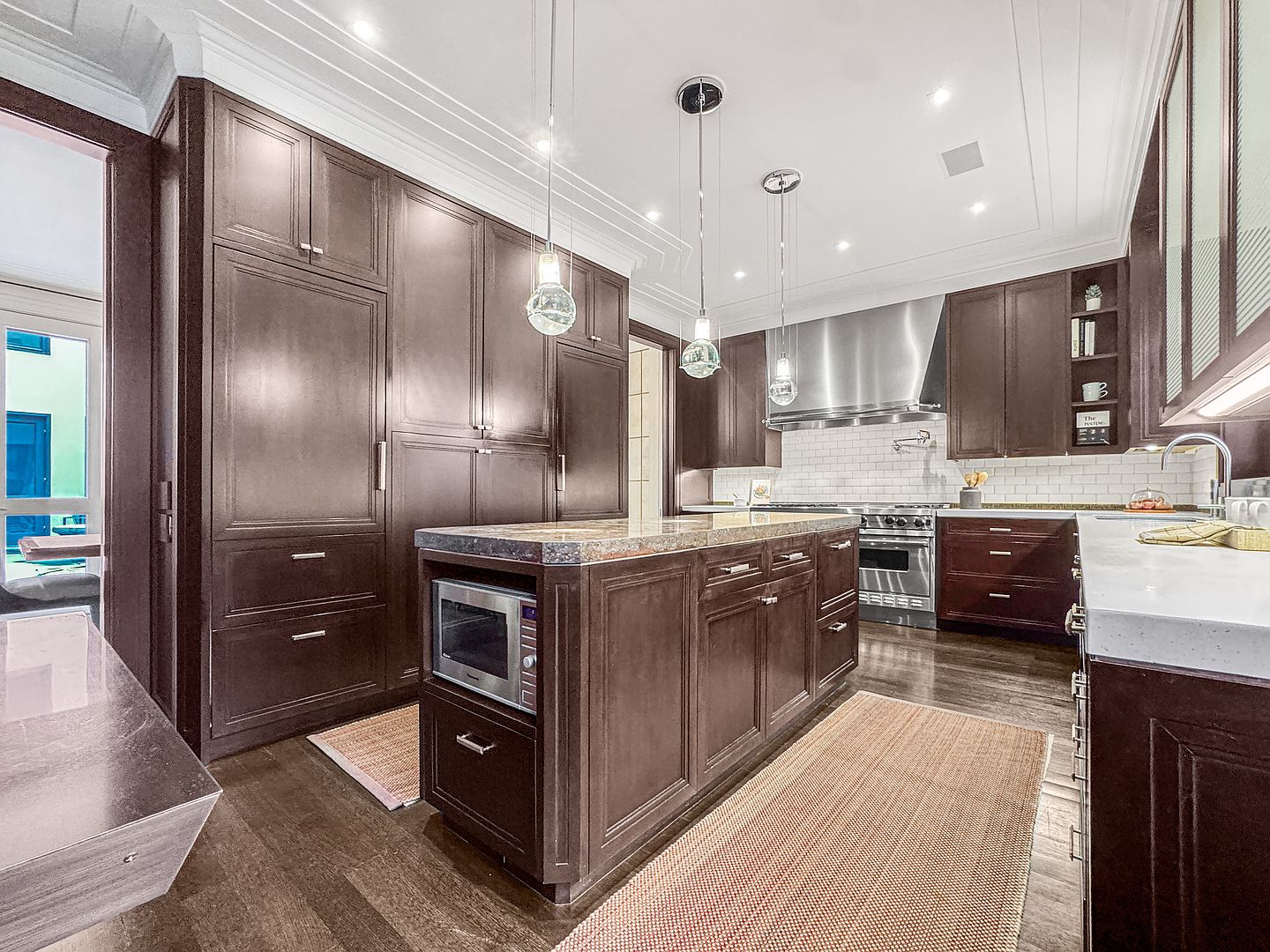
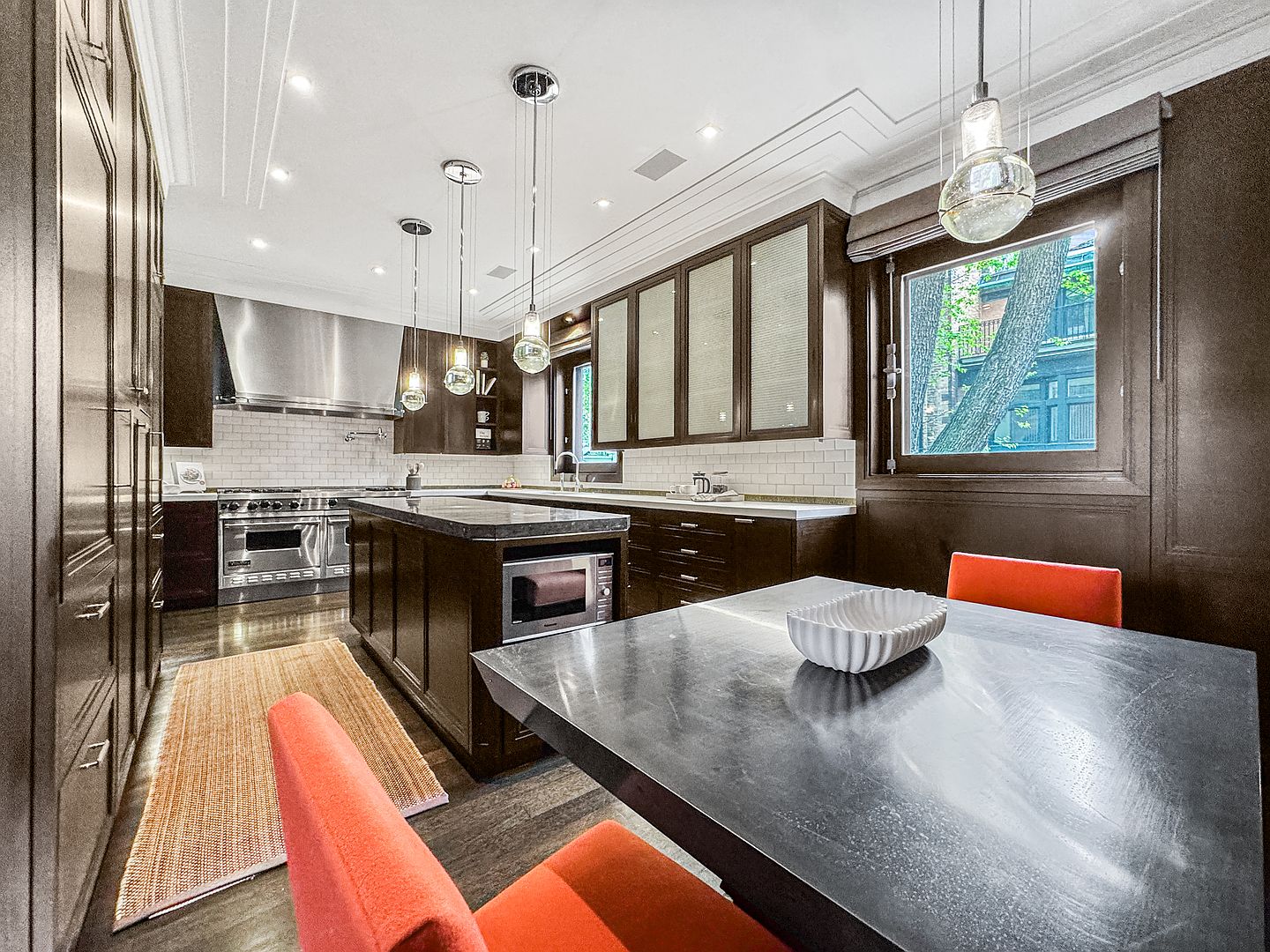
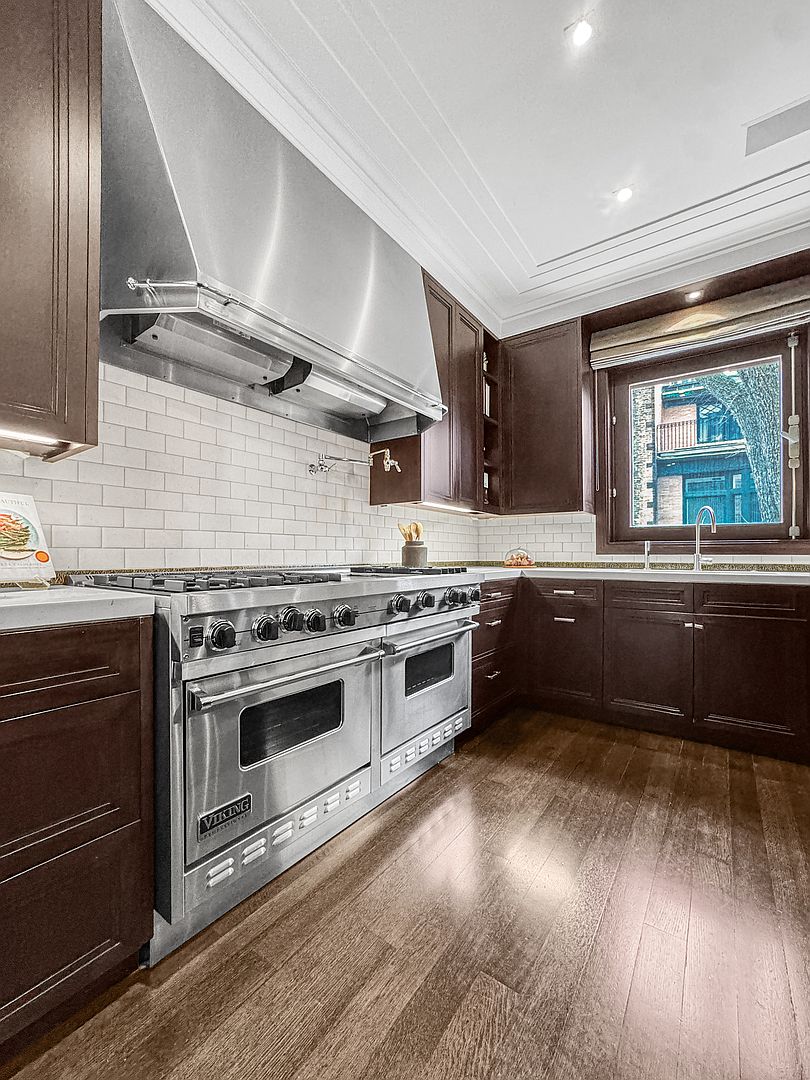
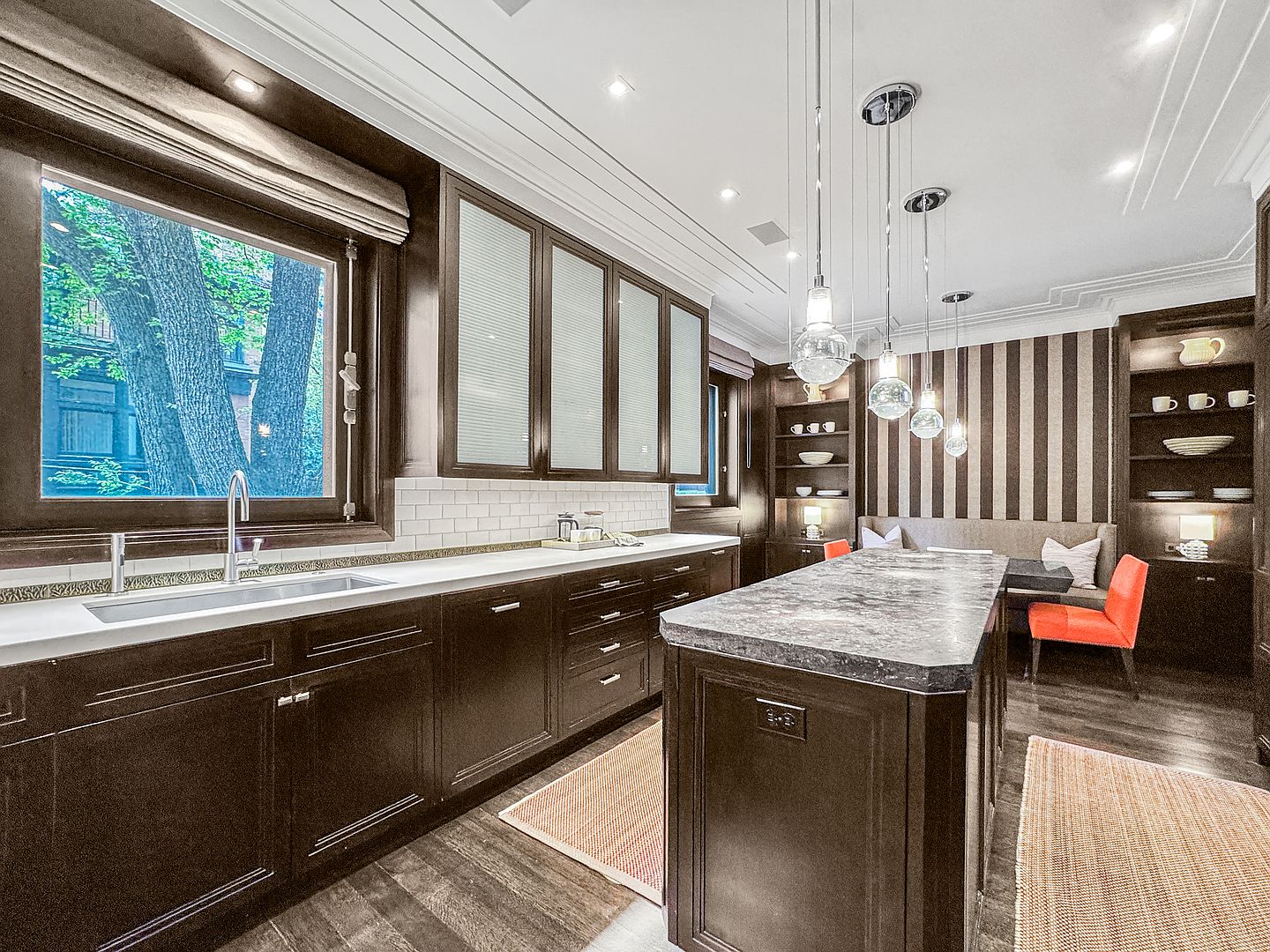
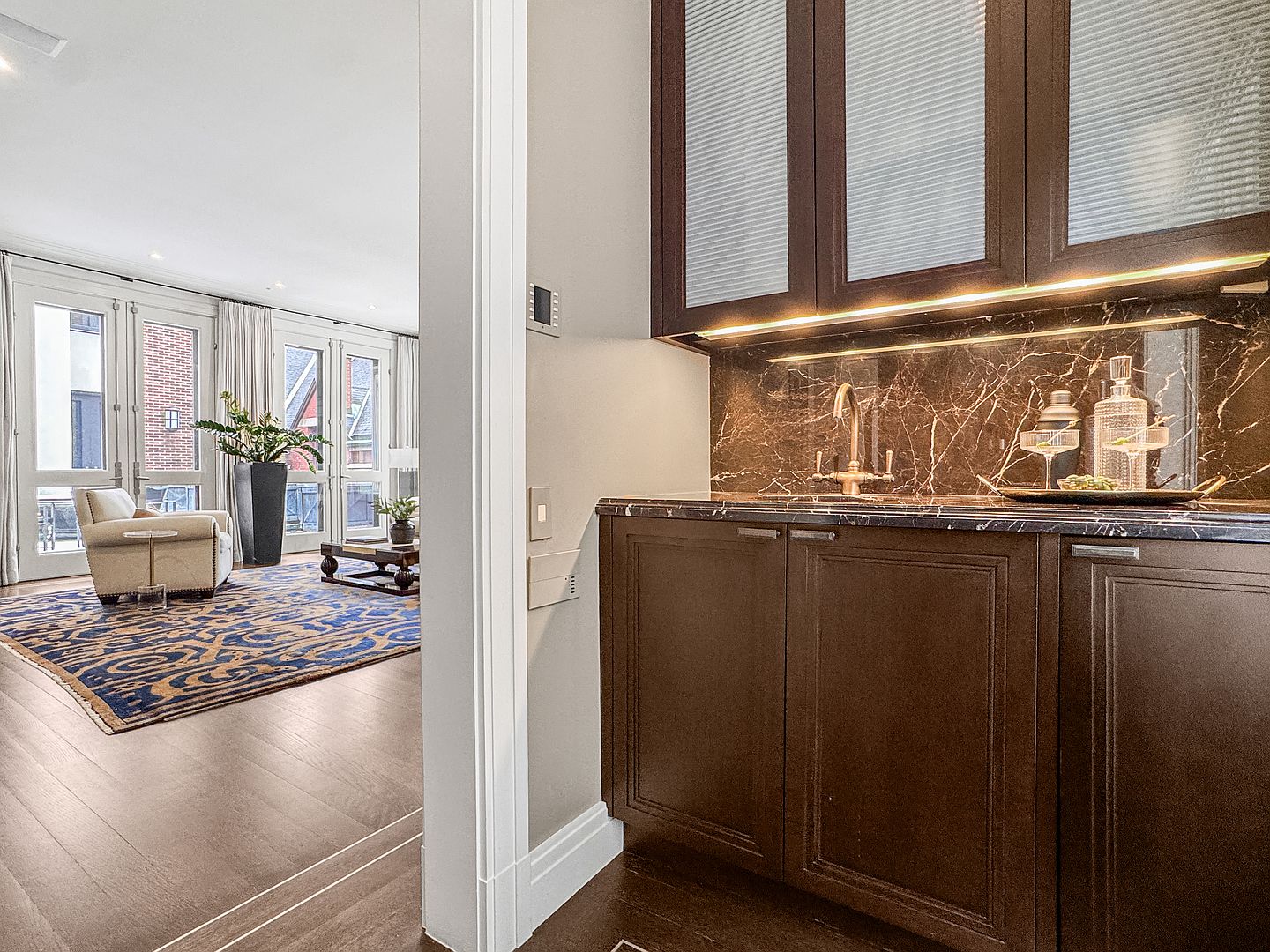
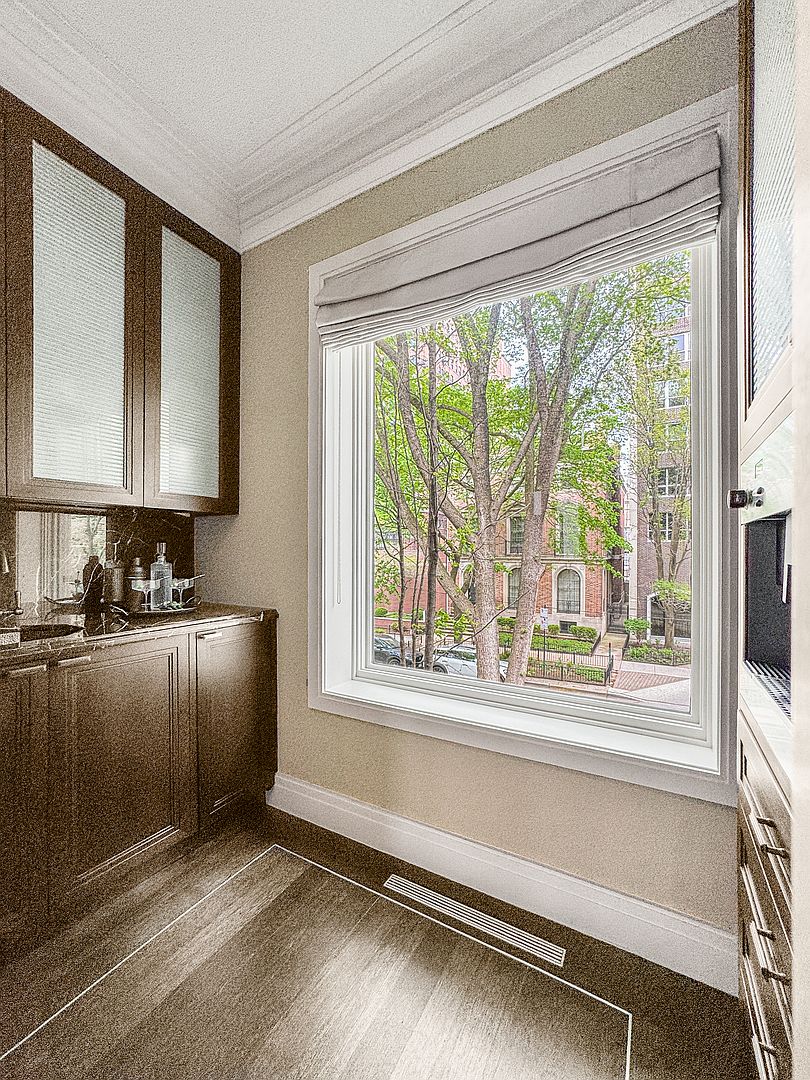
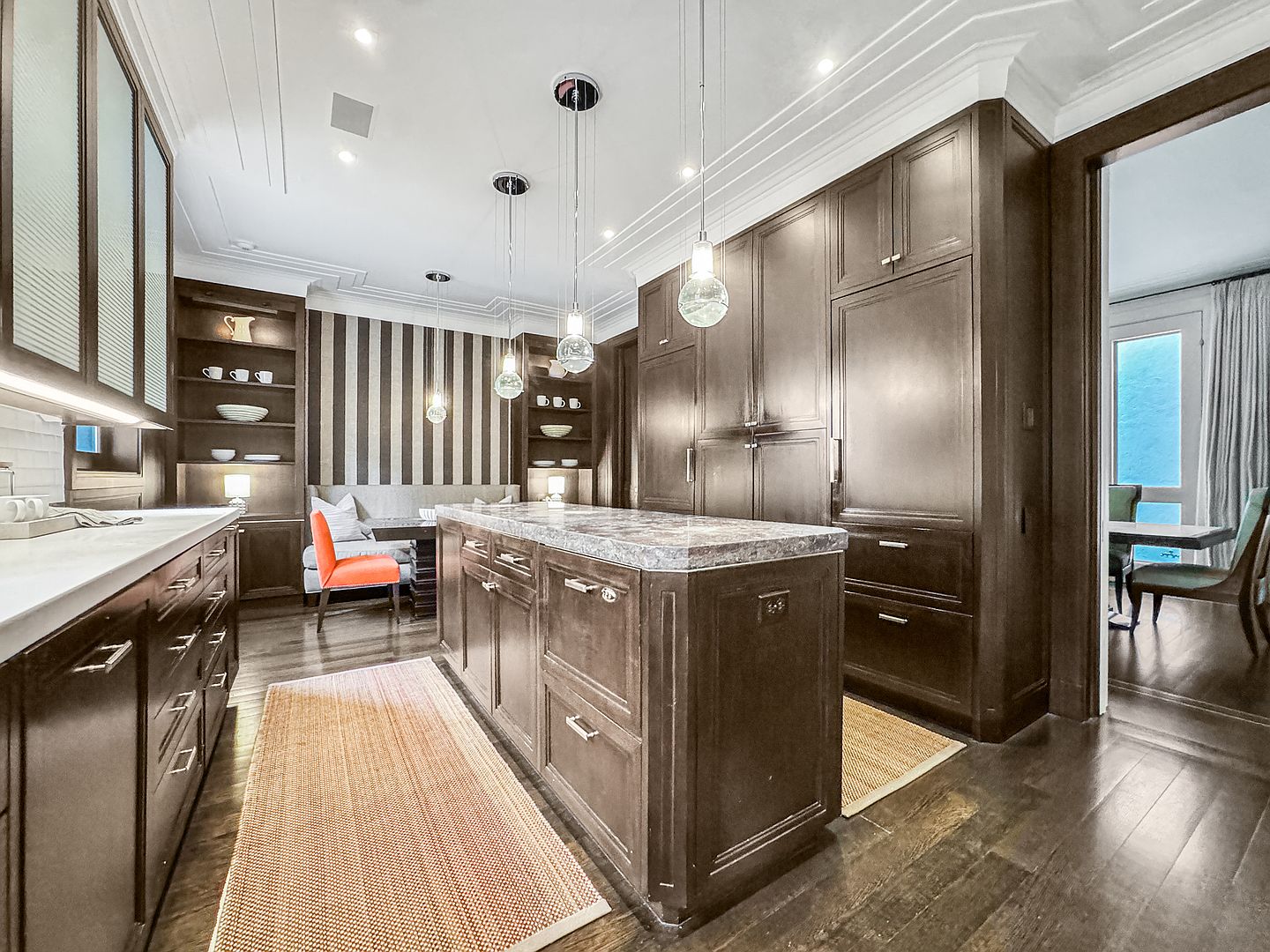
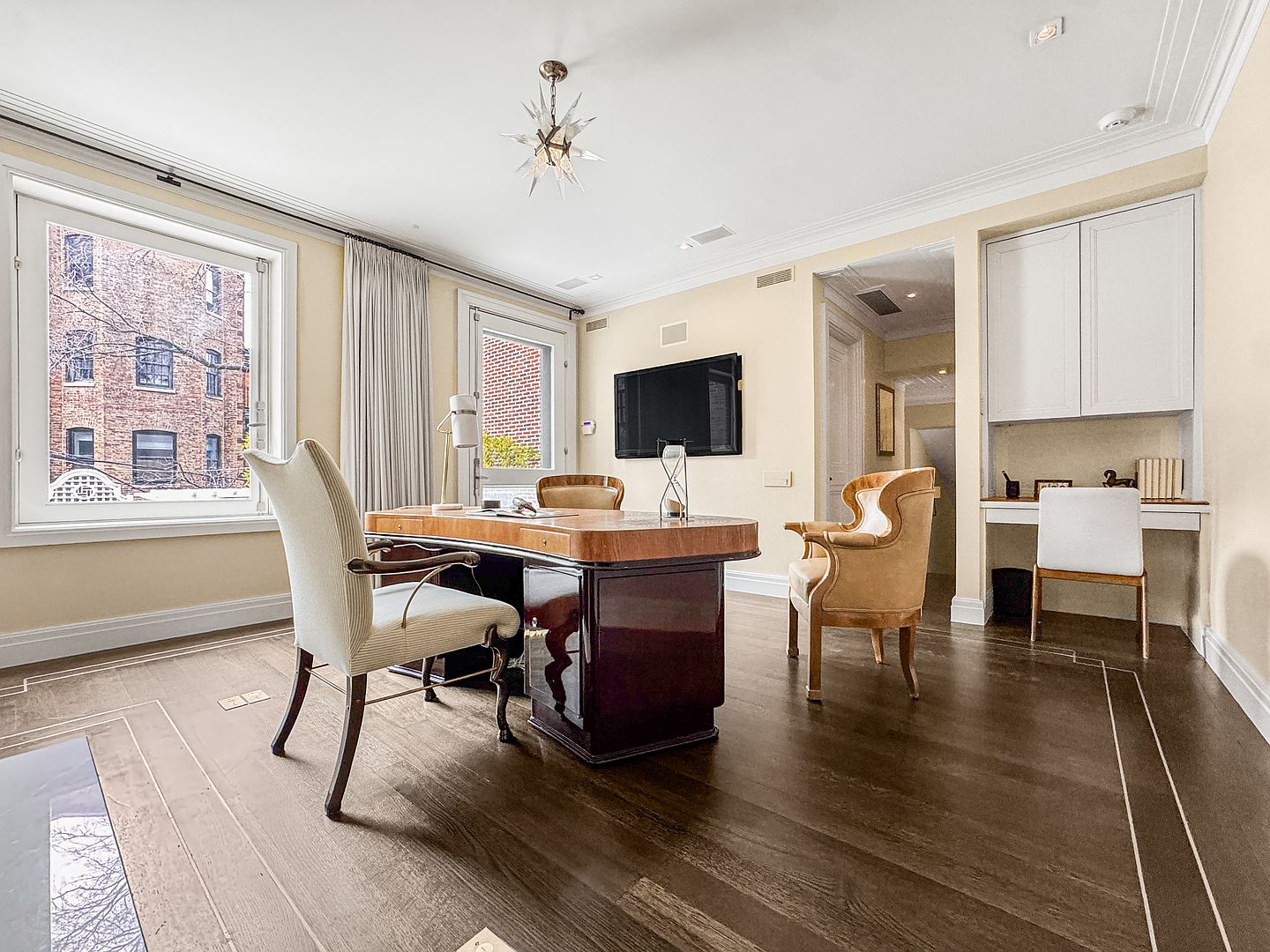
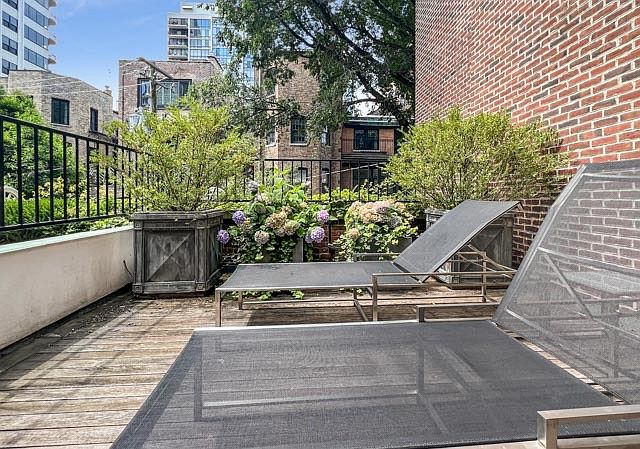
The main living level unfolds with the ease of a well-edited floor plan. A gracious living room with a wet bar opens to a separate dining room finished with a grand chandelier and grid-patterned wall paneling. The kitchen pairs dark custom cabinetry with light stone countertops and a built-in banquette — a room equally suited to a quiet morning and a catered dinner. A private office anchors this level with a white alabaster fireplace and direct access to the north-facing terrace, where stone pavers, elevated planters, and views of Lincoln Park compose an outdoor room of genuine serenity.
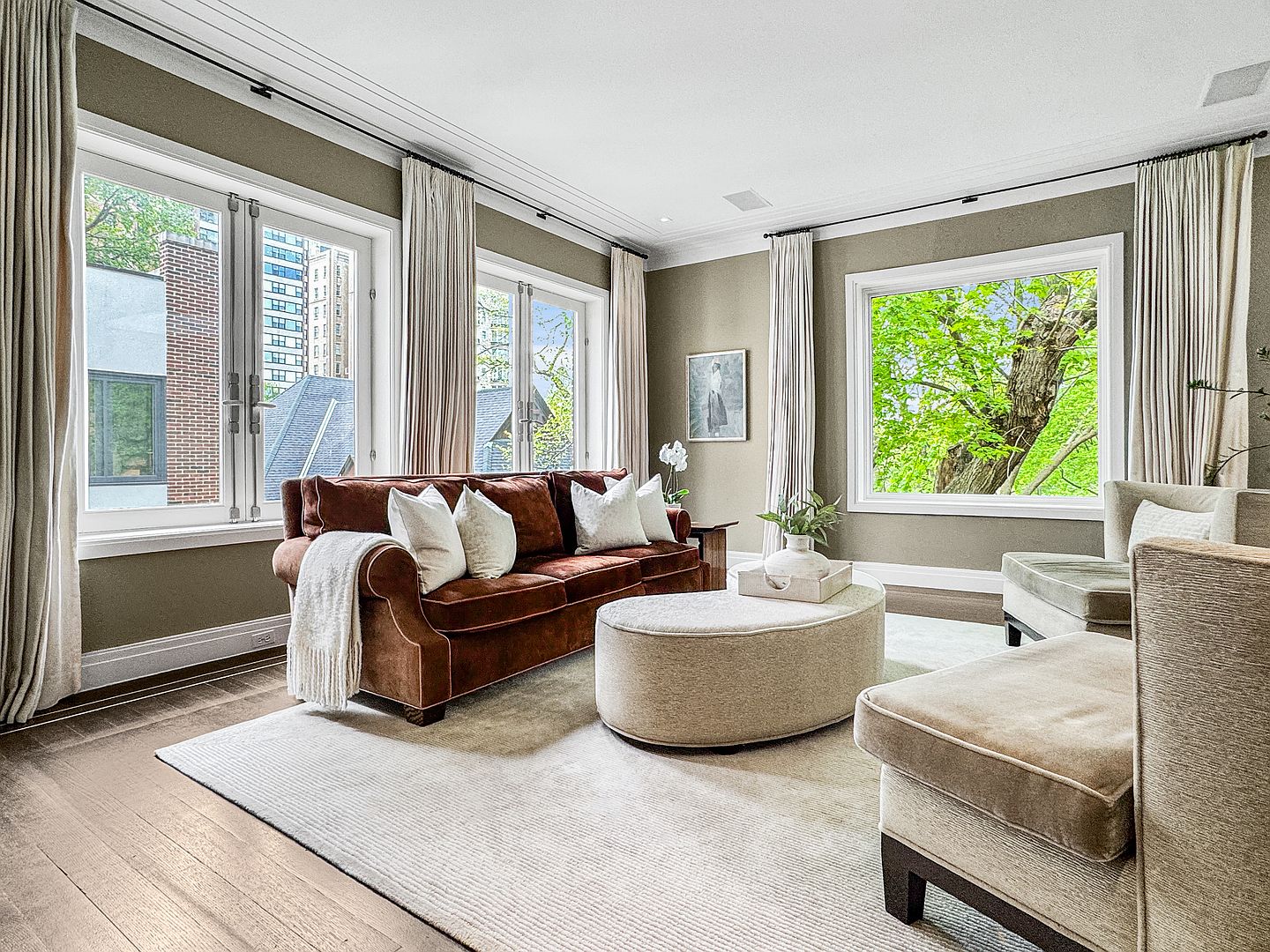
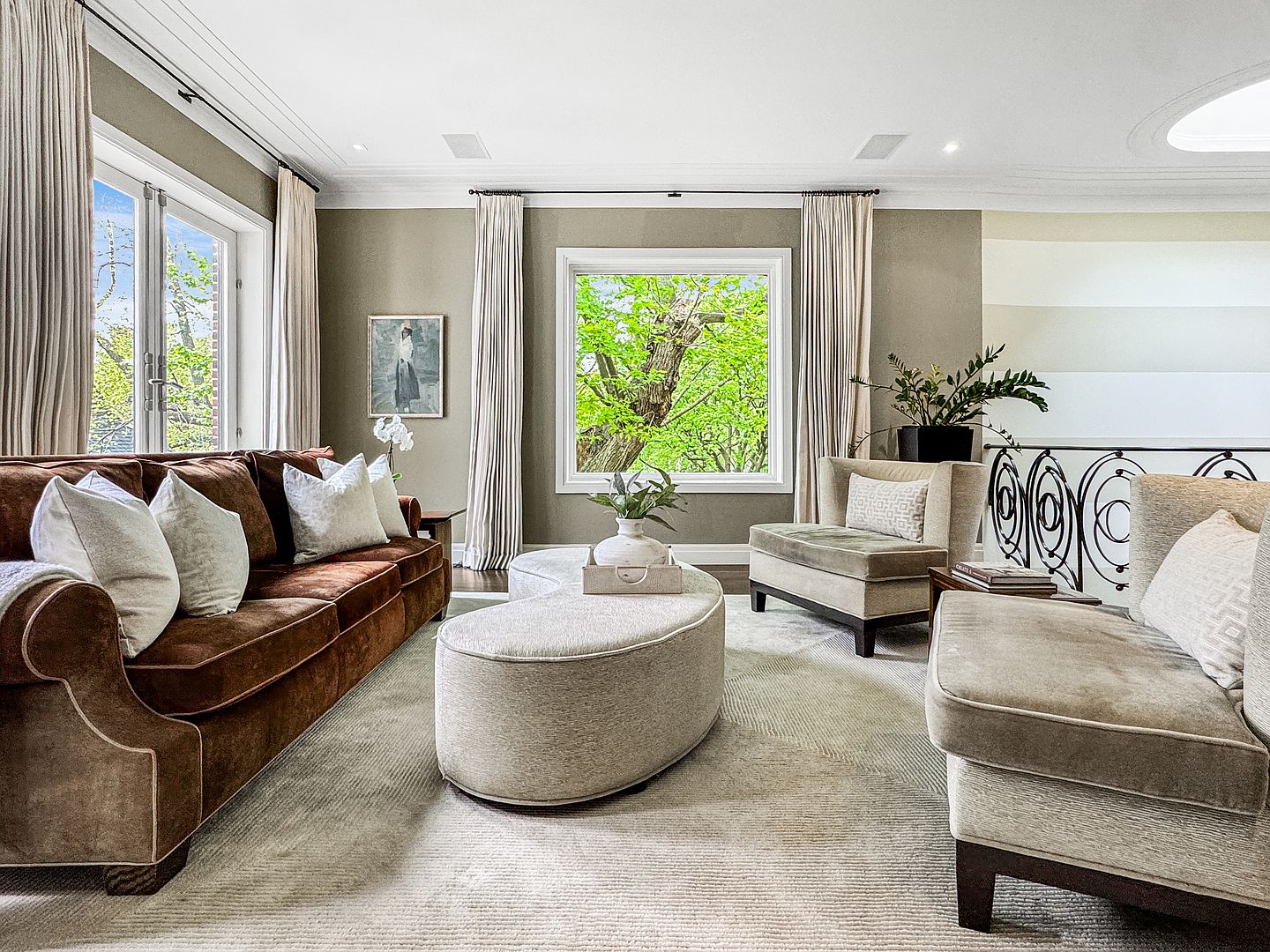
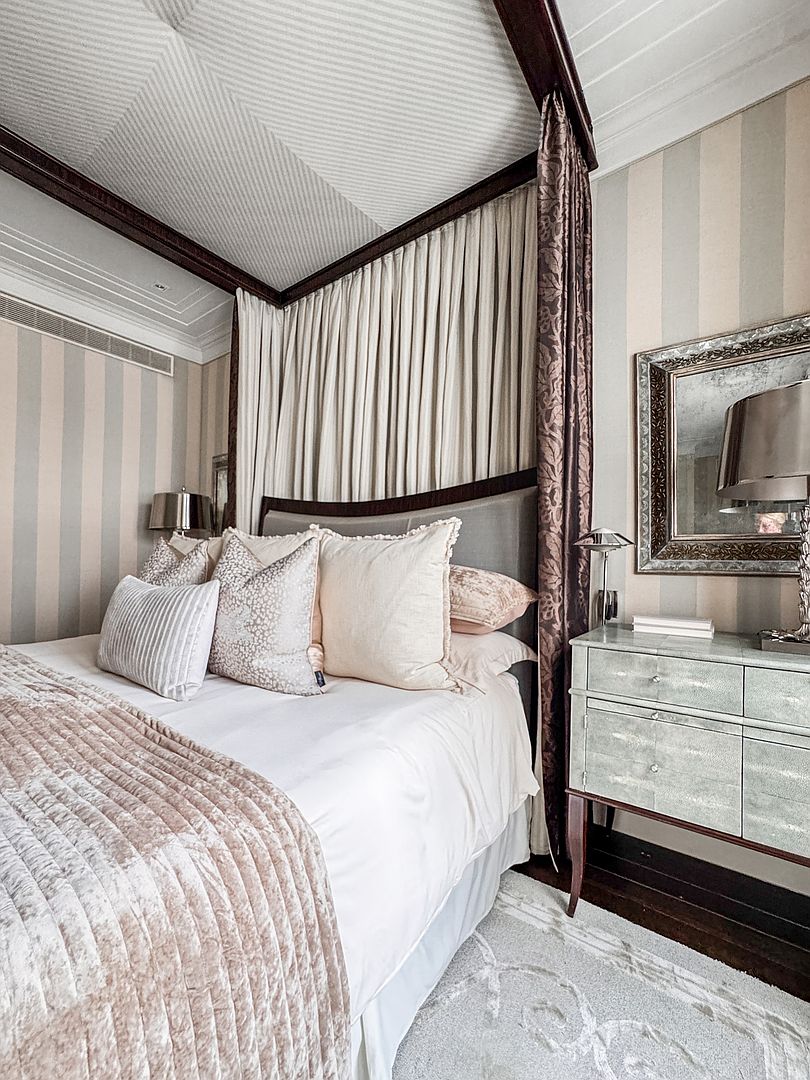
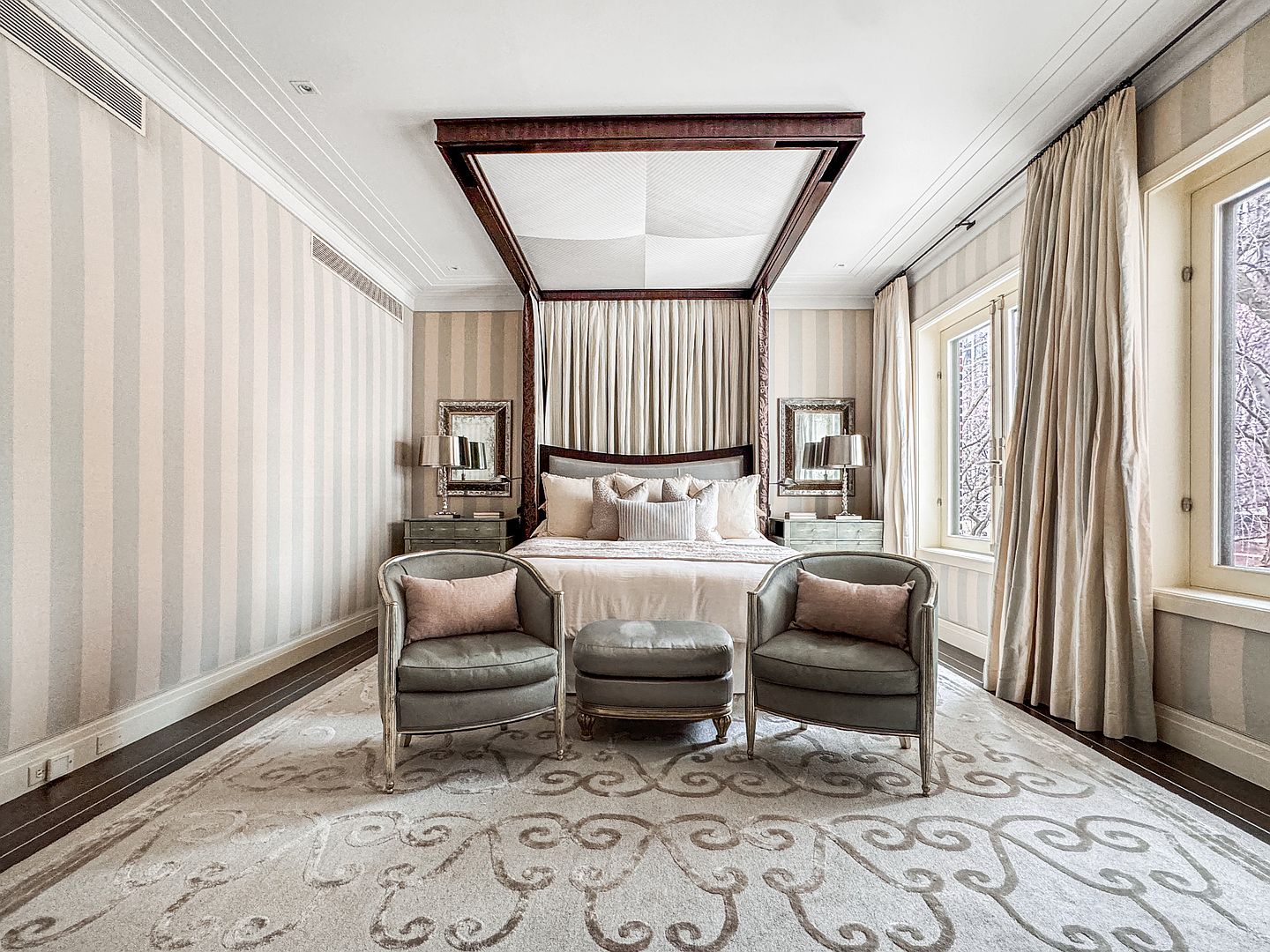
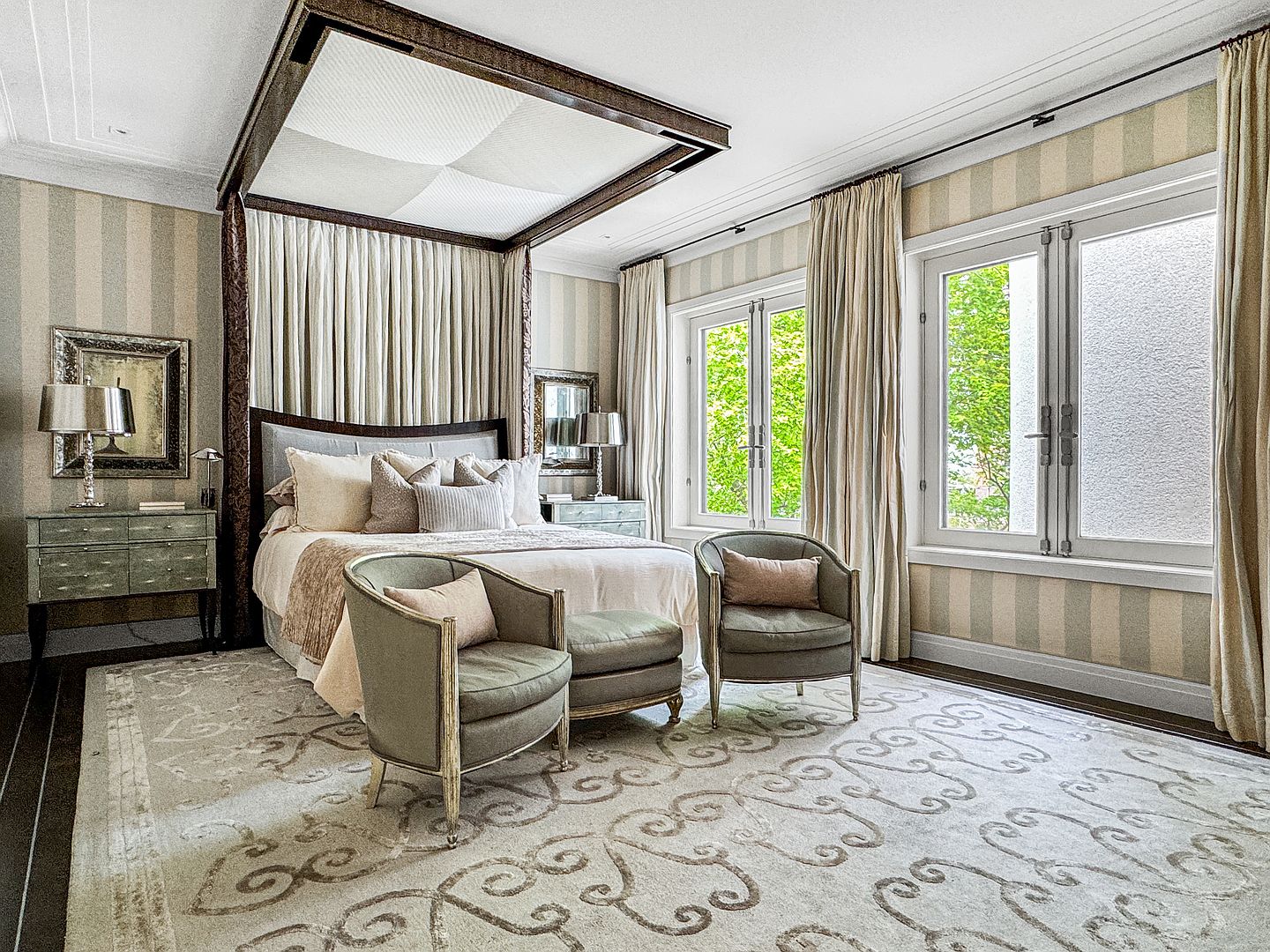
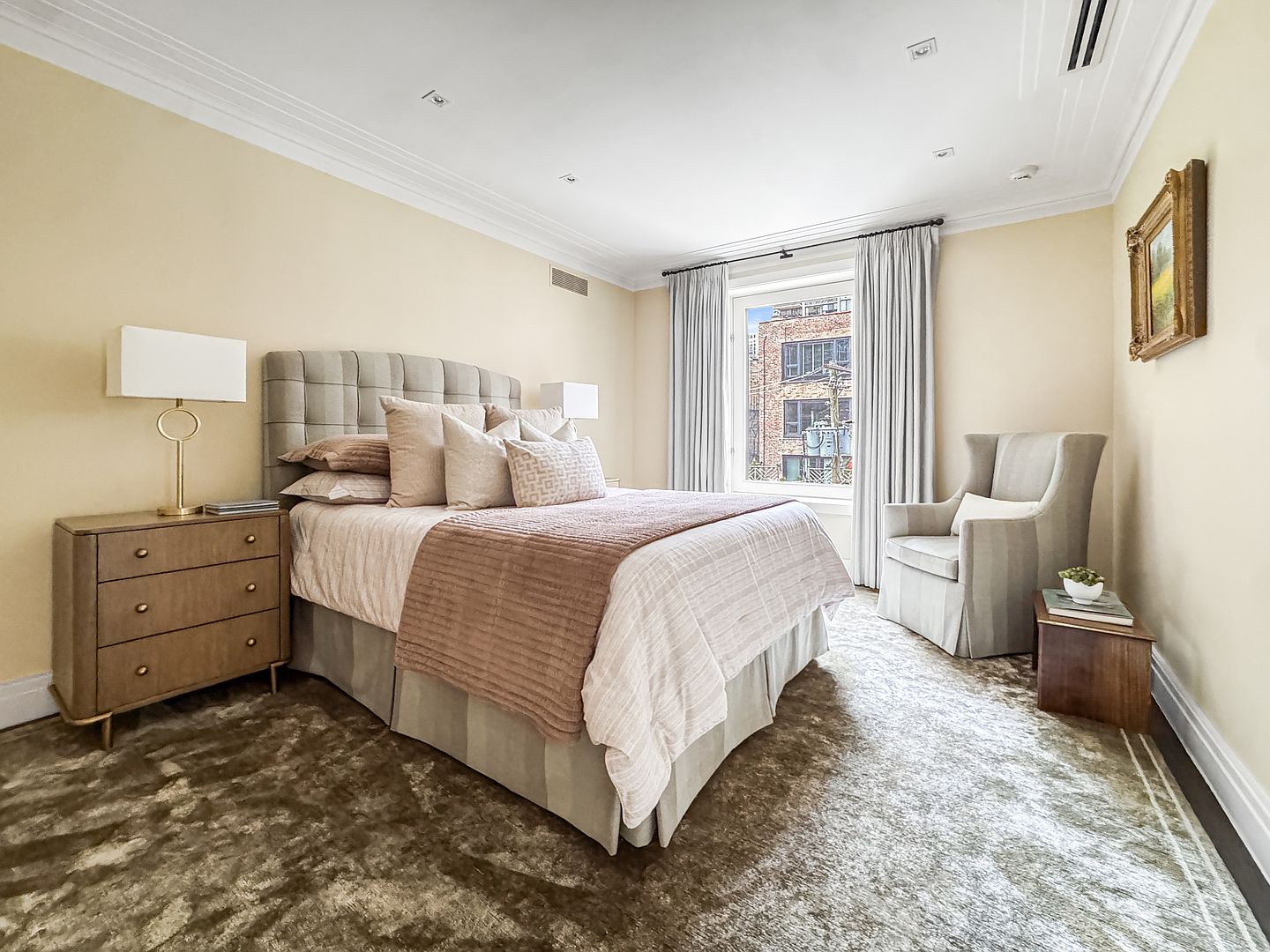
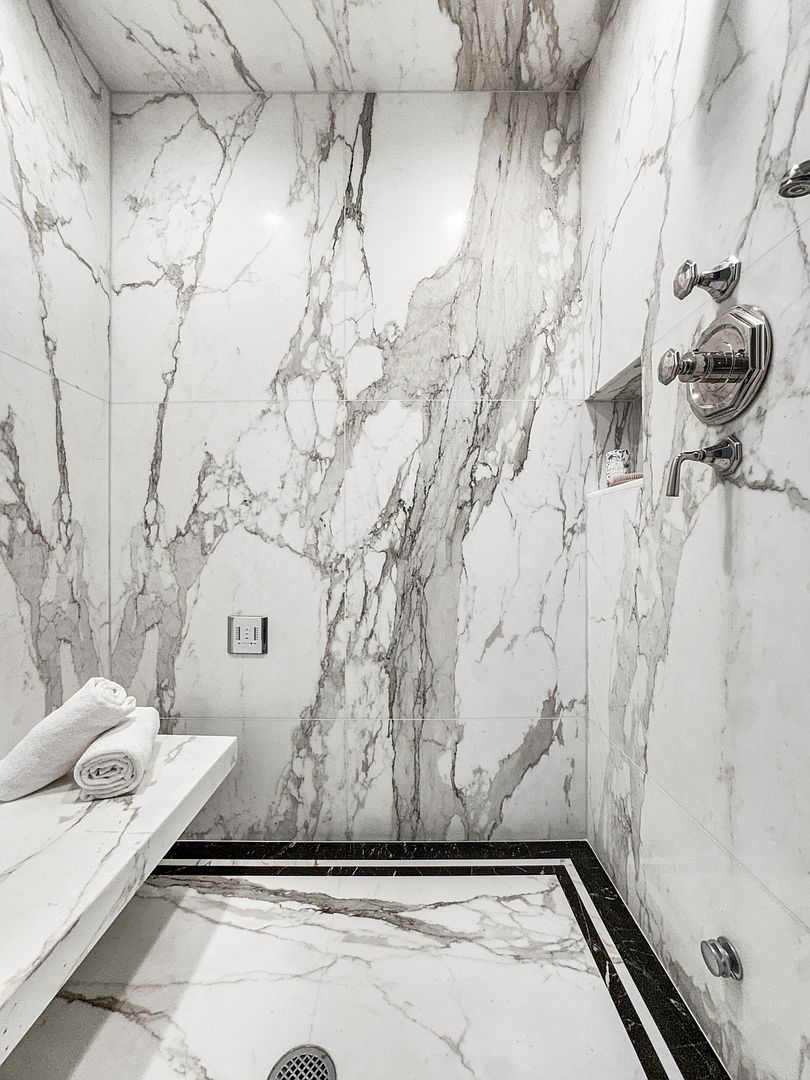
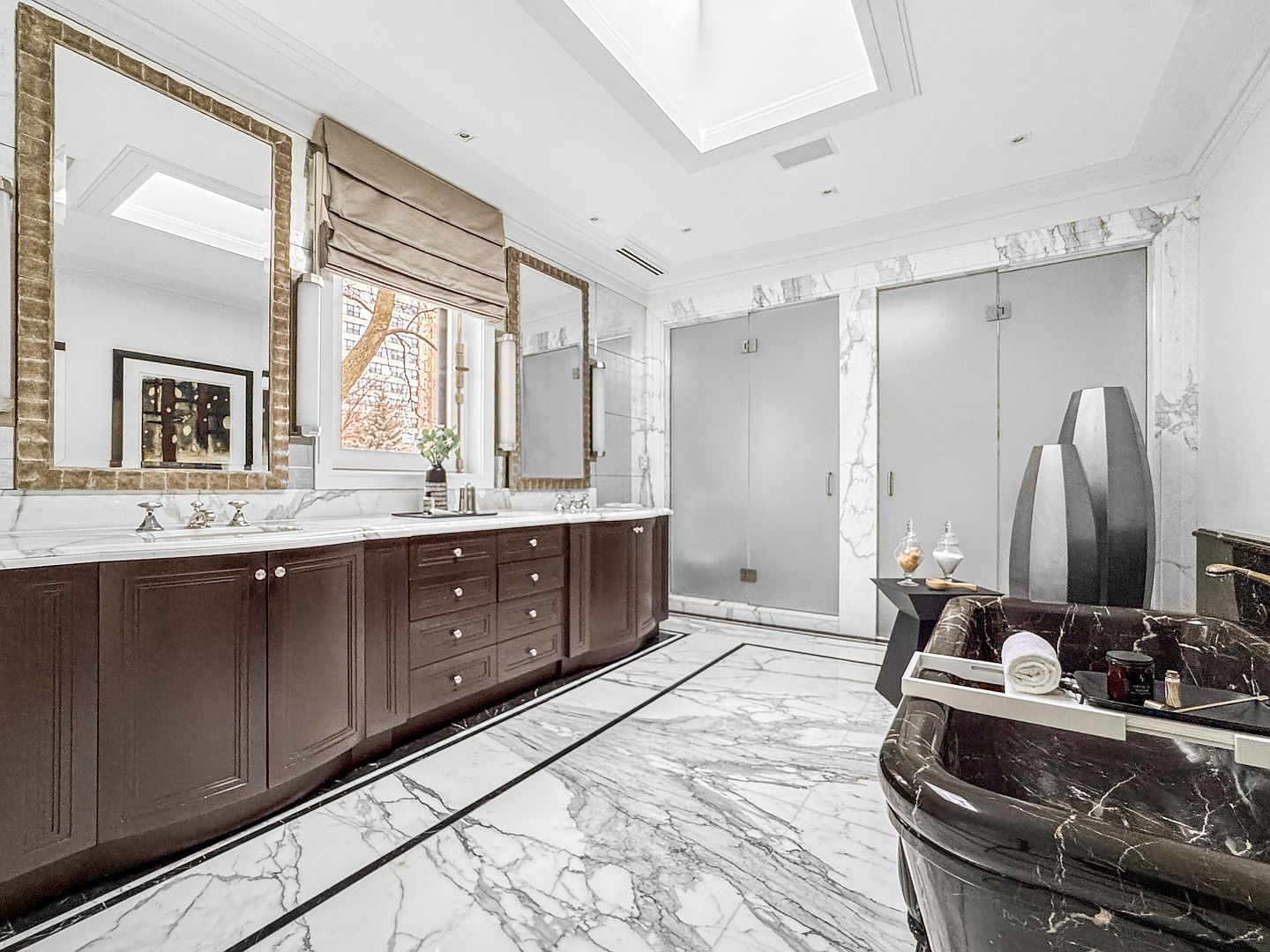
The top level is anchored by a primary suite of extraordinary refinement. The spa-caliber bath centers on a soaking tub carved from a single block of Noir St. Laurent marble — its dark, dramatic veining set against lighter stone walls — fitted with P. E. Guerin hardware. A walk-in closet with custom dark cabinetry and a central ottoman completes the suite. A second en suite bedroom and a family room with an additional full bath round out the level.
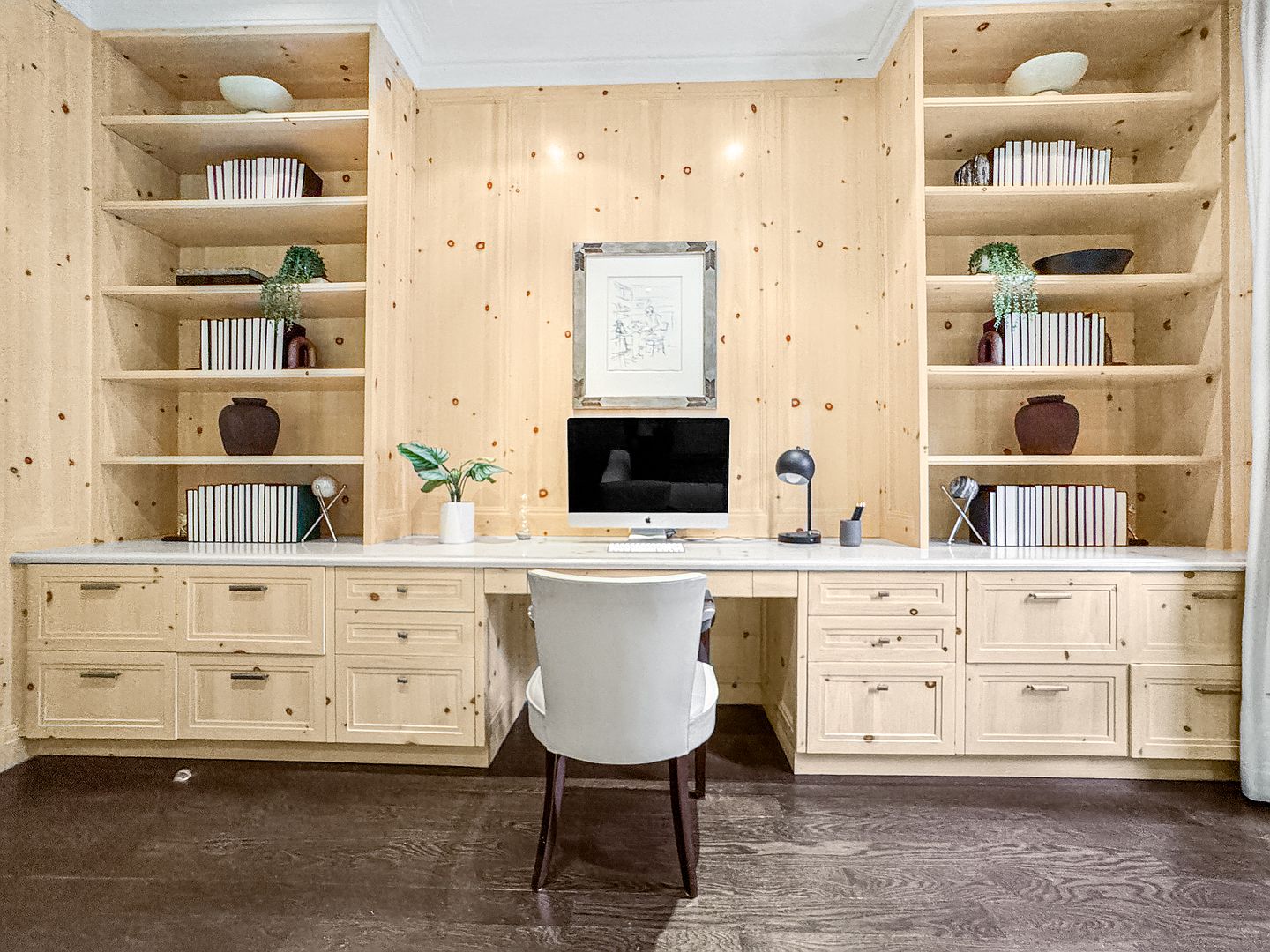
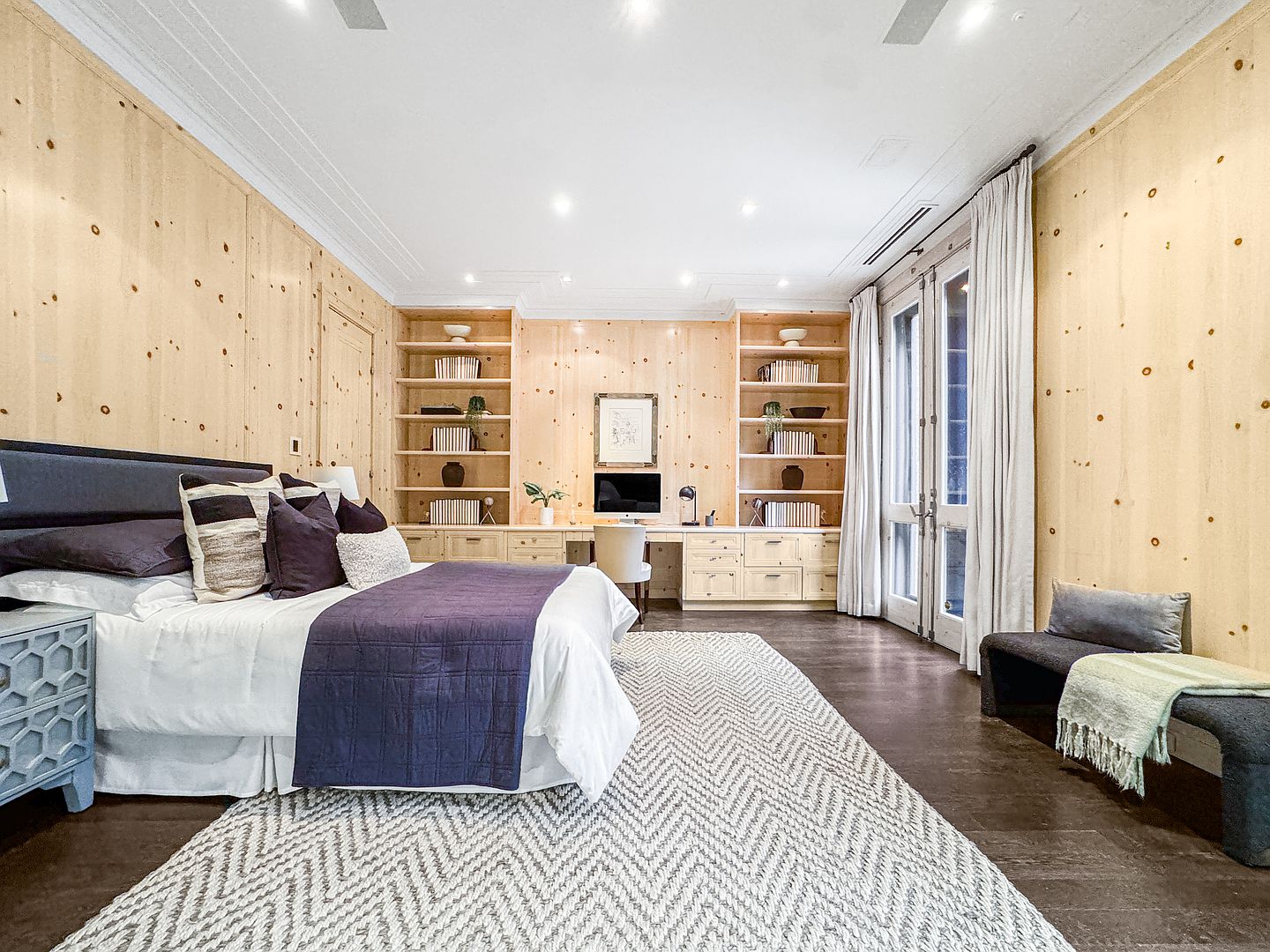
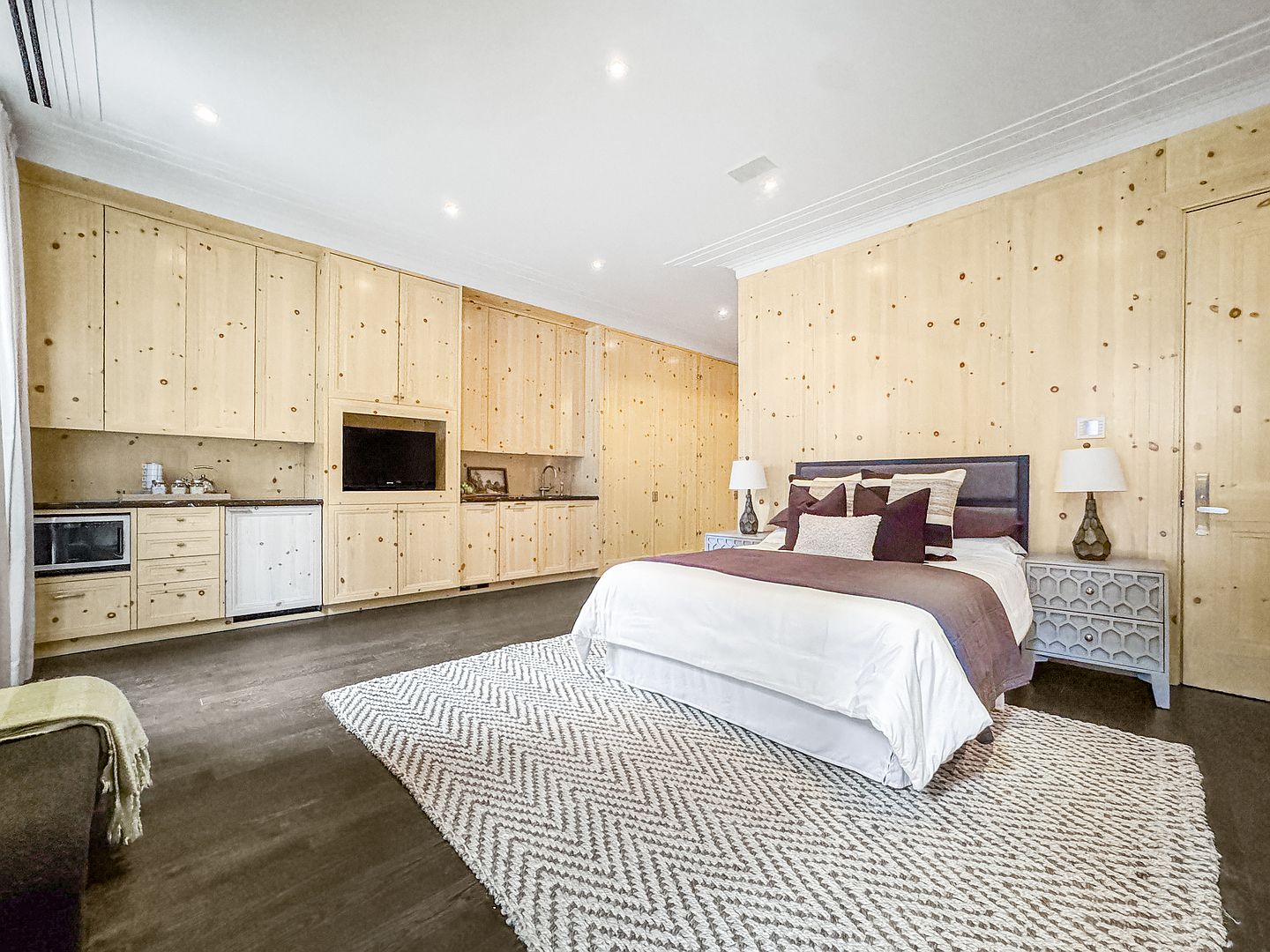
Below, a private guest suite with its own entrance offers a world apart: knotty pine paneling, a kitchenette, generous closets, an en suite bath, and French doors that open to a tranquil koi pond designed by award-winning landscape firm Scott Byron & Co. Three fireplaces, Donald Kaufman paint finishes, vellum wall coverings, and limestone and marble surfaces throughout complete the portrait of a home where no detail was left to chance.
North Astor Street occupies a singular position in the cultural geography of Chicago. Running through the heart of the Gold Coast — one of the most historically significant and architecturally distinguished residential neighborhoods in the Midwest — the street has long attracted the city's most discerning residents, drawn by its canopy of mature trees, its parade of landmark-quality architecture, and its rare sense of urban quietude.
The Gold Coast neighborhood itself was developed in the late nineteenth century, largely shaped by the vision of Potter Palmer, the Chicago merchant and real estate developer who famously relocated the city's fashionable residential district northward along the lakefront. The area that emerged became home to an extraordinary concentration of mansion-scale residences, many designed by prominent architects of the era, and it has retained its character as one of Chicago's premier addresses for well over a century. Astor Street in particular is recognized as a Chicago landmark district, protecting the integrity of its architectural fabric and ensuring that the character of the block endures.
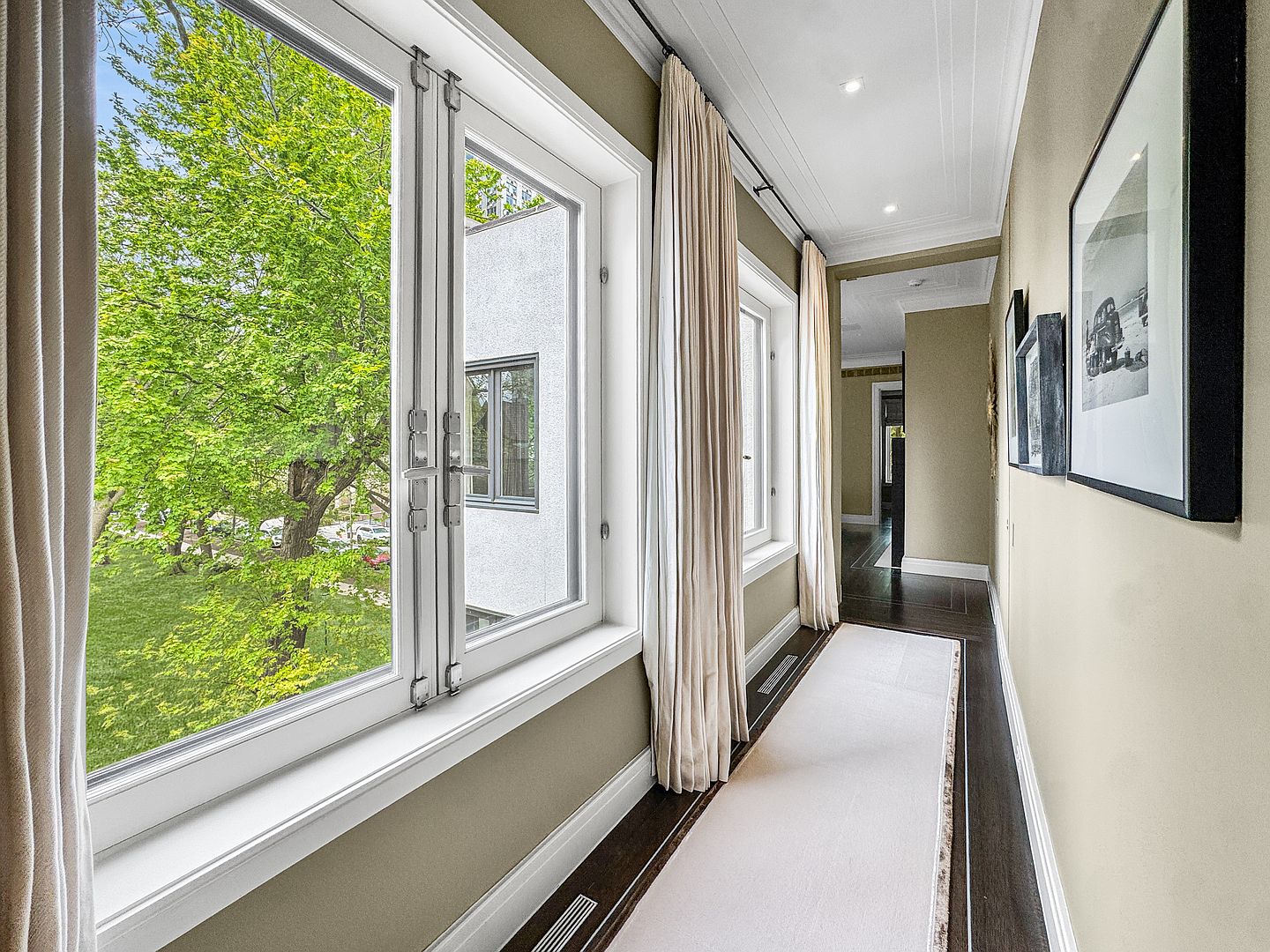
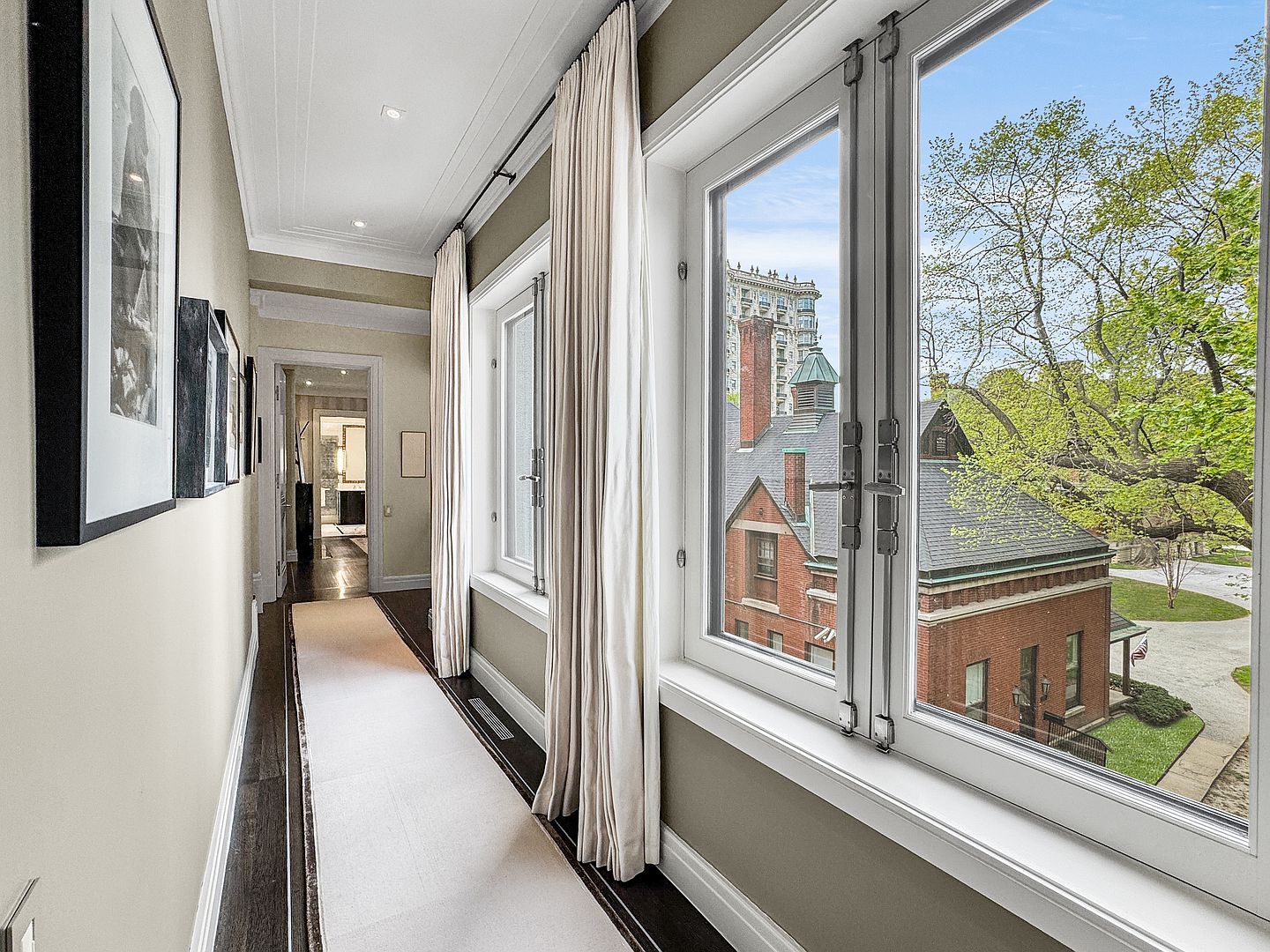
The northernmost position on Astor places 1524 at a compelling threshold. To the immediate north, the Cardinal's Residence — the official home of the Archbishop of Chicago, a Romanesque Revival landmark completed in 1885 — provides an architectural neighbor of genuine grandeur and ensures that the views from the home's oversized windows remain unobstructed and distinguished. Lincoln Park, Chicago's largest public green space, begins effectively at the property's doorstep, offering more than 1,200 acres of parkland, running and cycling paths, the Lincoln Park Zoo, the Chicago History Museum, the Peggy Notebaert Nature Museum, and direct access to the lakefront trail.
The lakefront itself — with its beaches, harbors, and uninterrupted views across Lake Michigan — is within easy reach, offering a quality of outdoor life rarely available to urban residents. North Avenue Beach and Oak Street Beach are both nearby, as is the Oak Street shopping corridor, where a concentration of international luxury retailers and fine dining establishments anchors the neighborhood's commercial life.
Dinner reservations within walking distance range from intimate neighborhood restaurants to some of the city's most celebrated dining destinations. Rush Street and the broader Streeterville and River North neighborhoods are easily accessible, as is Michigan Avenue and the broader downtown core, making the location as practical as it is prestigious.
The neighborhood's institutional fabric adds further dimension. The Latin School of Chicago, one of the city's most respected independent schools, is nearby. Northwestern University's Chicago campus and several major hospitals are within the broader Near North Side area. Cultural institutions including the Newberry Library and the Museum of Contemporary Art are a short distance away.
What distinguishes the Gold Coast, and Astor Street in particular, is not simply proximity to amenities — it is the texture of daily life. The tree-lined sidewalks, the architectural coherence, the relative quiet, the sense of being in a genuine neighborhood within one of the world's great cities: these are qualities that cannot be replicated, and that make 1524 N. Astor Street not merely a property, but a place.
Featured Highlights
Curated Content • Presented by Jennifer Ames