The Story Behind
Twin Beachfront Masterpieces on Santa Monica's Legendary Gold Coast
There is a certain clarity of vision that separates architecture from mere construction — a commitment to proportion, materiality, and purpose that transforms a building into an experience. At 938–940 Palisades Beach Road, that vision has been realized twice over, in two newly completed residences that rise from the sand of Santa Monica's Gold Coast with the quiet confidence of structures built to endure.
From the street, the compound announces itself through symmetry and restraint: twin concrete-and-glass volumes, each fronted by a circular mechanical turntable that speaks to the considered elegance running throughout. Solar panels crown the flat rooflines, a nod to California's environmental consciousness without compromising the architecture's clean profile. A narrow central walkway between the two homes draws the eye — and the imagination — directly toward the ocean beyond.
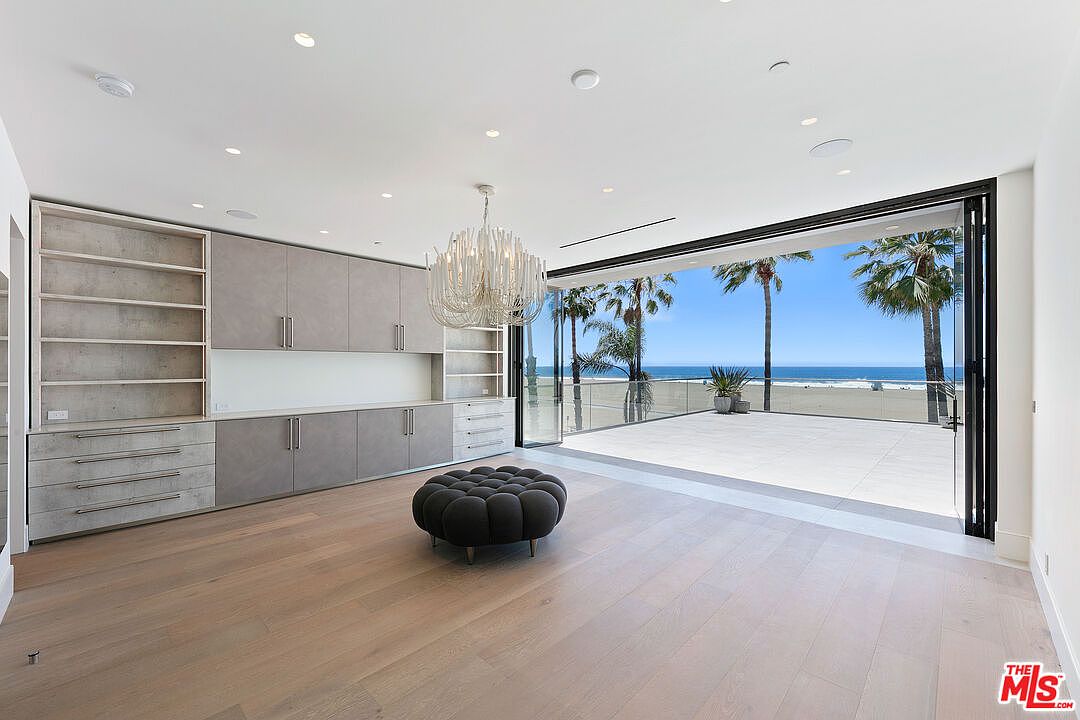
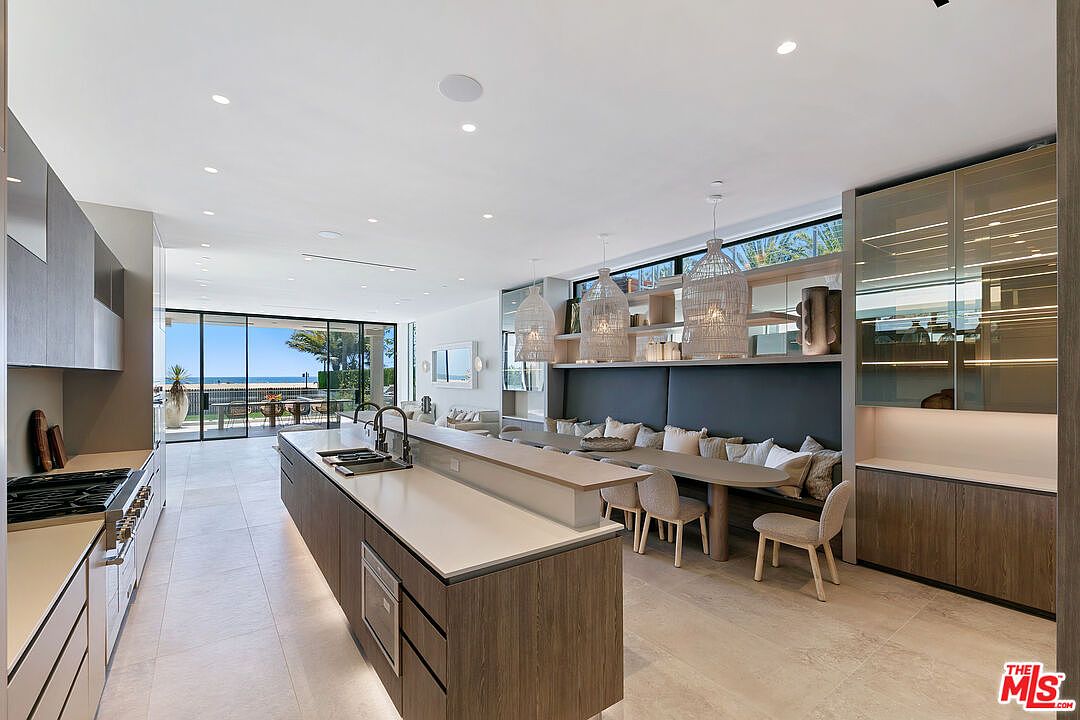
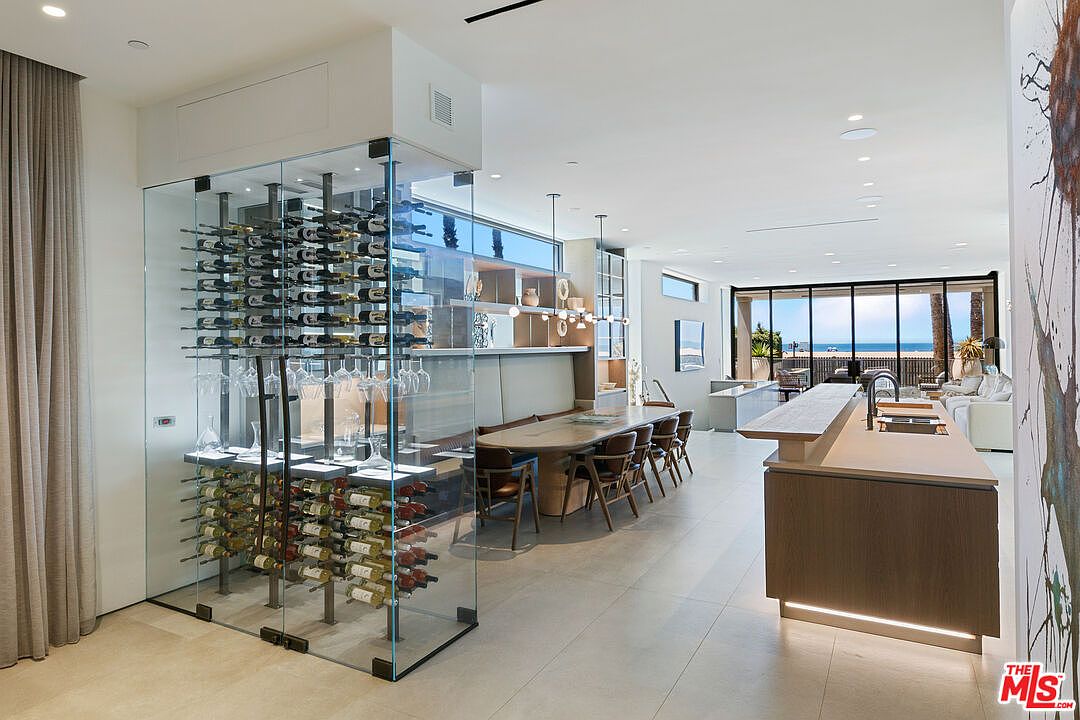
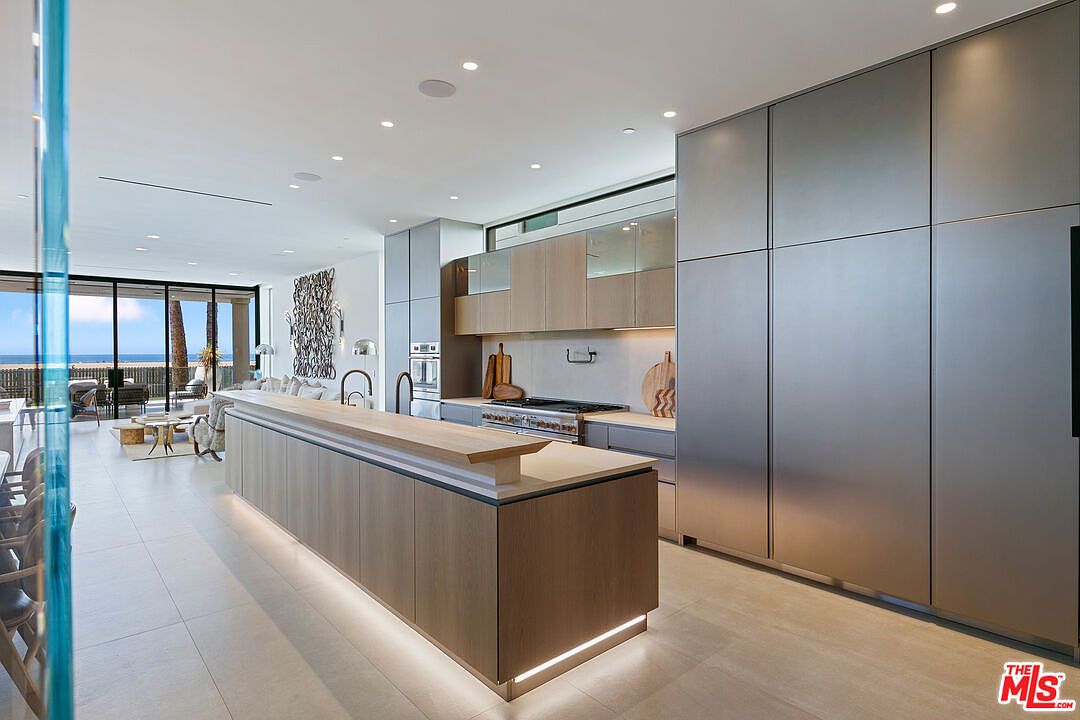
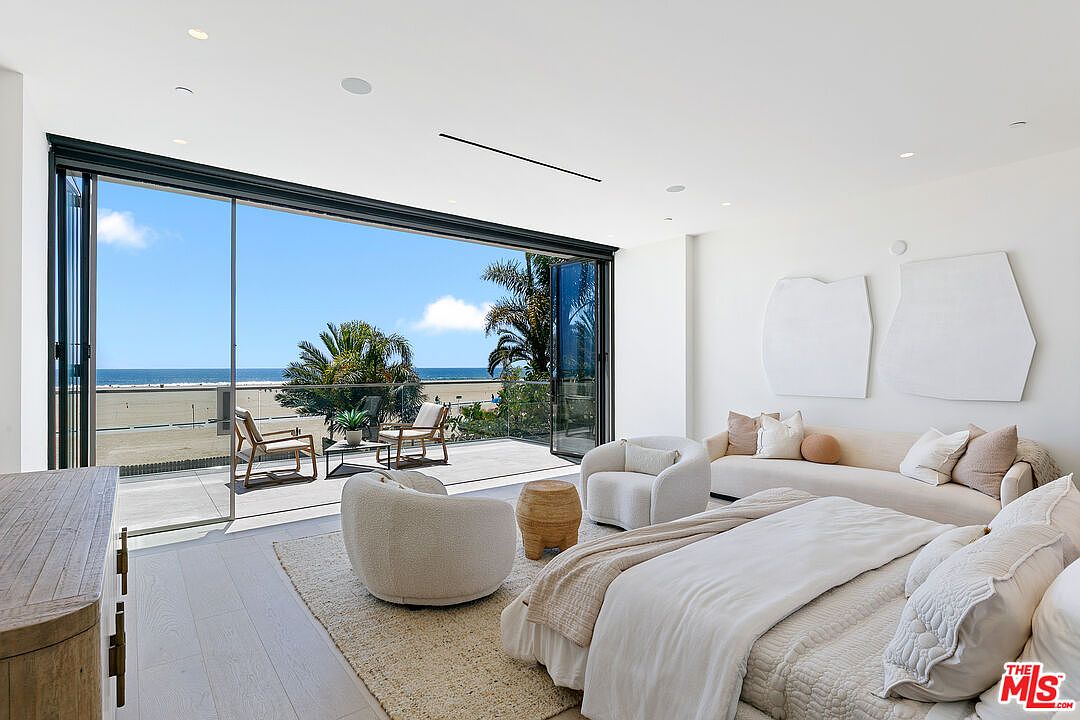
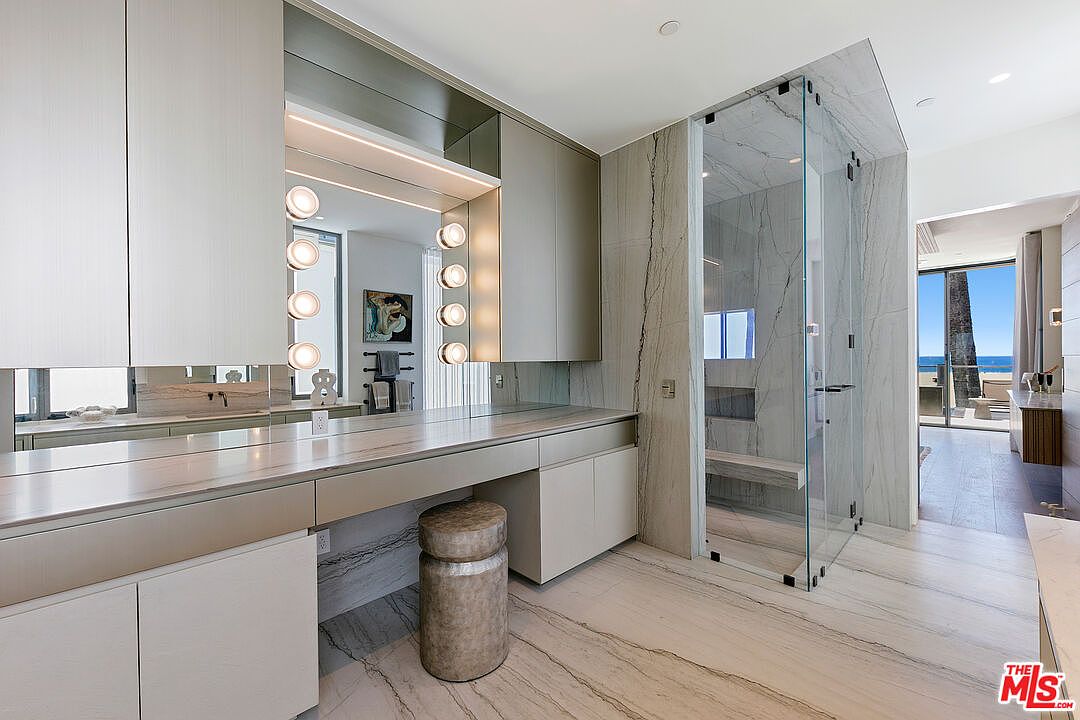
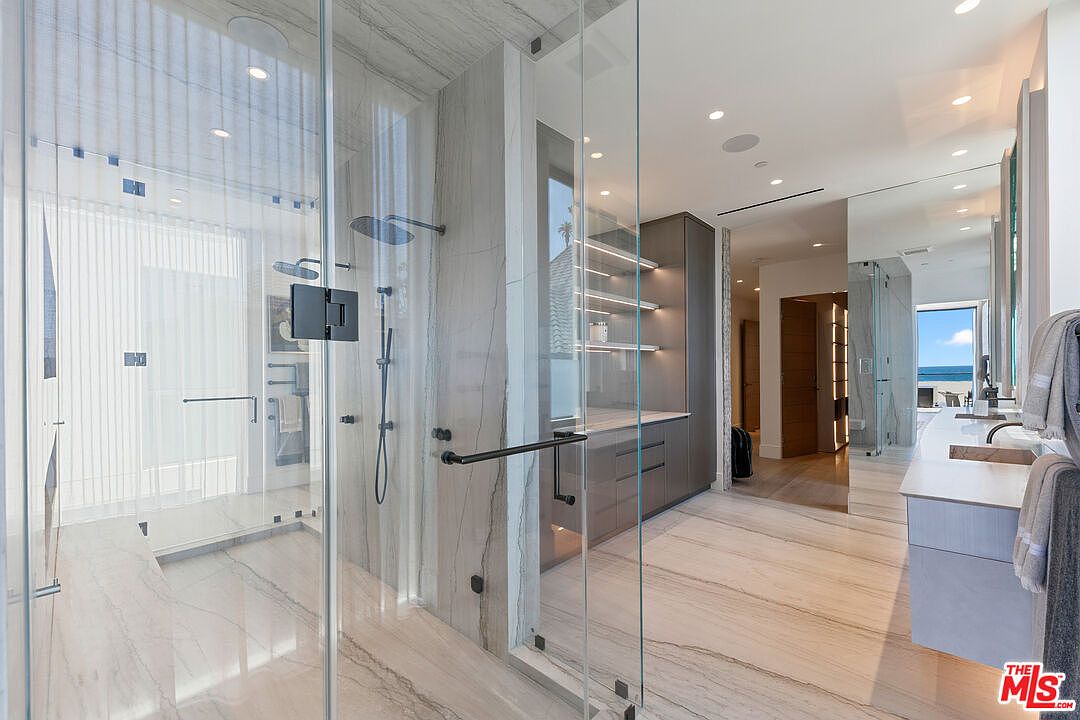
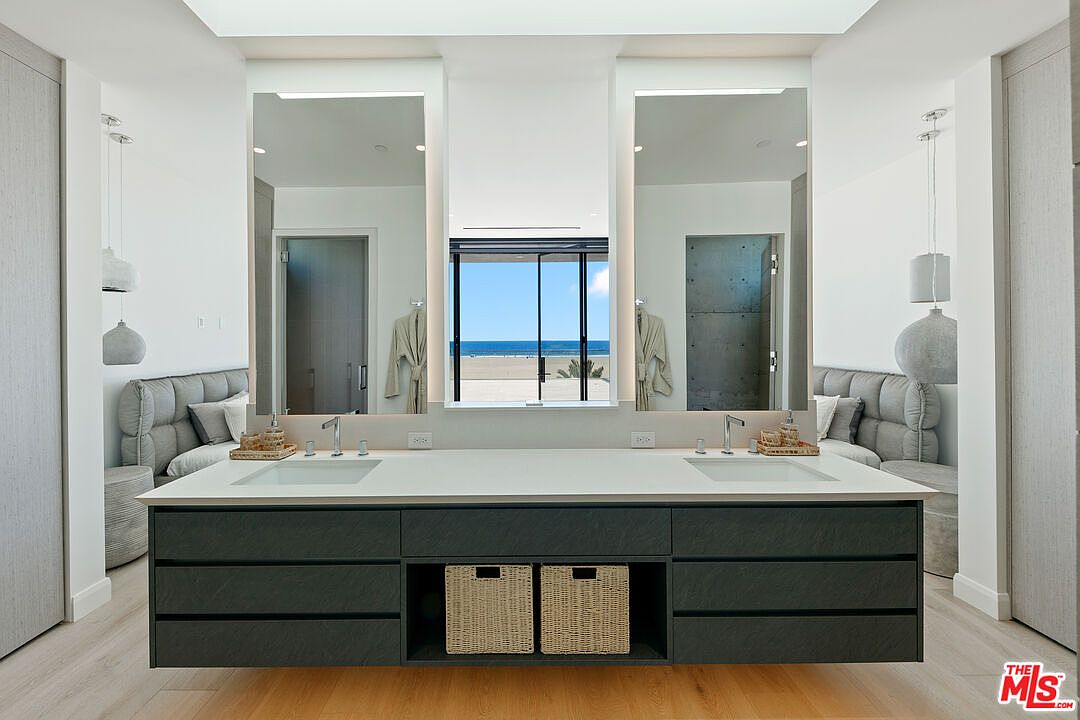
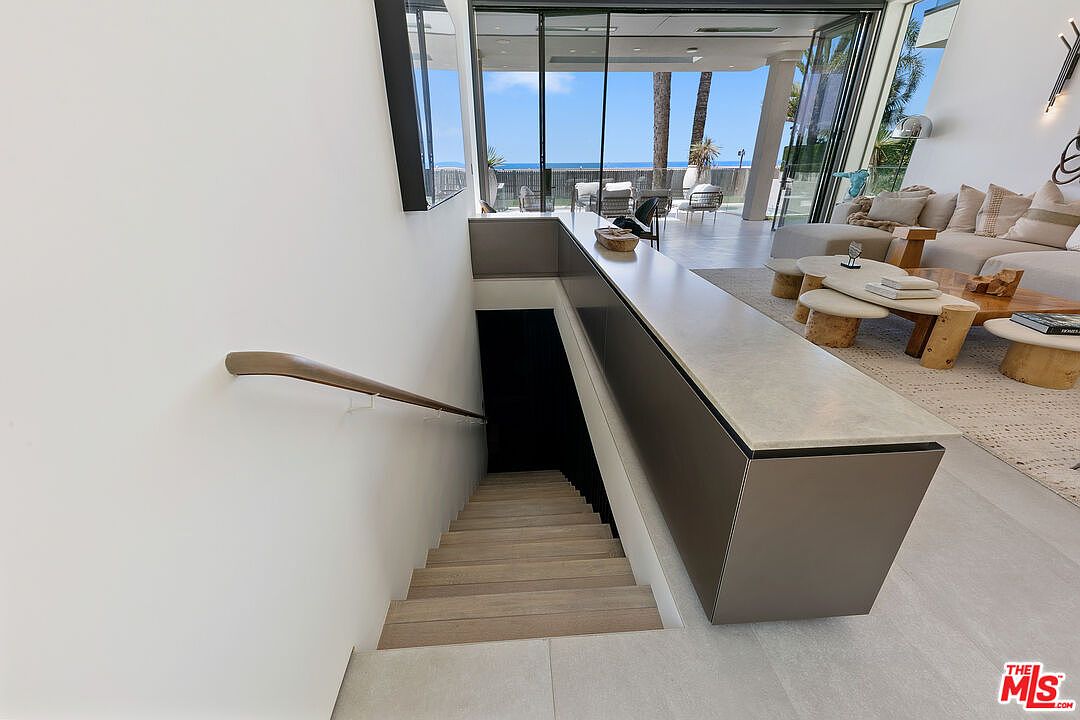
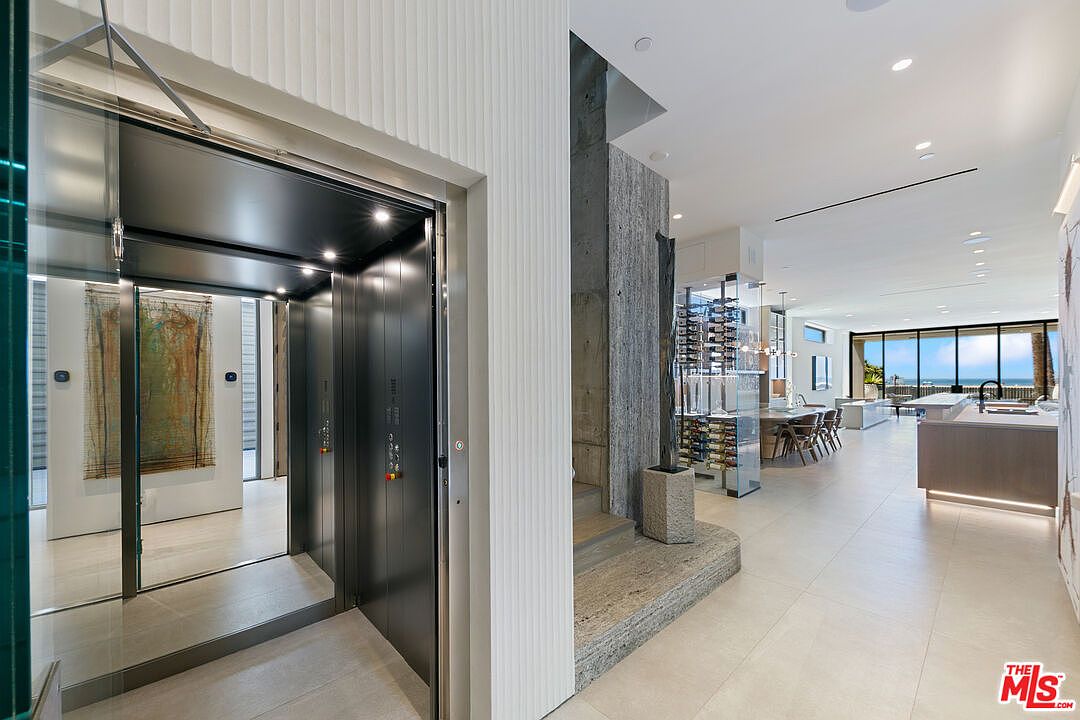
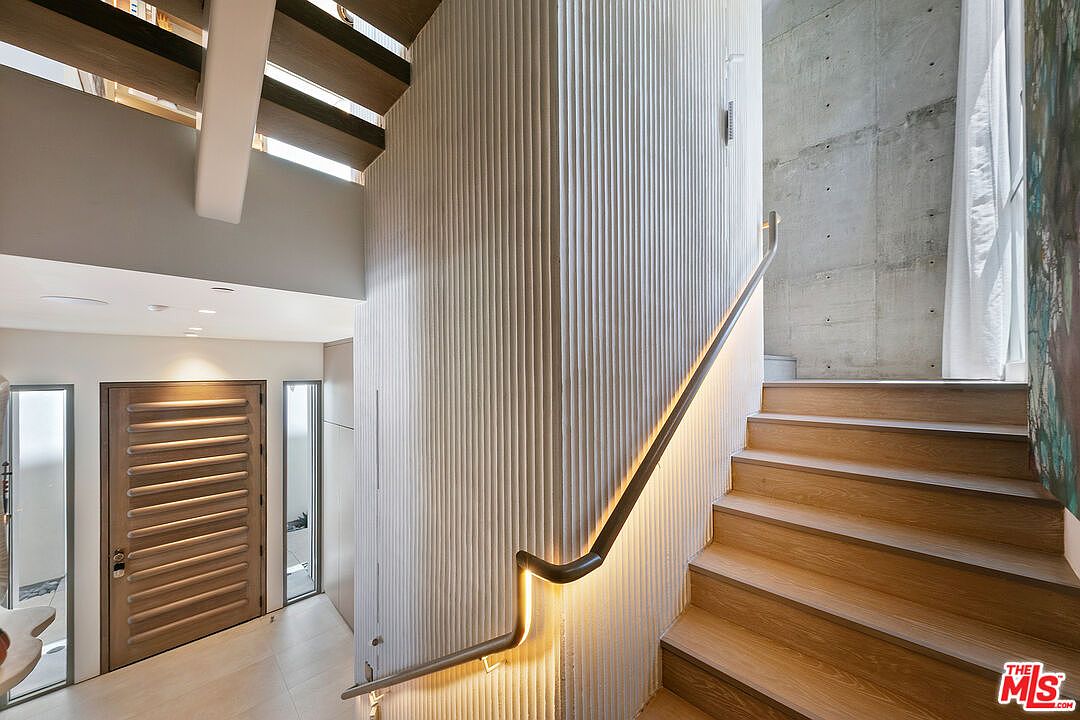
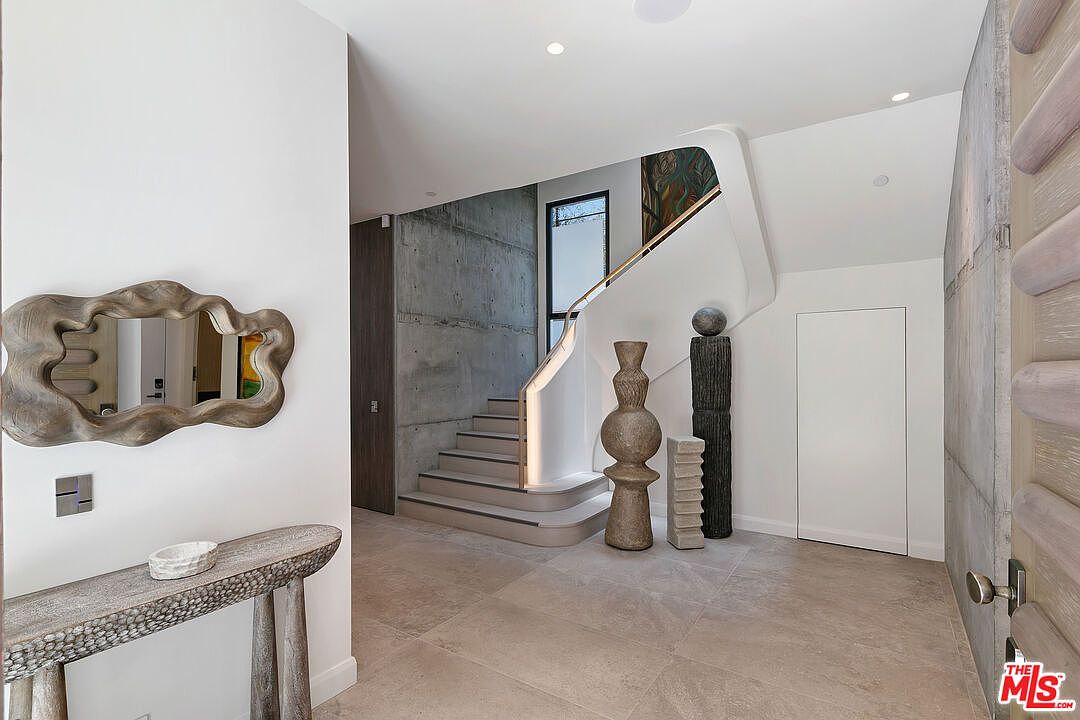
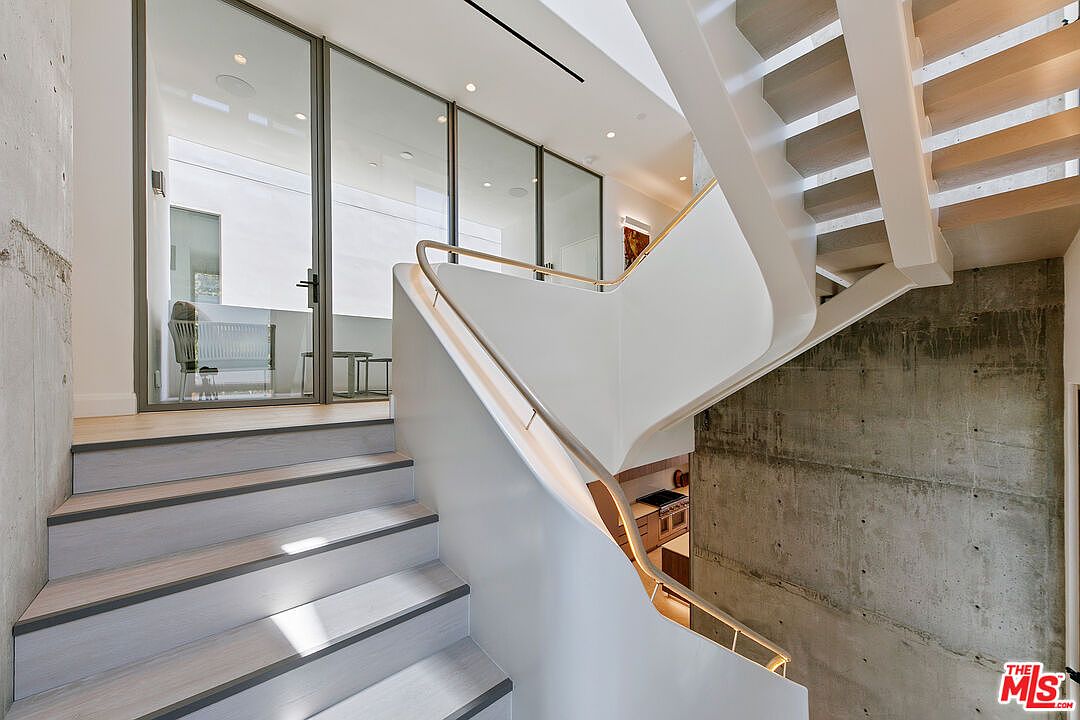
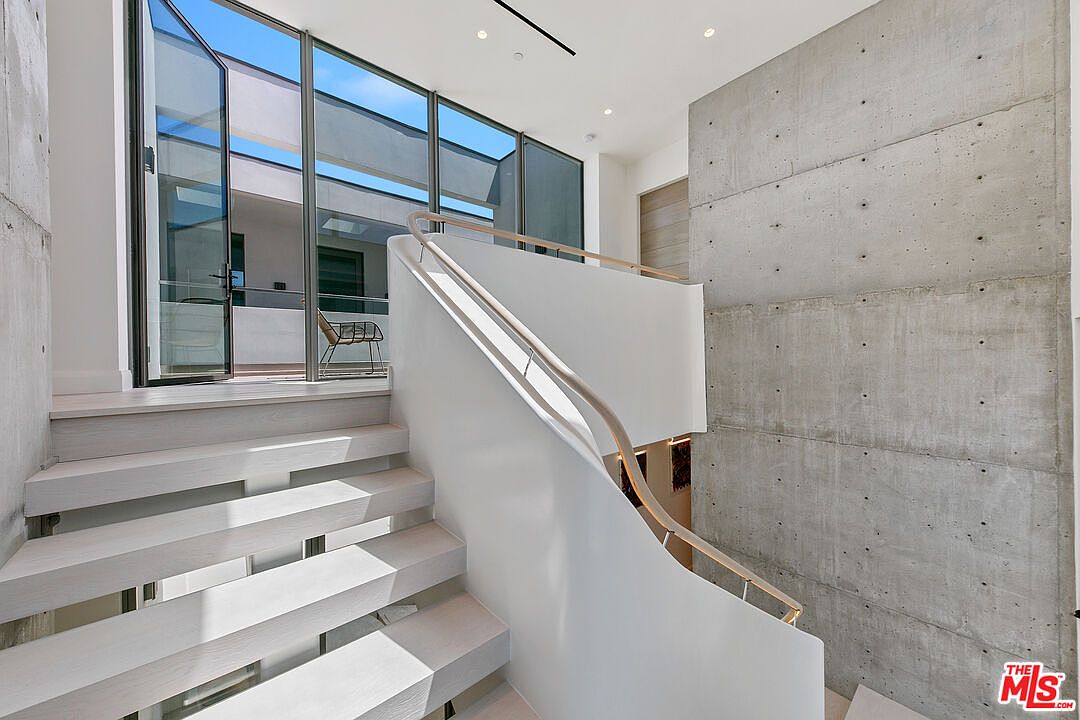
Step inside the first residence and the drama is immediate. A glass-enclosed elevator anchors a stone-clad staircase, setting the material palette — raw texture against polished precision — that defines the home across its three levels. The main living floor opens expansively, retractable glass walls dissolving the boundary between interior and Pacific horizon with an effortlessness that feels both engineered and inevitable. The chef's kitchen commands the space with dark cabinetry, a sculptural island with an integrated sink, and a professional-grade range — a room that invites both serious cooking and the kind of unhurried conversation that only happens when a space feels genuinely alive. Below, a dedicated home theater and a temperature-controlled wine cellar offer sanctuary and ceremony in equal measure. Above, the primary suite achieves something extraordinary: a private balcony plunge pool suspended over the ocean, accessible through floor-to-ceiling glass doors, transforming the act of waking into something approaching the sublime.
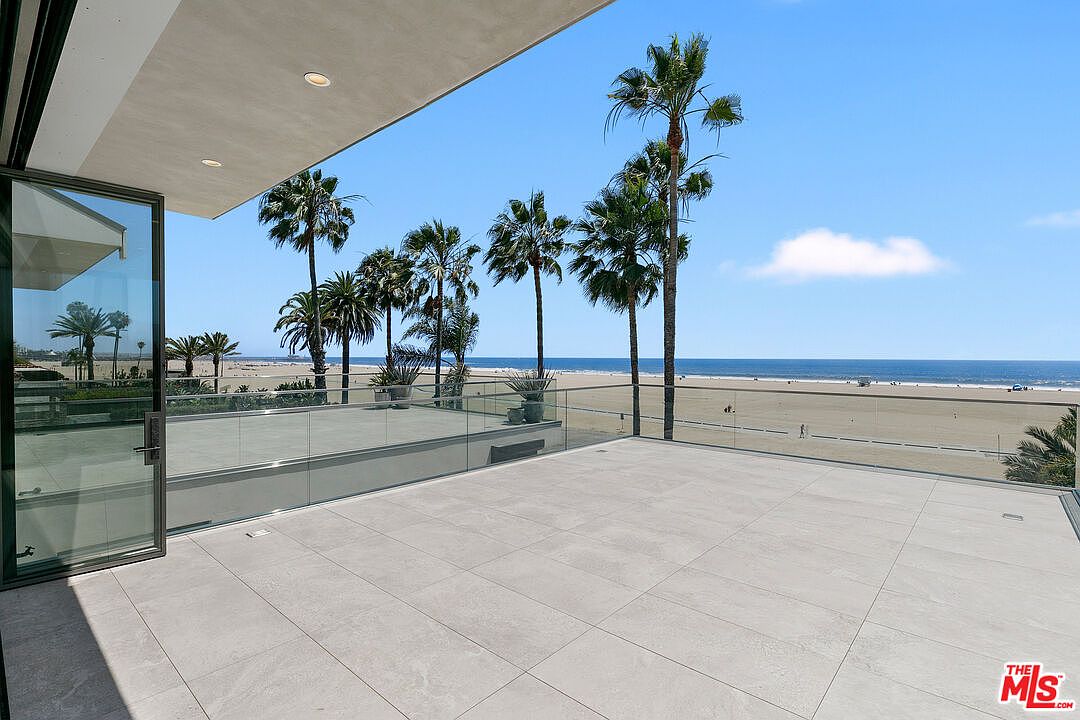
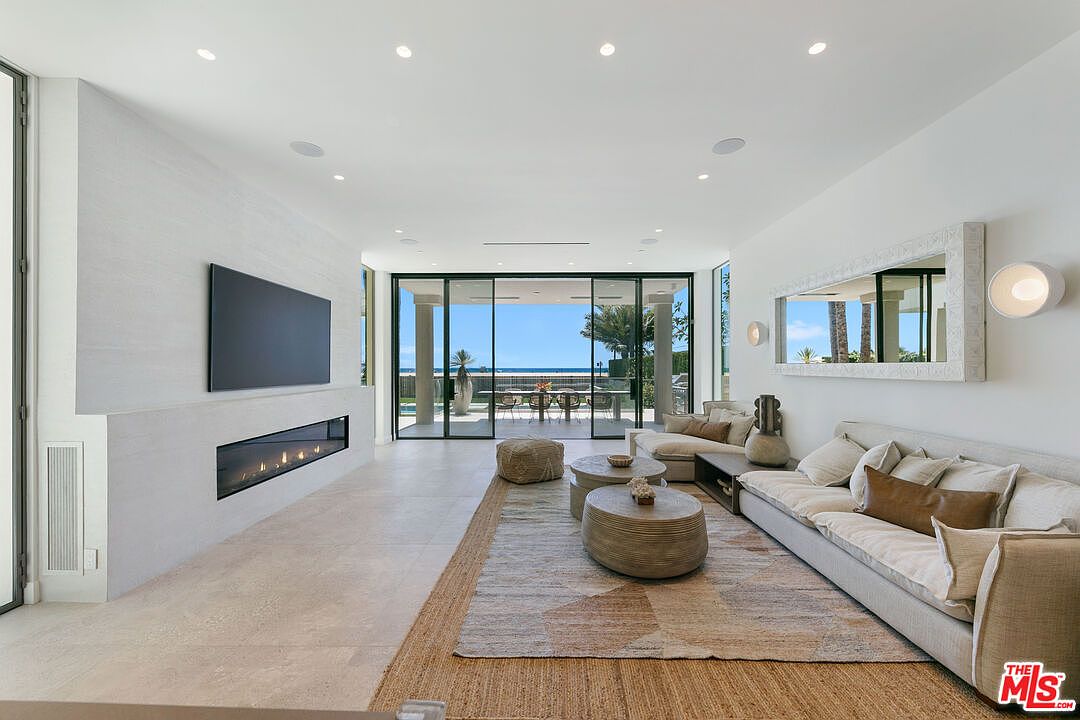
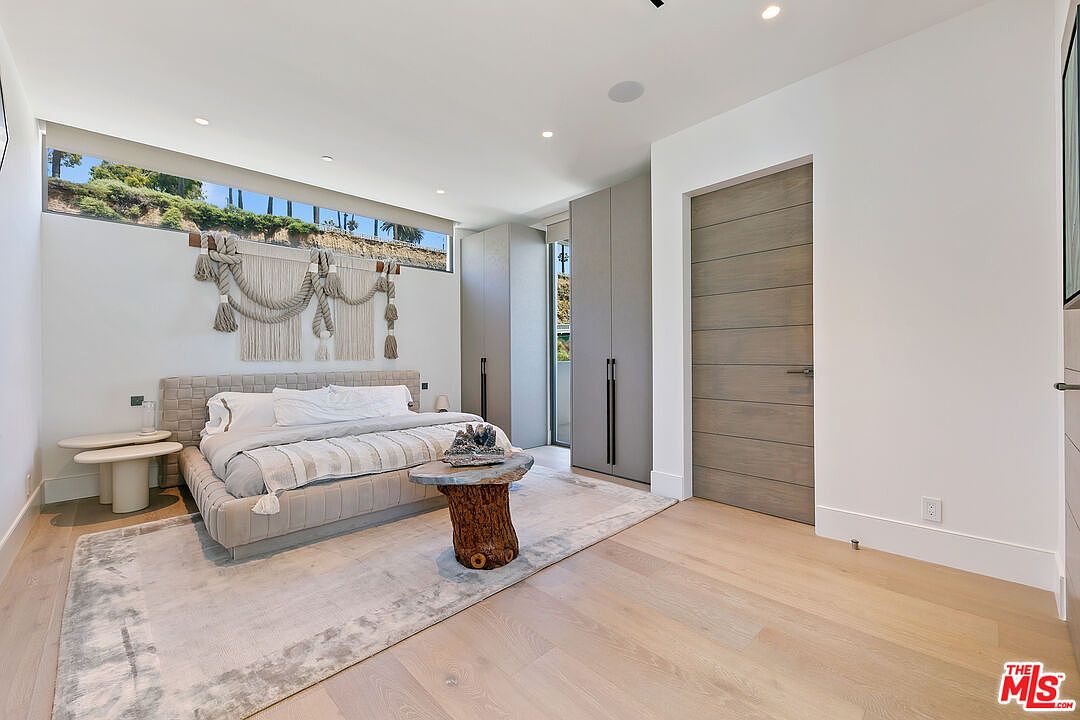
The second residence answers with its own ambitions. Seven bedrooms unfold across three levels, including two distinct primary suites that offer flexibility rarely found at this scale — a compound within a compound. The main living level is anchored by a linear fireplace set against a clean stone wall, with an expansive kitchen island and generous banquette seating flowing naturally toward oceanfront decks. The architecture here breathes with the kind of openness that encourages gathering, whether for intimate family mornings or larger celebrations that spill out onto the sand.
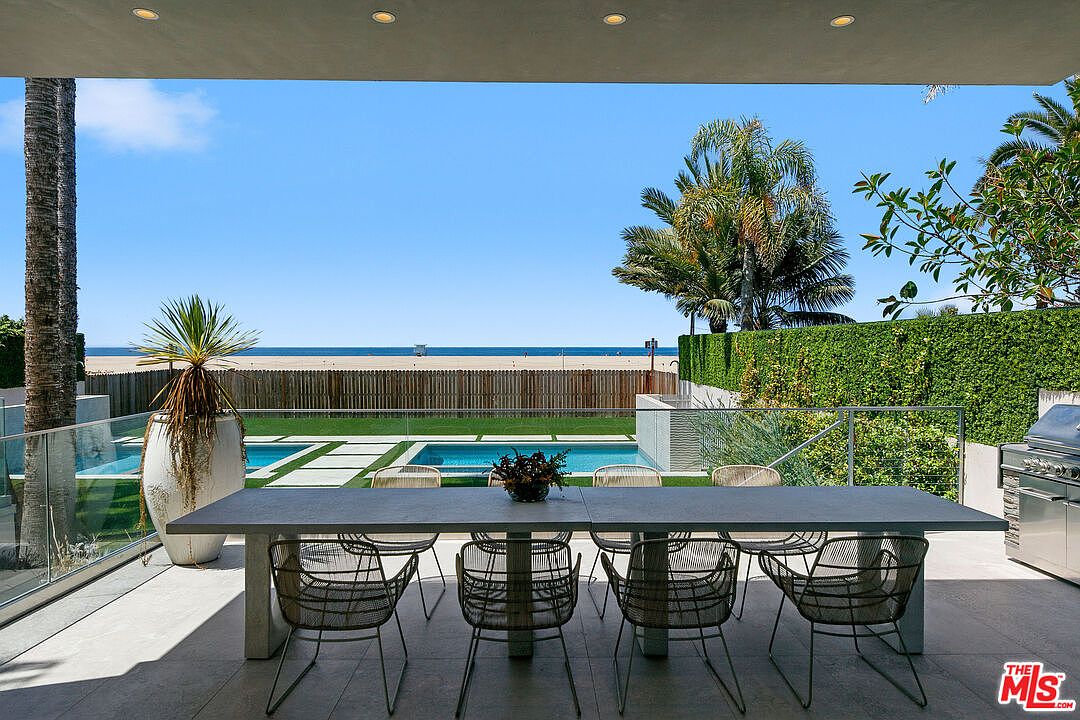
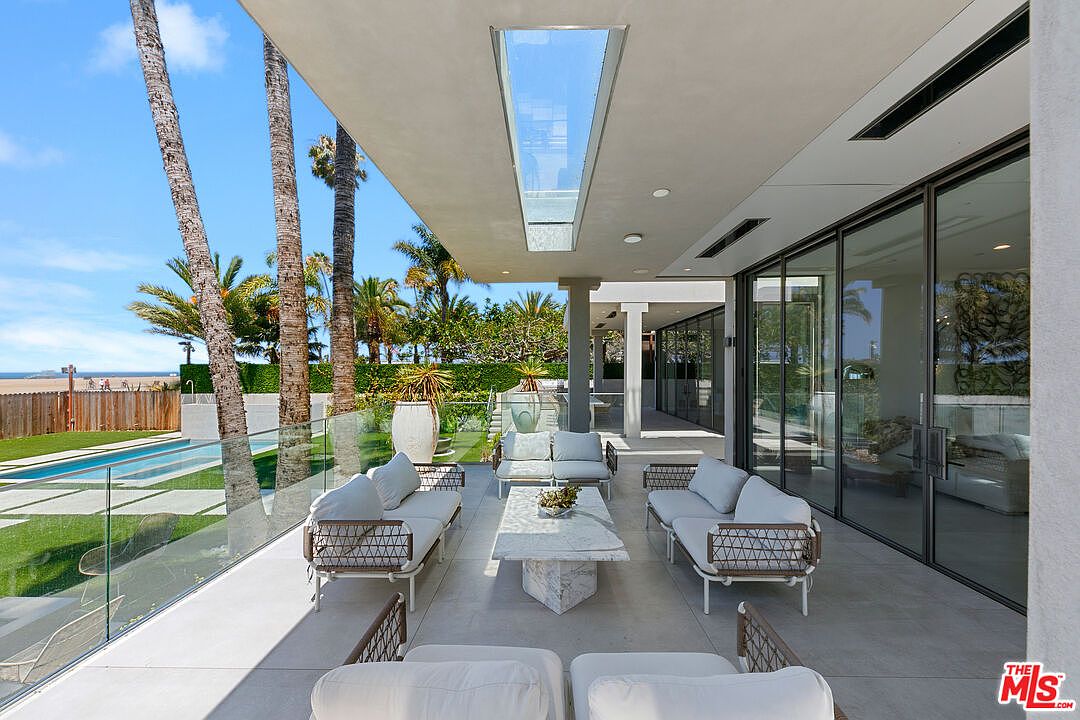
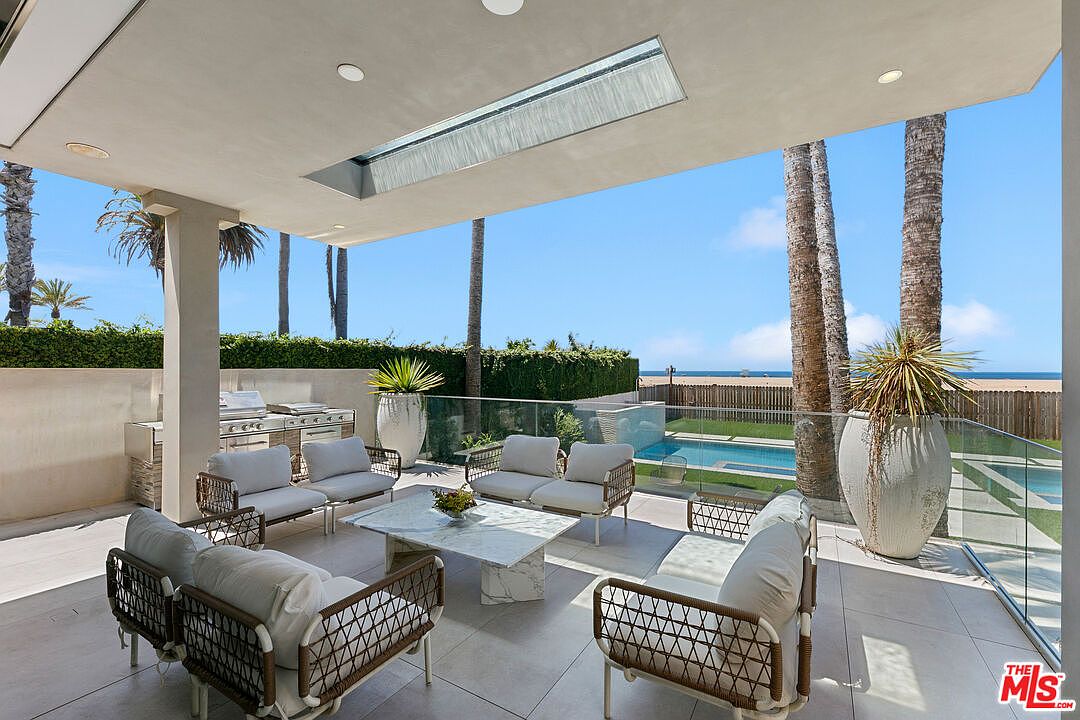
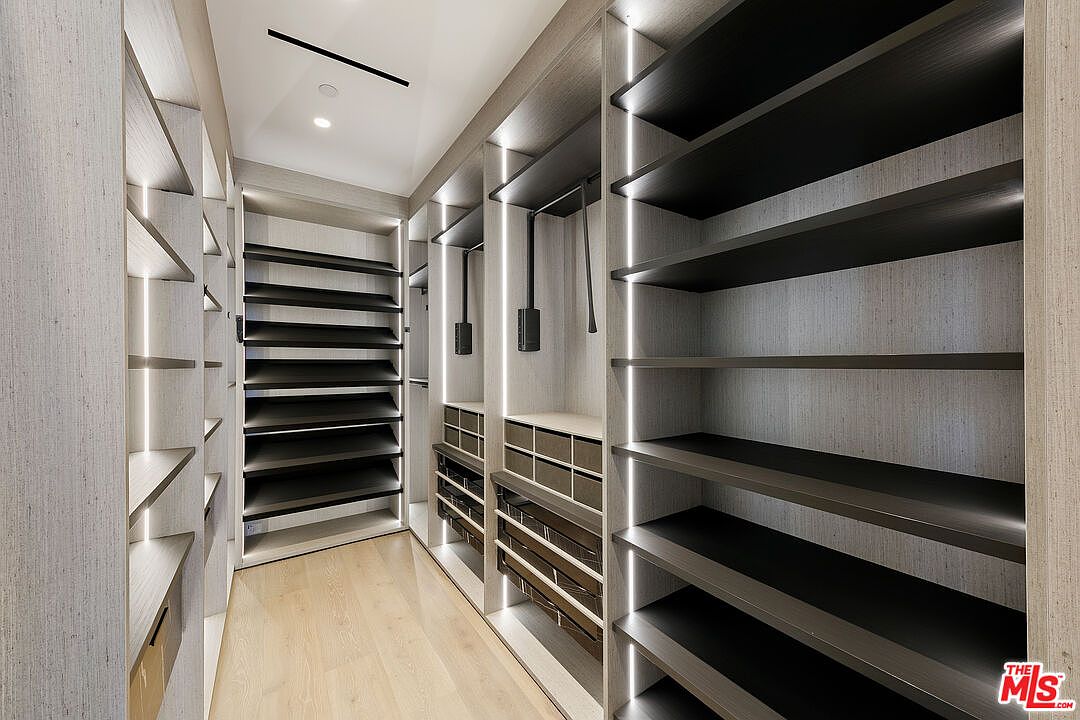
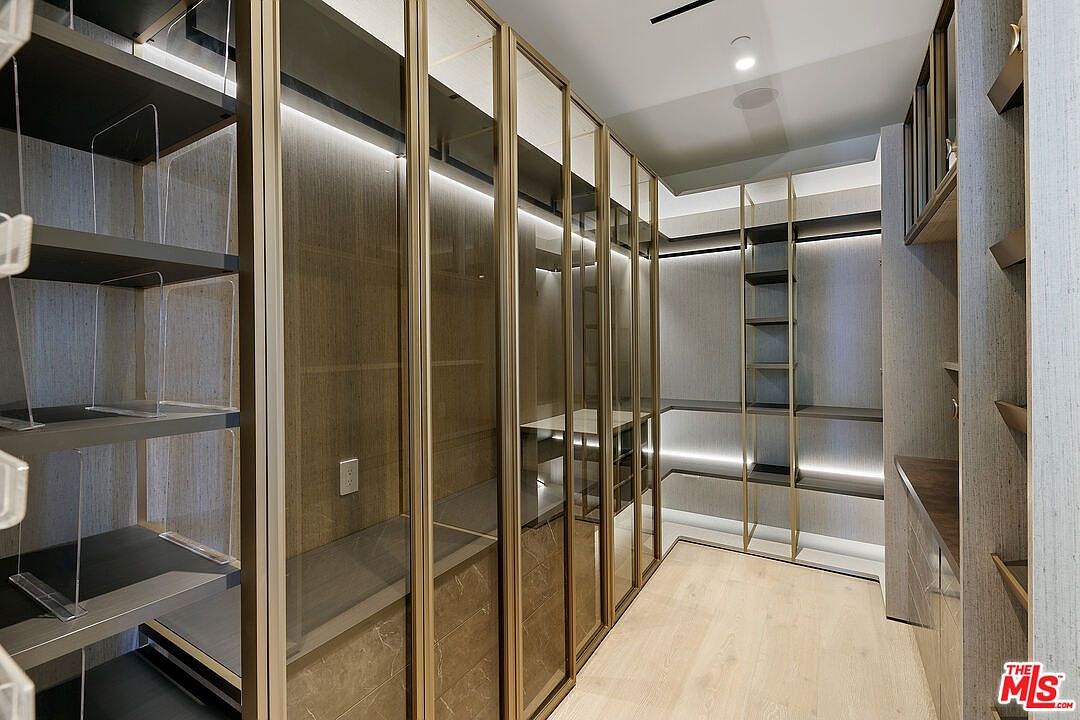
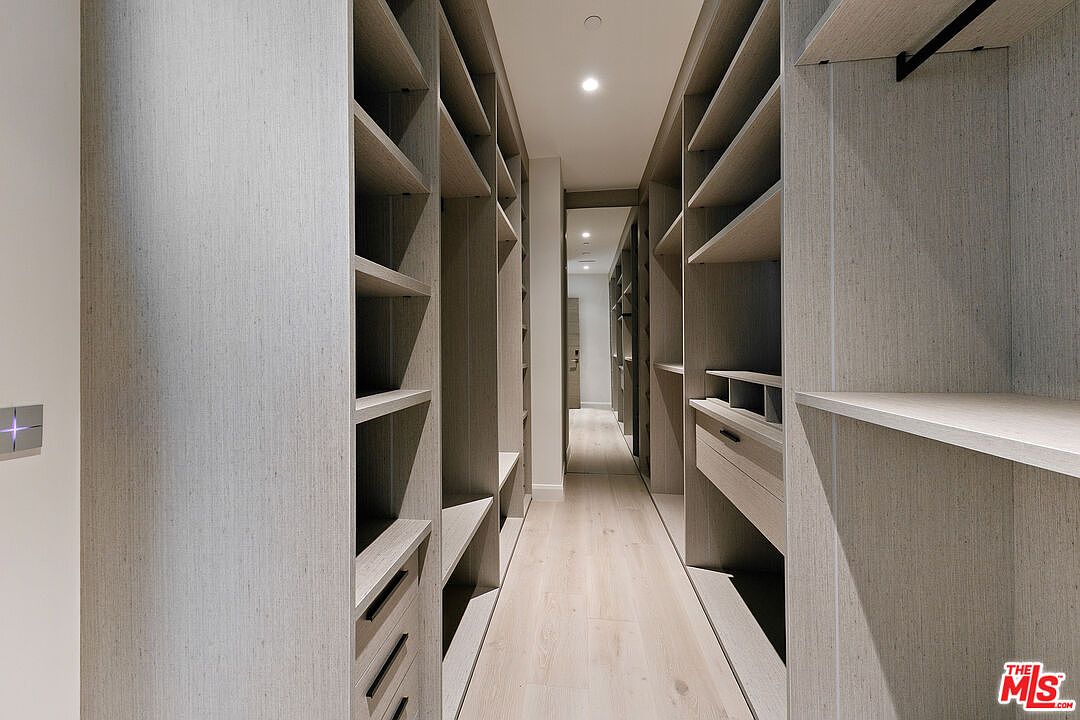
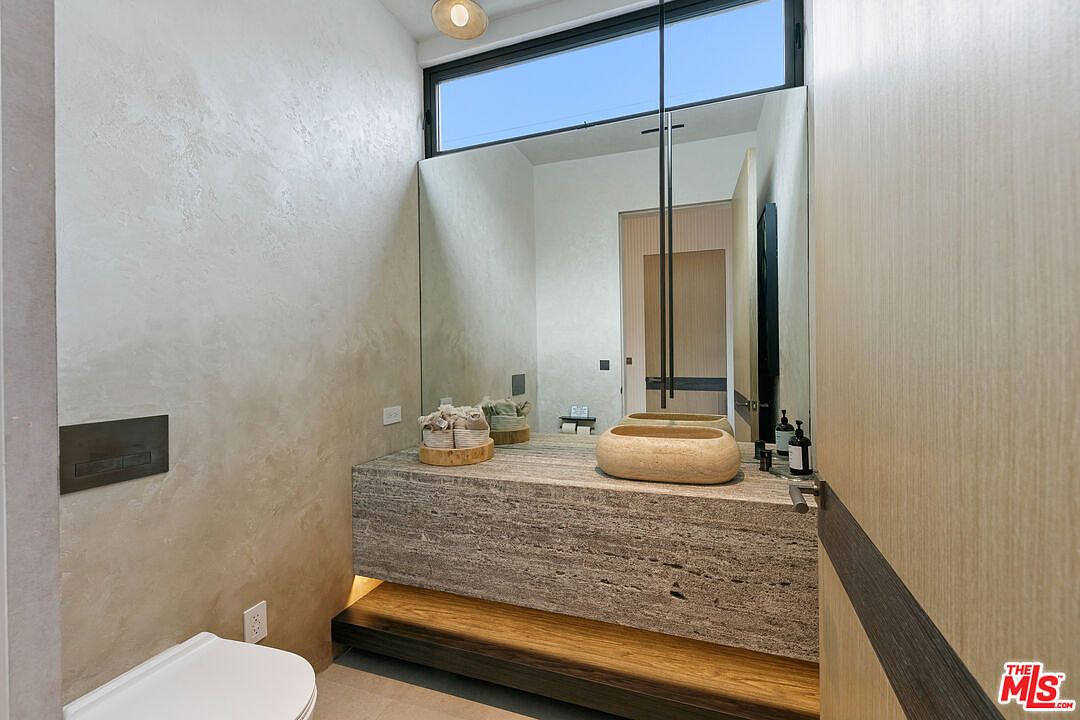
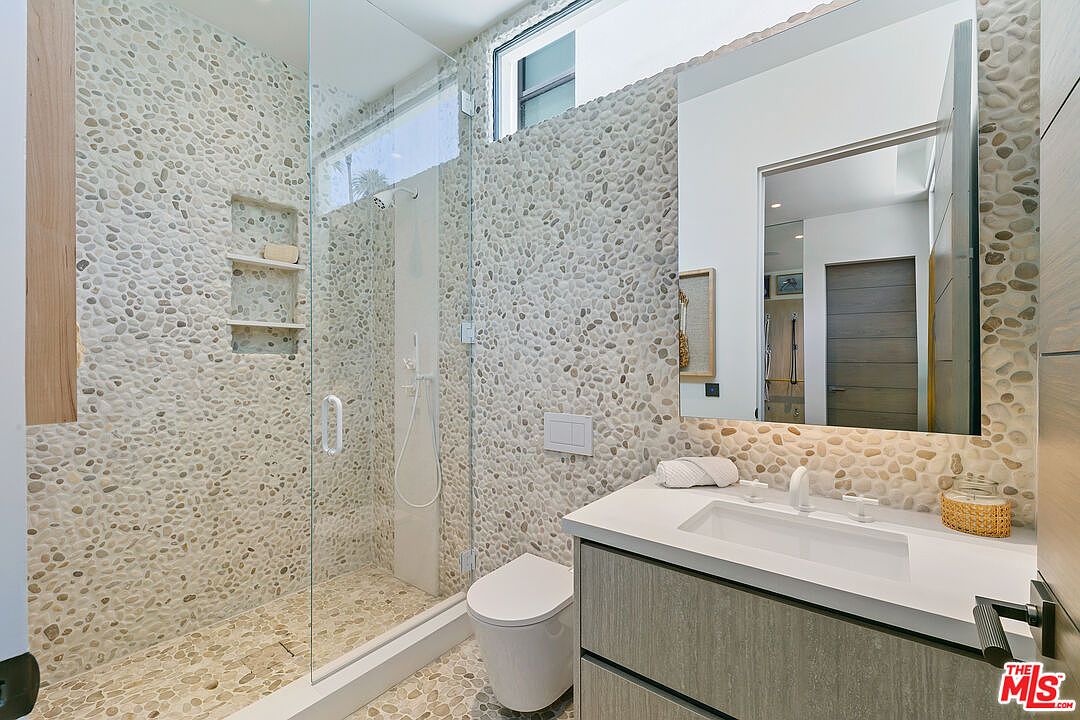
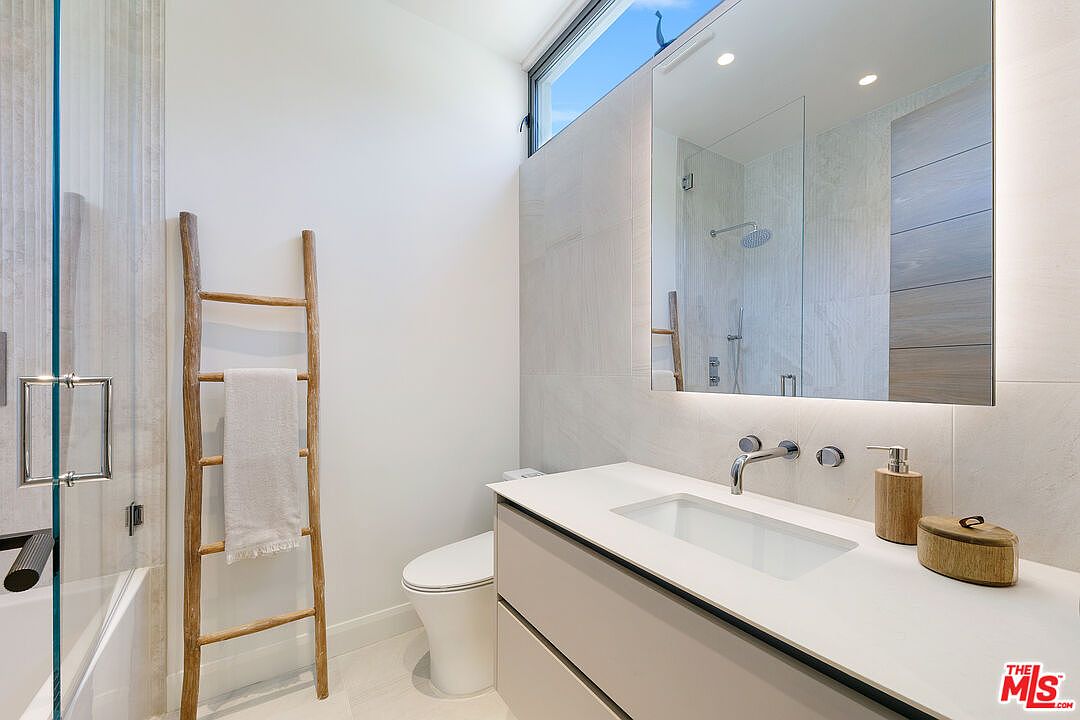
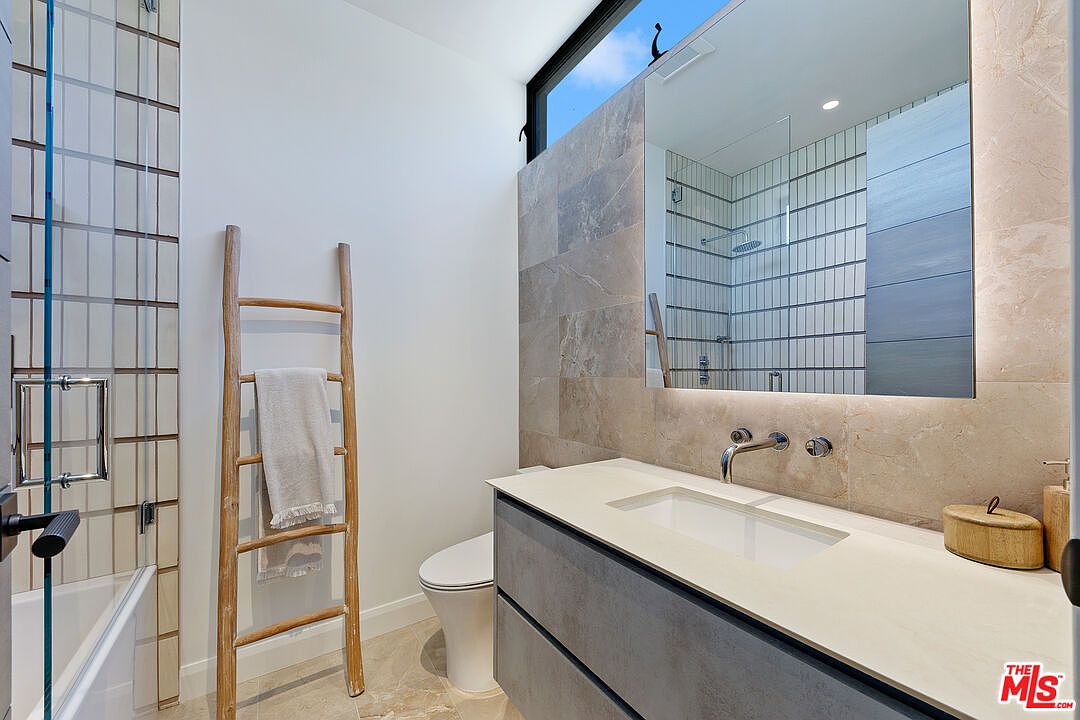
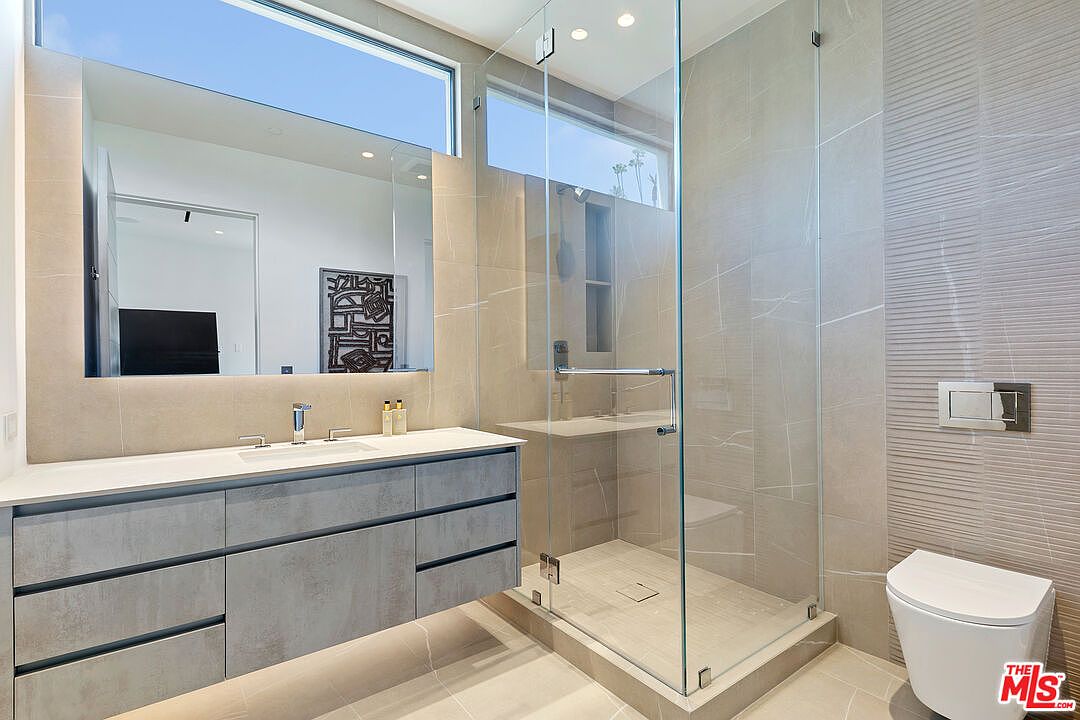
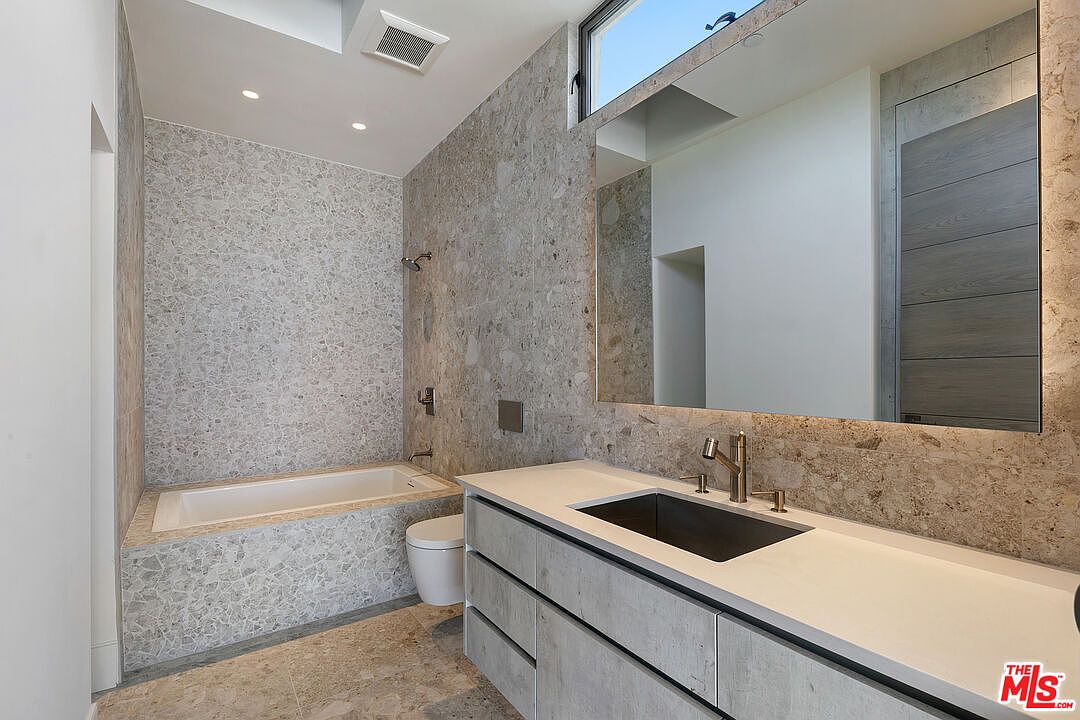
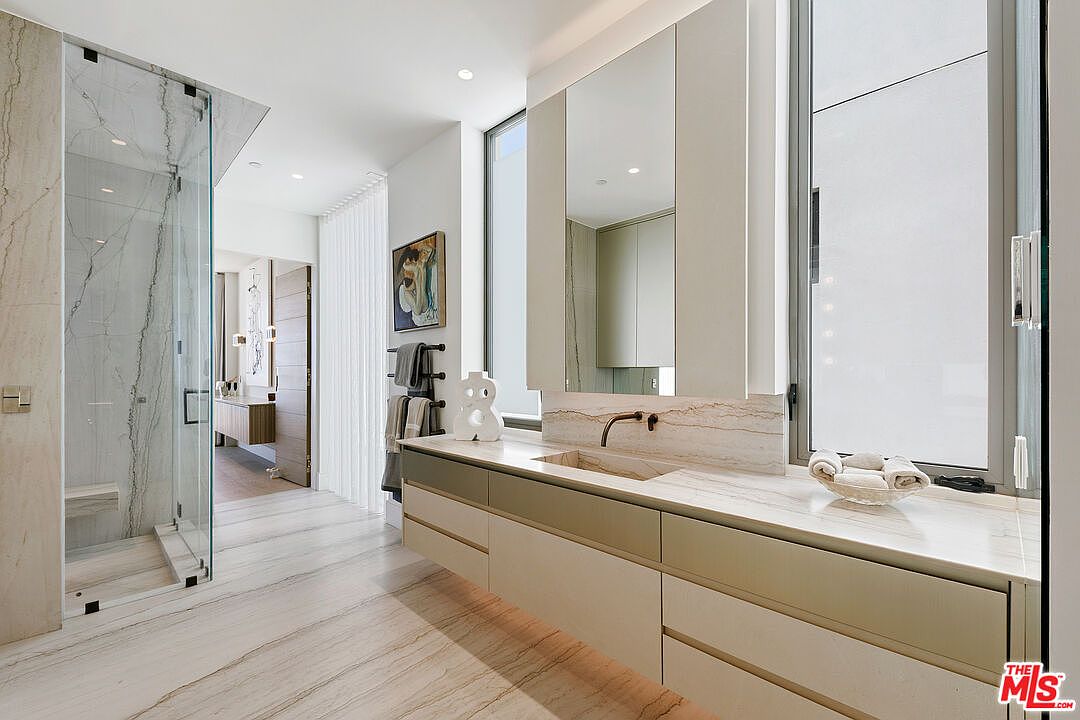
Outdoors, both properties deliver private resort-caliber environments: twin pools with integrated spas, cascading water features, fire pits, and multiple lounging terraces, all connected by a private gate to the beach. The craftsmanship throughout — premium stone and millwork, custom cabinetry, bespoke lighting, dedicated elevators, and whole-home automation — reflects a standard of finish that is genuinely difficult to replicate at this proximity to the water.
This is not simply beachfront real estate. It is sixty feet of irreplaceable California coastline, interpreted through architecture that is as thoughtful as it is bold.
The stretch of shoreline known as the Gold Coast has occupied a singular place in California's cultural imagination for nearly a century. Running along Palisades Beach Road in Santa Monica — a narrow corridor of sand pressed between the Pacific Coast Highway and the Pacific Ocean itself — it has historically attracted figures from Hollywood's golden era, business titans, and those who simply understood that this particular combination of light, ocean, and proximity to a world-class city was unlikely to be replicated anywhere else on earth.
The neighborhood's legacy is woven into the fabric of American cultural history. In the 1920s and 1930s, this shoreline became the preferred enclave of film industry luminaries, with estates belonging to names like William Randolph Hearst, Louis B. Mayer, and Cary Grant establishing the Gold Coast's reputation as a place where ambition and beauty coexisted effortlessly. That heritage of discernment — of choosing the best when the best was available — remains embedded in the character of the street today.
Santa Monica itself is among Southern California's most complete and livable communities. The city operates its own municipal government and school district, maintains its own police and fire departments, and has long pursued ambitious sustainability and urban planning initiatives that have helped preserve the quality of life that draws residents from across the world. The Third Street Promenade and Santa Monica Place offer world-class retail and dining within easy reach, while the Santa Monica Pier — one of California's most recognizable landmarks — anchors the southern end of the beach with its historic carousel and Pacific Park amusement rides.
For those drawn to the cultural life of Los Angeles, the compound's location is quietly ideal. The Getty Center, perched on the hills above Brentwood just minutes away, houses one of the finest art collections in the United States within Richard Meier's landmark campus. The boutiques and restaurants of Montana Avenue, a few blocks north, offer a more intimate, neighborhood-scaled alternative to the Promenade's energy. Brentwood, Pacific Palisades, and Malibu — each with their own distinct character — are all within comfortable reach.
The outdoor lifestyle available from this address is exceptional even by Southern California standards. The beach directly in front of the property is among the widest and most accessible along the Los Angeles coastline, with the Santa Monica State Beach extending north and south for miles. The Santa Monica Mountains and their network of hiking and equestrian trails begin just inland, offering a natural counterpoint to the ocean. Cyclists and runners have access to the South Bay Bicycle Trail, one of the longest urban bike paths in the country, running along the shoreline from Pacific Palisades to Redondo Beach.
To live on the Gold Coast is to inhabit a very specific intersection of history, culture, and natural beauty — one that Los Angeles has never quite managed to replicate elsewhere. The ocean does not feel like a backdrop here. It is the defining fact of daily life, and everything else arranges itself accordingly.
Featured Highlights
Curated Content • Presented by Sandro Dazzan