The Story Behind
Panoramic Views Meet Architectural Mastery in Pacific Heights
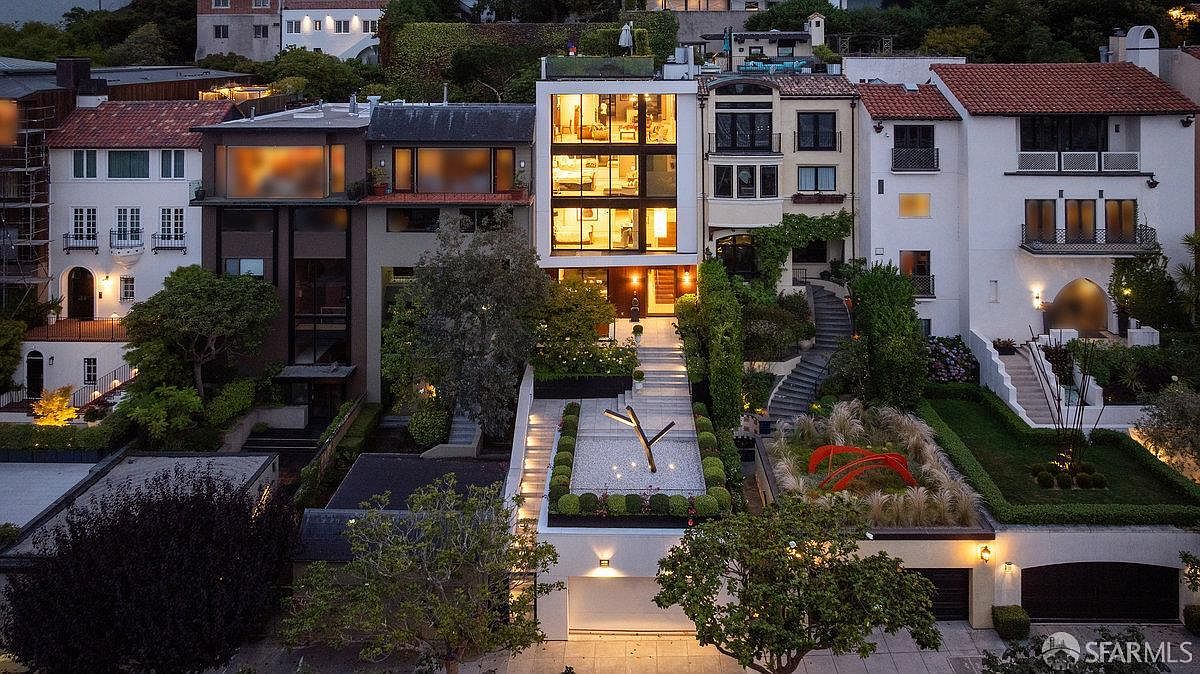
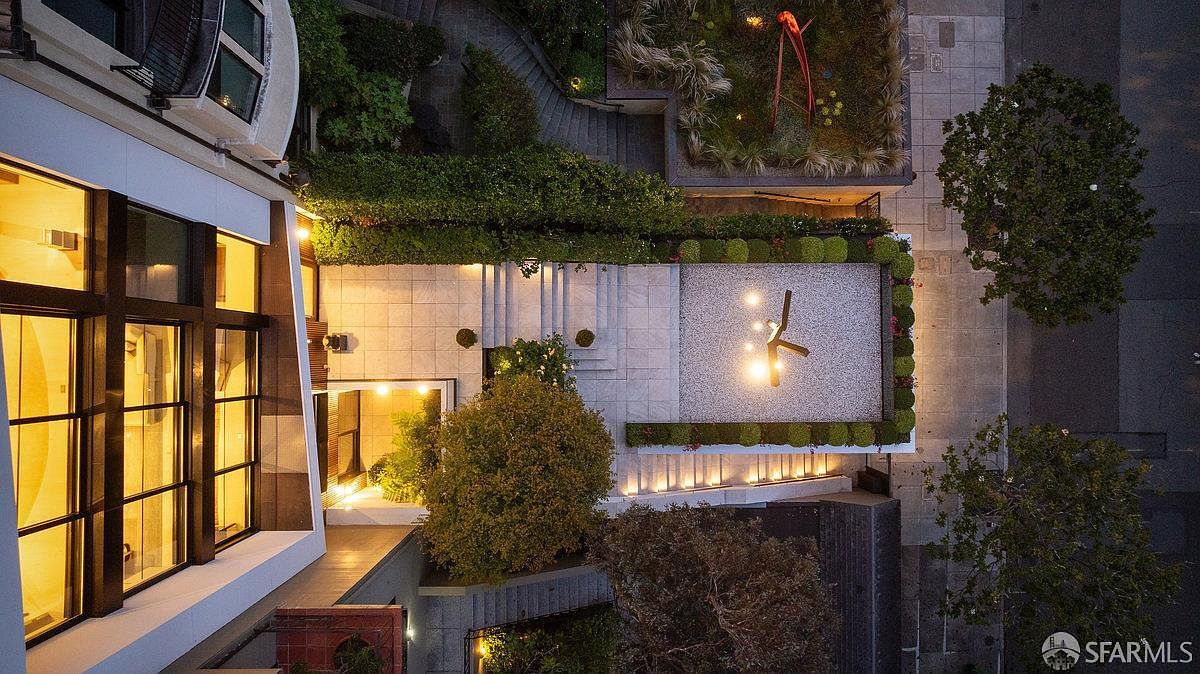
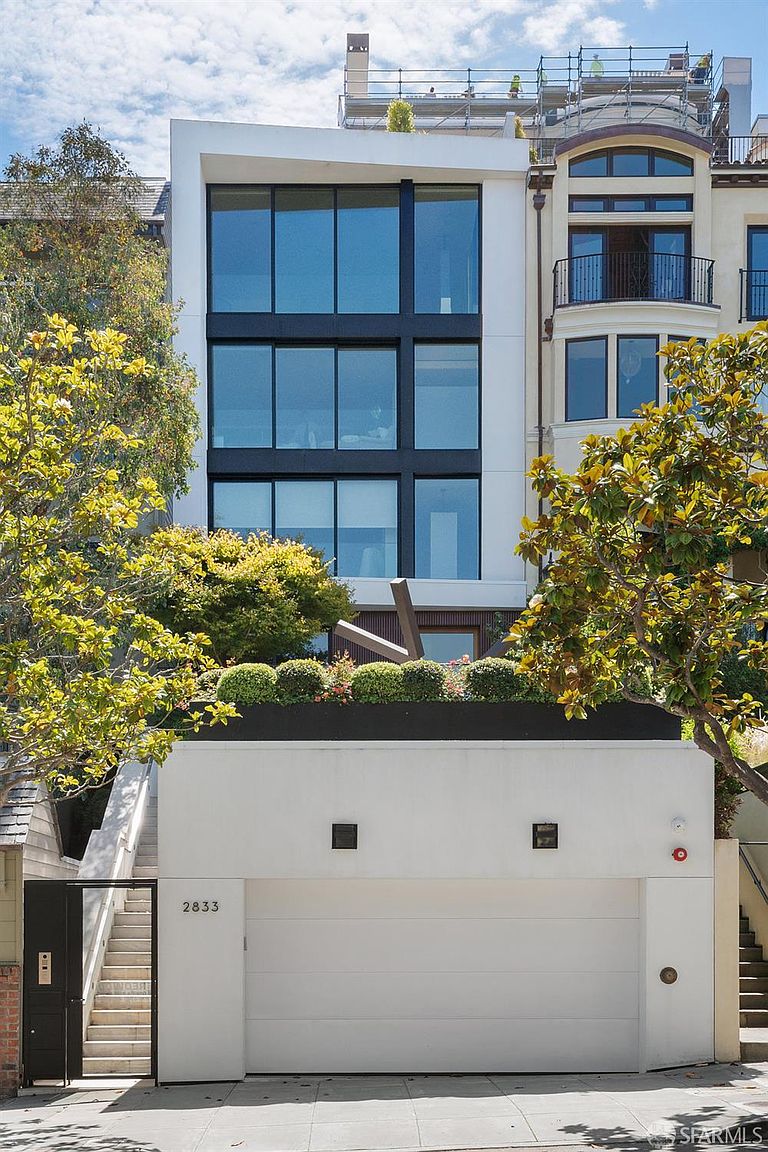
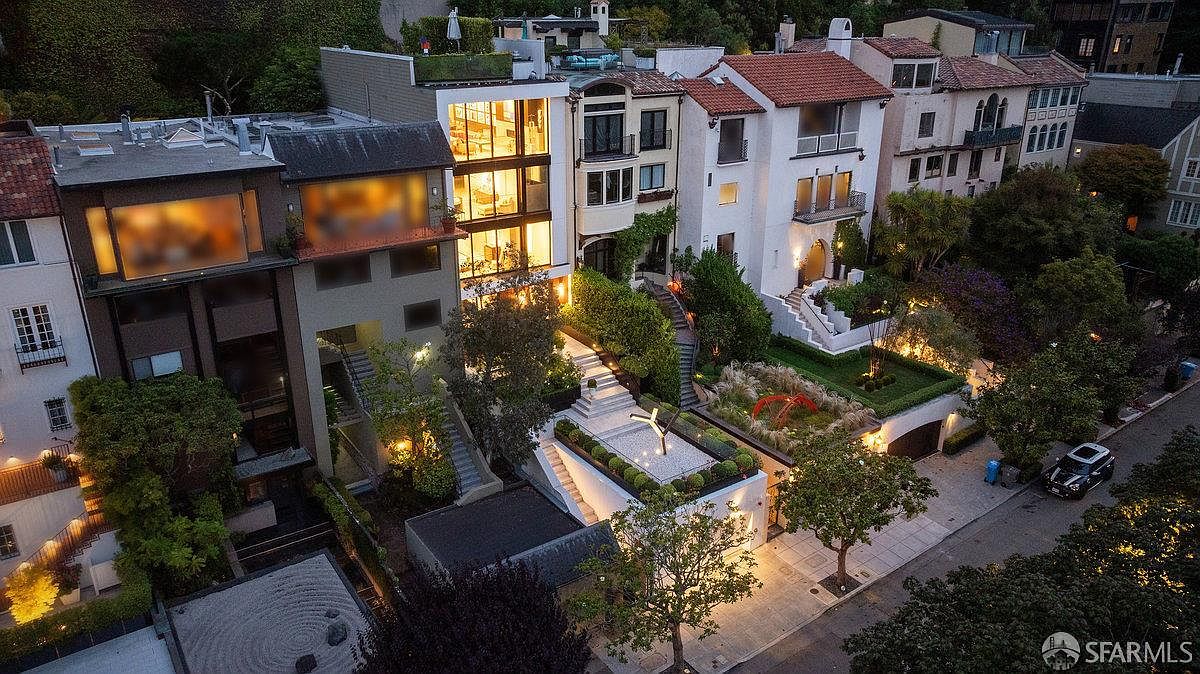
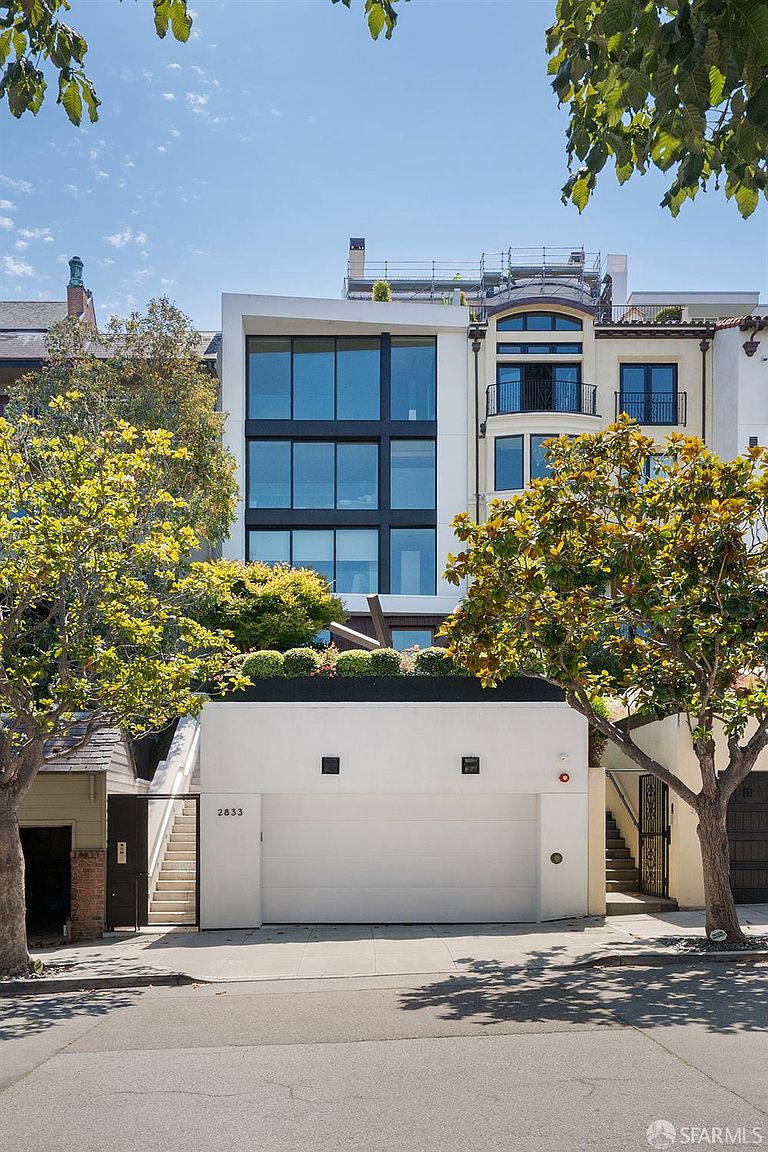
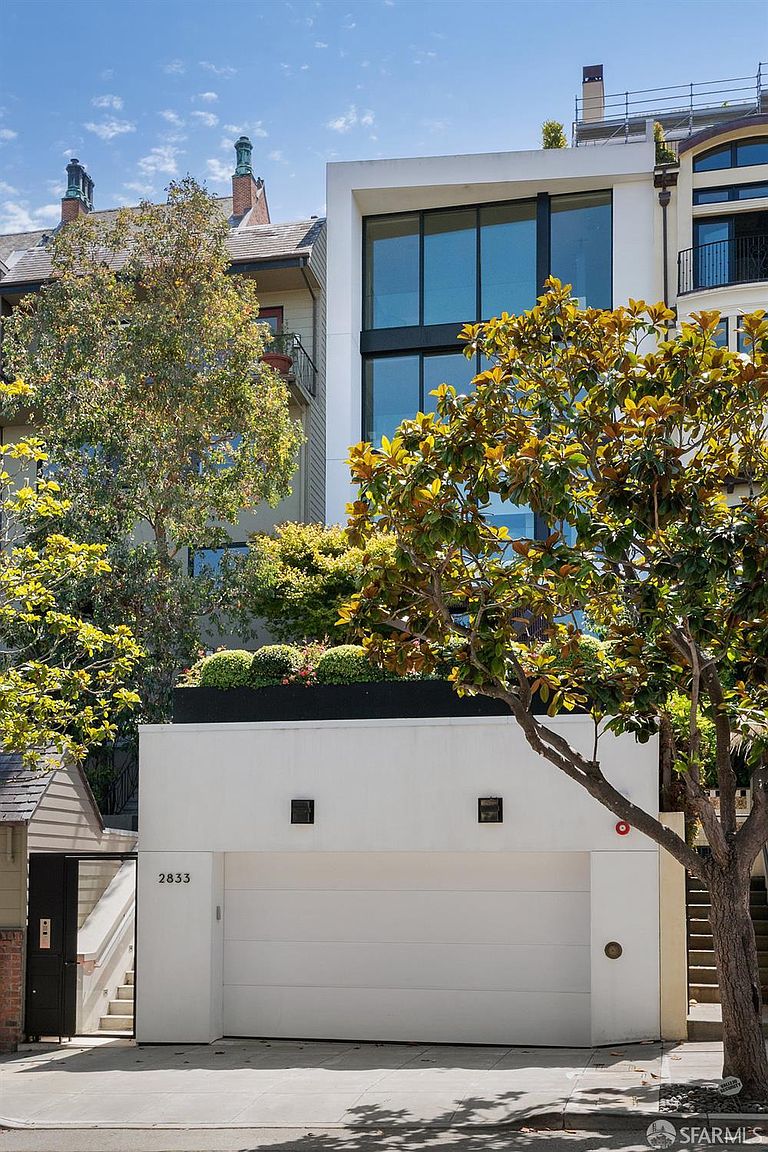
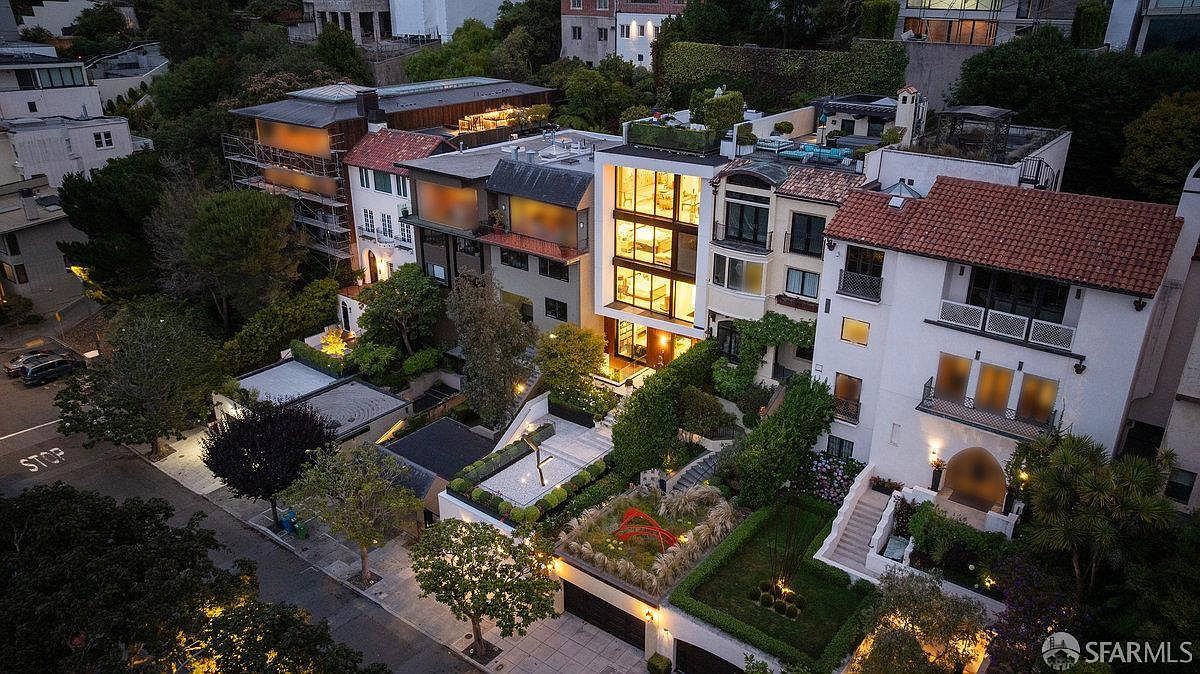
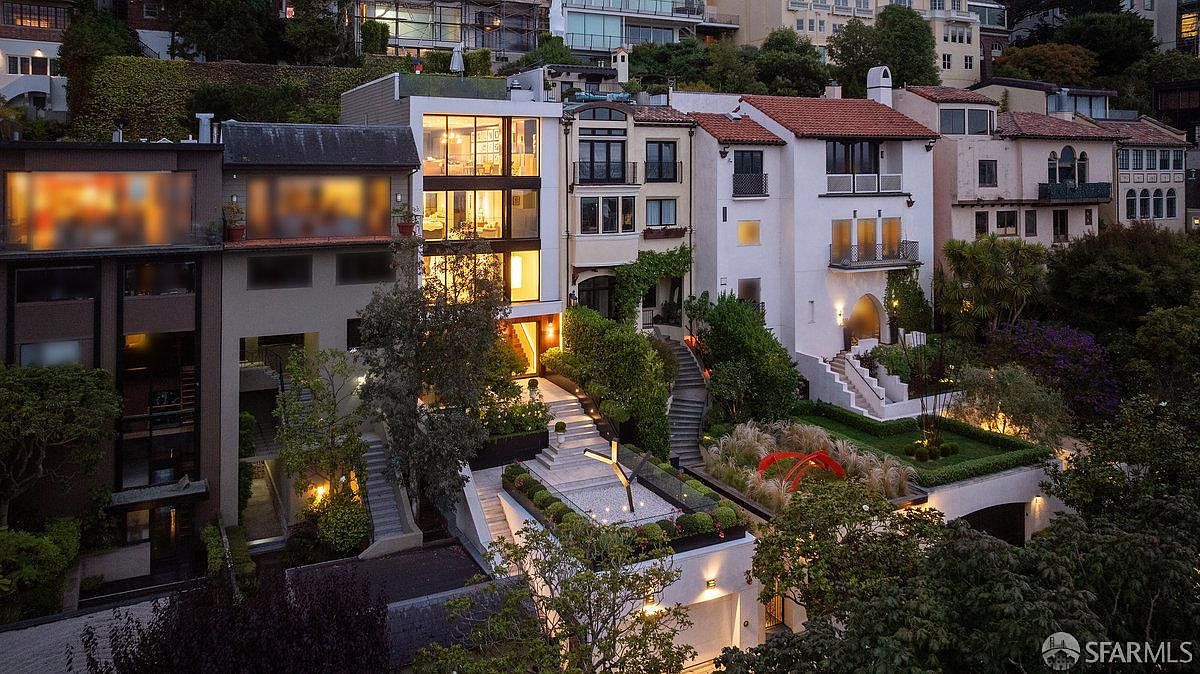
From the moment one approaches 2833 Vallejo Street, the intention is unmistakable. A facade of vertical wood slats, precise stonework, and expansive glass signals a home conceived not merely to occupy its site, but to honor it. Designed by San Francisco–based architects Edmonds + Lee — a practice celebrated for its rigorous integration of modern form with the particular demands of the city's hillside topography — the residence is a study in considered restraint and quiet luxury.
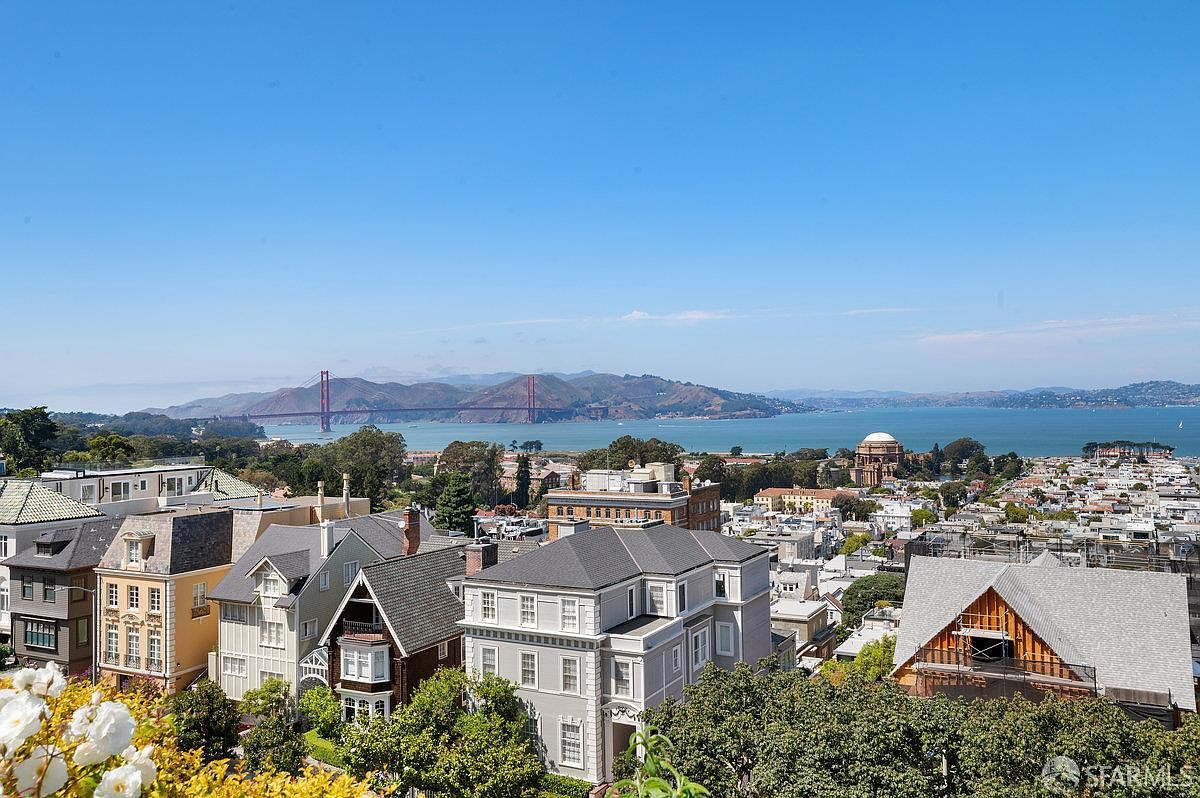
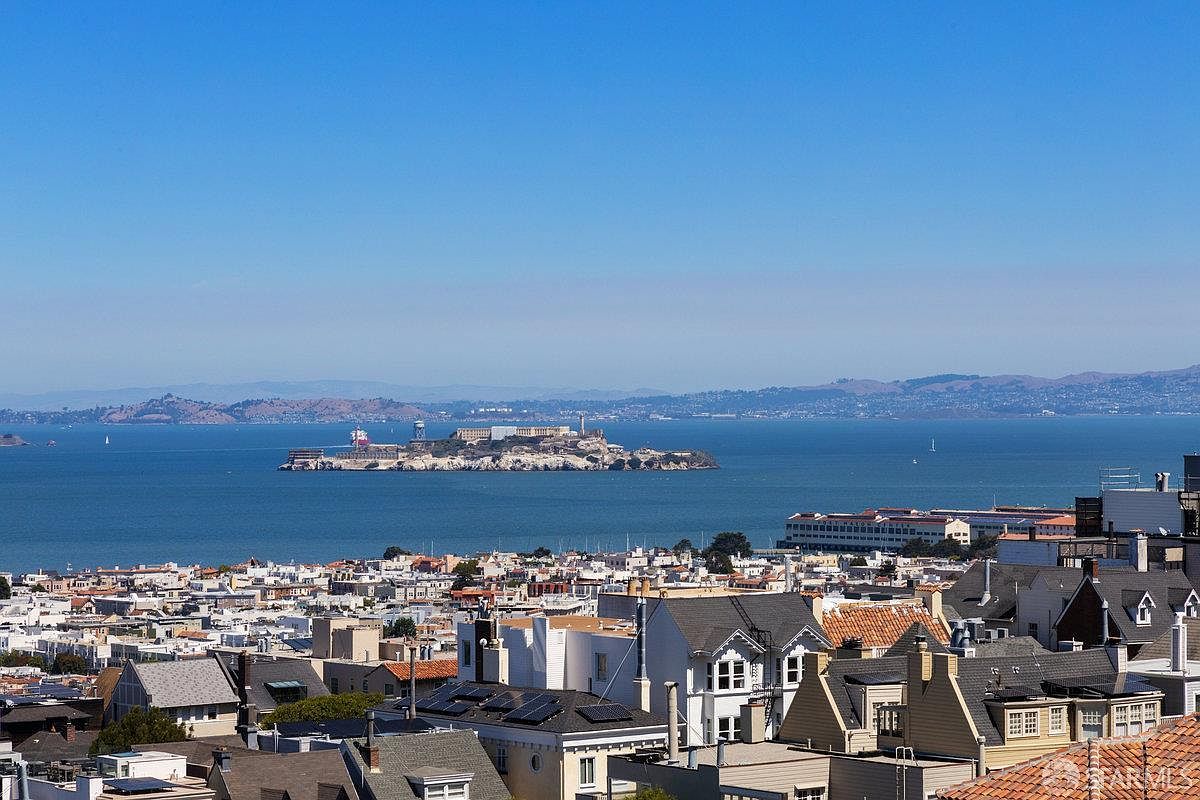
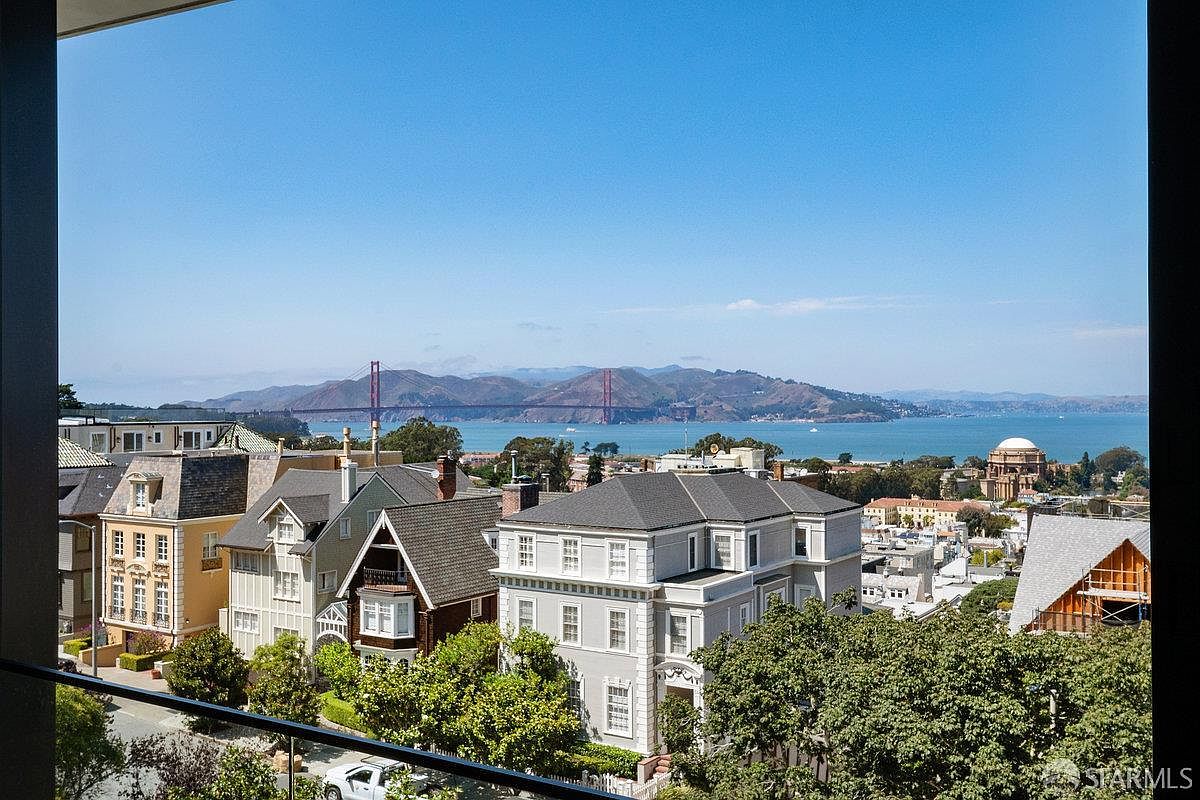
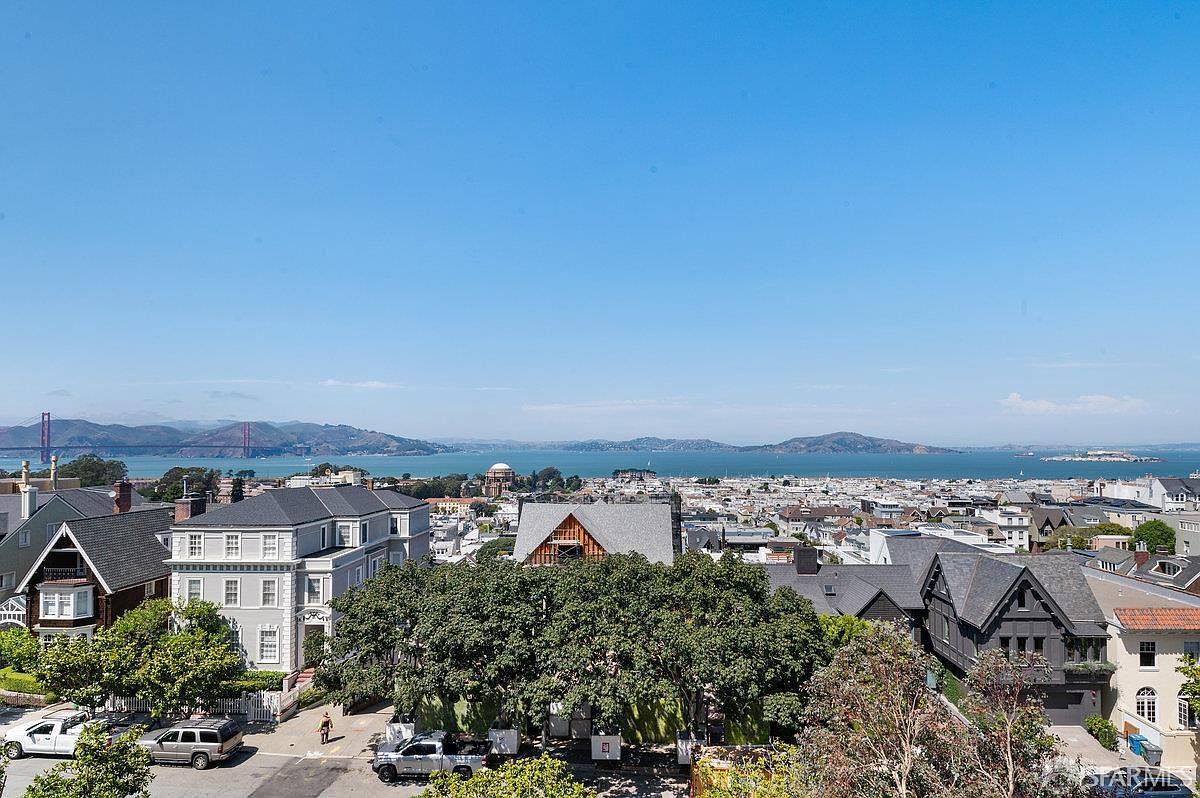
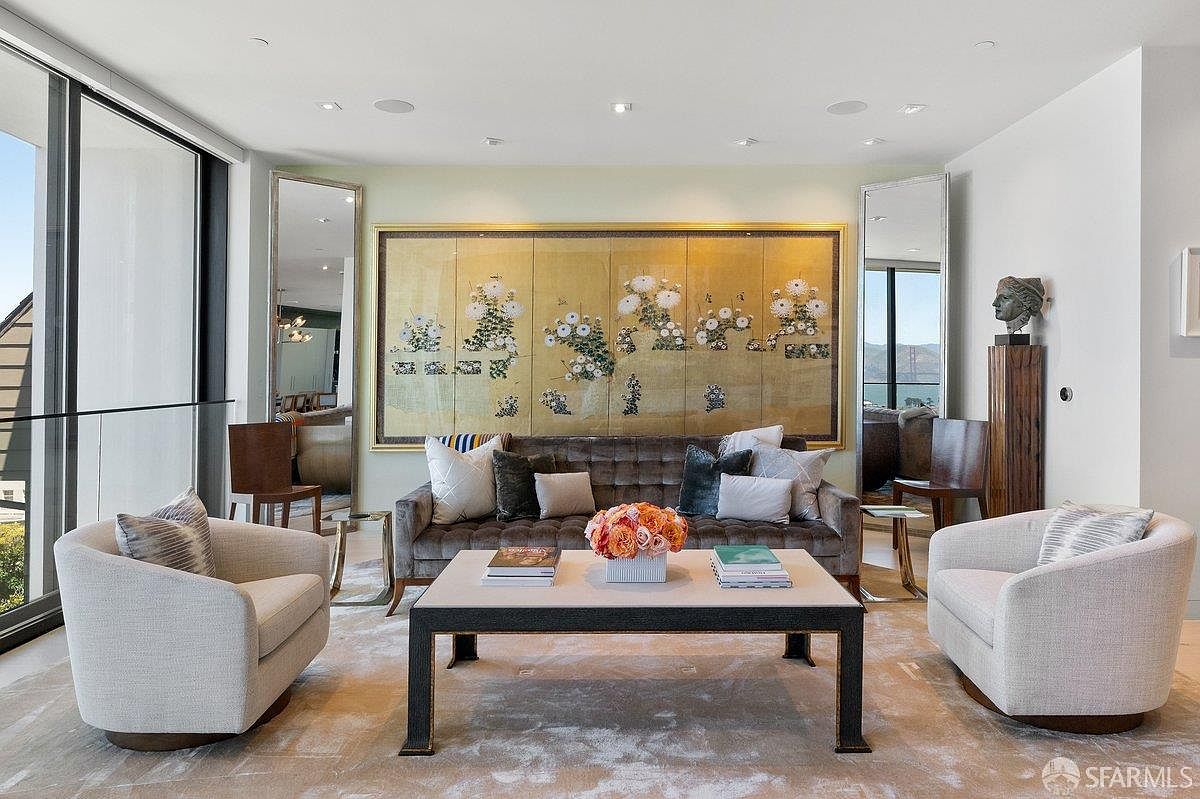
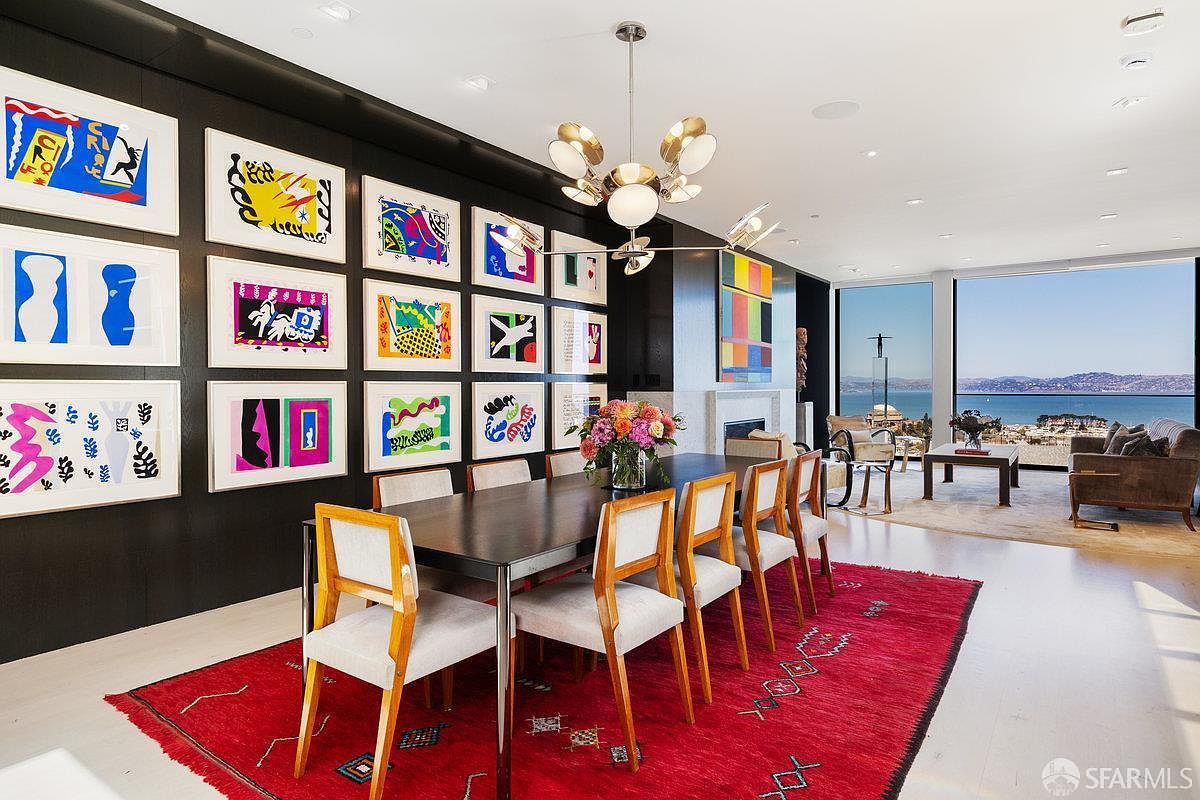
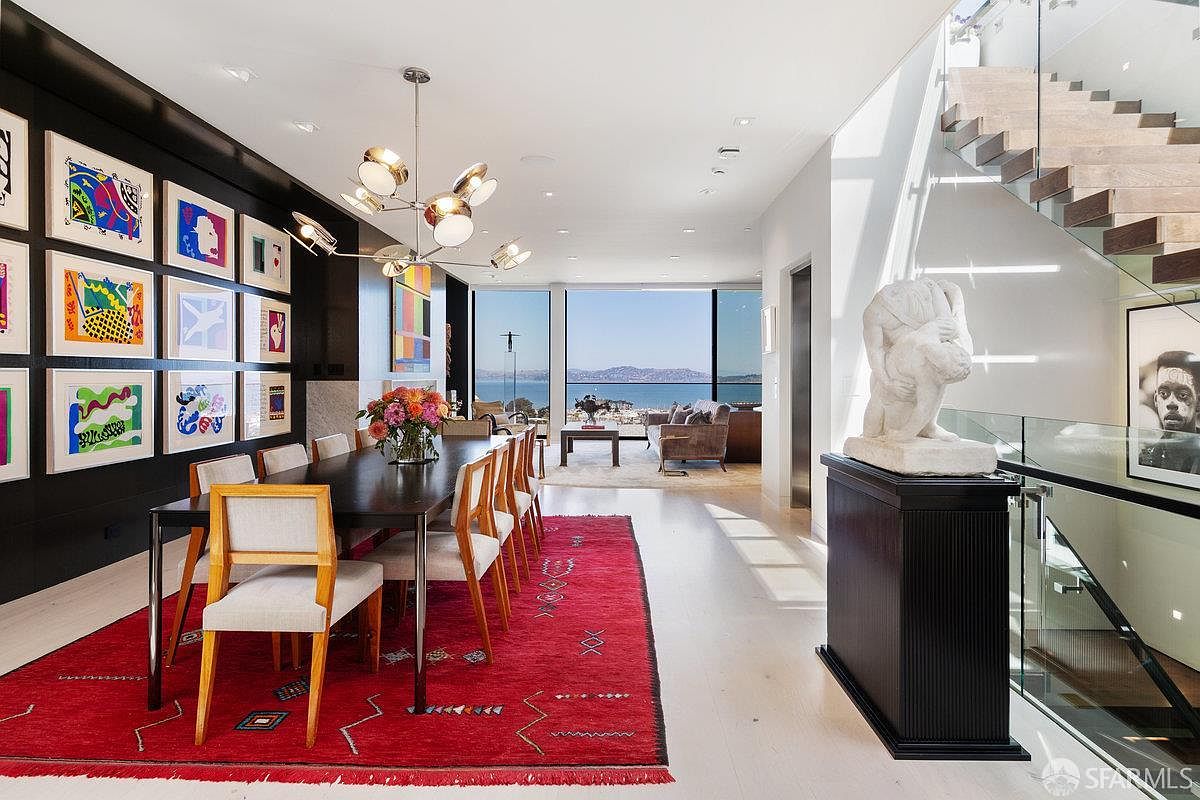
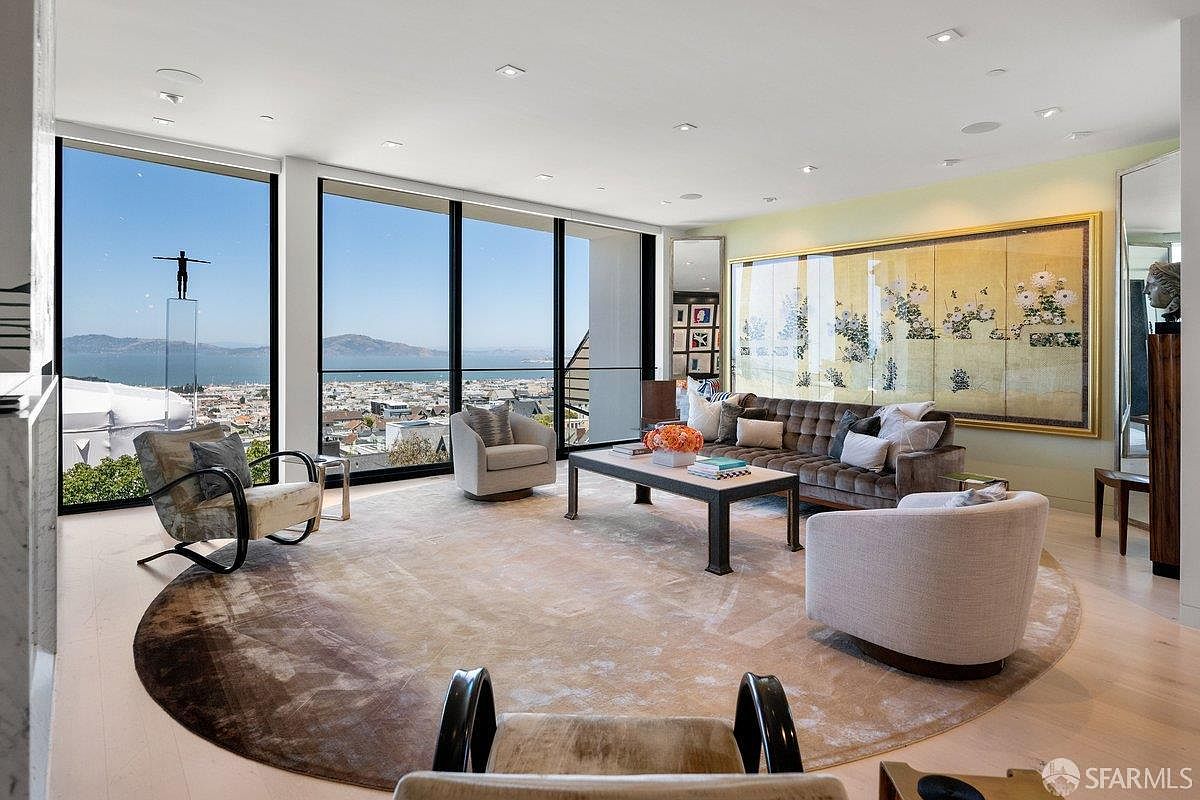
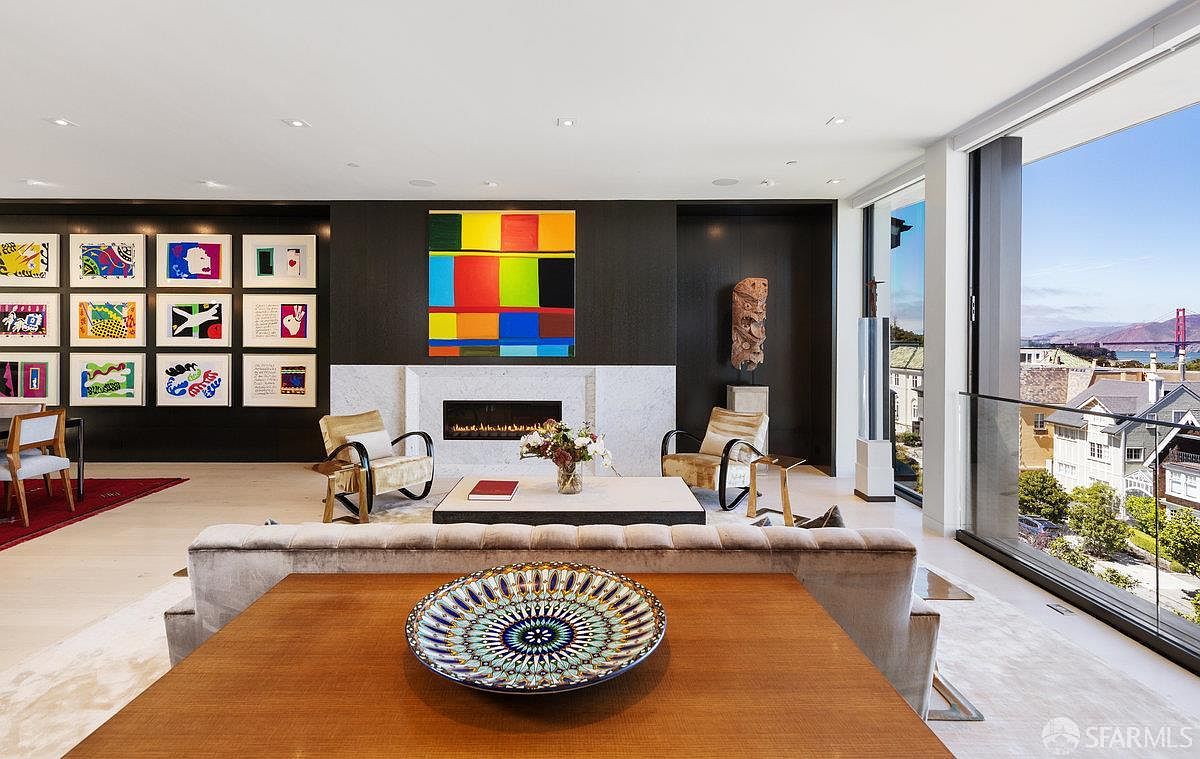
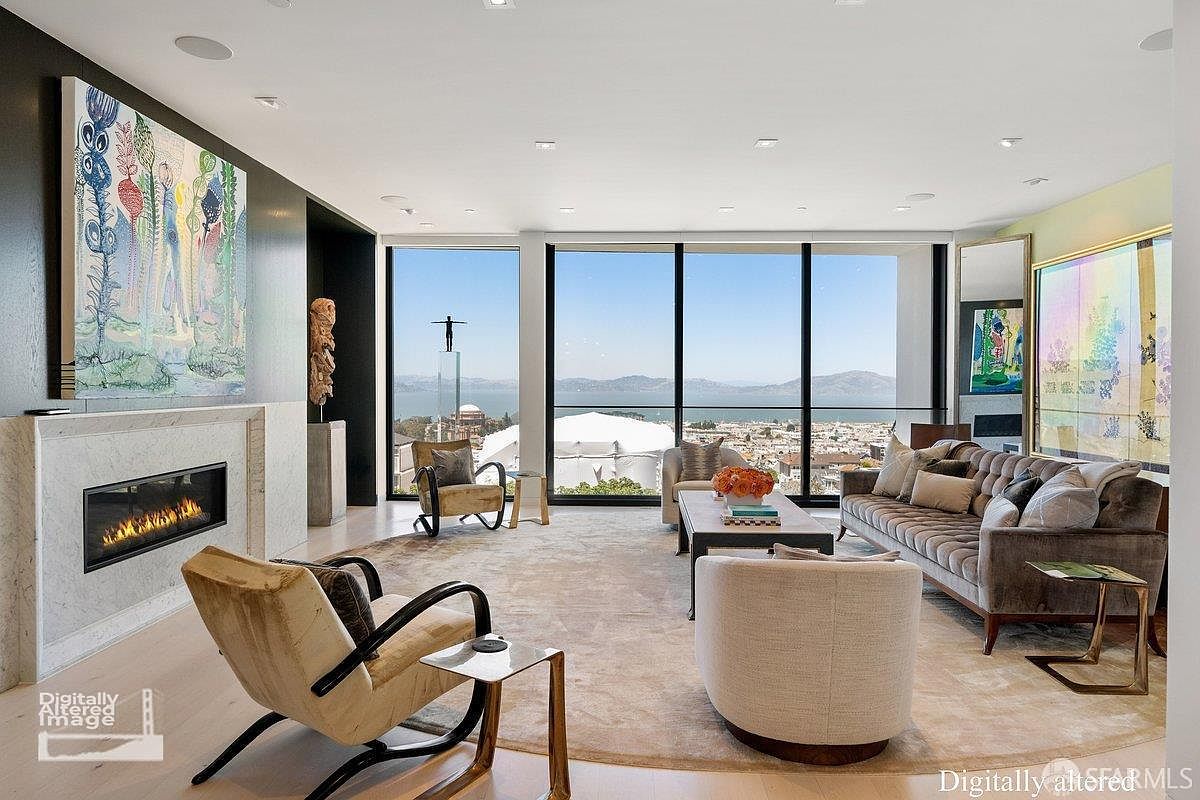
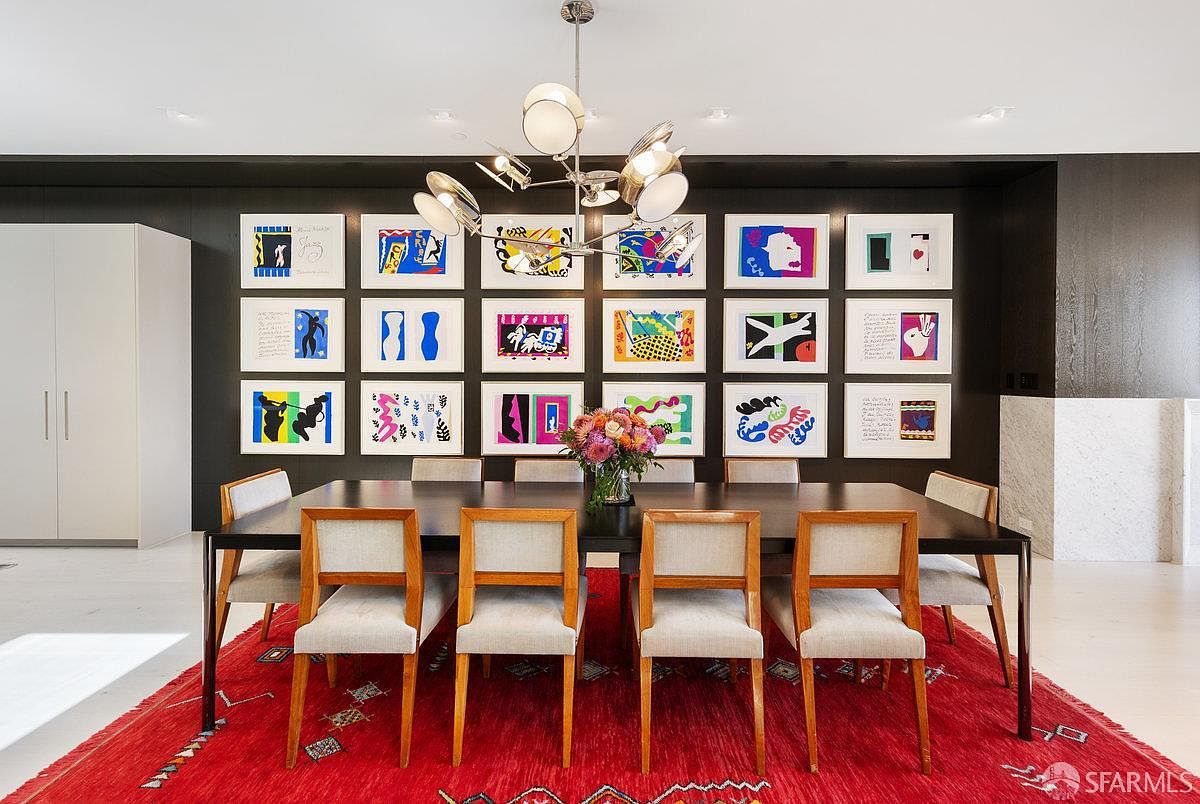
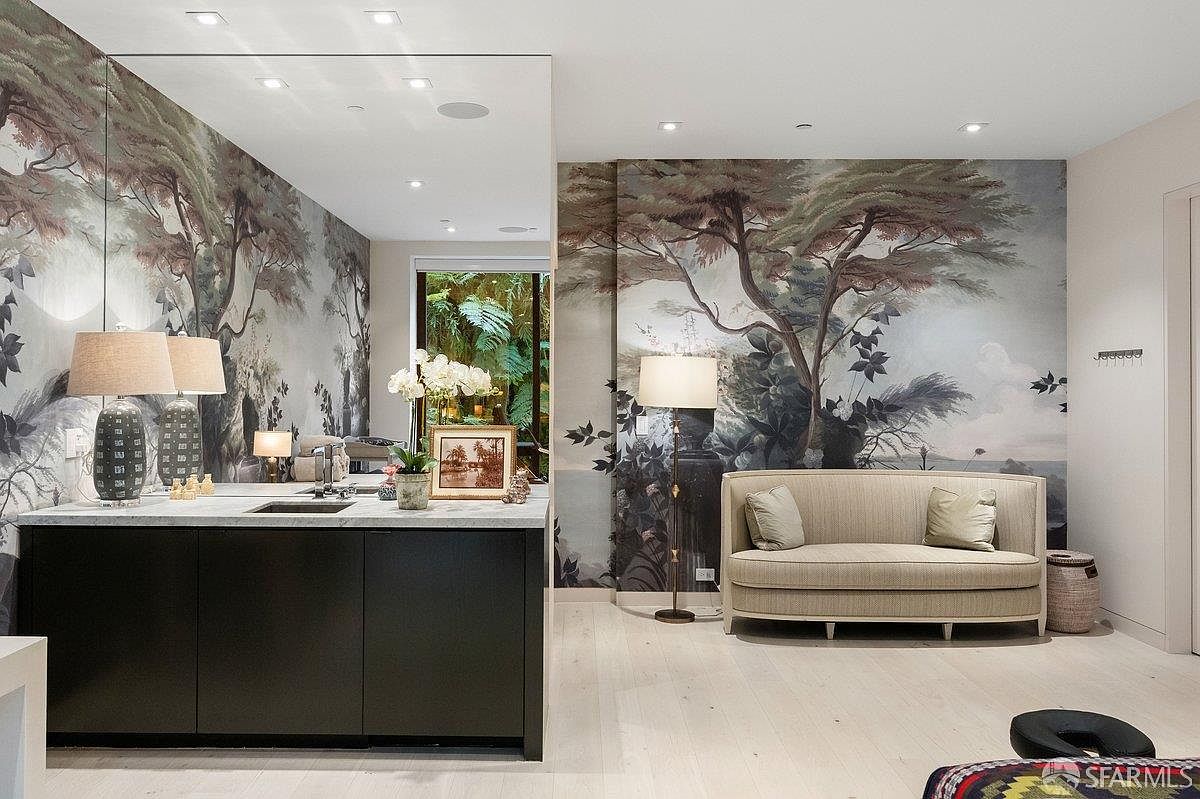
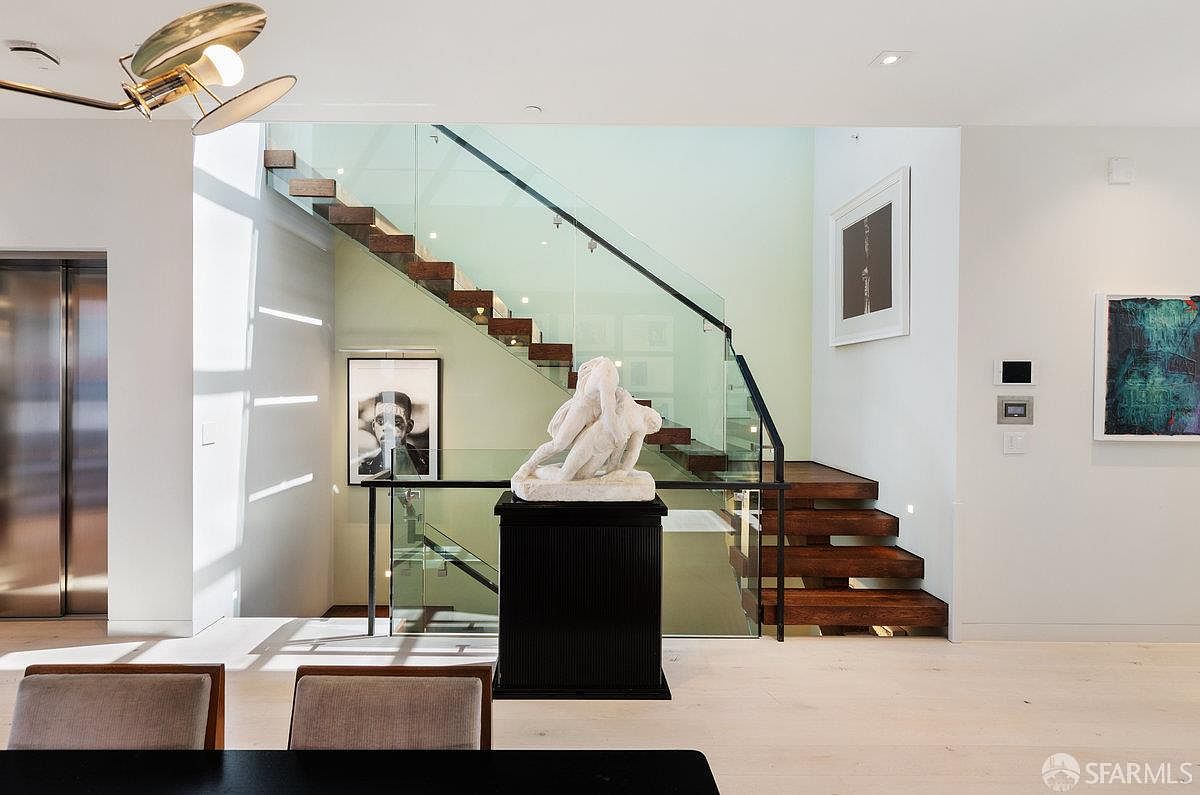
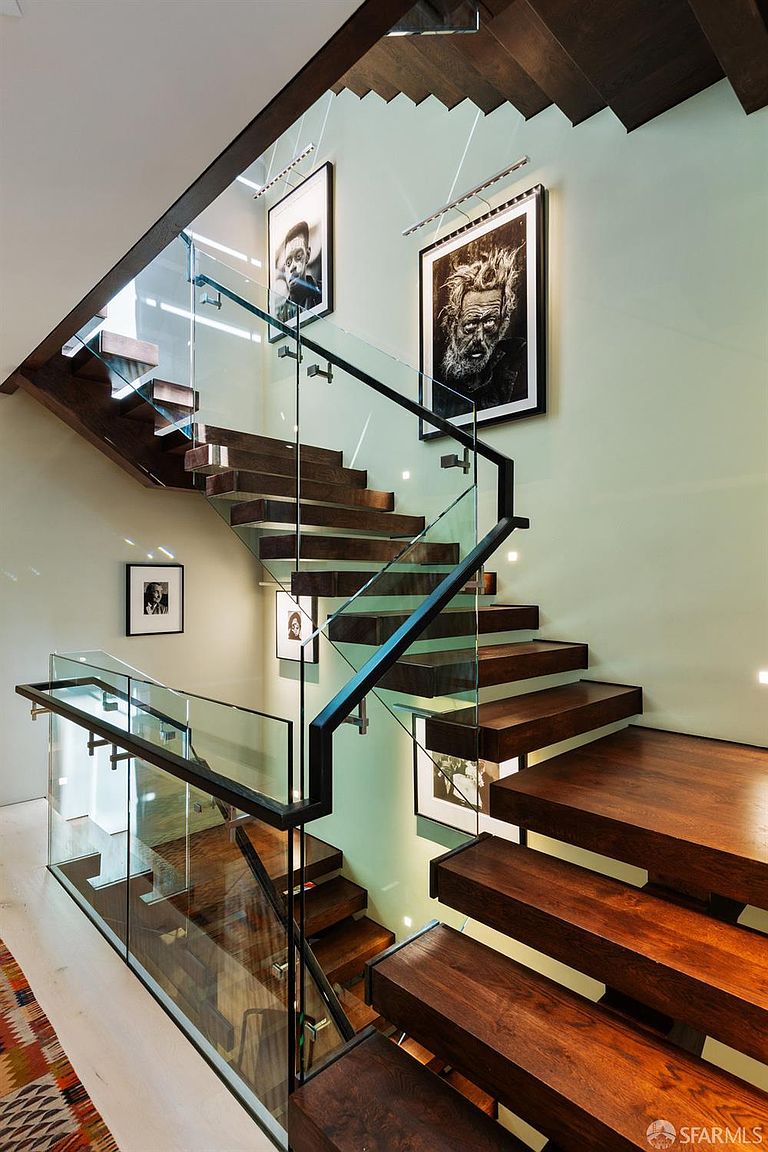
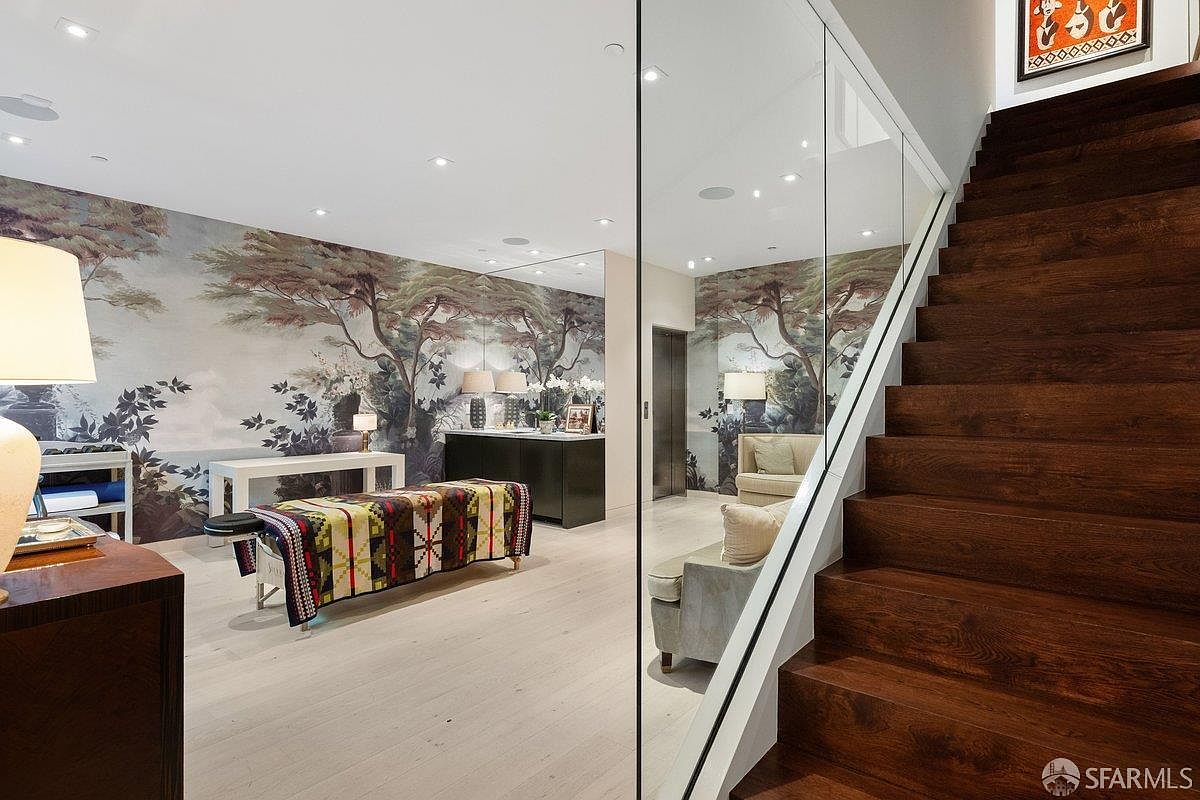
An elevator, finished in dark textured panels and warm wood flooring, whisks residents from the stone-paved entry to the heart of the home: a dramatic great room where floor-to-ceiling glass walls frame the Golden Gate Bridge, the shimmering Bay, and the Palace of Fine Arts as though the city itself were curated art. A skylight overhead floods the marble-clad kitchen with natural light, illuminating Boffi cabinetry, Miele appliances, and Carrera marble surfaces that speak to an uncompromising standard of finish. Belgian ash paneling and wide-plank oak floors ground each space in warmth, while Hansgrohe fixtures, radiant heat, Lutron lighting, Sonos audio, and Cat6 wiring ensure that modern technology operates invisibly in service of daily life.
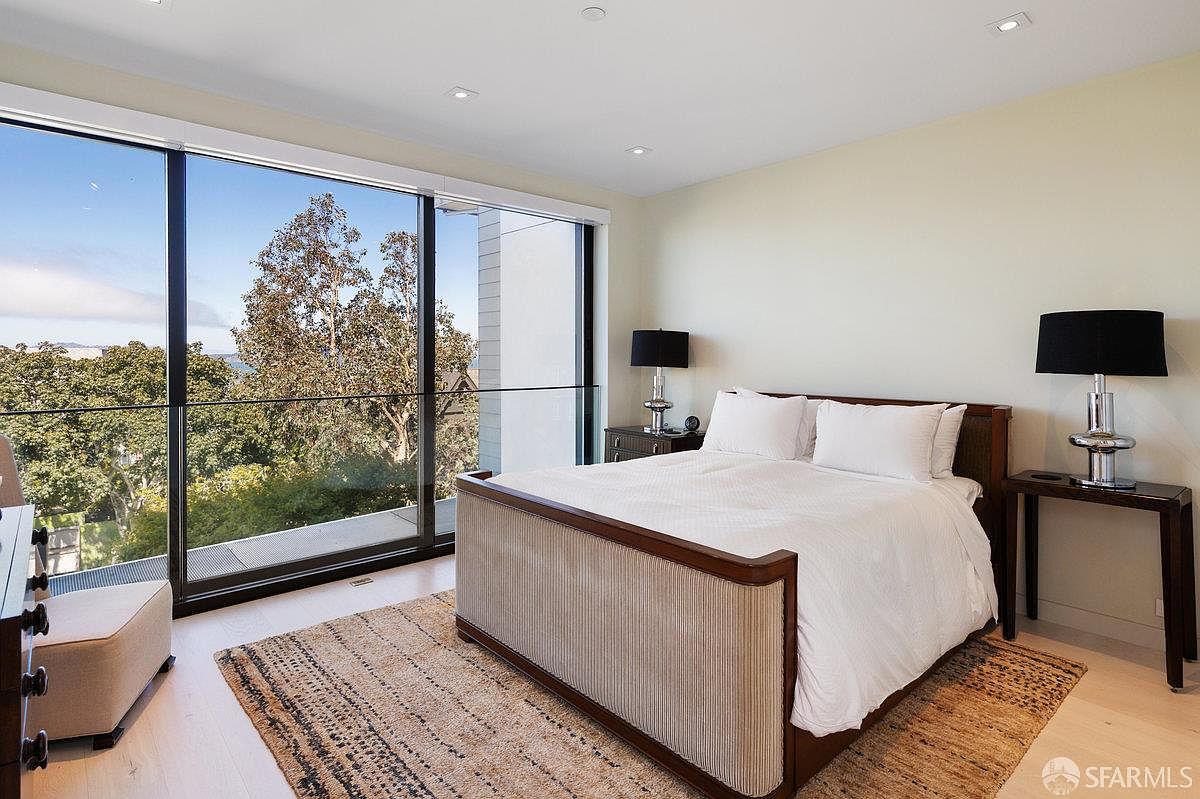
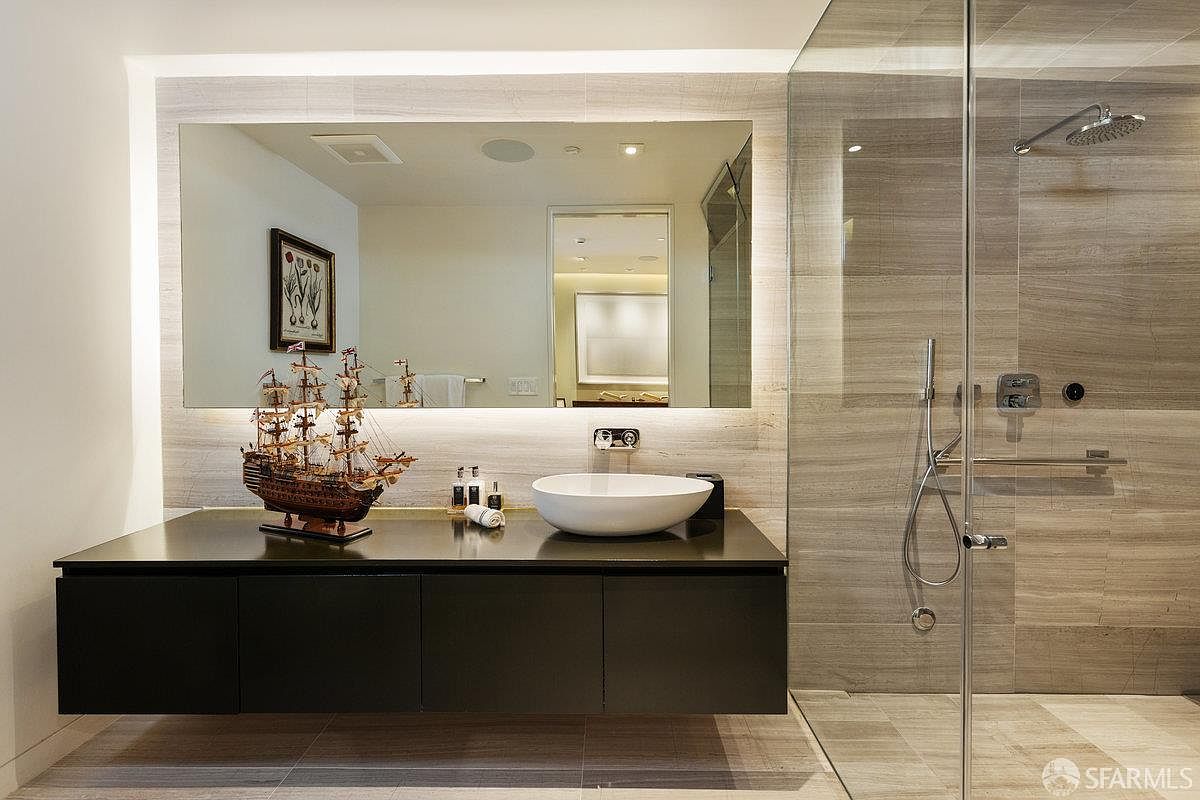
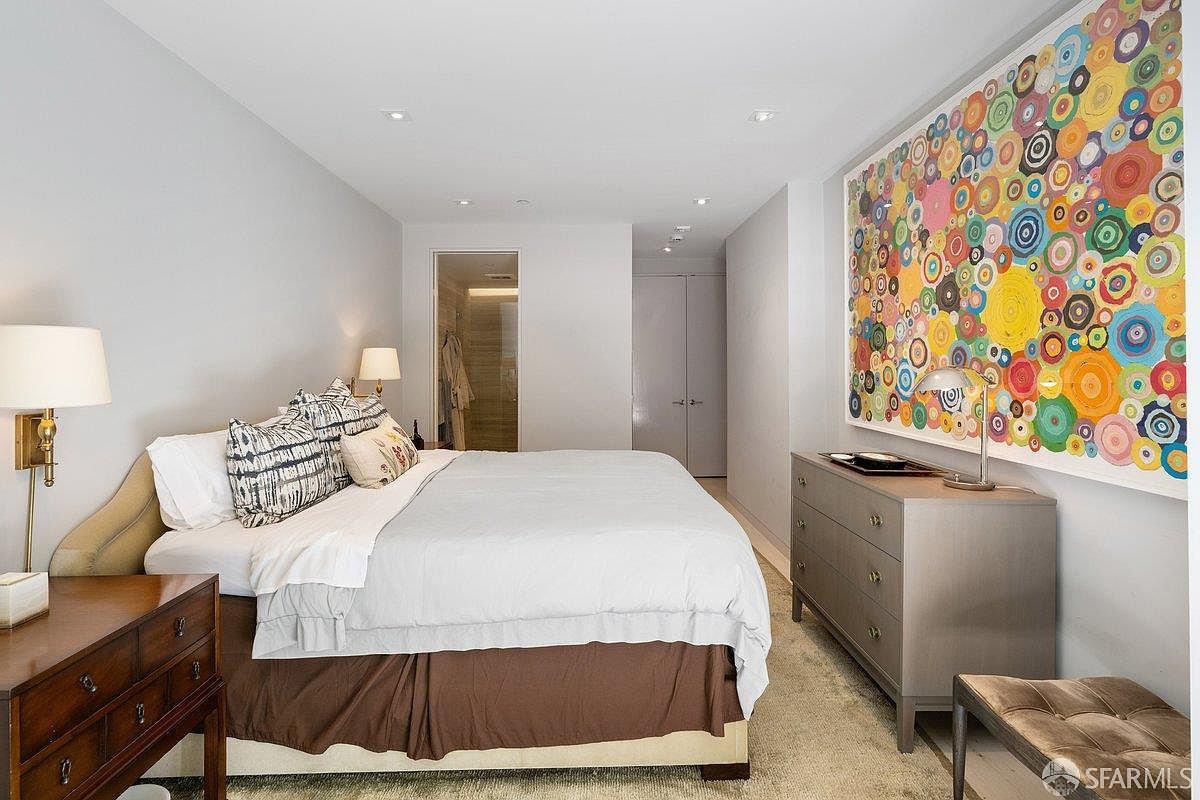
The primary suite is an exercise in serene luxury: expansive windows frame the Bridge in cinematic proportion, while the spa bath — finished in stone tile with a glass-enclosed shower and a long, minimalist vanity — offers the tranquility of a private retreat. A custom walk-in closet with glass-fronted cabinetry and integrated lighting completes the suite with the attention to detail one expects at this level.
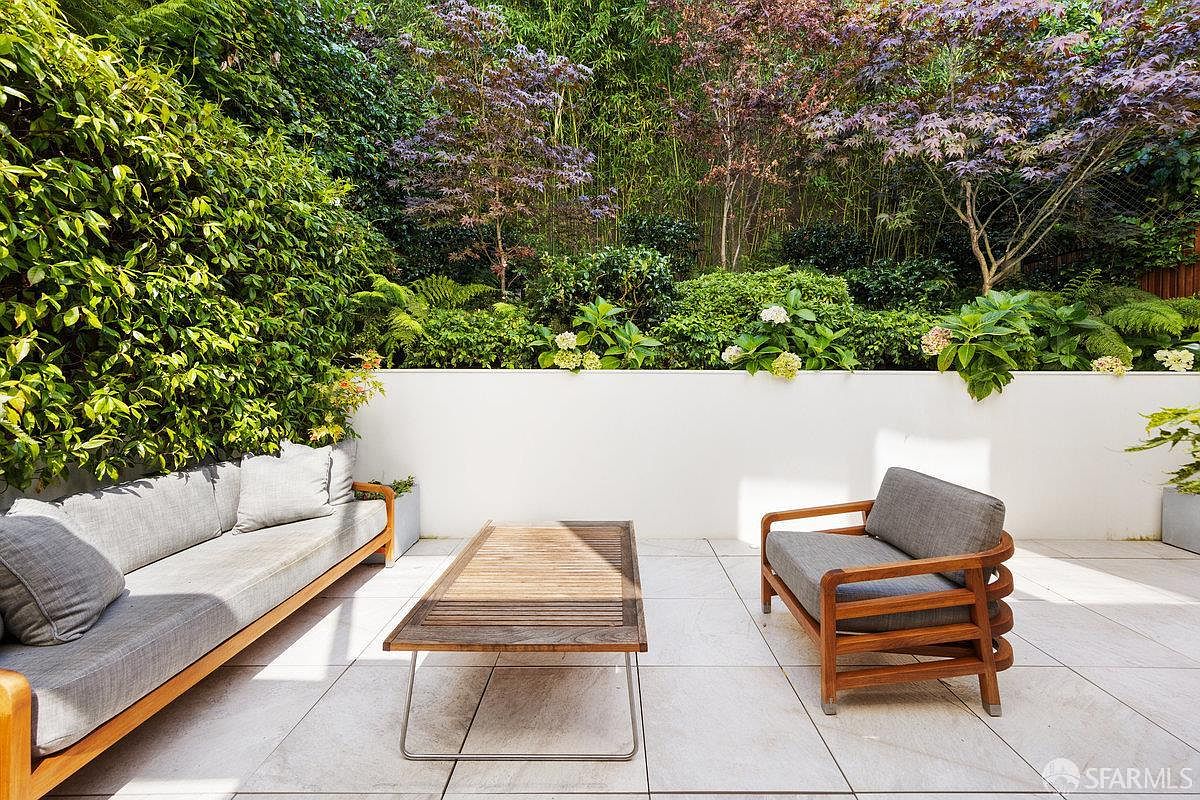
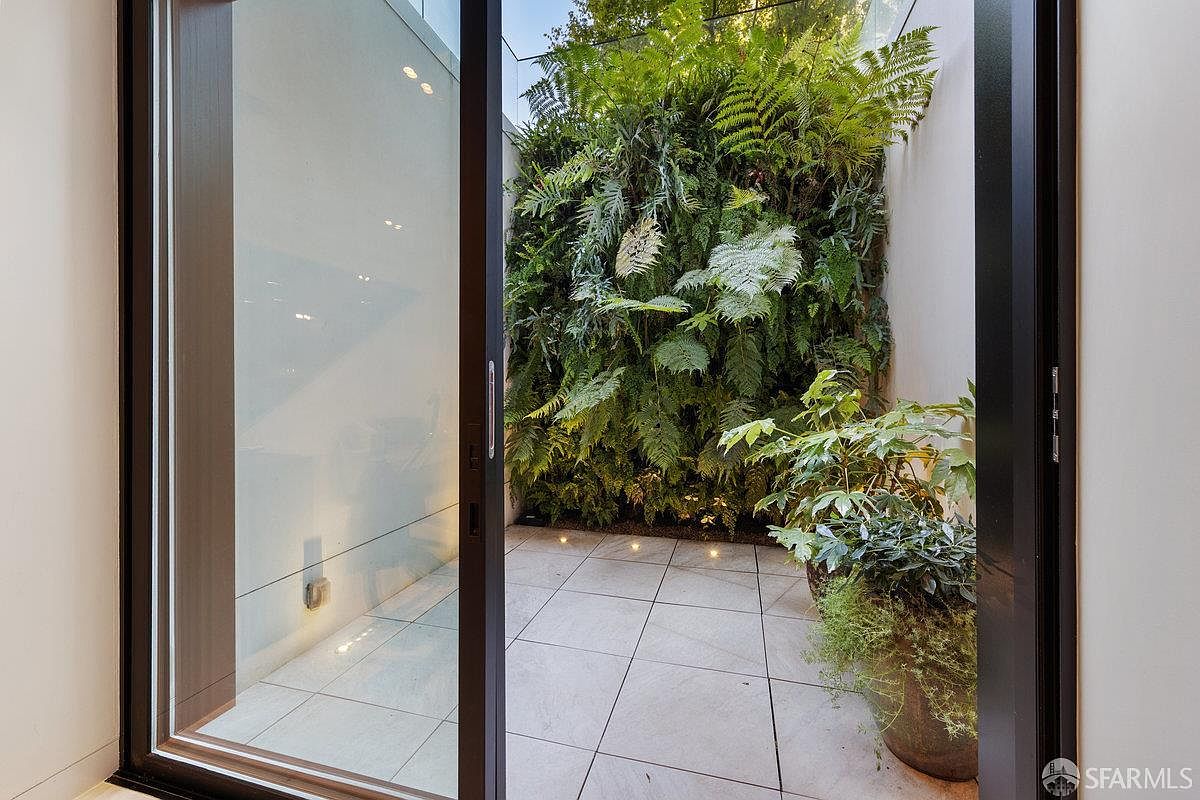
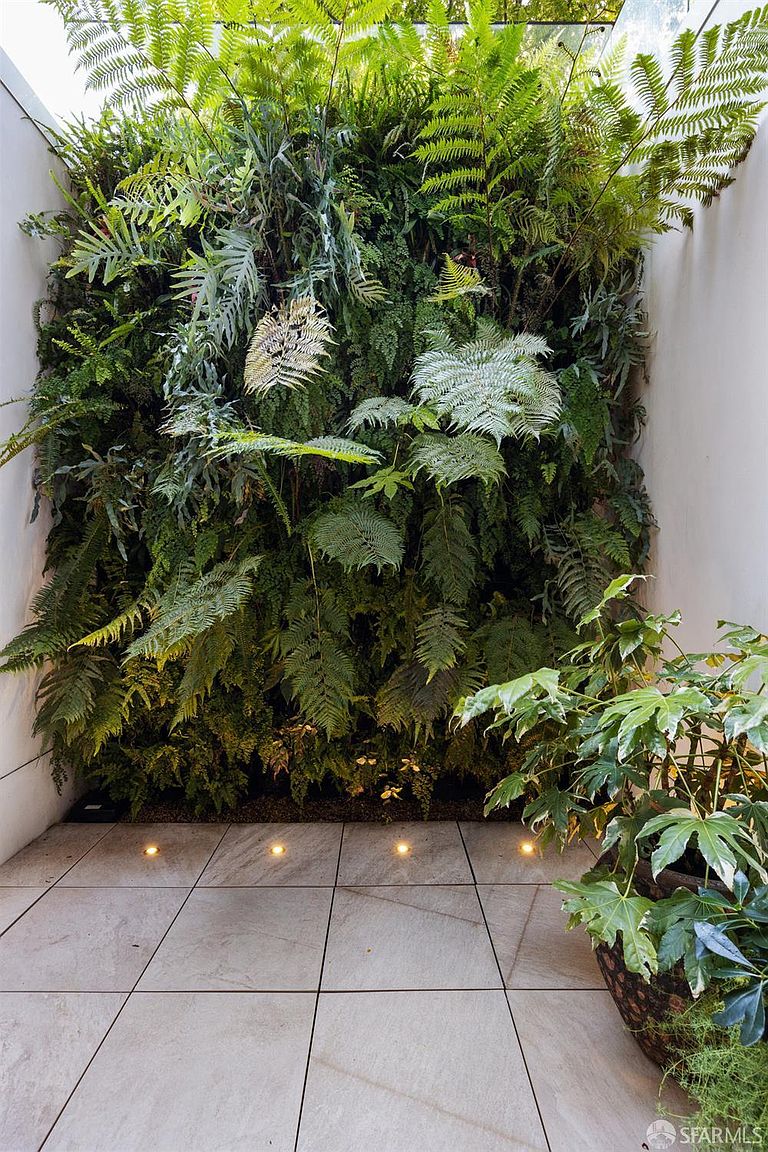
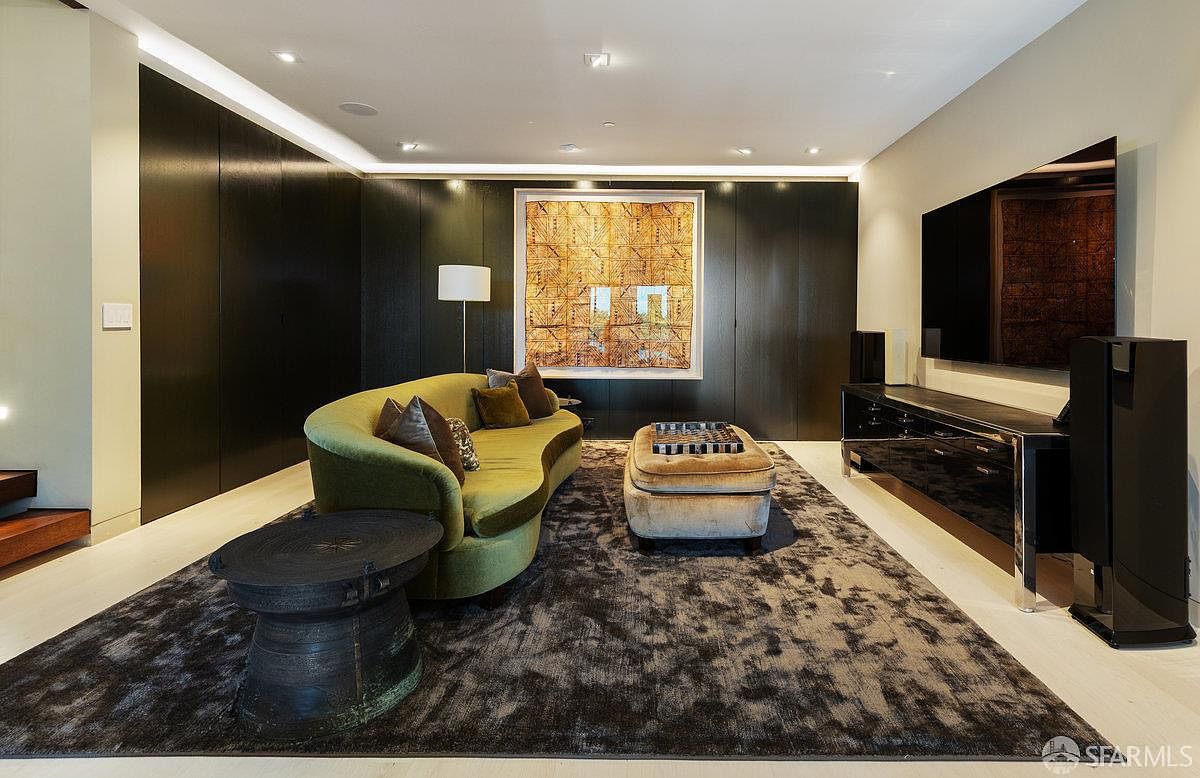
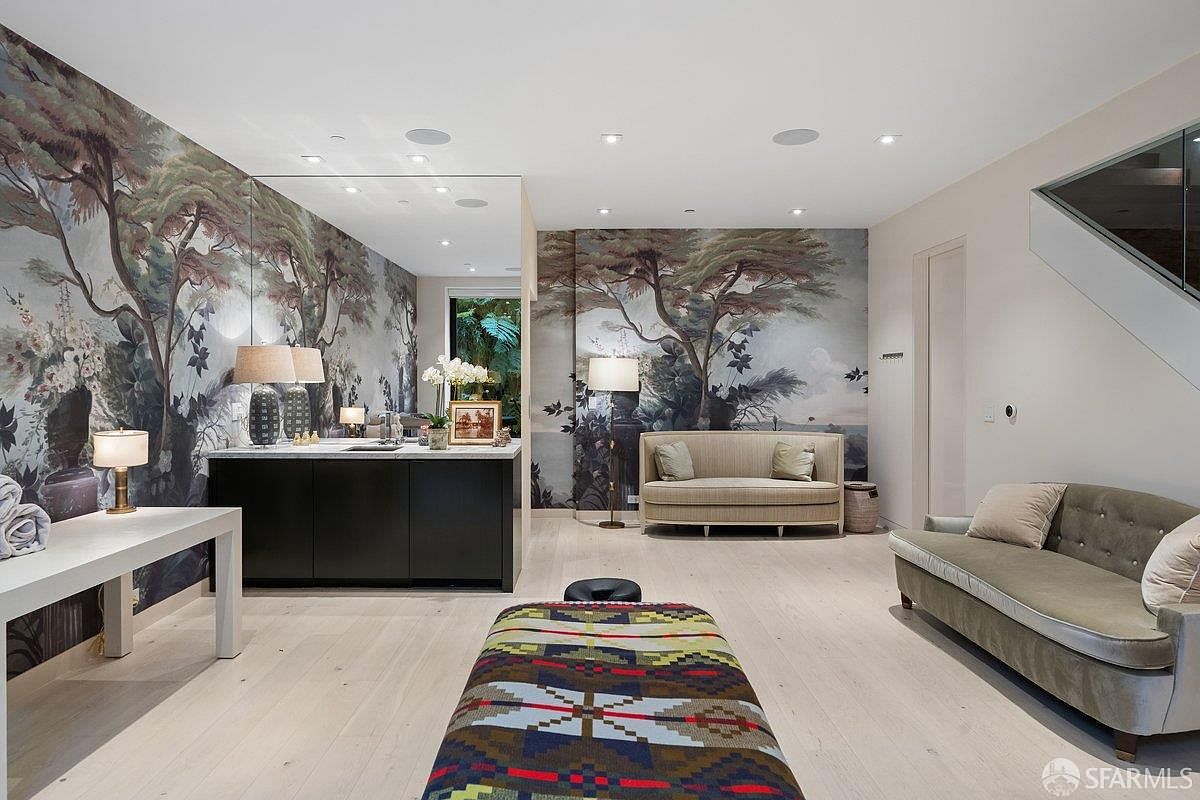
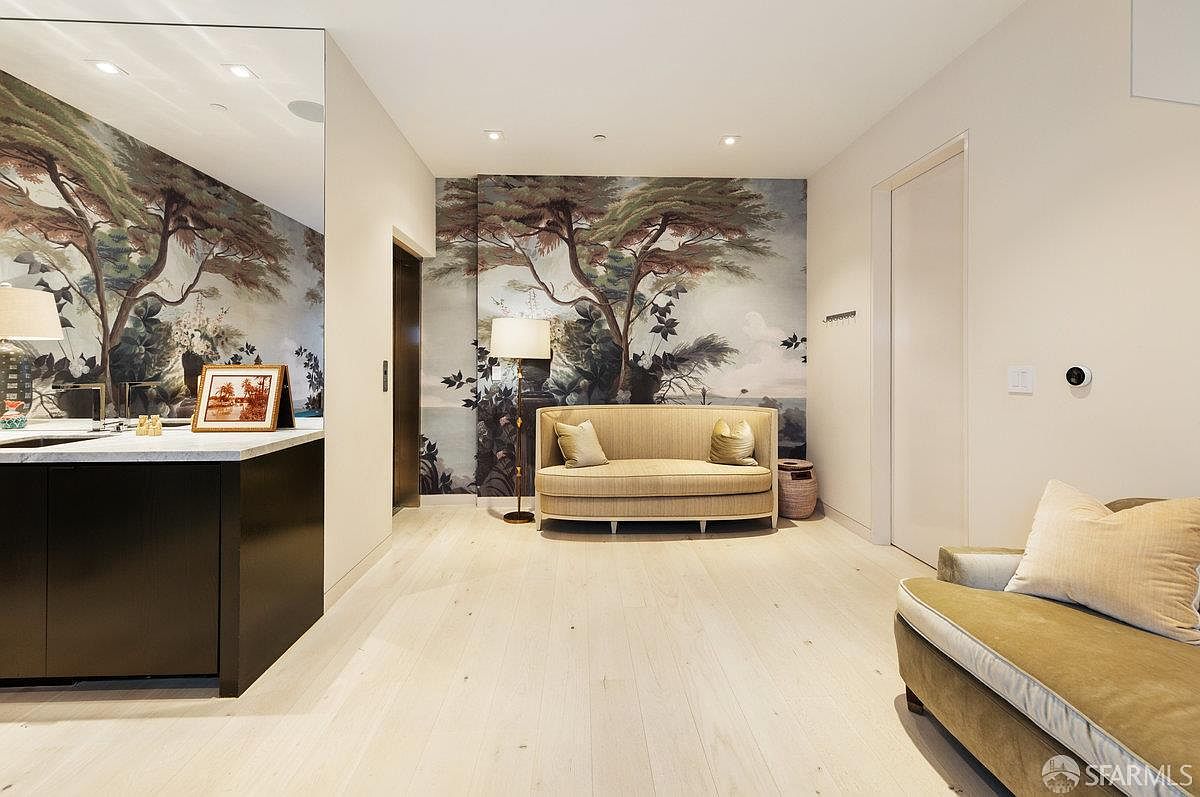
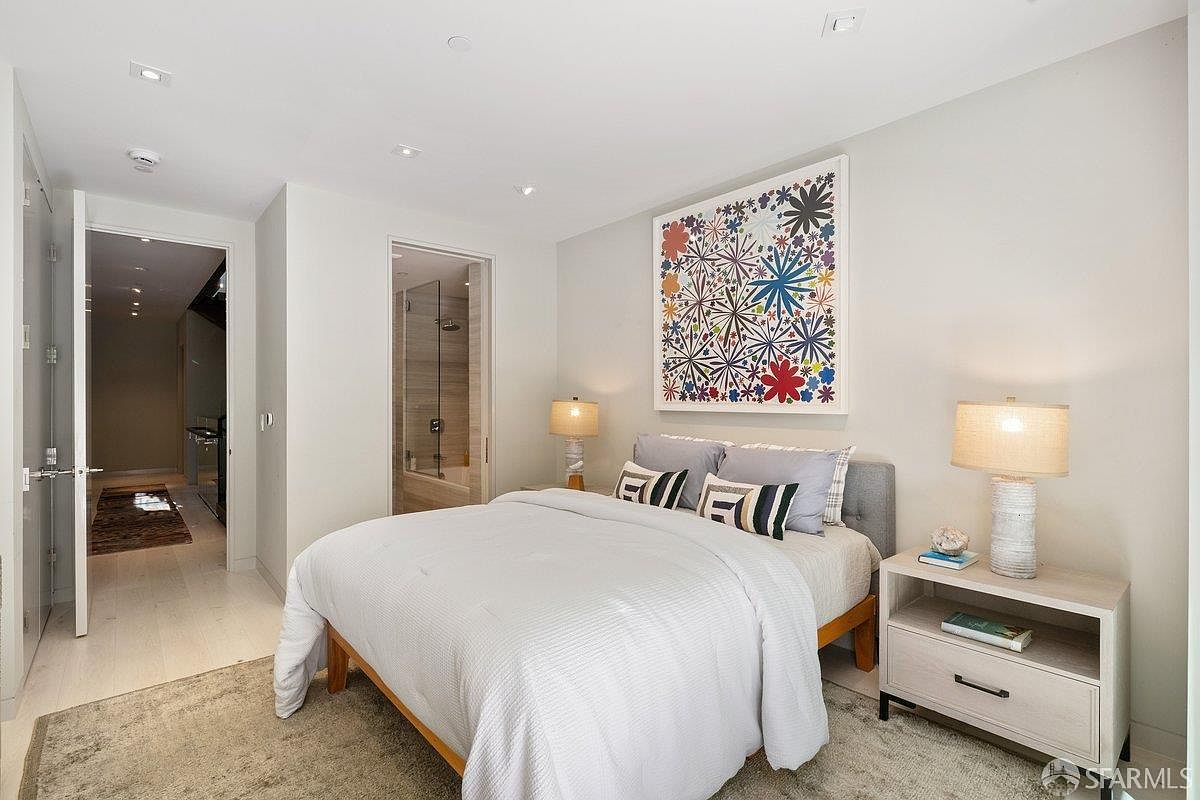
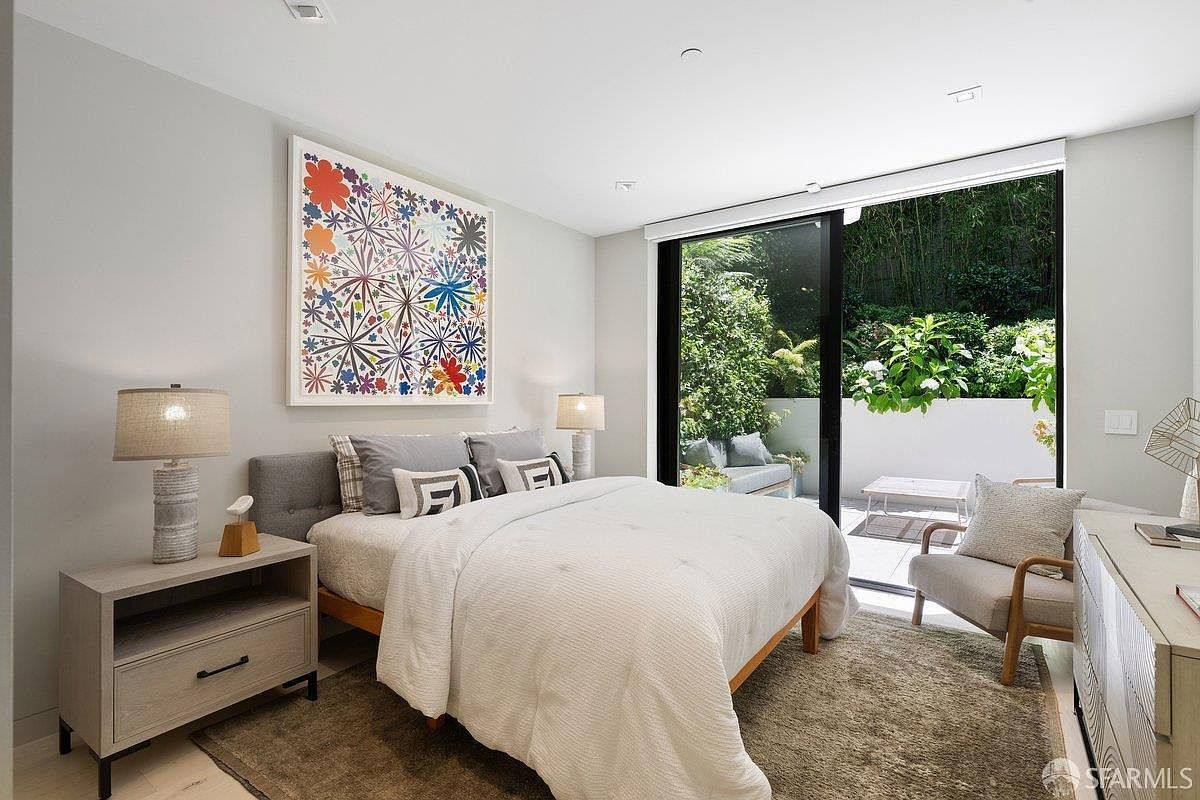
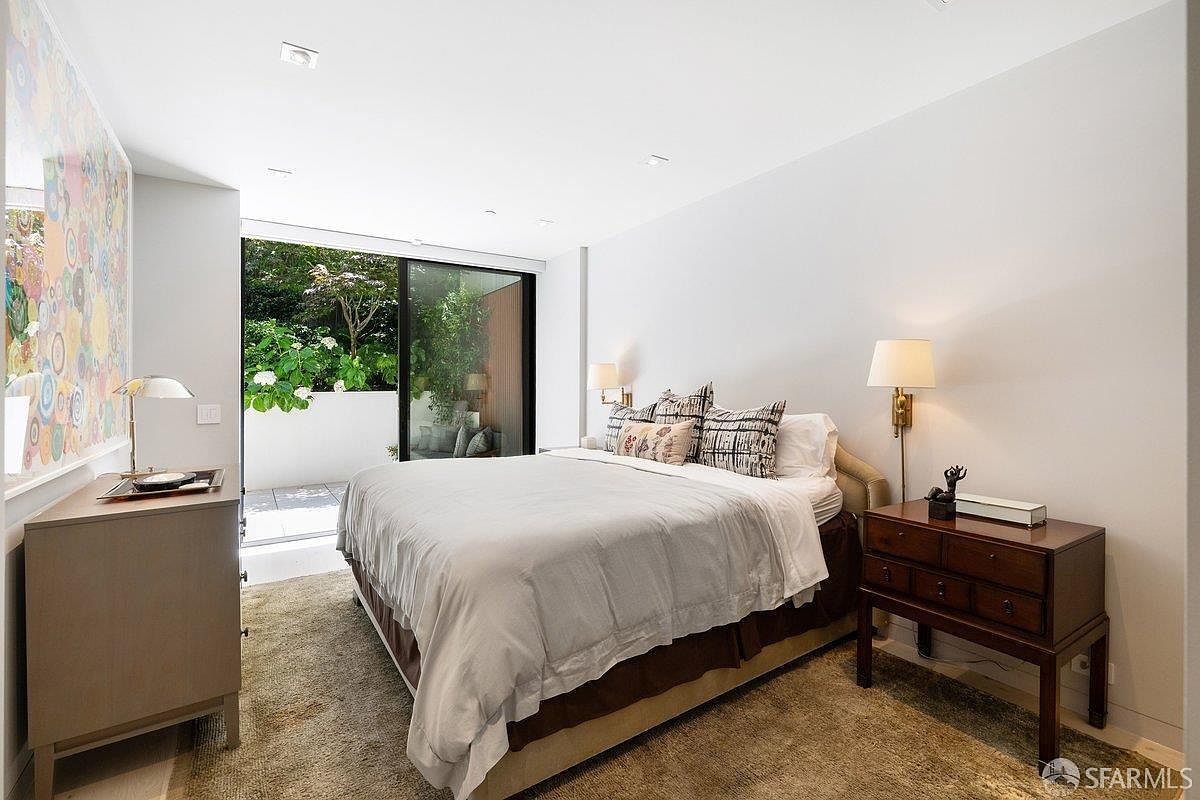
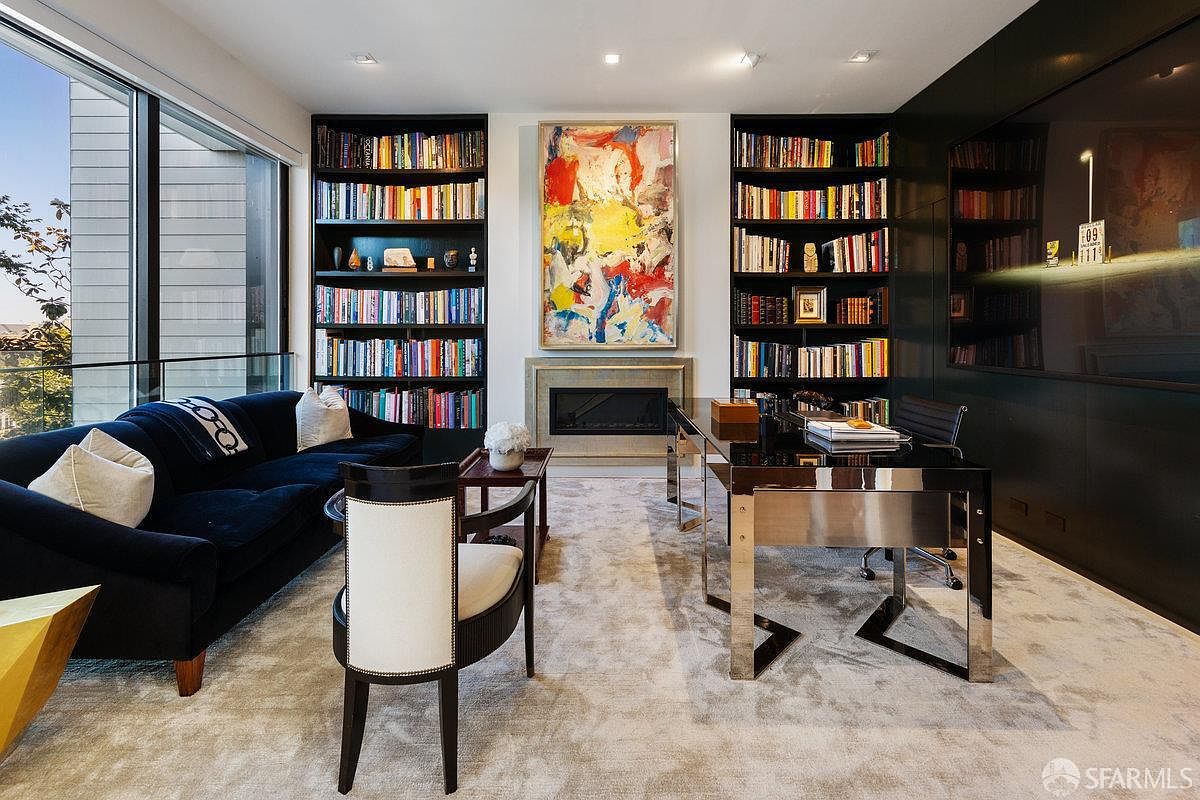
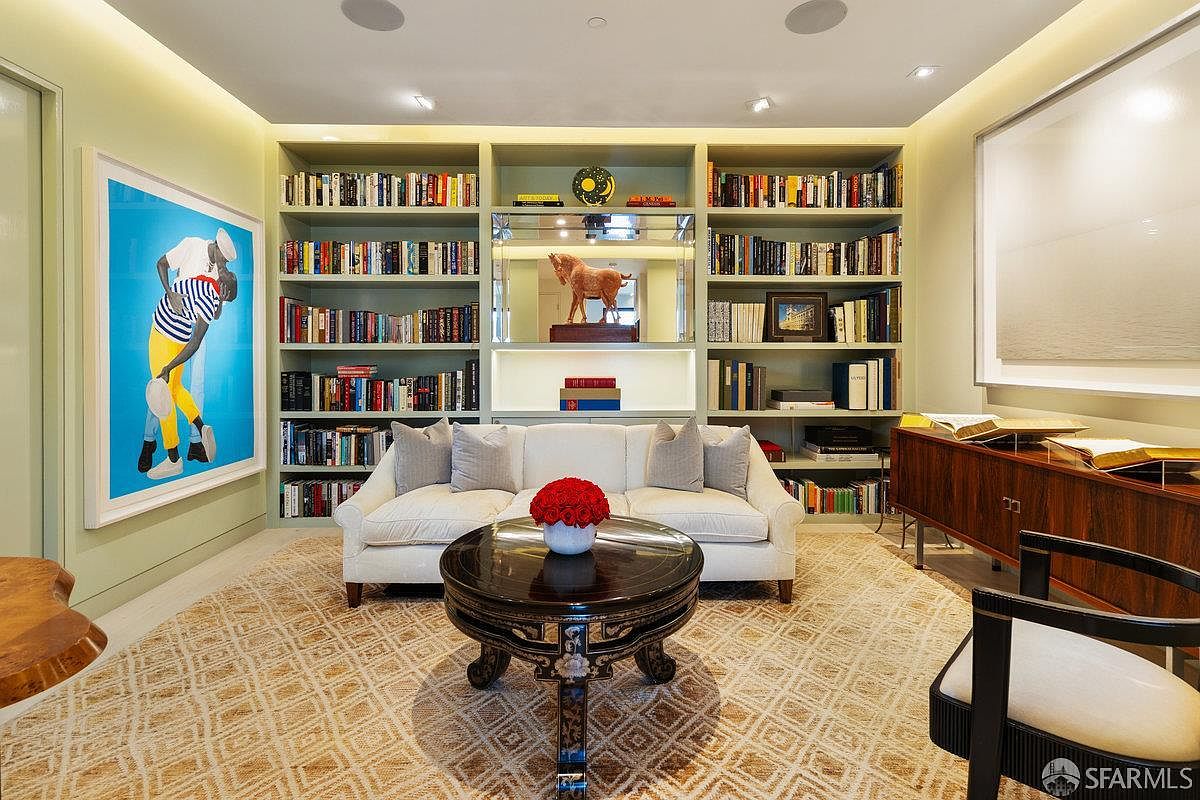
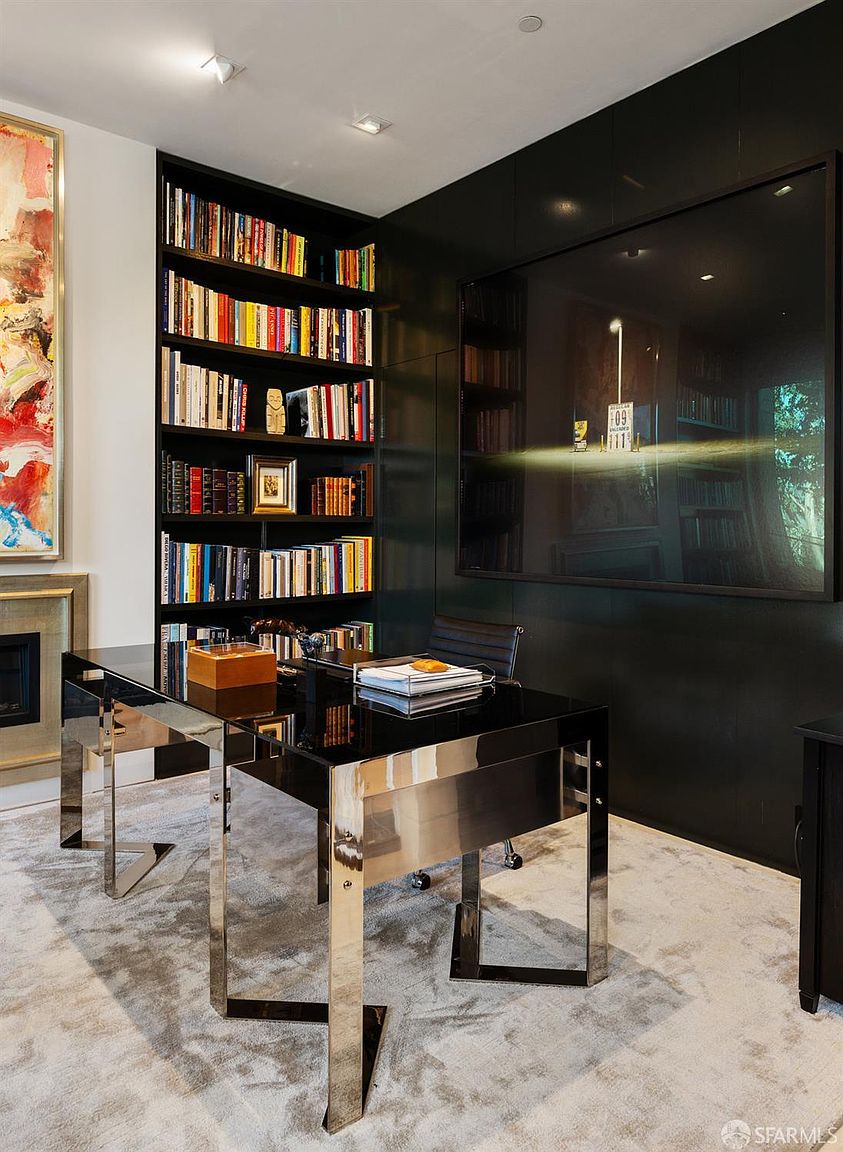
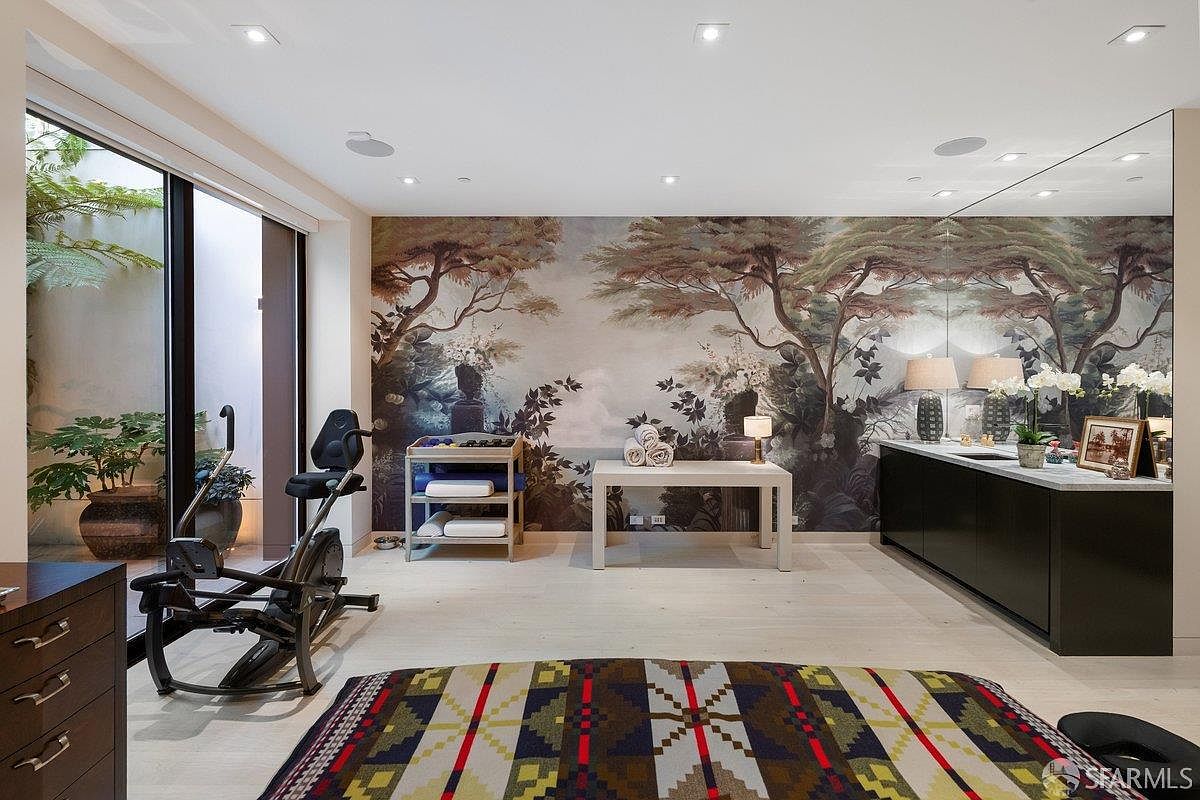
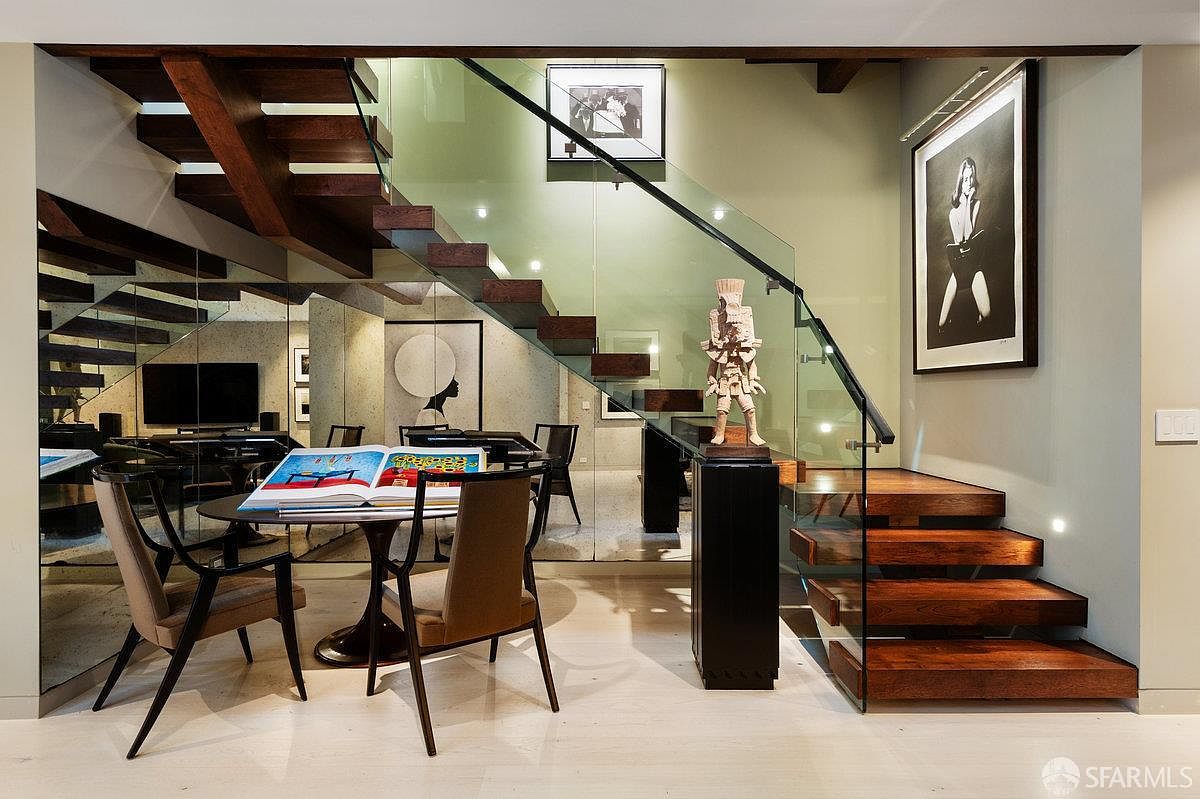
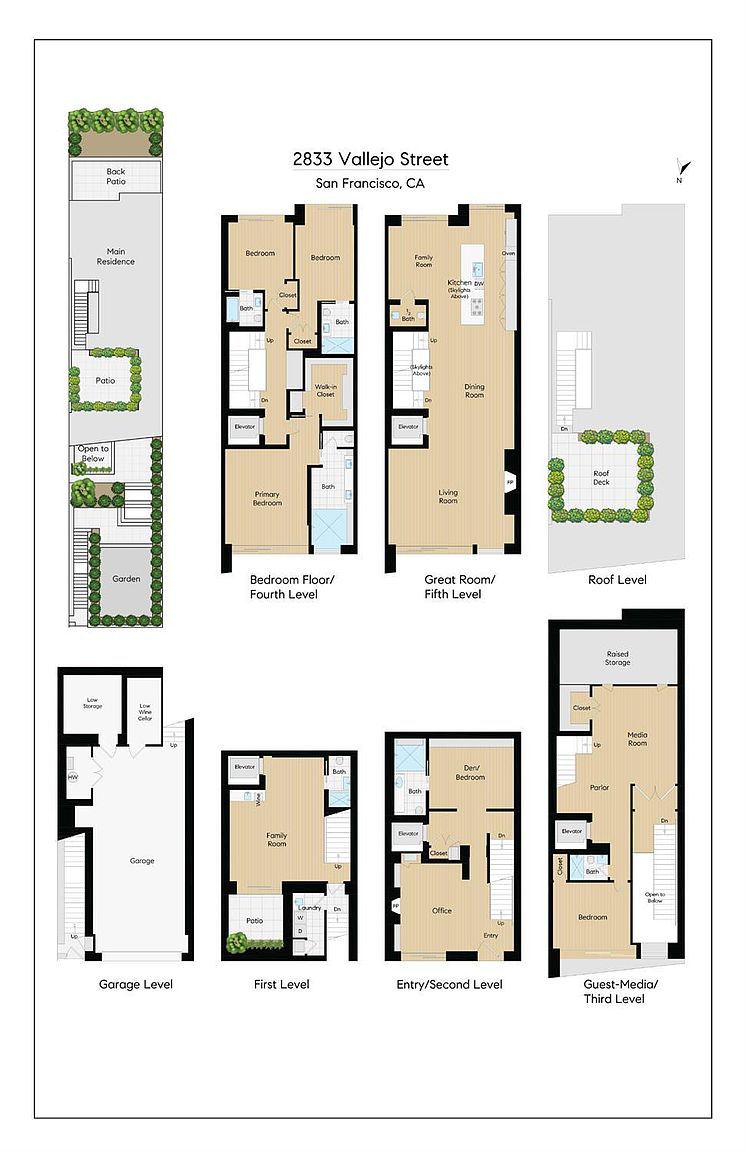
Below, two ensuite bedrooms open directly onto a private garden courtyard — a sheltered outdoor room anchored by a dramatic living wall of ferns and softened by ambient ground lighting. Additional levels reveal a media room with surround sound, a study with fireplace and custom shelving, a guest suite, a den or fifth bedroom, a family room with adjoining patio, dedicated laundry, generous storage, and a wine cellar — each space finished with the same commitment to craft that defines the whole.
Above it all, the landscaped roof deck is the residence's crowning gesture: a glass-railed terrace planted with rose bushes and manicured greenery, offering an unobstructed 360-degree vantage point over the rooftops of Pacific Heights to the Bay beyond. A four-car garage with EV charging and motorized shades throughout complete a home where every detail, however grand or quietly functional, has been resolved with equal care. This is not simply a property of exceptional views — it is an architectural argument for how beautifully a residence can be made to live.
Pacific Heights occupies a singular position in the geography and culture of San Francisco — elevated in every sense of the word. Stretching along a ridge between approximately Broadway to the north and California Street to the south, the neighborhood commands some of the most celebrated residential real estate in the American West, a status it has held since the Victorian and Edwardian eras when the city's merchant and banking families chose these hilltop blocks for their estates. The result is a streetscape of rare architectural continuity and distinction, where grand Italianate and Queen Anne Victorians stand alongside Edwardian mansions, Beaux-Arts residences, and, on blocks such as Vallejo Street, refined examples of contemporary architecture that hold their own against the neighborhood's storied fabric.
Vallejo Street between Broderick and Divisadero is among Pacific Heights' most prestigious addresses, renowned for its wide sidewalks, mature street trees, and the particular quality of light and air that comes with elevation above the fog line. From here, the Golden Gate Bridge, Alcatraz, the Marin Headlands, and the Palace of Fine Arts are not distant landmarks glimpsed on a clear day — they are the daily backdrop of ordinary life.
The neighborhood's cultural and civic resources are extensive and close at hand. The Palace of Fine Arts, Bernard Maybeck's beloved 1915 landmark just minutes away in the Marina District, anchors the western edge of the neighborhood's outlook and remains one of San Francisco's most iconic public spaces. Fillmore Street — Pacific Heights' primary commercial corridor — offers an edited collection of independent boutiques, acclaimed restaurants, and specialty food purveyors that reflect the neighborhood's cosmopolitan character. Notable dining destinations along and near the Fillmore corridor have long made this stretch a destination for residents of the wider city. The Presidio of San Francisco, a national park encompassing over 1,400 acres of forested trails, historic architecture, and Bay-front shoreline, is accessible within minutes, offering a scale of natural landscape rare in any urban environment.
Families are drawn to Pacific Heights in part for its proximity to several of San Francisco's most respected private and public educational institutions, as well as the ease of access to the broader city that its central location affords. The neighborhood sits within comfortable reach of the Financial District, the cultural institutions of Civic Center, and the boutiques of Union Street in Cow Hollow to the north.
Perhaps most distinctively, Pacific Heights retains a sense of residential calm and architectural pride that distinguishes it from more densely commercial quarters of the city. Streets are quiet, neighbors are invested, and the community's long tradition of architectural stewardship has ensured that the neighborhood's character remains intact even as the city evolves around it. To live at 2833 Vallejo Street is to inhabit not merely a remarkable home, but a remarkable place — one that offers the full richness of San Francisco life from an address of enduring distinction.
Featured Highlights
Curated Content • Presented by Nina Hatvany