The Story Behind
Grand Scale and Morning Light Above Divisadero
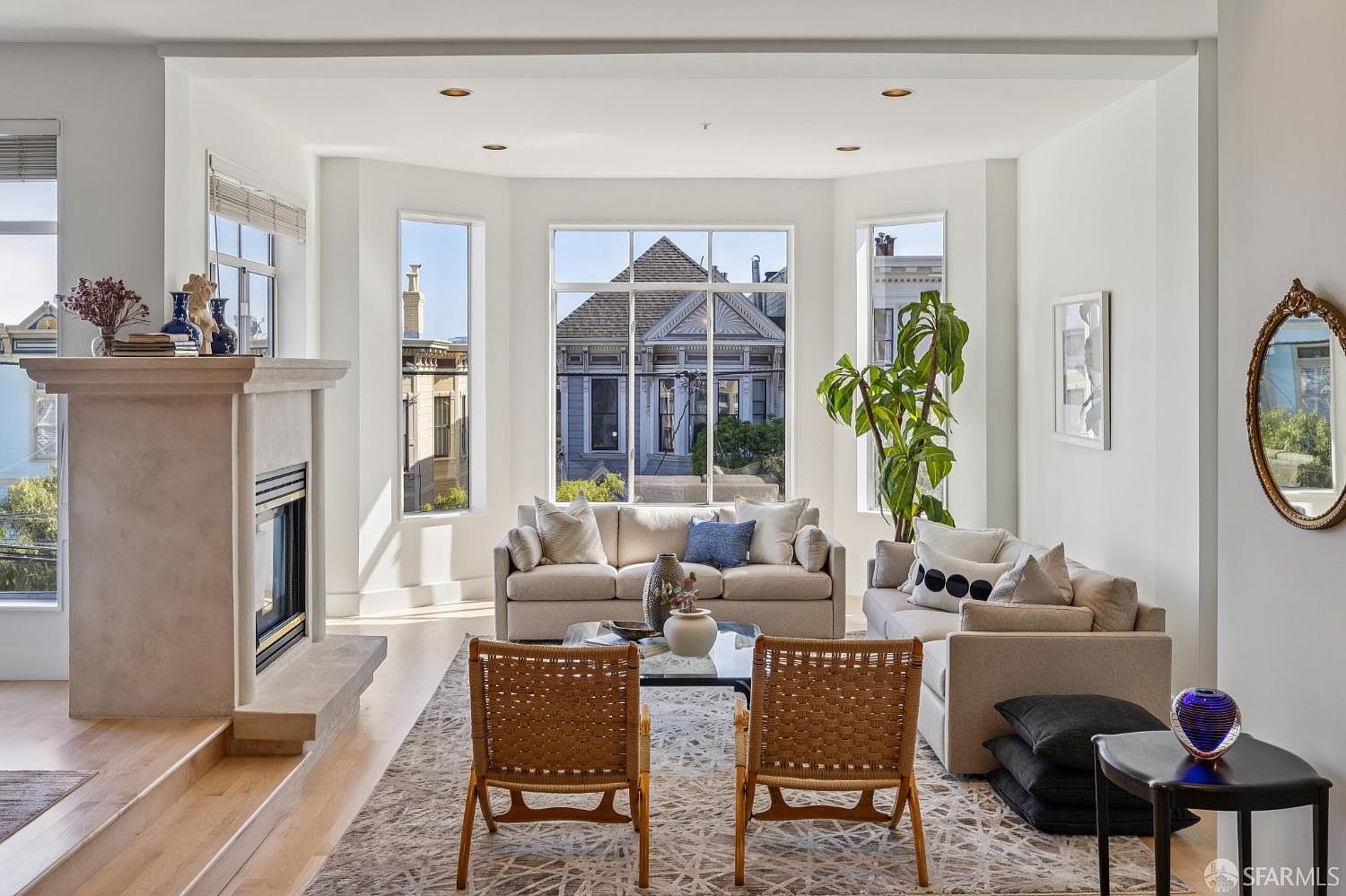
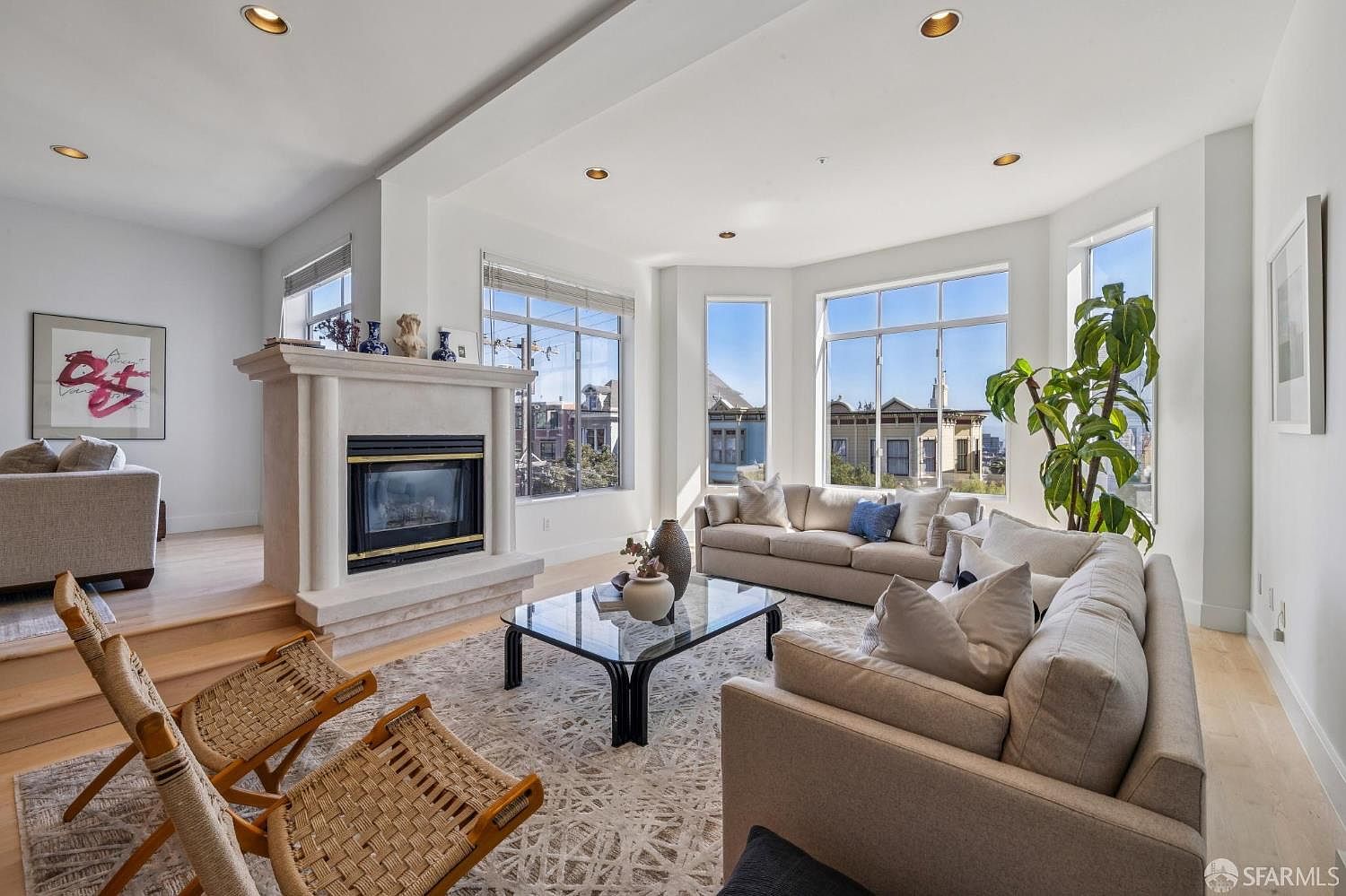
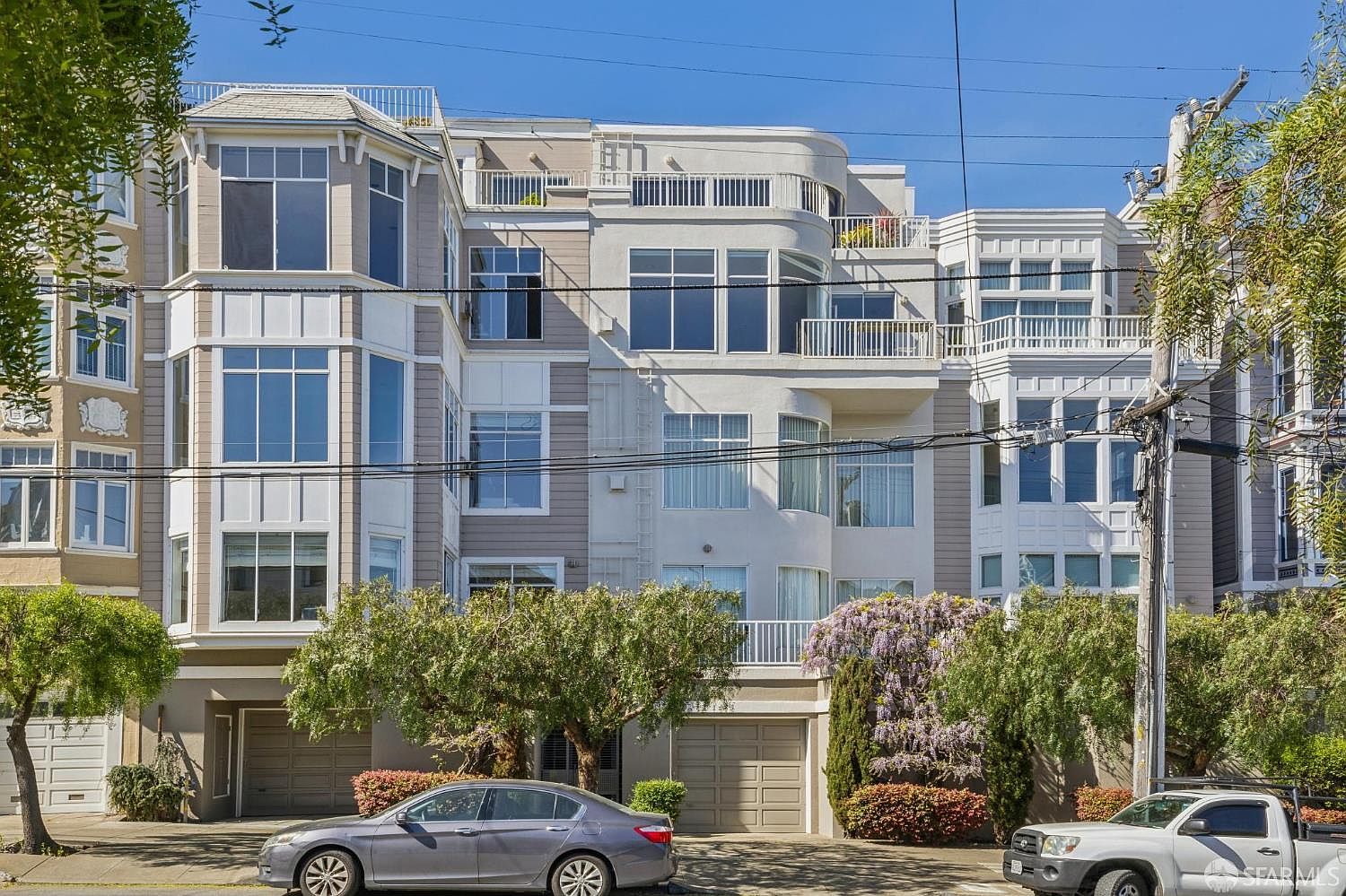
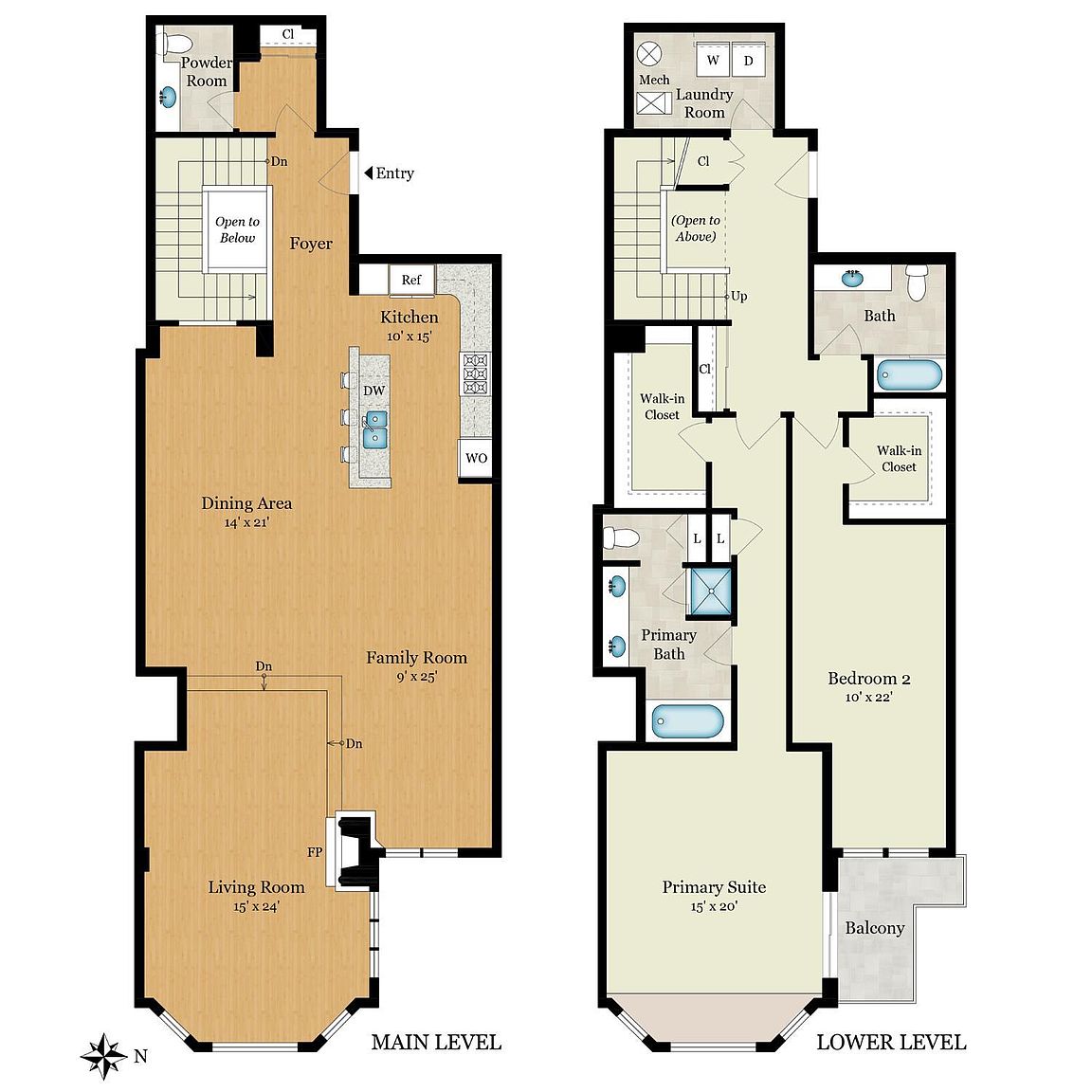
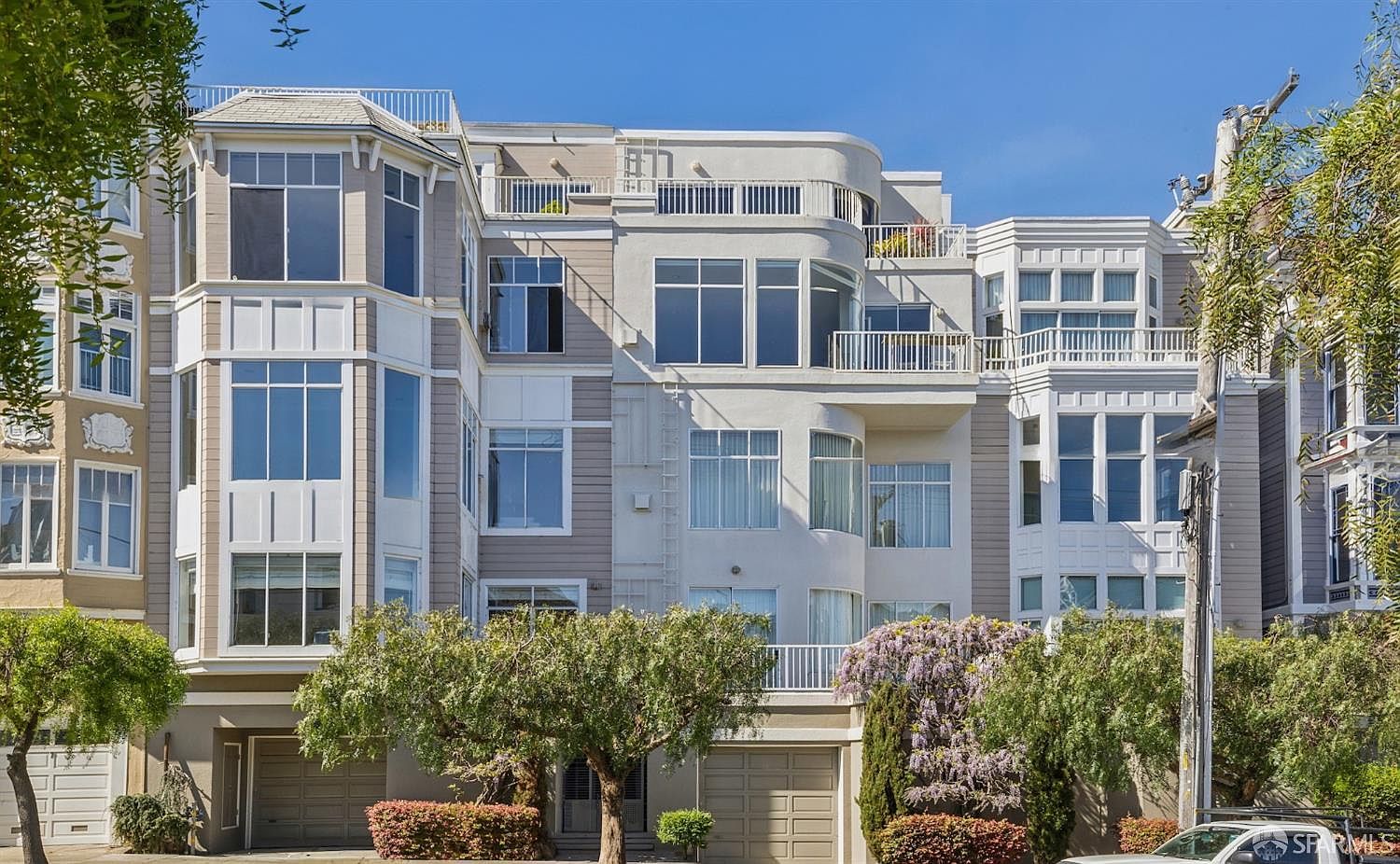
There is a particular quality of light that arrives through east-facing windows in the early morning hours — unhurried, generous, and deeply flattering to everything it touches. At 117 Divisadero, that light is architectural. The oversized windows on the main level pull it deep into the living spaces, washing across hardwood floors and illuminating a floor plan that, at roughly 23 feet wide and spanning approximately 2,790 square feet, announces its ambitions the moment you cross the threshold.
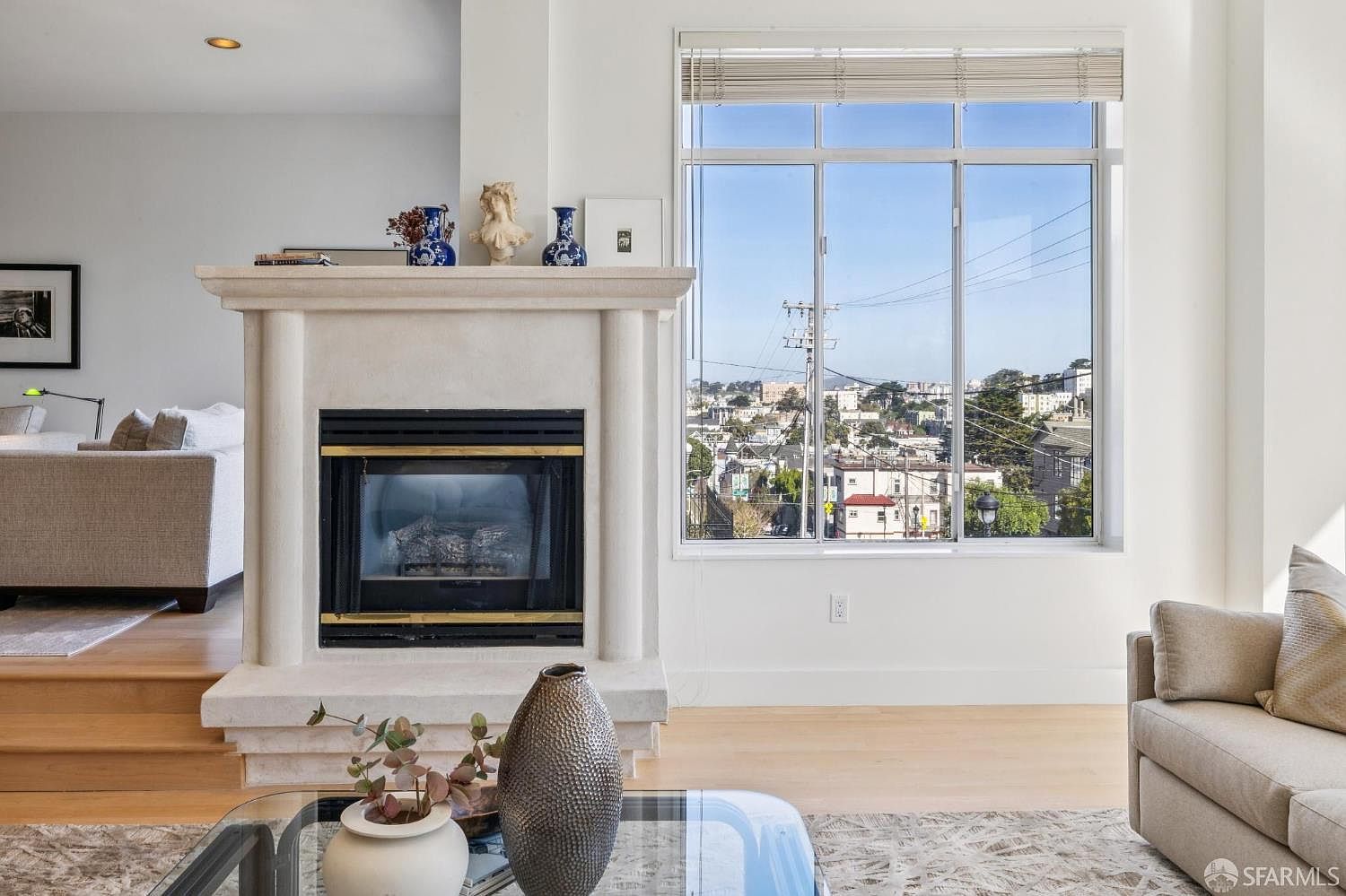
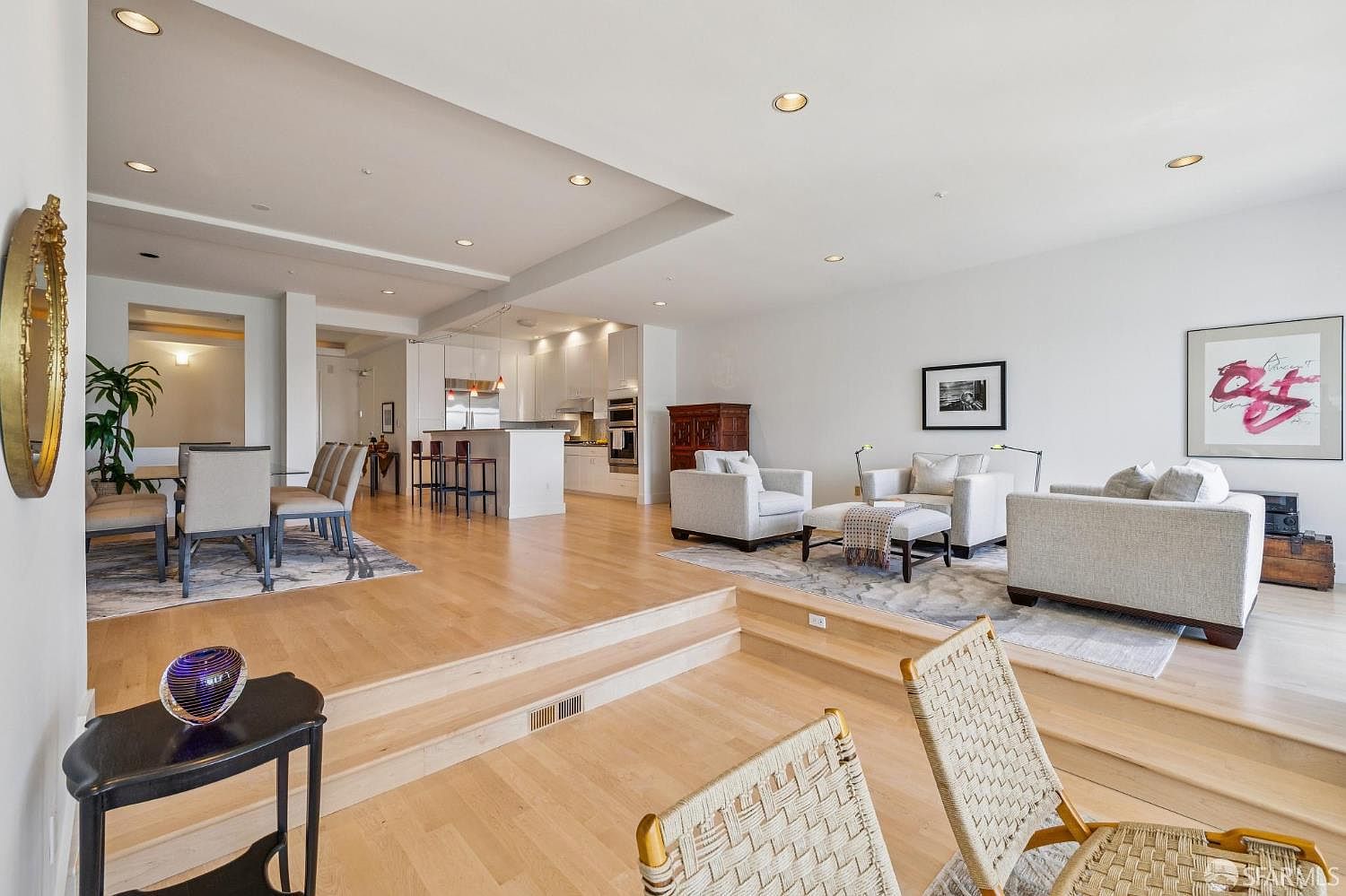
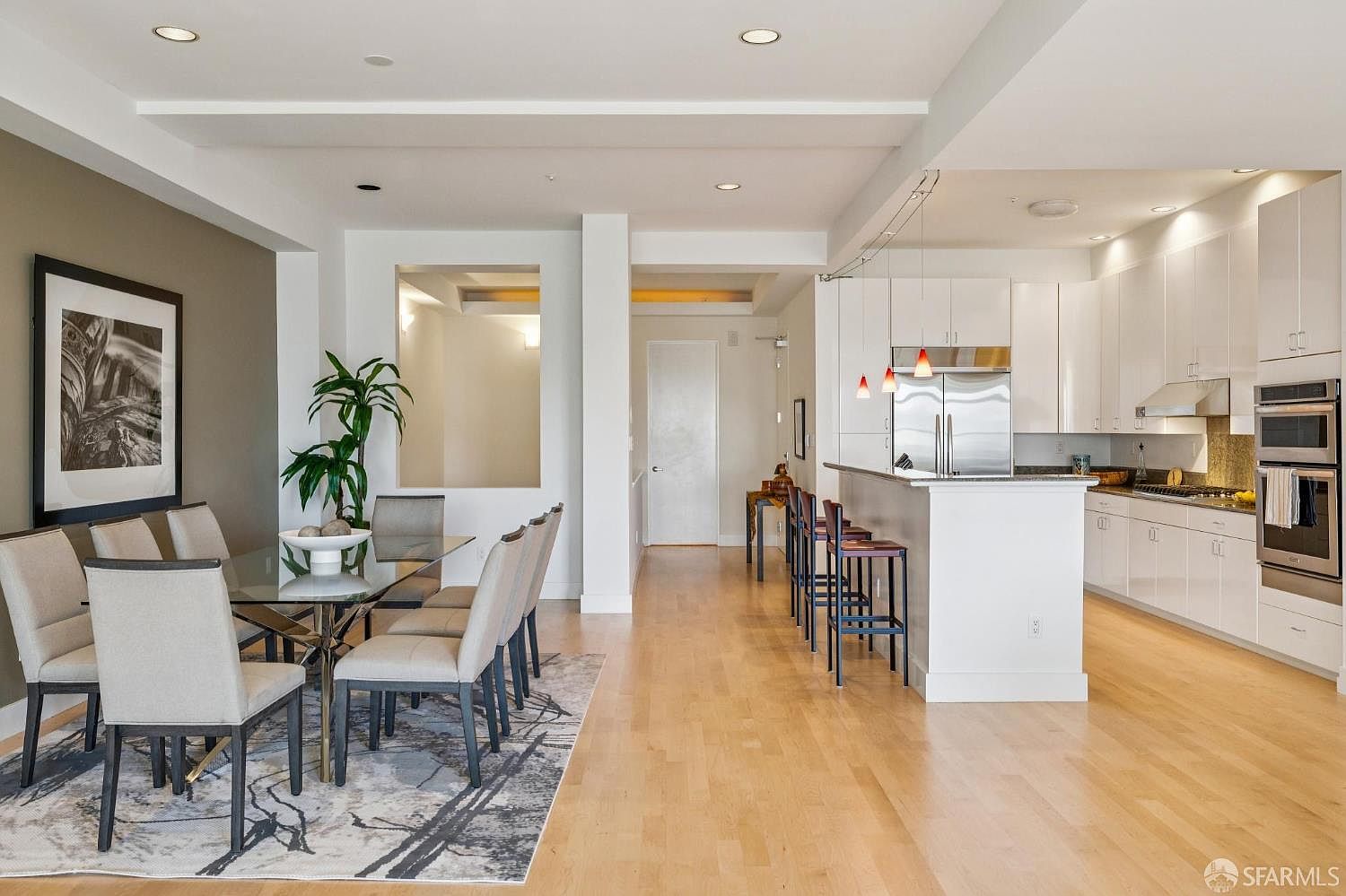
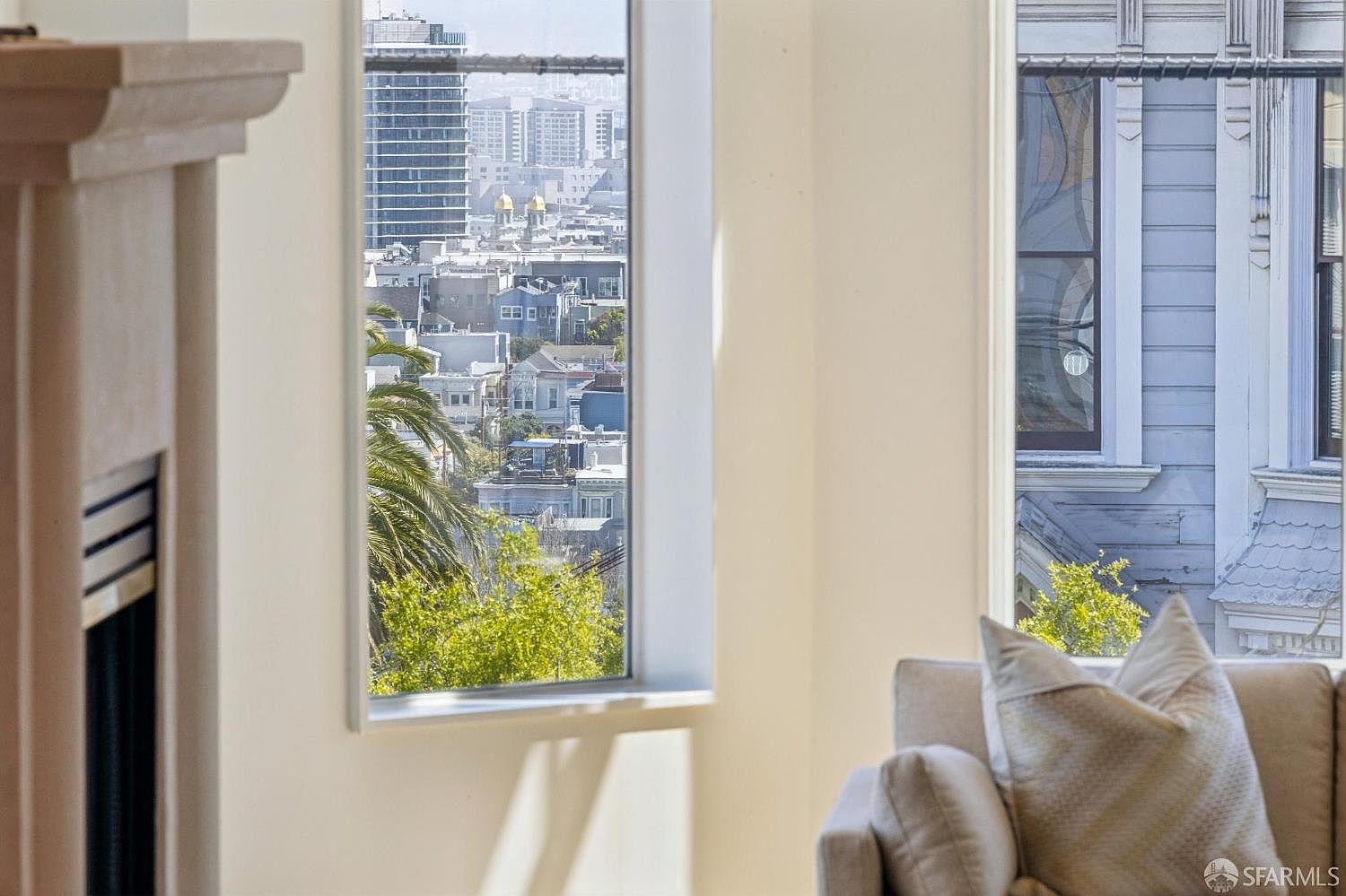
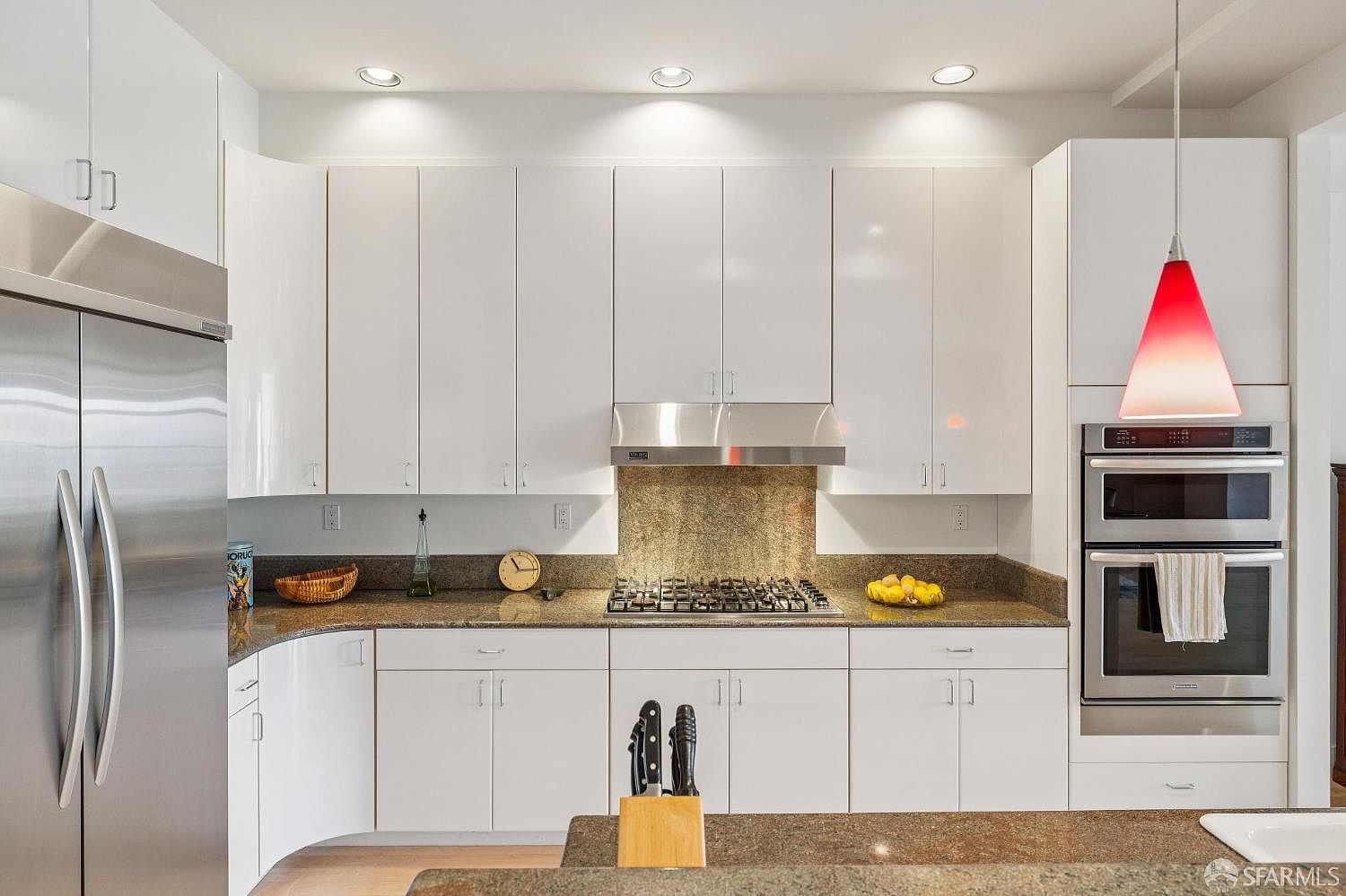
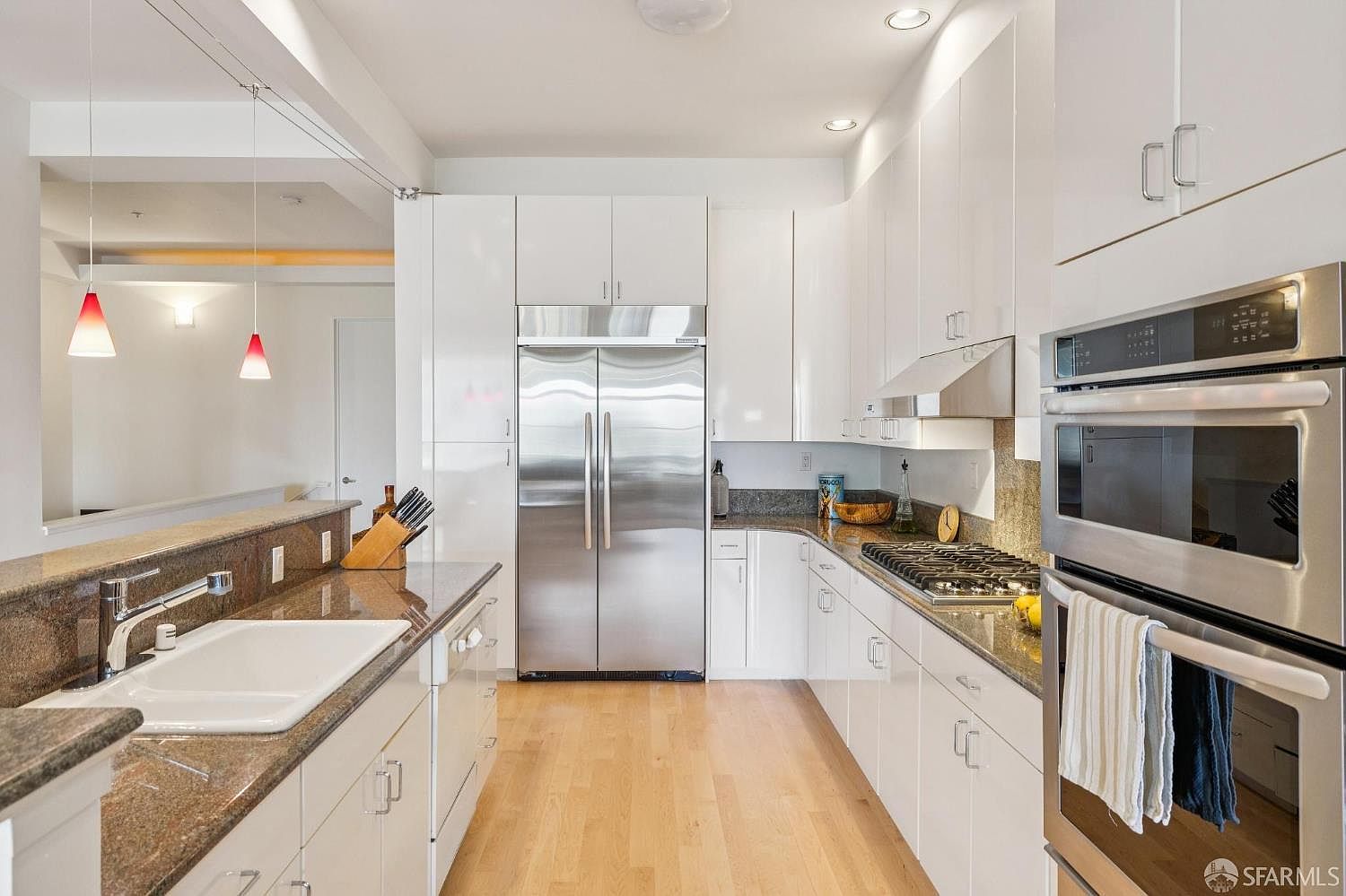
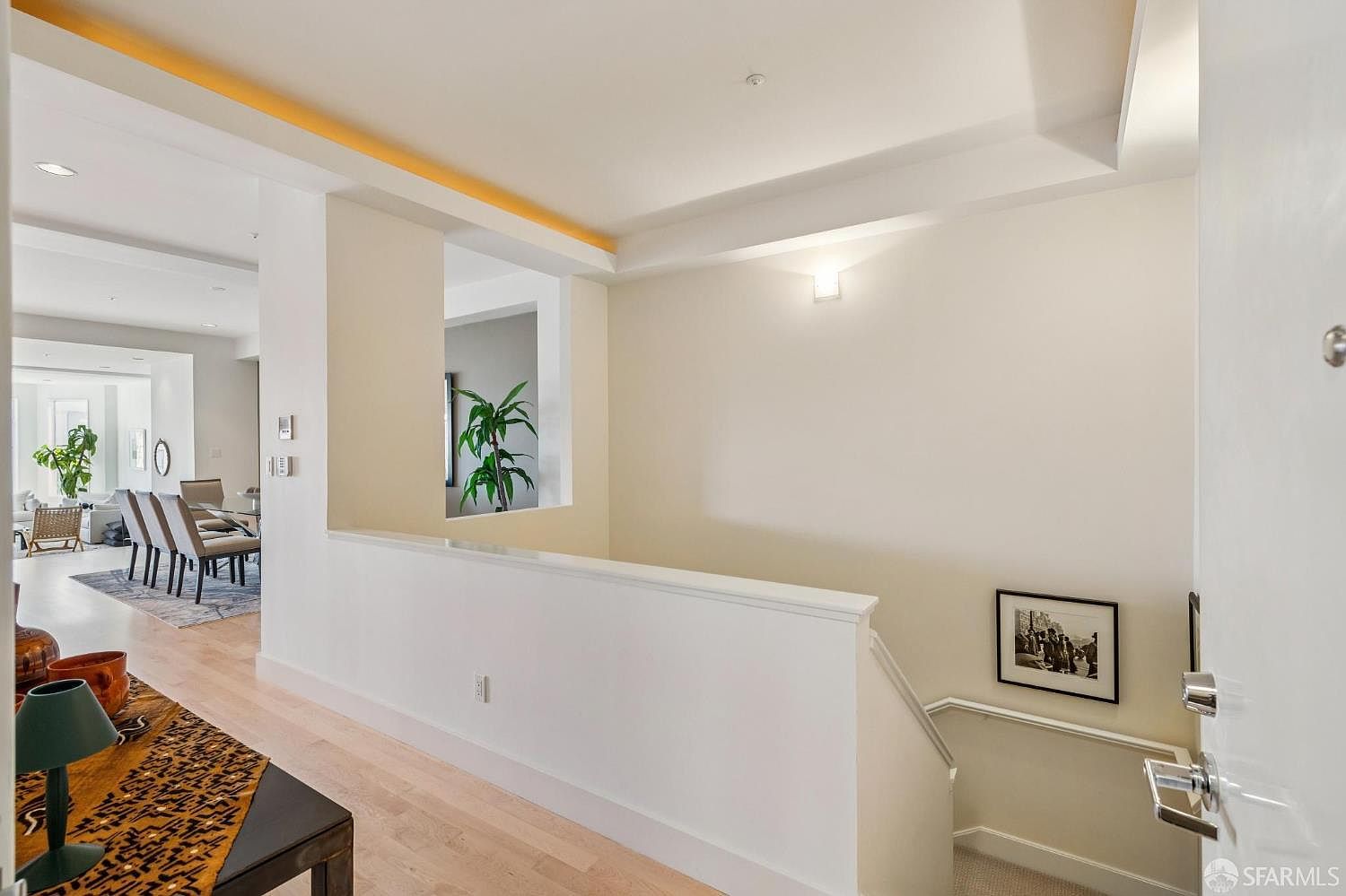
The main level is organized around a logic both intuitive and elegant. The sunken living room serves as the home's gravitational center, its stone fireplace functioning as a true architectural set piece — the kind of feature that earns its prominence by grounding a room rather than competing with it. Distinct seating areas radiate outward, and city views frame the space through the glass beyond, collapsing the boundary between interior and the San Francisco skyline. The flow is seamless: from the living room into a formal dining area scaled for genuine entertaining, and then into a kitchen designed for a cook who also wants to be part of the conversation. White high-gloss cabinetry, dark granite countertops, a matching backsplash, stainless steel double wall oven, and a breakfast bar that keeps the kitchen connected to the dining space without dissolving the distinction between the two.
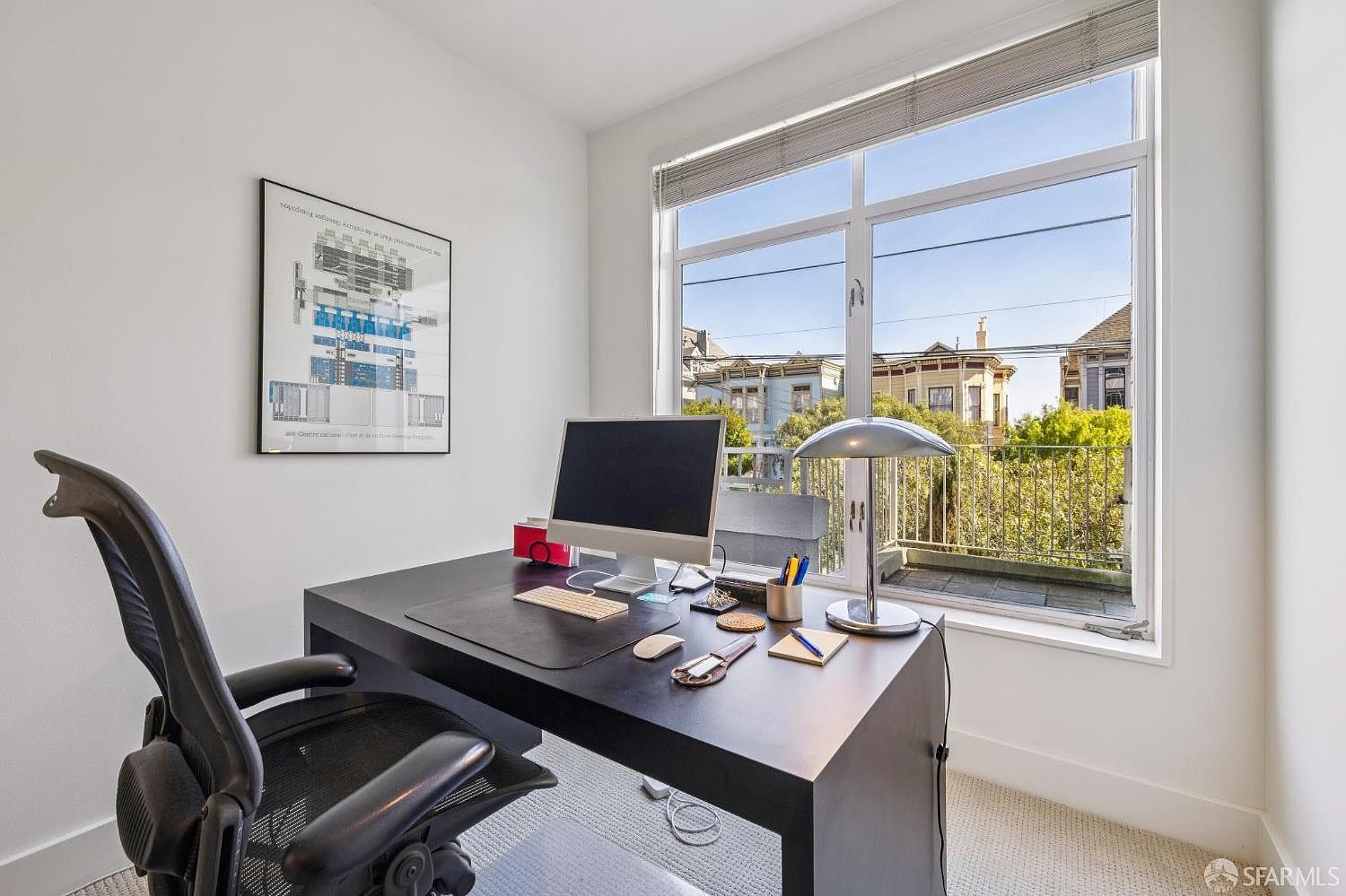
Two dedicated nook spaces — a detail that speaks to how people actually inhabit a home in the present era — offer the focused separation that open-concept living so often sacrifices. Whether deployed as a home office, a reading alcove, or a quiet zone for calls, they function as a form of architectural intelligence embedded into the plan.
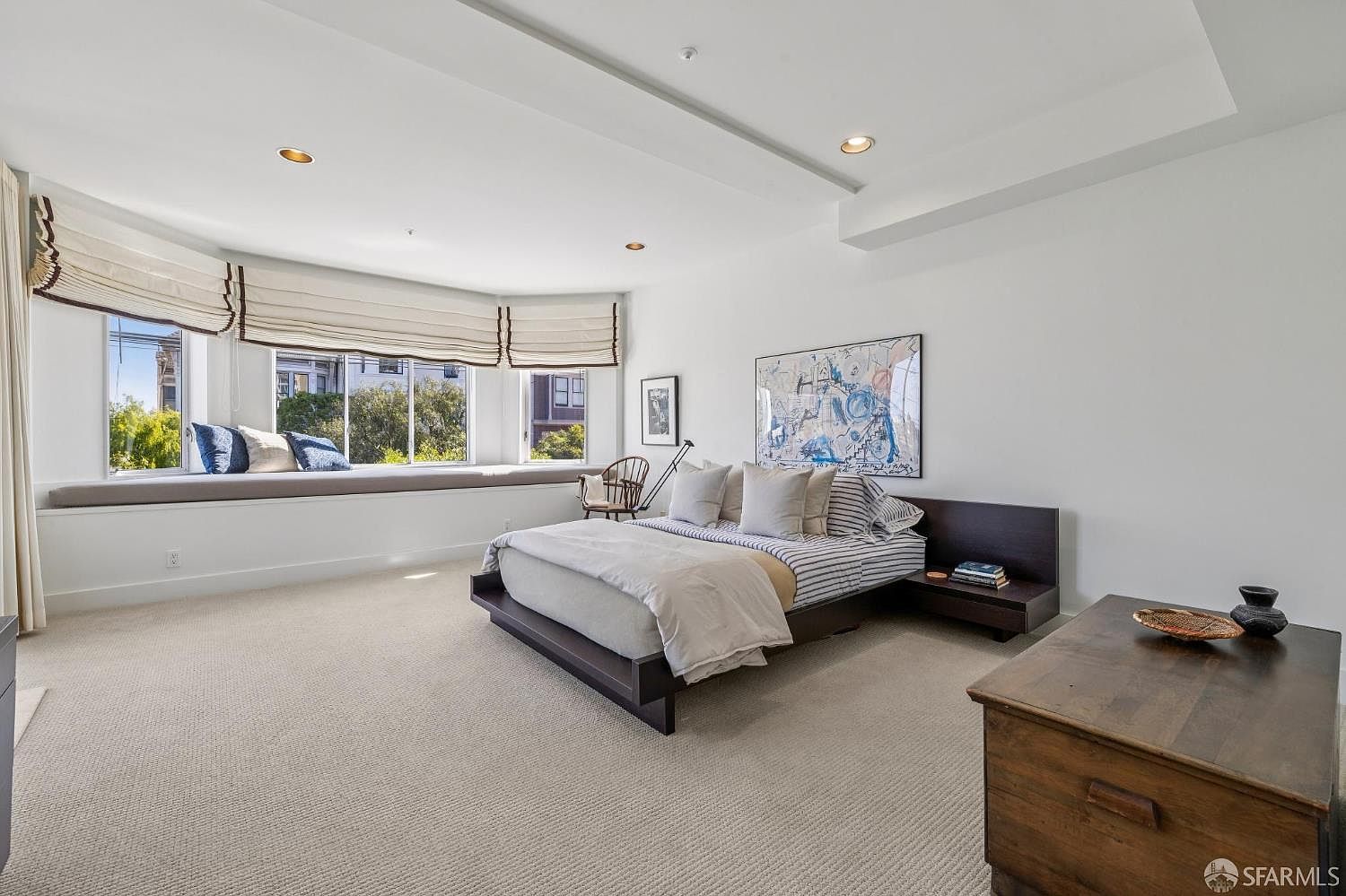
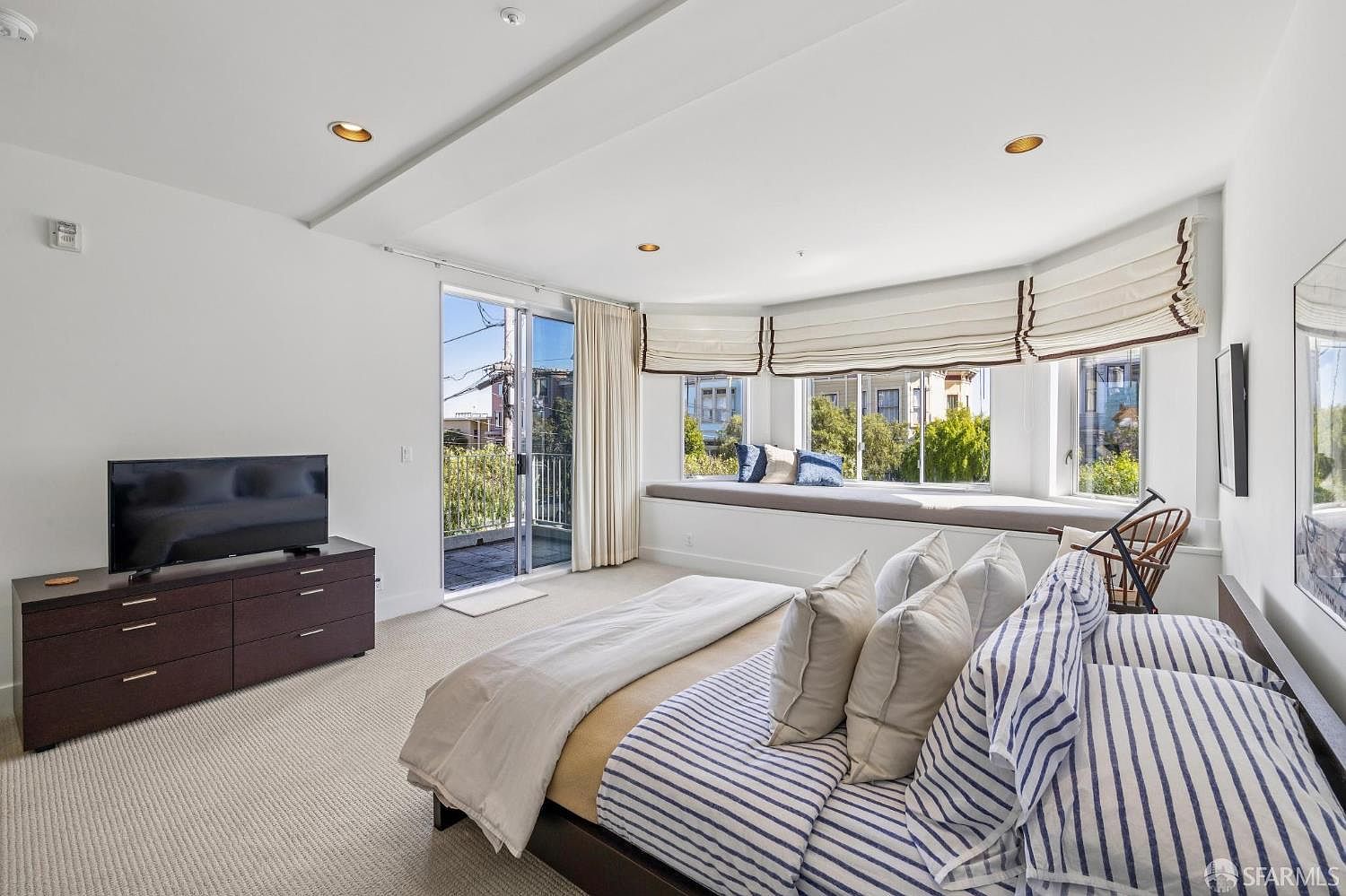
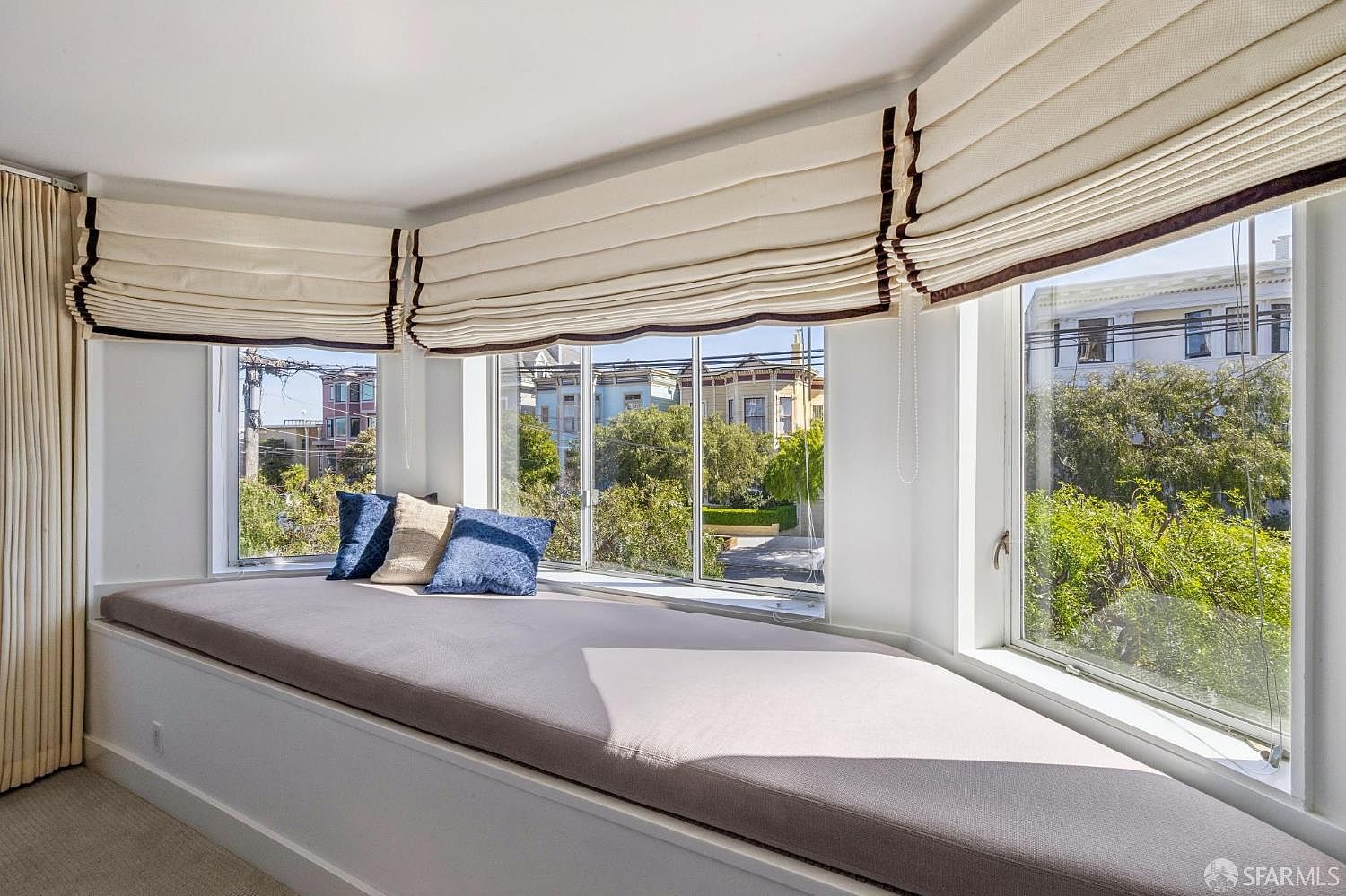
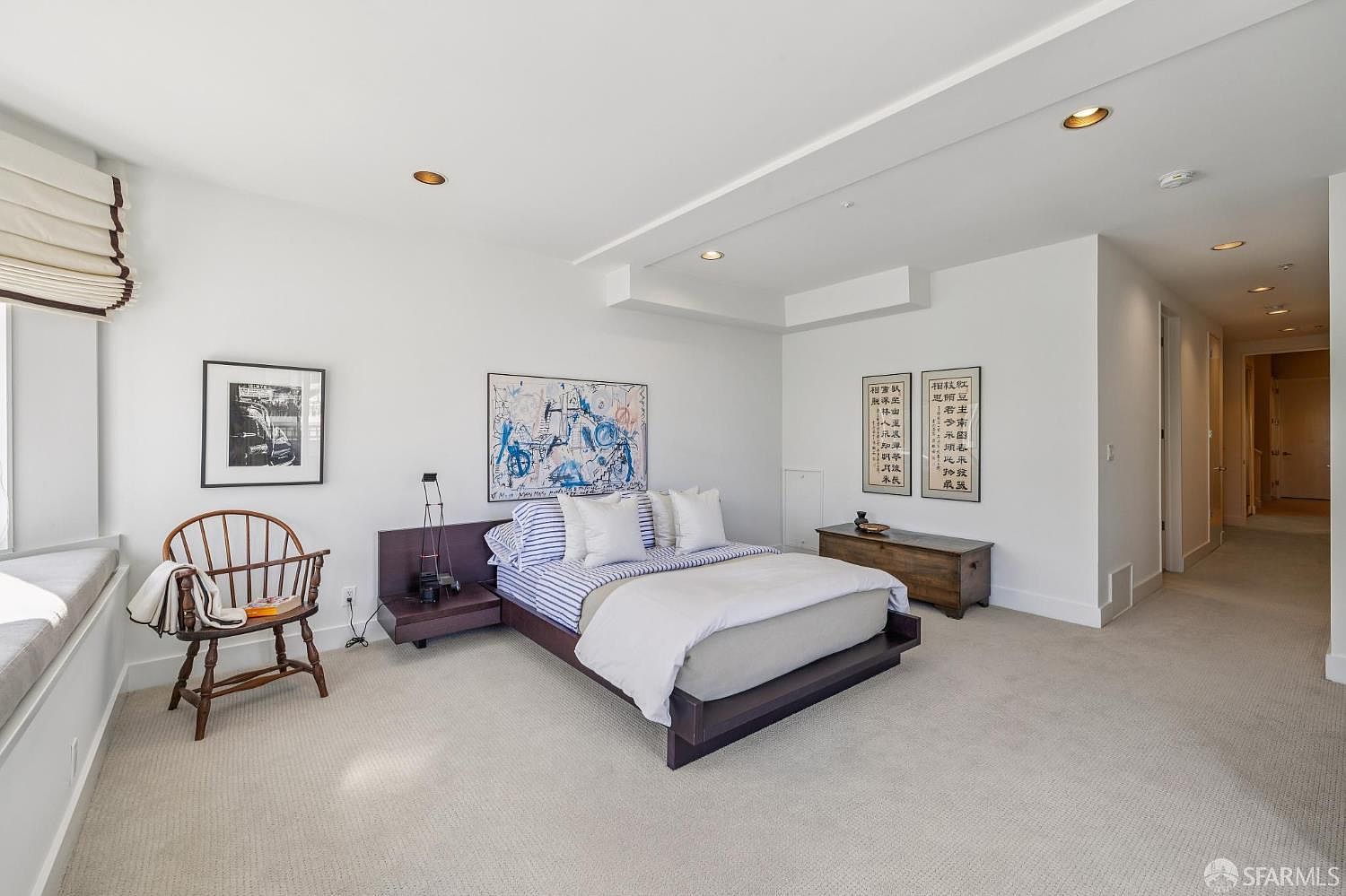
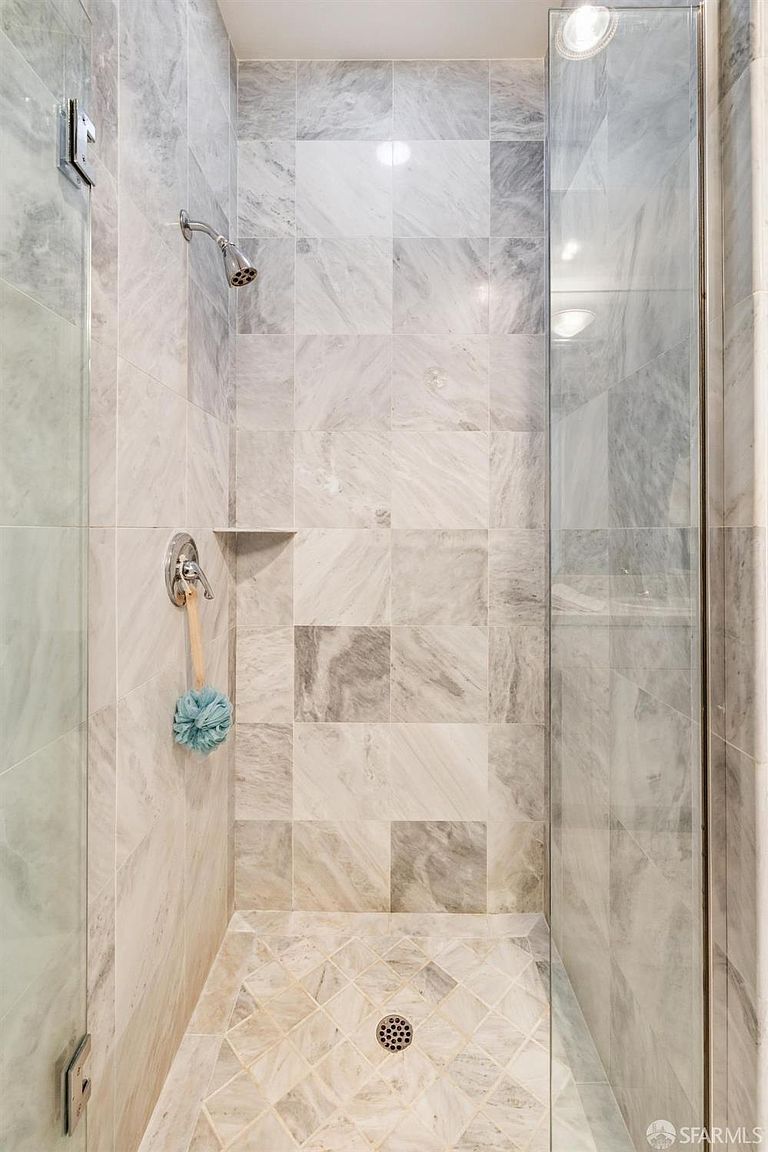
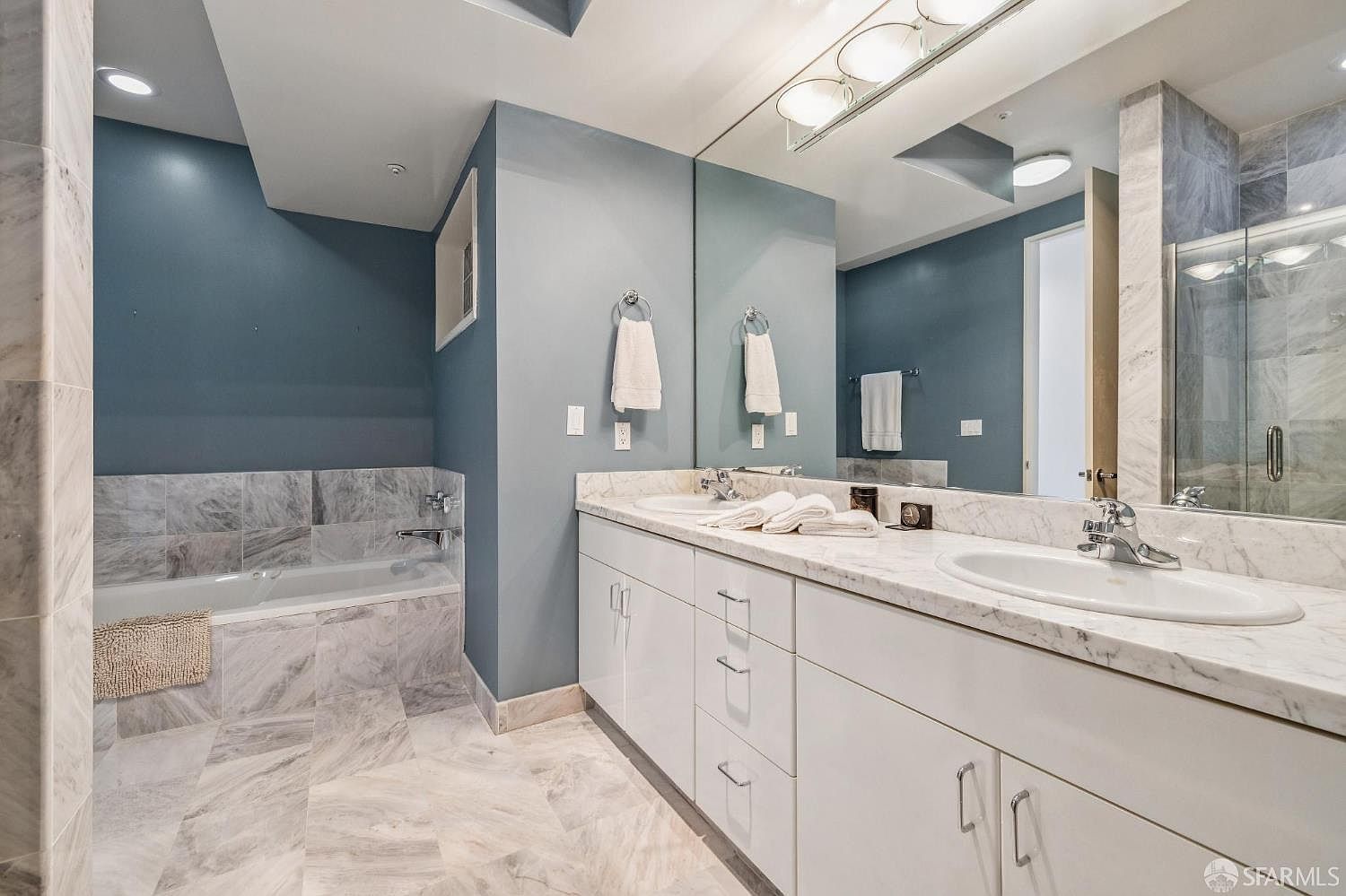
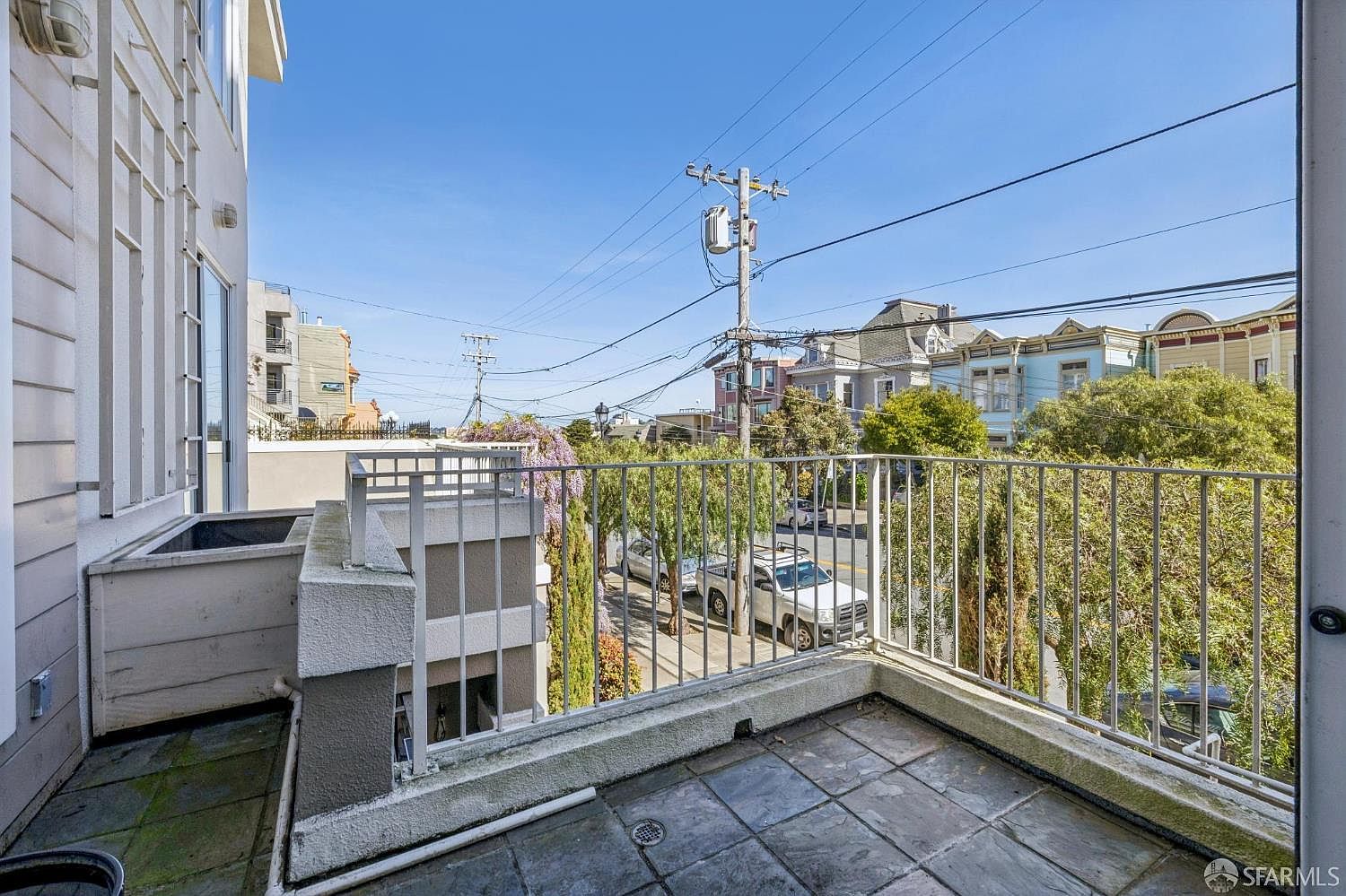
The lower level belongs to rest and restoration. The primary suite is genuinely expansive: neutral carpet underfoot, a curved bay window fitted with a built-in bench seat that invites the morning in from a different angle, and a private balcony that overlooks a quiet residential street with the unhurried character of a neighborhood that has not yet been discovered by the world at large. The marble-clad bath is a considered space — dual-sink vanity, a deep soaking tub encased in matching marble tile, a walk-in shower finished in light-toned stone, and the kind of lighting that flatters rather than interrogates.
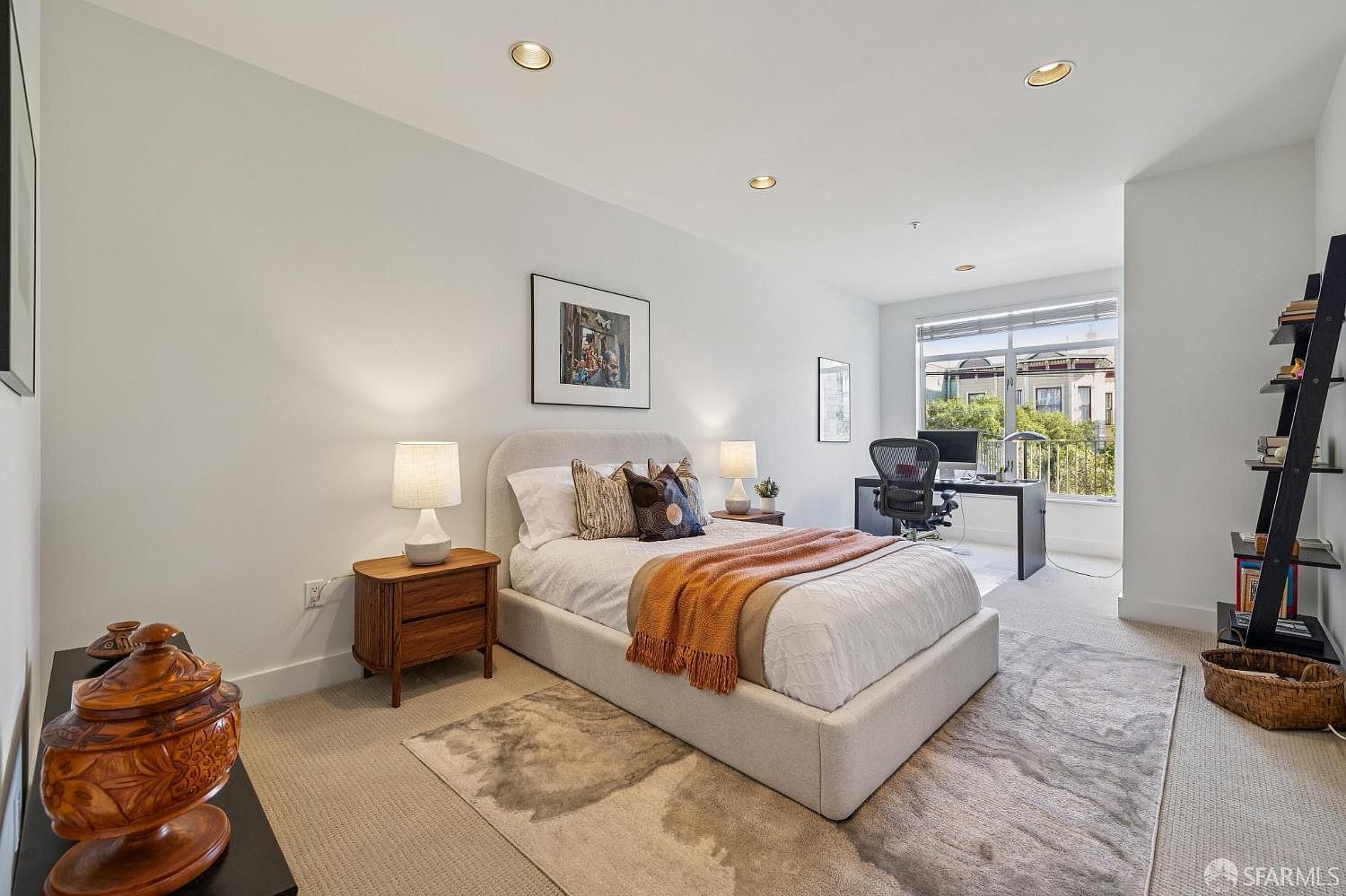
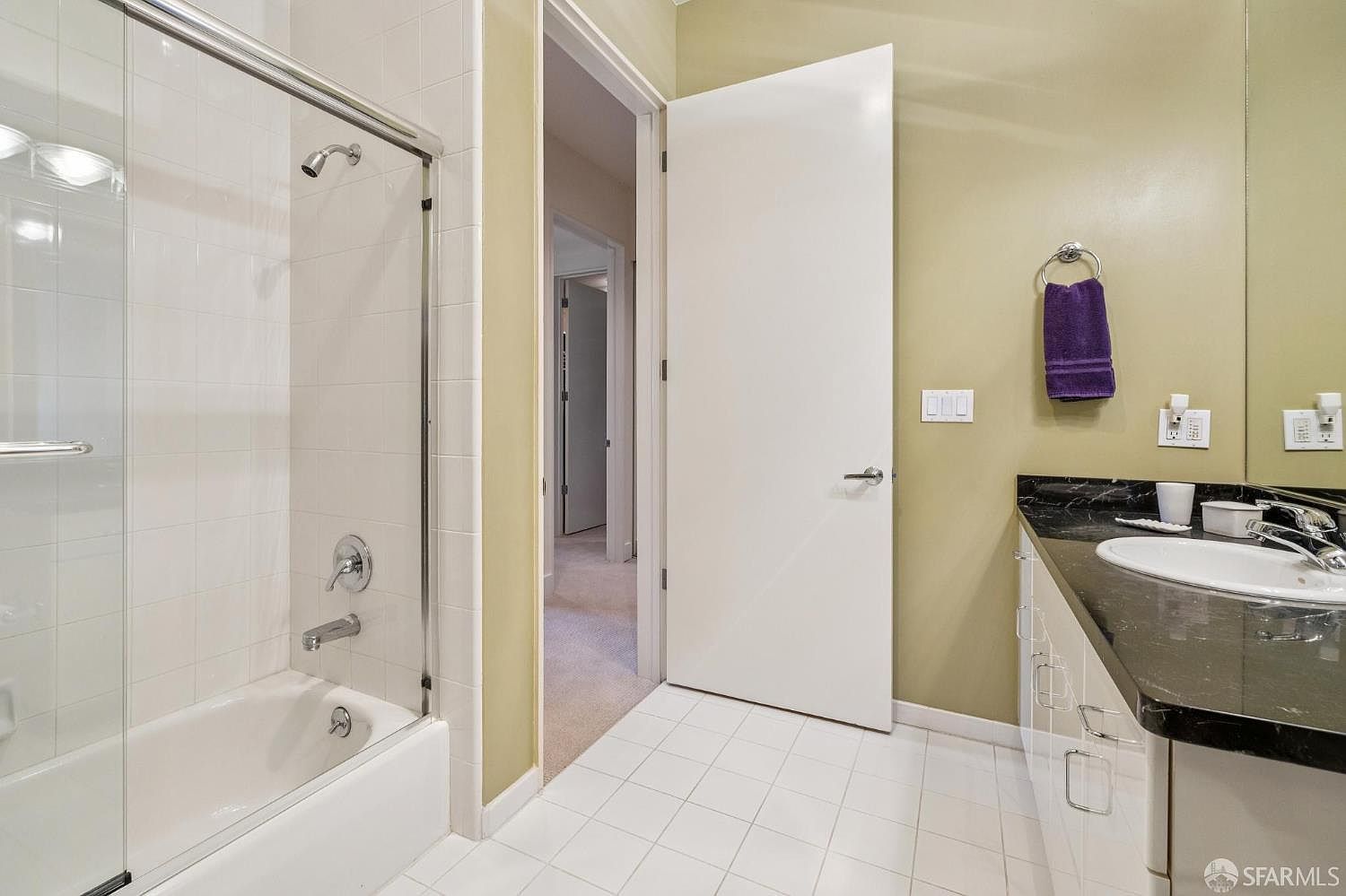
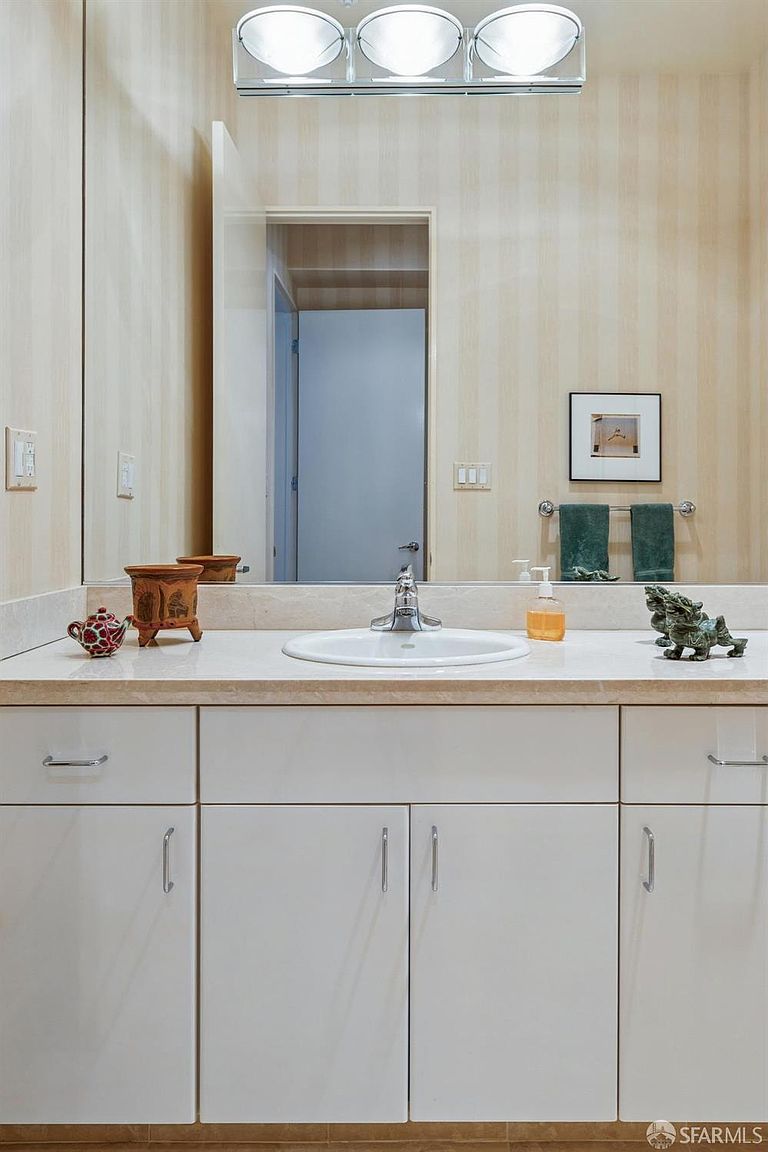
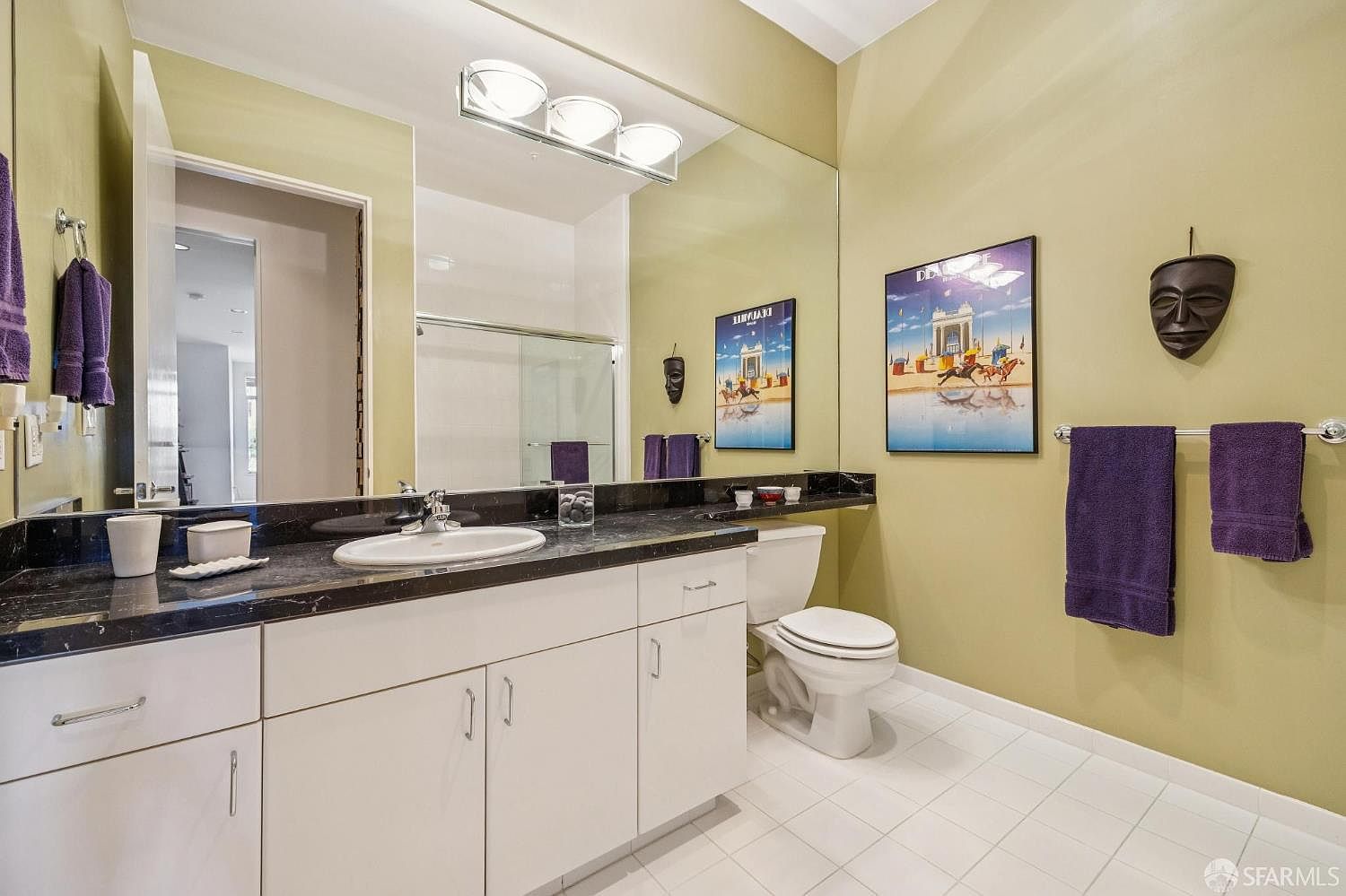
The secondary bedroom is genuinely generous, accommodating a king-sized bed while still offering meaningful additional space for an integrated office, a fitness corner, or a creative studio. The guest bath is clean and well-appointed, with a stone-topped vanity and a shower-tub combination.
Throughout: hardwood floors on the main level, new carpet below, in-unit laundry, elevator access connecting both levels, and one-car parking — practical amenities that, in San Francisco, carry real weight. At $894 per square foot, the value proposition is as compelling as the architecture.
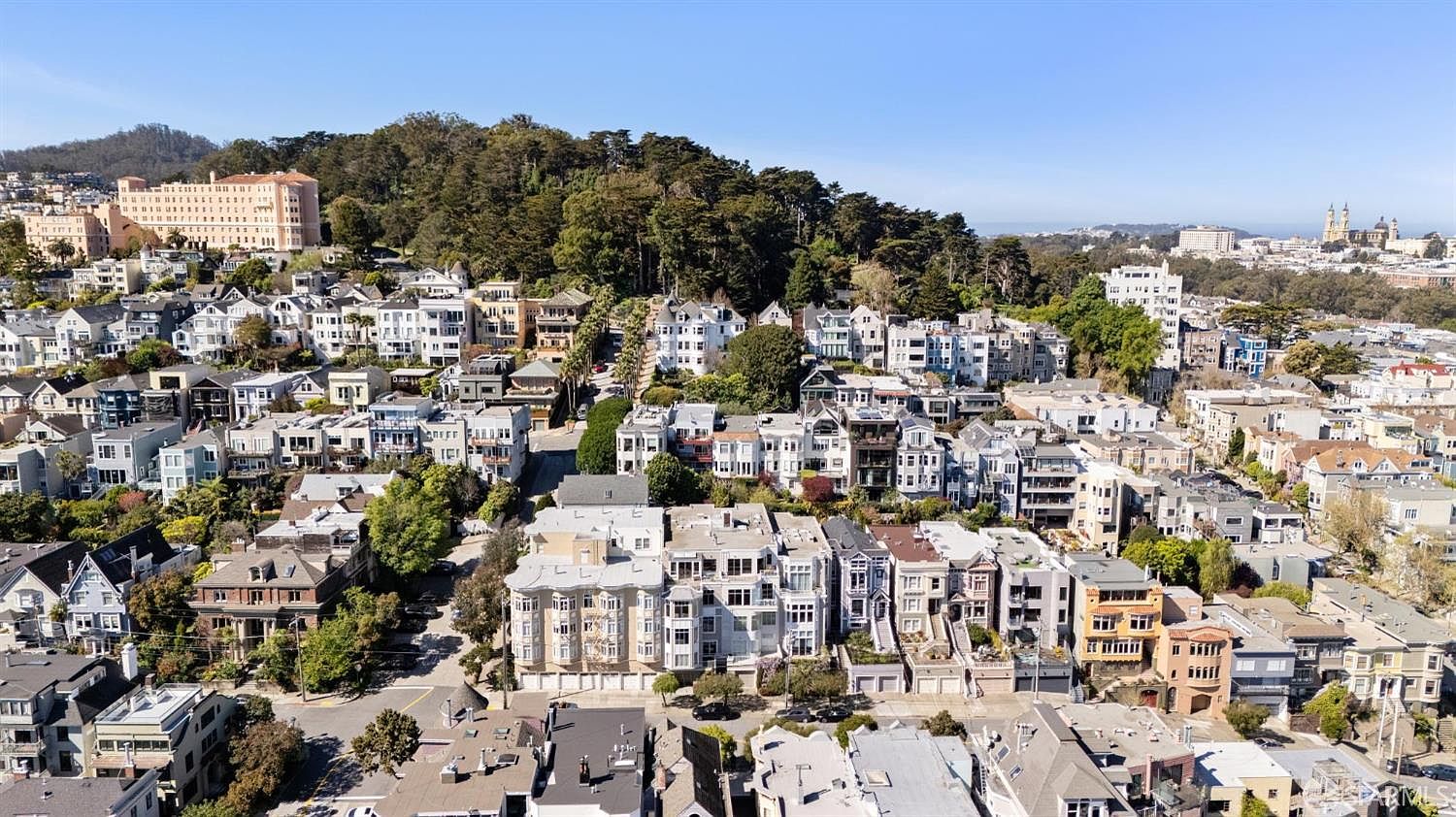
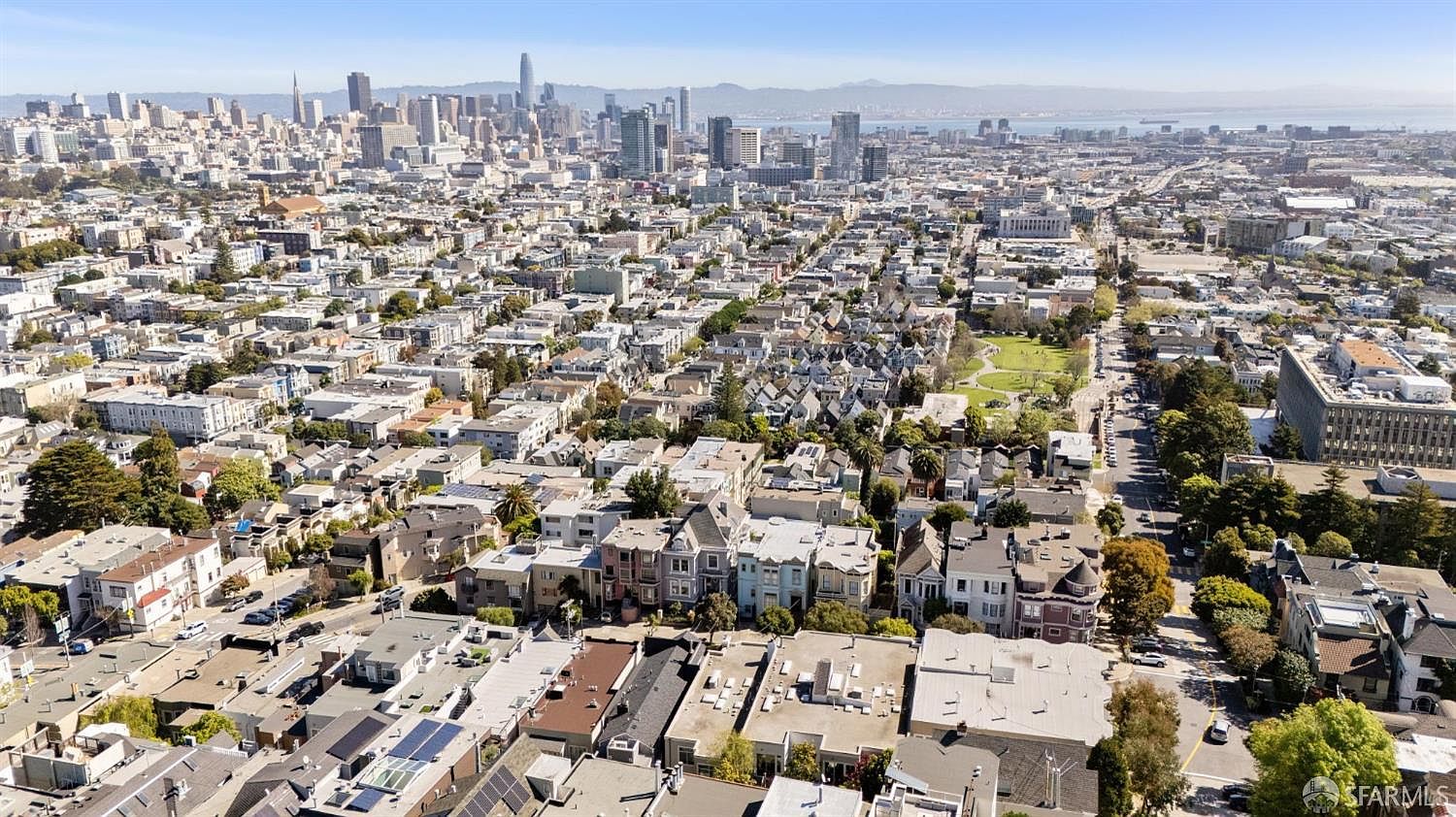
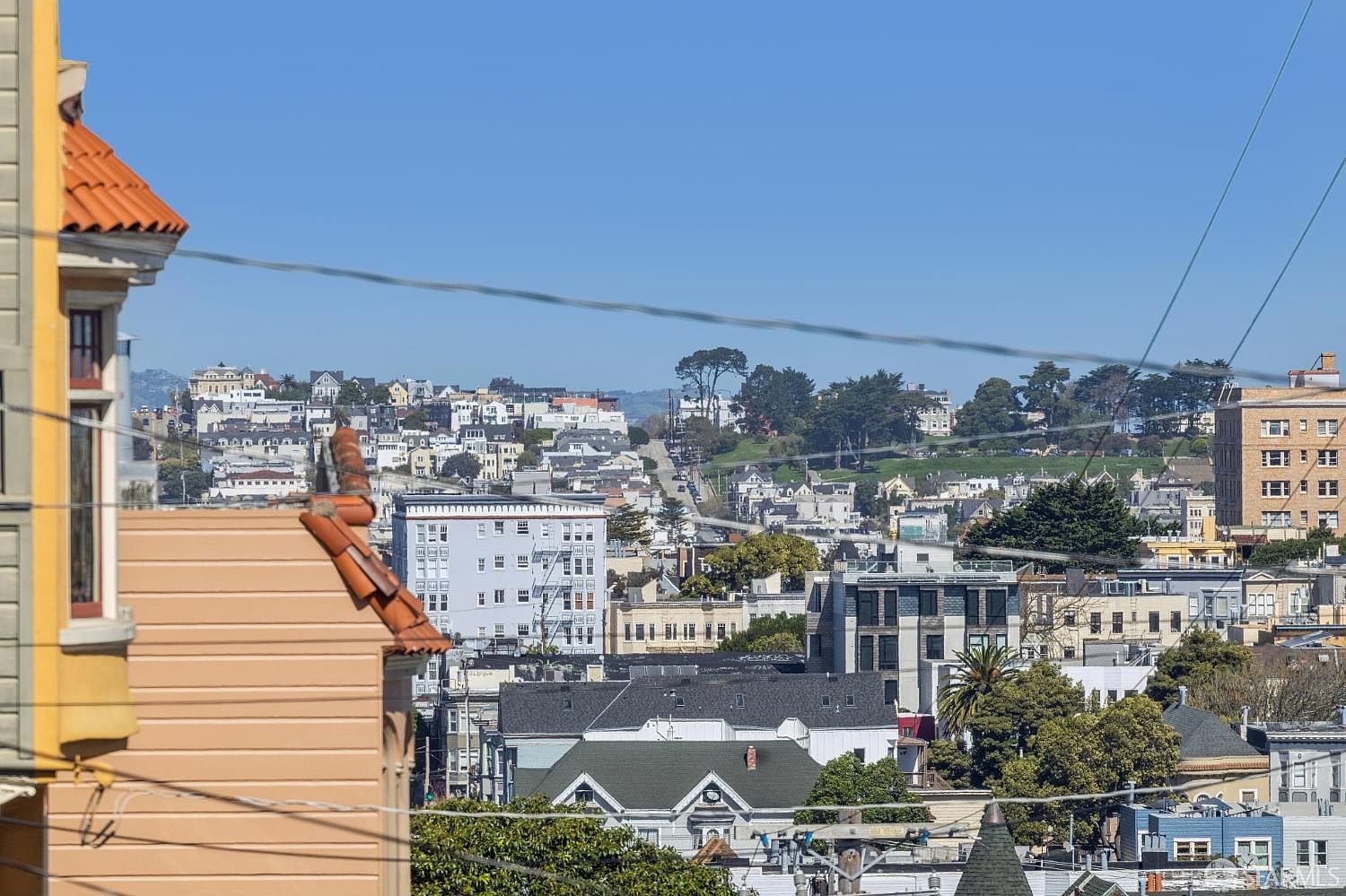
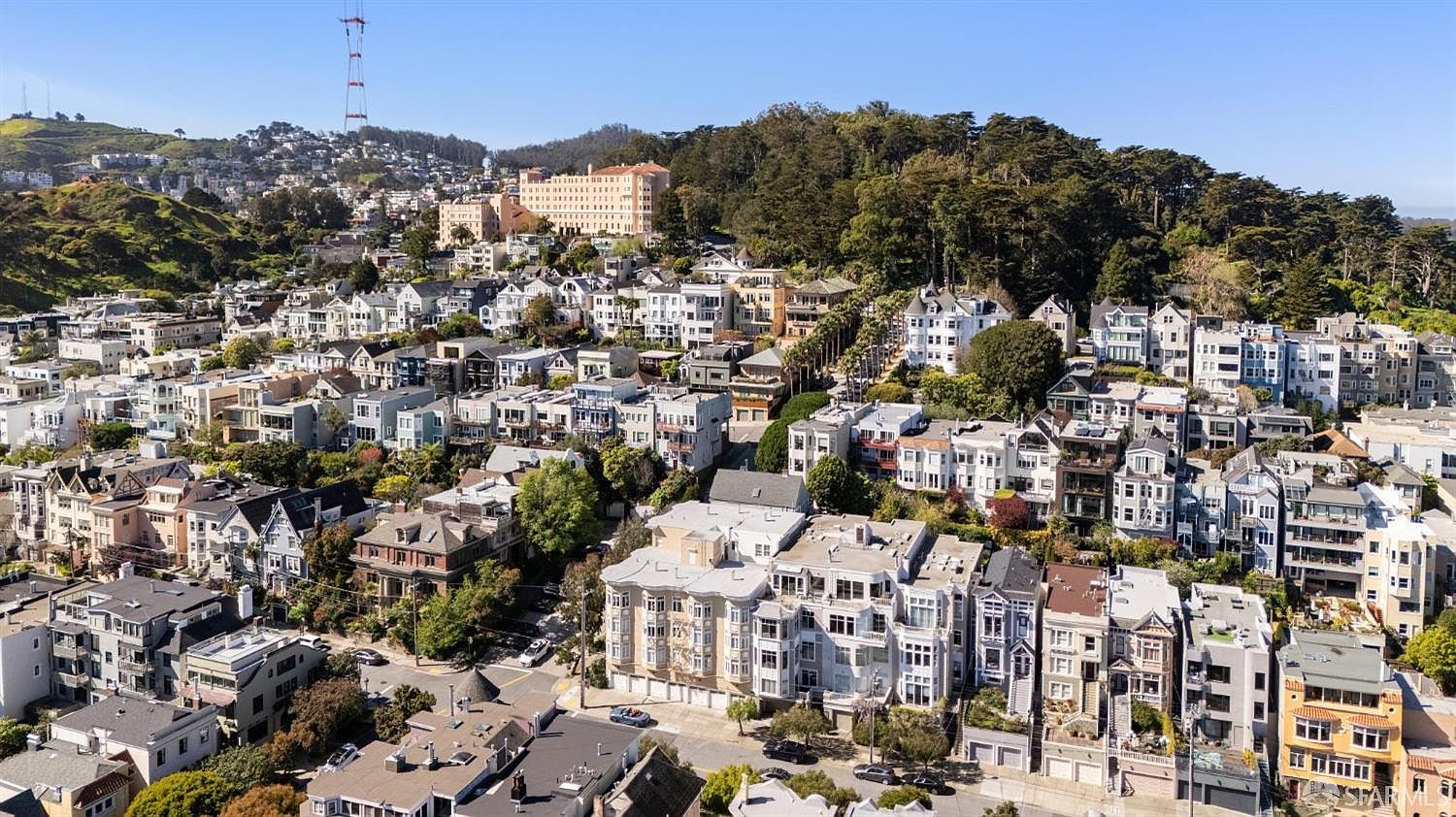
The stretch of Divisadero that rises toward Buena Vista Park occupies a particular position in San Francisco's geography — both literally and culturally. Elevated above the street grid, it sits at the convergence of four of the city's most characterful neighborhoods: NOPA (North of the Panhandle), Lower Haight, The Castro, and the Buena Vista corridor itself. This is not proximity as a marketing abstraction. These neighborhoods are walkable, distinctly themselves, and collectively represent some of the most enduring urban fabric in the American West.
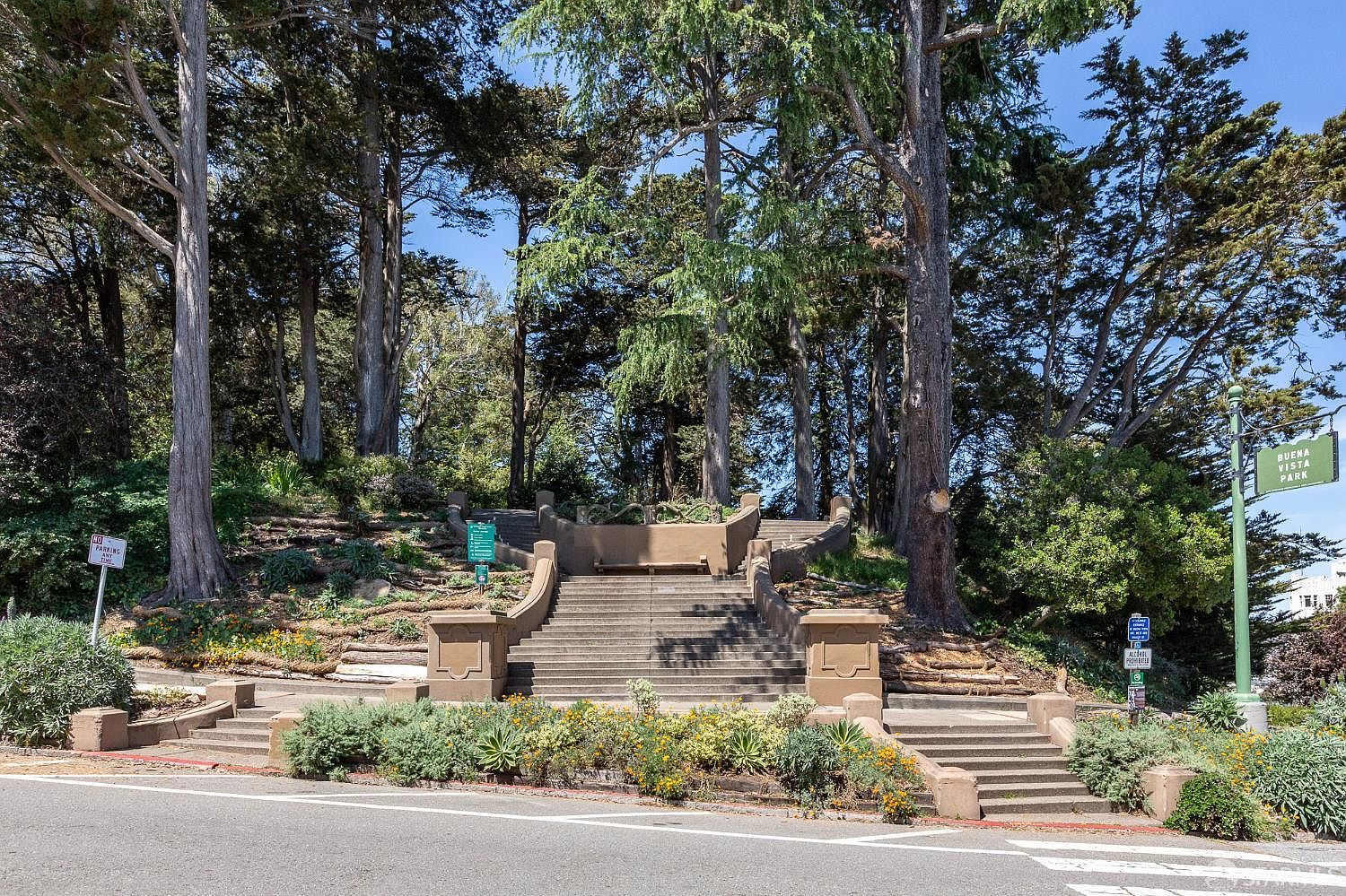
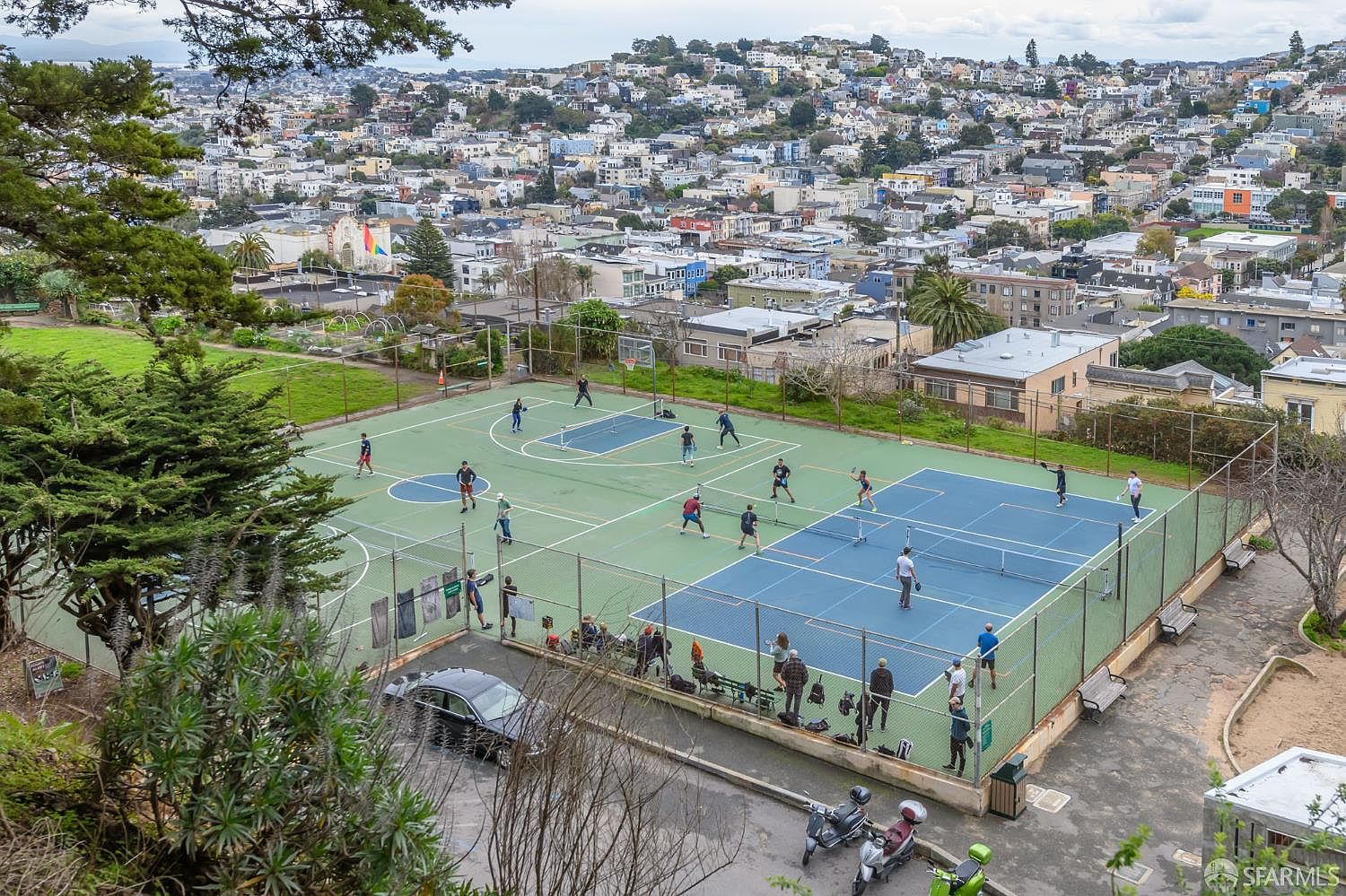
Buena Vista Park, San Francisco's oldest public park, rises immediately to the east. Established in 1867, it is one of the city's great natural retreats — 36 acres of densely wooded hillside laced with trails that ascend through eucalyptus and redwood to panoramic views of the Bay, the downtown skyline, and the surrounding hills. It is a park with genuine character: wild in the way that the best city parks manage to be, unhurried, and frequented by the kind of people who live in neighborhoods like this one — dog owners, trail runners, readers, and those who simply understand the value of being able to disappear into nature without leaving the city.
NOPA, which extends along the Panhandle corridor to the north, has evolved over the past two decades into one of San Francisco's most vital dining and café destinations. The Mill, the celebrated collaboration between Four Barrel Coffee and baker Josey Baker, anchors the neighborhood's culinary identity with its legendary whole-grain toast and rotating coffee program. Nopa Restaurant — the neighborhood's namesake institution — has maintained its reputation as one of the city's essential dining rooms since opening in 2006, serving wood-fired California cuisine to a devoted local following well into the late hours. The Panhandle itself, a linear extension of Golden Gate Park, offers a green corridor for cycling, jogging, and weekend gatherings.
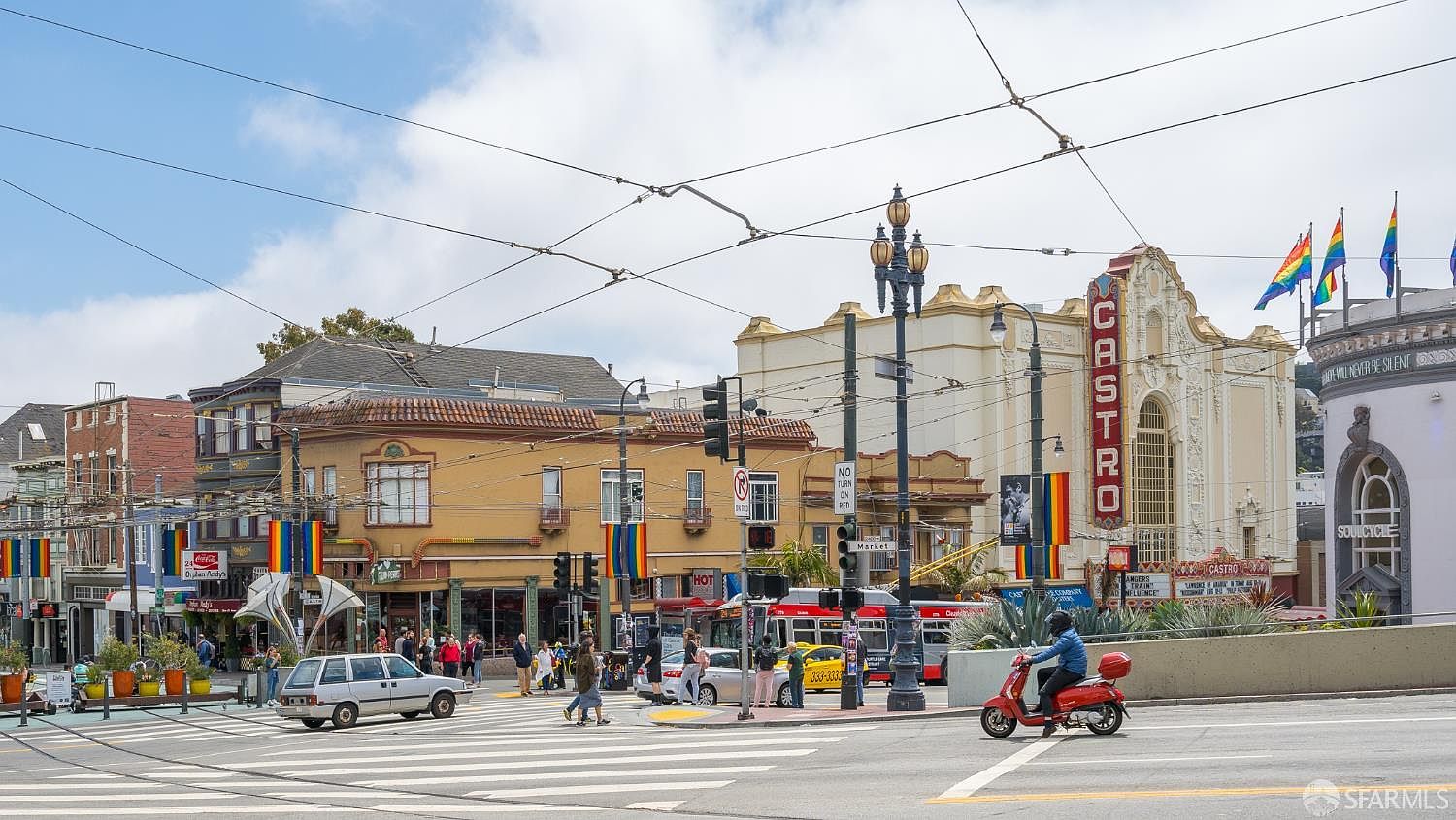
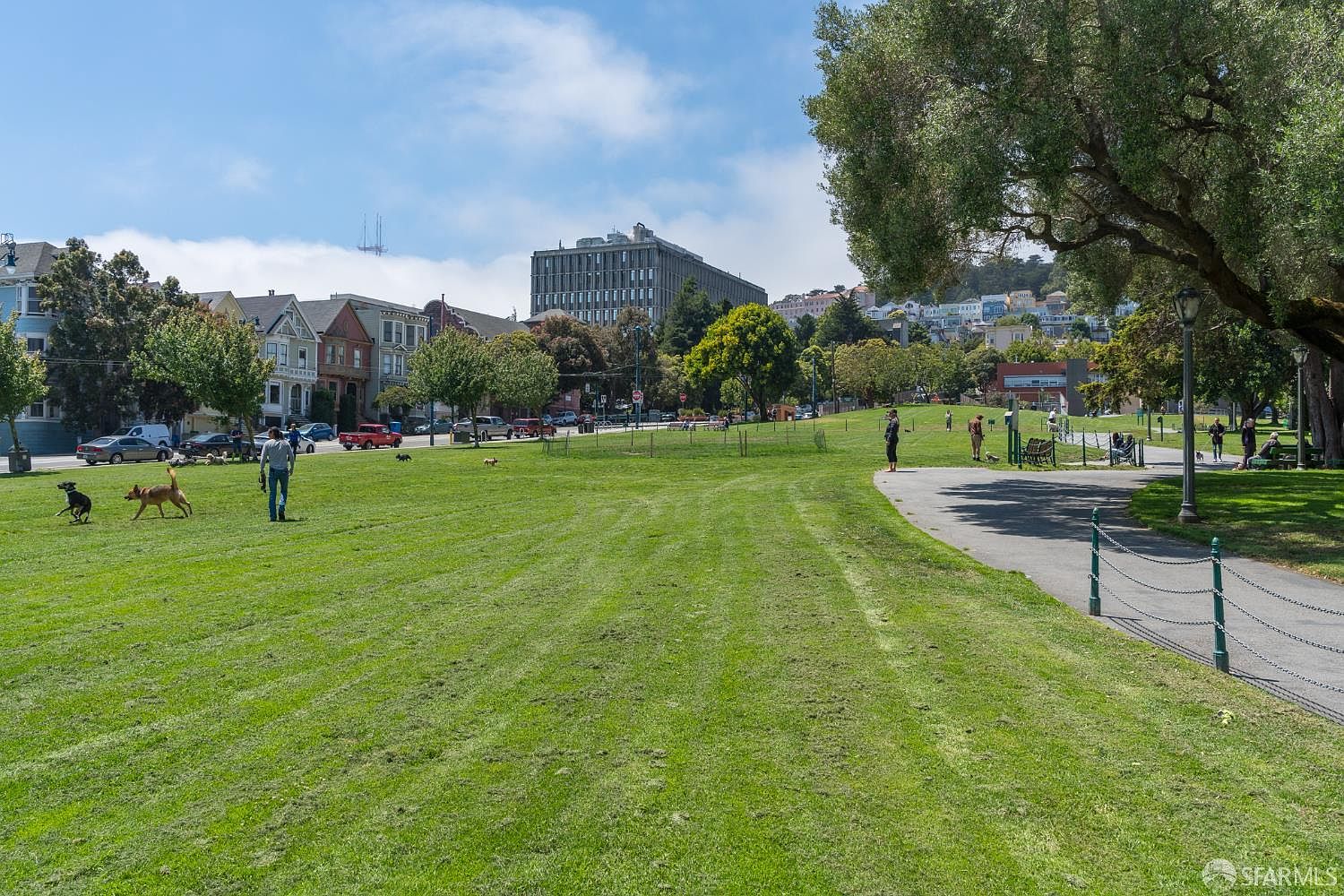
Duboce Park, a short walk to the south, functions as one of the city's most beloved off-leash dog parks and neighborhood gathering points, framed by Victorian architecture and the kind of community life that makes San Francisco neighborhoods feel like genuine villages within a city. The Castro, one of the most historically significant LGBTQ+ neighborhoods in the world, is moments away — home to the iconic Castro Theatre, independent bookshops, and a commercial corridor that has retained its independent character with remarkable tenacity.
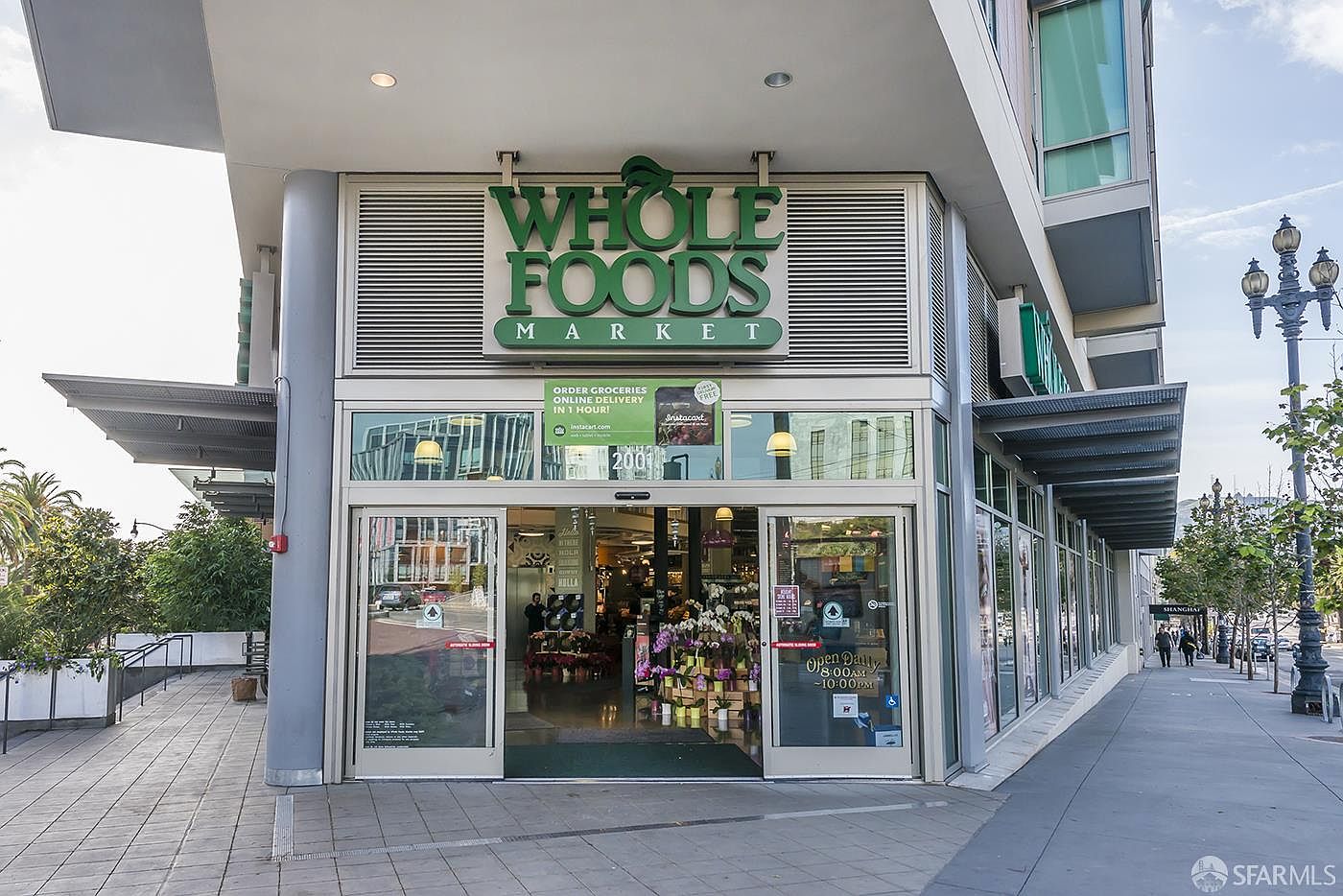
The practical infrastructure of the location is equally strong. Whole Foods on Franklin Street, multiple MUNI lines within blocks, and the broader connectivity of the city's transit network make car-optional living genuinely feasible. The neighborhood's topography — elevated, residential, set above the commercial energy of Divisadero's lower reaches — provides the quiet that urban living so rarely delivers without sacrificing any of the access.
This is a San Francisco address that understands what the city does best: density without claustrophobia, community without uniformity, and the persistent, irreplaceable sense that something interesting is always just around the corner.
Featured Highlights
Curated Content • Presented by Frank A. Nolan