The Story Behind
A Charles Platt Georgian Estate Above Puget Sound
There are houses, and then there are estates that carry the full weight of an architectural idea — dwellings that do not merely shelter but instruct, inspiring in their occupants a daily awareness of beauty, proportion, and the quiet authority of great design. The Charles Platt Georgian estate at 77 Olympic Drive NW belongs unmistakably to the latter category.
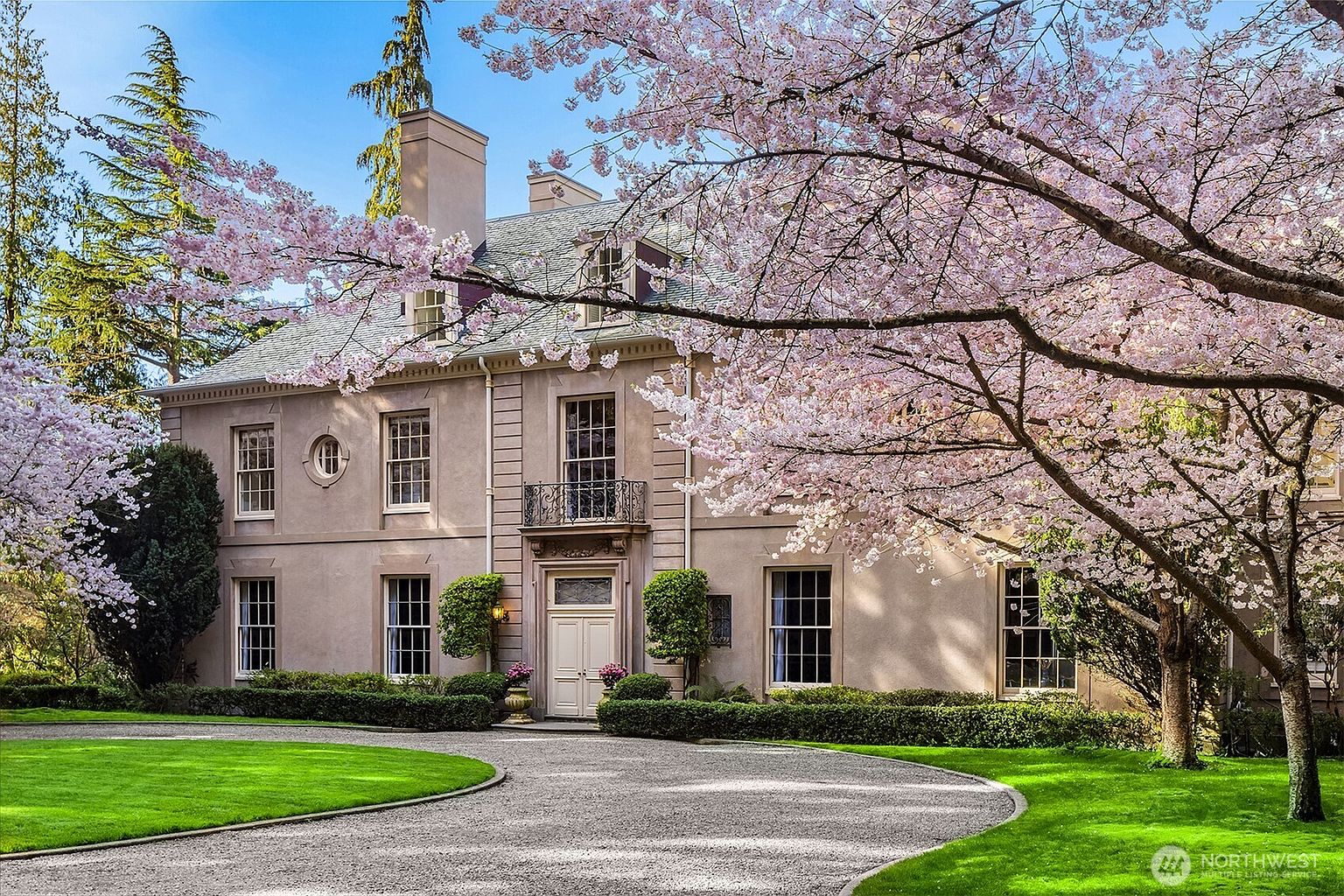
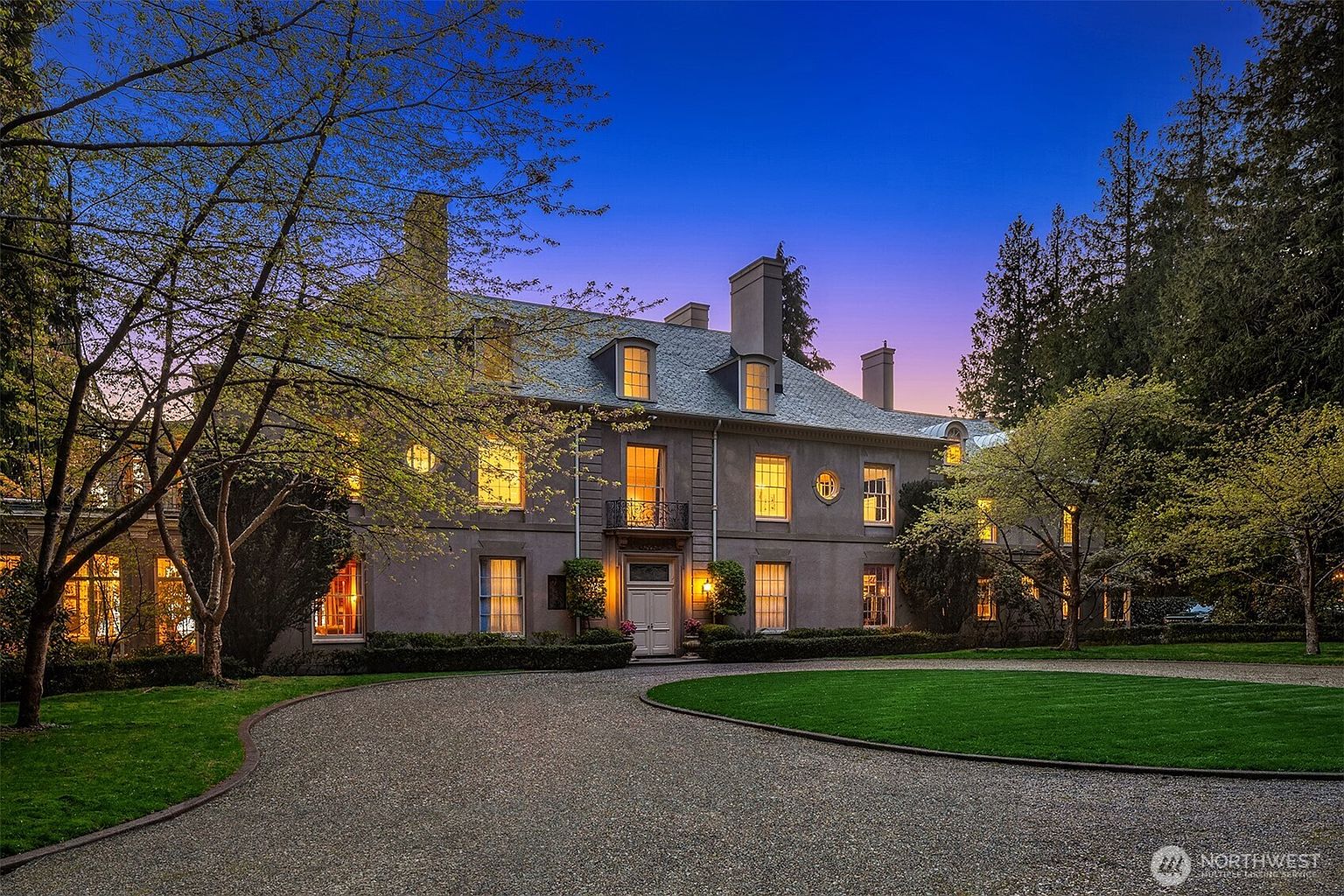
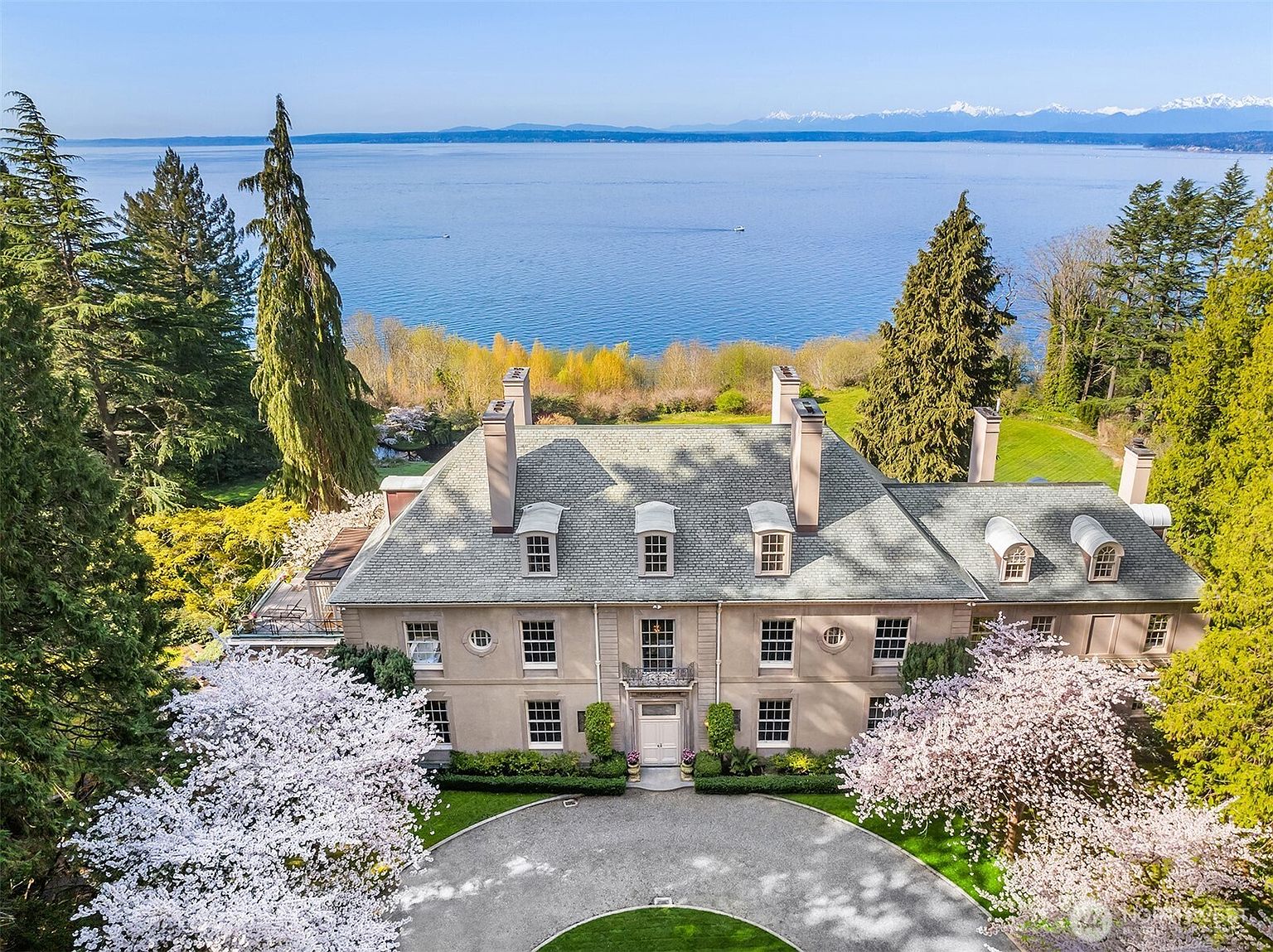
Platt, who trained as a painter and etcher before turning to architecture, brought an artist's sensibility to the classical tradition. Deeply influenced by the great country villas of Italy and France, he believed that beauty was inseparable from symmetry, clarity, and the harmonious relationship between a building and its landscape. These convictions are evident from the first approach: a circular gravel drive curves through manicured grounds toward a light-colored stucco facade, its symmetrical dormer windows and prominent central entryway establishing classical authority before one has ever crossed the threshold.
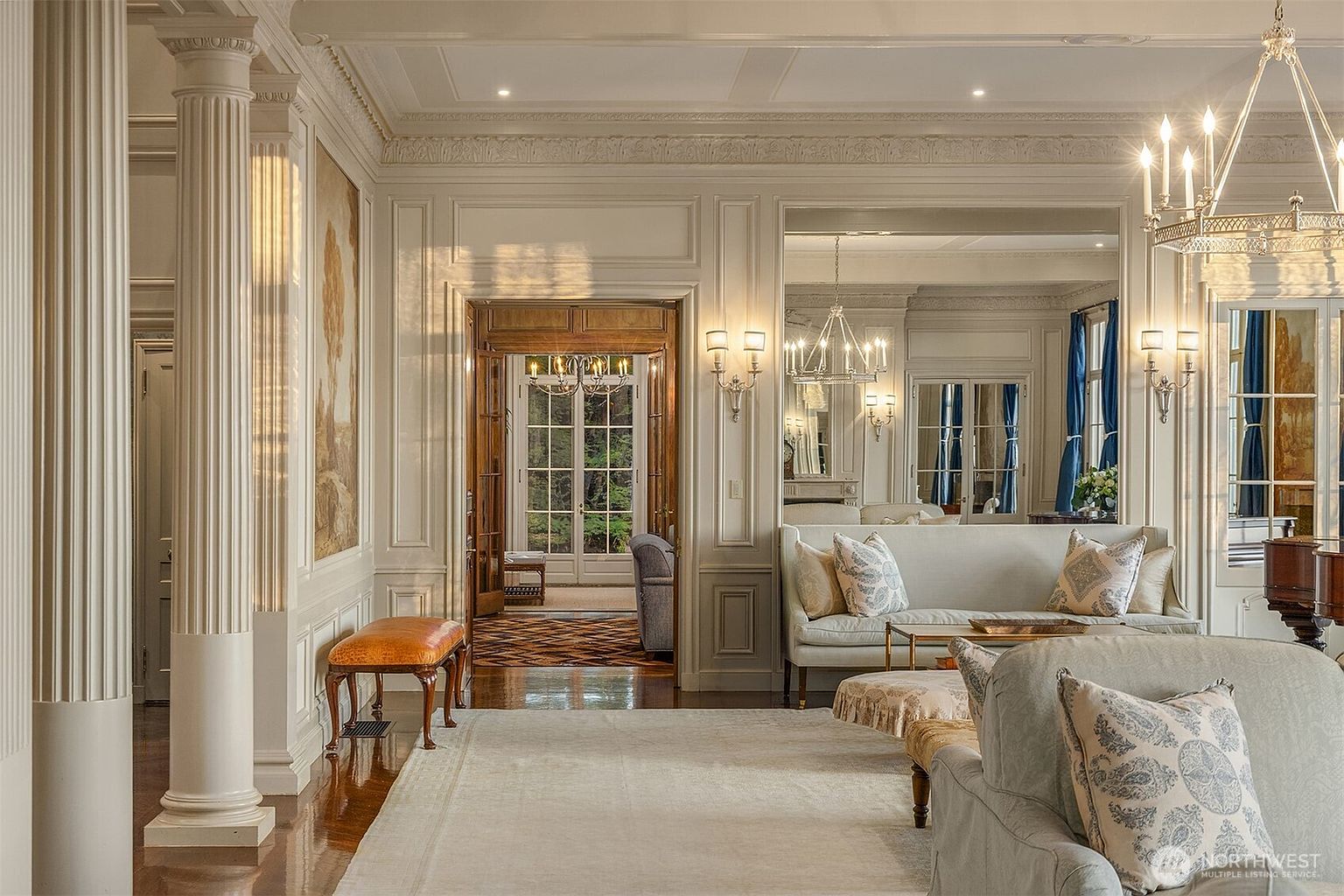
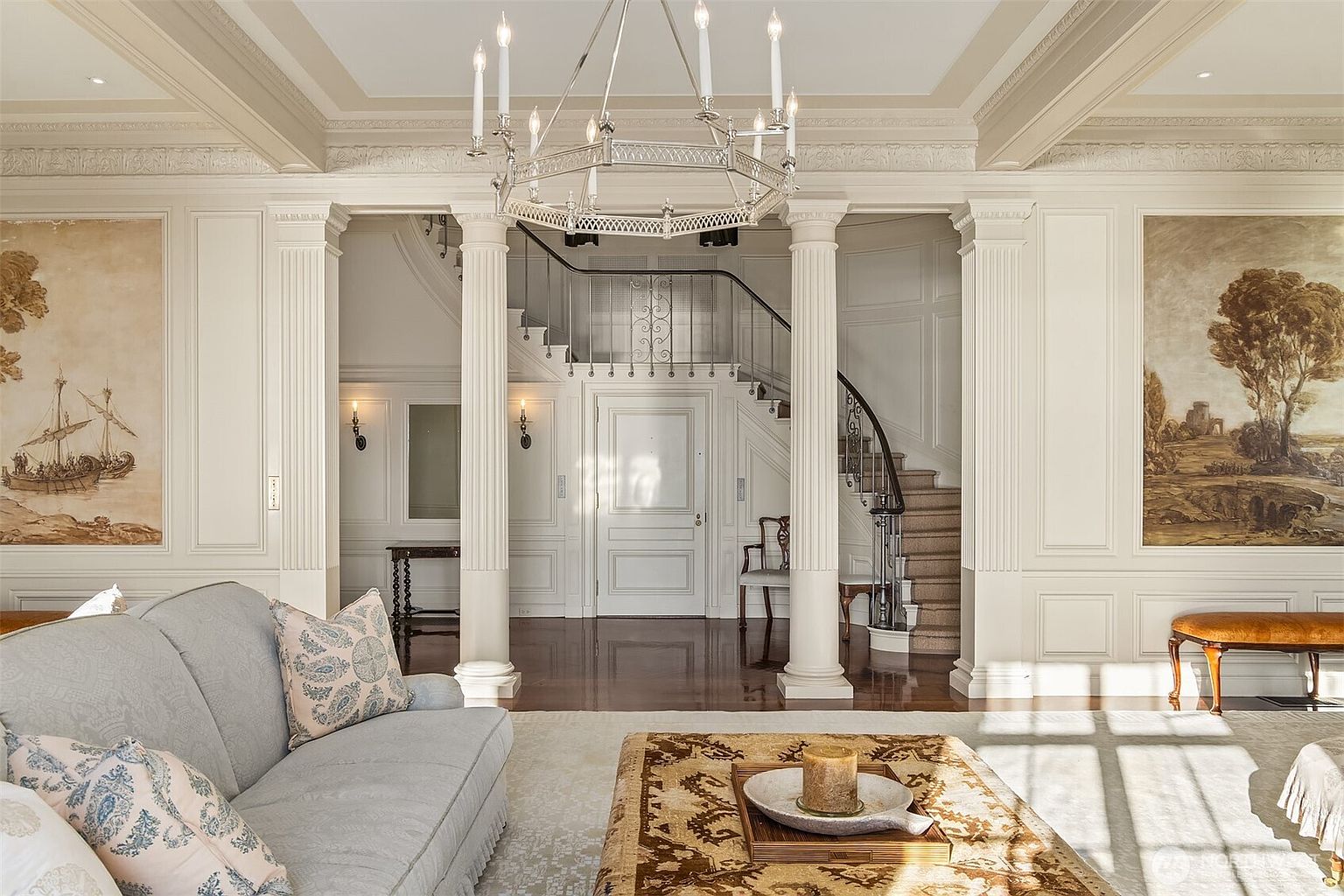
Inside, the scale is immediate and purposeful. Grand fluted columns frame the entry hall, where a sweeping staircase ascends through the foyer beneath soaring ceilings trimmed with acanthus-leaf cornices. Herringbone hardwoods extend underfoot through perfectly proportioned rooms — a design vocabulary that speaks not of ostentation but of deep, considered craft.
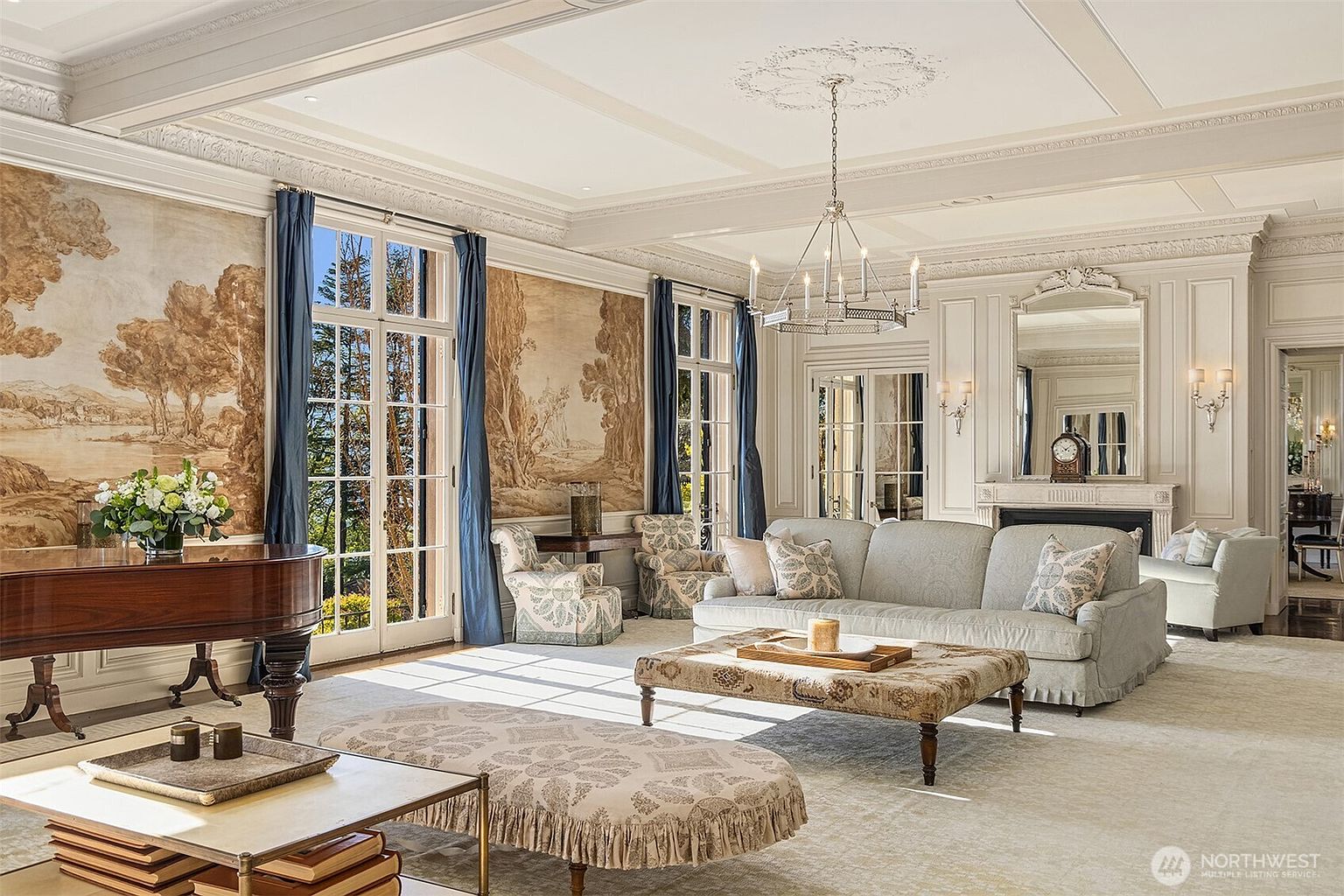
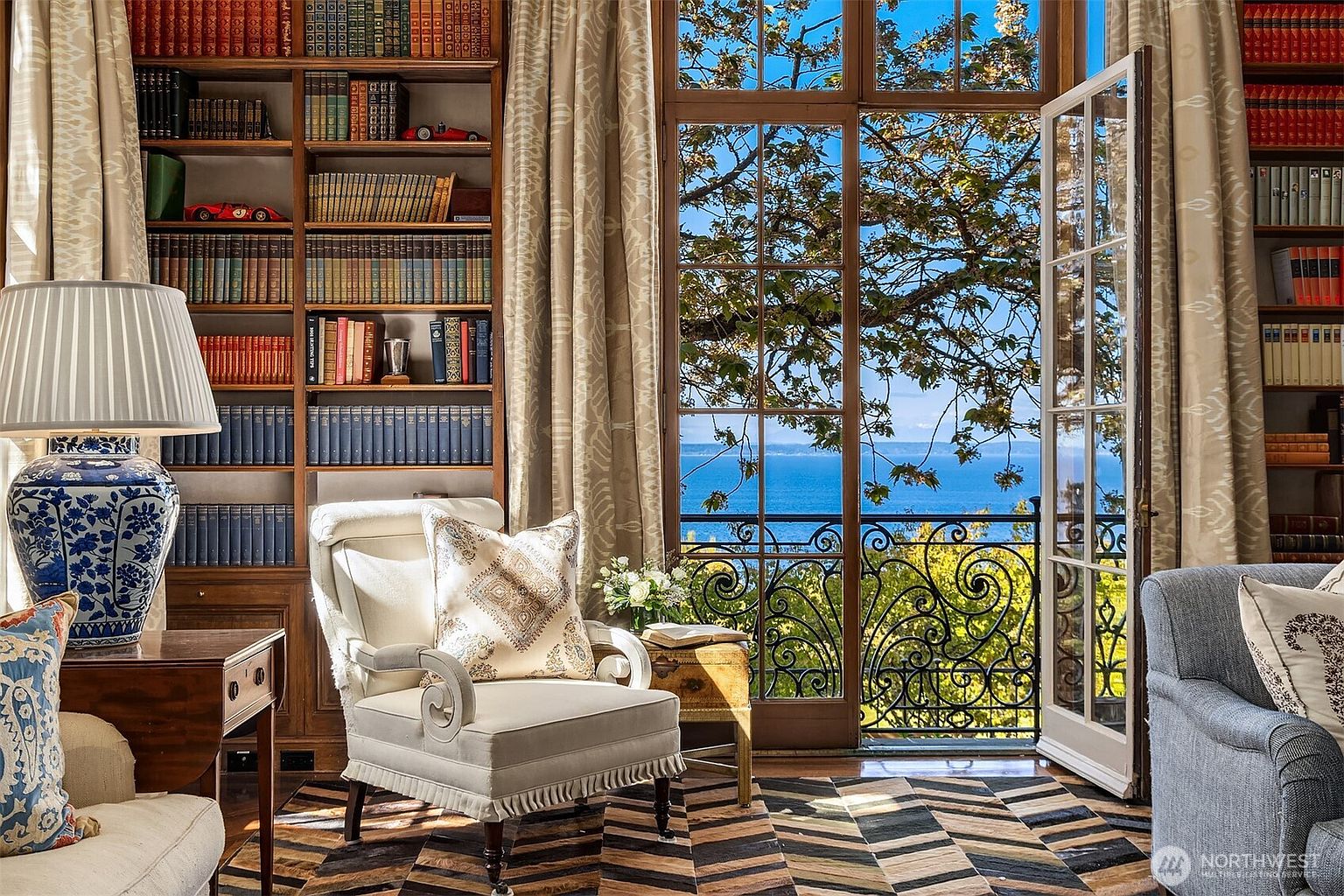
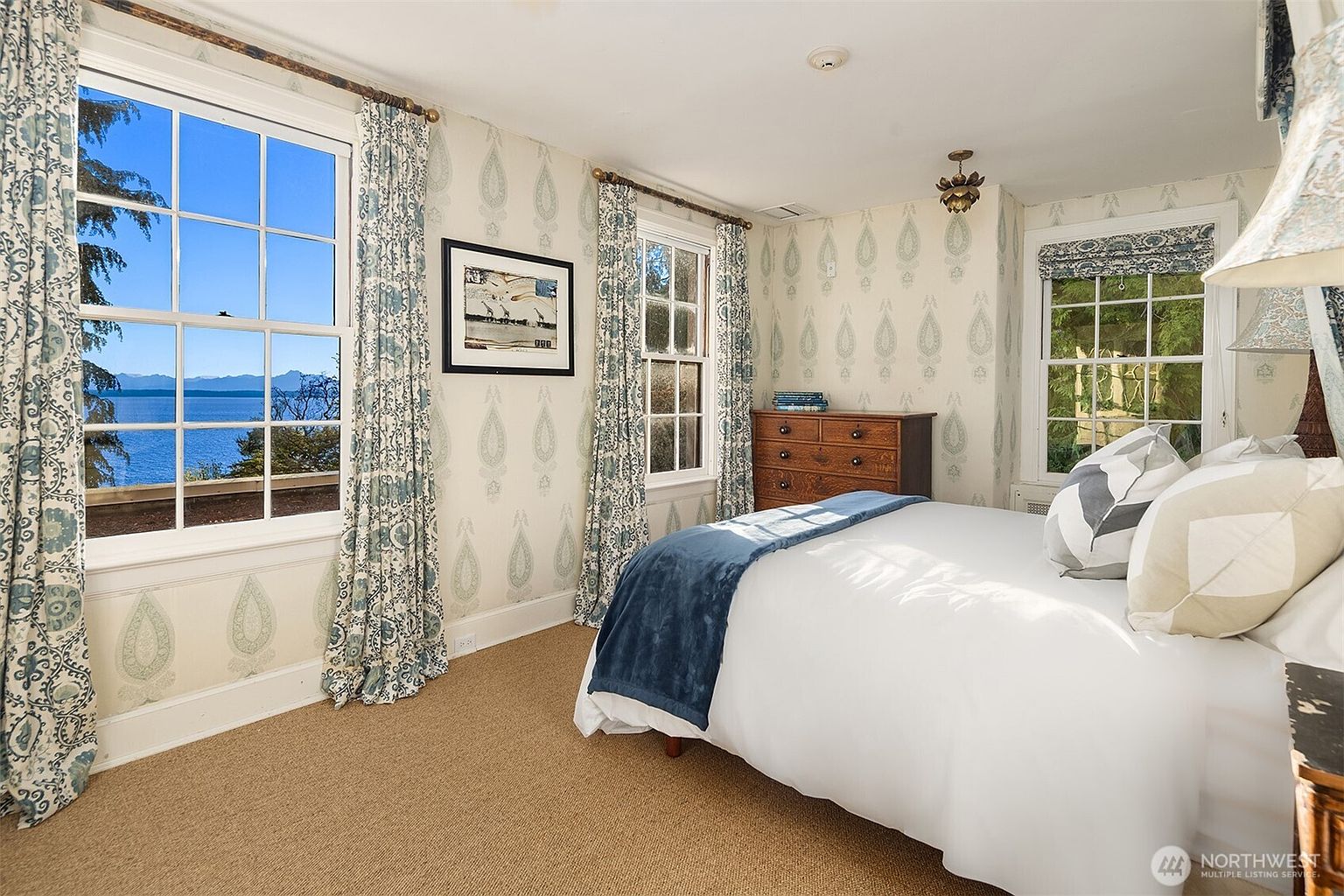
The mural-adorned drawing room anchors the main level with panoramic sight lines across Puget Sound to the Olympic Mountains — a view that reappears throughout the residence, pulling one forward from room to room with the quiet persistence of a leitmotif. High coffered ceilings and floor-to-ceiling windows draped in deep blue lend the space an old-world grandeur softened by abundant natural light.
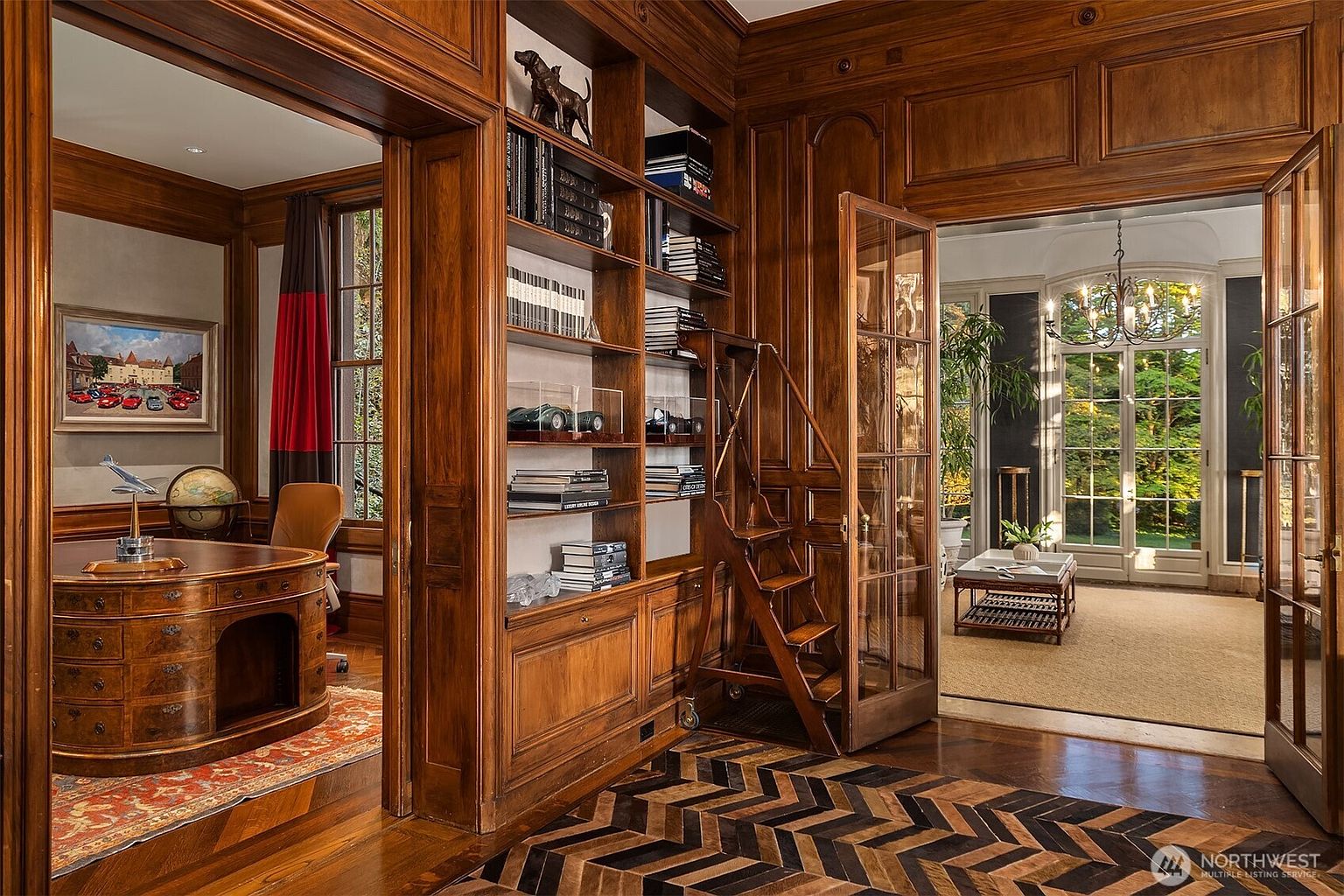
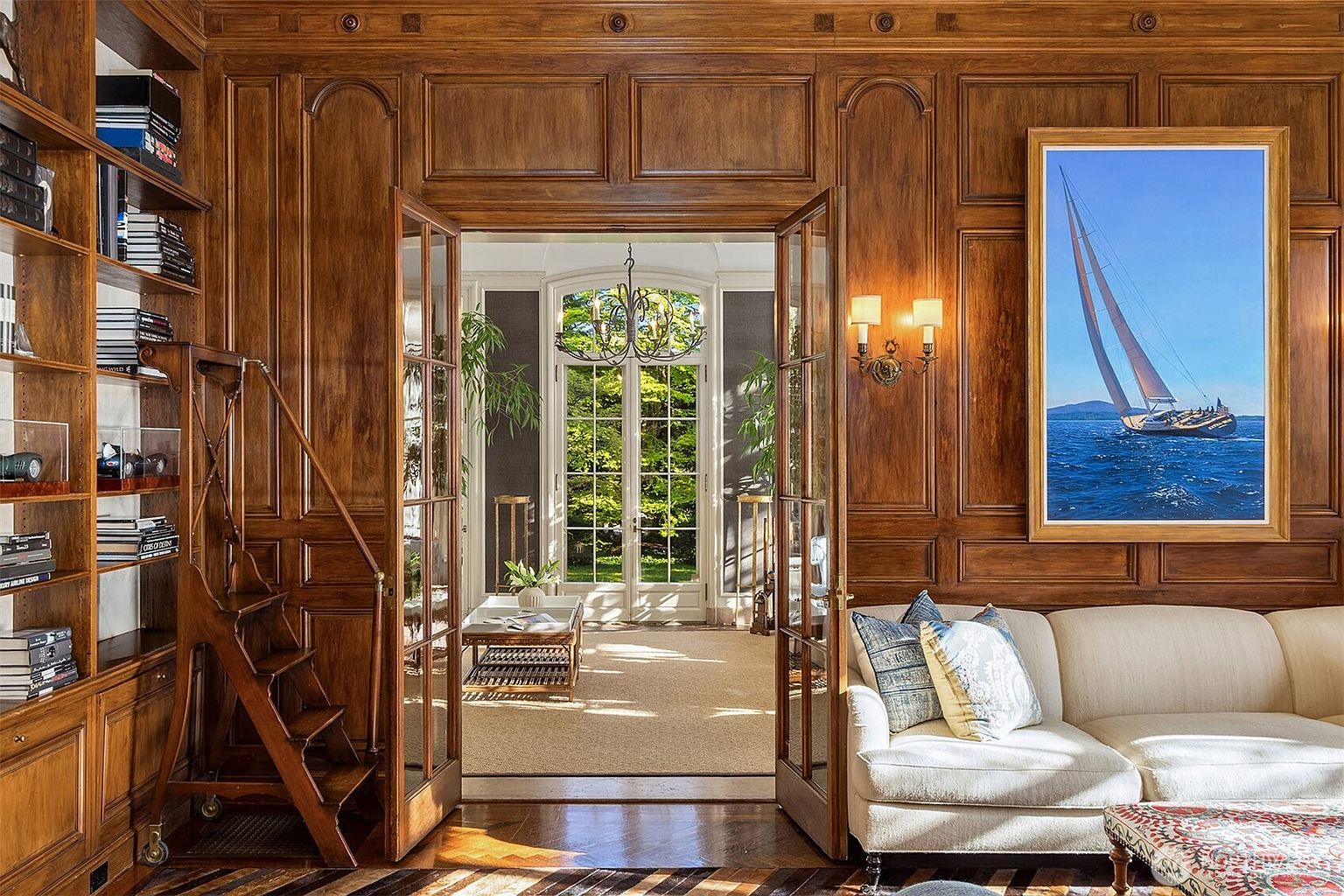
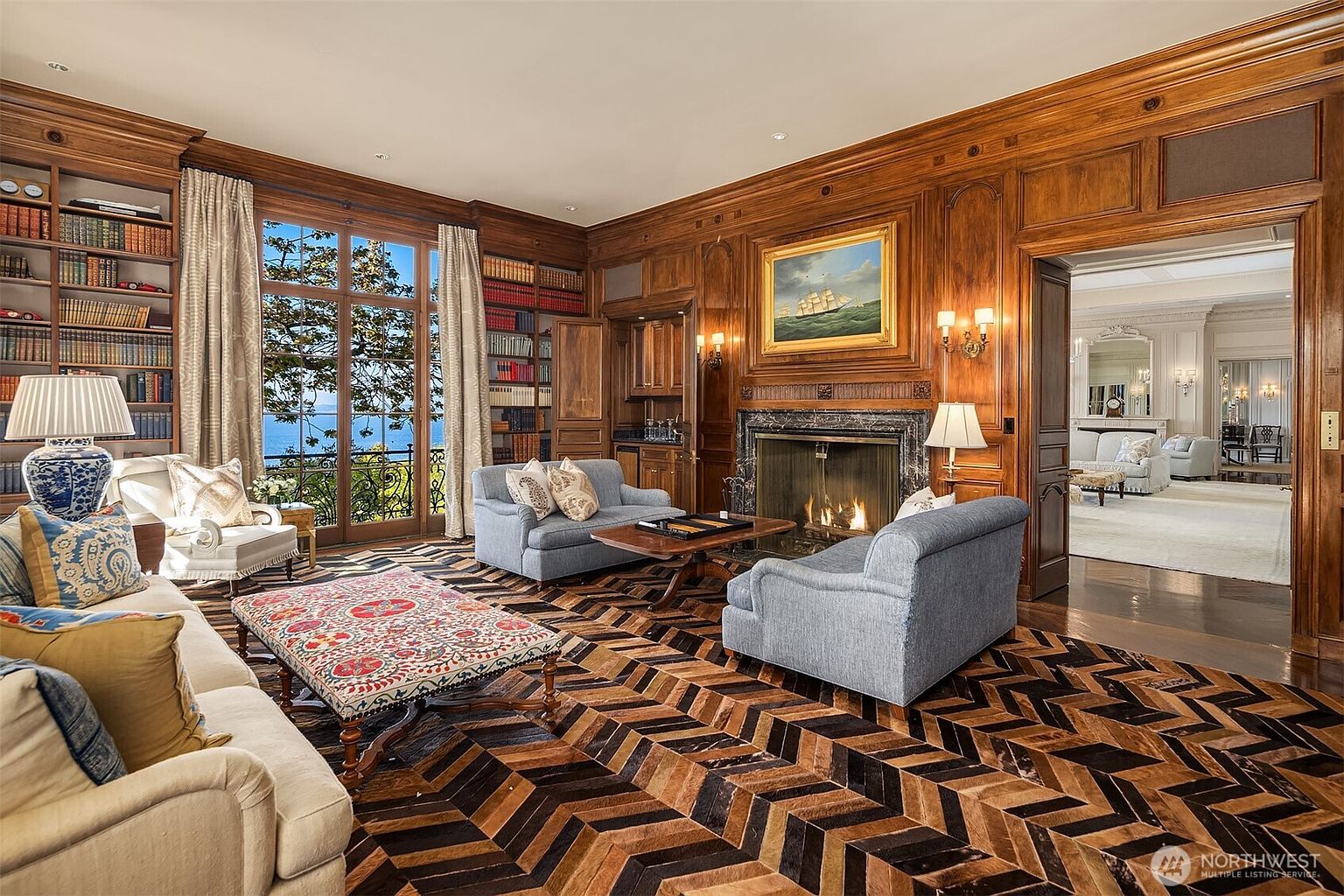
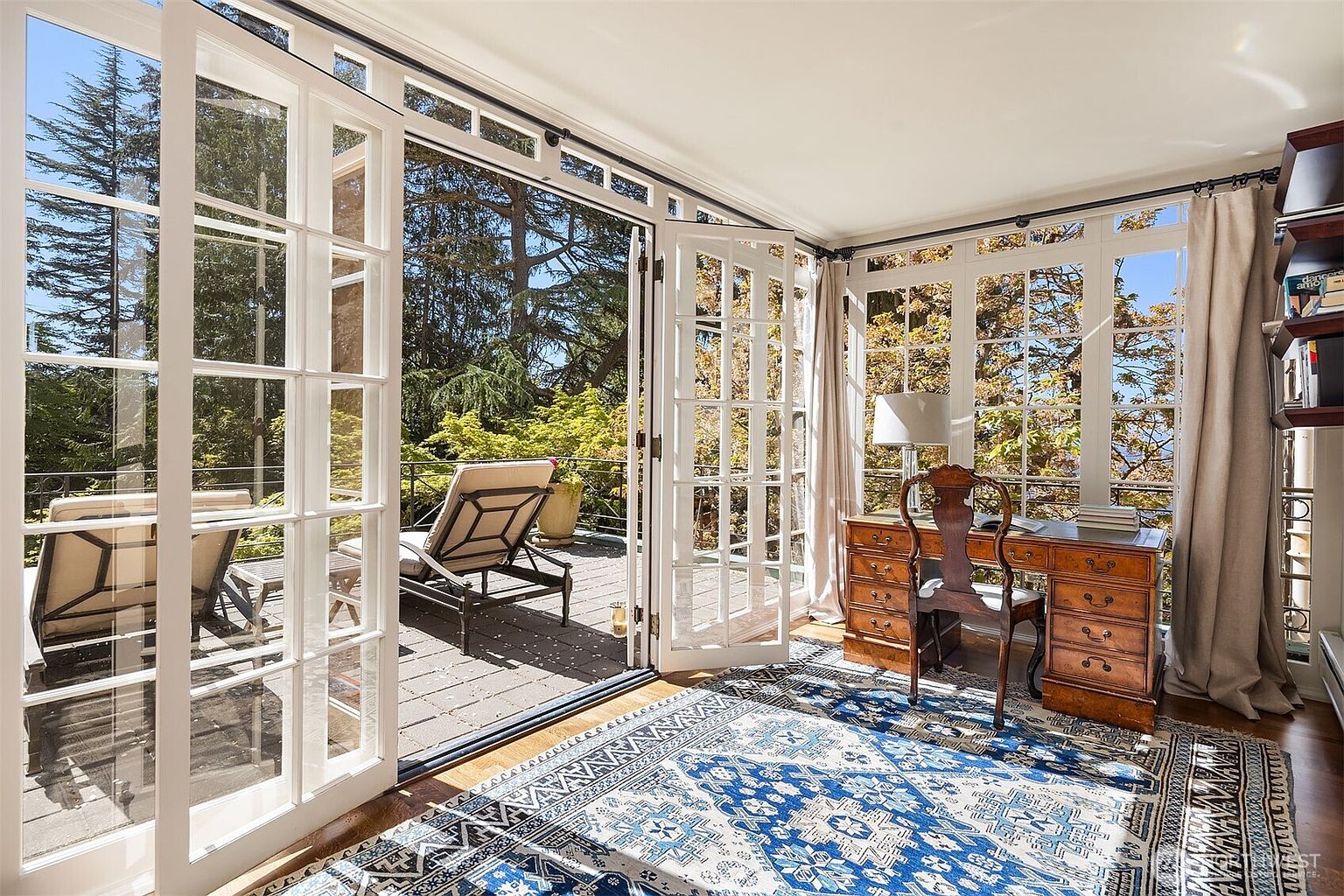
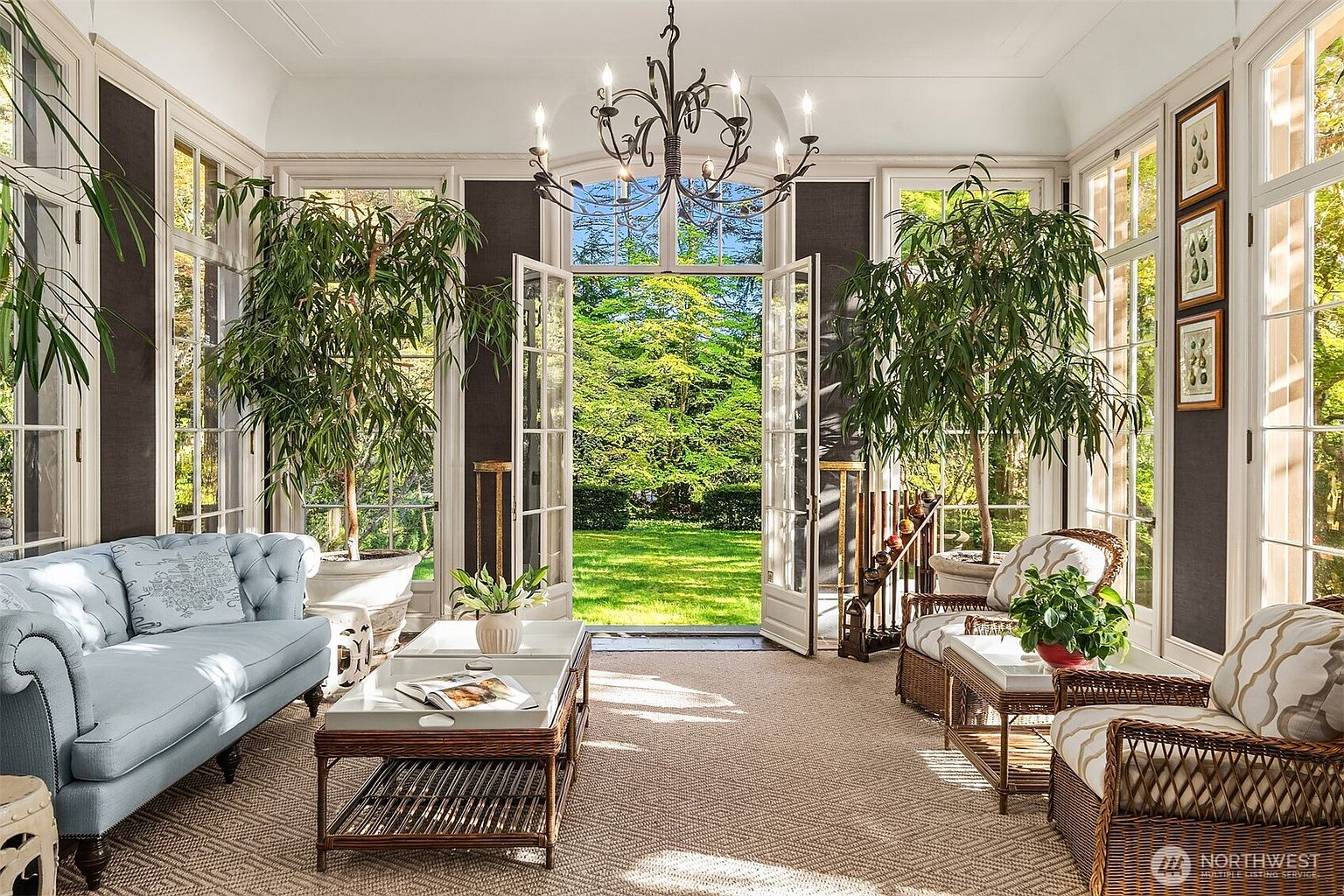
The paneled library, fitted with floor-to-ceiling bookshelves and a rolling library ladder, is a room of genuine intellectual warmth. Glass-paned doors open into a sun-drenched conservatory beyond — a luminous counterpoint to the library's rich wood tones, where light pools across wicker furnishings and potted trees frame views of the sculpted garden. A grand fireplace with a marble surround and herringbone floors complete the library's refined atmosphere.
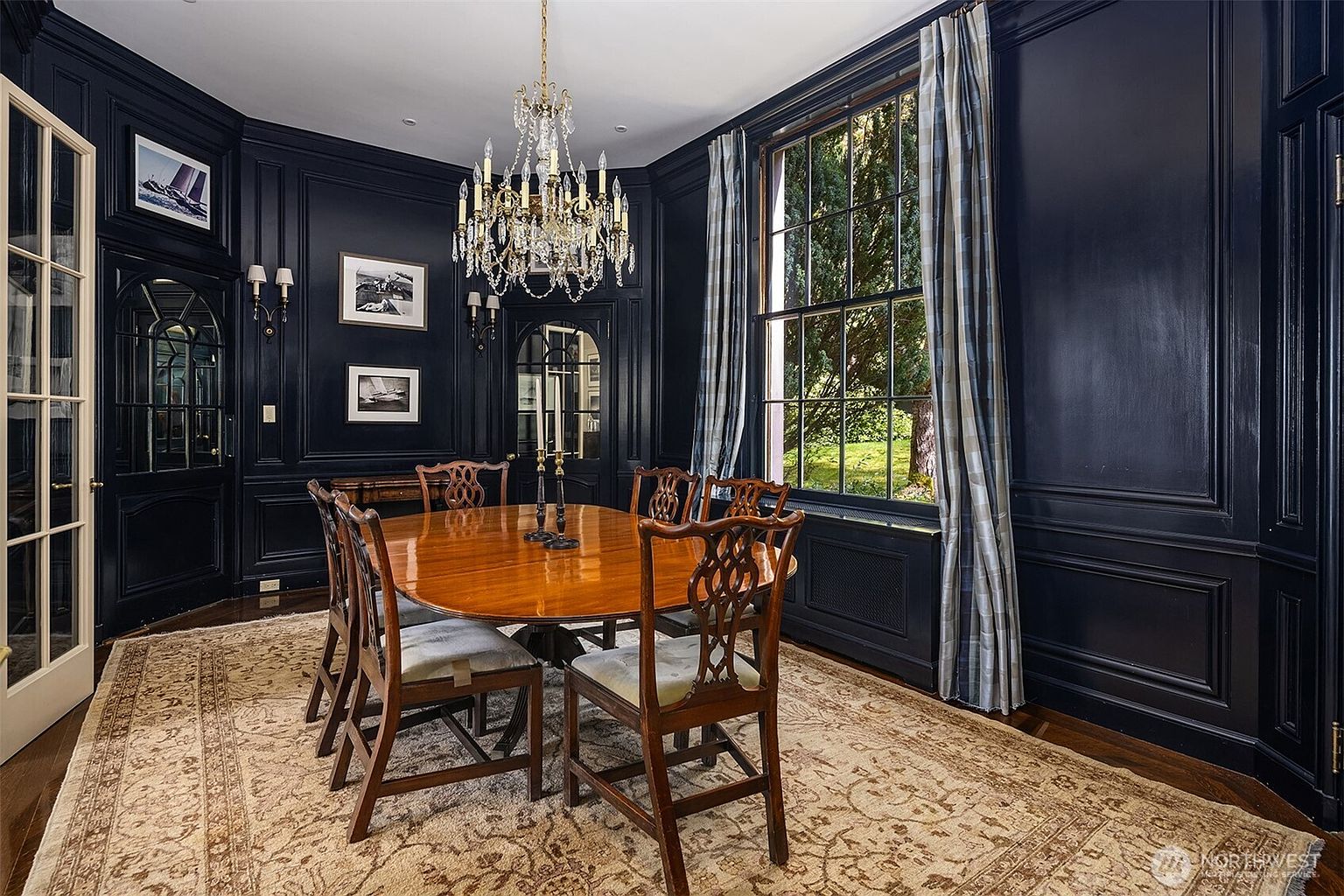
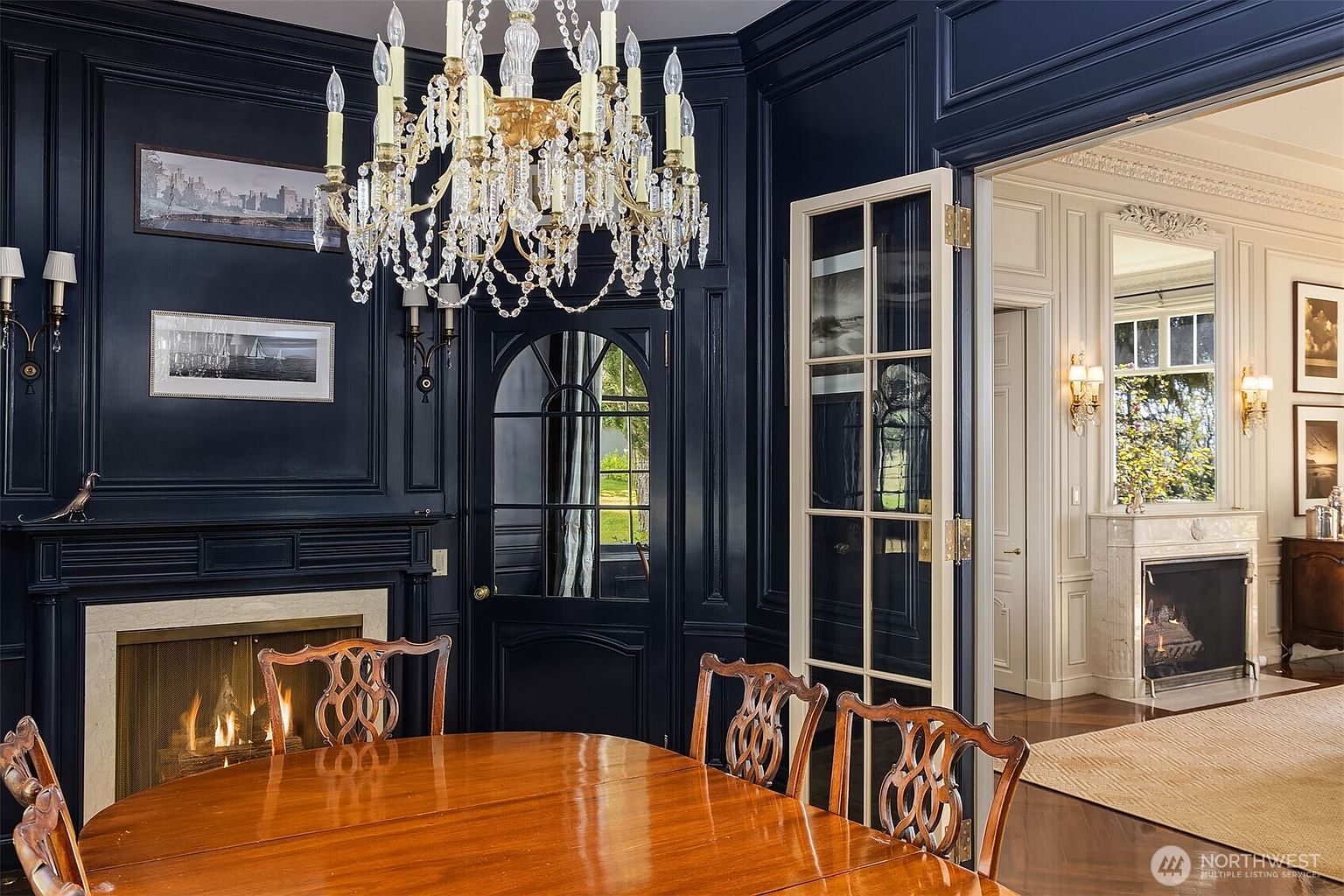
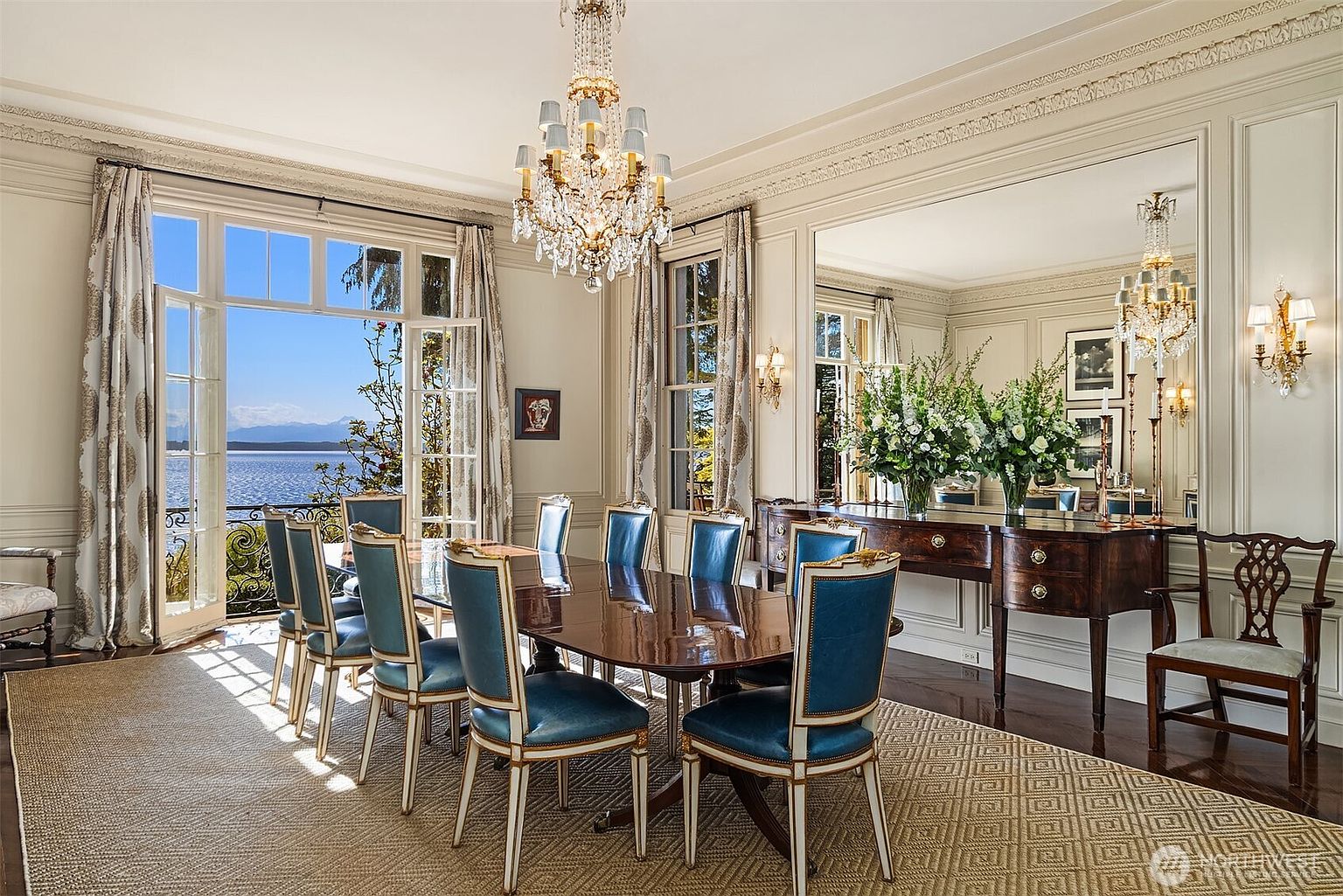
The formal dining room commands immediate attention: high-gloss navy blue paneled walls, a stone-surround fireplace, a crystal chandelier overhead, and Chippendale-style chairs arranged around a polished oval table. It is intimate enough for a private dinner, yet scaled with the generosity of a room designed for formal reception.
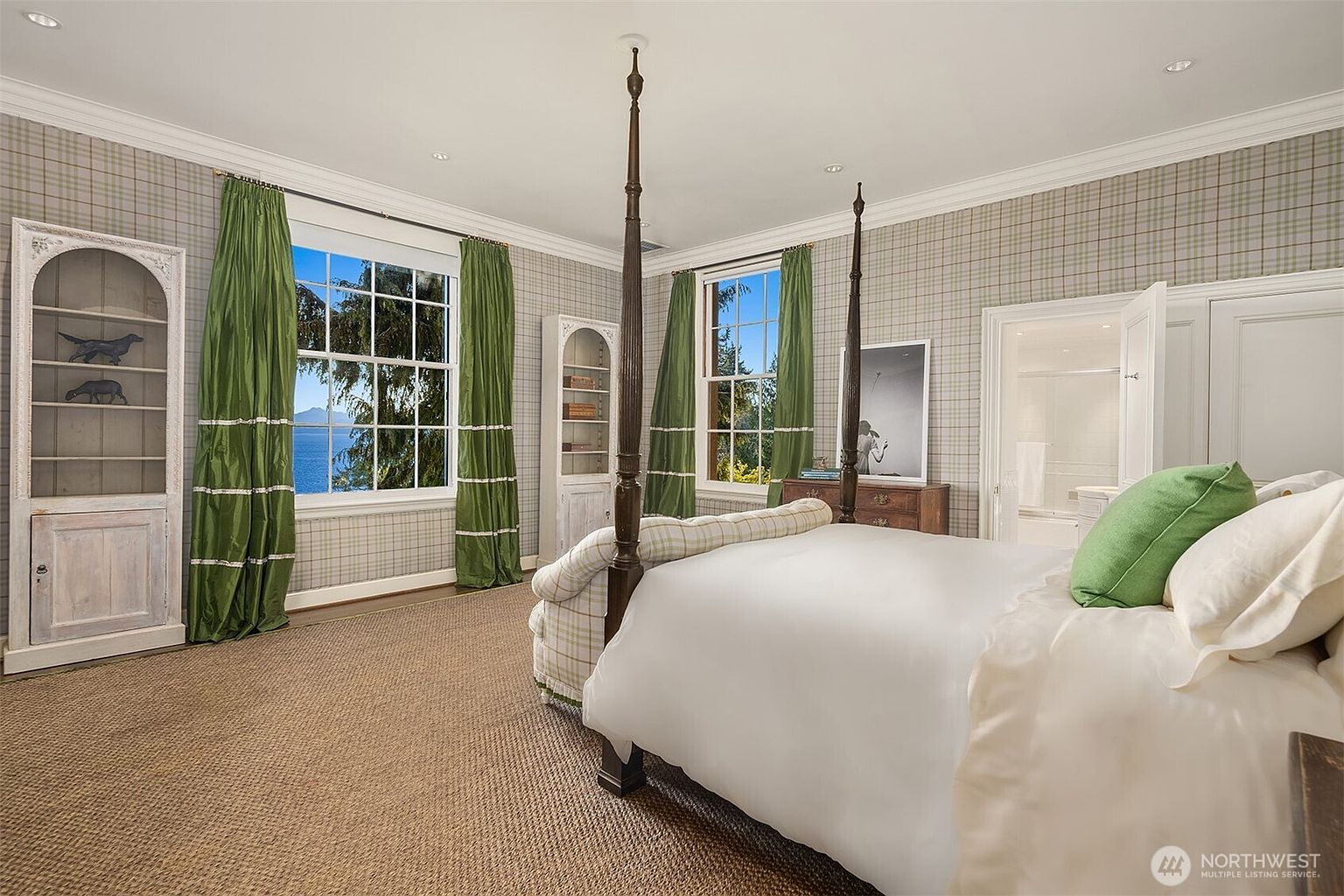
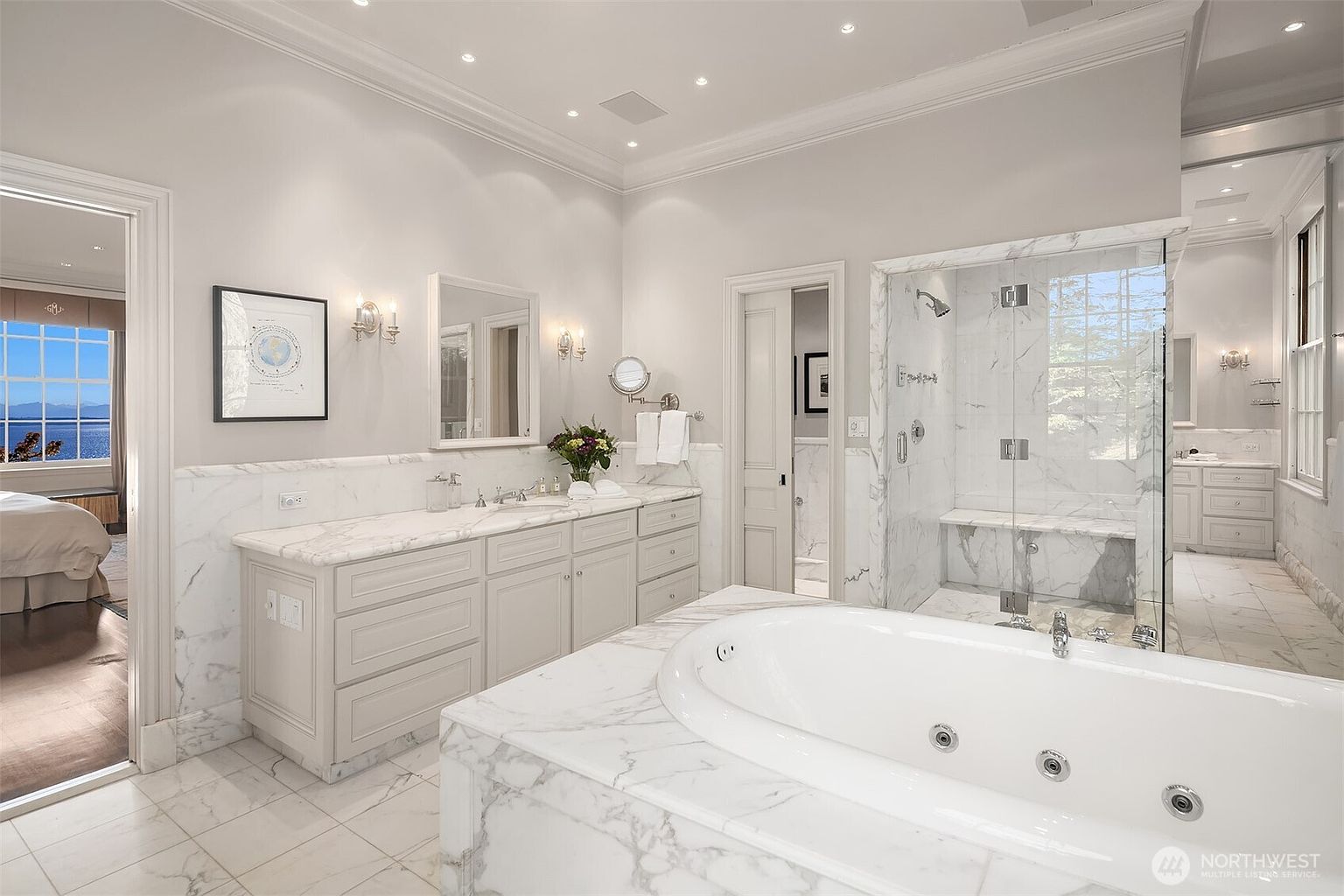
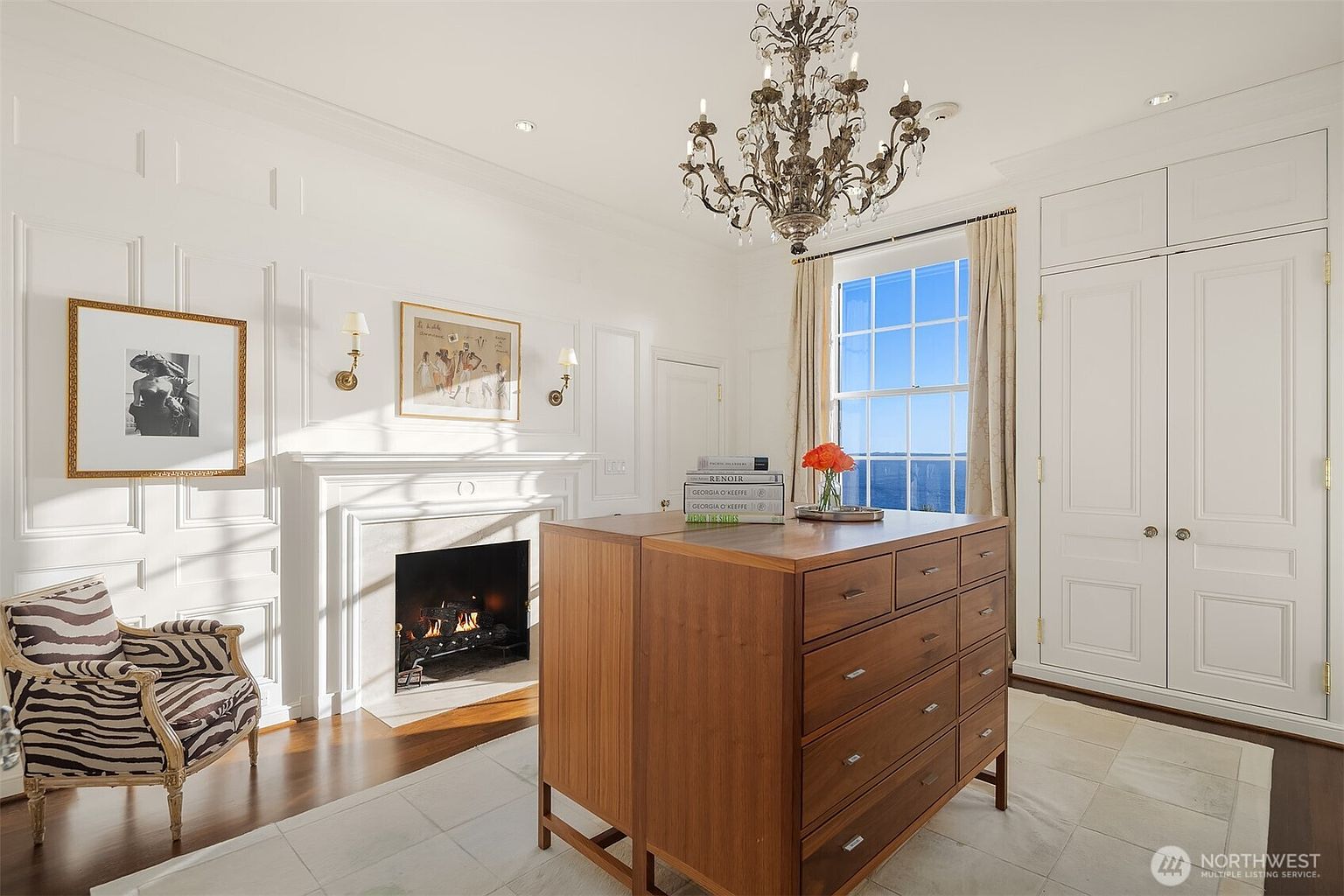
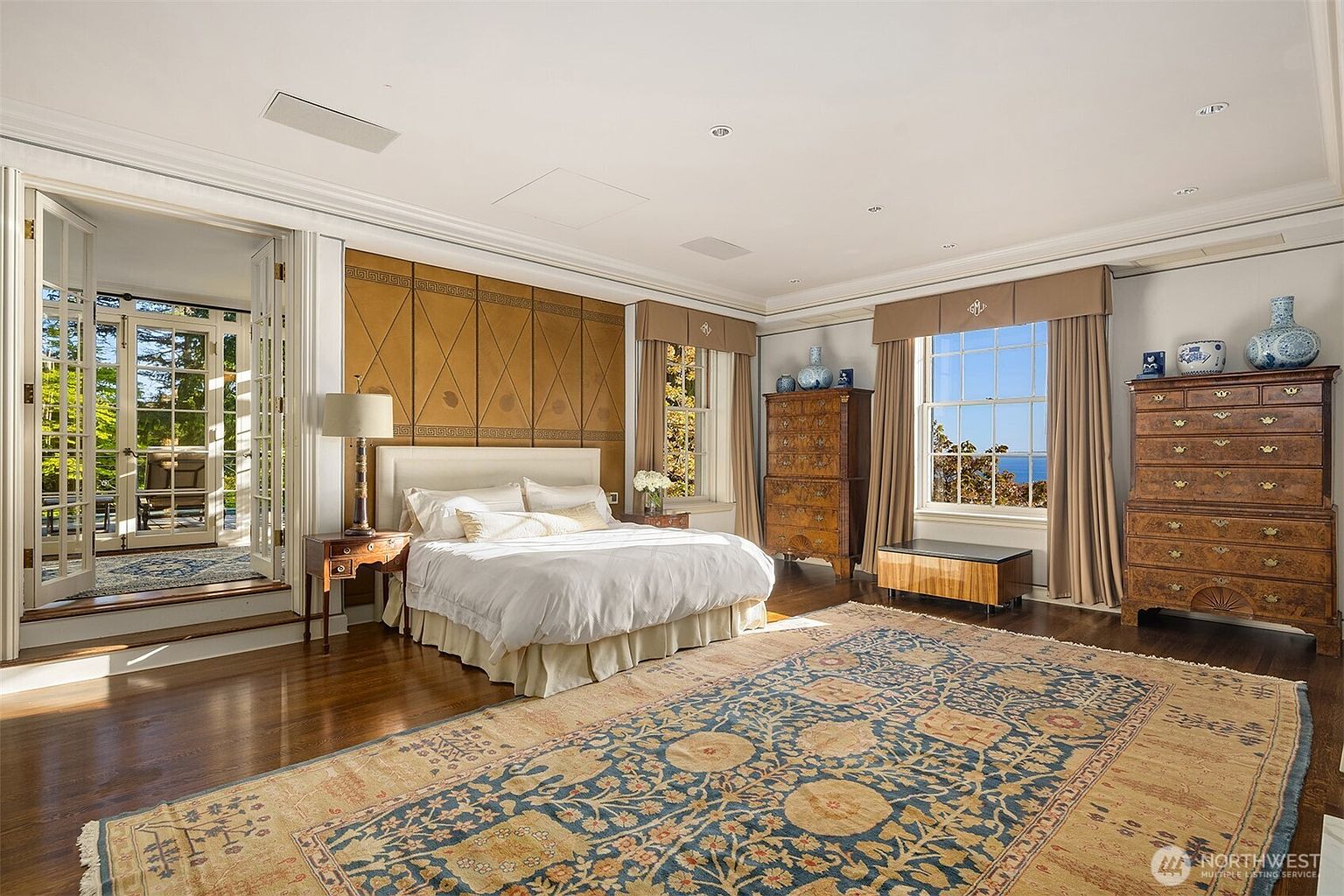
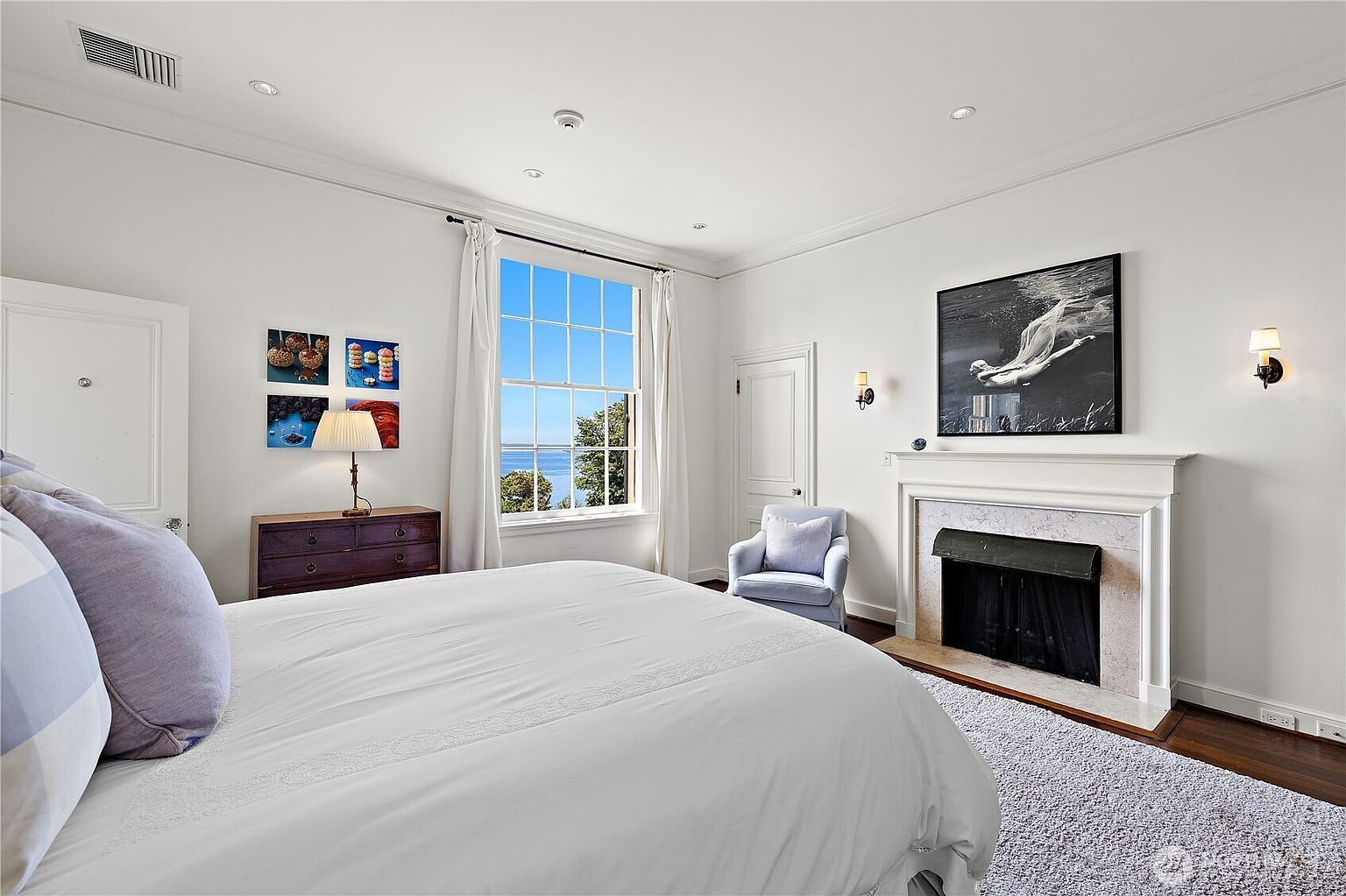
The primary suite offers hardwood floors, a carved fireplace mantelpiece, and French doors opening to a private terrace where the Sound stretches to the horizon. The en-suite bath presents a marble-clad soaking tub, double marble vanity, and a walk-in glass shower finished in clean neutral stone — a spa-like sanctuary proportioned with the same care as the rooms below.
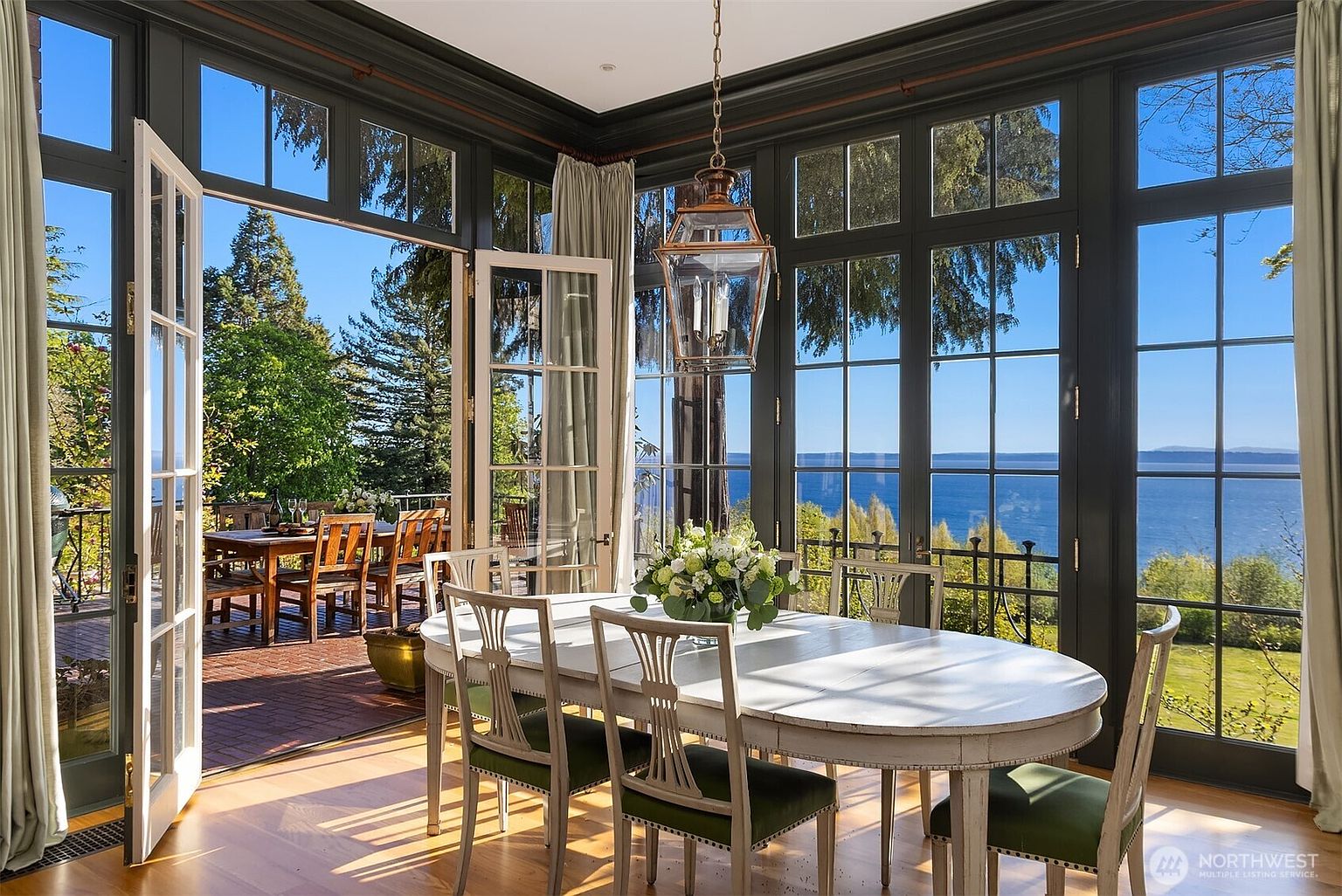
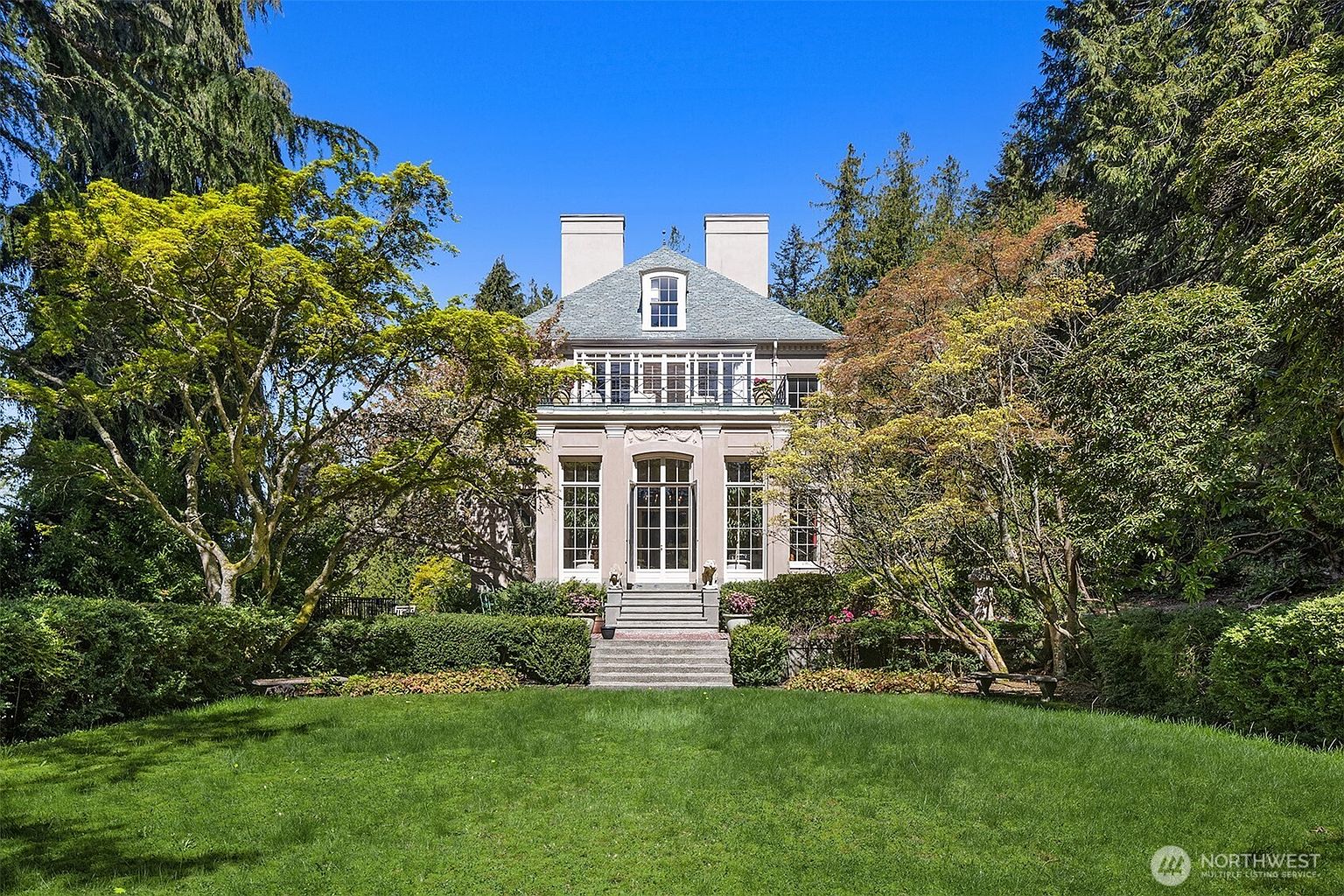
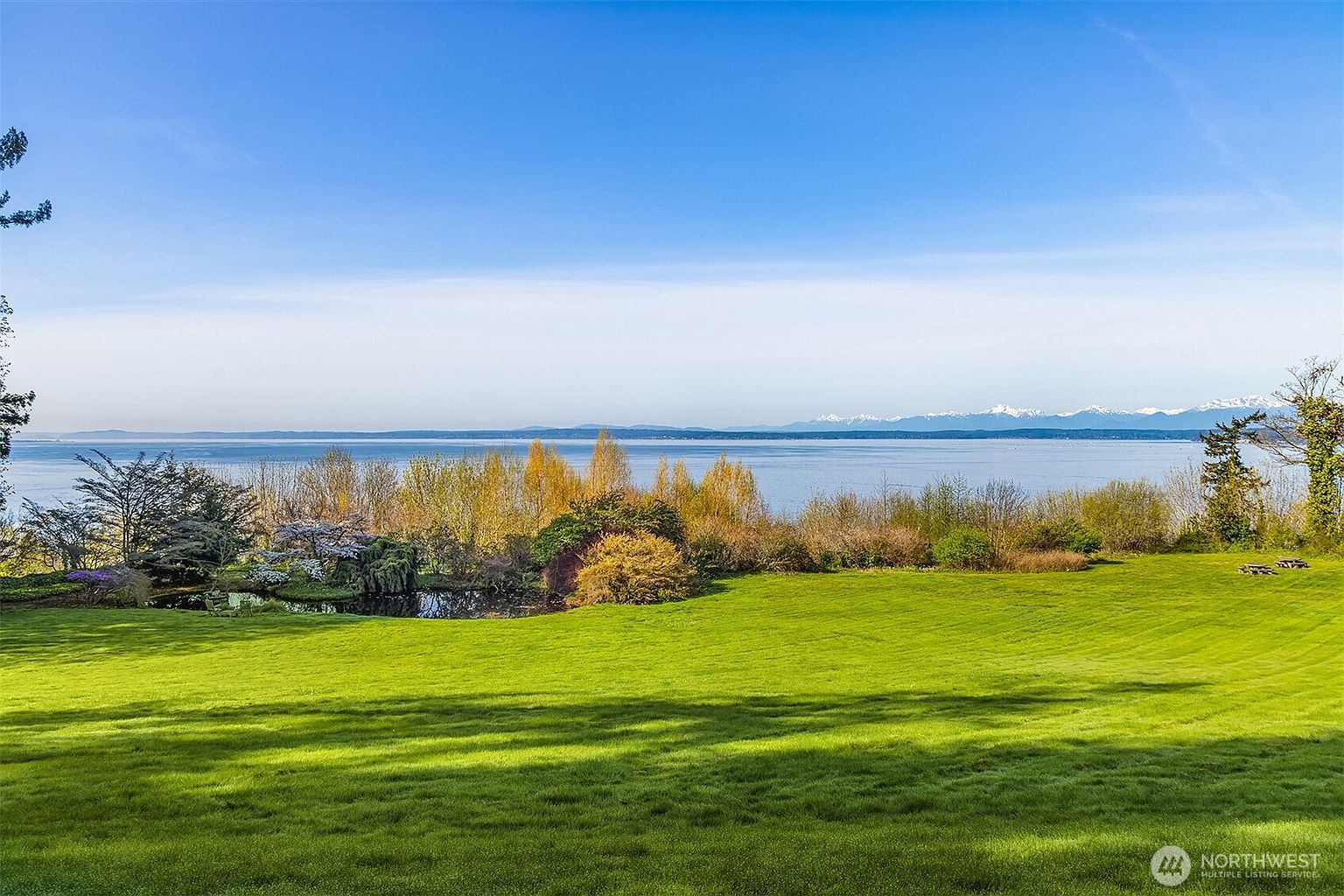
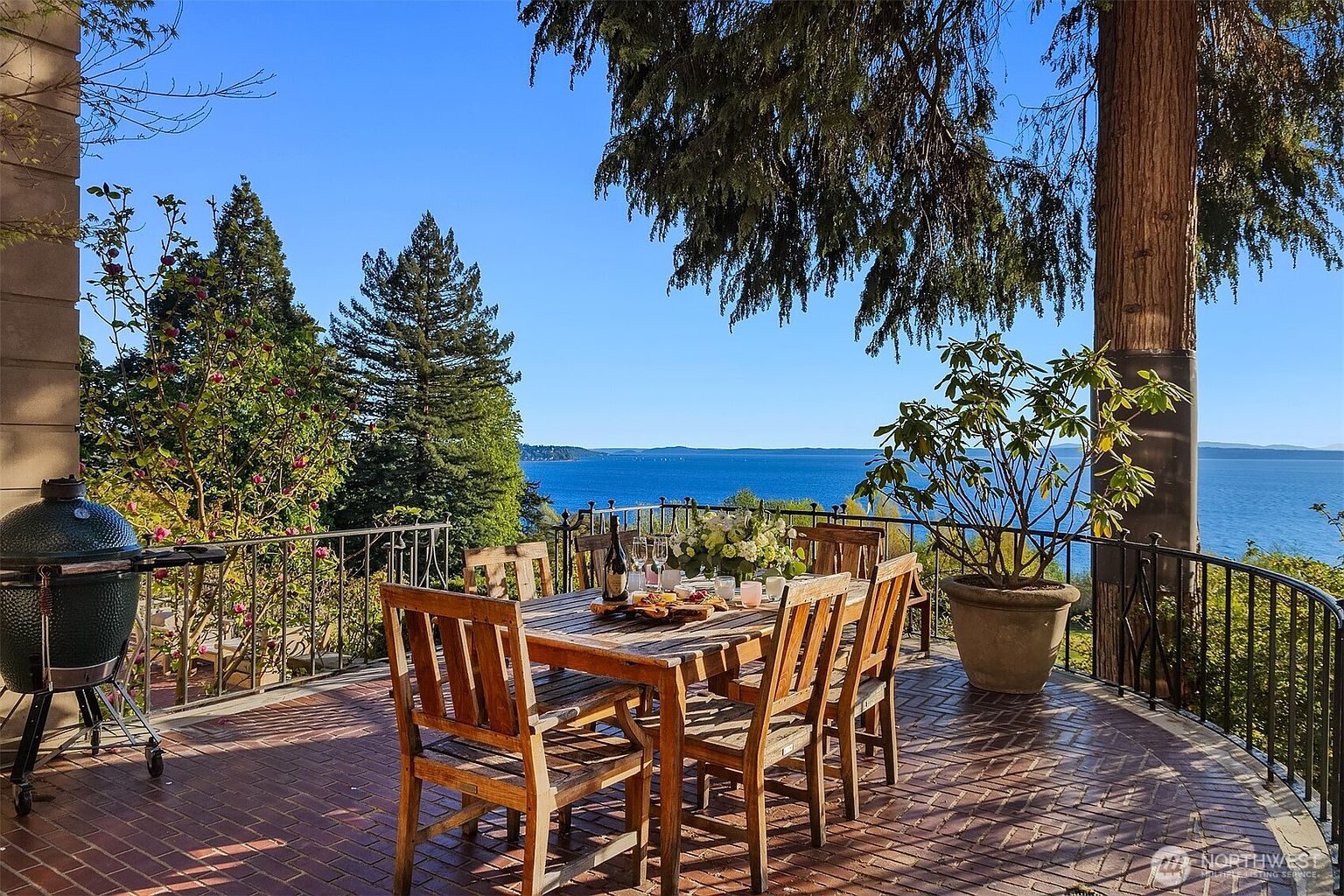
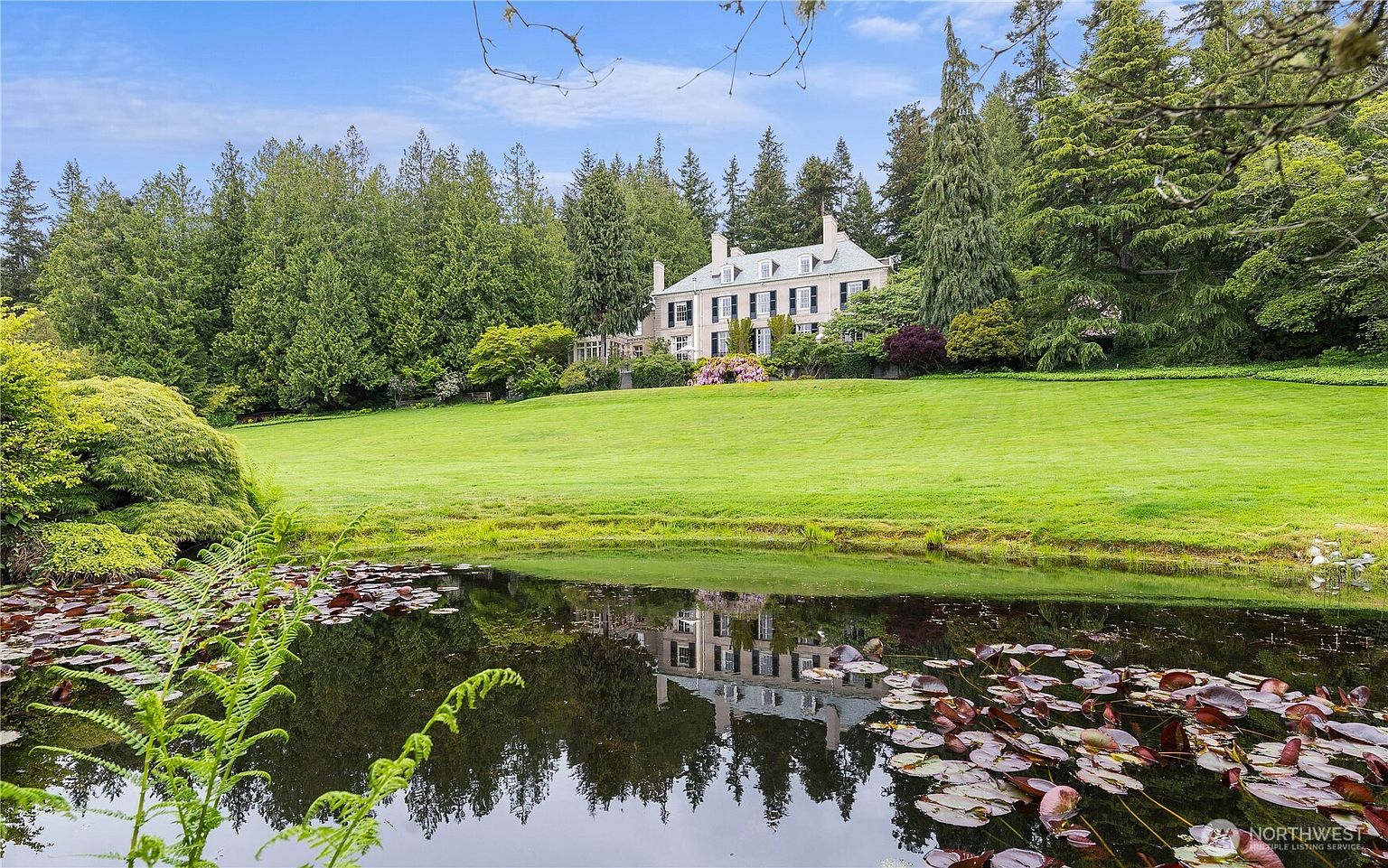
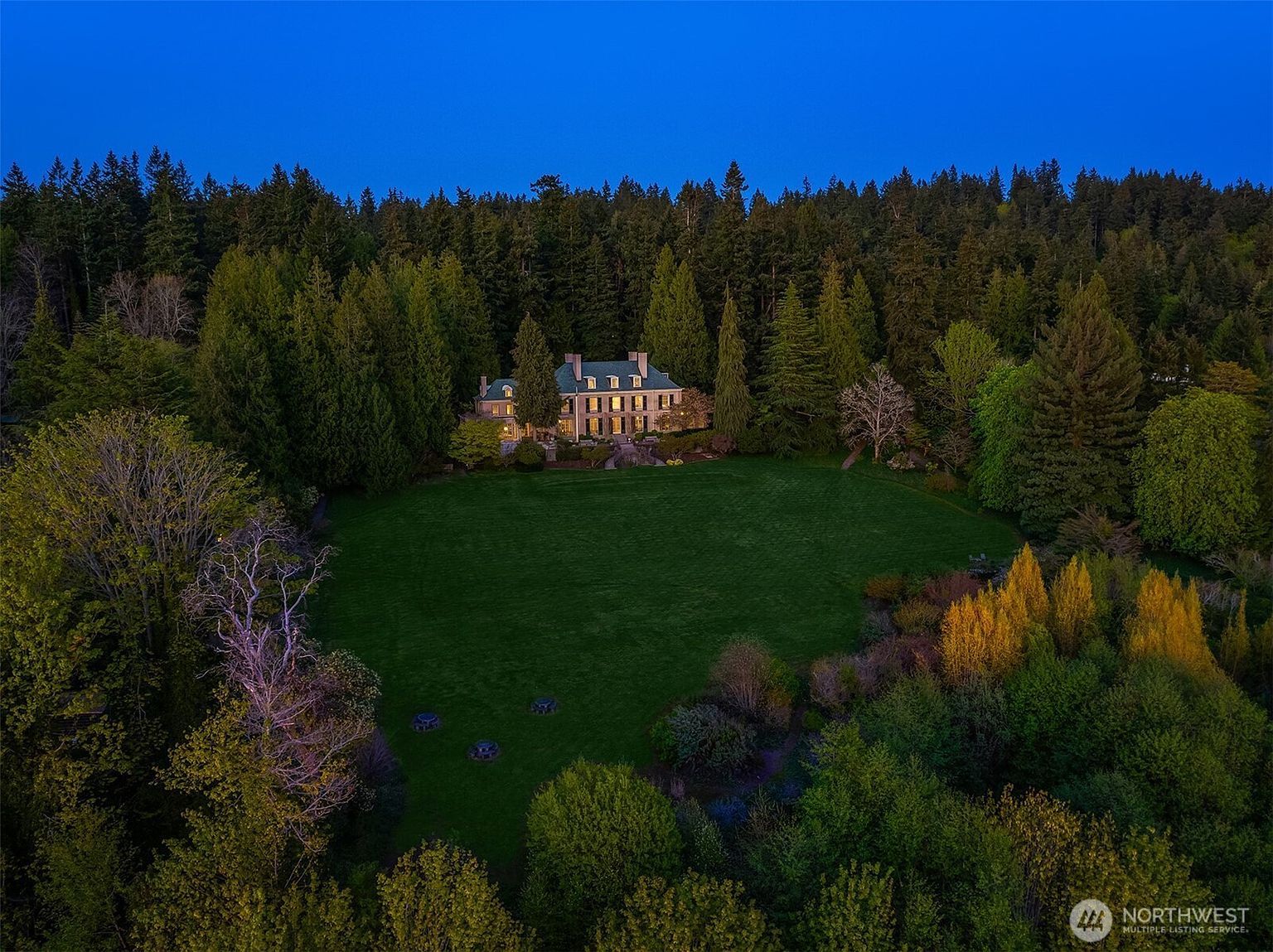
Beyond the residence, the grounds unfold in the naturalistic tradition of the Olmsted school. Open lawns stretch toward the bluff, a tranquil pond anchors the landscape among mature trees and flowering shrubs, and a brick-paved terrace with wrought-iron railings frames unobstructed water views. Architecture and land do not compete here — they complete one another, as Platt always intended.
To understand 77 Olympic Drive NW is to understand the Highlands — and to understand the Highlands is to understand something essential about Seattle's relationship with beauty, privacy, and the enduring appeal of a place thoughtfully conceived from the very beginning.
Established in 1907 as one of the Pacific Northwest's first planned residential communities, the Highlands was developed by a consortium of Seattle's founding families who sought to create a private enclave of exceptional homes set within a landscape of natural splendor. The community occupies a bluffside position in the Broadview neighborhood of northwest Seattle, where the land rises above Puget Sound to command panoramic views of the Olympic Mountains and the waterways that define the region's character. It remains a gated community to this day — one of the few of its kind in Seattle — preserving the privacy, tranquility, and architectural integrity that its founders envisioned more than a century ago.
The Highlands was designed with landscape as central to its identity. The community's grounds reflect the influence of the Olmsted Brothers, the legendary landscape architecture firm founded by the sons of Frederick Law Olmsted, whose naturalistic design philosophy shaped parks and estates across America. Winding roads, mature tree canopies, sculpted commons, and the careful preservation of the bluffside setting give the community a park-like quality that feels genuinely apart from the urban fabric of the city — despite being situated within Seattle's municipal boundaries.
The surrounding Broadview and Crown Hill neighborhoods offer a quieter, residential character distinct from Seattle's more commercially dense corridors, while remaining well-connected to the broader city. Golden Gardens Park, one of Seattle's most beloved waterfront destinations, lies nearby — a stretch of sandy beach along Shilshole Bay where residents gather to watch the sun descend behind the Olympic Peninsula in extraordinary displays of Pacific Northwest light. The park offers walking trails, picnic grounds, and direct water access, extending the sense of natural abundance that defines life on this part of the Sound.
Downtown Seattle is accessible within approximately twenty to thirty minutes, placing residents within reach of the city's cultural institutions — the Seattle Art Museum, Seattle Symphony, and the Seattle Opera among them — as well as its celebrated restaurant and retail landscape. The neighborhood's proximity to Highway 99 and Interstate 5 provides convenient access to Seattle-Tacoma International Airport and the broader metropolitan region.
Seattle itself has long occupied a singular position in American cultural life: a city of genuine intellectual curiosity, natural beauty, and economic vitality, consistently ranked among the most livable metropolitan areas in the country. Its technology-driven economy, world-class university in the University of Washington, and thriving arts community attract a global citizenry of ambition and discernment.
Yet for all the city's dynamism, life within the Highlands exists at a different register entirely — quieter, more considered, and defined above all by the kind of beauty that does not announce itself but is simply, permanently present. It is the ideal setting for an estate of this caliber: a place where architecture, landscape, and legacy converge without compromise.
Featured Highlights
Curated Content • Presented by Bob Bennion