The Story Behind
Above Back Bay, Where Boston's Skyline Becomes Home
There is a particular kind of intention that separates a well-appointed residence from one that has been truly designed—where every material, proportion, and detail has been chosen not for effect alone, but for the way it contributes to a coherent whole. This residence at the Mandarin Oriental Boston belongs unmistakably to the latter category.
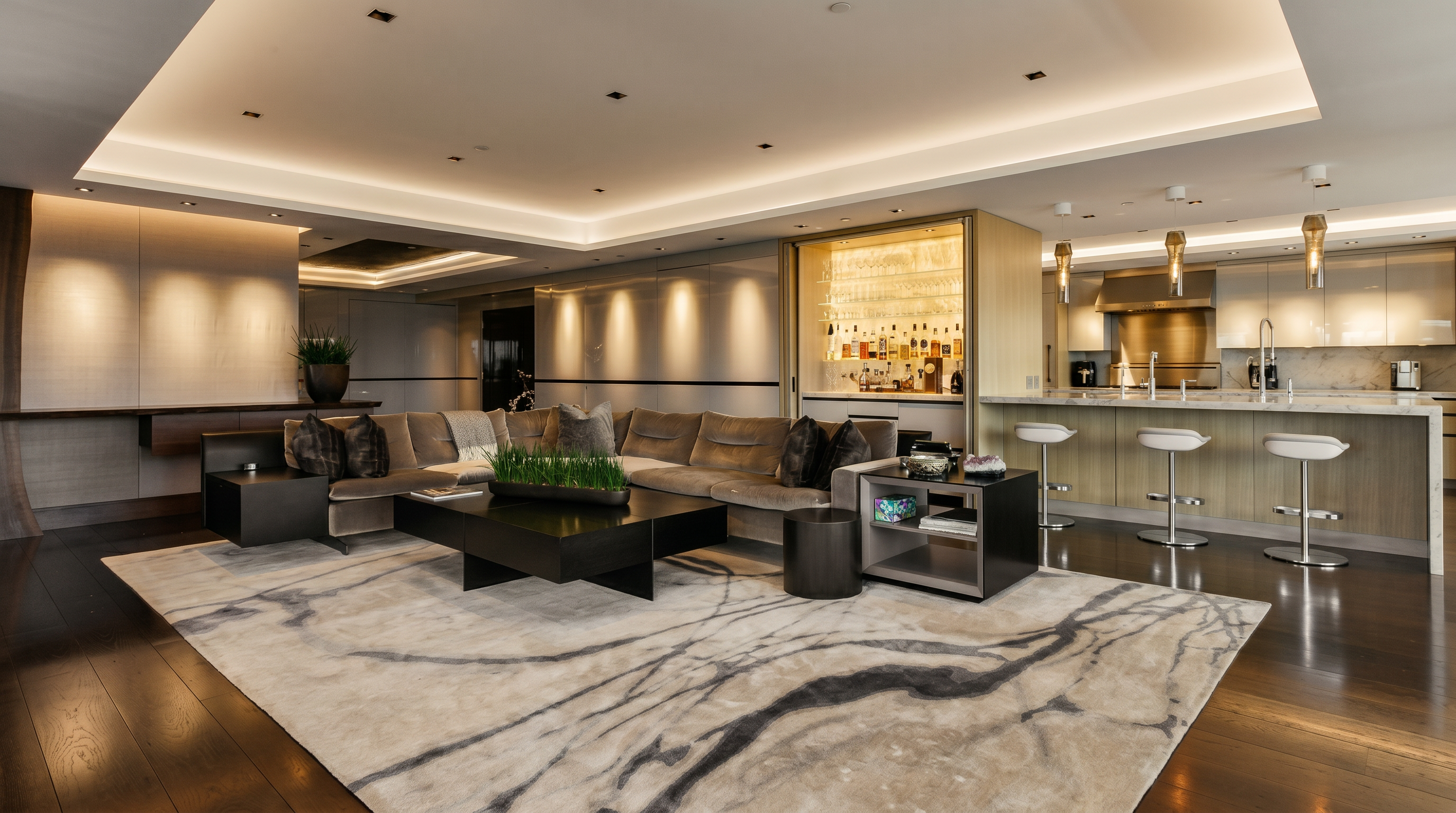
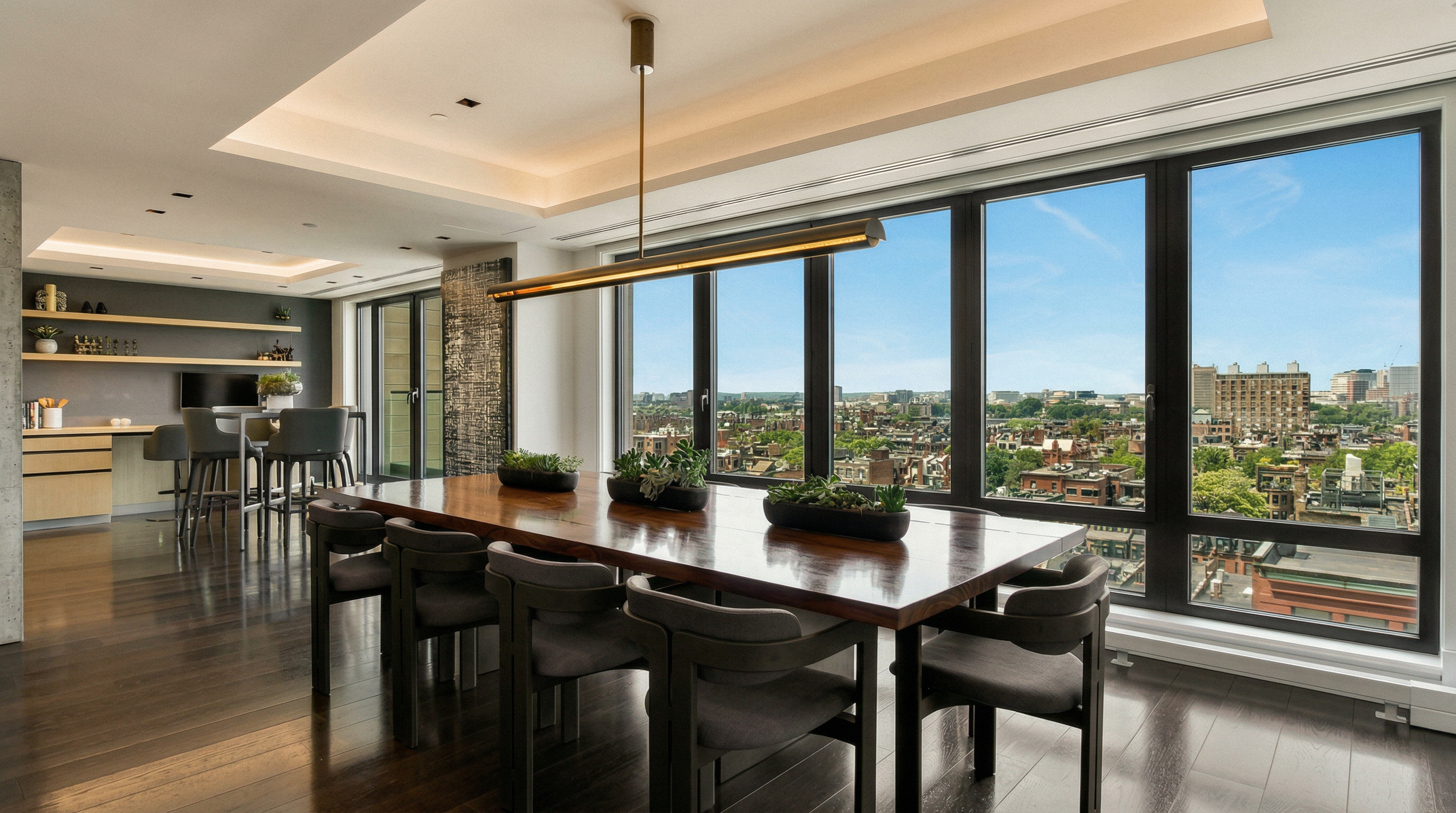
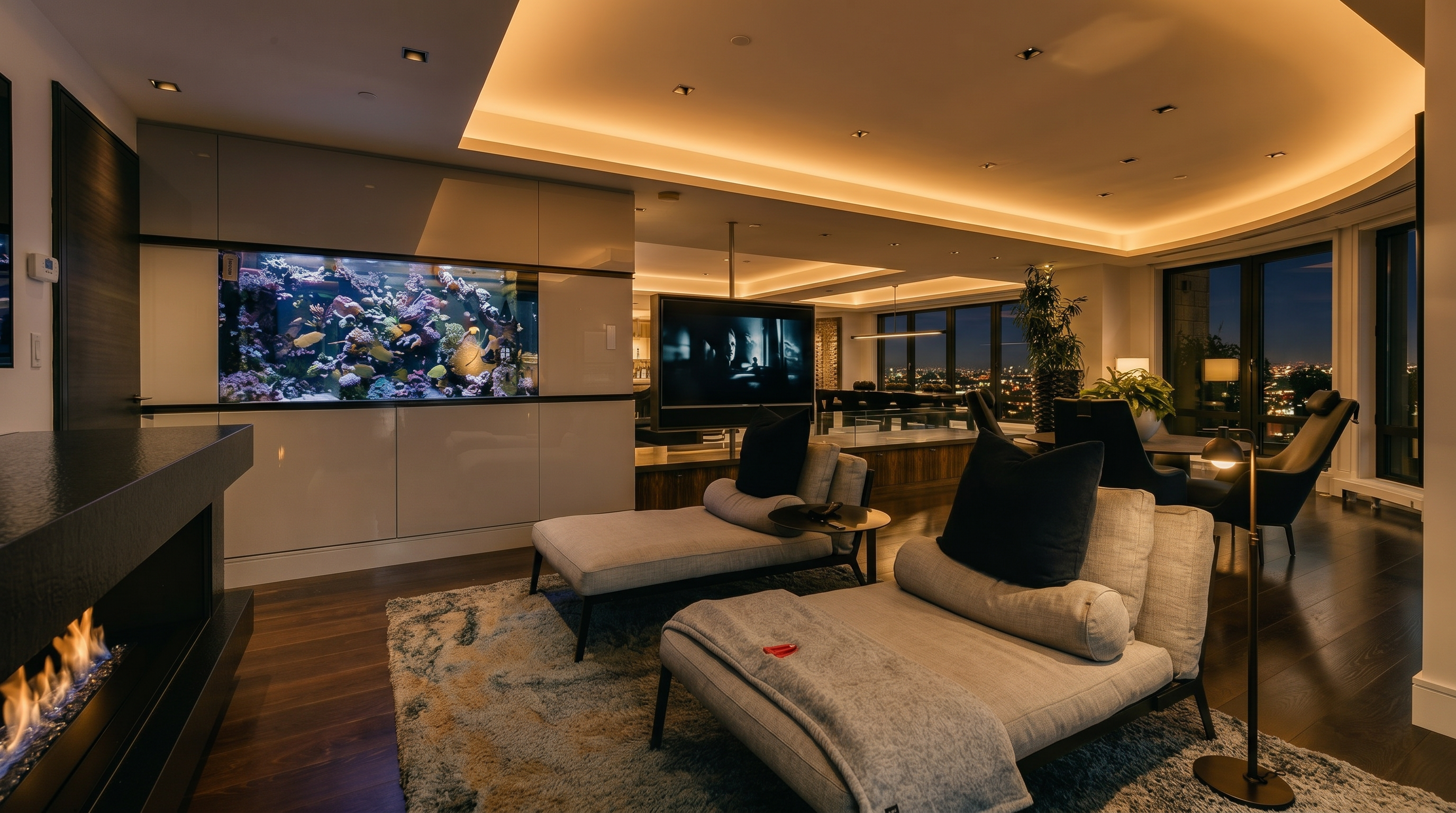
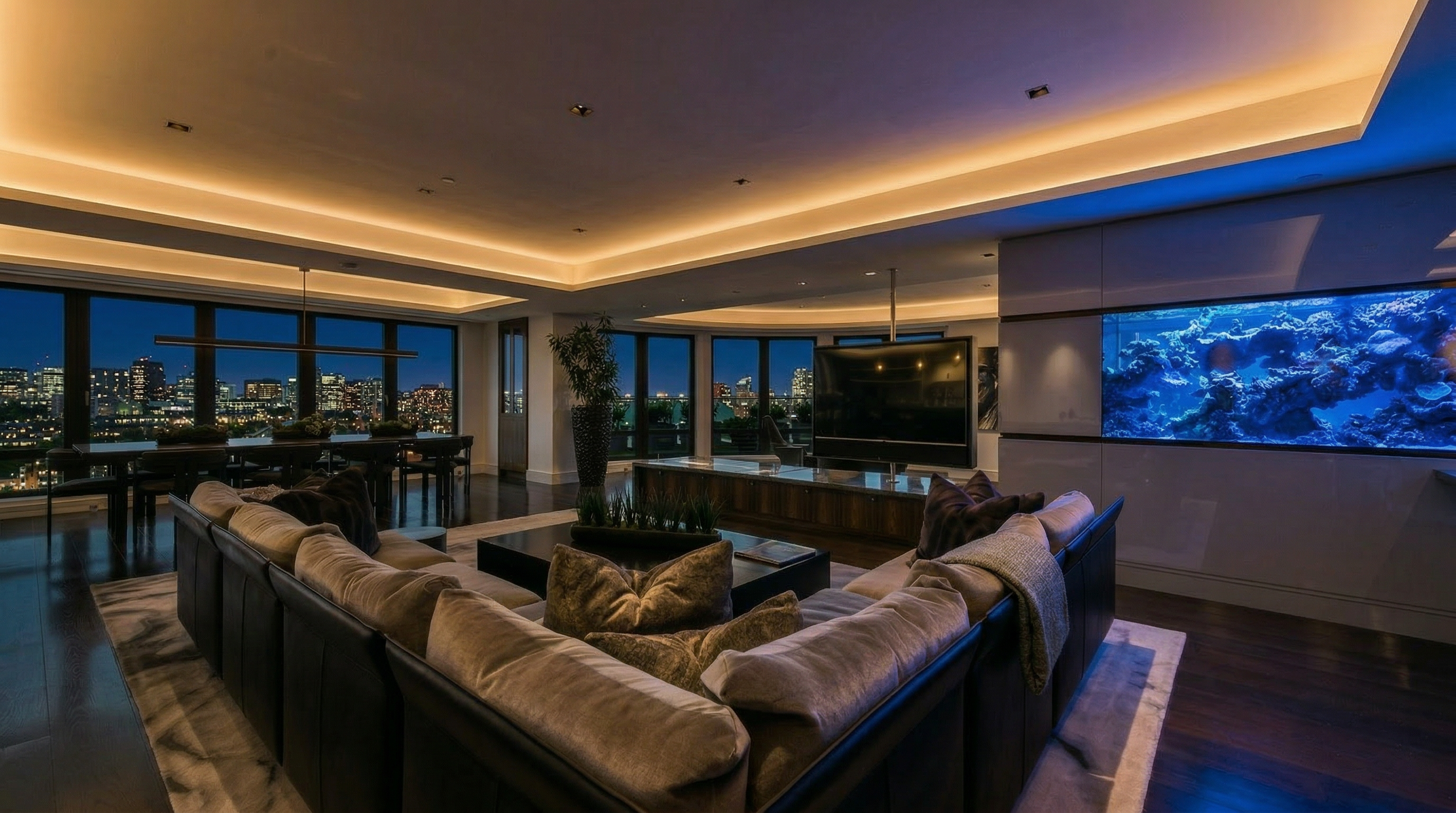
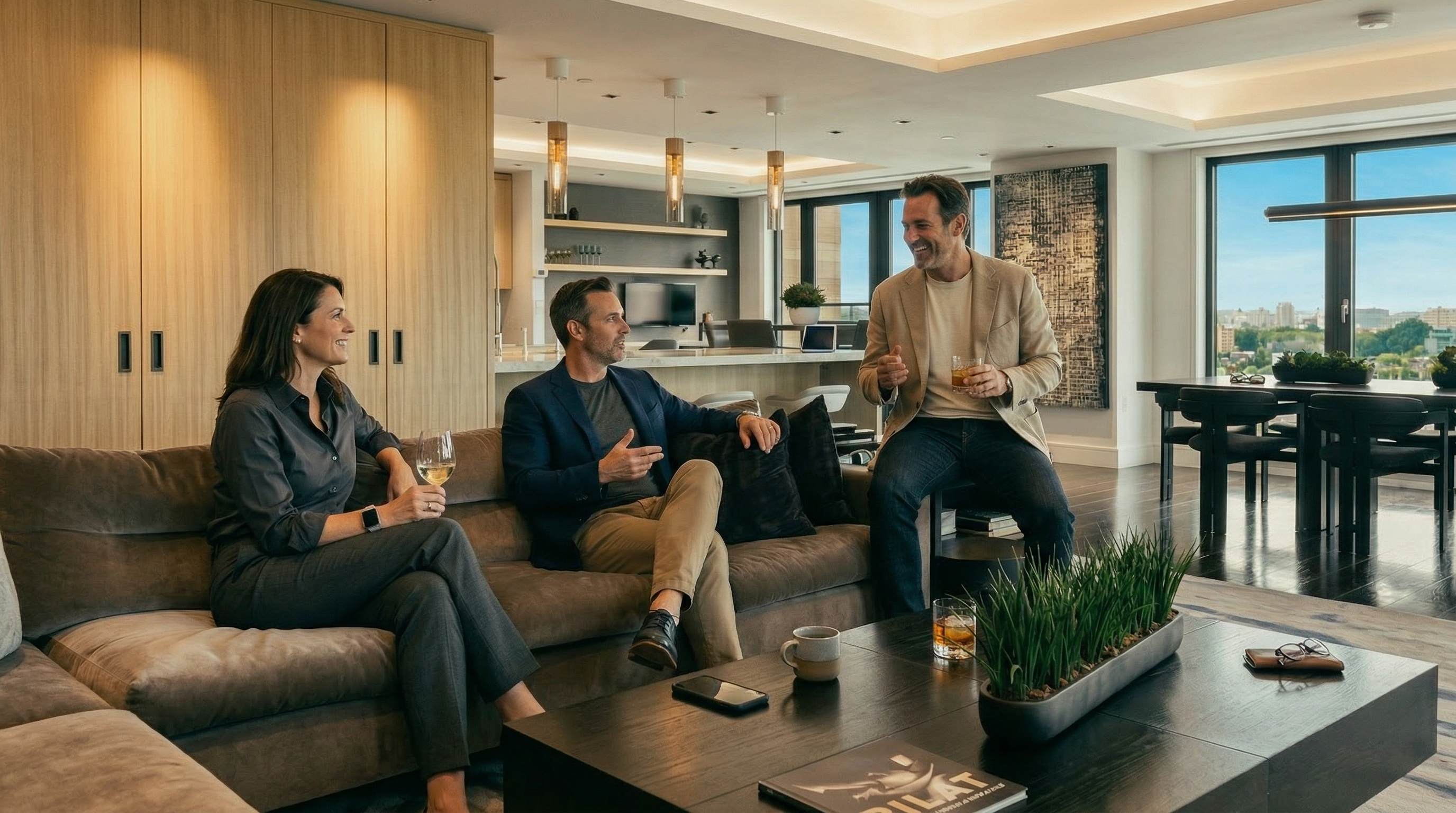
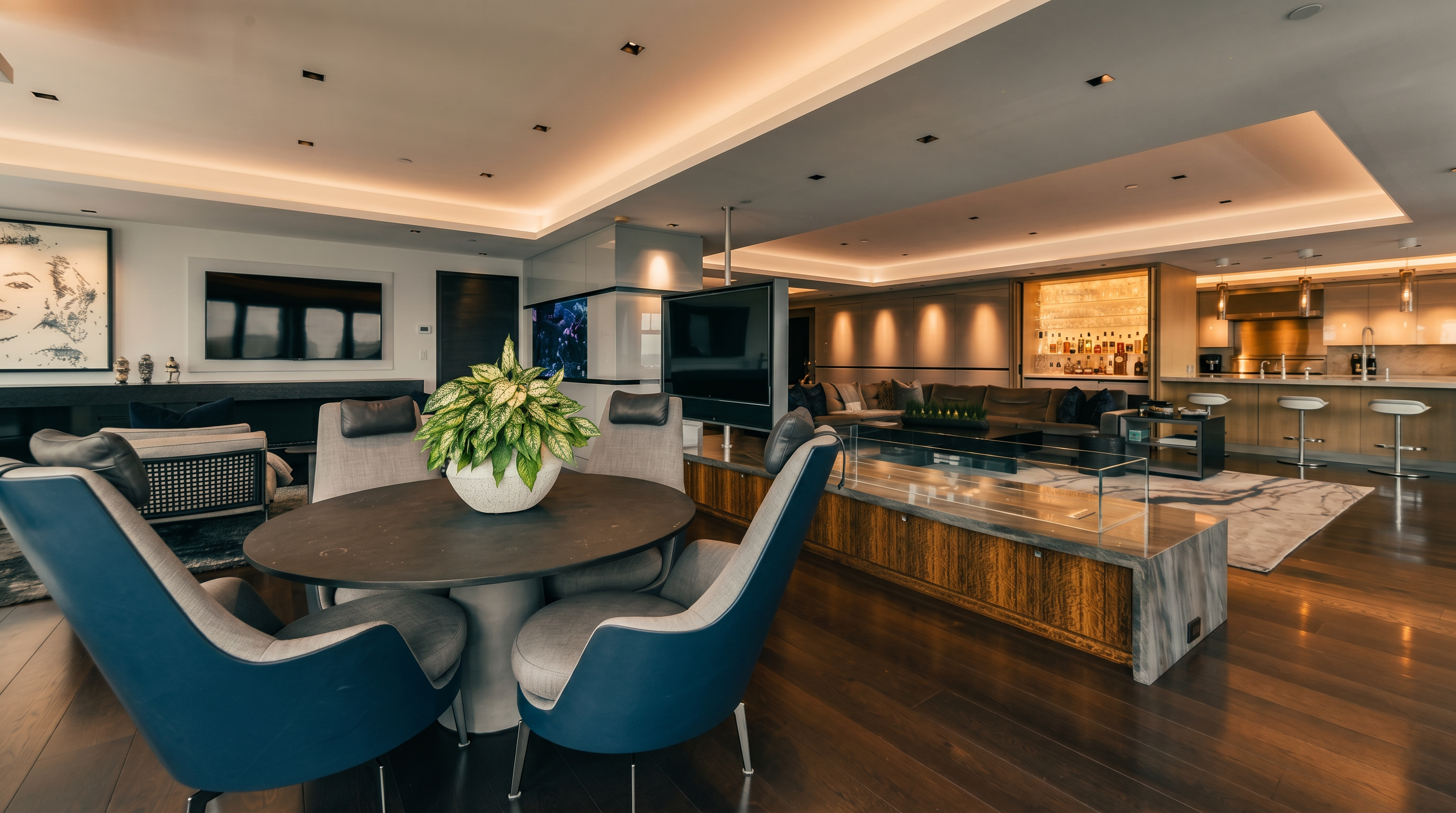
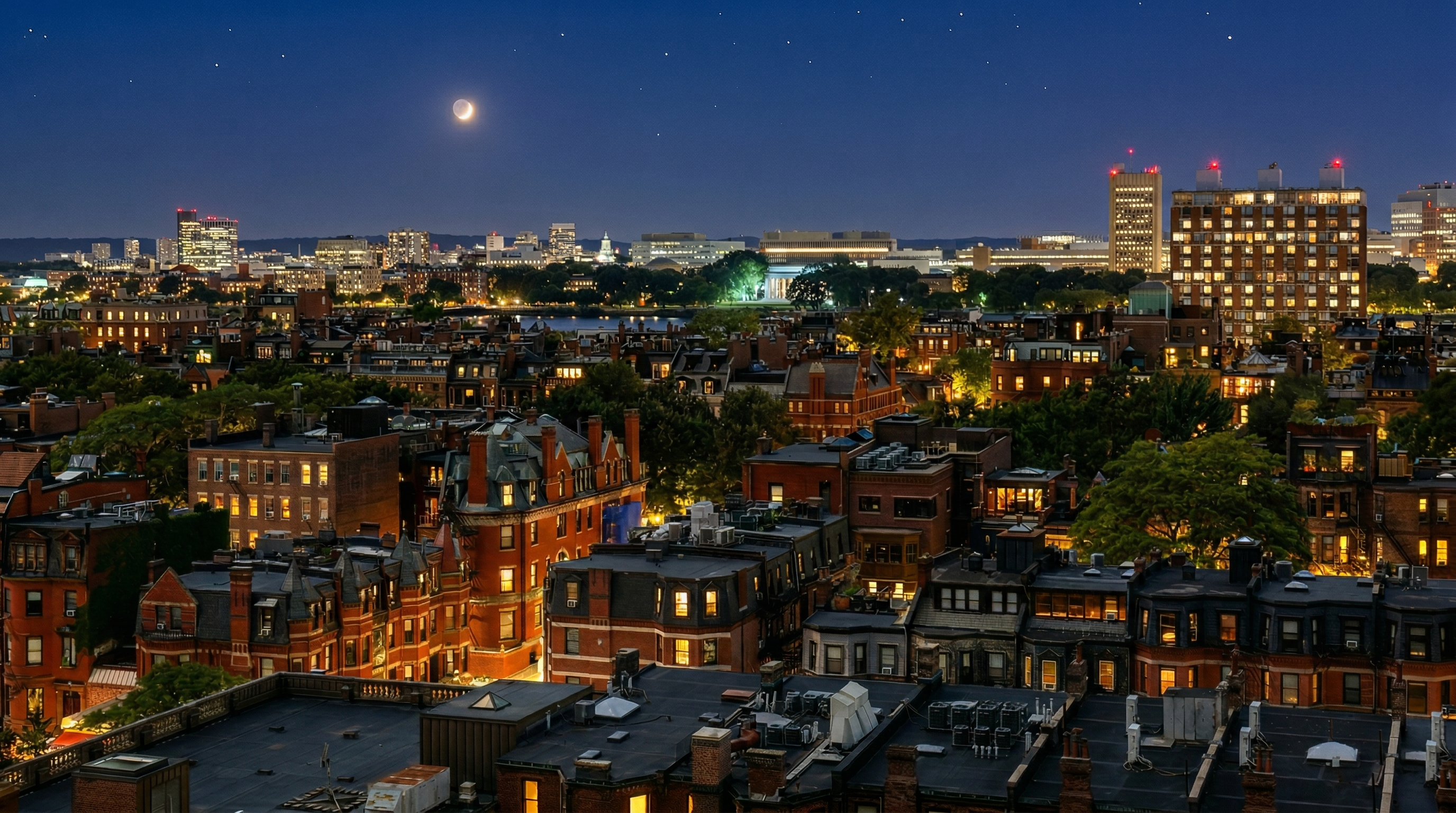
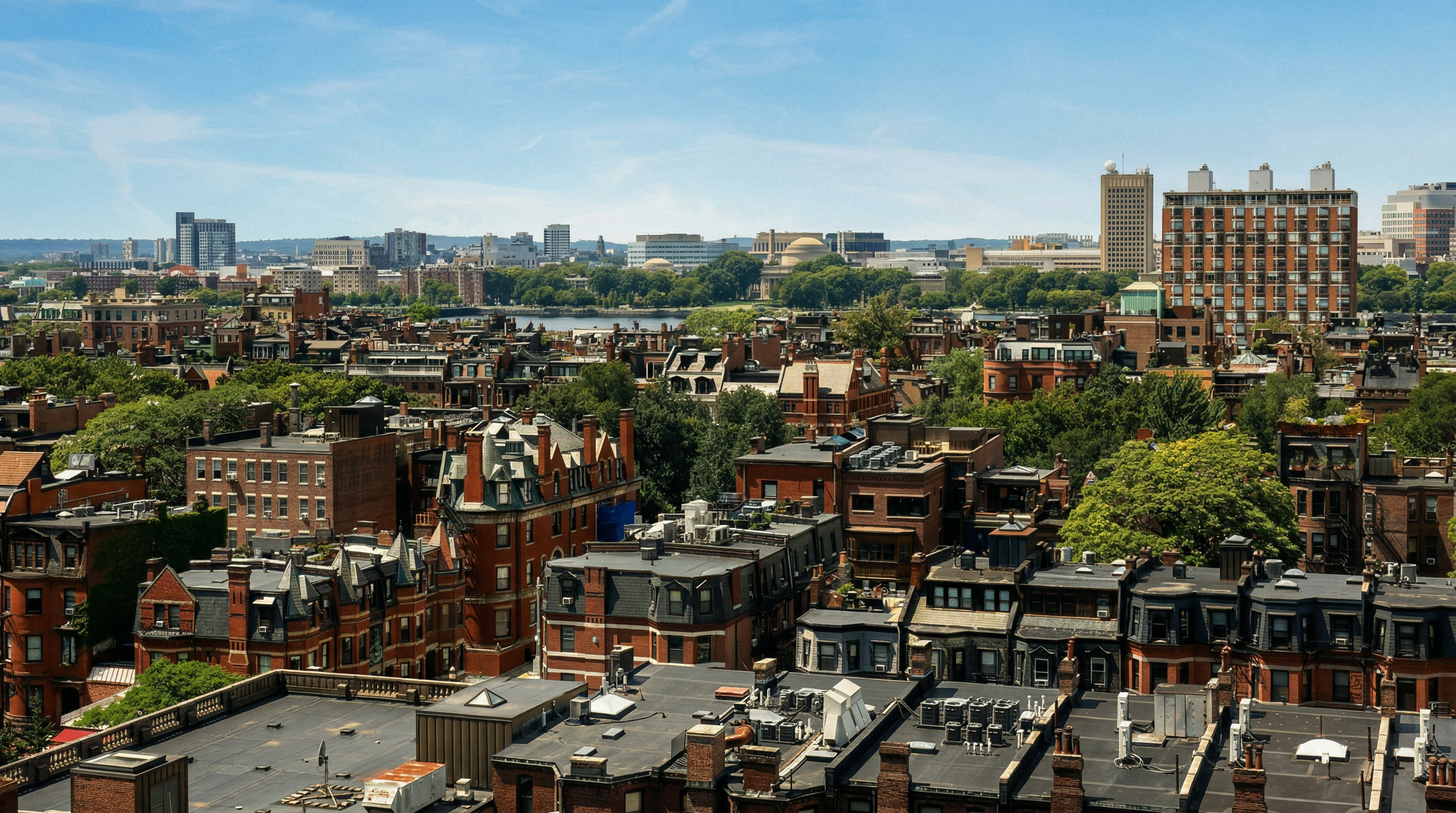
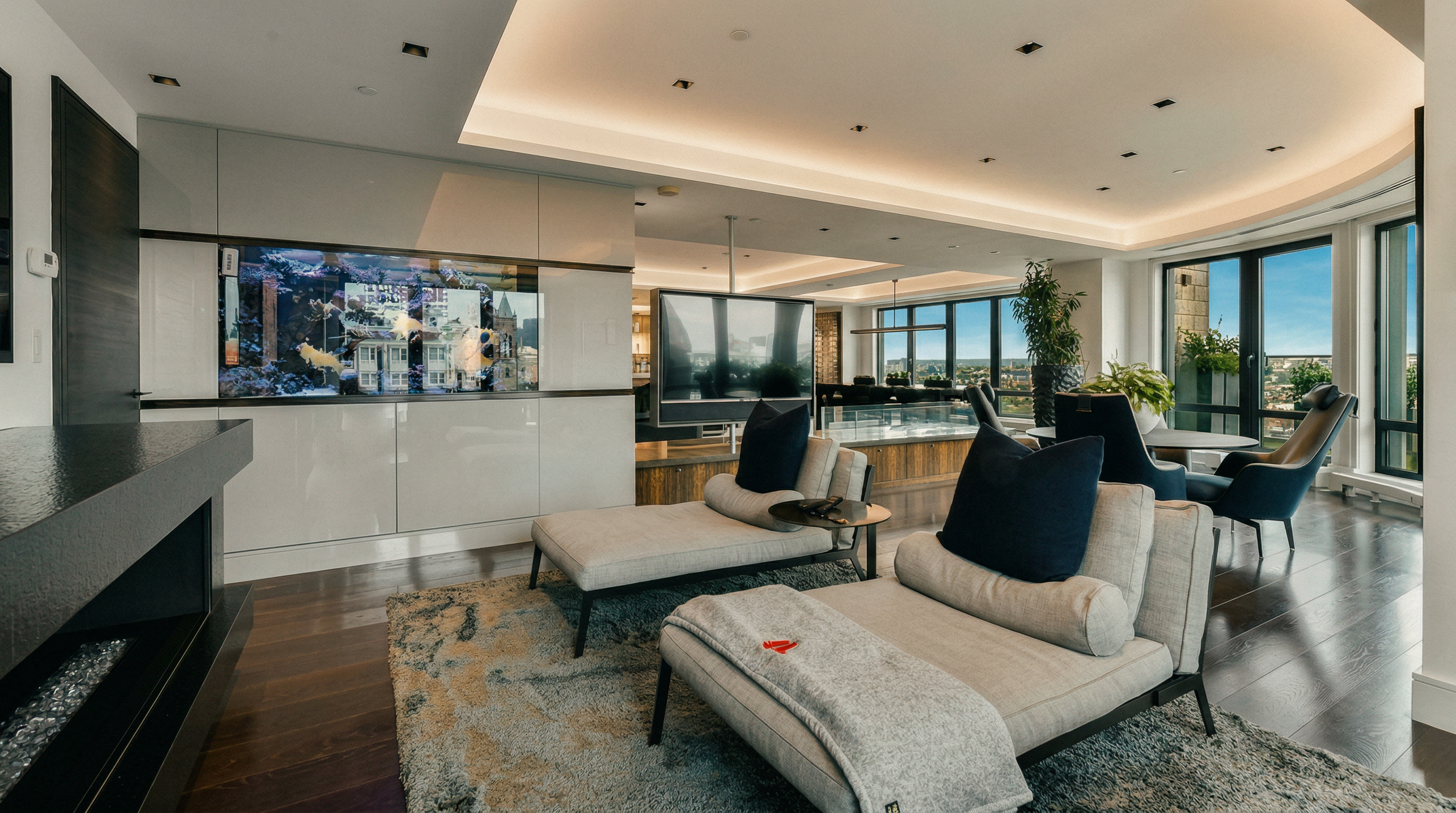
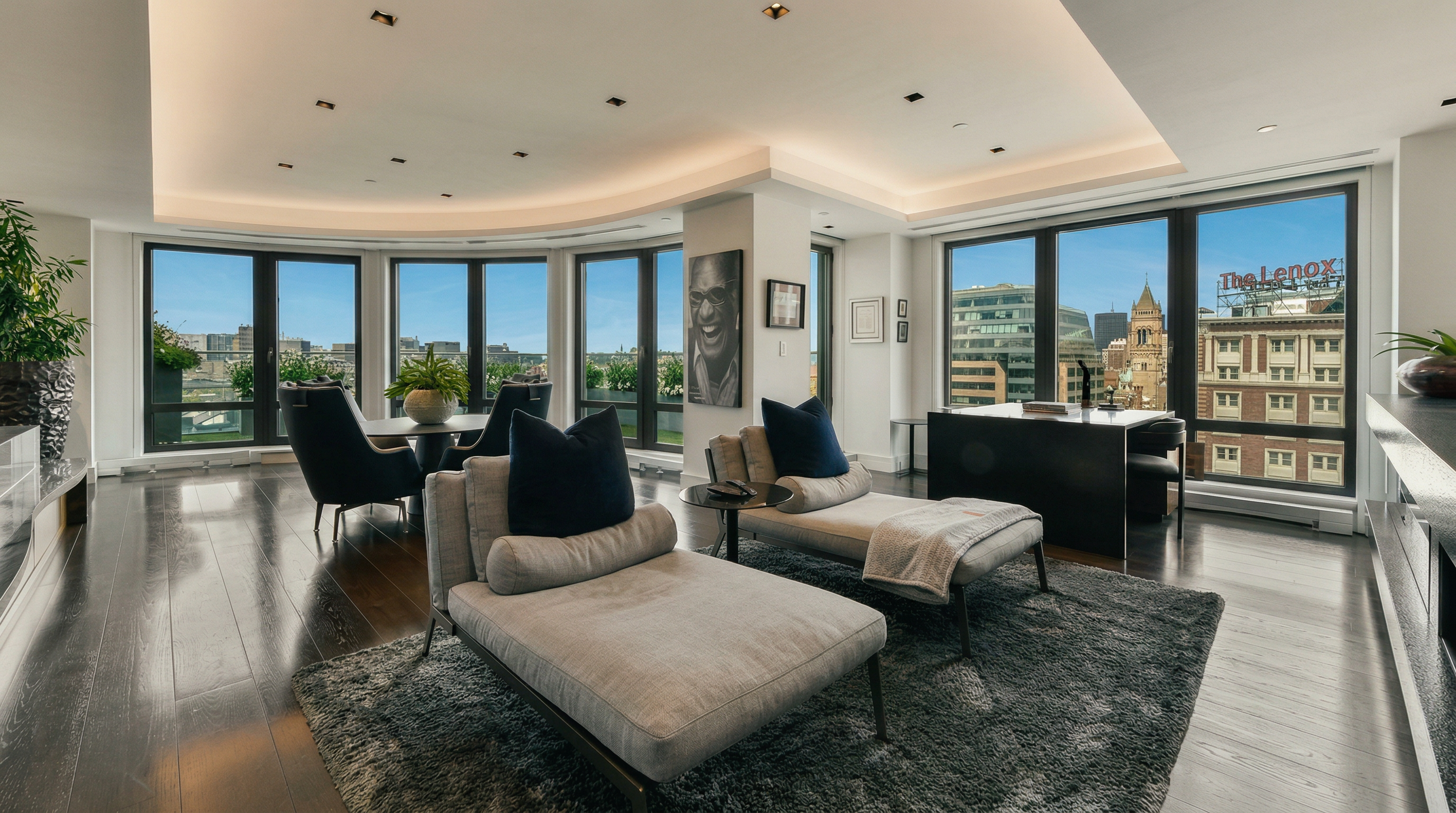
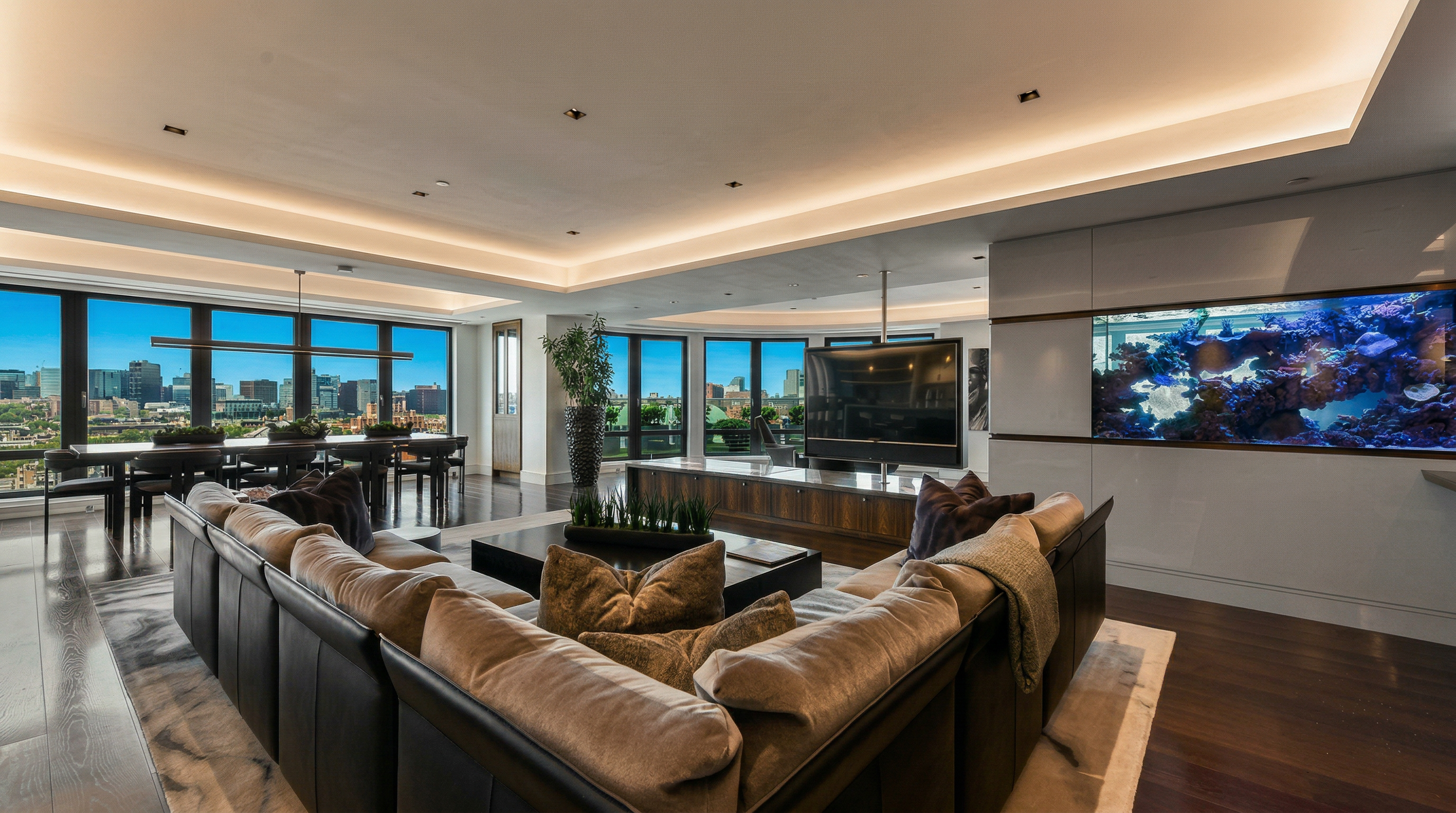
The collaboration between designer Meichi Peng and builder Vona Construction produced a home that reads as a single, fluid gesture from the moment the grand foyer opens. Recessed cove lighting traces the ceiling line overhead while dark hardwood flooring anchors the open-concept living and dining plan below, creating a sense of vertical spaciousness that the floor-to-ceiling windows then extend outward toward the Charles River, MIT, and the Cambridge skyline. The effect is immediate and total: the city becomes part of the interior, framed rather than excluded.
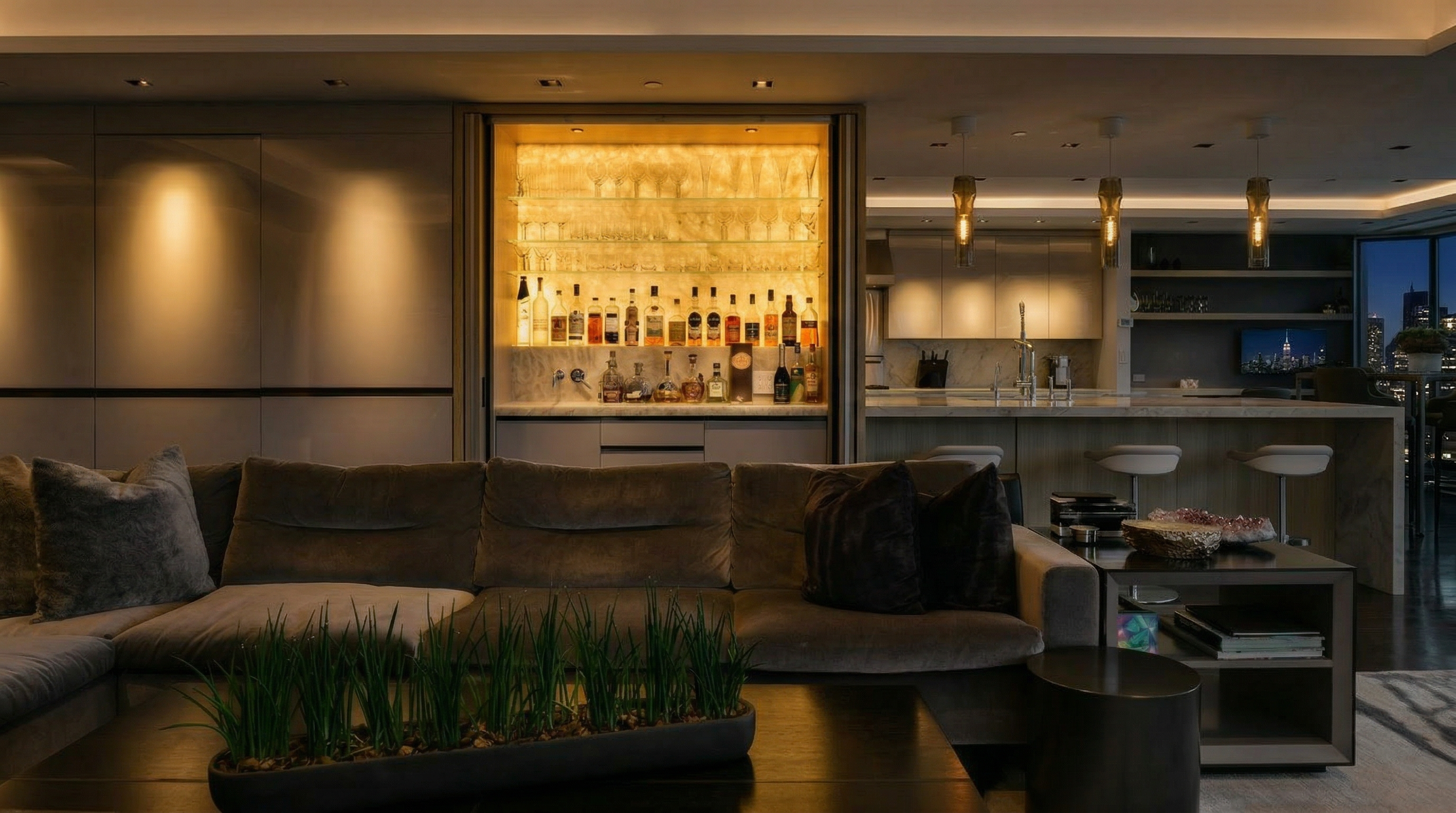
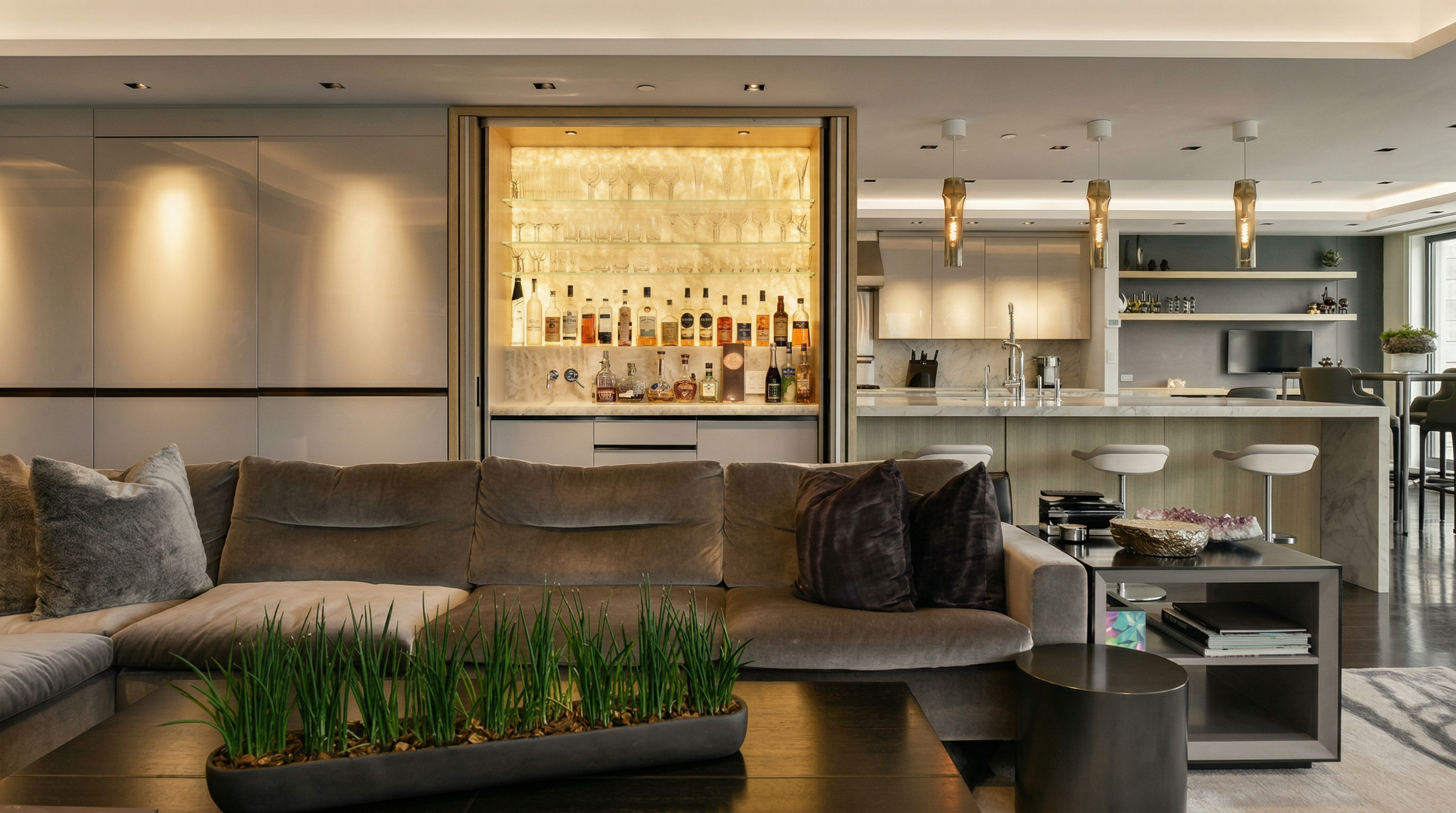
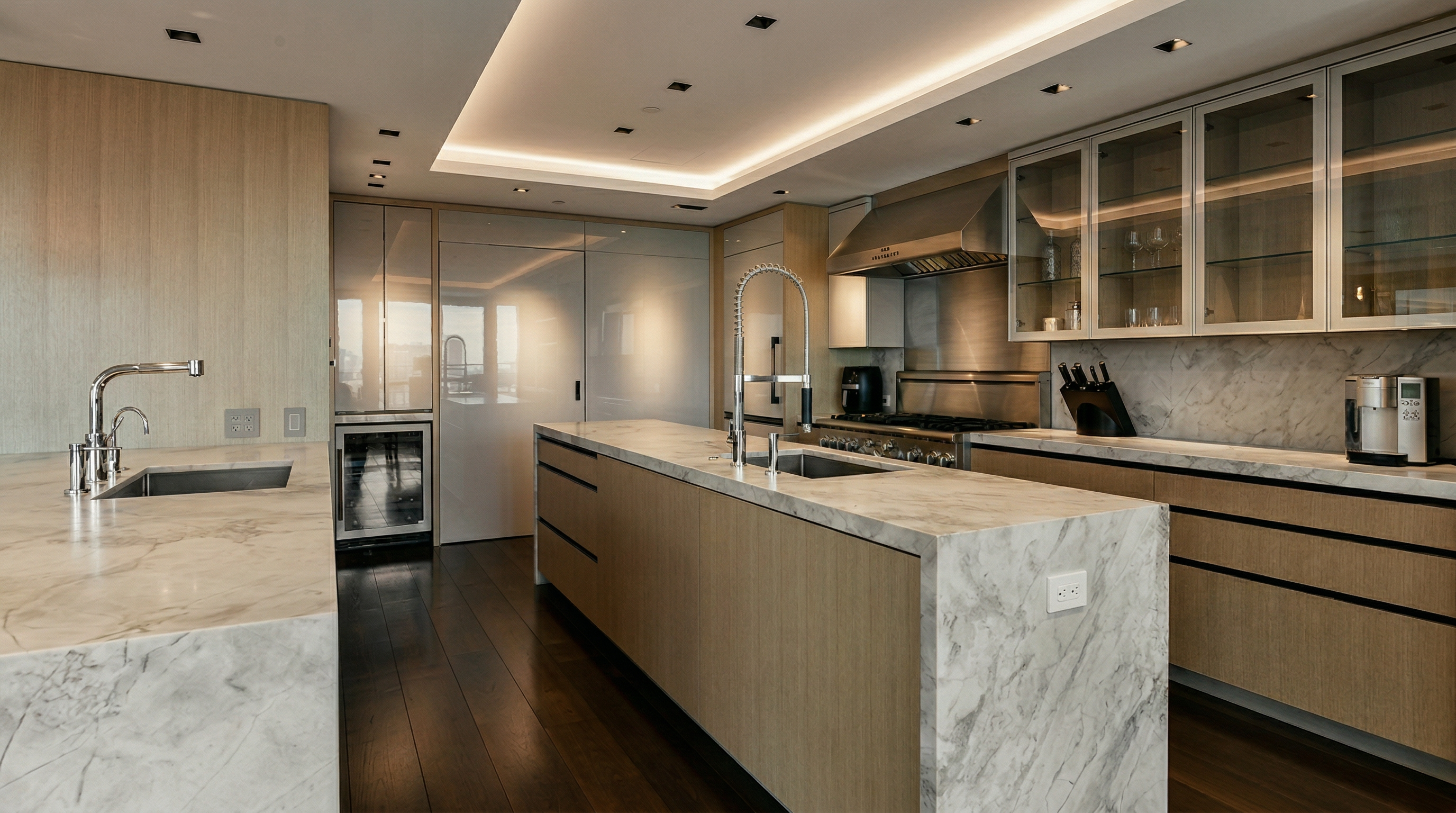
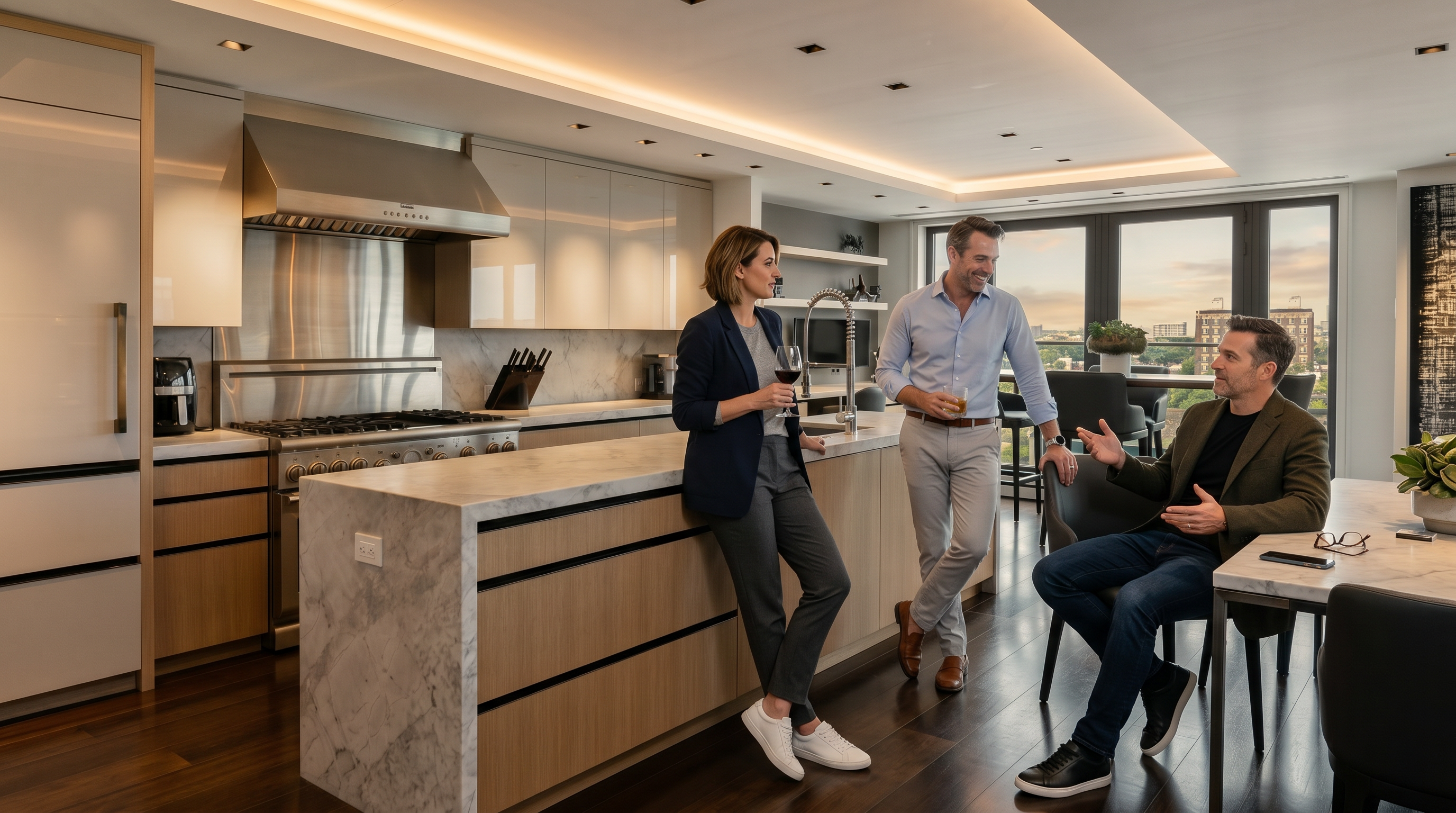
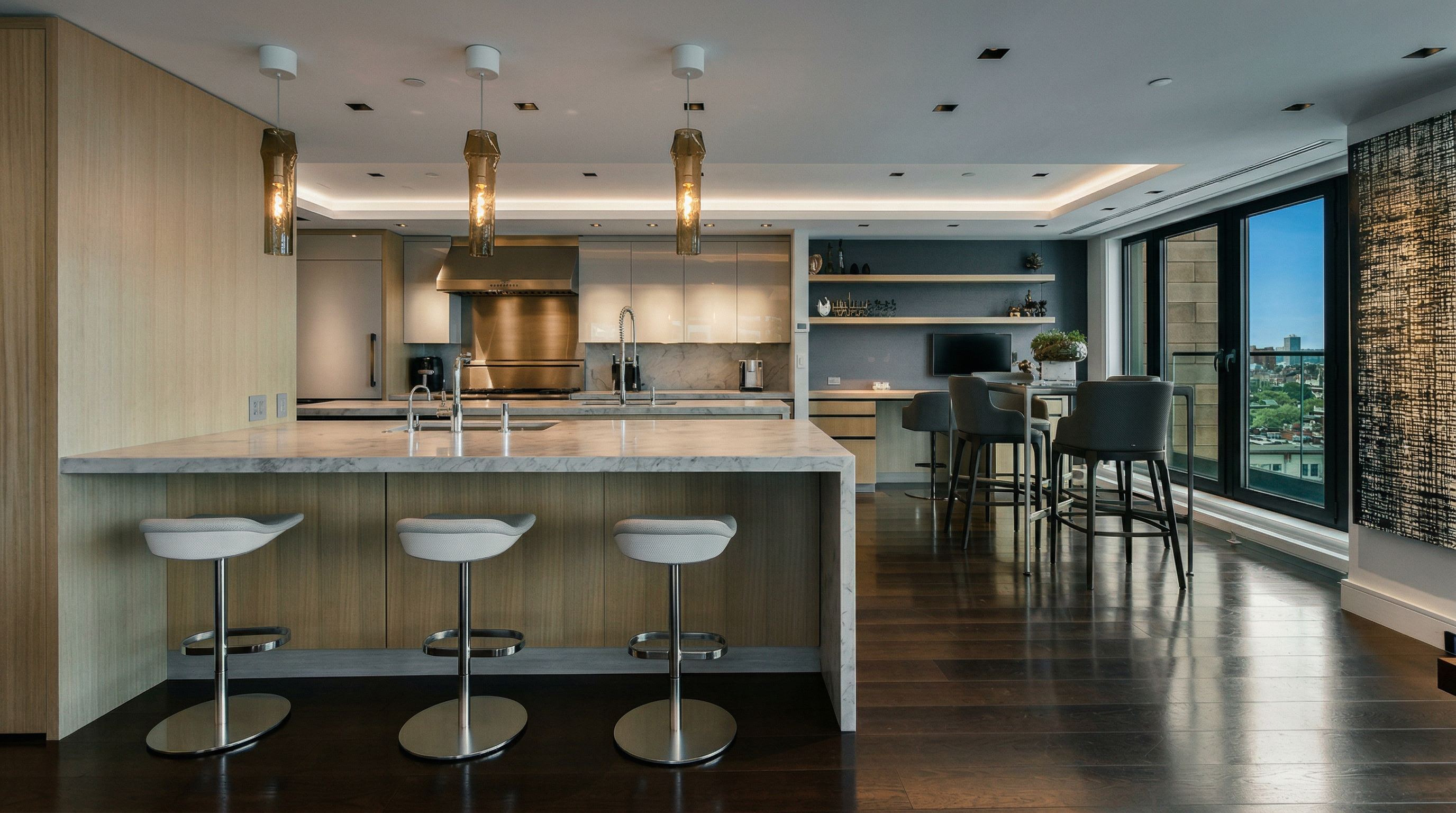
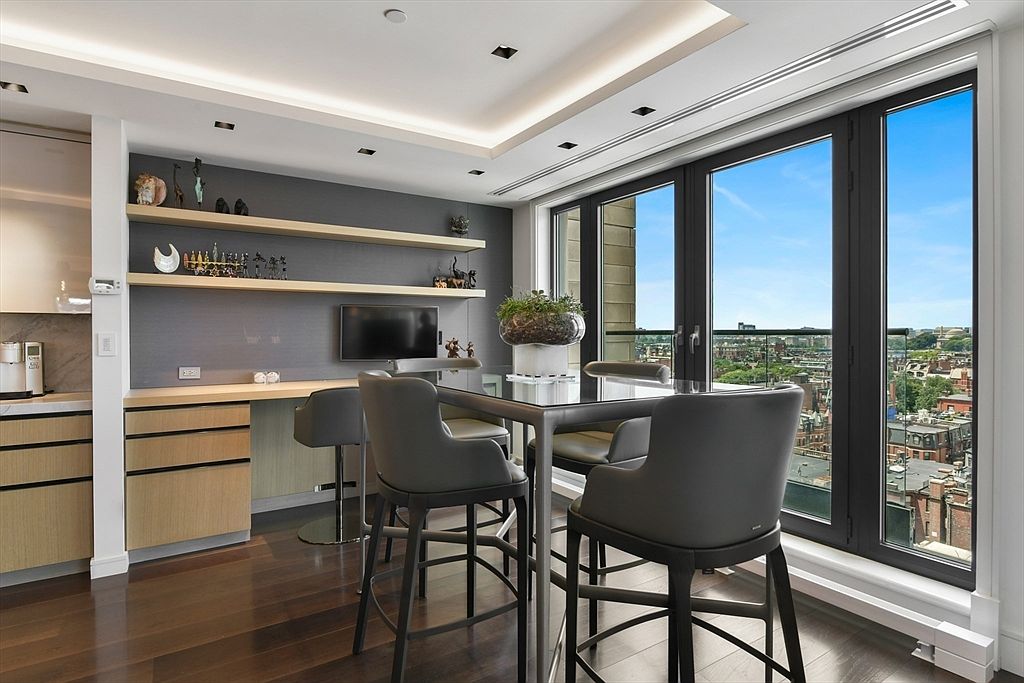
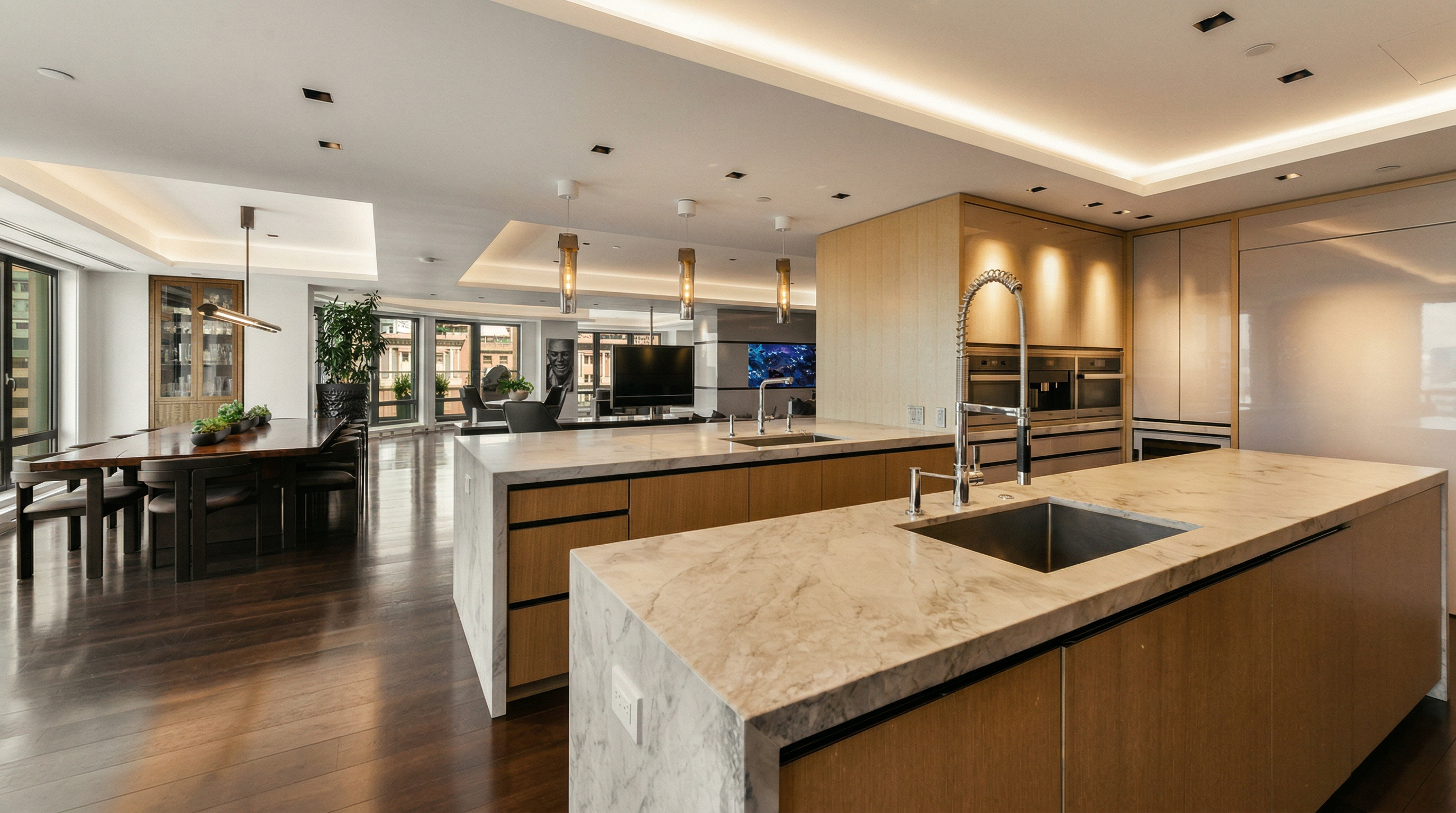
At the architectural center of daily life stands the dual-island kitchen—a space designed with equal seriousness for the quiet Tuesday morning and the formal dinner party. Waterfall-edge stone countertops, professional-grade appliances, light-wood cabinetry, and a hidden pantry positioned directly off the cook's workspace speak to a floor plan that was thought through at the level of lived experience. A built-in illuminated bar cabinet bridges the kitchen to the living area, ensuring the entire space functions as one entertainer's suite without sacrificing the intimacy of any individual moment within it.
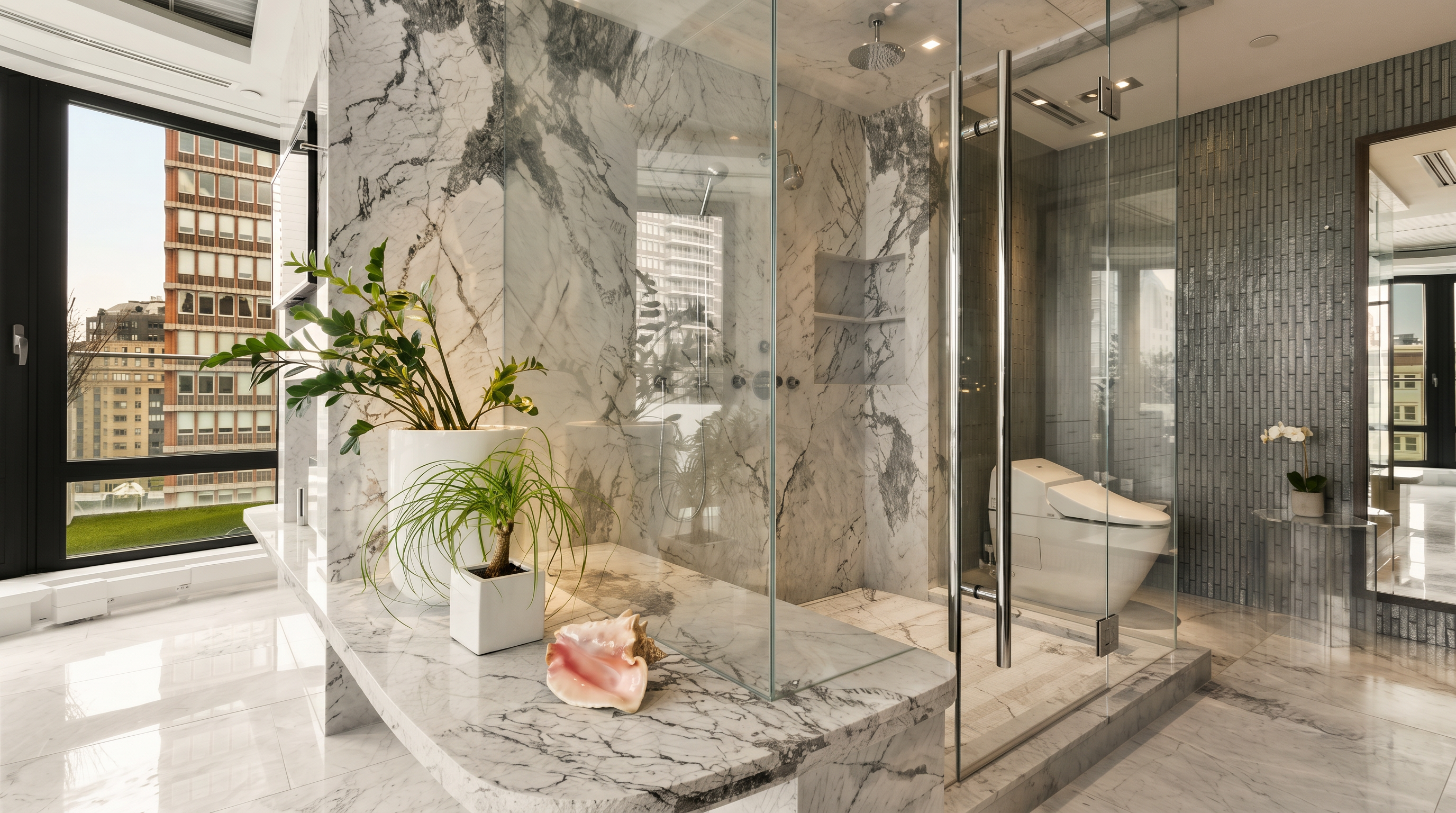
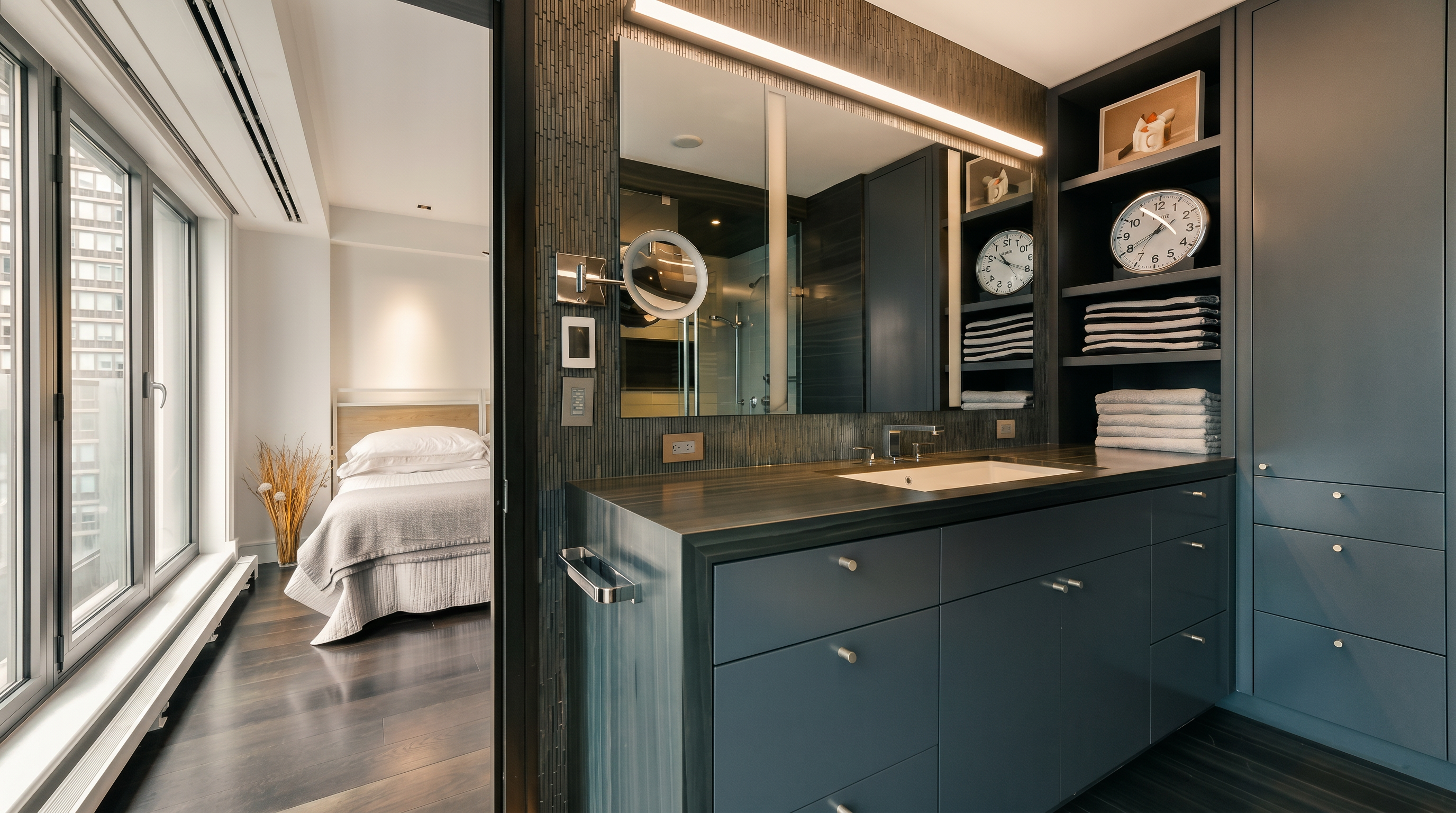
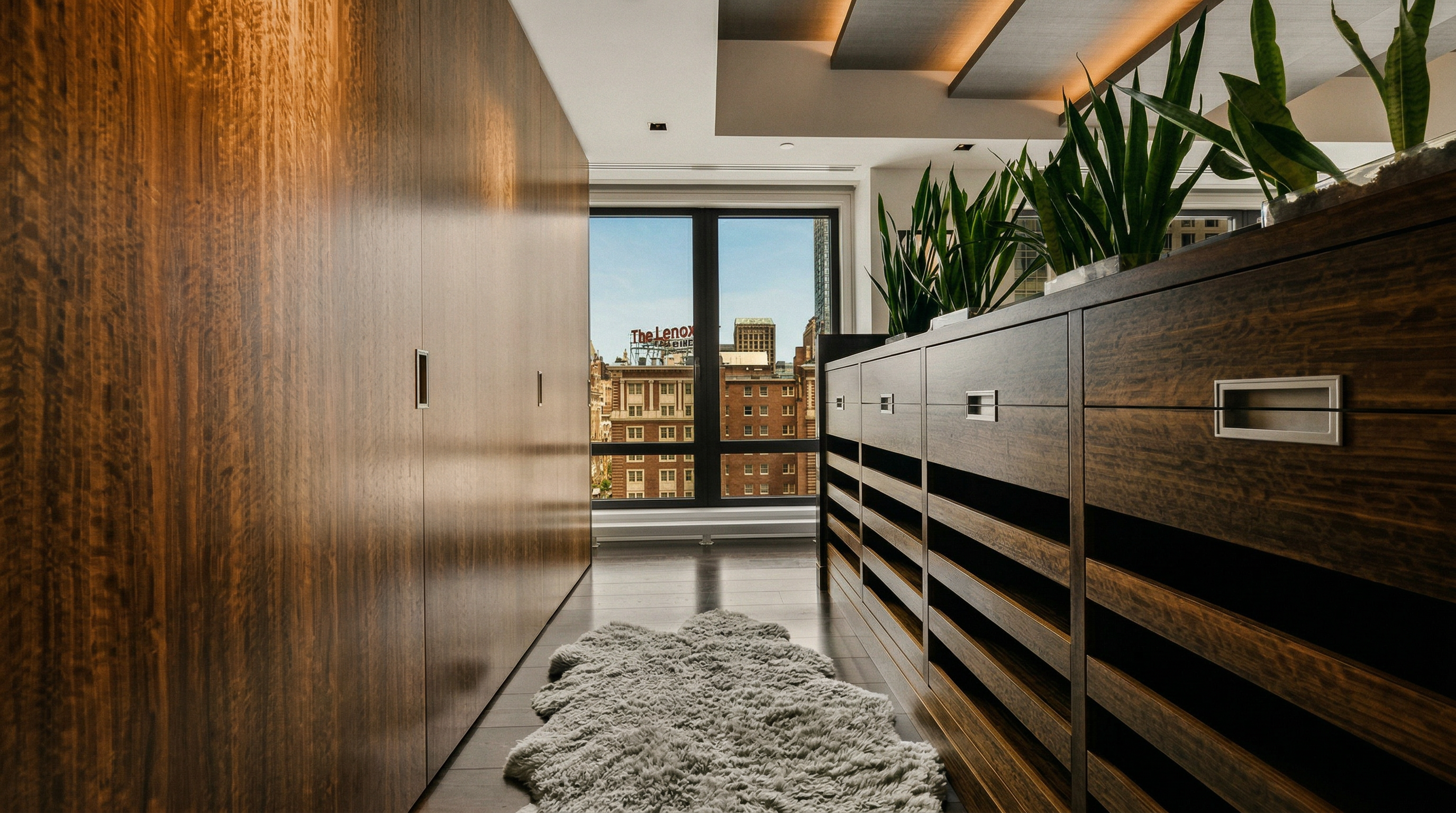
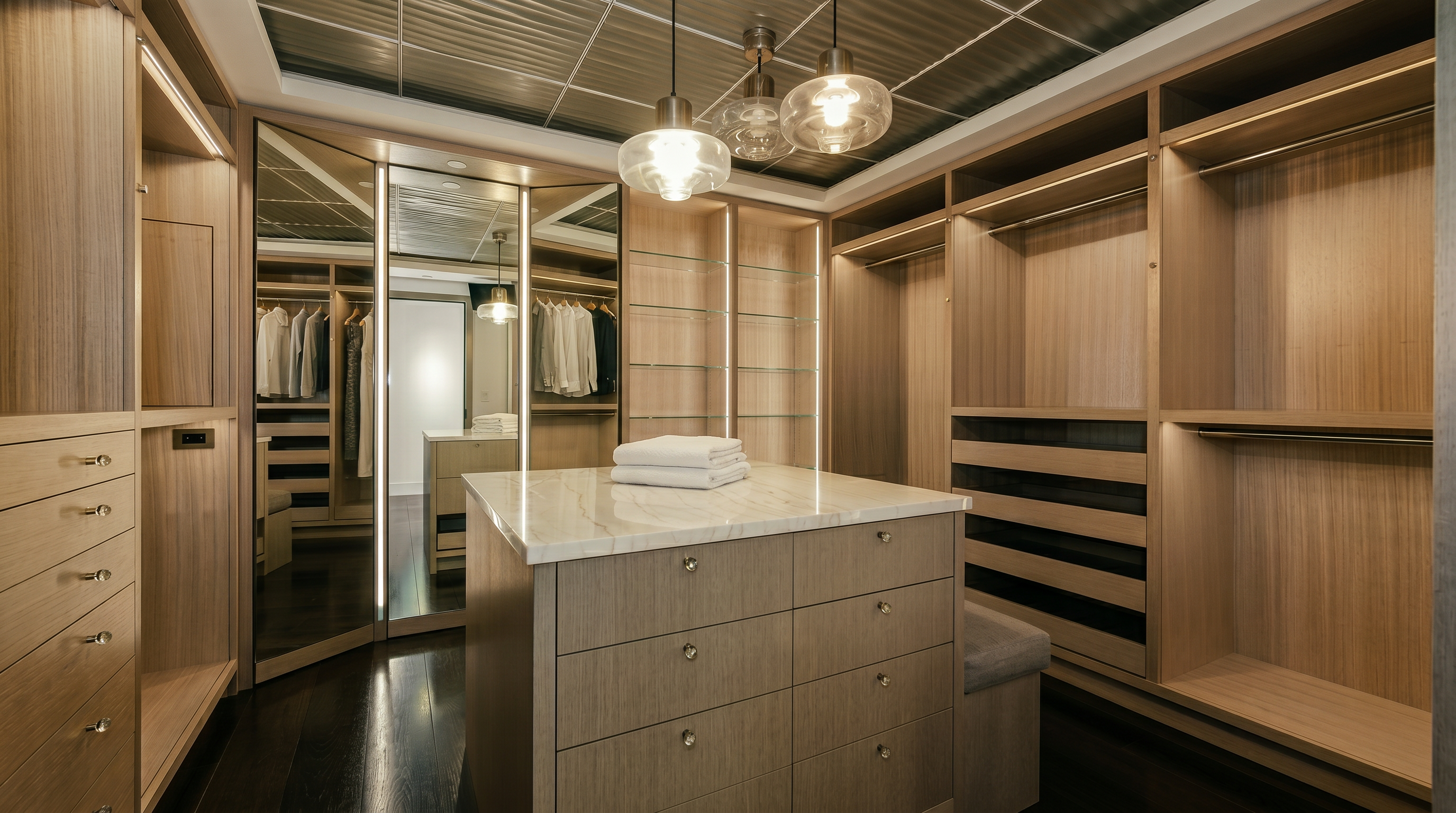
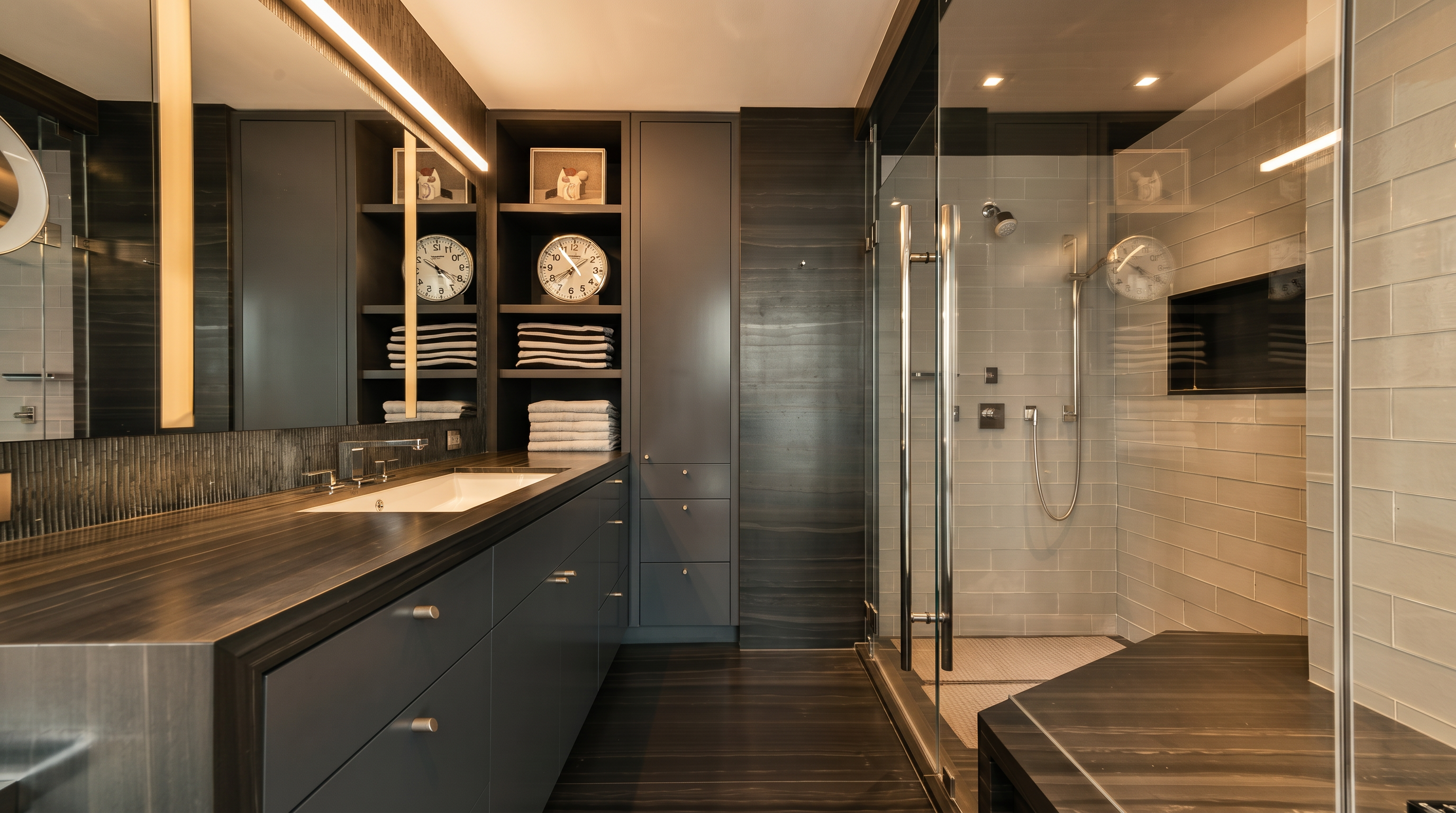
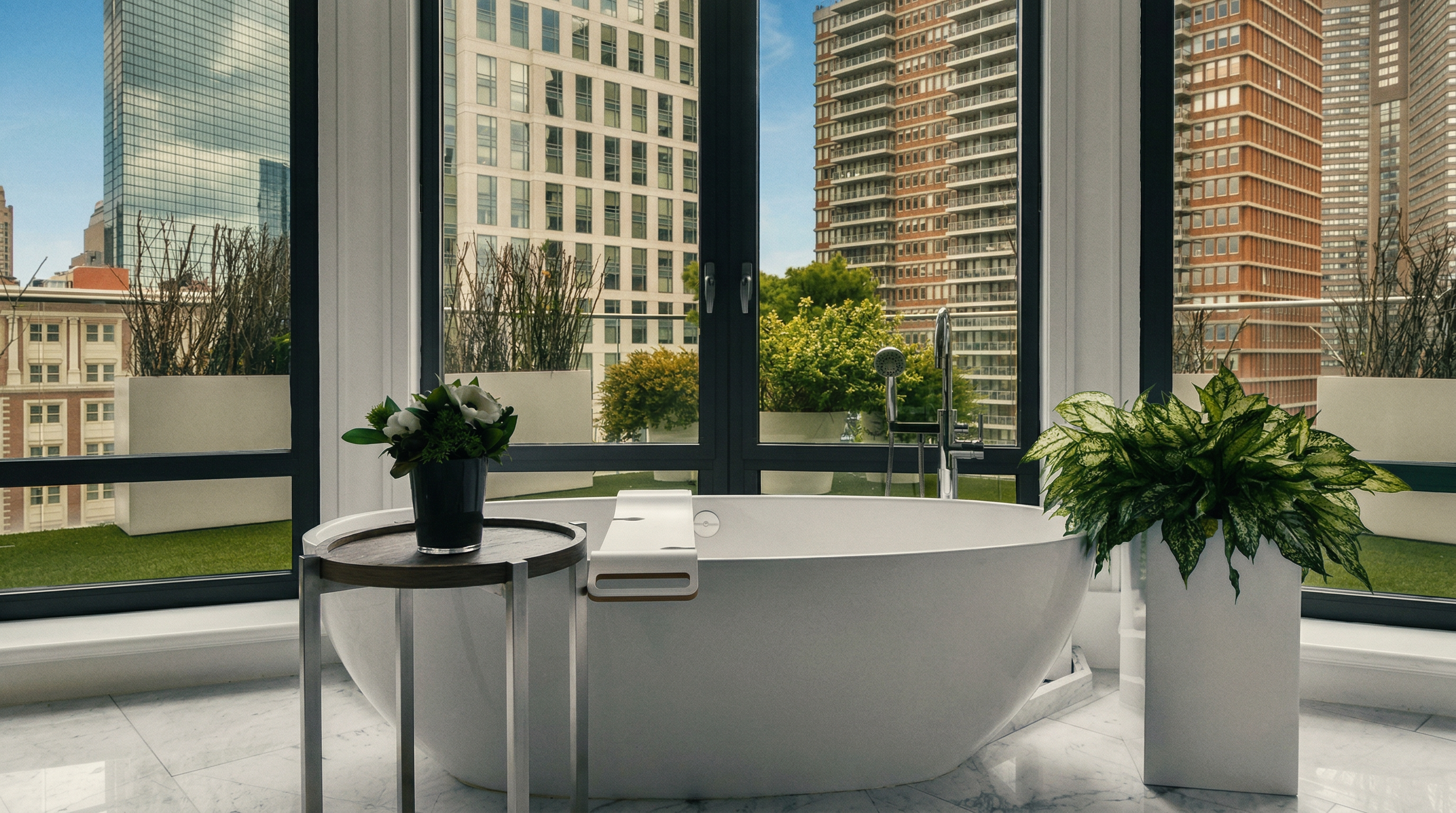
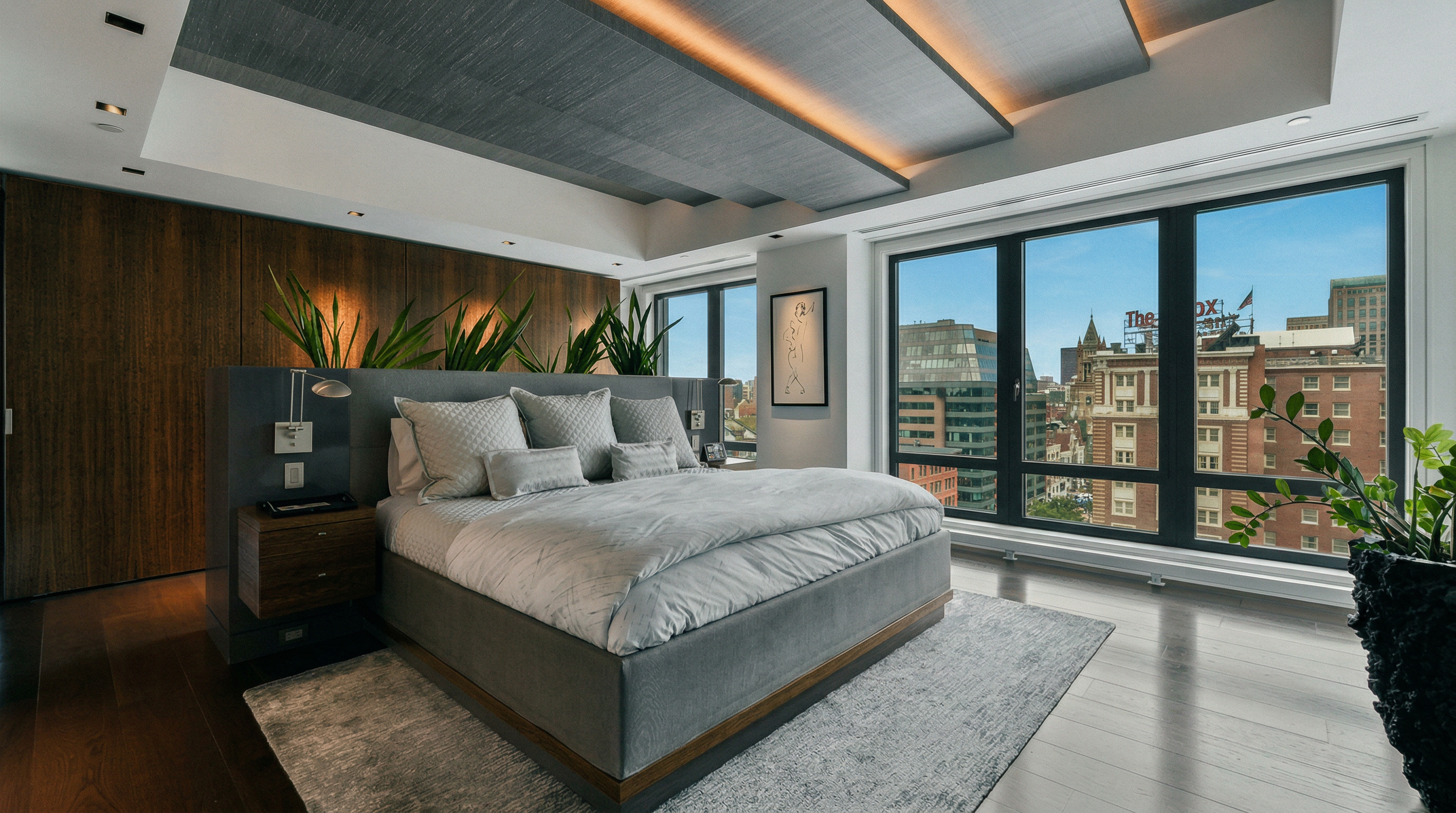
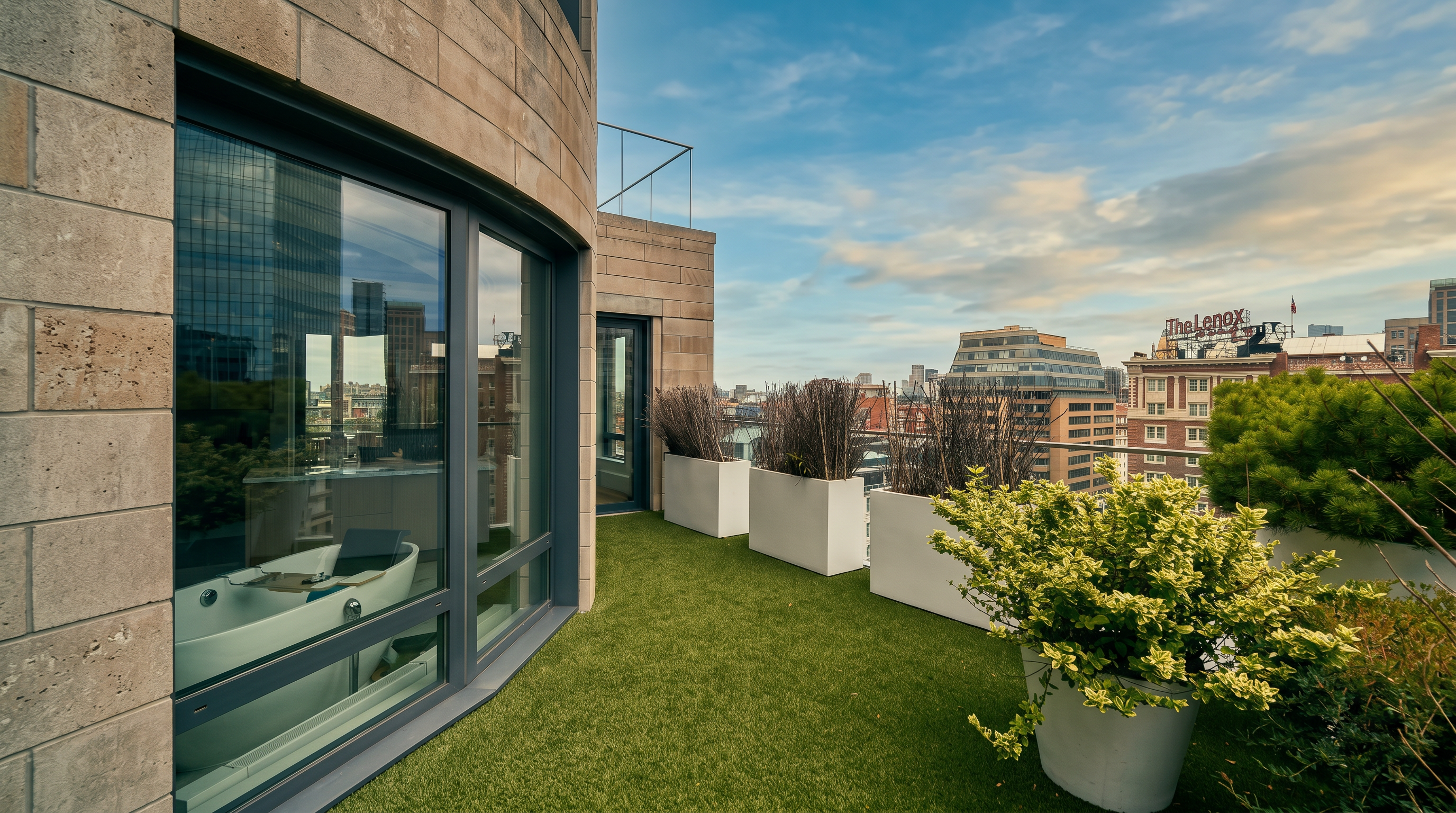
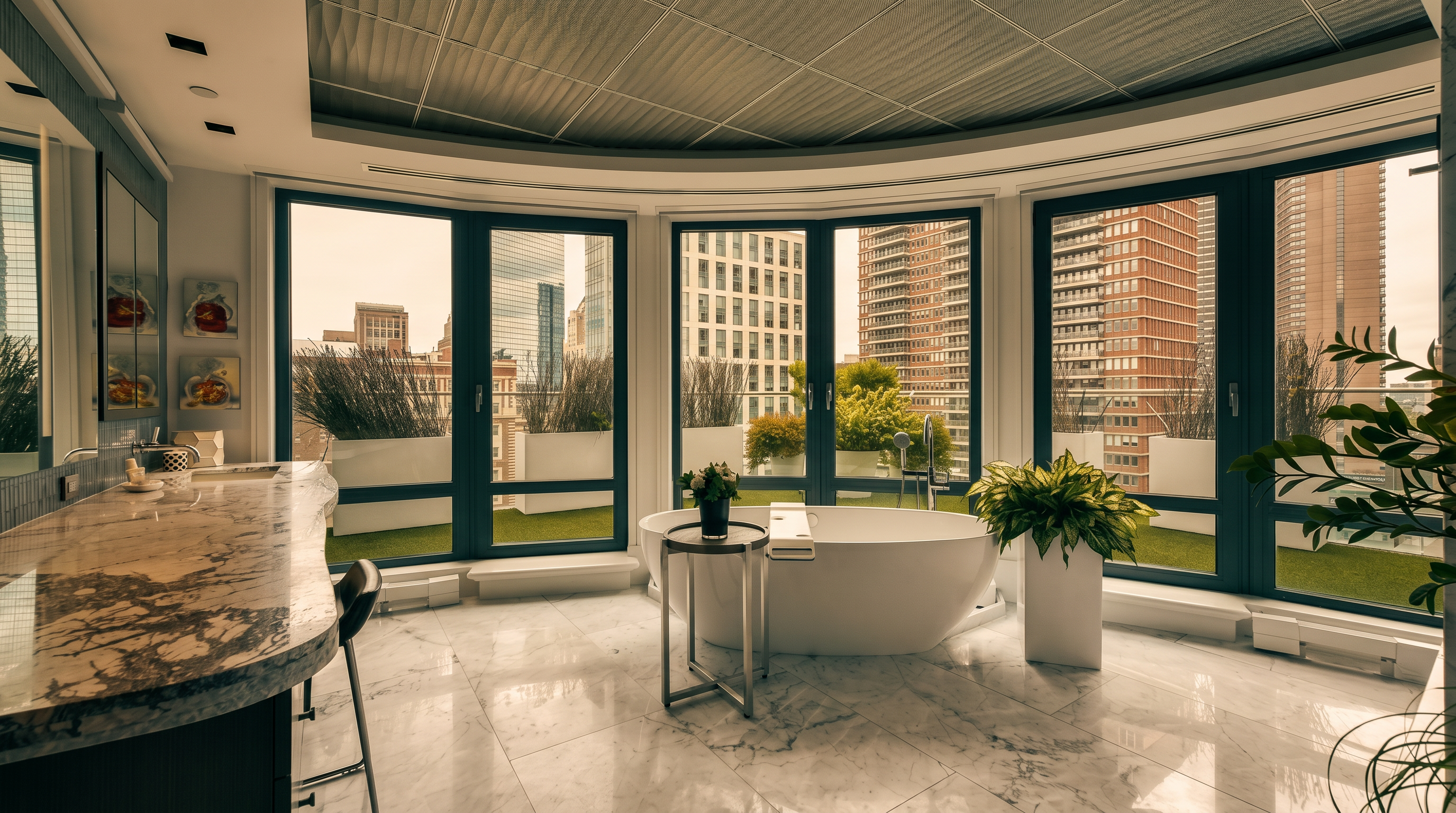
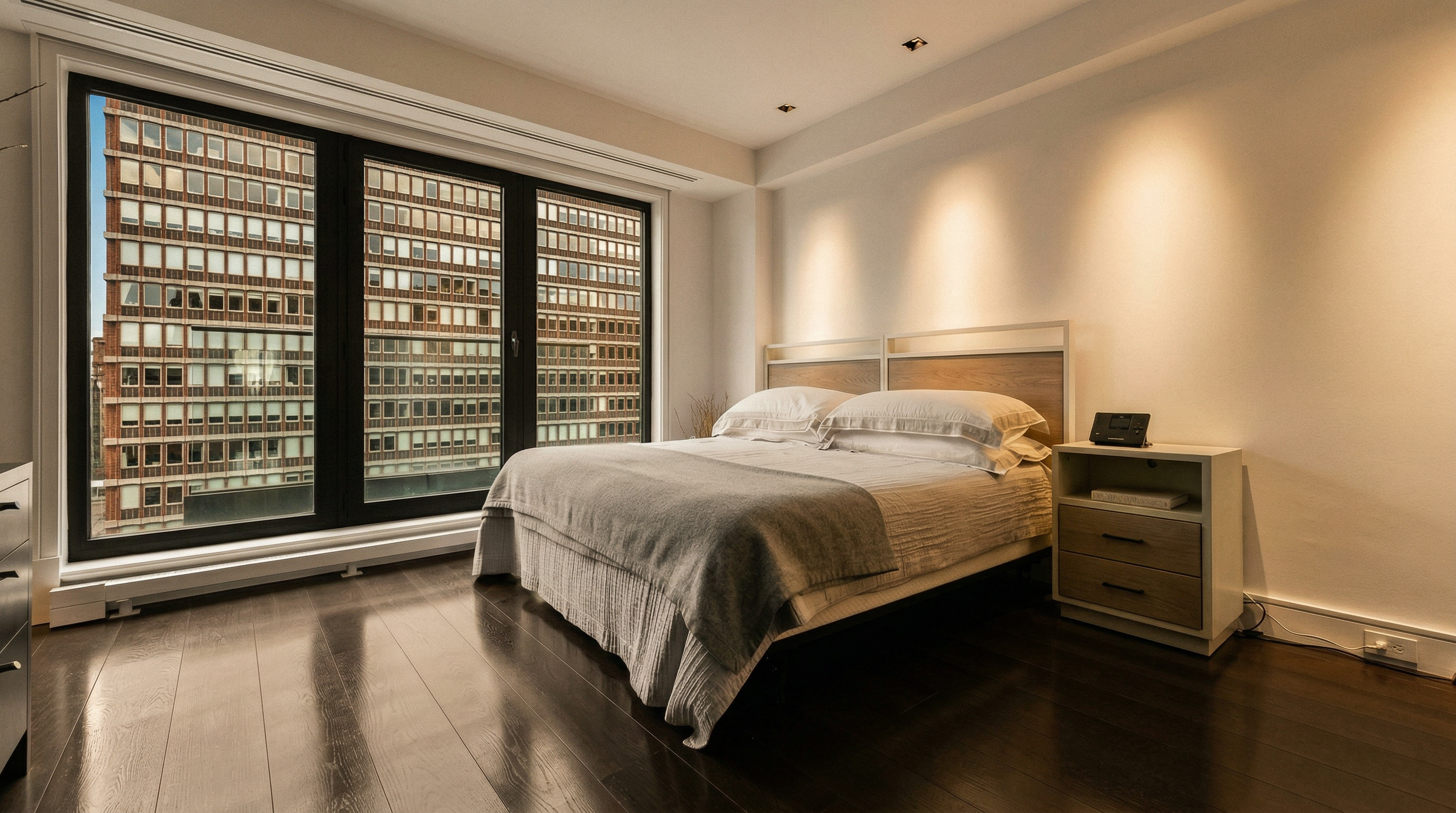
The primary suite commands a corner of the residence and makes full use of its position. Floor-to-ceiling windows wrap the room in light and cityscape, while the walk-in closet—fitted with a marble-topped island and integrated LED cabinetry—brings the same level of craft to the private quarters that the public rooms establish. The stone-clad bath is its own considered environment: a freestanding soaking tub positioned before the skyline, a rainfall shower, and a fireplace that transforms the room from functional to genuinely restorative. The second bedroom carries its own bespoke cabinetry and a spa-caliber en suite finished in marble, maintaining the residence's commitment to quality in every room, not merely the principal ones.
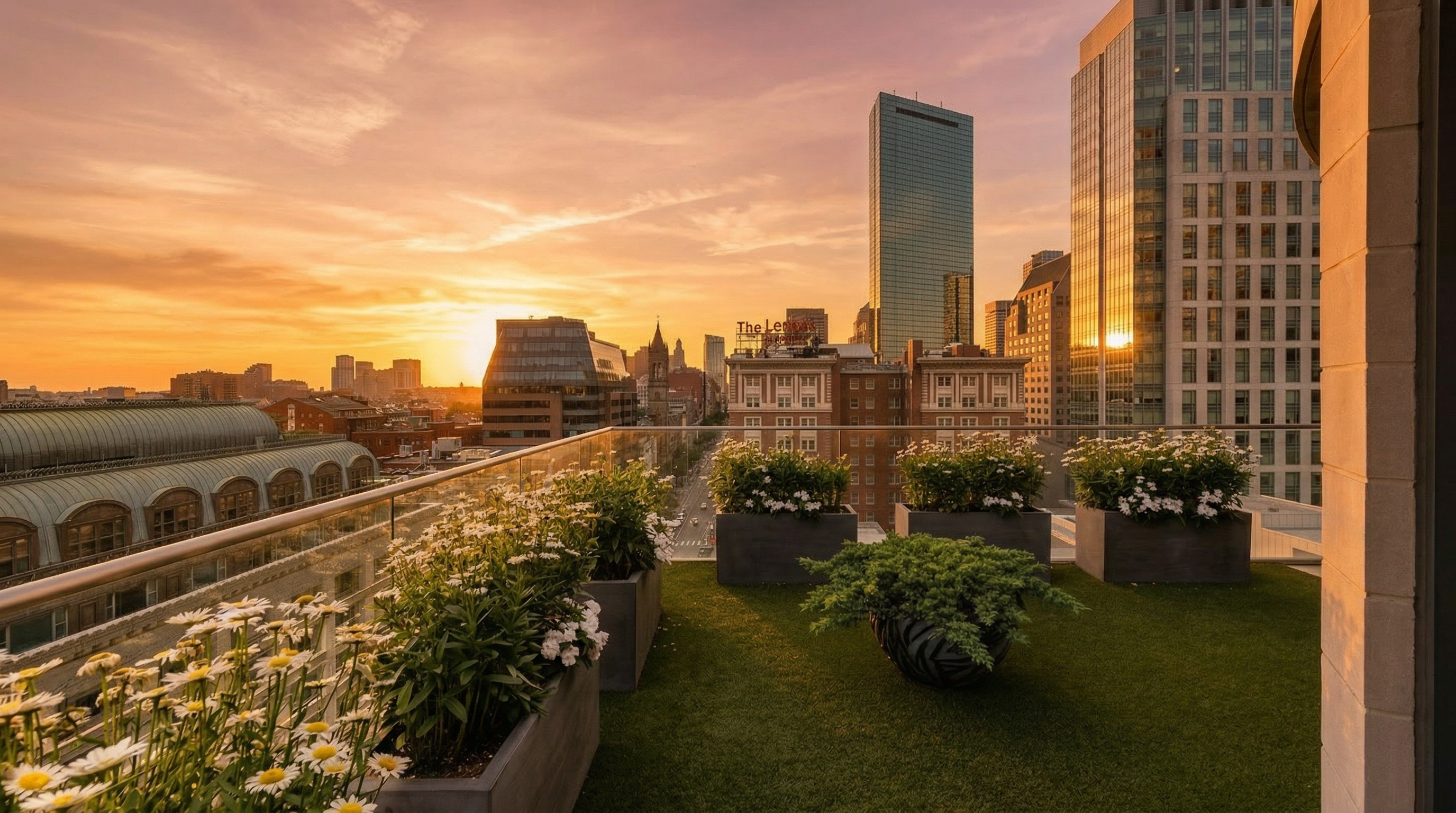
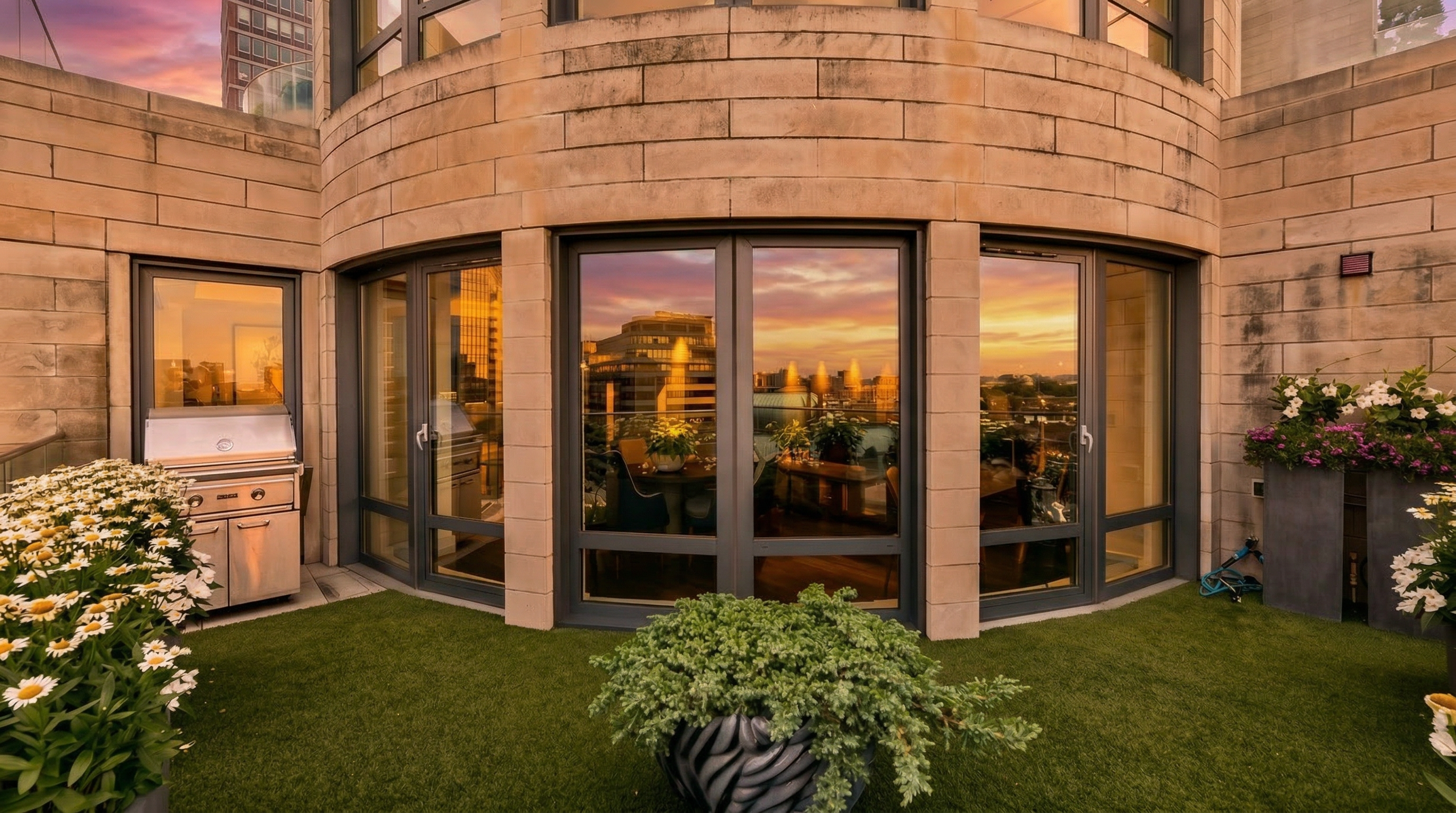
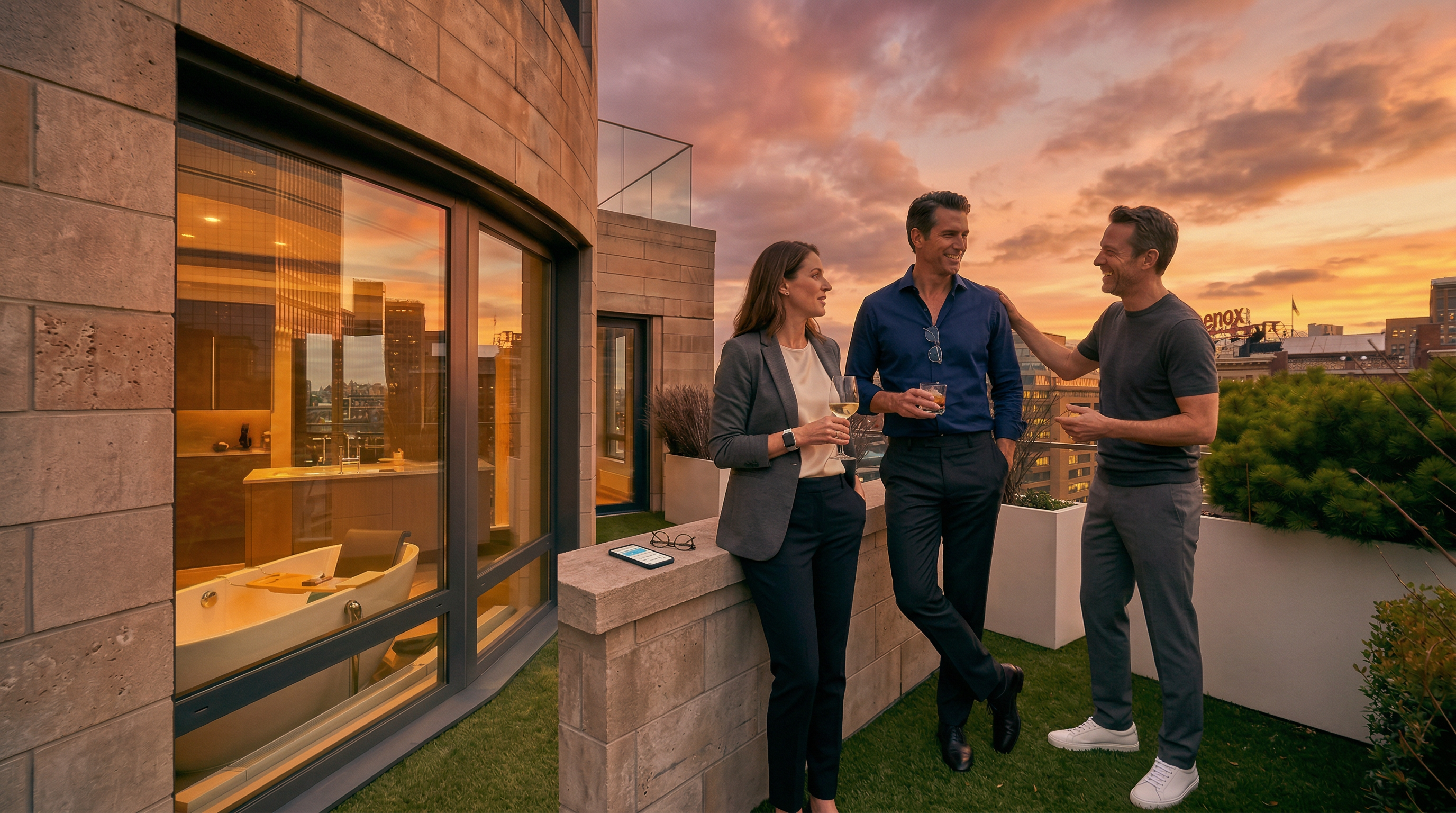
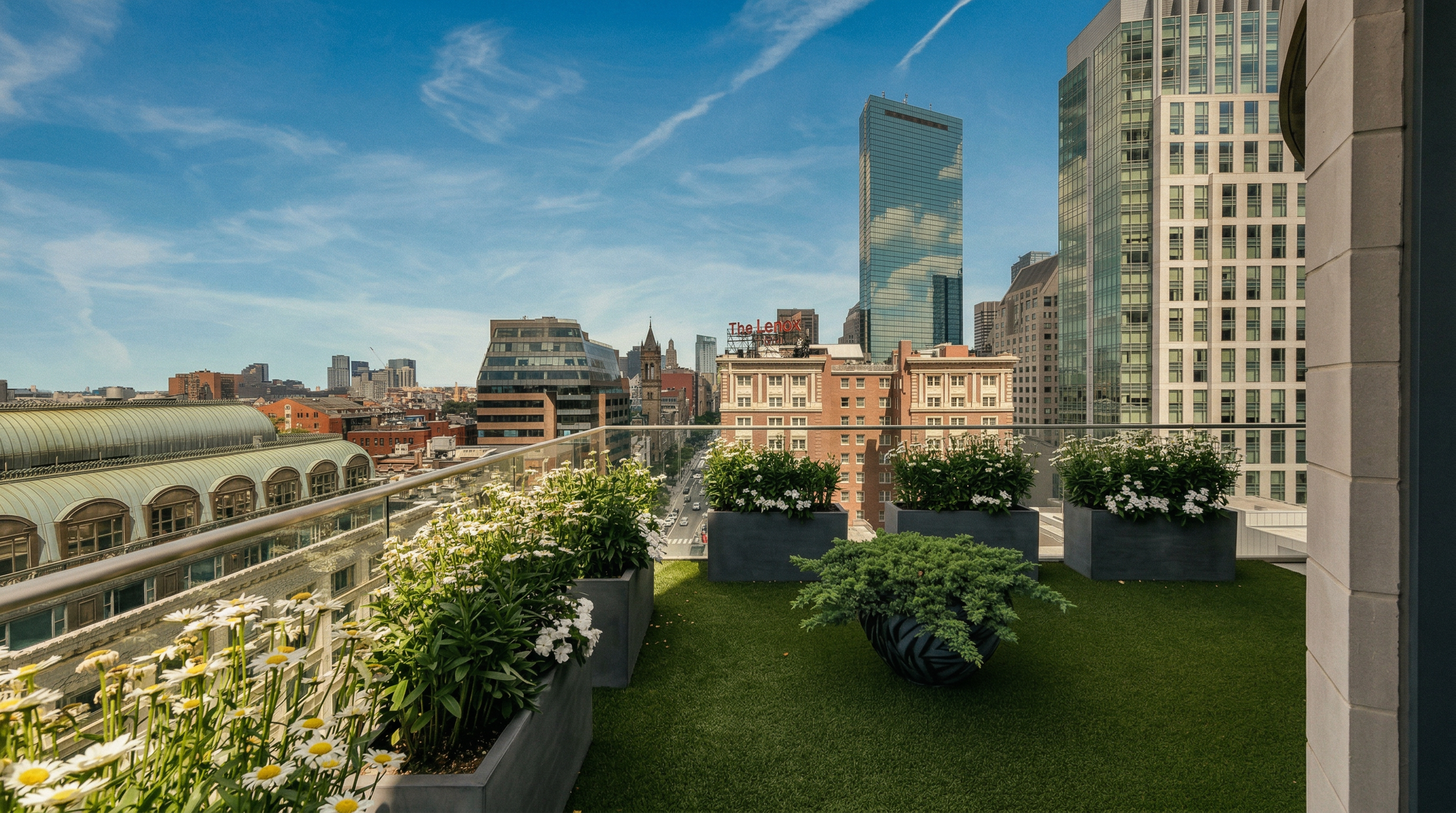
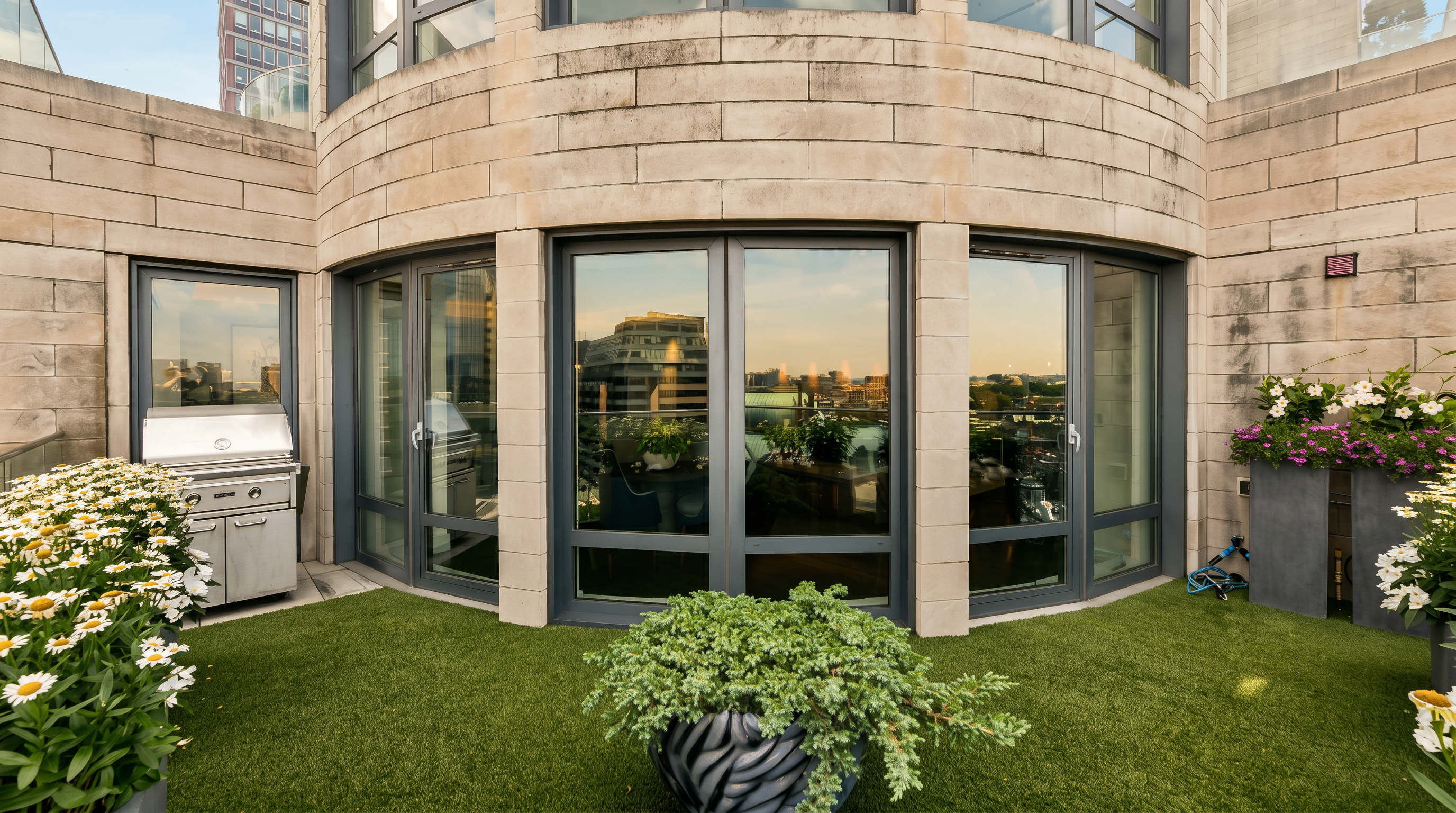
The two private terraces complete the offering in a way that few urban residences can match. One curved terrace opens directly from the primary suite, finished with artificial turf, a built-in stainless steel grill, and planters of living greenery set against a glass railing. The other frames the Prudential Tower skyline in a composition that shifts with the light and the season. Together, they extend the home's living area into the open air without diminishing the sense of privacy or enclosure that makes a residence feel like a sanctuary.
Beyond the architecture, the Mandarin Oriental's five-star hotel services—housekeeping, concierge, room service, and access to the building's spa and fitness facilities—ensure that the standard established by the design is maintained in every dimension of daily life here.
The address at 776 Boylston Street places this residence at one of Boston's most consequential intersections—both geographically and culturally. Back Bay, the neighborhood that surrounds it, is one of the most intact examples of large-scale Victorian urban planning in the United States. Developed on filled land between the 1850s and 1880s, the district was laid out on a formal grid that remains legible today, its broad avenues lined with brownstone townhouses, institutional facades, and the occasional contemporary tower that marks the neighborhood's continued relevance as a place where the city's ambitions are expressed in built form.
Boylston Street itself is the district's commercial and cultural spine. The Boston Public Library's McKim Building, one of the great Beaux-Arts civic monuments in America, sits just blocks to the east on Copley Square—a plaza that also anchors Trinity Church, a National Historic Landmark designed by H.H. Richardson and widely considered one of the finest examples of Romanesque Revival architecture in the country. The Copley Square Farmers Market, held seasonally, draws residents and visitors alike and has long served as a social institution for the neighborhood.
The Prudential Center and Copley Place, both within immediate walking distance, provide an extensive retail and dining ecosystem that ranges from everyday convenience to destination-level experiences. Newbury Street, historically the address of Boston's independent galleries, boutiques, and restaurants, runs parallel to Boylston and offers a more intimate street-level alternative to the larger commercial complexes. The Back Bay's restaurant culture has deepened considerably in recent years, with established institutions alongside newer openings that reflect the neighborhood's continued draw for residents and visitors with discerning tastes.
For those oriented toward the outdoors, the Charles River Esplanade—one of the finest urban green spaces in New England—runs along the northern edge of the neighborhood, offering miles of paths for running, cycling, and rowing, as well as the Hatch Shell, where the Boston Pops' celebrated Fourth of July concert has been held for decades. The views from this residence toward the river and the Cambridge shoreline beyond are not merely scenic; they look out over one of the most culturally and intellectually active urban corridors in the world, home to MIT, Harvard, and the broader ecosystem of institutions and industries they anchor.
Practically, the Back Bay is among the best-connected neighborhoods in Boston. The Back Bay MBTA station provides Amtrak service to New York and Washington in addition to commuter rail access, while multiple Green Line stops along Boylston and Newbury streets place the broader city within easy reach. Logan International Airport is accessible in under thirty minutes by car or Silver Line bus.
To live at the Mandarin Oriental in this context is to occupy a position that few addresses in the city can offer: at the center of Boston's history and its present, with the infrastructure, amenities, and views that make the neighborhood's promise feel entirely, daily, personal.
Featured Highlights
Curated Content • Presented by Joshua A. Golden