The Story Behind
A Landmark Corner Mansion Reborn on Storybook Monroe Place
There are homes that announce themselves, and there are homes that reveal themselves slowly — through the warmth of a sun-drenched room, the weight of a solid door, the quiet confidence of materials chosen not for trend but for permanence. One Monroe Place belongs entirely to the latter category.
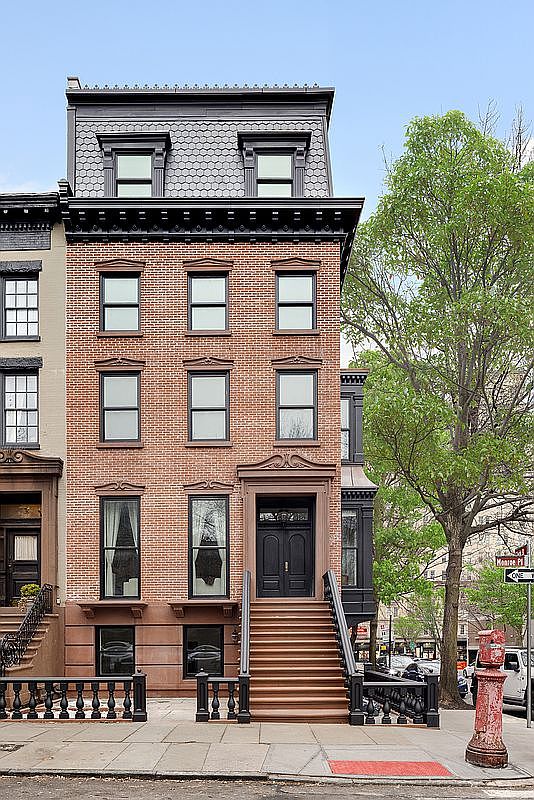
Completed in 2026 following a multi-year, full gut renovation by the acclaimed team at NV Design Architecture, this 25-foot-wide landmark corner mansion is a study in the art of reinvention. What stood here before were the bones of 19th-century Brooklyn — classic redbrick façades, soaring bay windows, the kind of architectural ambition that the Heights once produced with extraordinary regularity. What exists now is something rarer still: a home that honors that legacy while refusing to be defined by it.
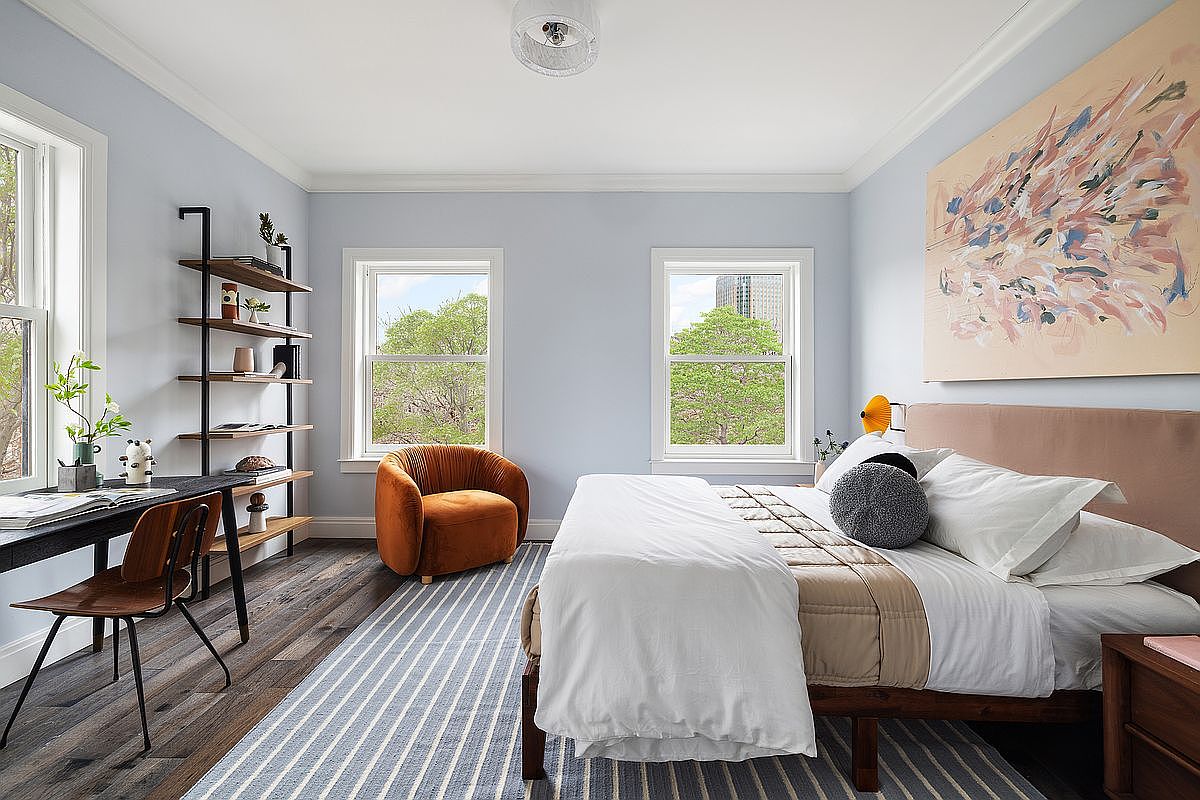
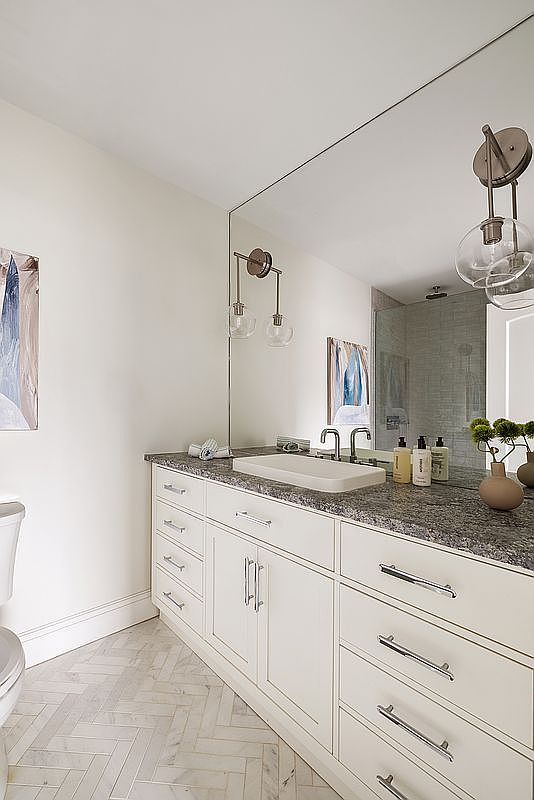
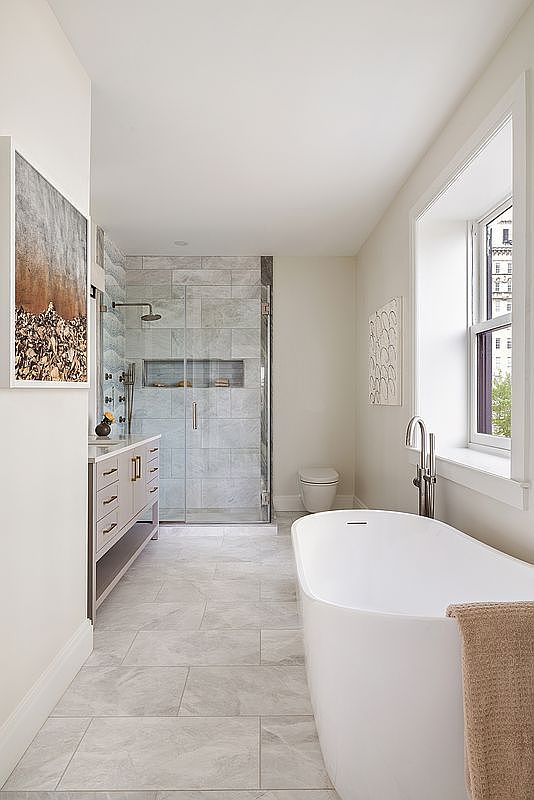
Three exposures ensure that natural light moves through the residence with intention throughout the day, shifting across wide-plank hickory floors, catching the profiles of restored crown molding, illuminating the texture of spa-inspired marble baths. At approximately 7,200 square feet, the scale is commanding — yet the rooms never feel monumental in the cold, institutional sense. They feel generous, alive, and deeply considered.
The heart of the home is a chef's kitchen wrapped in Grigio Trambiserra marble — a stone of quiet drama, its grey and silver veining suggesting both restraint and depth. A dramatic central island anchors the space, while Viking, Sub-Zero, and Fisher & Paykel appliances provide the professional-grade infrastructure that serious cooking demands. It is a kitchen that performs equally well at a Tuesday morning breakfast and a Saturday evening dinner for twenty.
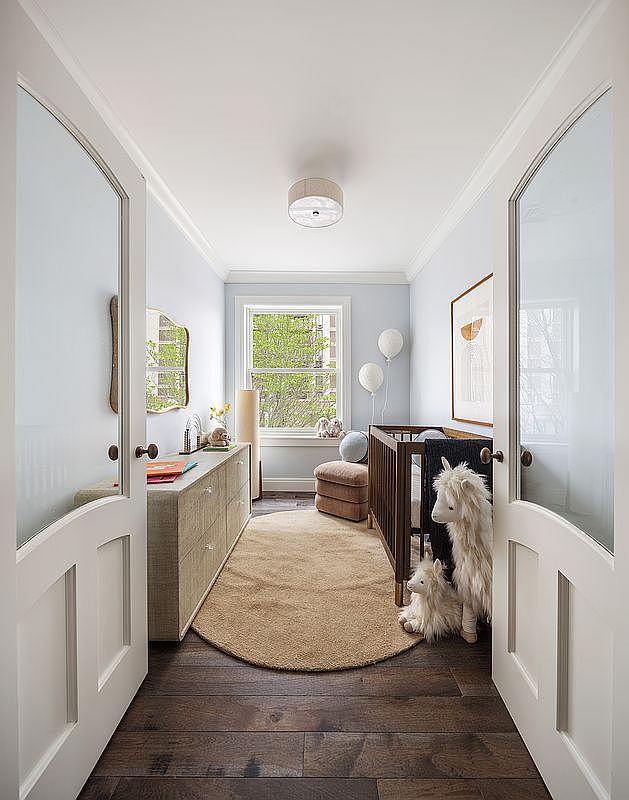
Across seven bedrooms and seven full bathrooms, the home offers a rare combination of breadth and intimacy. Four powder rooms, a wine cellar, a wet bar, a dedicated home office, and multiple fireplaces give the residence a remarkable sense of programmatic richness — each space purposefully designed, none feeling incidental. The full-floor primary suite is a world unto itself, complete with a private gym and finishes that elevate the daily rituals of rest and renewal into something approaching ceremony.
Above it all, a rooftop terrace with 360-degree views and a gas grill offers an intimate escape above the Brooklyn skyline — a place to watch the sun set over the harbor, or simply to breathe above the city.
Below, two private garden-level studios — each with its own kitchen, full bathroom, and independent entrance — introduce a layer of flexibility that few estates of this caliber can offer. Guest quarters, a creative studio, a professional retreat, accommodation for extended family or staff: the possibilities are as varied as the lives of those who will inhabit them.
One Monroe Place was not simply renovated. It was reconceived — with the patience, craft, and vision that a home of this stature deserves.
To understand One Monroe Place, it helps to understand Brooklyn Heights — and to understand Brooklyn Heights is to understand why it has endured as one of New York City's most beloved and carefully preserved neighborhoods for nearly two centuries.
Designated as New York City's first historic district in 1965, Brooklyn Heights occupies a glacial bluff above the East River, its streets lined with some of the finest 19th-century residential architecture in the United States. Federal, Greek Revival, Italianate, and Romanesque row houses stand shoulder to shoulder along blocks that feel, in the best possible sense, unchanged by time. The neighborhood's designation as a historic district has ensured that the architectural integrity that drew residents here in the 1800s remains fully intact today — a rare and irreplaceable quality in a city that remakes itself with relentless frequency.
Monroe Place itself is among the most admired streets in the Heights — a quiet, tree-canopied block that has long been regarded as one of the neighborhood's most picturesque addresses. It is the kind of street that photographers seek out in autumn, when the light filters through the canopy and the redbrick facades glow amber in the afternoon sun.
The neighborhood's relationship with the waterfront is central to its identity. The Brooklyn Heights Promenade — a beloved esplanade running along the bluff above the Brooklyn-Queens Expressway — offers what is widely considered one of the finest views in New York City: an unobstructed panorama of Lower Manhattan, the Brooklyn Bridge, and New York Harbor. Below, Brooklyn Bridge Park stretches along the waterfront, offering lawns, playgrounds, athletic fields, a restored carousel, and a marina across more than 85 acres of public green space that has fundamentally transformed the borough's relationship with its waterfront.
Day-to-day life in Brooklyn Heights is defined by a particular kind of understated ease. Montague Street, the neighborhood's principal commercial corridor, offers an array of restaurants, cafés, and independent shops. The neighborhood's proximity to DUMBO — with its converted warehouse galleries, celebrated restaurants, and vibrant creative community — and to Cobble Hill, with its brownstone-lined streets and charming boutiques, places residents at the intersection of several of Brooklyn's most desirable enclaves.
For connectivity, the neighborhood is exceptionally well served. Multiple subway lines, including the 2, 3, 4, 5, A, C, F, and R trains, provide direct access to Manhattan, while the East River Ferry offers a scenic alternative commute. Downtown Brooklyn, with its expanding cultural institutions, retail, and commercial offerings, is minutes away on foot.
The community itself — long home to writers, architects, judges, artists, and professionals drawn by the neighborhood's particular combination of beauty, history, and relative tranquility — maintains a civic pride and neighborly character that is increasingly rare in urban life.
To live at One Monroe Place is to inhabit not merely a home, but a neighborhood with a genuine sense of place — one that has been cherished, protected, and loved for generations, and that shows every sign of remaining so for generations more.
Featured Highlights
Curated Content • Presented by Brandon Bogard