The Story Behind
A Landmark Penthouse Crowning Commonwealth Avenue's Most Storied Boulevard
There are homes that impress, and then there are homes that endure — residences whose bones speak of an era when architecture was treated as a civic act, and whose interiors reflect the singular vision of those who understood that renovation, done honestly, is its own form of artistry. The penthouse at 304 Commonwealth Avenue is unambiguously the latter.
The Clark Weld House was erected in 1896, during the height of Boston's Back Bay development, when the neighborhood's broad, French-inspired boulevards were being lined with some of the finest residential architecture in the country. The building's light-colored stone facade, rounded bay window, and classical arched entryway remain as commanding today as they were at the turn of the last century. What changed — dramatically, and for the better — was everything within. A comprehensive gut renovation completed in 2010 stripped the penthouse to its structural essence and rebuilt it with a level of craft that would satisfy the most discerning eye.
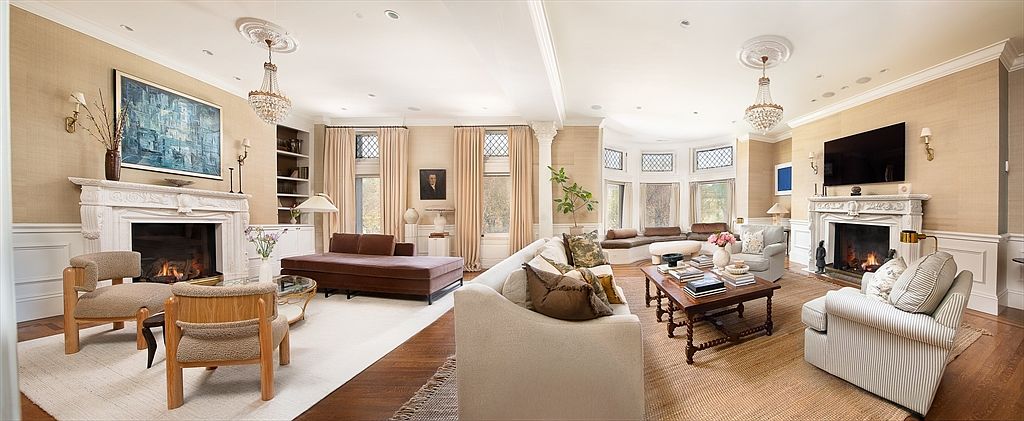
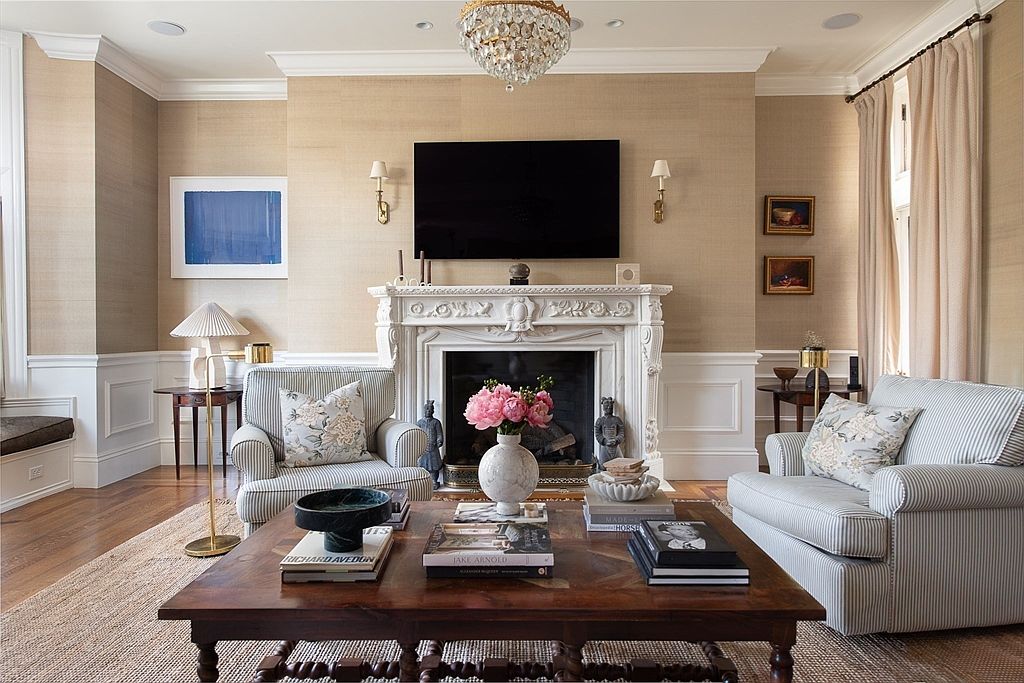
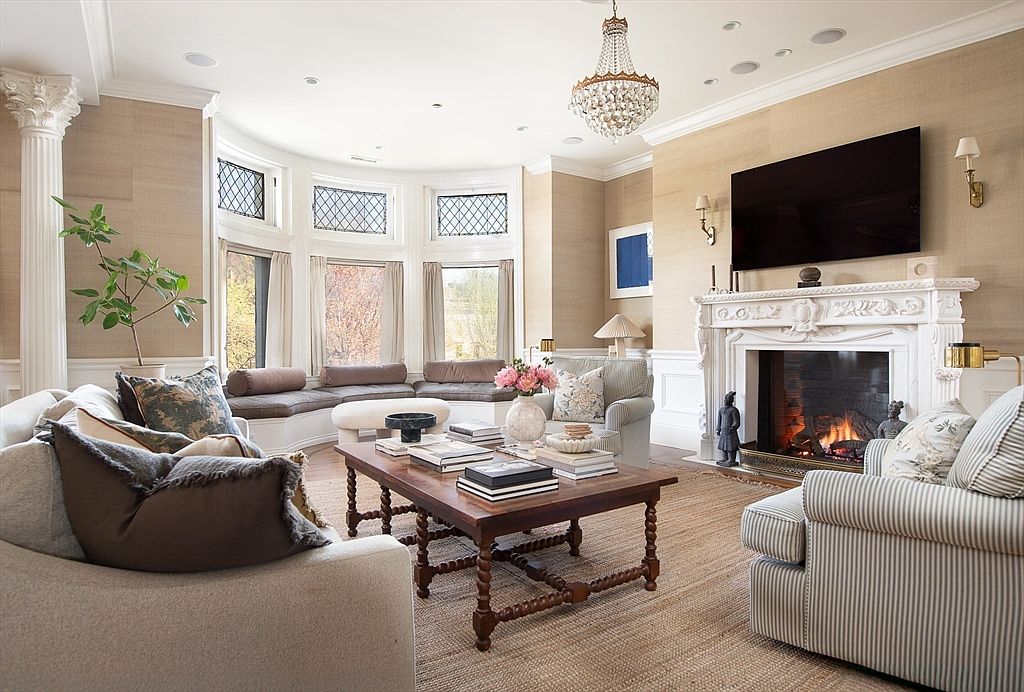
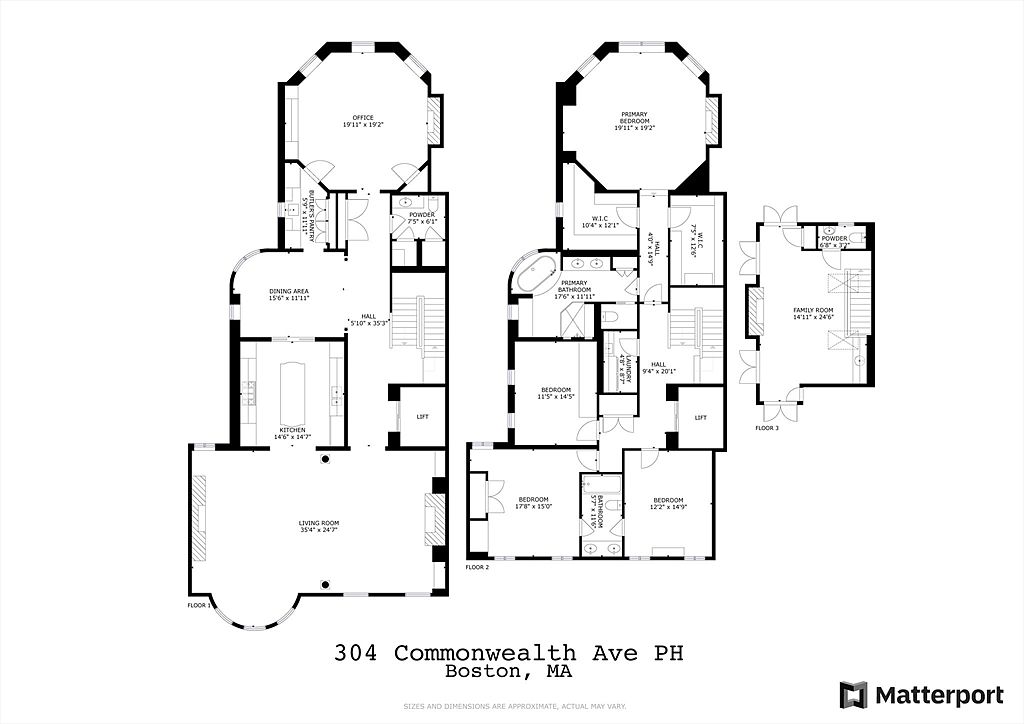
Step off the private keyed elevator and the scale announces itself immediately. The double-wide living room stretches before you with ten-foot ceilings overhead, warm hardwood underfoot, and two custom marble fireplaces anchoring either end of the room in perfect symmetry. A wide bay window with built-in bench seating draws the eye outward toward the elm-canopied median of Commonwealth Avenue below — a view that changes with every season and never loses its appeal. Crystal chandeliers cast a warm, considered light over a room that manages to feel simultaneously grand and genuinely livable.
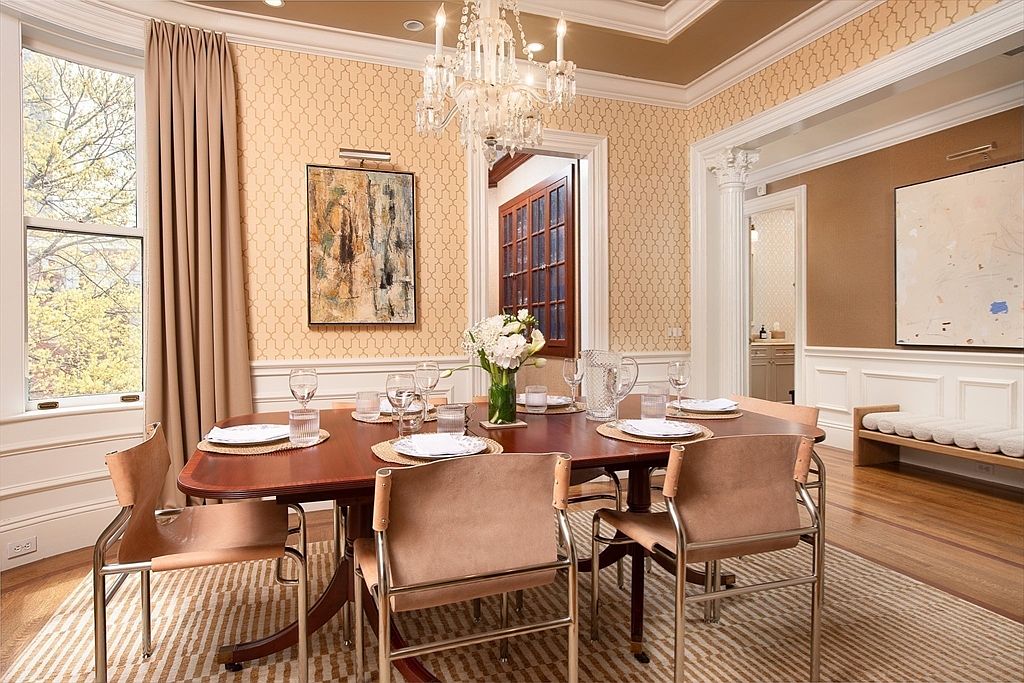
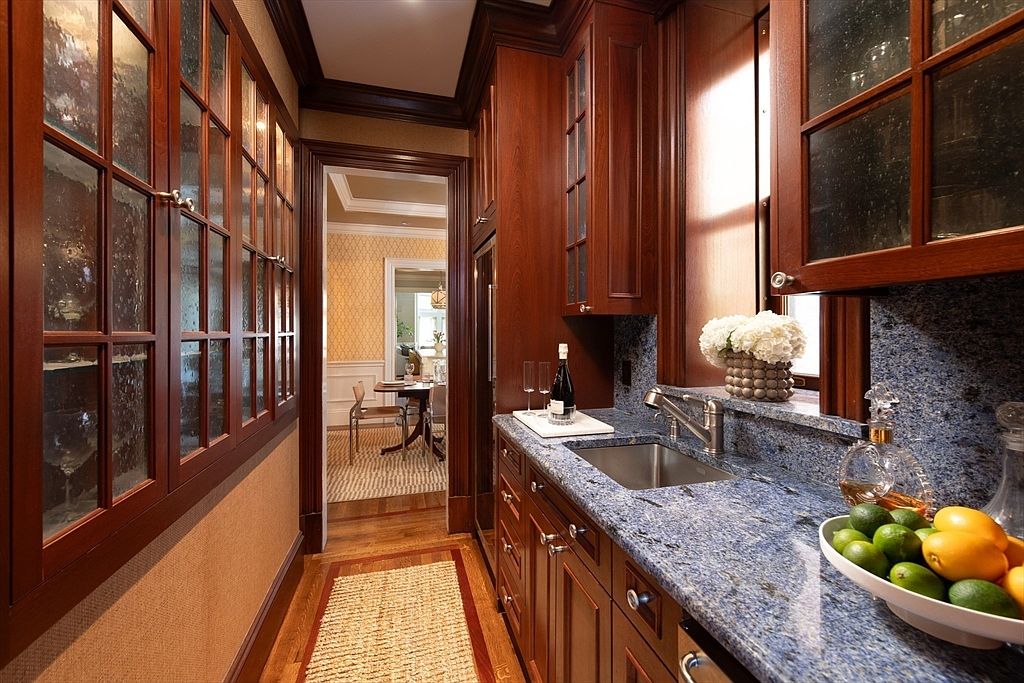
The chef's kitchen is a study in disciplined elegance: crisp white cabinetry, a professional-grade range beneath a decorative hood, a stone-topped central island, and two dishwashers speak to a kitchen designed for serious cooking as much as serious entertaining. The adjacent butler's pantry — with its rich dark cabinetry, blue-toned stone countertops, and glass-fronted display doors — bridges the kitchen seamlessly to a formal dining room dressed in patterned wallpaper, white wainscoting, and a crystal chandelier. Down the hall, the mahogany-paneled study with its coffered ceiling and stone fireplace offers a quieter counterpoint: a room that invites long evenings and considered thought.
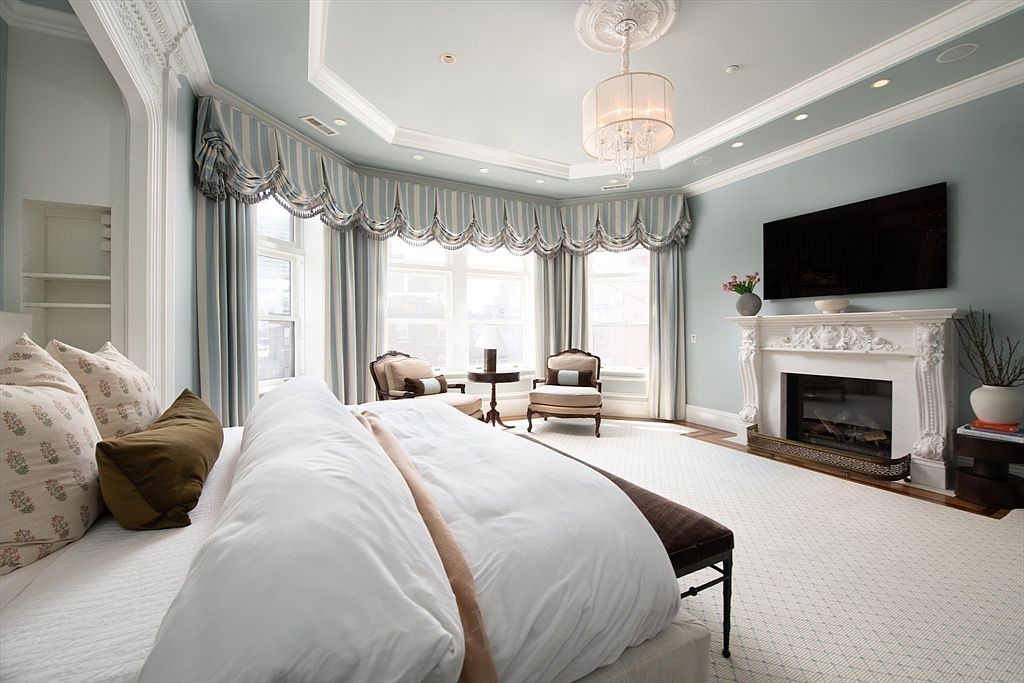
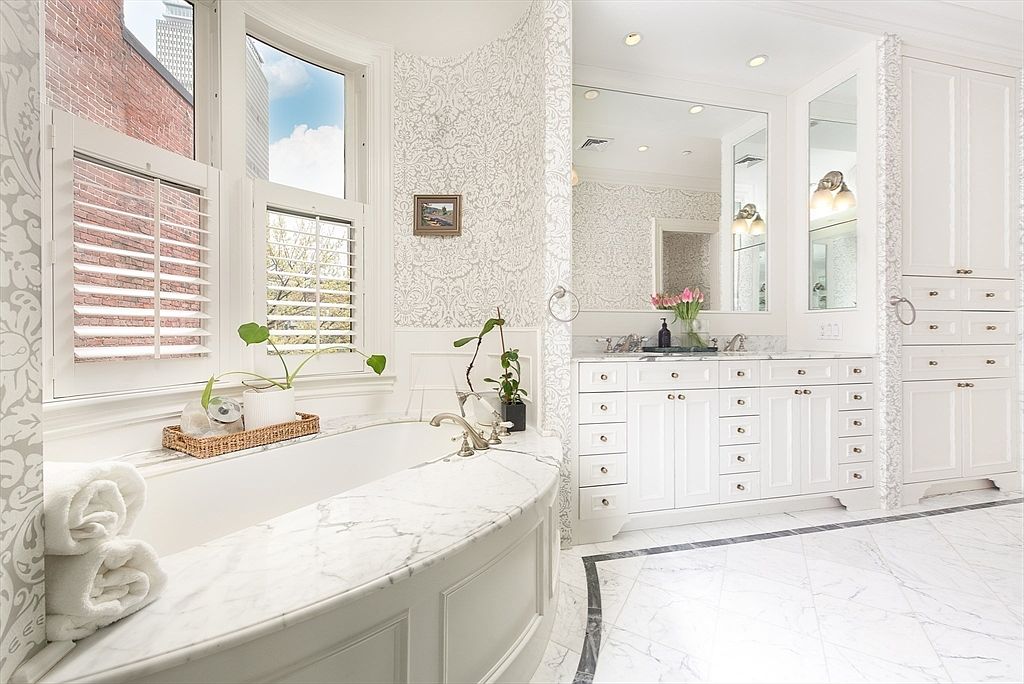
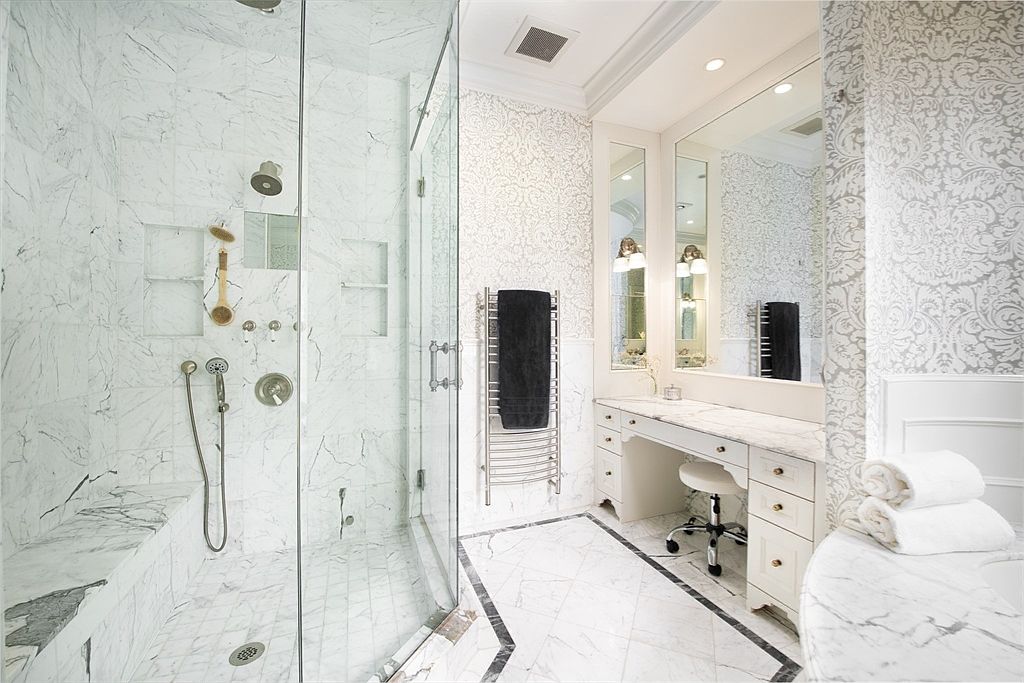
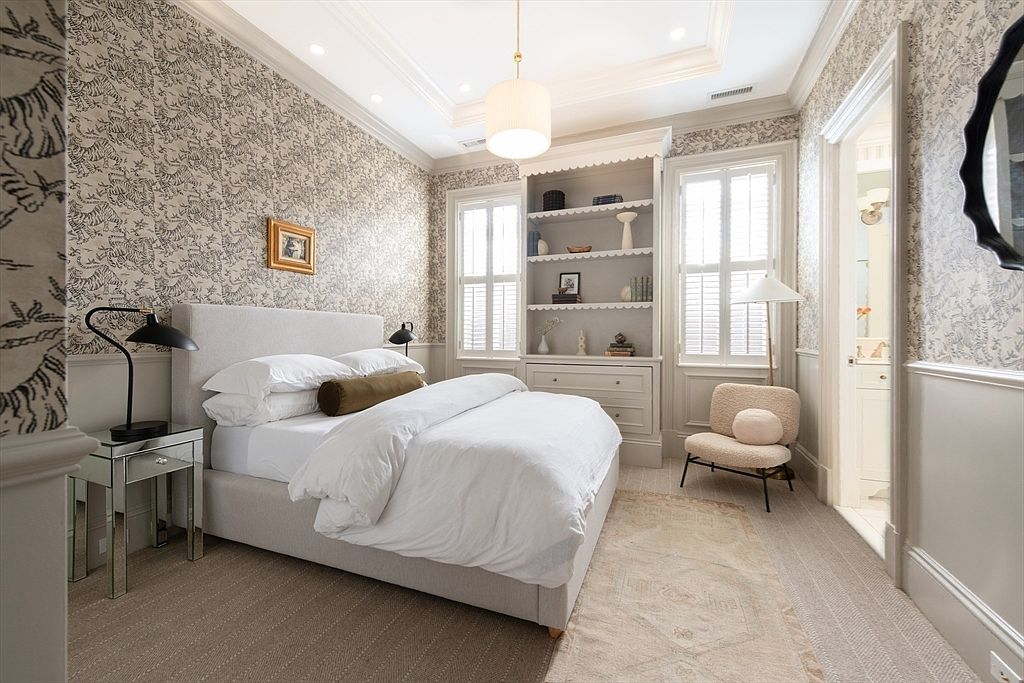
The second level belongs to rest and restoration. The primary suite is anchored by its own fireplace and tray ceiling, with a bay window seating nook that catches the morning light. Its en-suite bathroom is a genuine spa: a curved soaking tub positioned beneath tall plantation-shuttered windows, a glass-enclosed shower with a built-in stone bench and multiple shower heads, double stone vanities, patterned wallpaper, and radiant-heat floors throughout. Three additional bedrooms, a full bath, and a dedicated laundry room complete the level with the same attention to finish.
The crown of the residence is its top floor — a custom solarium with an indoor-outdoor fireplace and a wet bar opens through French doors onto nine hundred thirty square feet of wrap-around roof deck. The outdoor kitchen, bar, and curved sectional seating area transform this elevated terrace into what is effectively a private rooftop club with panoramic views over one of Boston's most beautiful streetscapes.
Throughout, the infrastructure matches the aesthetics: a Crestron smart-home system, pre-wired speakers, marble bathrooms with radiant heat, private locked storage, and two dedicated garage spaces ensure that the experience of living here is as seamless as it is beautiful.
Commonwealth Avenue is not simply a street. It is, by most accounts, one of the finest urban residential boulevards in the United States — a two-hundred-foot-wide thoroughfare modeled after the grands boulevards of Baron Haussmann's Paris, conceived in the 1850s as the organizing spine of Boston's Back Bay neighborhood. The central mall, with its canopy of American elms and its procession of monuments and sculptures, has served as the neighborhood's living room for more than a century and a half. To live on Commonwealth Avenue is to inhabit one of the most deliberate and enduring acts of civic design in American history.
Back Bay itself occupies a singular position in Boston's geography and identity. Developed on land reclaimed from the tidal flats of the Charles River between the 1850s and 1890s, it was laid out on a grid — an anomaly in a city famous for its colonial-era street patterns — with the explicit intention of creating a neighborhood of architectural distinction. The result is a remarkably intact Victorian streetscape, now listed on the National Register of Historic Places, where Romanesque Revival, French Second Empire, and Queen Anne rowhouses stand shoulder to shoulder in one of the most cohesive historic residential districts in the country.
The immediate surroundings of 304 Commonwealth Avenue place the resident at the precise center of Boston's cultural and intellectual life. The Boston Public Library, a McKim, Mead & White masterpiece widely regarded as one of the finest public buildings in America, is a short walk away on Copley Square. The square itself hosts Trinity Church — another architectural landmark — as well as the Copley Place and Prudential Center shopping complexes, which together offer an extensive range of retail, dining, and services. Newbury Street, the neighborhood's celebrated commercial spine, is one block to the south: eight blocks of independent boutiques, international flagships, galleries, and some of Boston's most acclaimed restaurants.
For those drawn to the arts, the Isabella Stewart Gardner Museum and the Museum of Fine Arts are both within comfortable reach in the adjacent Fenway neighborhood. Symphony Hall, home to the Boston Symphony Orchestra since 1900 and considered one of the finest concert venues in the world for its acoustics, is a brief walk from the property. The Charles River Esplanade, a beloved linear park running along the river's edge, offers running and cycling paths, waterfront lawns, and a performance venue that hosts the Boston Pops' celebrated Fourth of July concert each summer.
The practical infrastructure of the neighborhood is equally well-considered. Multiple MBTA Green Line stations serve Back Bay, with the Back Bay commuter rail station providing direct service to Boston's South Station and points beyond. Logan International Airport is accessible in under thirty minutes. For those affiliated with Boston's celebrated academic institutions — Harvard, MIT, Boston University, and Northeastern among them — the neighborhood sits at a convenient geographic crossroads.
To live here is to participate in a neighborhood that has, for more than a hundred and fifty years, attracted those who understand that where one chooses to live is itself a form of expression.
Featured Highlights
Curated Content • Presented by Lisa Merriman Barth