The Story Behind
Private Shoreline Sanctuary on Conway Lake
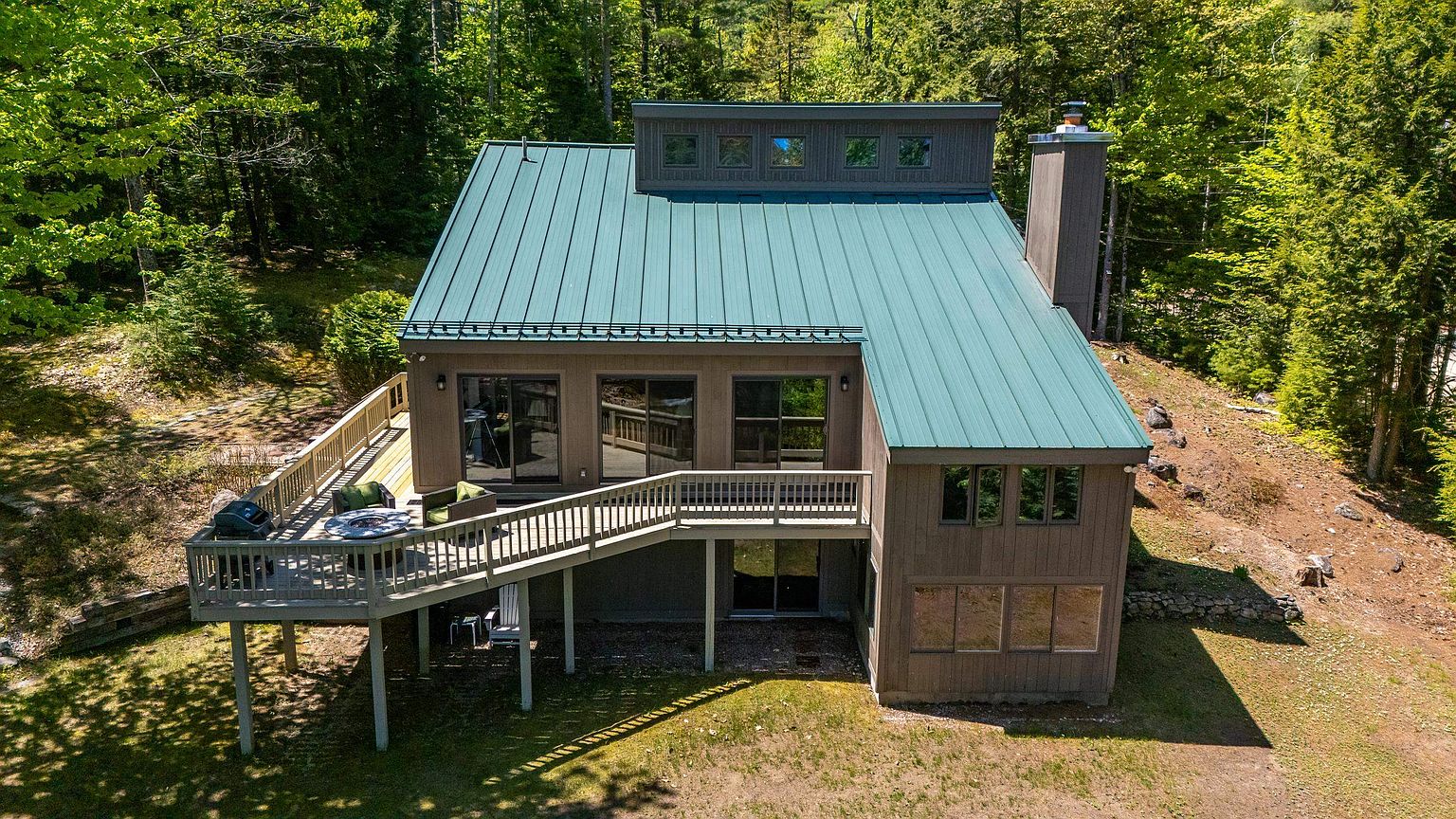
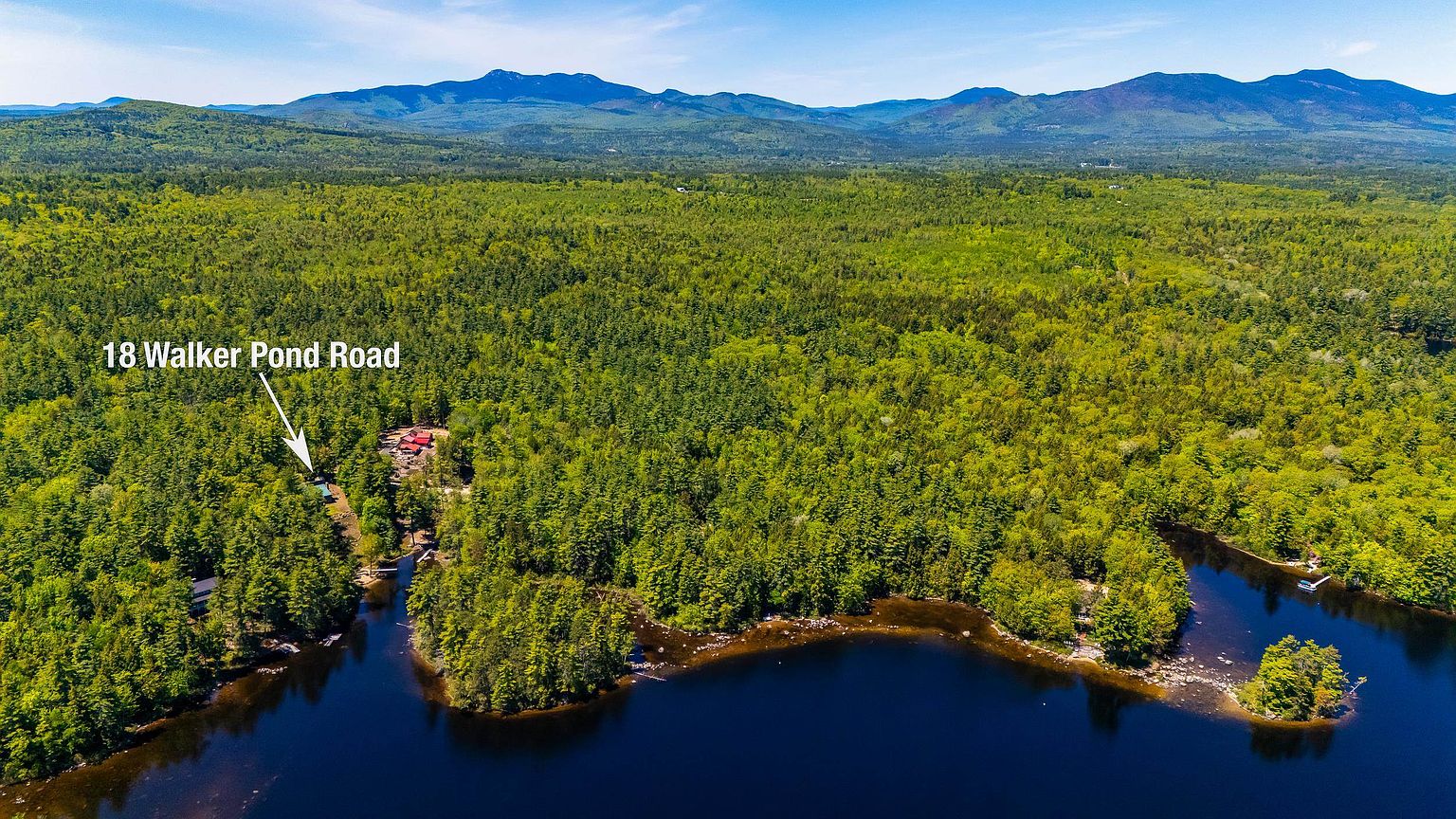
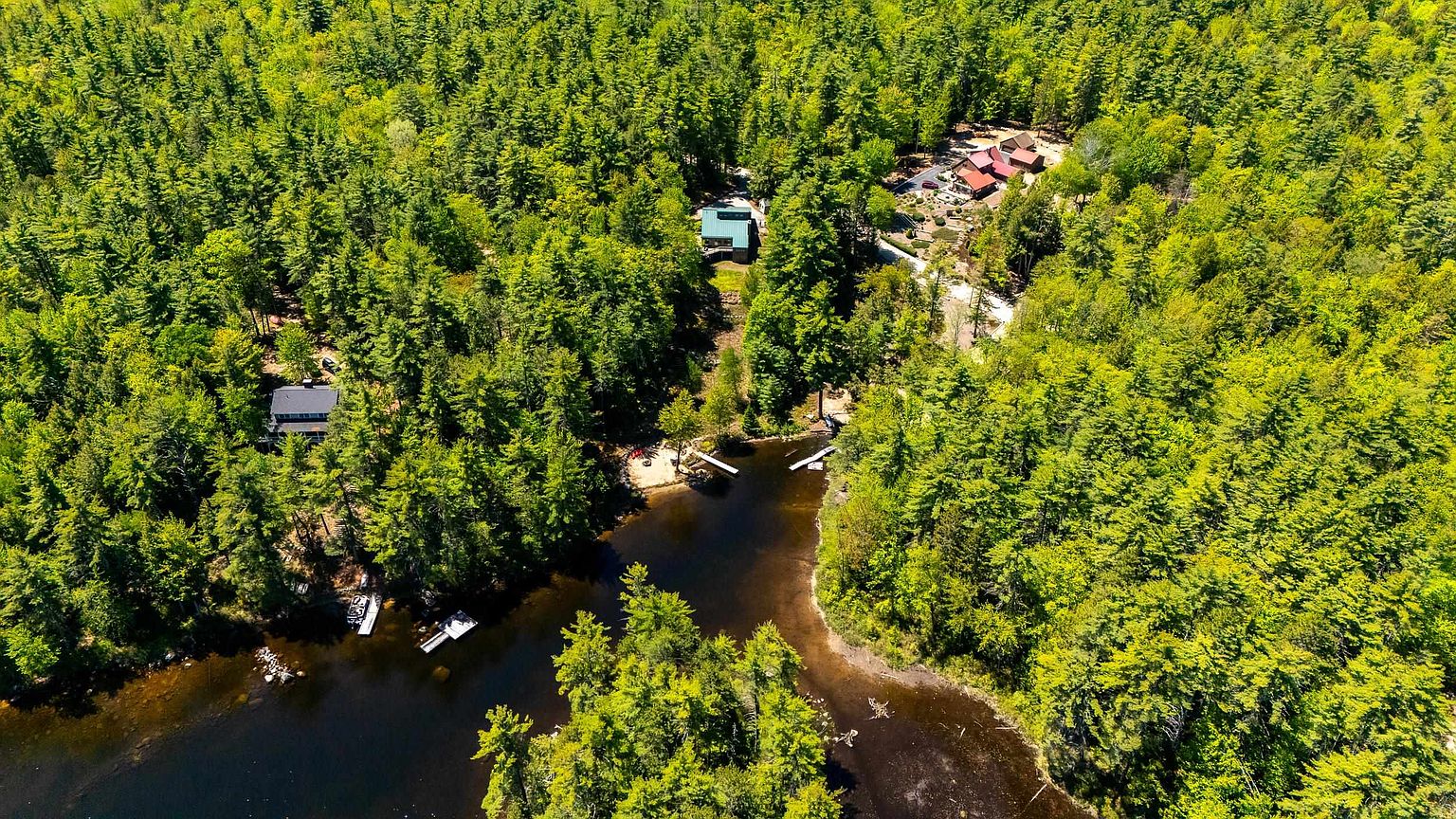
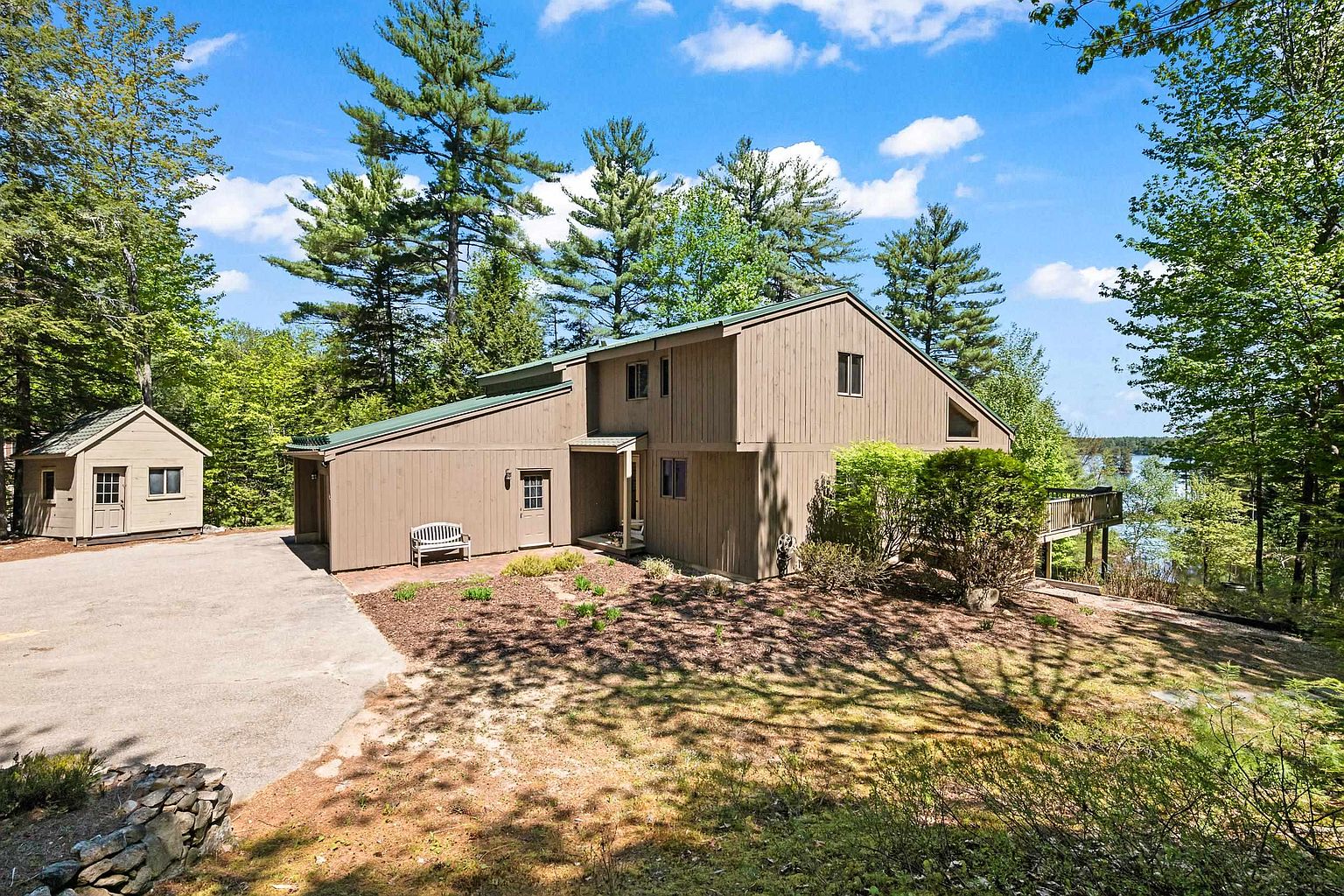
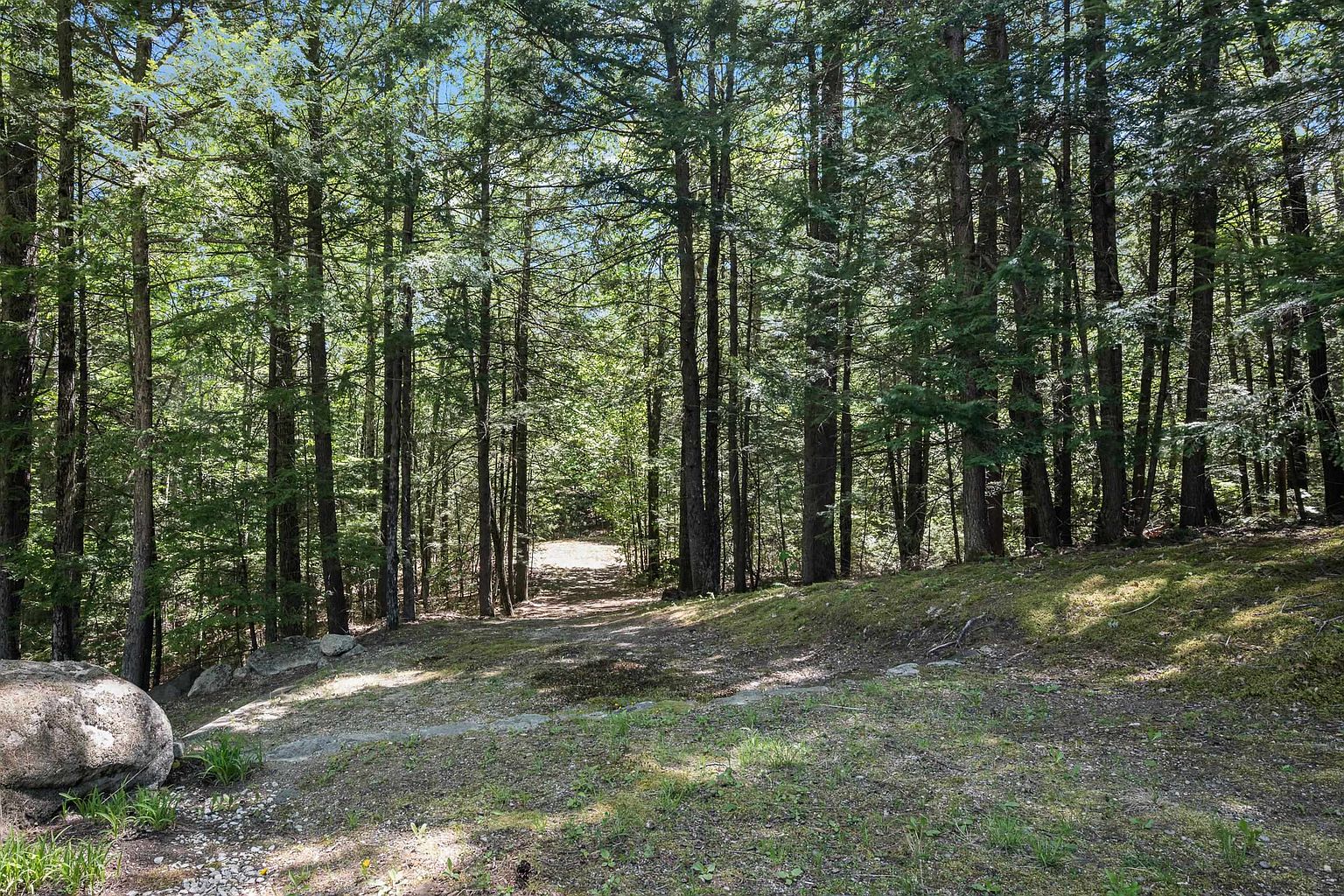
There is a particular kind of architecture that seems to grow from the land rather than be placed upon it — and 18 Walker Pond Road is precisely that. Nestled among mature pines on a gently sloping 2.2-acre parcel, this three-level contemporary home was conceived around a singular idea: that every space should feel connected to the water. The result is a residence that earns its setting rather than merely occupying it.
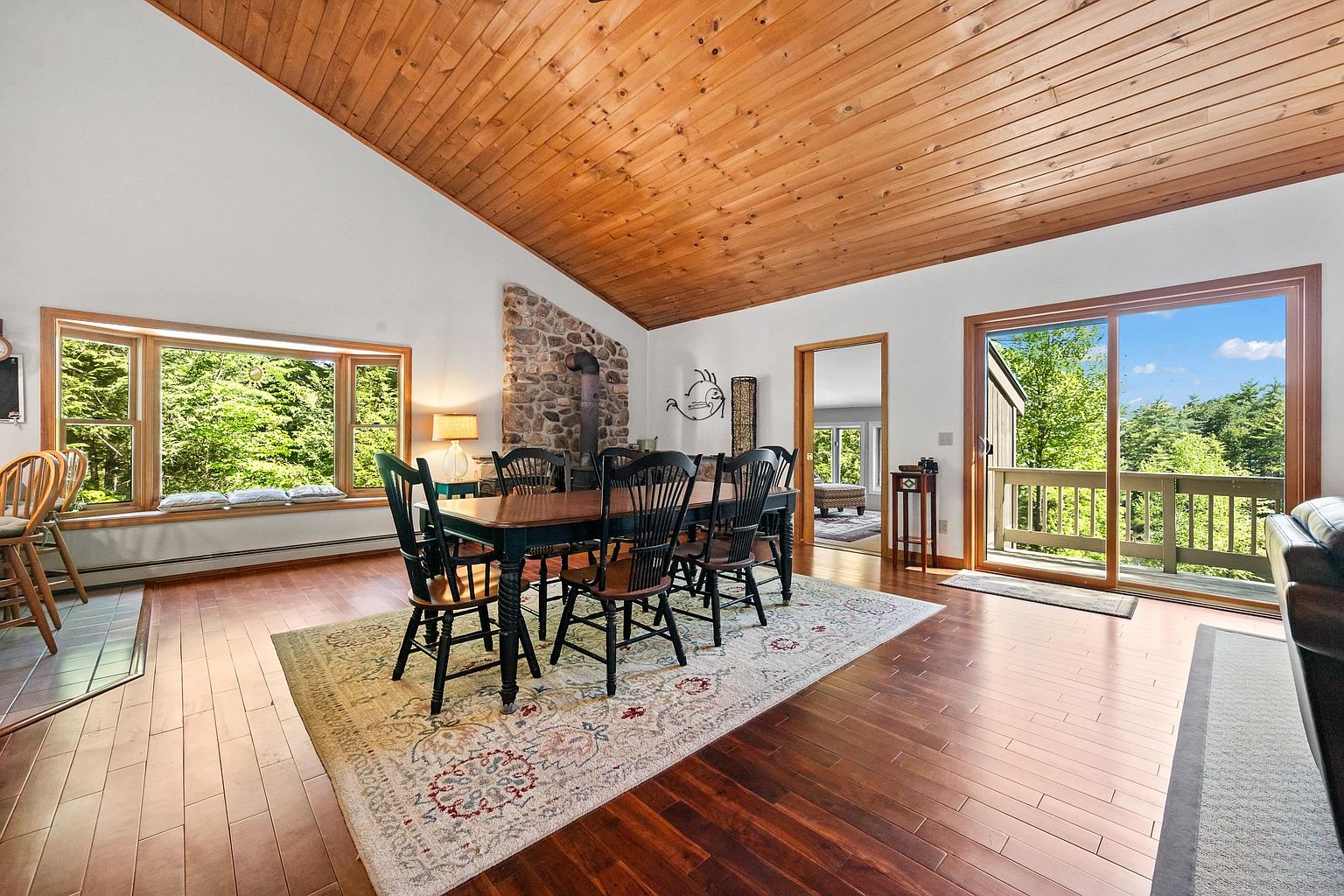
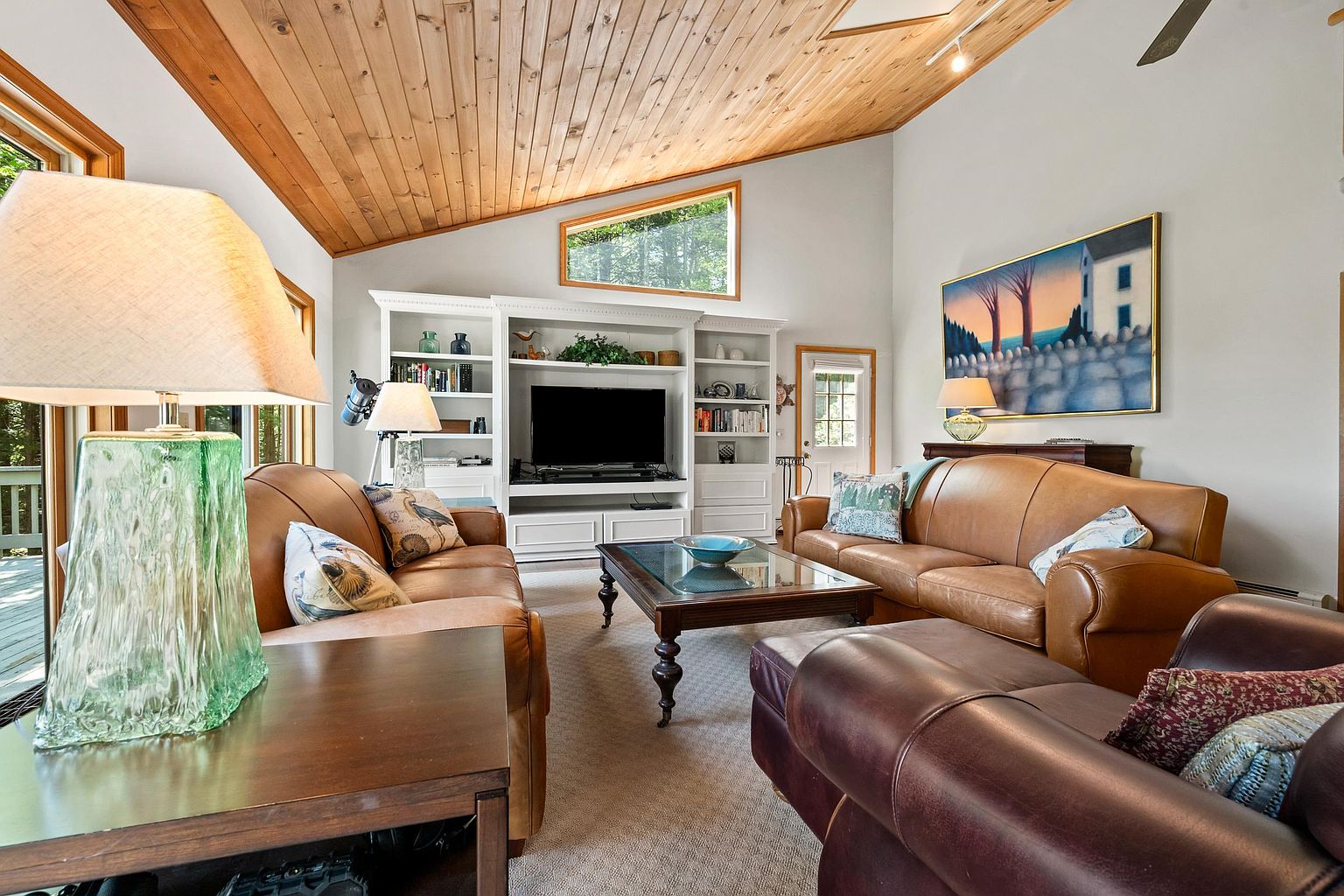
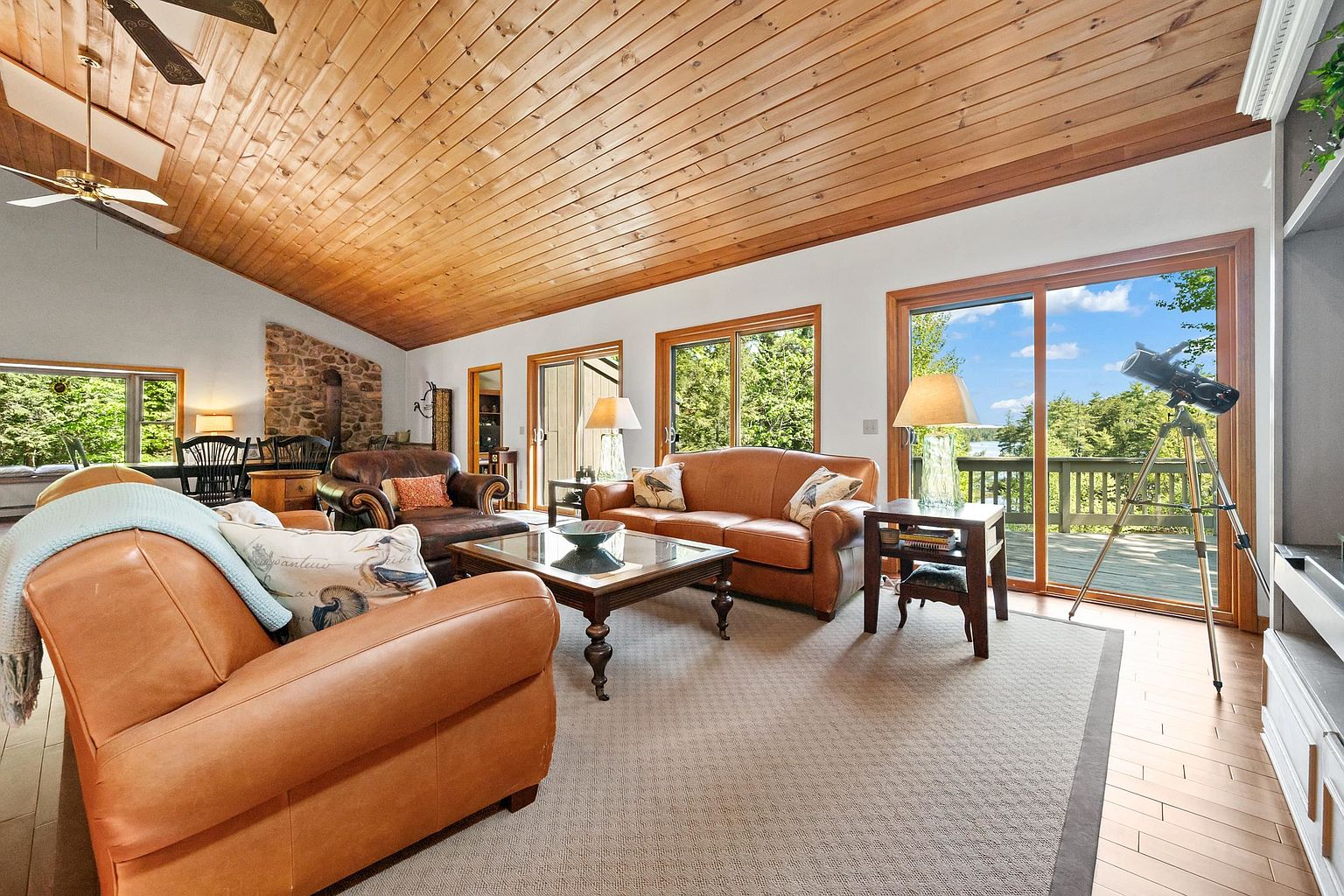
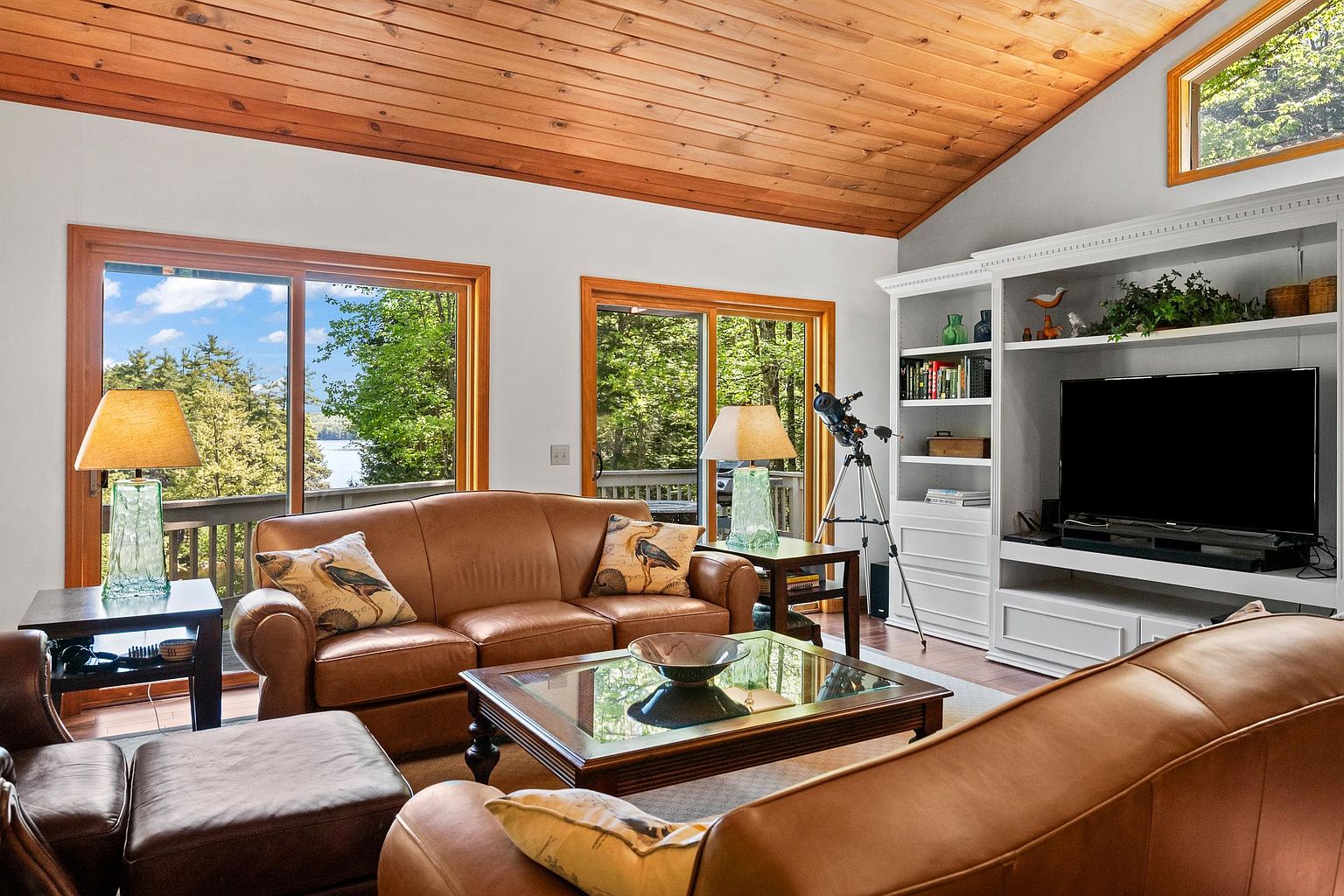
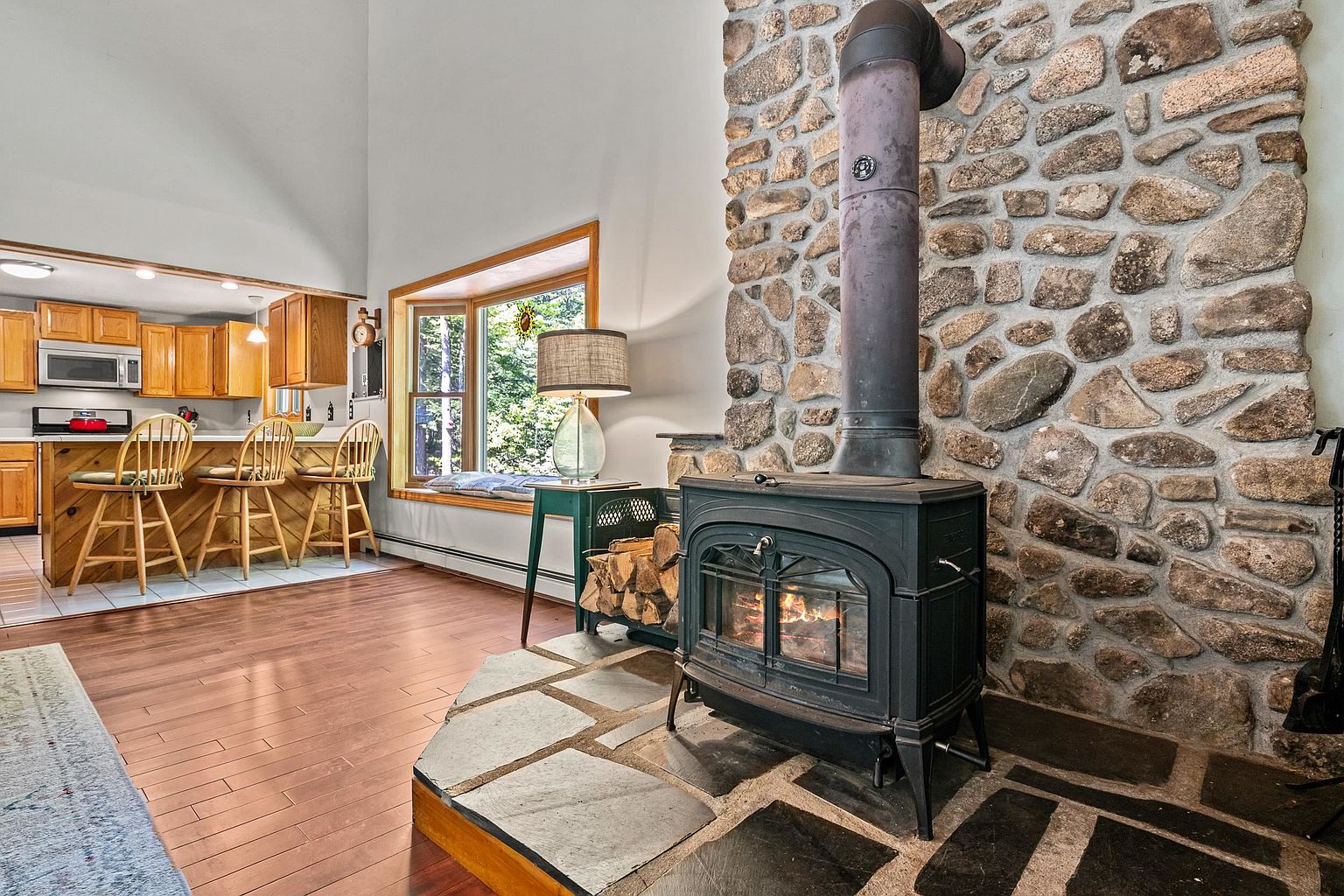
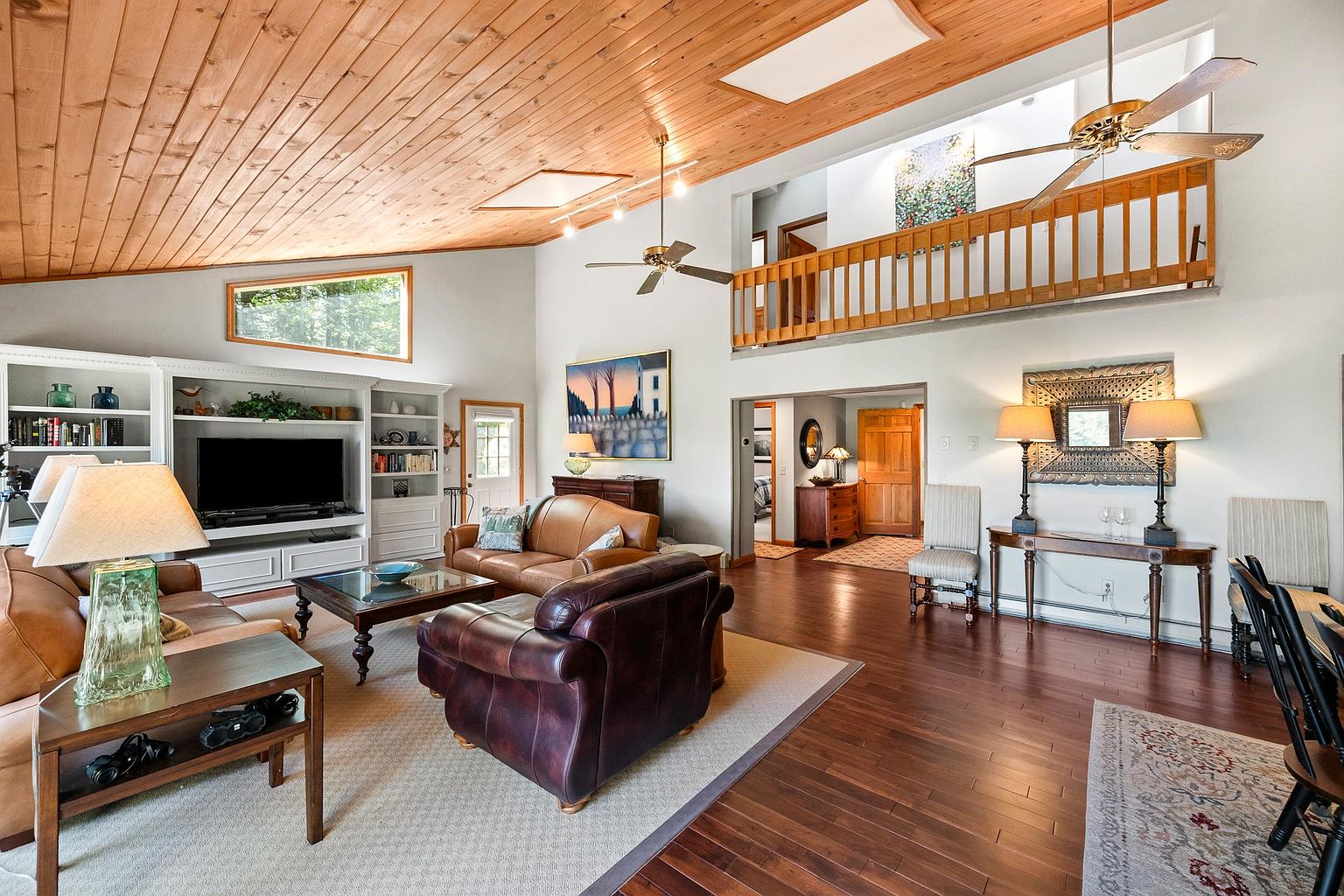
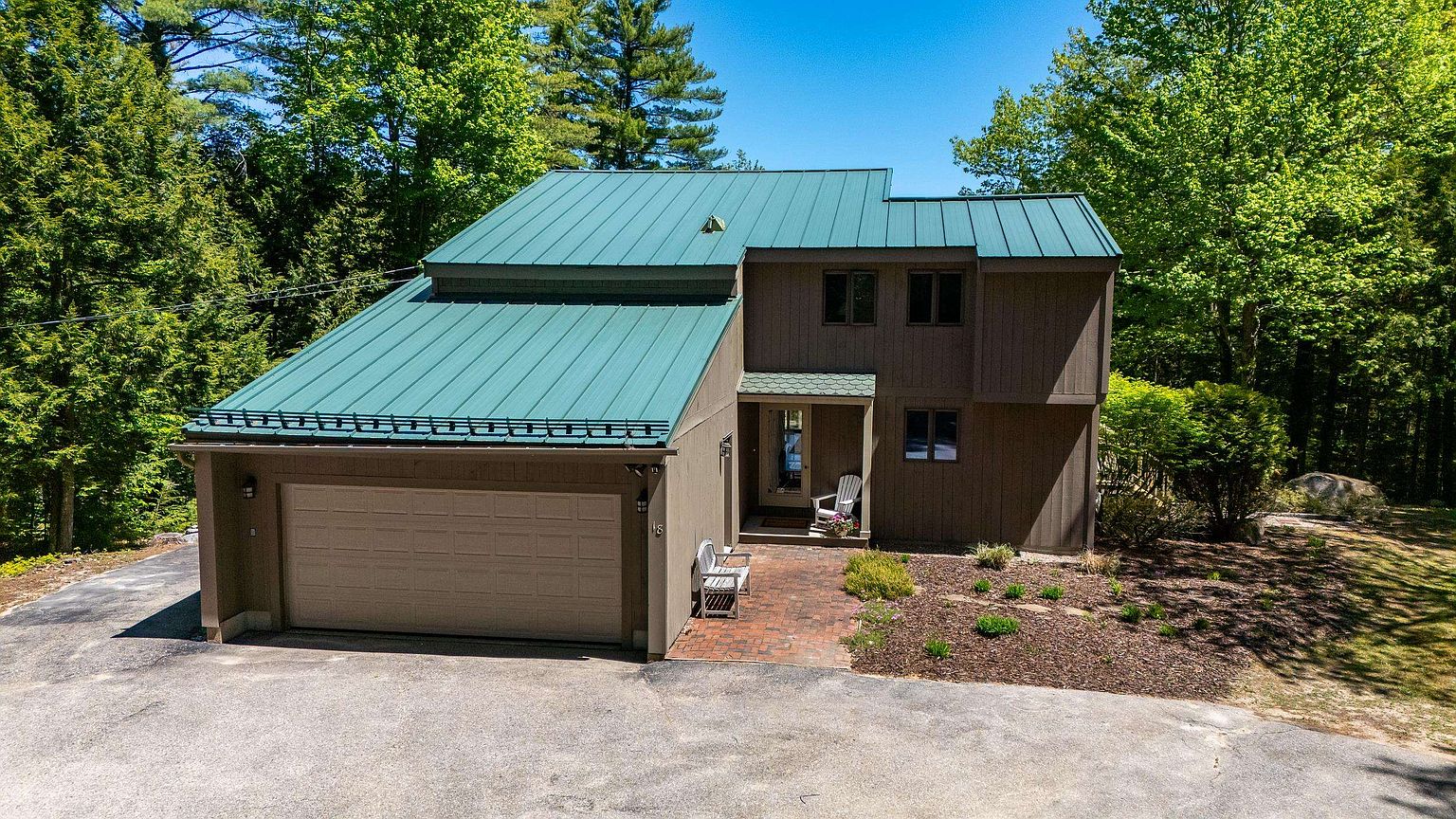
Arrival sets the tone immediately. A brick-paved walkway leads beneath a canopy of trees to a covered entry framed by brown vertical siding and a distinctive green metal roof — a palette that reads as deliberate camouflage, as though the house has chosen to belong to the forest rather than announce itself above it. Inside, that quiet confidence gives way to drama. The great room rises to soaring vaulted ceilings clad in warm wood planking, a material choice that runs throughout the home and lends the interiors a coherent, cabin-elevated character. A wall of glass anchors the far end of the room, framing unobstructed lake views that shift with the light and the seasons. A stone-clad chimney breast houses a wood-burning stove set on a raised slate hearth — a functional centerpiece that transforms the room into something genuinely alive on cool autumn evenings.
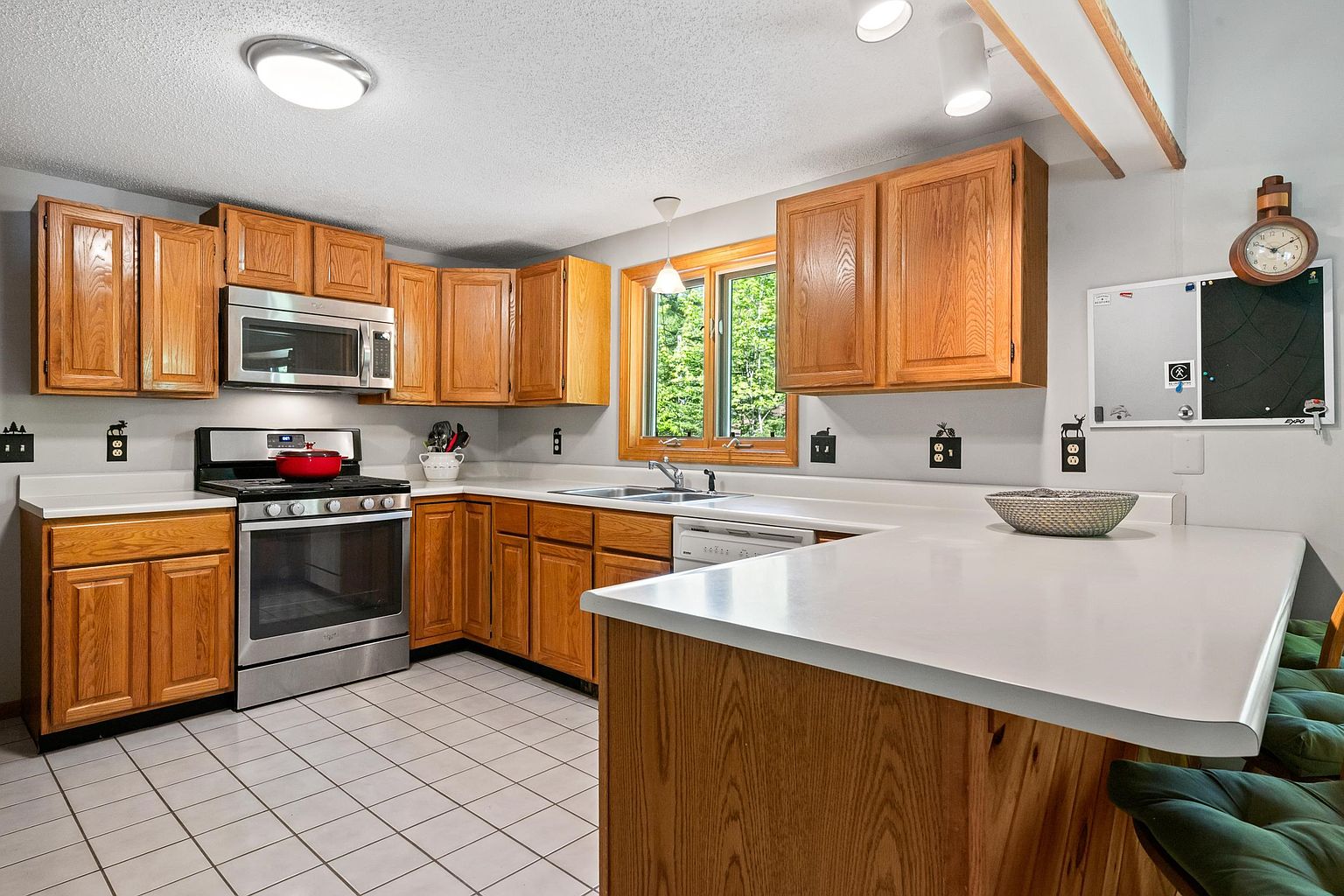
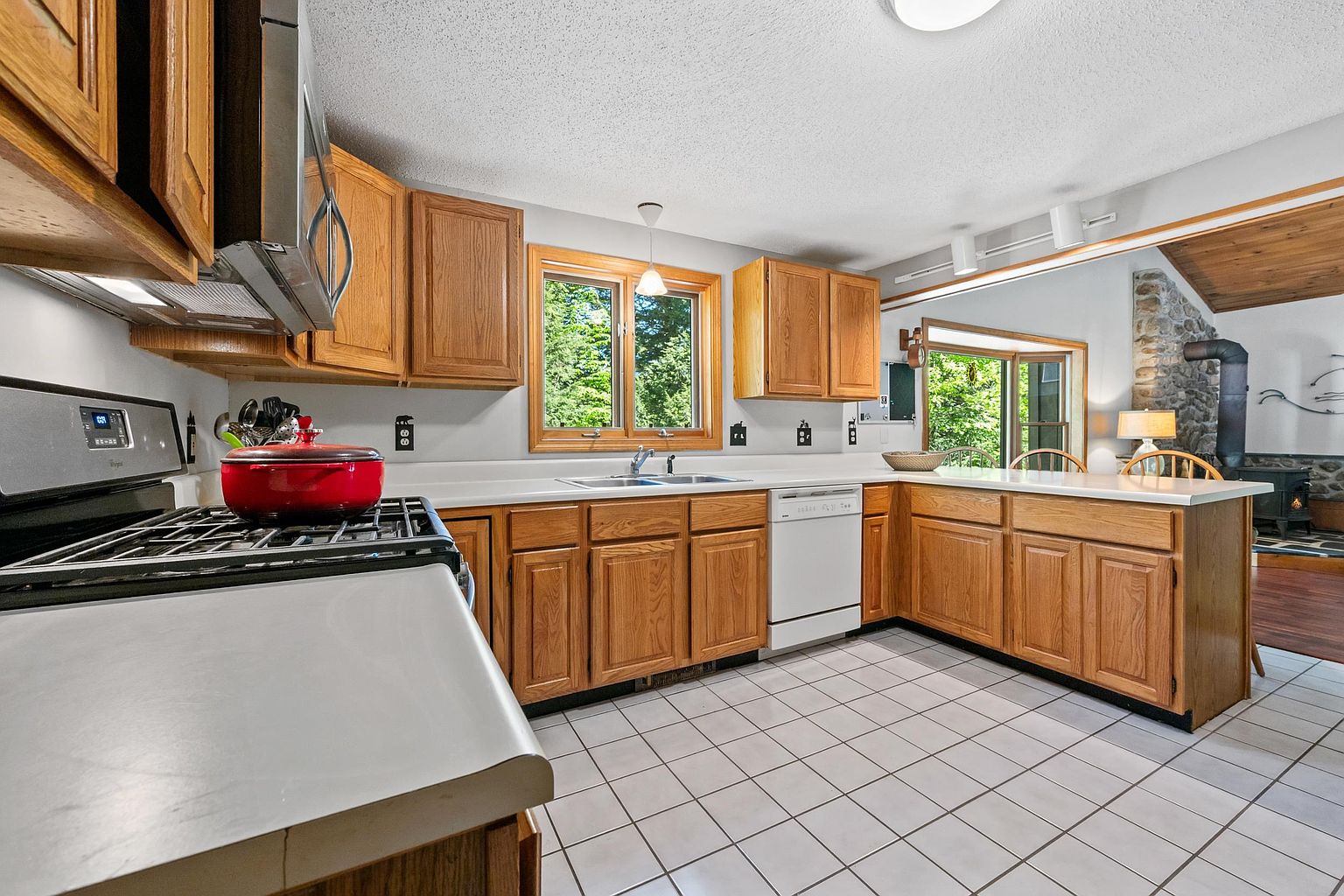
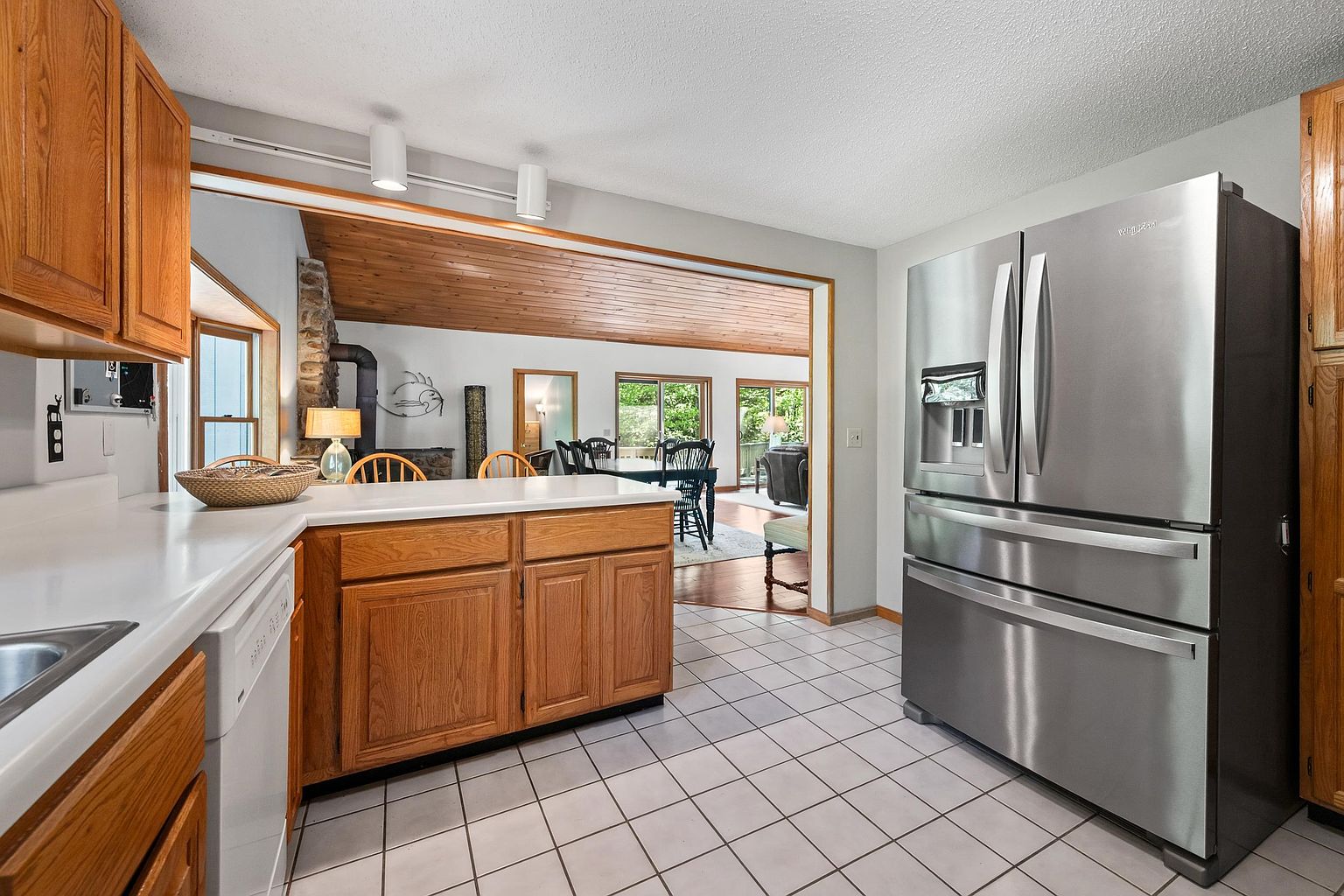
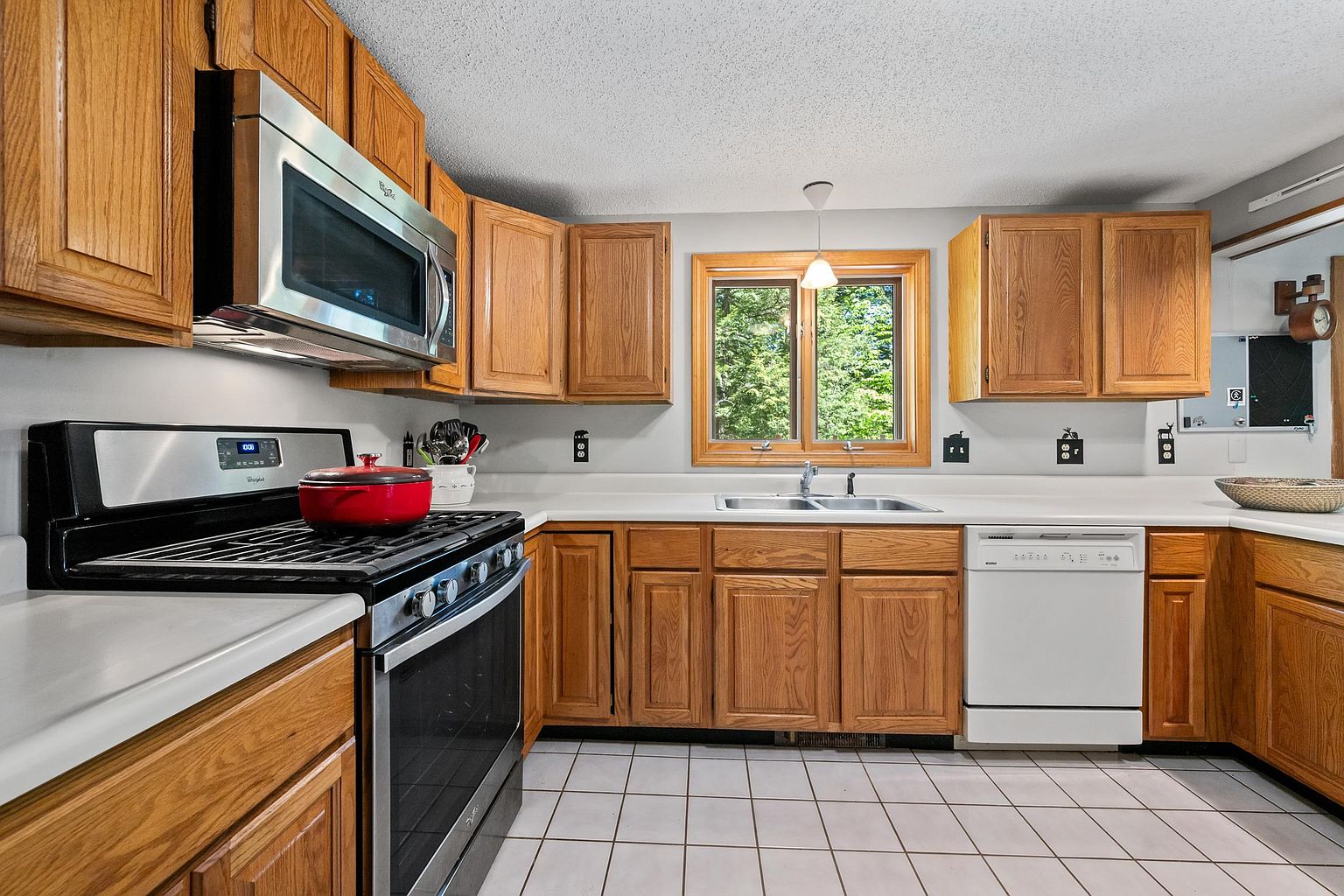
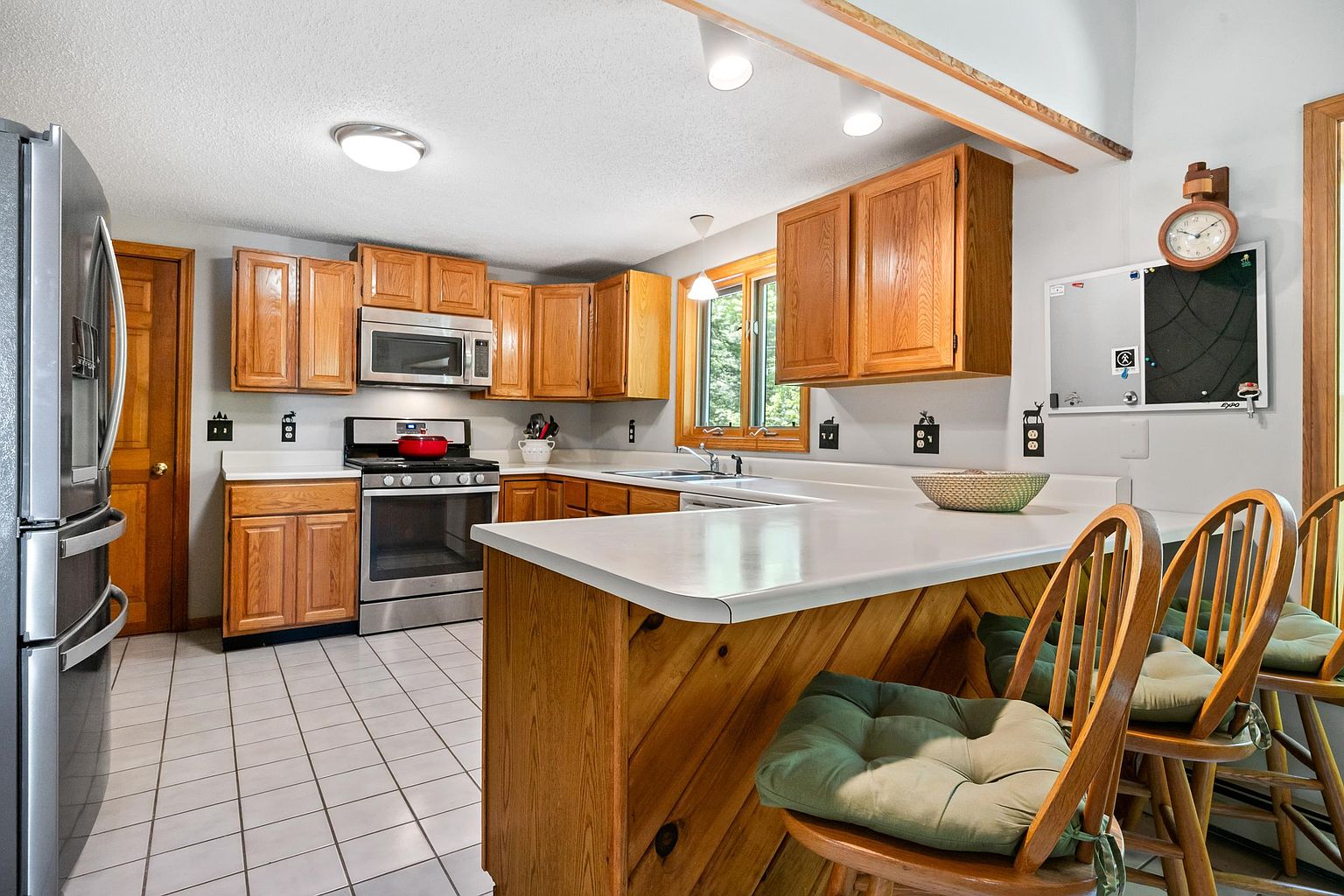
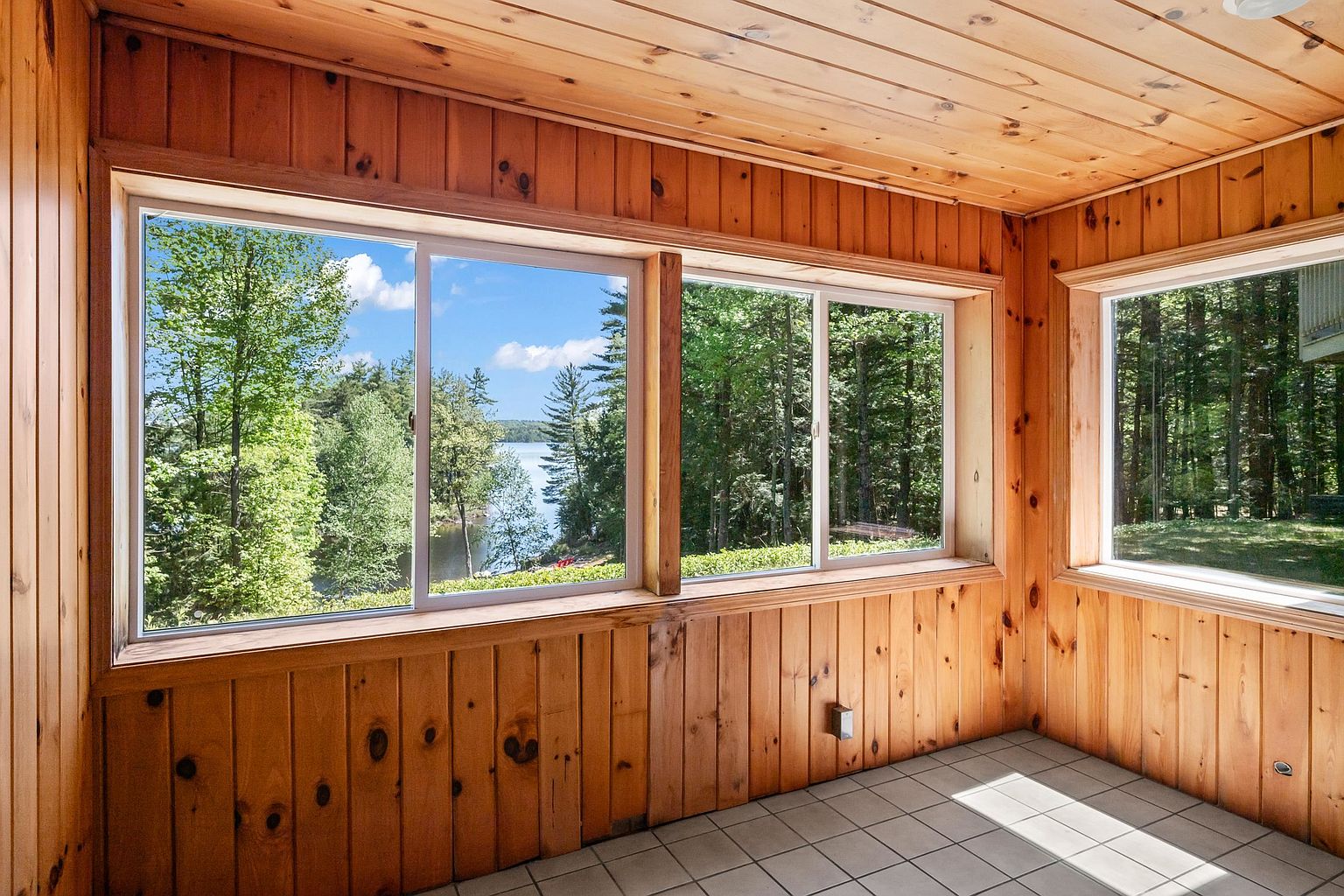
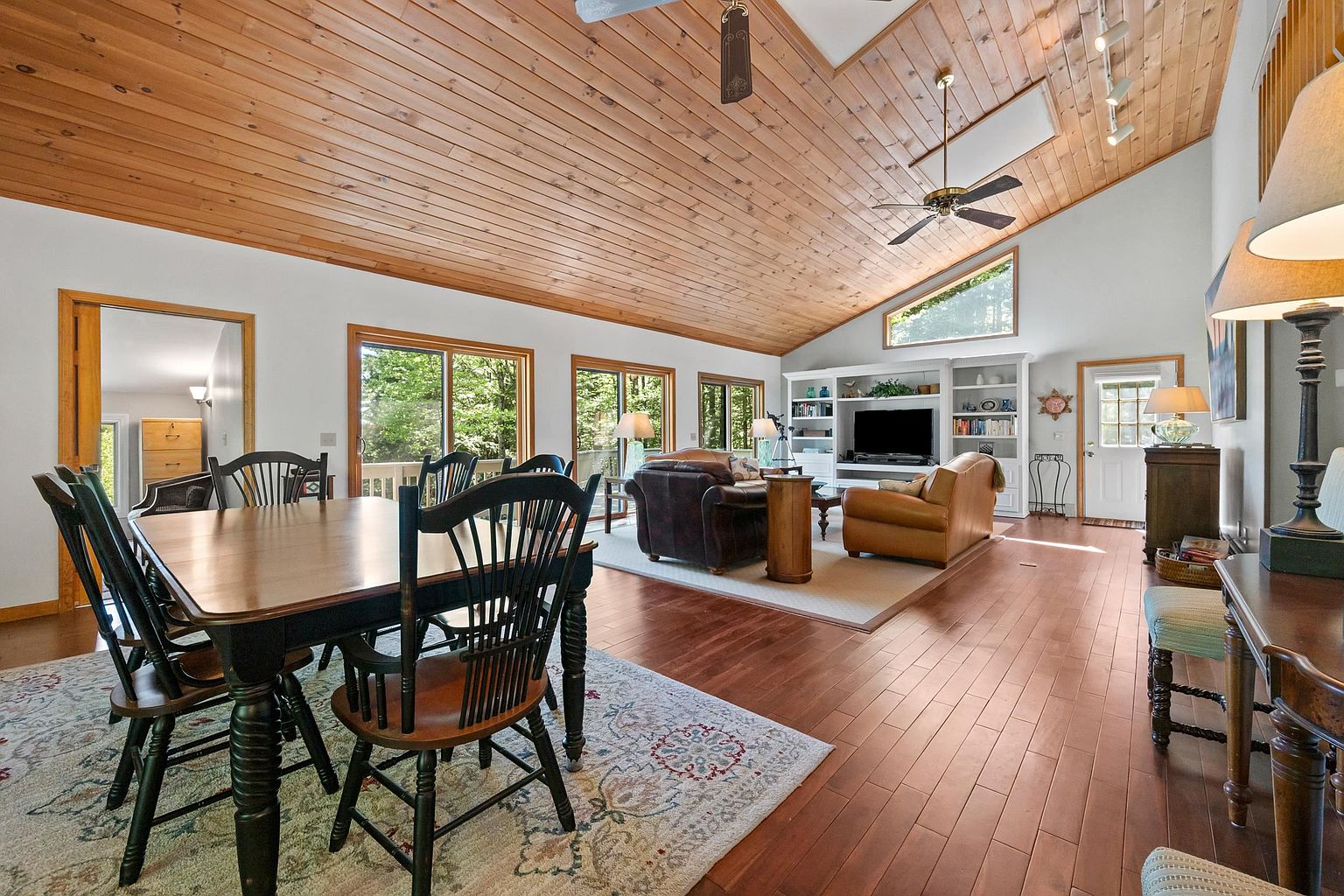
The kitchen and dining areas flow naturally from this central gathering space, designed with the rhythms of multi-generational living in mind. Light wood cabinetry, white countertops, a gas range, and a peninsula with bar seating create a kitchen that is equally suited to a quiet breakfast for two or a full holiday spread. The adjacent dining room, with its own vaulted wood-paneled ceiling and sliding glass doors, extends the sense of connection between interior life and the world outside.
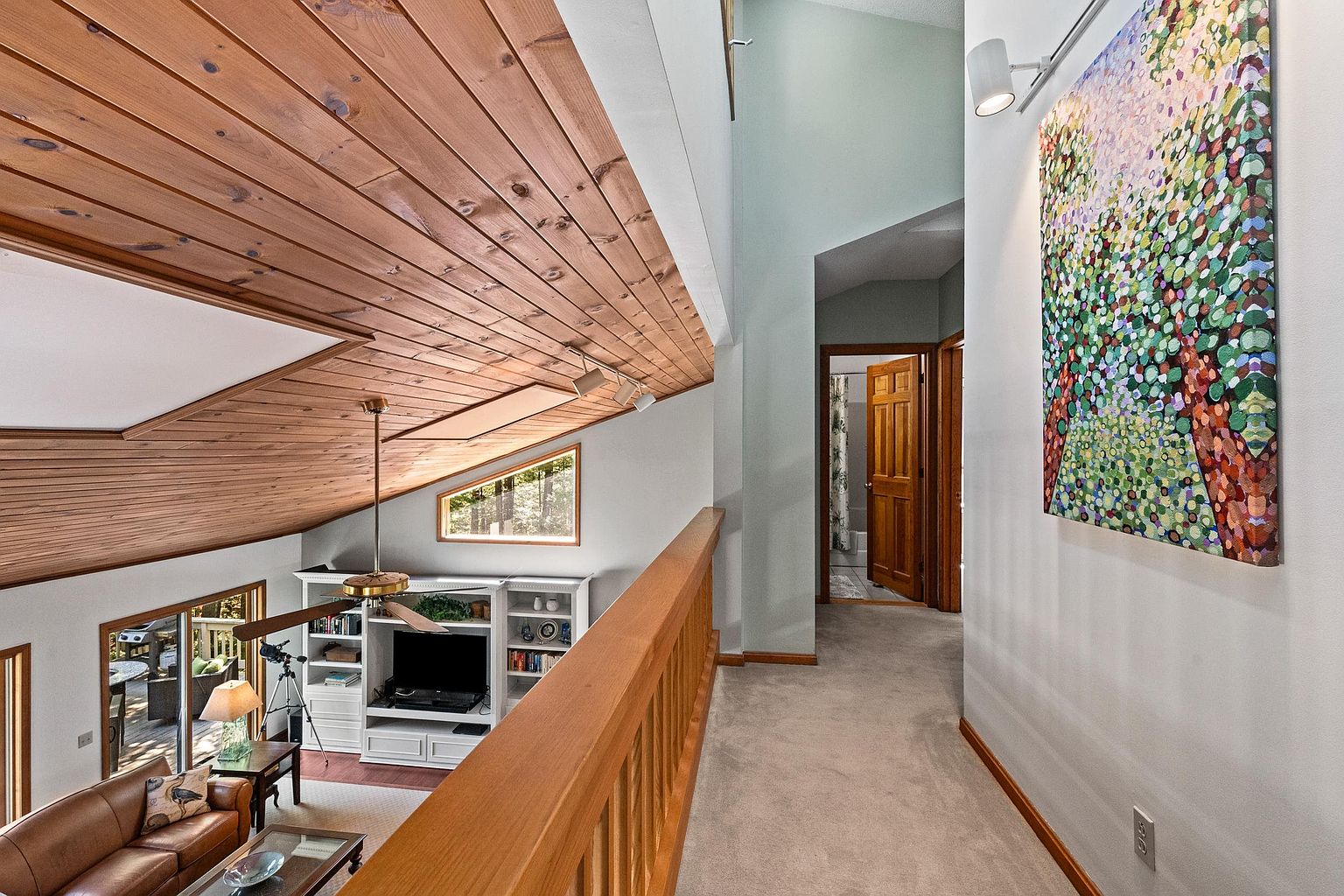
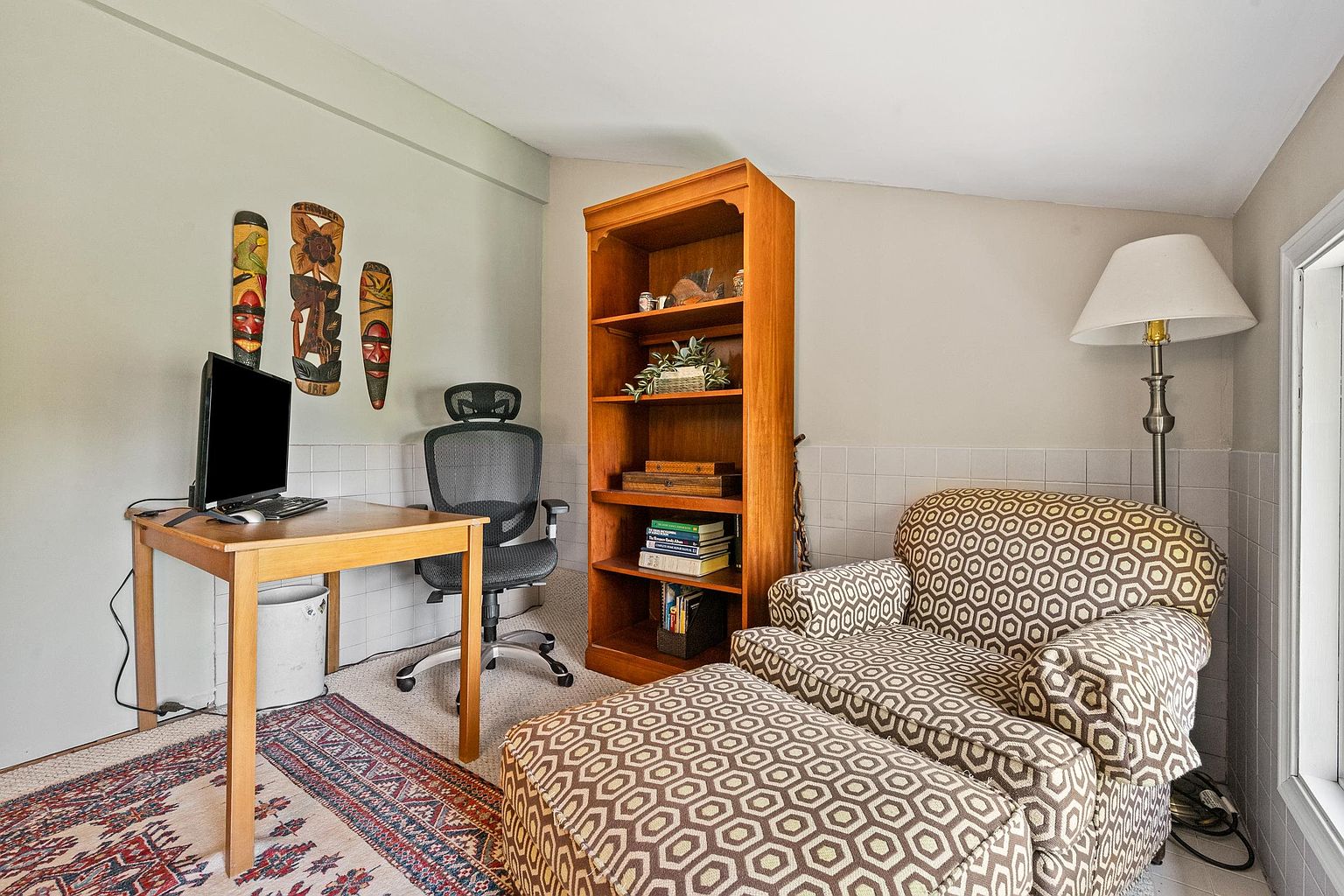
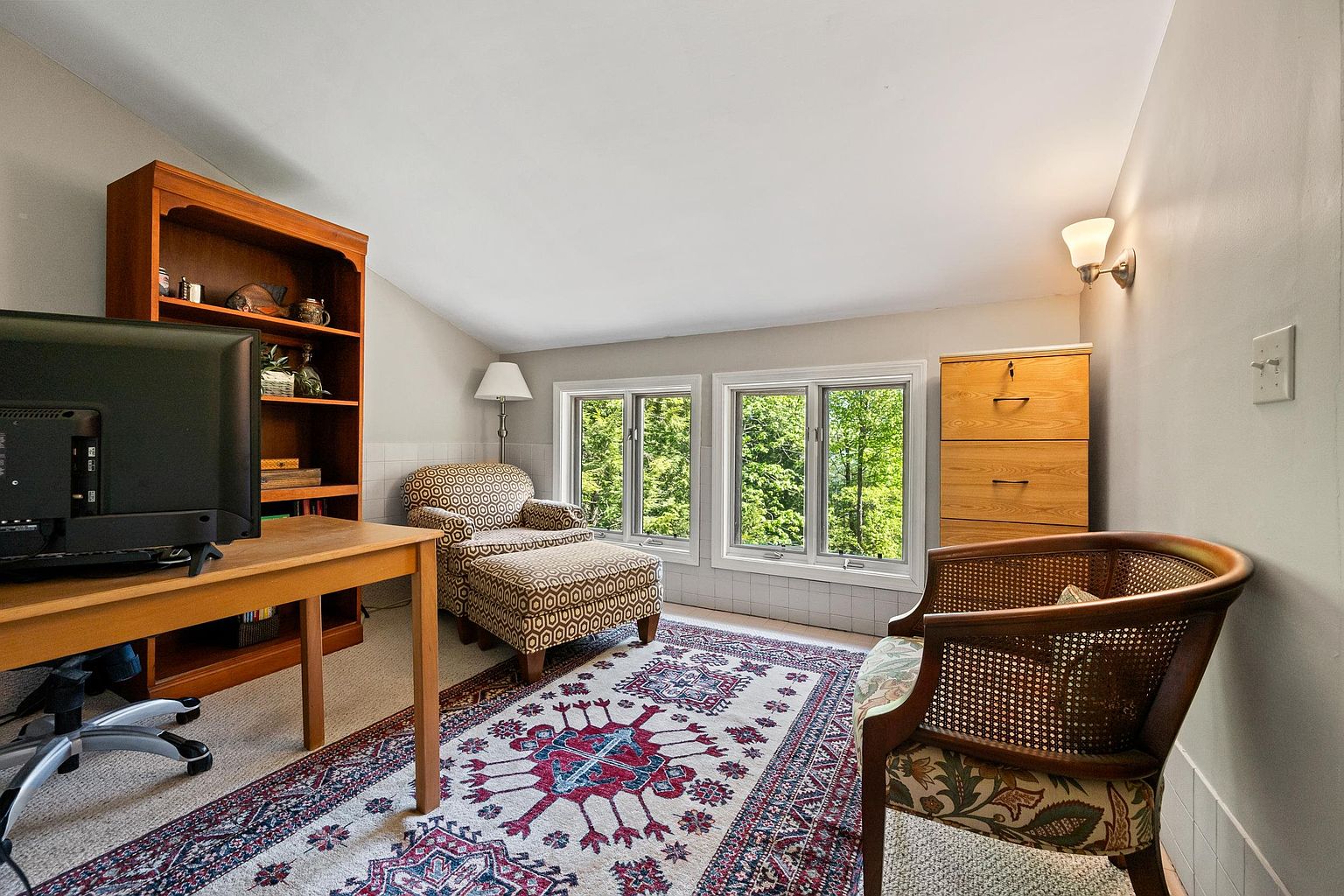
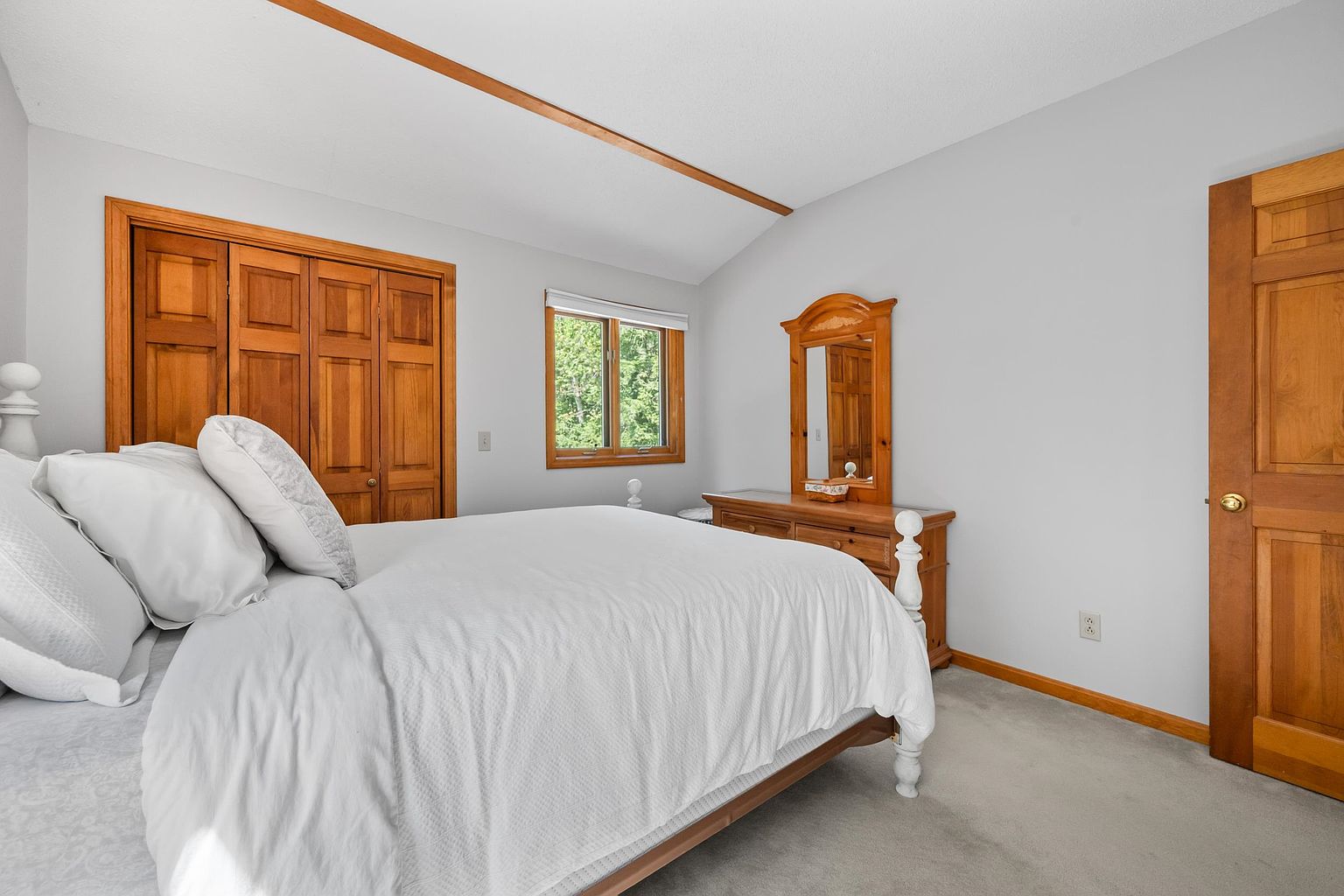
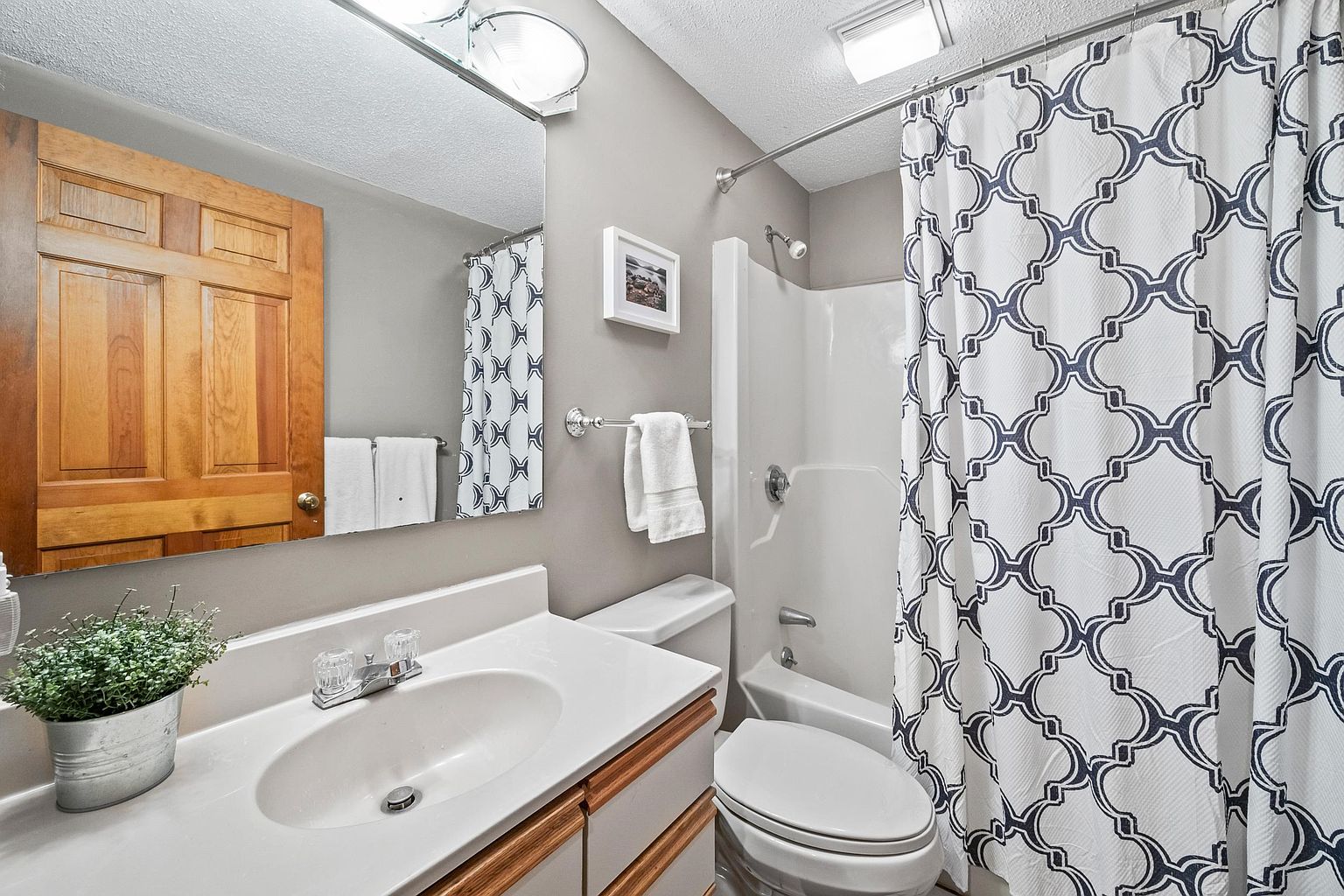
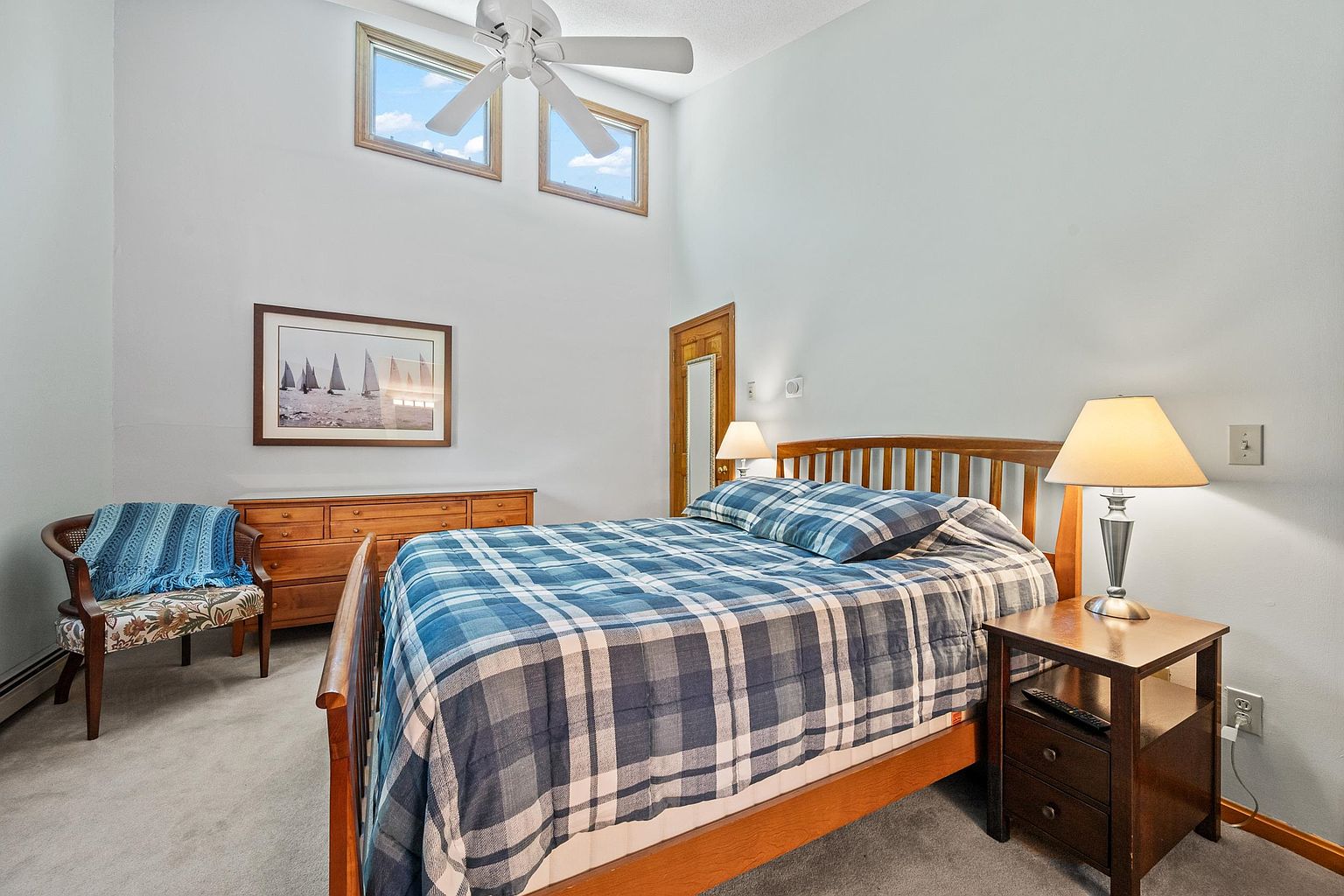
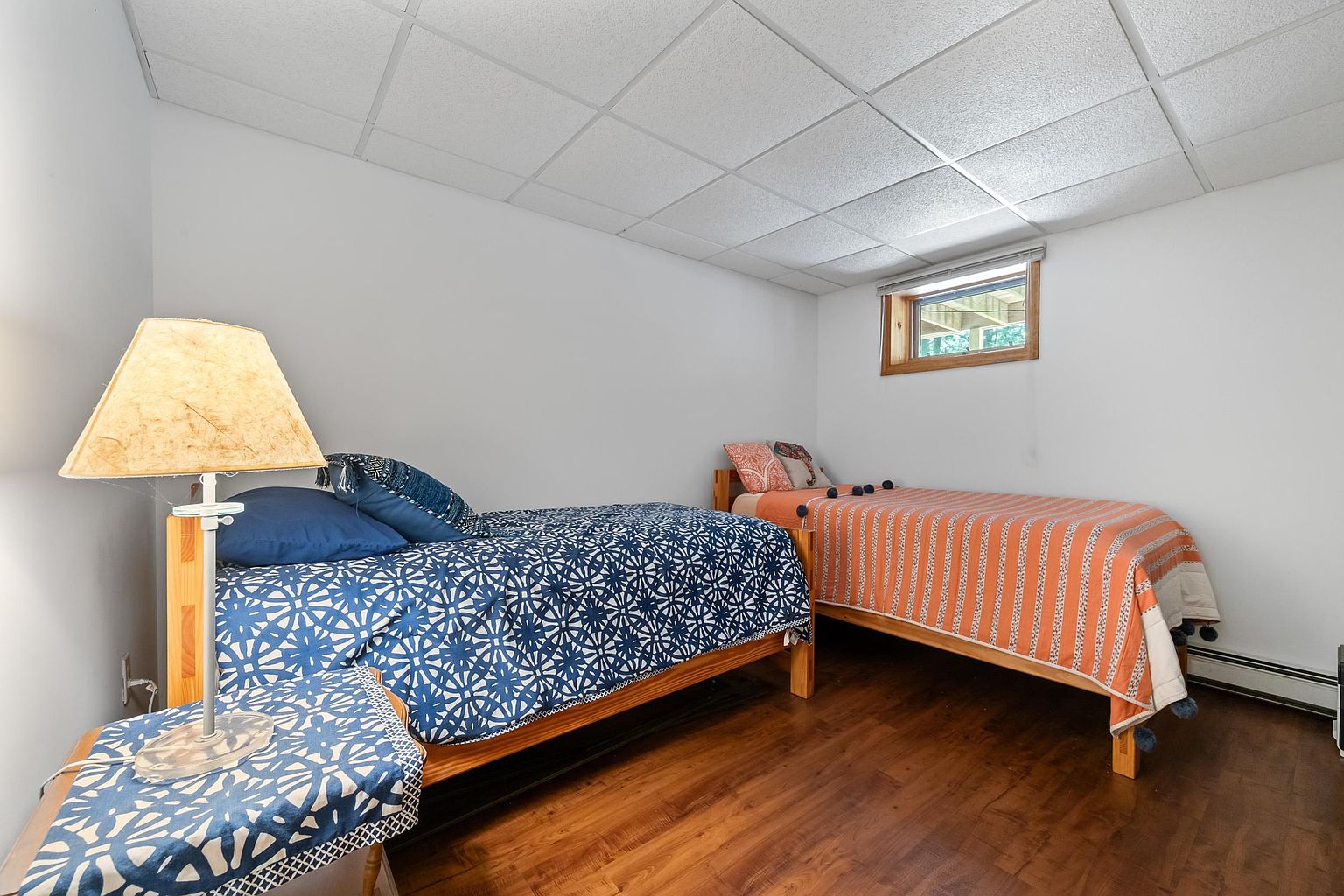
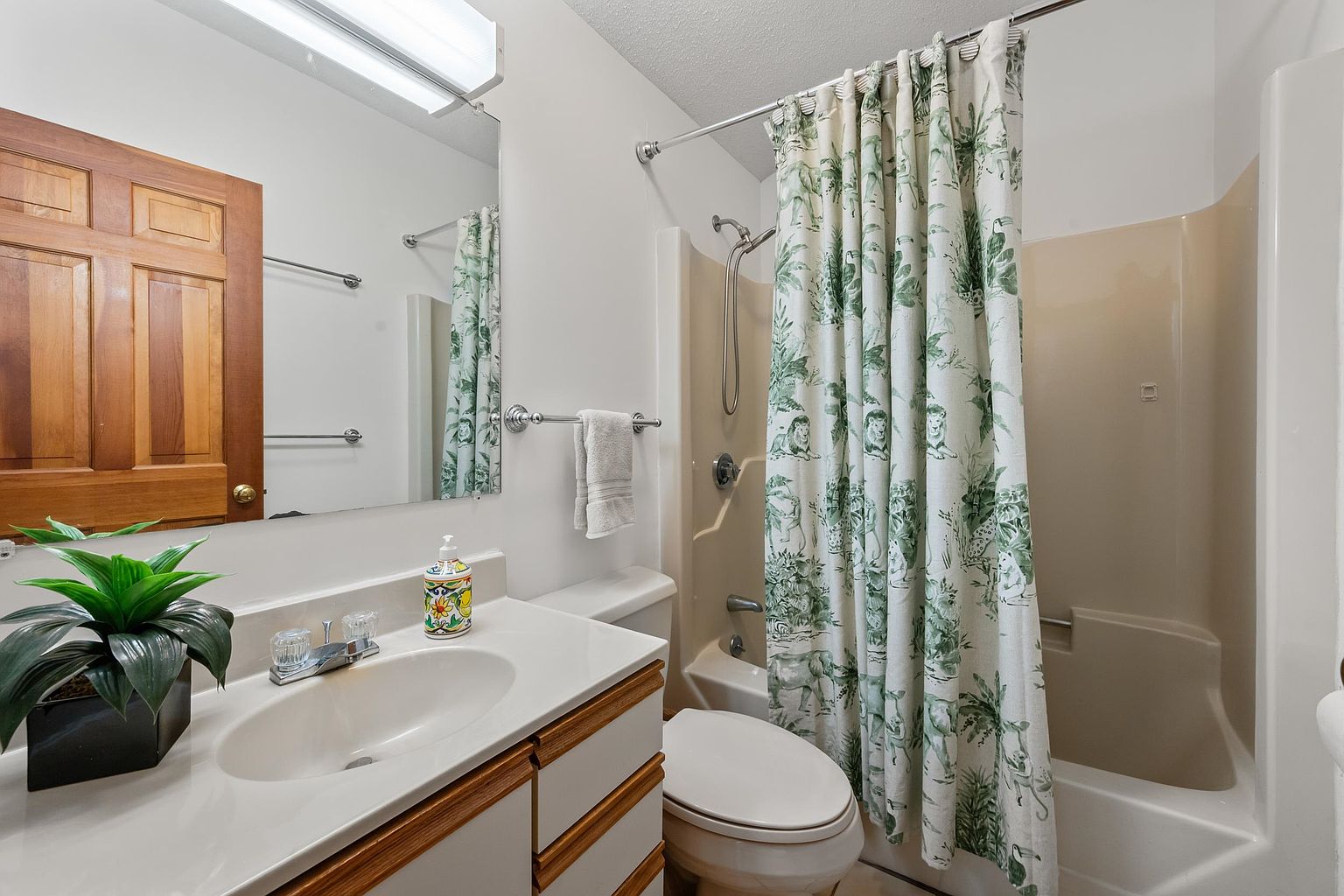
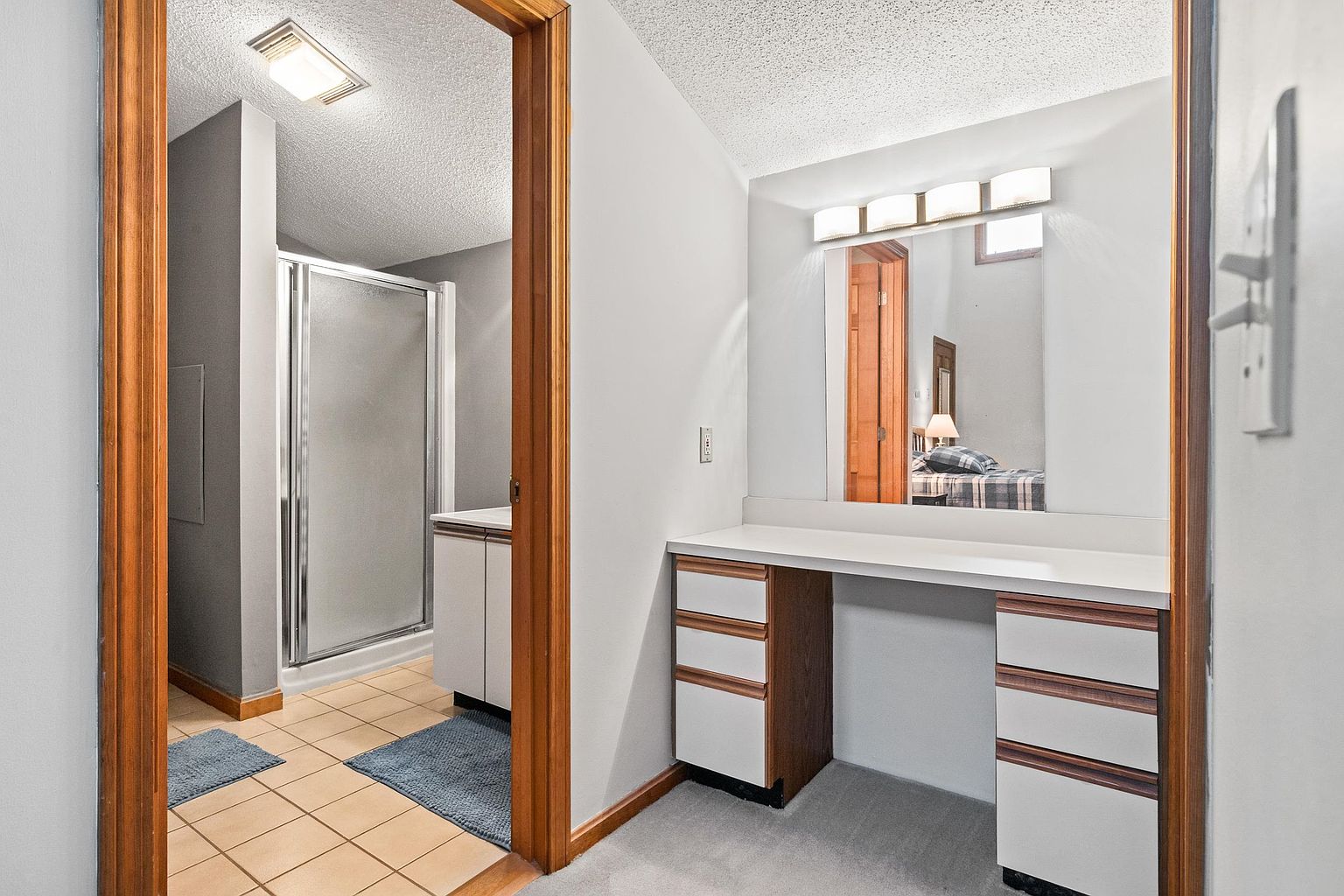
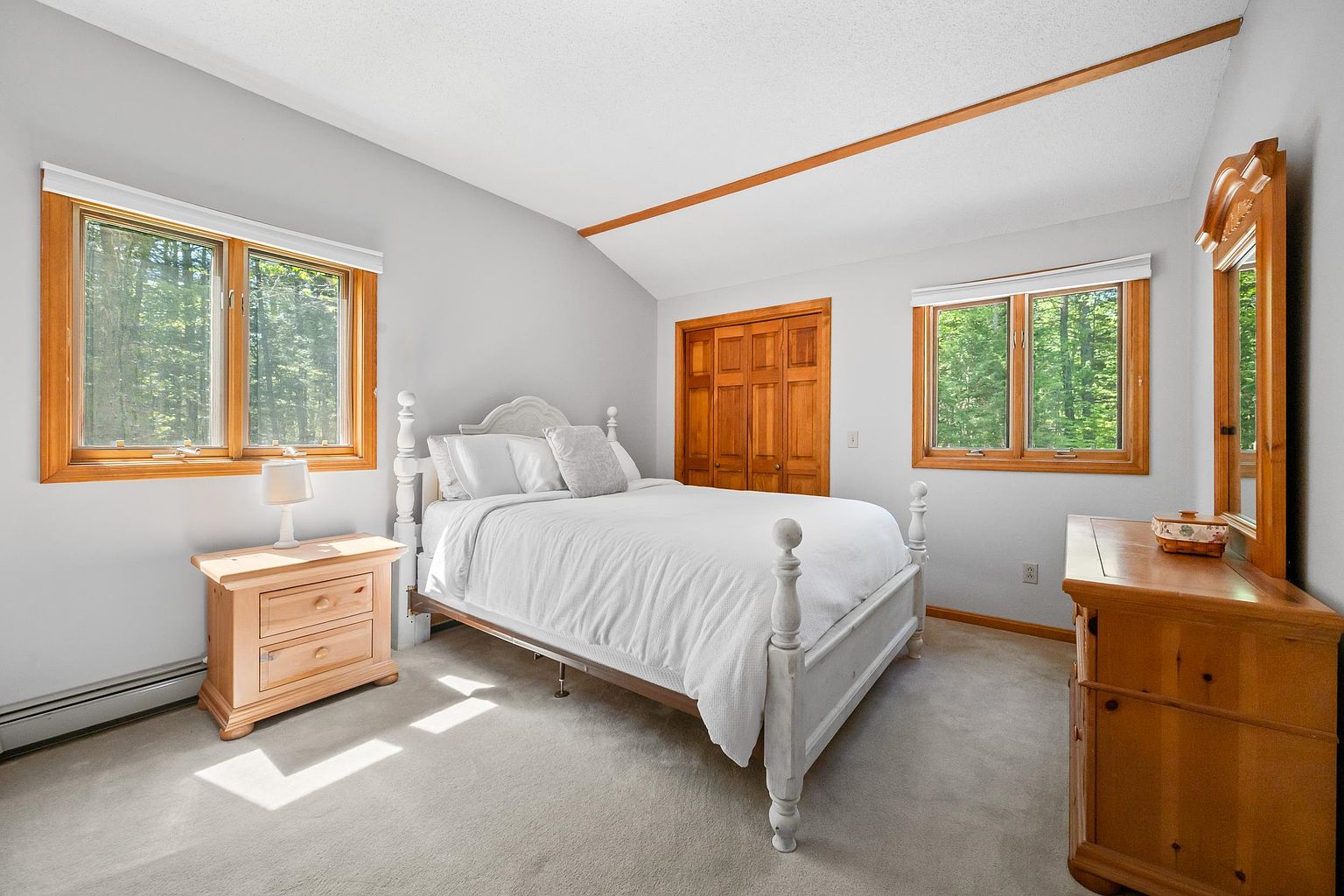
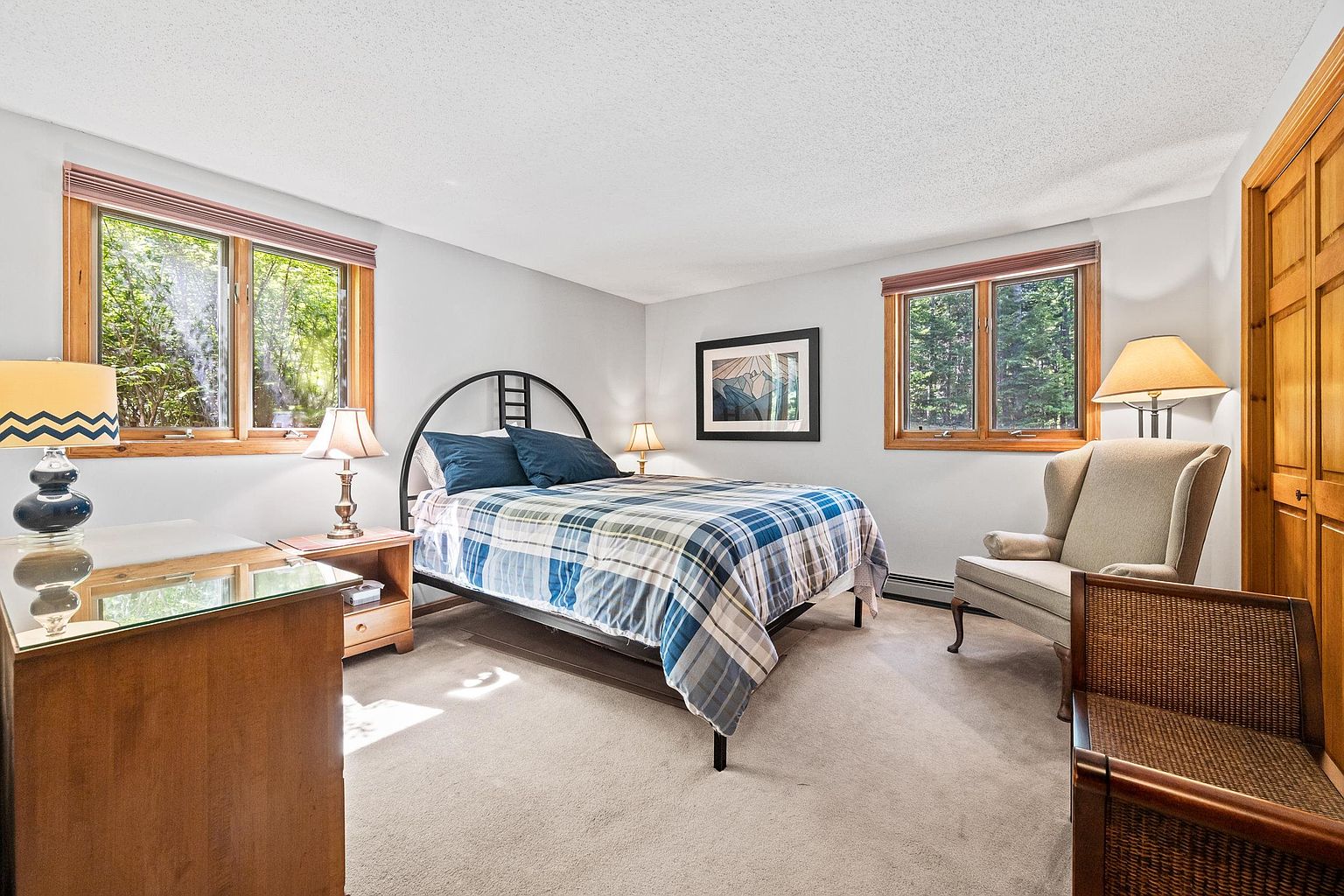
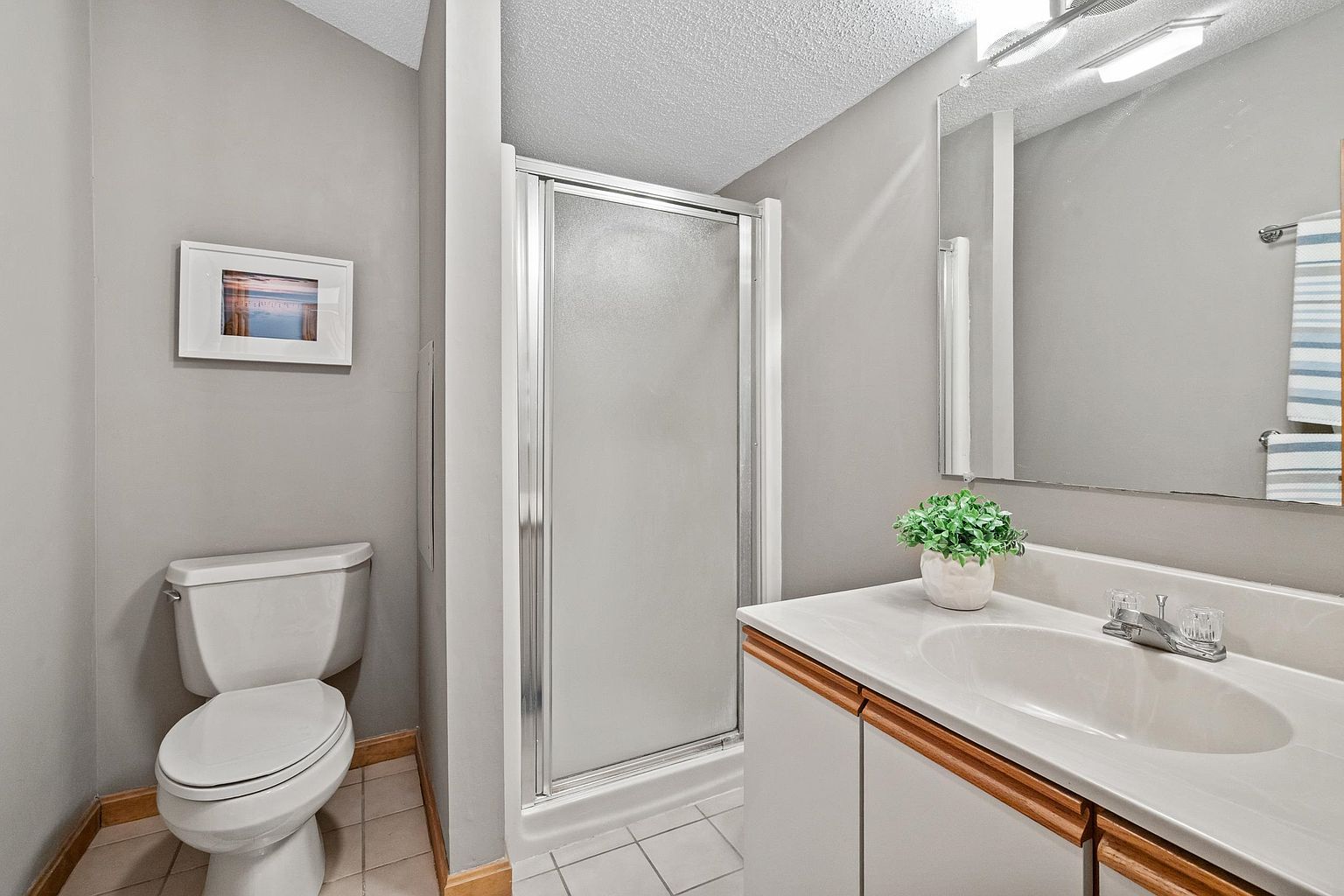
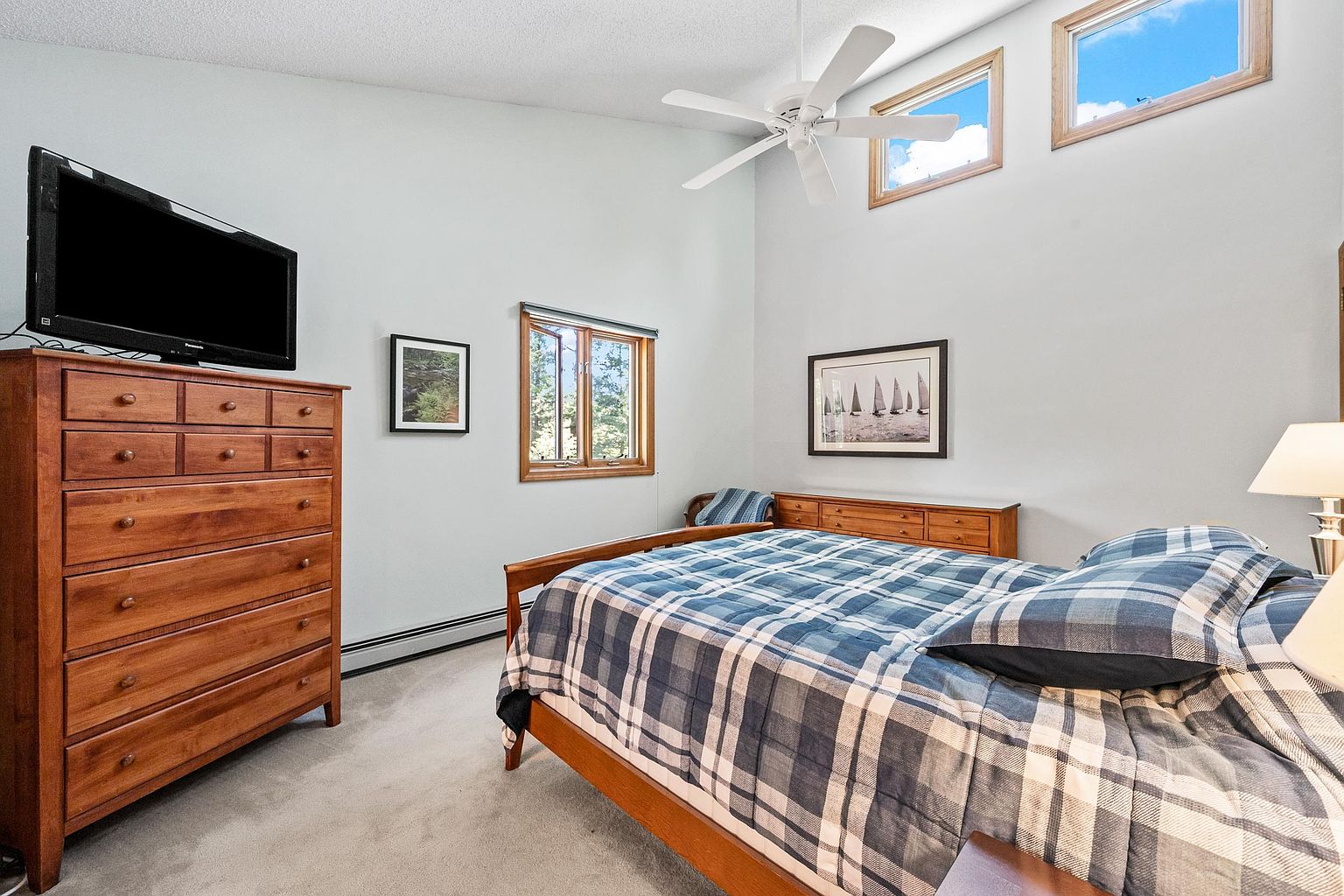
A mezzanine-level hallway overlooks the great room below, lending the home's vertical architecture a sense of theatrical proportion. Four-plus bedrooms and four baths are distributed across the three levels, offering genuine privacy for each household member or guest. The primary suite includes an ensuite bath with a glass-enclosed shower, while the additional bedrooms range from cozy twin-bed retreats to more spacious guest quarters, each finished with care and natural light in mind.
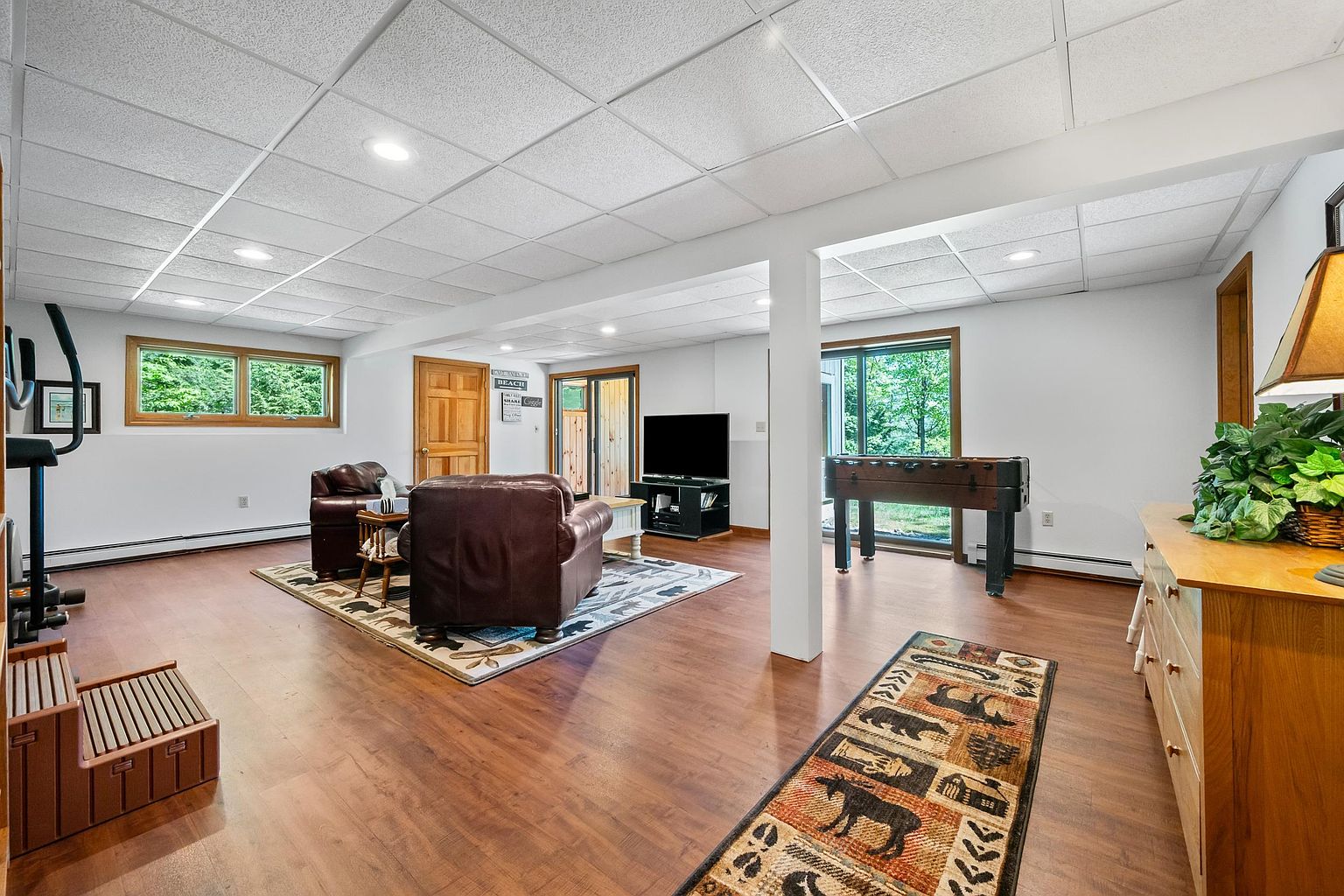
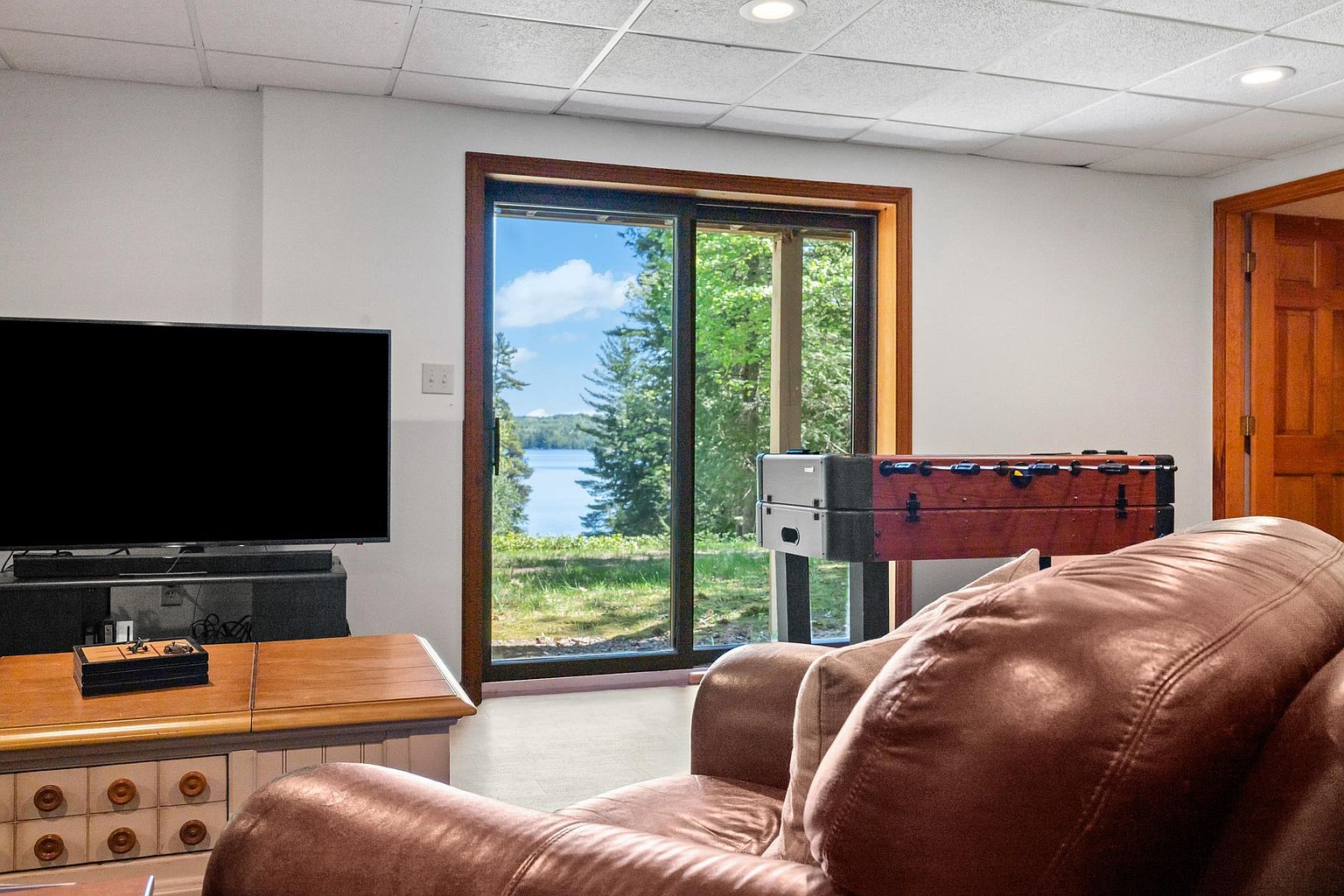
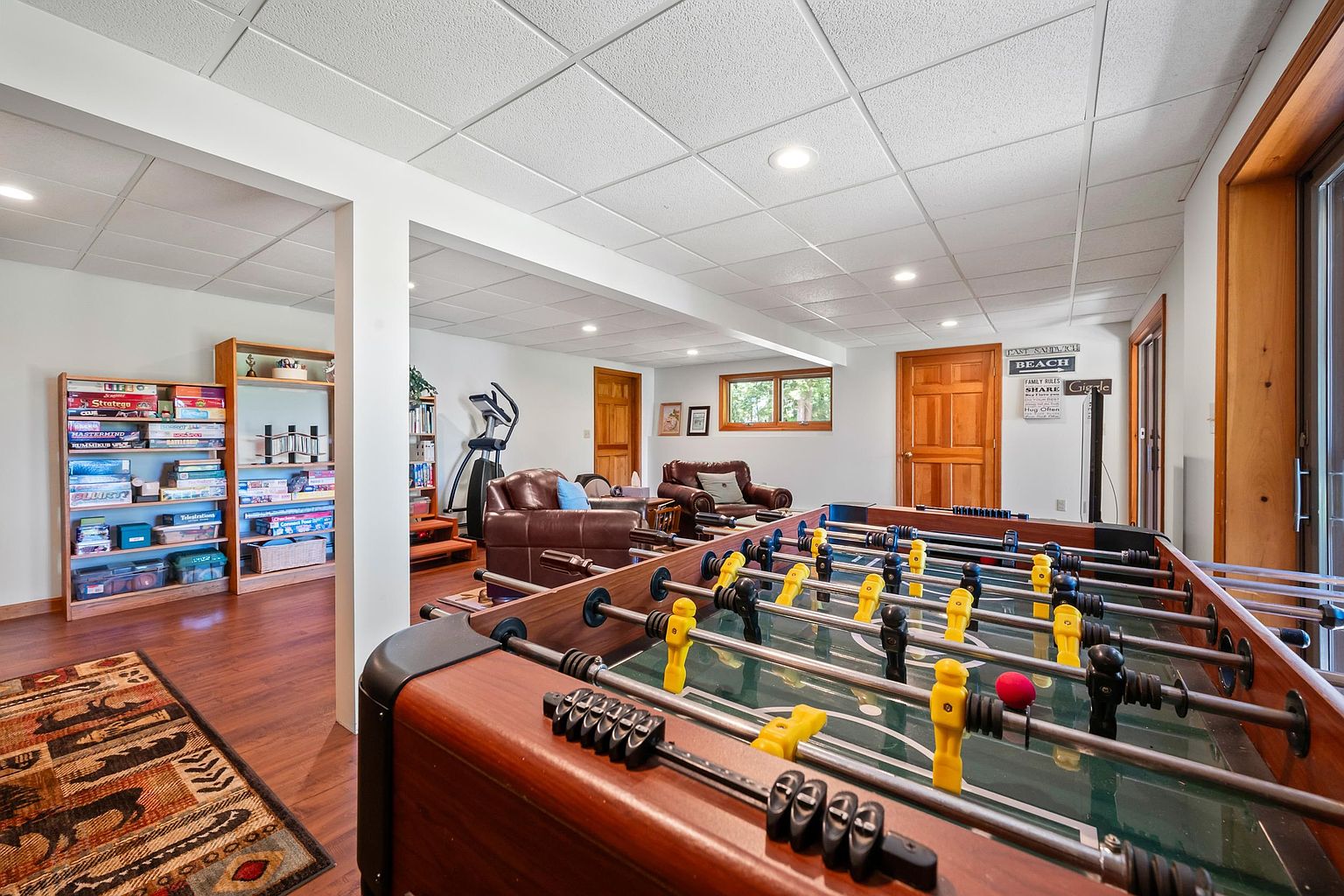
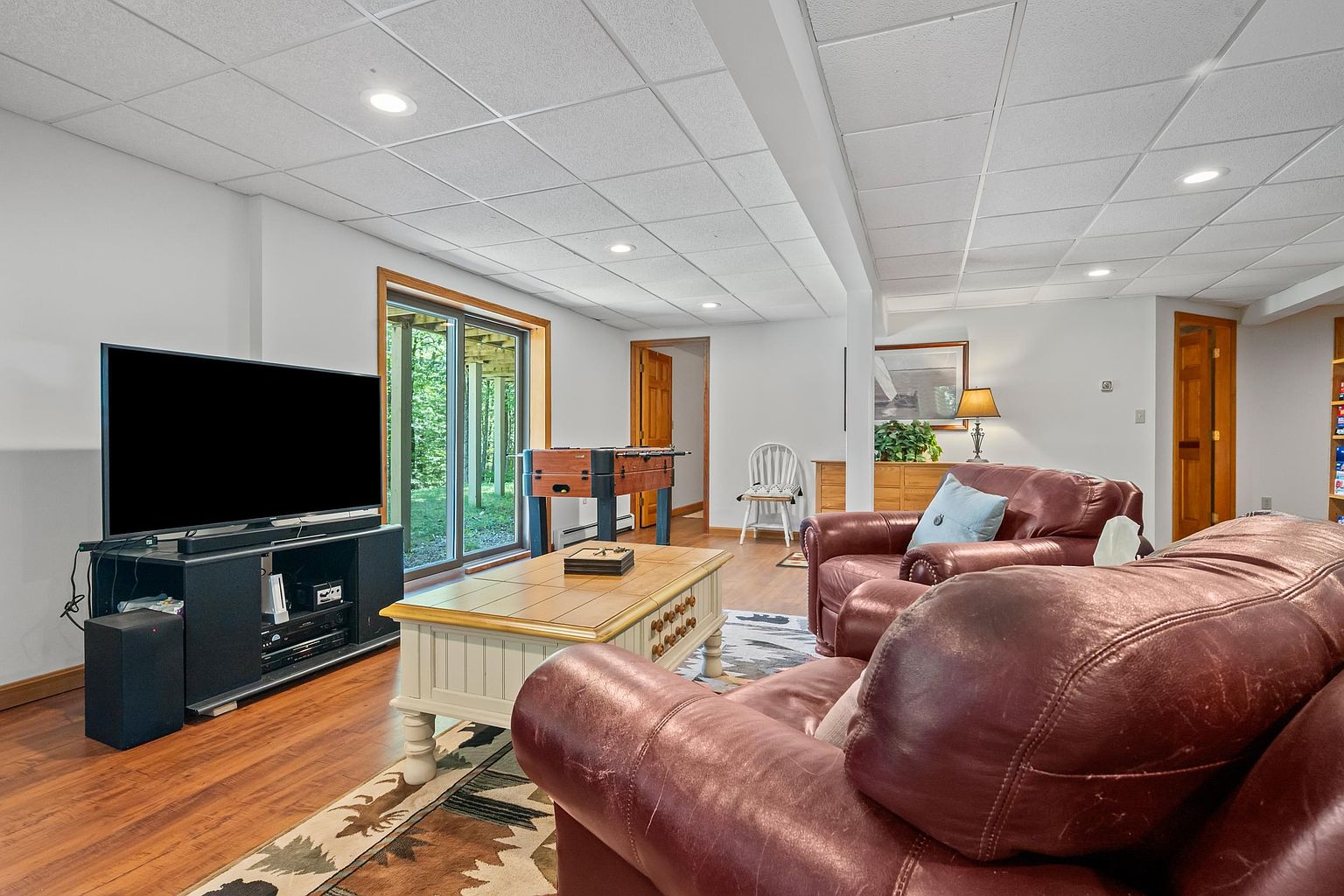
The lower level is where the home reveals its most relaxed personality. A fully finished rec room — complete with leather seating, a foosball table, built-in shelving stocked with board games, and sliding glass doors that open directly toward the lake — is built for the long evenings that lake life tends to inspire. It is a room designed without apology for fun, and it succeeds entirely.
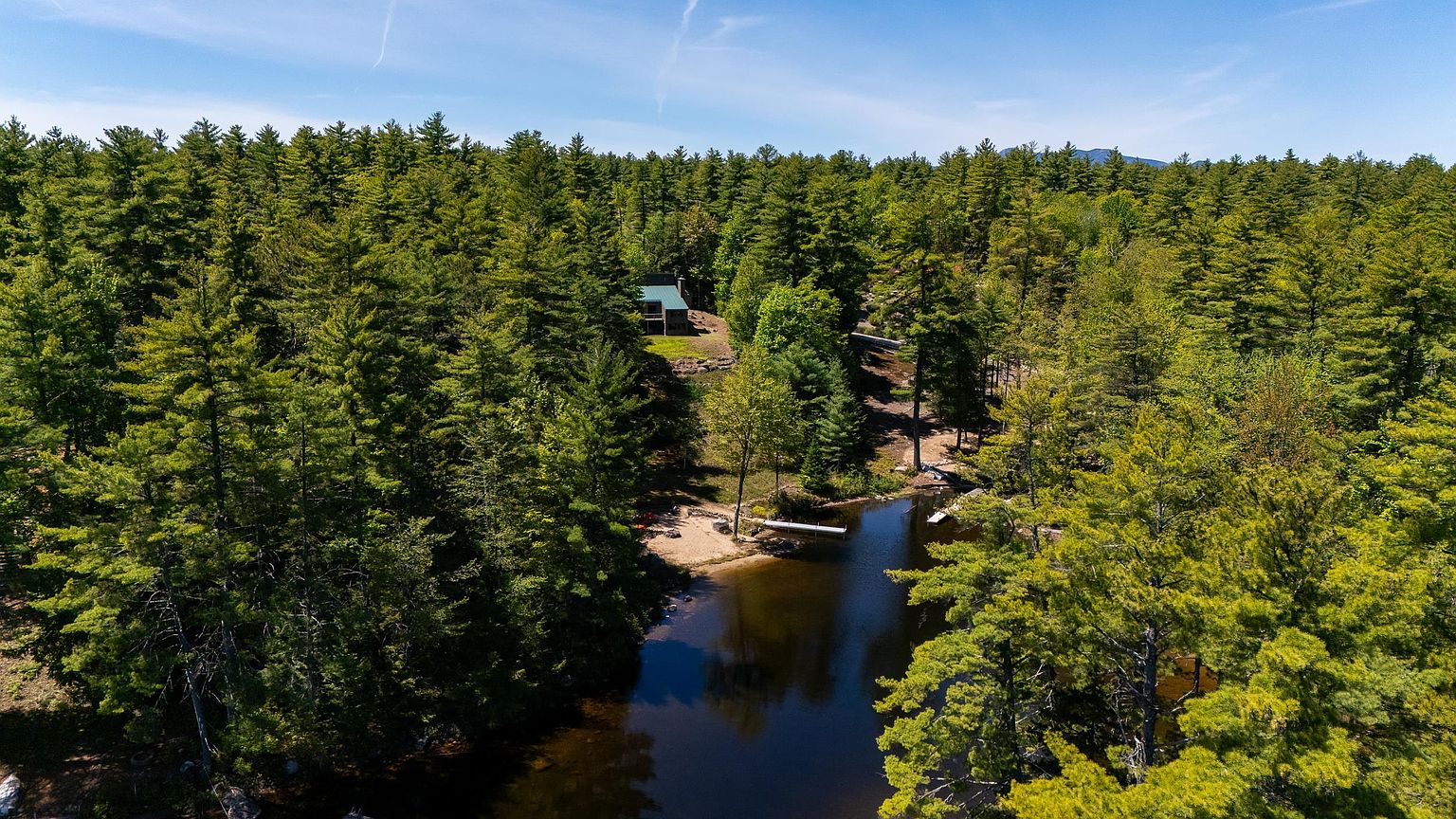
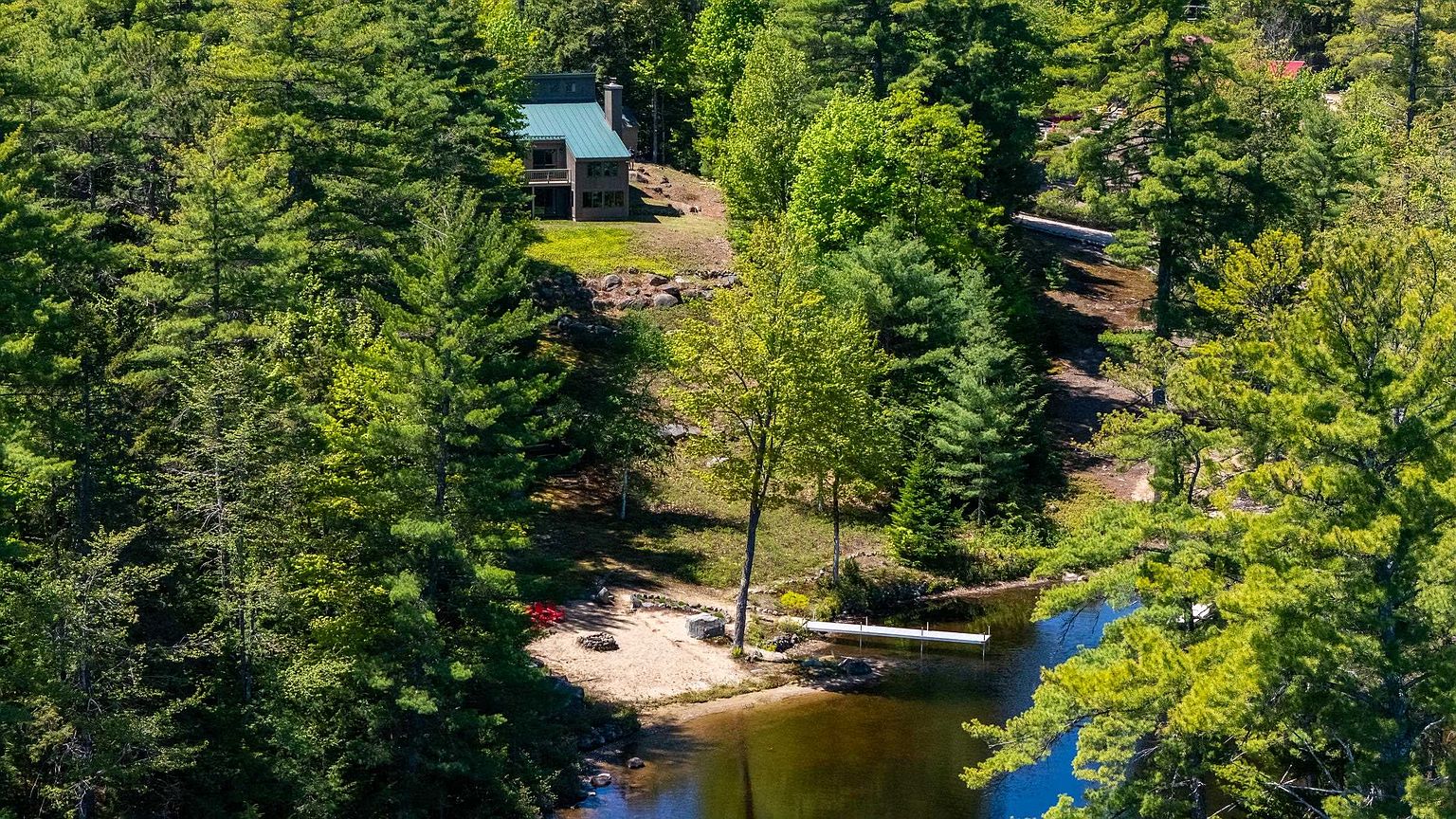
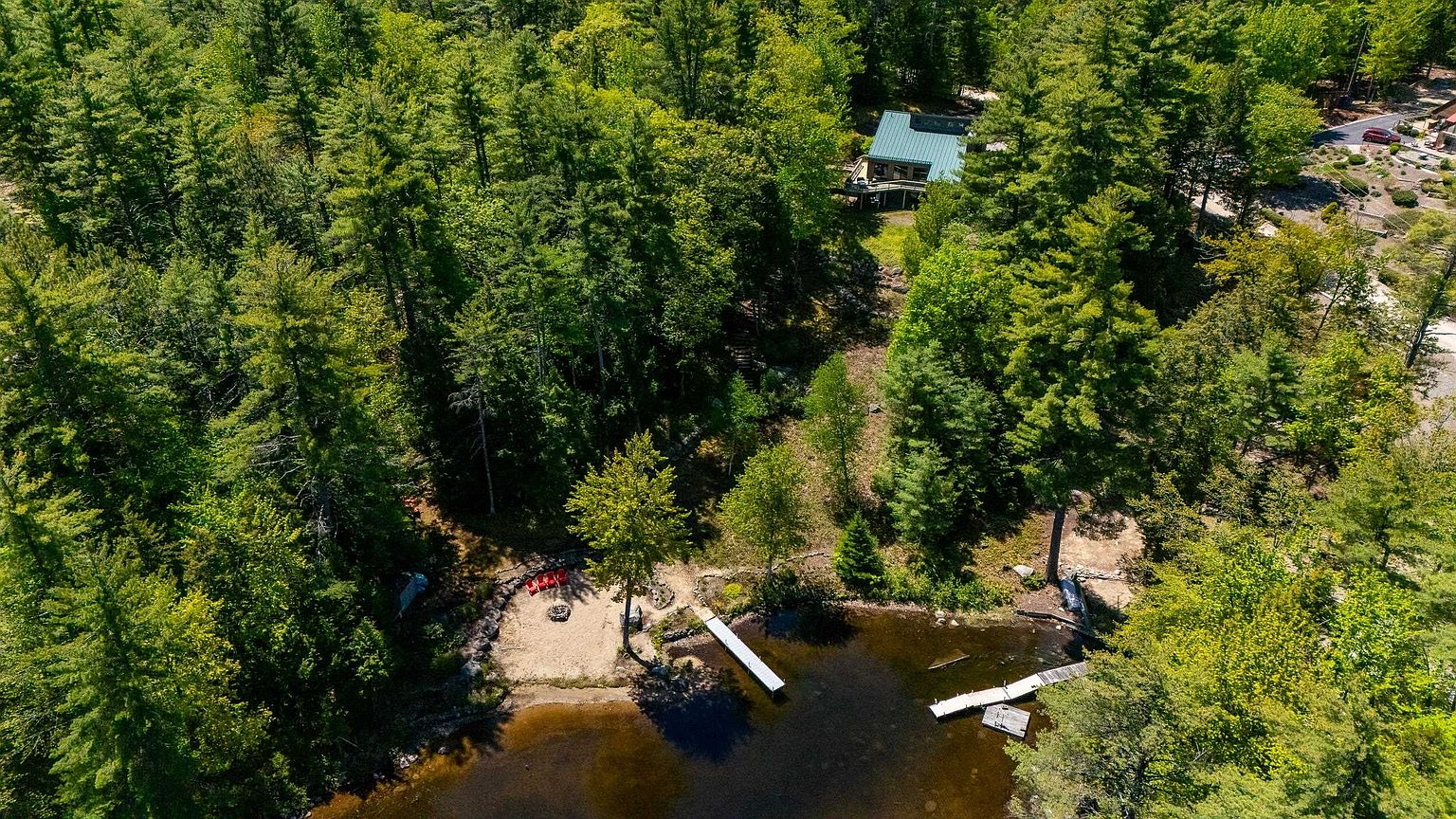
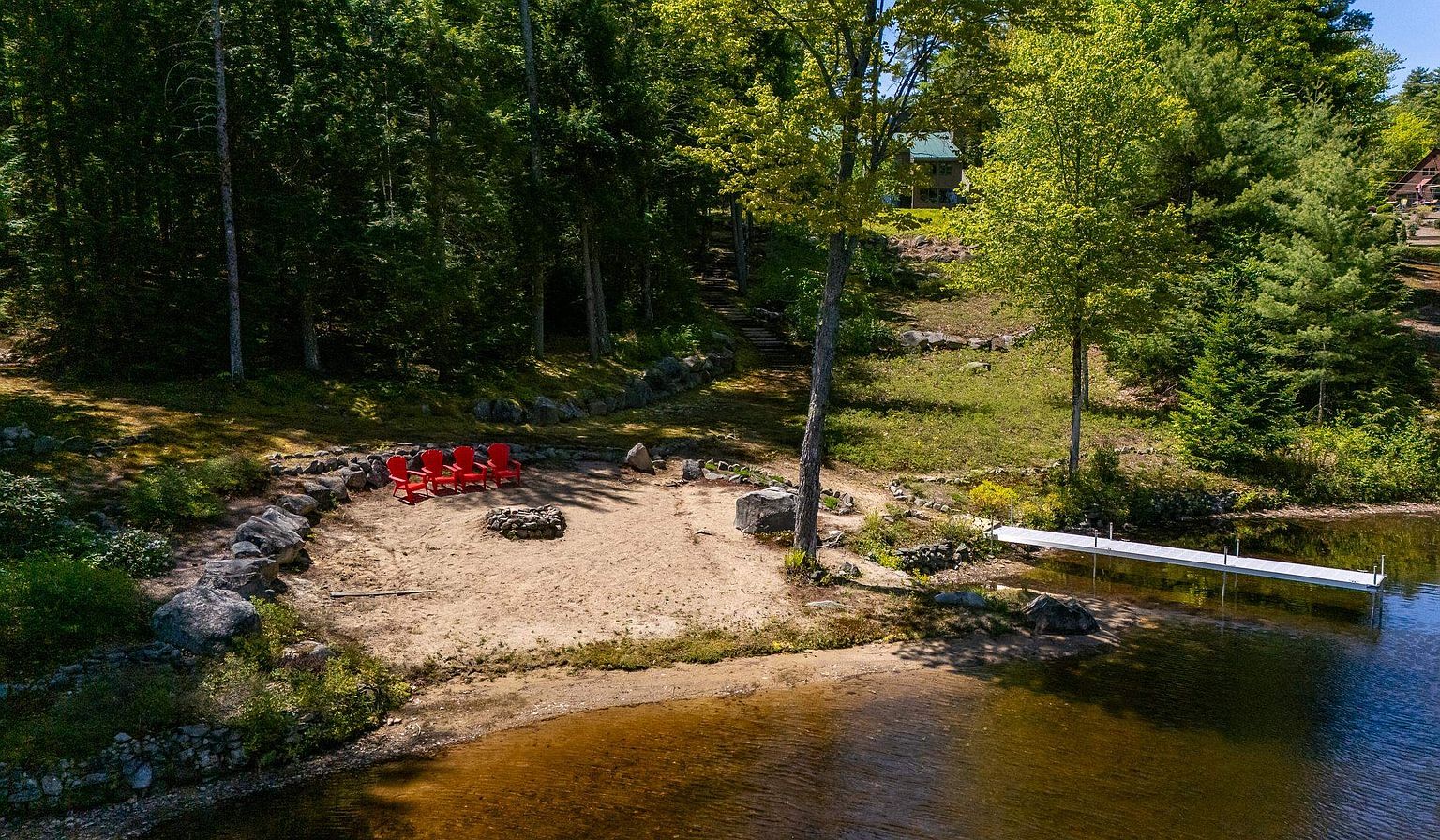
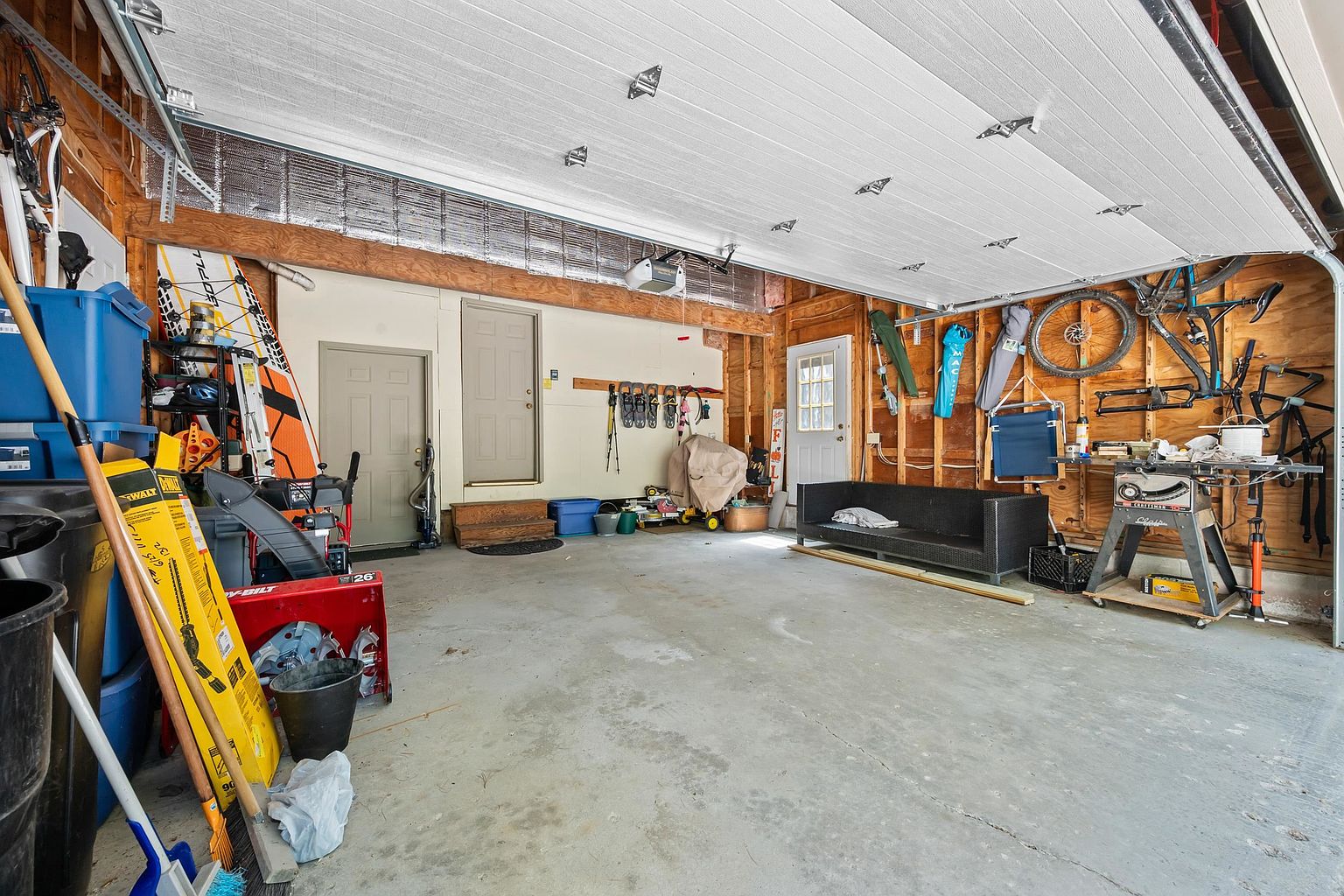
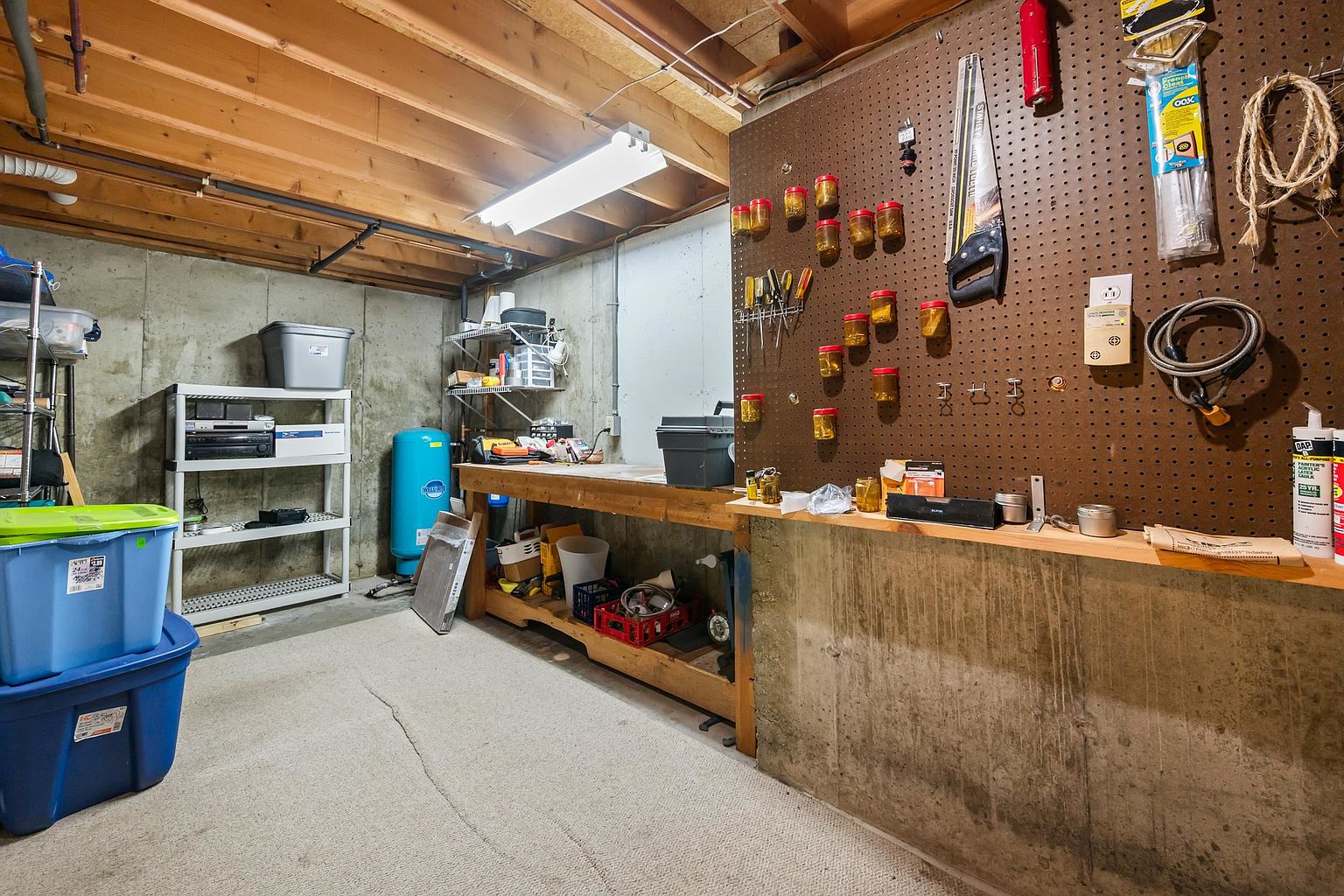
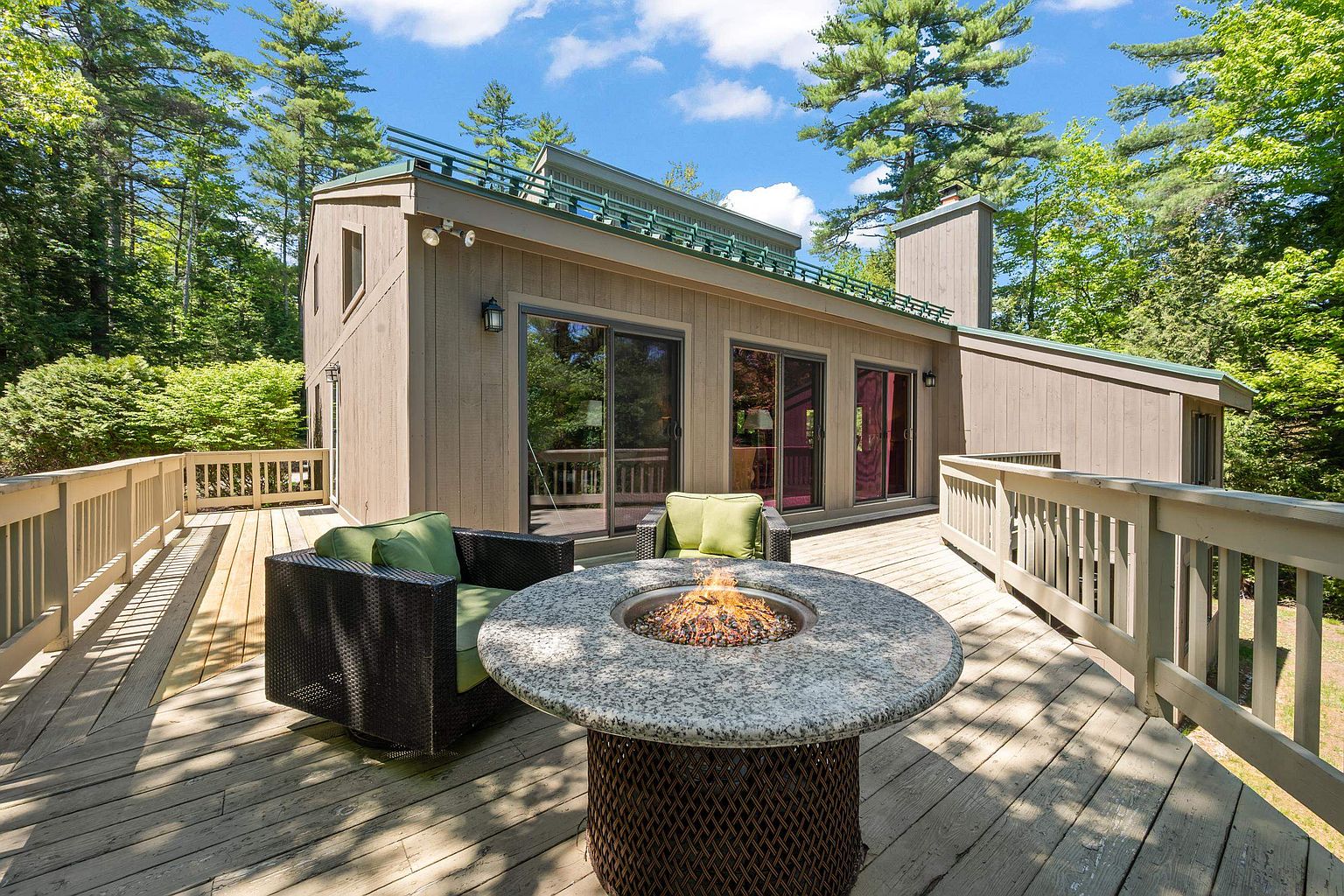
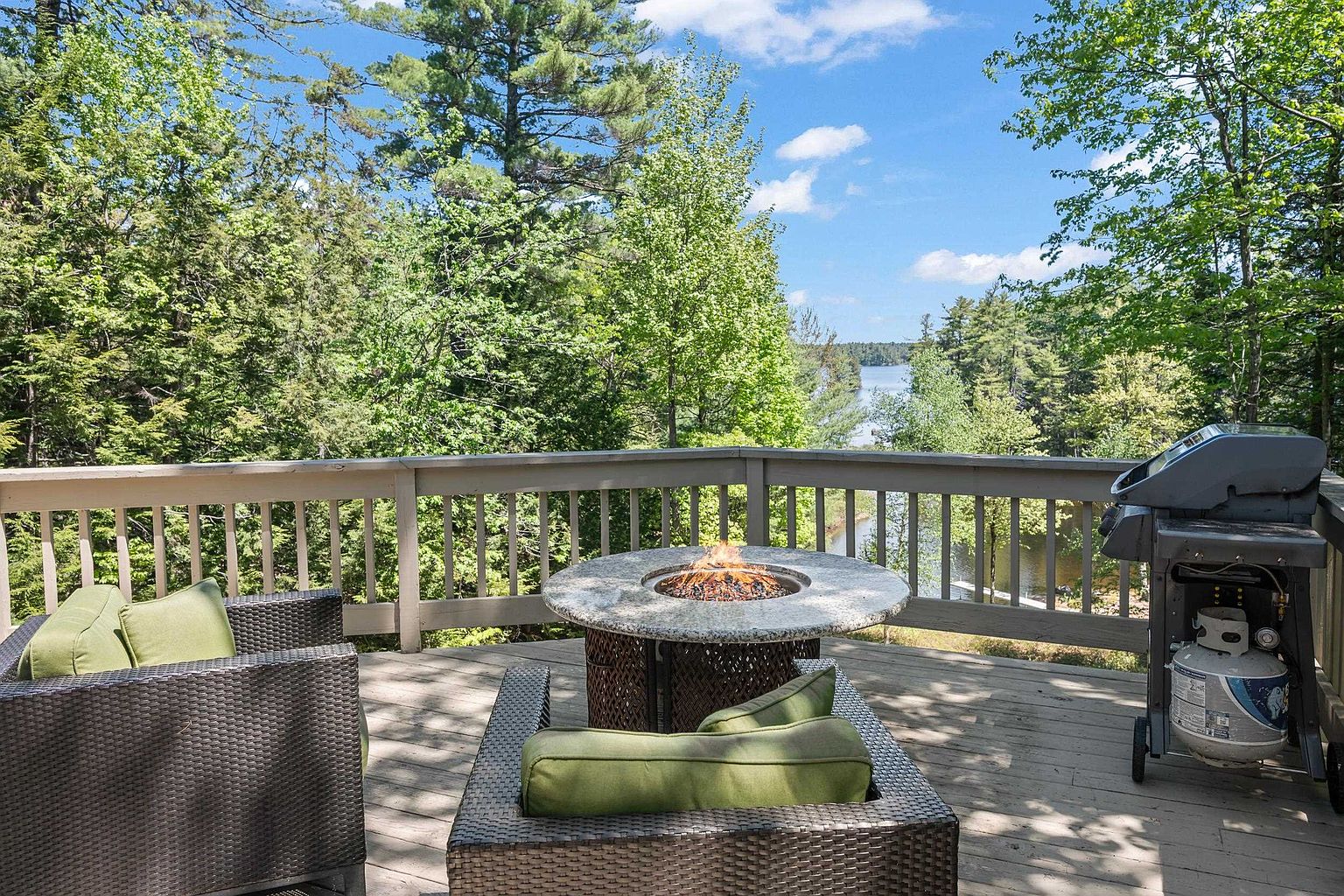
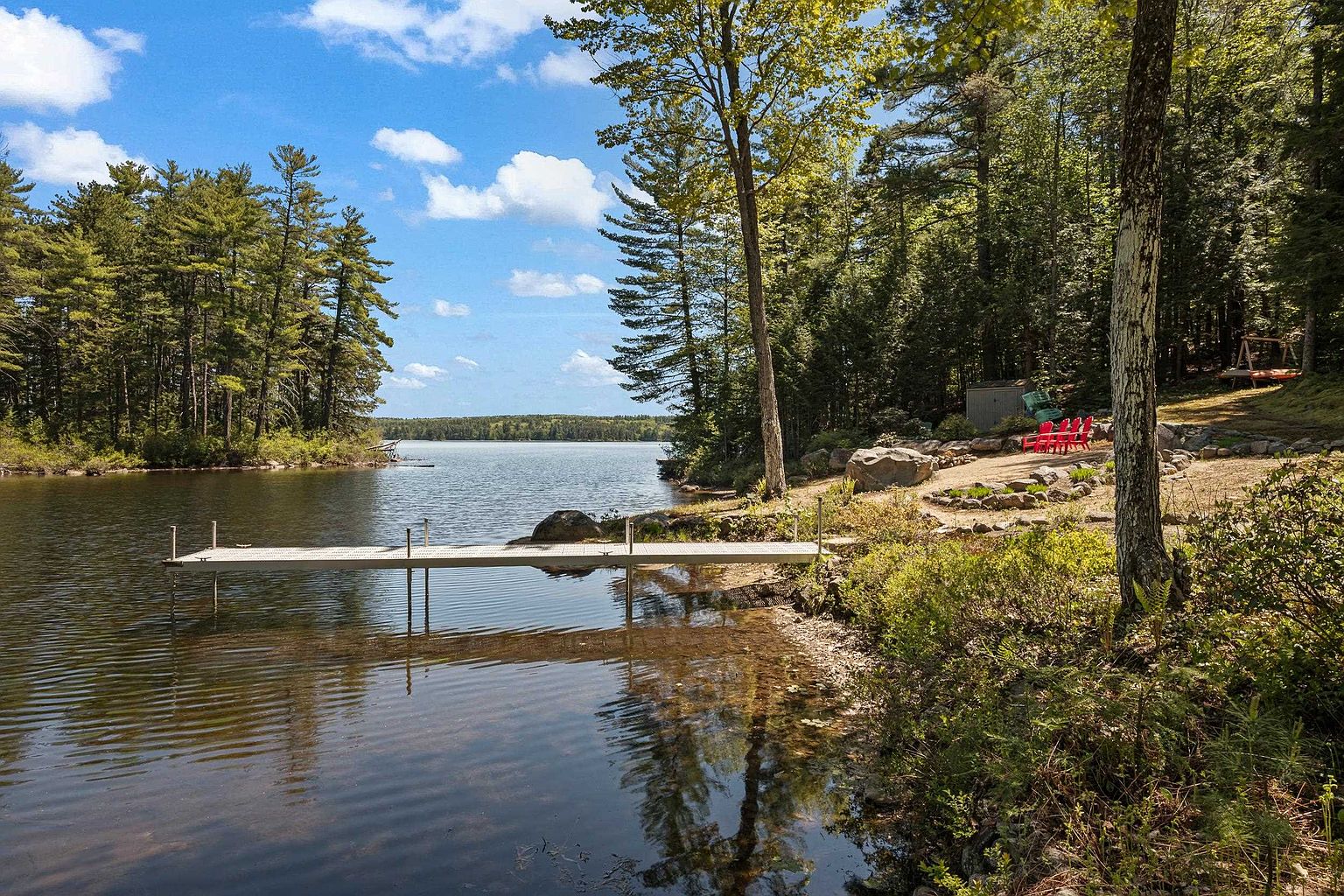
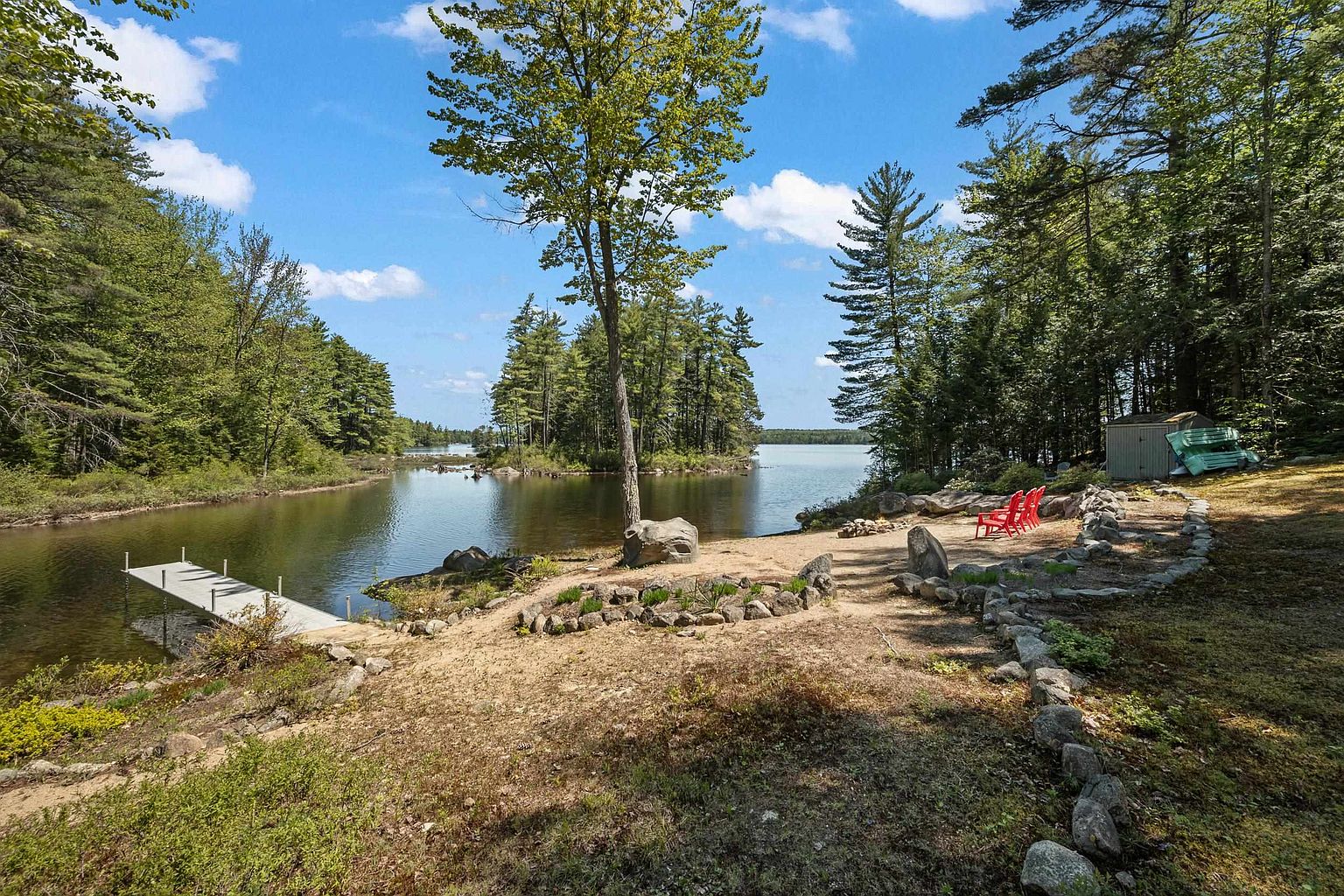
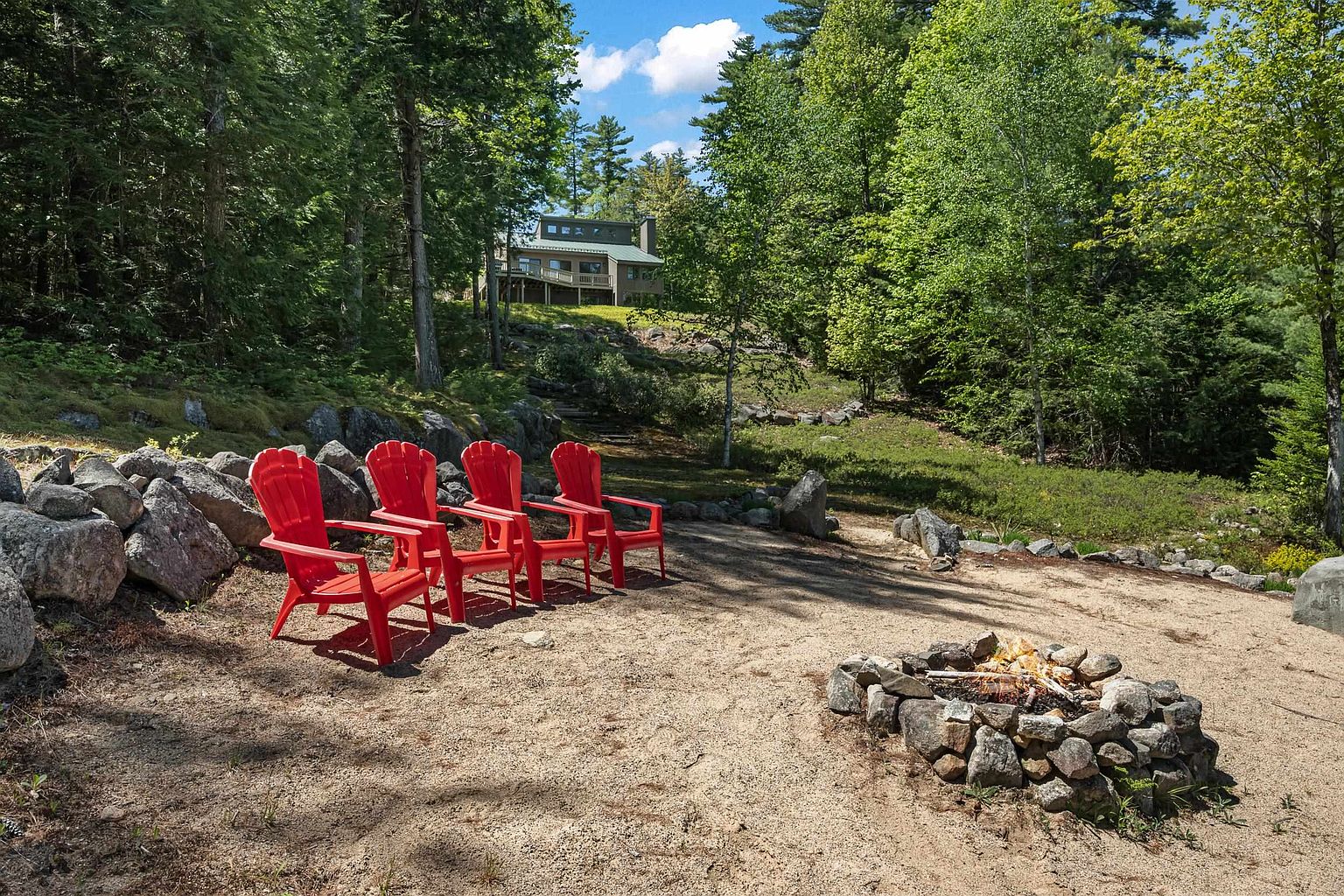
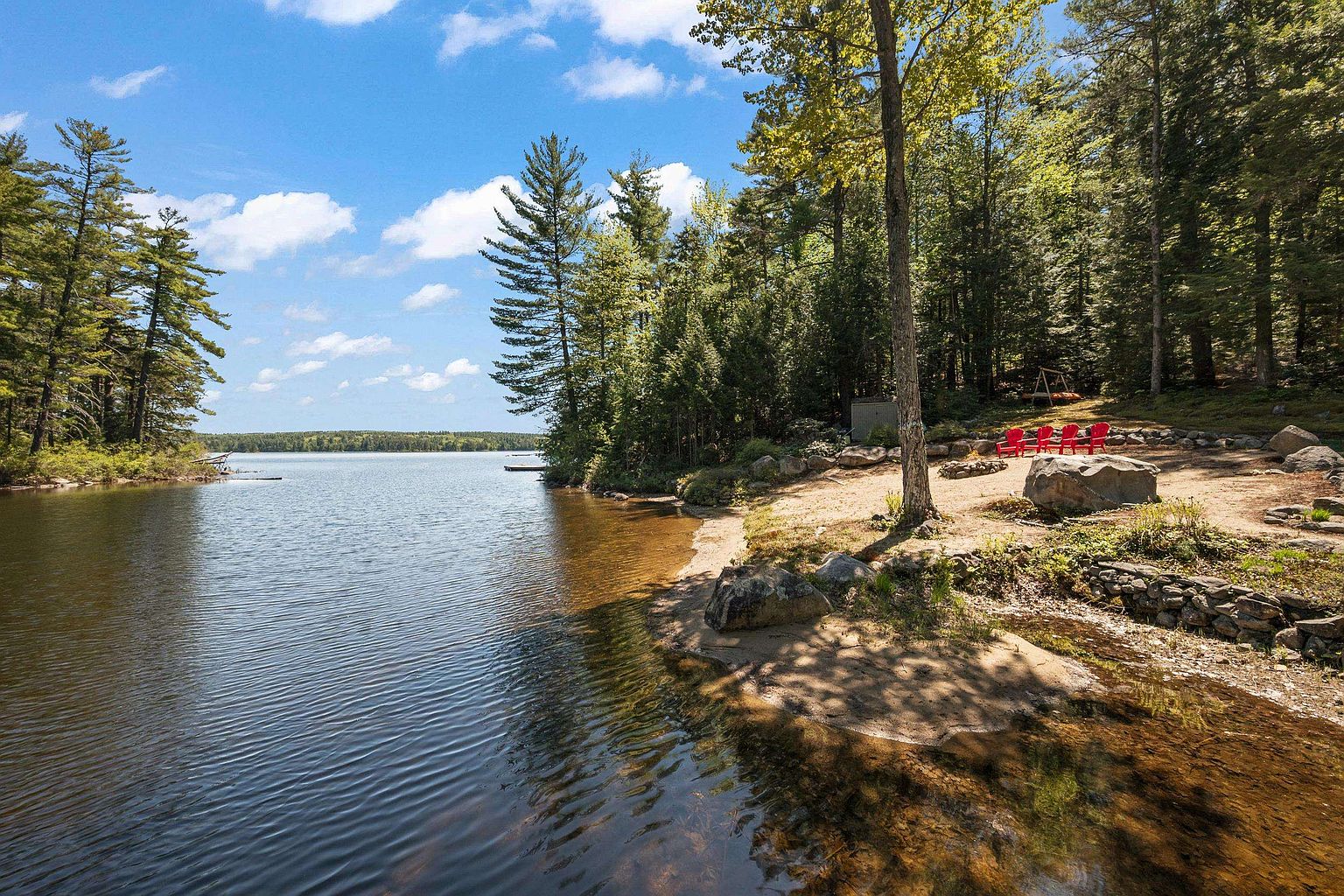
Step outside and the property's waterfront credentials come fully into view. A generous elevated deck with a circular stone fire pit and wicker seating overlooks the tree line. Stone paths wind down through natural boulders and native plantings to a private sandy beach, red Adirondack chairs, and a wooden dock that extends into still, clear water. The 180 feet of frontage ensures that the sense of privacy at the water's edge is absolute. A two-car garage with workshop space completes the practical infrastructure of a home built not for occasional visits, but for a life lived fully.
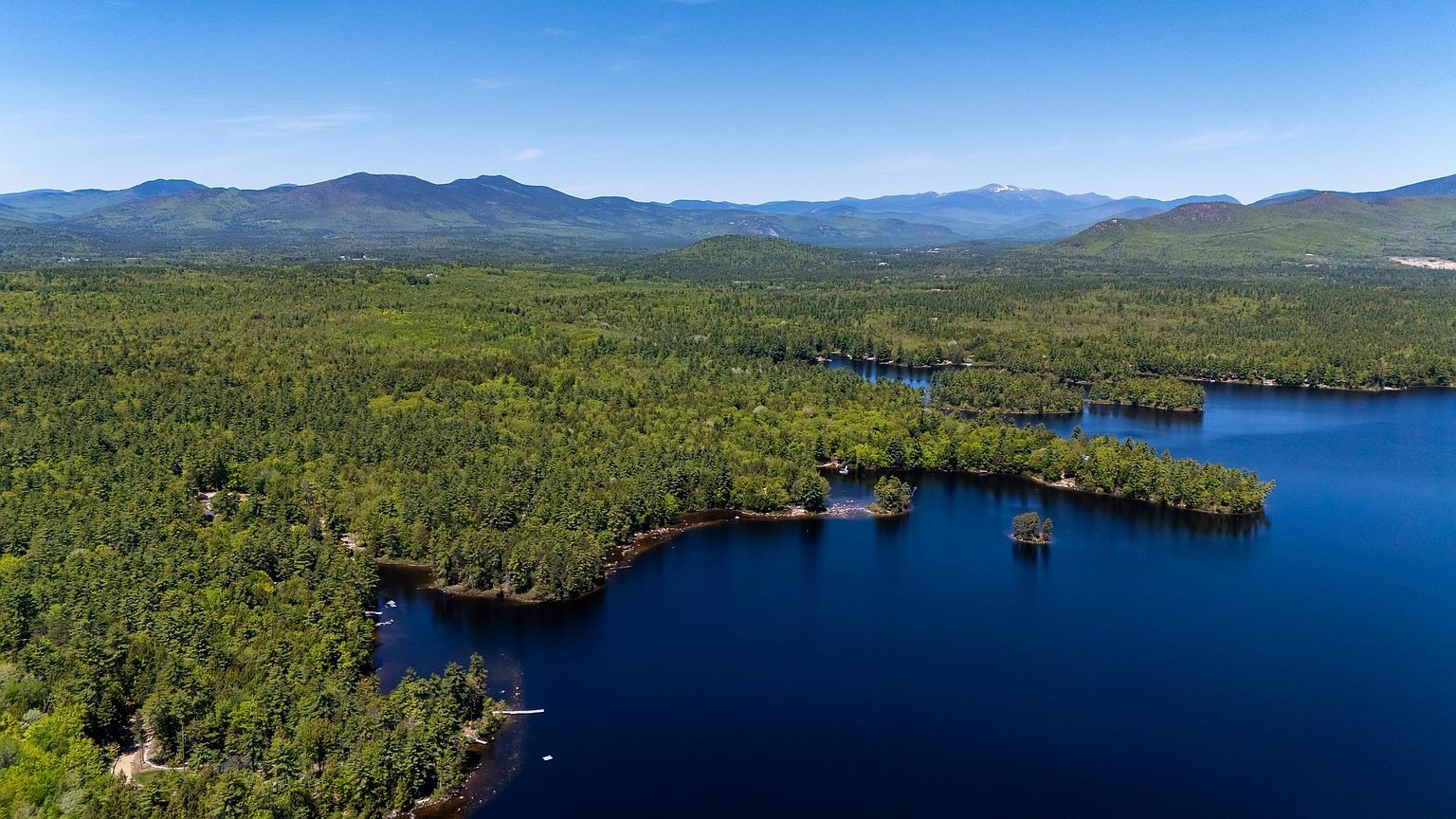
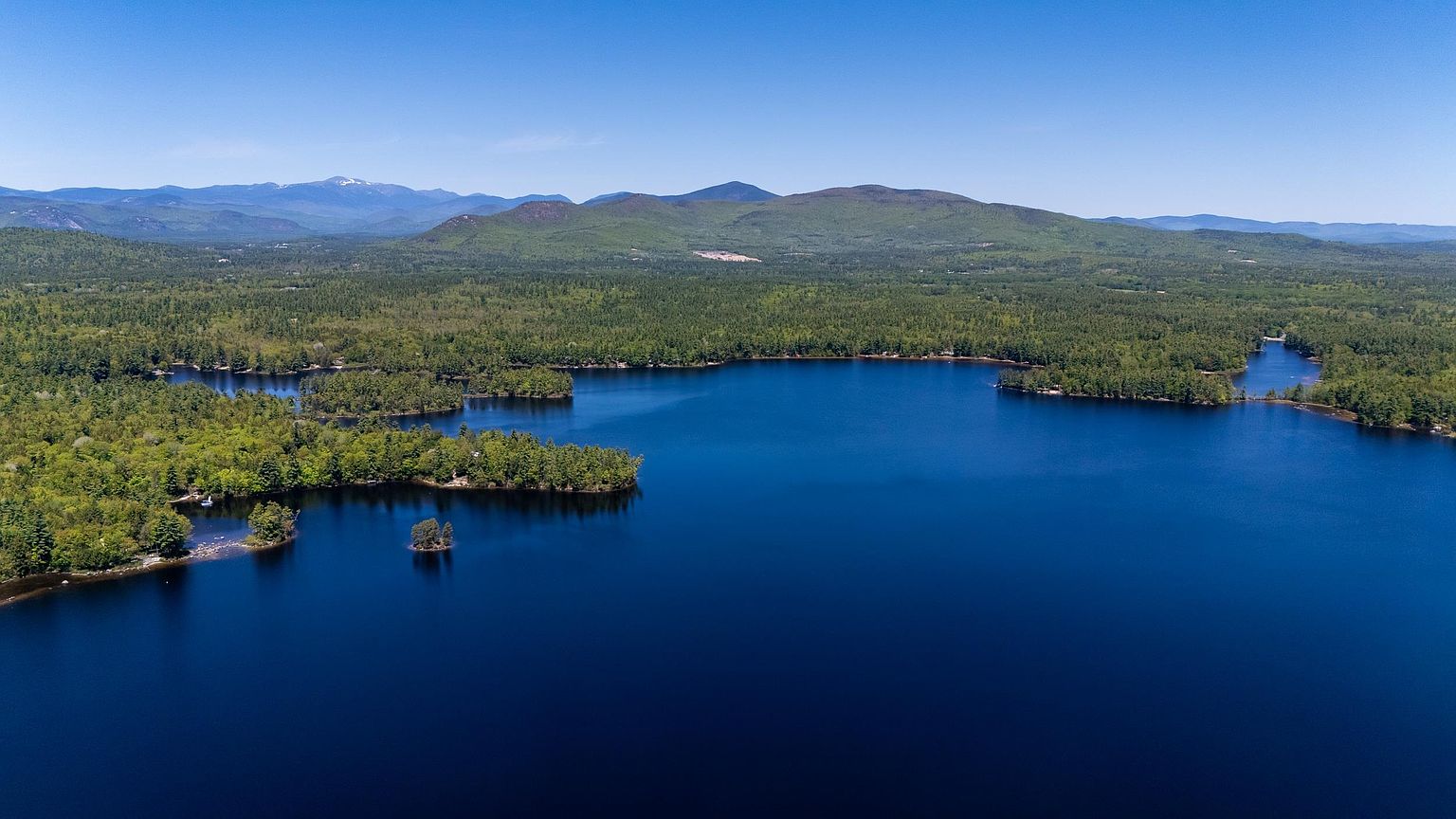
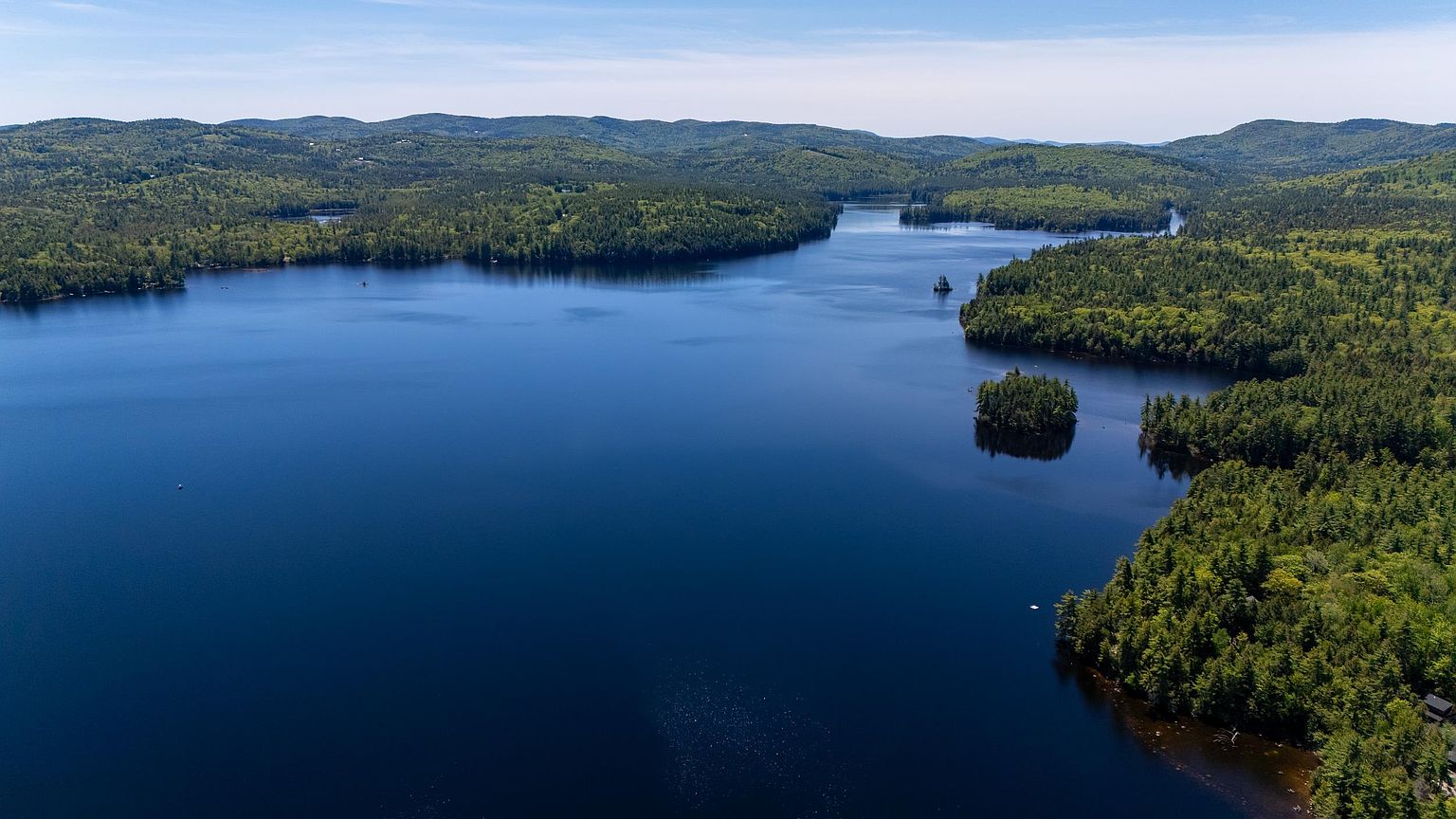
Conway Lake — known locally as Eaton Lake in some historical references but formally designated Conway Lake — is one of New Hampshire's largest and most ecologically pristine bodies of fresh water, spanning approximately 1,442 acres in Carroll County. It is a lake with a reputation carefully protected by the communities that surround it: no public boat ramps serve its shores, and the absence of heavy commercial traffic keeps its waters quiet, clear, and genuinely wild. Loons nest here. The fishing — for bass, pickerel, and perch — draws serious anglers who return season after season. Waterskiing and kayaking share the surface with unhurried afternoon cruises, and the overall character of the lake rewards those who value serenity over spectacle.
The town of Conway, incorporated in 1765, sits at the southern gateway to the Mount Washington Valley — a region that has drawn travelers, artists, and outdoor enthusiasts since the nineteenth century, when the grand hotels of the White Mountains first established New Hampshire's reputation as a destination of genuine natural majesty. That tradition of purposeful escape is embedded in the culture of the valley and felt in the pace of life around the lake.
The nearest commercial center, North Conway Village, is approximately eighteen minutes from the property — close enough to be convenient, far enough to feel irrelevant on the days when the lake is all that matters. North Conway has earned its designation as a four-season destination in the truest sense. Cranmore Mountain Resort, one of New England's oldest ski areas, operates just minutes from the village center and offers alpine skiing, snowboarding, and a mountain coaster that draws families year-round. The Mount Washington Valley Ski Touring Foundation maintains an extensive Nordic trail network for cross-country skiing and snowshoeing through the surrounding forests. In warmer months, the region transforms into a hub for hiking — the White Mountain National Forest, which encompasses much of the surrounding landscape, contains more than 1,200 miles of trails, including approaches to Mount Washington, the highest peak in the northeastern United States.
North Conway Village itself offers a walkable commercial district with independent restaurants, boutique retail, and outlet shopping that draws visitors from across the region. The area supports a year-round population of outdoor enthusiasts, creative professionals, and families who have chosen the valley as a permanent base rather than a seasonal destination — a shift that has brought with it a growing culinary scene, art galleries, and community events that animate the village across all four seasons.
Golfing is available nearby, and the broader Mount Washington Valley offers equestrian facilities, river kayaking on the Saco River, and access to Echo Lake State Park, where Cathedral Ledge provides one of the most dramatic rock-climbing and rappelling venues in the Northeast.
For those arriving from Boston, Portland, or Manchester, the drive to Conway runs approximately two hours — far enough to feel like an arrival, close enough to make weekends genuinely feasible. This is not a property that requires you to choose between the wilderness and the world. It offers both, on its own terms.
Featured Highlights
Curated Content • Presented by Kevin J Killourie