The Story Behind
Where Architecture and Landscape Become Inseparable
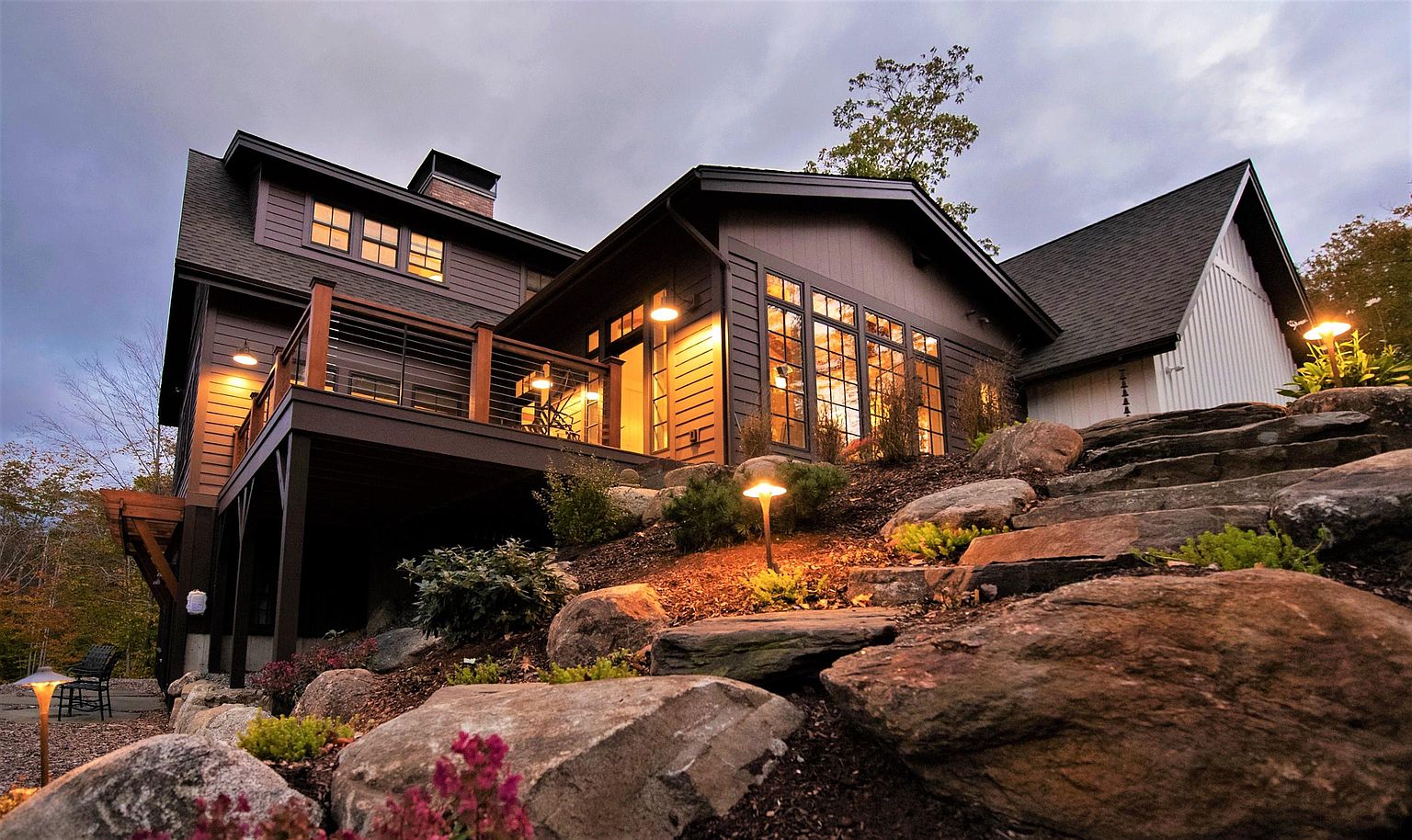
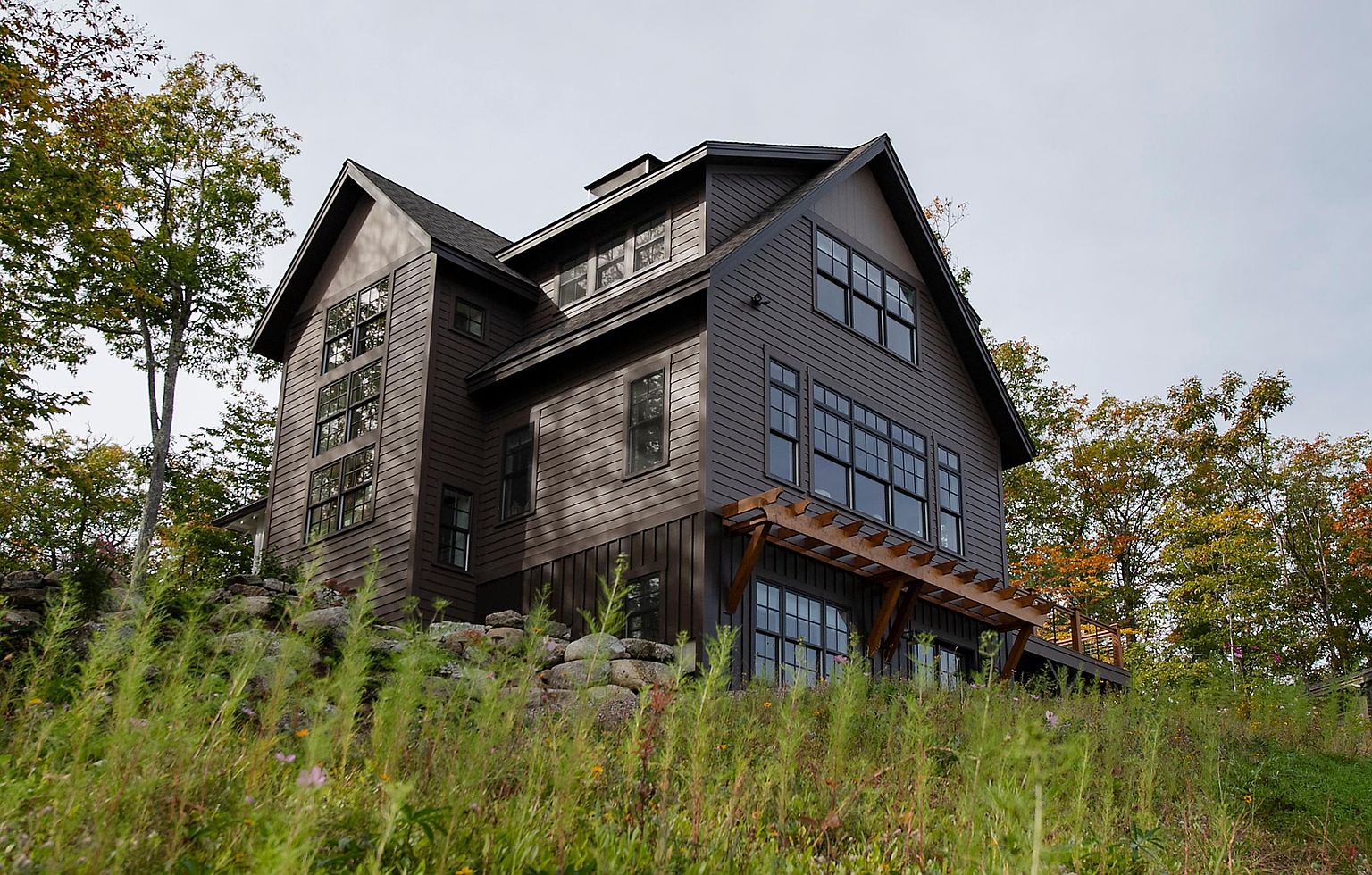
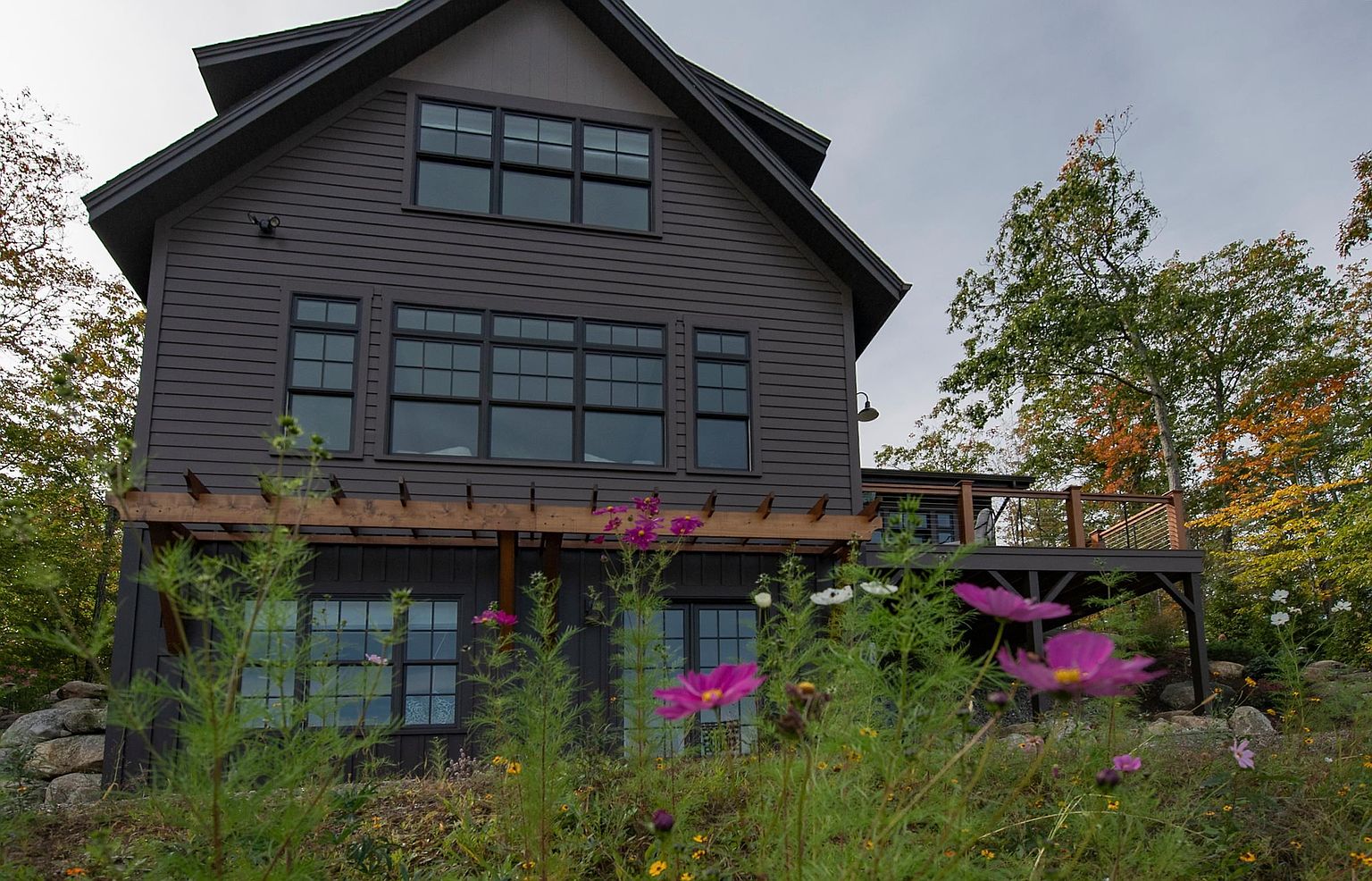
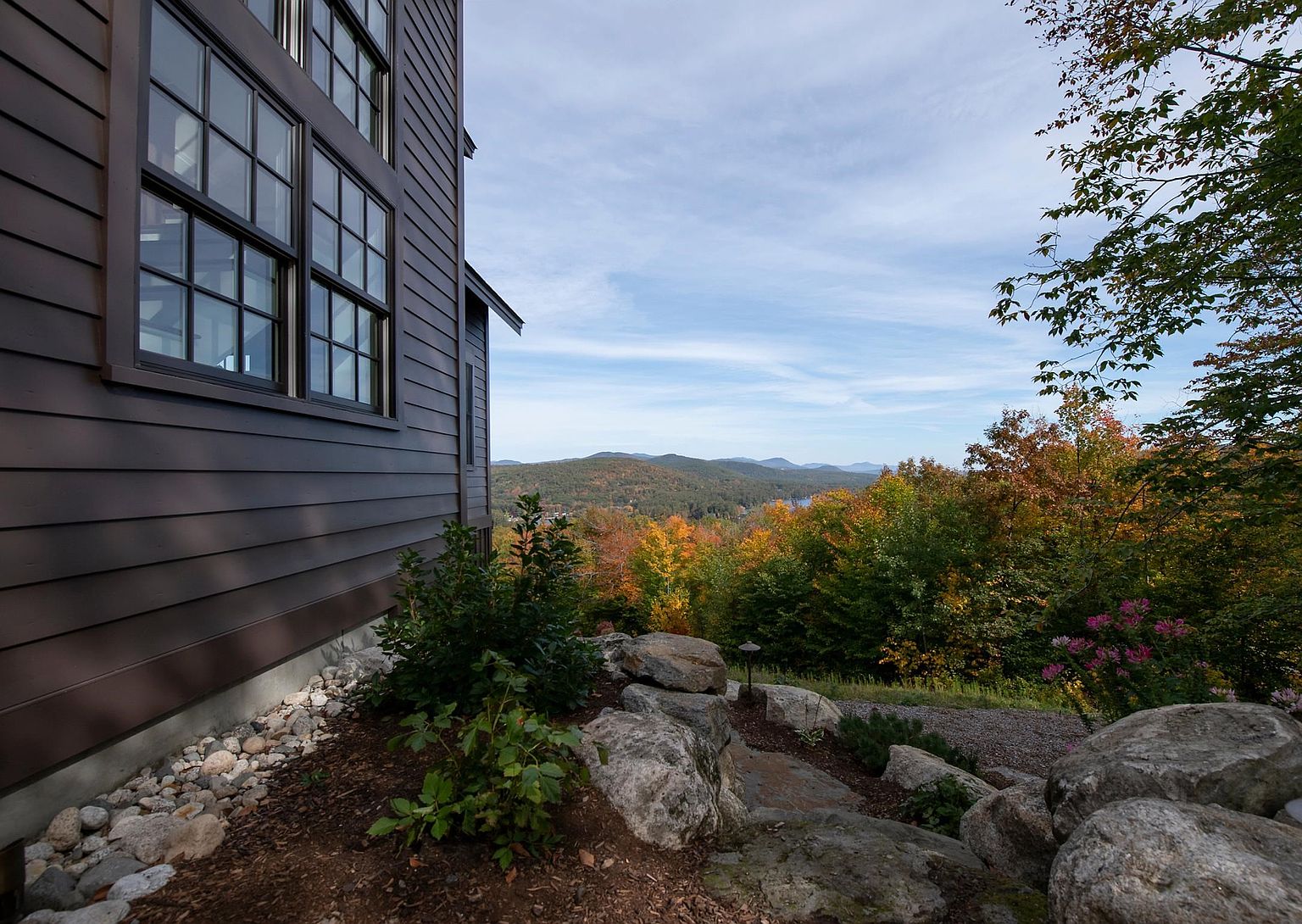
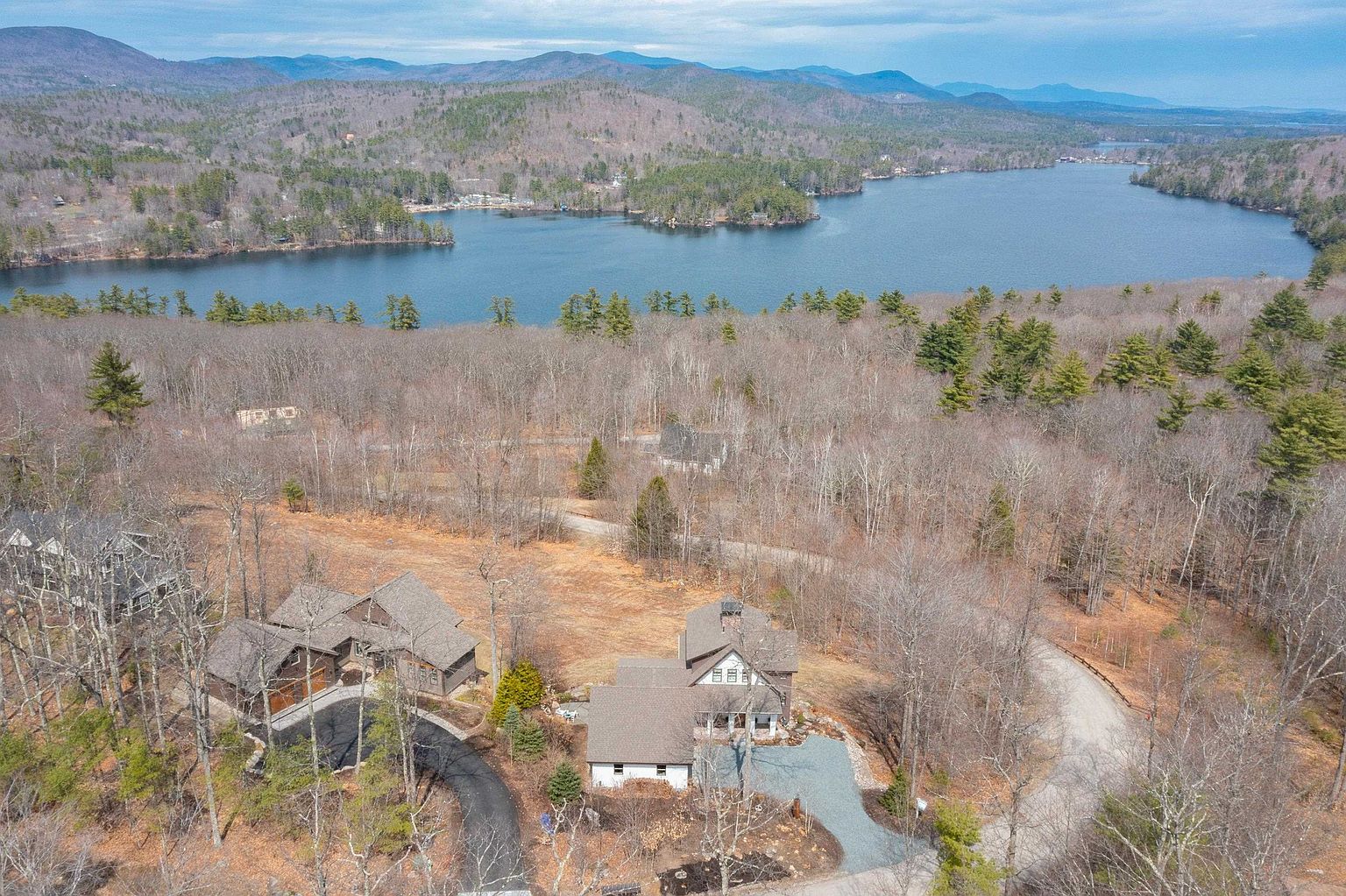
There are homes that respond to their setting, and then there are homes that seem to have grown from it. Hearth Home, set on a hillside above Little Squam Lake in Ashland, New Hampshire, belongs firmly to the latter category. Completed in 2020 and featured in New Hampshire Home magazine, this custom residence was conceived as a deliberate conversation between modern farmhouse sensibility and the rugged, forested terrain it occupies — a conversation that reveals itself in every material choice, every sightline, and every carefully resolved detail.
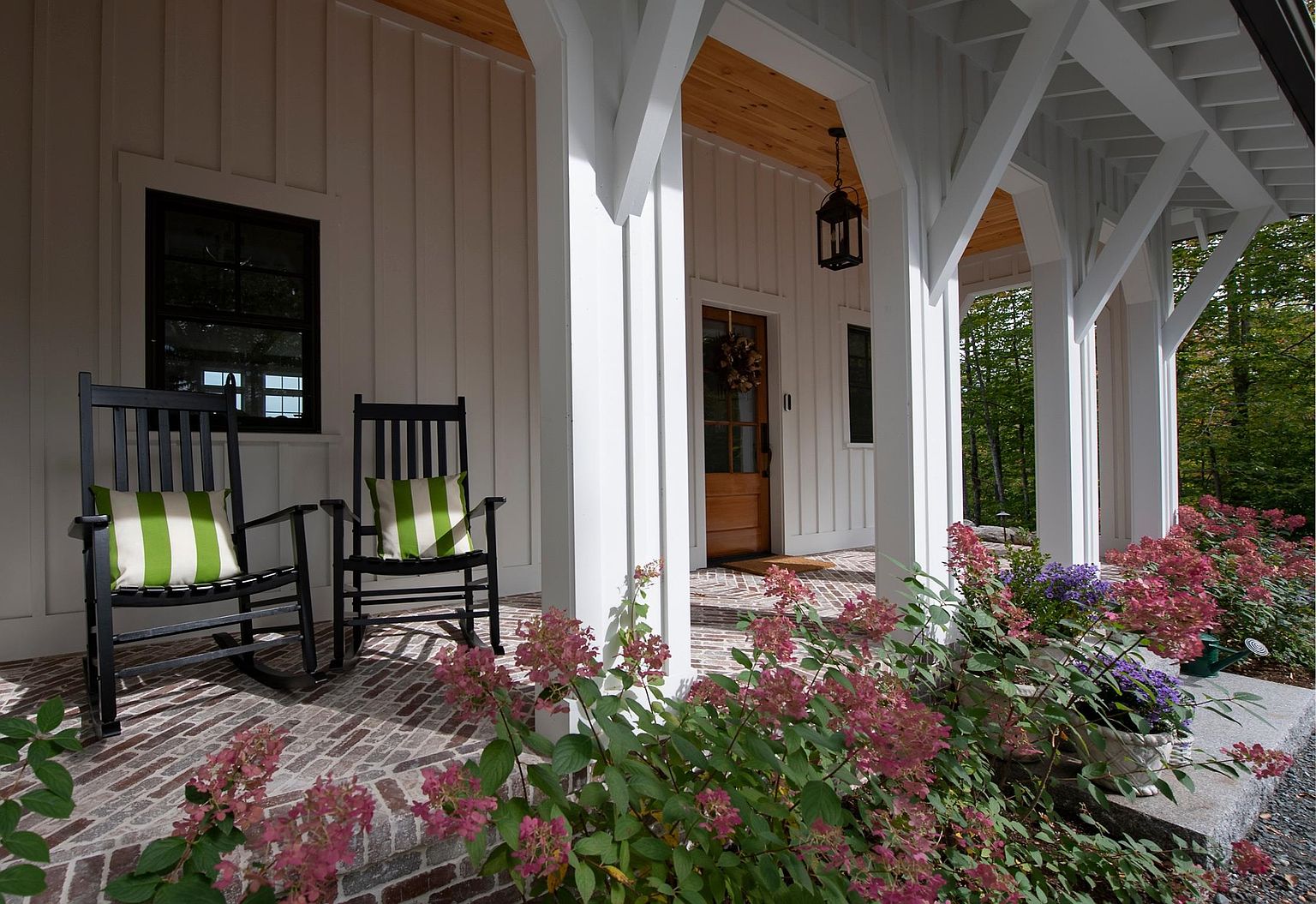
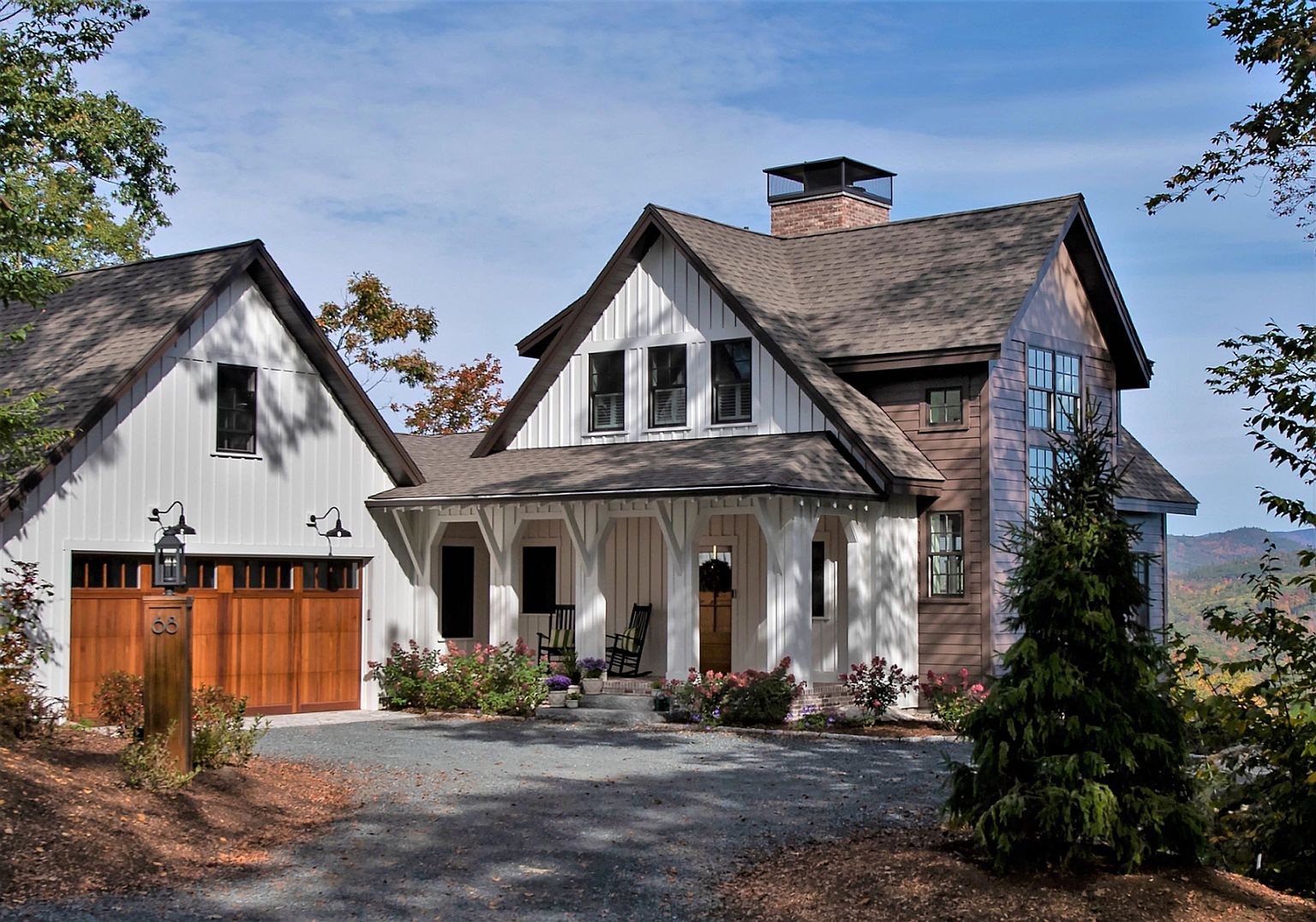
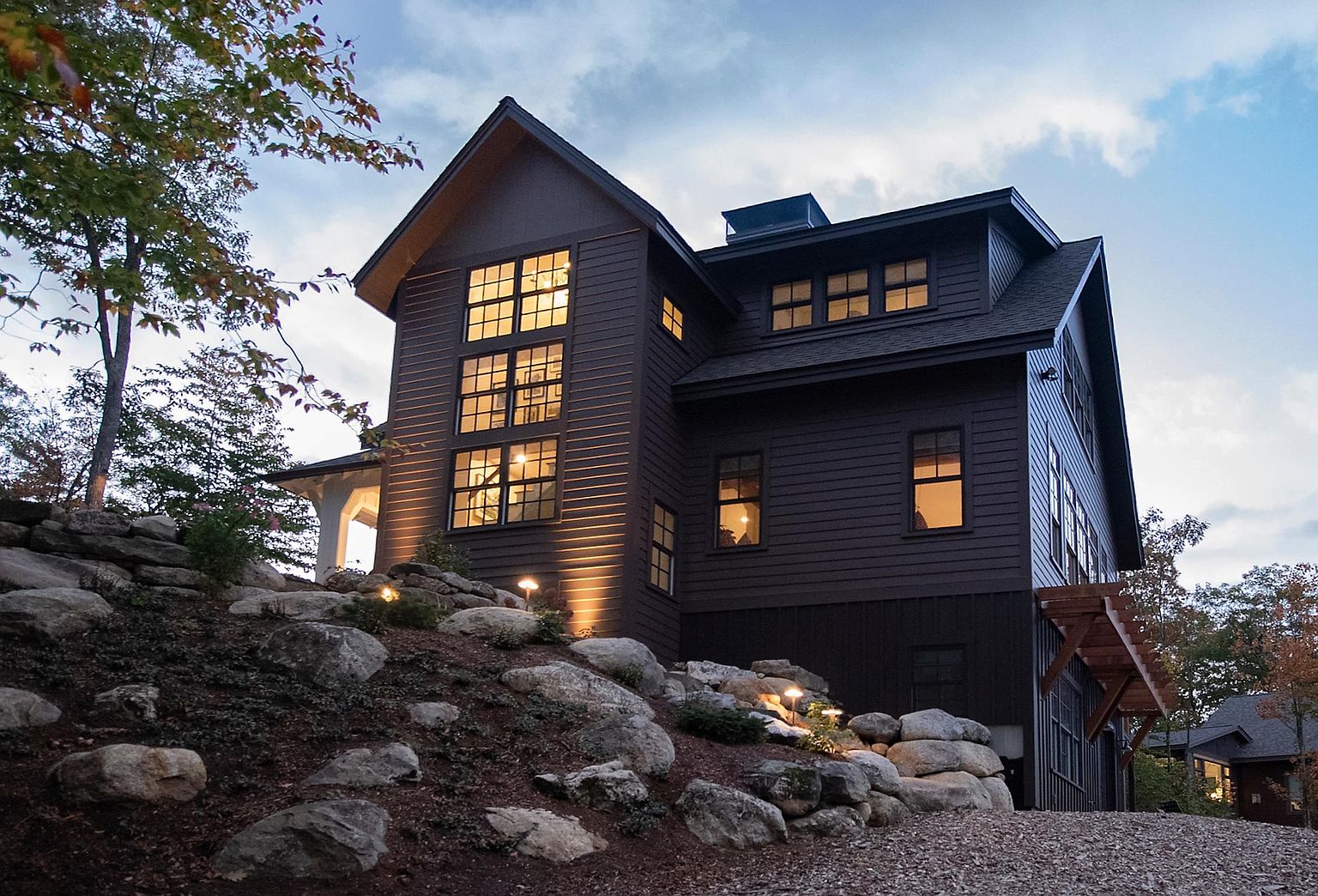
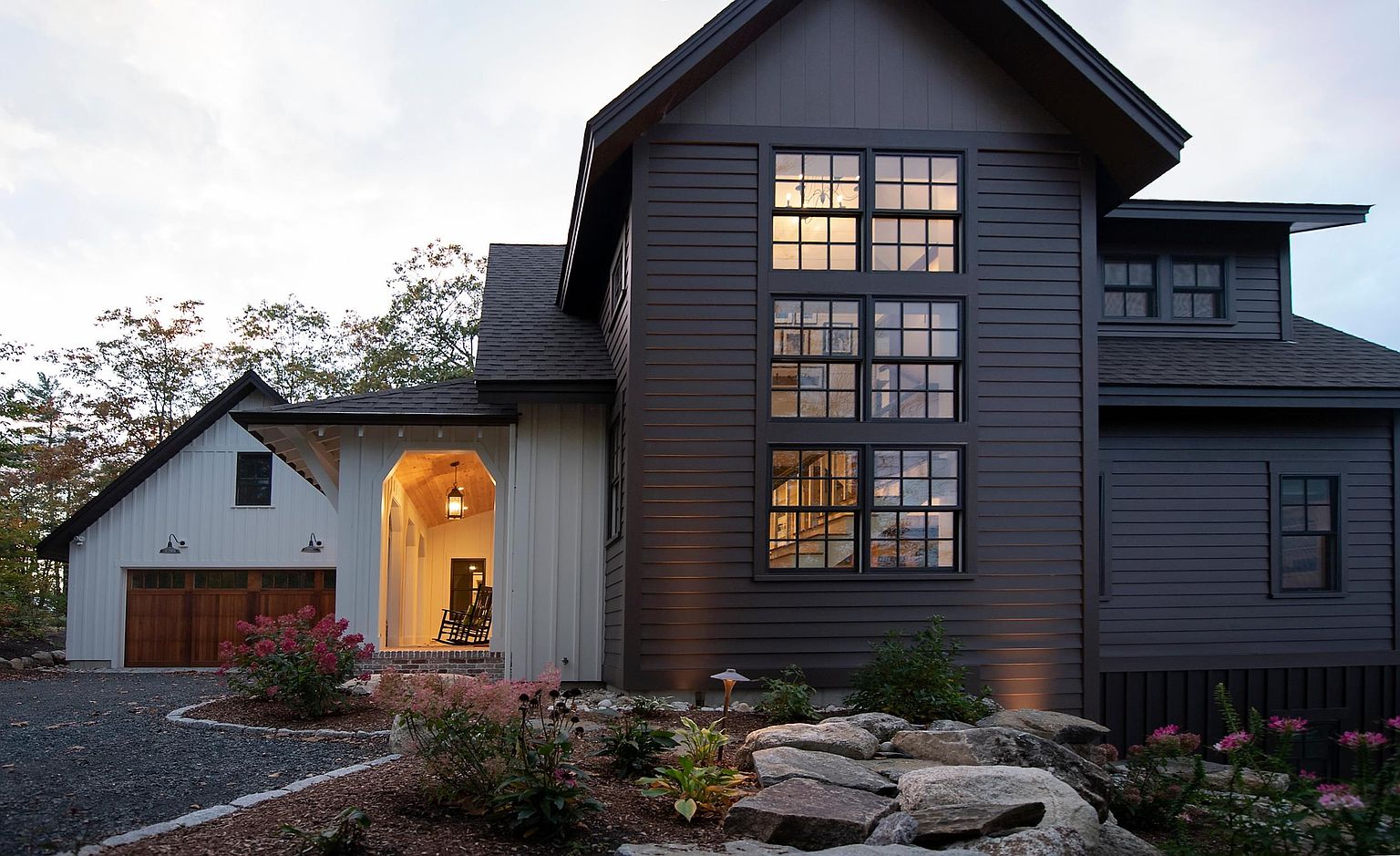
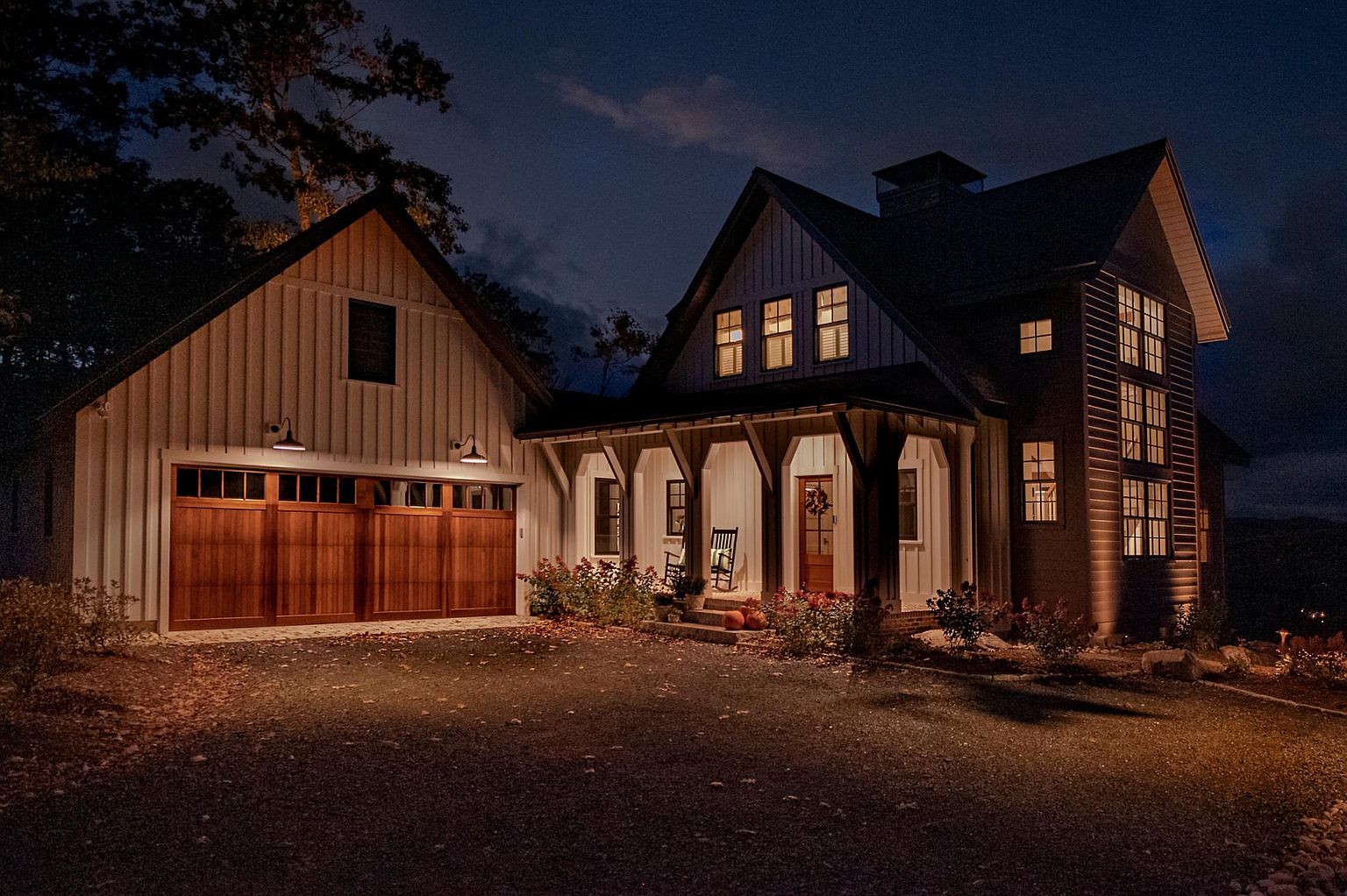
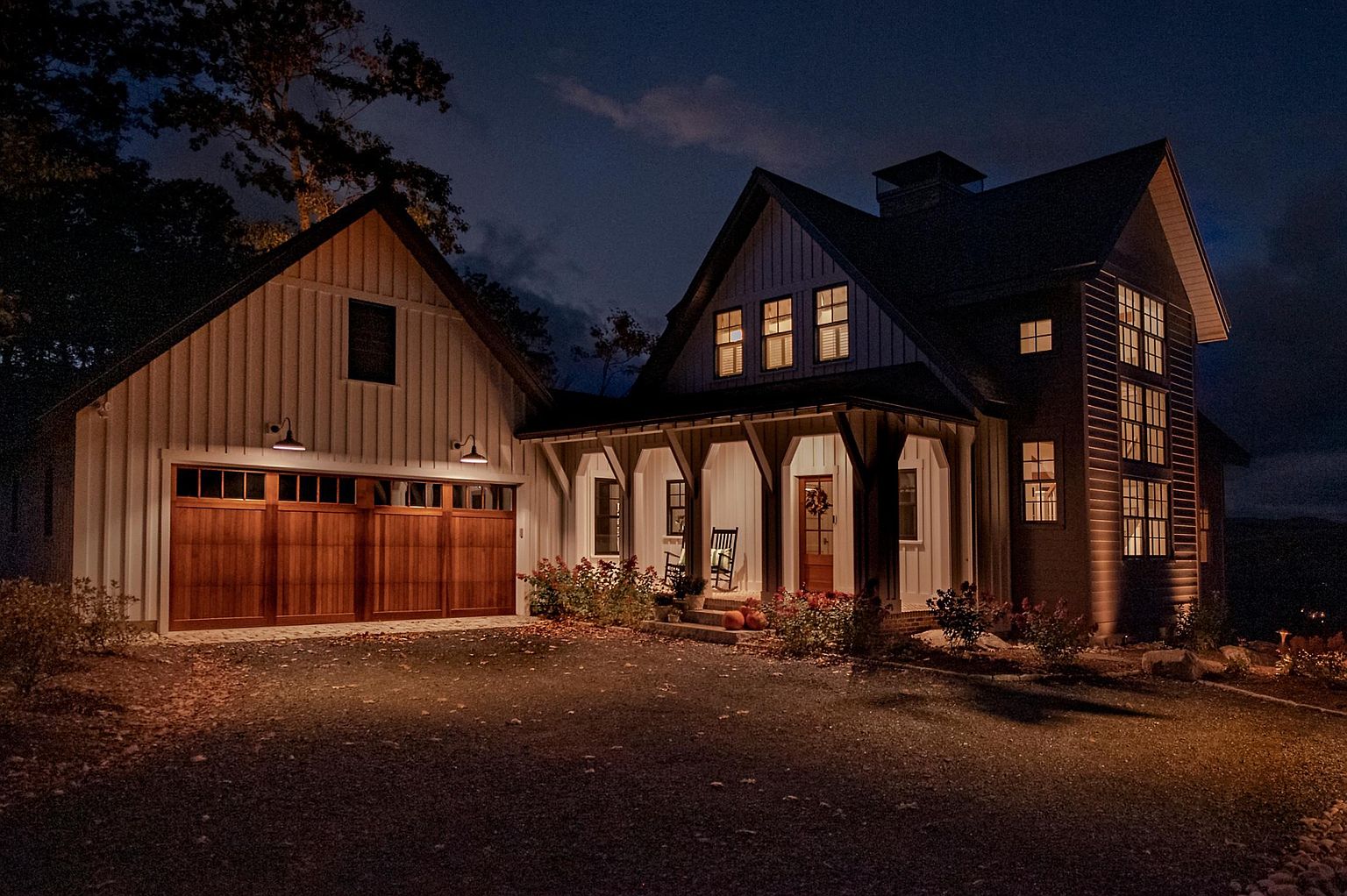
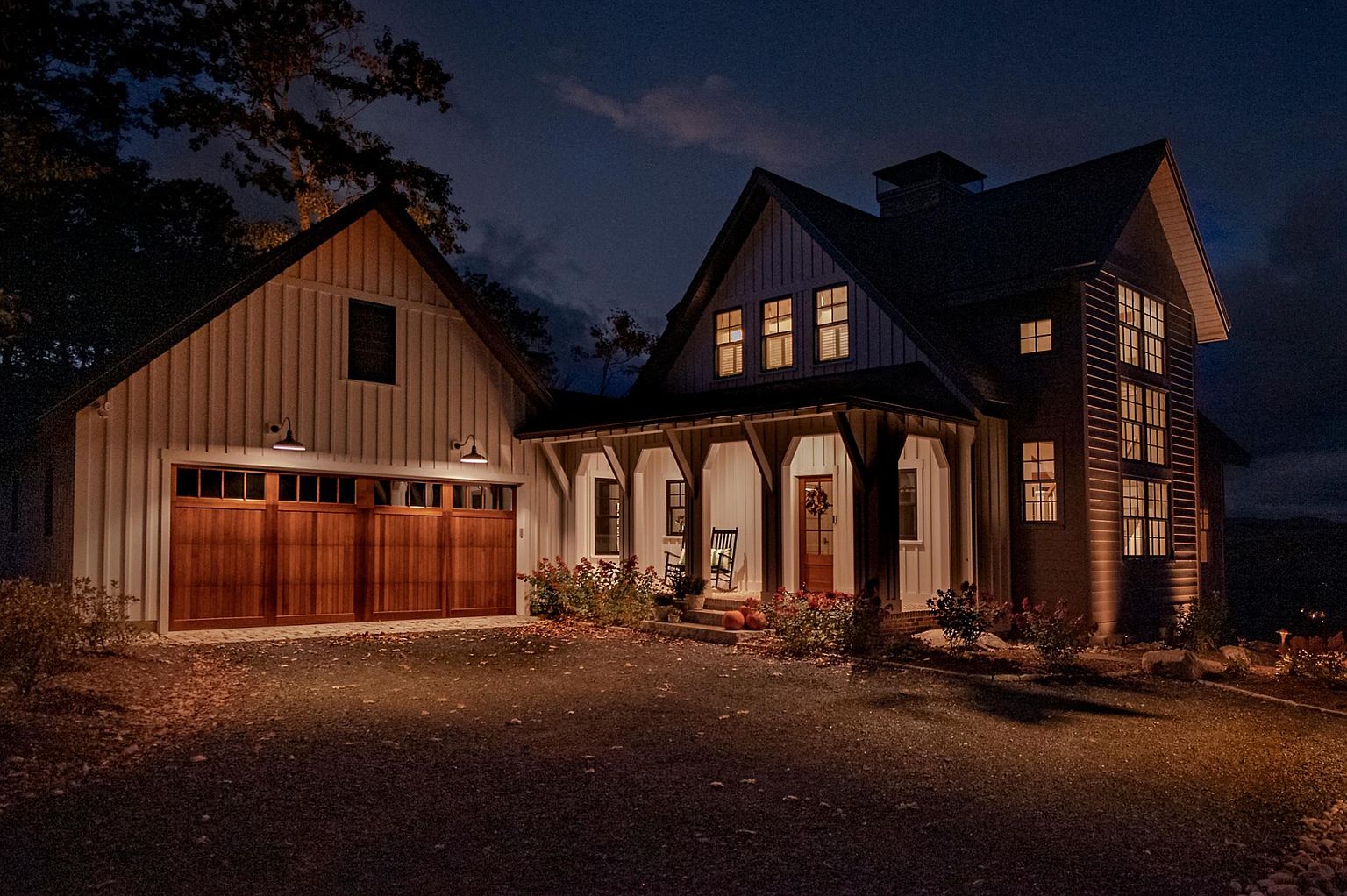
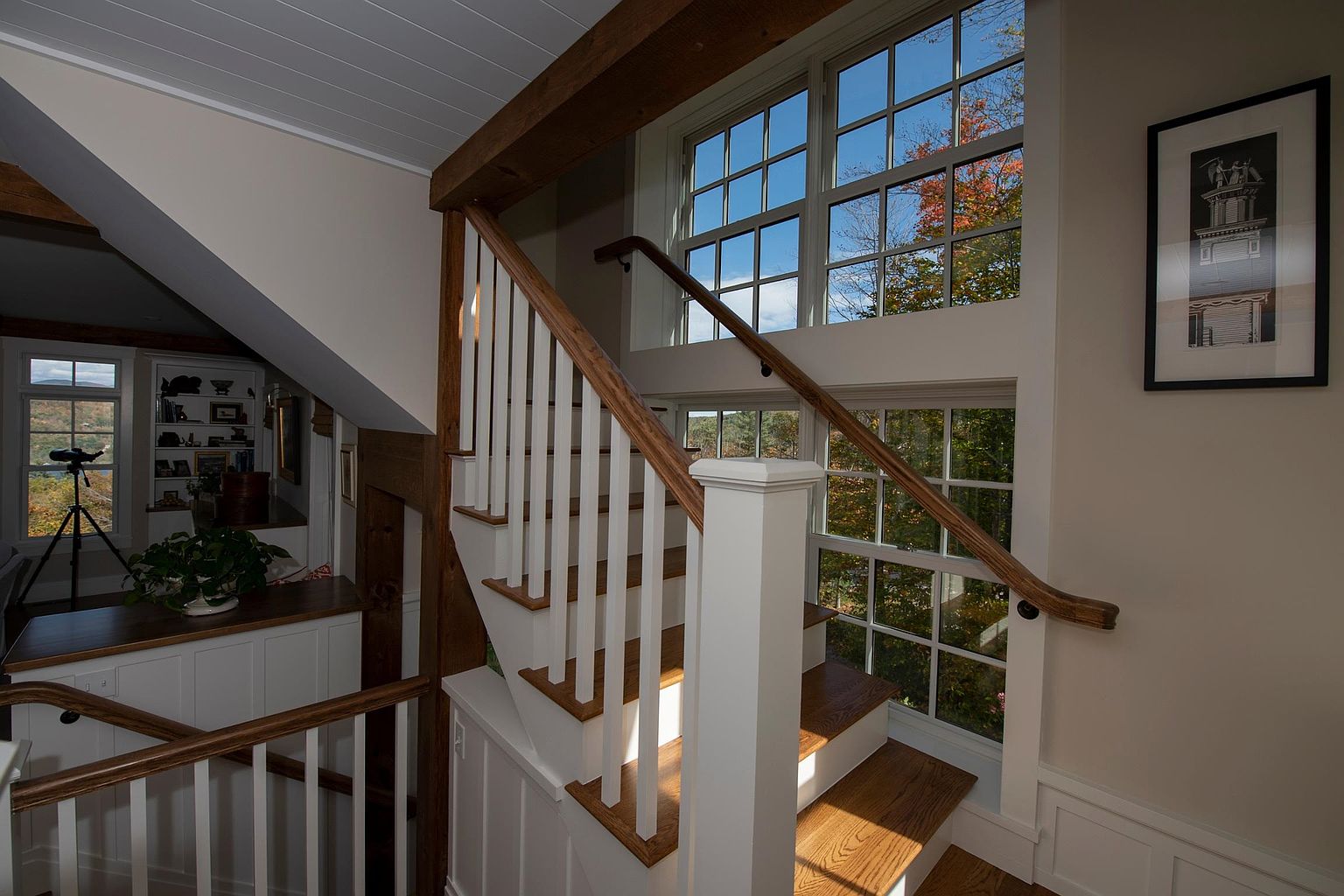
Approach the home from the gravel drive and the architectural intention announces itself immediately. White board-and-batten siding meets warm horizontal wood cladding across a facade punctuated by a dramatic multi-story window stack — the exterior signature of the three-story stair tower within. A covered entry porch with herringbone brick flooring, decorative timber brackets, and a natural wood ceiling sets a tone of warmth before you have crossed the threshold.
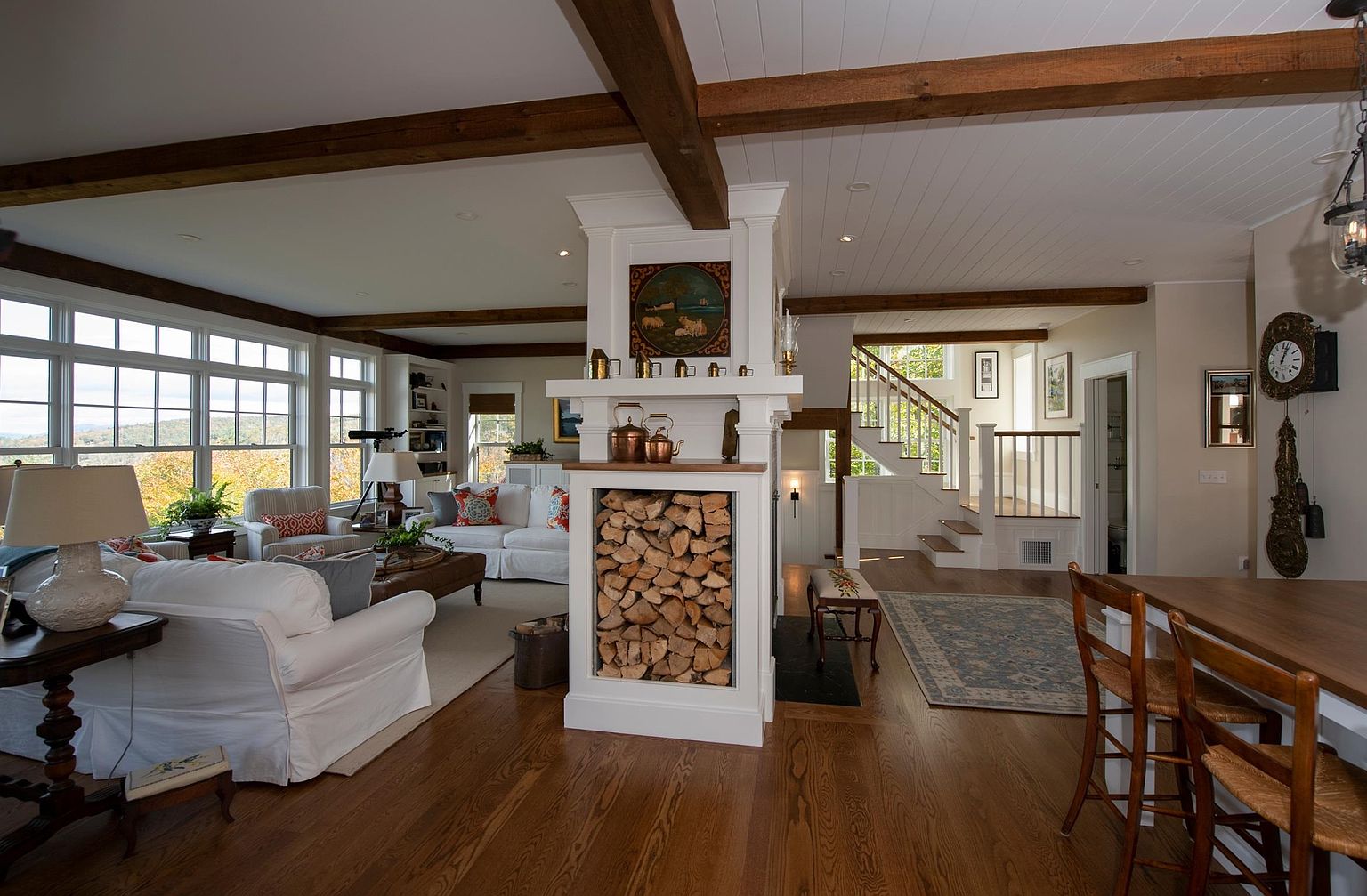
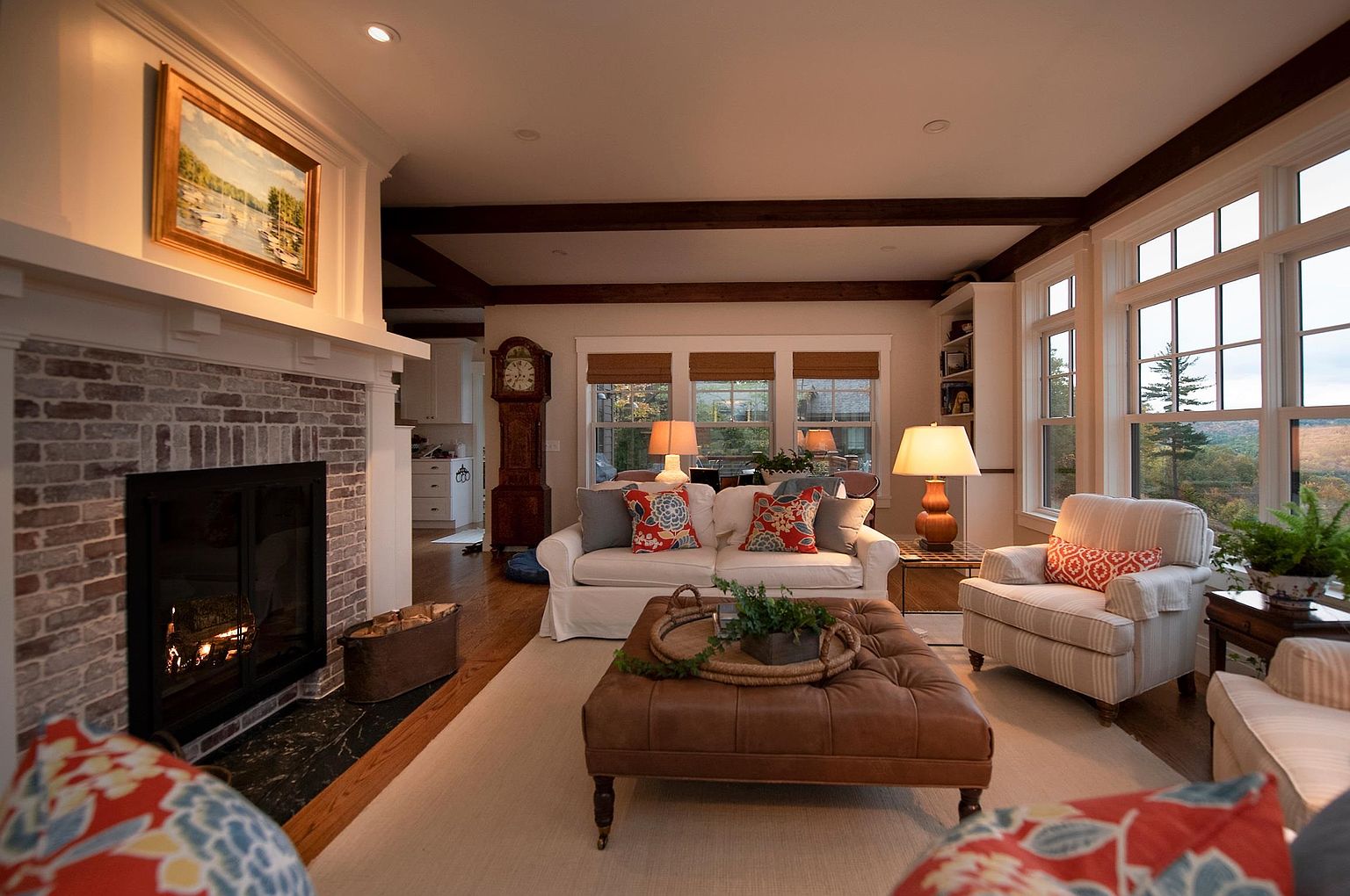
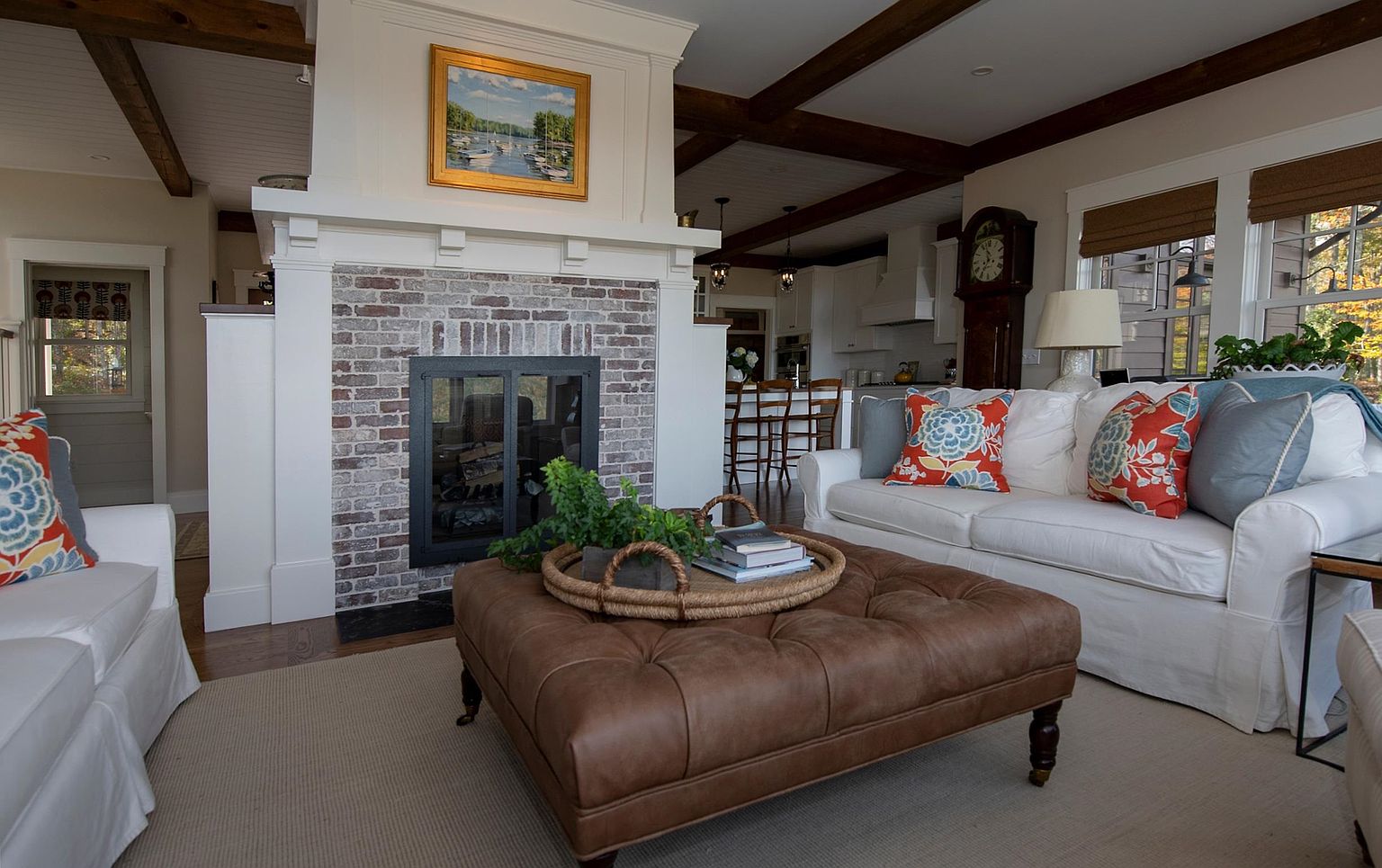
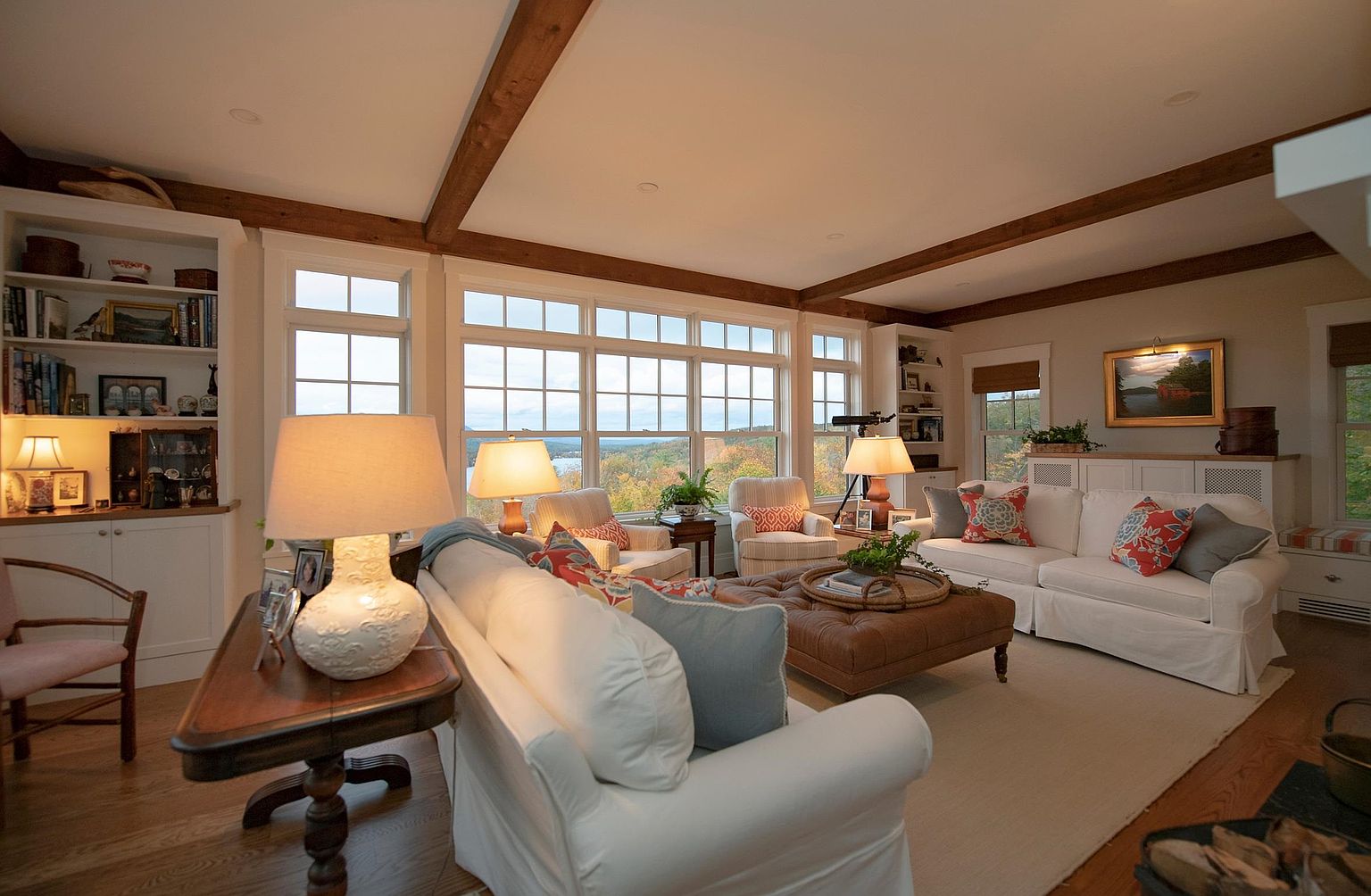
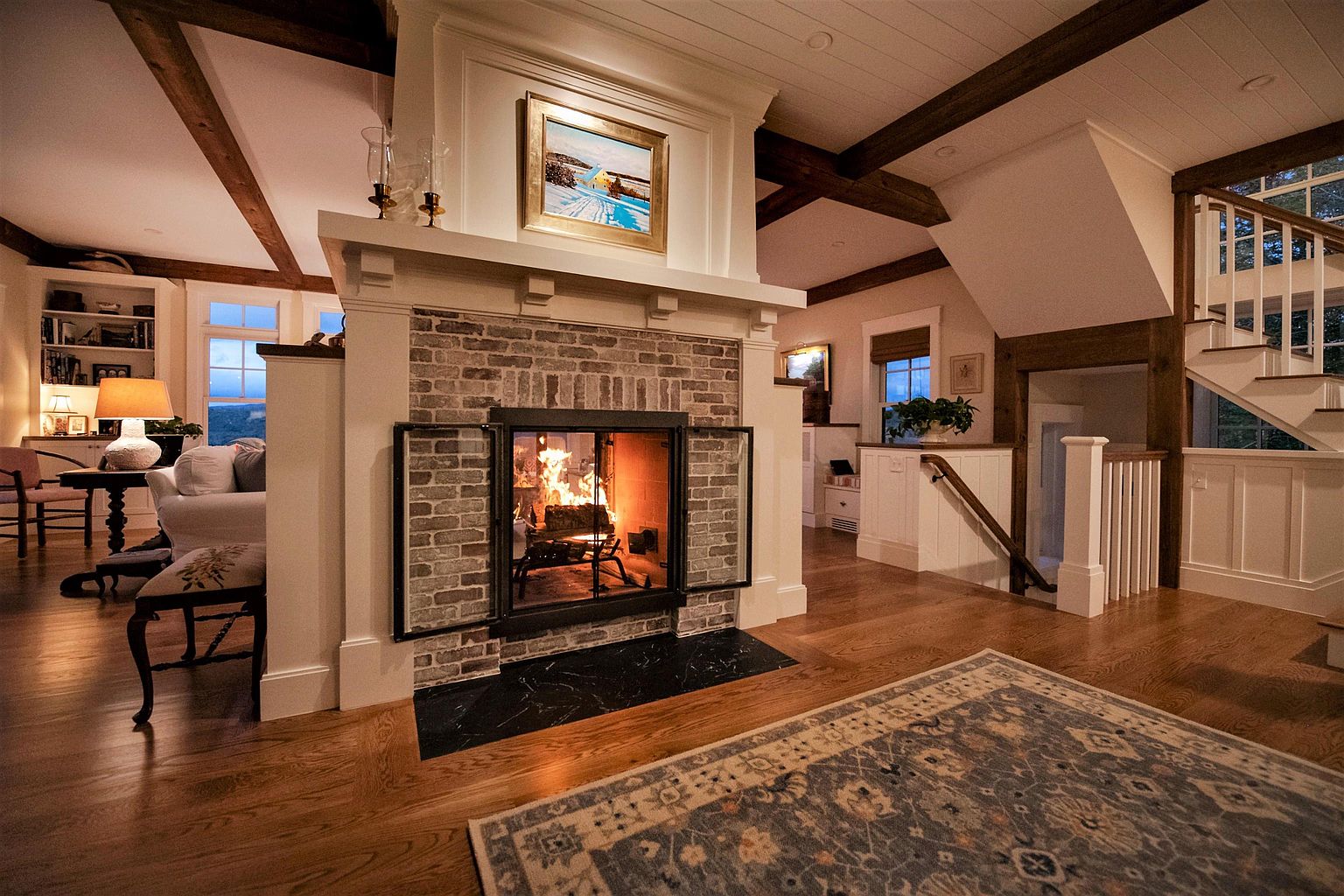
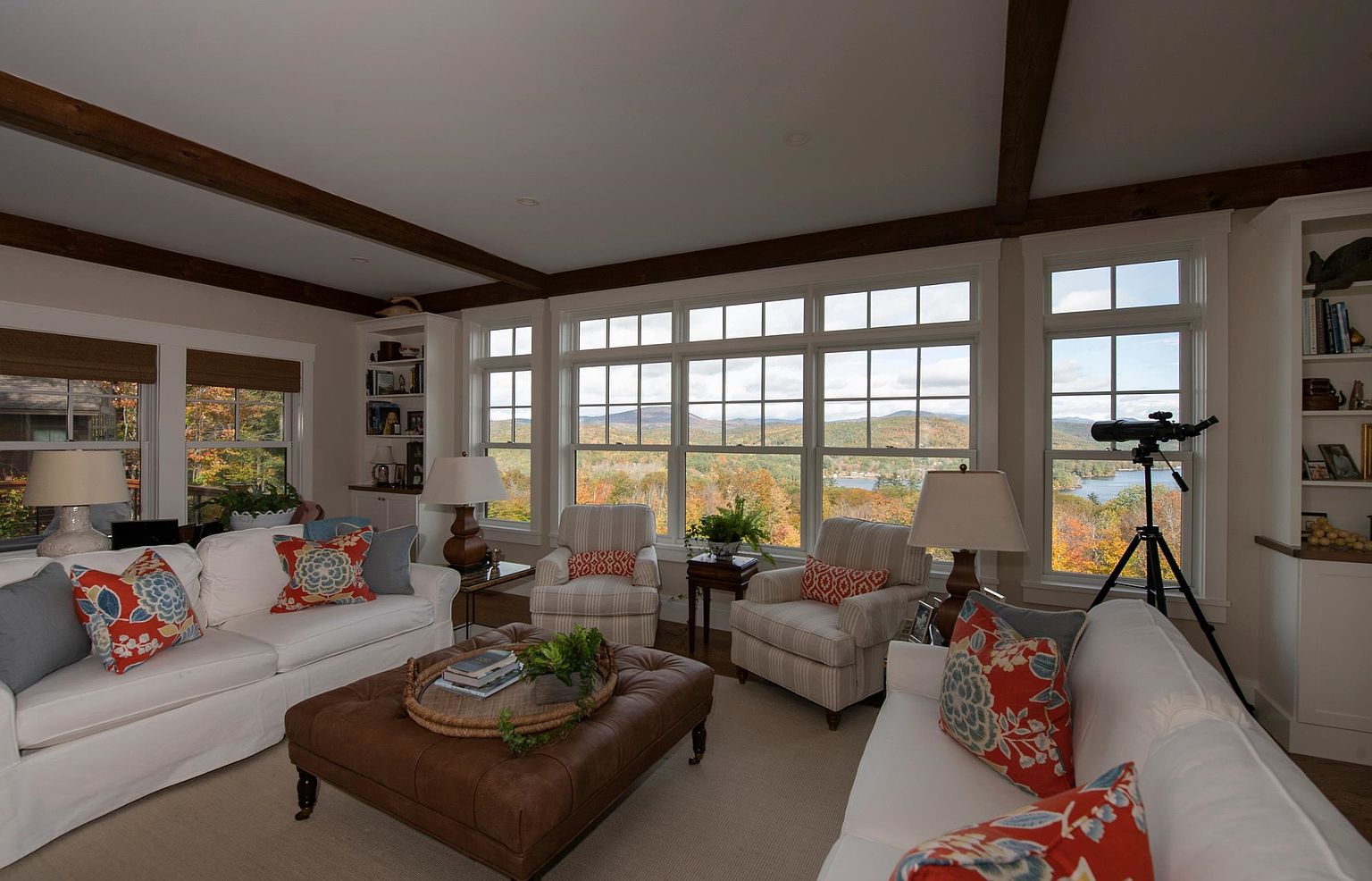
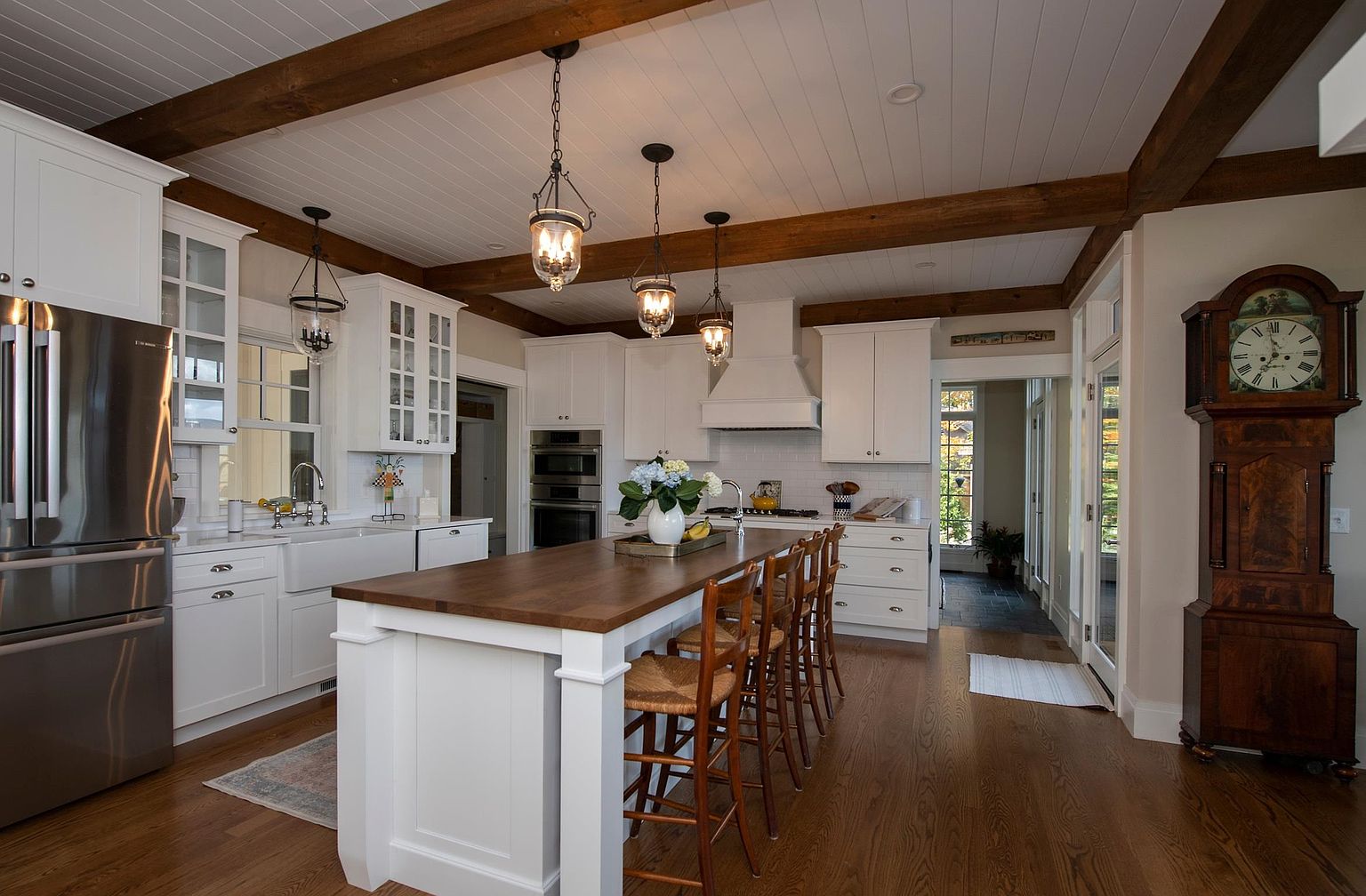
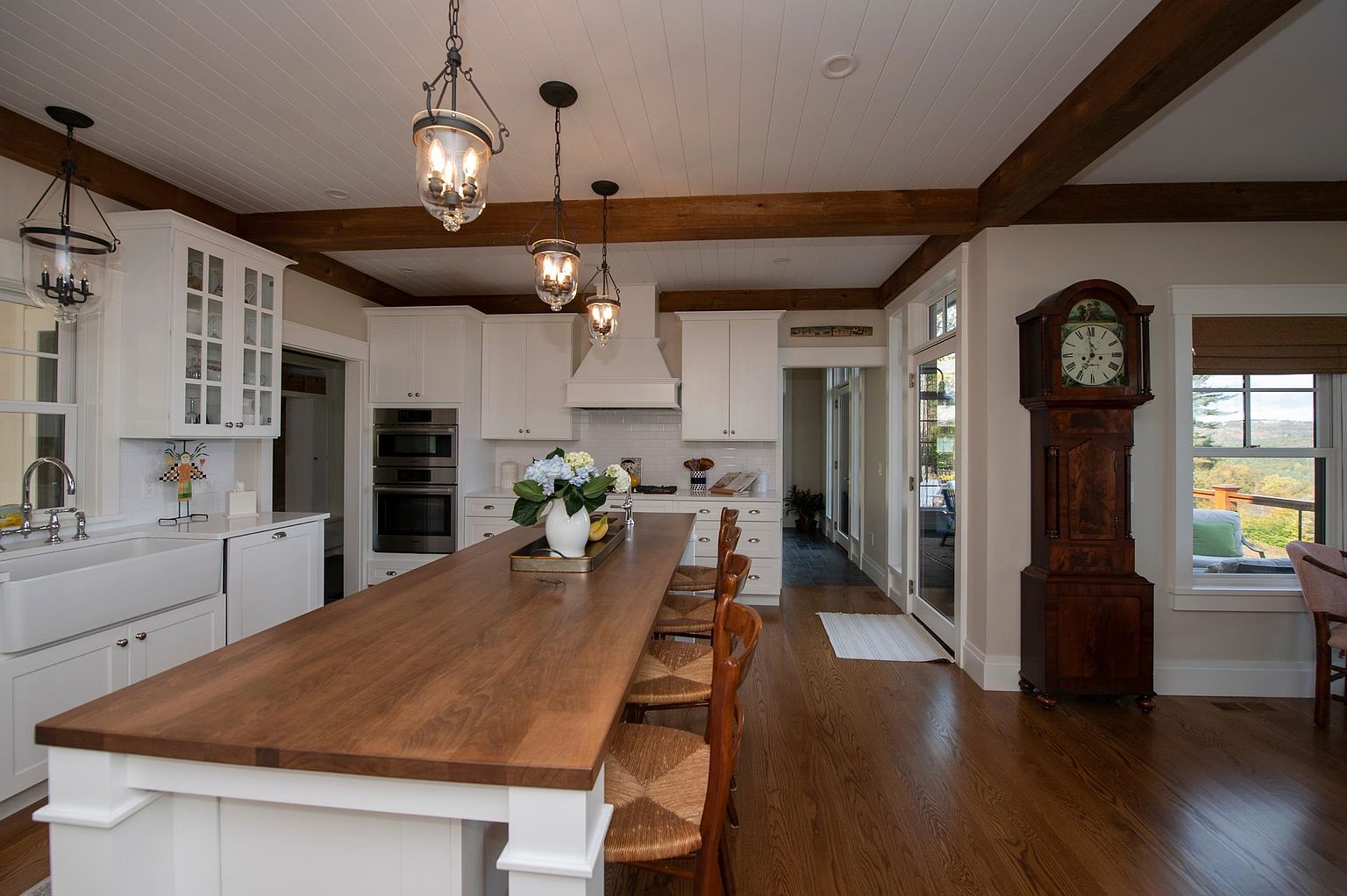
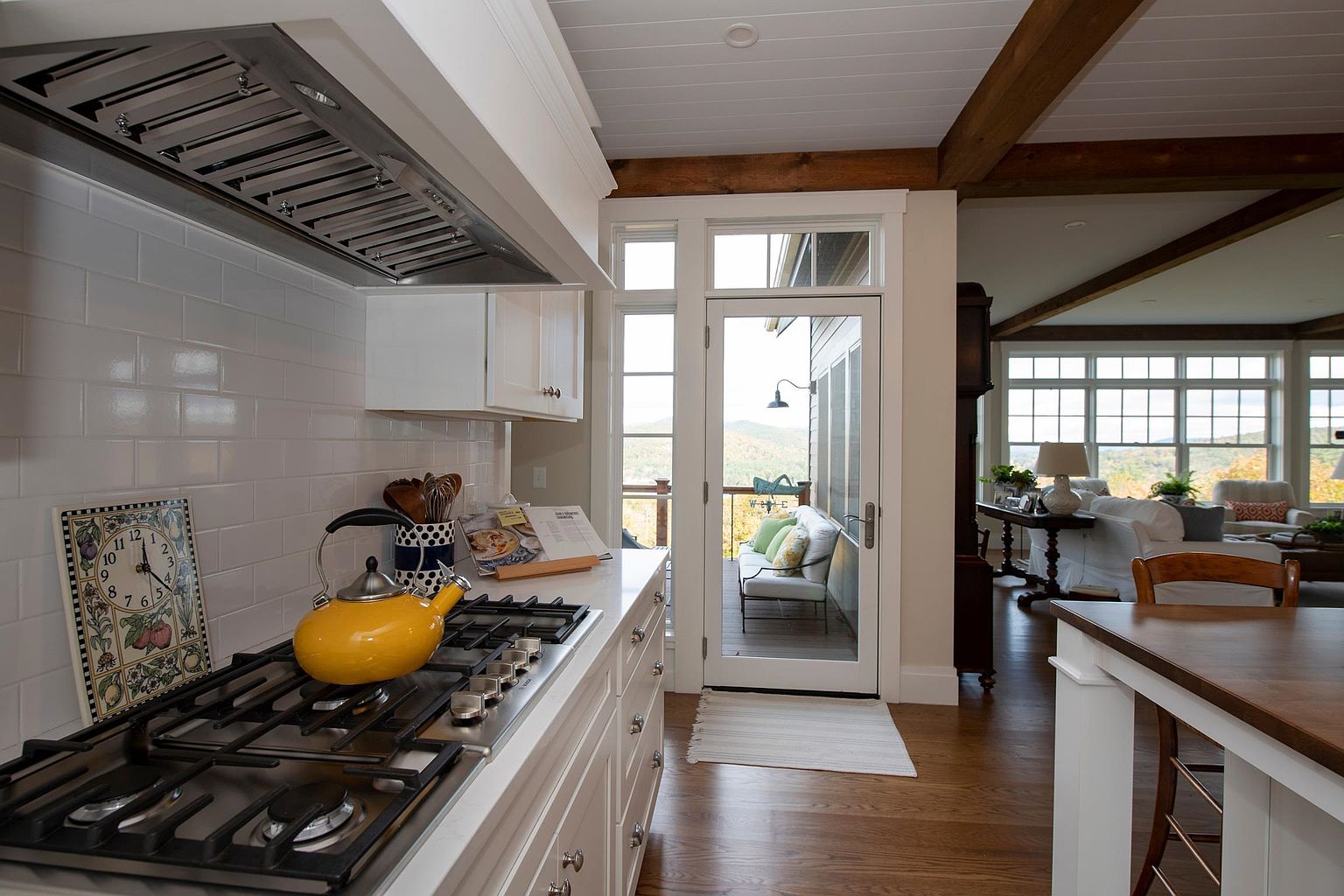
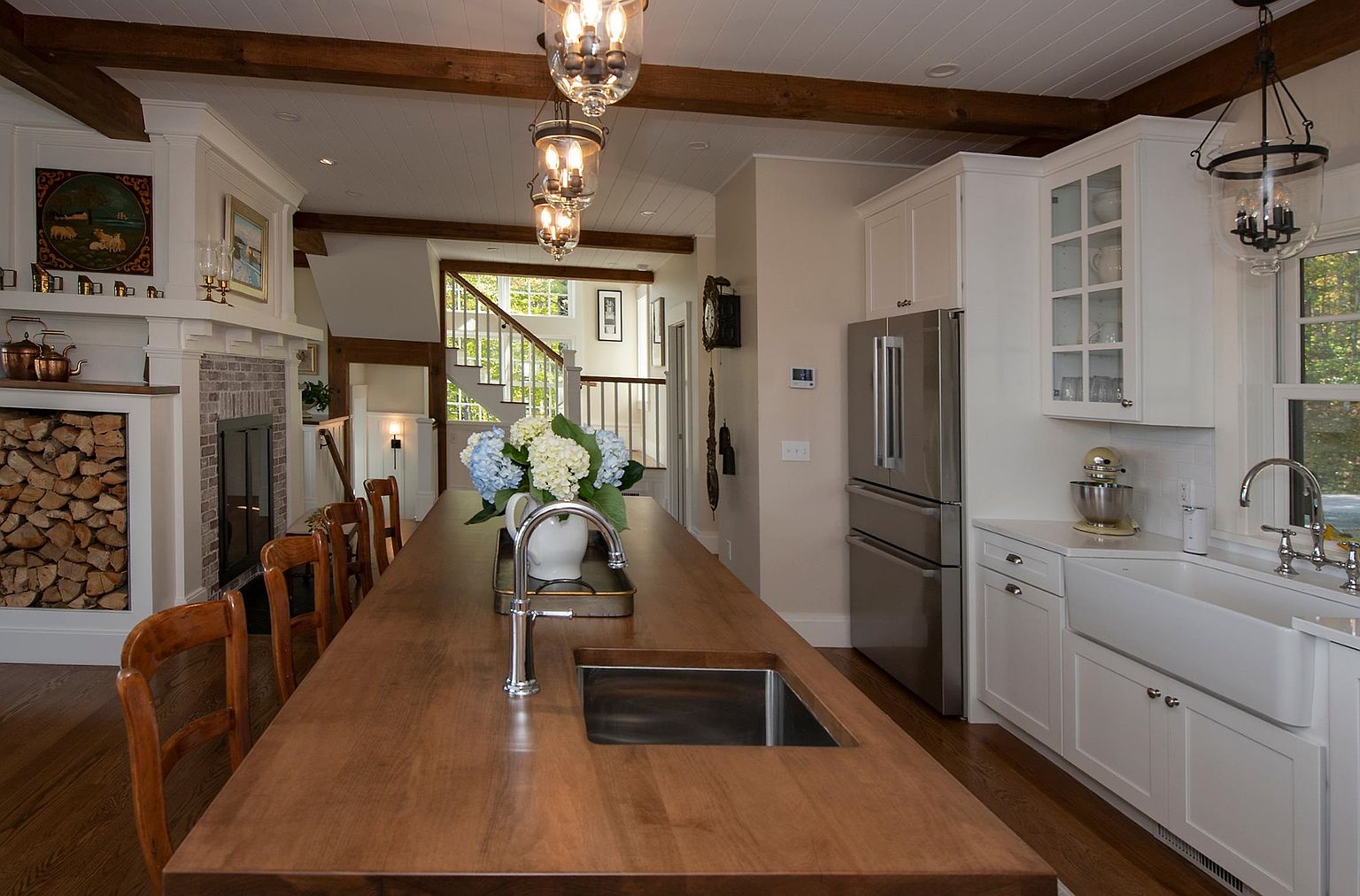
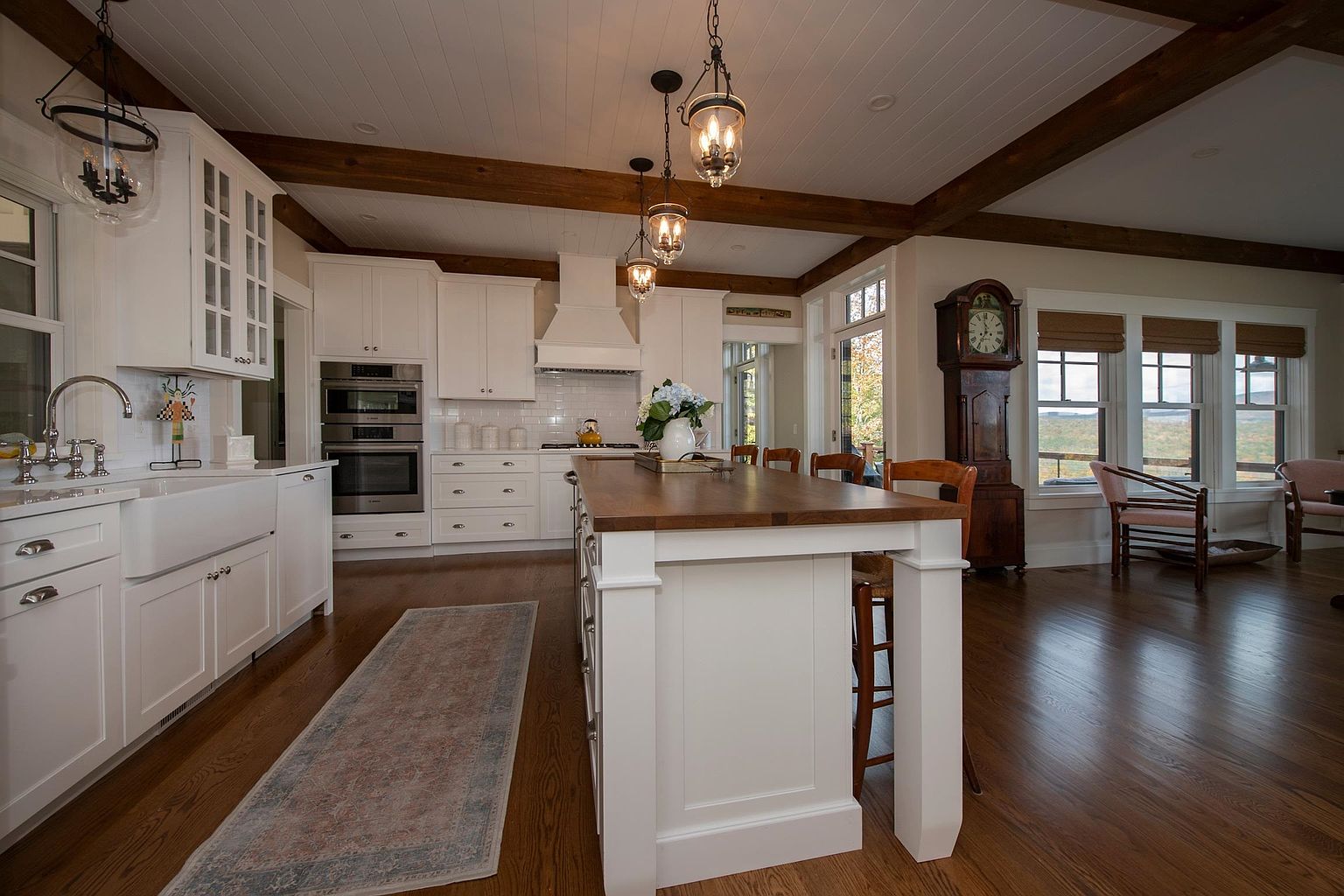
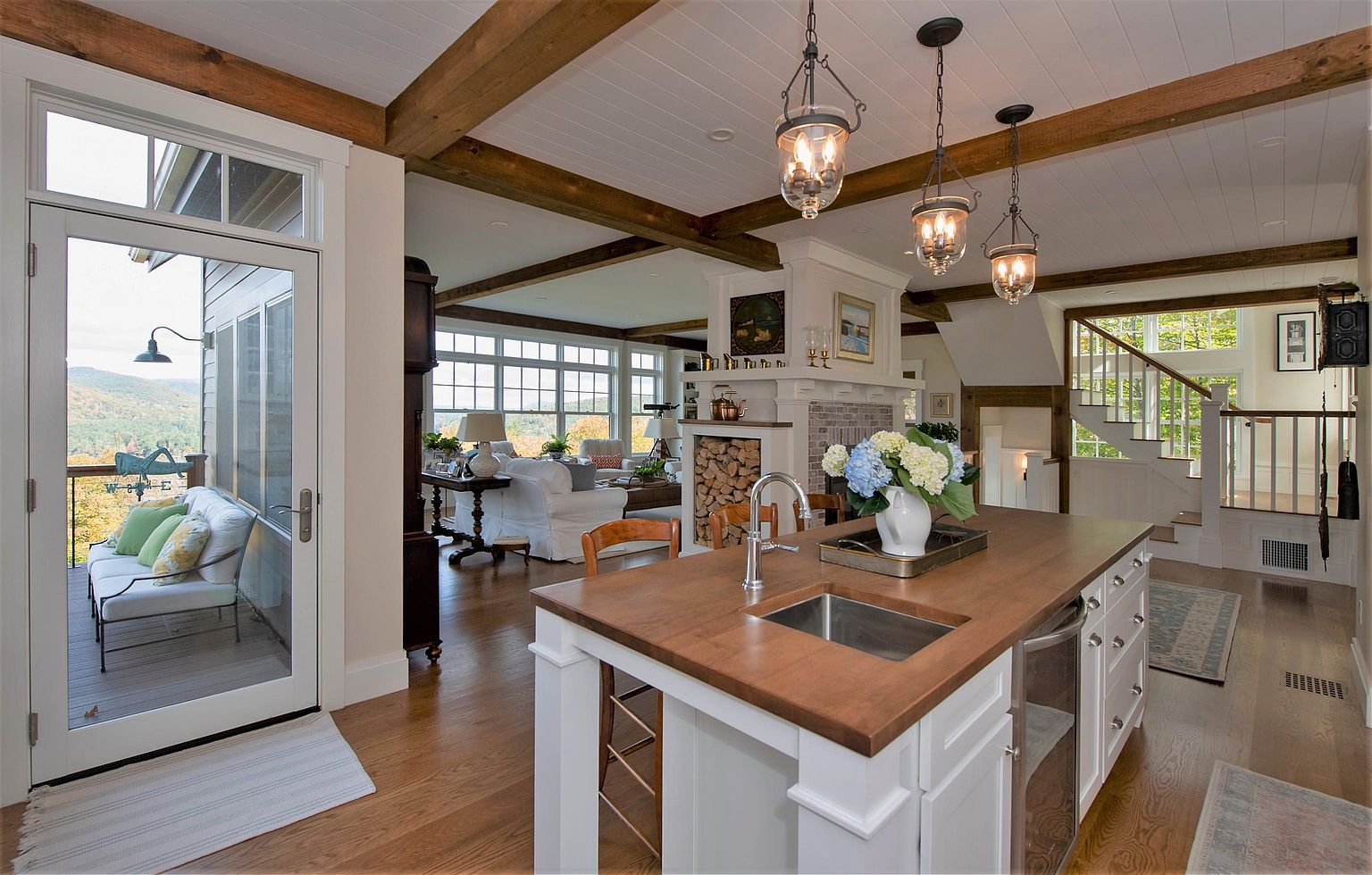
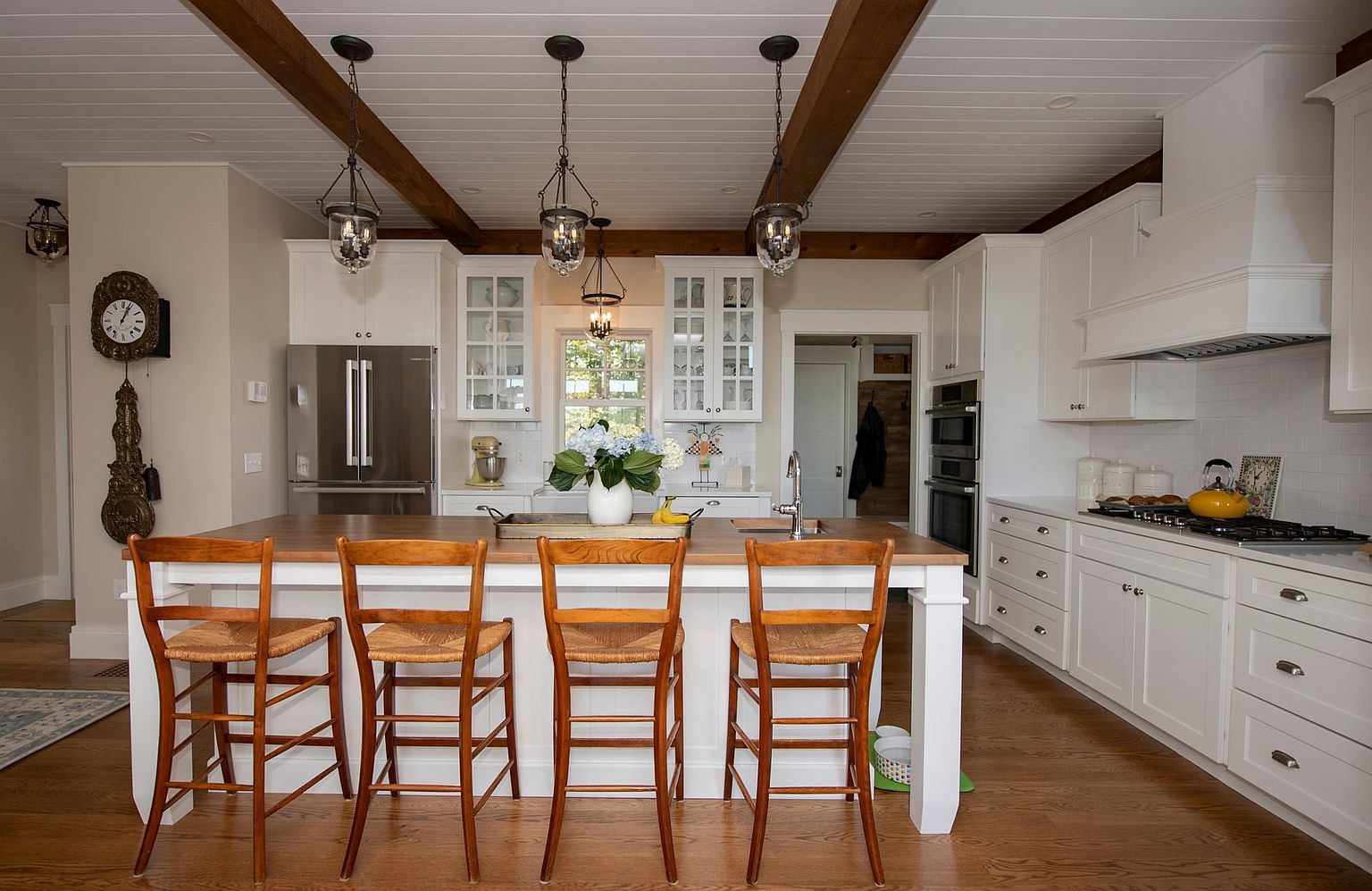
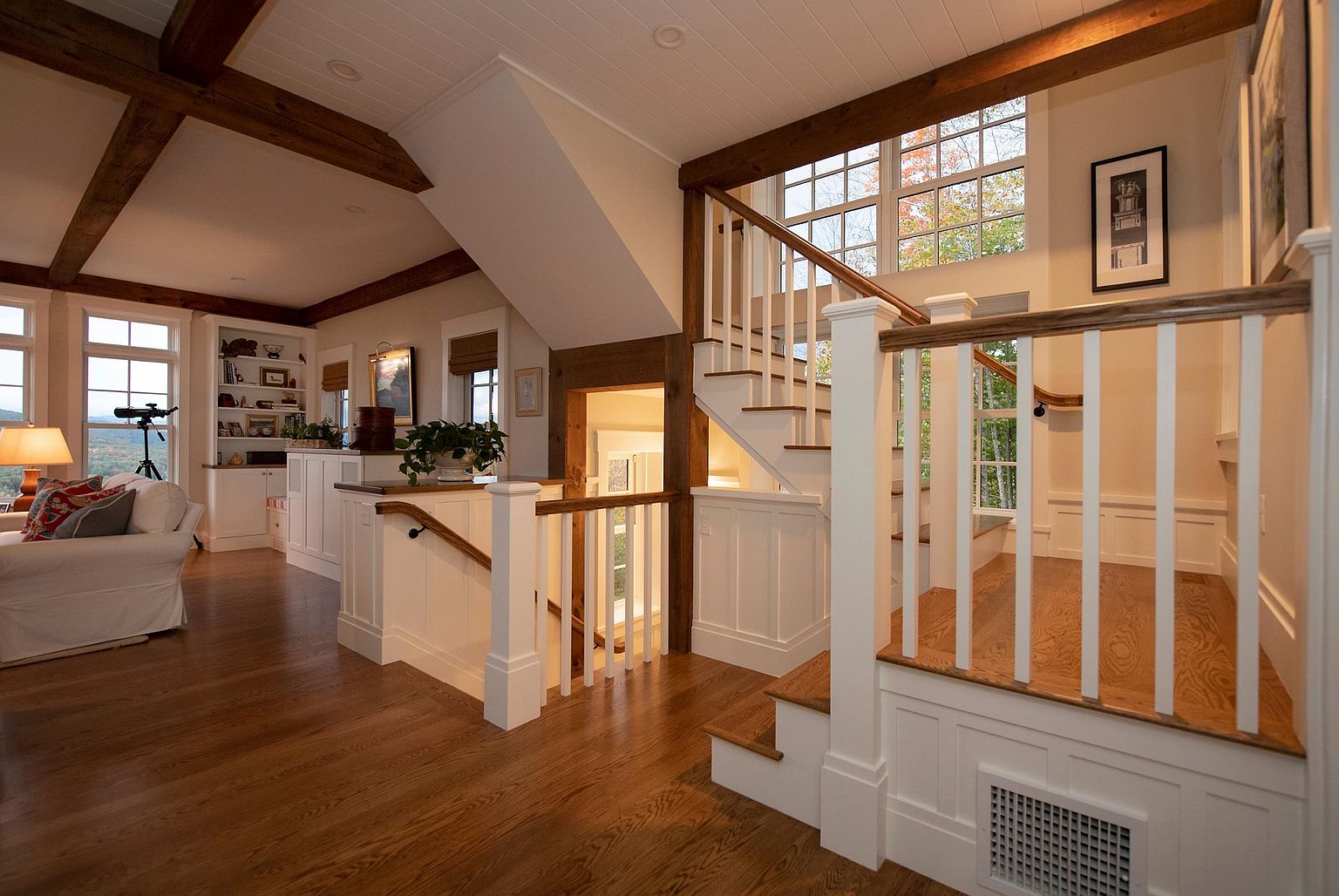
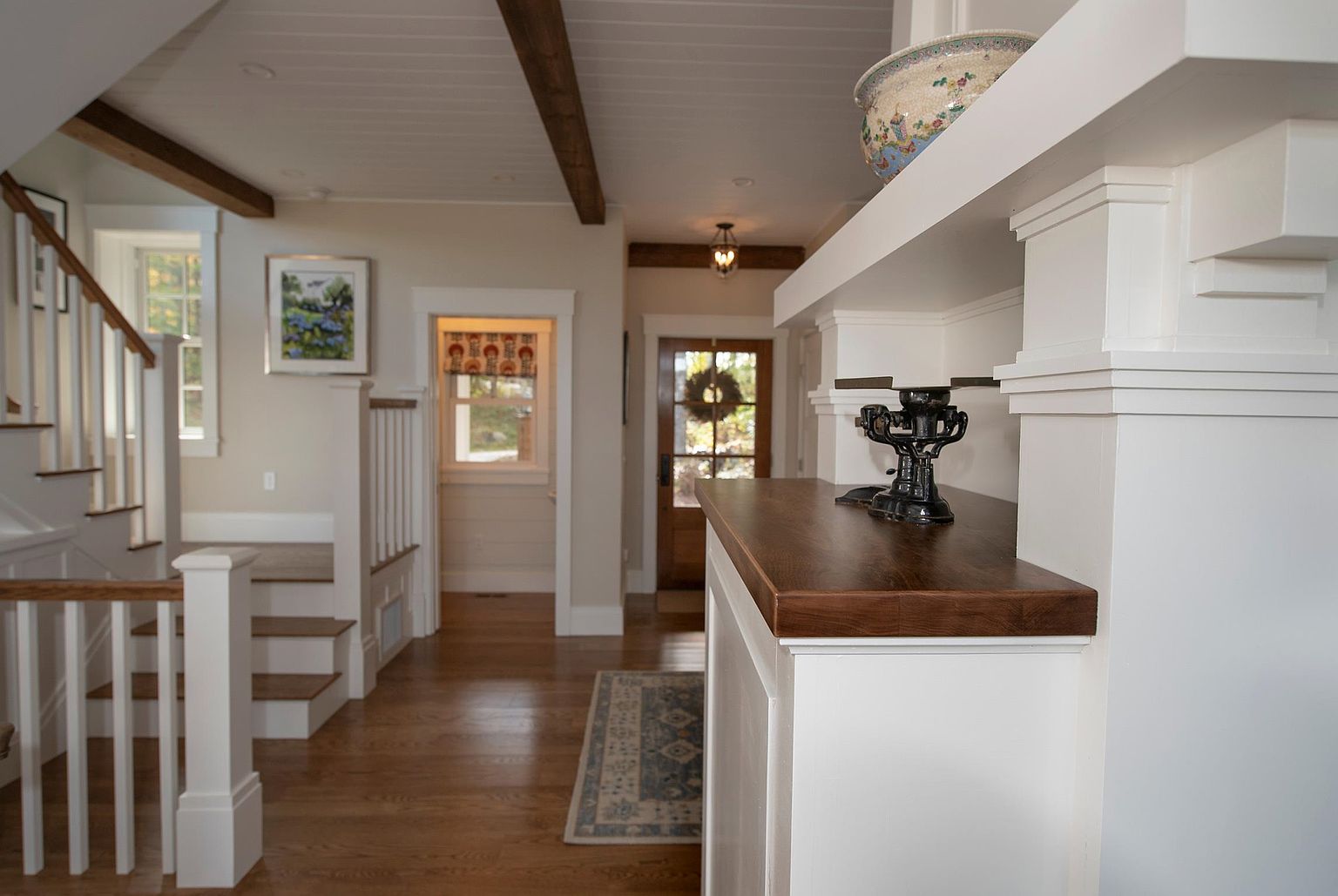
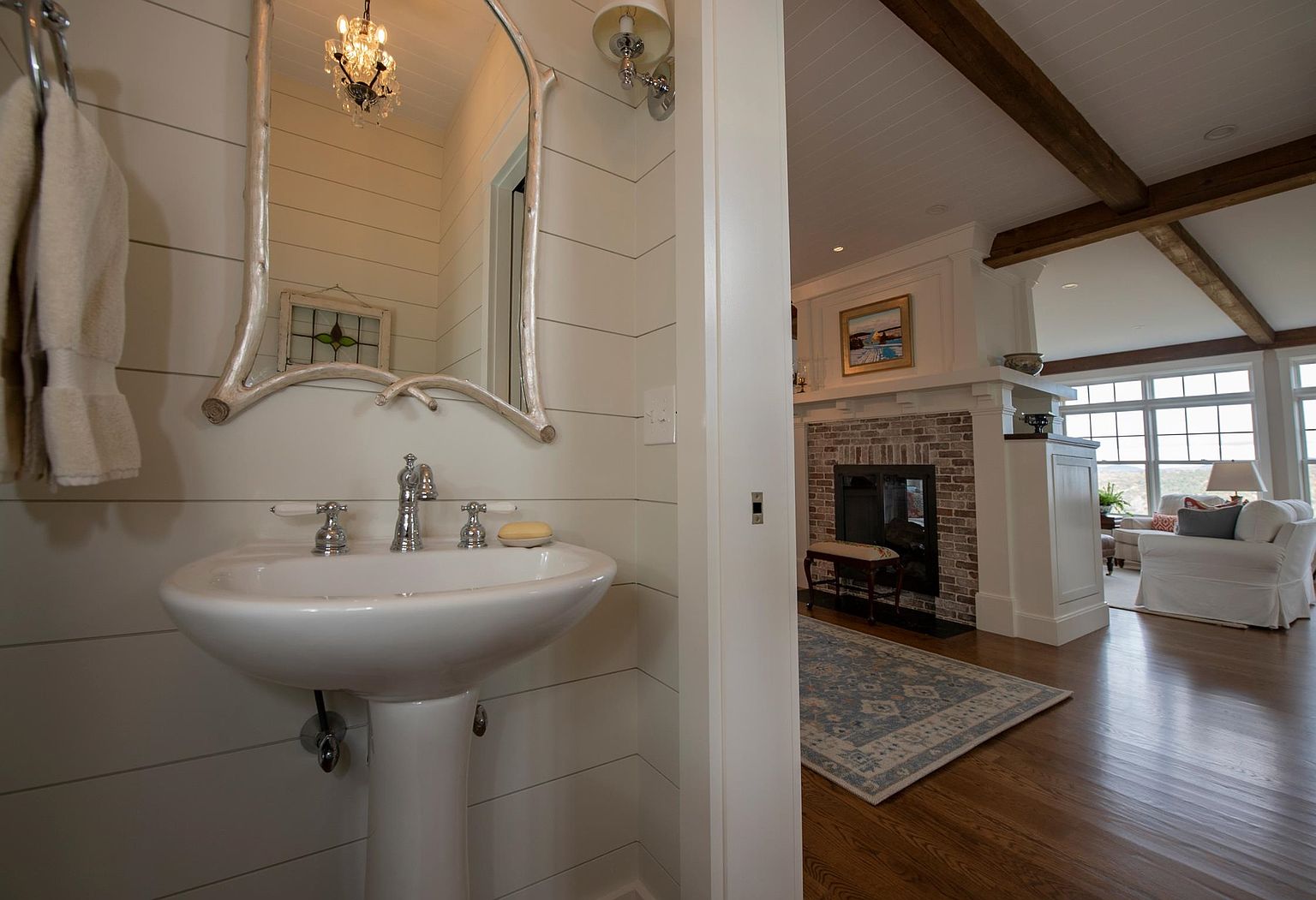
Inside, exposed timber beams trace the ceiling from the soaring stair tower through the living room and into the kitchen, establishing a material continuity that gives the open-concept layout its coherence and its character. The double-sided wood-burning hearth at the center of the main floor is more than a design element — it is the organizing principle of the home. From one side, it anchors the living room, where twin white sofas face each other across a tufted leather ottoman and large windows frame the lake and mountain panorama beyond. From the other, it opens into the kitchen, where white shaker cabinetry, a subway tile backsplash, a stainless steel gas range, a central island with a wood countertop, and warm hardwood floors create a space equally suited to serious cooking and easy gathering.
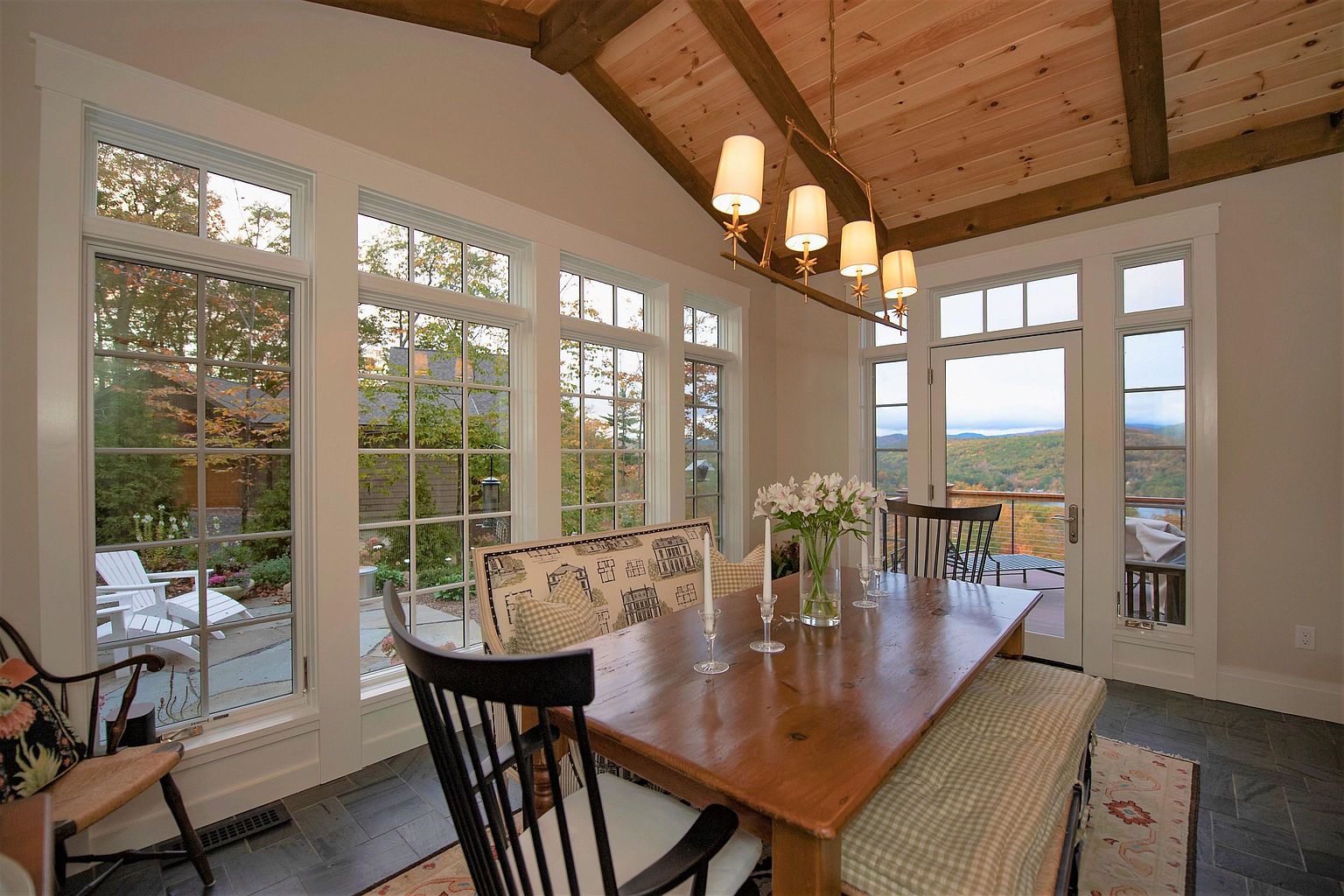
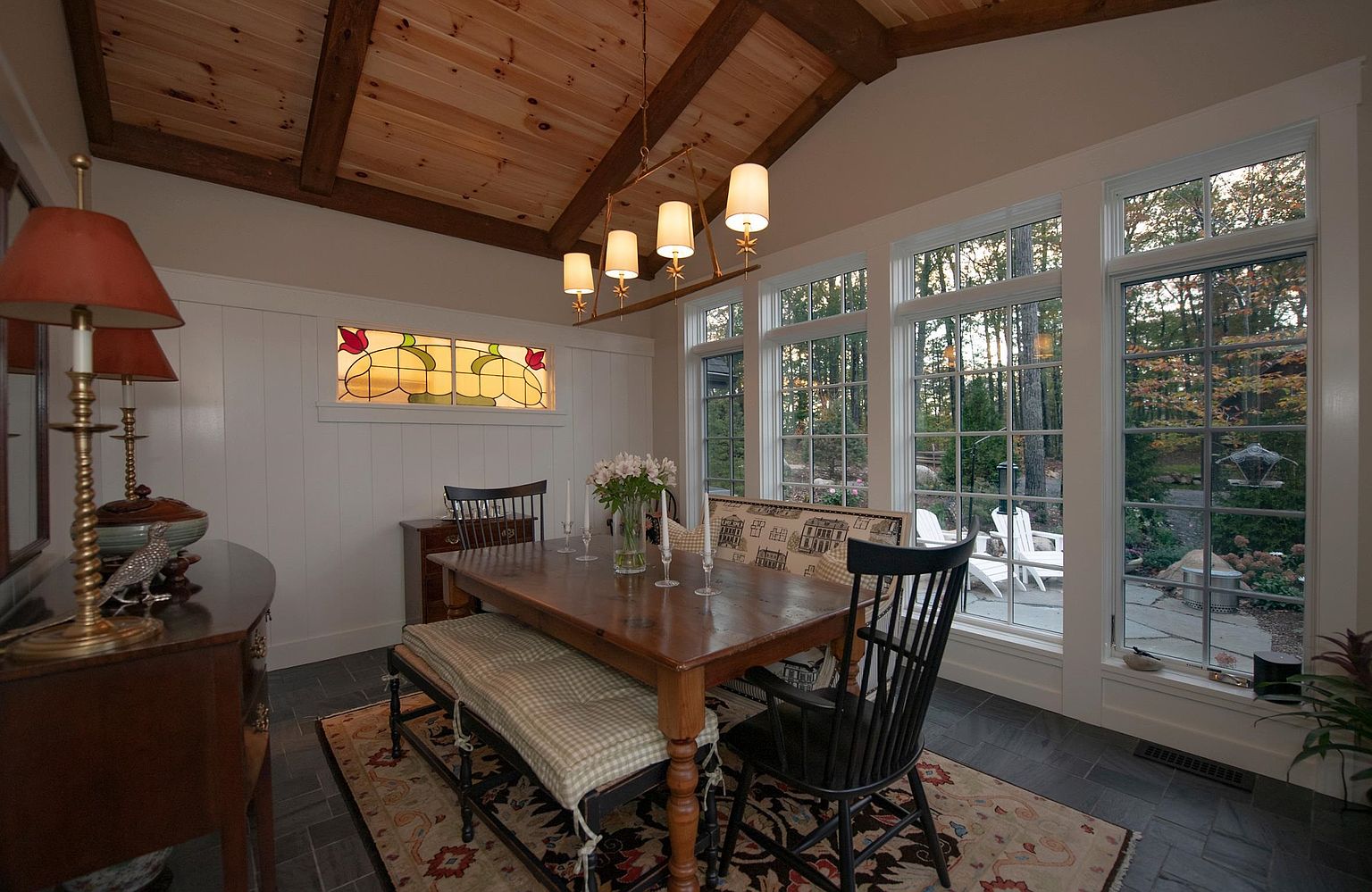
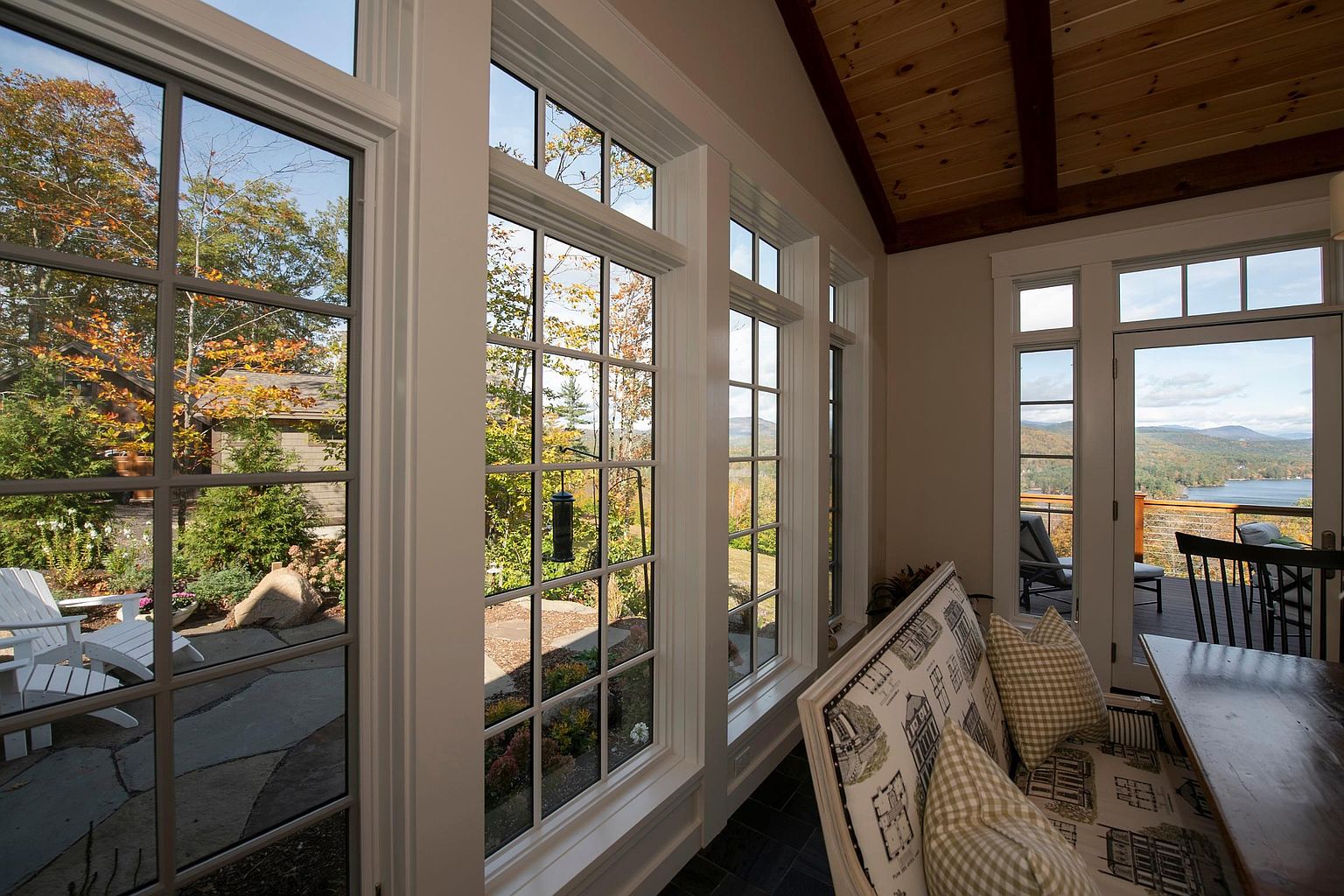
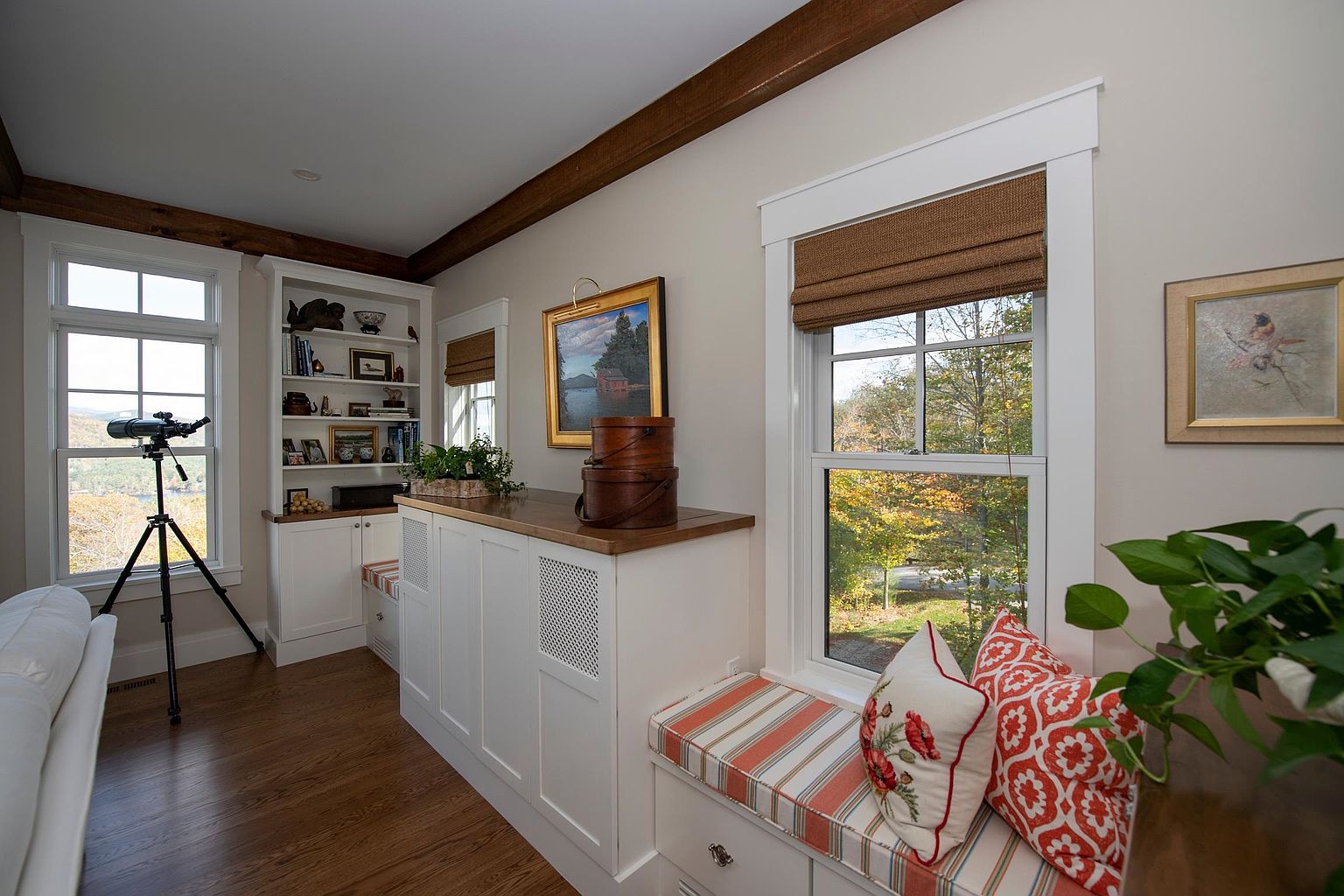
The dining room articulates a different material mood: slate flooring, a wood-paneled vaulted ceiling with exposed beams, and oversized windows that draw the forested hillside directly into the room. A built-in study with custom cabinetry and a window seat offers a quieter counterpoint to the main living spaces — a place for a telescope, a book, or simply an unhurried view.
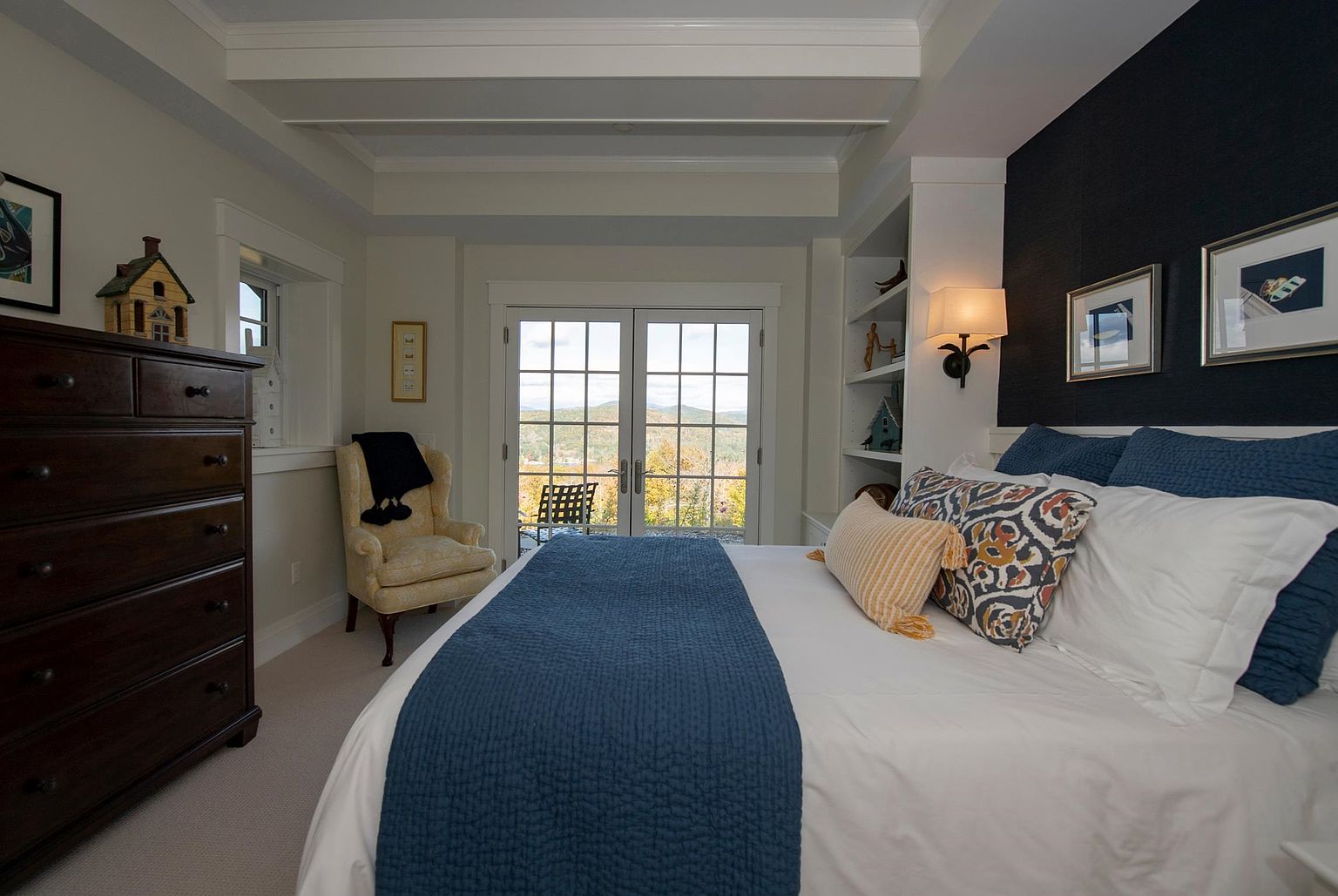
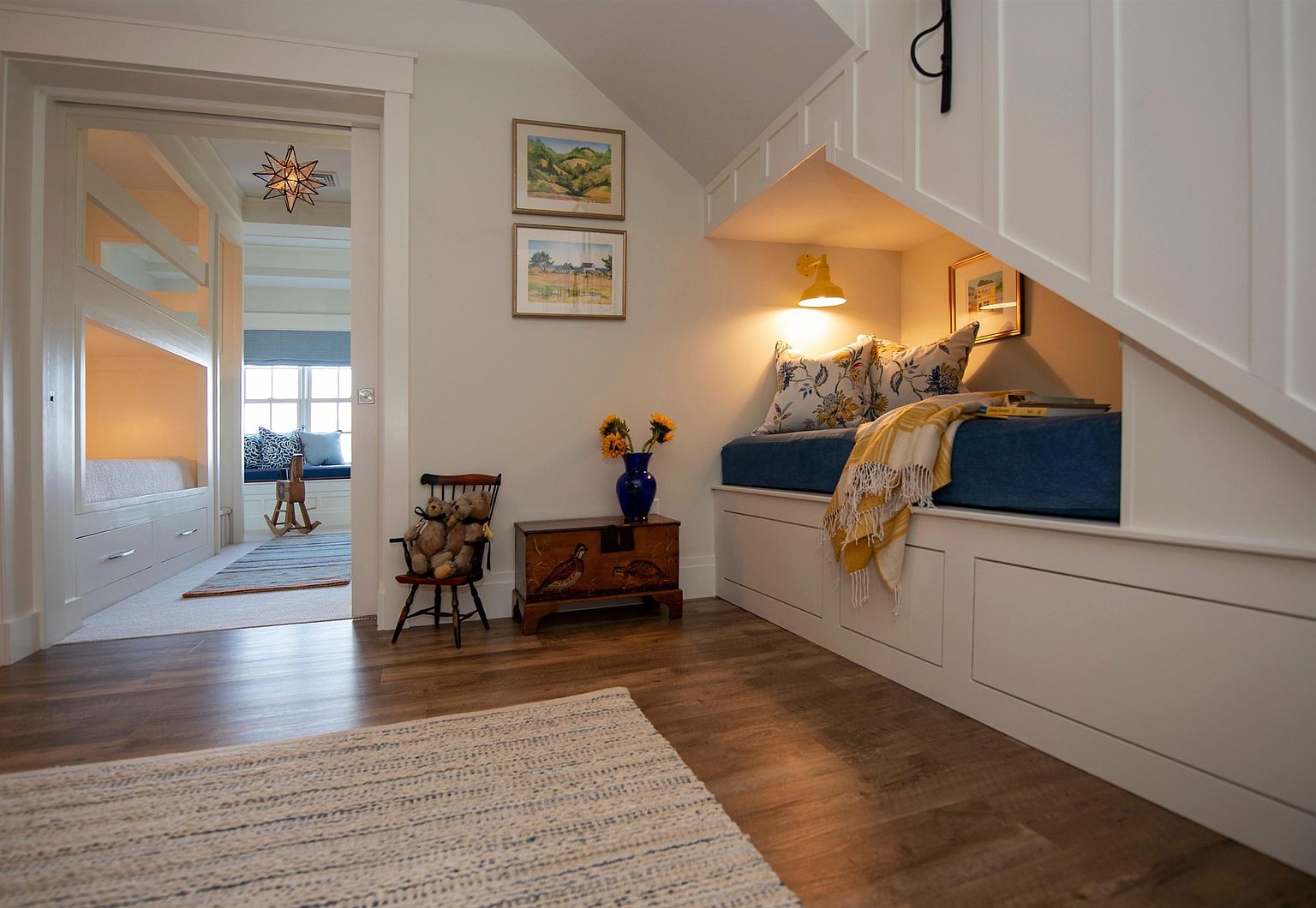
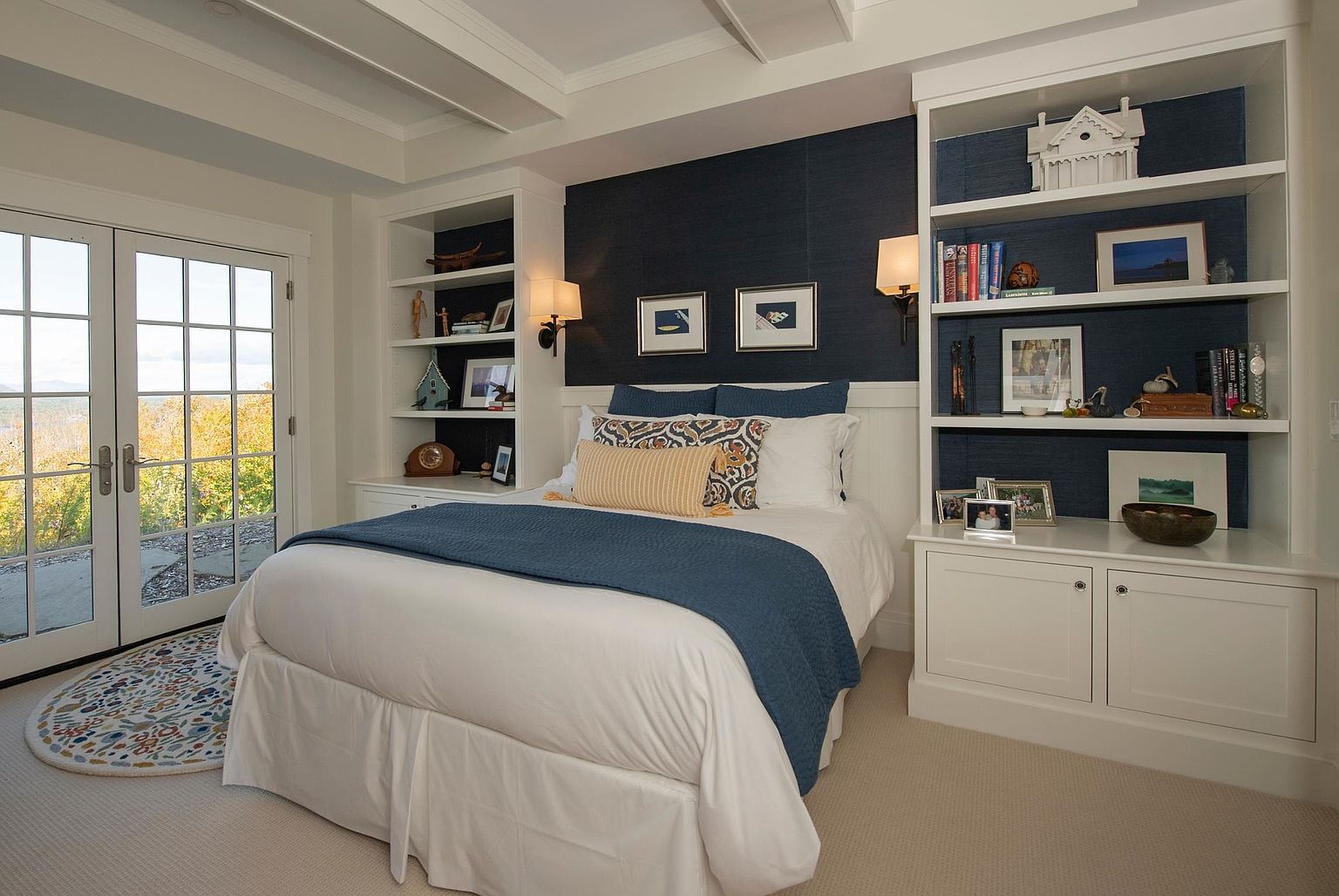
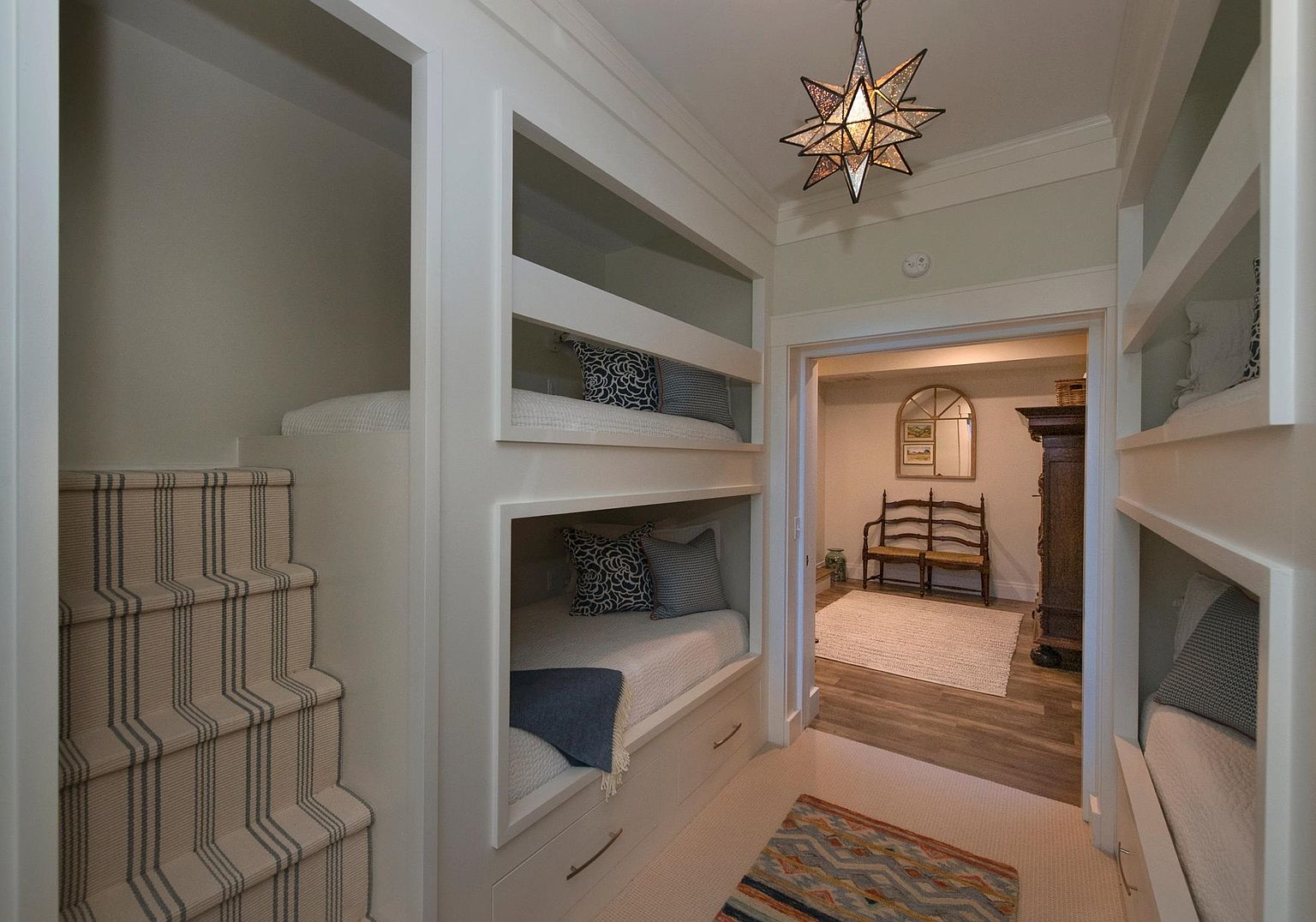
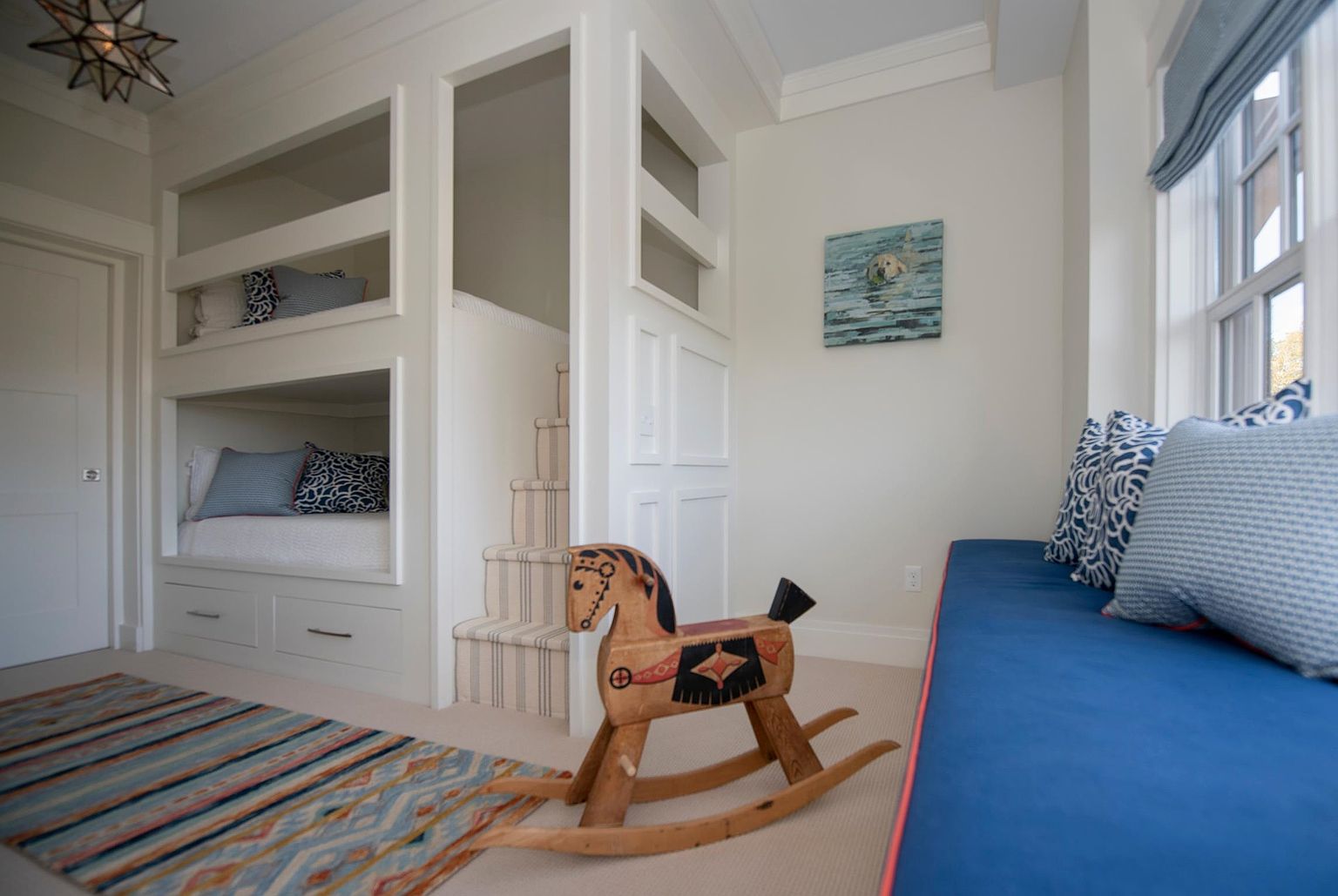
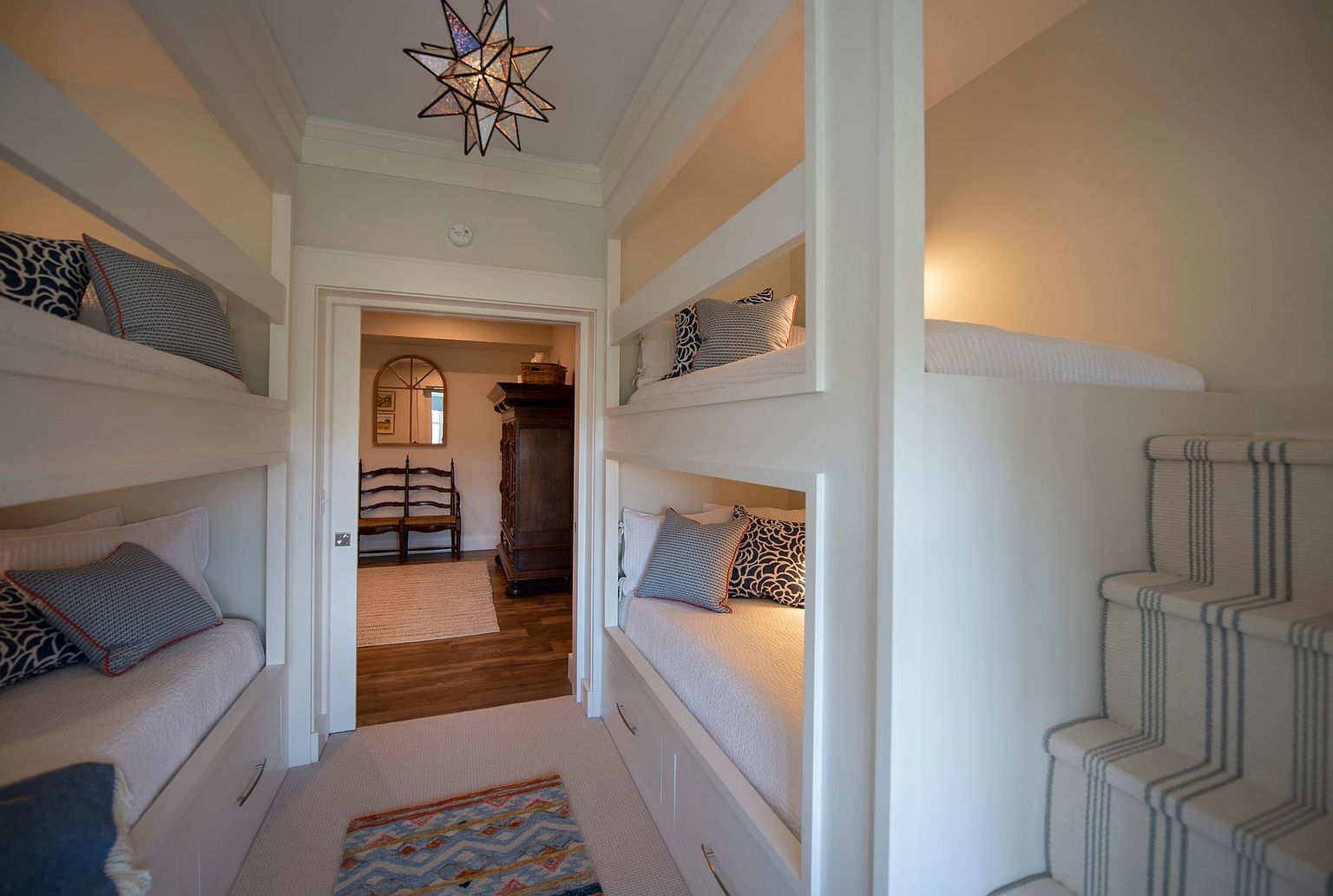
Descend to the lower level and the home reveals its generosity. A sitting nook carved into the stair tower anchors a family room that flows into the bunkroom, where built-in bunks and a window seat make the space a fully realized retreat for guests of every age. A private third bedroom suite opens directly to the meadow below, offering a degree of separation that feels considered rather than incidental.
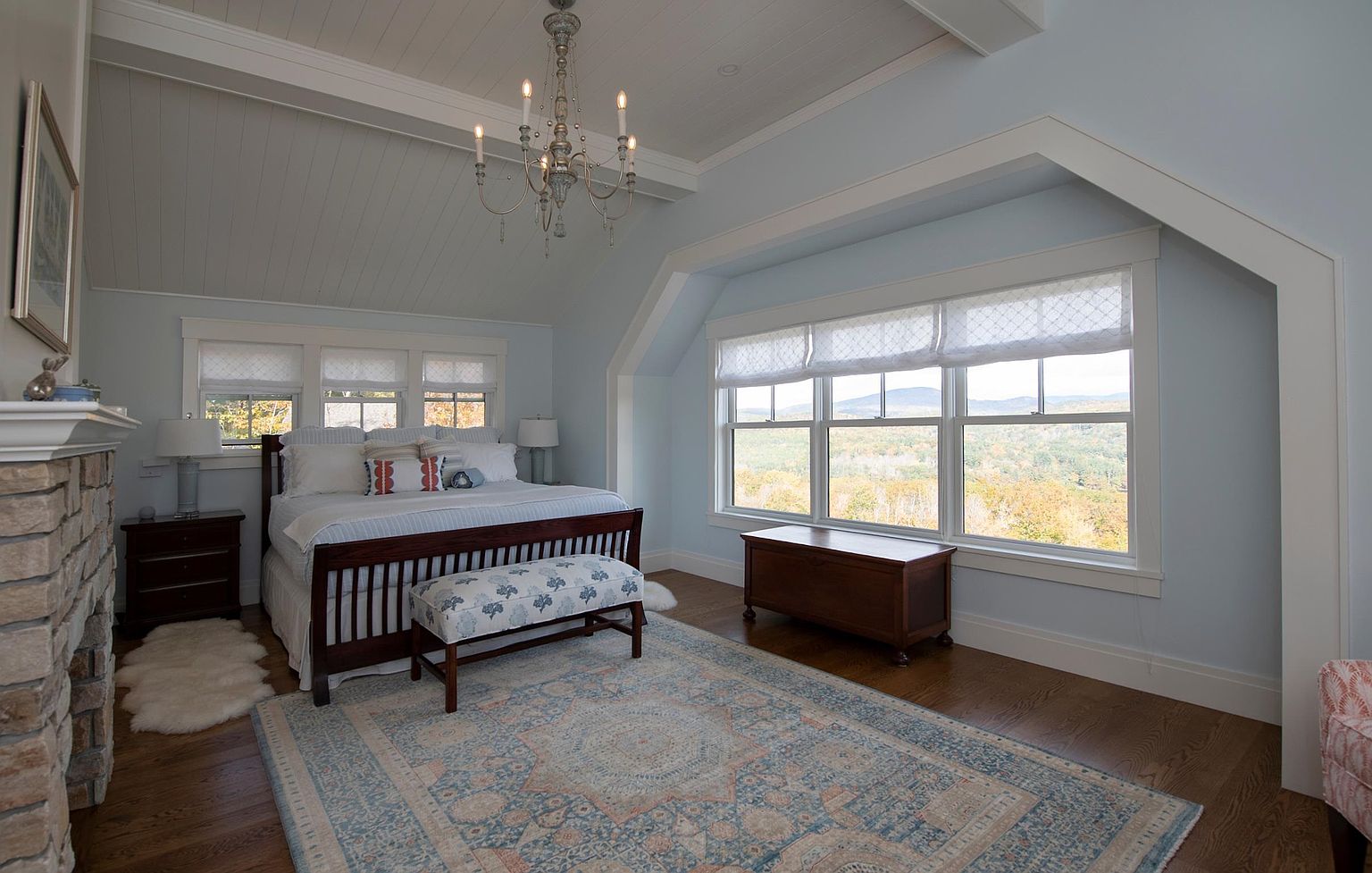
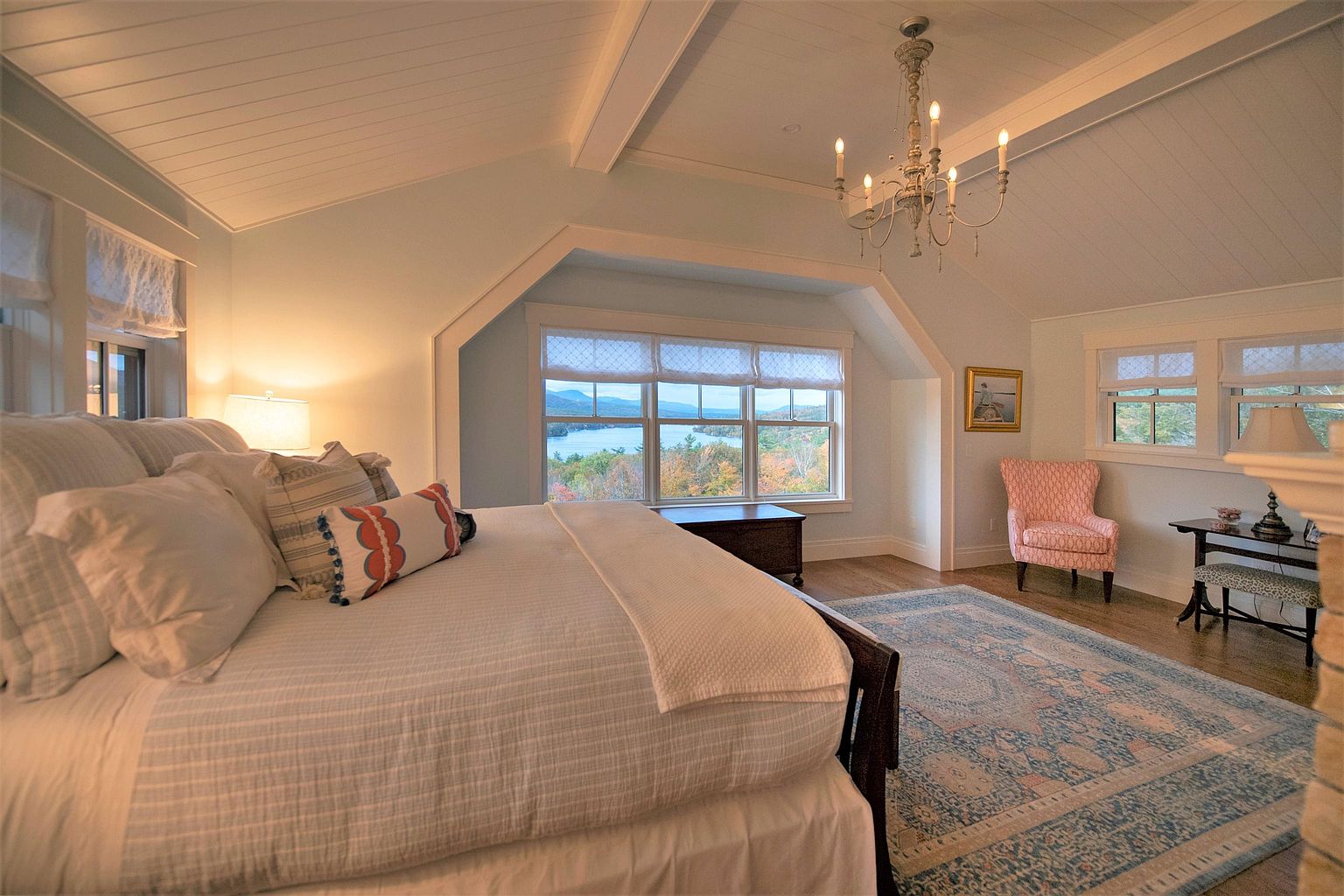
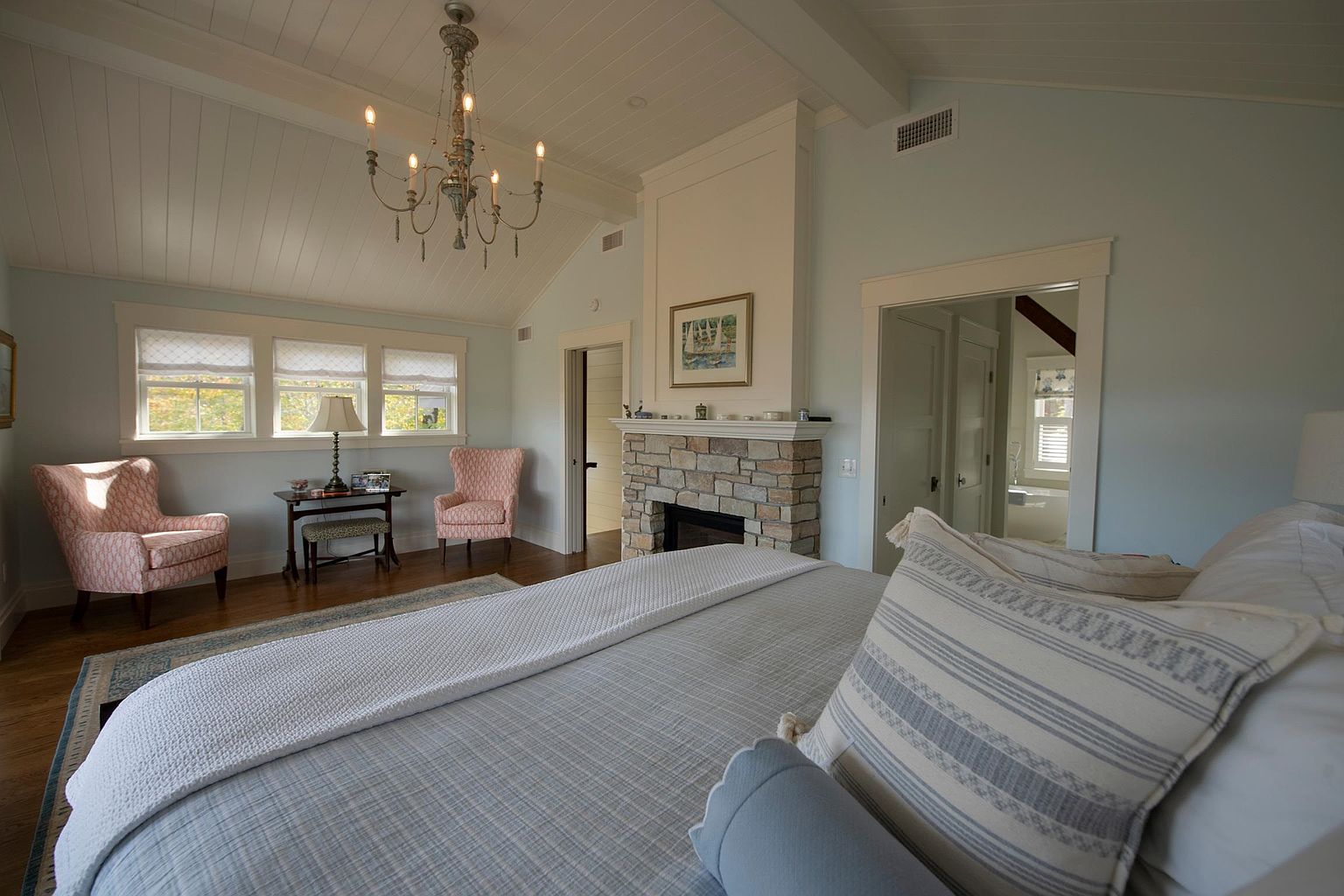
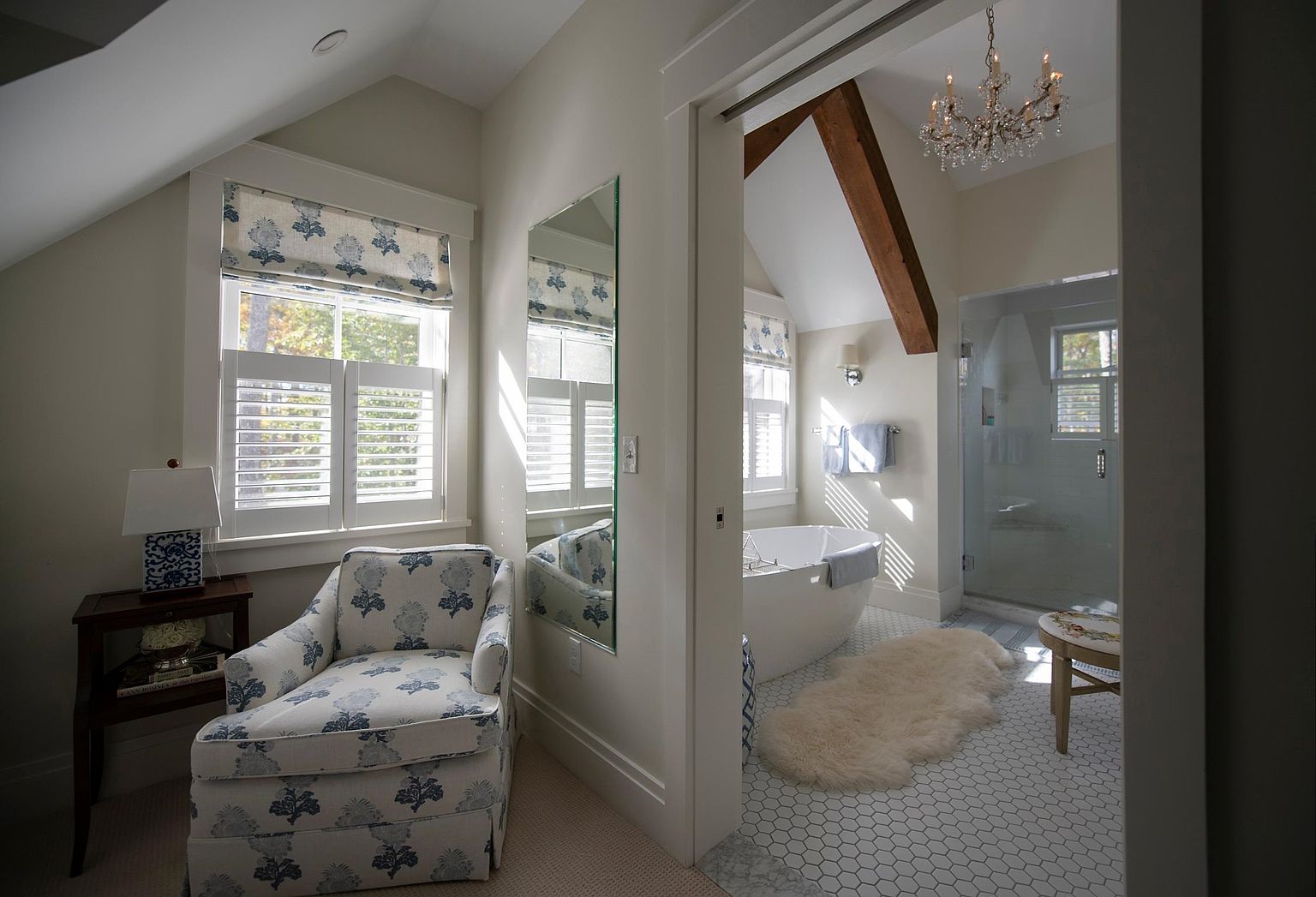
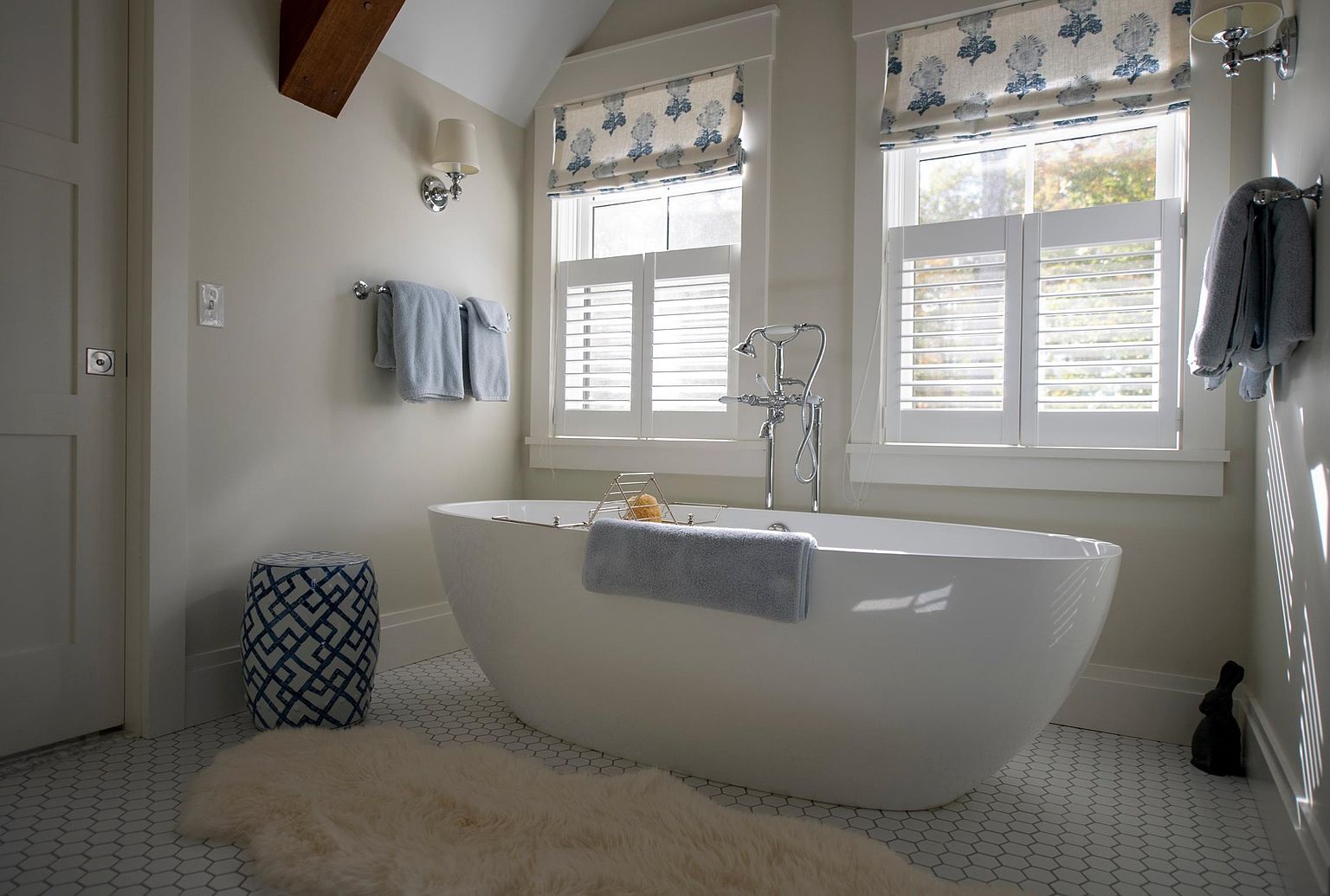
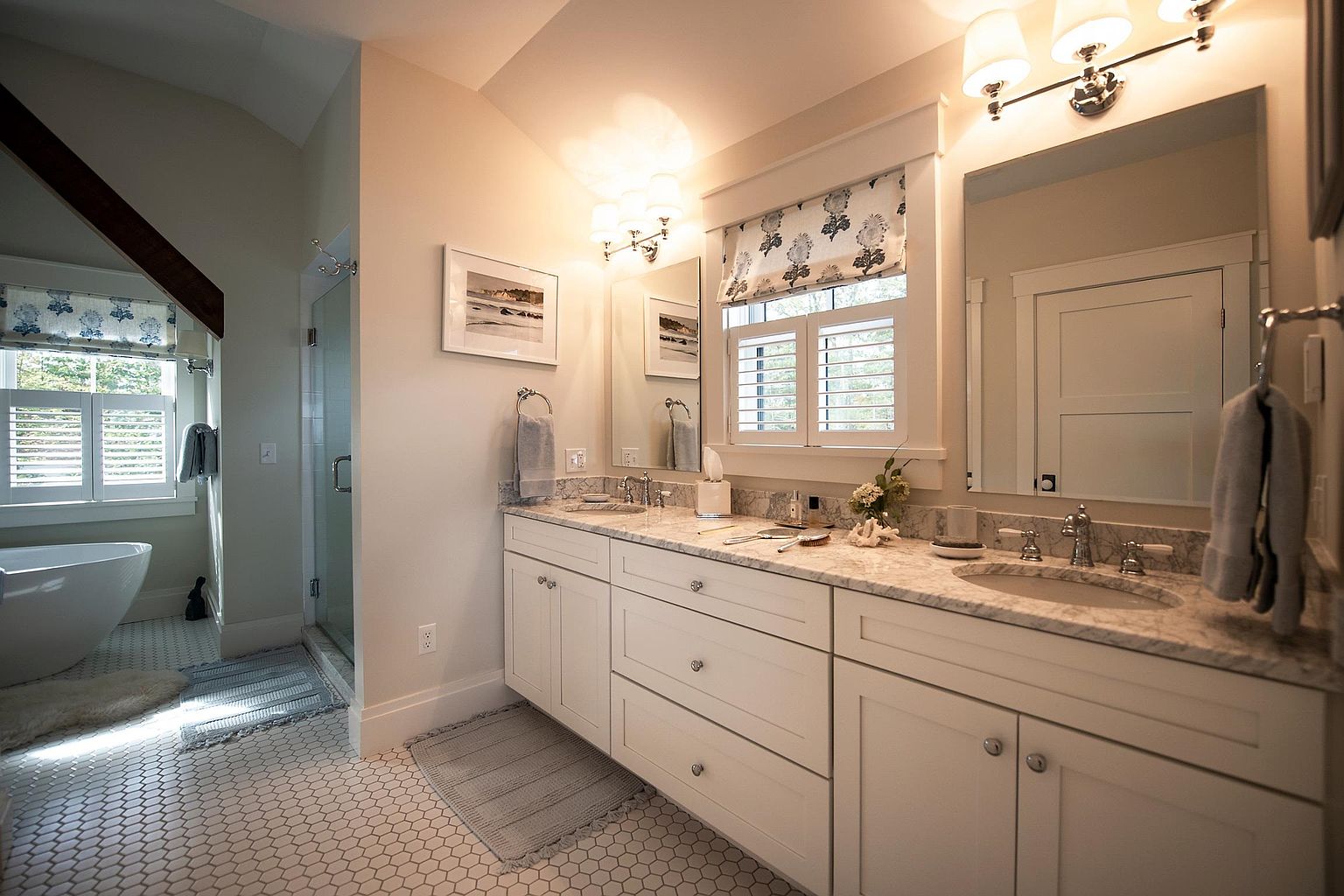
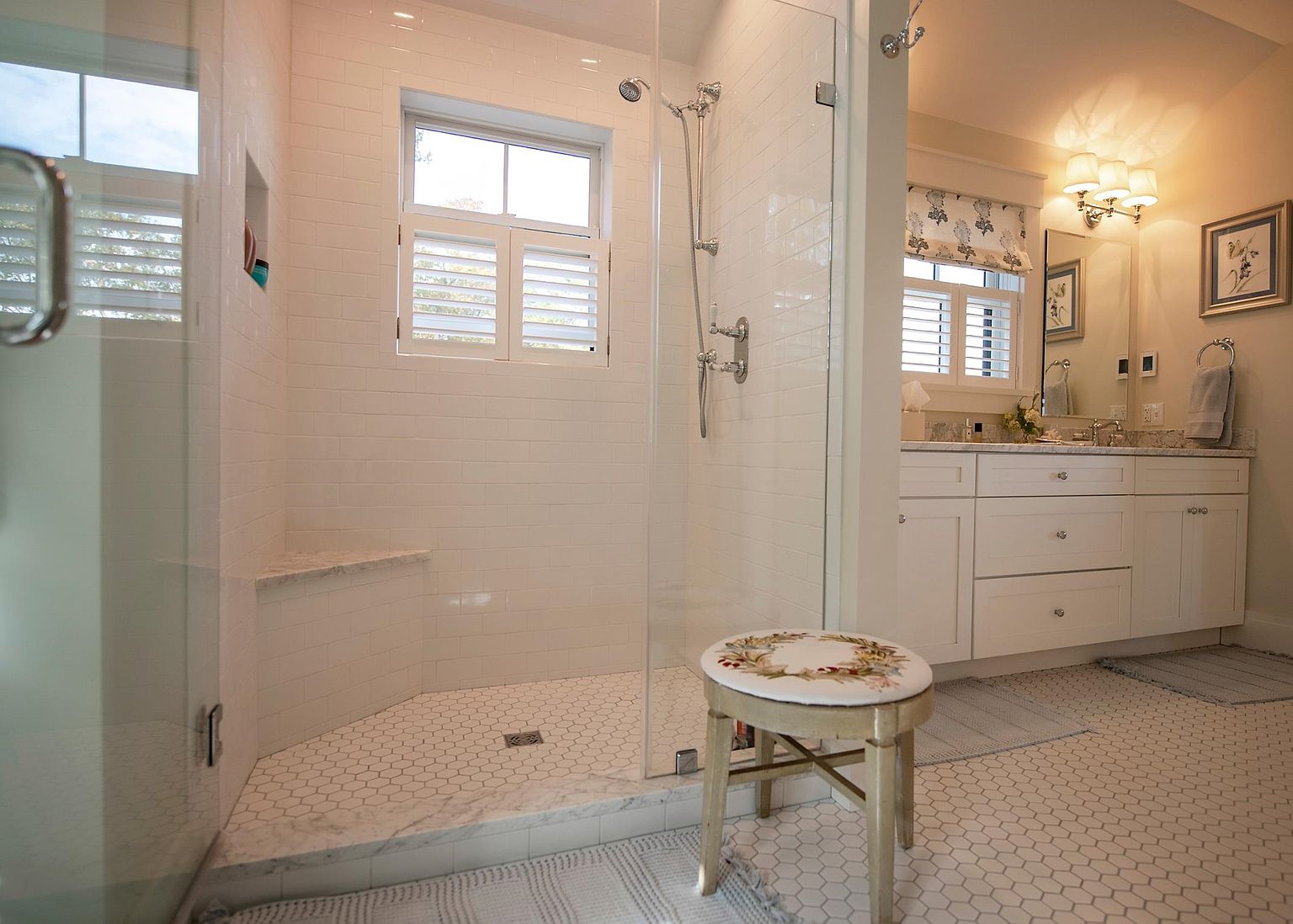
Ascend to the primary suite and the home reaches its quiet apex. Vaulted white-paneled ceilings, a stone-clad chimney breast with a propane fireplace, and unencumbered lake views define a room of genuine serenity. The en-suite bathroom — freestanding soaking tub, glass-enclosed shower, double vanity with stone countertop, hexagonal tile floors, and a crystal chandelier overhead — completes a spa-like retreat tucked within the eaves.
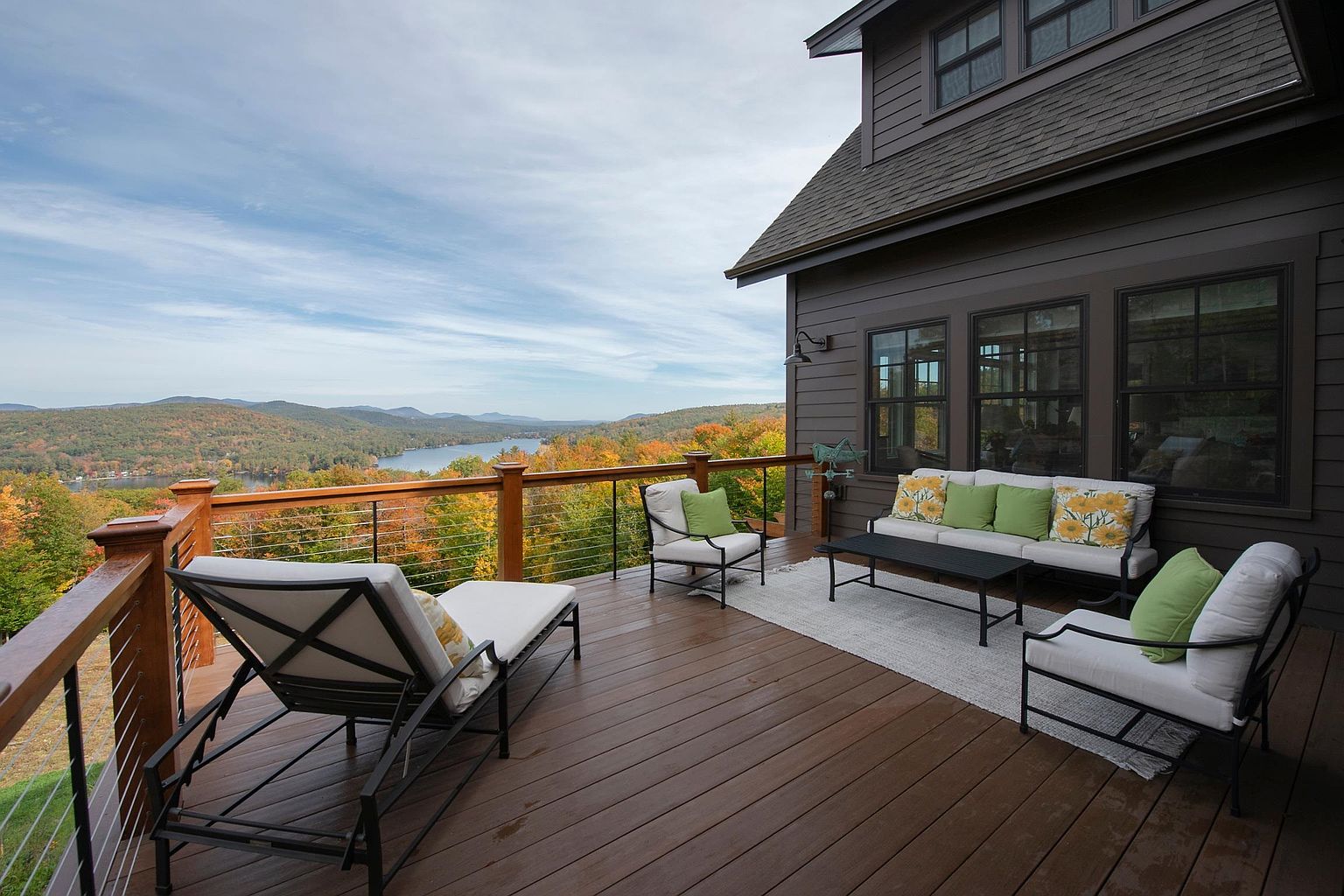
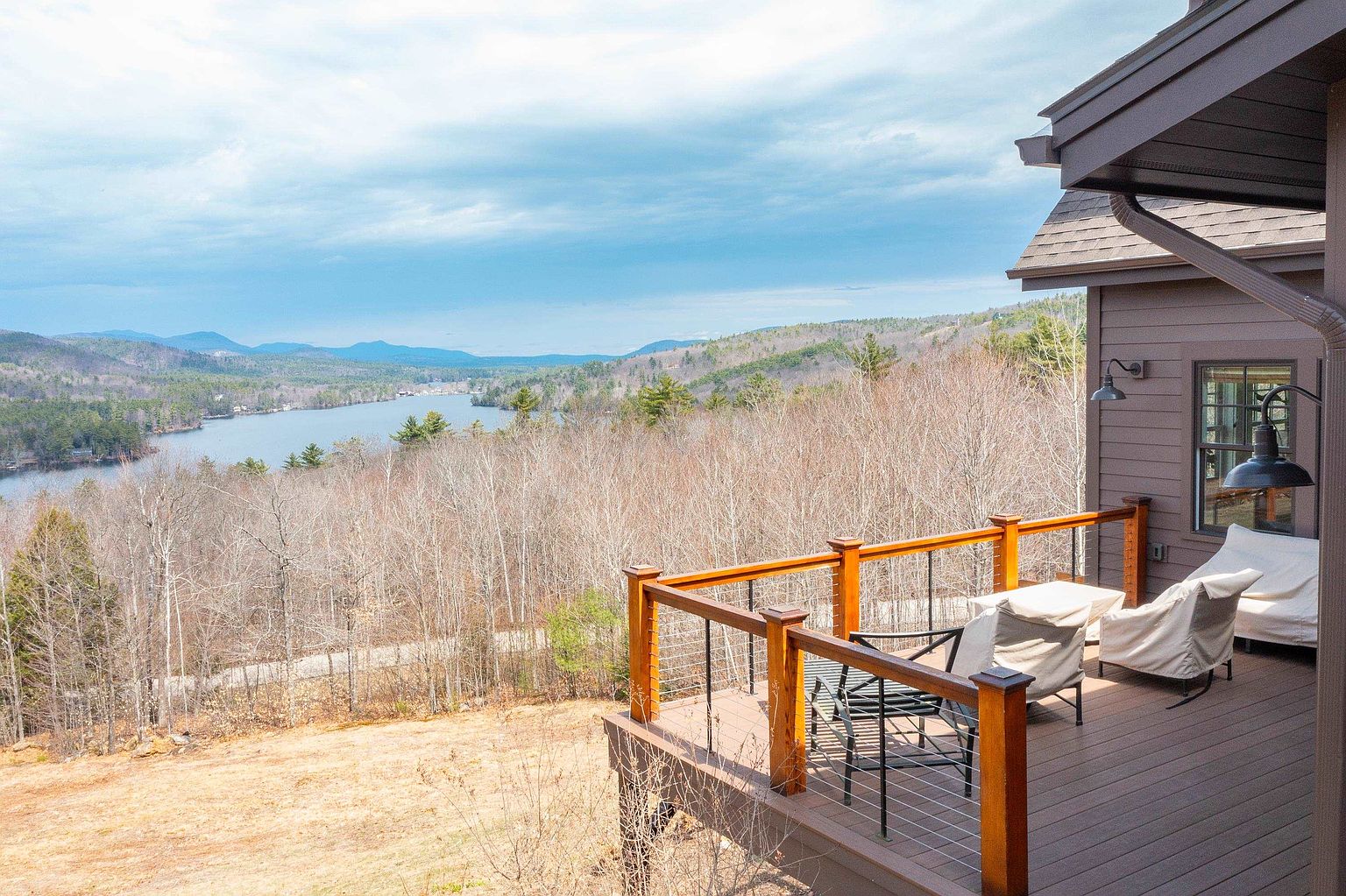
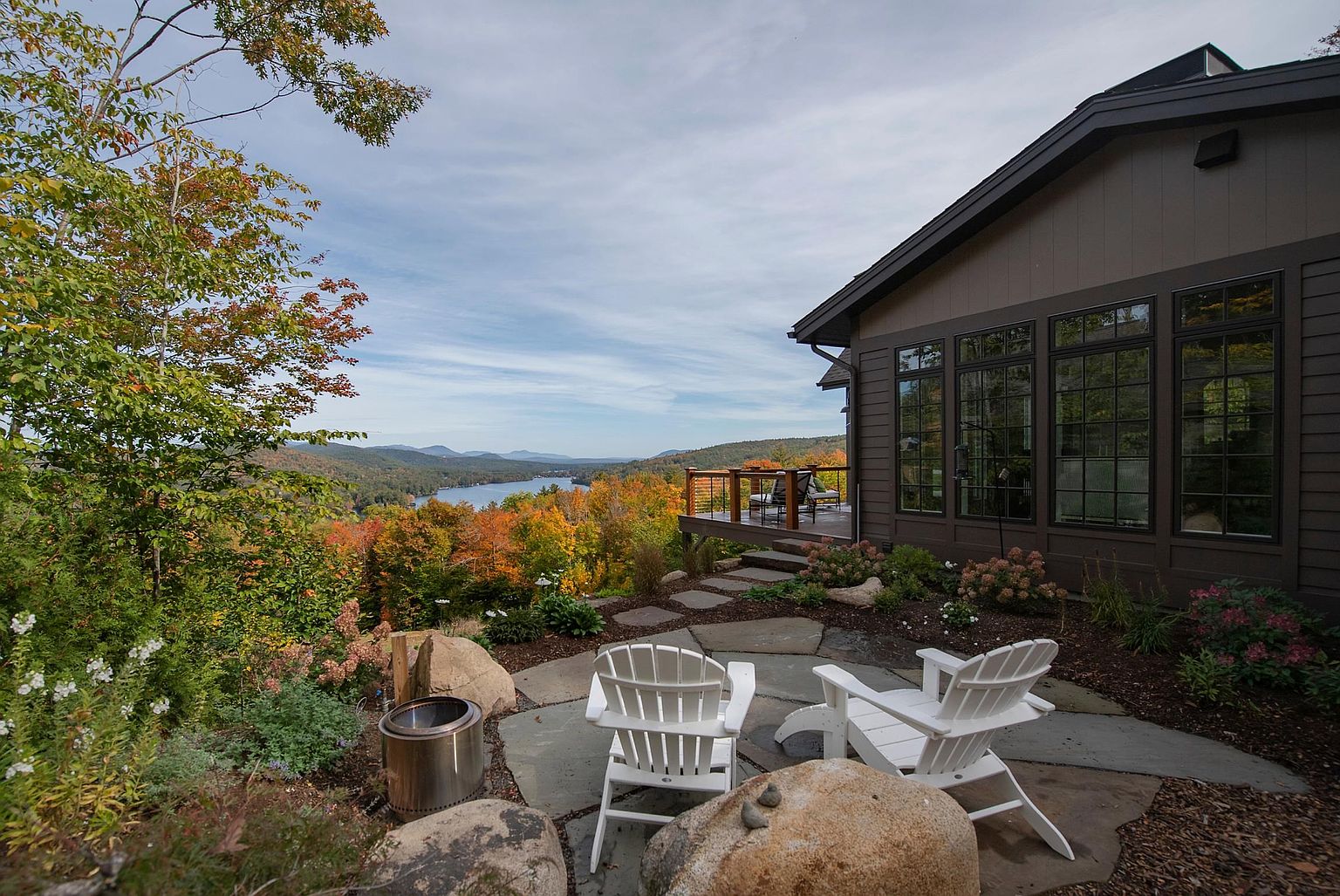
Outside, an elevated deck with cable railing delivers panoramic lake and mountain views, while a stone patio below provides a second gathering point beside the fire pit. Every element of Hearth Home reflects an uncommon investment of time, intention, and craft.
Ashland, New Hampshire sits at the southern gateway to the Lakes Region, a position that grants it access to some of the state's most celebrated natural landscapes without the congestion that occasionally accompanies more prominent resort towns. Incorporated in 1868, the town occupies a gentle confluence of the Squam and Pemigewasset Rivers and has long served as a quiet anchor between the bustle of the White Mountains to the north and the broad recreational corridor of the Lakes Region spreading to the east and south.
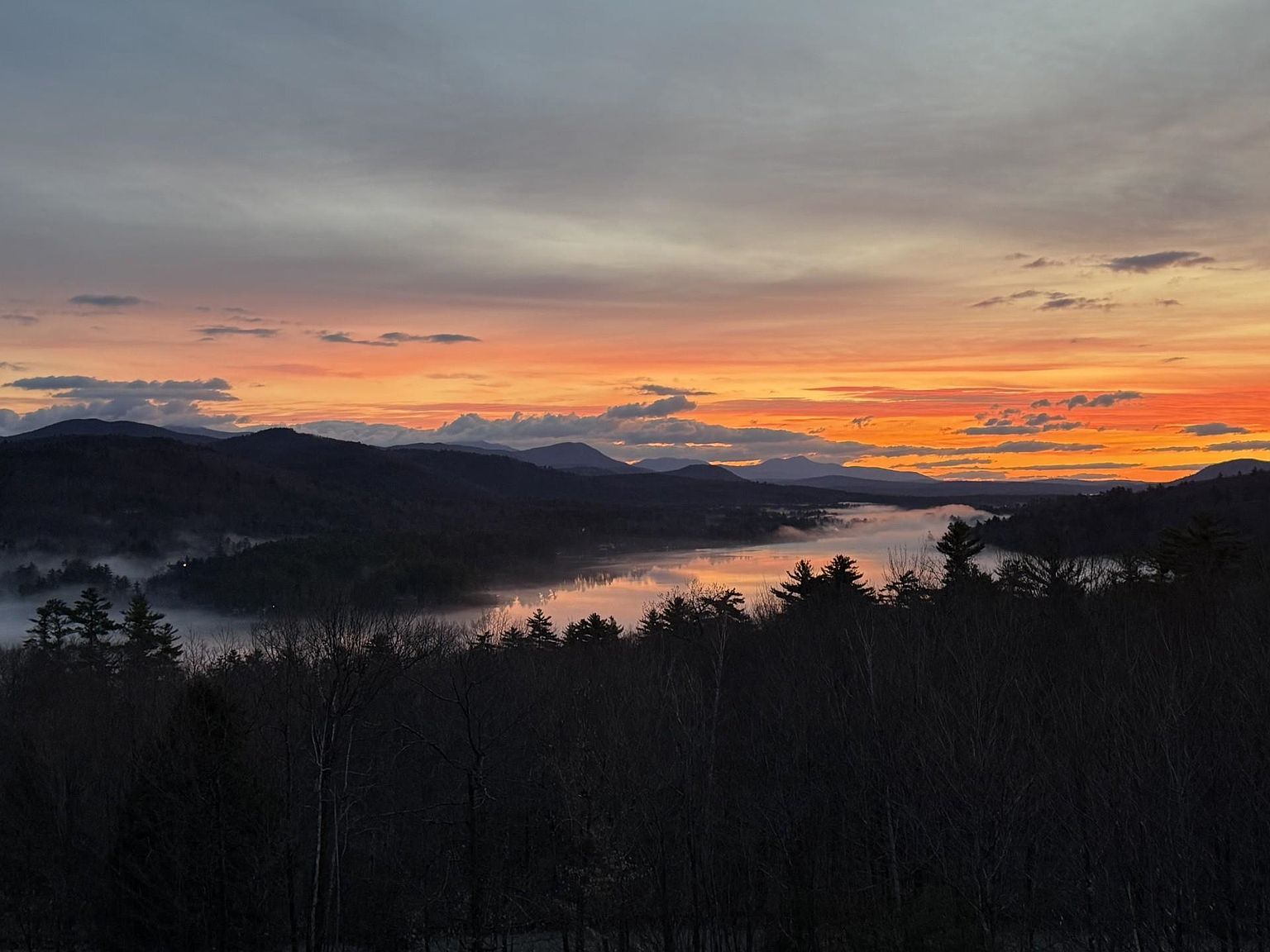
The defining geographical feature of this property's setting is Little Squam Lake, the smaller of the two Squam Lakes and connected to its more expansive neighbor, Squam Lake proper — a body of water that achieved a kind of cultural permanence as the filming location for the 1981 film On Golden Pond. Squam Lake has consistently ranked among the cleanest and most pristine lakes in New Hampshire, a distinction maintained in part by the Squam Lakes Association, which has stewarded the watershed for more than a century. The result is water of exceptional clarity, undeveloped shoreline, and an ecology that rewards those who pay attention to it.
Mount Chocorua, visible on the horizon from the property's main living spaces and deck, is among the most photographed peaks in New England. Rising to 3,490 feet at the southern end of the White Mountains, its distinctive bare granite summit has inspired painters, writers, and hikers for generations. The surrounding White Mountain National Forest encompasses nearly 800,000 acres of protected land, providing a seemingly inexhaustible network of hiking and backcountry trails accessible within a short drive.
For winter pursuits, the property's location places it within easy reach of several of New Hampshire's premier ski destinations. Waterville Valley Resort, a self-contained mountain village with over 50 trails and a consistent reputation for grooming and family programming, lies approximately 25 minutes to the north. Loon Mountain in Lincoln, one of the state's largest ski areas, is similarly close, and Cannon Mountain in Franconia Notch extends the options further into the White Mountains.
The town of Holderness, immediately adjacent to Ashland across the Squam River, is home to the Science Center of New Hampshire at Squam Lake, a well-regarded nature center that has educated visitors about the region's wildlife and ecosystems since 1966. The village center of Plymouth, roughly ten minutes south, provides everyday amenities, restaurants, and serves as the home of Plymouth State University, which contributes a modest but welcome cultural vitality to the broader area.
The communities surrounding Squam Lake tend to attract a particular kind of buyer — one who values privacy, natural beauty, and the slower rhythms of a place that has resisted overcommercialization. Summer here means kayaking, swimming, and evenings on the water. Autumn brings foliage that transforms the hillsides into something close to theater. Winter arrives with snow-covered peaks and the particular satisfaction of a wood fire earned. It is a place that rewards those who come looking not for spectacle, but for something more enduring.
Featured Highlights
Curated Content • Presented by Jerrod Mitchell