The Story Behind
A Presidential Legacy Estate Reimagined for Private Grand Living
There are homes that impress, and then there are homes that stop you. The Atlanta White House belongs firmly, irrevocably, to the latter category.
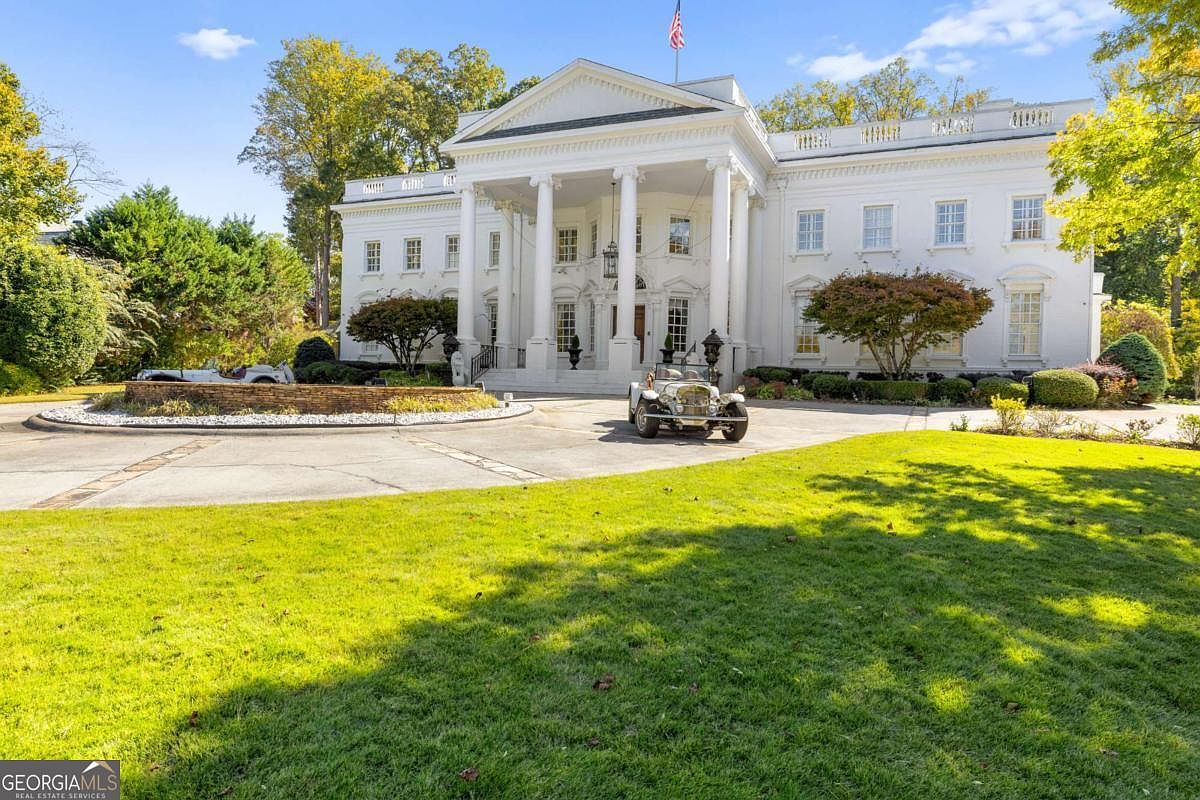
The story begins before a single stone was laid. A visionary builder, committed to authenticity above all else, sent a team of artisans to Washington, D.C. to study the original White House with the precision of scholars — absorbing its proportions, its classical detailing, the geometry of its neoclassical soul. What returned to Atlanta was not imitation, but interpretation: a private residence that channels the grace and formality of its inspiration while delivering the warmth and intimacy a true home demands.
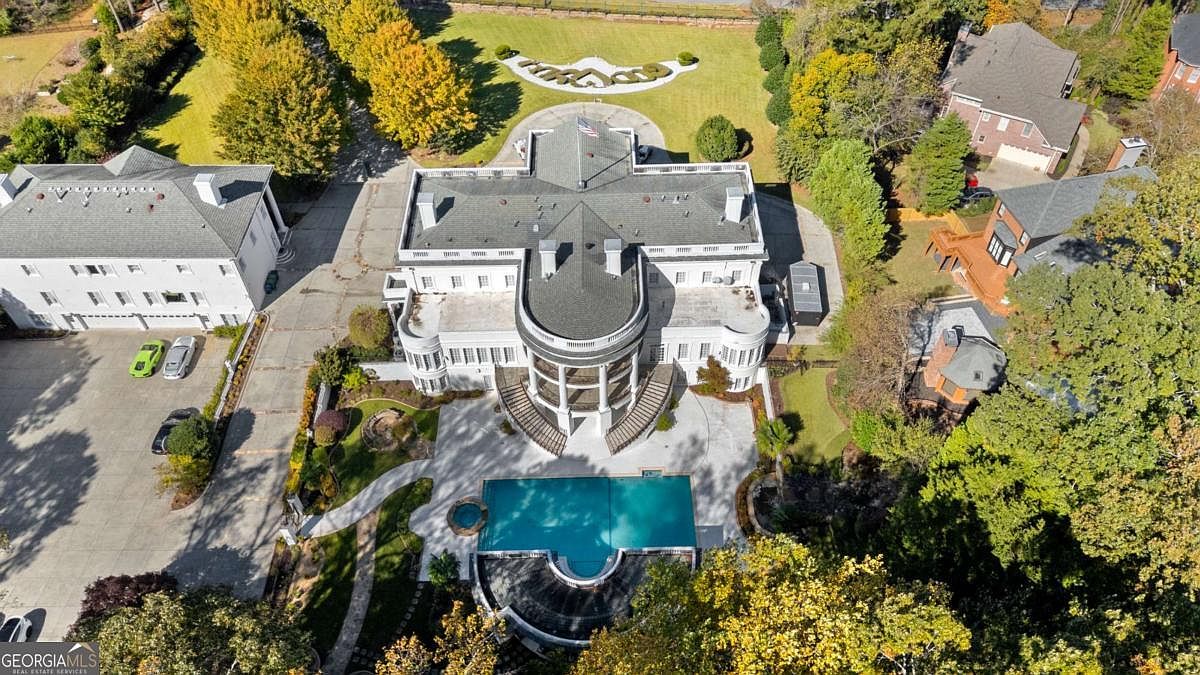
The approach alone sets the tone. Behind private gates, the symmetrical white facade emerges with quiet authority — Corinthian columns framing a two-story portico, a circular fountain anchoring the motor court, and a roofline that draws the eye skyward before you have even crossed the threshold. Stone lion sentinels flank the entry steps, and the proportion of every element feels deliberate, considered, earned.
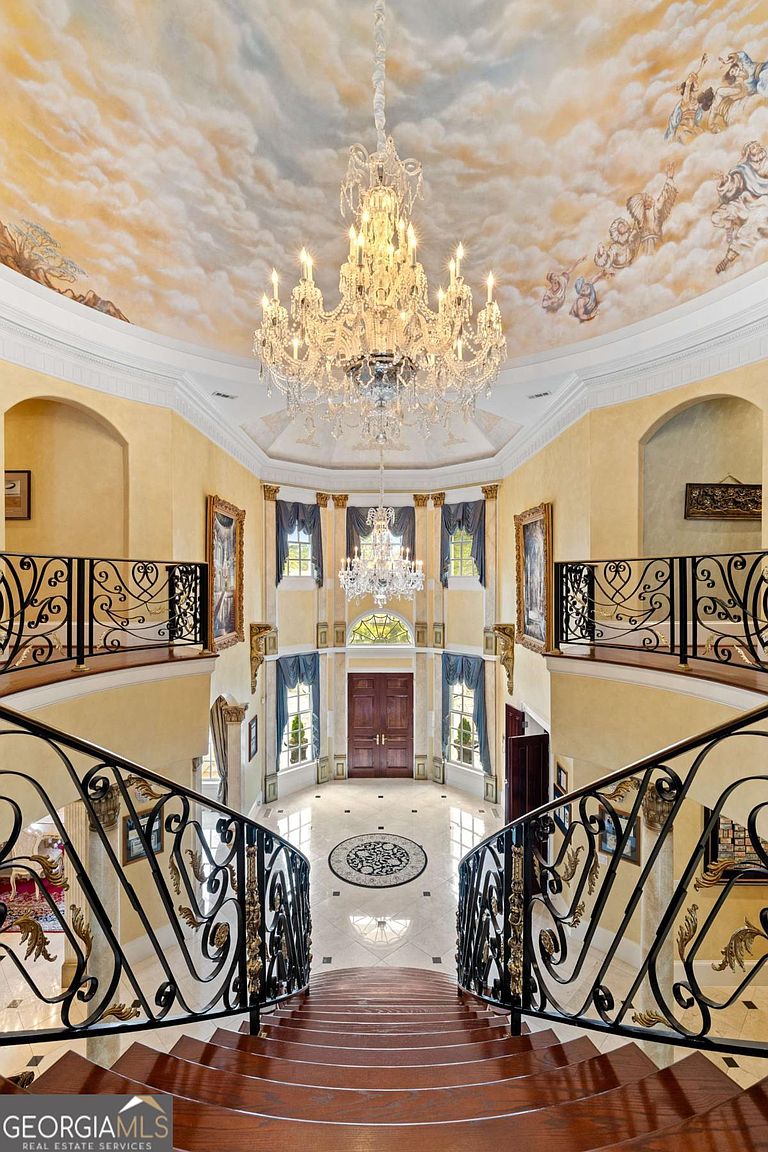
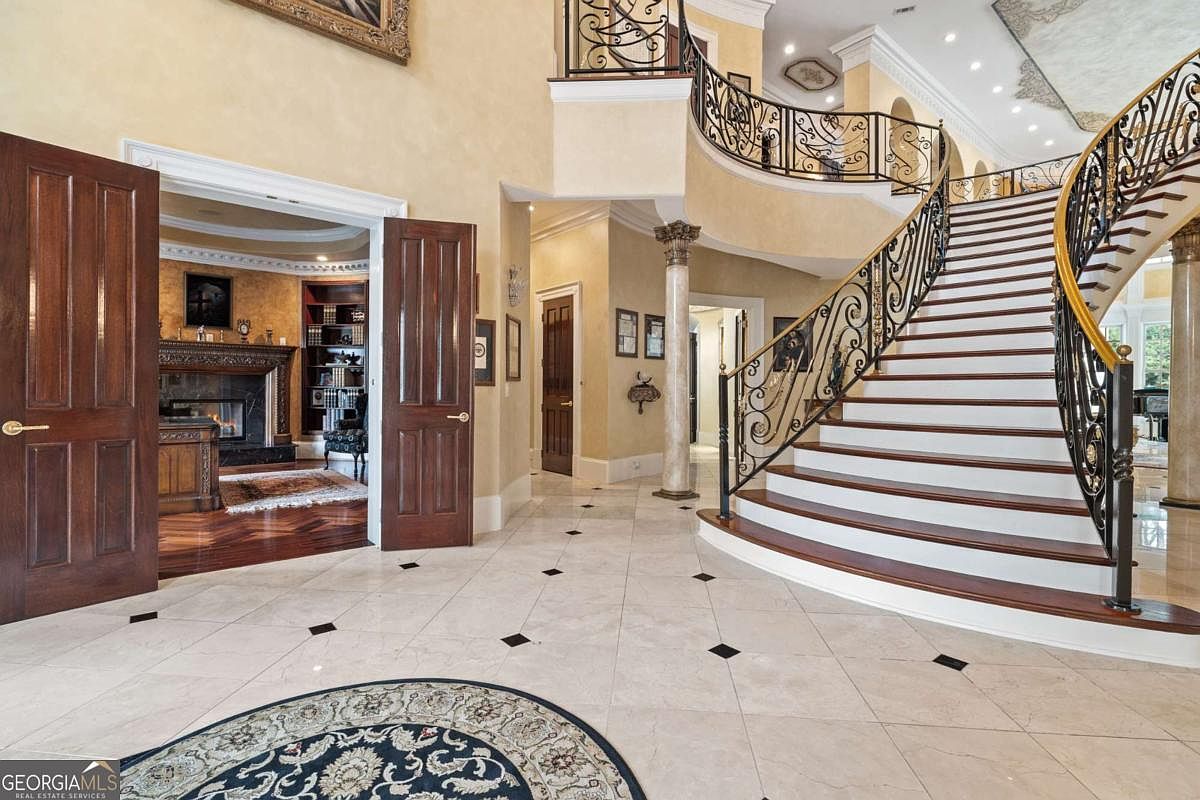
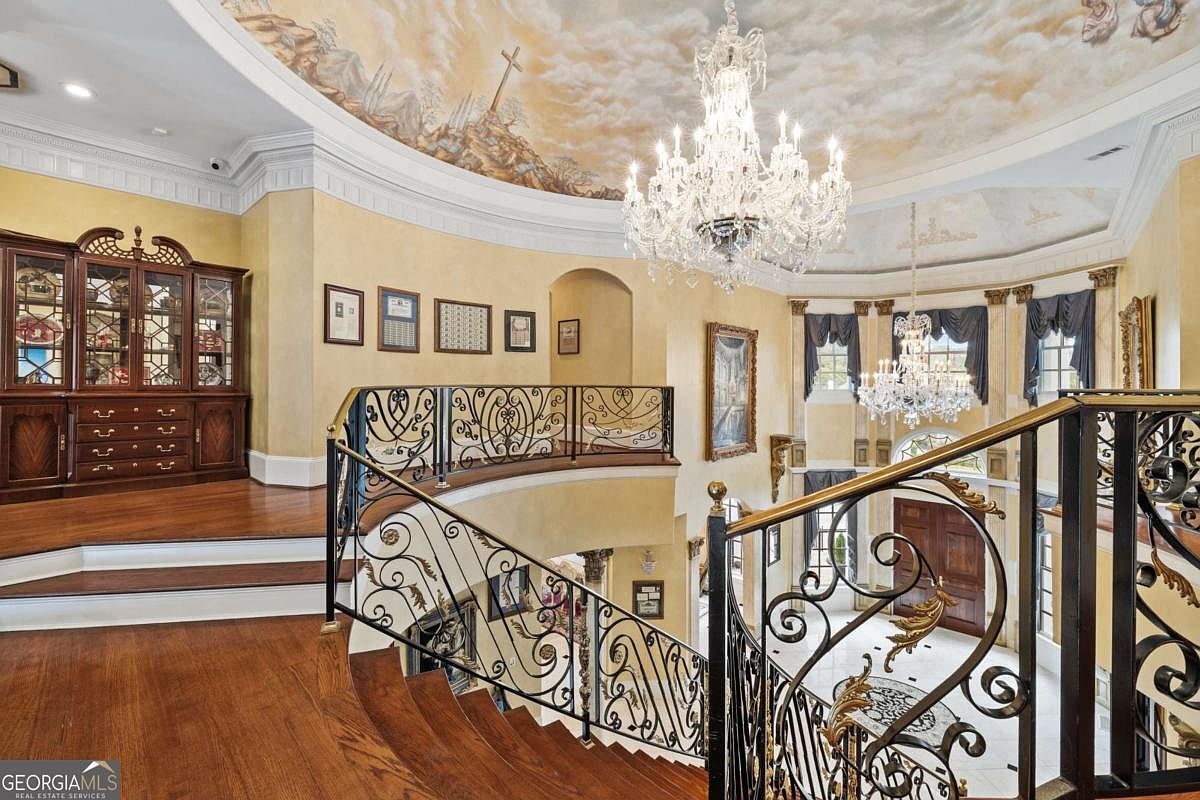
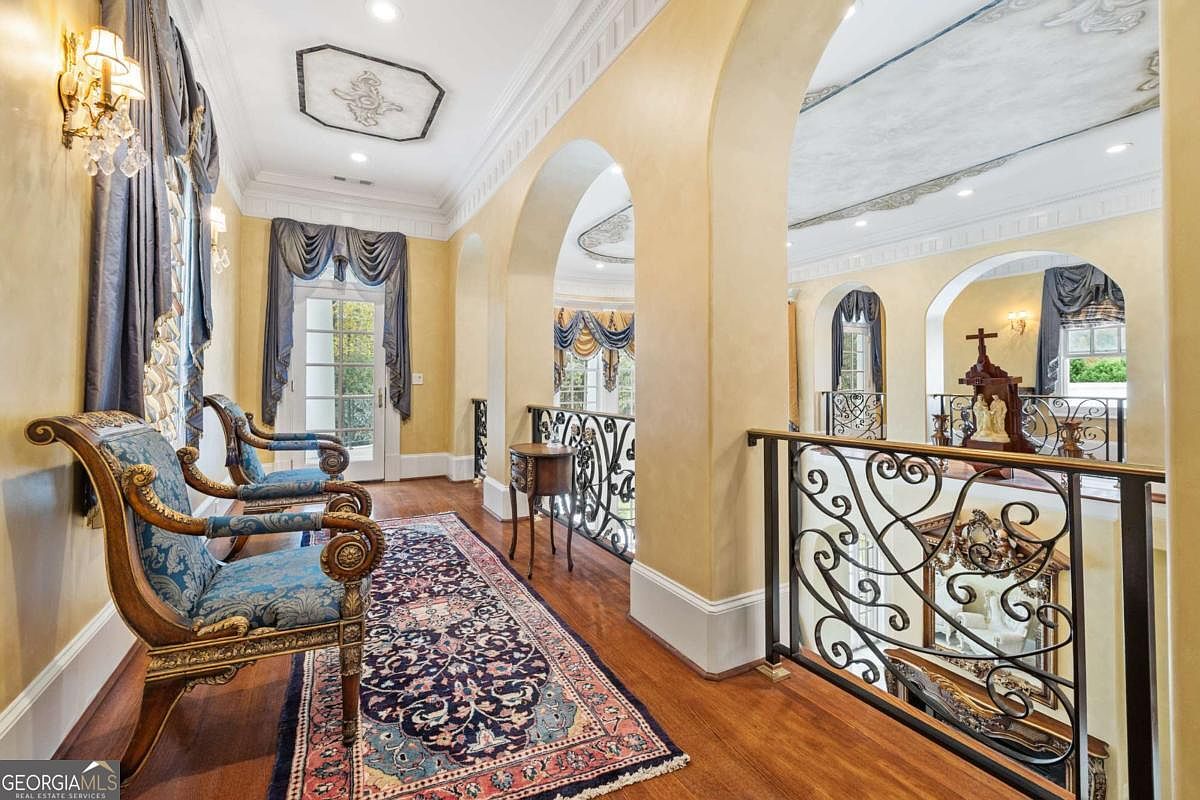
Inside, the grand foyer rewards that anticipation. A sweeping dual staircase rises beneath a domed ceiling adorned with a hand-painted mural and a monumental crystal chandelier, its wrought-iron railings tracing elegant arcs toward the upper landing. A discreetly integrated home elevator ensures every level remains effortlessly accessible without compromising the architecture's integrity.
At the heart of the primary level, the estate's most singular room commands absolute attention. The Oval Office replica — bearing the Presidential Seal in bas-relief on its coffered ceiling — is furnished with a custom desk crafted by the very manufacturer responsible for the original Resolute Desk. A stately fireplace anchors the far wall, and built-in shelving frames the space with the gravity of a room designed not for display, but for purpose. This is a room for reflection. For meaningful conversation. For decisions that matter.
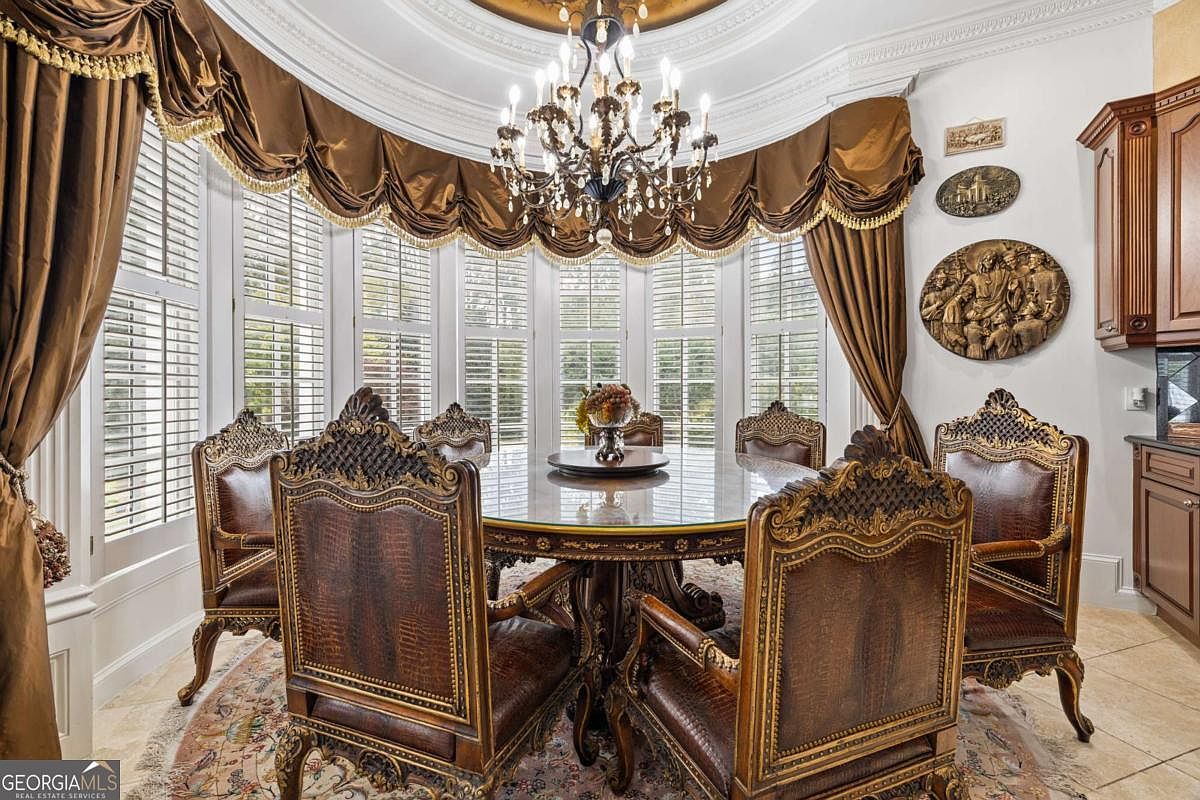
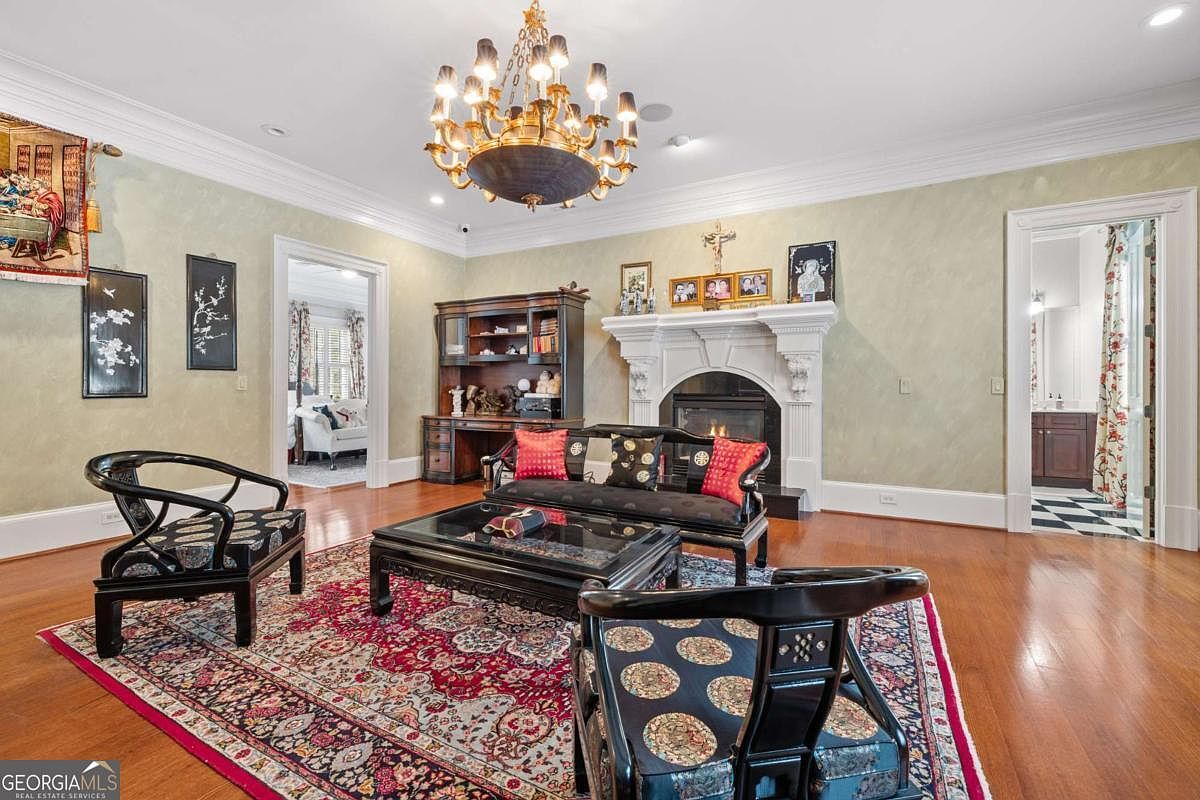
The formal dining room carries that ceremonial weight forward, its gold accents and luxurious drapery setting a stage for occasions that deserve commemoration. Adjacent, the two-story parlor and piano salon rise in a soaring wall of glass overlooking the pool and manicured gardens — an oversized double fireplace shared with the family room ensuring the drama never sacrifices comfort.
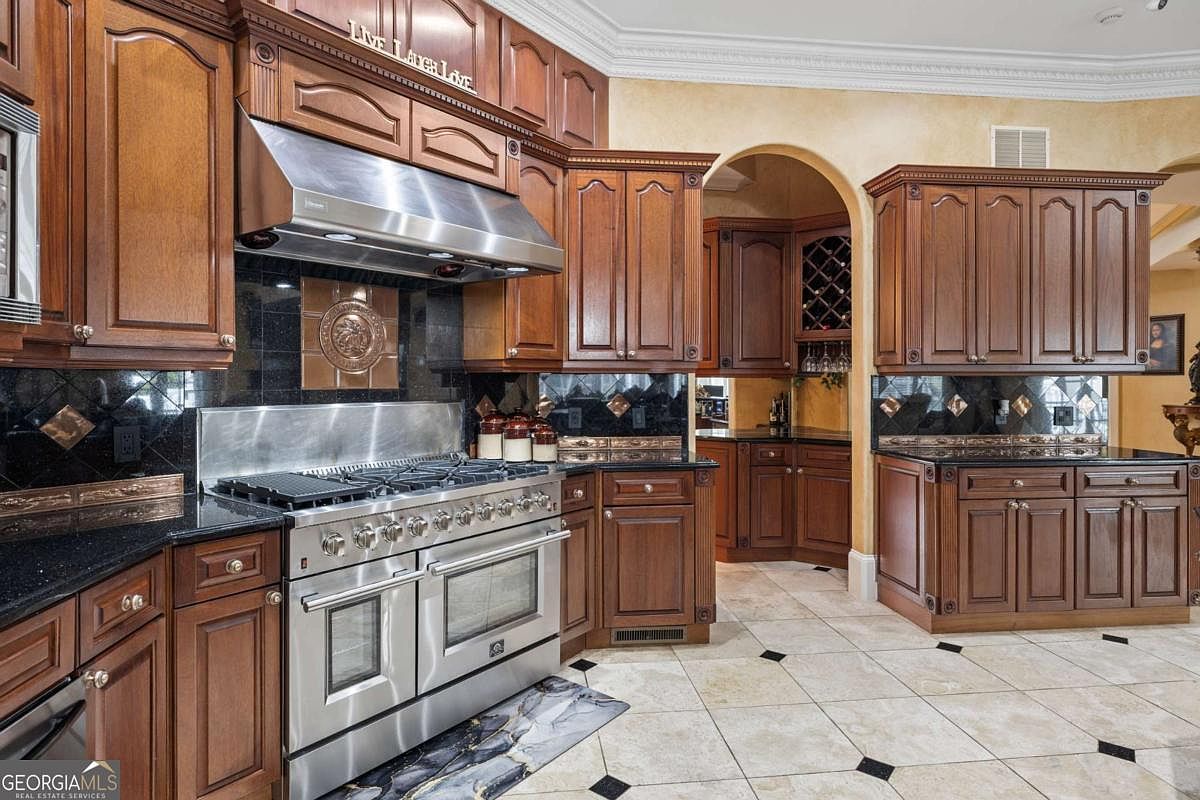
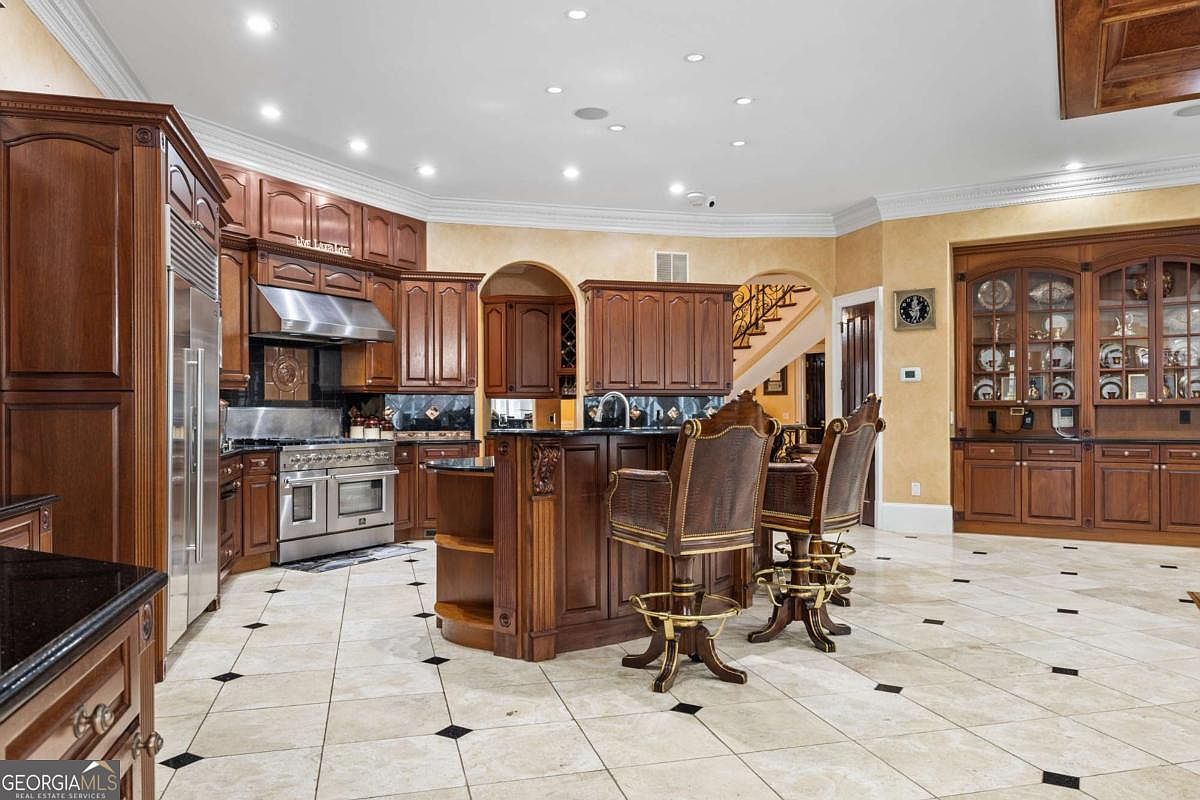
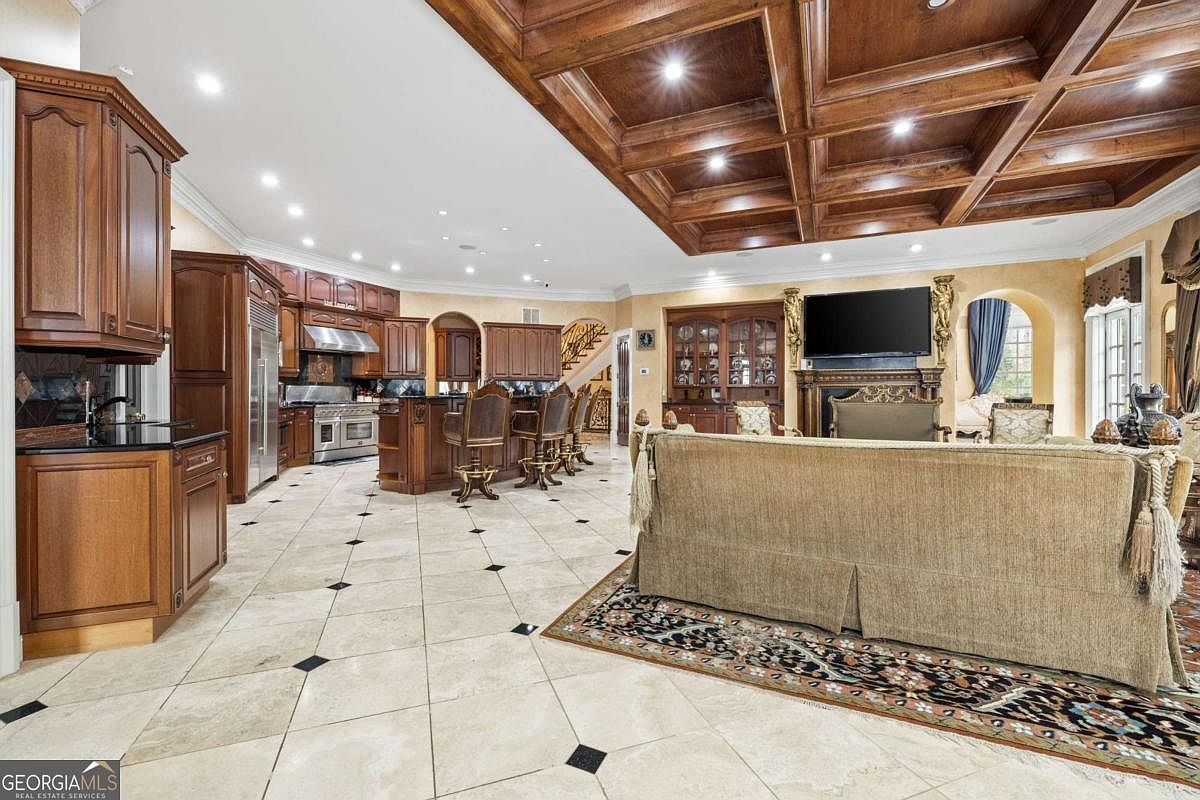
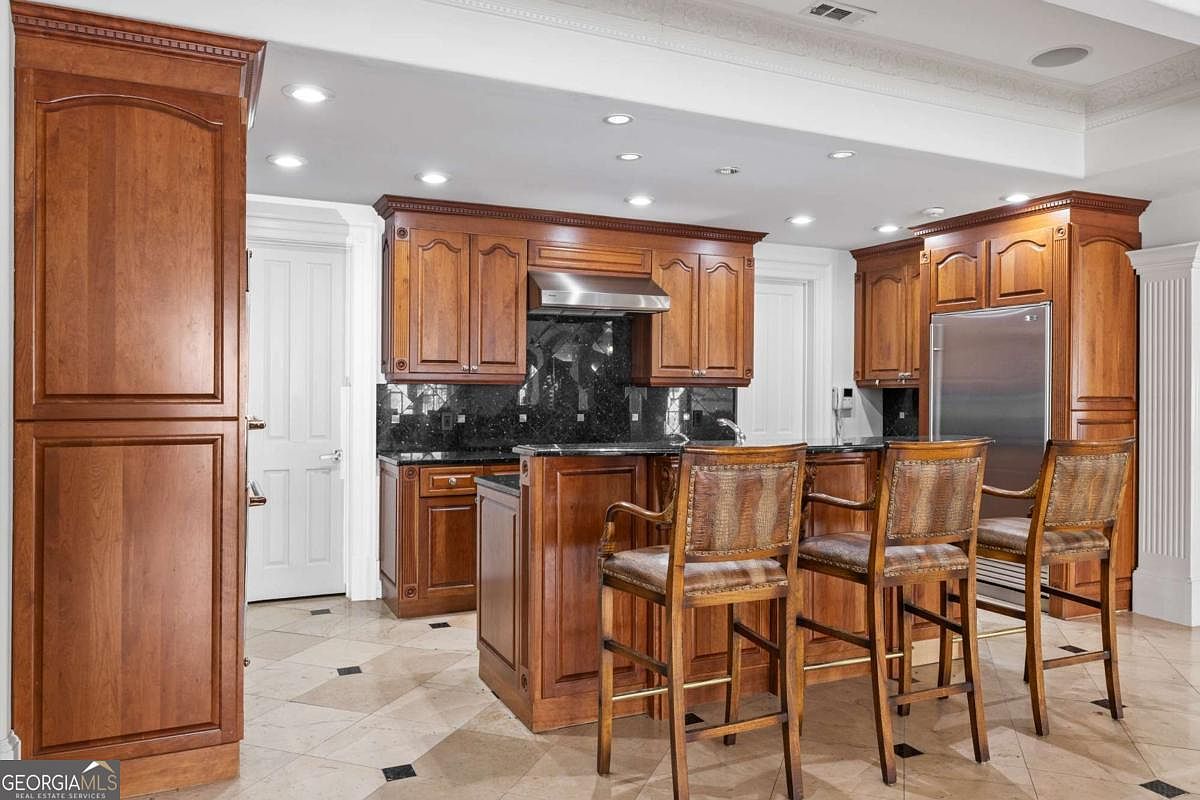
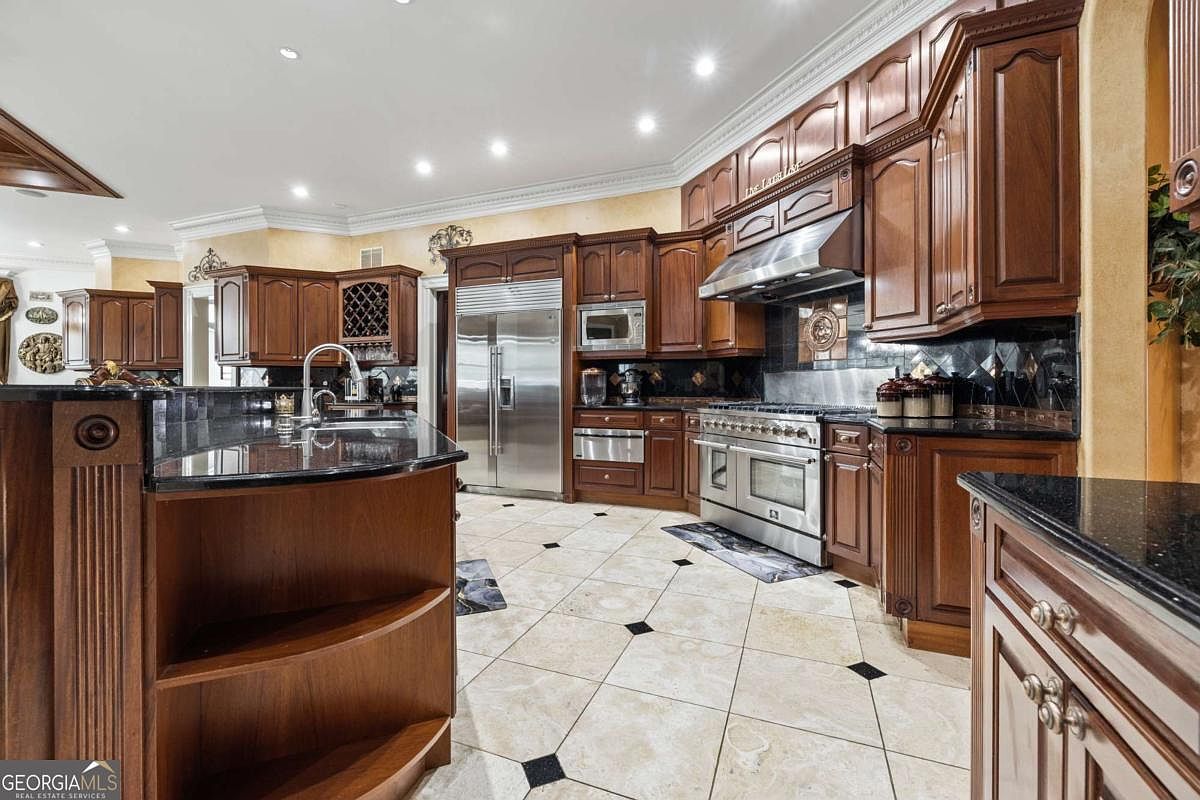
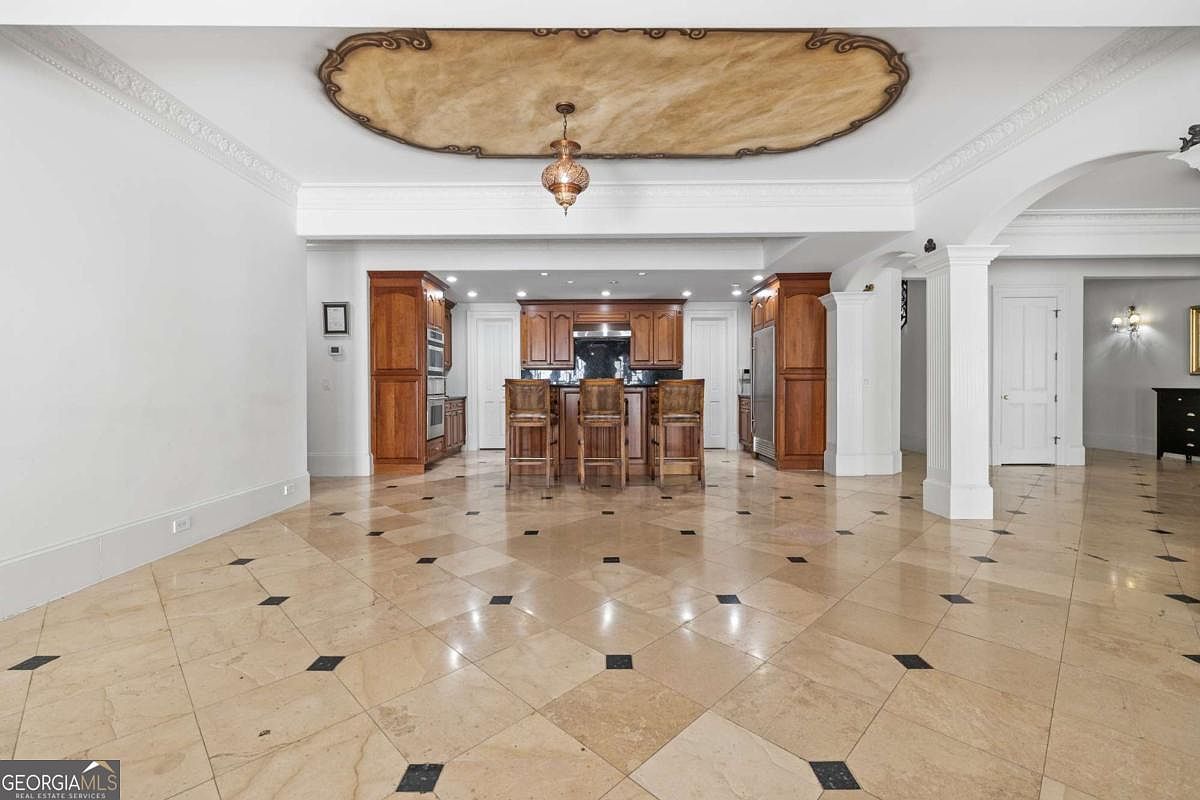
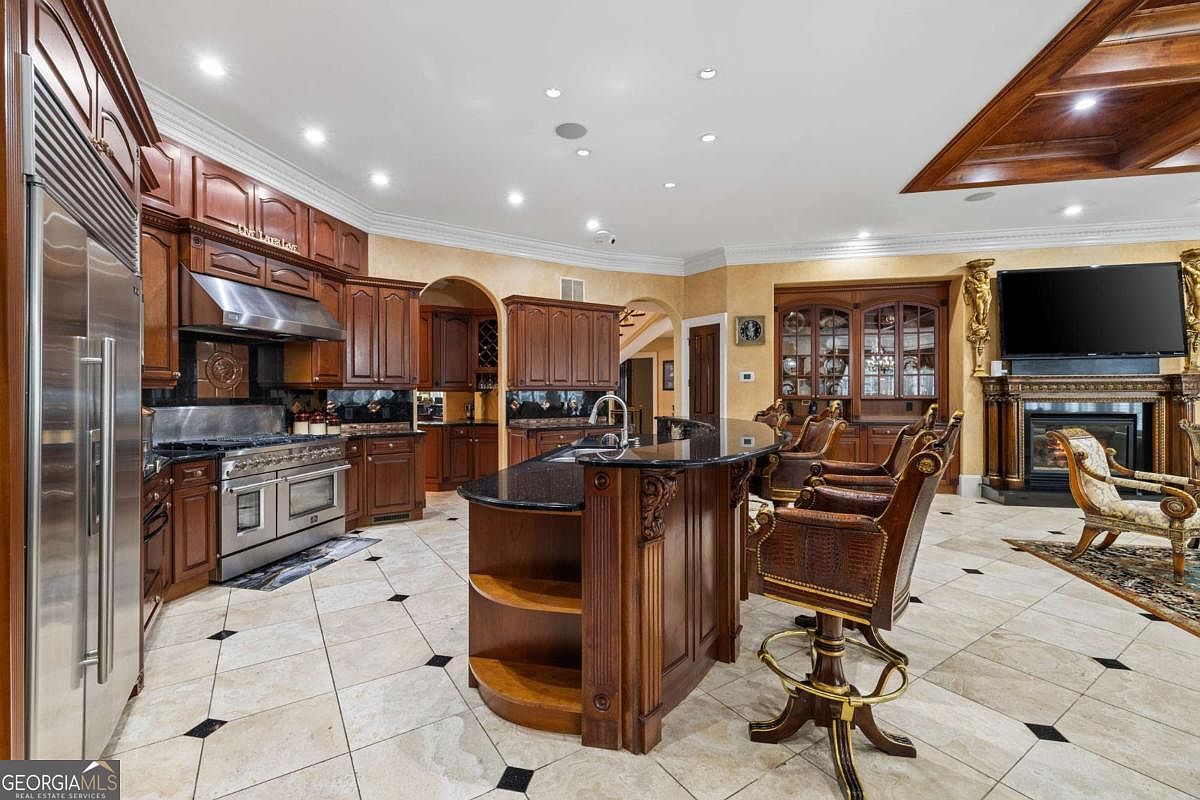
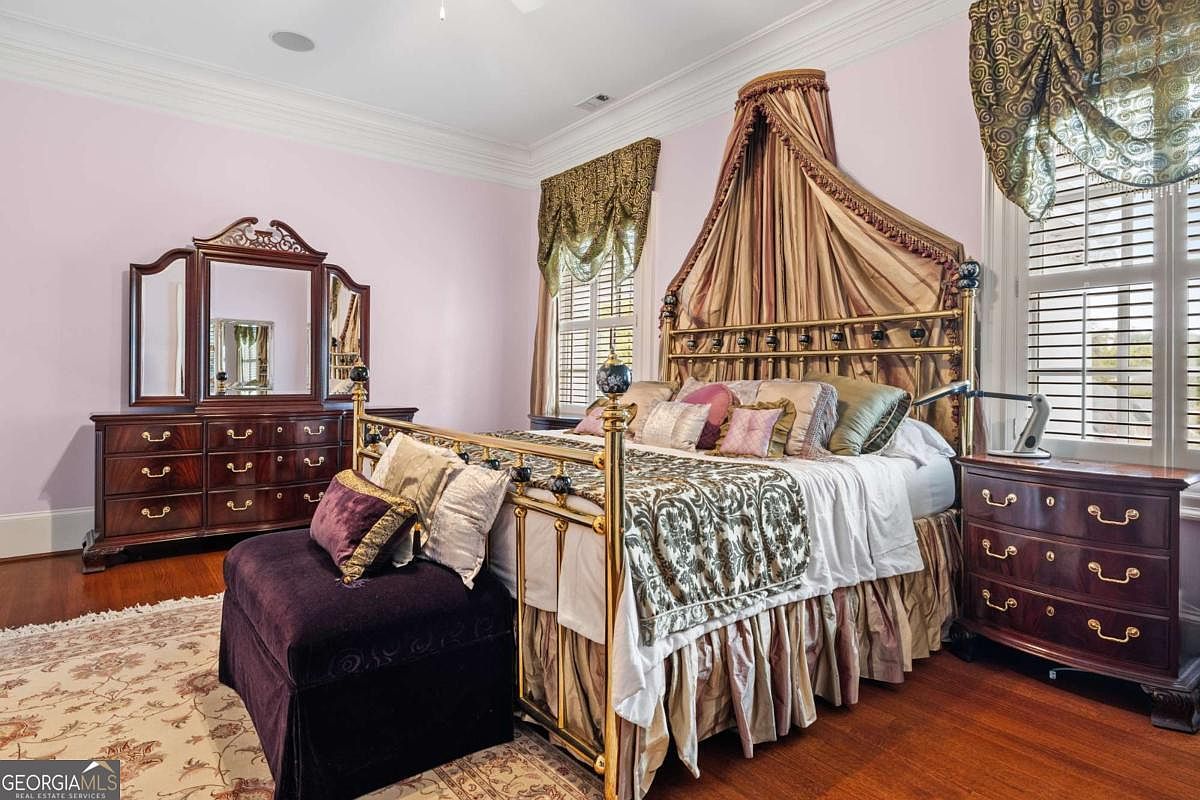
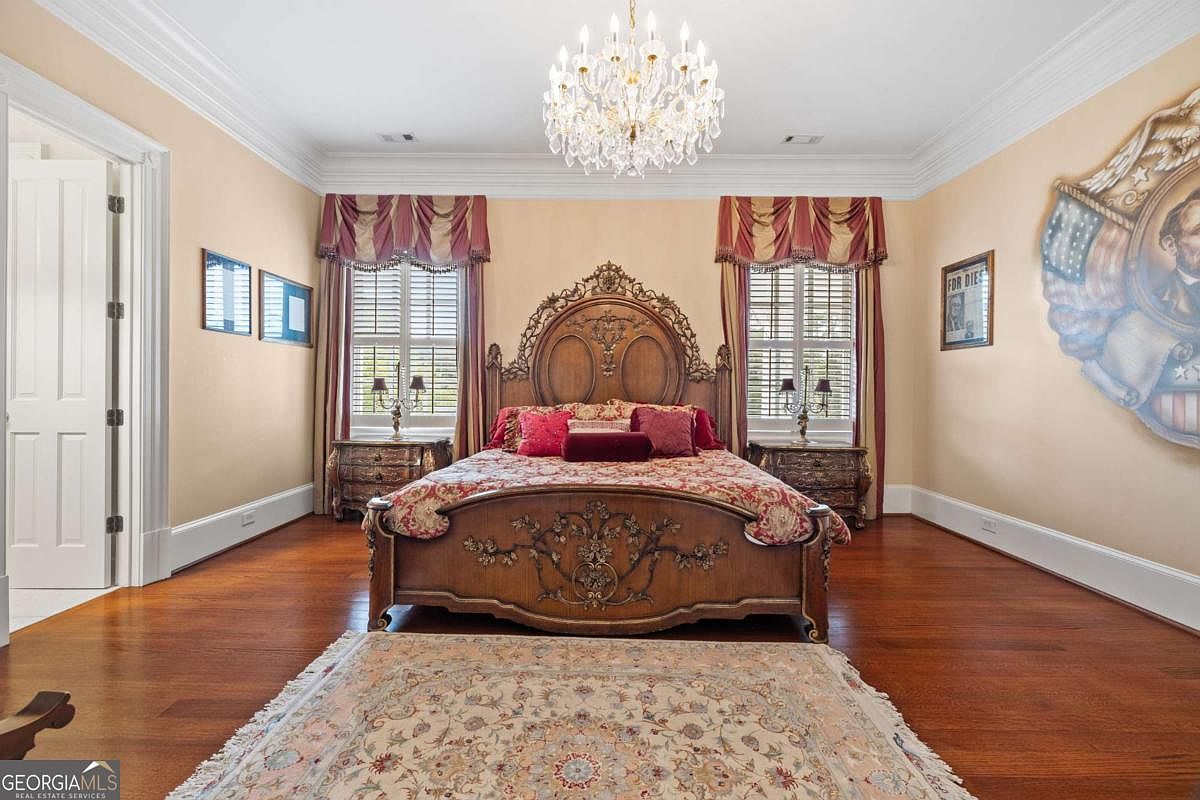
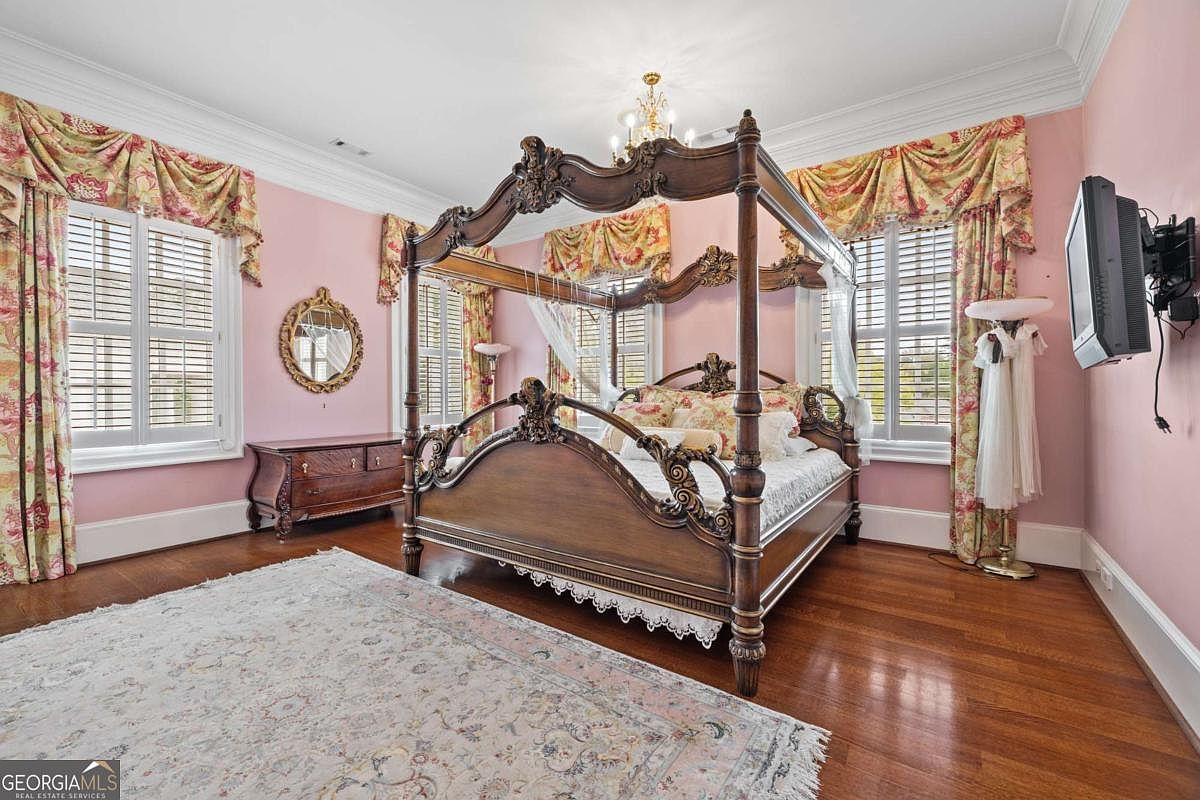
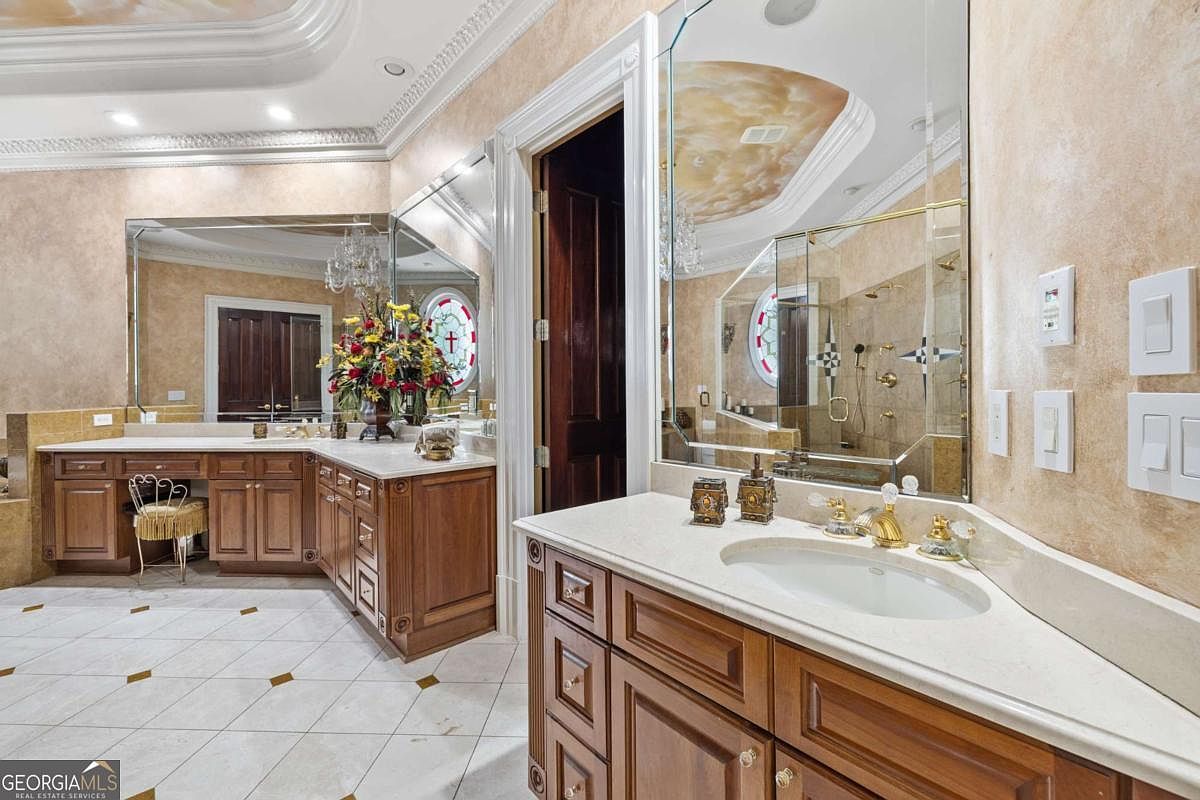
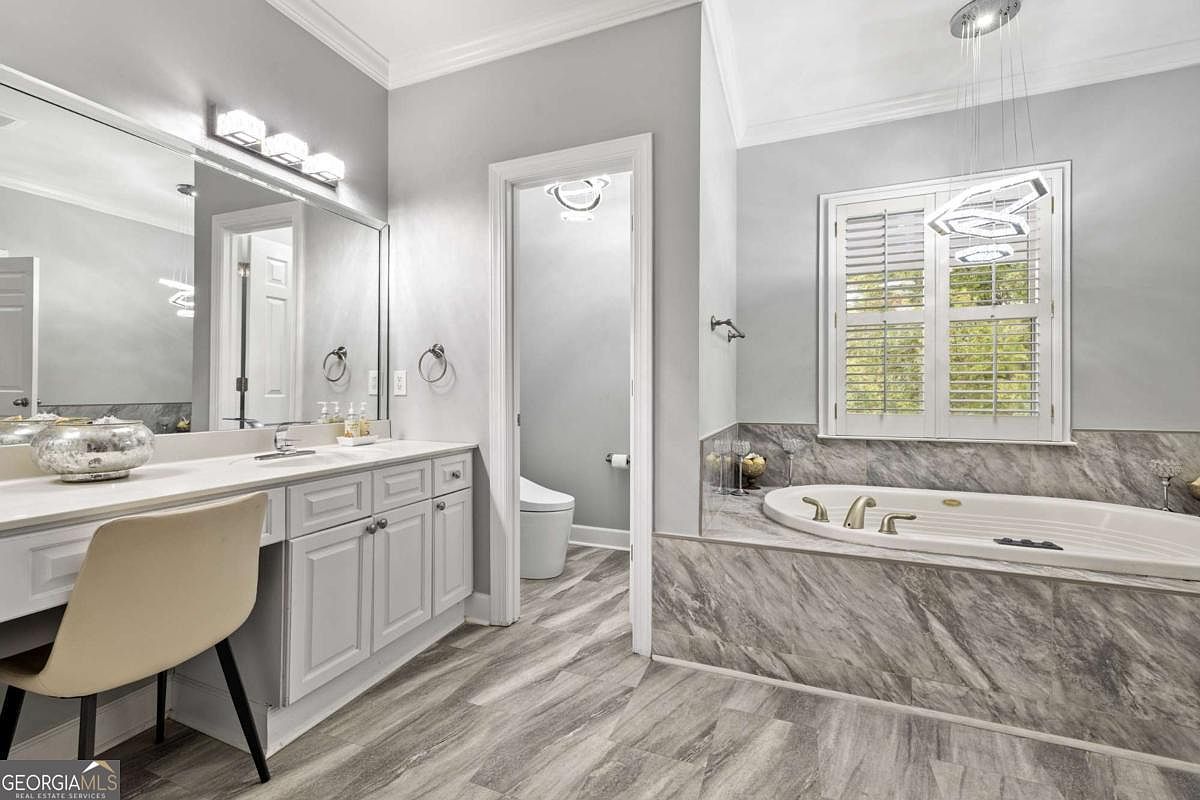
The grand family room and kitchen are equally considered: coffered ceilings in rich wood, a wall of windows flooding the space with natural light, an oversized bay framing the eat-in area with views that make every morning feel unhurried. The primary suite occupies its own wing — dual seating areas, a fireplace, a spa bath of generous proportions, and a hand-painted mural that transforms the room into something closer to a private gallery than a bedroom.
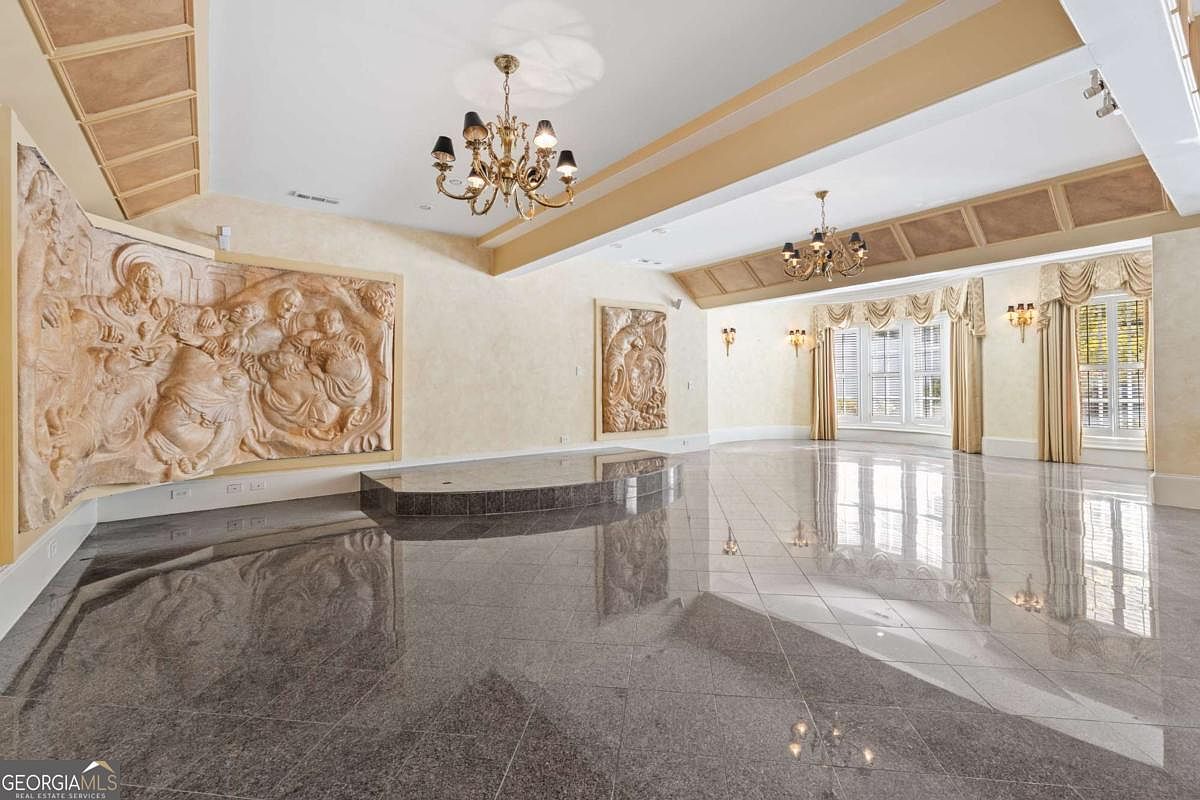
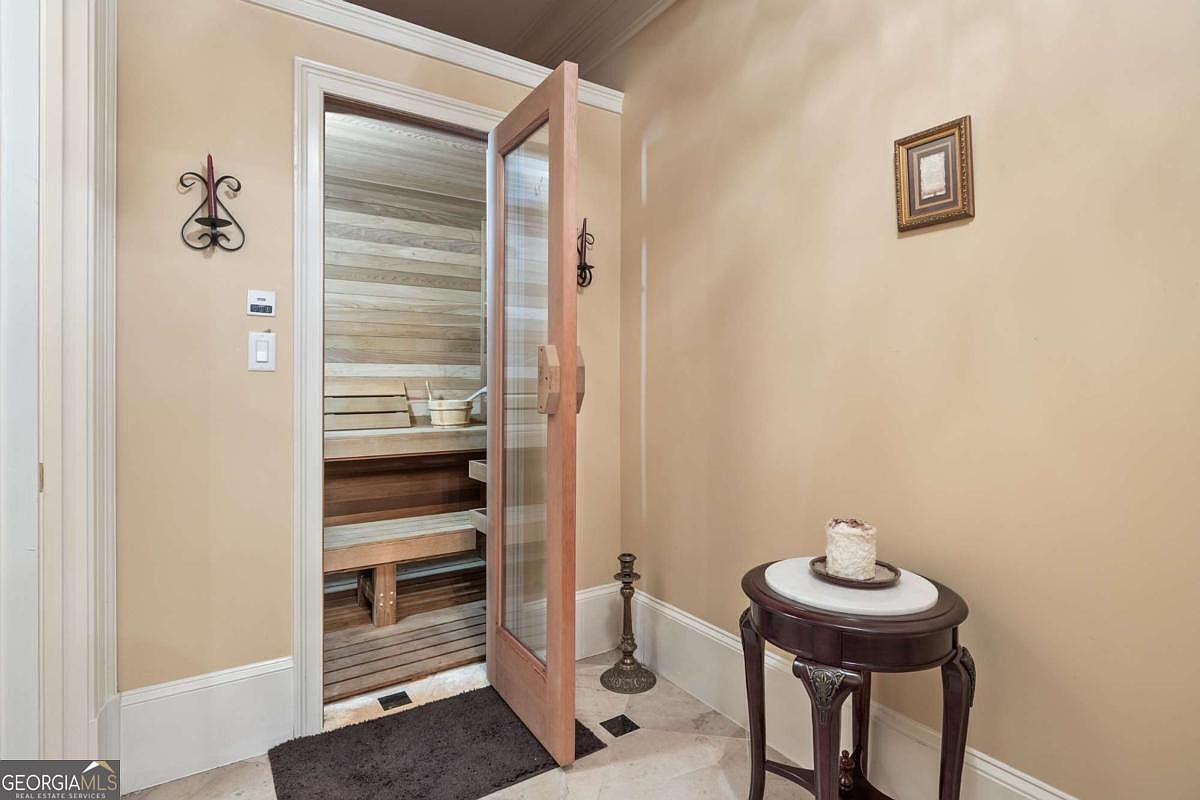
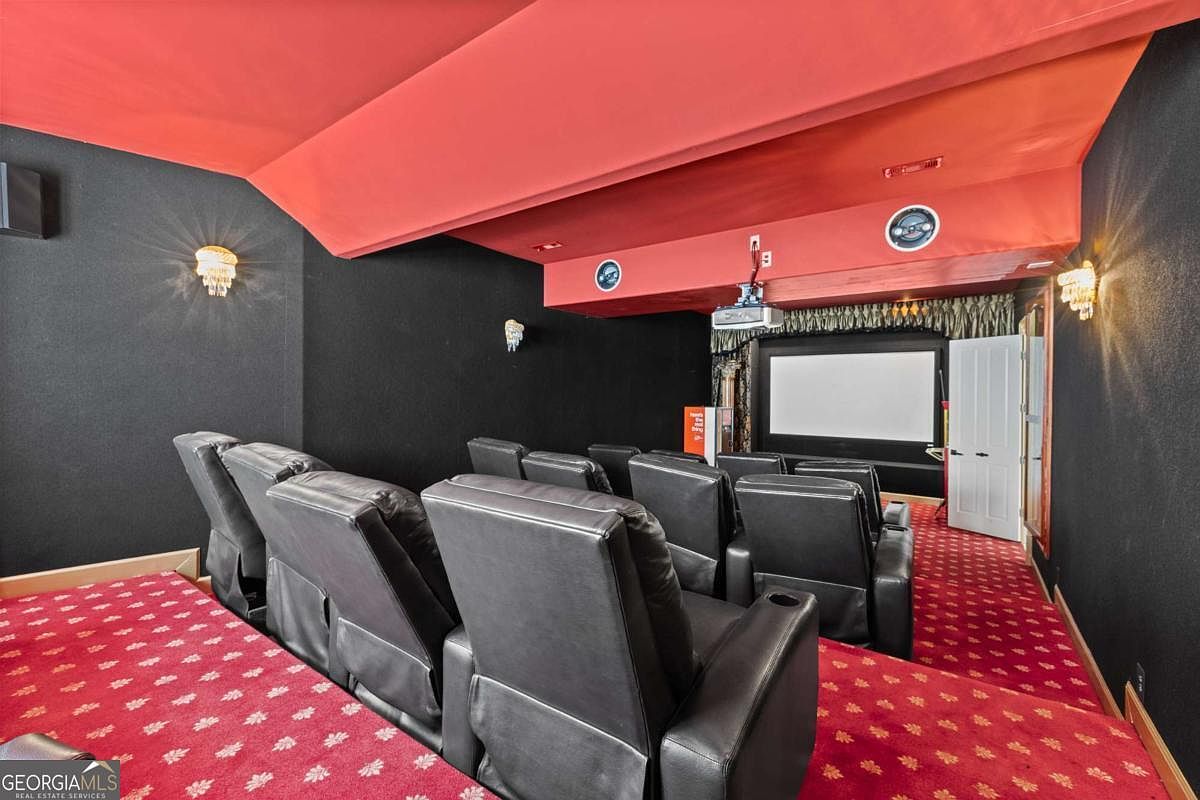
On the terrace level, the estate pivots toward entertainment with the confidence of a property that does everything well. A full ballroom, a dedicated home theater with tiered leather seating, a wood-paneled sauna, and a moody game lounge with billiards and bar seating — channeling the atmosphere of a classic speakeasy — together form a private world that rivals any resort.
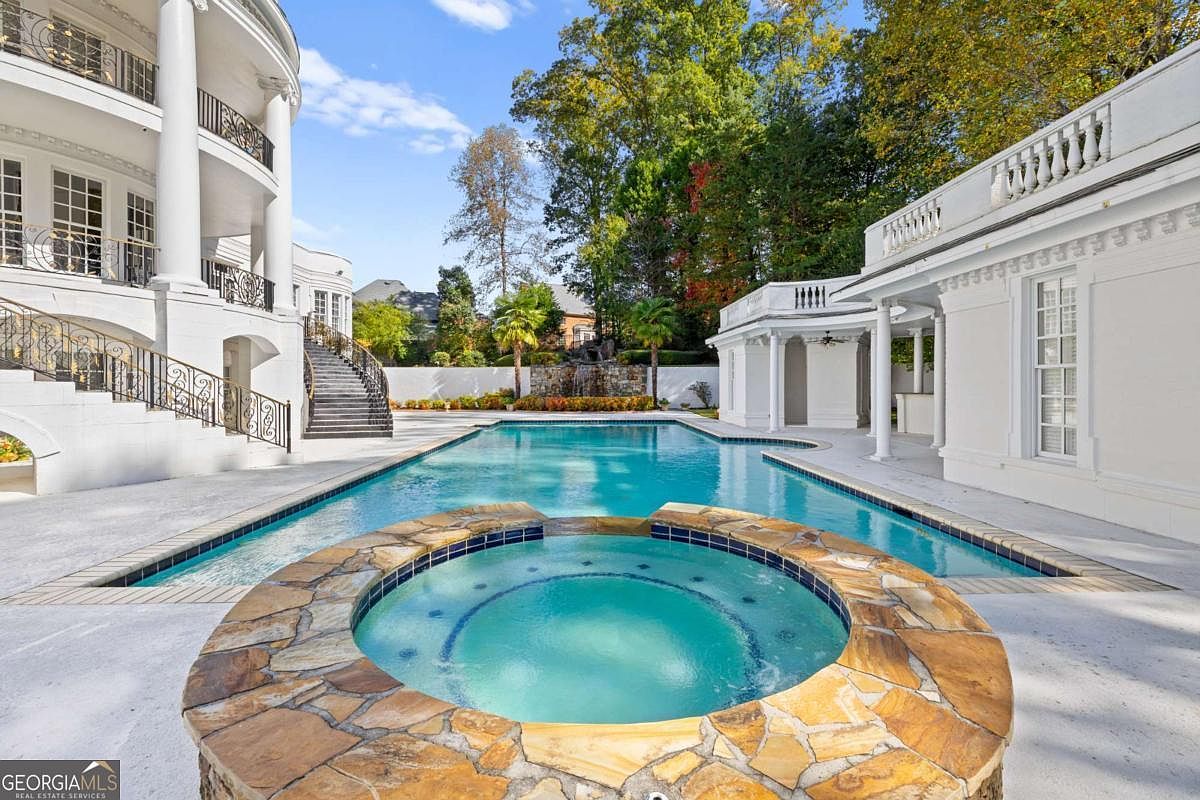
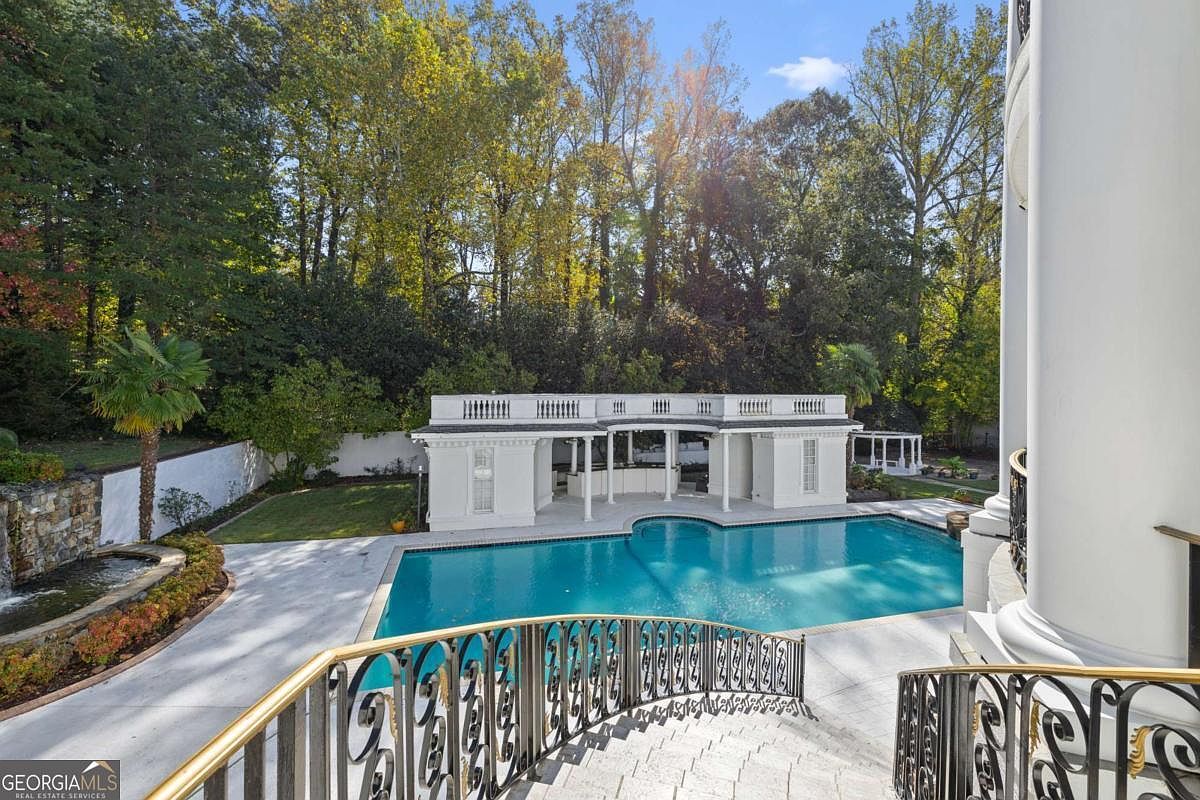
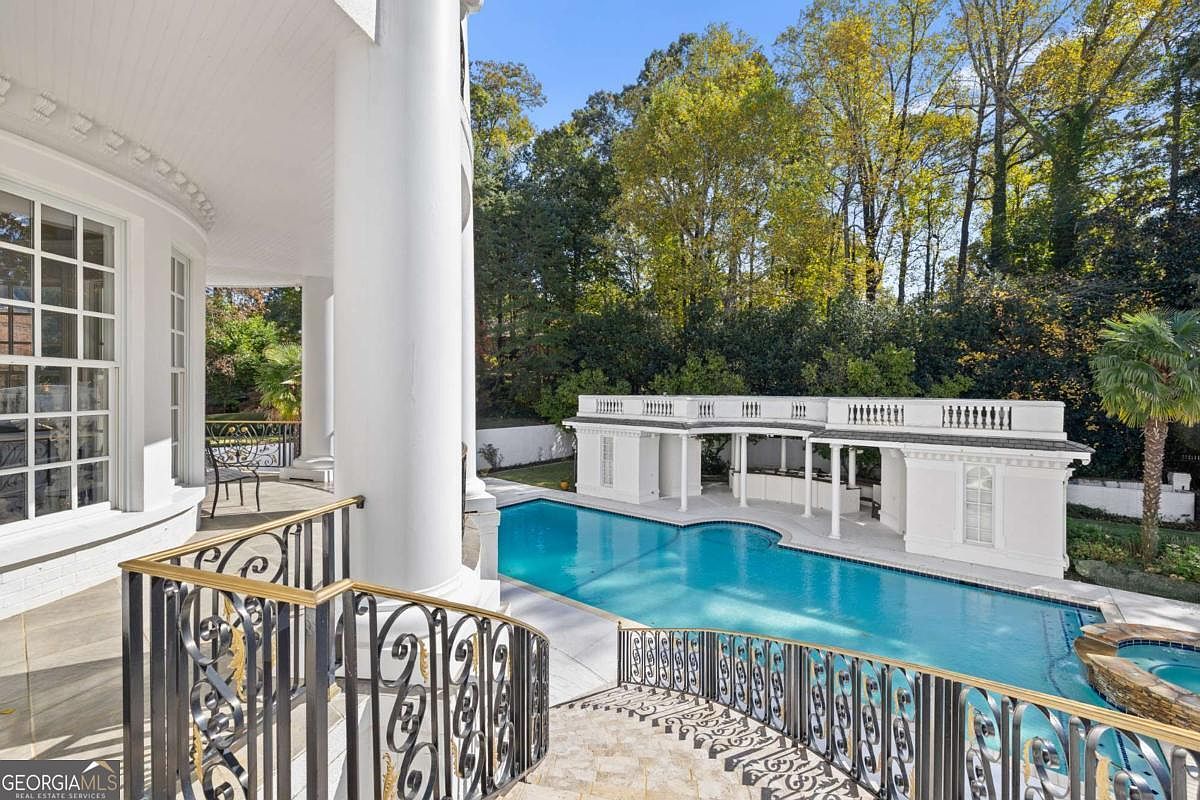
Beyond the rear elevation, twin staircases descend in perfect symmetry to manicured gardens, an oversized pool and Jacuzzi, and a columned pool house with an outdoor kitchen. And completing the compound with rare elegance, a fully independent seven-bedroom, six-bath guest residence — a subtle architectural nod to the West Wing — ensures that extended family, guests, or multigenerational living arrangements are accommodated without any sacrifice of privacy or autonomy.
Every decision here was intentional. Every detail, earned.
Briarcliff Road is one of Atlanta's most storied corridors — a tree-lined thoroughfare that has anchored some of the city's most distinguished residential enclaves for nearly a century. The 30345 zip code, which encompasses the established neighborhoods of Oak Grove, Lakeside, and the broader Briarcliff Heights area in DeKalb County, sits in a rare position: close enough to the energy of Atlanta's urban core to feel connected, yet sufficiently removed to maintain the privacy and quiet that legacy properties require.
The neighborhood's character is defined by its maturity. Canopies of hardwoods line the roads, estates are generously proportioned, and the general atmosphere is one of established, unhurried residential life rather than the transient energy of newer developments. This is a part of Atlanta where homes have histories, where neighbors have roots, and where the landscape itself feels considered rather than constructed.
For families, the area's proximity to some of Atlanta's most respected educational institutions represents a significant draw. The broader Briarcliff and Druid Hills corridor is home to a cluster of private schools and is within reasonable reach of Emory University and the Centers for Disease Control and Prevention campus — institutions that have long lent the surrounding neighborhoods an intellectual and international character. The Fernbank Museum of Natural History, one of the Southeast's premier natural history institutions, is located nearby, as is Fernbank Forest, a 65-acre old-growth urban forest that offers a remarkable counterpoint to city life.
The practical geography of the location is equally compelling. Hartsfield-Jackson Atlanta International Airport — consistently ranked among the world's busiest and most connected — is accessible within a reasonable drive, making the estate practical for those whose lives operate on an international scale. Buckhead, Atlanta's luxury retail and dining district, is comfortably proximate, offering access to high-end boutiques, acclaimed restaurants, and the cultural infrastructure of a major American city.
Atlanta itself has undergone a significant transformation over the past two decades, emerging as one of the American South's most dynamic metropolitan centers. Its economy is anchored by a remarkable concentration of Fortune 500 company headquarters — including The Coca-Cola Company, Delta Air Lines, Home Depot, and others — which has cultivated a resident population of considerable sophistication and global perspective. The city's arts scene, culinary landscape, and philanthropic culture have deepened correspondingly, making it a genuinely compelling place to live at the highest levels.
The Briarcliff corridor's position within this broader context is that of a quiet anchor — a place where Atlanta's energy is available on demand but never imposed. The private, gated nature of an estate of this caliber aligns naturally with the neighborhood's ethos of discretion, where significant properties exist behind mature landscaping and generous setbacks, presenting their grandeur to those who seek it rather than those who simply pass by.
For the buyer of the Atlanta White House, the location is not incidental. It is the final, considered element of an estate designed from its very foundations to exist apart from the ordinary — close to everything that matters, and insulated from everything that does not.
Featured Highlights
Curated Content • Presented by Tuy Luong