The Story Behind
A Private Pacific Estate Where Malibu Reveals Its Finest Self
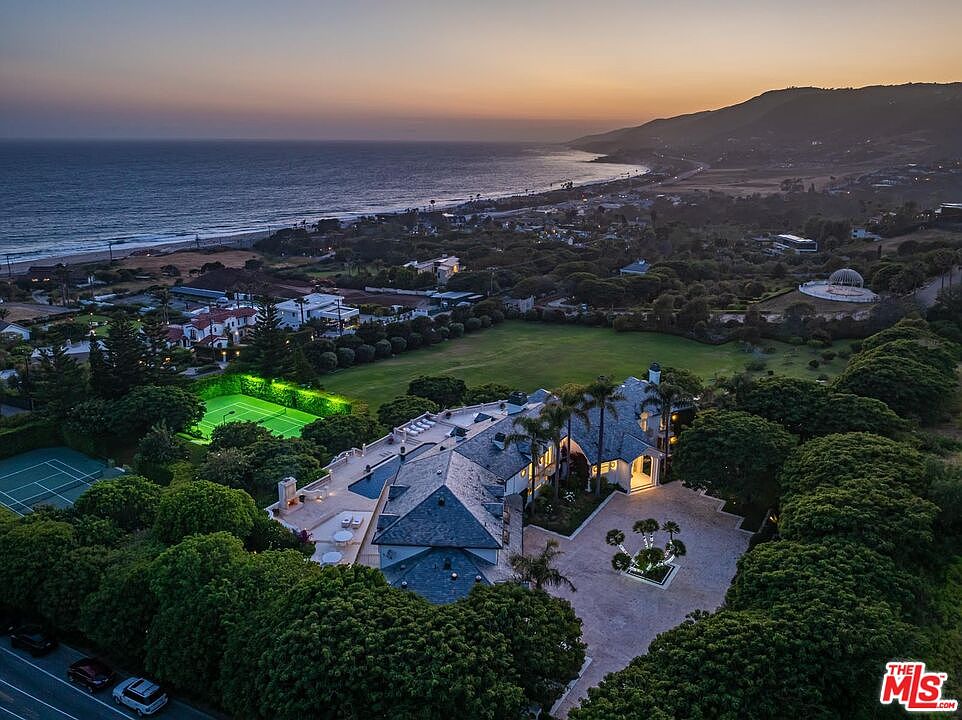
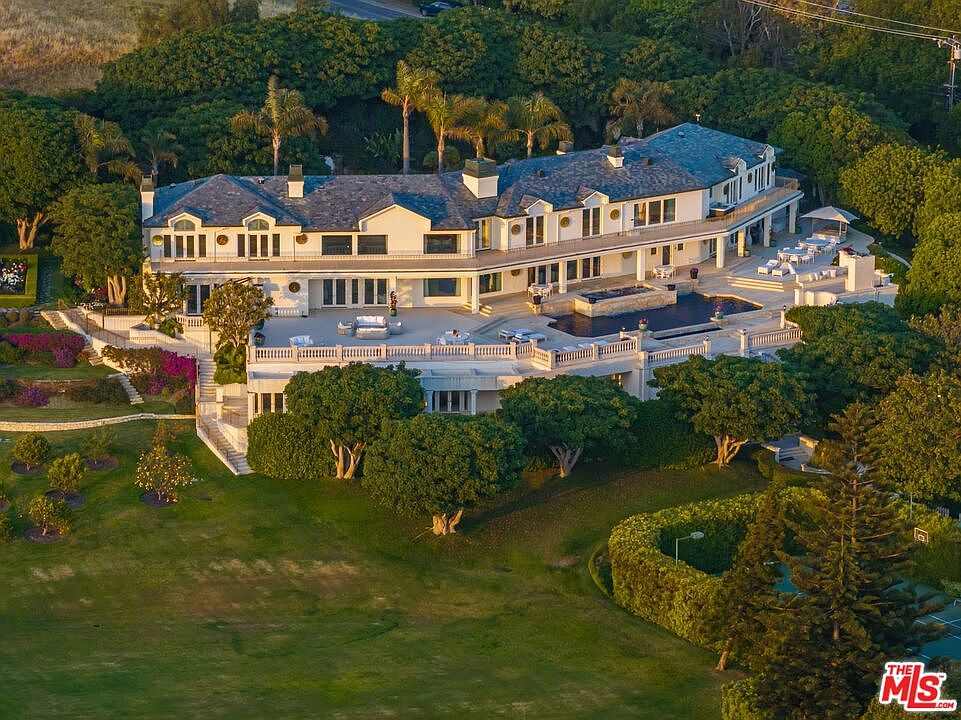
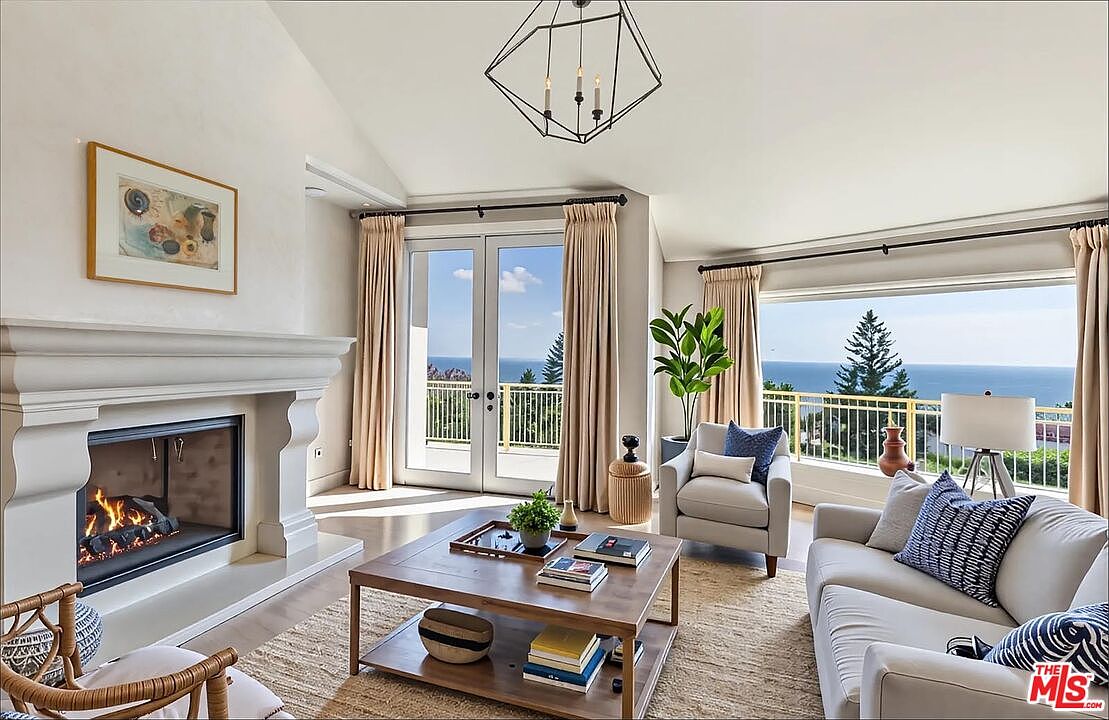
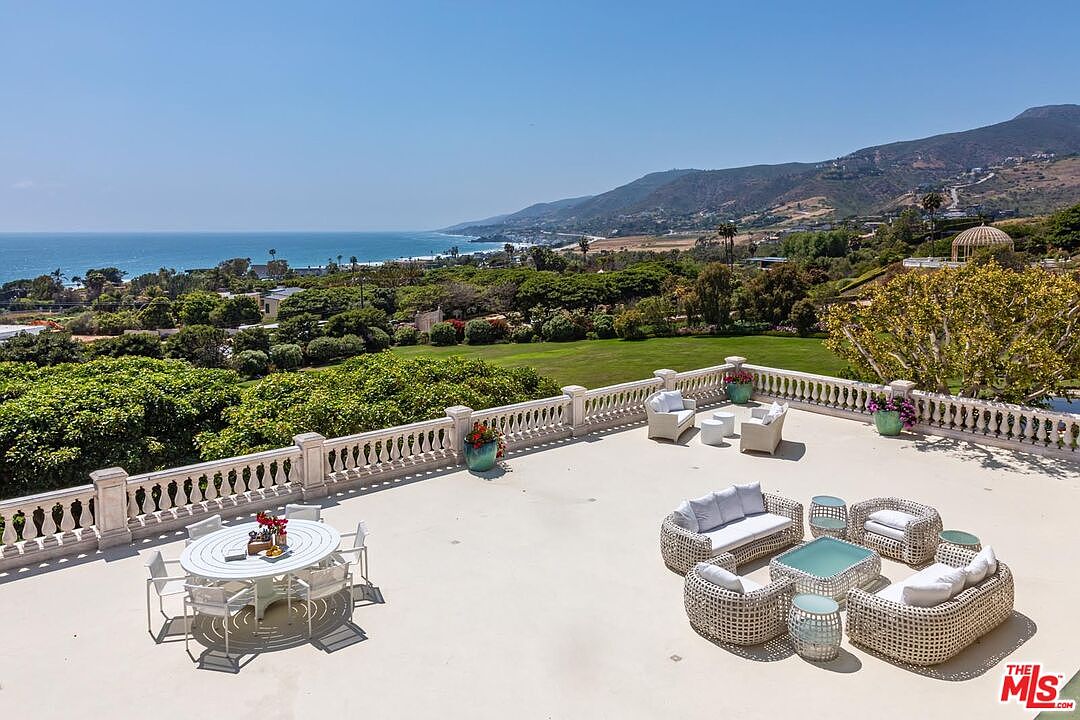
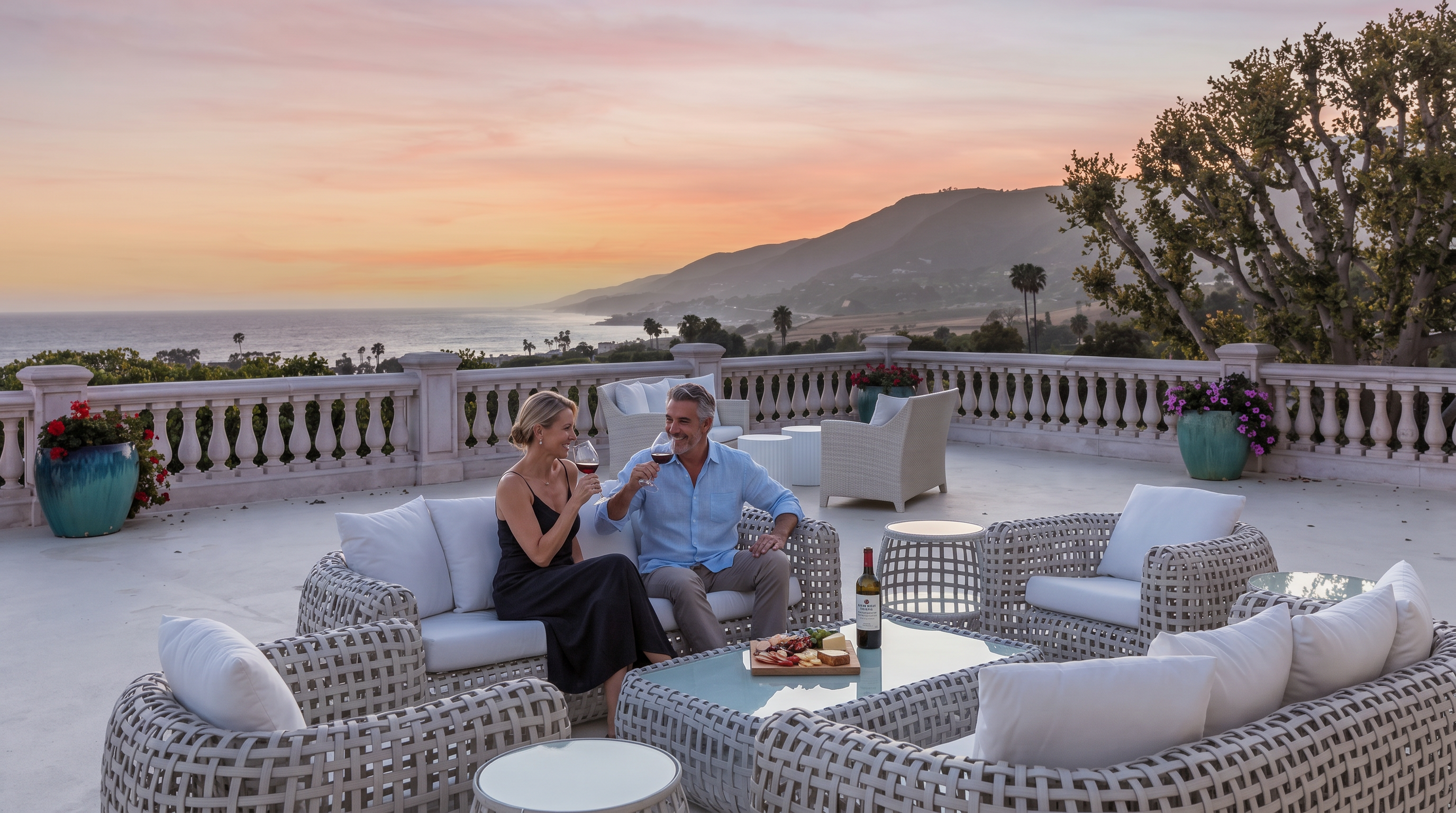
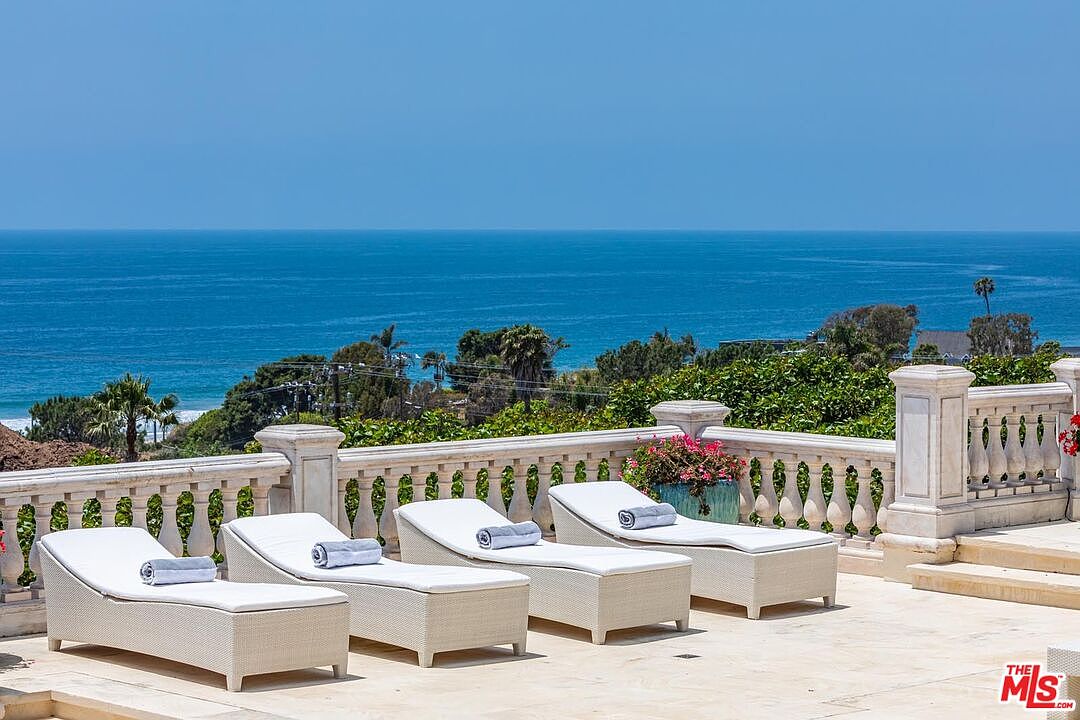
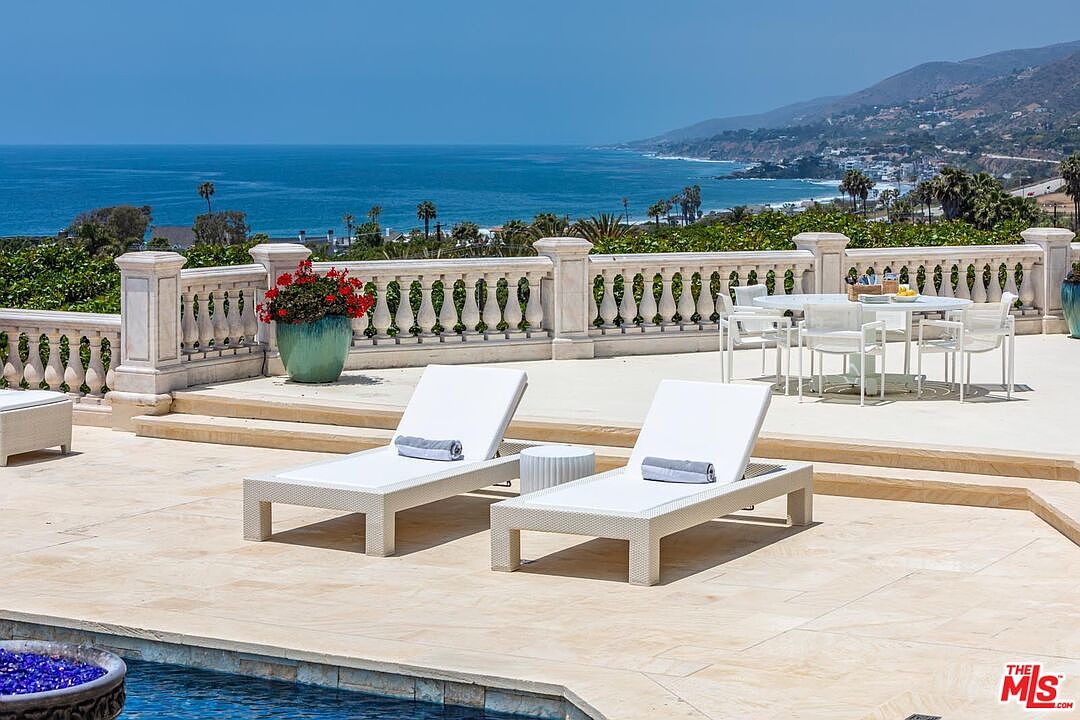
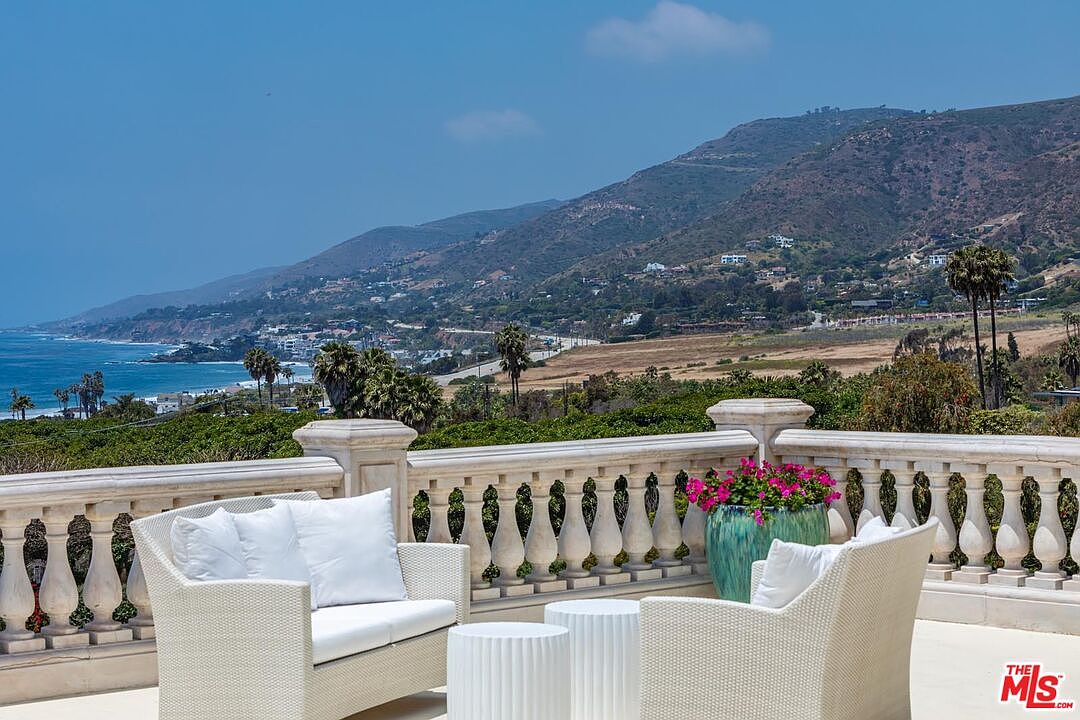
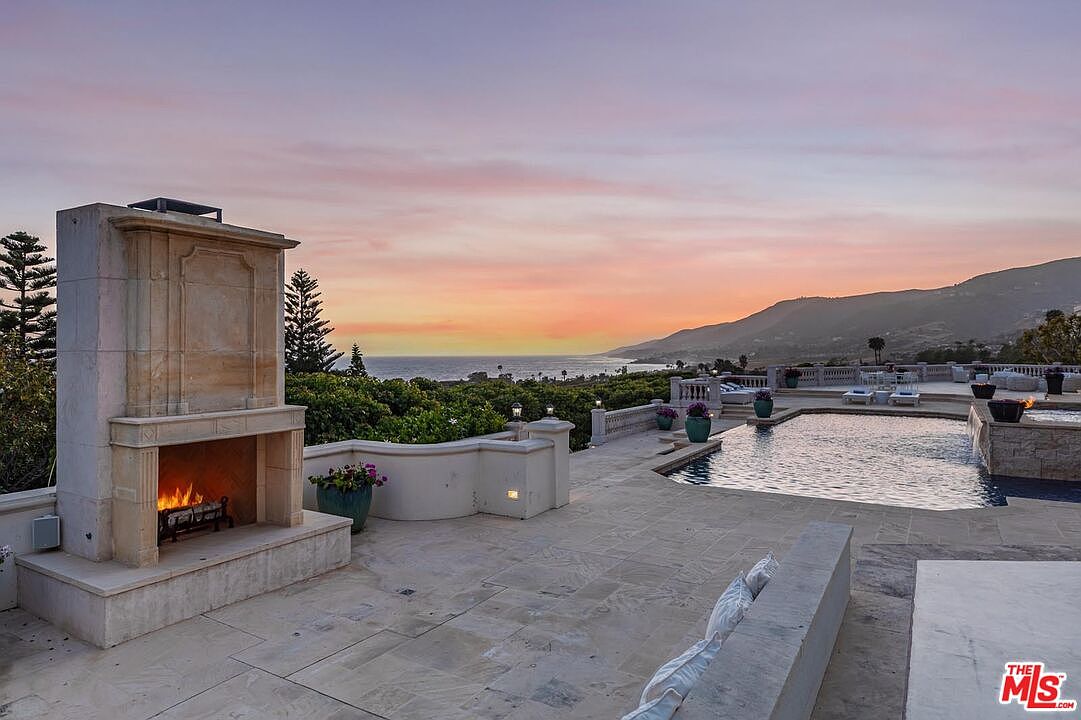
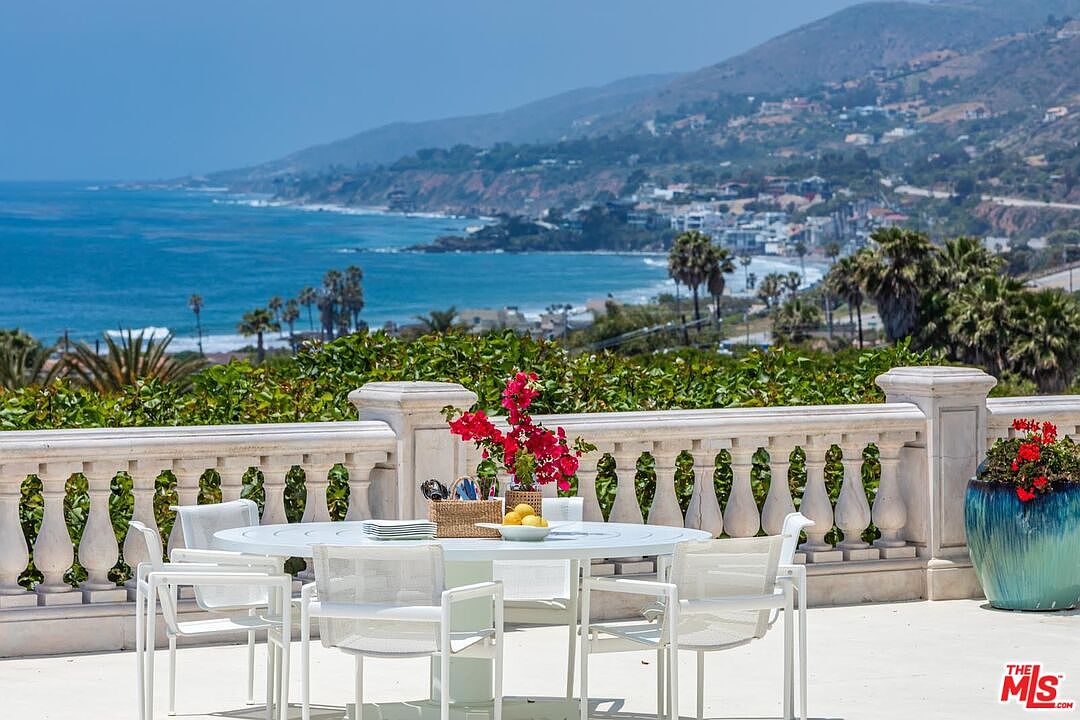
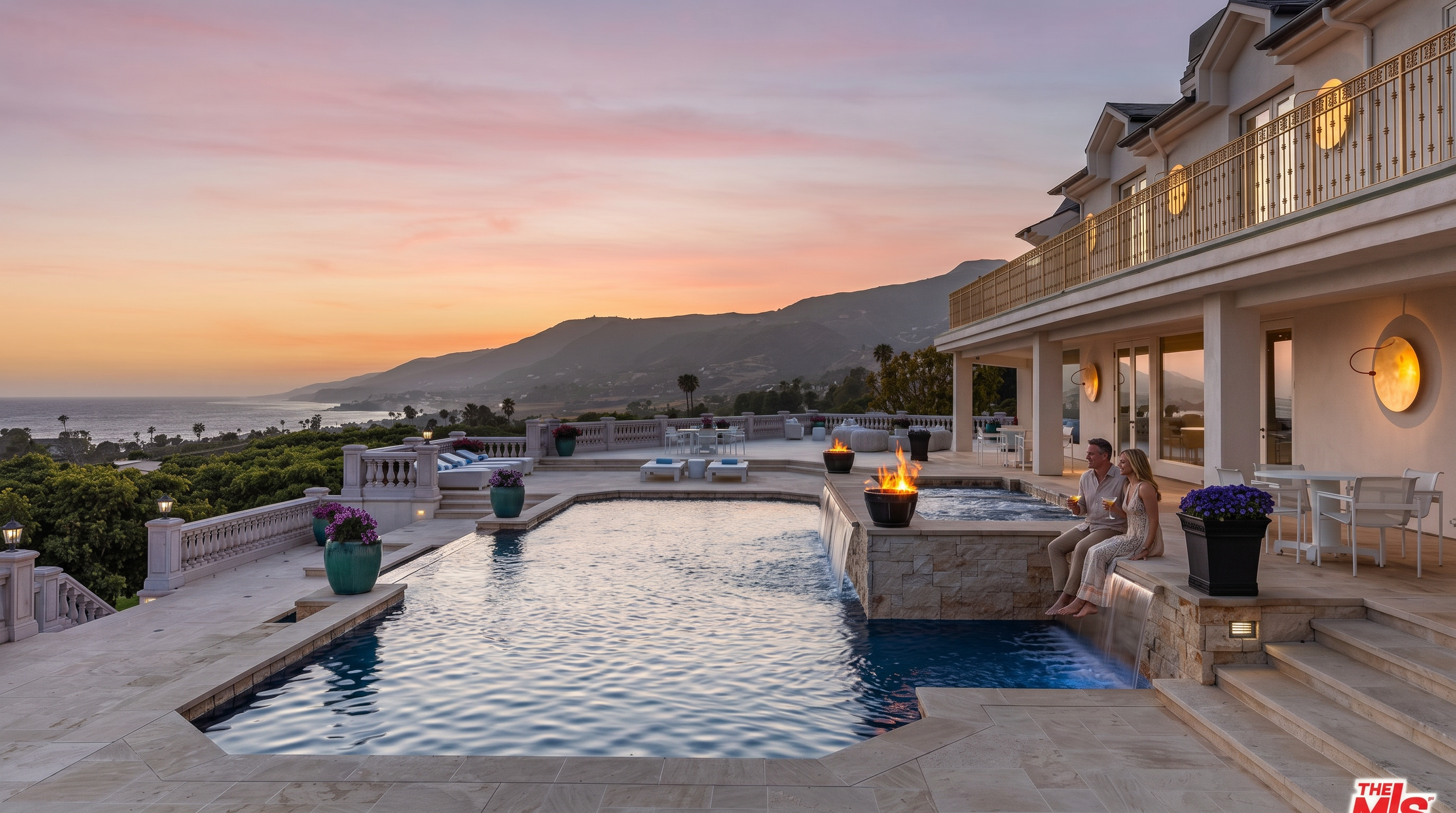
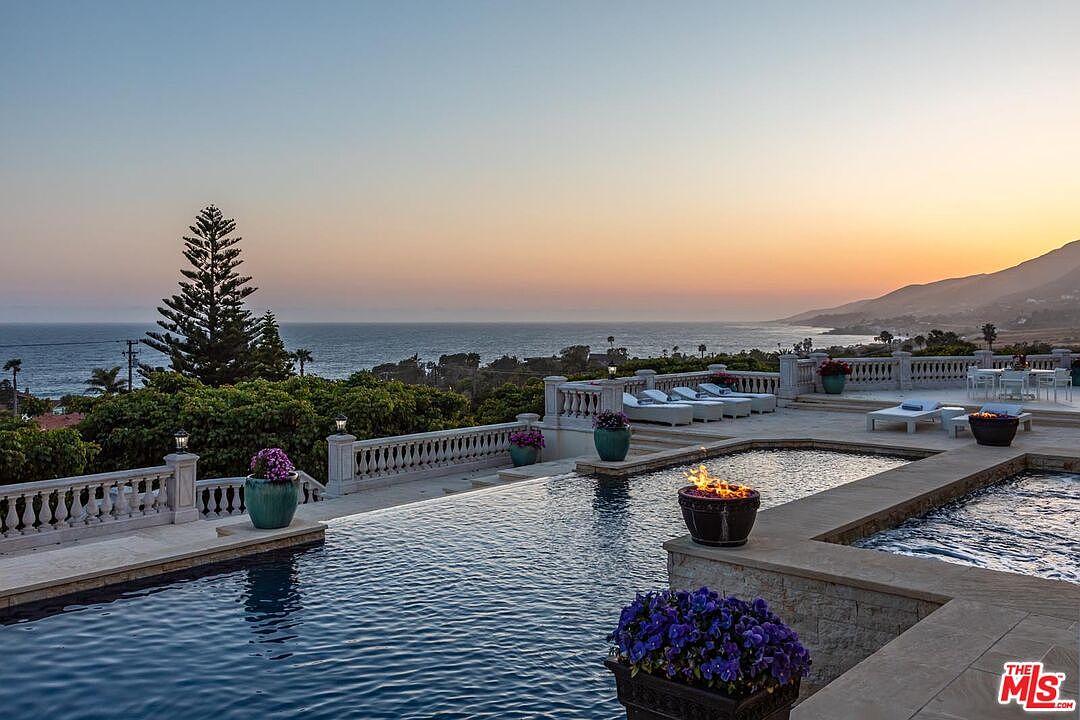
There is a particular quality of light that arrives on the western end of Malibu in the late afternoon — a gold that pools across the Pacific, climbs the cliffs, and floods every room that faces the water. At 6051 Philip Avenue, the architecture has been designed to receive that light fully, on three levels, across full-width ocean-facing decks that dissolve the boundary between interior life and the California horizon. This is a residence built not merely to occupy a coastal setting, but to inhabit it completely.
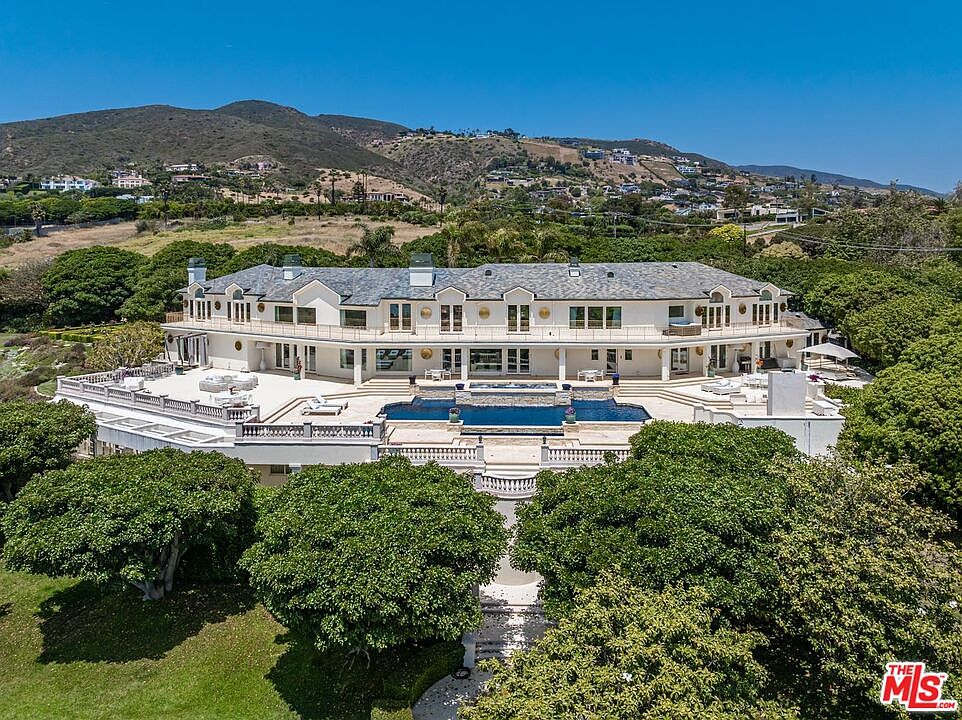
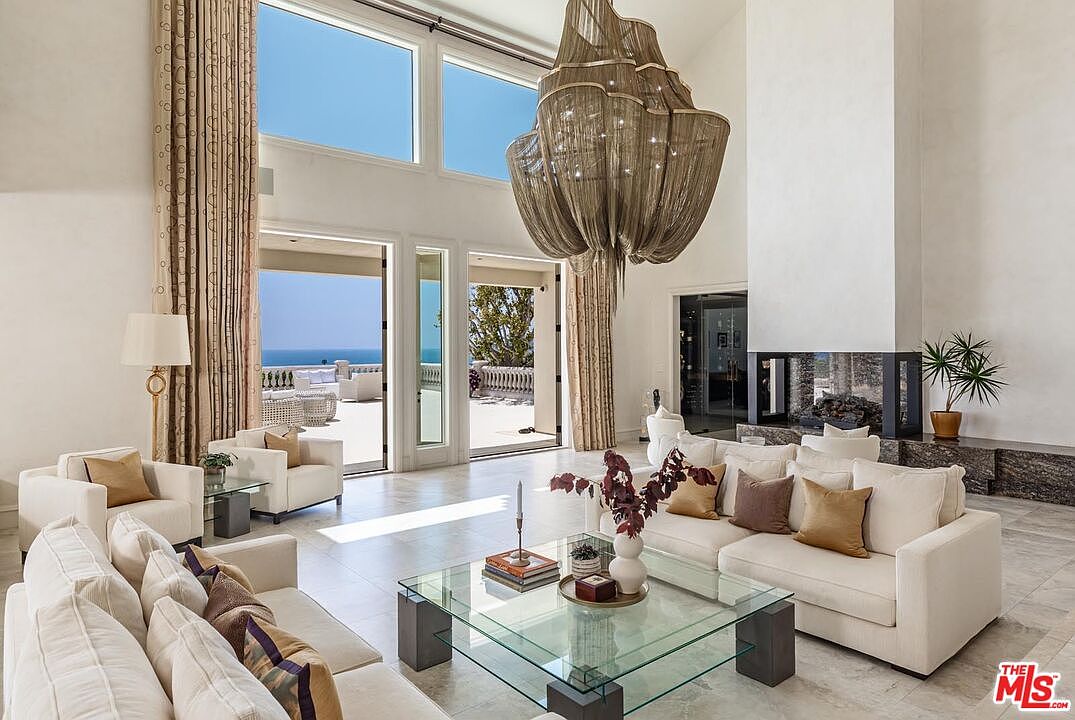
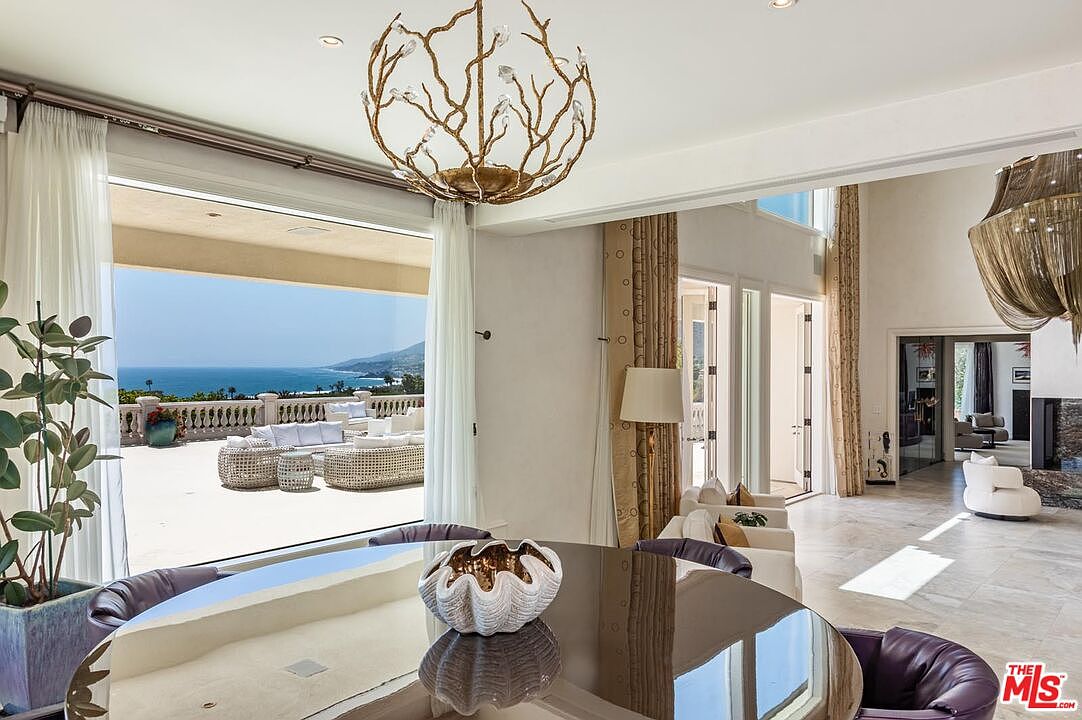
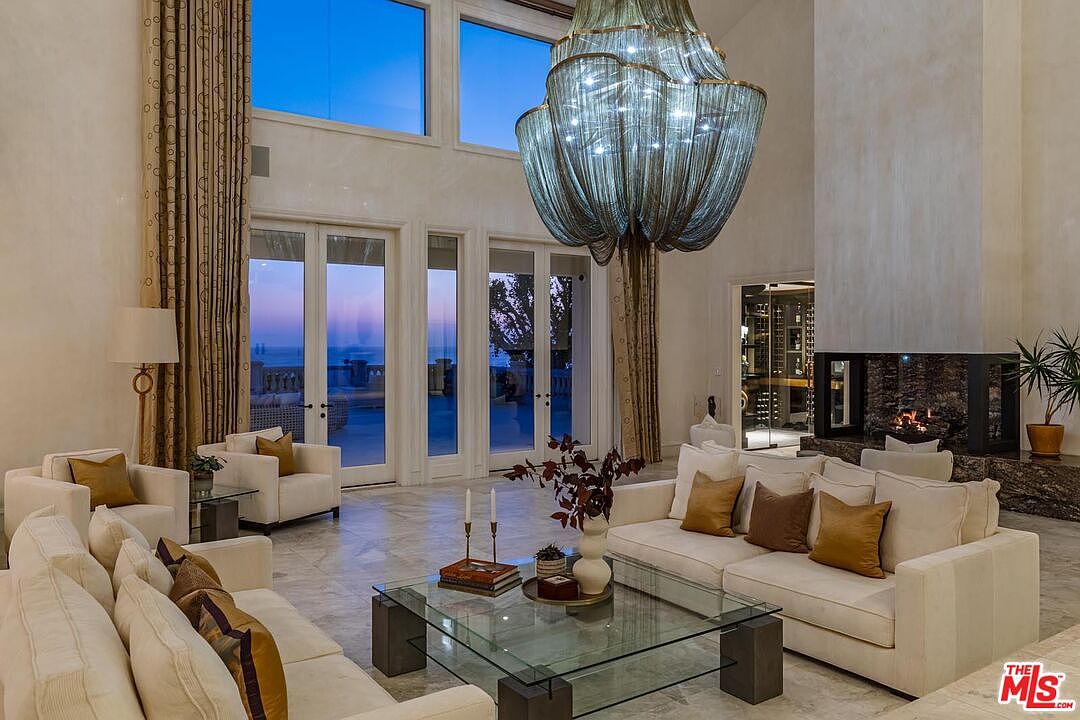
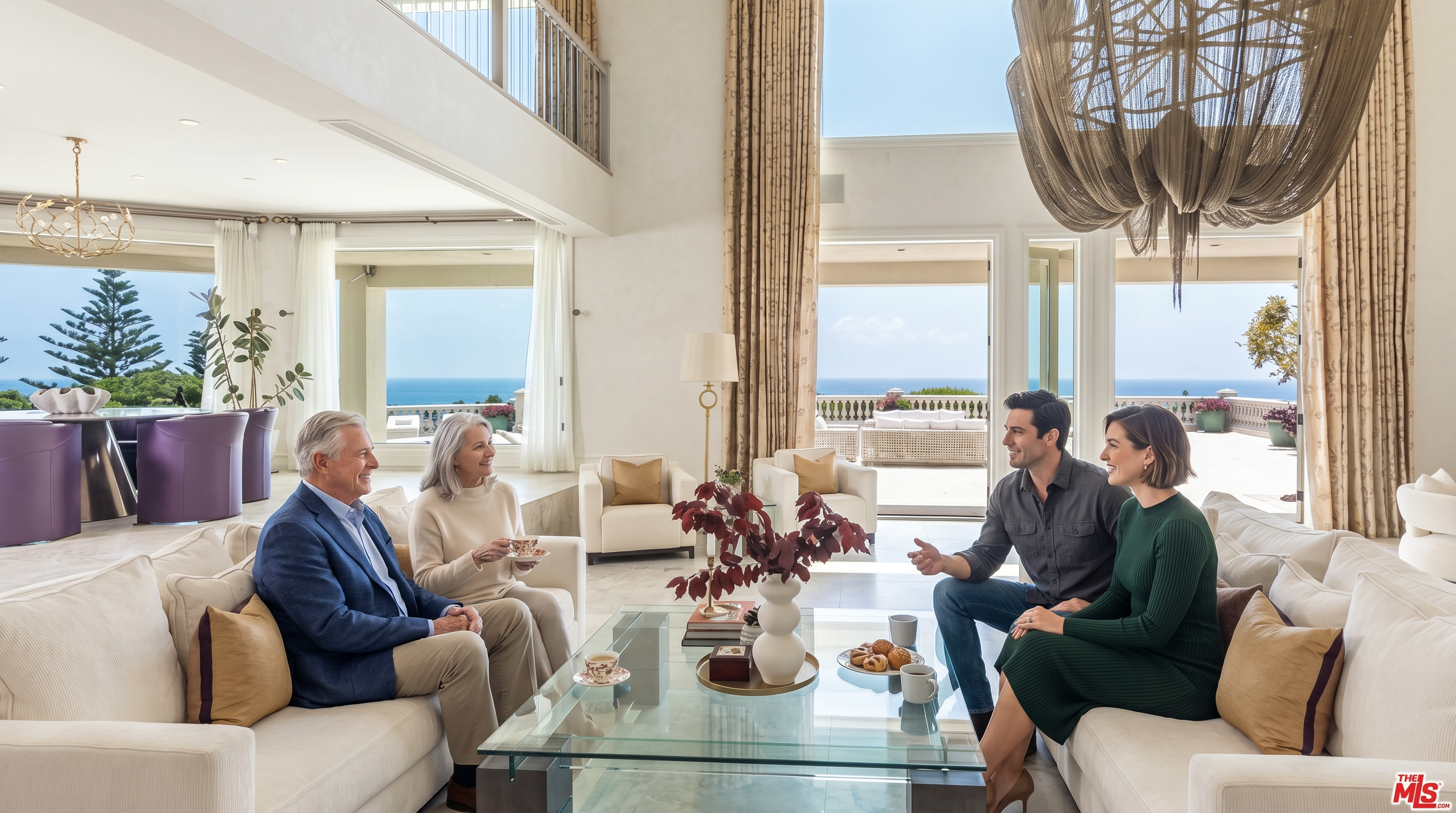
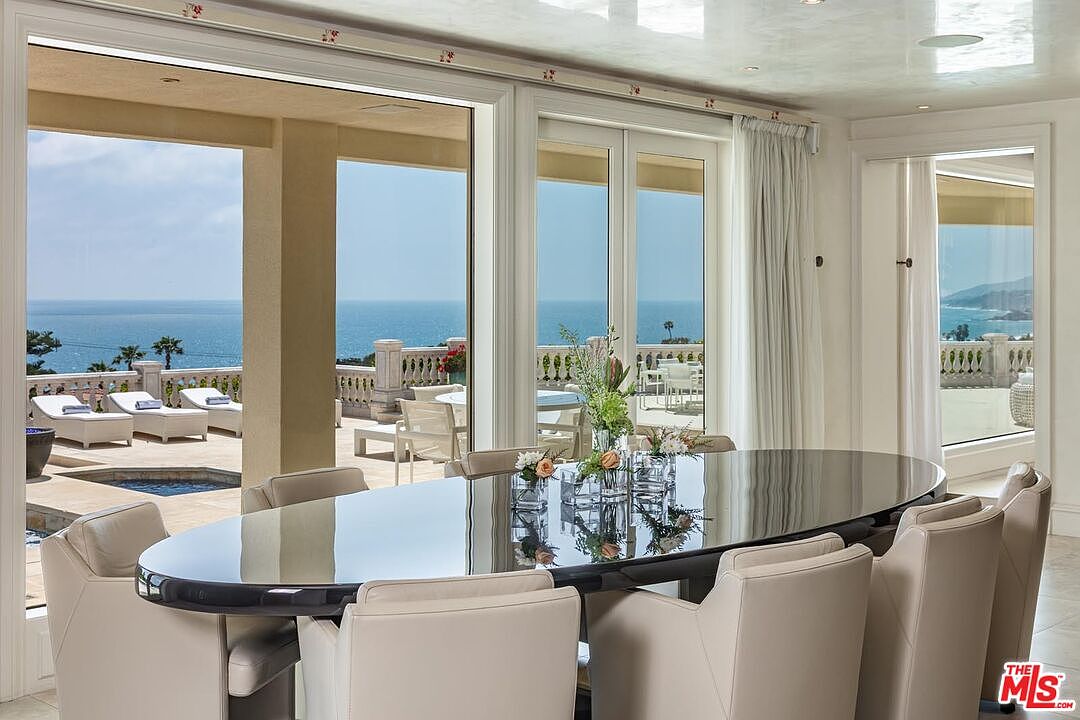
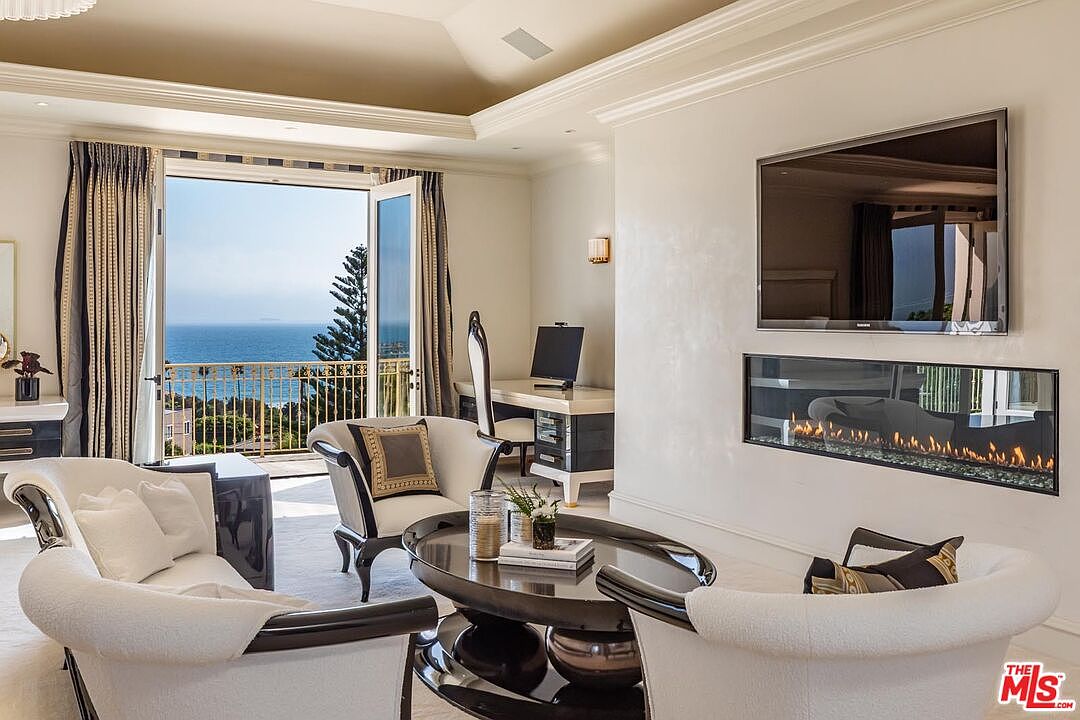
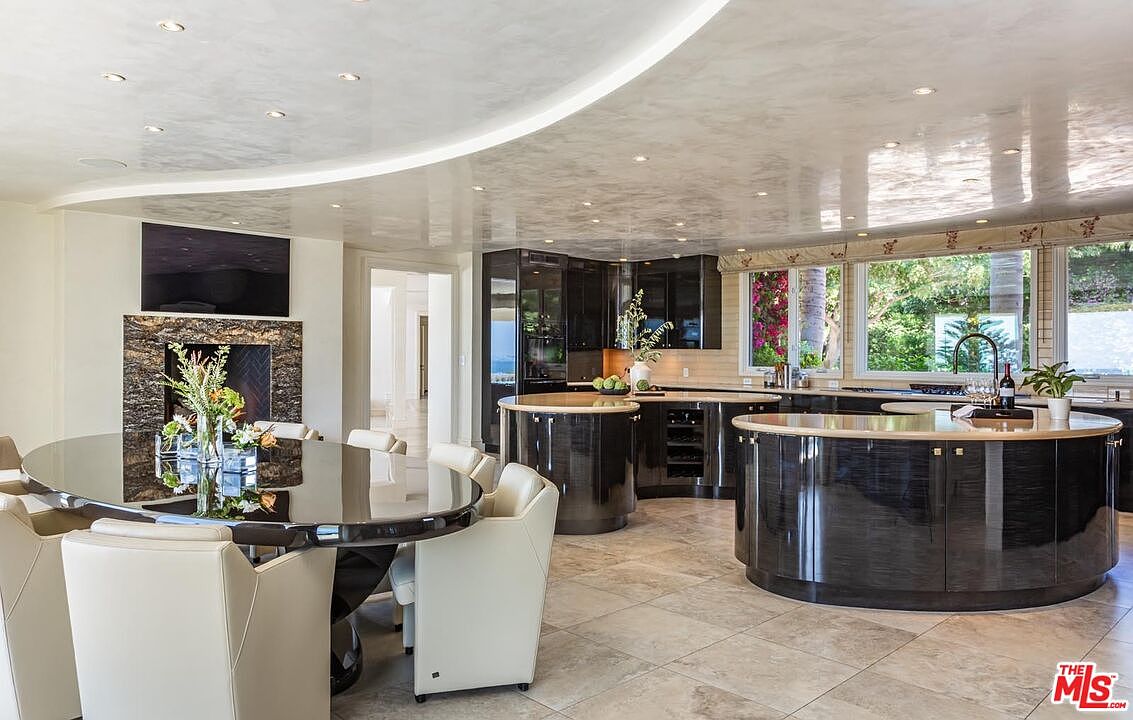
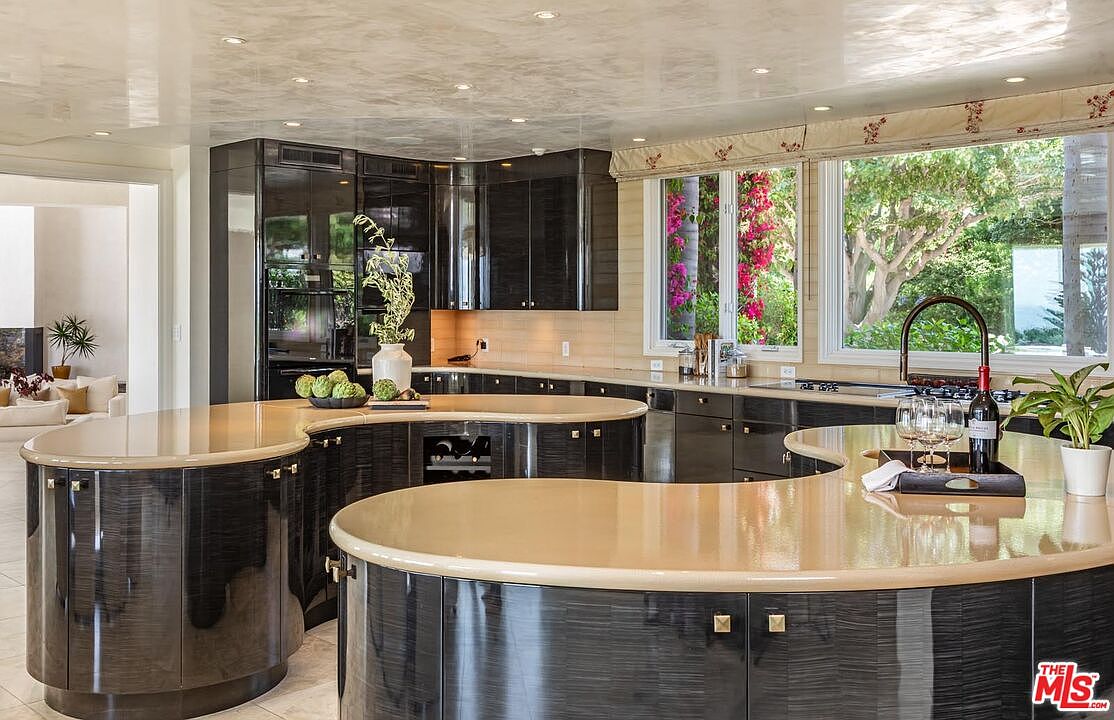
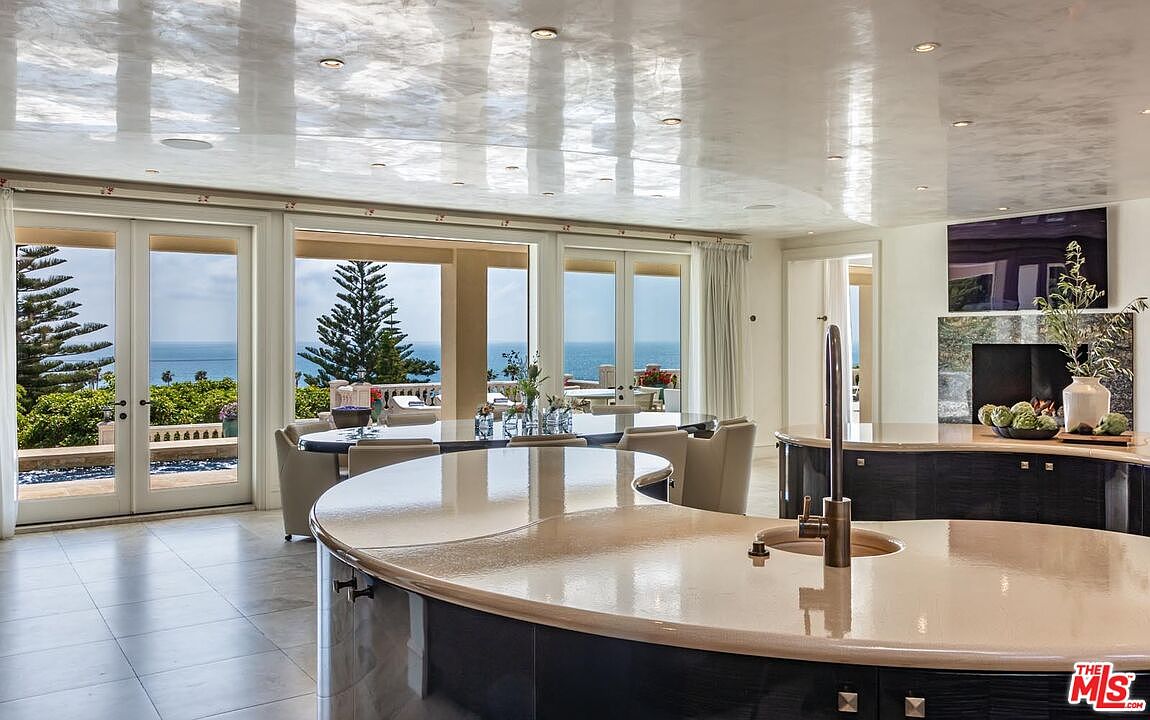
The compound's thirteen thousand three hundred eighty-five square feet unfolds with deliberate intention. The great room anchors the primary living level, its floor-to-ceiling glass doors opening directly onto an expansive deck where the coastline becomes a living canvas. The kitchen and dining spaces extend toward that same panorama, their interiors finished with sweeping curved cabinetry in high-gloss black, bespoke countertops, and a reflective ceiling that captures and multiplies the ocean light. A formal dining room, framed by floor-to-ceiling glass and crowned by an organic gold chandelier, transitions seamlessly to the terrace — the indoors and outdoors rendered functionally inseparable.
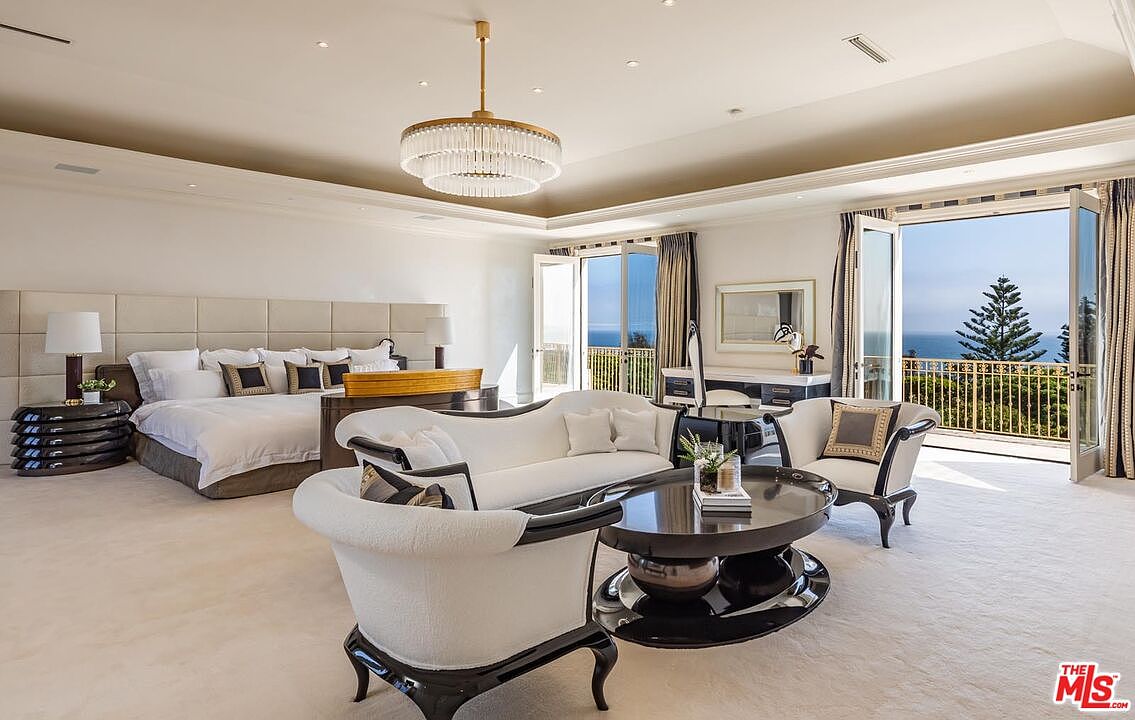
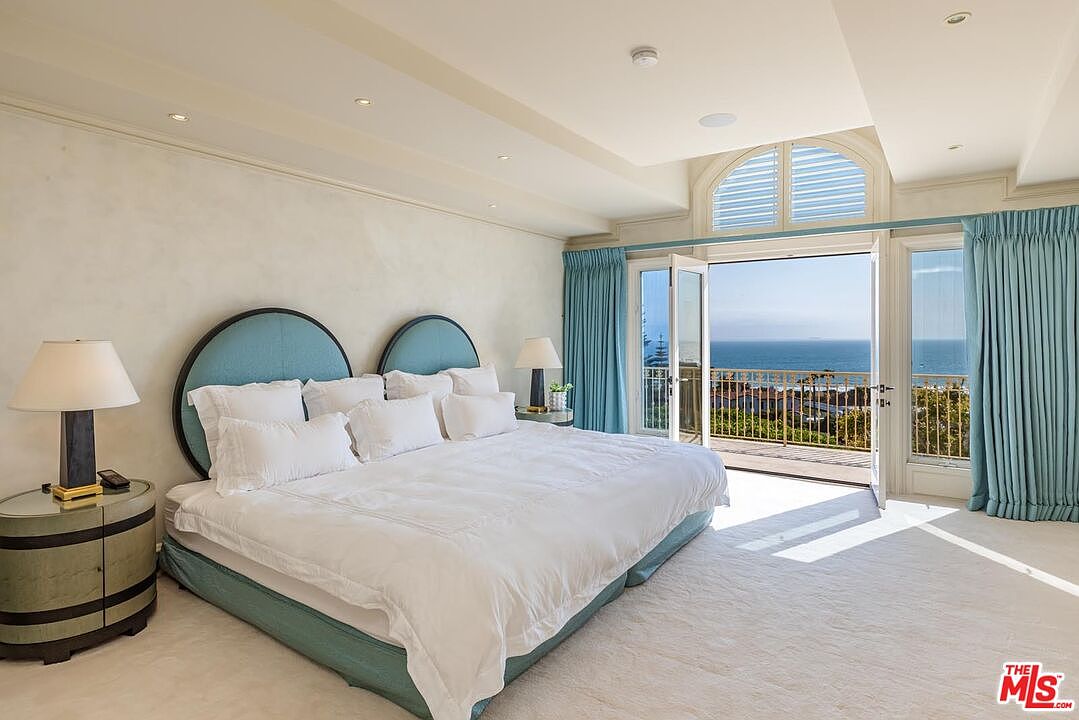
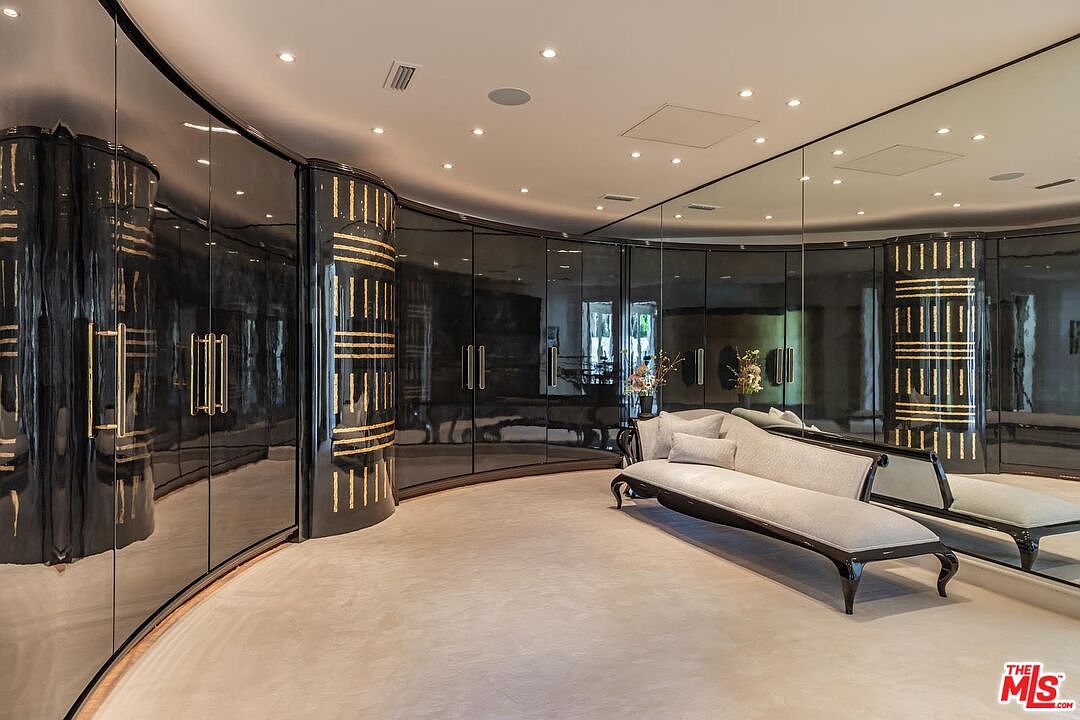
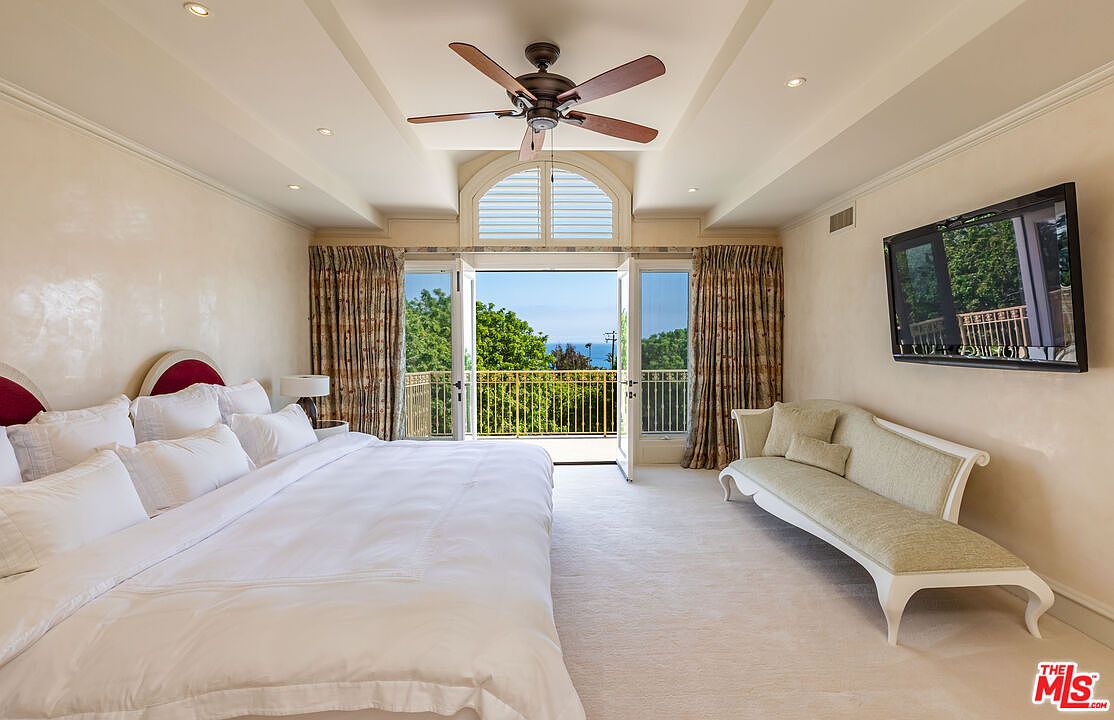
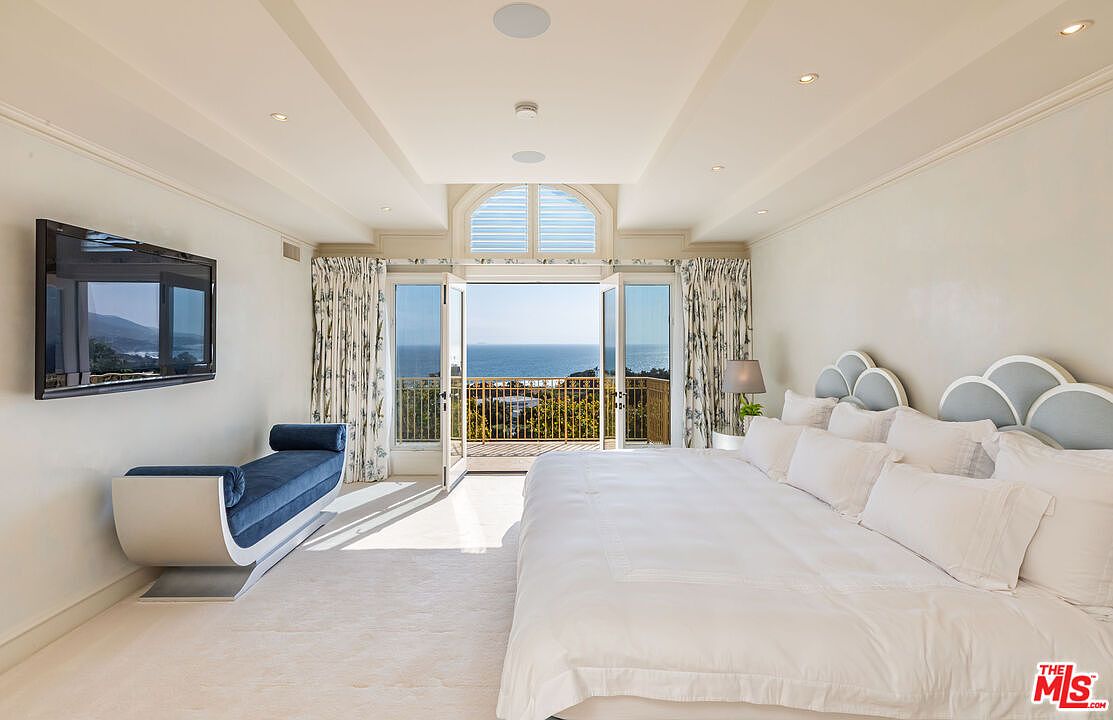
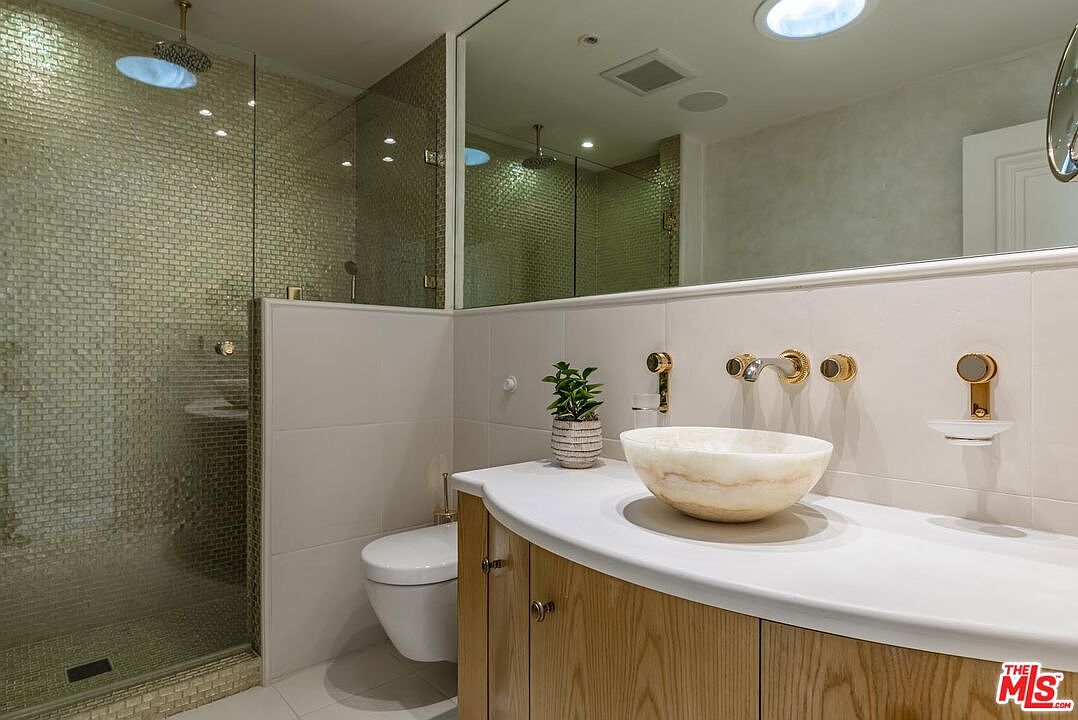
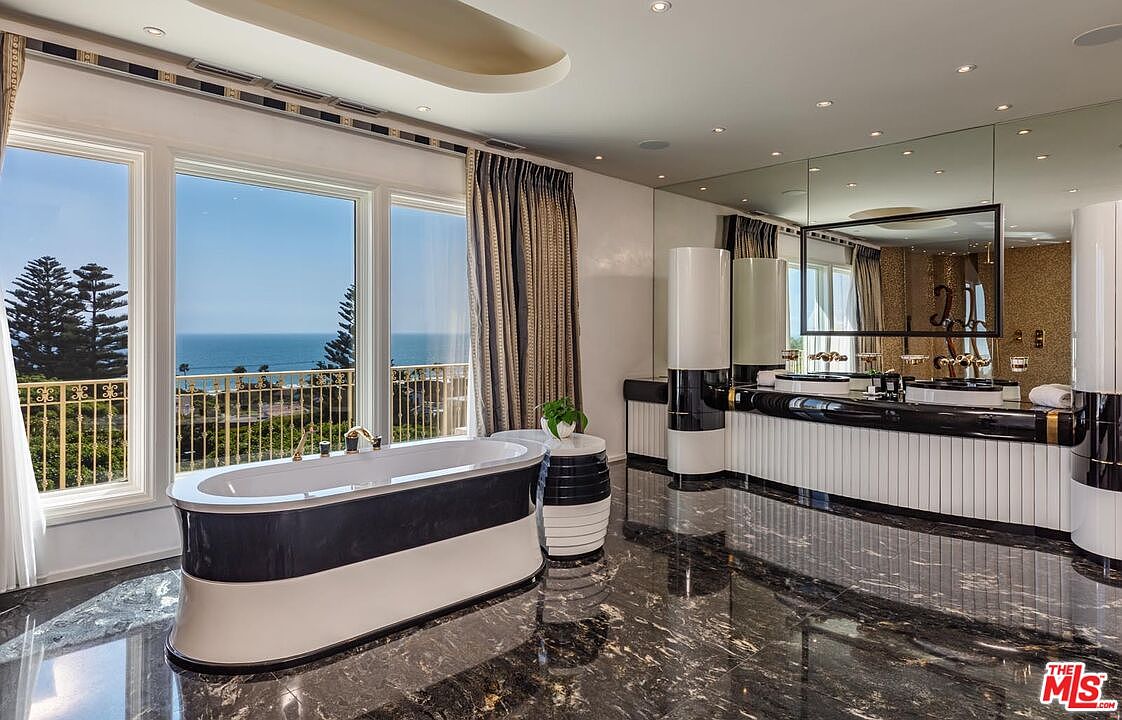
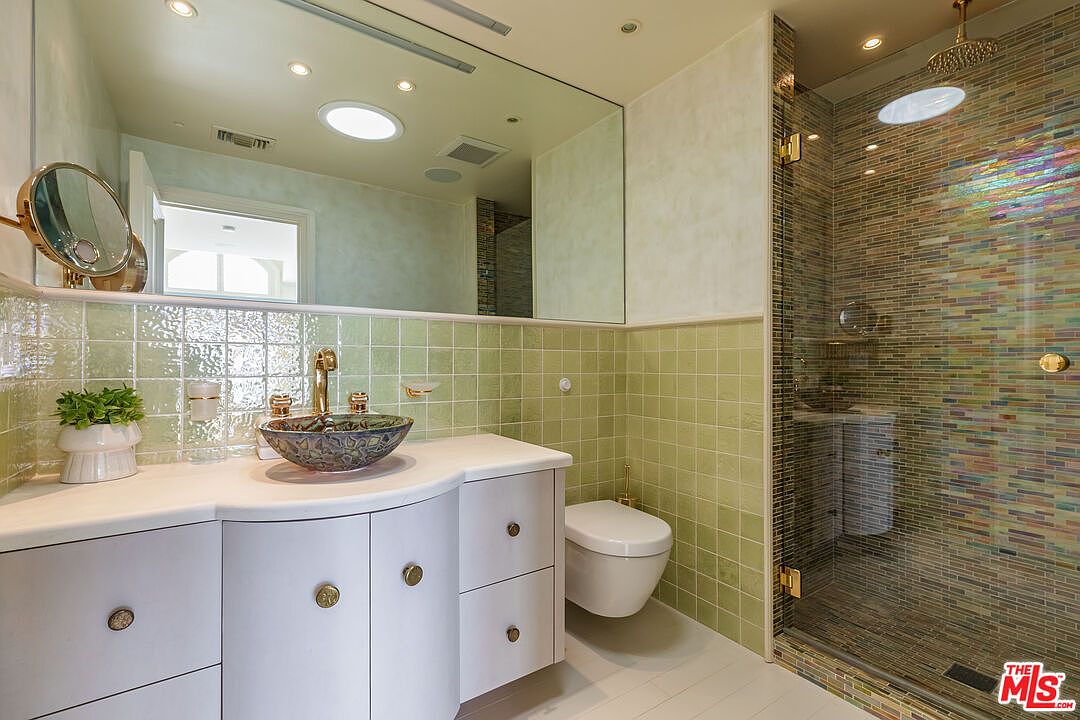
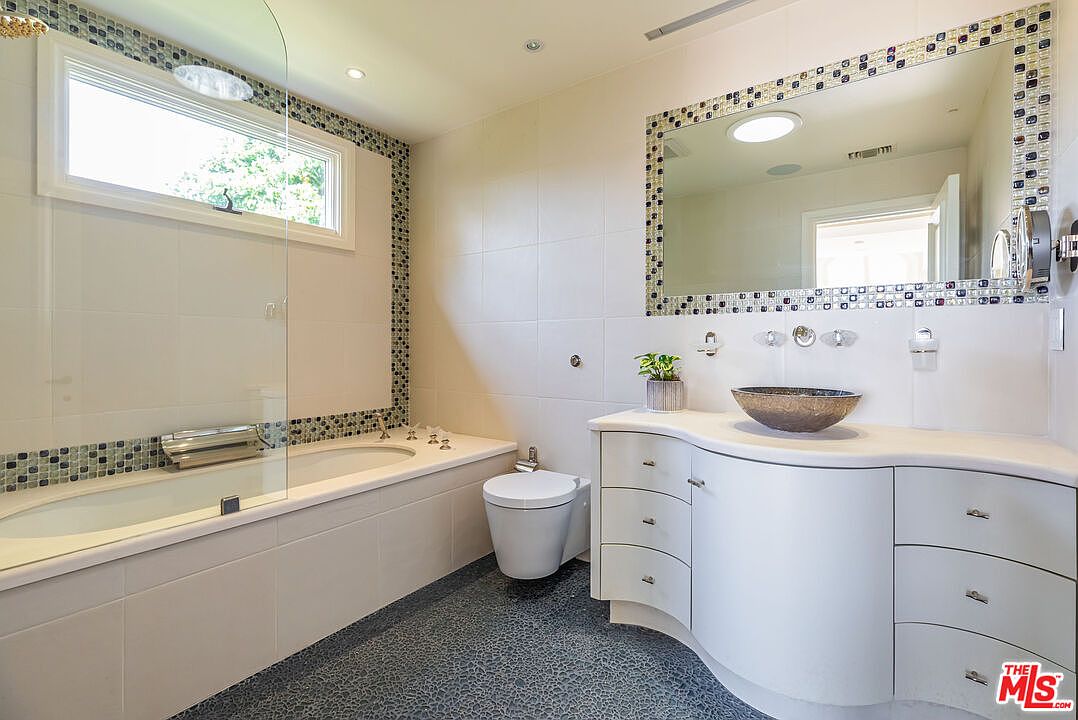
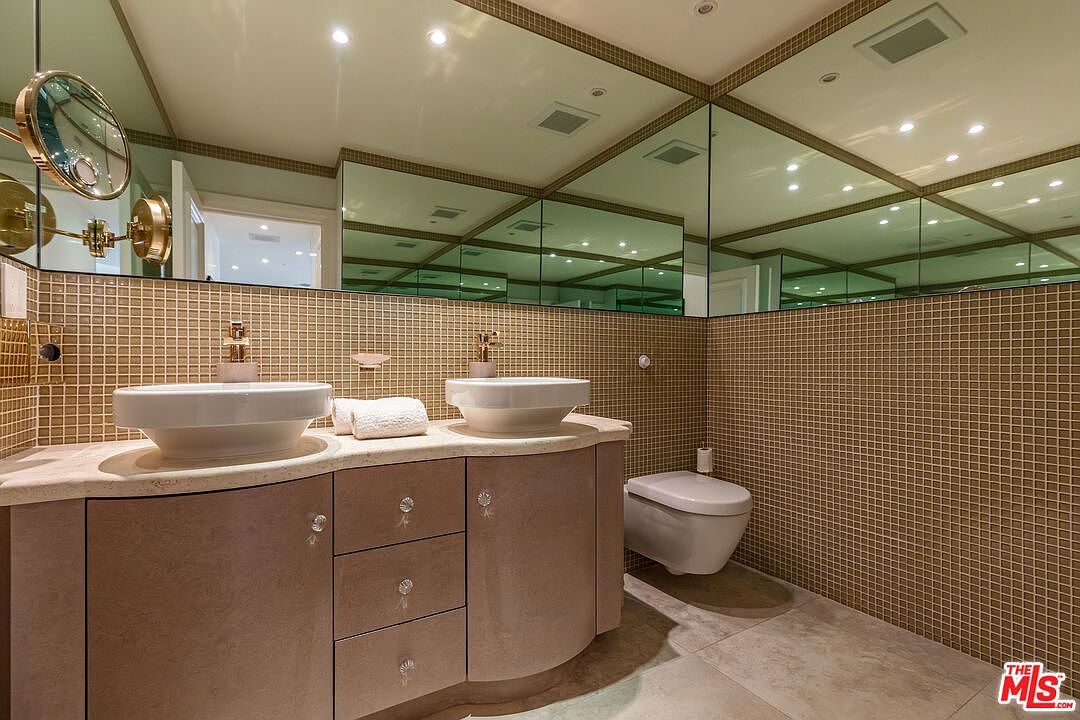
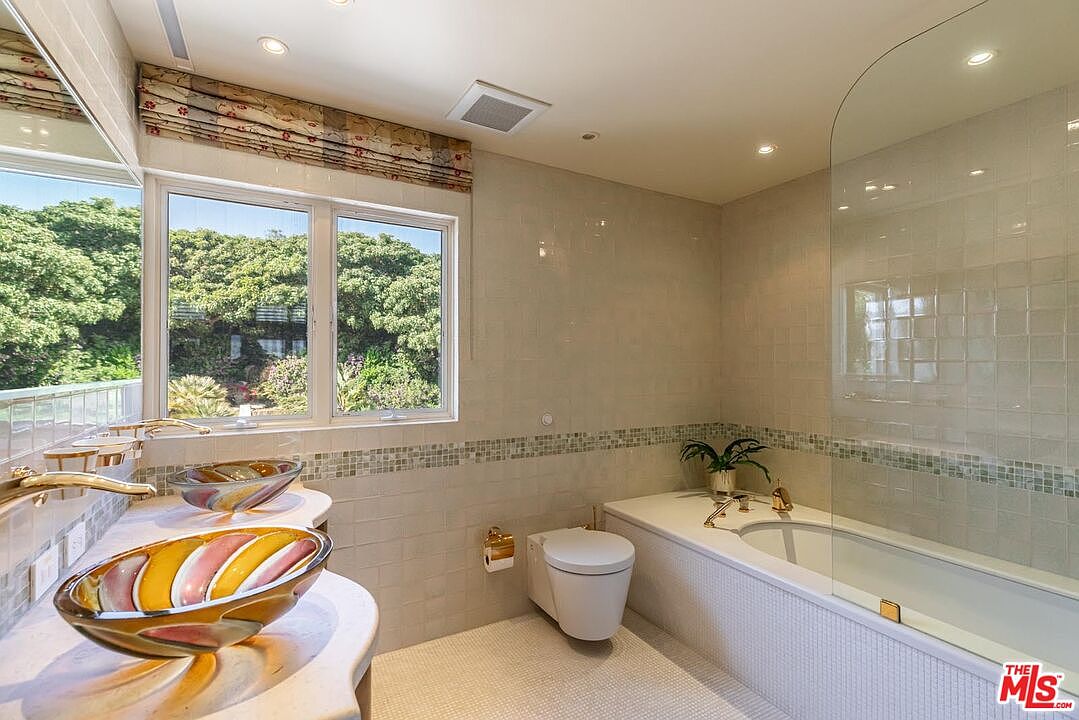
The primary suite occupies its own elevated world: a retreat scaled to match the landscape surrounding it, with a curved chaise lounge positioned toward unobstructed ocean views, private balcony access, and a dressing room appointed in dramatic curved black lacquer cabinetry with gold accents and floor-to-ceiling mirrors. The primary bathrooms speak a language of sculptural luxury — freestanding soaking tubs positioned against floor-to-ceiling ocean-view windows, Art Deco-inspired black marble with gold veining, and hand-crafted mosaic tilework that catches light from every angle. Seven additional en-suite bedrooms each carry their own distinct character, ensuring that guests and family members alike experience the estate's generosity without compromise.
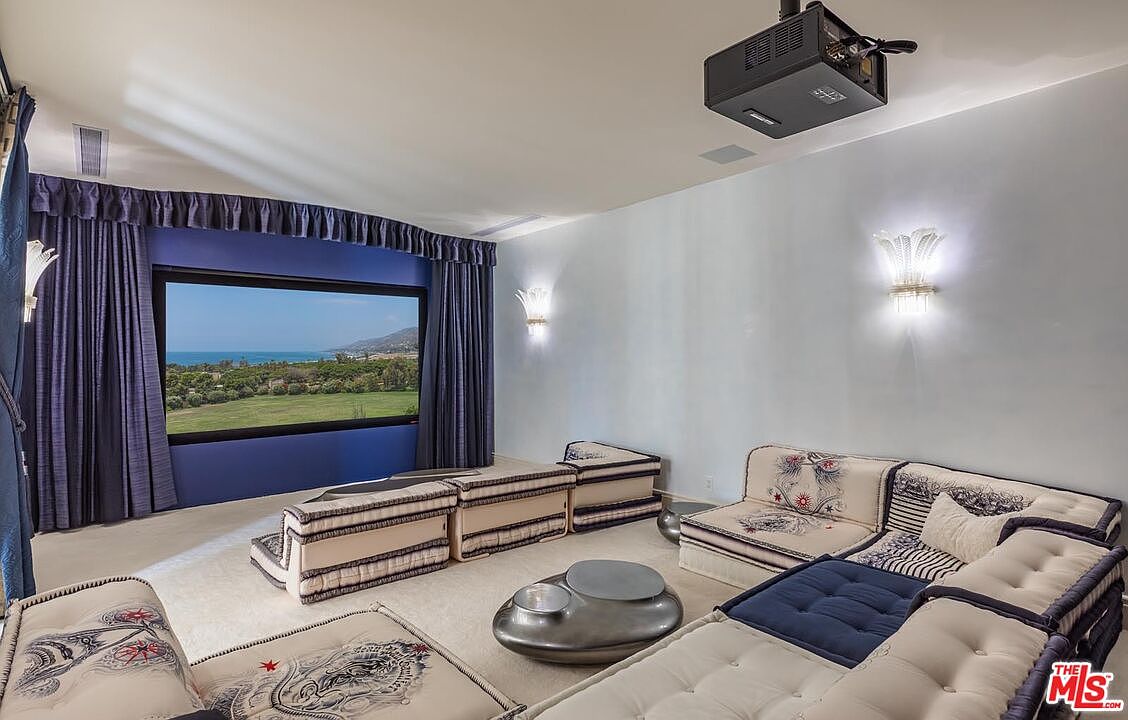
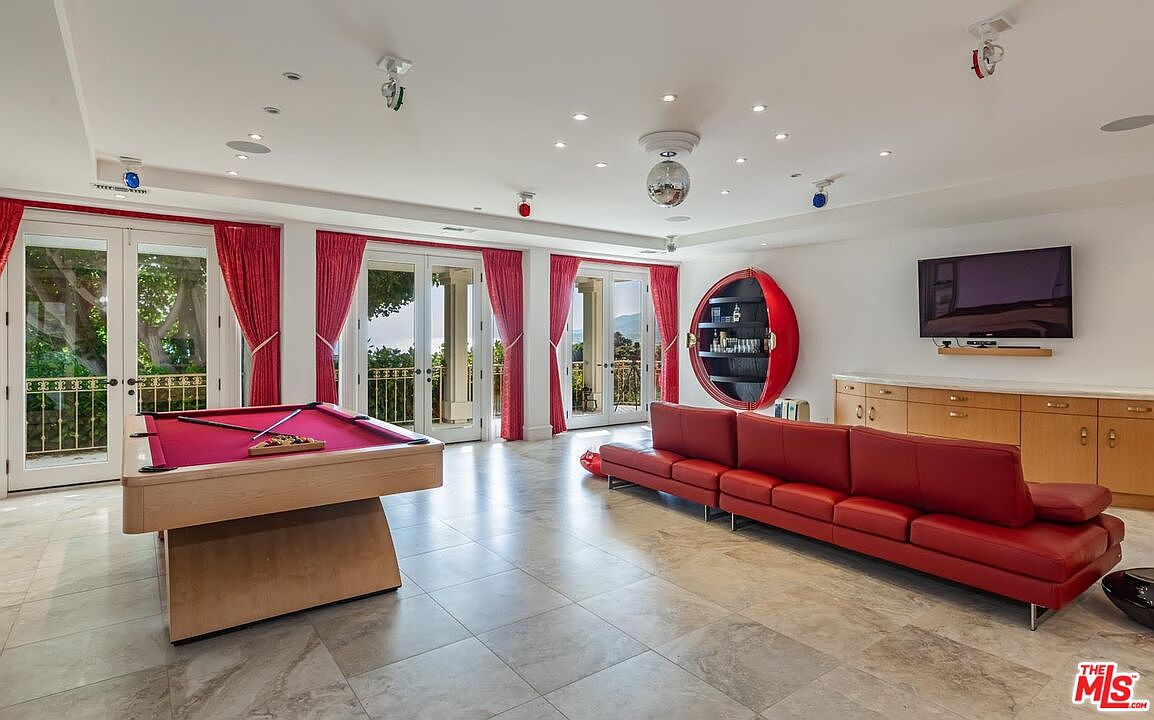
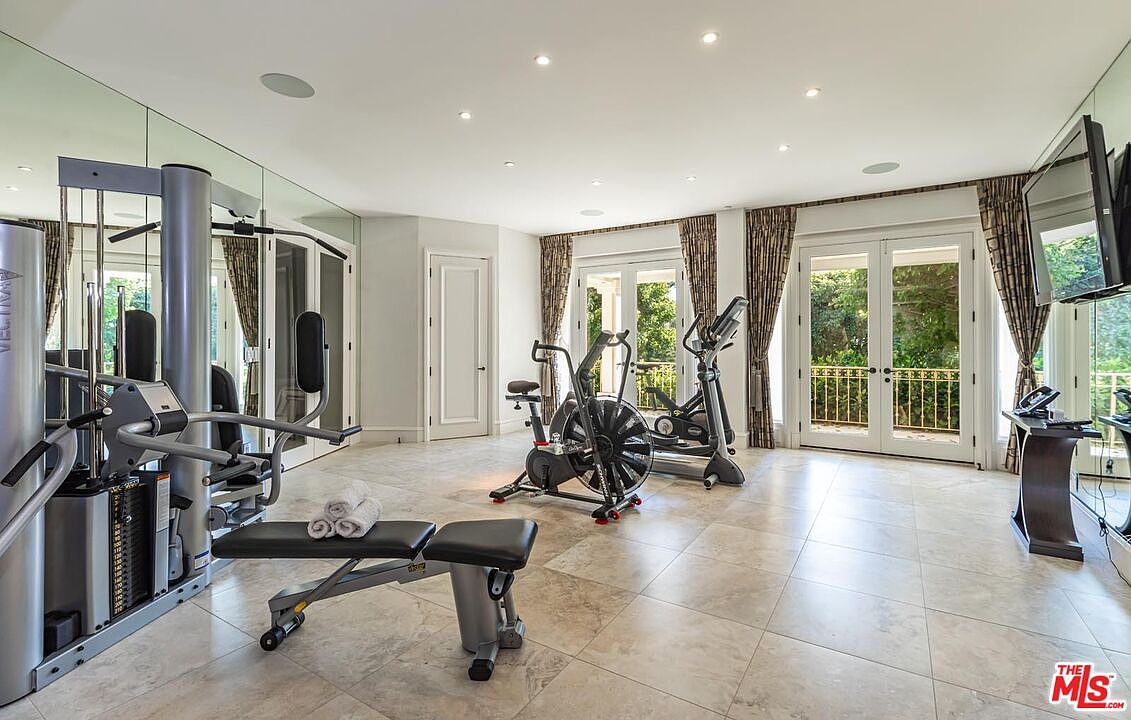
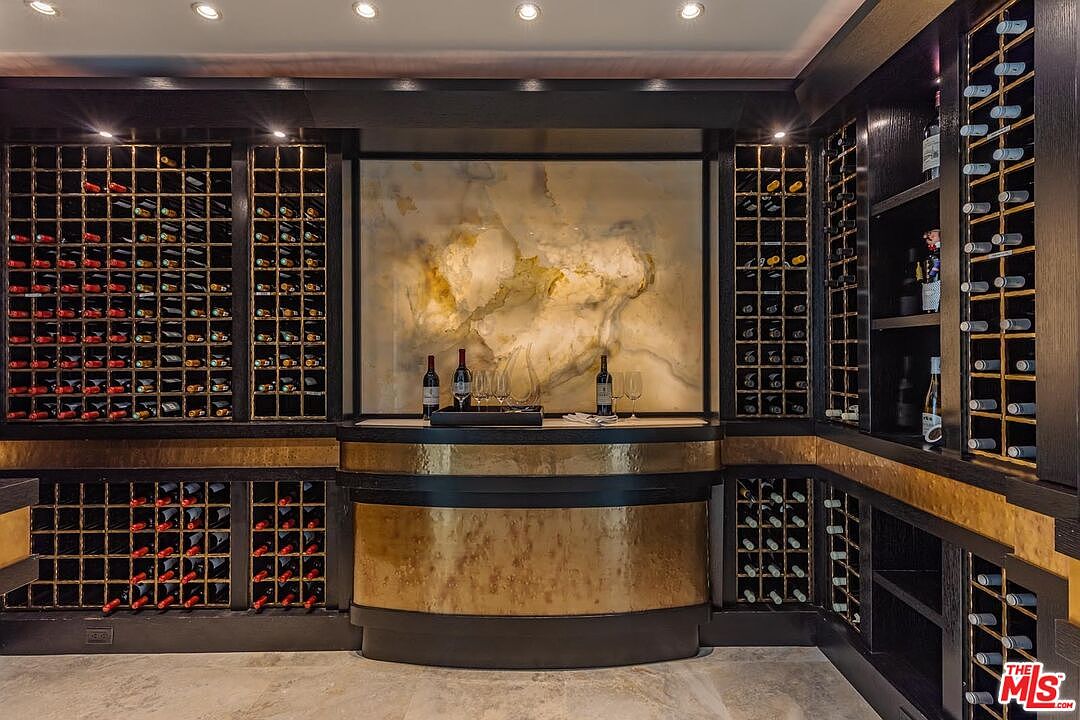
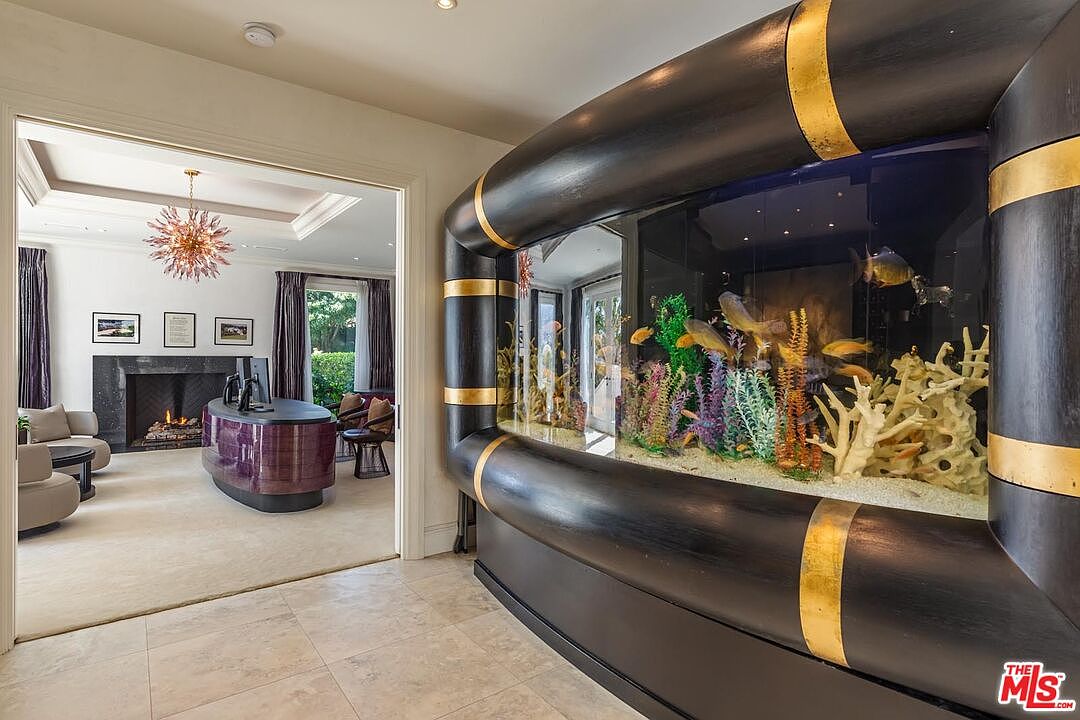
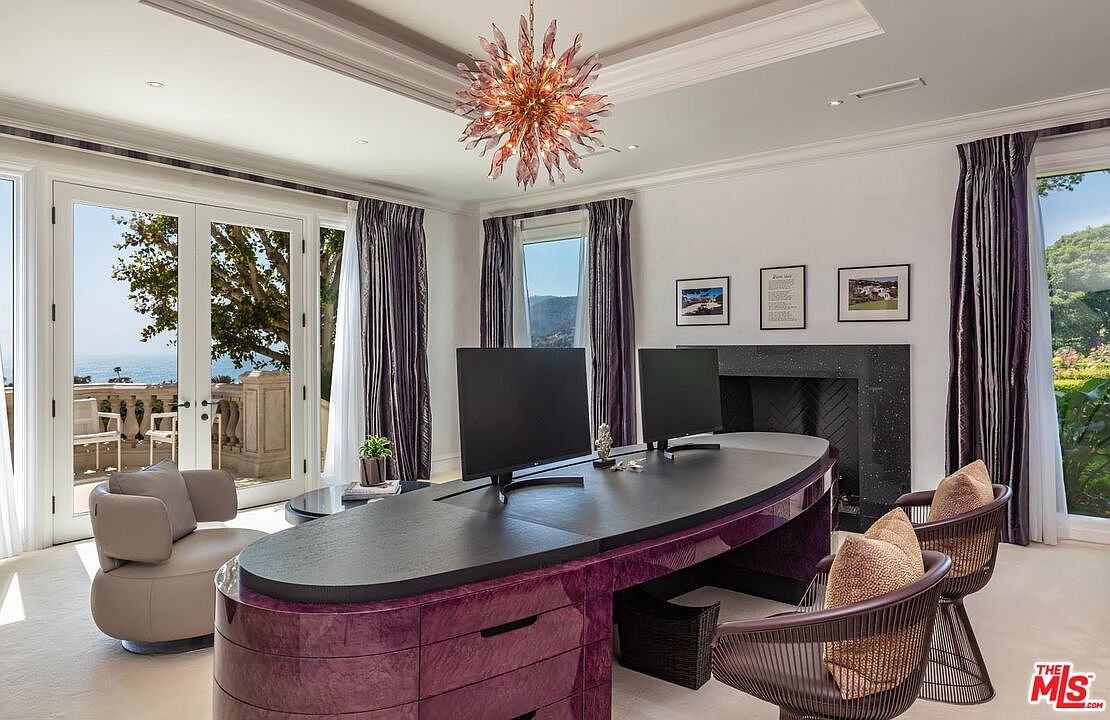
Below the main living levels, the estate earns its designation as a self-contained world. A dedicated wine cellar, finished in custom dark wood with a backlit stone slab focal wall and hammered gold bar counter, is designed for serious collectors. The private theater offers cinematic scale with deep blue drapery and modular seating. A fitness room, flooded with natural light through multiple sets of French doors, opens to the grounds. A game room, anchored by a bold red leather sectional and a circular wall-mounted bar, provides a counterpoint of levity to the estate's more formal registers. A custom-built aquarium commands the hallway, and a dedicated home office — framed by ocean views and a sputnik chandelier — serves the demands of those who must remain productive even here.
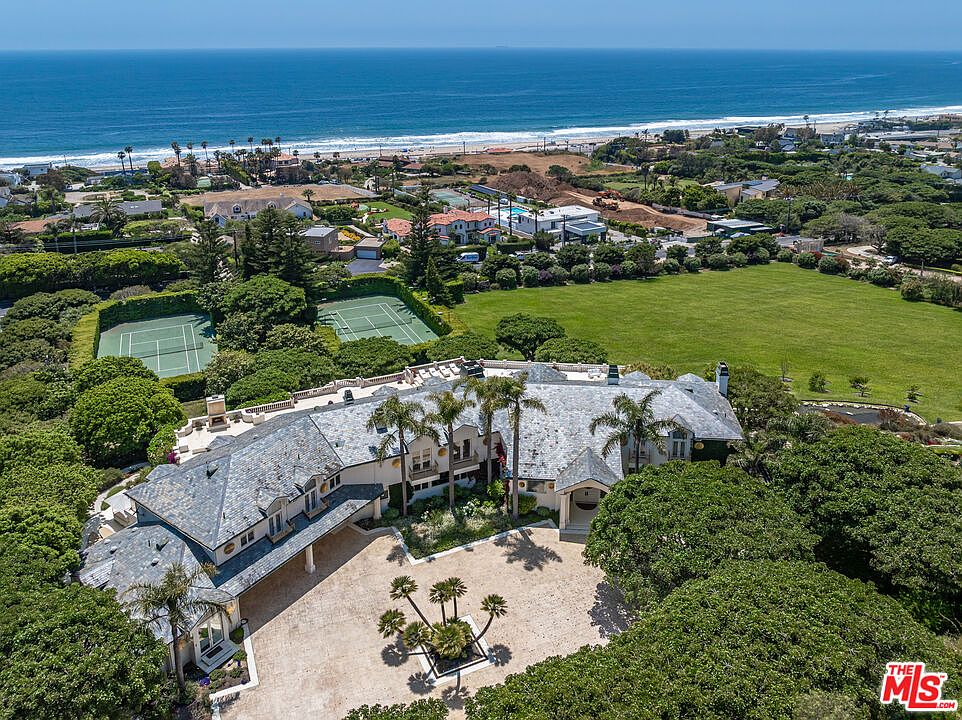
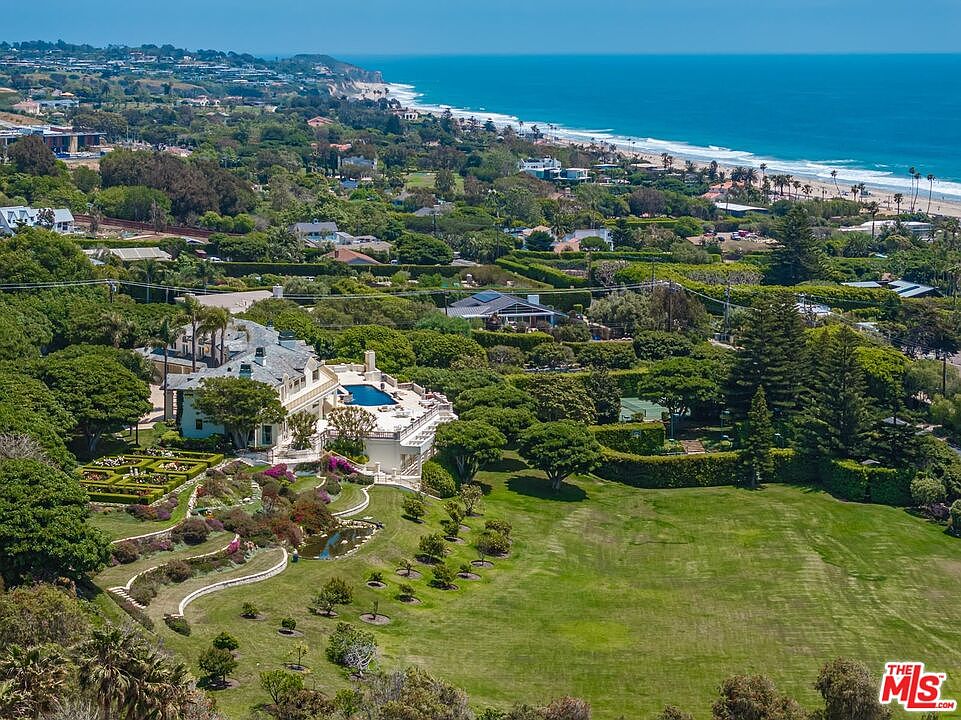
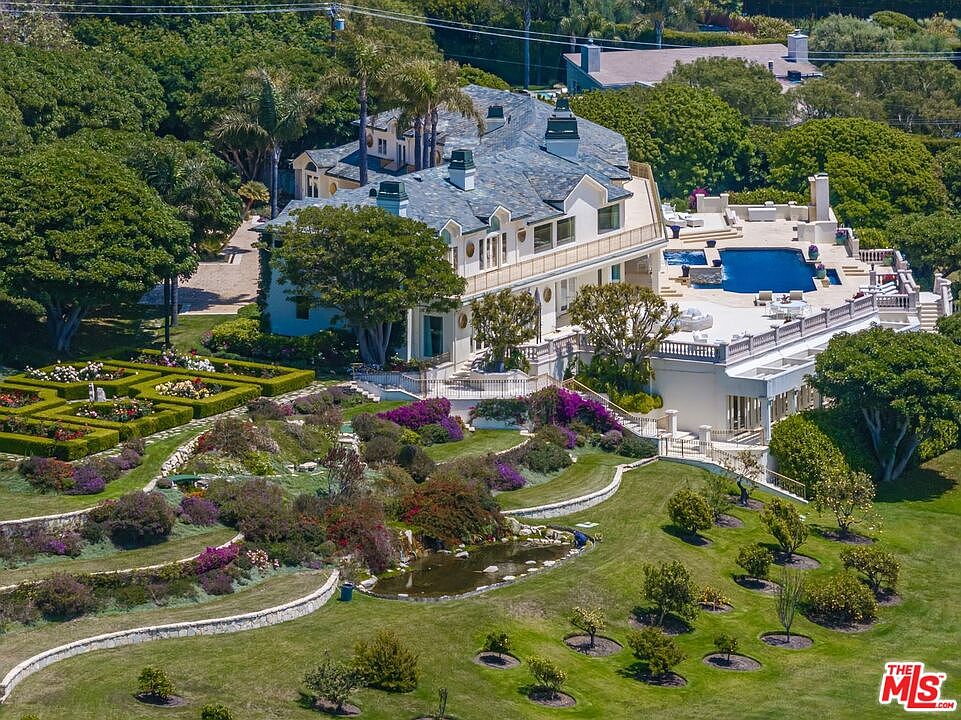
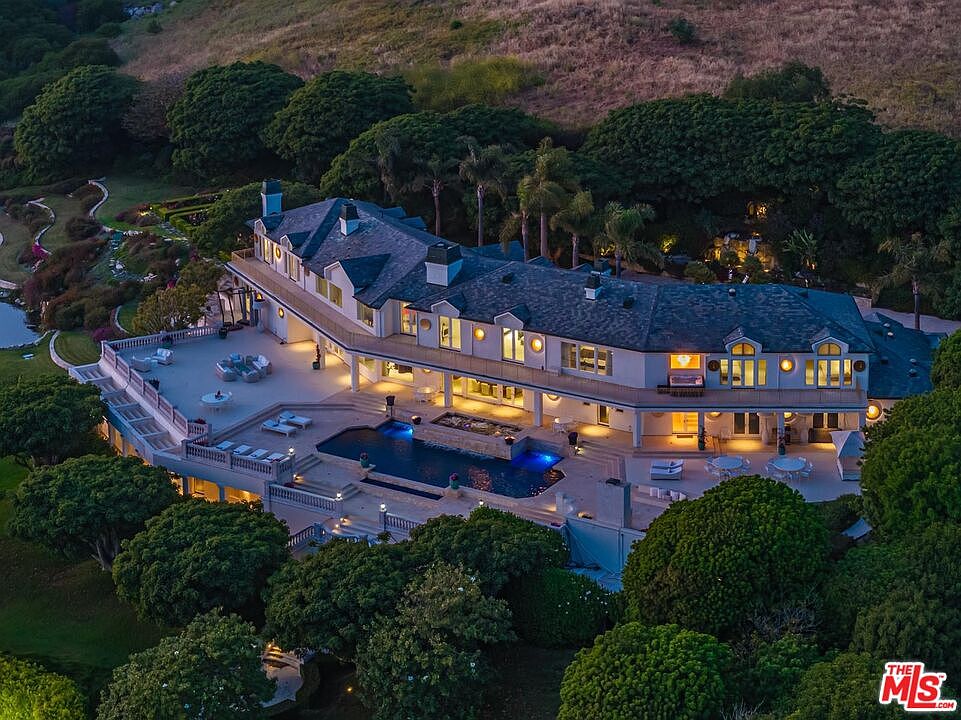
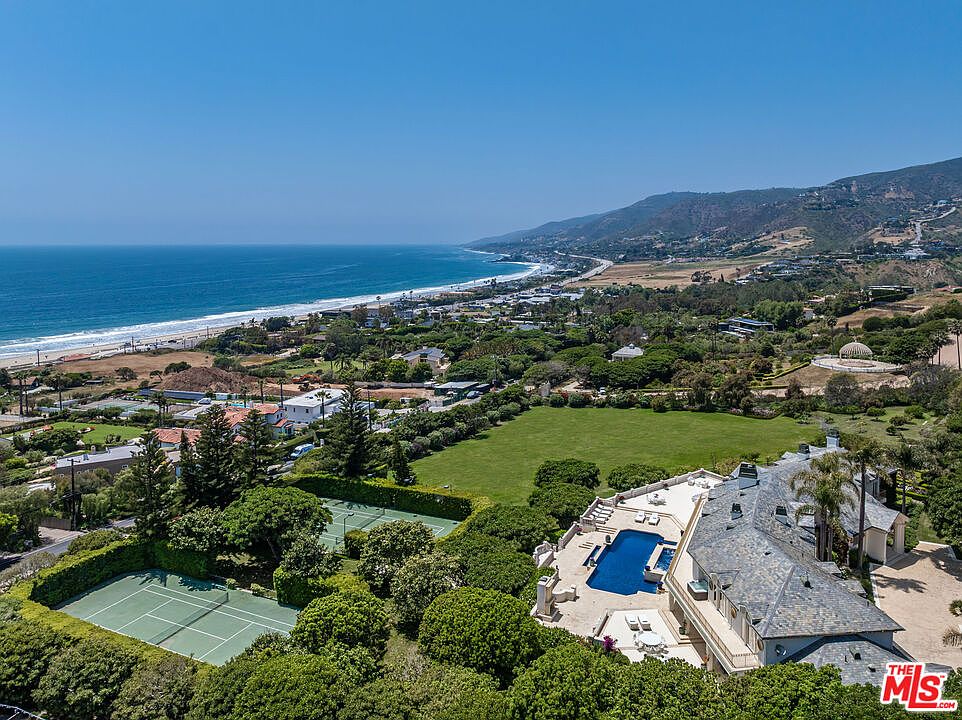
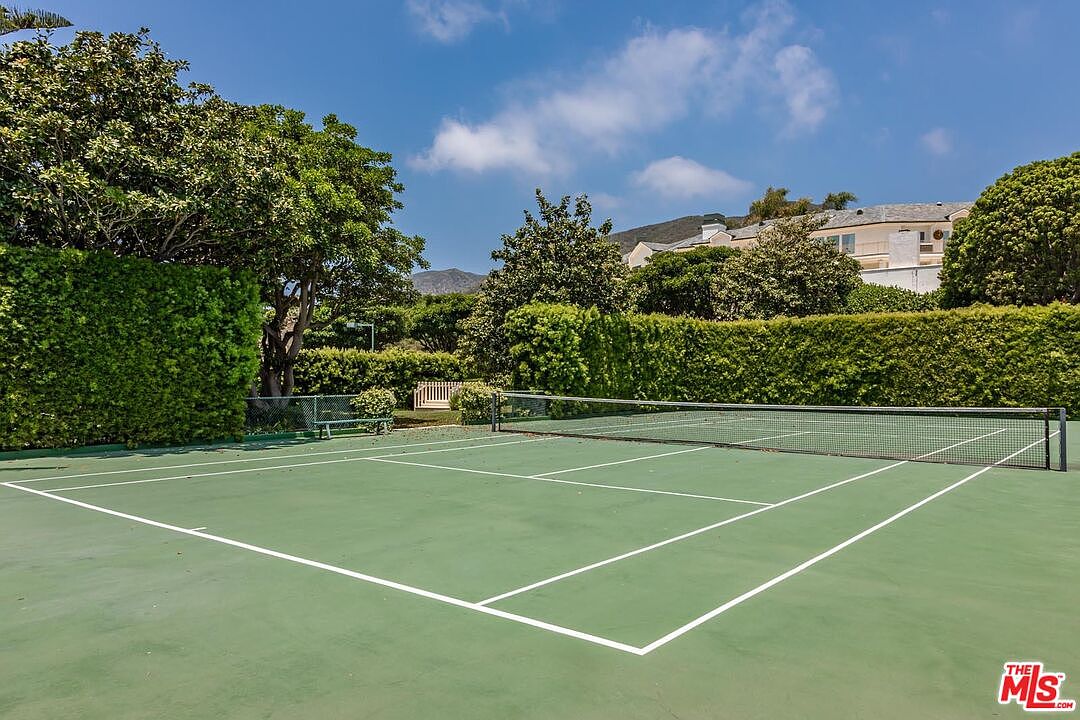
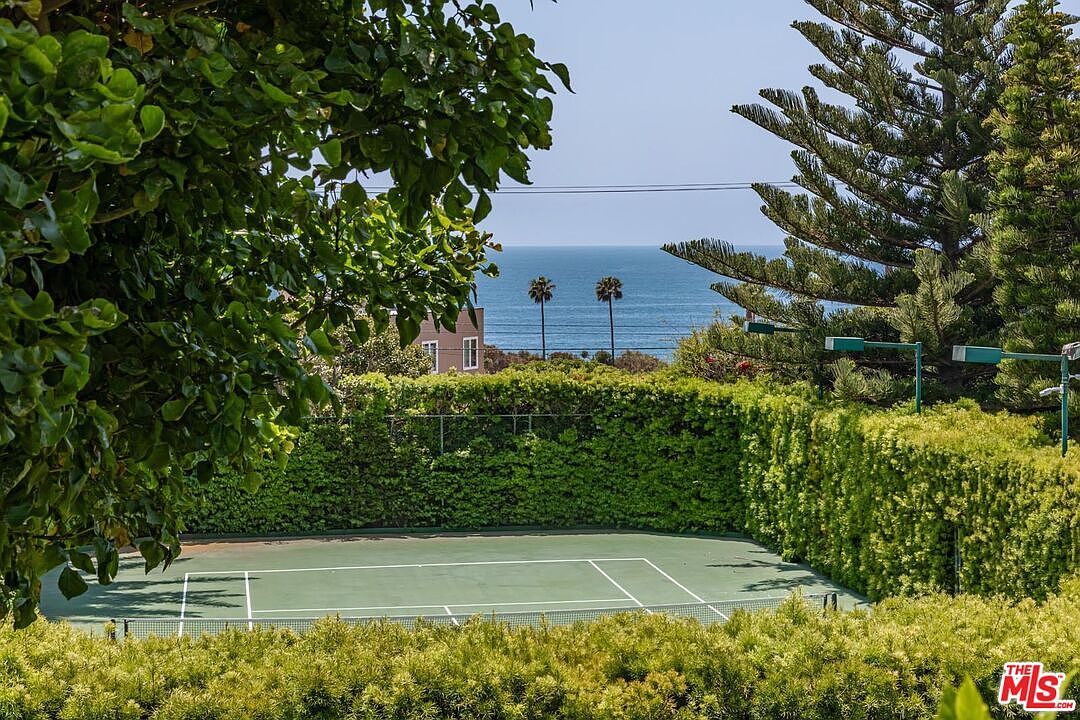
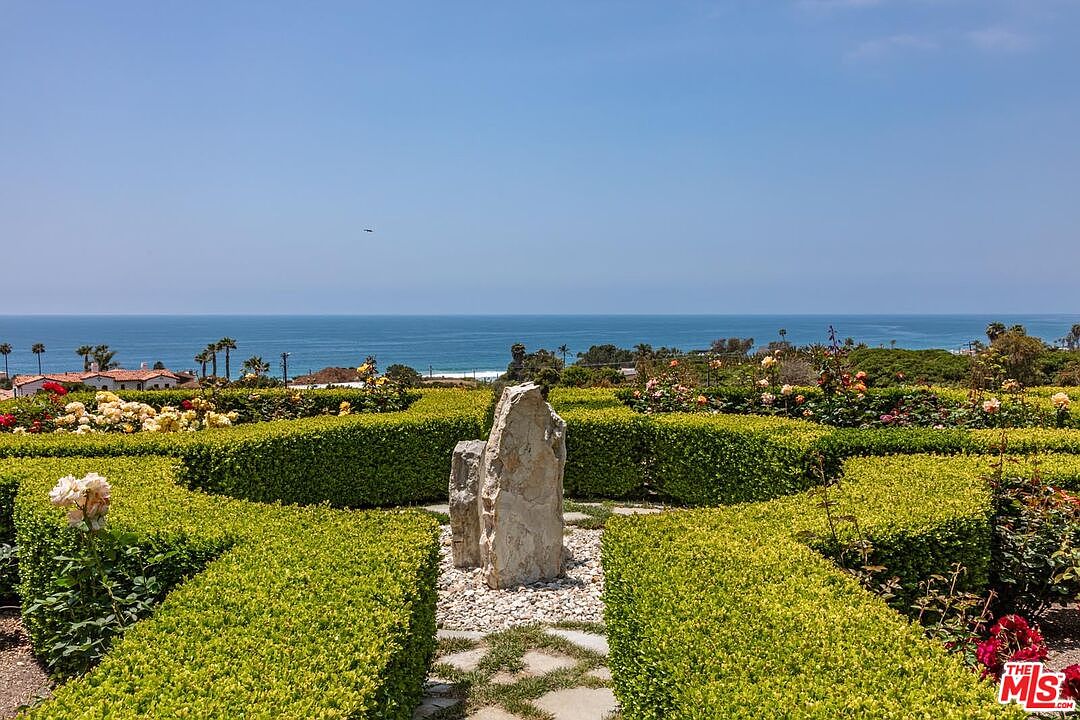
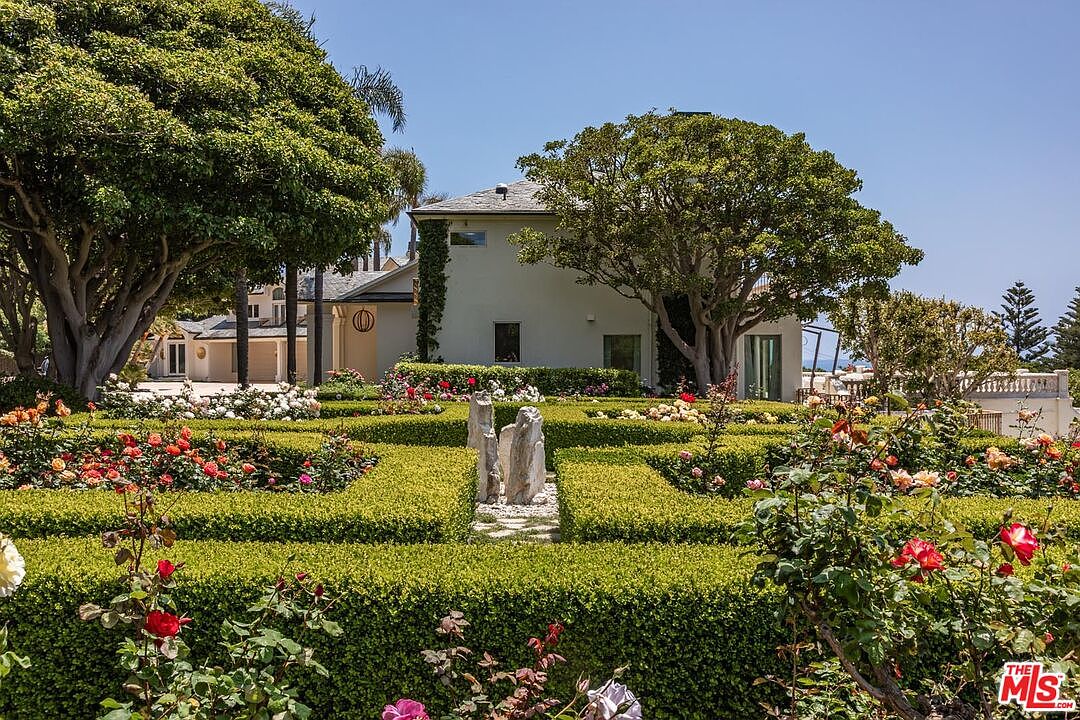
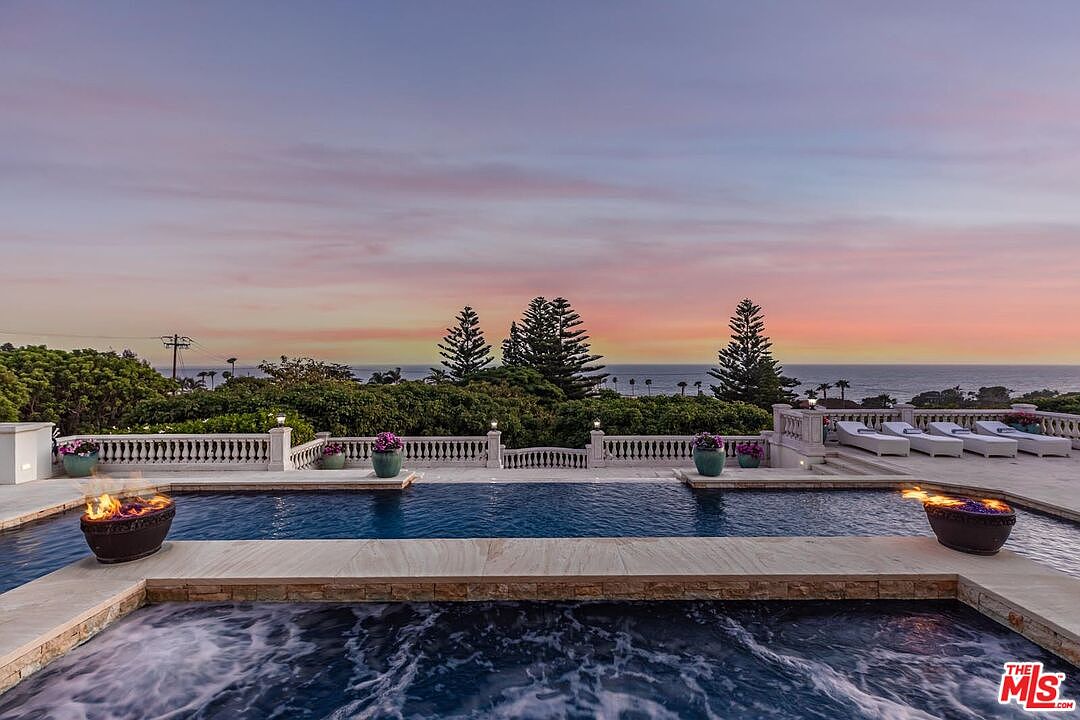
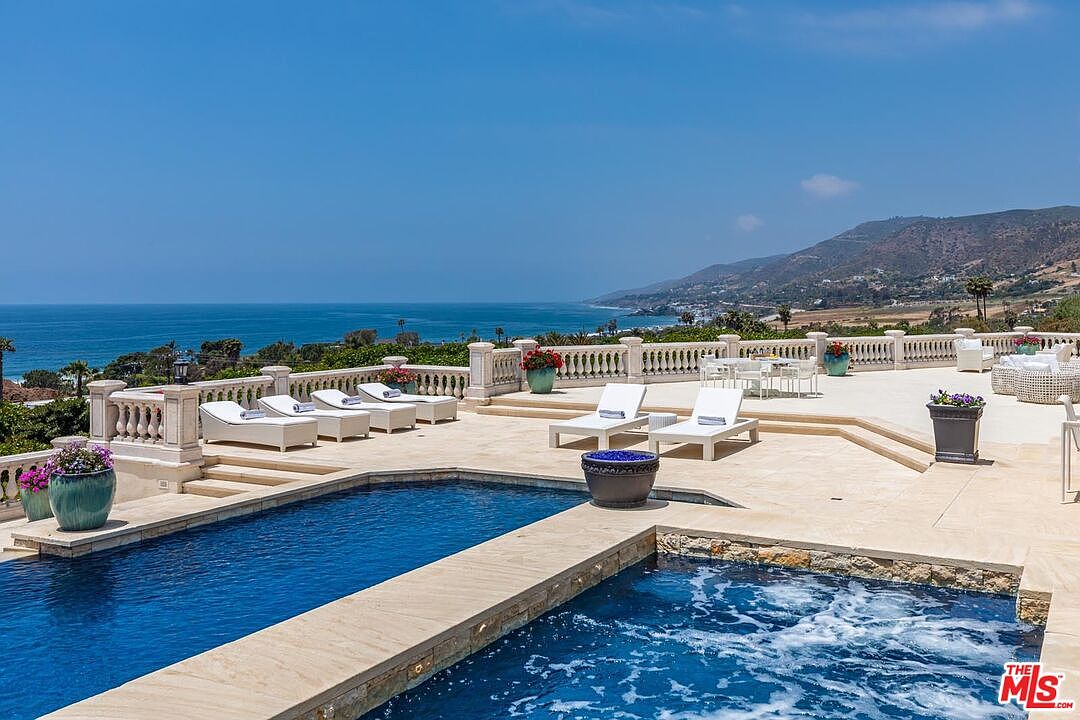
Outside, the grounds perform with equal ambition. The infinity-edge pool and oversized spa appear to pour directly into the Pacific, flanked by cascading waterfalls and fire bowls. Manicured Italian and rose gardens frame the pool terrace with sculptural precision. A koi pond, populated with koi and turtles, anchors a quieter corner of the property. Over thirty mature fruit trees create a fragrant, productive canopy across the acreage. Two full-size tennis courts — one privately lighted for evening play — complete the recreational offering, while the broader grounds retain the footprint of a former three-hole golf course and carry genuine capacity for equestrian facilities, a private sport court, or whatever the next steward of this estate chooses to build.
Malibu occupies a singular position in the geography of the American imagination — twenty-one miles of Pacific coastline stretching from the Santa Monica Mountains to the Ventura County line, a place where the continent meets the ocean on its own dramatic terms. But within Malibu, location still matters enormously, and the western end, anchored by the wide, north-facing arc of Zuma Beach, represents the stretch most coveted by those who have come to know the difference.
Zuma Beach, one block from the property, is among the largest and most celebrated public beaches in Los Angeles County. Its broad sandy expanse, consistent surf, and lifeguard-protected waters have made it a landmark of Southern California coastal life for decades. For residents of Philip Avenue, it is simply the end of a short walk — or a two-minute golf cart ride, with a dedicated pedestrian crosswalk providing direct access to the sand. The Pacific Coast Highway here carries a different energy than the canyon-flanked stretches to the south: the horizon opens, the mountains recede, and the scale of the ocean asserts itself fully.
Point Dume, the dramatic volcanic headland that defines the western boundary of Santa Monica Bay, lies minutes away. Its coastal trails, tide pools, and protected cove — beloved by locals and known to relatively few visitors — represent one of the most spectacular pieces of accessible California coastline. The Point Dume State Beach and Preserve offers hiking trails above the bluffs, with views that encompass the entirety of the bay on clear days and, in season, the migration routes of Pacific gray whales.
The surrounding community balances privacy with genuine village character. Point Dume Village provides everyday essentials with the quiet efficiency of a neighborhood that serves residents rather than tourists. Trancas Country Market, a short drive west, has long served as a gathering point for the western Malibu community — a place where the organic, the artisanal, and the reliably local coexist. Acclaimed restaurants along the PCH corridor, from seafood institutions to more recent culinary arrivals, offer dining that would distinguish any urban neighborhood.
Malibu's public schools, particularly Malibu High School within the Santa Monica-Malibu Unified School District, are consistently ranked among the top performing in the region. The broader area also provides access to a range of well-regarded private educational institutions across the west side of Los Angeles.
For those whose lives require private aviation, the property's access coordinates are equally considered. Van Nuys Airport, the primary general aviation facility serving the San Fernando Valley, is accessible via the canyon routes that connect Malibu to the interior. Camarillo Airport, even closer via the Pacific Coast Highway heading north, offers an additional facility that residents of the western end frequently prefer for its relative ease of access.
What Malibu ultimately offers — and what this particular address delivers in full measure — is the experience of living in genuine proximity to the Pacific while retaining the privacy, the acreage, and the infrastructure of a private estate. That combination, at this scale, on this stretch of coastline, does not become available often. When it does, it defines the standard against which everything else is measured.
Featured Highlights
Curated Content • Presented by Amber Reed