The Story Behind
A Fully Occupied North Beach Icon Delivering Exceptional Returns
There are buildings that simply occupy a corner, and then there are buildings that define one. 1234 Grant Avenue belongs unmistakably to the latter category. Its vivid red facade, punctuated by bold black trim and a signature bay window, commands attention at one of North Beach's most recognized intersections — a presence that is at once architecturally distinguished and commercially magnetic.
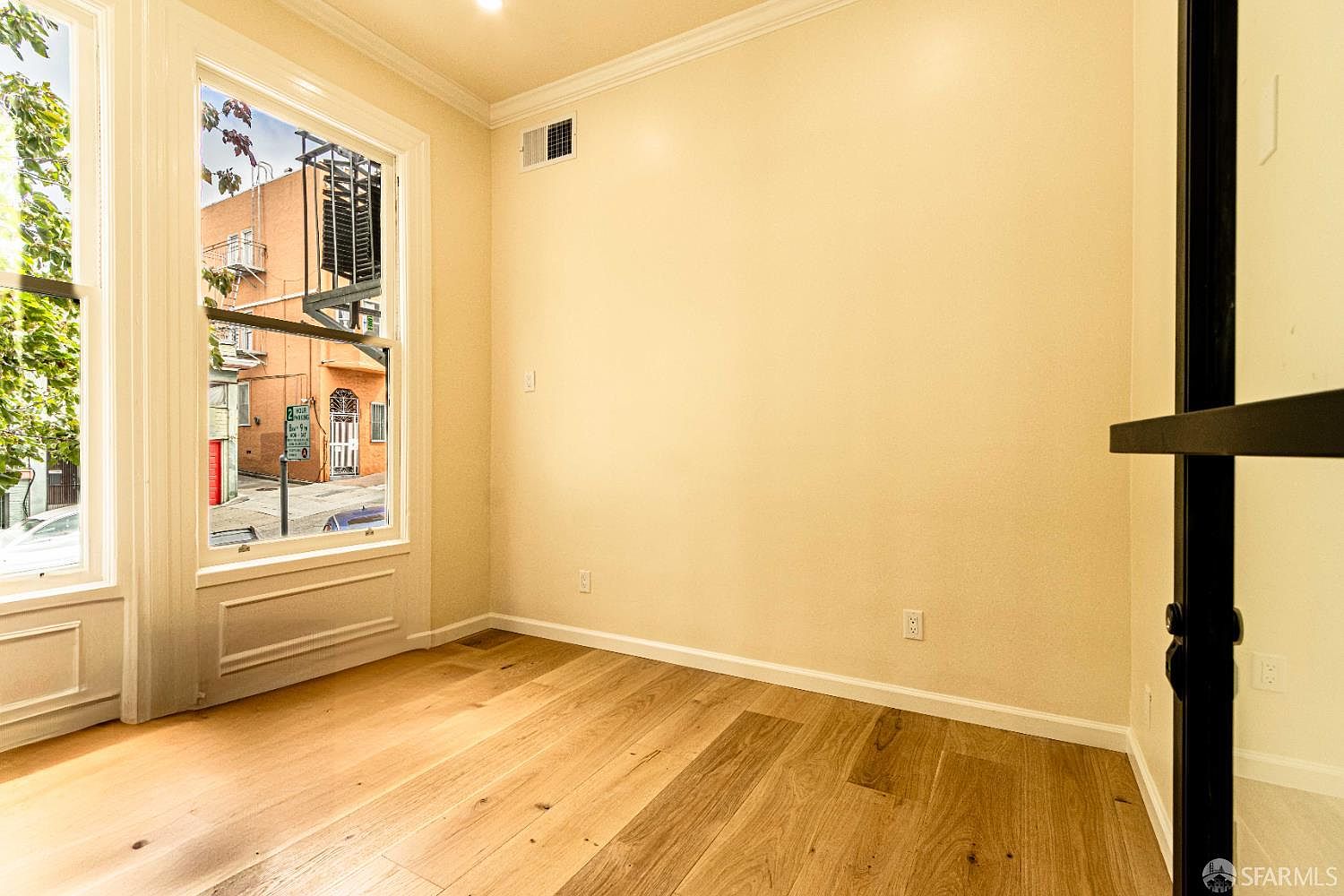
Spanning approximately 8,600 square feet across three stories on a 2,300-square-foot lot, the building has been thoughtfully reimagined through an extensive renovation program completed within the past year. The capital investment is evident at every turn. Wide-plank European white oak flooring runs throughout the upper residential level, its warm, natural grain lending an organic elegance to spaces defined by clean lines and considered proportion. Recessed lighting, installed throughout, creates a luminous and adaptable atmosphere that transitions effortlessly from day to evening.
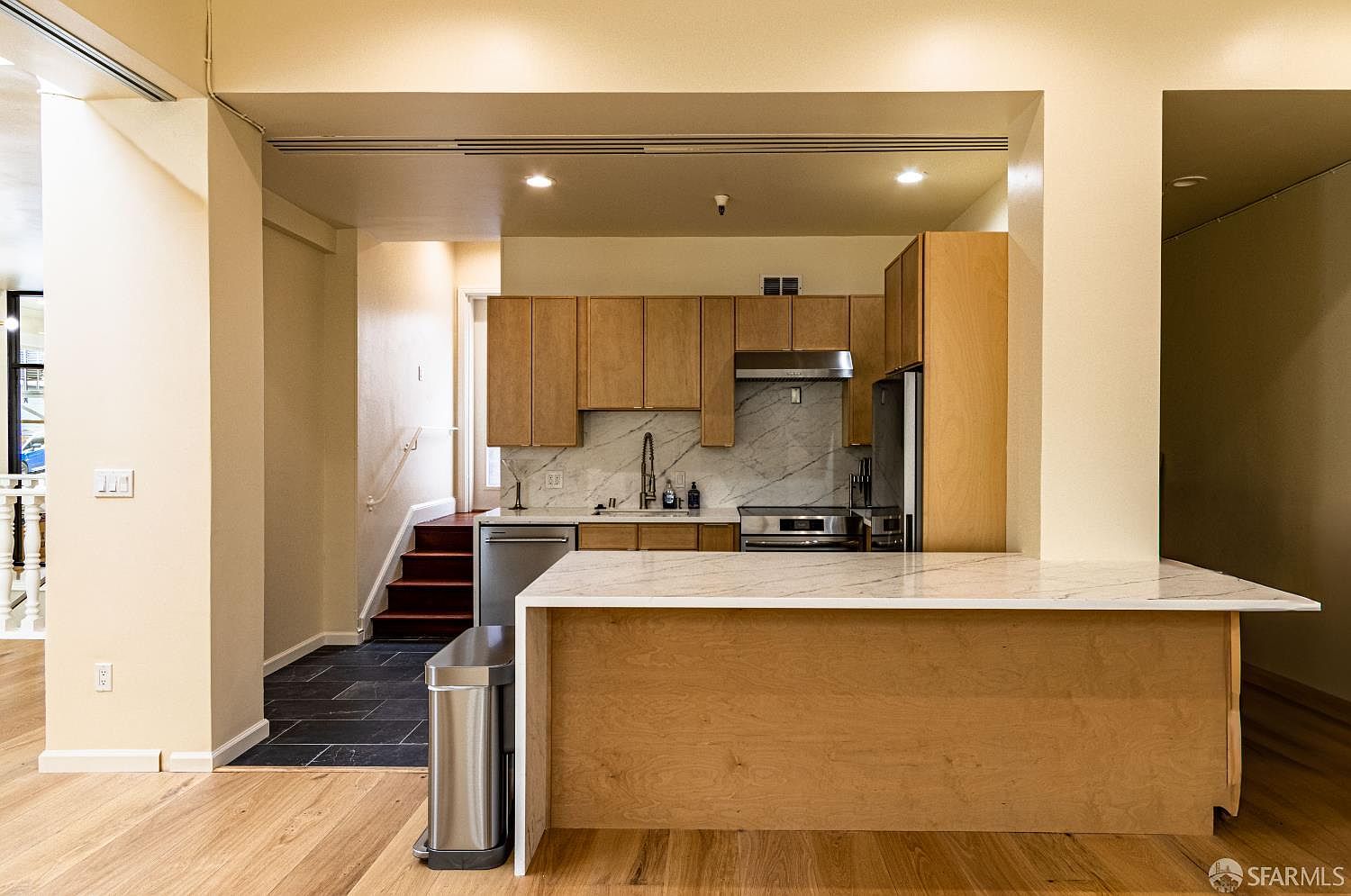
The renovated kitchen serves as a centerpiece of the upper level's residential program: light wood cabinetry pairs with a marble-patterned stone island and backsplash, while stainless steel appliances complete an environment that balances professional functionality with genuine aesthetic refinement. The marble countertops, in particular, introduce a material seriousness that elevates the space beyond the merely contemporary.
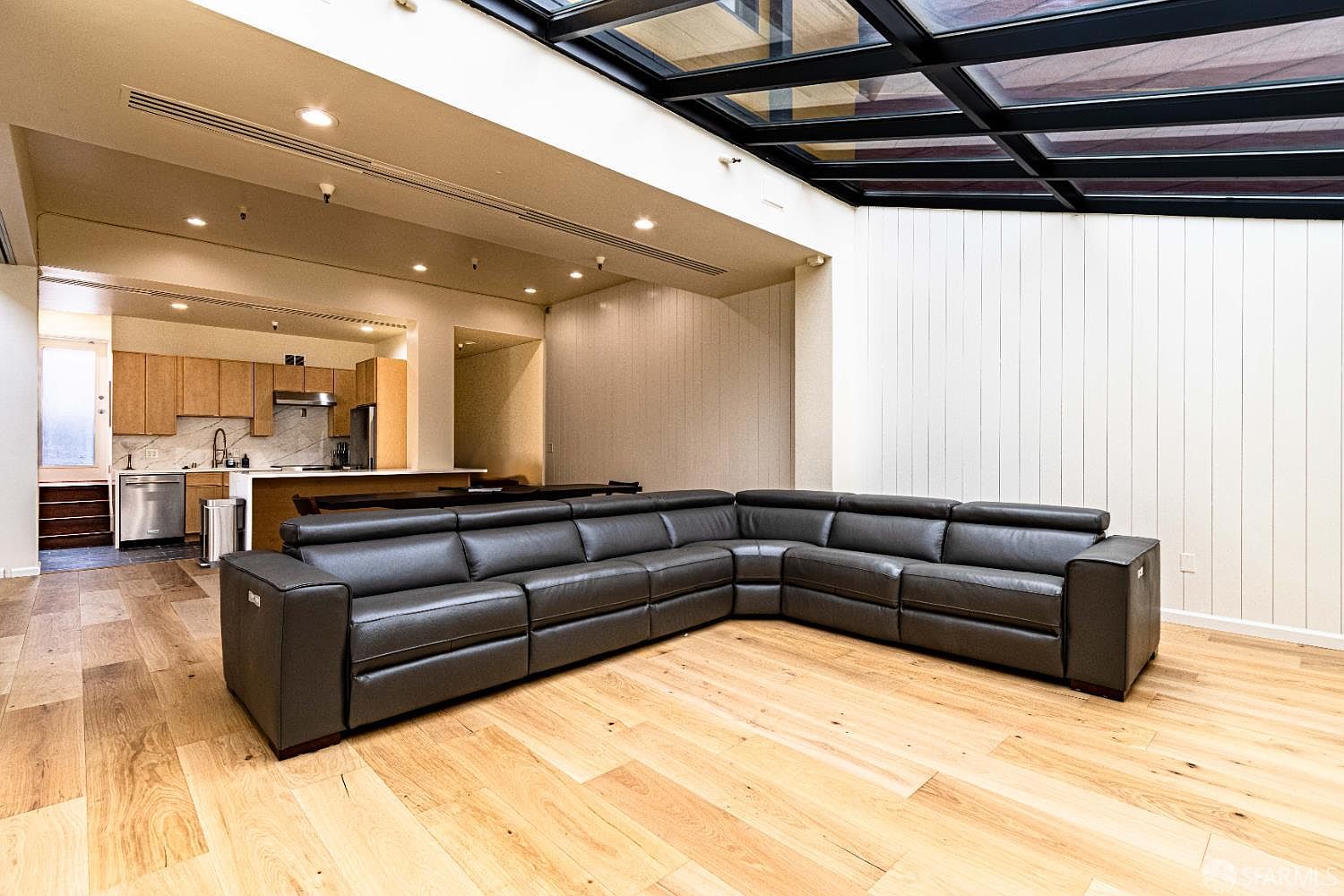
Perhaps the building's most dramatic architectural gesture is its glass skylight, which crowns the upper living level and floods the open-concept interior with cascading natural light. Beneath it, the living and dining areas unfold with a generosity of volume rarely encountered at this scale — a sectional sofa positioned beneath the sloping glazing, a long dining table anchoring the foreground, and an adjacent kitchen visible through the open plan, creating a sequence of spaces that feel simultaneously intimate and expansive.
The accent wall treatments — dark, grid-patterned wood paneling set against light walls and pale oak flooring — introduce a layer of textural sophistication that grounds each room with visual depth. Large bay windows on the street-facing elevation draw the energy of Grant Avenue inward, blurring the boundary between the building's private interior life and its vibrant urban context.
Outside, the sun deck has been freshly decked and fitted with black-framed glass partitions that lend a modern, architectural quality to the outdoor space. String lights overhead and carefully arranged seating create an atmosphere suited for both quiet evenings and convivial entertaining, all framed by the unmistakable red and black palette of the building's exterior. Above, the rooftop terrace extends the outdoor experience further still, offering open views across the San Francisco skyline — a rare amenity in a neighborhood where every square foot of outdoor space carries genuine premium.
With two long-term tenants already in residence under triple net lease structures, the building's income profile is as compelling as its physical character. The ground-floor commercial tenant and upper-level occupancy together ensure that the next owner inherits not a project, but a performing asset — one that has already absorbed its renovation cycle and stands ready to deliver returns from day one.
North Beach is one of San Francisco's oldest and most culturally layered neighborhoods, and Grant Avenue is arguably its most celebrated artery. Stretching from the edge of Chinatown northward toward Fisherman's Wharf, Grant Avenue has served as the neighborhood's commercial and cultural spine for well over a century — a street where independent bookshops, trattorias, wine bars, and storied cafés coexist in a density that few urban corridors in America can match.
The neighborhood's identity was shaped in no small part by the Beat Generation writers and artists who made North Beach their home in the 1950s. City Lights Booksellers and Publishers, founded by Lawrence Ferlinghetti in 1953 just steps from Grant Avenue, remains one of the most iconic independent bookstores in the country and continues to operate as both a literary institution and a cultural landmark. Vesuvio Café, directly adjacent, has maintained its bohemian character since the same era. These are not mere historical footnotes — they are active, living establishments that continue to attract a diverse and intellectually engaged community, contributing to a neighborhood atmosphere that is genuinely unlike anywhere else in the city.
Caffe Trieste, visible from the building's exterior and a fixture of the neighborhood since 1956, holds the distinction of being the first espresso coffeehouse on the West Coast. Its presence on the block is emblematic of what makes this particular stretch of Grant Avenue so commercially durable: the combination of authentic neighborhood character, consistent foot traffic from both residents and visitors, and a cultural cachet that resists the homogenizing forces that have affected other San Francisco commercial corridors.
North Beach sits between Telegraph Hill to the east — home to Coit Tower and its celebrated murals — and Washington Square Park to the west, a beloved green space that serves as the neighborhood's informal living room. The park hosts everything from morning tai chi practitioners to weekend bocce games, and its surrounding perimeter is lined with restaurants and cafés that draw a steady patronage year-round. Saints Peter and Paul Church, the landmark Gothic Revival structure that anchors the park's northern edge, provides the architectural backdrop visible from the building's rooftop terrace.
The neighborhood's walkability is exceptional. The proximity to both the Embarcadero waterfront and the Ferry Building — San Francisco's celebrated marketplace and transit hub — places residents and tenants within easy reach of the city's broader economic and cultural infrastructure. The Montgomery Street and Embarcadero BART and Muni stations provide convenient connections to the Financial District, SoMa, and beyond.
For an investor, the location's significance extends well beyond lifestyle appeal. North Beach's commercial real estate market is characterized by persistent demand, limited supply, and a tenant base drawn from some of the city's most resilient hospitality and retail operators. Buildings of this character, in this location, with this occupancy profile, rarely present themselves on the open market. The opportunity at 1234 Grant Avenue is, by any reasonable measure, as uncommon as the neighborhood it inhabits.
Featured Highlights
Curated Content • Presented by Robert Terry Mann