The Story Behind
A C.P.H. Gilbert Mansion of Singular Architectural Distinction
There are houses, and then there are works of architecture that quietly redefine what a home can be. 315 Garfield Place belongs firmly to the latter category. Commissioned in 1892 and designed by C.P.H. Gilbert — the architect responsible for some of the most celebrated mansions in New York City, including the Felix Warburg Mansion on the Upper East Side — this 26-foot-wide brownstone was conceived from the outset as a statement of permanence and refinement. That intention has only deepened with time.
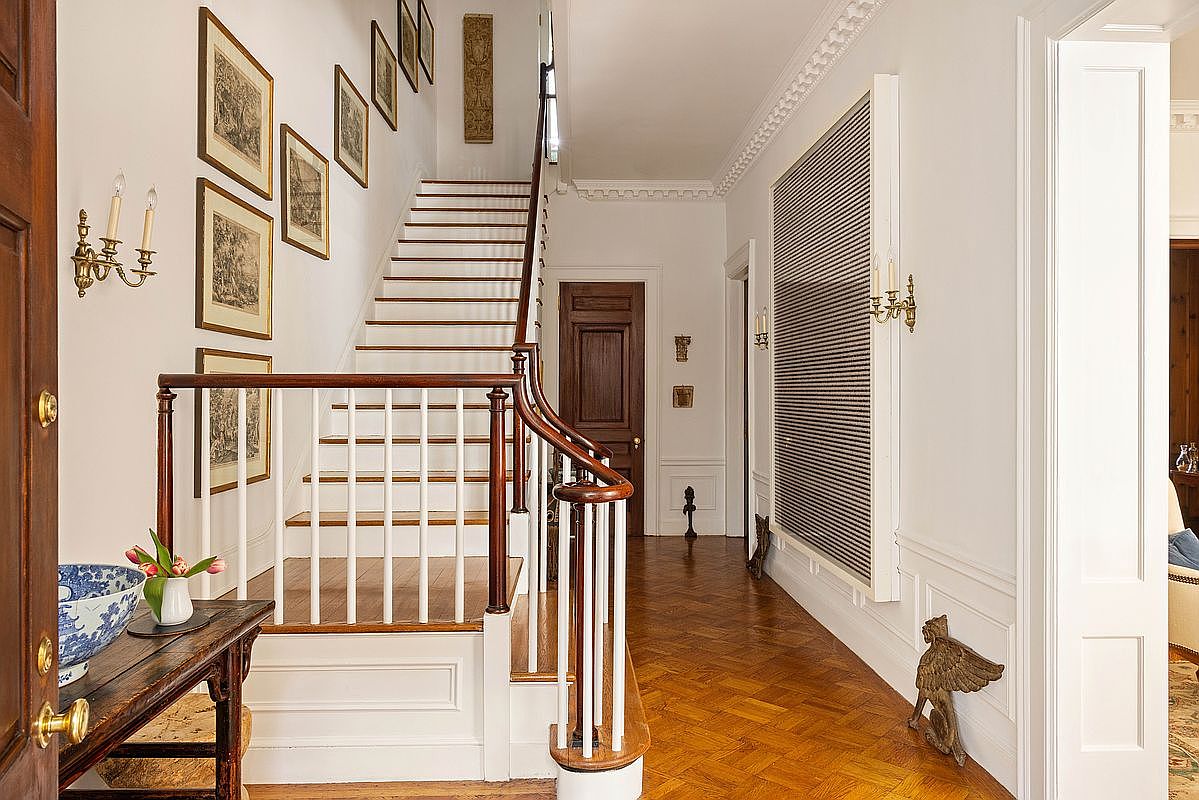
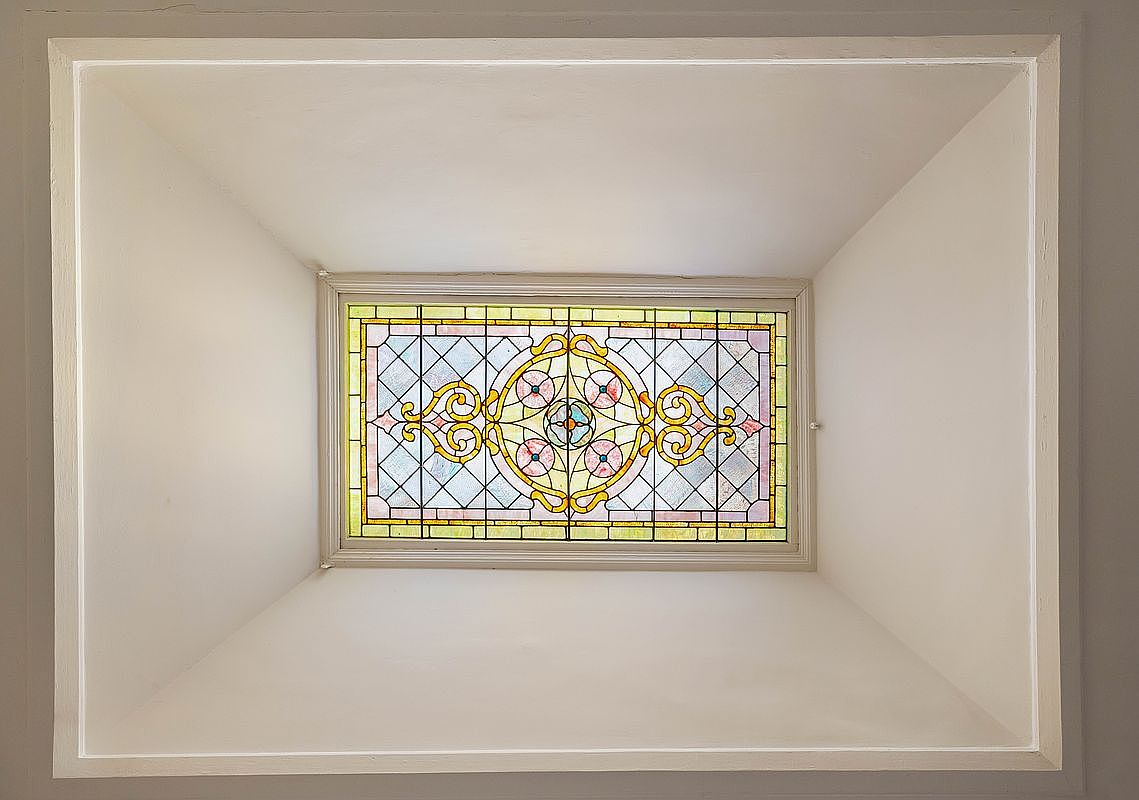
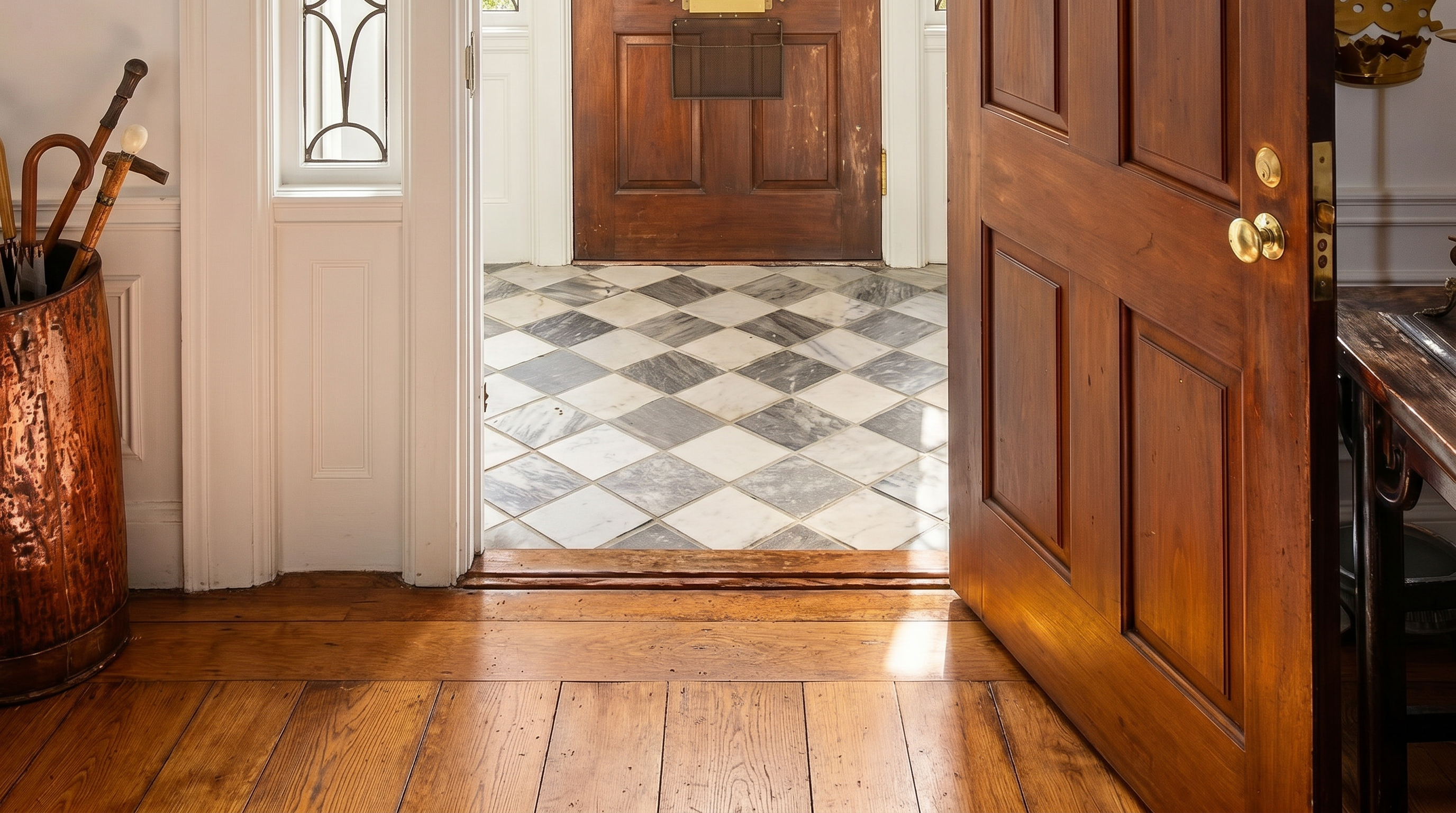
The home announces itself before you reach the door. A limestone facade adorned with intricate architectural detailing rises with quiet authority above the tree-lined street, its arched entryway and climbing greenery lending it a romantic, almost European gravitas. Cross the threshold and the grand foyer opens before you: black-and-white checkered marble flooring underfoot, a richly paneled staircase ascending with a beautifully turned wood handrail, and a stained-glass skylight above the upper stair hall casting geometric, jewel-toned light down through the home's vertical heart. It is a sequence of arrivals — each room offering a new revelation.
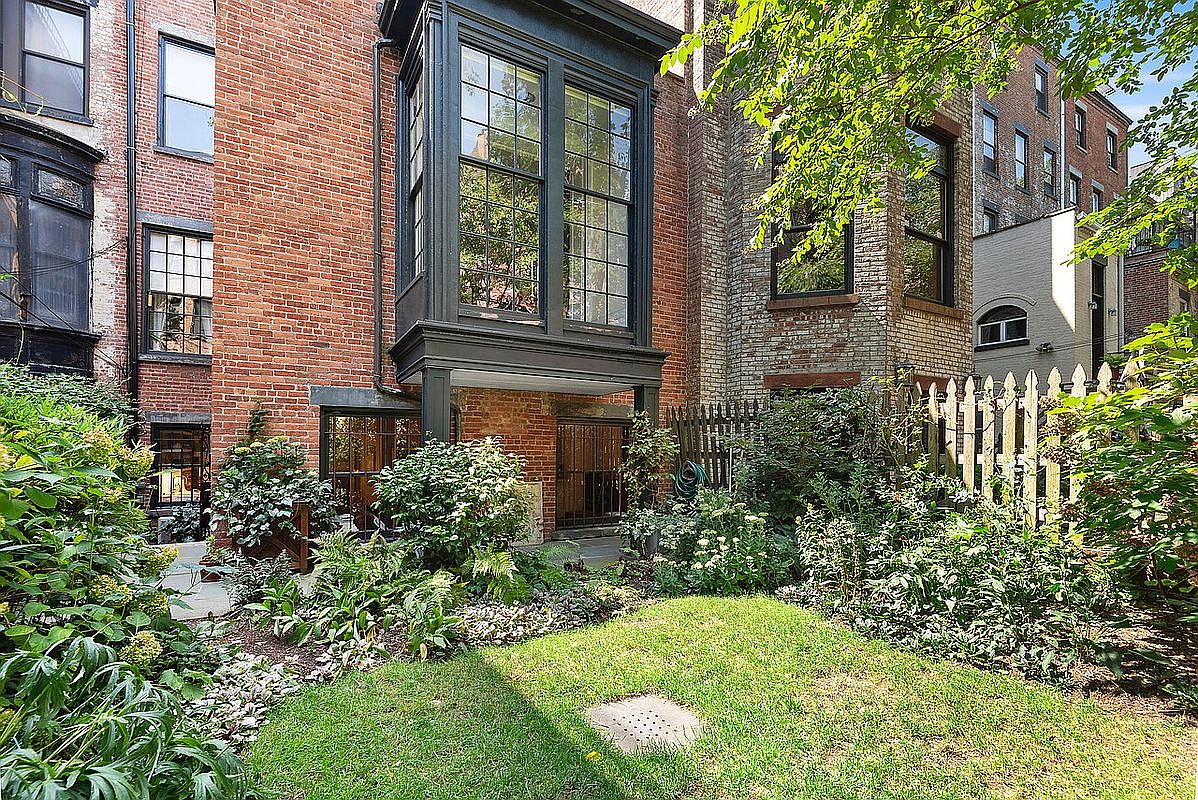
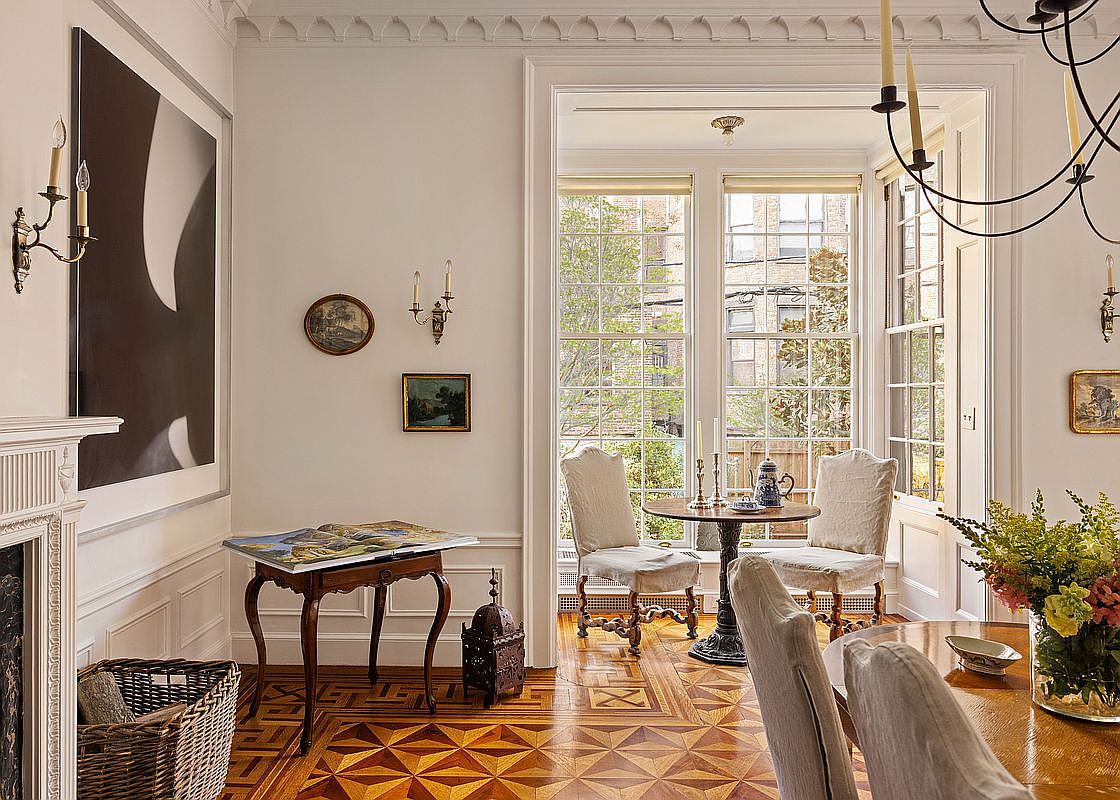
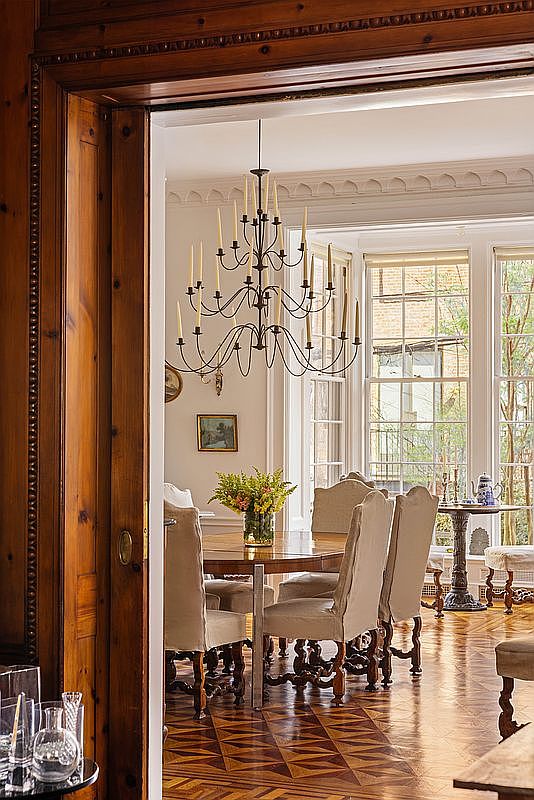
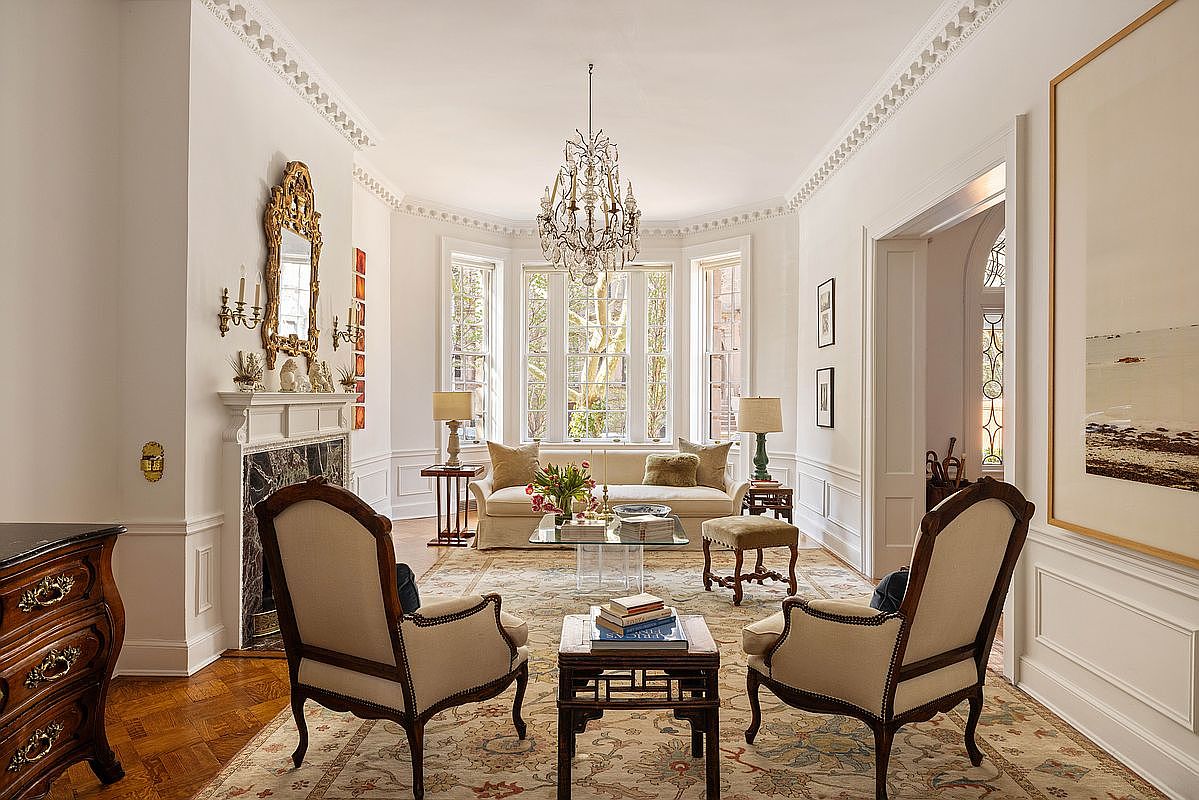
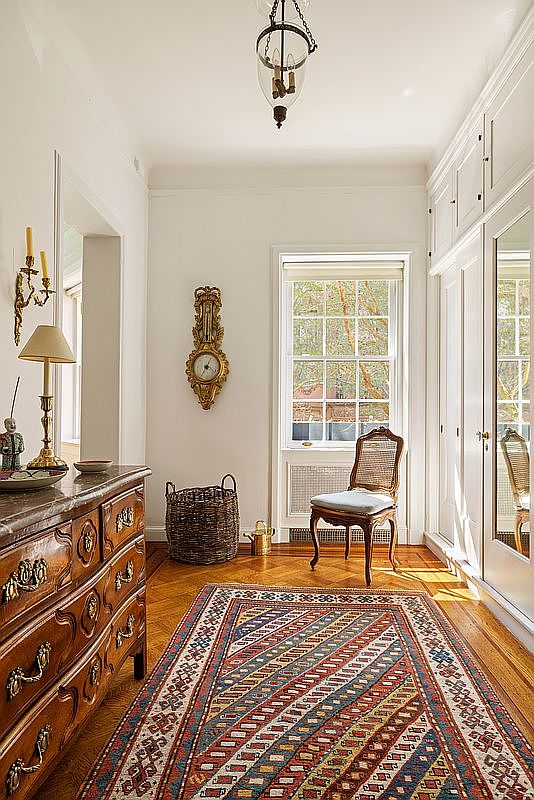
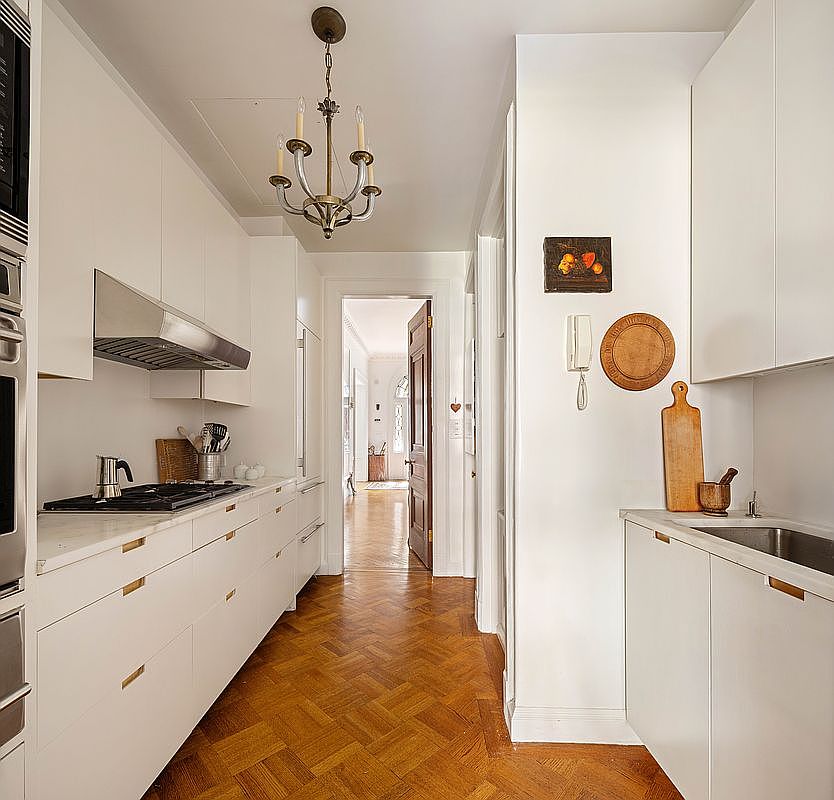
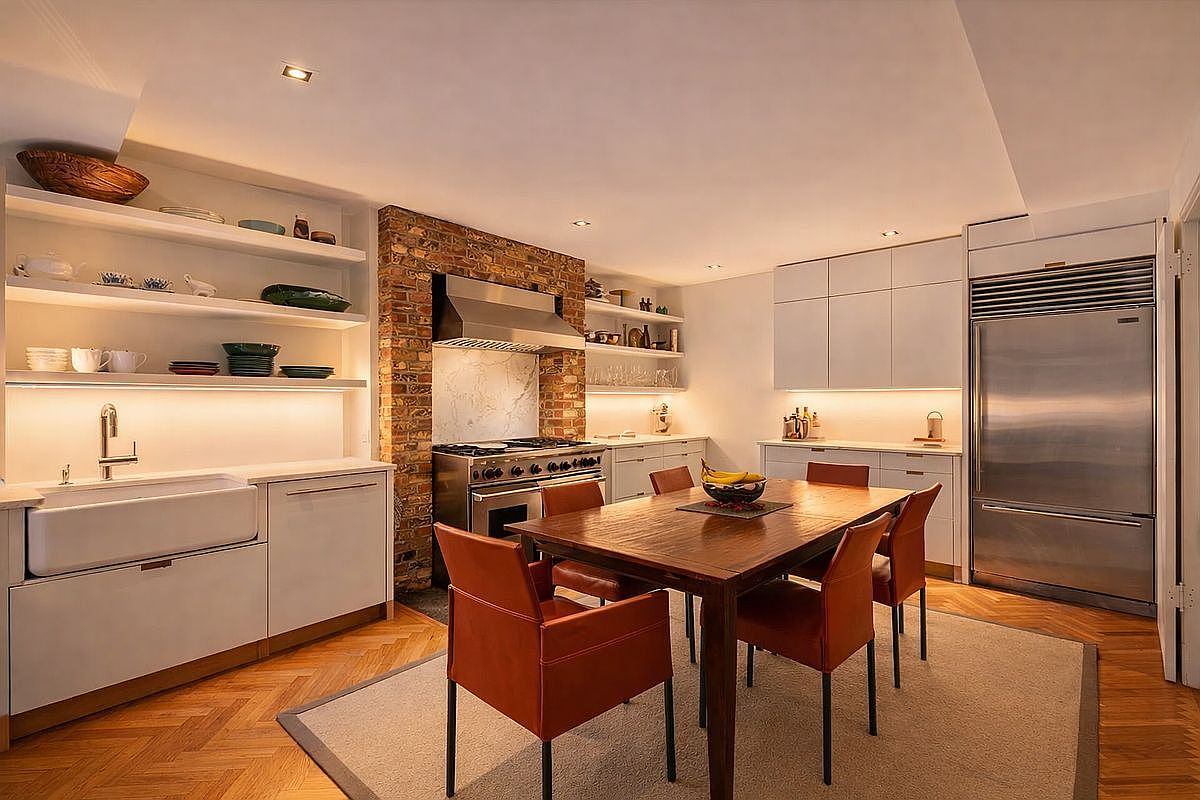
The formal living rooms are anchored by marble-surround fireplaces and framed by original crown molding and wainscoting, their proportions generous enough to accommodate serious entertaining without sacrificing intimacy. Herringbone hardwood floors run throughout, their warm grain connecting the home's five floors in a continuous thread of craftsmanship. The kitchen pairs white cabinetry with exposed brick and the same herringbone hardwood, a composition that honors the building's history while meeting every expectation of modern domestic life. A rear glass breakfast nook extends the kitchen into the garden, flooding the space with morning light and dissolving the boundary between the interior and the private garden beyond.
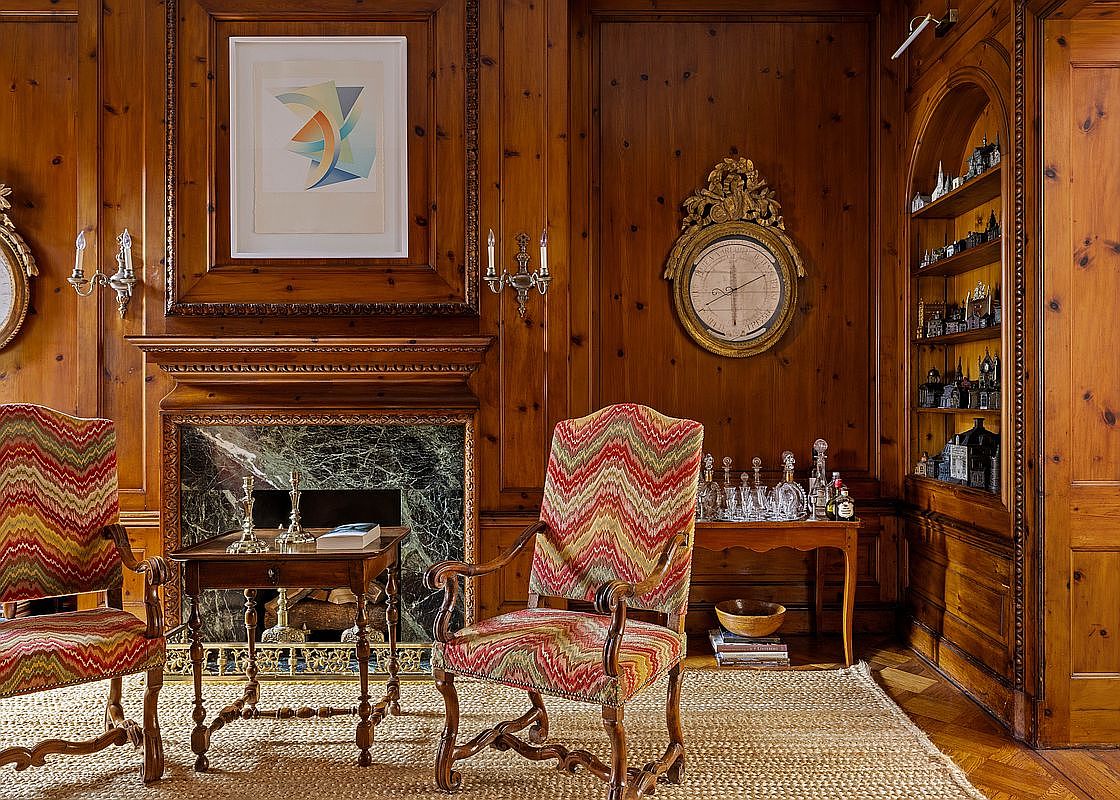
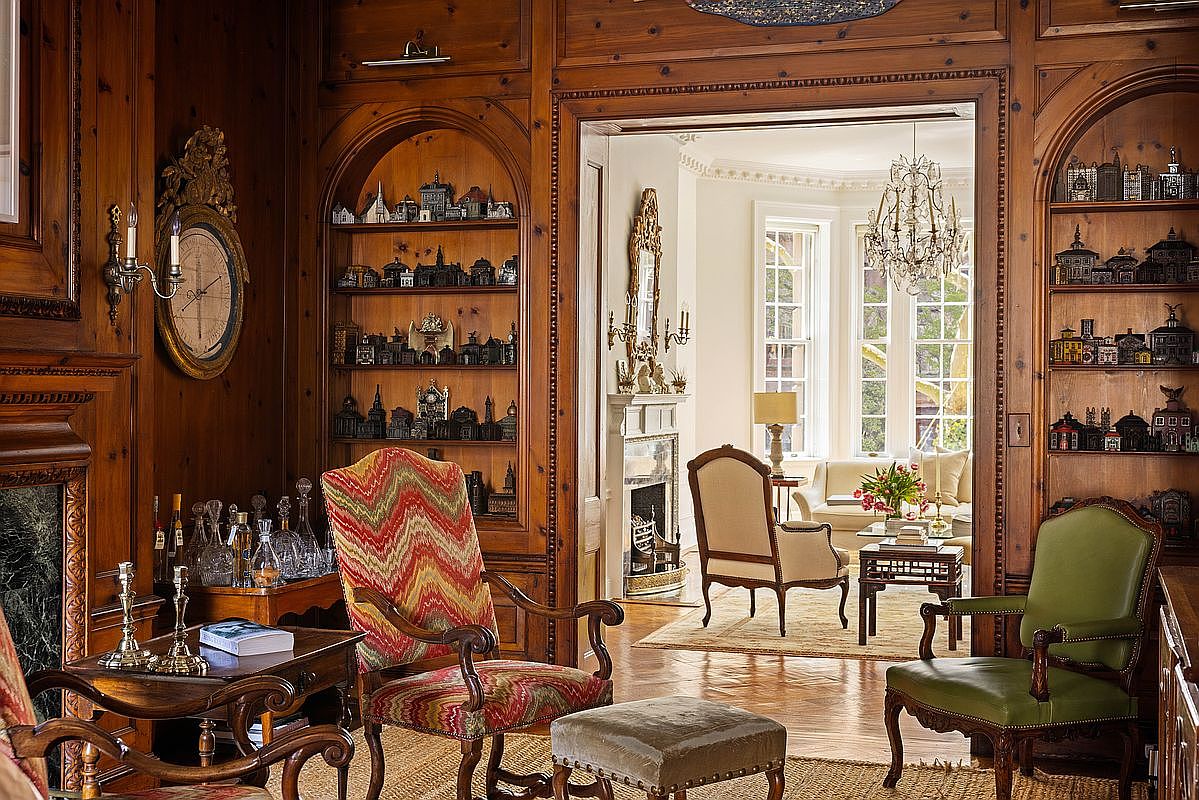
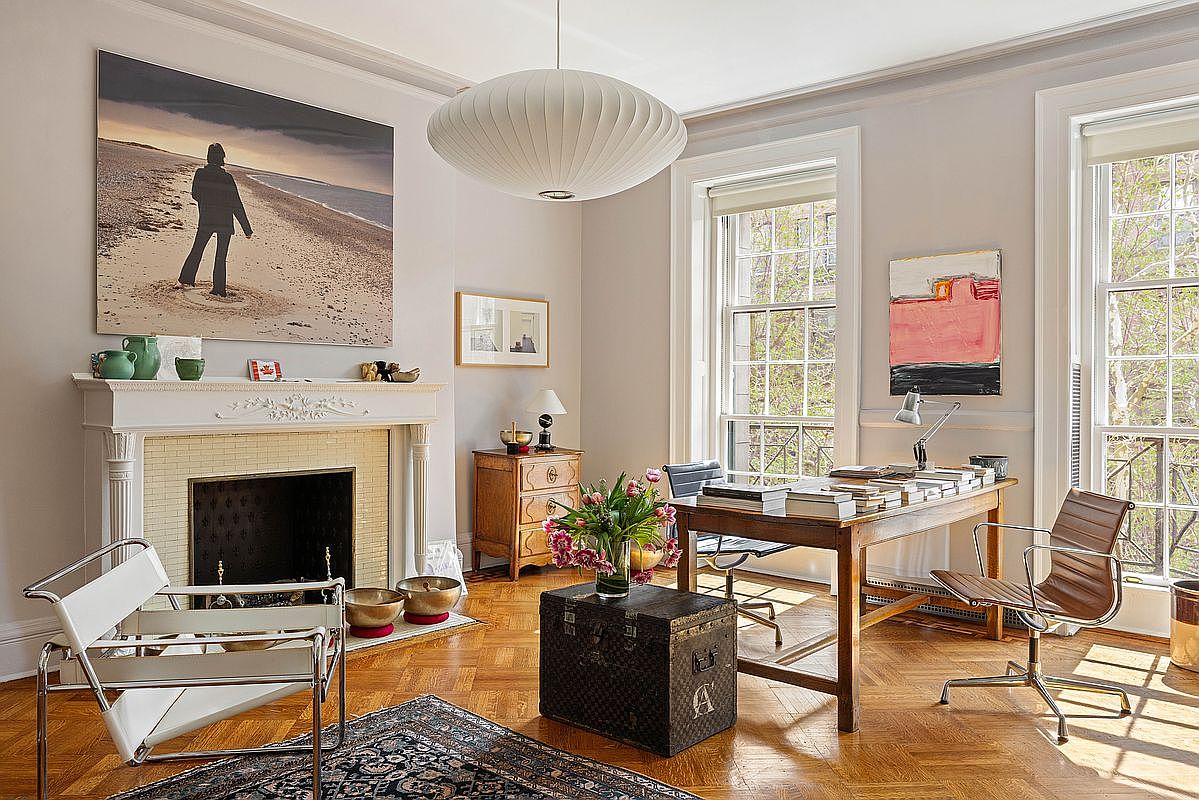
The library stands as the intellectual and emotional center of the home. Its walls are paneled entirely in original African knotty pine — a material of extraordinary warmth and character that no renovation could replicate from scratch. Built-in shelving, a fireplace, and the room's measured proportions make it equally suited to solitary contemplation and spirited conversation. It is the kind of room that rewards daily life as generously as it impresses first-time guests.
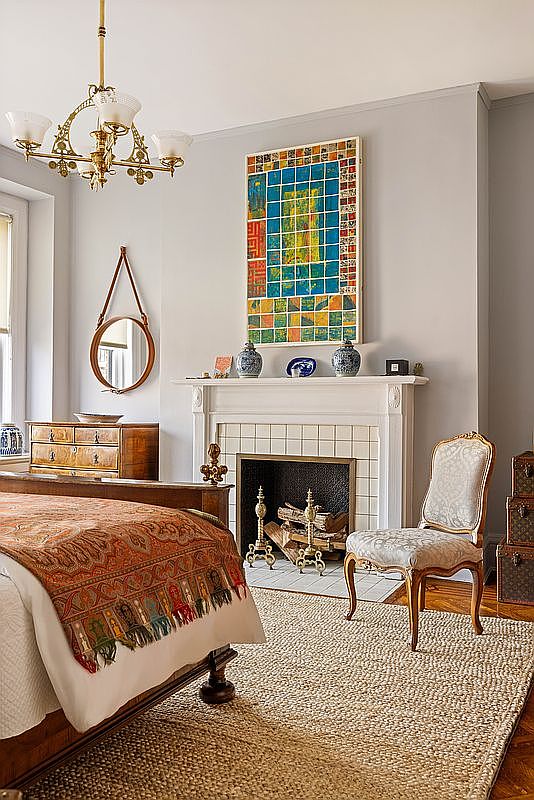
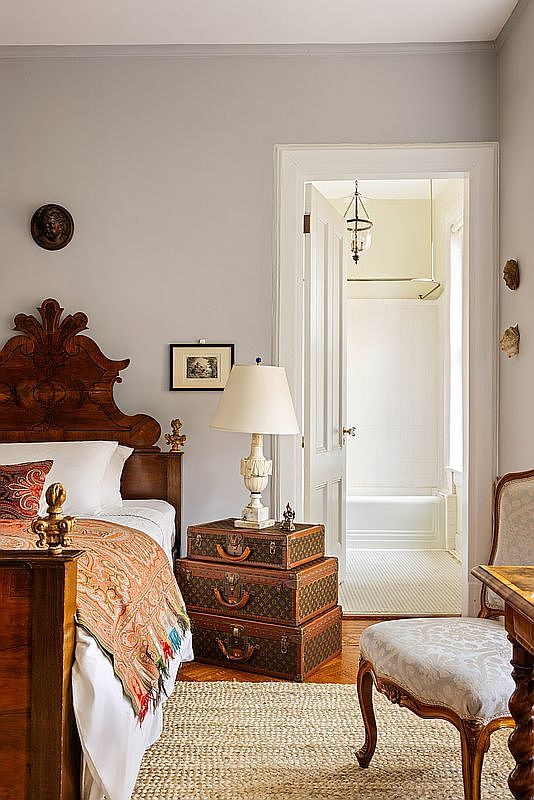
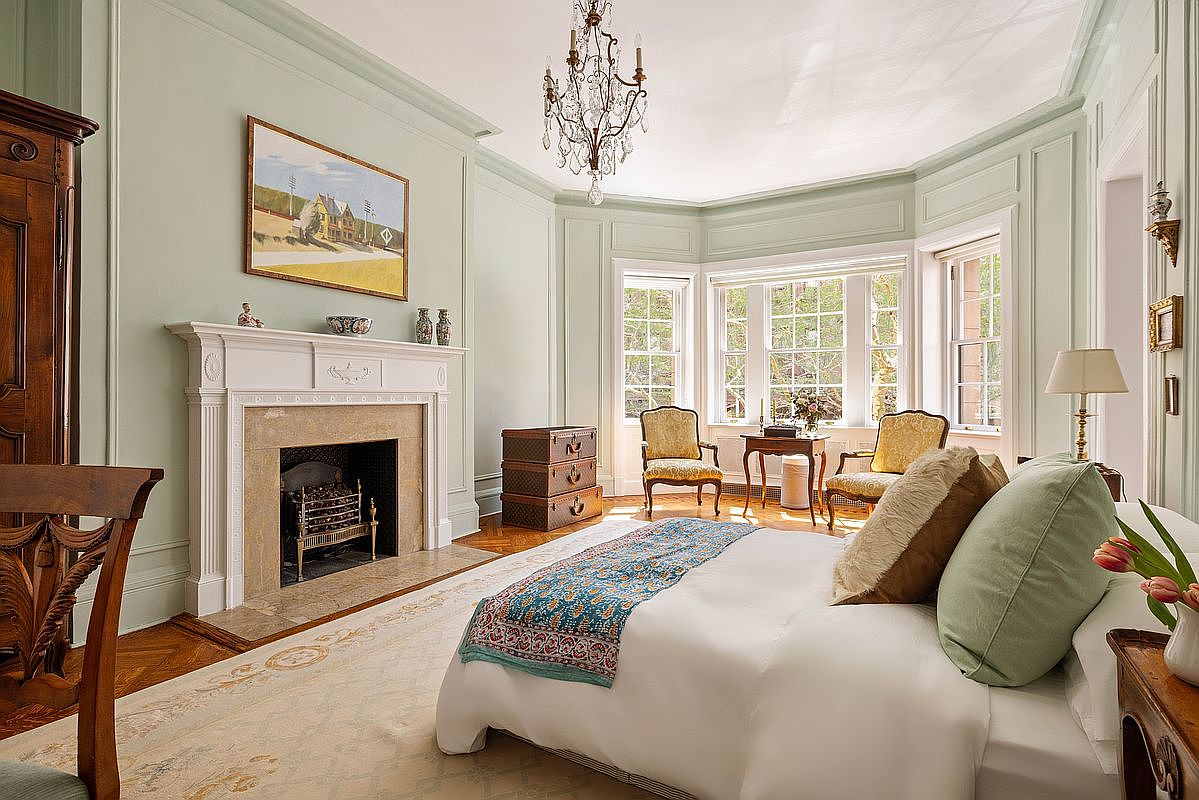
Upstairs, the primary suite commands its own wing with a fireplace, a sweeping bay window, and a crystal chandelier that speaks to the home's dedication to considered detail at every scale. Six additional bedrooms offer the flexibility that large-scale living demands, each thoughtfully restored and finished.
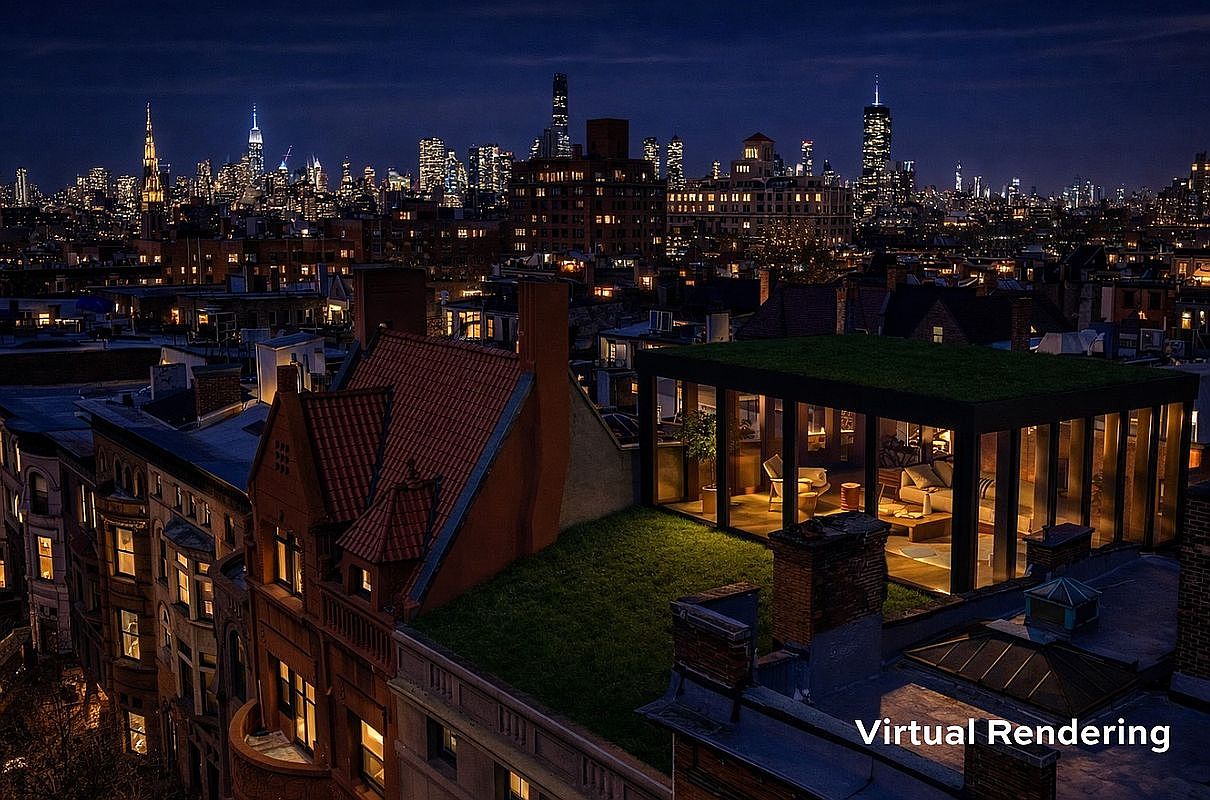
Perhaps most remarkable is what the home still holds in potential. With over 1,000 square feet of available air rights, a proposed rooftop addition — envisioned as a modern glass-enclosed penthouse with tiered outdoor terraces — would introduce sweeping panoramic views of the Manhattan skyline and Prospect Park. It is a rare opportunity to write the next chapter of a home that has already endured for more than a century, placing the next steward in distinguished company.
Park Slope occupies a singular position in the geography of New York City — a neighborhood that has long attracted those who want the full richness of urban life without surrendering the quieter pleasures of tree-lined streets, a strong sense of community, and proximity to one of the great public parks in the world. Garfield Place, running east from Prospect Park West, sits at the very heart of what has historically been called the Park Slope Historic District, a designated landmark area that encompasses some of Brooklyn's finest late-nineteenth-century residential architecture.
The neighborhood takes its name from the gentle westward slope of the land rising from the Gowanus lowlands toward Prospect Park, and it was this topography — combined with the arrival of the Brooklyn elevated railway in the 1880s — that catalyzed a wave of development by prosperous merchants, professionals, and industrialists seeking fashionable addresses close to the park. The result was a concentration of brownstone and limestone rowhouses, freestanding mansions, and apartment buildings of a quality rarely matched elsewhere in the borough. That architectural legacy is visibly intact today, protected by landmark designation and sustained by a community that takes genuine pride in its built environment.
Prospect Park itself is an immediate and daily presence for residents of Garfield Place. Designed by Frederick Law Olmsted and Calvert Vaux — the same partnership behind Central Park — the 585-acre park is widely considered by scholars to be the more refined of the two commissions, its pastoral meadows, dense woodlands, and long lake offering a convincing illusion of countryside within the city's fabric. The park hosts the Prospect Park Zoo, the LeFrak Center at Lakeside, the Boathouse, the Bandshell, and a year-round calendar of cultural programming that makes it as much a civic institution as a recreational amenity.
The broader neighborhood offers an exceptionally walkable urban life. Fifth Avenue and Seventh Avenue — the two primary commercial corridors — are lined with independent restaurants, wine bars, specialty food shops, bookstores, and boutiques that have made Park Slope a consistent destination for those who value neighborhood commerce over chain retail. The Brooklyn Public Library's Central Branch sits at the northern edge of Grand Army Plaza, a monumental Beaux-Arts civic space anchored by the Soldiers' and Sailors' Arch and home to a beloved weekend greenmarket. The Brooklyn Museum and the Brooklyn Botanic Garden are within comfortable walking distance, adding world-class cultural and horticultural resources to an already generously endowed neighborhood.
Transportation connections are excellent. The F and G subway lines serve the neighborhood along Fourth and Seventh Avenues, and the B and Q lines stop at Seventh Avenue and Prospect Park, placing Manhattan within a straightforward commute. For those who travel frequently, the neighborhood's connectivity to the broader transit network is a practical advantage that only reinforces the case for a long-term commitment to this address.
To live on Garfield Place is to inhabit one of New York City's most considered and enduring residential addresses — a block that has maintained its character across generations and shows every indication of doing so for generations more.
Featured Highlights
Curated Content • Presented by Sophie Smadbeck