The Story Behind
A Living Legacy Where the Blue River Runs Through
There are properties that make an impression, and then there are properties that make history. 366 Co Road 1450 belongs firmly to the latter category — a ranch estate that announces itself not with ostentation, but with the quiet, unhurried authority of a place that has earned its significance over decades.
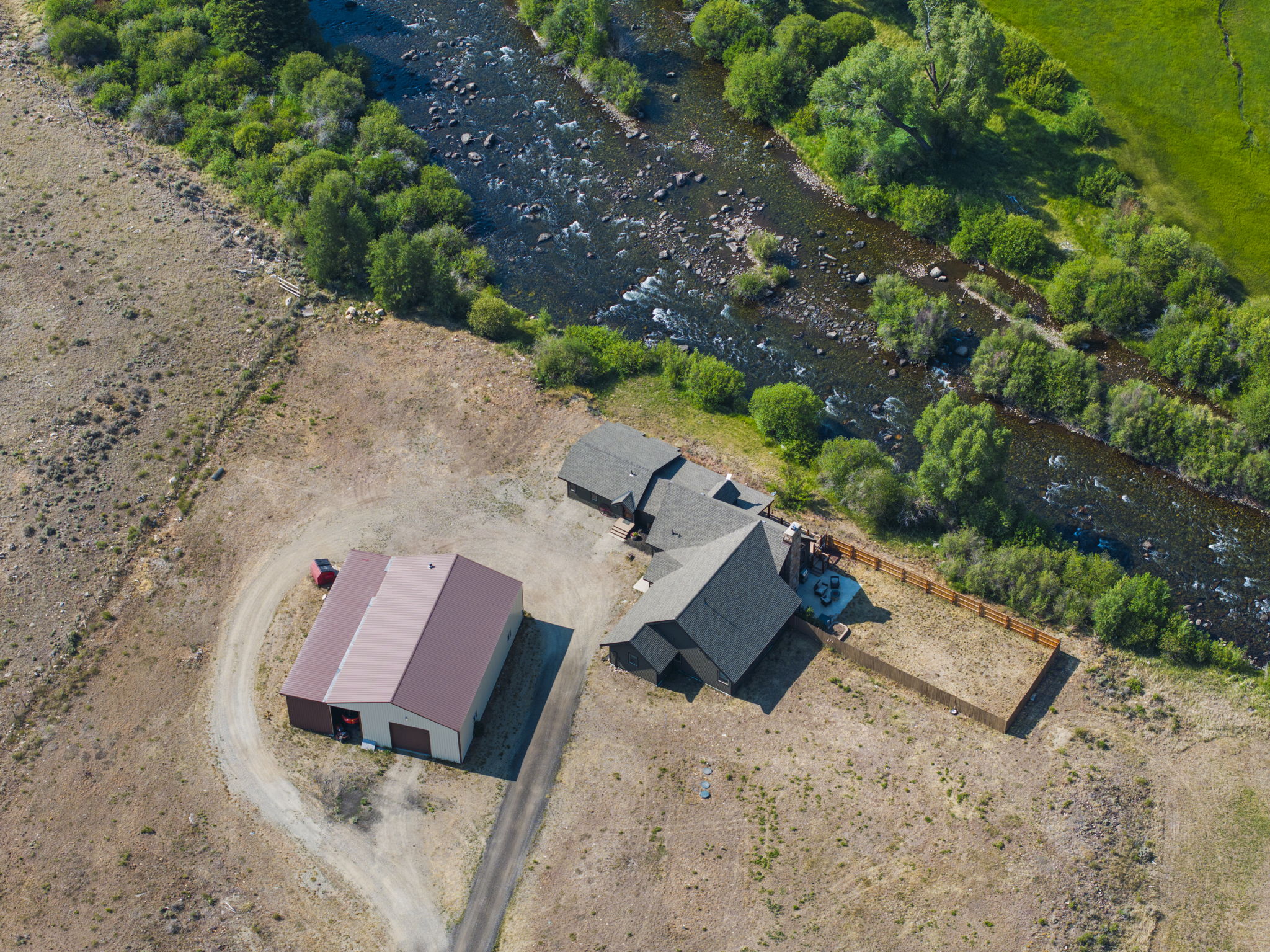
Approaching the home, dark horizontal log siding and a commanding multi-gabled roofline settle naturally against the rolling terrain, as though the structure grew from the land rather than being placed upon it. Decorative wagon wheels flank the gravel drive, a nod to the working ranch tradition that defines the property's soul. Two covered entry porches soften the facade and invite the kind of arrival that slows you down — deliberately, gratefully.
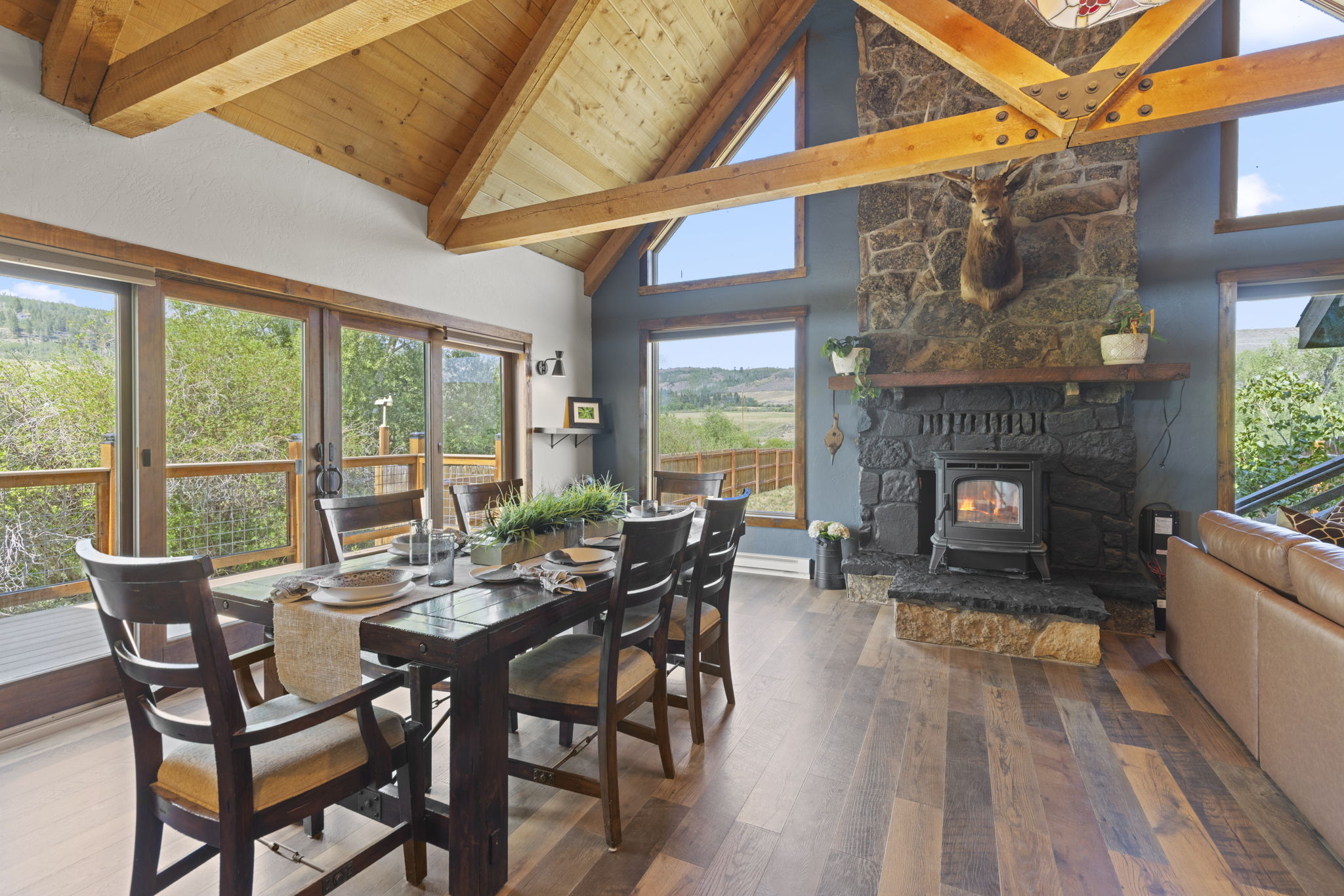
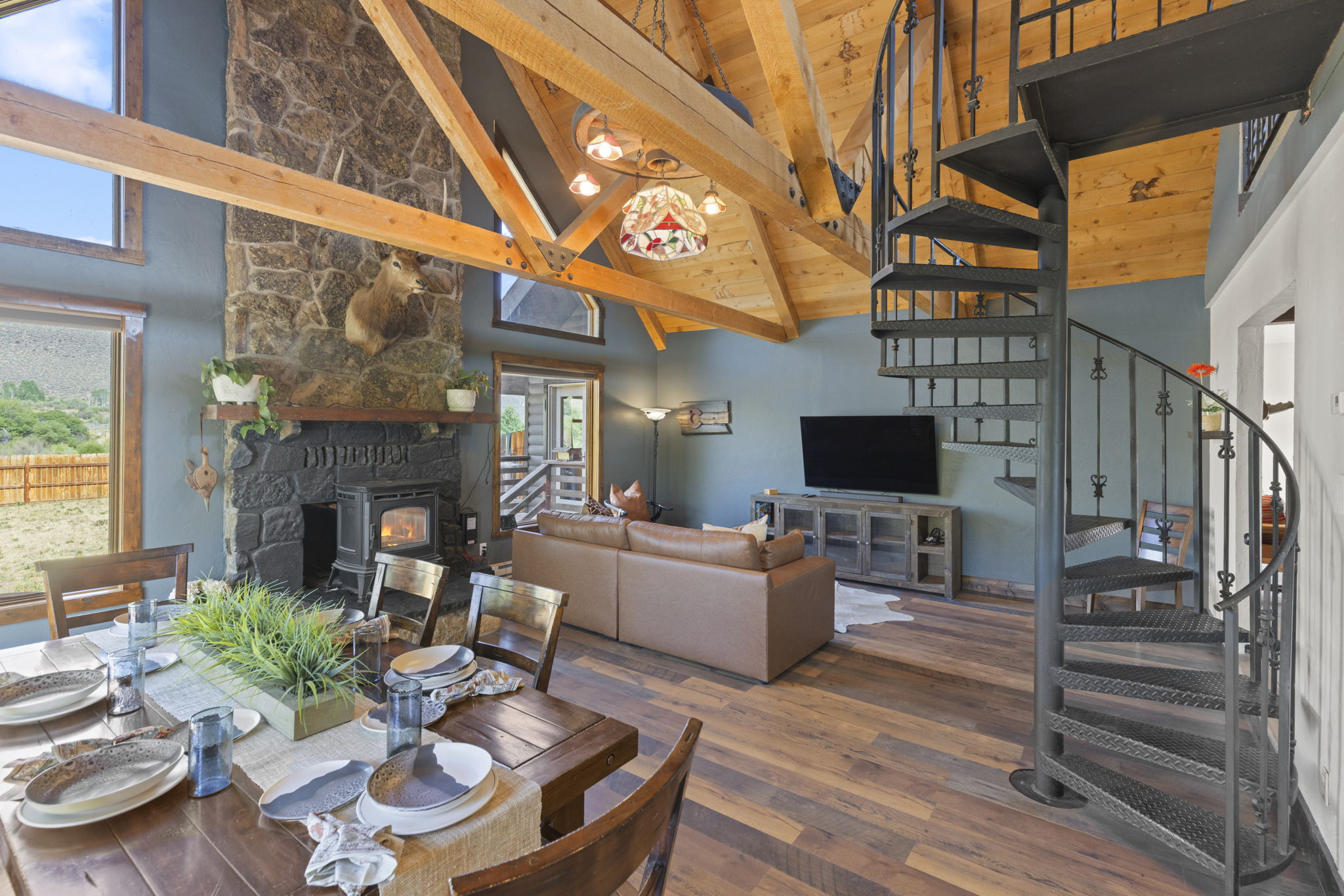
Inside, the main living area is defined by its architecture as much as its furnishings. Tongue-and-groove vaulted ceilings rise overhead, their warm wood planking anchored by exposed timber beams that trace the room's geometry with quiet precision. A stone-clad chimney breast ascends as the room's undisputed axis — massive, grounding, and elemental. Above it all, a wagon-wheel chandelier with stained-glass accents suspends from the apex of the vault, casting a warm, amber light that shifts with the angle of the afternoon sun. A spiral staircase — wrought with the kind of craftsmanship rarely seen in contemporary construction — rises from the main floor to a loft above, its silhouette becoming one of the home's most enduring visual signatures.
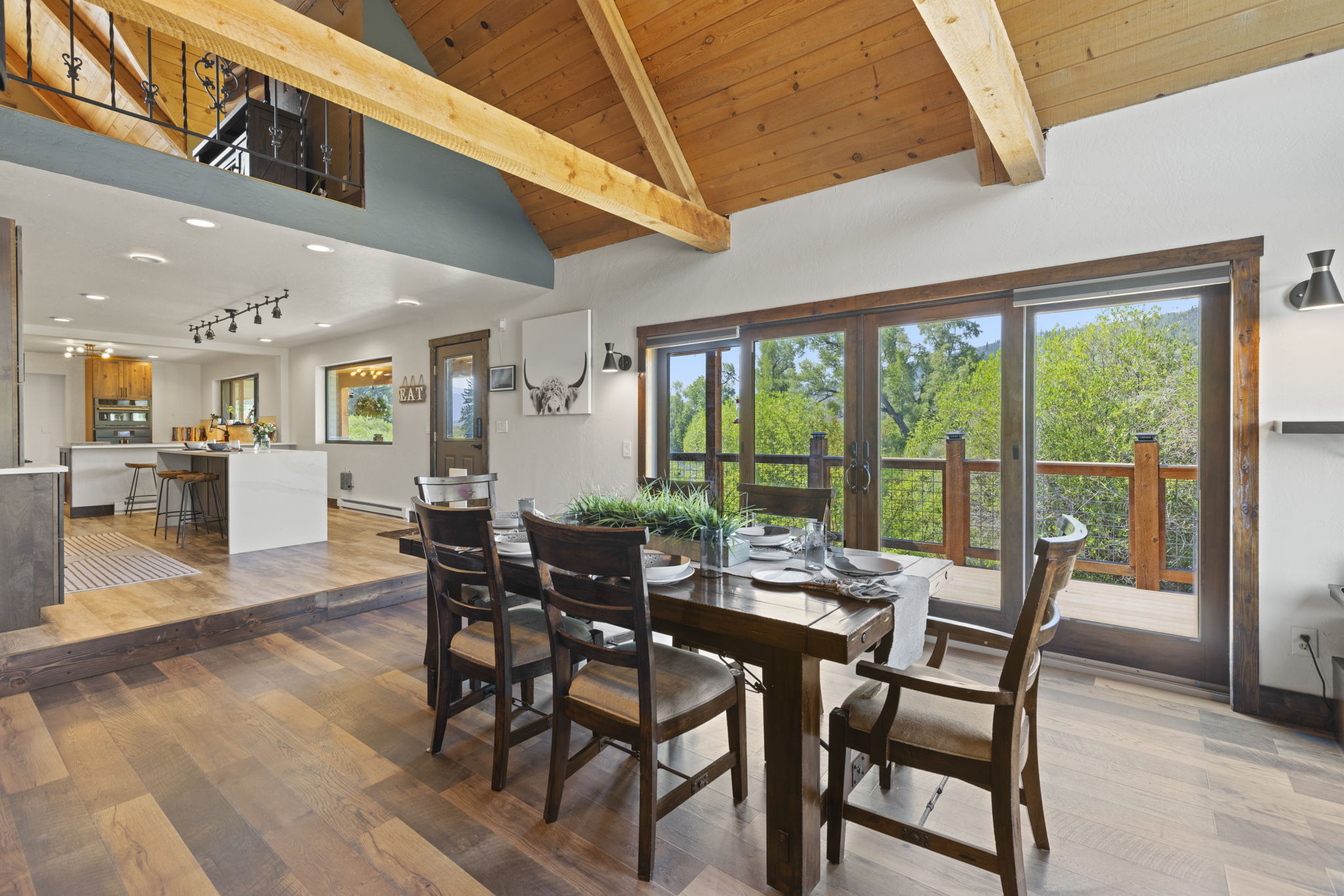
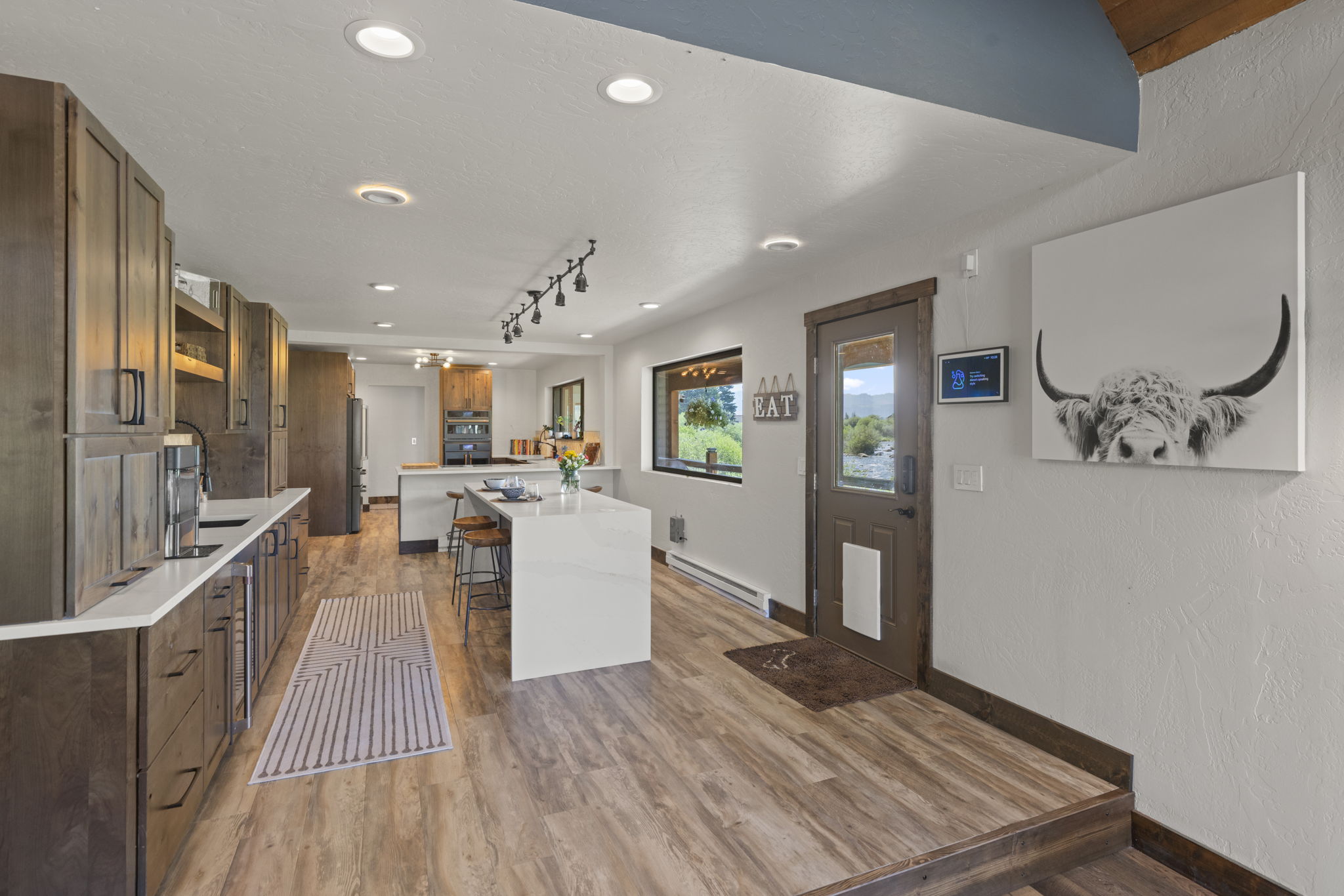
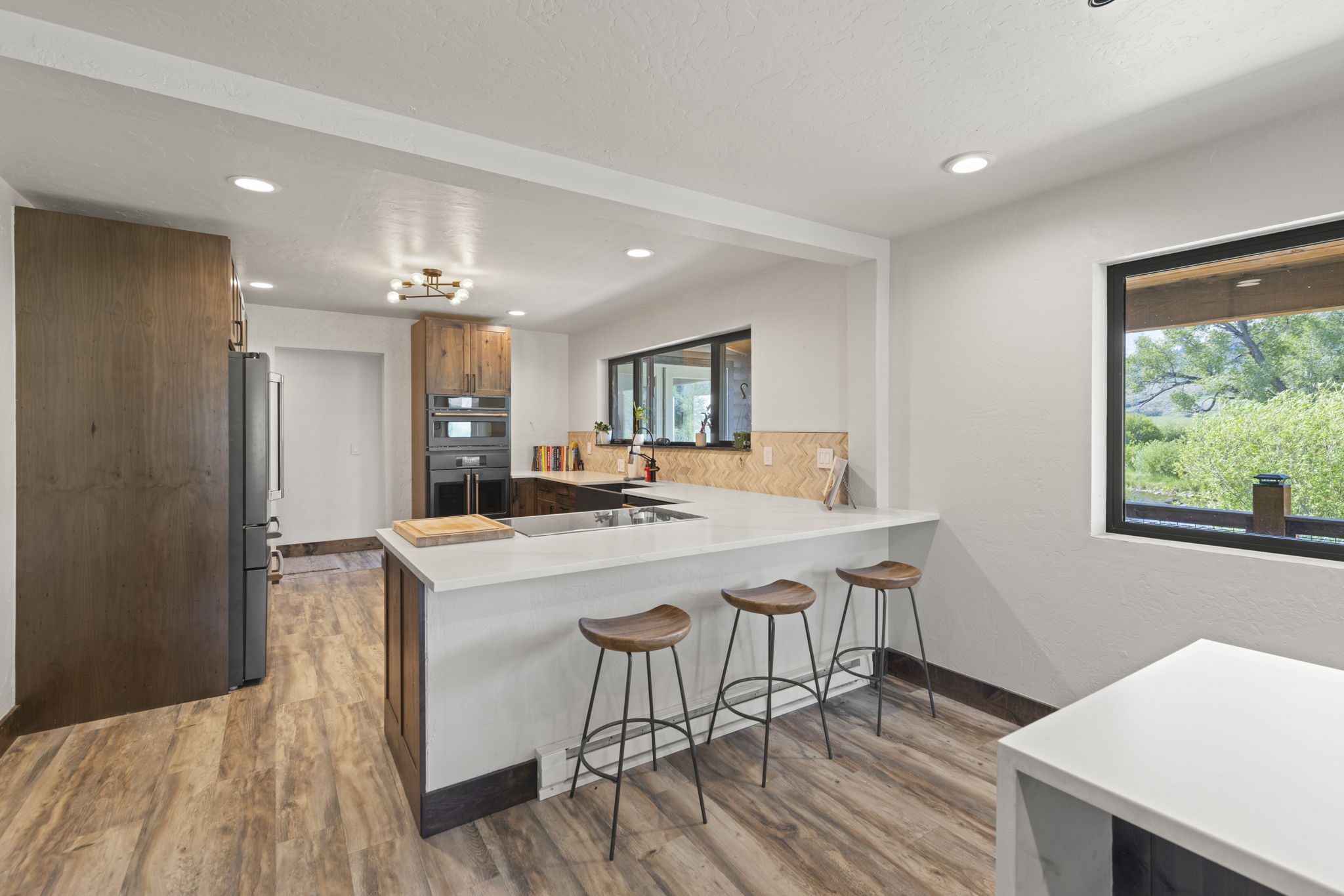
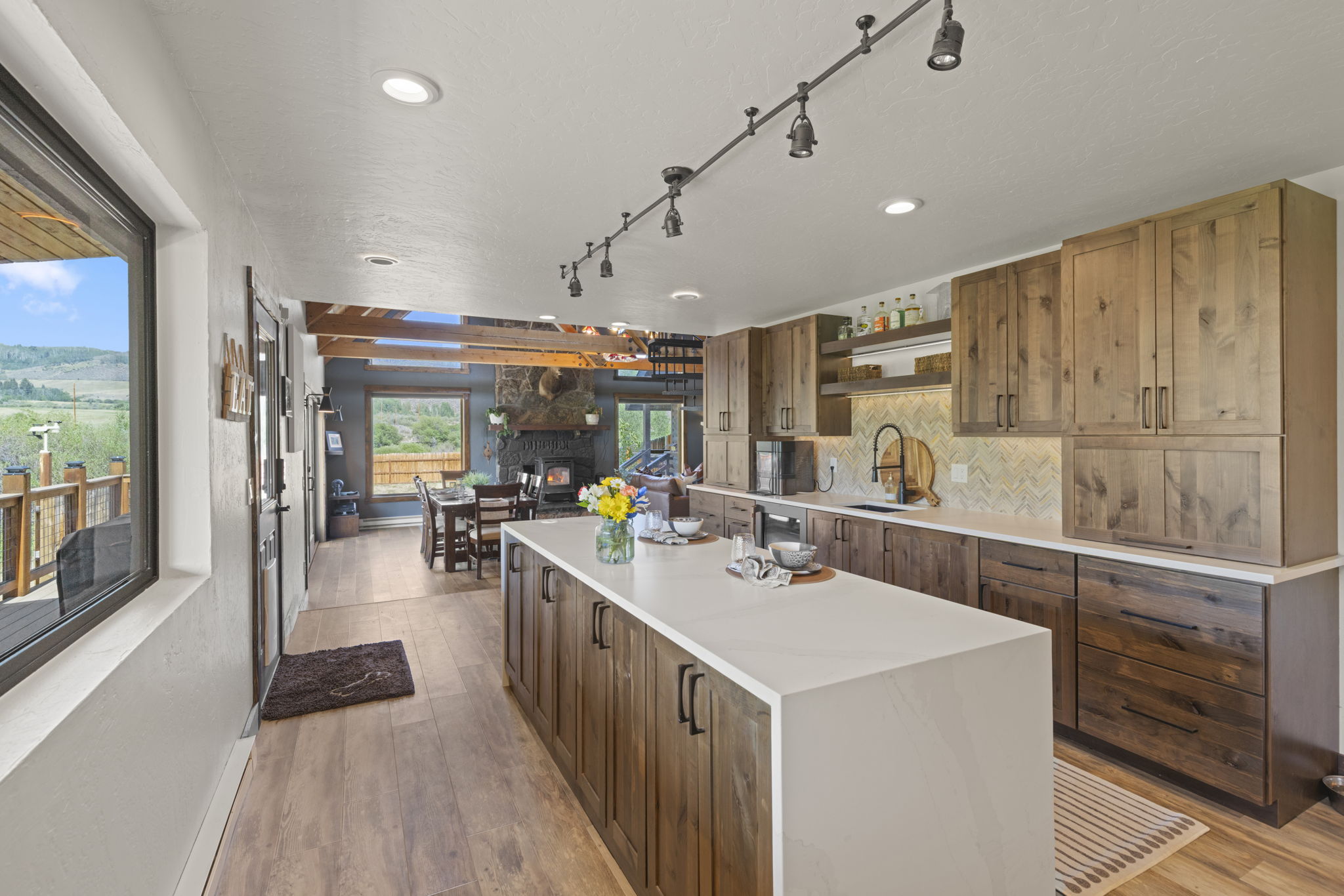
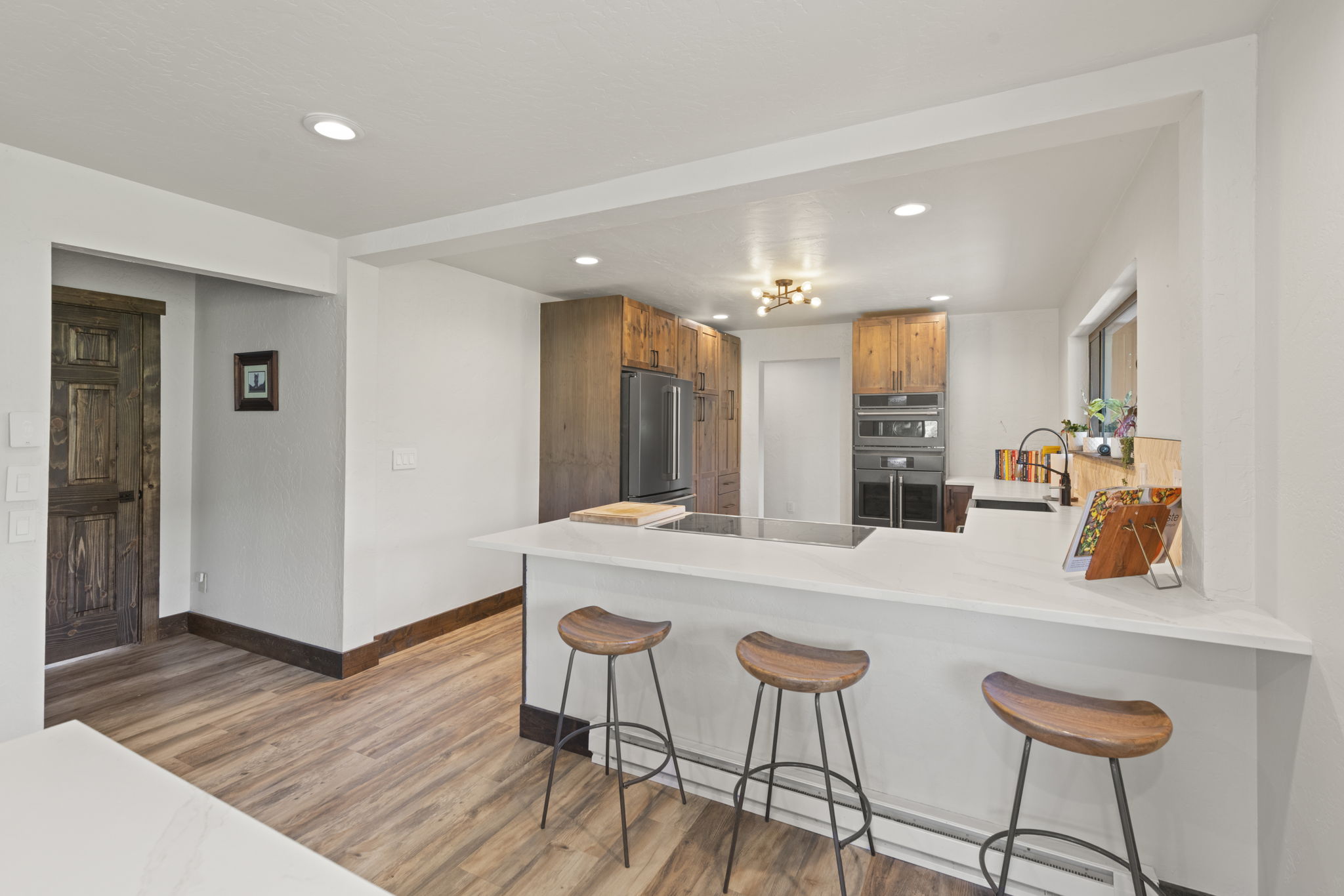
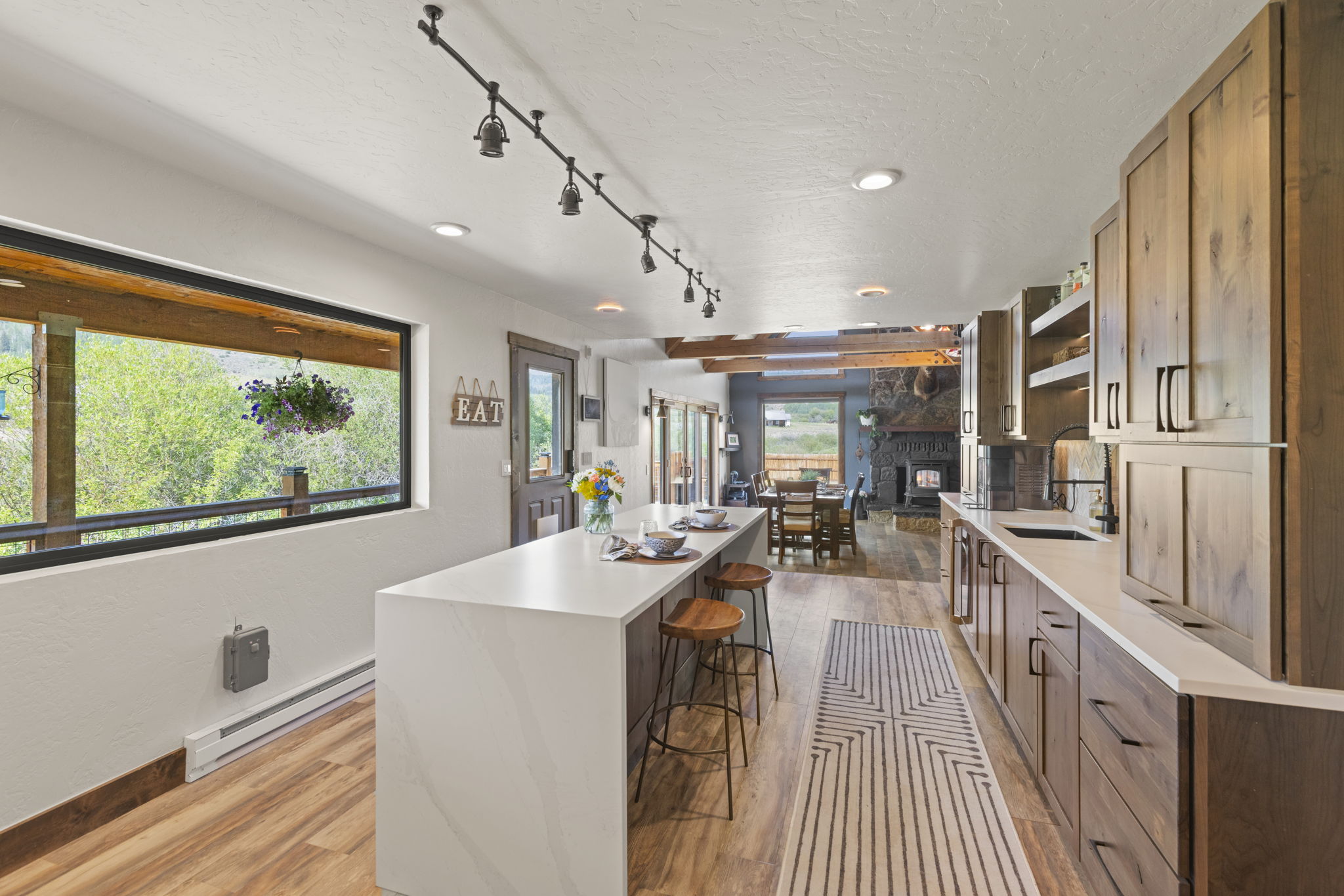
The brand-new chef's kitchen represents a considered marriage of rustic warmth and culinary seriousness. Warm wood cabinetry runs the length of the space, grounding a herringbone backsplash that adds quiet texture without demanding attention. Stone countertops and a deep farmhouse sink anchor the perimeter, while a large central island with bar seating creates the kind of gathering point that makes kitchens the true center of a home. Integrated Café appliances — including a built-in wall oven, cooktop, and beverage cooler — deliver professional-grade performance within a design language that feels entirely at home in these mountains. Sliding glass doors open the dining area directly to the outdoors, dissolving the boundary between interior warmth and the landscape beyond.
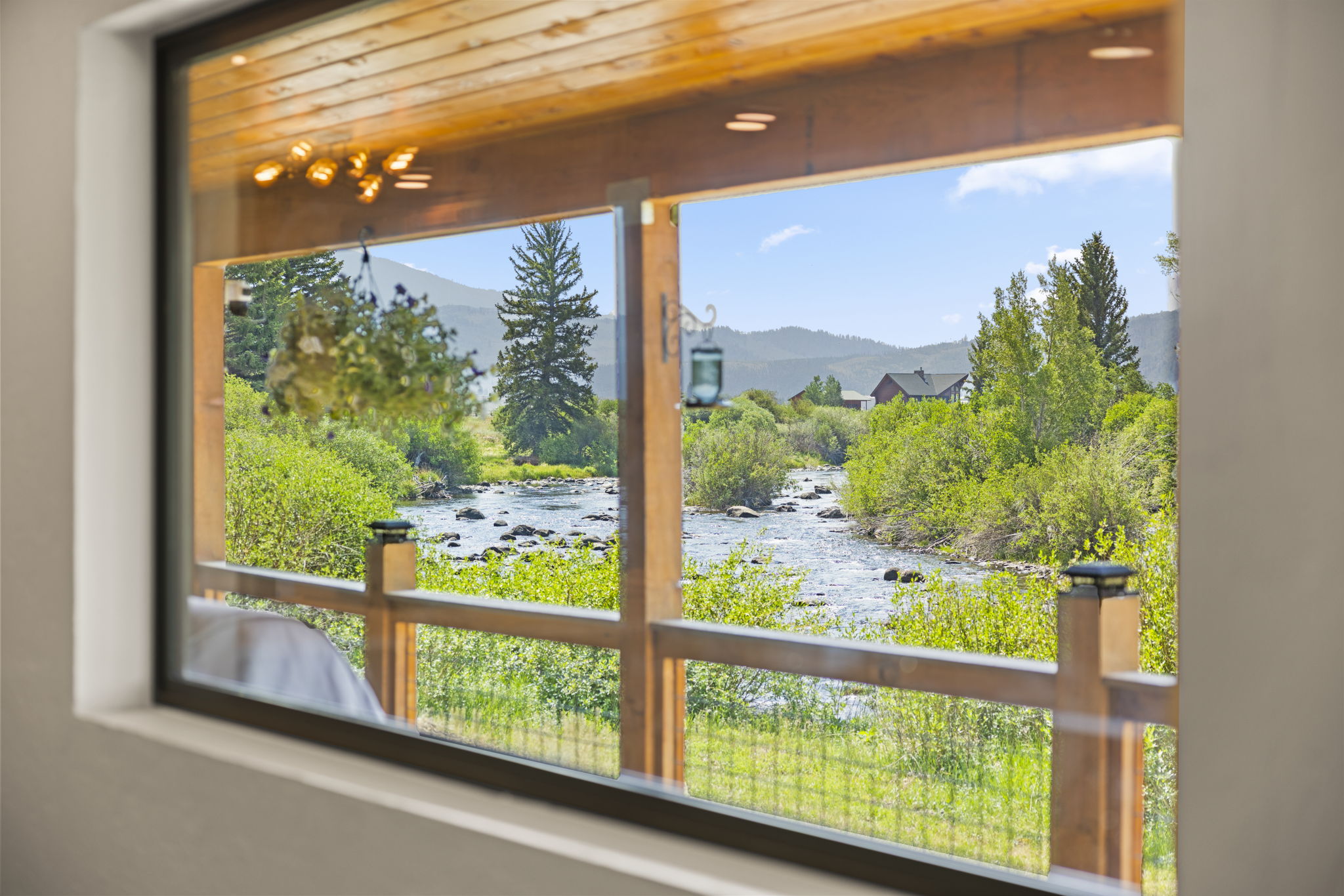
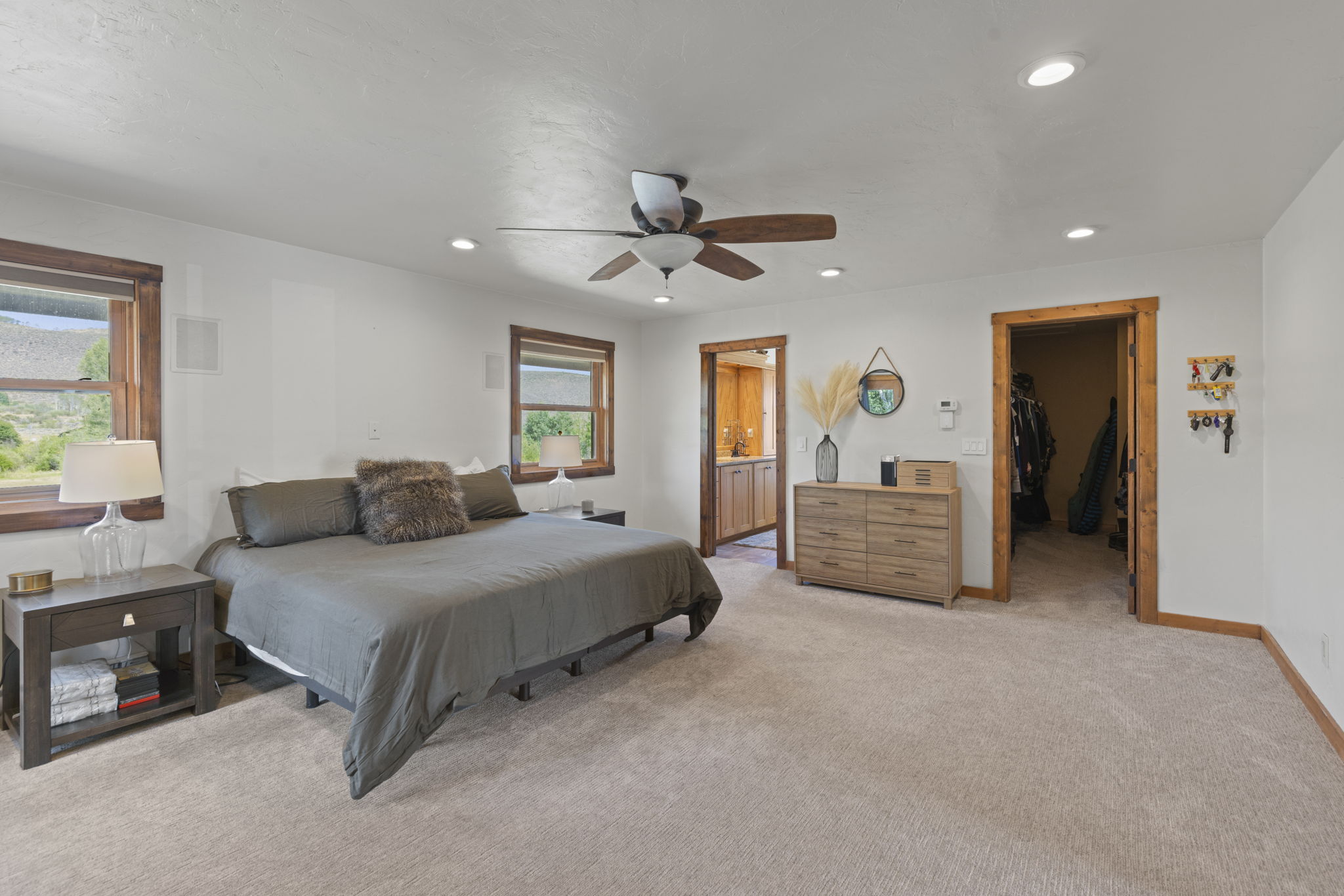
The primary suite is a study in considered luxury. A corner jetted tub is set into a stone-topped deck positioned deliberately beneath windows that frame the river and the hills beyond — the kind of bathing experience that requires no further embellishment. A dual-sink vanity with stone countertops and dark hardware, a glass-enclosed shower, and a walk-in closet complete a suite that feels both indulgent and entirely appropriate to its surroundings.
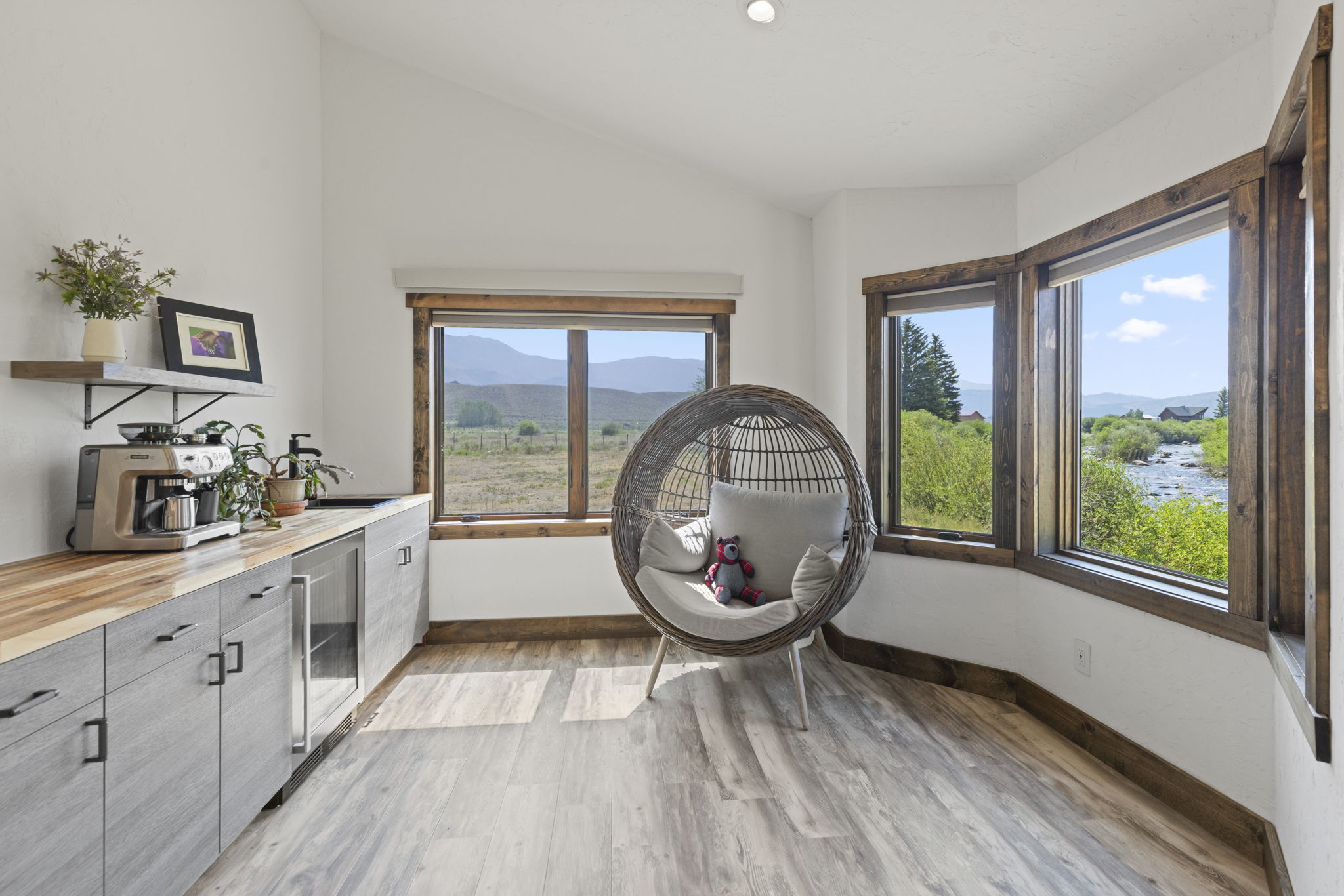
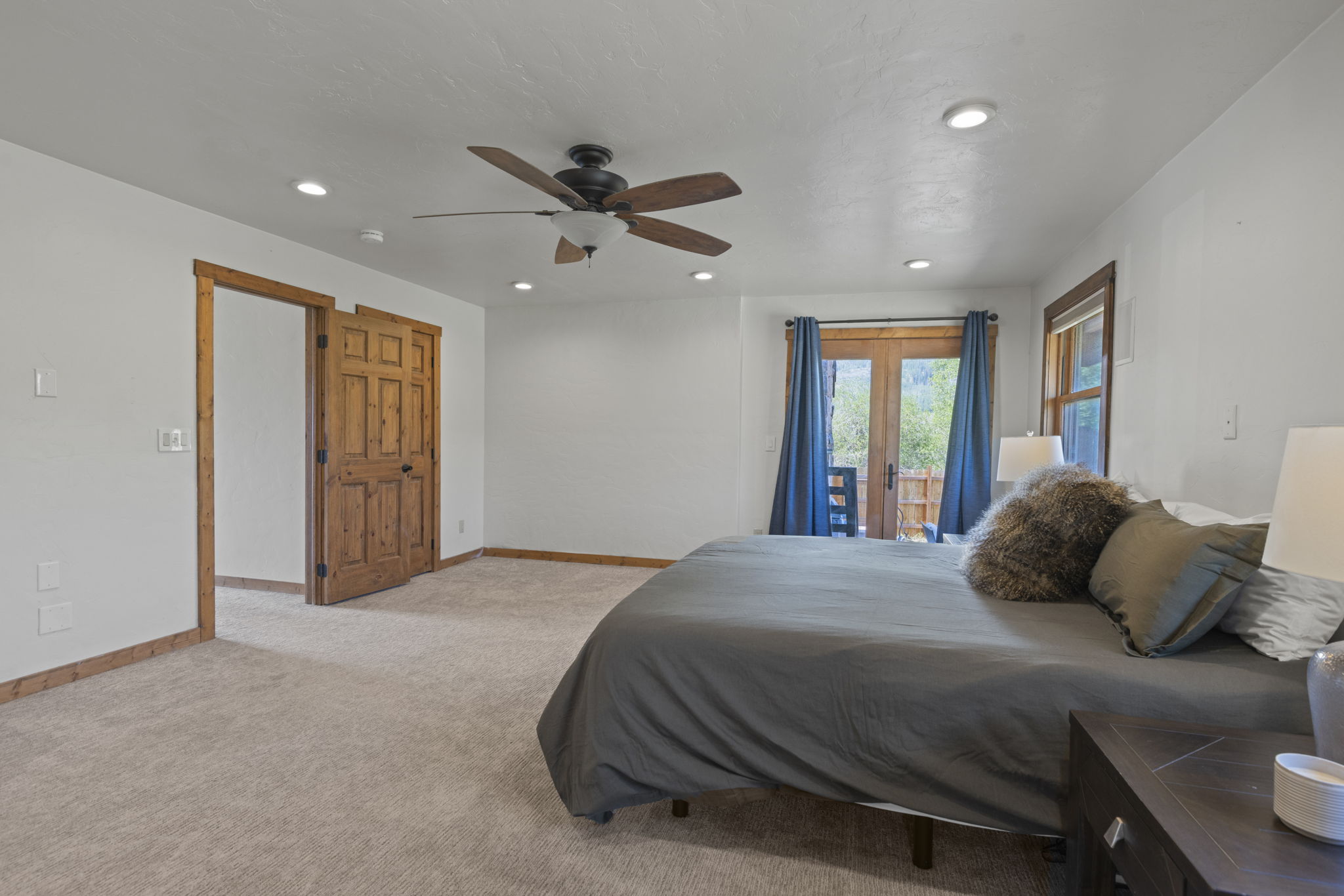
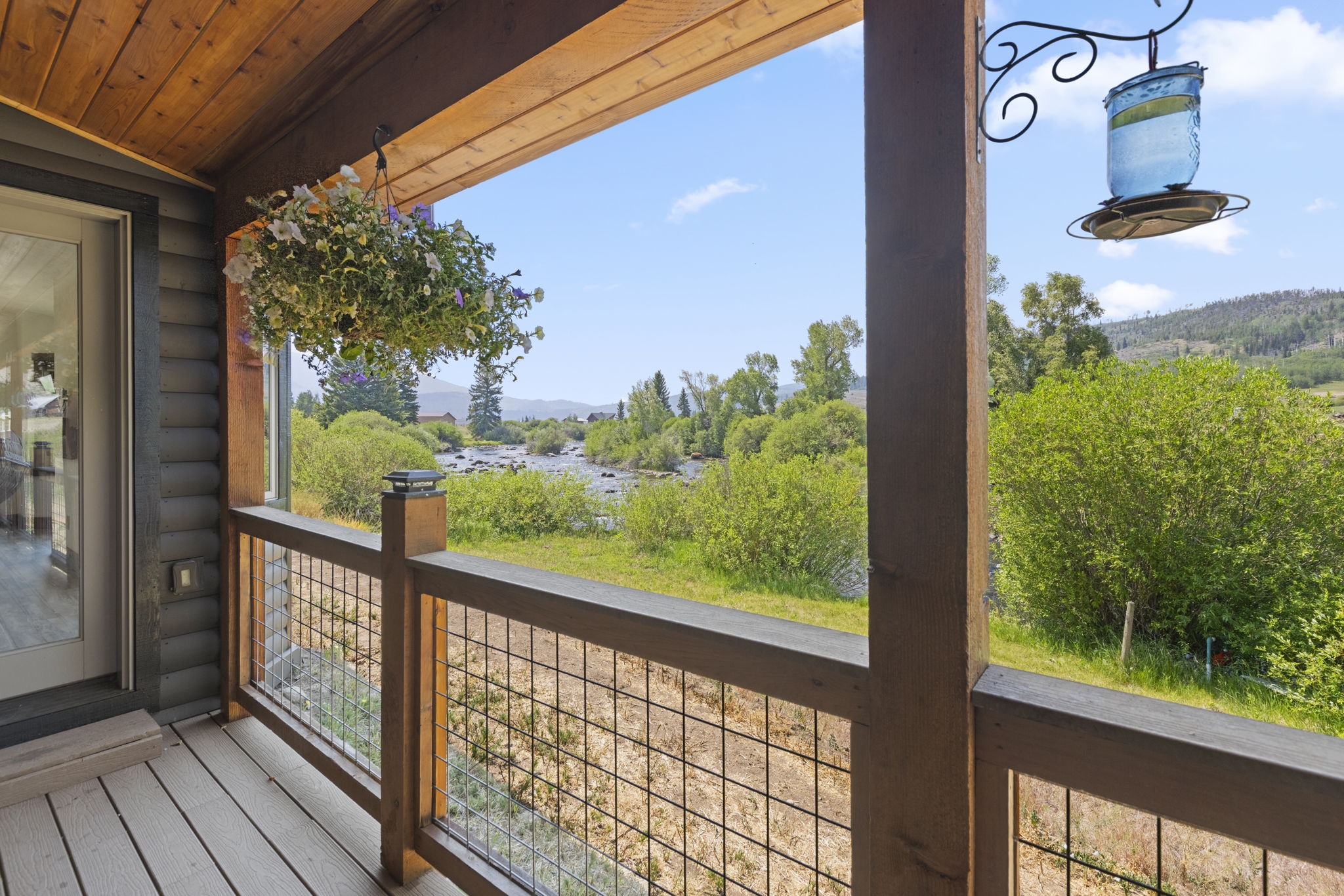
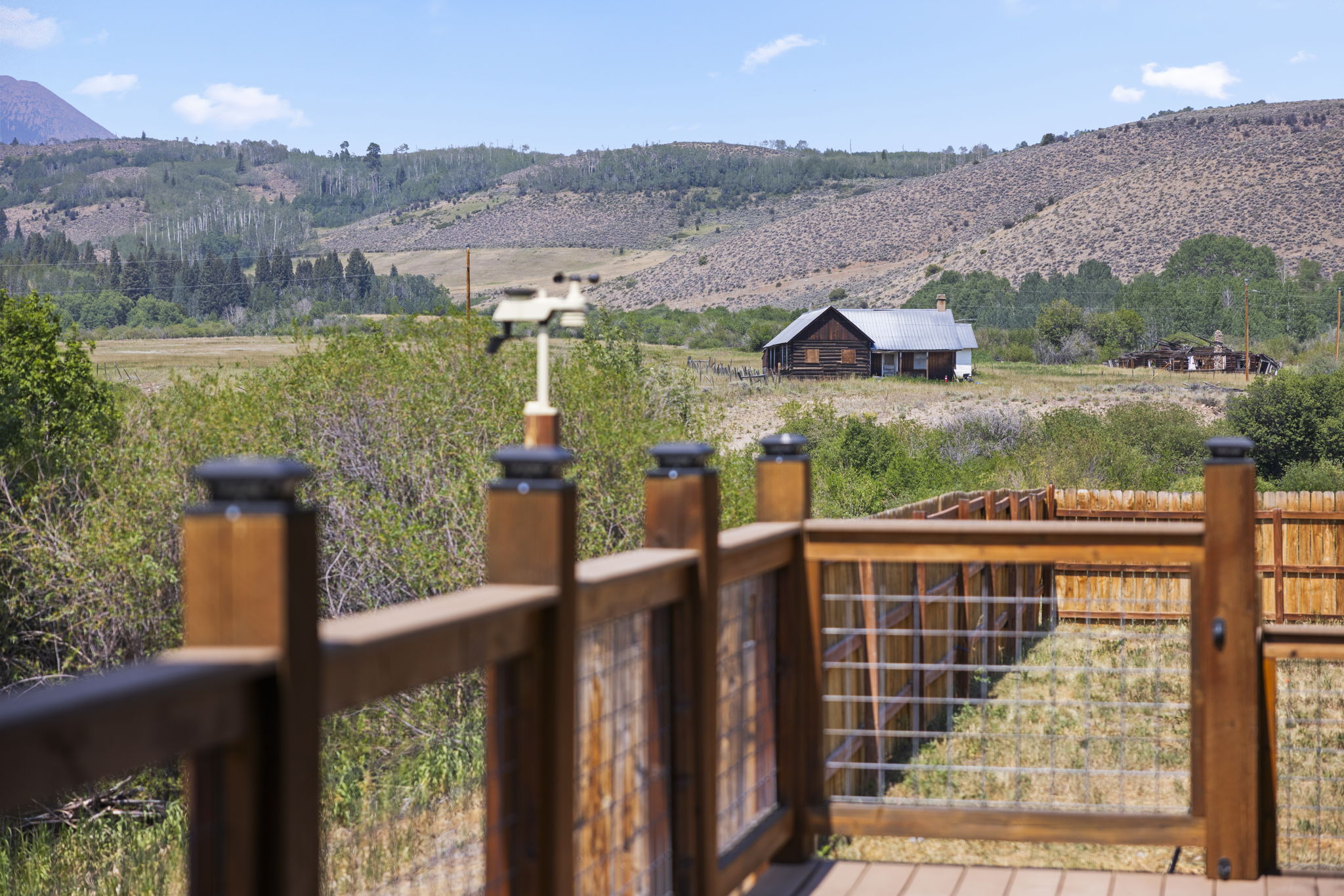
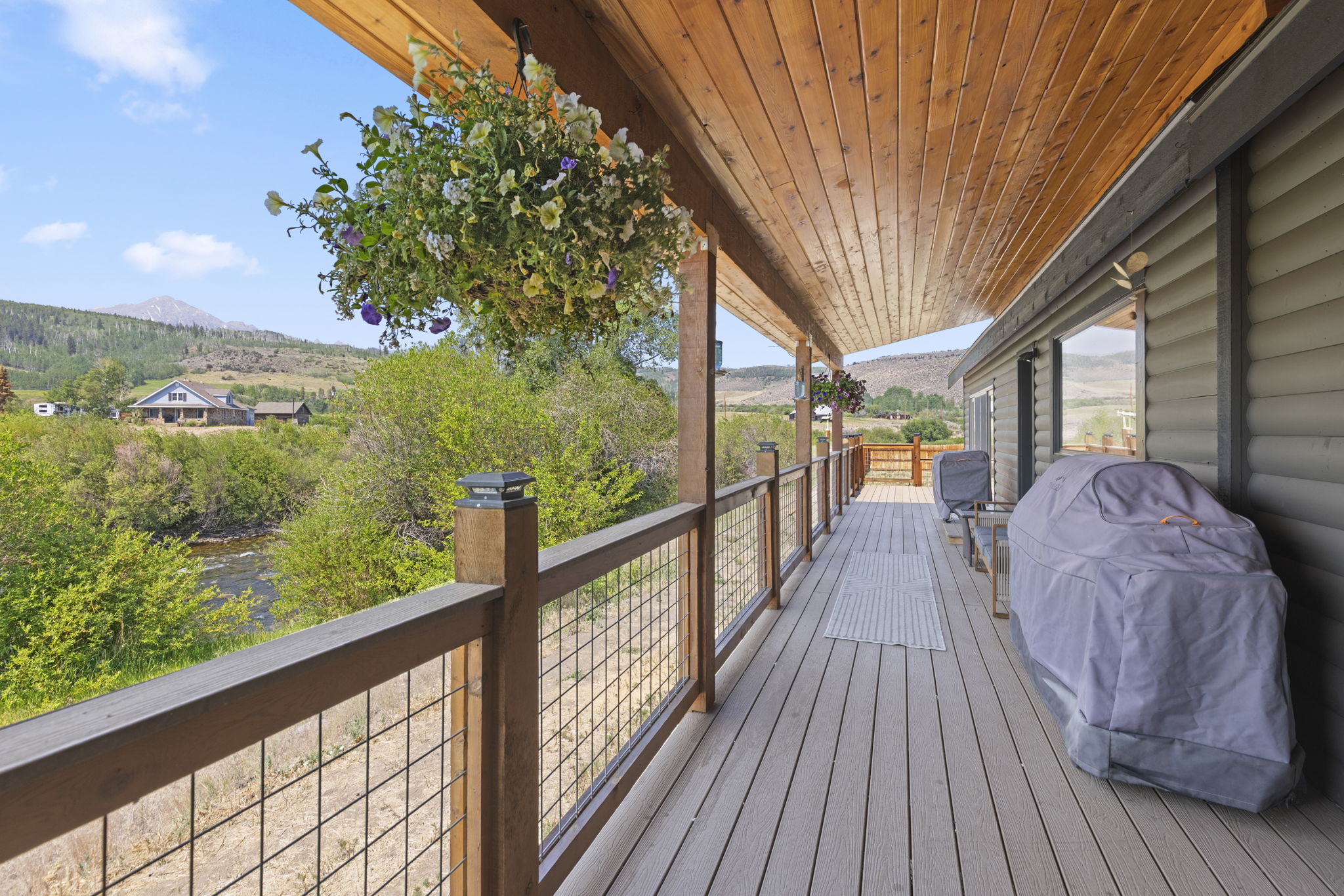
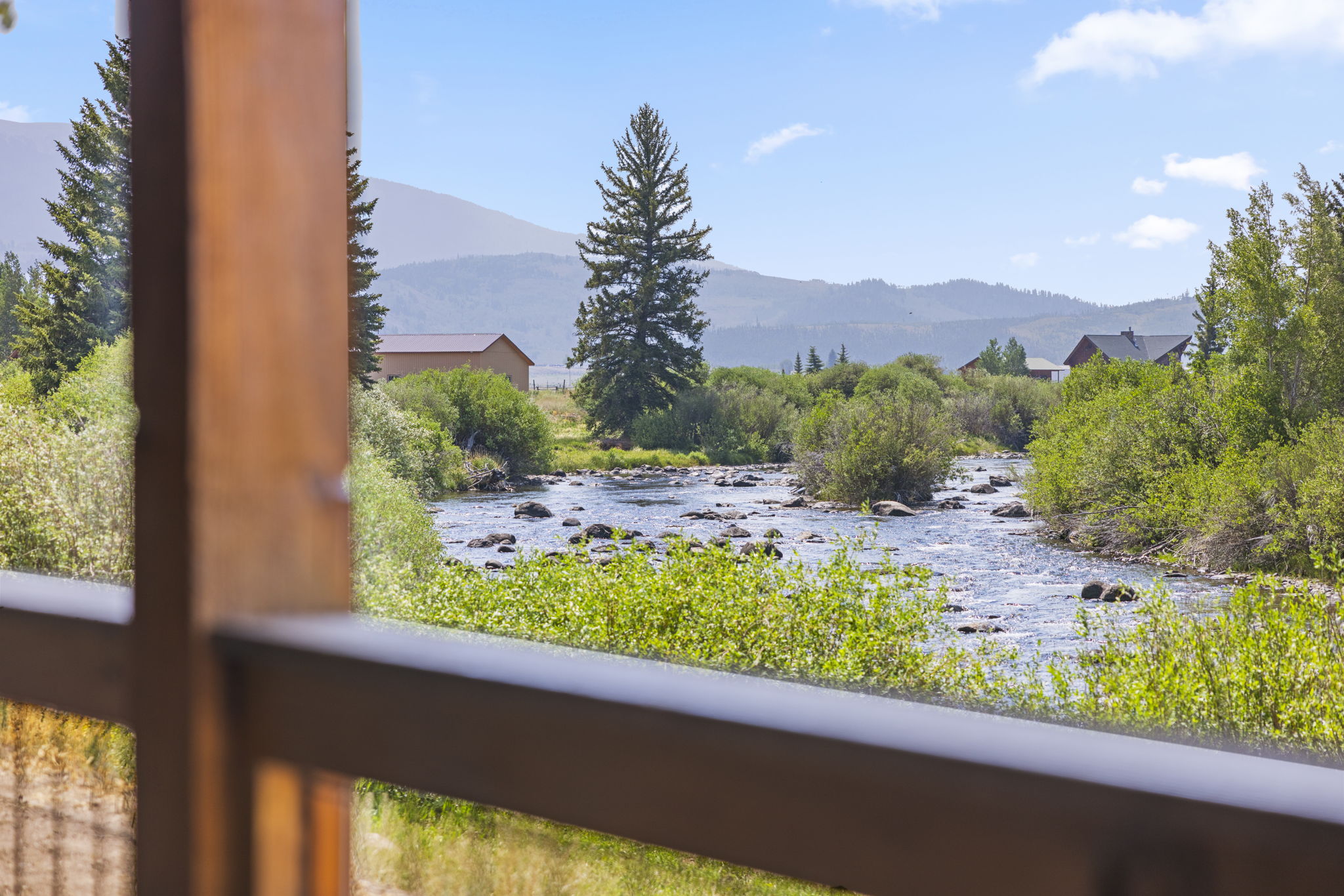
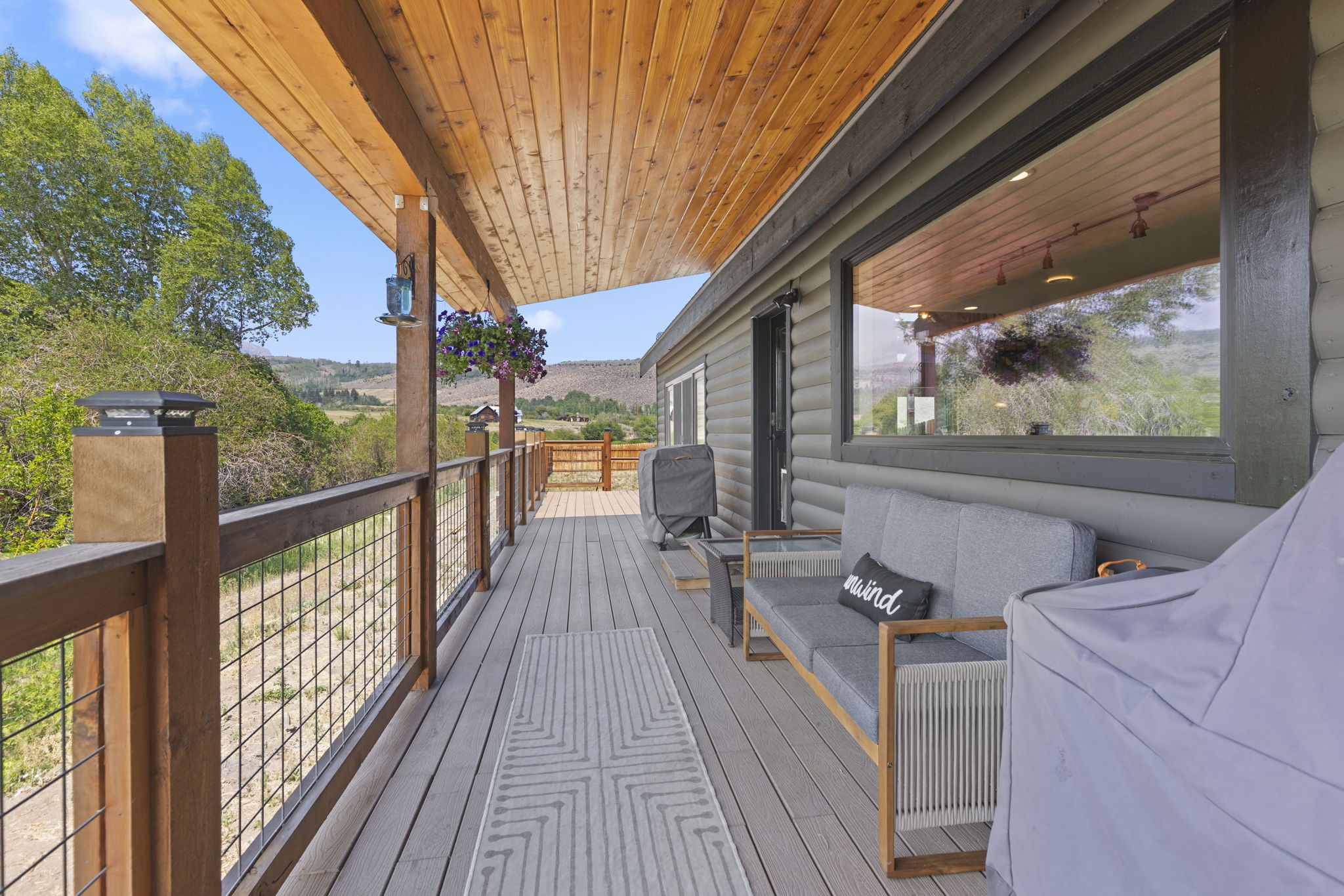
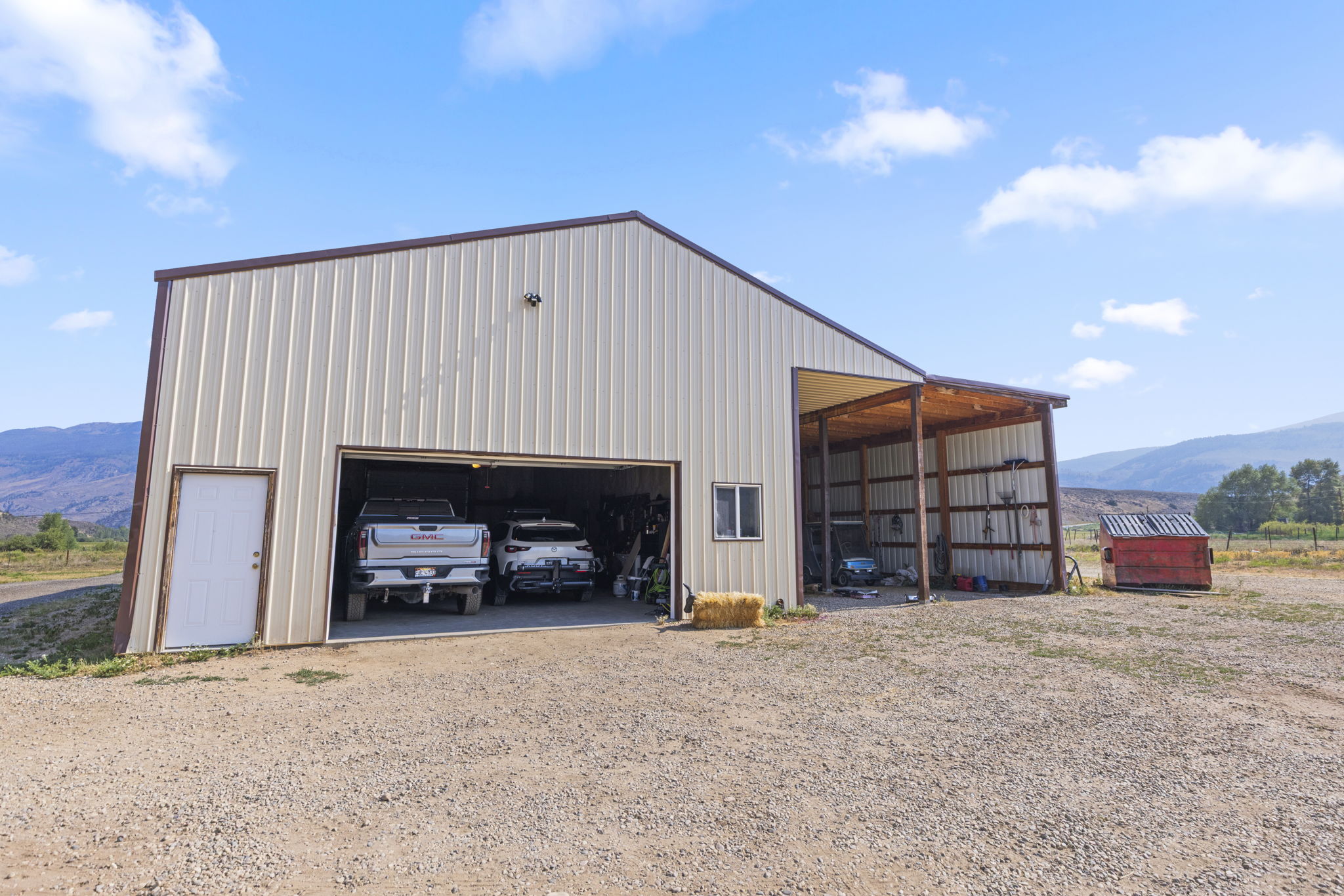
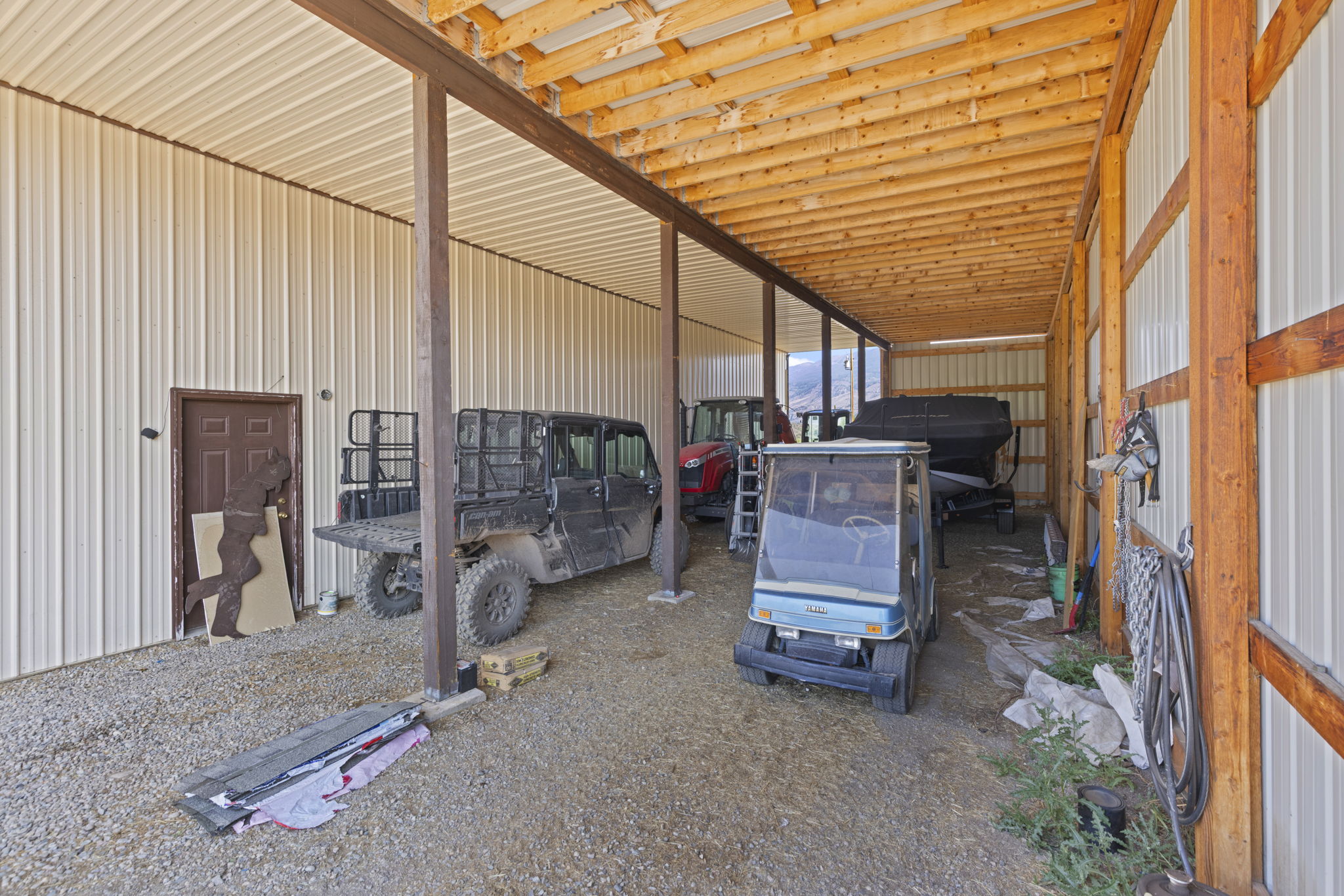
A second living area with its own private entrance provides flexible accommodation for guests, extended family, or creative use — a detail that speaks to the property's inherent versatility. Outside, a composite deck overlooks the Blue River directly below, while a concrete patio centers on a stone fire pit with unobstructed mountain views stretching to the horizon. The substantial metal barn accommodates vehicles, equipment, and workshop needs with room to spare — a working structure for a working ranch.
This is a home built not for a moment, but for a lifetime.
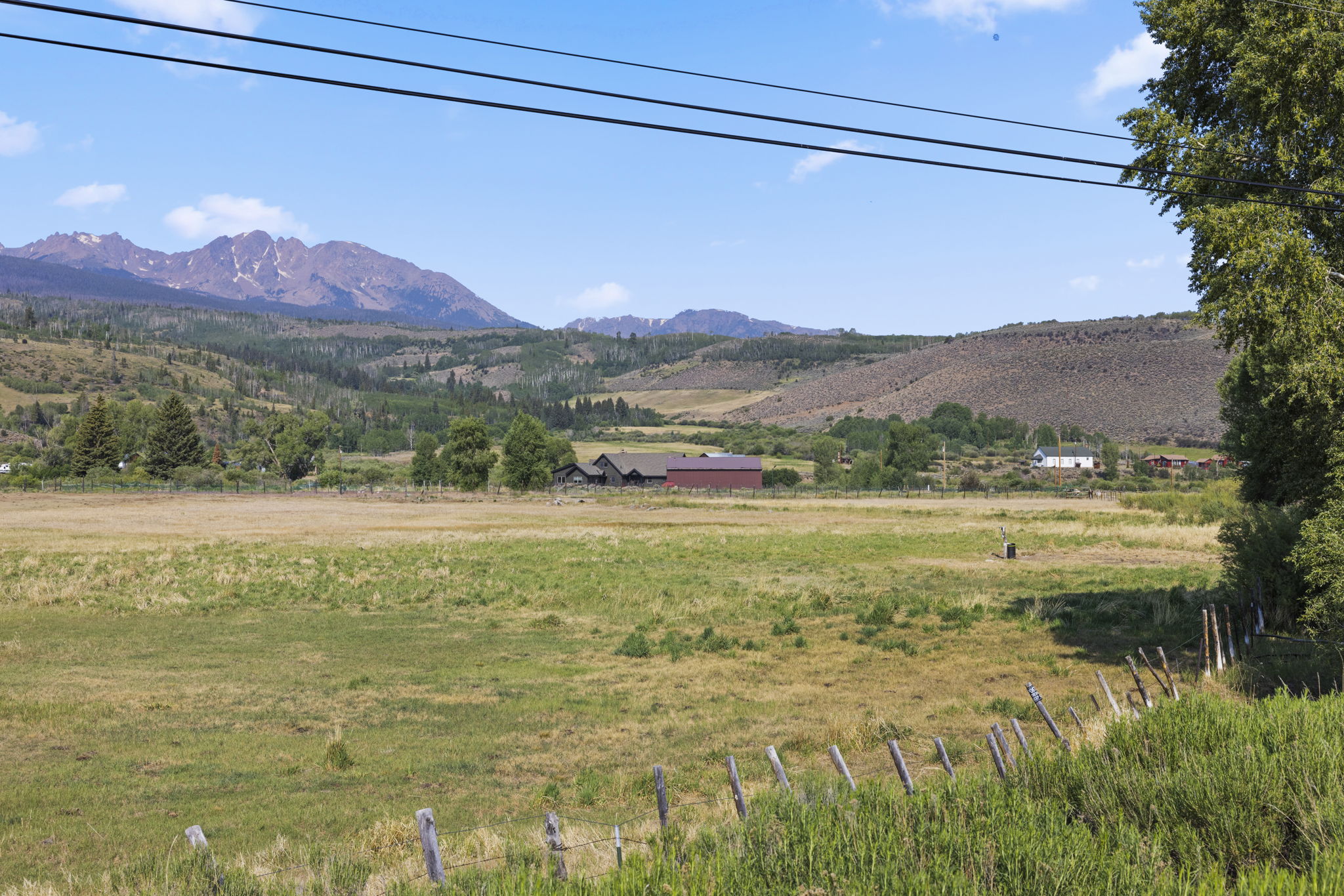
The Blue River corridor in Summit County, Colorado occupies a particular place in the geography of the American West — a high-altitude valley that has drawn settlers, adventurers, ranchers, and dreamers for well over a century, each leaving some trace of themselves in the landscape. At 366 Co Road 1450, those traces are not merely figurative. The acreage carries 86 years of documented history, and the surrounding land holds even more.
The remnants of Slate Creek tell the fuller story. On neighboring properties, the outlines of a one-room schoolhouse, teacher's quarters, and a historic bar speak to the community that once animated this valley — a small, self-sufficient settlement that existed at the intersection of the frontier era and the early twentieth century. The property itself has served as a legacy log mill, a dude ranch, and the site of a Summit County ski jump, a lineage that reflects the varied and enterprising spirit of mountain Colorado before ski resorts and resort towns defined the region's identity. To own this land is to hold stewardship over a piece of that story.
The broader Summit County context is equally compelling. Located along Colorado State Highway 9, the Blue River corridor connects Silverthorne and Kremmling through a stretch of valley that remains one of the region's most scenic and relatively undeveloped corridors. The Blue River itself is renowned among fly-fishing enthusiasts as a Gold Medal fishery — a designation reserved for stretches of water that support exceptional trout populations and angling quality. The privilege of holding water rights on such a waterway is not merely a legal distinction; it is access to one of Colorado's most coveted outdoor experiences, steps from your own back door.
Silverthorne, located approximately 15 miles to the south, serves as the practical hub for the region — offering grocery, dining, retail, and medical amenities with the efficiency of a well-organized mountain town. The Outlets at Silverthorne provide an unexpected degree of retail sophistication for a mountain community, while the town's growing culinary scene reflects the broader maturation of Summit County as a year-round destination rather than a seasonal resort.
The ski resorts of Summit County — Breckenridge, Keystone, Arapahoe Basin, and Copper Mountain — are all within reasonable driving distance, placing this property at the intersection of authentic ranch living and world-class recreational access. Breckenridge, in particular, offers not only skiing of international repute but a historic Victorian main street that functions as a genuine mountain town rather than a manufactured resort village.
For those drawn to the outdoors beyond ski season, the surrounding landscape offers fly-fishing, hiking, mountain biking, wildlife observation, and river access in abundance. The Blue River corridor is known for its resident populations of deer, elk, and migratory birds, making the property as rewarding in summer and autumn as it is in winter.
This is Summit County before it was Summit County — and the rarest possible vantage point from which to experience everything it has become.
Featured Highlights
Curated Content • Presented by Megan Wheat & Barbara Schneeman