The Story Behind
A Gated French Chateau Estate Above Lake Washington
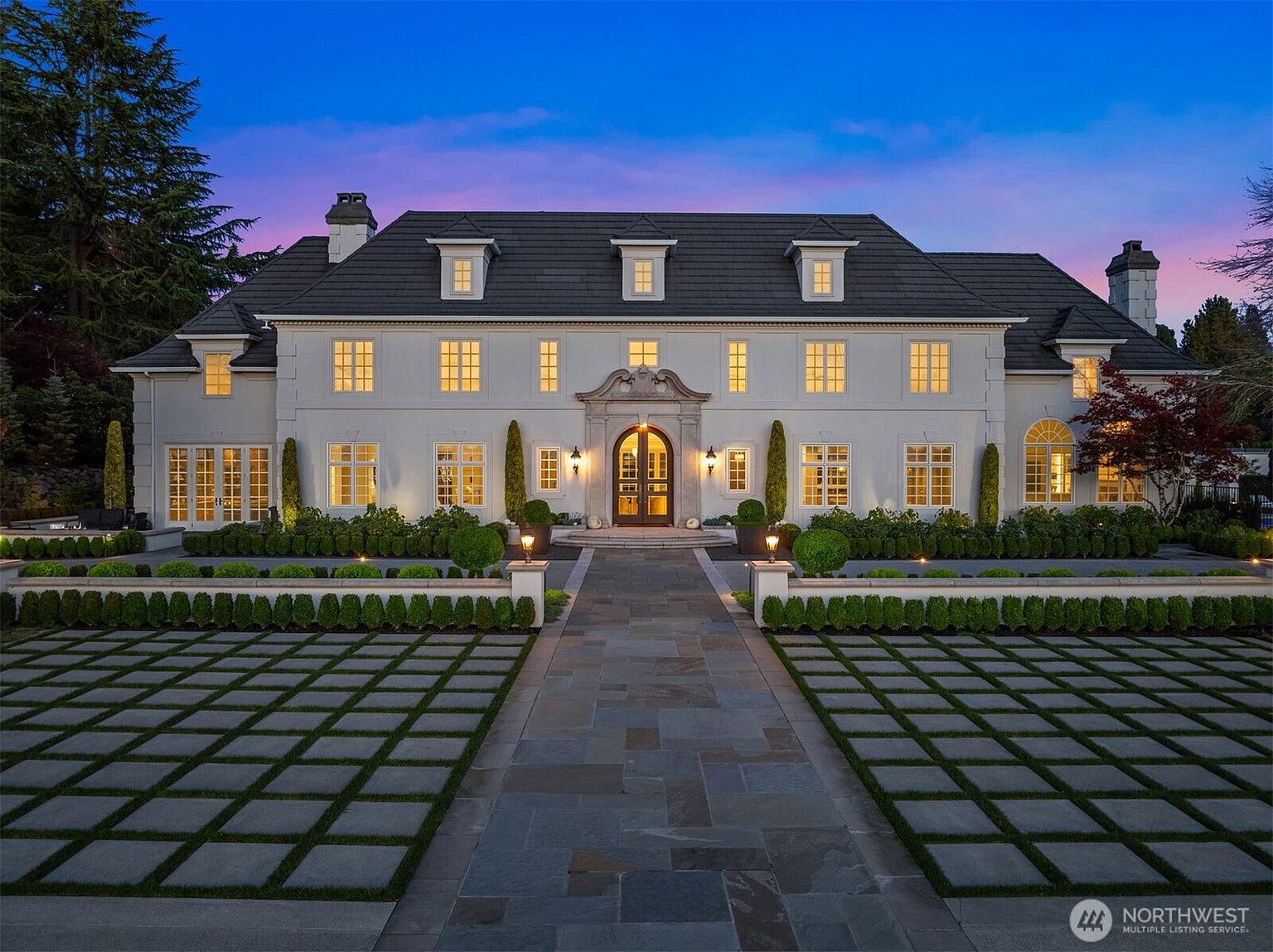
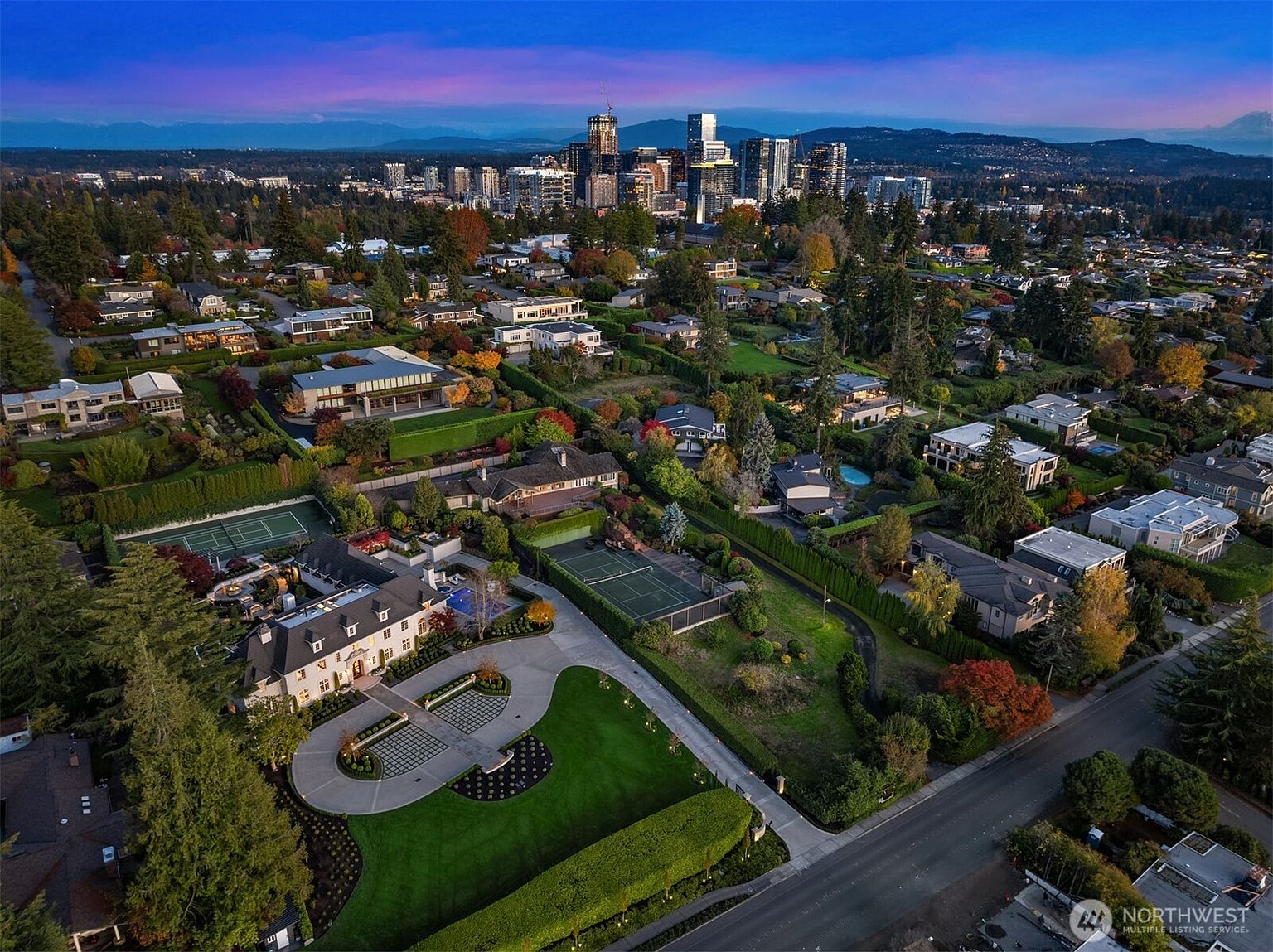
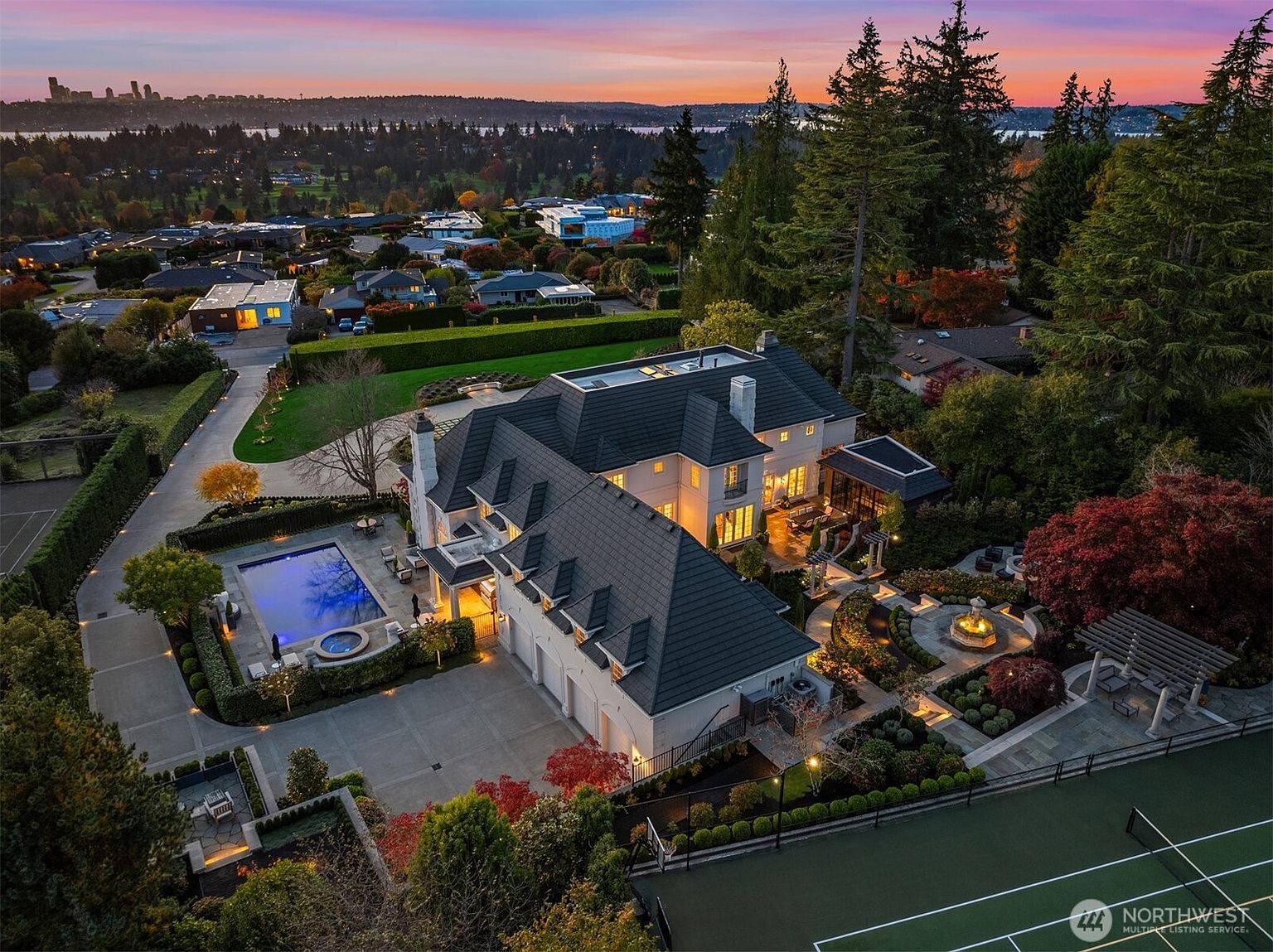
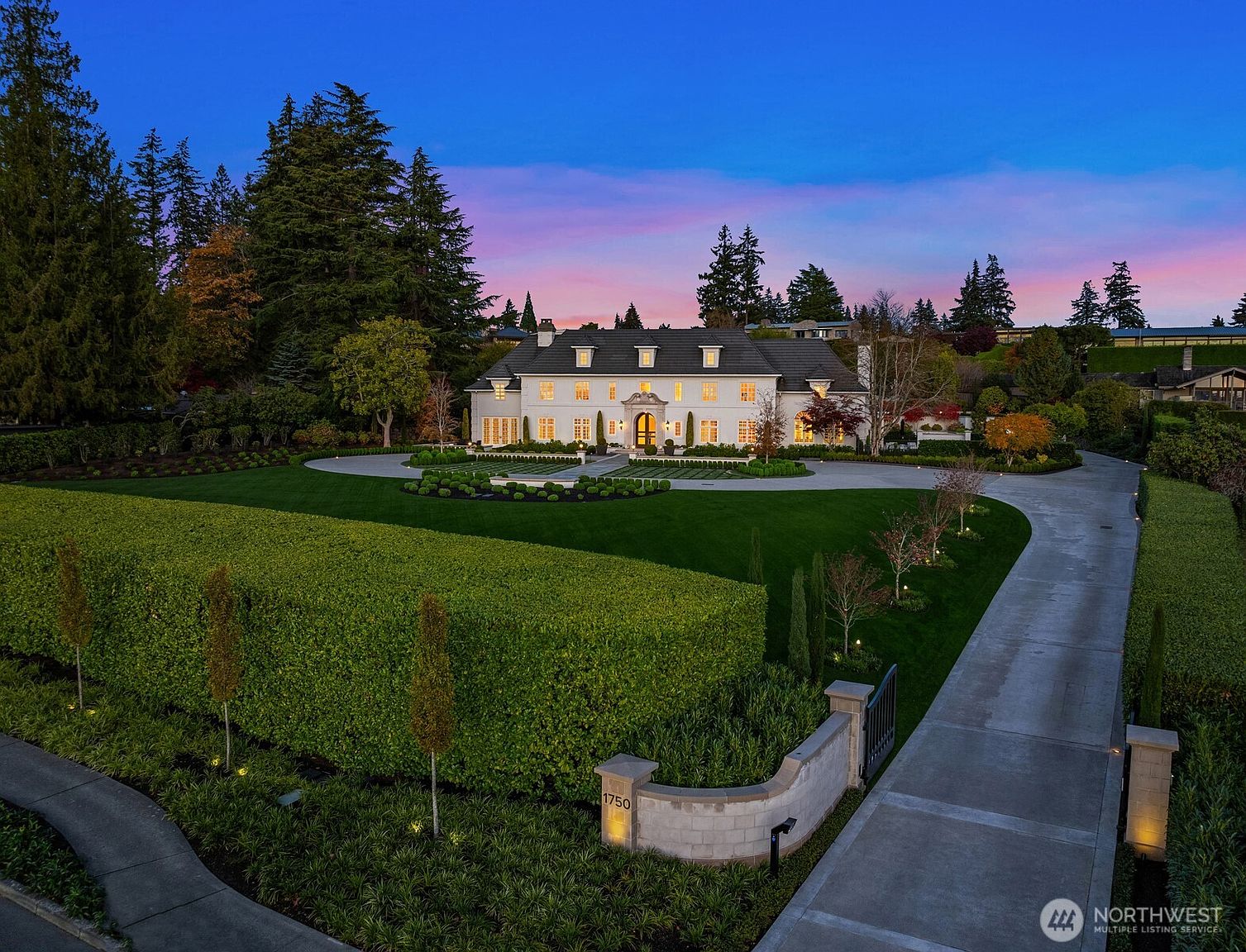
There is a particular kind of estate that announces itself not through scale alone, but through the accumulated weight of every considered detail — and 1750 92nd Avenue NE is precisely that. Approached through a gated entrance framed by established trees, the classic white facade, dark shingled roof, and arched stone entryway establish an architectural language that is both deeply rooted in French tradition and wholly at home in the Pacific Northwest. This is a home that has earned its presence.
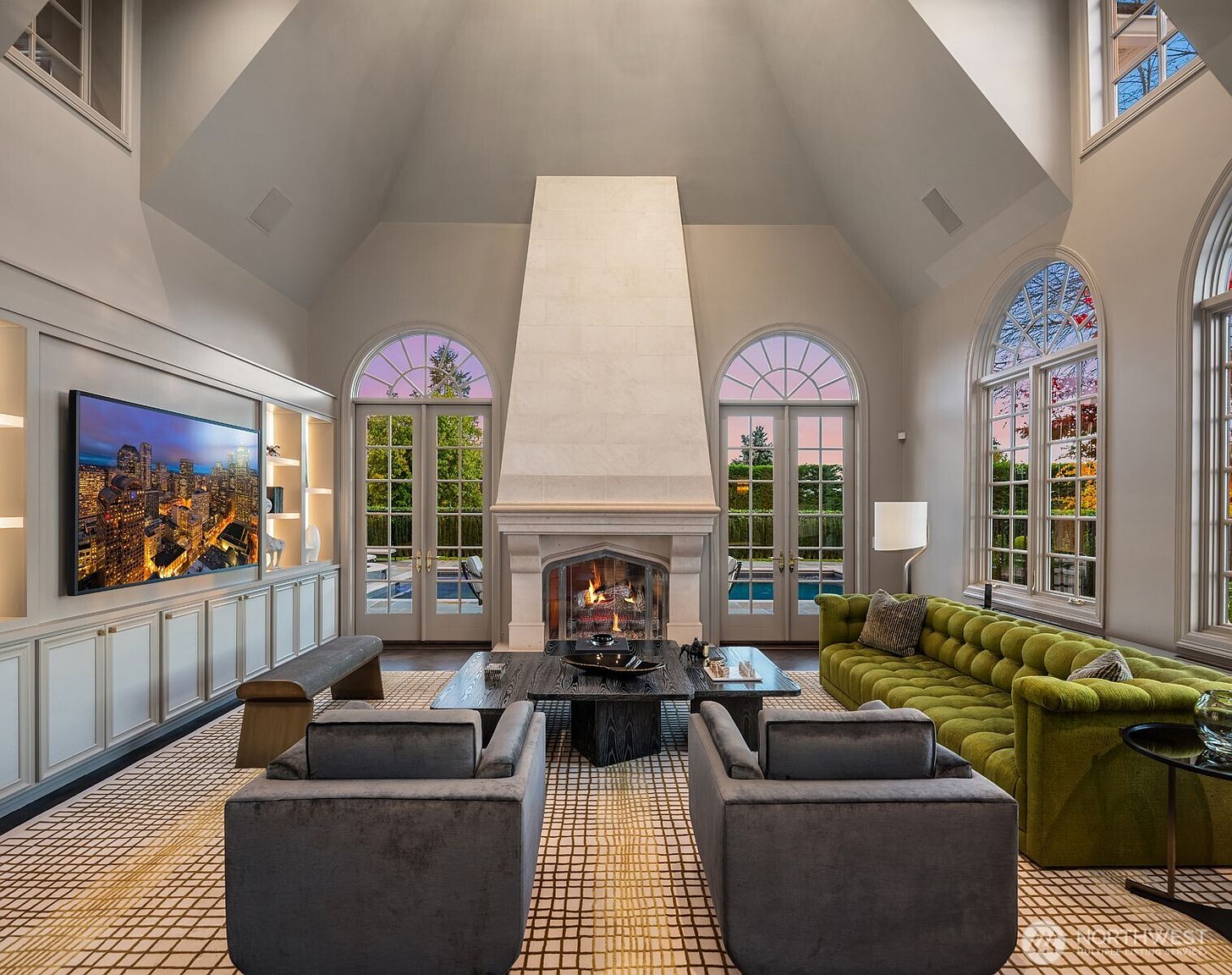
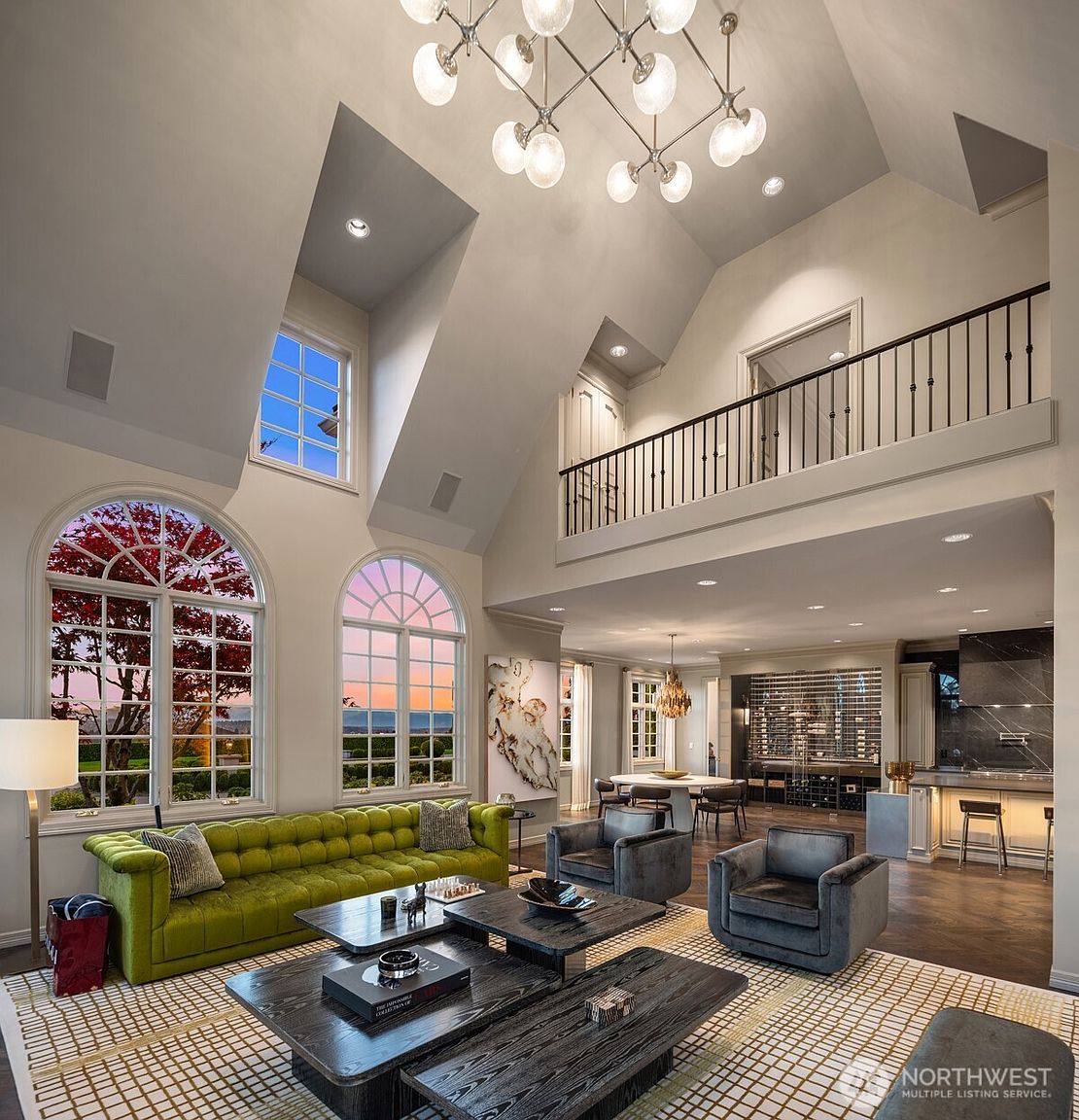
The renovation, which unfolded over three years under the direction of Gelotte Hommas Architecture, was guided by a single discipline: preserve the original character, then elevate it. The result is a residence where original architectural bones — double-height ceilings, stone fireplaces, intricate wall molding, arched doorways — are met by materials and finishes of genuine quality. Nothing here feels like a shortcut.
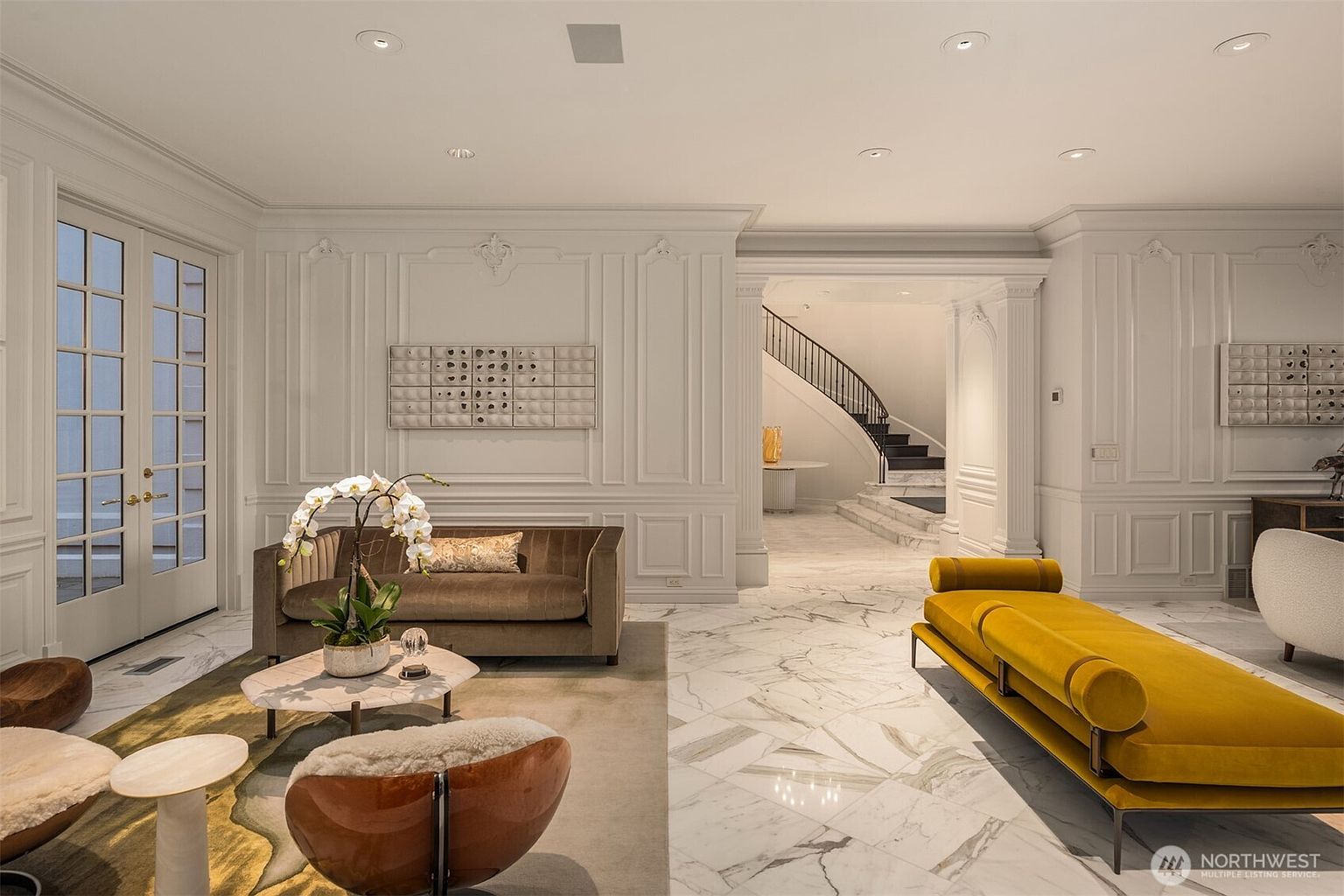
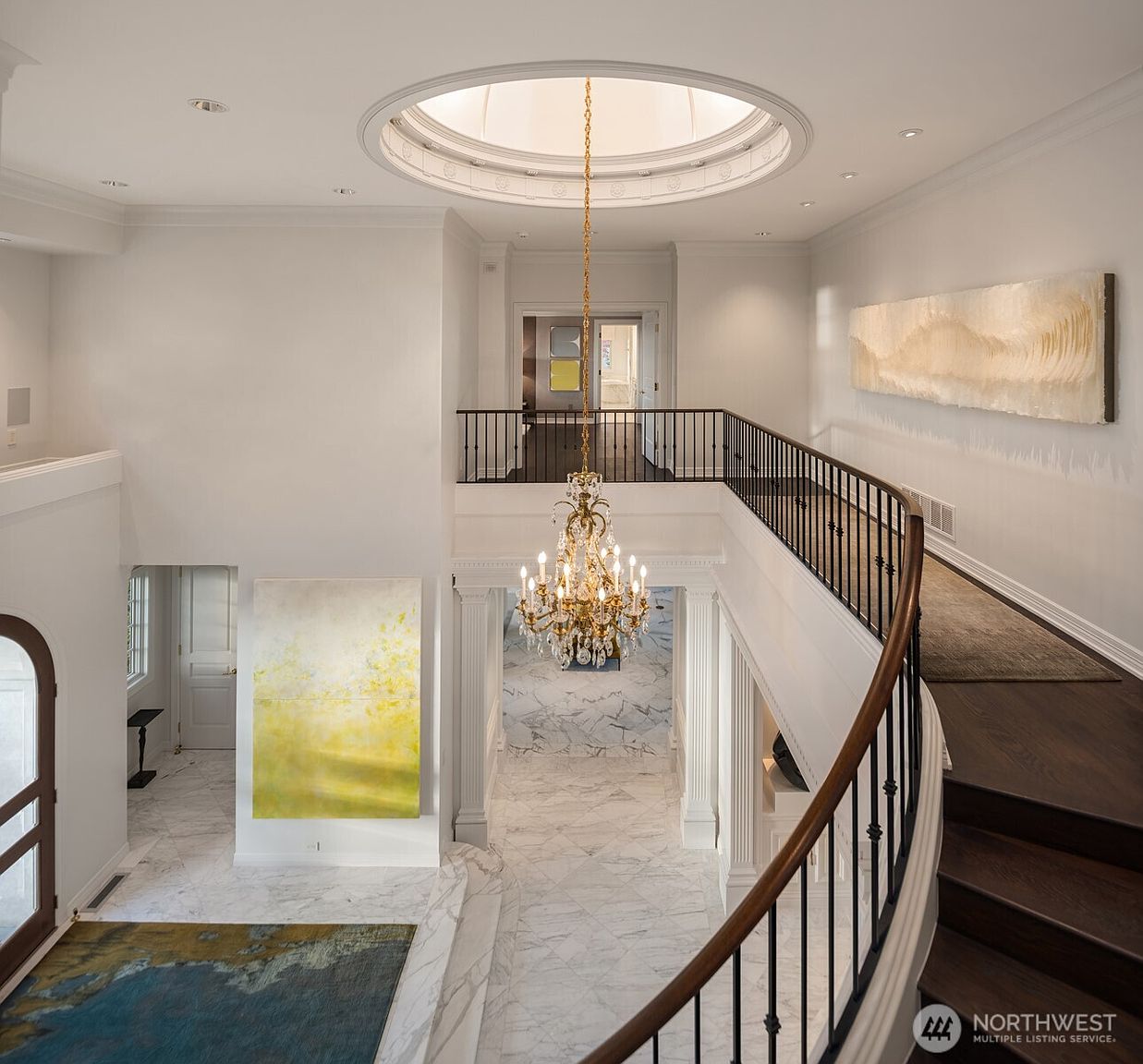
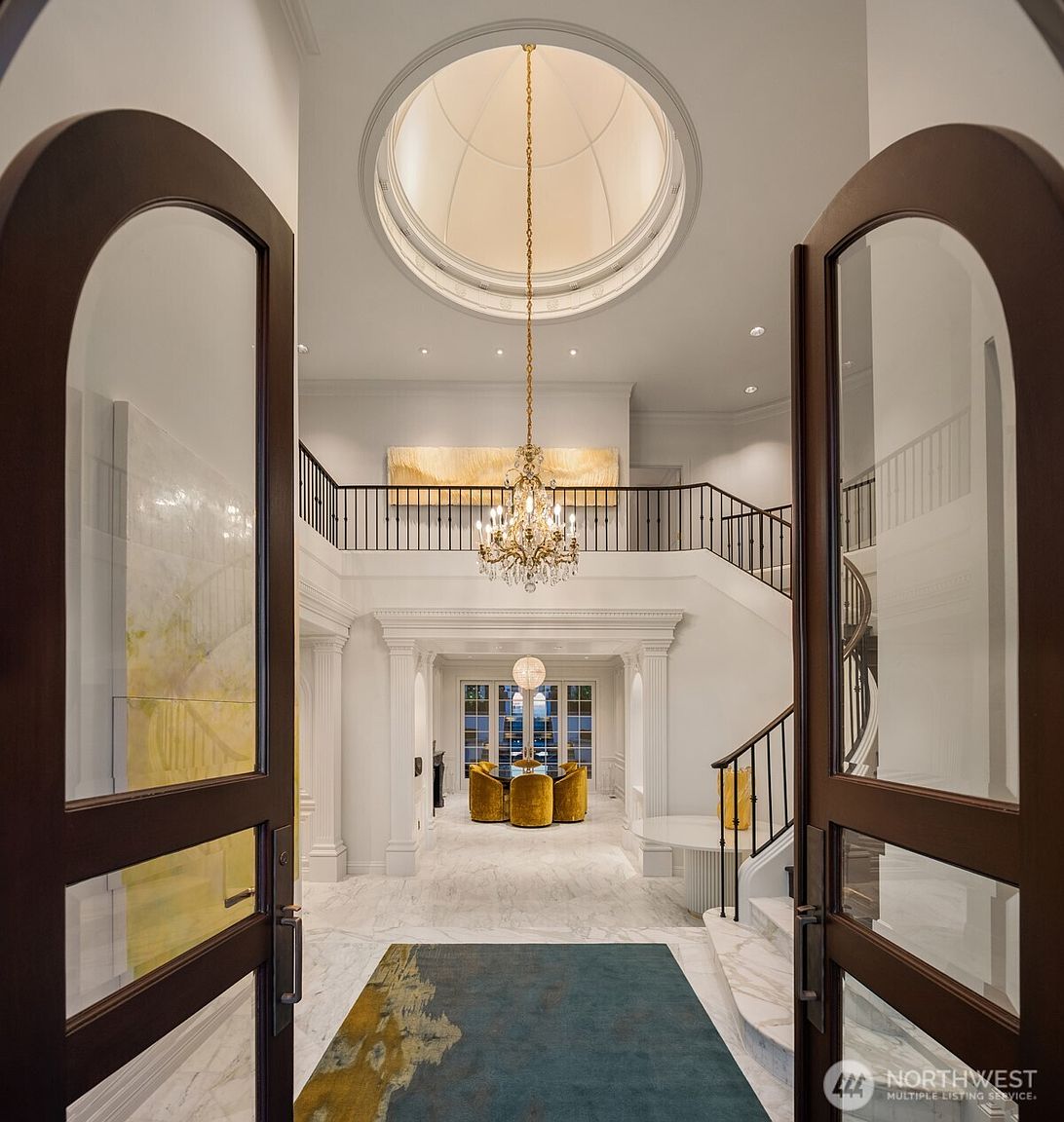
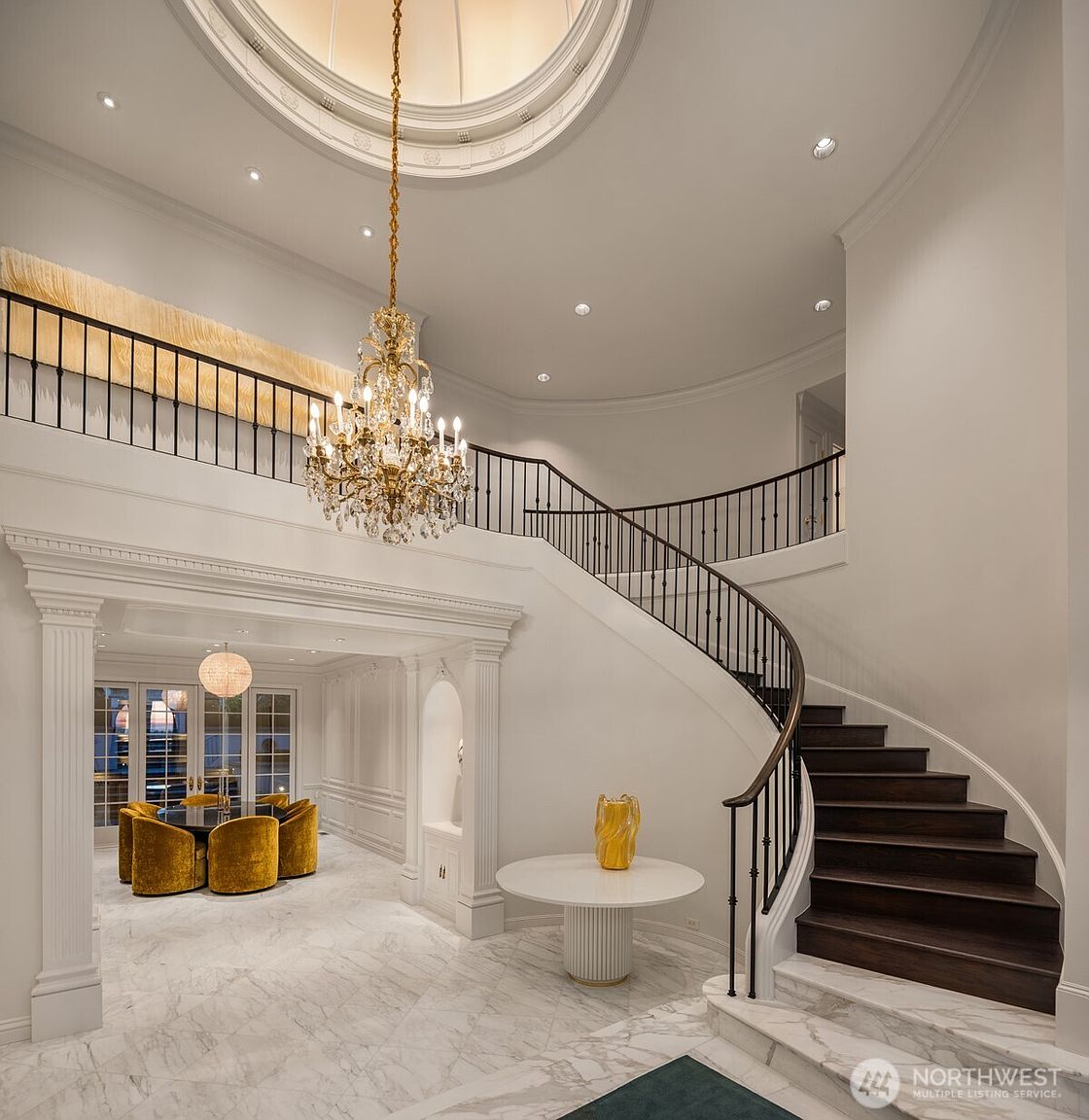
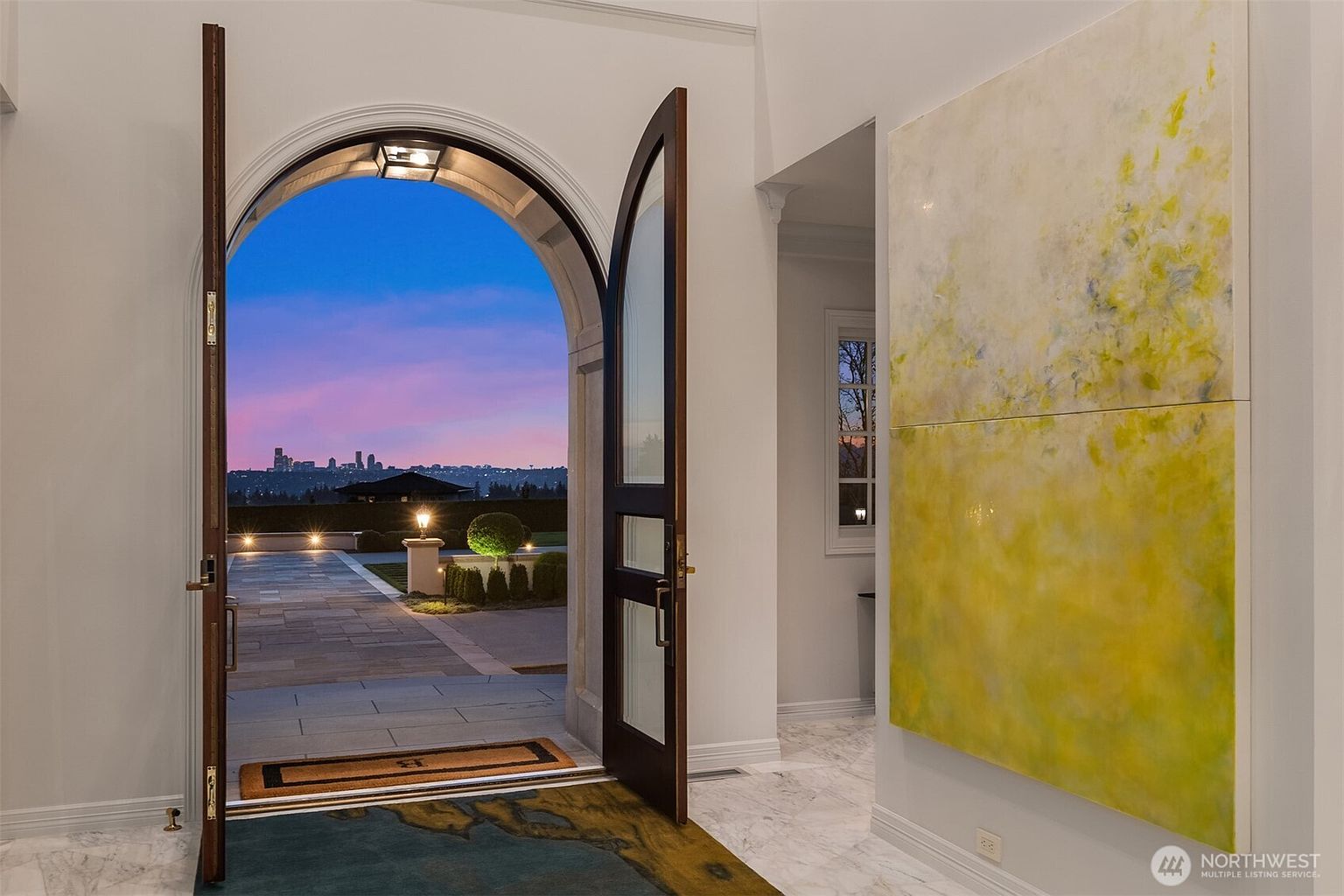
The entry foyer sets the tone with authority. Polished marble flooring, a sweeping curved staircase dressed in dark wood treads and wrought-iron railing, and a crystal chandelier suspended from a circular domed ceiling create a formal arrival sequence that is, quite simply, rare in residential architecture. From this point, the home unfolds with a natural hierarchy — grand formal rooms giving way to more intimate gathering spaces, each one resolved with its own distinct identity.
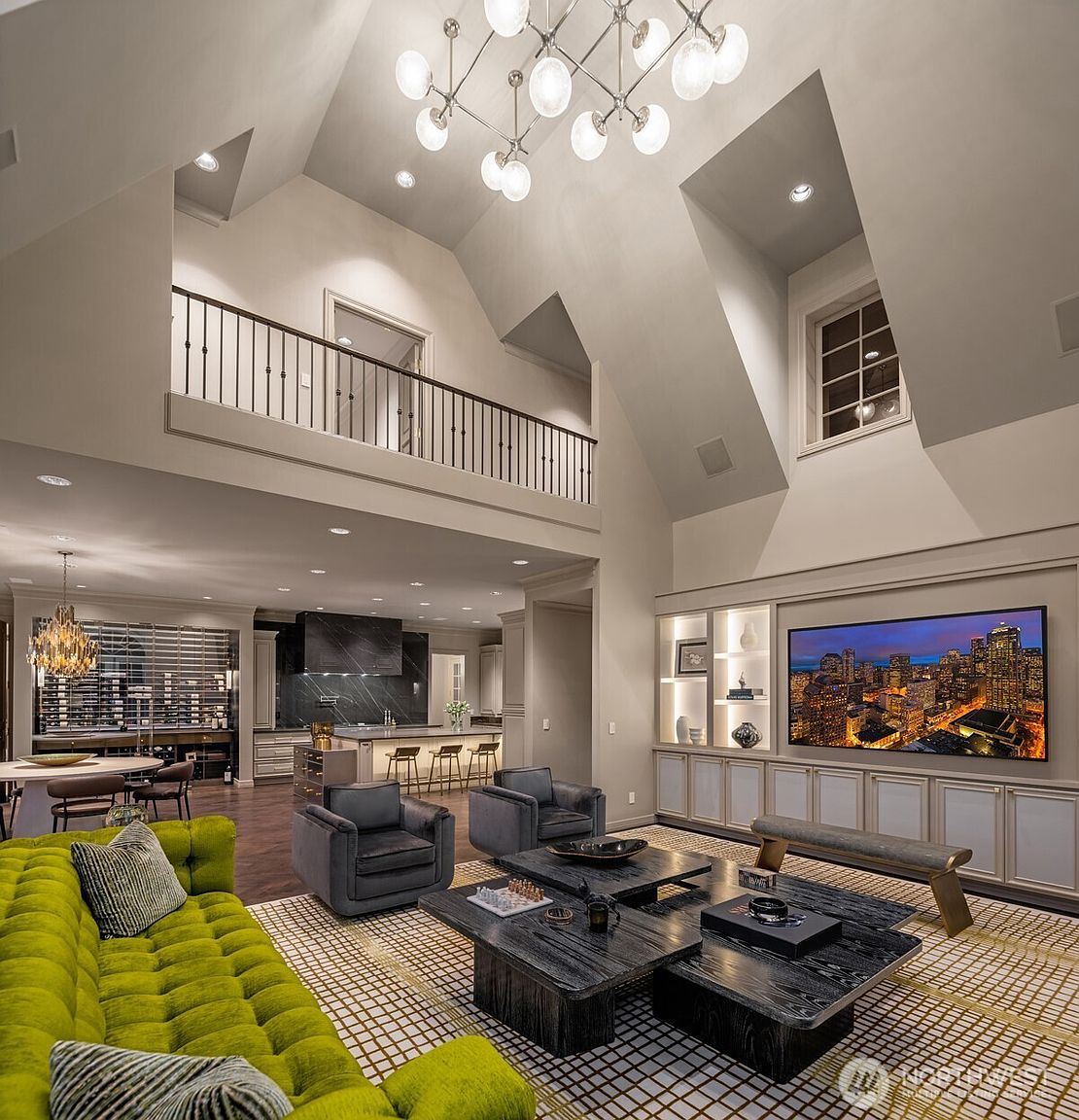
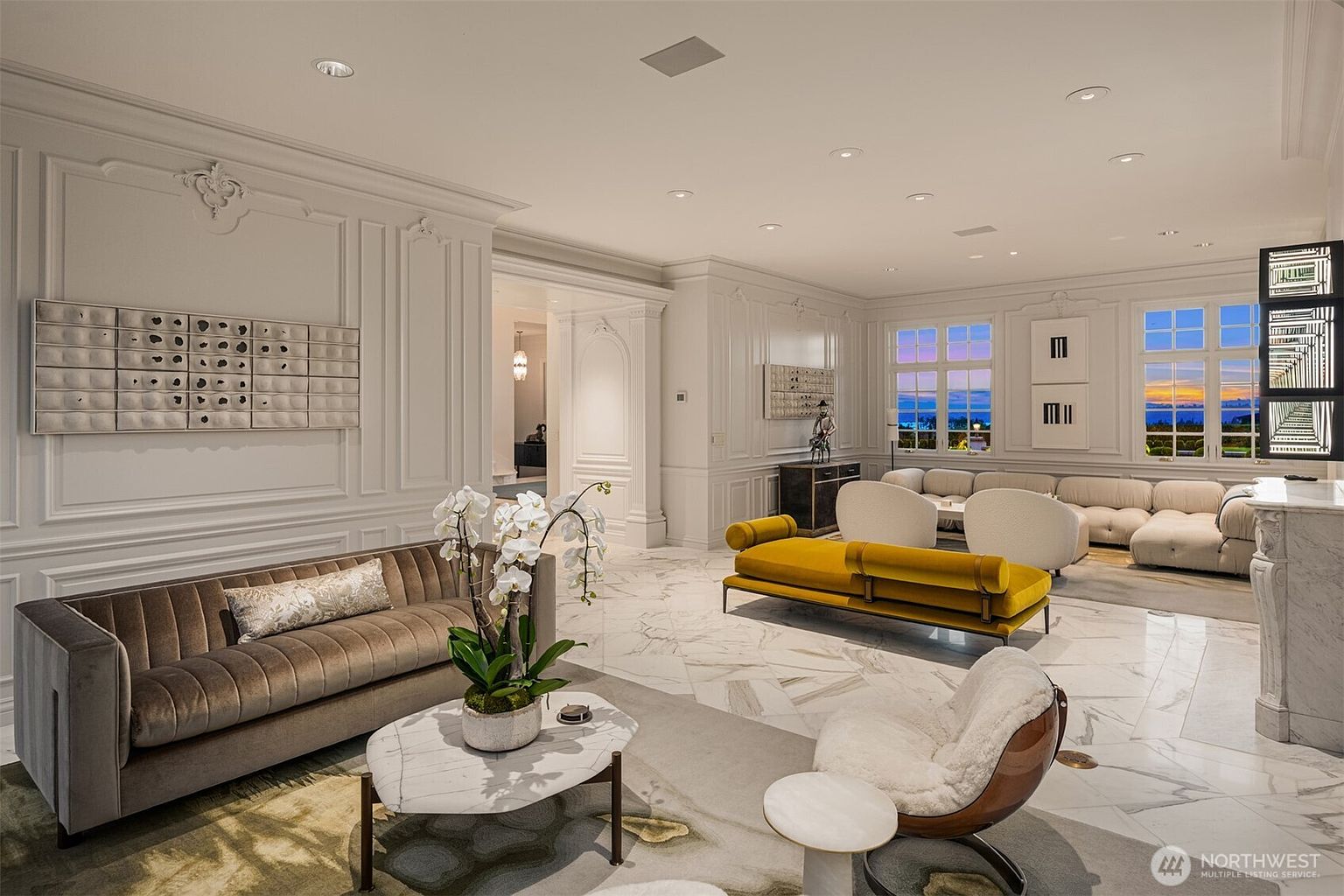
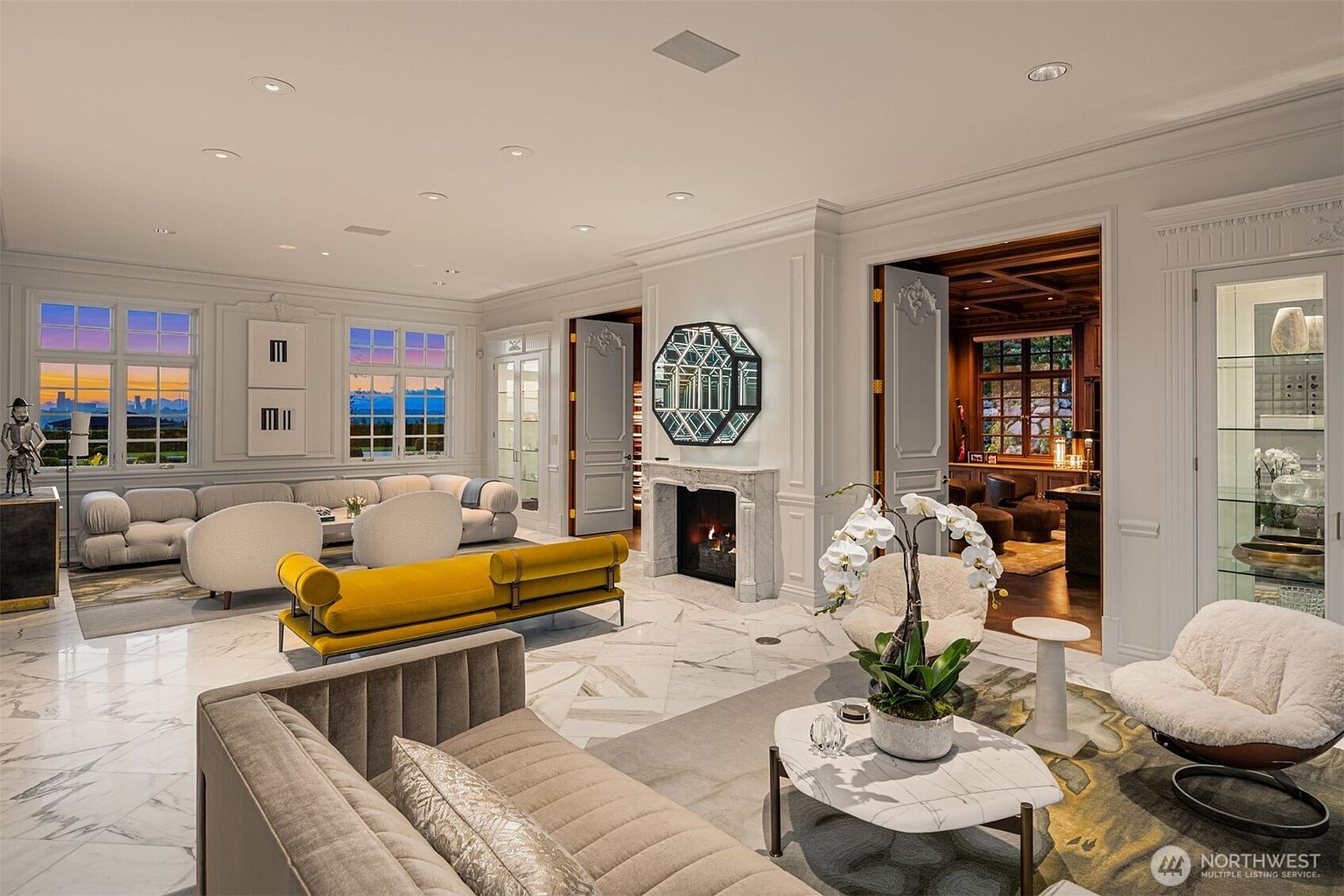
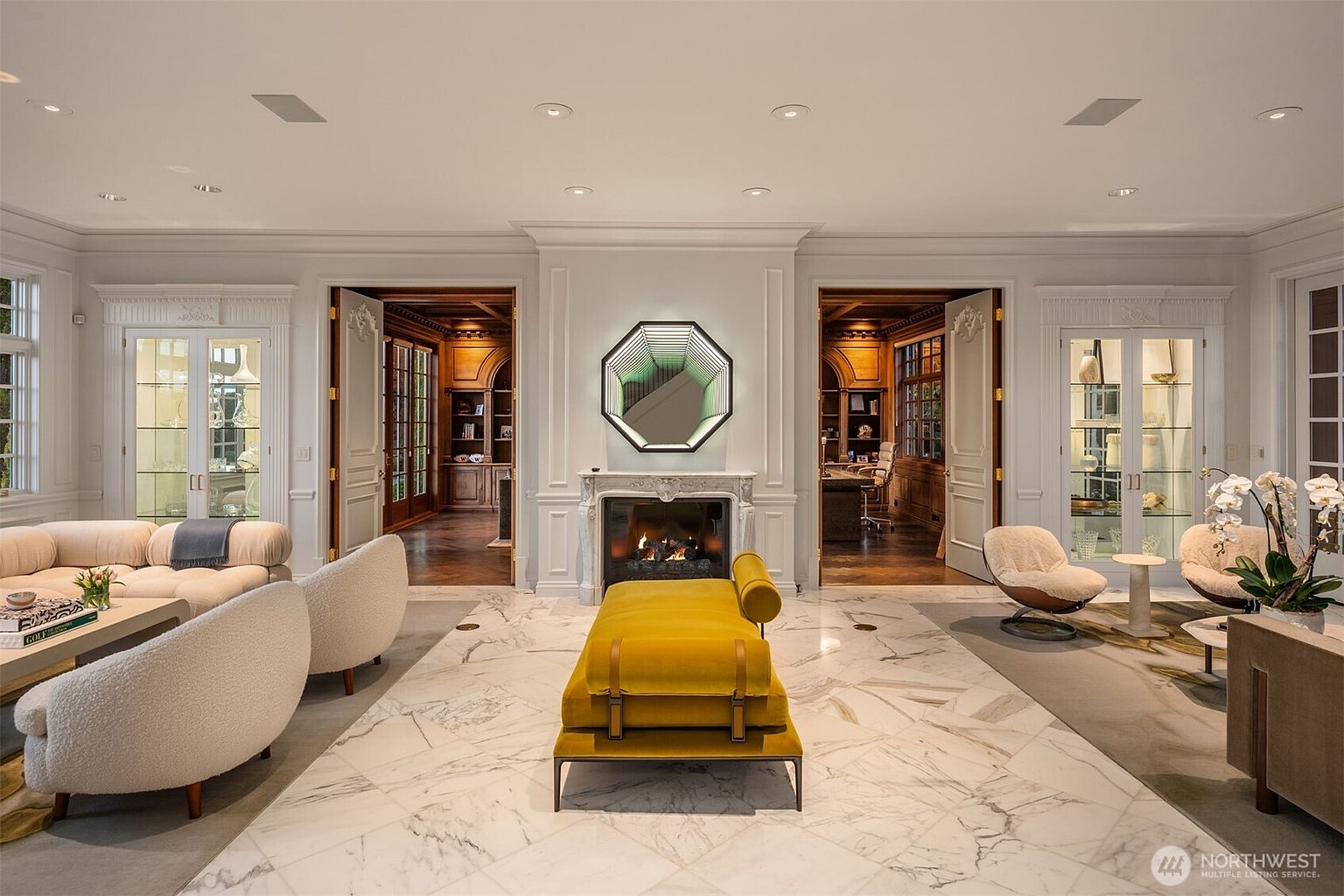
The main living areas carry the formal elegance with a grand stone fireplace flanked by symmetrical arched glass doors, while a second living room introduces a geometric infinity mirror above its fireplace, with wood-paneled studies anchoring either side in quiet scholarly contrast. Interiors by Susan Marinello thread a consistent sensibility through every room: refined without rigidity, layered without excess.
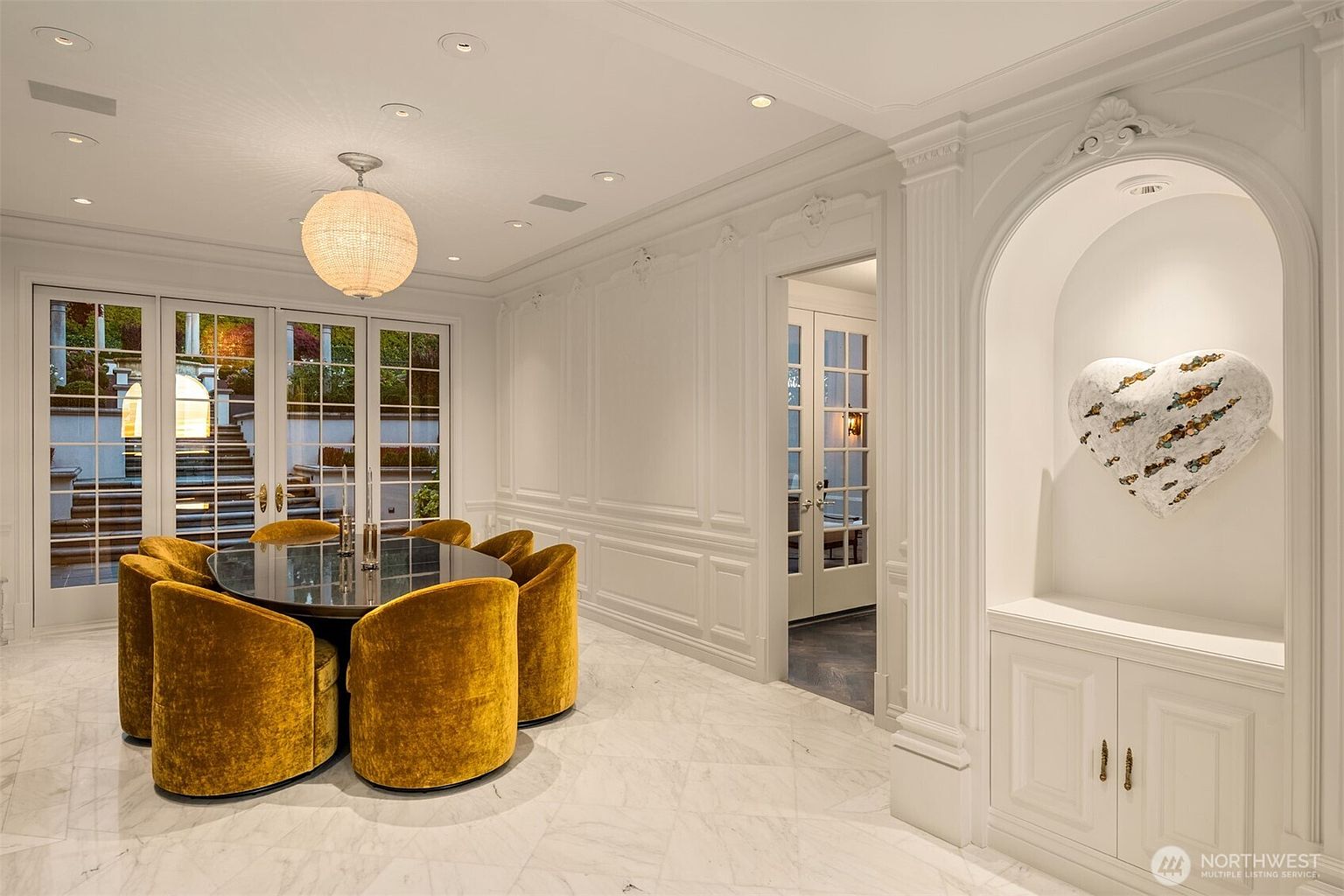
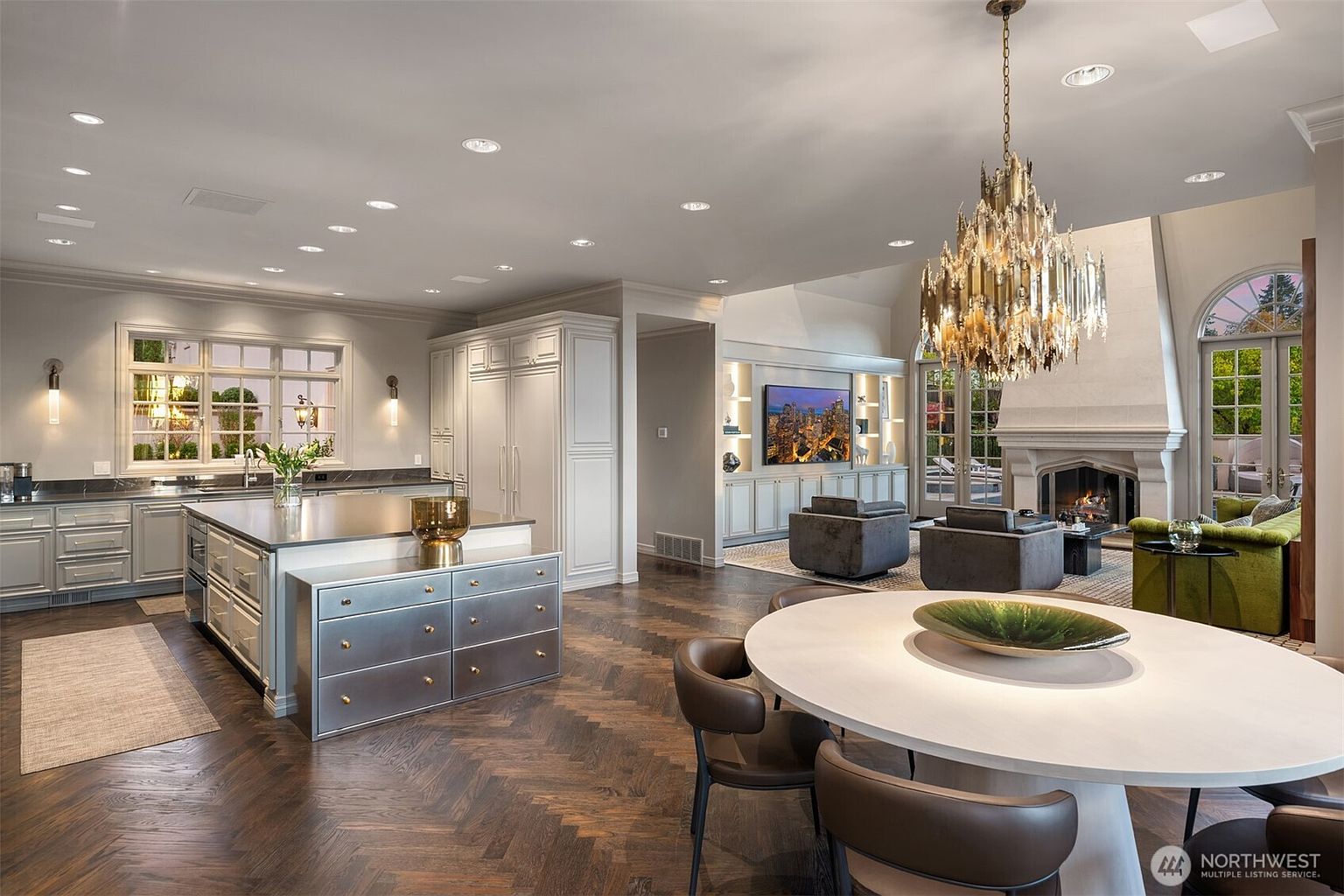
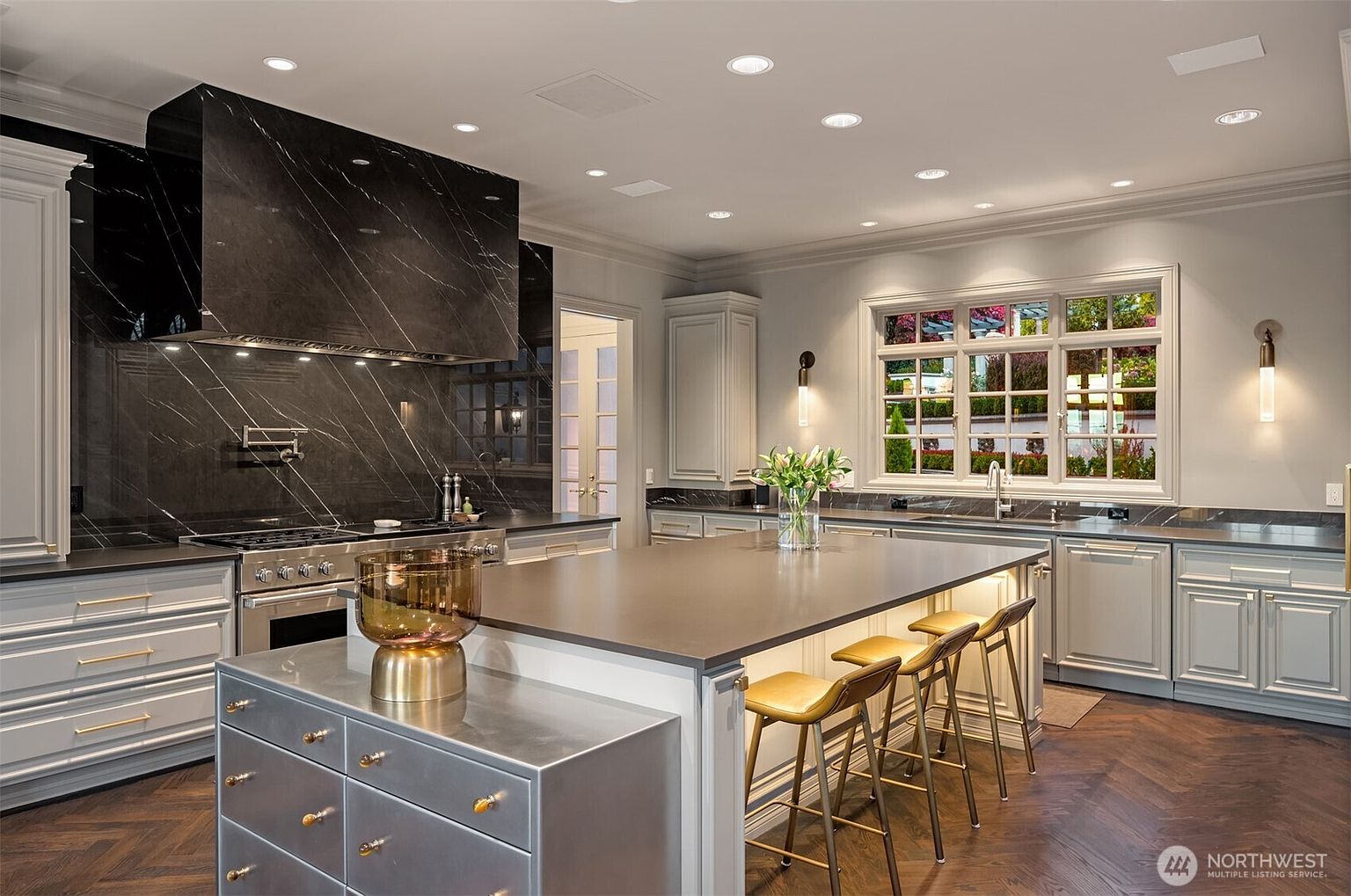
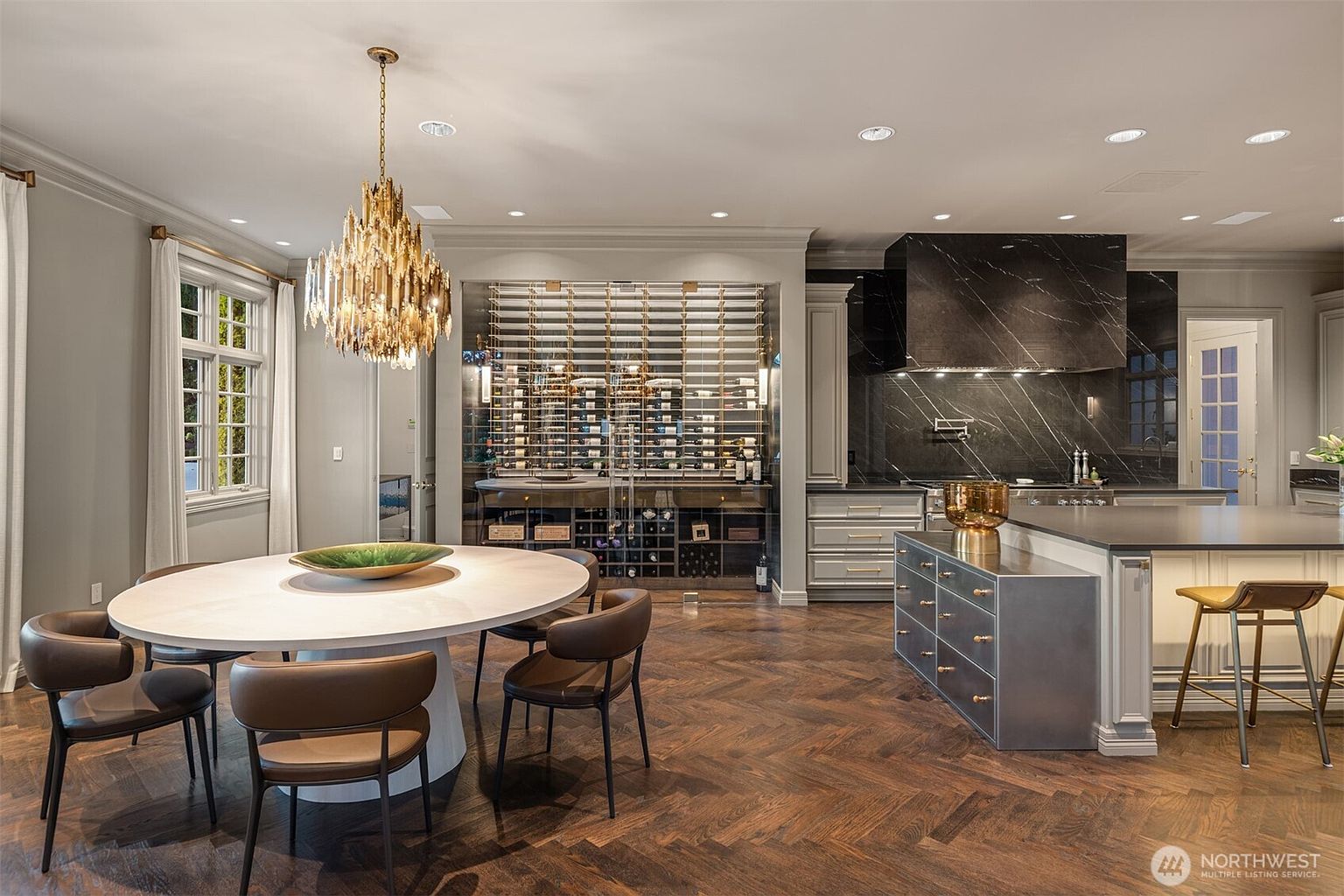
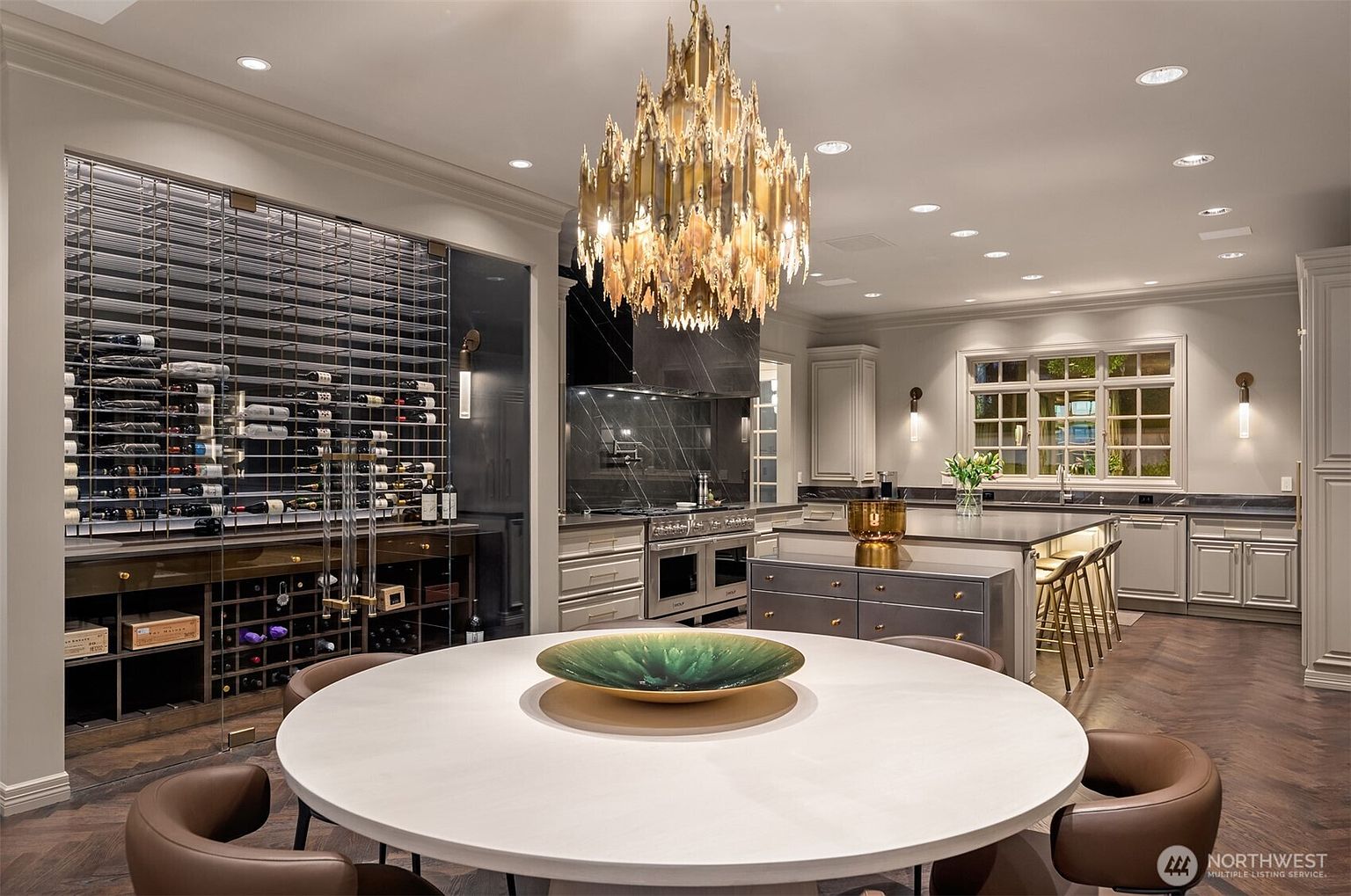
The kitchen operates at a professional register. Dark herringbone hardwood floors, a metallic-faced central island with bar seating, a black marble backsplash, professional-grade range, and a climate-controlled glass wine cellar position the space as a serious culinary environment — one equally capable of hosting an intimate dinner or a significant occasion. An ornate gold chandelier presides over the adjacent circular dining table, providing the room's ceremonial punctuation.
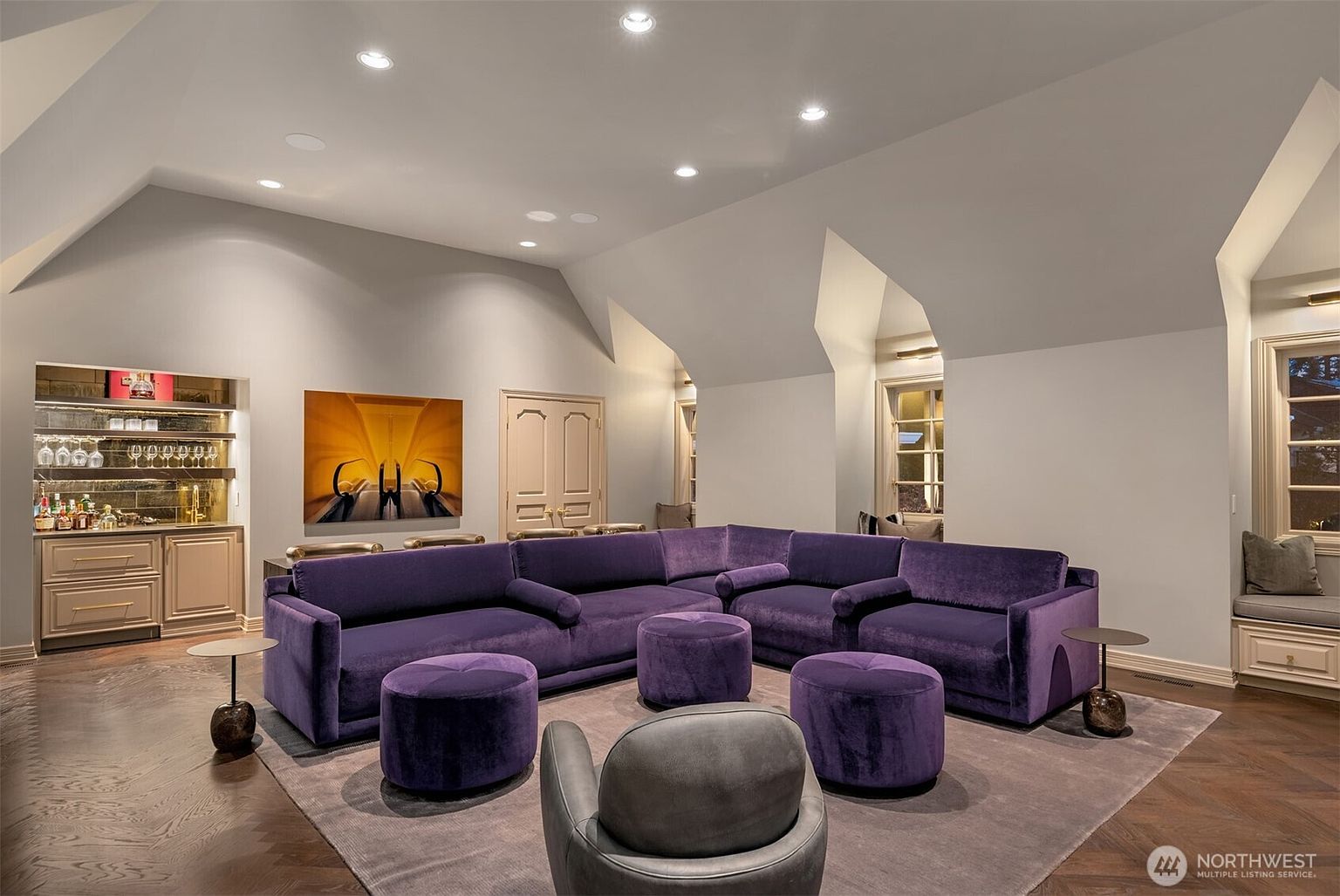
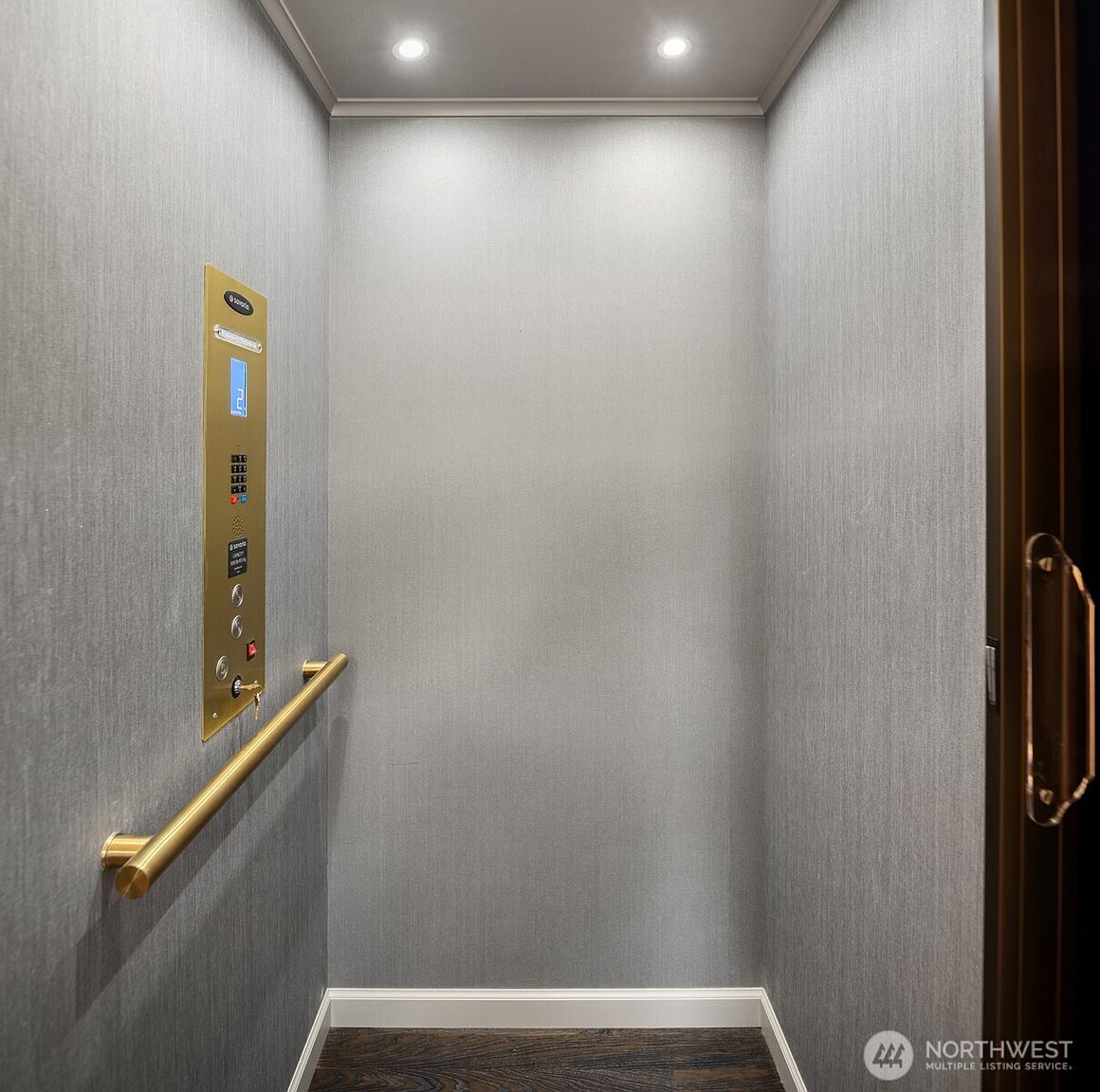
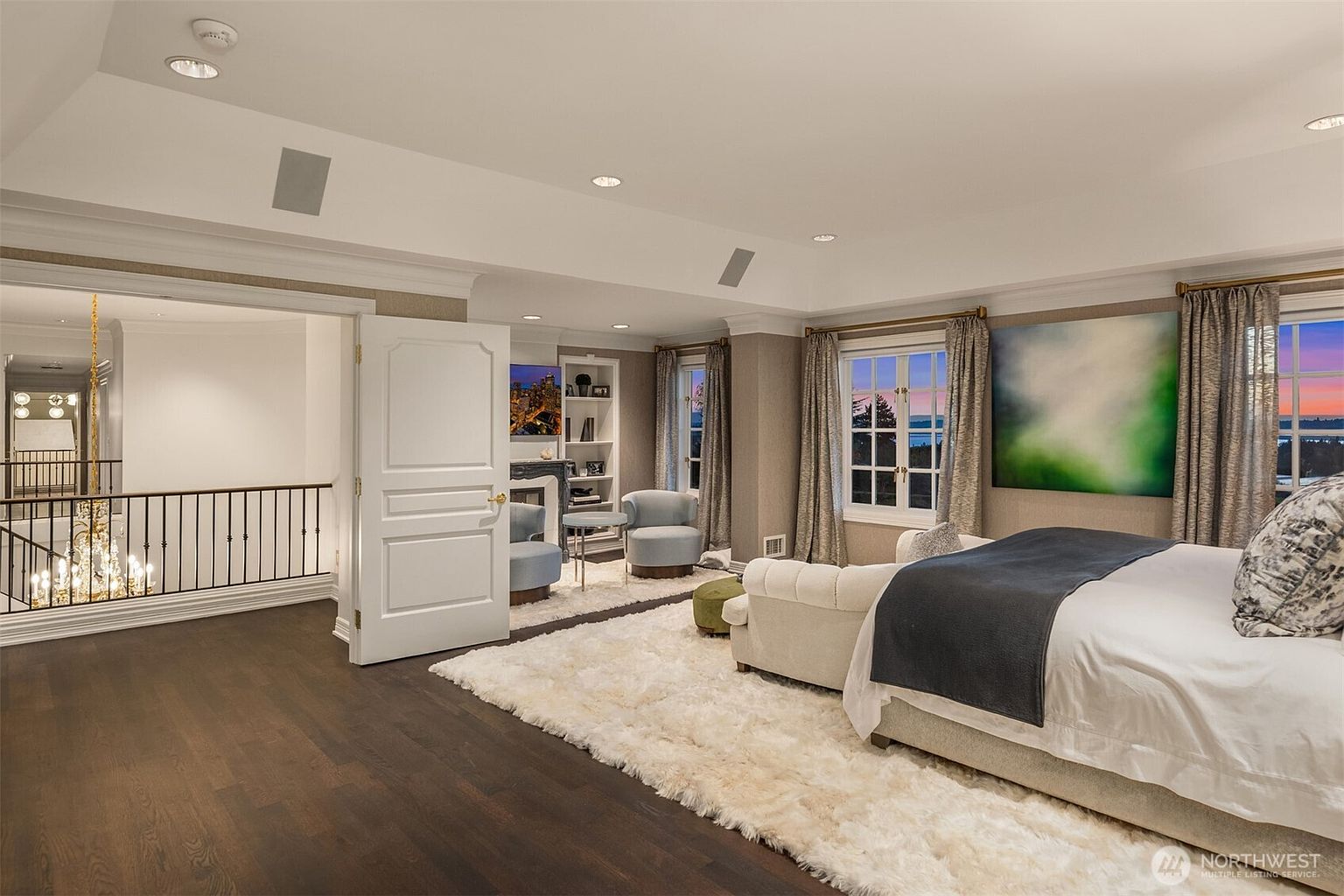
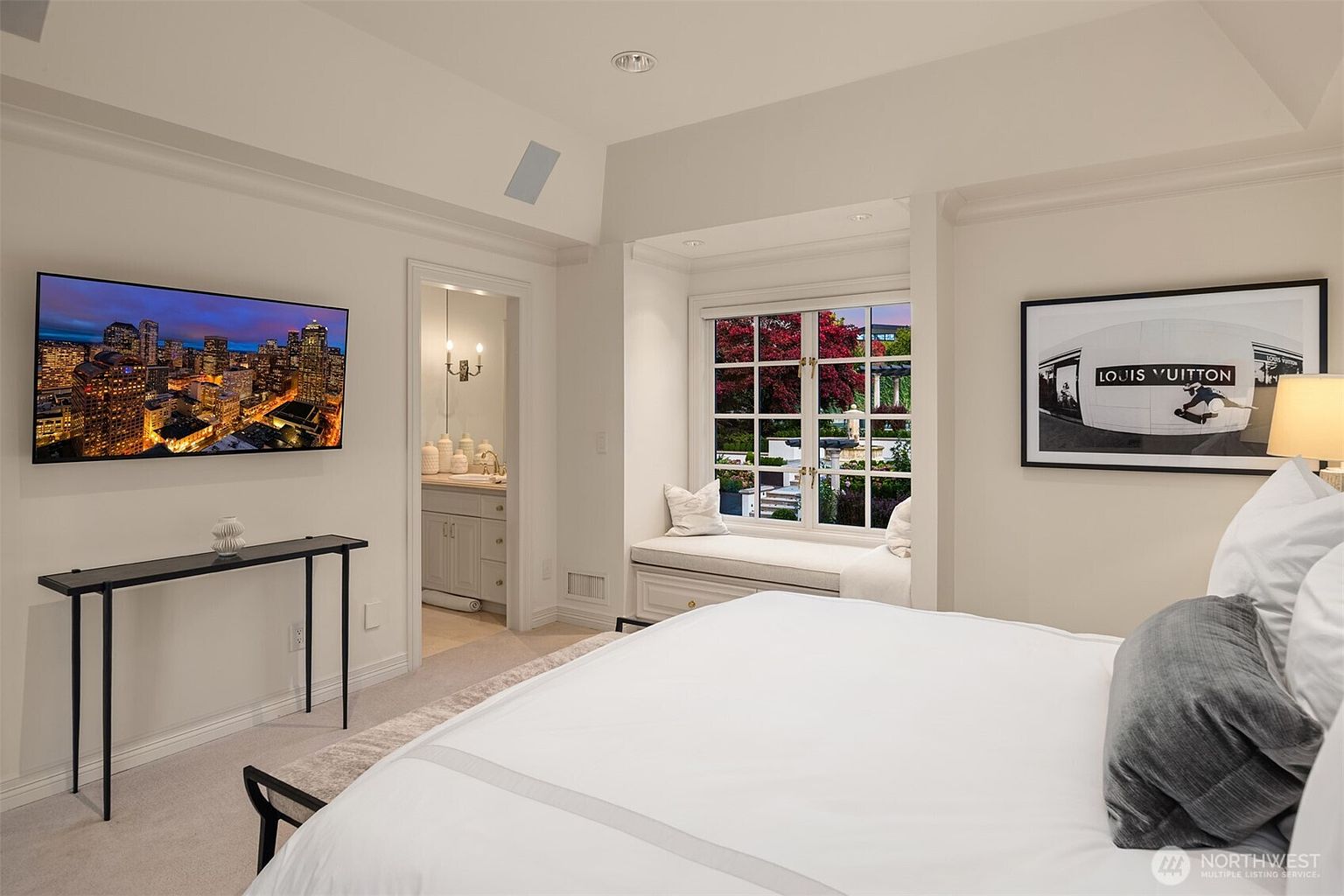
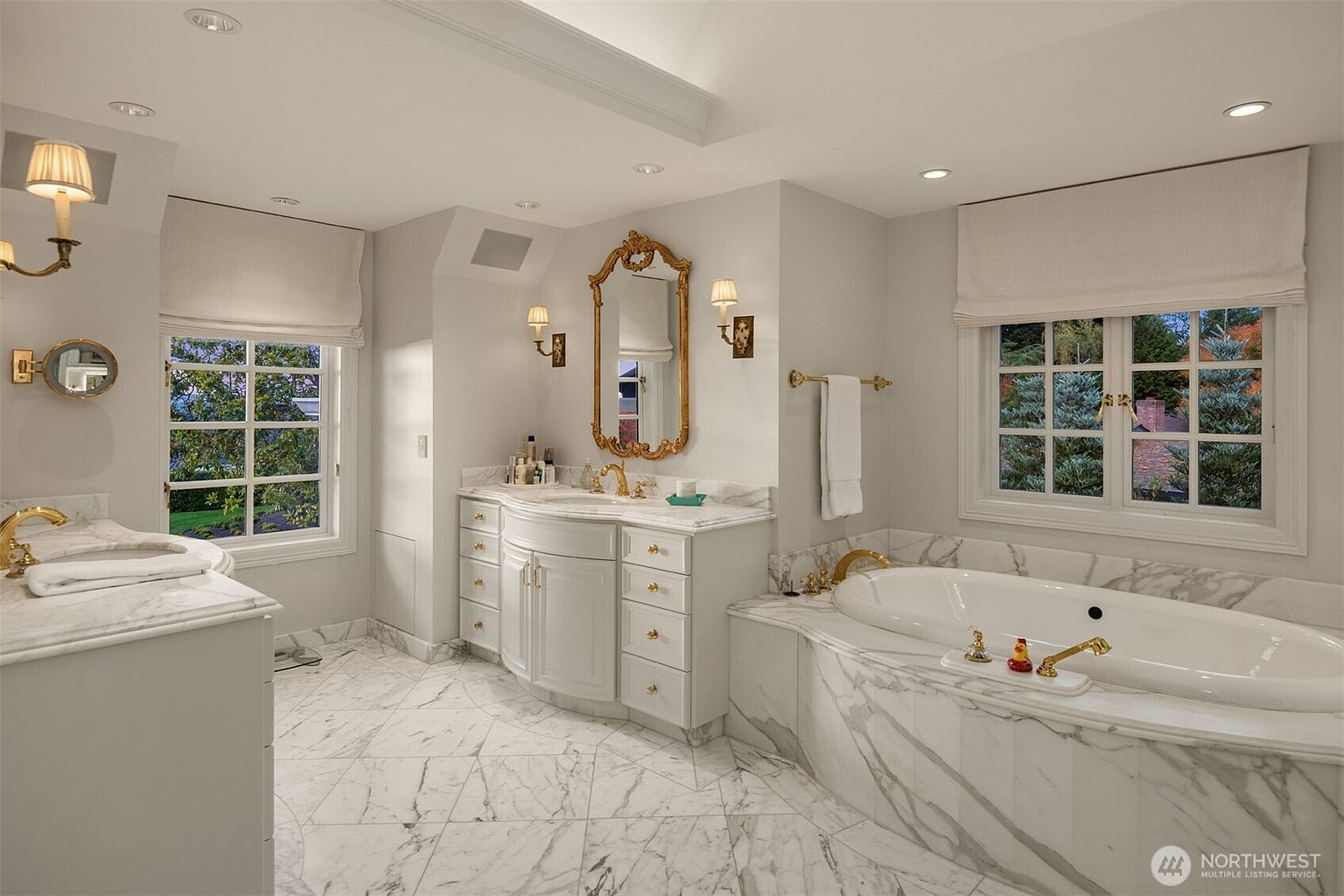
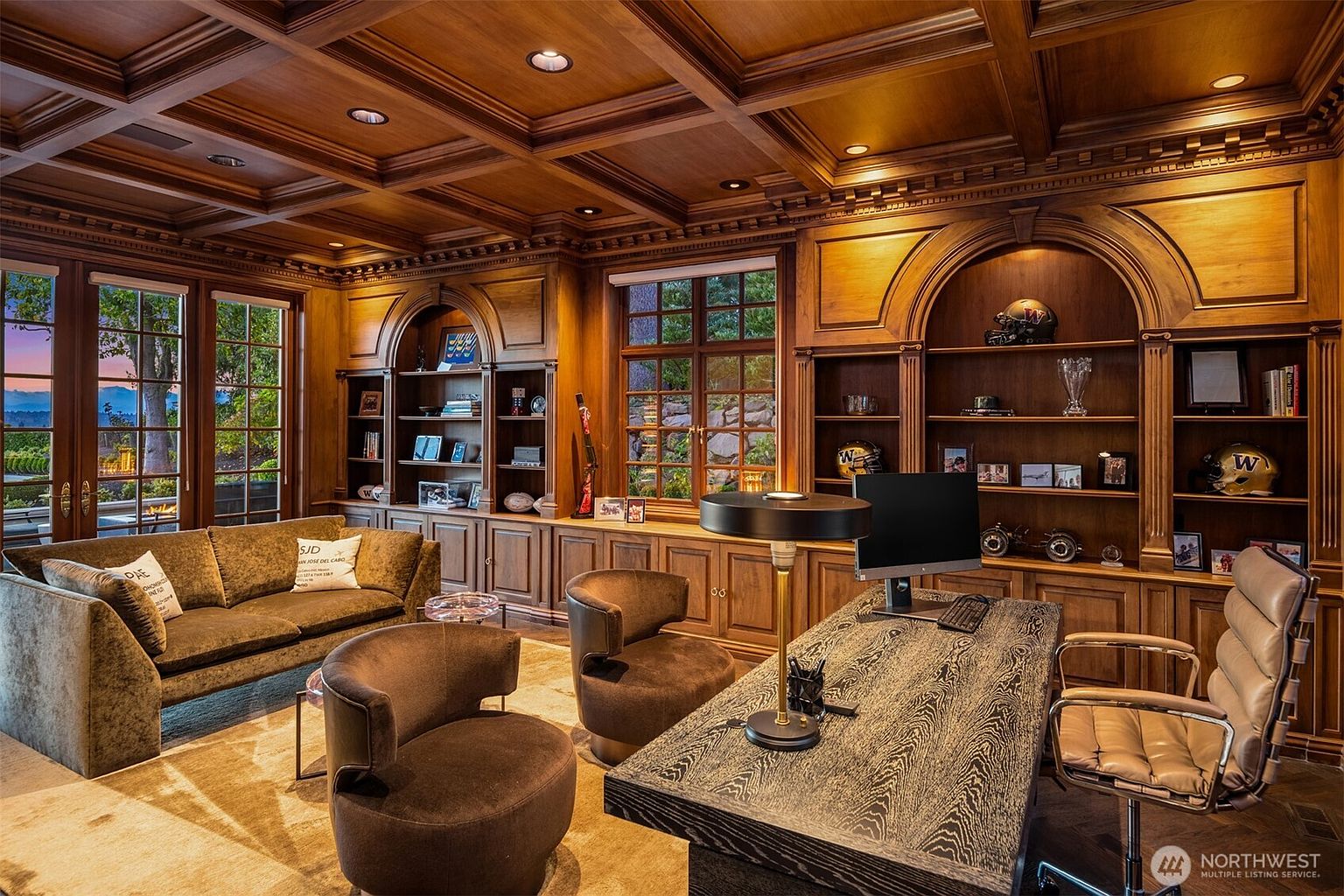
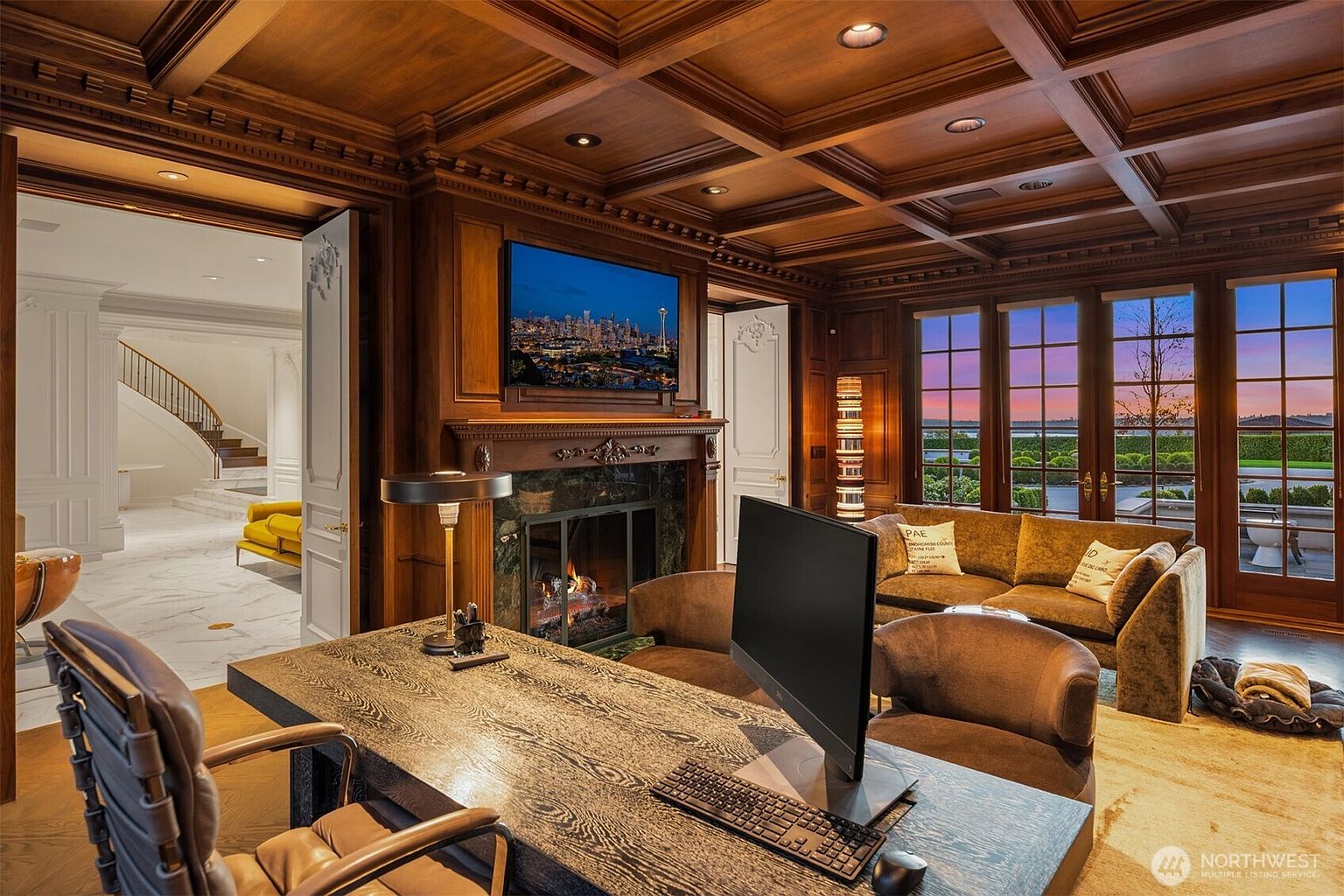
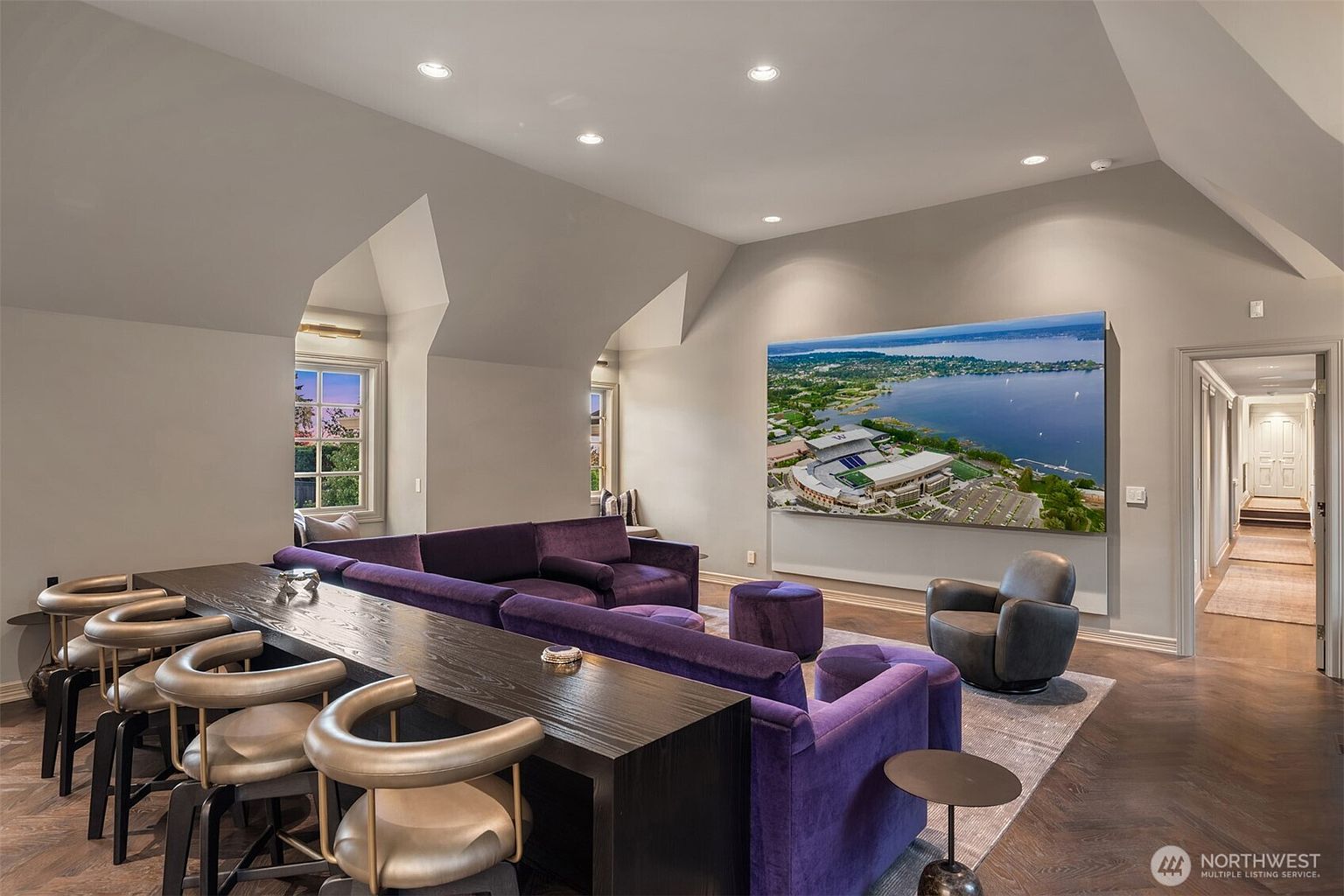
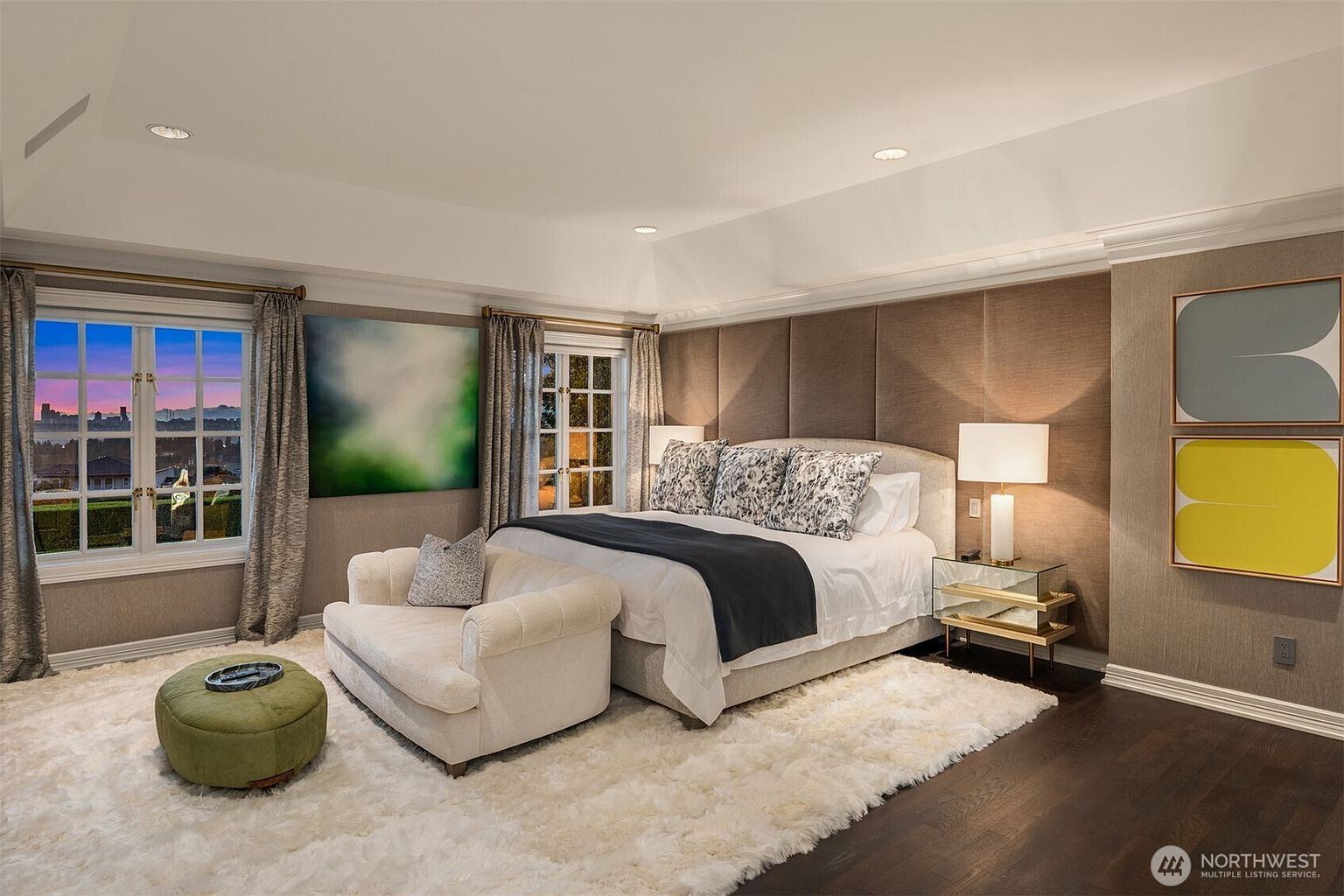
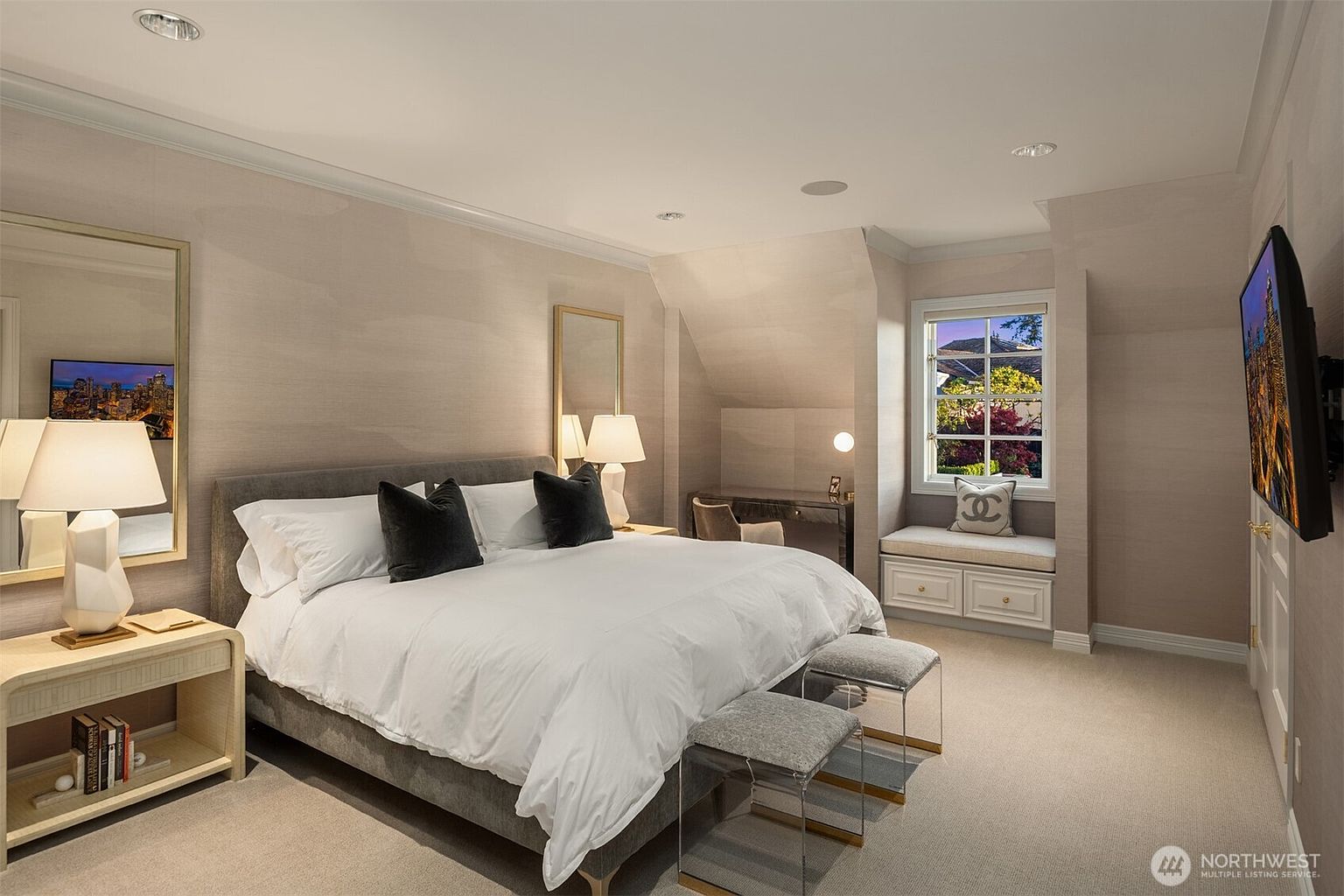
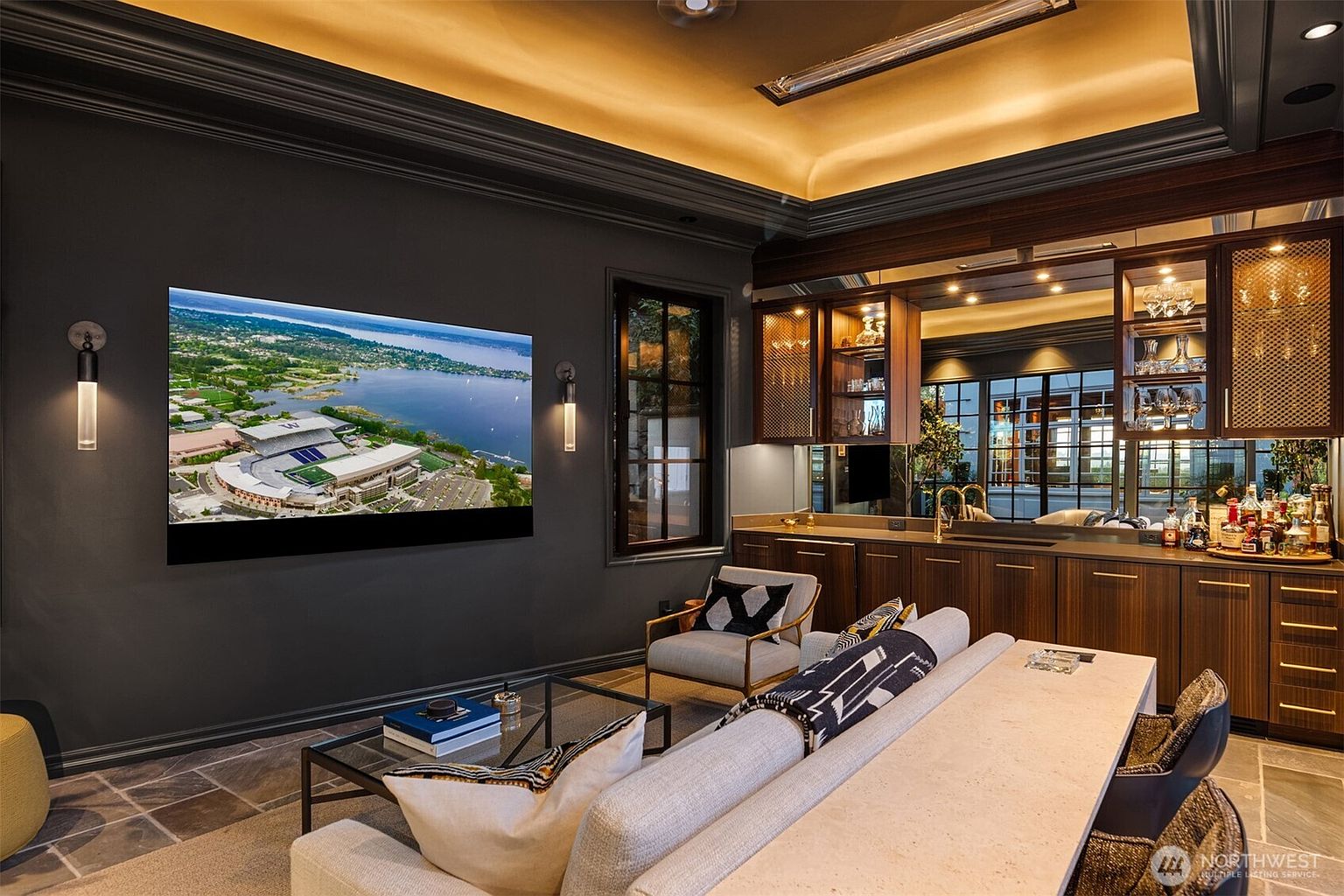
The primary suite commands a private corner of the estate, with expansive windows framing water views at dusk, a marble bathroom with double vanity, gold-toned fixtures, and a deep soaking tub that reads as a dedicated sanctuary. A private elevator, wood-paneled home offices with coffered ceilings and fireplace, and a dedicated media lounge with a wet bar complete a floor plan designed for full-time residence at genuine scale.
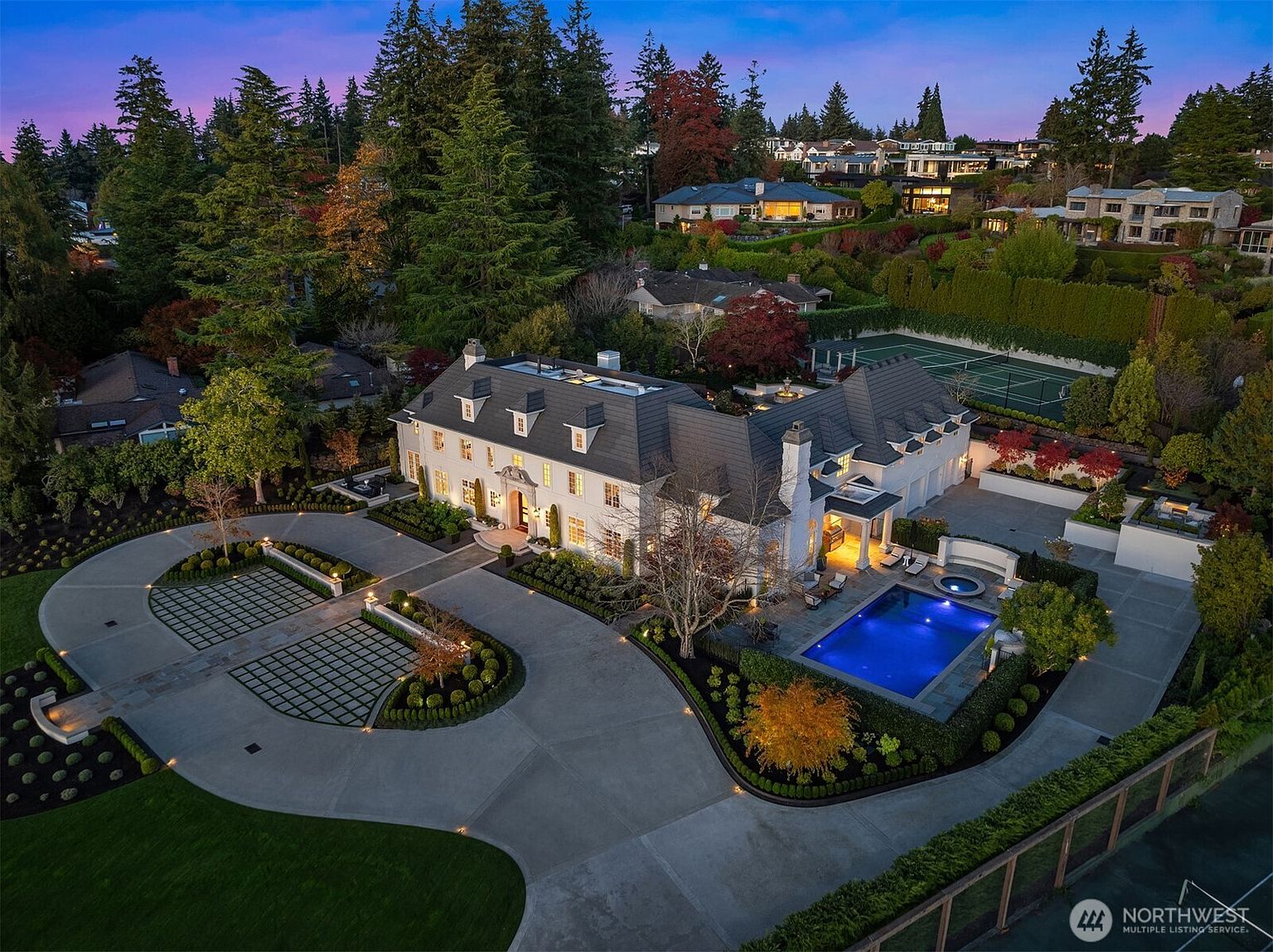
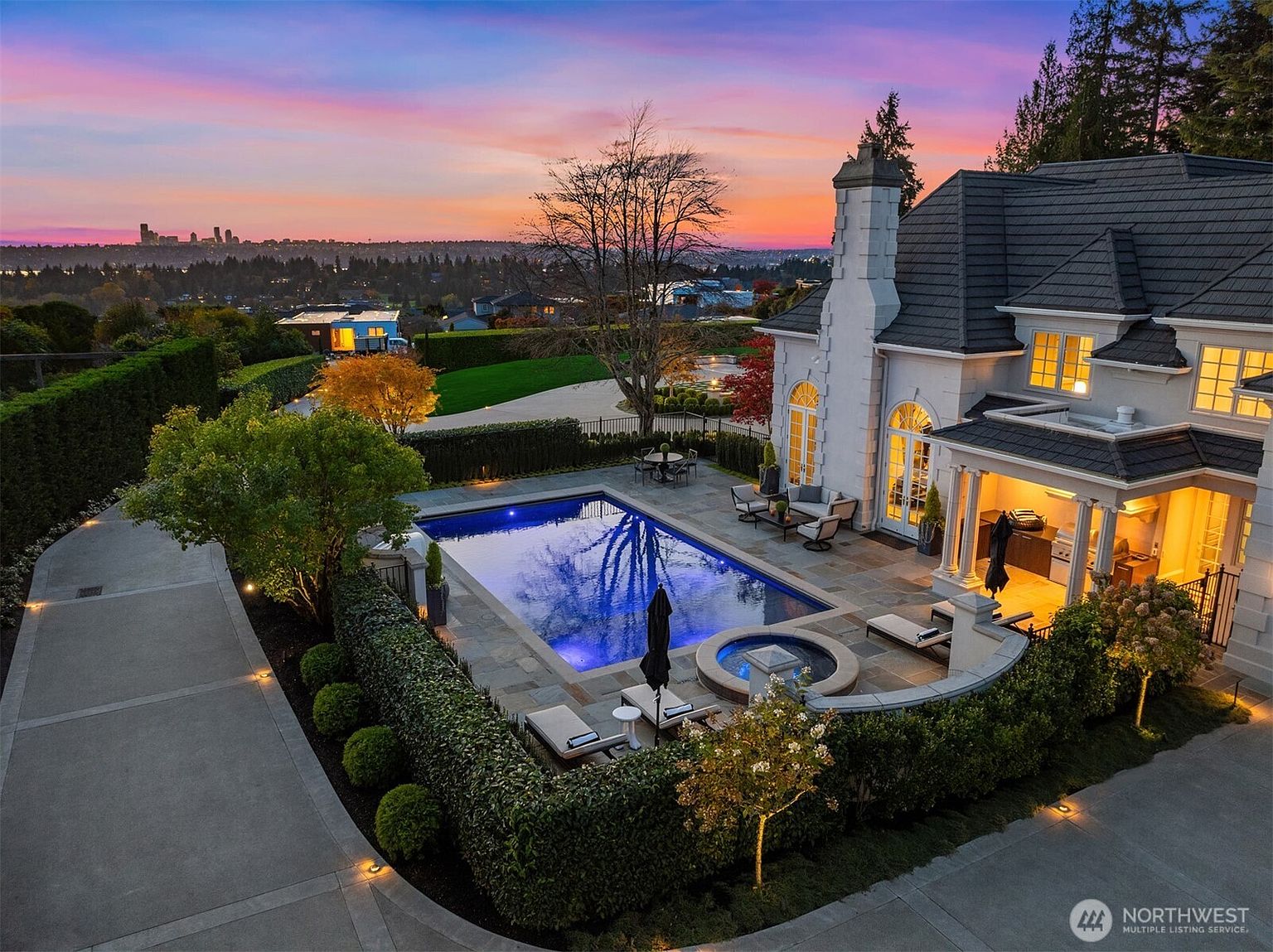
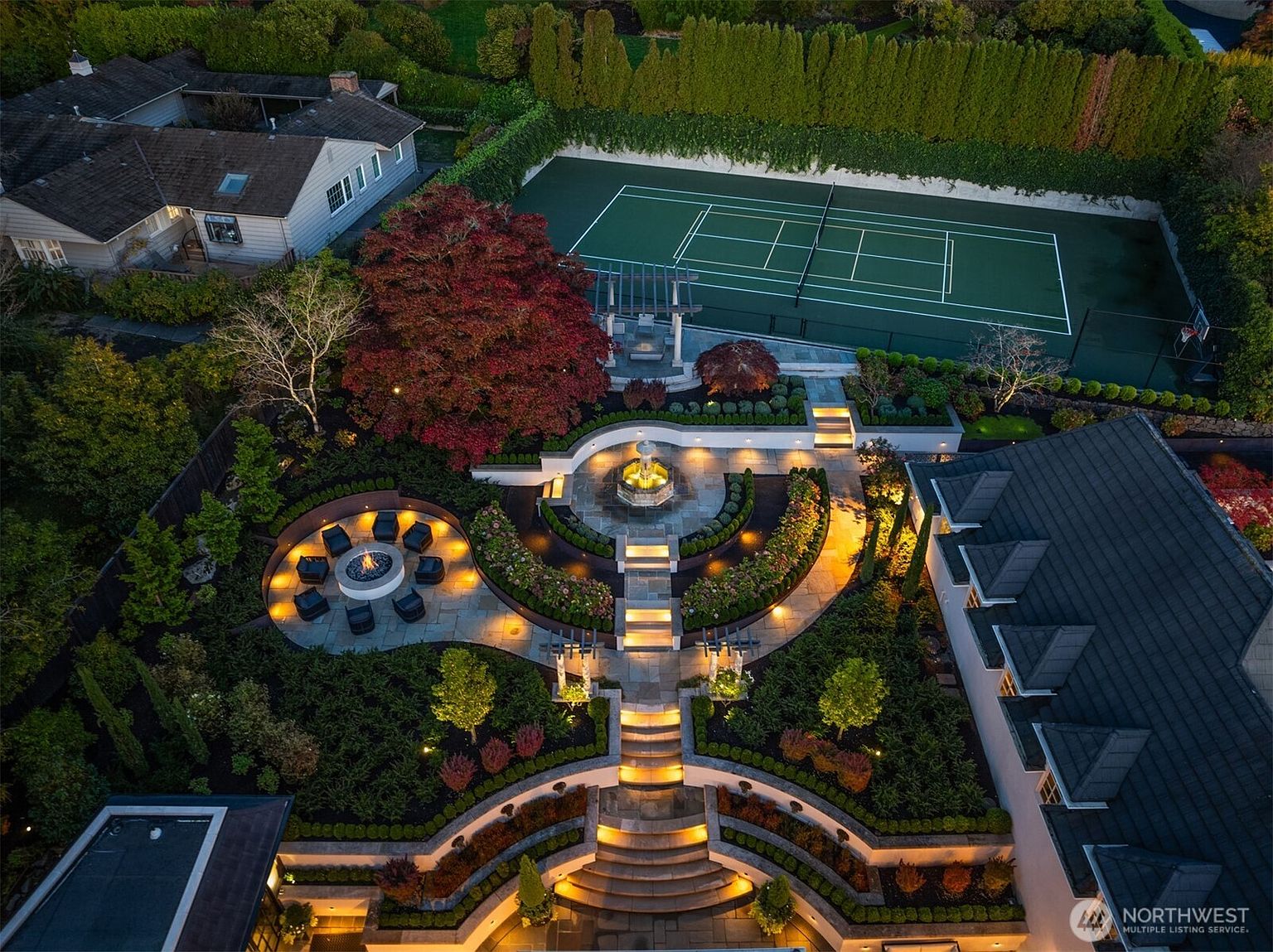
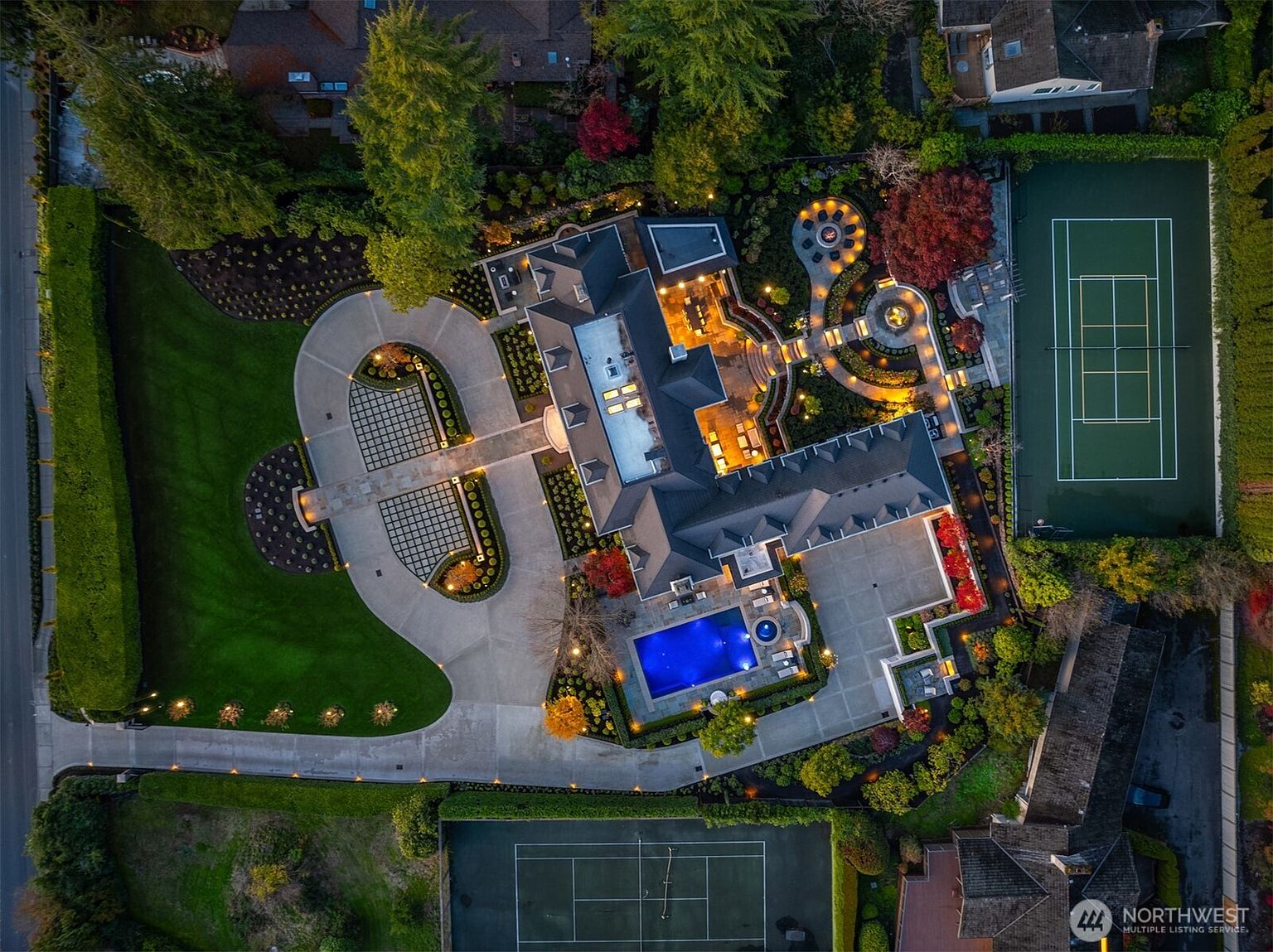
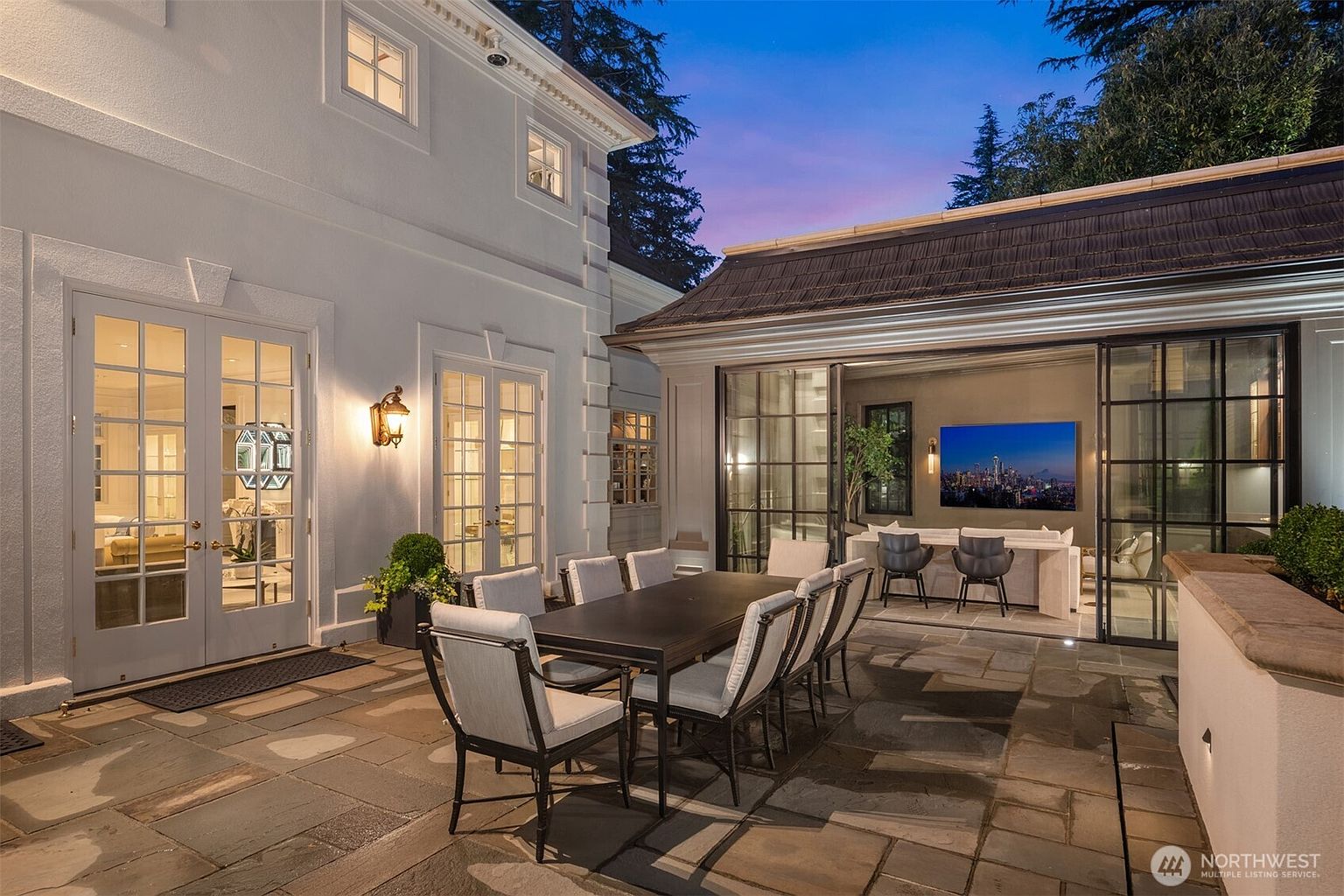
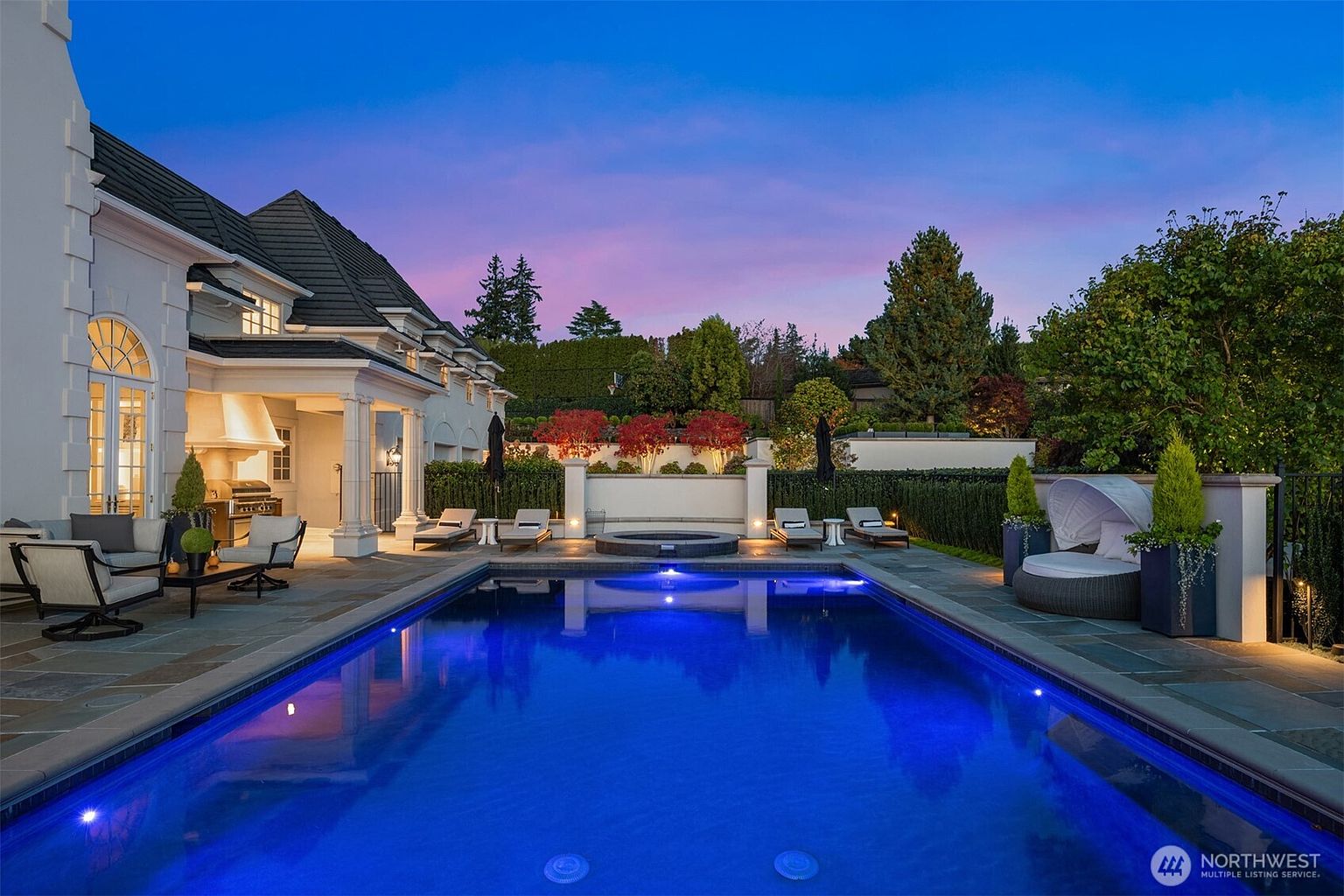
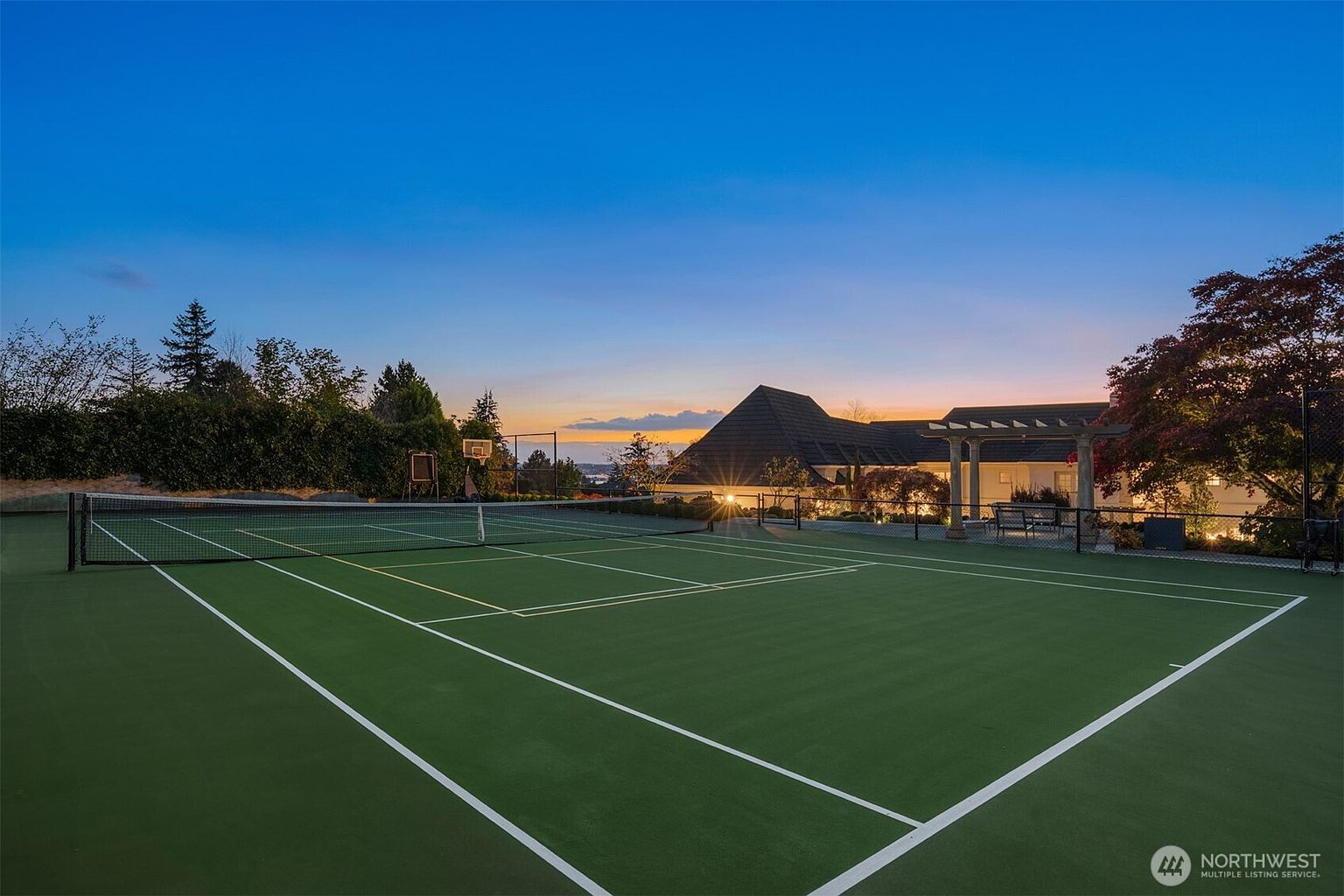
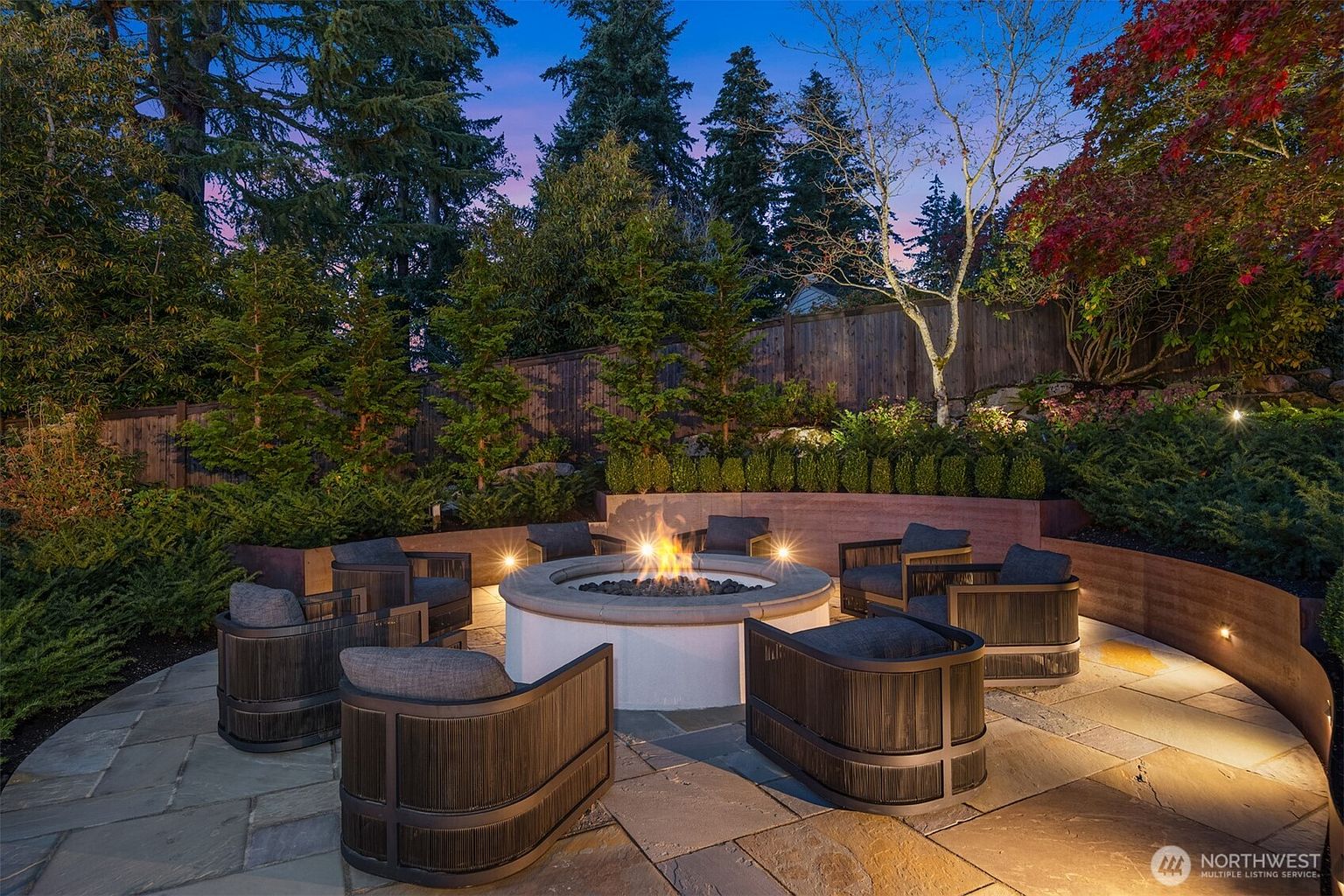
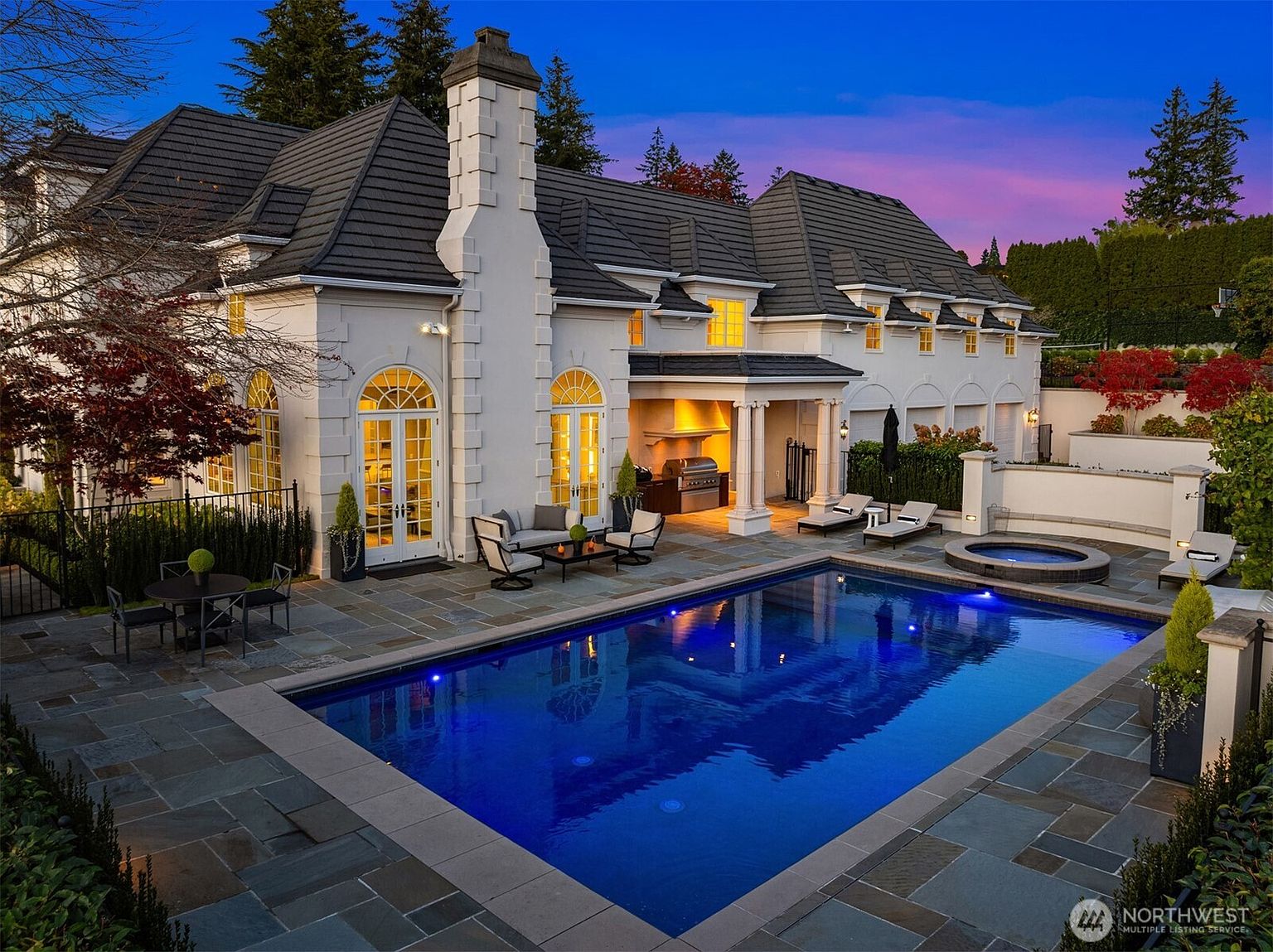
Outside, the grounds by landscape architects Dar Webb and Benchmark NW achieve the same balance of structure and warmth. Symmetrical gardens frame the property with classical order. A new resort-style pool and integrated spa with Baja deck, automatic cover, and dedicated equipment room anchor the rear grounds, while a stone patio, circular fire pit lounge, and a resurfaced tennis and pickleball court with an adjoining pavilion complete an outdoor environment built for year-round use. This is not a property that asks you to imagine its potential. It has already arrived.
Clyde Hill occupies a small, elevated plateau on the eastern shore of Lake Washington, a city of roughly 3,000 residents incorporated in 1953 and consistently ranked among the most affluent communities in Washington State. Positioned directly between Bellevue and Kirkland, the neighborhood commands some of the most dramatic residential vantage points in the greater Seattle metropolitan area — unobstructed views across Lake Washington to the Seattle skyline and, on clear days, the full expanse of the Olympic Mountains to the west. It is the kind of geography that shapes the character of a place, and Clyde Hill has long attracted those who understand the difference between proximity to a city and removal from it.
The city's residential nature is deliberate and protected. Clyde Hill is zoned primarily for single-family homes on substantial lots, which has preserved both the privacy of its streets and the integrity of its mature tree canopy. There are no commercial corridors within its borders, no through-traffic retail strips — only quiet, tree-lined residential streets that give the neighborhood its distinctly secluded quality even as it sits minutes from one of the most economically active urban cores in the country.
Downtown Bellevue, approximately five minutes by car, has transformed over the past two decades into a genuine urban destination in its own right. The Bellevue Collection — anchored by Bellevue Square, Lincoln Square, and Bellevue Place — offers luxury retail, acclaimed restaurants, and cultural programming at a level that rivals larger metropolitan centers. The Bellevue Arts Museum and the Meydenbauer Center contribute to a cultural calendar that is active and growing. The broader Eastside technology economy, home to major campuses for Microsoft, Amazon, and a growing constellation of global technology firms, has further elevated the area's national and international profile.
For families, the Bellevue School District is among the highest-performing public school districts in Washington State, with a national reputation for academic rigor and outcomes. A number of well-regarded independent schools also operate within the greater Eastside area, providing meaningful options at every level of education.
Recreation on the Eastside is defined by the landscape itself. Lake Washington offers sailing, rowing, and paddling within direct view of Clyde Hill's highest elevations. Bellevue's park system includes Meydenbauer Beach Park, Clyde Beach Park, and the extensive Bellevue trail network, which connects neighborhoods to green corridors and waterfront access. The Cascade foothills begin in earnest to the east, placing skiing, hiking, and mountaineering within an hour's drive.
Seattle, accessible via the SR-520 floating bridge, brings a full complement of cultural institutions — the Seattle Art Museum, Seattle Symphony, Pike Place Market, and the broader restaurant and hospitality landscape of one of the country's most culinarily sophisticated cities — within a short drive.
What Clyde Hill offers, ultimately, is a particular kind of equilibrium: the privacy and natural beauty of a small, carefully protected residential community set in immediate proximity to the full resources of a major metropolitan region. For those who have considered both sides of that equation carefully, the address speaks for itself.
Featured Highlights
Curated Content • Presented by Terry Allen